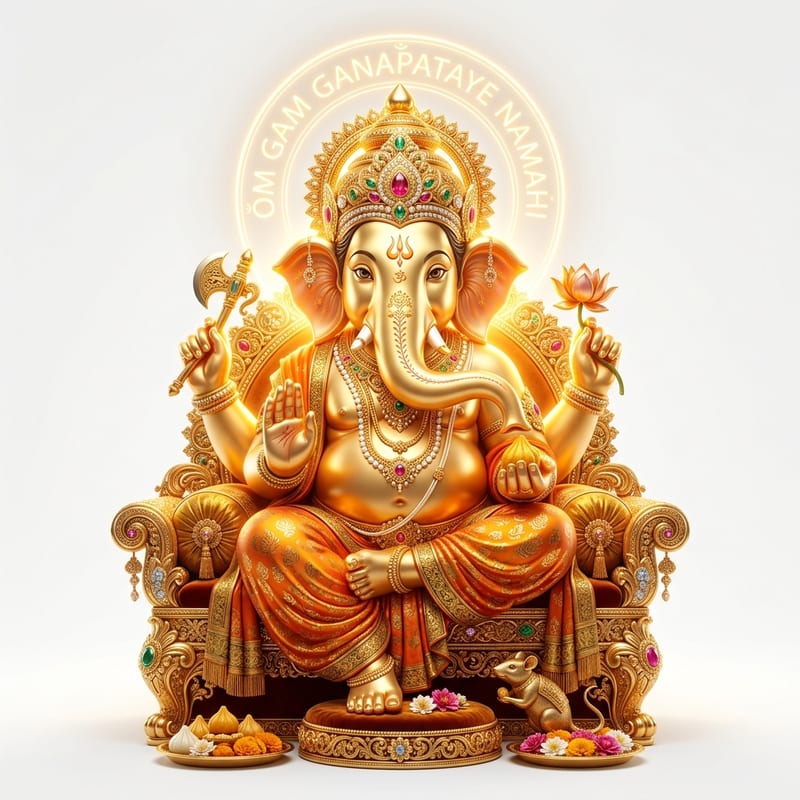
śrīgaṇeśadvādaśanāmastotram
śrīgaṇeśāya namaḥ ||
The Twelve Names of Lord Ganesha
Salutations to Lord Ganesha.
śuklāmbaradharaṃ viśṇuṃ śaśivarṇaṃ caturbhujam |
prasannavadanaṃ dhyāyetsarvavighnopaśāntayeḥ || 1||
One should meditate upon Lord Ganesha, who is dressed in white garments, who is all-pervading, whose complexion is like the moon, who has four arms, and who has a pleasing countenance, for the complete removal of all obstacles.
abhīpsitārthasiddhyarthaṃ pūjito yaḥ surāsuraiḥ |
sarvavighnaharastasmai gaṇādhipataye namaḥ || 2||
Salutations to that Lord of the Ganas (Ganesha), the destroyer of all obstacles, who is worshipped by the gods and demons alike for the fulfillment of their desired objectives.
gaṇānāmadhipaścaṇḍo gajavaktrastrilocanaḥ |
prasanno bhava me nityaṃ varadātarvināyaka || 3||
O leader of the Ganas, who is fierce (to the wicked), who has an elephant's face, and who has three eyes! O Vinayaka, the giver of boons, be pleased with me always!
sumukhaścaikadantaśca kapilo gajakarṇakaḥ |
lambodaraśca vikaṭo vighnanāśo vināyakaḥ || 4||
1. Sumukha (One with an auspicious face), 2. Ekadanta (One with a single tusk), 3. Kapila (One of reddish-brown color), 4. Gajakarnaka (One with elephant ears), 5. Lambodara (One with a large belly), 6. Vikata (One with a formidable appearance), 7. Vighnanasha (The destroyer of obstacles), 8. Vinayaka (The supreme leader).
dhūmraketurgaṇādhyakṣo bhālacandro gajānanaḥ |
dvādaśaitāni nāmāni gaṇeśasya tu yaḥ paṭhet || 5||
9. Dhumraketu (One whose banner is smoke), 10. Ganadhyaksha (The Lord of the Ganas), 11. Bhalachandra (One who wears the moon on his forehead), 12. Gajanana (One with an elephant's face). Whoever recites these twelve names of Lord Ganesha...
vidyārthī labhate vidyāṃ dhanārthi vipulaṃ dhanam |
iṣṭakāmaṃ tu kāmārthī dharmārthī mokṣamakṣayam || 6||
...If a seeker of knowledge recites them, he attains knowledge; a seeker of wealth attains abundant wealth; a seeker of desires attains his cherished desires; and a seeker of righteousness attains imperishable liberation (Moksha).
vidyāraṃbhe vivāhe ca praveśe nirgame tathā |
saṅgrāme saṅkaṭe caiva vighnastasya na jāyate || 7||
For him (who recites these names), no obstacles will ever arise at the beginning of learning, during marriage, while entering or exiting (a new place or journey), in battle, and in times of crisis.
iti mudgalapurāṇoktaṃ śrīgaṇeśadvādaśanāmastotraṃ sampūrṇam |
Thus ends the Sri Ganesha Dwadashanama Stotram as spoken in the Mudgala Purana.