
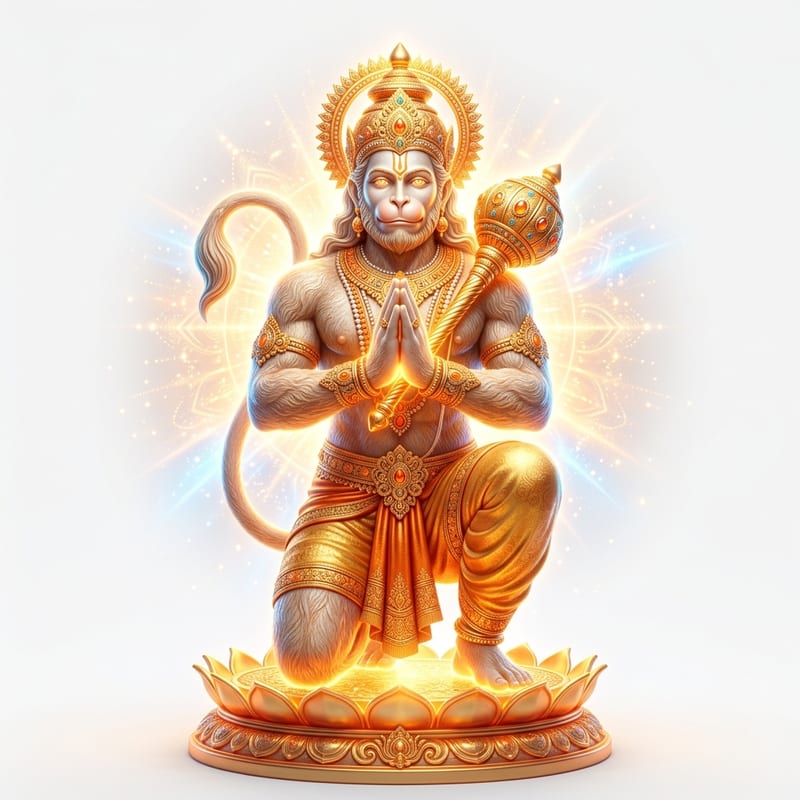
અસ્ય શ્રી હનુમત્ કવચસ્તોત્રમહામન્ત્રસ્ય વસિષ્ઠ ઋષિઃ અનુષ્ટુપ્ છન્દઃ શ્રી હનુમાન્ દેવતા મારુતાત્મજ ઇતિ બીજં અઞ્જનાસૂનુરિતિ શક્તિઃ વાયુપુત્ર ઇતિ કીલકં હનુમત્પ્રસાદ સિદ્ધ્યર્થે જપે વિનિયોગઃ ॥
- અસ્ય (asya)of this
- શ્રી-હનુમત્-કવચ-સ્તોત્ર-મહા-મન્ત્રસ્ય (śrī-hanumat-kavaca-stotra-mahā-mantrasya)great mantra that is the Śrī Hanumat Kavaca hymn
- વસિષ્ઠઃ ઋષિઃ (vasiṣṭhaḥ ṛṣiḥ)Vasiṣṭha is the seer
- અનુષ્ટુપ્ છન્દઃ (anuṣṭup chandaḥ)anuṣṭubh is the metre
- શ્રી-હનુમાન્ દેવતા (śrī-hanumān devatā)Śrī Hanumān is the deity
- મારુત-આત્મજઃ ઇતિ બીજમ્ (māruta-ātmajaḥ iti bījam)“son of the Wind” is the seed
- અઞ્જના-સૂનુઃ ઇતિ શક્તિઃ (añjanā-sūnuḥ iti śaktiḥ)“son of Añjanā” is the power
- વાયુ-પુત્રઃ ઇતિ કીલકમ્ (vāyu-putraḥ iti kīlakam)“son of Vāyu” is the pin
- હનુમત્-પ્રસાદ-સિદ્ધ્ય્-અર્થે (hanumat-prasāda-siddhy-arthe)for the winning of Hanumān’s grace
- જપે વિનિયોગઃ (jape viniyogaḥ)such is its employment in recitation
ઉલ્લઙ્ઘ્ય સિન્ધોસ્સલિલં સલીલં
યશ્શોકવહ્નિં જનકાત્મજાયાઃ ।
આદાય તેનૈવ દદાહ લઙ્કાં
નમામિ તં પ્રાઞ્જલિરાઞ્જનેયમ્ ॥ 1
યશ્શોકવહ્નિં જનકાત્મજાયાઃ ।
આદાય તેનૈવ દદાહ લઙ્કાં
નમામિ તં પ્રાઞ્જલિરાઞ્જનેયમ્ ॥ 1
- ઉલ્લઙ્ઘ્ય (ullaṅghya)having leapt clean across
- સિન્ધોઃ સલિલમ્ (sindhoḥ salilam)the water of the sea
- સલીલમ્ (salīlam)as if in play
- યઃ (yaḥ)who
- શોક-વહ્નિમ્ (śoka-vahnim)the fire of grief
- જનક-આત્મજાયાઃ (janaka-ātmajāyāḥ)of Janaka’s daughter
- આદાય (ādāya)having taken it up
- તેન એવ (tena eva)with that very fire
- દદાહ લઙ્કામ્ (dadāha laṅkām)he burned Laṅkā
- નમામિ તમ્ (namāmi tam)to him I bow
- પ્રાઞ્જલિઃ (prāñjaliḥ)with folded hands
- આઞ્જનેયમ્ (āñjaneyam)to Āñjaneya
મનોજવં મારુતતુલ્યવેગં
જિતેન્દ્રિયં બુદ્ધિમતાં વરિષ્ઠમ્ ।
વાતાત્મજં વાનરયૂથમુખ્યં
શ્રીરામદૂતં શિરસા નમામિ ॥ 2
જિતેન્દ્રિયં બુદ્ધિમતાં વરિષ્ઠમ્ ।
વાતાત્મજં વાનરયૂથમુખ્યં
શ્રીરામદૂતં શિરસા નમામિ ॥ 2
- મનો-જવમ્ (mano-javam)swift as thought
- મારુત-તુલ્ય-વેગમ્ (māruta-tulya-vegam)of speed matching the wind
- જિત-ઇન્દ્રિયમ્ (jita-indriyam)conqueror of the senses
- બુદ્ધિમતામ્ વરિષ્ઠમ્ (buddhimatām variṣṭham)best among the wise
- વાત-આત્મજમ્ (vāta-ātmajam)son of the Wind
- વાનર-યૂથ-મુખ્યમ્ (vānara-yūtha-mukhyam)chief of the monkey host
- શ્રી-રામ-દૂતમ્ (śrī-rāma-dūtam)the envoy of Śrī Rāma
- શિરસા નમામિ (śirasā namāmi)I bow with my head
ઉદ્યદાદિત્યસઙ્કાશં ઉદારભુજવિક્રમમ્ ।
કન્દર્પકોટિલાવણ્યં સર્વવિદ્યાવિશારદમ્ ॥ 3
કન્દર્પકોટિલાવણ્યં સર્વવિદ્યાવિશારદમ્ ॥ 3
- ઉદ્યત્-આદિત્ય-સઙ્કાશમ્ (udyat-āditya-saṅkāśam)like the rising sun
- ઉદાર-ભુજ-વિક્રમમ્ (udāra-bhuja-vikramam)of noble strength of arm
- કન્દર્પ-કોટિ-લાવણ્યમ્ (kandarpa-koṭi-lāvaṇyam)of the loveliness of ten million gods of love
- સર્વ-વિદ્યા-વિશારદમ્ (sarva-vidyā-viśāradam)adept in every branch of learning
શ્રીરામહૃદયાનન્દં ભક્તકલ્પમહીરુહમ્ ।
અભયં વરદં દોર્ભ્યાં કલયે મારુતાત્મજમ્ ॥ 4
અભયં વરદં દોર્ભ્યાં કલયે મારુતાત્મજમ્ ॥ 4
- શ્રી-રામ-હૃદય-આનન્દમ્ (śrī-rāma-hṛdaya-ānandam)the joy of Śrī Rāma’s heart
- ભક્ત-કલ્પ-મહીરુહમ્ (bhakta-kalpa-mahīruham)the wish-granting tree of the devout
- અભયમ્ (abhayam)fearlessness
- વરદમ્ (varadam)and boons
- દોર્ભ્યામ્ (dorbhyām)with his two arms
- કલયે (kalaye)I call to mind
- મારુત-આત્મજમ્ (māruta-ātmajam)the son of the Wind
શ્રીરામ રામ રામેતિ રમે રામે મનોરમે ।
સહસ્રનામ તત્તુલ્યં રામનામ વરાનને ॥ 5
સહસ્રનામ તત્તુલ્યં રામનામ વરાનને ॥ 5
- શ્રી-રામ રામ રામ ઇતિ (śrī-rāma rāma rāma iti)saying “Śrī Rāma, Rāma, Rāma”
- રમે (rame)I take delight
- રામે મનોરમે (rāme manorame)in Rāma who delights the mind
- સહસ્ર-નામ (sahasra-nāma)a thousand names
- તત્-તુલ્યમ્ (tat-tulyam)equal to that
- રામ-નામ (rāma-nāma)is the name of Rāma
- વર-આનને (vara-ānane)O fair of face
પાદૌ વાયુસુતઃ પાતુ રામદૂતસ્તદઙ્ગુલીઃ ।
ગુલ્ફૌ હરીશ્વરઃ પાતુ જઙ્ઘે ચાર્ણવલઙ્ઘનઃ ॥ 6
ગુલ્ફૌ હરીશ્વરઃ પાતુ જઙ્ઘે ચાર્ણવલઙ્ઘનઃ ॥ 6
- પાદૌ (pādau)the two feet
- વાયુ-સુતઃ (vāyu-sutaḥ)the son of the Wind
- પાતુ (pātu)may he guard
- રામ-દૂતઃ (rāma-dūtaḥ)the envoy of Rāma
- તત્-અઙ્ગુલીઃ (tat-aṅgulīḥ)their toes
- ગુલ્ફૌ (gulphau)the two ankles
- હરિ-ઈશ્વરઃ (hari-īśvaraḥ)lord of the tawny host
- પાતુ (pātu)may he guard
- જઙ્ઘે (jaṅghe)the two calves
- ચ (ca)and
- અર્ણવ-લઙ્ઘનઃ (arṇava-laṅghanaḥ)the leaper of the ocean
જાનુની મારુતિઃ પાતુ ઊરૂ પાત્વસુરાન્તકઃ ।
ગુહ્યં વજ્રતનુઃ પાતુ જઘનં તુ જગદ્ધિતઃ ॥ 7
ગુહ્યં વજ્રતનુઃ પાતુ જઘનં તુ જગદ્ધિતઃ ॥ 7
- જાનુની (jānunī)the two knees
- મારુતિઃ (mārutiḥ)Māruti
- પાતુ (pātu)may he guard
- ઊરૂ (ūrū)the two thighs
- અસુર-અન્તકઃ (asura-antakaḥ)the ender of asuras
- ગુહ્યમ્ (guhyam)the secret parts
- વજ્ર-તનુઃ (vajra-tanuḥ)of adamantine body
- પાતુ (pātu)may he guard
- જઘનમ્ (jaghanam)the hips
- તુ (tu)and
- જગત્-હિતઃ (jagat-hitaḥ)the good of the world
આઞ્જનેયઃ કટિં પાતુ નાભિં સૌમિત્રિજીવનઃ ।
ઉદરં પાતુ હૃદ્ગેહી હૃદયં ચ મહાબલઃ ॥ 8
ઉદરં પાતુ હૃદ્ગેહી હૃદયં ચ મહાબલઃ ॥ 8
- સૌમિત્રિજીવનઃ (Saumitrijīvana)giver of life to Lakṣmaṇa
- હૃદ્ગેહી (Hṛdgēhī)dweller in the heart
- મહાબલઃ (Mahābala)the supremely powerful
વક્ષો વાલાયુધઃ પાતુ સ્તનૌ ચાઽમિતવિક્રમઃ ।
પાર્શ્વૌ જિતેન્દ્રિયઃ પાતુ બાહૂ સુગ્રીવમન્ત્રકૃત્ ॥ 9
પાર્શ્વૌ જિતેન્દ્રિયઃ પાતુ બાહૂ સુગ્રીવમન્ત્રકૃત્ ॥ 9
- વક્ષઃ (vakṣaḥ)the chest
- વાલ-આયુધઃ (vāla-āyudhaḥ)whose weapon is his own tail
- પાતુ (pātu)may he guard
- સ્તનૌ (stanau)the breast
- ચ (ca)and
- અમિત-વિક્રમઃ (amita-vikramaḥ)of measureless valour
- પાર્શ્વૌ (pārśvau)the two sides
- જિત-ઇન્દ્રિયઃ (jita-indriyaḥ)conqueror of the senses
- પાતુ (pātu)may he guard
- બાહૂ (bāhū)the two arms
- સુગ્રીવ-મન્ત્ર-કૃત્ (sugrīva-mantra-kṛt)who took counsel with Sugrīva
કરાવક્ષ જયી પાતુ હનુમાંશ્ચ તદઙ્ગુલીઃ ।
પૃષ્ઠં ભવિષ્યદ્ર્બહ્મા ચ સ્કન્ધૌ મતિ મતાં વરઃ ॥ 10
પૃષ્ઠં ભવિષ્યદ્ર્બહ્મા ચ સ્કન્ધૌ મતિ મતાં વરઃ ॥ 10
- કરૌ (karau)the two hands
- અક્ષ-જયી (akṣa-jayī)the conqueror of Akṣa
- પાતુ (pātu)may he guard
- હનુમાન્ (hanumān)Hanumān
- ચ (ca)and
- તત્-અઙ્ગુલીઃ (tat-aṅgulīḥ)their fingers
- પૃષ્ઠમ્ (pṛṣṭham)the back
- ભવિષ્યત્-બ્રહ્મા (bhaviṣyat-brahmā)the Brahmā that is yet to be
- ચ (ca)and
- સ્કન્ધૌ (skandhau)the two shoulders
- મતિમતામ્ વરઃ (matimatām varaḥ)the best of those who have understanding
કણ્ઠં પાતુ કપિશ્રેષ્ઠો મુખં રાવણદર્પહા ।
વક્ત્રં ચ વક્તૃપ્રવણો નેત્રે દેવગણસ્તુતઃ ॥ 11
વક્ત્રં ચ વક્તૃપ્રવણો નેત્રે દેવગણસ્તુતઃ ॥ 11
- કપિશ્રેષ્ઠો (Kapiśrēṣṭha)foremost among monkeys
- રાવણદર્પહા (Rāvaṇadarpahā)destroyer of Rāvaṇa's pride
- વક્તૃપ્રવણો (Vaktṛpravaṇa)gifted with eloquent speech
- દેવગણસ્તુતઃ (Dēvagaṇastuta)praised by the host of gods
બ્રહ્માસ્ત્રસન્માનકરો ભ્રુવૌ મે પાતુ સર્વદા ।
કામરૂપઃ કપોલે મે ફાલં વજ્રનખોઽવતુ ॥ 12
કામરૂપઃ કપોલે મે ફાલં વજ્રનખોઽવતુ ॥ 12
- બ્રહ્માસ્ત્ર-સન્માન-કરઃ (brahmāstra-sanmāna-karaḥ)who did honour to the Brahmāstra
- ભ્રુવૌ (bhruvau)the two brows
- મે (me)my
- પાતુ (pātu)may he guard
- સર્વદા (sarvadā)always
- કામ-રૂપઃ (kāma-rūpaḥ)who takes what form he wills
- કપોલે (kapole)the two cheeks
- મે (me)my
- ફાલમ્ (phālam)the brow
- વજ્ર-નખઃ (vajra-nakhaḥ)of adamantine claws
- અવતુ (avatu)may he guard
શિરો મે પાતુ સતતં જાનકીશોકનાશનઃ ।
શ્રીરામભક્તપ્રવરઃ પાતુ સર્વકલેબરમ્ ॥ 13
શ્રીરામભક્તપ્રવરઃ પાતુ સર્વકલેબરમ્ ॥ 13
- શિરઃ (śiraḥ)the head
- મે (me)my
- પાતુ (pātu)may he guard
- સતતમ્ (satatam)unceasingly
- જાનકી-શોક-નાશનઃ (jānakī-śoka-nāśanaḥ)destroyer of Jānakī’s grief
- શ્રી-રામ-ભક્ત-પ્રવરઃ (śrī-rāma-bhakta-pravaraḥ)foremost among Śrī Rāma’s devotees
- પાતુ (pātu)may he guard
- સર્વ-કલેબરમ્ (sarva-kalebaram)the whole body
મામહ્નિ પાતુ સર્વજ્ઞઃ પાતુ રાત્રૌ મહાયશાઃ ।
વિવસ્વદન્તેવાસી ચ સન્ધ્યયોઃ પાતુ સર્વદા ॥ 14
વિવસ્વદન્તેવાસી ચ સન્ધ્યયોઃ પાતુ સર્વદા ॥ 14
- મામ્ (mām)me
- અહ્નિ (ahni)by day
- પાતુ (pātu)may he guard
- સર્વજ્ઞઃ (sarvajñaḥ)the all-knowing
- પાતુ (pātu)may he guard
- રાત્રૌ (rātrau)by night
- મહા-યશાઃ (mahā-yaśāḥ)of great renown
- વિવસ્વત્-અન્તેવાસી (vivasvat-antevāsī)the pupil who dwelt beside the Sun
- ચ (ca)and
- સન્ધ્યયોઃ (sandhyayoḥ)at the two twilights
- પાતુ સર્વદા (pātu sarvadā)may he guard always
બ્રહ્માદિદેવતાદત્તવરઃ પાતુ નિરન્તરમ્ ।
ય ઇદં કવચં નિત્યં પઠેચ્ચ શૃણુયાન્નરઃ ॥ 15
ય ઇદં કવચં નિત્યં પઠેચ્ચ શૃણુયાન્નરઃ ॥ 15
- બ્રહ્મ-આદિ-દેવતા-દત્ત-વરઃ (brahma-ādi-devatā-datta-varaḥ)he to whom Brahmā and the gods gave boons
- પાતુ (pātu)may he guard
- નિરન્તરમ્ (nirantaram)without a break
- યઃ (yaḥ)whoever
- ઇદમ્ કવચમ્ (idam kavacam)this armour
- નિત્યમ્ (nityam)daily
- પઠેત્ (paṭhet)recites
- ચ (ca)and
- શૃણુયાત્ (śṛṇuyāt)hears
- નરઃ (naraḥ)a man
દીર્ઘમાયુરવાપ્નોતિ બલં દૃષ્ટિં ચ વિન્દતિ ।
પાદાક્રાન્તા ભવિષ્યન્તિ પઠતસ્તસ્ય શત્રવઃ ।
સ્થિરાં સુકીર્તિમારોગ્યં લભતે શાશ્વતં સુખમ્ ॥ 16
પાદાક્રાન્તા ભવિષ્યન્તિ પઠતસ્તસ્ય શત્રવઃ ।
સ્થિરાં સુકીર્તિમારોગ્યં લભતે શાશ્વતં સુખમ્ ॥ 16
- દીર્ઘમ્ આયુઃ (dīrgham āyuḥ)long life
- અવાપ્નોતિ (avāpnoti)he attains
- બલમ્ (balam)strength
- દૃષ્ટિમ્ (dṛṣṭim)clearness of sight
- ચ (ca)and
- વિન્દતિ (vindati)he finds
- પાદ-આક્રાન્તાઃ (pāda-ākrāntāḥ)trodden beneath his foot
- ભવિષ્યન્તિ (bhaviṣyanti)shall be
- પઠતઃ તસ્ય (paṭhataḥ tasya)of him who recites it
- શત્રવઃ (śatravaḥ)the enemies
- સ્થિરામ્ સુ-કીર્તિમ્ (sthirām su-kīrtim)lasting good repute
- આરોગ્યમ્ (ārogyam)health
- લભતે (labhate)he gains
- શાશ્વતમ્ સુખમ્ (śāśvatam sukham)happiness that does not end
ઇતિ નિગદિતવાક્યવૃત્ત તુભ્યં
સકલમપિ સ્વયમાઞ્જનેય વૃત્તમ્ ।
અપિ નિજજનરક્ષણૈકદીક્ષો
વશગ તદીય મહામનુપ્રભાવઃ ॥ 17
સકલમપિ સ્વયમાઞ્જનેય વૃત્તમ્ ।
અપિ નિજજનરક્ષણૈકદીક્ષો
વશગ તદીય મહામનુપ્રભાવઃ ॥ 17
- ઇતિ (iti)thus
- નિગદિત-વાક્ય-વૃત્ત (nigadita-vākya-vṛtta)in these spoken verse-measures
- તુભ્યમ્ (tubhyam)for you
- સકલમ્ અપિ (sakalam api)the whole of it
- સ્વયમ્ (svayam)itself
- આઞ્જનેય (āñjaneya)O Āñjaneya
- વૃત્તમ્ (vṛttam)your own doing
- અપિ (api)and
- નિજ-જન-રક્ષણ-એક-દીક્ષઃ (nija-jana-rakṣaṇa-eka-dīkṣaḥ)O consecrated to the guarding of your own people and to nothing else
- વશ-ગ (vaśa-ga)ever at your command
- તદીય-મહા-મનુ-પ્રભાવઃ (tadīya-mahā-manu-prabhāvaḥ)the power of his great mantra
ઇતિ શ્રી હનુમત્ કવચમ્ ॥