
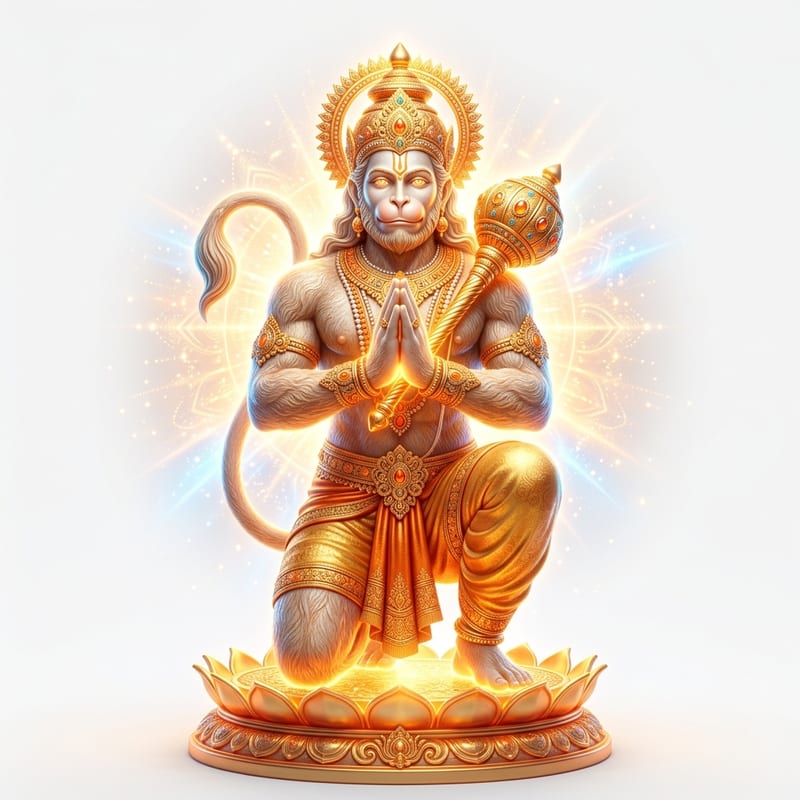
ଅସ୍ଯ ଶ୍ରୀ ହନୁମତ୍ କଵଚସ୍ତୋତ୍ରମହାମନ୍ତ୍ରସ୍ଯ ଵସିଷ୍ଠ ଋଷିଃ ଅନୁଷ୍ଟୁପ୍ ଛନ୍ଦଃ ଶ୍ରୀ ହନୁମାନ୍ ଦେଵତା ମାରୁତାତ୍ମଜ ଇତି ବୀଜଂ ଅଞ୍ଜନାସୂନୁରିତି ଶକ୍ତିଃ ଵାଯୁପୁତ୍ର ଇତି କୀଲକଂ ହନୁମତ୍ପ୍ରସାଦ ସିଦ୍ଧ୍ଯର୍ଥେ ଜପେ ଵିନିଯୋଗଃ ॥
- ଅସ୍ଯ (asya)of this
- ଶ୍ରୀ-ହନୁମତ୍-କଵଚ-ସ୍ତୋତ୍ର-ମହା-ମନ୍ତ୍ରସ୍ଯ (śrī-hanumat-kavaca-stotra-mahā-mantrasya)great mantra that is the Śrī Hanumat Kavaca hymn
- ଵସିଷ୍ଠଃ ଋଷିଃ (vasiṣṭhaḥ ṛṣiḥ)Vasiṣṭha is the seer
- ଅନୁଷ୍ଟୁପ୍ ଛନ୍ଦଃ (anuṣṭup chandaḥ)anuṣṭubh is the metre
- ଶ୍ରୀ-ହନୁମାନ୍ ଦେଵତା (śrī-hanumān devatā)Śrī Hanumān is the deity
- ମାରୁତ-ଆତ୍ମଜଃ ଇତି ବୀଜମ୍ (māruta-ātmajaḥ iti bījam)“son of the Wind” is the seed
- ଅଞ୍ଜନା-ସୂନୁଃ ଇତି ଶକ୍ତିଃ (añjanā-sūnuḥ iti śaktiḥ)“son of Añjanā” is the power
- ଵାଯୁ-ପୁତ୍ରଃ ଇତି କୀଲକମ୍ (vāyu-putraḥ iti kīlakam)“son of Vāyu” is the pin
- ହନୁମତ୍-ପ୍ରସାଦ-ସିଦ୍ଧ୍ଯ୍-ଅର୍ଥେ (hanumat-prasāda-siddhy-arthe)for the winning of Hanumān’s grace
- ଜପେ ଵିନିଯୋଗଃ (jape viniyogaḥ)such is its employment in recitation
ଉଲ୍ଲଙ୍ଘ୍ଯ ସିନ୍ଧୋସ୍ସଲିଲଂ ସଲୀଲଂ
ଯଶ୍ଶୋକଵହ୍ନିଂ ଜନକାତ୍ମଜାଯାଃ ।
ଆଦାଯ ତେନୈଵ ଦଦାହ ଲଙ୍କାଂ
ନମାମି ତଂ ପ୍ରାଞ୍ଜଲିରାଞ୍ଜନେଯମ୍ ॥ 1
ଯଶ୍ଶୋକଵହ୍ନିଂ ଜନକାତ୍ମଜାଯାଃ ।
ଆଦାଯ ତେନୈଵ ଦଦାହ ଲଙ୍କାଂ
ନମାମି ତଂ ପ୍ରାଞ୍ଜଲିରାଞ୍ଜନେଯମ୍ ॥ 1
- ଉଲ୍ଲଙ୍ଘ୍ଯ (ullaṅghya)having leapt clean across
- ସିନ୍ଧୋଃ ସଲିଲମ୍ (sindhoḥ salilam)the water of the sea
- ସଲୀଲମ୍ (salīlam)as if in play
- ଯଃ (yaḥ)who
- ଶୋକ-ଵହ୍ନିମ୍ (śoka-vahnim)the fire of grief
- ଜନକ-ଆତ୍ମଜାଯାଃ (janaka-ātmajāyāḥ)of Janaka’s daughter
- ଆଦାଯ (ādāya)having taken it up
- ତେନ ଏଵ (tena eva)with that very fire
- ଦଦାହ ଲଙ୍କାମ୍ (dadāha laṅkām)he burned Laṅkā
- ନମାମି ତମ୍ (namāmi tam)to him I bow
- ପ୍ରାଞ୍ଜଲିଃ (prāñjaliḥ)with folded hands
- ଆଞ୍ଜନେଯମ୍ (āñjaneyam)to Āñjaneya
ମନୋଜଵଂ ମାରୁତତୁଲ୍ଯଵେଗଂ
ଜିତେନ୍ଦ୍ରିଯଂ ବୁଦ୍ଧିମତାଂ ଵରିଷ୍ଠମ୍ ।
ଵାତାତ୍ମଜଂ ଵାନରଯୂଥମୁଖ୍ଯଂ
ଶ୍ରୀରାମଦୂତଂ ଶିରସା ନମାମି ॥ 2
ଜିତେନ୍ଦ୍ରିଯଂ ବୁଦ୍ଧିମତାଂ ଵରିଷ୍ଠମ୍ ।
ଵାତାତ୍ମଜଂ ଵାନରଯୂଥମୁଖ୍ଯଂ
ଶ୍ରୀରାମଦୂତଂ ଶିରସା ନମାମି ॥ 2
- ମନୋ-ଜଵମ୍ (mano-javam)swift as thought
- ମାରୁତ-ତୁଲ୍ଯ-ଵେଗମ୍ (māruta-tulya-vegam)of speed matching the wind
- ଜିତ-ଇନ୍ଦ୍ରିଯମ୍ (jita-indriyam)conqueror of the senses
- ବୁଦ୍ଧିମତାମ୍ ଵରିଷ୍ଠମ୍ (buddhimatām variṣṭham)best among the wise
- ଵାତ-ଆତ୍ମଜମ୍ (vāta-ātmajam)son of the Wind
- ଵାନର-ଯୂଥ-ମୁଖ୍ଯମ୍ (vānara-yūtha-mukhyam)chief of the monkey host
- ଶ୍ରୀ-ରାମ-ଦୂତମ୍ (śrī-rāma-dūtam)the envoy of Śrī Rāma
- ଶିରସା ନମାମି (śirasā namāmi)I bow with my head
ଉଦ୍ଯଦାଦିତ୍ଯସଙ୍କାଶଂ ଉଦାରଭୁଜଵିକ୍ରମମ୍ ।
କନ୍ଦର୍ପକୋଟିଲାଵଣ୍ଯଂ ସର୍ଵଵିଦ୍ଯାଵିଶାରଦମ୍ ॥ 3
କନ୍ଦର୍ପକୋଟିଲାଵଣ୍ଯଂ ସର୍ଵଵିଦ୍ଯାଵିଶାରଦମ୍ ॥ 3
- ଉଦ୍ଯତ୍-ଆଦିତ୍ଯ-ସଙ୍କାଶମ୍ (udyat-āditya-saṅkāśam)like the rising sun
- ଉଦାର-ଭୁଜ-ଵିକ୍ରମମ୍ (udāra-bhuja-vikramam)of noble strength of arm
- କନ୍ଦର୍ପ-କୋଟି-ଲାଵଣ୍ଯମ୍ (kandarpa-koṭi-lāvaṇyam)of the loveliness of ten million gods of love
- ସର୍ଵ-ଵିଦ୍ଯା-ଵିଶାରଦମ୍ (sarva-vidyā-viśāradam)adept in every branch of learning
ଶ୍ରୀରାମହୃଦଯାନନ୍ଦଂ ଭକ୍ତକଲ୍ପମହୀରୁହମ୍ ।
ଅଭଯଂ ଵରଦଂ ଦୋର୍ଭ୍ଯାଂ କଲଯେ ମାରୁତାତ୍ମଜମ୍ ॥ 4
ଅଭଯଂ ଵରଦଂ ଦୋର୍ଭ୍ଯାଂ କଲଯେ ମାରୁତାତ୍ମଜମ୍ ॥ 4
- ଶ୍ରୀ-ରାମ-ହୃଦଯ-ଆନନ୍ଦମ୍ (śrī-rāma-hṛdaya-ānandam)the joy of Śrī Rāma’s heart
- ଭକ୍ତ-କଲ୍ପ-ମହୀରୁହମ୍ (bhakta-kalpa-mahīruham)the wish-granting tree of the devout
- ଅଭଯମ୍ (abhayam)fearlessness
- ଵରଦମ୍ (varadam)and boons
- ଦୋର୍ଭ୍ଯାମ୍ (dorbhyām)with his two arms
- କଲଯେ (kalaye)I call to mind
- ମାରୁତ-ଆତ୍ମଜମ୍ (māruta-ātmajam)the son of the Wind
ଶ୍ରୀରାମ ରାମ ରାମେତି ରମେ ରାମେ ମନୋରମେ ।
ସହସ୍ରନାମ ତତ୍ତୁଲ୍ଯଂ ରାମନାମ ଵରାନନେ ॥ 5
ସହସ୍ରନାମ ତତ୍ତୁଲ୍ଯଂ ରାମନାମ ଵରାନନେ ॥ 5
- ଶ୍ରୀ-ରାମ ରାମ ରାମ ଇତି (śrī-rāma rāma rāma iti)saying “Śrī Rāma, Rāma, Rāma”
- ରମେ (rame)I take delight
- ରାମେ ମନୋରମେ (rāme manorame)in Rāma who delights the mind
- ସହସ୍ର-ନାମ (sahasra-nāma)a thousand names
- ତତ୍-ତୁଲ୍ଯମ୍ (tat-tulyam)equal to that
- ରାମ-ନାମ (rāma-nāma)is the name of Rāma
- ଵର-ଆନନେ (vara-ānane)O fair of face
ପାଦୌ ଵାଯୁସୁତଃ ପାତୁ ରାମଦୂତସ୍ତଦଙ୍ଗୁଲୀଃ ।
ଗୁଲ୍ଫୌ ହରୀଶ୍ଵରଃ ପାତୁ ଜଙ୍ଘେ ଚାର୍ଣଵଲଙ୍ଘନଃ ॥ 6
ଗୁଲ୍ଫୌ ହରୀଶ୍ଵରଃ ପାତୁ ଜଙ୍ଘେ ଚାର୍ଣଵଲଙ୍ଘନଃ ॥ 6
- ପାଦୌ (pādau)the two feet
- ଵାଯୁ-ସୁତଃ (vāyu-sutaḥ)the son of the Wind
- ପାତୁ (pātu)may he guard
- ରାମ-ଦୂତଃ (rāma-dūtaḥ)the envoy of Rāma
- ତତ୍-ଅଙ୍ଗୁଲୀଃ (tat-aṅgulīḥ)their toes
- ଗୁଲ୍ଫୌ (gulphau)the two ankles
- ହରି-ଈଶ୍ଵରଃ (hari-īśvaraḥ)lord of the tawny host
- ପାତୁ (pātu)may he guard
- ଜଙ୍ଘେ (jaṅghe)the two calves
- ଚ (ca)and
- ଅର୍ଣଵ-ଲଙ୍ଘନଃ (arṇava-laṅghanaḥ)the leaper of the ocean
ଜାନୁନୀ ମାରୁତିଃ ପାତୁ ଊରୂ ପାତ୍ଵସୁରାନ୍ତକଃ ।
ଗୁହ୍ଯଂ ଵଜ୍ରତନୁଃ ପାତୁ ଜଘନଂ ତୁ ଜଗଦ୍ଧିତଃ ॥ 7
ଗୁହ୍ଯଂ ଵଜ୍ରତନୁଃ ପାତୁ ଜଘନଂ ତୁ ଜଗଦ୍ଧିତଃ ॥ 7
- ଜାନୁନୀ (jānunī)the two knees
- ମାରୁତିଃ (mārutiḥ)Māruti
- ପାତୁ (pātu)may he guard
- ଊରୂ (ūrū)the two thighs
- ଅସୁର-ଅନ୍ତକଃ (asura-antakaḥ)the ender of asuras
- ଗୁହ୍ଯମ୍ (guhyam)the secret parts
- ଵଜ୍ର-ତନୁଃ (vajra-tanuḥ)of adamantine body
- ପାତୁ (pātu)may he guard
- ଜଘନମ୍ (jaghanam)the hips
- ତୁ (tu)and
- ଜଗତ୍-ହିତଃ (jagat-hitaḥ)the good of the world
ଆଞ୍ଜନେଯଃ କଟିଂ ପାତୁ ନାଭିଂ ସୌମିତ୍ରିଜୀଵନଃ ।
ଉଦରଂ ପାତୁ ହୃଦ୍ଗେହୀ ହୃଦଯଂ ଚ ମହାବଲଃ ॥ 8
ଉଦରଂ ପାତୁ ହୃଦ୍ଗେହୀ ହୃଦଯଂ ଚ ମହାବଲଃ ॥ 8
- ସୌମିତ୍ରିଜୀଵନଃ (Saumitrijīvana)giver of life to Lakṣmaṇa
- ହୃଦ୍ଗେହୀ (Hṛdgēhī)dweller in the heart
- ମହାବଲଃ (Mahābala)the supremely powerful
ଵକ୍ଷୋ ଵାଲାଯୁଧଃ ପାତୁ ସ୍ତନୌ ଚାଽମିତଵିକ୍ରମଃ ।
ପାର୍ଶ୍ଵୌ ଜିତେନ୍ଦ୍ରିଯଃ ପାତୁ ବାହୂ ସୁଗ୍ରୀଵମନ୍ତ୍ରକୃତ୍ ॥ 9
ପାର୍ଶ୍ଵୌ ଜିତେନ୍ଦ୍ରିଯଃ ପାତୁ ବାହୂ ସୁଗ୍ରୀଵମନ୍ତ୍ରକୃତ୍ ॥ 9
- ଵକ୍ଷଃ (vakṣaḥ)the chest
- ଵାଲ-ଆଯୁଧଃ (vāla-āyudhaḥ)whose weapon is his own tail
- ପାତୁ (pātu)may he guard
- ସ୍ତନୌ (stanau)the breast
- ଚ (ca)and
- ଅମିତ-ଵିକ୍ରମଃ (amita-vikramaḥ)of measureless valour
- ପାର୍ଶ୍ଵୌ (pārśvau)the two sides
- ଜିତ-ଇନ୍ଦ୍ରିଯଃ (jita-indriyaḥ)conqueror of the senses
- ପାତୁ (pātu)may he guard
- ବାହୂ (bāhū)the two arms
- ସୁଗ୍ରୀଵ-ମନ୍ତ୍ର-କୃତ୍ (sugrīva-mantra-kṛt)who took counsel with Sugrīva
କରାଵକ୍ଷ ଜଯୀ ପାତୁ ହନୁମାଂଶ୍ଚ ତଦଙ୍ଗୁଲୀଃ ।
ପୃଷ୍ଠଂ ଭଵିଷ୍ଯଦ୍ର୍ବହ୍ମା ଚ ସ୍କନ୍ଧୌ ମତି ମତାଂ ଵରଃ ॥ 10
ପୃଷ୍ଠଂ ଭଵିଷ୍ଯଦ୍ର୍ବହ୍ମା ଚ ସ୍କନ୍ଧୌ ମତି ମତାଂ ଵରଃ ॥ 10
- କରୌ (karau)the two hands
- ଅକ୍ଷ-ଜଯୀ (akṣa-jayī)the conqueror of Akṣa
- ପାତୁ (pātu)may he guard
- ହନୁମାନ୍ (hanumān)Hanumān
- ଚ (ca)and
- ତତ୍-ଅଙ୍ଗୁଲୀଃ (tat-aṅgulīḥ)their fingers
- ପୃଷ୍ଠମ୍ (pṛṣṭham)the back
- ଭଵିଷ୍ଯତ୍-ବ୍ରହ୍ମା (bhaviṣyat-brahmā)the Brahmā that is yet to be
- ଚ (ca)and
- ସ୍କନ୍ଧୌ (skandhau)the two shoulders
- ମତିମତାମ୍ ଵରଃ (matimatām varaḥ)the best of those who have understanding
କଣ୍ଠଂ ପାତୁ କପିଶ୍ରେଷ୍ଠୋ ମୁଖଂ ରାଵଣଦର୍ପହା ।
ଵକ୍ତ୍ରଂ ଚ ଵକ୍ତୃପ୍ରଵଣୋ ନେତ୍ରେ ଦେଵଗଣସ୍ତୁତଃ ॥ 11
ଵକ୍ତ୍ରଂ ଚ ଵକ୍ତୃପ୍ରଵଣୋ ନେତ୍ରେ ଦେଵଗଣସ୍ତୁତଃ ॥ 11
- କପିଶ୍ରେଷ୍ଠୋ (Kapiśrēṣṭha)foremost among monkeys
- ରାଵଣଦର୍ପହା (Rāvaṇadarpahā)destroyer of Rāvaṇa's pride
- ଵକ୍ତୃପ୍ରଵଣୋ (Vaktṛpravaṇa)gifted with eloquent speech
- ଦେଵଗଣସ୍ତୁତଃ (Dēvagaṇastuta)praised by the host of gods
ବ୍ରହ୍ମାସ୍ତ୍ରସନ୍ମାନକରୋ ଭ୍ରୁଵୌ ମେ ପାତୁ ସର୍ଵଦା ।
କାମରୂପଃ କପୋଲେ ମେ ଫାଲଂ ଵଜ୍ରନଖୋଽଵତୁ ॥ 12
କାମରୂପଃ କପୋଲେ ମେ ଫାଲଂ ଵଜ୍ରନଖୋଽଵତୁ ॥ 12
- ବ୍ରହ୍ମାସ୍ତ୍ର-ସନ୍ମାନ-କରଃ (brahmāstra-sanmāna-karaḥ)who did honour to the Brahmāstra
- ଭ୍ରୁଵୌ (bhruvau)the two brows
- ମେ (me)my
- ପାତୁ (pātu)may he guard
- ସର୍ଵଦା (sarvadā)always
- କାମ-ରୂପଃ (kāma-rūpaḥ)who takes what form he wills
- କପୋଲେ (kapole)the two cheeks
- ମେ (me)my
- ଫାଲମ୍ (phālam)the brow
- ଵଜ୍ର-ନଖଃ (vajra-nakhaḥ)of adamantine claws
- ଅଵତୁ (avatu)may he guard
ଶିରୋ ମେ ପାତୁ ସତତଂ ଜାନକୀଶୋକନାଶନଃ ।
ଶ୍ରୀରାମଭକ୍ତପ୍ରଵରଃ ପାତୁ ସର୍ଵକଲେବରମ୍ ॥ 13
ଶ୍ରୀରାମଭକ୍ତପ୍ରଵରଃ ପାତୁ ସର୍ଵକଲେବରମ୍ ॥ 13
- ଶିରଃ (śiraḥ)the head
- ମେ (me)my
- ପାତୁ (pātu)may he guard
- ସତତମ୍ (satatam)unceasingly
- ଜାନକୀ-ଶୋକ-ନାଶନଃ (jānakī-śoka-nāśanaḥ)destroyer of Jānakī’s grief
- ଶ୍ରୀ-ରାମ-ଭକ୍ତ-ପ୍ରଵରଃ (śrī-rāma-bhakta-pravaraḥ)foremost among Śrī Rāma’s devotees
- ପାତୁ (pātu)may he guard
- ସର୍ଵ-କଲେବରମ୍ (sarva-kalebaram)the whole body
ମାମହ୍ନି ପାତୁ ସର୍ଵଜ୍ଞଃ ପାତୁ ରାତ୍ରୌ ମହାଯଶାଃ ।
ଵିଵସ୍ଵଦନ୍ତେଵାସୀ ଚ ସନ୍ଧ୍ଯଯୋଃ ପାତୁ ସର୍ଵଦା ॥ 14
ଵିଵସ୍ଵଦନ୍ତେଵାସୀ ଚ ସନ୍ଧ୍ଯଯୋଃ ପାତୁ ସର୍ଵଦା ॥ 14
- ମାମ୍ (mām)me
- ଅହ୍ନି (ahni)by day
- ପାତୁ (pātu)may he guard
- ସର୍ଵଜ୍ଞଃ (sarvajñaḥ)the all-knowing
- ପାତୁ (pātu)may he guard
- ରାତ୍ରୌ (rātrau)by night
- ମହା-ଯଶାଃ (mahā-yaśāḥ)of great renown
- ଵିଵସ୍ଵତ୍-ଅନ୍ତେଵାସୀ (vivasvat-antevāsī)the pupil who dwelt beside the Sun
- ଚ (ca)and
- ସନ୍ଧ୍ଯଯୋଃ (sandhyayoḥ)at the two twilights
- ପାତୁ ସର୍ଵଦା (pātu sarvadā)may he guard always
ବ୍ରହ୍ମାଦିଦେଵତାଦତ୍ତଵରଃ ପାତୁ ନିରନ୍ତରମ୍ ।
ଯ ଇଦଂ କଵଚଂ ନିତ୍ଯଂ ପଠେଚ୍ଚ ଶୃଣୁଯାନ୍ନରଃ ॥ 15
ଯ ଇଦଂ କଵଚଂ ନିତ୍ଯଂ ପଠେଚ୍ଚ ଶୃଣୁଯାନ୍ନରଃ ॥ 15
- ବ୍ରହ୍ମ-ଆଦି-ଦେଵତା-ଦତ୍ତ-ଵରଃ (brahma-ādi-devatā-datta-varaḥ)he to whom Brahmā and the gods gave boons
- ପାତୁ (pātu)may he guard
- ନିରନ୍ତରମ୍ (nirantaram)without a break
- ଯଃ (yaḥ)whoever
- ଇଦମ୍ କଵଚମ୍ (idam kavacam)this armour
- ନିତ୍ଯମ୍ (nityam)daily
- ପଠେତ୍ (paṭhet)recites
- ଚ (ca)and
- ଶୃଣୁଯାତ୍ (śṛṇuyāt)hears
- ନରଃ (naraḥ)a man
ଦୀର୍ଘମାଯୁରଵାପ୍ନୋତି ବଲଂ ଦୃଷ୍ଟିଂ ଚ ଵିନ୍ଦତି ।
ପାଦାକ୍ରାନ୍ତା ଭଵିଷ୍ଯନ୍ତି ପଠତସ୍ତସ୍ଯ ଶତ୍ରଵଃ ।
ସ୍ଥିରାଂ ସୁକୀର୍ତିମାରୋଗ୍ଯଂ ଲଭତେ ଶାଶ୍ଵତଂ ସୁଖମ୍ ॥ 16
ପାଦାକ୍ରାନ୍ତା ଭଵିଷ୍ଯନ୍ତି ପଠତସ୍ତସ୍ଯ ଶତ୍ରଵଃ ।
ସ୍ଥିରାଂ ସୁକୀର୍ତିମାରୋଗ୍ଯଂ ଲଭତେ ଶାଶ୍ଵତଂ ସୁଖମ୍ ॥ 16
- ଦୀର୍ଘମ୍ ଆଯୁଃ (dīrgham āyuḥ)long life
- ଅଵାପ୍ନୋତି (avāpnoti)he attains
- ବଲମ୍ (balam)strength
- ଦୃଷ୍ଟିମ୍ (dṛṣṭim)clearness of sight
- ଚ (ca)and
- ଵିନ୍ଦତି (vindati)he finds
- ପାଦ-ଆକ୍ରାନ୍ତାଃ (pāda-ākrāntāḥ)trodden beneath his foot
- ଭଵିଷ୍ଯନ୍ତି (bhaviṣyanti)shall be
- ପଠତଃ ତସ୍ଯ (paṭhataḥ tasya)of him who recites it
- ଶତ୍ରଵଃ (śatravaḥ)the enemies
- ସ୍ଥିରାମ୍ ସୁ-କୀର୍ତିମ୍ (sthirām su-kīrtim)lasting good repute
- ଆରୋଗ୍ଯମ୍ (ārogyam)health
- ଲଭତେ (labhate)he gains
- ଶାଶ୍ଵତମ୍ ସୁଖମ୍ (śāśvatam sukham)happiness that does not end
ଇତି ନିଗଦିତଵାକ୍ଯଵୃତ୍ତ ତୁଭ୍ଯଂ
ସକଲମପି ସ୍ଵଯମାଞ୍ଜନେଯ ଵୃତ୍ତମ୍ ।
ଅପି ନିଜଜନରକ୍ଷଣୈକଦୀକ୍ଷୋ
ଵଶଗ ତଦୀଯ ମହାମନୁପ୍ରଭାଵଃ ॥ 17
ସକଲମପି ସ୍ଵଯମାଞ୍ଜନେଯ ଵୃତ୍ତମ୍ ।
ଅପି ନିଜଜନରକ୍ଷଣୈକଦୀକ୍ଷୋ
ଵଶଗ ତଦୀଯ ମହାମନୁପ୍ରଭାଵଃ ॥ 17
- ଇତି (iti)thus
- ନିଗଦିତ-ଵାକ୍ଯ-ଵୃତ୍ତ (nigadita-vākya-vṛtta)in these spoken verse-measures
- ତୁଭ୍ଯମ୍ (tubhyam)for you
- ସକଲମ୍ ଅପି (sakalam api)the whole of it
- ସ୍ଵଯମ୍ (svayam)itself
- ଆଞ୍ଜନେଯ (āñjaneya)O Āñjaneya
- ଵୃତ୍ତମ୍ (vṛttam)your own doing
- ଅପି (api)and
- ନିଜ-ଜନ-ରକ୍ଷଣ-ଏକ-ଦୀକ୍ଷଃ (nija-jana-rakṣaṇa-eka-dīkṣaḥ)O consecrated to the guarding of your own people and to nothing else
- ଵଶ-ଗ (vaśa-ga)ever at your command
- ତଦୀଯ-ମହା-ମନୁ-ପ୍ରଭାଵଃ (tadīya-mahā-manu-prabhāvaḥ)the power of his great mantra
ଇତି ଶ୍ରୀ ହନୁମତ୍ କଵଚମ୍ ॥