
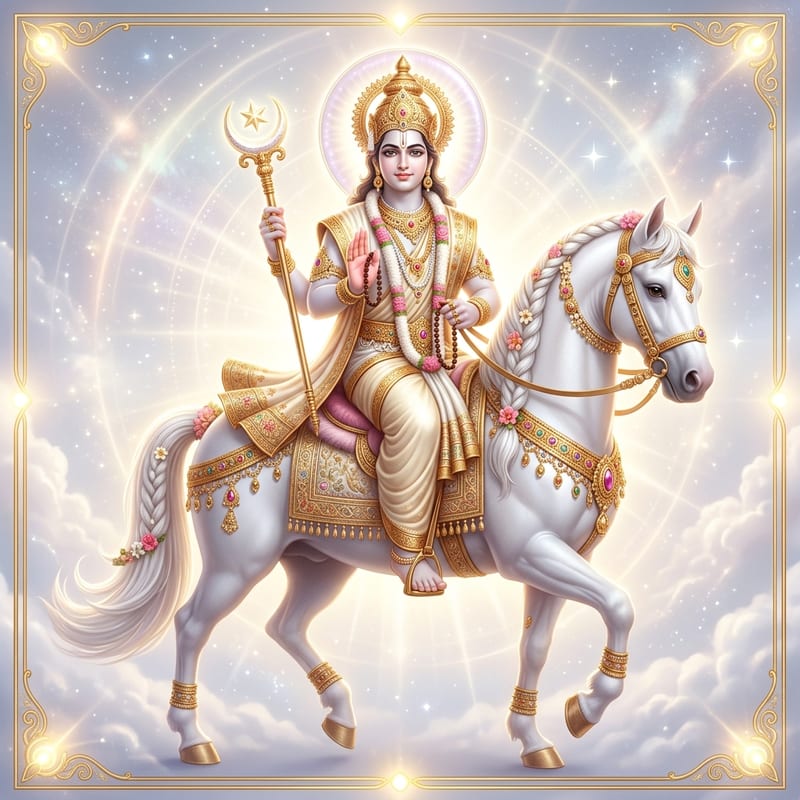
ଧ୍ଯାନମ୍
ମୃଣାଲକୁନ୍ଦେନ୍ଦୁପଯୋଜସୁପ୍ରଭଂ
ପୀତାମ୍ବରଂ ପ୍ରସୃତମକ୍ଷମାଲିନମ୍ ।
ସମସ୍ତଶାସ୍ତ୍ରାର୍ଥଵିଧିଂ ମହାନ୍ତଂ
ଧ୍ଯାଯେତ୍କଵିଂ ଵାଞ୍ଛିତମର୍ଥସିଦ୍ଧଯେ ॥ 1 ॥
ପୀତାମ୍ବରଂ ପ୍ରସୃତମକ୍ଷମାଲିନମ୍ ।
ସମସ୍ତଶାସ୍ତ୍ରାର୍ଥଵିଧିଂ ମହାନ୍ତଂ
ଧ୍ଯାଯେତ୍କଵିଂ ଵାଞ୍ଛିତମର୍ଥସିଦ୍ଧଯେ ॥ 1 ॥
- ମୃଣାଲ-କୁନ୍ଦ-ଇନ୍ଦୁ-ପଯୋଜ-ସୁପ୍ରଭମ୍ (mṛṇāla-kunda-indu-payoja-suprabham)of fair lustre like lotus stalk, jasmine, moon and lotus
- ପୀତ-ଅମ୍ବରମ୍ (pīta-ambaram)robed in yellow
- ପ୍ରସୃତମ୍ (prasṛtam)with hand outstretched
- ଅକ୍ଷ-ମାଲିନମ୍ (akṣa-mālinam)bearing a rosary
- ସମସ୍ତ-ଶାସ୍ତ୍ର-ଅର୍ଥ-ଵିଧିମ୍ (samasta-śāstra-artha-vidhim)the ordainer of the sense of every scripture
- ମହାନ୍ତମ୍ (mahāntam)the great one
- ଧ୍ଯାଯେତ୍ (dhyāyet)one should meditate upon
- କଵିମ୍ (kavim)Kavi, the seer, that is Śukra
- ଵାଞ୍ଛିତମ୍ ଅର୍ଥ-ସିଦ୍ଧଯେ (vāñchitam artha-siddhaye)for the winning of the thing desired
ଅଥ ଶୁକ୍ରକଵଚମ୍
- ଅଥ (atha)now here begins
- ଶୁକ୍ର-କଵଚମ୍ (śukra-kavacam)the armour of Śukra
ଶିରୋ ମେ ଭାର୍ଗଵଃ ପାତୁ ଭାଲଂ ପାତୁ ଗ୍ରହାଧିପଃ ।
ନେତ୍ରେ ଦୈତ୍ଯଗୁରୁଃ ପାତୁ ଶ୍ରୋତ୍ରେ ମେ ଚନ୍ଦନଦ୍ଯୁତିଃ ॥ 2 ॥
ନେତ୍ରେ ଦୈତ୍ଯଗୁରୁଃ ପାତୁ ଶ୍ରୋତ୍ରେ ମେ ଚନ୍ଦନଦ୍ଯୁତିଃ ॥ 2 ॥
- ଶିରଃ (śiraḥ)the head
- ମେ (me)my
- ଭାର୍ଗଵଃ (bhārgavaḥ)Bhārgava, son of Bhṛgu
- ପାତୁ (pātu)may he guard
- ଭାଲମ୍ (bhālam)the brow
- ଗ୍ରହ-ଅଧିପଃ (graha-adhipaḥ)the lord of planets
- ନେତ୍ରେ (netre)the two eyes
- ଦୈତ୍ଯ-ଗୁରୁଃ (daitya-guruḥ)the preceptor of the daityas
- ଶ୍ରୋତ୍ରେ (śrotre)the two ears
- ଚନ୍ଦନ-ଦ୍ଯୁତିଃ (candana-dyutiḥ)he whose glow is of sandalwood
ପାତୁ ମେ ନାସିକାଂ କାଵ୍ଯୋ ଵଦନଂ ଦୈତ୍ଯଵନ୍ଦିତଃ ।
ଵଚନଂ ଚୋଶନାଃ ପାତୁ କଣ୍ଠଂ ଶ୍ରୀକଣ୍ଠଭକ୍ତିମାନ୍ ॥ 3 ॥
ଵଚନଂ ଚୋଶନାଃ ପାତୁ କଣ୍ଠଂ ଶ୍ରୀକଣ୍ଠଭକ୍ତିମାନ୍ ॥ 3 ॥
- ପାତୁ (pātu)may he guard
- ମେ (me)my
- ନାସିକାମ୍ (nāsikām)the nose
- କାଵ୍ଯଃ (kāvyaḥ)Kāvya, son of Kavi
- ଵଦନମ୍ (vadanam)the face
- ଦୈତ୍ଯ-ଵନ୍ଦିତଃ (daitya-vanditaḥ)he whom the daityas revere
- ଵଚନମ୍ (vacanam)the speech
- ଚ (ca)and
- ଉଶନାଃ (uśanāḥ)Uśanas
- କଣ୍ଠମ୍ (kaṇṭham)the throat
- ଶ୍ରୀକଣ୍ଠ-ଭକ୍ତିମାନ୍ (śrīkaṇṭha-bhaktimān)he who is devoted to Śrīkaṇṭha, Śiva
ଭୁଜୌ ତେଜୋନିଧିଃ ପାତୁ କୁକ୍ଷିଂ ପାତୁ ମନୋଵ୍ରଜଃ ।
ନାଭିଂ ଭୃଗୁସୁତଃ ପାତୁ ମଧ୍ଯଂ ପାତୁ ମହୀପ୍ରିଯଃ ॥ 4 ॥
ନାଭିଂ ଭୃଗୁସୁତଃ ପାତୁ ମଧ୍ଯଂ ପାତୁ ମହୀପ୍ରିଯଃ ॥ 4 ॥
- ଭୁଜୌ (bhujau)the two arms
- ତେଜୋ-ନିଧିଃ (tejo-nidhiḥ)the treasury of splendour
- ପାତୁ (pātu)may he guard
- କୁକ୍ଷିମ୍ (kukṣim)the belly
- ମନୋ-ଵ୍ରଜଃ (mano-vrajaḥ)he who moves with the swiftness of thought
- ନାଭିମ୍ (nābhim)the navel
- ଭୃଗୁ-ସୁତଃ (bhṛgu-sutaḥ)the son of Bhṛgu
- ମଧ୍ଯମ୍ (madhyam)the waist
- ମହୀ-ପ୍ରିଯଃ (mahī-priyaḥ)the beloved of the earth
କଟିଂ ମେ ପାତୁ ଵିଶ୍ଵାତ୍ମା ଉରୂ ମେ ସୁରପୂଜିତଃ ।
ଜାନୁଂ ଜାଡ୍ଯହରଃ ପାତୁ ଜଙ୍ଘେ ଜ୍ଞାନଵତାଂ ଵରଃ ॥ 5 ॥
ଜାନୁଂ ଜାଡ୍ଯହରଃ ପାତୁ ଜଙ୍ଘେ ଜ୍ଞାନଵତାଂ ଵରଃ ॥ 5 ॥
- କଟିମ୍ (kaṭim)the hips
- ମେ (me)my
- ପାତୁ (pātu)may he guard
- ଵିଶ୍ଵ-ଆତ୍ମା (viśva-ātmā)the Self of all
- ଊରୂ (ūrū)the two thighs
- ସୁର-ପୂଜିତଃ (sura-pūjitaḥ)he whom the gods worship
- ଜାନୁମ୍ (jānum)the knee
- ଜାଡ୍ଯ-ହରଃ (jāḍya-haraḥ)the remover of dullness
- ଜଙ୍ଘେ (jaṅghe)the two calves
- ଜ୍ଞାନଵତାମ୍ ଵରଃ (jñānavatām varaḥ)the best of those who know
ଗୁଲ୍ଫୌ ଗୁଣନିଧିଃ ପାତୁ ପାତୁ ପାଦୌ ଵରାମ୍ବରଃ ।
ସର୍ଵାଣ୍ଯଙ୍ଗାନି ମେ ପାତୁ ସ୍ଵର୍ଣମାଲାପରିଷ୍କୃତଃ ॥ 6 ॥
ସର୍ଵାଣ୍ଯଙ୍ଗାନି ମେ ପାତୁ ସ୍ଵର୍ଣମାଲାପରିଷ୍କୃତଃ ॥ 6 ॥
- ଗୁଲ୍ଫୌ (gulphau)the two ankles
- ଗୁଣ-ନିଧିଃ (guṇa-nidhiḥ)the treasury of virtues
- ପାତୁ (pātu)may he guard
- ପାଦୌ (pādau)the two feet
- ଵର-ଅମ୍ବରଃ (vara-ambaraḥ)he of excellent raiment
- ସର୍ଵାଣି ଅଙ୍ଗାନି (sarvāṇi aṅgāni)all the limbs
- ମେ (me)my
- ସ୍ଵର୍ଣ-ମାଲା-ପରିଷ୍କୃତଃ (svarṇa-mālā-pariṣkṛtaḥ)he arrayed in a golden garland
ଫଲଶ୍ରୁତିଃ
ଯ ଇଦଂ କଵଚଂ ଦିଵ୍ଯଂ ପଠତି ଶ୍ରଦ୍ଧଯାନ୍ଵିତଃ ।
ନ ତସ୍ଯ ଜାଯତେ ପୀଡା ଭାର୍ଗଵସ୍ଯ ପ୍ରସାଦତଃ ॥ 7 ॥
ଯ ଇଦଂ କଵଚଂ ଦିଵ୍ଯଂ ପଠତି ଶ୍ରଦ୍ଧଯାନ୍ଵିତଃ ।
ନ ତସ୍ଯ ଜାଯତେ ପୀଡା ଭାର୍ଗଵସ୍ଯ ପ୍ରସାଦତଃ ॥ 7 ॥
- ଫଲ-ଶ୍ରୁତିଃ (phala-śrutiḥ)the declaration of the fruit
- ଯଃ (yaḥ)whoever
- ଇଦମ୍ (idam)this
- କଵଚମ୍ (kavacam)armour
- ଦିଵ୍ଯମ୍ (divyam)divine
- ପଠତି (paṭhati)recites
- ଶ୍ରଦ୍ଧଯା ଅନ୍ଵିତଃ (śraddhayā anvitaḥ)filled with faith
- ନ (na)not
- ତସ୍ଯ (tasya)for him
- ଜାଯତେ (jāyate)arises
- ପୀଡା (pīḍā)affliction
- ଭାର୍ଗଵସ୍ଯ ପ୍ରସାଦତଃ (bhārgavasya prasādataḥ)by the grace of Bhārgava
॥ ଇତି ଶ୍ରୀବ୍ରହ୍ମାଣ୍ଡପୁରାଣେ ଶୁକ୍ରକଵଚଂ ସମ୍ପୂର୍ଣମ୍ ॥