
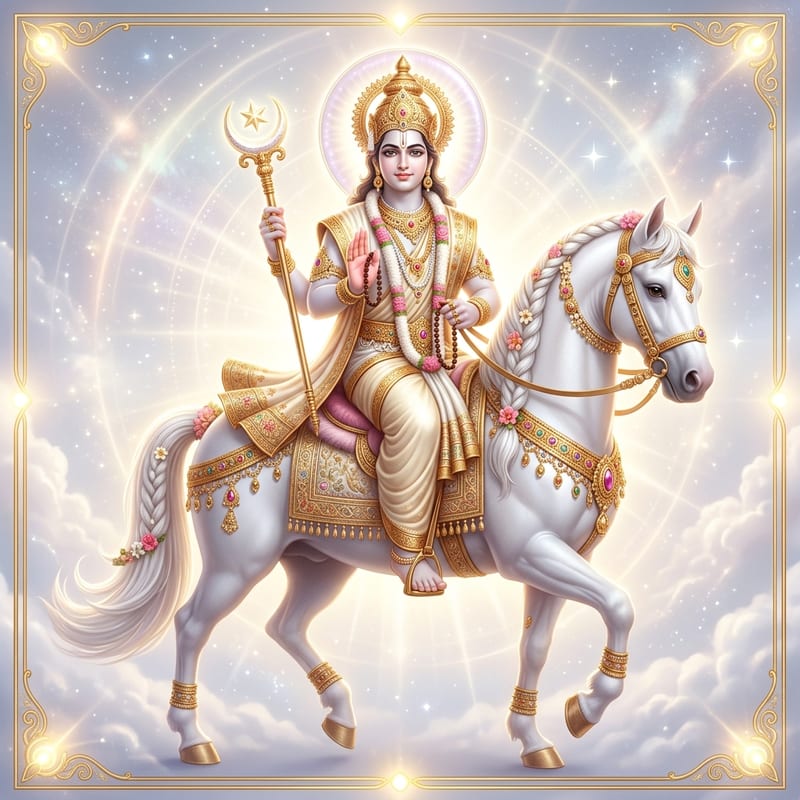
ध्यानम्
मृणालकुन्देन्दुपयोजसुप्रभं
पीताम्बरं प्रसृतमक्षमालिनम् ।
समस्तशास्त्रार्थविधिं महान्तं
ध्यायेत्कविं वाञ्छितमर्थसिद्धये ॥ 1 ॥
पीताम्बरं प्रसृतमक्षमालिनम् ।
समस्तशास्त्रार्थविधिं महान्तं
ध्यायेत्कविं वाञ्छितमर्थसिद्धये ॥ 1 ॥
- मृणाल-कुन्द-इन्दु-पयोज-सुप्रभम् (mṛṇāla-kunda-indu-payoja-suprabham)of fair lustre like lotus stalk, jasmine, moon and lotus
- पीत-अम्बरम् (pīta-ambaram)robed in yellow
- प्रसृतम् (prasṛtam)with hand outstretched
- अक्ष-मालिनम् (akṣa-mālinam)bearing a rosary
- समस्त-शास्त्र-अर्थ-विधिम् (samasta-śāstra-artha-vidhim)the ordainer of the sense of every scripture
- महान्तम् (mahāntam)the great one
- ध्यायेत् (dhyāyet)one should meditate upon
- कविम् (kavim)Kavi, the seer, that is Śukra
- वाञ्छितम् अर्थ-सिद्धये (vāñchitam artha-siddhaye)for the winning of the thing desired
अथ शुक्रकवचम्
- अथ (atha)now here begins
- शुक्र-कवचम् (śukra-kavacam)the armour of Śukra
शिरो मे भार्गवः पातु भालं पातु ग्रहाधिपः ।
नेत्रे दैत्यगुरुः पातु श्रोत्रे मे चन्दनद्युतिः ॥ 2 ॥
नेत्रे दैत्यगुरुः पातु श्रोत्रे मे चन्दनद्युतिः ॥ 2 ॥
- शिरः (śiraḥ)the head
- मे (me)my
- भार्गवः (bhārgavaḥ)Bhārgava, son of Bhṛgu
- पातु (pātu)may he guard
- भालम् (bhālam)the brow
- ग्रह-अधिपः (graha-adhipaḥ)the lord of planets
- नेत्रे (netre)the two eyes
- दैत्य-गुरुः (daitya-guruḥ)the preceptor of the daityas
- श्रोत्रे (śrotre)the two ears
- चन्दन-द्युतिः (candana-dyutiḥ)he whose glow is of sandalwood
पातु मे नासिकां काव्यो वदनं दैत्यवन्दितः ।
वचनं चोशनाः पातु कण्ठं श्रीकण्ठभक्तिमान् ॥ 3 ॥
वचनं चोशनाः पातु कण्ठं श्रीकण्ठभक्तिमान् ॥ 3 ॥
- पातु (pātu)may he guard
- मे (me)my
- नासिकाम् (nāsikām)the nose
- काव्यः (kāvyaḥ)Kāvya, son of Kavi
- वदनम् (vadanam)the face
- दैत्य-वन्दितः (daitya-vanditaḥ)he whom the daityas revere
- वचनम् (vacanam)the speech
- च (ca)and
- उशनाः (uśanāḥ)Uśanas
- कण्ठम् (kaṇṭham)the throat
- श्रीकण्ठ-भक्तिमान् (śrīkaṇṭha-bhaktimān)he who is devoted to Śrīkaṇṭha, Śiva
भुजौ तेजोनिधिः पातु कुक्षिं पातु मनोव्रजः ।
नाभिं भृगुसुतः पातु मध्यं पातु महीप्रियः ॥ 4 ॥
नाभिं भृगुसुतः पातु मध्यं पातु महीप्रियः ॥ 4 ॥
- भुजौ (bhujau)the two arms
- तेजो-निधिः (tejo-nidhiḥ)the treasury of splendour
- पातु (pātu)may he guard
- कुक्षिम् (kukṣim)the belly
- मनो-व्रजः (mano-vrajaḥ)he who moves with the swiftness of thought
- नाभिम् (nābhim)the navel
- भृगु-सुतः (bhṛgu-sutaḥ)the son of Bhṛgu
- मध्यम् (madhyam)the waist
- मही-प्रियः (mahī-priyaḥ)the beloved of the earth
कटिं मे पातु विश्वात्मा उरू मे सुरपूजितः ।
जानुं जाड्यहरः पातु जङ्घे ज्ञानवतां वरः ॥ 5 ॥
जानुं जाड्यहरः पातु जङ्घे ज्ञानवतां वरः ॥ 5 ॥
- कटिम् (kaṭim)the hips
- मे (me)my
- पातु (pātu)may he guard
- विश्व-आत्मा (viśva-ātmā)the Self of all
- ऊरू (ūrū)the two thighs
- सुर-पूजितः (sura-pūjitaḥ)he whom the gods worship
- जानुम् (jānum)the knee
- जाड्य-हरः (jāḍya-haraḥ)the remover of dullness
- जङ्घे (jaṅghe)the two calves
- ज्ञानवताम् वरः (jñānavatām varaḥ)the best of those who know
गुल्फौ गुणनिधिः पातु पातु पादौ वराम्बरः ।
सर्वाण्यङ्गानि मे पातु स्वर्णमालापरिष्कृतः ॥ 6 ॥
सर्वाण्यङ्गानि मे पातु स्वर्णमालापरिष्कृतः ॥ 6 ॥
- गुल्फौ (gulphau)the two ankles
- गुण-निधिः (guṇa-nidhiḥ)the treasury of virtues
- पातु (pātu)may he guard
- पादौ (pādau)the two feet
- वर-अम्बरः (vara-ambaraḥ)he of excellent raiment
- सर्वाणि अङ्गानि (sarvāṇi aṅgāni)all the limbs
- मे (me)my
- स्वर्ण-माला-परिष्कृतः (svarṇa-mālā-pariṣkṛtaḥ)he arrayed in a golden garland
फलश्रुतिः
य इदं कवचं दिव्यं पठति श्रद्धयान्वितः ।
न तस्य जायते पीडा भार्गवस्य प्रसादतः ॥ 7 ॥
य इदं कवचं दिव्यं पठति श्रद्धयान्वितः ।
न तस्य जायते पीडा भार्गवस्य प्रसादतः ॥ 7 ॥
- फल-श्रुतिः (phala-śrutiḥ)the declaration of the fruit
- यः (yaḥ)whoever
- इदम् (idam)this
- कवचम् (kavacam)armour
- दिव्यम् (divyam)divine
- पठति (paṭhati)recites
- श्रद्धया अन्वितः (śraddhayā anvitaḥ)filled with faith
- न (na)not
- तस्य (tasya)for him
- जायते (jāyate)arises
- पीडा (pīḍā)affliction
- भार्गवस्य प्रसादतः (bhārgavasya prasādataḥ)by the grace of Bhārgava
॥ इति श्रीब्रह्माण्डपुराणे शुक्रकवचं सम्पूर्णम् ॥