
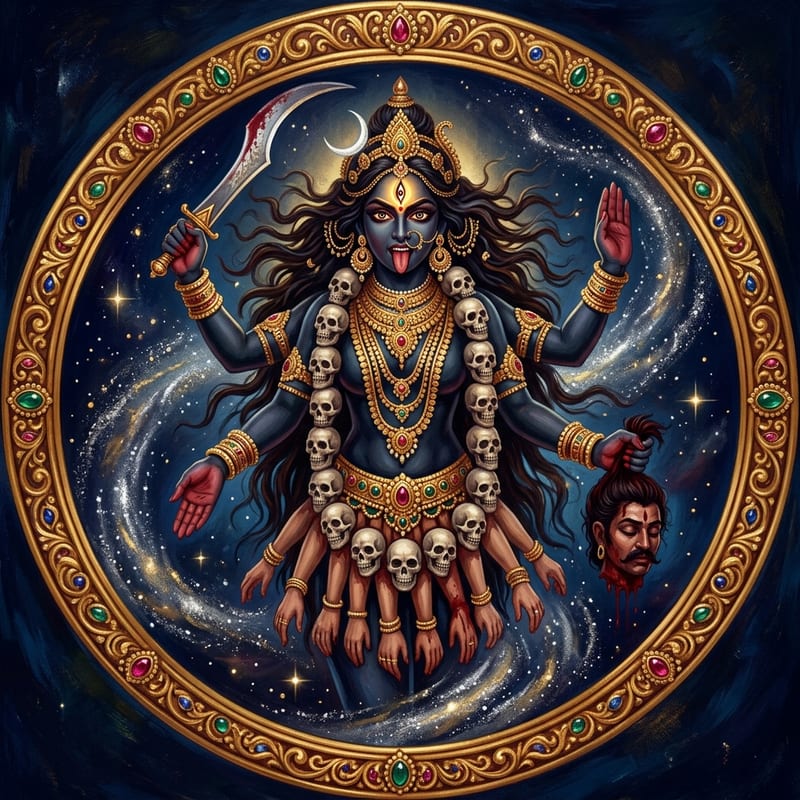
ब्रह्मोवाच
शृणु वत्स प्रवक्ष्यामि आद्यास्तोत्रं महाफलम् ।
यः पठेत् सततं भक्त्या स एव विष्णुवल्लभः ॥ 1 ॥
यः पठेत् सततं भक्त्या स एव विष्णुवल्लभः ॥ 1 ॥
- शृणु (śṛṇu)listen
- वत्स (vatsa)dear child
- प्रवक्ष्यामि (pravakṣyāmi)I shall declare
- आद्या-स्तोत्रम् (ādyā-stotram)the hymn to Ādyā, the primordial one
- महा-फलम् (mahā-phalam)of great fruit
- यः (yaḥ)whoever
- पठेत् (paṭhet)recites it
- सततम् (satatam)unceasingly
- भक्त्या (bhaktyā)with devotion
- सः एव (sa eva)he and no other
- विष्णु-वल्लभः (viṣṇu-vallabhaḥ)becomes dear to Viṣṇu
मृत्युर्व्याधिभयं तस्य नास्ति किञ्चित् कलौ युगे ।
अपुत्रा लभते पुत्रं त्रिपक्षं श्रवणं यदि ॥ 2 ॥
अपुत्रा लभते पुत्रं त्रिपक्षं श्रवणं यदि ॥ 2 ॥
- मृत्युः (mṛtyuḥ)death
- व्याधि-भयम् (vyādhi-bhayam)or the fear of sickness
- तस्य (tasya)for him
- न अस्ति (nāsti)there is none
- किञ्चित् (kiñcit)whatsoever
- कलौ युगे (kalau yuge)in the age of Kali
- अपुत्रा (aputrā)a woman with no son
- लभते (labhate)obtains
- पुत्रम् (putram)a son
- त्रि-पक्षम् (tri-pakṣam)for three fortnights
- श्रवणम् (śravaṇam)the hearing of it
- यदि (yadi)if
द्वौ मासौ बन्धनान्मुक्ति विप्रवक्त्रात् श्रुतं यदि ।
मृतवत्सा जीववत्सा षण्मासं श्रवणं यदि ॥ 3 ॥
मृतवत्सा जीववत्सा षण्मासं श्रवणं यदि ॥ 3 ॥
- द्वौ मासौ (dvau māsau)for two months
- बन्धनात् (bandhanāt)from confinement
- मुक्तिः (muktiḥ)release
- विप्र-वक्त्रात् (vipra-vaktrāt)from the mouth of a brāhmaṇa
- श्रुतम् (śrutam)heard
- यदि (yadi)if
- मृत-वत्सा (mṛta-vatsā)she whose children have died
- जीव-वत्सा (jīva-vatsā)becomes one whose children live
- षण्-मासम् (ṣaṇ-māsam)for six months
- श्रवणम् (śravaṇam)the hearing
- यदि (yadi)if
नौकायां सङ्कटे युद्धे पठनाज्जयमाप्नुयात् ।
लिखित्वा स्थापयेद्गेहे नाग्निचौरभयं क्वचित् ॥ 4 ॥
लिखित्वा स्थापयेद्गेहे नाग्निचौरभयं क्वचित् ॥ 4 ॥
- नौकायाम् (naukāyām)on a boat
- सङ्कटे (saṅkaṭe)in straits
- युद्धे (yuddhe)in battle
- पठनात् (paṭhanāt)by reciting it
- जयम् (jayam)victory
- आप्नुयात् (āpnuyāt)one would win
- लिखित्वा (likhitvā)having written it out
- स्थापयेत् (sthāpayet)should one set it up
- गेहे (gehe)at home
- न (na)there is no
- अग्नि-चौर-भयम् (agni-caura-bhayam)fear of fire or of thieves
- क्वचित् (kvacit)ever
राजस्थाने जयी नित्यं प्रसन्नाः सर्वदेवता ।
ॐ ह्रीम् ।
ब्रह्माणी ब्रह्मलोके च वैकुण्ठे सर्वमङ्गला ॥ 5 ॥
ॐ ह्रीम् ।
ब्रह्माणी ब्रह्मलोके च वैकुण्ठे सर्वमङ्गला ॥ 5 ॥
- राज-स्थाने (rāja-sthāne)in the king’s court
- जयी (jayī)victorious
- नित्यम् (nityam)always
- प्रसन्नाः (prasannāḥ)well pleased
- सर्व-देवताः (sarva-devatāḥ)all the gods
- ॐ ह्रीम् (oṃ hrīṃ)the seed-syllables with which the hymn opens
- ब्रह्माणी (brahmāṇī)she is Brahmāṇī
- ब्रह्म-लोके (brahma-loke)in Brahmā’s world
- च (ca)and
- वैकुण्ठे (vaikuṇṭhe)in Vaikuṇṭha
- सर्व-मङ्गला (sarva-maṅgalā)Sarvamaṅgalā, in whom all is auspicious
इन्द्राणी अमरावत्यामम्बिका वरुणालये ।
यमालये कालरूपा कुबेरभवने शुभा ॥ 6 ॥
यमालये कालरूपा कुबेरभवने शुभा ॥ 6 ॥
- इन्द्राणी (indrāṇī)Indrāṇī
- अमरावत्याम् (amarāvatyām)in Amarāvatī, Indra’s city
- अम्बिका (ambikā)Ambikā
- वरुण-आलये (varuṇālaye)in Varuṇa’s dwelling
- यम-आलये (yamālaye)in Yama’s dwelling
- काल-रूपा (kāla-rūpā)she wears the form of Time
- कुबेर-भवने (kubera-bhavane)in Kubera’s mansion
- शुभा (śubhā)Śubhā, the fair one
महानन्दाग्निकोणे च वायव्यां मृगवाहिनी ।
नैरृत्यां रक्तदन्ता च ऐशान्यां शूलधारिणी ॥ 7 ॥
नैरृत्यां रक्तदन्ता च ऐशान्यां शूलधारिणी ॥ 7 ॥
- महानन्दा (mahānandā)Mahānandā
- अग्नि-कोणे (agni-koṇe)in the fire corner, the south-east
- च (ca)and
- वायव्याम् (vāyavyām)in the north-west
- मृग-वाहिनी (mṛga-vāhinī)she who rides the deer
- नैरृत्याम् (nairṛtyām)in the south-west
- रक्त-दन्ता (rakta-dantā)she of the red teeth
- च (ca)and
- ऐशान्याम् (aiśānyām)in the north-east
- शूल-धारिणी (śūla-dhāriṇī)she who bears the trident
पाताले वैष्णवीरूपा सिंहले देवमोहिनी ।
सुरसा च मणिद्विपे लङ्कायां भद्रकालिका ॥ 8 ॥
सुरसा च मणिद्विपे लङ्कायां भद्रकालिका ॥ 8 ॥
- पाताले (pātāle)in the nether world
- वैष्णवी-रूपा (vaiṣṇavī-rūpā)she wears the form of Vaiṣṇavī
- सिंहले (siṃhale)in Siṃhala
- देव-मोहिनी (deva-mohinī)she who bewilders the gods
- सुरसा (surasā)Surasā
- च (ca)and
- मणि-द्वीपे (maṇi-dvīpe)on the Isle of Gems
- लङ्कायाम् (laṅkāyām)in Laṅkā
- भद्र-कालिका (bhadra-kālikā)Bhadrakālikā
रामेश्वरी सेतुबन्धे विमला पुरुषोत्तमे ।
विरजा औड्रदेशे च कामाक्ष्या नीलपर्वते ॥ 9 ॥
विरजा औड्रदेशे च कामाक्ष्या नीलपर्वते ॥ 9 ॥
- रामेश्वरी (rāmeśvarī)Rāmeśvarī
- सेतु-बन्धे (setu-bandhe)at the causeway Rāma built
- विमला (vimalā)Vimalā
- पुरुषोत्तमे (puruṣottame)at Puruṣottama, Jagannātha Purī
- विरजा (virajā)Virajā
- औड्र-देशे (auḍra-deśe)in the land of Oḍra
- च (ca)and
- कामाक्ष्या (kāmākṣyā)Kāmākhyā
- नील-पर्वते (nīla-parvate)on the Blue Mountain
कालिका वङ्गदेशे च अयोध्यायां महेश्वरी ।
वाराणस्यामन्नपूर्णा गयाक्षेत्रे गयेश्वरी ॥ 10 ॥
वाराणस्यामन्नपूर्णा गयाक्षेत्रे गयेश्वरी ॥ 10 ॥
- कालिका (kālikā)Kālikā
- वङ्ग-देशे (vaṅga-deśe)in the land of Vaṅga
- च (ca)and
- अयोध्यायाम् (ayodhyāyām)in Ayodhyā
- महेश्वरी (maheśvarī)Maheśvarī
- वाराणस्याम् (vārāṇasyām)in Vārāṇasī
- अन्नपूर्णा (annapūrṇā)Annapūrṇā, whose store of food never fails
- गया-क्षेत्रे (gayā-kṣetre)in the holy field of Gayā
- गयेश्वरी (gayeśvarī)Gayeśvarī
कुरुक्षेत्रे भद्रकाली व्रजे कात्यायनी परा ।
द्वारकायां महामाया मथुरायां महेश्वरी ॥ 11 ॥
द्वारकायां महामाया मथुरायां महेश्वरी ॥ 11 ॥
- कुरु-क्षेत्रे (kuru-kṣetre)at Kurukṣetra
- भद्र-काली (bhadra-kālī)Bhadrakālī
- व्रजे (vraje)in Vraja
- कात्यायनी (kātyāyanī)Kātyāyanī
- परा (parā)the supreme
- द्वारकायाम् (dvārakāyām)at Dvārakā
- महा-माया (mahā-māyā)Mahāmāyā
- मथुरायाम् (mathurāyām)at Mathurā
- महेश्वरी (maheśvarī)Maheśvarī
क्षुधा त्वं सर्वभूतानां वेला त्वं सागरस्य च ।
नवमी शुक्लपक्षस्य कृष्णस्यैकादशी परा ॥ 12 ॥
नवमी शुक्लपक्षस्य कृष्णस्यैकादशी परा ॥ 12 ॥
- क्षुधा (kṣudhā)the hunger
- त्वम् (tvam)you are
- सर्व-भूतानाम् (sarva-bhūtānām)of everything that lives
- वेला (velā)the shore that holds it in
- त्वम् (tvam)you are
- सागरस्य (sāgarasya)of the sea
- च (ca)and
- नवमी (navamī)the ninth day
- शुक्ल-पक्षस्य (śukla-pakṣasya)of the bright fortnight
- कृष्णस्य (kṛṣṇasya)of the dark one
- एकादशी (ekādaśī)the eleventh
- परा (parā)supreme
दक्षसा दुहिता देवी दक्षयज्ञविनाशिनी ।
रामस्य जानकी त्वं हि रावणध्वंसकारिणी ॥ 13 ॥
रामस्य जानकी त्वं हि रावणध्वंसकारिणी ॥ 13 ॥
- दक्षस्य (dakṣasya)of Dakṣa (printed दक्षसा)
- दुहिता (duhitā)the daughter
- देवी (devī)the Goddess
- दक्ष-यज्ञ-विनाशिनी (dakṣa-yajña-vināśinī)who brought Dakṣa’s sacrifice to nothing
- रामस्य (rāmasya)of Rāma
- जानकी (jānakī)Jānakī
- त्वम् (tvam)you
- हि (hi)indeed are
- रावण-ध्वंस-कारिणी (rāvaṇa-dhvaṃsa-kāriṇī)who worked the undoing of Rāvaṇa
चण्डमुण्डवधे देवी रक्तबीजविनाशिनी ।
निशुम्भशुम्भमथिनी मधुकैटभघातिनी ॥ 14 ॥
निशुम्भशुम्भमथिनी मधुकैटभघातिनी ॥ 14 ॥
- चण्ड-मुण्ड-वधे (caṇḍa-muṇḍa-vadhe)in the slaying of Caṇḍa and Muṇḍa
- देवी (devī)the Goddess
- रक्त-बीज-विनाशिनी (rakta-bīja-vināśinī)destroyer of Raktabīja
- निशुम्भ-शुम्भ-मथिनी (niśumbha-śumbha-mathinī)crusher of Niśumbha and Śumbha
- मधु-कैटभ-घातिनी (madhu-kaiṭabha-ghātinī)slayer of Madhu and Kaiṭabha
विष्णुभक्तिप्रदा दुर्गा सुखदा मोक्षदा सदा ।
आद्यास्तवमिमं पुण्यं यः पठेत् सततं नरः ॥ 15 ॥
आद्यास्तवमिमं पुण्यं यः पठेत् सततं नरः ॥ 15 ॥
- विष्णु-भक्ति-प्रदा (viṣṇu-bhakti-pradā)giver of devotion to Viṣṇu
- दुर्गा (durgā)Durgā
- सुख-दा (sukha-dā)giver of ease
- मोक्ष-दा (mokṣa-dā)giver of release
- सदा (sadā)always
- आद्या-स्तवम् (ādyā-stavam)this hymn to Ādyā
- इमम् (imam)this one here
- पुण्यम् (puṇyam)holy
- यः (yaḥ)whoever
- पठेत् (paṭhet)recites
- सततम् (satatam)unceasingly
- नरः (naraḥ)the man
सर्वज्वरभयं न स्यात् सर्वव्याधिविनाशनम् ।
कोटितीर्थफलं तस्य लभते नात्र संशयः ॥ 16 ॥
कोटितीर्थफलं तस्य लभते नात्र संशयः ॥ 16 ॥
- सर्व-ज्वर-भयम् (sarva-jvara-bhayam)fear of any fever
- न स्यात् (na syāt)there shall be none
- सर्व-व्याधि-विनाशनम् (sarva-vyādhi-vināśanam)and the undoing of every disease
- कोटि-तीर्थ-फलम् (koṭi-tīrtha-phalam)the fruit of ten million pilgrimages
- तस्य (tasya)his
- लभते (labhate)he gains
- न (na)there is not
- अत्र (atra)in this
- संशयः (saṃśayaḥ)any doubt
जया मे चाग्रतः पातु विजया पातु पृष्ठतः ।
नारायणी शीर्षदेशे सर्वाङ्गे सिंहवाहिनी ॥ 17 ॥
नारायणी शीर्षदेशे सर्वाङ्गे सिंहवाहिनी ॥ 17 ॥
- जया (jayā)Jayā, Victory
- मे (me)me
- च (ca)and
- अग्रतः (agrataḥ)in front
- पातु (pātu)may she guard
- विजया (vijayā)Vijayā, the Conqueror
- पातु (pātu)may she guard
- पृष्ठतः (pṛṣṭhataḥ)from behind
- नारायणी (nārāyaṇī)Nārāyaṇī
- शीर्ष-देशे (śīrṣa-deśe)at the head
- सर्व-अङ्गे (sarvāṅge)over every limb
- सिंह-वाहिनी (siṃha-vāhinī)she who rides the lion
शिवदूती उग्रचण्डा प्रत्यङ्गे परमेश्वरी ।
विशालाक्षी महामाया कौमारी शङ्खिनी शिवा ॥ 18 ॥
विशालाक्षी महामाया कौमारी शङ्खिनी शिवा ॥ 18 ॥
- शिवदूती (Śivadūtī)Śiva's messenger
- उग्रचण्डा (Ugrachaṇḍā)the fierce
- विशालाक्षी (Viśālākṣī)wide-eyed
चक्रिणी जयदात्री च रणमत्ता रणप्रिया ।
दुर्गा जयन्ती काली च भद्रकाली महोदरी ॥ 19 ॥
दुर्गा जयन्ती काली च भद्रकाली महोदरी ॥ 19 ॥
- चक्रिणी (cakriṇī)she who holds the discus
- जय-दात्री (jaya-dātrī)giver of victory
- च (ca)and
- रण-मत्ता (raṇa-mattā)wild with the joy of battle
- रण-प्रिया (raṇa-priyā)who loves the fight
- दुर्गा (durgā)Durgā
- जयन्ती (jayantī)Jayantī
- काली (kālī)Kālī
- च (ca)and
- भद्र-काली (bhadra-kālī)Bhadrakālī
- महोदरी (mahodarī)the great-bellied
नारसिंही च वाराही सिद्धिदात्री सुखप्रदा ।
भयङ्करी महारौद्री महाभयविनाशिनी ॥ 20 ॥
भयङ्करी महारौद्री महाभयविनाशिनी ॥ 20 ॥
- नारसिंही (Nārasiṃhī)Narasiṃha's power
- वाराही (Vārāhī)the boar-goddess
- सिद्धिदात्री (Siddhidātrī)granter of perfection
- सुखप्रदा (Sukhapradā)bestower of happiness
- भयङ्करी (Bhayaṅkarī)the terrifying
- महारौद्री (Mahāraudrī)the greatly fierce
- महाभयविनाशिनी (Mahābhayavināśinī)destroyer of all great terror
इति श्रीब्रह्मयामले ब्रह्मनारदसंवादे श्री आद्या स्तोत्रम् ॥