
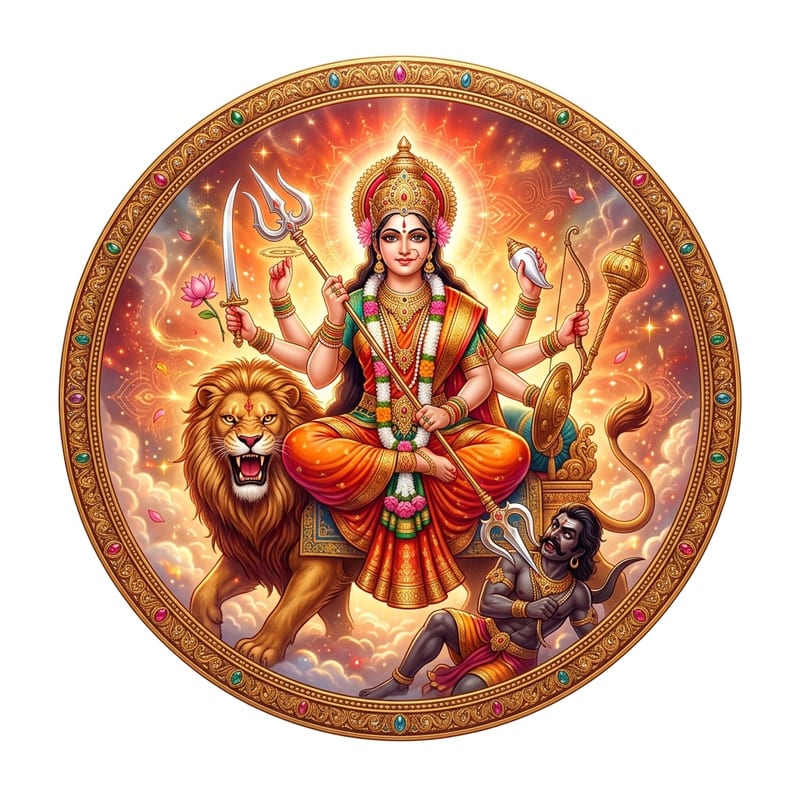
dhyānam
umākānte ramākānte eṣāmāsī-nmatissamā |
namāmi dīkṣitendrāṃ stān nayaṣaṭka-viśāradām ||
vedhoharīśvarastutyāṃ vihartrīṃ vindhyabhūdhare |
haraprāṇeśvarīṃ vande hantrīṃ vibudhavidviṣām || 1 ||
namāmi dīkṣitendrāṃ stān nayaṣaṭka-viśāradām ||
vedhoharīśvarastutyāṃ vihartrīṃ vindhyabhūdhare |
haraprāṇeśvarīṃ vande hantrīṃ vibudhavidviṣām || 1 ||
- umā-umā-kāntetoward the beloved of Umā, Śiva
- ramā-ramā-kāntetoward the beloved of Ramā, Viṣṇu
- eṣāmof these
- āsītthere was
- matiḥa mind
- samāheld even between them
- namāmiI bow to
- dīkṣita-dīkṣitendrāmthe sovereign among the consecrated
- stān(the printed line is corrupt at this word)
- naya-ṣaṭka-naya-ṣaṭka-viśāradāmversed in the six measures of statecraft
- vedhaḥ-hari-īśvara-vedho-harīśvara-stutyāmto be praised by Brahmā, Hari and Īśvara
- vihartrīmwho takes her pleasure
- vindhya-vindhya-bhūdhareon the Vindhya mountain
- hara-prāṇa-hara-prāṇeśvarīmsovereign of Hara’s own life
- vandeI revere
- hantrīmthe slayer
- vibudha-vibudha-vidviṣāmof those who hate the gods
abhyarthanena sarasīruhasambhavasya
tyaktvoditā bhagavadakṣipidhānalīlām |
viśveśvarī vipadapākamane purastāt
mātā mamāstu madhukaiṭabhayornihantrī || 2 ||
tyaktvoditā bhagavadakṣipidhānalīlām |
viśveśvarī vipadapākamane purastāt
mātā mamāstu madhukaiṭabhayornihantrī || 2 ||
- abhyarthanenaat the entreaty
- sarasīruha-sarasīruha-sambhavasyaof him who was born from the lotus, Brahmā
- tyaktvāhaving laid aside
- uditāshe rose
- bhagavat-akṣi-pidhāna-bhagavad-akṣi-pidhāna-līlāmthe play of sealing the Lord’s eyes in sleep
- viśveśvarīthe sovereign of the universe
- vipad-vipad-apākamaneto drive calamity away (the reading is uncertain here)
- purastātbefore me
- mātāthe Mother
- mamamy
- astulet her stand
- madhu-madhu-kaiṭabhayoḥof Madhu and Kaiṭabha
- nihantrīthe slayer
prāṅnirjareṣu nihatairnijaśaktileśaiḥ
ekībhavadbhiruditā'khilalokaguptyai |
sampannaśastranikarā ca tadāyudhasthaiḥ
mātā mamāstu mahiṣāntakarī purastāt || 3 ||
ekībhavadbhiruditā'khilalokaguptyai |
sampannaśastranikarā ca tadāyudhasthaiḥ
mātā mamāstu mahiṣāntakarī purastāt || 3 ||
- prākin the days before
- nirjareṣuwhen the gods
- nihataiḥhad been struck down
- nija-śakti-nija-śakti-leśaiḥout of the fragments of their own powers
- ekī-ekī-bhavadbhiḥas these came together into one
- uditāshe arose
- akhila-loka-akhila-loka-guptyaifor the guarding of every world
- sampanna-śastra-sampanna-śastra-nikarāfurnished with a mass of weapons
- caand
- tat-āyudha-tad-āyudha-sthaiḥby those powers standing as their several arms
- mātāthe Mother
- mamamy
- astulet her be
- mahiṣa-mahiṣāntakarīwho made an end of Mahiṣa
- purastātbefore me
prāleyaśailatanayā tanukāntisampat
kośoditā kuvalayacchavicārudehā |
nārāyaṇī namadabhīpsitakalpavallī
suprītimāvahatu śumbhaniśumbhahantrī || 4 ||
kośoditā kuvalayacchavicārudehā |
nārāyaṇī namadabhīpsitakalpavallī
suprītimāvahatu śumbhaniśumbhahantrī || 4 ||
- prāleya-śaila-prāleya-śaila-tanayāthe daughter of the snow mountain
- tanu-kānti-sampat-kośa-tanu-kānti-sampat-kośoditārisen from the treasury of her body’s radiance
- kuvalaya-chavi-cāru-kuvalaya-cchavi-cāru-dehāher body lovely with the hue of the blue lotus
- nārāyaṇīNārāyaṇī
- namat-abhīpsita-kalpa-namad-abhīpsita-kalpa-vallīa wishing-creeper for whatever those who bow desire
- su-su-prītimdeep gladness
- āvahatumay she bring
- śumbha-niśumbha-śumbha-niśumbha-hantrīthe slayer of Śumbha and Niśumbha
viśveśvarīti mahiṣāntakarīti yasyāḥ
nārāyaṇītyapi ca nāmabhiraṅkitāni |
sūktāni paṅkajabhuvā ca surarṣibhiśca
dṛṣṭāni pāvakamukhaiśca śivāṃ bhaje tām || 5 ||
nārāyaṇītyapi ca nāmabhiraṅkitāni |
sūktāni paṅkajabhuvā ca surarṣibhiśca
dṛṣṭāni pāvakamukhaiśca śivāṃ bhaje tām || 5 ||
- viśveśvarī itias "Viśveśvarī"
- mahiṣa-mahiṣāntakarī itias "Mahiṣāntakarī"
- yasyāḥwhose
- nārāyaṇī itiand as "Nārāyaṇī"
- api catoo
- nāmabhiḥwith such names
- aṅkitānimarked
- sūktānithe hymns
- paṅkaja-paṅkaja-bhuvāby the lotus-born Brahmā
- caand
- sura-surarṣibhiḥby the divine seers
- caand
- dṛṣṭāniwere seen
- pāvaka-pāvaka-mukhaiḥby the gods who eat through the mouth of fire
- caas well
- śivāmthe auspicious one
- bhajeI worship
- tāmher
utpattidaityahananastavanātmakāni
saṃrakṣakāṇyakhilabhūtahitāya yasyāḥ |
sūktānyaśeṣanigamāntavidaḥ paṭhanti
tāṃ viśvamātaramajasramabhiṣṭavīmi || 6 ||
saṃrakṣakāṇyakhilabhūtahitāya yasyāḥ |
sūktānyaśeṣanigamāntavidaḥ paṭhanti
tāṃ viśvamātaramajasramabhiṣṭavīmi || 6 ||
- utpatti-daitya-hanana-stavana-utpatti-daitya-hanana-stavanātmakānitelling of her arising, of the slaying of the demons, and of her praise
- saṃrakṣakāṇiprotecting
- akhila-bhūta-akhila-bhūta-hitāyafor the good of every being
- yasyāḥwhose
- sūktānihymns
- aśeṣa-nigama-anta-aśeṣa-nigamānta-vidaḥthose who know the Upaniṣads entire
- paṭhantirecite
- tāmher
- viśva-viśva-mātaramthe Mother of the universe
- ajasramwithout ceasing
- abhiṣṭavīmiI praise
ye vaipracittapunarutthitaśumbhamukhyaiḥ
durbhikṣaghorasamayena ca kāritāsu |
āviṣkṛtāstrijagadārtiṣu rūpabhedāḥ
tairambikā samabhirakṣatu māṃ vipadbhyaḥ || 7 ||
durbhikṣaghorasamayena ca kāritāsu |
āviṣkṛtāstrijagadārtiṣu rūpabhedāḥ
tairambikā samabhirakṣatu māṃ vipadbhyaḥ || 7 ||
- yethose forms which
- vaipracitta-punarutthita-śumbha-vaipracitta-punarutthita-śumbha-mukhyaiḥby Vipracitti, by Śumbha risen again, and by their chief followers
- durbhikṣa-ghora-durbhikṣa-ghora-samayenaand by a dreadful season of famine
- caand
- kāritāsuwhen these had been brought about
- āviṣkṛtāḥwere made manifest
- tri-jagat-tri-jagad-ārtiṣuamid the afflictions of the three worlds
- rūpa-rūpa-bhedāḥher several forms
- taiḥby those very forms
- ambikāAmbikā
- samabhirakṣatumay she guard
- māmme
- vipadbhyaḥfrom calamities
sūktaṃ yadīyamaravindabhavādi dṛṣṭaṃ
āvartya devyanupadaṃ surathaḥ samādhiḥ |
dvāvapyavāpaturabhīṣṭamananyalabhyaṃ
tāmādidevataruṇīṃ praṇamāmi mūrdhnā || 8 ||
āvartya devyanupadaṃ surathaḥ samādhiḥ |
dvāvapyavāpaturabhīṣṭamananyalabhyaṃ
tāmādidevataruṇīṃ praṇamāmi mūrdhnā || 8 ||
- sūktamthe hymn
- yadīyamthat is hers
- aravinda-bhava-ādi-aravinda-bhavādi-dṛṣṭamfirst seen by the lotus-born and those after him
- āvartyarepeating it over
- devī-devy-anupadamclose at the Goddess’s feet
- surathaḥSuratha
- samādhiḥand Samādhi
- dvāv apiboth of them
- avāpatuḥobtained
- abhīṣṭamwhat they longed for
- ananya-ananya-labhyamnot to be had from any other
- tāmher
- ādi-deva-ādi-deva-taruṇīmthe ever-young consort of the first god
- praṇamāmiI bow to
- mūrdhnāwith my head
māhiṣmatītanubhavaṃ ca ruruṃ ca hantuṃ
āviṣkṛtairnijarasādavatārabhedaiḥ |
aṣṭādaśāhatanavāhatakoṭisaṅkhyaiḥ
ambā sadā samabhirakṣatu māṃ vipadbhyaḥ || 9 ||
āviṣkṛtairnijarasādavatārabhedaiḥ |
aṣṭādaśāhatanavāhatakoṭisaṅkhyaiḥ
ambā sadā samabhirakṣatu māṃ vipadbhyaḥ || 9 ||
- māhiṣmatī-tanu-māhiṣmatī-tanu-bhavamhim who took birth in the body of Māhiṣmatī
- caand
- rurumthe demon Ruru
- catoo
- hantumin order to slay
- āviṣkṛtaiḥby the forms she brought forth
- nija-nija-rasātout of her own essence
- avatāra-avatāra-bhedaiḥas her several descents
- aṣṭādaśa-āhata-nava-āhata-koṭi-aṣṭādaśāhata-navāhata-koṭi-saṅkhyaiḥnumbering crores multiplied eighteenfold and ninefold
- ambāthe Mother
- sadāalways
- samabhirakṣatumay she guard
- māmme
- vipadbhyaḥfrom calamities
etaccaritramakhilaṃ likhitaṃ hi yasyāḥ
sampūjitaṃ sadana eva niveśitaṃ vā |
durgaṃ ca tārayati dustaramapyaśeṣaṃ
śreyaḥ prayacchati ca sarvamumāṃ bhaje tām || 10 ||
sampūjitaṃ sadana eva niveśitaṃ vā |
durgaṃ ca tārayati dustaramapyaśeṣaṃ
śreyaḥ prayacchati ca sarvamumāṃ bhaje tām || 10 ||
- etac caritramthis story
- akhilamentire
- likhitamwhen written out
- hiindeed
- yasyāḥwhose it is
- sampūjitamor worshipped
- sadanein the house
- evaitself
- niveśitamor set up there
- vāor
- durgamthe hard passage
- caand
- tārayatiit carries one across
- dustaramimpassable
- apieven
- aśeṣamall of it
- śreyaḥblessing
- prayacchatiit grants
- caand
- sarvamof every kind
- umāmUmā
- bhajeI worship
- tāmher
yatpūjanastutinamaskṛtibhirbhavanti
prītāḥ pitāmaharameśaharāstrayo'pi |
teṣāmapi svakaguṇairdadatī vapūṃṣi
tāmīśvarasya taruṇīṃ śaraṇaṃ prapadye || 11 ||
prītāḥ pitāmaharameśaharāstrayo'pi |
teṣāmapi svakaguṇairdadatī vapūṃṣi
tāmīśvarasya taruṇīṃ śaraṇaṃ prapadye || 11 ||
- yat-pūjana-stuti-yat-pūjana-stuti-namaskṛtibhiḥby whose worship, praise and salutation
- bhavantibecome
- prītāḥwell pleased
- pitāmaha-rameśa-pitāmaha-rameśa-harāḥBrahmā, the lord of Ramā, and Hara
- trayaḥ apiall three of them
- teṣām apiand to those very three
- svaka-svaka-guṇaiḥtogether with their own qualities
- dadatīgiving
- vapūṃṣitheir bodies
- tāmher
- īśvarasyaof Īśvara
- taruṇīmthe young consort
- śaraṇaṃ prapadyeI go to for refuge
kāntāramadhyadṛḍhalagnatayā'vasannāḥ
magnāśca vāridhijale ripubhiśca ruddhāḥ |
yasyāḥ prapadya caraṇau vipadastaranti
sā me sadā'stu hṛdi sarvajagatsavitrī || 12 ||
magnāśca vāridhijale ripubhiśca ruddhāḥ |
yasyāḥ prapadya caraṇau vipadastaranti
sā me sadā'stu hṛdi sarvajagatsavitrī || 12 ||
- kāntāra-madhya-dṛḍha-kāntāra-madhya-dṛḍha-lagnatayāby being fast caught in the heart of a wilderness
- avasannāḥthose brought to ruin
- magnāḥthose sunk
- caand
- vāridhi-vāridhi-jalein the water of the sea
- ripubhiḥby enemies
- caand
- ruddhāḥthose hemmed in
- yasyāḥwhose
- prapadyahaving taken refuge at
- caraṇauthe two feet
- vipadaḥtheir calamities
- tarantithey cross over
- sāshe
- memy
- sadāalways
- astulet her be
- hṛdiin the heart
- sarva-jagat-sarva-jagat-savitrīwho brings forth all the worlds
bandhe vadhe mahati mṛtyubhaye prasakte
vittakṣaye ca vividhe ya mahopatāpe |
yatpādapūjanamiha pratikāramāhuḥ
sā me samastajananī śaraṇaṃ bhavānī || 13 ||
vittakṣaye ca vividhe ya mahopatāpe |
yatpādapūjanamiha pratikāramāhuḥ
sā me samastajananī śaraṇaṃ bhavānī || 13 ||
- bandhein bondage
- vadheunder sentence of death
- mahatigreat
- mṛtyu-mṛtyu-bhayein the fear of dying
- prasaktewhen it presses close
- vitta-vitta-kṣayein the loss of wealth
- caand
- vividhein manifold
- mahā-mahopatāpegreat affliction
- yat-pāda-yat-pāda-pūjanamworship at whose feet
- ihain this world
- pratikāramthe one remedy
- āhuḥthey declare
- sāshe
- memy
- samasta-samasta-jananīthe mother of all
- śaraṇamrefuge
- bhavānīBhavānī
bāṇāsuraprahitapannagabandhamokṣaḥ
tadbāhudarpadalanāduṣayā ca yogaḥ |
prādyumninā drutamalabhyata yatprasādāt
sā me śivā sakalamapyaśubhaṃ kṣiṇotu || 14 ||
tadbāhudarpadalanāduṣayā ca yogaḥ |
prādyumninā drutamalabhyata yatprasādāt
sā me śivā sakalamapyaśubhaṃ kṣiṇotu || 14 ||
- bāṇa-asura-prahita-pannaga-bandha-bāṇāsura-prahita-pannaga-bandha-mokṣaḥrelease from the serpent-bonds sent by the demon Bāṇa
- tat-bāhu-darpa-tad-bāhu-darpa-dalanātthrough the crushing of the pride of his arms
- uṣayāwith Uṣā
- caand
- yogaḥunion
- prādyumnināby Pradyumna’s son Aniruddha
- drutamswiftly
- alabhyatawas won
- yat-yat-prasādātby whose grace
- sāshe
- memy
- śivāthe auspicious one
- sakalamall
- apiwhatever there be
- aśubhamof ill
- kṣiṇotulet her wear away
pāpaḥ pulastyatanayaḥ punarutthito māṃ
adyāpi hartumayamāgata ityudītam |
yatsevanena bhayamindirayā'vadhūtaṃ
tāmādidevataruṇīṃ śaraṇaṃ gato'smi || 15 ||
adyāpi hartumayamāgata ityudītam |
yatsevanena bhayamindirayā'vadhūtaṃ
tāmādidevataruṇīṃ śaraṇaṃ gato'smi || 15 ||
- pāpaḥthe wicked
- pulastya-pulastya-tanayaḥson of Pulastya, Rāvaṇa
- punaḥ-punar-utthitaḥrisen again
- māmme
- adyāpieven now
- hartumto carry off
- ayamhere he is
- āgataḥcome
- itiso
- udītamran the cry
- yat-yat-sevanenaby service done to whom
- bhayamthat fear
- indirayāby Indirā, Sītā
- avadhūtamwas shaken off
- tāmher
- ādi-deva-ādi-deva-taruṇīmthe ever-young consort of the first god
- śaraṇam gataḥ asmiI have come to for refuge
yaddhyānajaṃ sukhamavāpyamanantapuṇyaiḥ
sākṣāttamacyuta parigrahamāśvavāpuḥ |
gopāṅganāḥ kila yadarcanapuṇyamātrāḥ
sā me sadā bhagavatī bhavatu prasannā || 16 ||
sākṣāttamacyuta parigrahamāśvavāpuḥ |
gopāṅganāḥ kila yadarcanapuṇyamātrāḥ
sā me sadā bhagavatī bhavatu prasannā || 16 ||
- yat-dhyāna-yad-dhyāna-jamborn of meditation upon her
- sukhamthe happiness
- avāpyamto be won
- ananta-ananta-puṇyaiḥonly by merit without end
- sākṣātface to face
- tam acyuta-tam acyuta-parigrahamthat embrace of Acyuta himself
- āśuswiftly
- āvāpuḥthey gained
- gopa-gopāṅganāḥthe cowherd women
- kilaso it is told
- yat-arcana-puṇya-yad-arcana-puṇya-mātrāḥhaving no merit but the worship of her
- sāshe
- meto me
- sadāalways
- bhagavatīthe blessed one
- bhavatumay she be
- prasannāgraciously pleased
rātriṃ prapadya iti mantravidaḥ prapannān
udbodhya mṛtyuvadhimanyaphalaiḥ pralobhya |
buddhvā ca tadvimukhatāṃ pratanaṃ nayantīṃ
ākāśamādijananīṃ jagatāṃ bhaje tām || 17 ||
udbodhya mṛtyuvadhimanyaphalaiḥ pralobhya |
buddhvā ca tadvimukhatāṃ pratanaṃ nayantīṃ
ākāśamādijananīṃ jagatāṃ bhaje tām || 17 ||
- rātriṃ prapadye"I take refuge in the Night" – the opening of the Rātri Sūkta
- itiwith these words
- mantra-mantra-vidaḥthose who know the mantra
- prapannānthose who have so taken refuge
- udbodhyawaking them
- mṛtyu-mṛtyu-avadhimas far as the term of death
- anya-anya-phalaiḥwith lesser fruits
- pralobhyadrawing them on
- buddhvāhaving understood
- caand
- tat-tad-vimukhatāmthat they turn away from those fruits
- pratanamto the ancient state
- nayantīmleading them
- ākāśamvast as open space
- ādi-ādi-jananīmthe first Mother
- jagatāmof all the worlds
- bhajeI worship
- tāmher
deśakāleṣu duṣṭeṣu durgācandrakalāstutiḥ |
sandhyayoranusandheyā sarvāpadvinivṛttaye || 18 ||
sandhyayoranusandheyā sarvāpadvinivṛttaye || 18 ||
- deśa-deśa-kāleṣuin places and at times
- duṣṭeṣuthat have turned ill
- durgā-candrakalā-durgā-candrakalā-stutiḥthis Durgā Candrakalā Stuti
- sandhyayoḥat the two twilights
- anusandheyāis to be gone through attentively
- sarva-āpad-sarvāpad-vinivṛttayefor the turning back of every calamity
iti śrīmadapayyadīkṣitaviracitā durgācandrakalāstutiḥ ||