
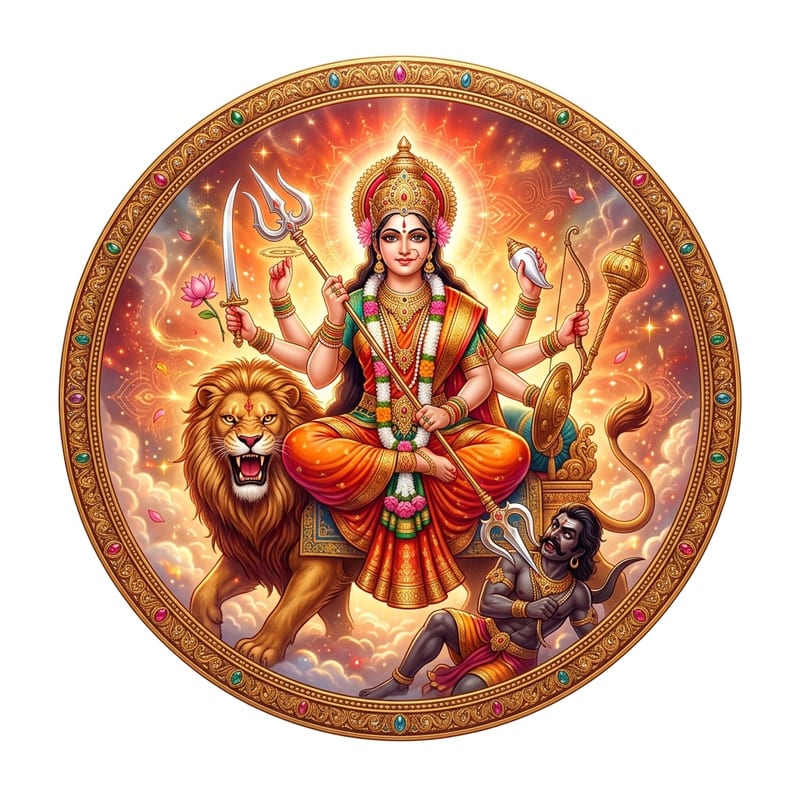
ध्यानम्
उमाकान्ते रमाकान्ते एषामासी-न्मतिस्समा ।
नमामि दीक्षितेन्द्रां स्तान् नयषट्क-विशारदाम् ॥
वेधोहरीश्वरस्तुत्यां विहर्त्रीं विन्ध्यभूधरे ।
हरप्राणेश्वरीं वन्दे हन्त्रीं विबुधविद्विषाम् ॥ 1 ॥
नमामि दीक्षितेन्द्रां स्तान् नयषट्क-विशारदाम् ॥
वेधोहरीश्वरस्तुत्यां विहर्त्रीं विन्ध्यभूधरे ।
हरप्राणेश्वरीं वन्दे हन्त्रीं विबुधविद्विषाम् ॥ 1 ॥
- उमा-कान्ते (umā-kānte)toward the beloved of Umā, Śiva
- रमा-कान्ते (ramā-kānte)toward the beloved of Ramā, Viṣṇu
- एषाम् (eṣām)of these
- आसीत् (āsīt)there was
- मतिः (matiḥ)a mind
- समा (samā)held even between them
- नमामि (namāmi)I bow to
- दीक्षित-इन्द्राम् (dīkṣitendrām)the sovereign among the consecrated
- स्तान् (stān)(the printed line is corrupt at this word)
- नय-षट्क-विशारदाम् (naya-ṣaṭka-viśāradām)versed in the six measures of statecraft
- वेधः-हरि-ईश्वर-स्तुत्याम् (vedho-harīśvara-stutyām)to be praised by Brahmā, Hari and Īśvara
- विहर्त्रीम् (vihartrīm)who takes her pleasure
- विन्ध्य-भूधरे (vindhya-bhūdhare)on the Vindhya mountain
- हर-प्राण-ईश्वरीम् (hara-prāṇeśvarīm)sovereign of Hara’s own life
- वन्दे (vande)I revere
- हन्त्रीम् (hantrīm)the slayer
- विबुध-विद्विषाम् (vibudha-vidviṣām)of those who hate the gods
अभ्यर्थनेन सरसीरुहसम्भवस्य
त्यक्त्वोदिता भगवदक्षिपिधानलीलाम् ।
विश्वेश्वरी विपदपाकमने पुरस्तात्
माता ममास्तु मधुकैटभयोर्निहन्त्री ॥ 2 ॥
त्यक्त्वोदिता भगवदक्षिपिधानलीलाम् ।
विश्वेश्वरी विपदपाकमने पुरस्तात्
माता ममास्तु मधुकैटभयोर्निहन्त्री ॥ 2 ॥
- अभ्यर्थनेन (abhyarthanena)at the entreaty
- सरसीरुह-सम्भवस्य (sarasīruha-sambhavasya)of him who was born from the lotus, Brahmā
- त्यक्त्वा (tyaktvā)having laid aside
- उदिता (uditā)she rose
- भगवत्-अक्षि-पिधान-लीलाम् (bhagavad-akṣi-pidhāna-līlām)the play of sealing the Lord’s eyes in sleep
- विश्वेश्वरी (viśveśvarī)the sovereign of the universe
- विपद्-अपाकमने (vipad-apākamane)to drive calamity away (the reading is uncertain here)
- पुरस्तात् (purastāt)before me
- माता (mātā)the Mother
- मम (mama)my
- अस्तु (astu)let her stand
- मधु-कैटभयोः (madhu-kaiṭabhayoḥ)of Madhu and Kaiṭabha
- निहन्त्री (nihantrī)the slayer
प्राङ्निर्जरेषु निहतैर्निजशक्तिलेशैः
एकीभवद्भिरुदिताऽखिललोकगुप्त्यै ।
सम्पन्नशस्त्रनिकरा च तदायुधस्थैः
माता ममास्तु महिषान्तकरी पुरस्तात् ॥ 3 ॥
एकीभवद्भिरुदिताऽखिललोकगुप्त्यै ।
सम्पन्नशस्त्रनिकरा च तदायुधस्थैः
माता ममास्तु महिषान्तकरी पुरस्तात् ॥ 3 ॥
- प्राक् (prāk)in the days before
- निर्जरेषु (nirjareṣu)when the gods
- निहतैः (nihataiḥ)had been struck down
- निज-शक्ति-लेशैः (nija-śakti-leśaiḥ)out of the fragments of their own powers
- एकी-भवद्भिः (ekī-bhavadbhiḥ)as these came together into one
- उदिता (uditā)she arose
- अखिल-लोक-गुप्त्यै (akhila-loka-guptyai)for the guarding of every world
- सम्पन्न-शस्त्र-निकरा (sampanna-śastra-nikarā)furnished with a mass of weapons
- च (ca)and
- तत्-आयुध-स्थैः (tad-āyudha-sthaiḥ)by those powers standing as their several arms
- माता (mātā)the Mother
- मम (mama)my
- अस्तु (astu)let her be
- महिष-अन्तकरी (mahiṣāntakarī)who made an end of Mahiṣa
- पुरस्तात् (purastāt)before me
प्रालेयशैलतनया तनुकान्तिसम्पत्
कोशोदिता कुवलयच्छविचारुदेहा ।
नारायणी नमदभीप्सितकल्पवल्ली
सुप्रीतिमावहतु शुम्भनिशुम्भहन्त्री ॥ 4 ॥
कोशोदिता कुवलयच्छविचारुदेहा ।
नारायणी नमदभीप्सितकल्पवल्ली
सुप्रीतिमावहतु शुम्भनिशुम्भहन्त्री ॥ 4 ॥
- प्रालेय-शैल-तनया (prāleya-śaila-tanayā)the daughter of the snow mountain
- तनु-कान्ति-सम्पत्-कोश-उदिता (tanu-kānti-sampat-kośoditā)risen from the treasury of her body’s radiance
- कुवलय-छवि-चारु-देहा (kuvalaya-cchavi-cāru-dehā)her body lovely with the hue of the blue lotus
- नारायणी (nārāyaṇī)Nārāyaṇī
- नमत्-अभीप्सित-कल्प-वल्ली (namad-abhīpsita-kalpa-vallī)a wishing-creeper for whatever those who bow desire
- सु-प्रीतिम् (su-prītim)deep gladness
- आवहतु (āvahatu)may she bring
- शुम्भ-निशुम्भ-हन्त्री (śumbha-niśumbha-hantrī)the slayer of Śumbha and Niśumbha
विश्वेश्वरीति महिषान्तकरीति यस्याः
नारायणीत्यपि च नामभिरङ्कितानि ।
सूक्तानि पङ्कजभुवा च सुरर्षिभिश्च
दृष्टानि पावकमुखैश्च शिवां भजे ताम् ॥ 5 ॥
नारायणीत्यपि च नामभिरङ्कितानि ।
सूक्तानि पङ्कजभुवा च सुरर्षिभिश्च
दृष्टानि पावकमुखैश्च शिवां भजे ताम् ॥ 5 ॥
- विश्वेश्वरी इति (viśveśvarī iti)as "Viśveśvarī"
- महिष-अन्तकरी इति (mahiṣāntakarī iti)as "Mahiṣāntakarī"
- यस्याः (yasyāḥ)whose
- नारायणी इति (nārāyaṇī iti)and as "Nārāyaṇī"
- अपि च (api ca)too
- नामभिः (nāmabhiḥ)with such names
- अङ्कितानि (aṅkitāni)marked
- सूक्तानि (sūktāni)the hymns
- पङ्कज-भुवा (paṅkaja-bhuvā)by the lotus-born Brahmā
- च (ca)and
- सुर-ऋषिभिः (surarṣibhiḥ)by the divine seers
- च (ca)and
- दृष्टानि (dṛṣṭāni)were seen
- पावक-मुखैः (pāvaka-mukhaiḥ)by the gods who eat through the mouth of fire
- च (ca)as well
- शिवाम् (śivām)the auspicious one
- भजे (bhaje)I worship
- ताम् (tām)her
उत्पत्तिदैत्यहननस्तवनात्मकानि
संरक्षकाण्यखिलभूतहिताय यस्याः ।
सूक्तान्यशेषनिगमान्तविदः पठन्ति
तां विश्वमातरमजस्रमभिष्टवीमि ॥ 6 ॥
संरक्षकाण्यखिलभूतहिताय यस्याः ।
सूक्तान्यशेषनिगमान्तविदः पठन्ति
तां विश्वमातरमजस्रमभिष्टवीमि ॥ 6 ॥
- उत्पत्ति-दैत्य-हनन-स्तवन-आत्मकानि (utpatti-daitya-hanana-stavanātmakāni)telling of her arising, of the slaying of the demons, and of her praise
- संरक्षकाणि (saṃrakṣakāṇi)protecting
- अखिल-भूत-हिताय (akhila-bhūta-hitāya)for the good of every being
- यस्याः (yasyāḥ)whose
- सूक्तानि (sūktāni)hymns
- अशेष-निगम-अन्त-विदः (aśeṣa-nigamānta-vidaḥ)those who know the Upaniṣads entire
- पठन्ति (paṭhanti)recite
- ताम् (tām)her
- विश्व-मातरम् (viśva-mātaram)the Mother of the universe
- अजस्रम् (ajasram)without ceasing
- अभिष्टवीमि (abhiṣṭavīmi)I praise
ये वैप्रचित्तपुनरुत्थितशुम्भमुख्यैः
दुर्भिक्षघोरसमयेन च कारितासु ।
आविष्कृतास्त्रिजगदार्तिषु रूपभेदाः
तैरम्बिका समभिरक्षतु मां विपद्भ्यः ॥ 7 ॥
दुर्भिक्षघोरसमयेन च कारितासु ।
आविष्कृतास्त्रिजगदार्तिषु रूपभेदाः
तैरम्बिका समभिरक्षतु मां विपद्भ्यः ॥ 7 ॥
- ये (ye)those forms which
- वैप्रचित्त-पुनरुत्थित-शुम्भ-मुख्यैः (vaipracitta-punarutthita-śumbha-mukhyaiḥ)by Vipracitti, by Śumbha risen again, and by their chief followers
- दुर्भिक्ष-घोर-समयेन (durbhikṣa-ghora-samayena)and by a dreadful season of famine
- च (ca)and
- कारितासु (kāritāsu)when these had been brought about
- आविष्कृताः (āviṣkṛtāḥ)were made manifest
- त्रि-जगत्-आर्तिषु (tri-jagad-ārtiṣu)amid the afflictions of the three worlds
- रूप-भेदाः (rūpa-bhedāḥ)her several forms
- तैः (taiḥ)by those very forms
- अम्बिका (ambikā)Ambikā
- समभिरक्षतु (samabhirakṣatu)may she guard
- माम् (mām)me
- विपद्भ्यः (vipadbhyaḥ)from calamities
सूक्तं यदीयमरविन्दभवादि दृष्टं
आवर्त्य देव्यनुपदं सुरथः समाधिः ।
द्वावप्यवापतुरभीष्टमनन्यलभ्यं
तामादिदेवतरुणीं प्रणमामि मूर्ध्ना ॥ 8 ॥
आवर्त्य देव्यनुपदं सुरथः समाधिः ।
द्वावप्यवापतुरभीष्टमनन्यलभ्यं
तामादिदेवतरुणीं प्रणमामि मूर्ध्ना ॥ 8 ॥
- सूक्तम् (sūktam)the hymn
- यदीयम् (yadīyam)that is hers
- अरविन्द-भव-आदि-दृष्टम् (aravinda-bhavādi-dṛṣṭam)first seen by the lotus-born and those after him
- आवर्त्य (āvartya)repeating it over
- देवी-अनुपदम् (devy-anupadam)close at the Goddess’s feet
- सुरथः (surathaḥ)Suratha
- समाधिः (samādhiḥ)and Samādhi
- द्वौ अपि (dvāv api)both of them
- अवापतुः (avāpatuḥ)obtained
- अभीष्टम् (abhīṣṭam)what they longed for
- अनन्य-लभ्यम् (ananya-labhyam)not to be had from any other
- ताम् (tām)her
- आदि-देव-तरुणीम् (ādi-deva-taruṇīm)the ever-young consort of the first god
- प्रणमामि (praṇamāmi)I bow to
- मूर्ध्ना (mūrdhnā)with my head
माहिष्मतीतनुभवं च रुरुं च हन्तुं
आविष्कृतैर्निजरसादवतारभेदैः ।
अष्टादशाहतनवाहतकोटिसङ्ख्यैः
अम्बा सदा समभिरक्षतु मां विपद्भ्यः ॥ 9 ॥
आविष्कृतैर्निजरसादवतारभेदैः ।
अष्टादशाहतनवाहतकोटिसङ्ख्यैः
अम्बा सदा समभिरक्षतु मां विपद्भ्यः ॥ 9 ॥
- माहिष्मती-तनु-भवम् (māhiṣmatī-tanu-bhavam)him who took birth in the body of Māhiṣmatī
- च (ca)and
- रुरुम् (rurum)the demon Ruru
- च (ca)too
- हन्तुम् (hantum)in order to slay
- आविष्कृतैः (āviṣkṛtaiḥ)by the forms she brought forth
- निज-रसात् (nija-rasāt)out of her own essence
- अवतार-भेदैः (avatāra-bhedaiḥ)as her several descents
- अष्टादश-आहत-नव-आहत-कोटि-सङ्ख्यैः (aṣṭādaśāhata-navāhata-koṭi-saṅkhyaiḥ)numbering crores multiplied eighteenfold and ninefold
- अम्बा (ambā)the Mother
- सदा (sadā)always
- समभिरक्षतु (samabhirakṣatu)may she guard
- माम् (mām)me
- विपद्भ्यः (vipadbhyaḥ)from calamities
एतच्चरित्रमखिलं लिखितं हि यस्याः
सम्पूजितं सदन एव निवेशितं वा ।
दुर्गं च तारयति दुस्तरमप्यशेषं
श्रेयः प्रयच्छति च सर्वमुमां भजे ताम् ॥ 10 ॥
सम्पूजितं सदन एव निवेशितं वा ।
दुर्गं च तारयति दुस्तरमप्यशेषं
श्रेयः प्रयच्छति च सर्वमुमां भजे ताम् ॥ 10 ॥
- एतत् चरित्रम् (etac caritram)this story
- अखिलम् (akhilam)entire
- लिखितम् (likhitam)when written out
- हि (hi)indeed
- यस्याः (yasyāḥ)whose it is
- सम्पूजितम् (sampūjitam)or worshipped
- सदने (sadane)in the house
- एव (eva)itself
- निवेशितम् (niveśitam)or set up there
- वा (vā)or
- दुर्गम् (durgam)the hard passage
- च (ca)and
- तारयति (tārayati)it carries one across
- दुस्तरम् (dustaram)impassable
- अपि (api)even
- अशेषम् (aśeṣam)all of it
- श्रेयः (śreyaḥ)blessing
- प्रयच्छति (prayacchati)it grants
- च (ca)and
- सर्वम् (sarvam)of every kind
- उमाम् (umām)Umā
- भजे (bhaje)I worship
- ताम् (tām)her
यत्पूजनस्तुतिनमस्कृतिभिर्भवन्ति
प्रीताः पितामहरमेशहरास्त्रयोऽपि ।
तेषामपि स्वकगुणैर्ददती वपूंषि
तामीश्वरस्य तरुणीं शरणं प्रपद्ये ॥ 11 ॥
प्रीताः पितामहरमेशहरास्त्रयोऽपि ।
तेषामपि स्वकगुणैर्ददती वपूंषि
तामीश्वरस्य तरुणीं शरणं प्रपद्ये ॥ 11 ॥
- यत्-पूजन-स्तुति-नमस्कृतिभिः (yat-pūjana-stuti-namaskṛtibhiḥ)by whose worship, praise and salutation
- भवन्ति (bhavanti)become
- प्रीताः (prītāḥ)well pleased
- पितामह-रमेश-हराः (pitāmaha-rameśa-harāḥ)Brahmā, the lord of Ramā, and Hara
- त्रयः अपि (trayaḥ api)all three of them
- तेषाम् अपि (teṣām api)and to those very three
- स्वक-गुणैः (svaka-guṇaiḥ)together with their own qualities
- ददती (dadatī)giving
- वपूंषि (vapūṃṣi)their bodies
- ताम् (tām)her
- ईश्वरस्य (īśvarasya)of Īśvara
- तरुणीम् (taruṇīm)the young consort
- शरणम् प्रपद्ये (śaraṇaṃ prapadye)I go to for refuge
कान्तारमध्यदृढलग्नतयाऽवसन्नाः
मग्नाश्च वारिधिजले रिपुभिश्च रुद्धाः ।
यस्याः प्रपद्य चरणौ विपदस्तरन्ति
सा मे सदाऽस्तु हृदि सर्वजगत्सवित्री ॥ 12 ॥
मग्नाश्च वारिधिजले रिपुभिश्च रुद्धाः ।
यस्याः प्रपद्य चरणौ विपदस्तरन्ति
सा मे सदाऽस्तु हृदि सर्वजगत्सवित्री ॥ 12 ॥
- कान्तार-मध्य-दृढ-लग्नतया (kāntāra-madhya-dṛḍha-lagnatayā)by being fast caught in the heart of a wilderness
- अवसन्नाः (avasannāḥ)those brought to ruin
- मग्नाः (magnāḥ)those sunk
- च (ca)and
- वारिधि-जले (vāridhi-jale)in the water of the sea
- रिपुभिः (ripubhiḥ)by enemies
- च (ca)and
- रुद्धाः (ruddhāḥ)those hemmed in
- यस्याः (yasyāḥ)whose
- प्रपद्य (prapadya)having taken refuge at
- चरणौ (caraṇau)the two feet
- विपदः (vipadaḥ)their calamities
- तरन्ति (taranti)they cross over
- सा (sā)she
- मे (me)my
- सदा (sadā)always
- अस्तु (astu)let her be
- हृदि (hṛdi)in the heart
- सर्व-जगत्-सवित्री (sarva-jagat-savitrī)who brings forth all the worlds
बन्धे वधे महति मृत्युभये प्रसक्ते
वित्तक्षये च विविधे य महोपतापे ।
यत्पादपूजनमिह प्रतिकारमाहुः
सा मे समस्तजननी शरणं भवानी ॥ 13 ॥
वित्तक्षये च विविधे य महोपतापे ।
यत्पादपूजनमिह प्रतिकारमाहुः
सा मे समस्तजननी शरणं भवानी ॥ 13 ॥
- बन्धे (bandhe)in bondage
- वधे (vadhe)under sentence of death
- महति (mahati)great
- मृत्यु-भये (mṛtyu-bhaye)in the fear of dying
- प्रसक्ते (prasakte)when it presses close
- वित्त-क्षये (vitta-kṣaye)in the loss of wealth
- च (ca)and
- विविधे (vividhe)in manifold
- महा-उपतापे (mahopatāpe)great affliction
- यत्-पाद-पूजनम् (yat-pāda-pūjanam)worship at whose feet
- इह (iha)in this world
- प्रतिकारम् (pratikāram)the one remedy
- आहुः (āhuḥ)they declare
- सा (sā)she
- मे (me)my
- समस्त-जननी (samasta-jananī)the mother of all
- शरणम् (śaraṇam)refuge
- भवानी (bhavānī)Bhavānī
बाणासुरप्रहितपन्नगबन्धमोक्षः
तद्बाहुदर्पदलनादुषया च योगः ।
प्राद्युम्निना द्रुतमलभ्यत यत्प्रसादात्
सा मे शिवा सकलमप्यशुभं क्षिणोतु ॥ 14 ॥
तद्बाहुदर्पदलनादुषया च योगः ।
प्राद्युम्निना द्रुतमलभ्यत यत्प्रसादात्
सा मे शिवा सकलमप्यशुभं क्षिणोतु ॥ 14 ॥
- बाण-असुर-प्रहित-पन्नग-बन्ध-मोक्षः (bāṇāsura-prahita-pannaga-bandha-mokṣaḥ)release from the serpent-bonds sent by the demon Bāṇa
- तत्-बाहु-दर्प-दलनात् (tad-bāhu-darpa-dalanāt)through the crushing of the pride of his arms
- उषया (uṣayā)with Uṣā
- च (ca)and
- योगः (yogaḥ)union
- प्राद्युम्निना (prādyumninā)by Pradyumna’s son Aniruddha
- द्रुतम् (drutam)swiftly
- अलभ्यत (alabhyata)was won
- यत्-प्रसादात् (yat-prasādāt)by whose grace
- सा (sā)she
- मे (me)my
- शिवा (śivā)the auspicious one
- सकलम् (sakalam)all
- अपि (api)whatever there be
- अशुभम् (aśubham)of ill
- क्षिणोतु (kṣiṇotu)let her wear away
पापः पुलस्त्यतनयः पुनरुत्थितो मां
अद्यापि हर्तुमयमागत इत्युदीतम् ।
यत्सेवनेन भयमिन्दिरयाऽवधूतं
तामादिदेवतरुणीं शरणं गतोऽस्मि ॥ 15 ॥
अद्यापि हर्तुमयमागत इत्युदीतम् ।
यत्सेवनेन भयमिन्दिरयाऽवधूतं
तामादिदेवतरुणीं शरणं गतोऽस्मि ॥ 15 ॥
- पापः (pāpaḥ)the wicked
- पुलस्त्य-तनयः (pulastya-tanayaḥ)son of Pulastya, Rāvaṇa
- पुनः-उत्थितः (punar-utthitaḥ)risen again
- माम् (mām)me
- अद्य अपि (adyāpi)even now
- हर्तुम् (hartum)to carry off
- अयम् (ayam)here he is
- आगतः (āgataḥ)come
- इति (iti)so
- उदीतम् (udītam)ran the cry
- यत्-सेवनेन (yat-sevanena)by service done to whom
- भयम् (bhayam)that fear
- इन्दिरया (indirayā)by Indirā, Sītā
- अवधूतम् (avadhūtam)was shaken off
- ताम् (tām)her
- आदि-देव-तरुणीम् (ādi-deva-taruṇīm)the ever-young consort of the first god
- शरणम् गतः अस्मि (śaraṇam gataḥ asmi)I have come to for refuge
यद्ध्यानजं सुखमवाप्यमनन्तपुण्यैः
साक्षात्तमच्युत परिग्रहमाश्ववापुः ।
गोपाङ्गनाः किल यदर्चनपुण्यमात्राः
सा मे सदा भगवती भवतु प्रसन्ना ॥ 16 ॥
साक्षात्तमच्युत परिग्रहमाश्ववापुः ।
गोपाङ्गनाः किल यदर्चनपुण्यमात्राः
सा मे सदा भगवती भवतु प्रसन्ना ॥ 16 ॥
- यत्-ध्यान-जम् (yad-dhyāna-jam)born of meditation upon her
- सुखम् (sukham)the happiness
- अवाप्यम् (avāpyam)to be won
- अनन्त-पुण्यैः (ananta-puṇyaiḥ)only by merit without end
- साक्षात् (sākṣāt)face to face
- तम् अच्युत-परिग्रहम् (tam acyuta-parigraham)that embrace of Acyuta himself
- आशु (āśu)swiftly
- आवापुः (āvāpuḥ)they gained
- गोप-अङ्गनाः (gopāṅganāḥ)the cowherd women
- किल (kila)so it is told
- यत्-अर्चन-पुण्य-मात्राः (yad-arcana-puṇya-mātrāḥ)having no merit but the worship of her
- सा (sā)she
- मे (me)to me
- सदा (sadā)always
- भगवती (bhagavatī)the blessed one
- भवतु (bhavatu)may she be
- प्रसन्ना (prasannā)graciously pleased
रात्रिं प्रपद्य इति मन्त्रविदः प्रपन्नान्
उद्बोध्य मृत्युवधिमन्यफलैः प्रलोभ्य ।
बुद्ध्वा च तद्विमुखतां प्रतनं नयन्तीं
आकाशमादिजननीं जगतां भजे ताम् ॥ 17 ॥
उद्बोध्य मृत्युवधिमन्यफलैः प्रलोभ्य ।
बुद्ध्वा च तद्विमुखतां प्रतनं नयन्तीं
आकाशमादिजननीं जगतां भजे ताम् ॥ 17 ॥
- रात्रिम् प्रपद्ये (rātriṃ prapadye)"I take refuge in the Night" – the opening of the Rātri Sūkta
- इति (iti)with these words
- मन्त्र-विदः (mantra-vidaḥ)those who know the mantra
- प्रपन्नान् (prapannān)those who have so taken refuge
- उद्बोध्य (udbodhya)waking them
- मृत्यु-अवधिम् (mṛtyu-avadhim)as far as the term of death
- अन्य-फलैः (anya-phalaiḥ)with lesser fruits
- प्रलोभ्य (pralobhya)drawing them on
- बुद्ध्वा (buddhvā)having understood
- च (ca)and
- तत्-विमुखताम् (tad-vimukhatām)that they turn away from those fruits
- प्रतनम् (pratanam)to the ancient state
- नयन्तीम् (nayantīm)leading them
- आकाशम् (ākāśam)vast as open space
- आदि-जननीम् (ādi-jananīm)the first Mother
- जगताम् (jagatām)of all the worlds
- भजे (bhaje)I worship
- ताम् (tām)her
देशकालेषु दुष्टेषु दुर्गाचन्द्रकलास्तुतिः ।
सन्ध्ययोरनुसन्धेया सर्वापद्विनिवृत्तये ॥ 18 ॥
सन्ध्ययोरनुसन्धेया सर्वापद्विनिवृत्तये ॥ 18 ॥
- देश-कालेषु (deśa-kāleṣu)in places and at times
- दुष्टेषु (duṣṭeṣu)that have turned ill
- दुर्गा-चन्द्रकला-स्तुतिः (durgā-candrakalā-stutiḥ)this Durgā Candrakalā Stuti
- सन्ध्ययोः (sandhyayoḥ)at the two twilights
- अनुसन्धेया (anusandheyā)is to be gone through attentively
- सर्व-आपद्-विनिवृत्तये (sarvāpad-vinivṛttaye)for the turning back of every calamity
इति श्रीमदपय्यदीक्षितविरचिता दुर्गाचन्द्रकलास्तुतिः ॥