
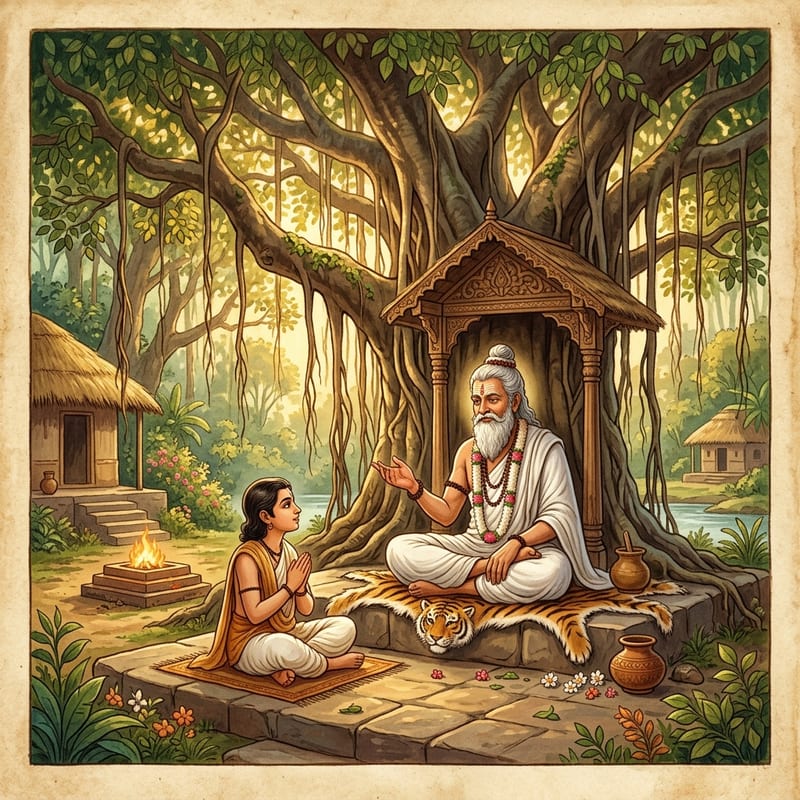
ஸர்வவேதாந்தஸித்தாந்தகோசரம் தமகோசரம் ।
கோவிந்தம் பரமாநந்தம் ஸத்குரும் ப்ரணதோ'ஸ்ம்யஹம் ॥ 1॥
கோவிந்தம் பரமாநந்தம் ஸத்குரும் ப்ரணதோ'ஸ்ம்யஹம் ॥ 1॥
- ஸர்வ-வேதாந்த-ஸித்தாந்த-கோசரம் (sarva-vedānta-siddhānta-gocaram)knowable through the import of all Vedanta (sarva:all | vedānta:Vedanta, essence of the Vedas | siddhānta:established conclusion | gocaram:within range of)
- தம் அகோசரம் (tam agocaram)him who is beyond the reach of speech and mind (tam:him | a:beyond | gocaram:range of perception)
- கோவிந்தம் (govindaṃ)Govinda, the Lord
- பரமாநந்தம் (paramānandaṃ)Supreme Bliss (parama:supreme | ānanda:bliss)
- ஸத்குரும் (sadguruṃ)the true Guru (sat:true, perfect | guru:spiritual teacher)
- ப்ரணதஃ அஸ்மி அஹம் (praṇataḥ asmi aham)I bow in prostration (praṇataḥ:bowed, prostrated | asmi:am | aham:I)
ஜந்தூநாம் நரஜந்ம துர்லபமதஃ பும்ஸ்த்வம் ததோ விப்ரதா
தஸ்மாத்வைதிகதர்மமார்கபரதா வித்வத்த்வமஸ்மாத்பரம் ।
ஆத்மாநாத்மவிவேசநம் ஸ்வநுபவோ ப்ரஹ்மாத்மநா ஸம்ஸ்திதிஃ
முக்திர்நோ ஶதஜந்மகோடிஸுக்ரு'தைஃ புண்யைர்விநா லப்யதே ॥ 2॥
தஸ்மாத்வைதிகதர்மமார்கபரதா வித்வத்த்வமஸ்மாத்பரம் ।
ஆத்மாநாத்மவிவேசநம் ஸ்வநுபவோ ப்ரஹ்மாத்மநா ஸம்ஸ்திதிஃ
முக்திர்நோ ஶதஜந்மகோடிஸுக்ரு'தைஃ புண்யைர்விநா லப்யதே ॥ 2॥
- ஜந்தூநாம் (jantūnāṃ)of all living beings
- நரஜந்ம (narajanma)human birth (nara:human | janma:birth)
- துர்லபம் (durlabham)difficult to obtain (dur:with difficulty | labha:attainment)
- அதஃ (ataḥ)more so, beyond that
- பும்ஸ்த்வம் (puṃstvaṃ)manhood
- ததஃ (tataḥ)beyond that
- விப்ரதா (vipratā)Brahminhood
- வைதிகதர்மமார்கபரதா (vaidikadharmamārgaparatā)devotion to the Vedic path of righteousness (vaidika:Vedic | dharma:righteousness | mārga:path | paratā:devotion to)
- வித்வத்த்வம் (vidvattvam)erudition, scriptural learning
- ஆத்மாநாத்மவிவேசநம் (ātmānātmavivecanam)discrimination between Self and not-Self (ātmā:the Self | anātma:the not-Self | vivecanam:discrimination)
- ஸ்வநுபவஃ (svanubhavaḥ)direct personal experience of the Self (sva:one's own | anubhavaḥ:experience)
- ப்ரஹ்மாத்மநா ஸம்ஸ்திதிஃ (brahmātmanā saṃsthitiḥ)abiding in identity with Brahman (brahma:Brahman | ātmanā:as the Self | saṃsthitiḥ:established abiding)
- முக்திஃ (muktiḥ)Liberation
- ஶதஜந்மகோடிஸுக்ரு'தைஃ (śatajanmakoṭisukṛtaiḥ)by meritorious deeds of a hundred crore births (śata:hundred | janma:births | koṭi:crore | sukṛtaiḥ:by meritorious deeds)
- புண்யைஃ விநா ந லப்யதே (puṇyair vinā na labhyate)cannot be obtained without merit (puṇyaiḥ:by merit | vinā:without | na labhyate:cannot be obtained)
(பாடபேதஃ - ஶதகோடிஜந்மஸு க்ரு'தைஃ)
துர்லபம் த்ரயமேவைதத்தேவாநுக்ரஹஹேதுகம் ।
மநுஷ்யத்வம் முமுக்ஷுத்வம் மஹாபுருஷஸம்ஶ்ரயஃ ॥ 3॥
துர்லபம் த்ரயமேவைதத்தேவாநுக்ரஹஹேதுகம் ।
மநுஷ்யத்வம் முமுக்ஷுத்வம் மஹாபுருஷஸம்ஶ்ரயஃ ॥ 3॥
- துர்லபம் (durlabhaṃ)difficult to attain
- த்ரயம் ஏவ (trayam eva)these three alone (trayam:three | eva:indeed)
- ஏதத் (etat)these
- தேவாநுக்ரஹ-ஹேதுகம் (devānugraha-hetukam)caused by the grace of God (deva:God | anugraha:grace | hetukam:caused by)
- மநுஷ்யத்வம் (manuṣyatvaṃ)human birth, humanity
- முமுக்ஷுத்வம் (mumukṣutvaṃ)longing for Liberation (mumukṣu:one who desires liberation | tvam:state of being)
- மஹாபுருஷ-ஸம்ஶ்ரயஃ (mahāpuruṣa-saṃśrayaḥ)the protecting care of a great soul or perfected sage (mahā:great | puruṣa:person, sage | saṃśrayaḥ:refuge, protective care)
லப்த்வா கதஞ்சிந்நரஜந்ம துர்லபம் (பாடபேதஃ - கதஞ்சிந்)
தத்ராபி பும்ஸ்த்வம் ஶ்ருதிபாரதர்ஶநம் ।
யஸ்த்வாத்மமுக்தௌ ந யதேத மூடதீஃ
ஸ ஹ்யாத்மஹா ஸ்வம் விநிஹந்த்யஸத்க்ரஹாத் ॥ 4॥
தத்ராபி பும்ஸ்த்வம் ஶ்ருதிபாரதர்ஶநம் ।
யஸ்த்வாத்மமுக்தௌ ந யதேத மூடதீஃ
ஸ ஹ்யாத்மஹா ஸ்வம் விநிஹந்த்யஸத்க்ரஹாத் ॥ 4॥
- லப்த்வா (labdhvā)having obtained
- கதஞ்சித் (kathaṃcit)by some means, somehow
- நரஜந்ம (narajanma)human birth (nara:human | janma:birth)
- துர்லபம் (durlabhaṃ)rare, hard to obtain
- தத்ராபி (tatrāpi)and there too
- பும்ஸ்த்வம் (puṃstvaṃ)manhood
- ஶ்ருதிபாரதர்ஶநம் (śrutipāradarśanam)mastery of the Vedas (śruti:Vedas | pāra:the other shore, full extent | darśanam:seeing, mastery)
- யஃ து (yaḥ tu)but he who
- ஆத்மமுக்தௌ (ātmamuktau)for the liberation of the Self (ātma:Self | muktau:for liberation)
- ந யதேத (na yateta)does not strive
- மூடதீஃ (mūḍhadhīḥ)the fool, the dull-witted one (mūḍha:deluded, foolish | dhīḥ:intellect)
- ஸஃ ஹி ஆத்மஹா (saḥ hi ātmahā)he indeed is a slayer of the Self
- ஸ்வம் விநிஹந்தி (svaṃ vinihanty)kills himself
- அஸத்க்ரஹாத் (asadgrahāt)by clinging to the unreal (asat:unreal | grahāt:from clinging to)
(பாடபேதஃ - ஆத்மஹா ஸ்வம்)
இதஃ கோ ந்வஸ்தி மூடாத்மா யஸ்து ஸ்வார்தே ப்ரமாத்யதி ।
துர்லபம் மாநுஷம் தேஹம் ப்ராப்ய தத்ராபி பௌருஷம் ॥ 5॥
இதஃ கோ ந்வஸ்தி மூடாத்மா யஸ்து ஸ்வார்தே ப்ரமாத்யதி ।
துர்லபம் மாநுஷம் தேஹம் ப்ராப்ய தத்ராபி பௌருஷம் ॥ 5॥
- இதஃ (itaḥ)than this, greater than this
- கஃ நு அஸ்தி (kaḥ nu asti)who indeed is there
- மூடாத்மா (mūḍhātmā)the foolish one (mūḍha:deluded, foolish | ātmā:self)
- யஃ து (yaḥ tu)but he who
- ஸ்வார்தே (svārthe)in his own highest interest, in the real purpose of life (sva:one's own | arthe:in the purpose, goal)
- ப்ரமாத்யதி (pramādyati)is negligent, neglects
- துர்லபம் (durlabhaṃ)rare, hard to obtain
- மாநுஷம் தேஹம் (mānuṣaṃ deham)a human body (mānuṣam:human | deham:body)
- ப்ராப்ய (prāpya)having obtained
- பௌருஷம் (pauruṣam)manliness, the masculine capacity for spiritual striving
வதந்து ஶாஸ்த்ராணி யஜந்து தேவாந் (பாடபேதஃ - படந்து)
குர்வந்து கர்மாணி பஜந்து தேவதாஃ ।
ஆத்மைக்யபோதேந விநாபி முக்தி- (பாடபேதஃ - விநா விமுக்திஃ ந)
ர்ந ஸித்யதி ப்ரஹ்மஶதாந்தரே'பி ॥ 6॥
குர்வந்து கர்மாணி பஜந்து தேவதாஃ ।
ஆத்மைக்யபோதேந விநாபி முக்தி- (பாடபேதஃ - விநா விமுக்திஃ ந)
ர்ந ஸித்யதி ப்ரஹ்மஶதாந்தரே'பி ॥ 6॥
- வதந்து ஶாஸ்த்ராணி (vadantu śāstrāṇi)let them quote the scriptures (vadantu:let them recite | śāstrāṇi:scriptures)
- யஜந்து தேவாந் (yajantu devān)let them sacrifice to the gods (yajantu:let them worship | devān:gods)
- குர்வந்து கர்மாணி (kurvantu karmāṇi)let them perform rituals (kurvantu:let them do | karmāṇi:rituals, actions)
- பஜந்து தேவதாஃ (bhajantu devatāḥ)let them worship the deities (bhajantu:let them worship | devatāḥ:deities)
- ஆத்மைக்யபோதேந விநா (ātmaikyabodhena vinā)without the realisation of one's identity with the Ātman (ātma:Self | aikya:oneness, identity | bodhena:by knowledge | vinā:without)
- அபி முக்திஃ (api muktiḥ)even Liberation
- ந ஸித்யதி (na sidhyati)does not succeed
- ப்ரஹ்மஶதாந்தரே அபி (brahmaśatāntare api)even within a hundred Brahma-lifetimes (brahma:the creator Brahmā | śata:hundred | antare:within the span of | api:even)
அம்ரு'தத்த்வஸ்ய நாஶாஸ்தி வித்தேநேத்யேவ ஹி ஶ்ருதிஃ ।
ப்ரவீதி கர்மணோ முக்தேரஹேதுத்வம் ஸ்புடம் யதஃ ॥ 7॥
ப்ரவீதி கர்மணோ முக்தேரஹேதுத்வம் ஸ்புடம் யதஃ ॥ 7॥
- அம்ரு'தத்வஸ்ய (amṛtatvasya)of immortality (amṛta:immortal | tvasya:of the state/nature)
- ந ஆஶா அஸ்தி (na āśā asti)there is no hope (na:not | āśā:hope | asti:is)
- வித்தேந (vittena)by means of wealth
- இதி ஏவ ஹி (iti eva hi)thus indeed
- ஶ்ருதிஃ (śrutiḥ)the Vedas, shruti
- ப்ரவீதி (bravīti)declares
- கர்மணஃ (karmaṇaḥ)of action, ritual works
- முக்தேஃ (mukteḥ)for Liberation
- அஹேதுத்வம் (ahetutvaṃ)being not the cause (a:not | hetu:cause | tvam:state of being)
- ஸ்புடம் (sphuṭaṃ)clearly
- யதஃ (yataḥ)since, because
அதோ விமுக்த்யை ப்ரயதேத வித்வாந்
ஸந்ந்யஸ்தபாஹ்யார்தஸுகஸ்ப்ரு'ஹஃ ஸந் ।
ஸந்தம் மஹாந்தம் ஸமுபேத்ய தேஶிகம்
தேநோபதிஷ்டார்தஸமாஹிதாத்மா ॥ 8॥
ஸந்ந்யஸ்தபாஹ்யார்தஸுகஸ்ப்ரு'ஹஃ ஸந் ।
ஸந்தம் மஹாந்தம் ஸமுபேத்ய தேஶிகம்
தேநோபதிஷ்டார்தஸமாஹிதாத்மா ॥ 8॥
- அதஃ (ataḥ)therefore
- விமுக்த்யை (vimuktyai)for Liberation (vi:fully | mukti:liberation)
- ப்ரயதேத (prayateta)should strive
- வித்வாந் (vidvān)the wise, learned man
- ஸம்ந்யஸ்த-பாஹ்யார்த-ஸுக-ஸ்ப்ரு'ஹஃ (saṃnyasta-bāhyārtha-sukha-spṛhaḥ)having renounced desire for pleasures from external objects (saṃnyasta:renounced | bāhya:external | artha:objects | sukha:pleasure | spṛhaḥ:desire for)
- ஸந் (san)being
- ஸந்தம் மஹாந்தம் (santaṃ mahāntaṃ)a good, magnanimous Guru (santam:good, holy | mahāntam:great, magnanimous)
- ஸமுபேத்ய (samupetya)having duly approached
- தேஶிகம் (deśikaṃ)the preceptor, Guru
- தேந உபதிஷ்ட-அர்த-ஸமாஹித-ஆத்மா (tena upadiṣṭa-artha-samāhita-ātmā)with mind concentrated on the truth taught by him (tena:by him | upadiṣṭa:instructed | artha:truth, meaning | samāhita:concentrated | ātmā:mind, self)
உத்தரேதாத்மநா''த்மாநம் மக்நம் ஸம்ஸாரவாரிதௌ ।
யோகாரூடத்வமாஸாத்ய ஸம்யக்தர்ஶநநிஷ்டயா ॥ 9॥
யோகாரூடத்வமாஸாத்ய ஸம்யக்தர்ஶநநிஷ்டயா ॥ 9॥
- உத்தரேத் (uddharet)should lift up, rescue
- ஆத்மநா (ātmanā)by oneself, by the Self
- ஆத்மாநம் (ātmānaṃ)oneself
- மக்நம் (magnaṃ)immersed, drowning
- ஸம்ஸார-வாரிதௌ (saṃsāra-vāridhau)in the ocean of worldly existence (saṃsāra:the cycle of birth and death | vāridhau:in the ocean)
- யோகாரூடத்வம் (yogārūḍhatvam)the state of being established in Yoga (yoga:meditative union | ārūḍha:ascended to | tvam:state of being)
- ஆஸாத்ய (āsādya)having attained
- ஸம்யக்-தர்ஶந-நிஷ்டயா (samyag-darśana-niṣṭhayā)through steadfast devotion to right discrimination (samyag:right, correct | darśana:vision, discrimination | niṣṭhayā:by steadfast devotion)
ஸந்ந்யஸ்ய ஸர்வகர்மாணி பவபந்தவிமுக்தயே ।
யத்யதாம் பண்டிதைர்தீரைராத்மாப்யாஸ உபஸ்திதைஃ ॥ 10॥
யத்யதாம் பண்டிதைர்தீரைராத்மாப்யாஸ உபஸ்திதைஃ ॥ 10॥
- ஸம்ந்யஸ்ய (saṃnyasya)having renounced
- ஸர்வகர்மாணி (sarvakarmāṇi)all actions, works (sarva:all | karmāṇi:actions)
- பவ-பந்த-விமுக்தயே (bhava-bandha-vimuktaye)for liberation from the bondage of worldly existence (bhava:worldly existence | bandha:bondage | vimuktaye:for liberation)
- யத்யதாம் (yatyatāṃ)let them strive
- பண்டிதைஃ (paṇḍitaiḥ)by the learned
- தீரைஃ (dhīraiḥ)by the firm, the erudite
- ஆத்மாப்யாஸே (ātmābhyāse)in the practice of realising the Self (ātma:Self | abhyāse:in practice)
- உபஸ்திதைஃ (upasthitaiḥ)by those who have commenced, who are engaged
சித்தஸ்ய ஶுத்தயே கர்ம ந து வஸ்தூபலப்தயே ।
வஸ்துஸித்திர்விசாரேண ந கிஞ்சித்கர்மகோடிபிஃ ॥ 11॥
வஸ்துஸித்திர்விசாரேண ந கிஞ்சித்கர்மகோடிபிஃ ॥ 11॥
- சித்தஸ்ய (cittasya)of the mind
- ஶுத்தயே (śuddhaye)for purification
- கர்ம (karma)action, ritual work
- ந து (na tu)but not
- வஸ்து-உபலப்தயே (vastu-upalabdhaye)for the perception of Reality (vastu:Reality, the real thing | upalabdhaye:for perception, attainment)
- வஸ்து-ஸித்திஃ (vastu-siddhiḥ)the realisation of Truth (vastu:Reality | siddhiḥ:accomplishment, realisation)
- விசாரேண (vicāreṇa)by discrimination, reasoning
- ந கிஞ்சித் (na kiṃcit)not in the least
- கர்மகோடிபிஃ (karmakoṭibhiḥ)by ten million acts (karma:action | koṭibhiḥ:by crores, tens of millions)
ஸம்யக்விசாரதஃ ஸித்தா ரஜ்ஜுதத்த்வாவதாரணா ।
ப்ராந்தோதிதமஹாஸர்பபயதுஃகவிநாஶிநீ ॥ 12॥
ப்ராந்தோதிதமஹாஸர்பபயதுஃகவிநாஶிநீ ॥ 12॥
- ஸம்யக்-விசாரதஃ (samyag-vicārataḥ)through right, thorough reasoning (samyag:right, proper | vicārataḥ:from reasoning)
- ஸித்தா (siddhā)accomplished, gained
- ரஜ்ஜு-தத்த்வ-அவதாரணா (rajju-tattva-avadhāraṇā)the conviction about the true nature of the rope (rajju:rope | tattva:true nature | avadhāraṇā:conviction, firm understanding)
- ப்ராந்த-உதித (bhrānta-udita)arising from delusion (bhrānta:deluded | udita:arisen)
- மஹாஸர்ப (mahāsarpa)great serpent (mahā:great | sarpa:serpent)
- பய-துஃக-விநாஶிநீ (bhaya-duḥkha-vināśinī)that which destroys the fear and suffering (bhaya:fear | duḥkha:suffering | vināśinī:destroyer of)
(பாடபேதஃ - ப்ராந்த்யோ)
அர்தஸ்ய நிஶ்சயோ த்ரு'ஷ்டோ விசாரேண ஹிதோக்திதஃ ।
ந ஸ்நாநேந ந தாநேந ப்ராணாயாமஶதேந வா ॥ 13॥
அர்தஸ்ய நிஶ்சயோ த்ரு'ஷ்டோ விசாரேண ஹிதோக்திதஃ ।
ந ஸ்நாநேந ந தாநேந ப்ராணாயாமஶதேந வா ॥ 13॥
- அர்தஸ்ய (arthasya)of the Truth, Reality
- நிஶ்சயஃ (niścayaḥ)conviction, certainty
- த்ரு'ஷ்டஃ (dṛṣṭaḥ)is seen, is established
- விசாரேண (vicāreṇa)by reasoning, discrimination
- ஹித-உக்திதஃ (hita-uktitaḥ)from the salutary counsel of the wise (hita:beneficial, salutary | uktitaḥ:from speech, counsel)
- ந ஸ்நாநேந (na snānena)not by bathing in sacred waters
- ந தாநேந (na dānena)not by gift-giving
- ப்ராணாயாம-ஶதேந (prāṇāyāma-śatena)by hundreds of prāṇāyāmas (prāṇāyāma:breath control | śatena:by hundreds)
- வா (vā)or
அதிகாரிணமாஶாஸ்தே பலஸித்திர்விஶேஷதஃ ।
உபாயா தேஶகாலாத்யாஃ ஸந்த்யஸ்மிந்ஸஹகாரிணஃ ॥ 14॥
உபாயா தேஶகாலாத்யாஃ ஸந்த்யஸ்மிந்ஸஹகாரிணஃ ॥ 14॥
- அதிகாரிணம் (adhikāriṇam)the qualified aspirant
- ஆஶாஸ்தே (āśāste)expects, awaits
- பல-ஸித்திஃ (phala-siddhiḥ)the accomplishment of the fruit (phala:fruit, result | siddhiḥ:accomplishment)
- விஶேஷதஃ (viśeṣataḥ)essentially, primarily
- உபாயாஃ (upāyāḥ)means, auxiliaries
- தேஶ-கால-ஆத்யாஃ (deśa-kāla-ādyāḥ)place, time and other such factors (deśa:place | kāla:time | ādyāḥ:and others)
- ஸந்தி (santi)are
- அஸ்மிந் (asmin)in this matter
- ஸஹகாரிணஃ (sahakāriṇaḥ)auxiliaries, supporting conditions (saha:together | kāriṇaḥ:causes)
(பாடபேதஃ - ஸந்த்யஸ்யாம்)
அதோ விசாரஃ கர்தவ்யோ ஜிஜ்ஞாஸோராத்மவஸ்துநஃ ॥
ஸமாஸாத்ய தயாஸிந்தும் குரும் ப்ரஹ்மவிதுத்தமம் ॥ 15॥
அதோ விசாரஃ கர்தவ்யோ ஜிஜ்ஞாஸோராத்மவஸ்துநஃ ॥
ஸமாஸாத்ய தயாஸிந்தும் குரும் ப்ரஹ்மவிதுத்தமம் ॥ 15॥
- அதஃ (ataḥ)therefore
- விசாரஃ (vicāraḥ)reasoning, inquiry
- கர்தவ்யஃ (kartavyaḥ)should be undertaken
- ஜிஜ்ஞாஸோஃ (jijñāsoḥ)of the seeker, the inquirer
- ஆத்ம-வஸ்துநஃ (ātma-vastunaḥ)of the Reality of the Self (ātma:Self | vastunaḥ:of the Reality)
- ஸமாஸாத்ய (samāsādya)having duly approached
- தயா-ஸிந்தும் (dayā-sindhuṃ)an ocean of compassion (dayā:compassion | sindhuṃ:ocean)
- குரும் (guruṃ)the Guru
- ப்ரஹ்மவித்-உத்தமம் (brahmaviduttamam)the foremost among knowers of Brahman (brahma:Brahman | vid:knower | uttamam:the best, foremost)
மேதாவீ புருஷோ வித்வாநூஹாபோஹவிசக்ஷணஃ ।
அதிகார்யாத்மவித்யாயாமுக்தலக்ஷணலக்ஷிதஃ ॥ 16॥
அதிகார்யாத்மவித்யாயாமுக்தலக்ஷணலக்ஷிதஃ ॥ 16॥
- மேதாவீ (medhāvī)intelligent, sharp-minded
- புருஷஃ (puruṣaḥ)person
- வித்வாந் (vidvān)learned, erudite
- ஊஹாபோஹ-விசக்ஷணஃ (ūhāpoha-vicakṣaṇaḥ)skilled in arguing for and refuting counter-arguments (ūha:hypothesis, reasoning in favour | apoha:refutation, reasoning against | vicakṣaṇaḥ:skilled in)
- அதிகாரீ (adhikārī)the qualified one, the fit recipient
- ஆத்ம-வித்யாயாம் (ātma-vidyāyām)for the knowledge of the Self (ātma:Self | vidyāyām:for knowledge)
- உக்த-லக்ஷண-லக்ஷிதஃ (ukta-lakṣaṇa-lakṣitaḥ)characterised by the above-mentioned qualities (ukta:stated | lakṣaṇa:characteristic | lakṣitaḥ:marked by, endowed with)
விவேகிநோ விரக்தஸ்ய ஶமாதிகுணஶாலிநஃ ।
முமுக்ஷோரேவ ஹி ப்ரஹ்மஜிஜ்ஞாஸாயோக்யதா மதா ॥ 17॥
முமுக்ஷோரேவ ஹி ப்ரஹ்மஜிஜ்ஞாஸாயோக்யதா மதா ॥ 17॥
- விவேகிநஃ (vivekinaḥ)of the one who discriminates
- விரக்தஸ்ய (viraktasya)of the dispassionate
- ஶம-ஆதி-குண-ஶாலிநஃ (śama-ādi-guṇa-śālinaḥ)possessing calmness and the allied virtues (śama:calmness | ādi:and the rest | guṇa:virtue | śālinaḥ:possessing)
- முமுக்ஷோஃ ஏவ (mumukṣoḥ eva)of the one yearning for liberation alone (mumukṣoḥ:of the one desiring liberation | eva:alone, only)
- ஹி (hi)indeed
- ப்ரஹ்ம-ஜிஜ்ஞாஸா-யோக்யதா (brahma-jijñāsā-yogyatā)the qualification for inquiry into Brahman (brahma:Brahman | jijñāsā:inquiry | yogyatā:fitness, qualification)
- மதா (matā)is considered, is acknowledged
ஸாதநாந்யத்ர சத்வாரி கதிதாநி மநீஷிபிஃ ।
யேஷு ஸத்ஸ்வேவ ஸந்நிஷ்டா யதபாவே ந ஸித்யதி ॥ 18॥
யேஷு ஸத்ஸ்வேவ ஸந்நிஷ்டா யதபாவே ந ஸித்யதி ॥ 18॥
- ஸாதநாநி (sādhanāni)the means, qualifications
- அத்ர (atra)here, regarding this
- சத்வாரி (catvāri)four
- கதிதாநி (kathitāni)have been spoken of
- மநீஷிபிஃ (manīṣibhiḥ)by the sages, the wise
- யேஷு ஸத்ஸு ஏவ (yeṣu satsu eva)only when these are present (yeṣu:in which | satsu:being present | eva:only)
- ஸந்நிஷ்டா (sanniṣṭhā)firm establishment, devotion to Brahman
- யத் அபாவே (yad abhāve)in the absence of which
- ந ஸித்யதி (na sidhyati)does not succeed
ஆதௌ நித்யாநித்யவஸ்துவிவேகஃ பரிகண்யதே ।
இஹாமுத்ரபலபோகவிராகஸ்ததநந்தரம் ।
ஶமாதிஷட்கஸம்பத்திர்முமுக்ஷுத்வமிதி ஸ்புடம் ॥ 19॥
இஹாமுத்ரபலபோகவிராகஸ்ததநந்தரம் ।
ஶமாதிஷட்கஸம்பத்திர்முமுக்ஷுத்வமிதி ஸ்புடம் ॥ 19॥
- ஆதௌ (ādau)first
- நித்யாநித்ய-வஸ்து-விவேகஃ (nityānitya-vastu-vivekaḥ)discrimination between the eternal and the transient (nitya:eternal | anitya:transient | vastu:things | vivekaḥ:discrimination)
- பரிகம்யதே (parigamyate)is enumerated, comes first
- இஹ அமுத்ர (iha amutra)here and hereafter (iha:here, in this world | amutra:hereafter, in the other world)
- பல-போக-விராகஃ (phala-bhoga-virāgaḥ)dispassion toward the enjoyment of fruits (phala:fruit, result | bhoga:enjoyment | virāgaḥ:dispassion)
- தத் அநந்தரம் (tad anantaram)after that, next
- ஶம-ஆதி-ஷட்க-ஸம்பத்திஃ (śama-ādi-ṣaṭka-sampattiḥ)the possession of the group of six virtues beginning with calmness (śama:calmness | ādi:beginning with | ṣaṭka:group of six | sampattiḥ:wealth, possession)
- முமுக்ஷுத்வம் (mumukṣutvam)yearning for Liberation
- இதி ஸ்புடம் (iti sphuṭam)thus clearly (iti:thus | sphuṭam:clearly)
ப்ரஹ்ம ஸத்யம் ஜகந்மித்யேத்யேவம்ரூபோ விநிஶ்சயஃ ।
ஸோ'யம் நித்யாநித்யவஸ்துவிவேகஃ ஸமுதாஹ்ரு'தஃ ॥ 20॥
ஸோ'யம் நித்யாநித்யவஸ்துவிவேகஃ ஸமுதாஹ்ரு'தஃ ॥ 20॥
- ப்ரஹ்ம ஸத்யம் (brahma satyaṃ)Brahman is real (brahma:Brahman | satyam:real, true)
- ஜகத் மித்யா (jagat mithyā)the world is unreal (jagat:world | mithyā:unreal, illusory)
- இதி ஏவம்ரூபஃ (iti evaṃrūpaḥ)of this very nature (iti:thus | evaṃrūpaḥ:of such form)
- விநிஶ்சயஃ (viniścayaḥ)firm conviction, definitive determination
- ஸஃ அயம் (saḥ ayam)this very
- நித்யாநித்ய-வஸ்து-விவேகஃ (nityānitya-vastu-vivekaḥ)discrimination between the eternal and the non-eternal (nitya:eternal | anitya:non-eternal | vastu:reality | vivekaḥ:discrimination)
- ஸமுதாஹ்ரு'தஃ (samudāhṛtaḥ)is designated, is called
தத்வைராக்யம் ஜிஹாஸா யா தர்ஶநஶ்ரவணாதிபிஃ । (பாடபேதஃ - ஜுகுப்ஸா யா)
தேஹாதிப்ரஹ்மபர்யந்தே ஹ்யநித்யே போகவஸ்துநி ॥ 21॥
தேஹாதிப்ரஹ்மபர்யந்தே ஹ்யநித்யே போகவஸ்துநி ॥ 21॥
- தத் வைராக்யம் (tad vairāgyam)that Vairāgya, renunciation
- ஜிஹாஸா (jihāsā)the desire to give up, aversion
- யா (yā)which
- தர்ஶந-ஶ்ரவண-ஆதிபிஃ (darśana-śravaṇa-ādibhiḥ)through observation, instruction and so forth (darśana:seeing, observation | śravaṇa:hearing, instruction | ādibhiḥ:and so forth)
- தேஹ-ஆதி-ப்ரஹ்ம-பர்யந்தே (deha-ādi-brahma-paryante)from the body up to Brahmāhood (deha:body | ādi:beginning | brahma:the state of Brahmā | paryante:up to the limit of)
- ஹி அநித்யே (hi anitye)toward what is indeed transient
- போக-வஸ்துநி (bhoga-vastuni)in the objects of enjoyment (bhoga:enjoyment | vastuni:in things, objects)
(பாடபேதஃ - போக்யவஸ்துநி)
விரஜ்ய விஷயவ்ராதாத்தோஷத்ரு'ஷ்ட்யா முஹுர்முஹுஃ ।
ஸ்வலக்ஷ்யே நியதாவஸ்தா மநஸஃ ஶம உச்யதே ॥ 22॥
விரஜ்ய விஷயவ்ராதாத்தோஷத்ரு'ஷ்ட்யா முஹுர்முஹுஃ ।
ஸ்வலக்ஷ்யே நியதாவஸ்தா மநஸஃ ஶம உச்யதே ॥ 22॥
- விரஜ்ய (virajya)having detached from
- விஷய-வ்ராதாத் (viṣaya-vrātāt)from the multitude of sense-objects (viṣaya:sense objects | vrātāt:from the multitude, host)
- தோஷ-த்ரு'ஷ்ட்யா (doṣa-dṛṣṭyā)by continually observing their defects (doṣa:defect, fault | dṛṣṭyā:by seeing)
- முஹுர்முஹுஃ (muhurmuhuḥ)again and again, repeatedly
- ஸ்வ-லக்ஷ்யே (sva-lakṣye)on its own goal, Brahman (sva:its own | lakṣye:on the goal)
- நியத-அவஸ்தா (niyata-avasthā)steadfast resting (niyata:fixed, steady | avasthā:state, resting)
- மநஸஃ (manasaḥ)of the mind
- ஶமஃ (śamaḥ)Śama, calmness
- உச்யதே (ucyate)is called
விஷயேப்யஃ பராவர்த்ய ஸ்தாபநம் ஸ்வஸ்வகோலகே ।
உபயேஷாமிந்த்ரியாணாம் ஸ தமஃ பரிகீர்திதஃ ।
பாஹ்யாநாலம்பநம் வ்ரு'த்தேரேஷோபரதிருத்தமா ॥ 23॥
உபயேஷாமிந்த்ரியாணாம் ஸ தமஃ பரிகீர்திதஃ ।
பாஹ்யாநாலம்பநம் வ்ரு'த்தேரேஷோபரதிருத்தமா ॥ 23॥
- விஷயேப்யஃ (viṣayebhyaḥ)from sense-objects
- பராவர்த்ய (parāvartya)turning back
- ஸ்தாபநம் (sthāpanaṃ)placing, establishing
- ஸ்வ-ஸ்வ-கோலகே (svasva-golake)in their respective centres or spheres (sva-sva:each one's own | golake:in the sphere, centre)
- உபயேஷாம் இந்த்ரியாணாம் (ubhayeṣām indriyāṇām)of both kinds of sense-organs, the five of knowledge and five of action (ubhayeṣām:of both kinds | indriyāṇām:of the sense-organs)
- ஸஃ தமஃ (saḥ damaḥ)that is Dama, self-control
- பரிகீர்திதஃ (parikīrtitaḥ)is declared
- பாஹ்ய-அநாலம்பநம் (bāhya-anālambanaṃ)non-support in external objects, withdrawal from them (bāhya:external | anālambanaṃ:non-reliance, withdrawal)
- வ்ரு'த்தேஃ (vṛtteḥ)of the mind-function
- ஏஷா உபரதிஃ (eṣā uparatiḥ)this Uparati, self-withdrawal
- உத்தமா (uttamā)the best
ஸஹநம் ஸர்வதுஃகாநாமப்ரதீகாரபூர்வகம் ।
சிந்தாவிலாபரஹிதம் ஸா திதிக்ஷா நிகத்யதே ॥ 24॥
சிந்தாவிலாபரஹிதம் ஸா திதிக்ஷா நிகத்யதே ॥ 24॥
- ஸஹநம் (sahanaṃ)bearing, endurance
- ஸர்வ-துஃகாநாம் (sarva-duḥkhānām)of all afflictions and sufferings (sarva:all | duḥkhānām:of sufferings)
- அப்ரதீகார-பூர்வகம் (apratīkāra-pūrvakam)without seeking to redress them (apratīkāra:without remedy | pūrvakam:accompanied by)
- சிந்தா-விலாப-ரஹிதம் (cintā-vilāpa-rahitam)free from anxiety and lamentation (cintā:anxiety | vilāpa:lamentation | rahitam:free from)
- ஸா (sā)that
- திதிக்ஷா (titikṣā)Titikṣā, forbearance
- நிகத்யதே (nigadyate)is called
ஶாஸ்த்ரஸ்ய குருவாக்யஸ்ய ஸத்யபுத்த்யவதாரணம் । (பாடபேதஃ - ஸத்யபுத்த்யாவதாரணா)
ஸா ஶ்ரத்தா கதிதா ஸத்பிர்யயா வஸ்தூபலப்யதே ॥ 25॥
ஸா ஶ்ரத்தா கதிதா ஸத்பிர்யயா வஸ்தூபலப்யதே ॥ 25॥
- ஶாஸ்த்ரஸ்ய (śāstrasya)of the scripture
- குரு-வாக்யஸ்ய (guru-vākyasya)of the Guru's words (guru:teacher | vākyasya:of the words)
- ஸத்ய-புத்த்யா (satya-buddhyā)with a conviction of their truth (satya:truth | buddhyā:by the intellect, conviction)
- அவதாரணம் (avadhāraṇam)firm acceptance
- ஸா (sā)that
- ஶ்ரத்தா (śraddhā)Śraddhā, faith
- கதிதா (kathitā)is called
- ஸத்பிஃ (sadbhiḥ)by the sages, the wise
- யயா (yayā)by which
- வஸ்து உபலப்யதே (vastu upalabhyate)the Reality is perceived and attained (vastu:Reality | upalabhyate:is perceived, attained)
ஸர்வதா ஸ்தாபநம் புத்தேஃ ஶுத்தே ப்ரஹ்மணி ஸர்வதா । (பாடபேதஃ - ஸம்யகாஸ்தாபநம்)
தத்ஸமாதாநமித்யுக்தம் ந து சித்தஸ்ய லாலநம் ॥ 26॥
தத்ஸமாதாநமித்யுக்தம் ந து சித்தஸ்ய லாலநம் ॥ 26॥
- ஸர்வதா (sarvadā)always, ever
- ஸ்தாபநம் (sthāpanaṃ)placing, fixing
- புத்தேஃ (buddheḥ)of the intellect, the affirming faculty
- ஶுத்தே ப்ரஹ்மணி (śuddhe brahmaṇi)on the ever-pure Brahman (śuddhe:pure | brahmaṇi:on Brahman)
- தத் (tat)that
- ஸமாதாநம் (samādhānam)Samādhāna, self-settledness
- இதி உக்தம் (iti uktam)is so called
- ந து (na tu)but not
- சித்தஸ்ய (cittasya)of the mind
- லாலநம் (lālanam)indulgence, mere pampering of thought in curiosity (lit. fondling)
அஹங்காராதிதேஹாந்தாந் பந்தாநஜ்ஞாநகல்பிதாந் ।
ஸ்வஸ்வரூபாவபோதேந மோக்துமிச்சா முமுக்ஷுதா ॥ 27॥
ஸ்வஸ்வரூபாவபோதேந மோக்துமிச்சா முமுக்ஷுதா ॥ 27॥
- அஹம்கார-ஆதி-தேஹ-அந்தாந் (ahaṃkāra-ādi-deha-antān)from egoism to the body and all bondages in between (ahaṃkāra:egoism | ādi:beginning | deha:body | antān:up to, extending to)
- பந்தாந் (bandhān)bondages
- அஜ்ஞாந-கல்பிதாந் (ajñāna-kalpitān)superimposed by Ignorance (ajñāna:ignorance | kalpitān:imagined, superimposed)
- ஸ்வ-ஸ்வரூப-அவபோதேந (sva-svarūpa-avabodhena)through the realisation of one's own true nature (sva:one's own | svarūpa:true nature | avabodhena:by knowledge, realisation)
- மோக்தும் இச்சா (moktum icchā)the desire to be freed (moktum:to be freed | icchā:desire)
- முமுக்ஷுதா (mumukṣutā)Mumukṣutā, yearning for Liberation
மந்தமத்யமரூபாபி வைராக்யேண ஶமாதிநா ।
ப்ரஸாதேந குரோஃ ஸேயம் ப்ரவ்ரு'த்தா ஸூயதே பலம் ॥ 28॥
ப்ரஸாதேந குரோஃ ஸேயம் ப்ரவ்ரு'த்தா ஸூயதே பலம் ॥ 28॥
- மந்த-மத்யம-ரூபா அபி (manda-madhyama-rūpā api)even when torpid or mediocre in degree (manda:sluggish, dull | madhyama:mediocre | rūpā:in the form of | api:even)
- வைராக்யேண (vairāgyeṇa)by means of renunciation
- ஶம-ஆதிநா (śama-ādinā)by calmness and the rest (śama:calmness | ādinā:by the rest)
- ப்ரஸாதேந (prasādena)by the grace
- குரோஃ (guroḥ)of the Guru
- ஸா இயம் (sā iyam)this very yearning for liberation
- ப்ரவ்ரு'த்தா (pravṛddhā)grown, fully developed
- ஸூயதே (sūyate)bears, produces
- பலம் (phalam)fruit, result
வைராக்யம் ச முமுக்ஷுத்வம் தீவ்ரம் யஸ்ய து வித்யதே ।
தஸ்மிந்நேவார்தவந்தஃ ஸ்யுஃ பலவந்தஃ ஶமாதயஃ ॥ 29॥
தஸ்மிந்நேவார்தவந்தஃ ஸ்யுஃ பலவந்தஃ ஶமாதயஃ ॥ 29॥
- வைராக்யம் ச (vairāgyam ca)renunciation and
- முமுக்ஷுத்வம் (mumukṣutvam)yearning for liberation
- தீவ்ரம் (tīvram)intense, keen
- யஸ்ய து (yasya tu)in whose case indeed
- வித்யதே (vidyate)exists, is present
- தஸ்மிந் ஏவ (tasmin eva)in that person alone
- அர்தவந்தஃ (arthavantaḥ)meaningful, purposeful
- ஸ்யுஃ (syuḥ)are, become
- பலவந்தஃ (phalavantaḥ)fruitful, productive
- ஶம-ஆதயஃ (śama-ādayaḥ)calmness and the rest (śama:calmness | ādayaḥ:and others)
ஏதயோர்மந்ததா யத்ர விரக்தத்வமுமுக்ஷயோஃ ।
மரௌ ஸலிலவத்தத்ர ஶமாதேர்பாநமாத்ரதா ॥ 30॥
மரௌ ஸலிலவத்தத்ர ஶமாதேர்பாநமாத்ரதா ॥ 30॥
- ஏதயோஃ (etayoḥ)of these two
- மந்ததா (mandatā)torpidity, weakness
- யத்ர (yatra)where
- விரக்தத்வ-முமுக்ஷயோஃ (viraktatva-mumukṣayoḥ)of renunciation and yearning for liberation (viraktatva:dispassion | mumukṣayoḥ:and yearning for liberation)
- மரௌ (marau)in a desert
- ஸலில-வத் (salila-vat)like water, i.e. a mirage (salila:water | vat:like)
- தத்ர (tatra)there
- ஶம-ஆதேஃ (śama-ādeḥ)of calmness and the rest
- பாந-மாத்ரதா (bhāna-mātratatā)being mere appearance, a seeming only (bhāna:appearance | mātratatā:being only that, mere seeming)
மோக்ஷகாரணஸாமக்ர்யாம் பக்திரேவ கரீயஸீ ।
ஸ்வஸ்வரூபாநுஸந்தாநம் பக்திரித்யபிதீயதே ॥ 31॥
ஸ்வஸ்வரூபாநுஸந்தாநம் பக்திரித்யபிதீயதே ॥ 31॥
- மோக்ஷ-காரண-ஸாமக்ர்யாம் (mokṣa-kāraṇa-sāmagryām)among all the means and causes of Liberation (mokṣa:Liberation | kāraṇa:cause | sāmagryām:among the collection of means)
- பக்திஃ ஏவ (bhaktiḥ eva)Bhakti alone
- கரீயஸீ (garīyasī)the greatest, most important
- ஸ்வ-ஸ்வரூப-அநுஸந்தாநம் (sva-svarūpa-anusandhānam)the constant seeking after one's own real nature (sva:one's own | svarūpa:true nature | anusandhānam:constant inquiry, seeking)
- பக்திஃ (bhaktiḥ)is called Bhakti, devotion
- இதி அபிதீயதே (iti abhidhīyate)is thus designated (iti:thus | abhidhīyate:is called)
ஸ்வாத்மதத்த்வாநுஸந்தாநம் பக்திரித்யபரே ஜகுஃ ।
உக்தஸாதநஸம்பந்நஸ்தத்த்வஜிஜ்ஞாஸுராத்மநஃ ।
உபஸீதேத்குரும் ப்ராஜ்ஞம் யஸ்மாத்பந்தவிமோக்ஷணம் ॥ 32॥
உக்தஸாதநஸம்பந்நஸ்தத்த்வஜிஜ்ஞாஸுராத்மநஃ ।
உபஸீதேத்குரும் ப்ராஜ்ஞம் யஸ்மாத்பந்தவிமோக்ஷணம் ॥ 32॥
- ஸ்வ-ஆத்ம-தத்த்வ-அநுஸந்தாநம் (svātma-tattva-anusandhānam)inquiry into the truth of one's own Self (sva:one's own | ātma:Self | tattva:truth | anusandhānam:inquiry, constant seeking)
- பக்திஃ (bhaktiḥ)is devotion
- இதி (iti)thus
- அபரே (apare)others
- ஜகுஃ (jaguḥ)have said
- உக்த-ஸாதந-ஸம்பந்நஃ (ukta-sādhana-sampannaḥ)possessed of the above-mentioned qualifications (ukta:stated | sādhana:qualifications | sampannaḥ:possessed of)
- தத்த்வ-ஜிஜ்ஞாஸுஃ (tattva-jijñāsuḥ)the seeker of Truth
- ஆத்மநஃ (ātmanaḥ)of the Self
- உபஸீதேத் (upasīdet)should approach
- குரும் ப்ராஜ்ஞம் (gurum prājñam)the wise Guru (gurum:teacher | prājñam:the wise, learned)
- யஸ்மாத் (yasmāt)from whom
- பந்த-விமோக்ஷணம் (bandha-vimokṣaṇam)liberation from bondage (bandha:bondage | vimokṣaṇam:complete liberation)
ஶ்ரோத்ரியோ'வ்ரு'ஜிநோ'காமஹதோ யோ ப்ரஹ்மவித்தமஃ ।
ப்ரஹ்மண்யுபரதஃ ஶாந்தோ நிரிந்தந இவாநலஃ ।
அஹேதுகதயாஸிந்துர்பந்துராநமதாம் ஸதாம் ॥ 33॥
ப்ரஹ்மண்யுபரதஃ ஶாந்தோ நிரிந்தந இவாநலஃ ।
அஹேதுகதயாஸிந்துர்பந்துராநமதாம் ஸதாம் ॥ 33॥
- ஶ்ரோத்ரியஃ (śrotriyaḥ)versed in the Vedas, a Vedic scholar
- அவ்ரு'ஜிநஃ (avṛjinaḥ)sinless (a:without | vṛjina:sin, transgression)
- அகாமஹதஃ (akāmahataḥ)unsmitten by desire (a:without | kāma:desire | hataḥ:struck, afflicted by)
- யஃ (yaḥ)who
- ப்ரஹ்மவித்-தமஃ (brahmavit-tamaḥ)the foremost knower of Brahman (brahma:Brahman | vit:knower | tamaḥ:superlative, foremost)
- ப்ரஹ்மணி உபரதஃ (brahmaṇi uparataḥ)withdrawn into Brahman, resting in Brahman (brahmaṇi:in Brahman | uparataḥ:withdrawn, at rest)
- ஶாந்தஃ (śāntaḥ)calm, tranquil
- நிரிந்தந இவ அநலஃ (nirindhana iva analaḥ)like a fire that has consumed its fuel (nirindhana:without fuel | iva:like | analaḥ:fire)
- அஹேதுக-தயா-ஸிந்துஃ (ahetuka-dayā-sindhuḥ)an ocean of causeless, spontaneous compassion (ahetuka:without cause, spontaneous | dayā:compassion | sindhuḥ:ocean)
- பந்துஃ (bandhuḥ)friend, kinsman
- ஆநமதாம் ஸதாம் (ānamatāṃ satām)of the virtuous who bow to him (ānamatām:of those who bow | satām:of the virtuous)
தமாராத்ய குரும் பக்த்யா ப்ரஹ்வப்ரஶ்ரயஸேவநைஃ । (பாடபேதஃ - ப்ரஹ்வஃ)
ப்ரஸந்நம் தமநுப்ராப்ய ப்ரு'ச்சேஜ்ஜ்ஞாதவ்யமாத்மநஃ ॥ 34॥
ப்ரஸந்நம் தமநுப்ராப்ய ப்ரு'ச்சேஜ்ஜ்ஞாதவ்யமாத்மநஃ ॥ 34॥
- தம் (tam)that Guru
- ஆராத்ய (ārādhya)worshipping
- குரும் (gurum)the Guru
- பக்த்யா (bhaktyā)with devotion
- ப்ரஹ்வ-ப்ரஶ்ரய-ஸேவநைஃ (prahva-praśraya-sevanaih)with prostration, humility and service (prahva:prostration | praśraya:humility, courtesy | sevanaih:by service)
- ப்ரஸந்நம் (prasannam)when pleased
- தம் அநுப்ராப்ய (tam anuprāpya)having approached him
- ப்ரு'ச்சேத் (pṛcchet)should ask
- ஜ்ஞாதவ்யம் (jñātavyam)what ought to be known
- ஆத்மநஃ (ātmanaḥ)about the Self
ஸ்வாமிந்நமஸ்தே நதலோகபந்தோ
காருண்யஸிந்தோ பதிதம் பவாப்தௌ ।
மாமுத்தராத்மீயகடாக்ஷத்ரு'ஷ்ட்யா
ரு'ஜ்வ்யாதிகாருண்யஸுதாபிவ்ரு'ஷ்ட்யா ॥ 35॥
காருண்யஸிந்தோ பதிதம் பவாப்தௌ ।
மாமுத்தராத்மீயகடாக்ஷத்ரு'ஷ்ட்யா
ரு'ஜ்வ்யாதிகாருண்யஸுதாபிவ்ரு'ஷ்ட்யா ॥ 35॥
- ஸ்வாமிந் (svāmin)O Master
- நமஃ தே (namaḥ te)salutation to you, I bow to you
- நத-லோக-பந்தோ (nata-loka-bandho)O friend of those who bow to you (nata:bowed, prostrating | loka:people | bandho:O friend, relative)
- காருண்ய-ஸிந்தோ (kāruṇya-sindho)O ocean of compassion (kāruṇya:compassion | sindho:O ocean)
- பதிதம் (patitam)fallen
- பவ-அப்தௌ (bhava-abdhau)into the ocean of worldly existence (bhava:existence, birth-death cycle | abdhau:in the ocean)
- மாம் உத்தர (mām uddhar)save me, lift me up (mām:me | uddhar:lift, rescue)
- ஆத்மீய-கடாக்ஷ-த்ரு'ஷ்ட்யா (ātmīya-kaṭākṣa-dṛṣṭyā)with your own gracious glance (ātmīya:one's own, gracious | kaṭākṣa:sidelong glance | dṛṣṭyā:with the glance)
- ரு'ஜ்வ்யா (ṛjvyā)straightforward, direct
- அதிகாருண்ய-ஸுதா-அபிவ்ரு'ஷ்ட்யா (ati-kāruṇya-sudhā-abhivṛṣṭyā)showering the nectar of supreme compassion (ati:supreme | kāruṇya:compassion | sudhā:nectar | abhivṛṣṭyā:by showering)
துர்வாரஸம்ஸாரதவாக்நிதப்தம்
தோதூயமாநம் துரத்ரு'ஷ்டவாதைஃ ।
பீதம் ப்ரபந்நம் பரிபாஹி ம்ரு'த்யோஃ
ஶரண்யமந்யத்யதஹம் ந ஜாநே ॥ 36॥
தோதூயமாநம் துரத்ரு'ஷ்டவாதைஃ ।
பீதம் ப்ரபந்நம் பரிபாஹி ம்ரு'த்யோஃ
ஶரண்யமந்யத்யதஹம் ந ஜாநே ॥ 36॥
- துர்வார-ஸம்ஸார-தவ-அக்நி-தப்தம் (durvāra-saṃsāra-dava-agni-taptam)scorched by the unquenchable forest-fire of worldly existence (durvāra:unquenchable | saṃsāra:worldly cycle | dava:forest fire | agni:fire | taptam:scorched)
- தோதூயமாநம் (dodhūyamānam)shaken violently, tossed about
- துரத்ரு'ஷ்ட-வாதைஃ (duradṛṣṭa-vātaiḥ)by the winds of ill fate (duradṛṣṭa:ill fate | vātaiḥ:by the winds)
- பீதம் (bhītam)terrified
- ப்ரபந்நம் (prapannam)one who has taken refuge, a surrendered seeker
- பரிபாஹி (paripāhi)protect fully, save completely
- ம்ரு'த்யோஃ (mṛtyoḥ)from death
- ஶரண்யம் (śaraṇyam)refuge, shelter
- அந்யத் யத் (anyad yad)any other which
- அஹம் ந ஜாநே (aham na jāne)I do not know (aham:I | na:not | jāne:know)
(பாடபேதஃ - அந்யம்)
ஶாந்தா மஹாந்தோ நிவஸந்தி ஸந்தோ
வஸந்தவல்லோகஹிதம் சரந்தஃ ।
தீர்ணாஃ ஸ்வயம் பீமபவார்ணவம் ஜநா-
நஹேதுநாந்யாநபி தாரயந்தஃ ॥ 37॥
ஶாந்தா மஹாந்தோ நிவஸந்தி ஸந்தோ
வஸந்தவல்லோகஹிதம் சரந்தஃ ।
தீர்ணாஃ ஸ்வயம் பீமபவார்ணவம் ஜநா-
நஹேதுநாந்யாநபி தாரயந்தஃ ॥ 37॥
- ஶாந்தாஃ (śāntāḥ)tranquil
- மஹாந்தஃ (mahāntaḥ)magnanimous, great souls
- நிவஸந்தி (nivasanti)dwell, live
- ஸந்தஃ (santaḥ)the good, holy ones
- வஸந்த-வத் (vasanta-vat)like the spring season (vasanta:spring | vat:like)
- லோக-ஹிதம் (loka-hitam)for the welfare of the world (loka:world | hitam:good, welfare)
- சரந்தஃ (carantaḥ)moving about, acting
- தீர்ணாஃ (tīrṇāḥ)having crossed
- ஸ்வயம் (svayam)themselves
- பீம-பவ-அர்ணவம் (bhīma-bhava-arṇavam)the terrible ocean of worldly existence (bhīma:terrible, dreadful | bhava:worldly existence | arṇavam:ocean)
- ஜநாந் (janān)people
- அஹேதுநா (ahetunā)without any selfish motive (a:without | hetu:cause, motive)
- யாந் அபி (yān api)whoever
- தாரயந்தஃ (tārayantaḥ)helping to cross, ferrying across
அயம் ஸ்வபாவஃ ஸ்வத ஏவ யத்பர-
ஶ்ரமாபநோதப்ரவணம் மஹாத்மநாம் ।
ஸுதாம்ஶுரேஷ ஸ்வயமர்ககர்கஶ-
ப்ரபாபிதப்தாமவதி க்ஷிதிம் கில ॥ 38॥
ஶ்ரமாபநோதப்ரவணம் மஹாத்மநாம் ।
ஸுதாம்ஶுரேஷ ஸ்வயமர்ககர்கஶ-
ப்ரபாபிதப்தாமவதி க்ஷிதிம் கில ॥ 38॥
- அயம் (ayam)this
- ஸ்வபாவஃ (svabhāvaḥ)the very nature, inherent disposition
- ஸ்வதஃ ஏவ (svataḥ eva)of its own accord, naturally
- யத் (yat)that
- பர-ஶ்ரம-அபநோத-ப்ரவணம் (para-śrama-apanoda-pravaṇam)the inclination to remove others' troubles (para:others' | śrama:trouble, suffering | apanoda:removal | pravaṇam:inclined toward)
- மஹாத்மநாம் (mahātmanām)of the great souls
- ஸுதாம்ஶுஃ (sudhāṃśuḥ)the moon (sudhā:nectar | aṃśuḥ:the rayed one)
- ஏஷஃ (eṣaḥ)this moon
- ஸ்வயம் (svayam)of its own accord
- அர்க-கர்கஶ-ப்ரபா-அபிதப்தாம் (arka-karkaśa-prabhā-abhitaptām)the earth scorched by the harsh rays of the sun (arka:sun | karkaśa:harsh, fierce | prabhā:rays | abhitaptām:scorched)
- அவதி (avati)cools, protects
- க்ஷிதிம் (kṣitim)the earth
- கில (kila)indeed, as is well known
ப்ரஹ்மாநந்தரஸாநுபூதிகலிதைஃ பூதைஃ ஸுஶீதைர்யுதை- (பாடபேதஃ - ஸுஶீதைஃ ஸிதைஃ)
ர்யுஷ்மத்வாக்கலஶோஜ்சிதைஃ ஶ்ருதிஸுகைர்வாக்யாம்ரு'தைஃ ஸேசய ।
ஸந்தப்தம் பவதாபதாவதஹநஜ்வாலாபிரேநம் ப்ரபோ
தந்யாஸ்தே பவதீக்ஷணக்ஷணகதேஃ பாத்ரீக்ரு'தாஃ ஸ்வீக்ரு'தாஃ ॥ 39॥
ர்யுஷ்மத்வாக்கலஶோஜ்சிதைஃ ஶ்ருதிஸுகைர்வாக்யாம்ரு'தைஃ ஸேசய ।
ஸந்தப்தம் பவதாபதாவதஹநஜ்வாலாபிரேநம் ப்ரபோ
தந்யாஸ்தே பவதீக்ஷணக்ஷணகதேஃ பாத்ரீக்ரு'தாஃ ஸ்வீக்ரு'தாஃ ॥ 39॥
- ப்ரஹ்மாநந்த-ரஸ-அநுபூதி-கலிதைஃ (brahmānanda-rasa-anubhūti-kalitaiḥ)filled with the relish of the experience of Brahmananda (brahma:Brahman | ānanda:bliss | rasa:relish, essence | anubhūti:experience | kalitaiḥ:filled with)
- பூர்தைஃ ஸுஶீதைஃ (pūrtaiḥ suśītaiḥ)full and delightfully cool (pūrtaiḥ:full | suśītaiḥ:pleasantly cool)
- யுஷ்மத்-வாக்-கலஶ-உஜ்சிதைஃ (yuṣmad-vāk-kalaśa-ujjhitaiḥ)poured from the vessel of your speech (yuṣmad:your | vāk:speech | kalaśa:vessel, pitcher | ujjhitaiḥ:poured out from)
- ஶ்ருதி-ஸுகைஃ (śruti-sukhaiḥ)delightful to the ears
- வாக்ய-அம்ரு'தைஃ (vākya-amṛtaiḥ)with nectar-like words (vākya:words, speech | amṛtaiḥ:with nectar)
- ஸேசய (secaya)sprinkle, shower
- ஸம்தப்தம் (saṃtaptam)scorched, tormented
- பவத்-தாப-தாவ-தஹந-ஜ்வாலாபிஃ (bhavat-tāpa-dāva-dahana-jvālābhiḥ)by the flames of the forest-fire of worldly affliction (bhavat:worldly | tāpa:affliction | dāva:forest fire | dahana:burning | jvālābhiḥ:by flames)
- ஏநம் (enam)this one, me
- ப்ரபோ (prabho)O Lord
- தந்யாஃ தே (dhanyāḥ te)blessed are those (dhanyāḥ:blessed | te:those)
- பவத்-ஈக்ஷண-க்ஷண-கதேஃ (bhavad-īkṣaṇa-kṣaṇa-gateḥ)upon whom your glance falls even for a moment (bhavad:your | īkṣaṇa:glance | kṣaṇa:moment | gateḥ:of the alighting)
- பாத்ரீக்ரு'தாஃ ஸ்வீக்ரு'தாஃ (pātrī-kṛtāḥ svī-kṛtāḥ)made worthy vessels and accepted as one's own (pātrī-kṛtāḥ:made into worthy recipients | svī-kṛtāḥ:accepted as one's own)
கதம் தரேயம் பவஸிந்துமேதம்
கா வா கதிர்மே கதமோ'ஸ்த்யுபாயஃ ।
ஜாநே ந கிஞ்சித்க்ரு'பயா'வ மாம் ப்ரபோ
ஸம்ஸாரதுஃகக்ஷதிமாதநுஷ்வ ॥ 40॥
கா வா கதிர்மே கதமோ'ஸ்த்யுபாயஃ ।
ஜாநே ந கிஞ்சித்க்ரு'பயா'வ மாம் ப்ரபோ
ஸம்ஸாரதுஃகக்ஷதிமாதநுஷ்வ ॥ 40॥
- கதம் (katham)how
- தரேயம் (tareyam)shall I cross
- பவ-ஸிந்தும் (bhava-sindhum)the ocean of worldly existence (bhava:existence, birth-death cycle | sindhum:ocean)
- ஏதம் (etam)this
- கா வா கதிஃ (kā vā gatiḥ)what is my way, what is my fate (kā:what | vā:or | gatiḥ:way, course)
- மே (me)for me
- கதமஃ (katamaḥ)which
- அஸ்தி உபாயஃ (asti upāyaḥ)is the means (asti:is | upāyaḥ:means, method)
- ஜாநே ந கிஞ்சித் (jāne na kiñcit)I know nothing at all (jāne:I know | na:not | kiñcit:anything)
- க்ரு'பயா அவ மாம் (kṛpayā ava mām)condescend to protect me (kṛpayā:with compassion | ava:protect, descend to help | mām:me)
- ப்ரபோ (prabho)O Lord
- ஸம்ஸார-துஃக-க்ஷதிம் (saṃsāra-duḥkha-kṣatim)the putting an end to the misery of worldly existence (saṃsāra:cycle of existence | duḥkha:misery | kṣatim:destruction, ending)
- ஆதநுஷ்வ (ātanuṣva)describe at length, narrate fully
ததா வதந்தம் ஶரணாகதம் ஸ்வம்
ஸம்ஸாரதாவாநலதாபதப்தம் ।
நிரீக்ஷ்ய காருண்யரஸார்த்ரத்ரு'ஷ்ட்யா
தத்யாதபீதிம் ஸஹஸா மஹாத்மா ॥ 41॥
ஸம்ஸாரதாவாநலதாபதப்தம் ।
நிரீக்ஷ்ய காருண்யரஸார்த்ரத்ரு'ஷ்ட்யா
தத்யாதபீதிம் ஸஹஸா மஹாத்மா ॥ 41॥
- ததா (tathā)thus, in this manner
- வதந்தம் (vadantam)speaking
- ஶரண-ஆகதம் (śaraṇa-āgatam)who has sought refuge (śaraṇa:refuge | āgatam:come to)
- ஸ்வம் (svam)his own disciple
- ஸம்ஸார-தாவ-அநல-தாப-தப்தம் (saṃsāra-dāva-anala-tāpa-taptam)scorched by the heat of the forest-fire of worldly existence (saṃsāra:worldly cycle | dāva:forest fire | anala:fire | tāpa:heat | taptam:scorched)
- நிரீக்ஷ்ய (nirīkṣya)looking at
- காருண்ய-ரஸ-ஆர்த்ர-த்ரு'ஷ்ட்யா (kāruṇya-rasa-ārdra-dṛṣṭyā)with a glance softened with the essence of compassion (kāruṇya:compassion | rasa:essence | ārdra:softened | dṛṣṭyā:with the glance)
- தத்யாத் (dadyāt)bestows
- அபீதிம் (abhītim)fearlessness
- ஸஹஸா (sahasā)spontaneously, at once
- மஹாத்மா (mahātmā)the great soul, the saint
வித்வாந் ஸ தஸ்மா உபஸத்திமீயுஷே
முமுக்ஷவே ஸாது யதோக்தகாரிணே ।
ப்ரஶாந்தசித்தாய ஶமாந்விதாய
தத்த்வோபதேஶம் க்ரு'பயைவ குர்யாத் ॥ 42॥
முமுக்ஷவே ஸாது யதோக்தகாரிணே ।
ப்ரஶாந்தசித்தாய ஶமாந்விதாய
தத்த்வோபதேஶம் க்ரு'பயைவ குர்யாத் ॥ 42॥
- வித்வாந் (vidvān)the wise one, the sage
- ஸஃ (saḥ)he
- தஸ்மை (tasmai)to him
- உபஸத்திம் ஈயுஷே (upasattim īyuṣe)who has sought his protection (upasattim:approach for protection | īyuṣe:who has gone to)
- முமுக்ஷவே (mumukṣave)to the one thirsting for Liberation
- ஸாது (sādhu)duly, properly
- யதோக்த-காரிணே (yathoktakāriṇe)who obeys the instructions as prescribed (yathā:as | ukta:said | kāriṇe:one who does)
- ப்ரஶாந்த-சித்தாய (praśānta-cittāya)to one of serene mind (praśānta:serene | cittāya:of mind)
- ஶம-அந்விதாய (śama-anvitāya)endowed with calmness (śama:calmness | anvitāya:endowed with)
- தத்த்வ-உபதேஶம் (tattva-upadeśam)the teaching of Truth (tattva:Truth | upadeśam:teaching)
- க்ரு'பயா ஏவ (kṛpayā eva)out of sheer grace
- குர்யாத் (kuryāt)should impart
மா பைஷ்ட வித்வம்ஸ்தவ நாஸ்த்யபாயஃ
ஸம்ஸாரஸிந்தோஸ்தரணே'ஸ்த்யுபாயஃ ।
யேநைவ யாதா யதயோ'ஸ்ய பாரம்
தமேவ மார்கம் தவ நிர்திஶாமி ॥ 43॥
ஸம்ஸாரஸிந்தோஸ்தரணே'ஸ்த்யுபாயஃ ।
யேநைவ யாதா யதயோ'ஸ்ய பாரம்
தமேவ மார்கம் தவ நிர்திஶாமி ॥ 43॥
- மா பைஷ்ட (mā bhaiṣṭa)fear not (mā:do not | bhaiṣṭa:fear)
- வித்வந் (vidvan)O learned one
- தவ (tava)for you
- ந அஸ்தி அபாயஃ (na asti apāyaḥ)there is no death, no danger (na:not | asti:is | apāyaḥ:danger, death)
- ஸம்ஸார-ஸிந்தோஃ (saṃsāra-sindhoḥ)of the ocean of worldly existence (saṃsāra:cycle of birth and death | sindhoḥ:of the ocean)
- தரணே (taraṇe)for the crossing
- அஸ்தி உபாயஃ (asti upāyaḥ)there is a means
- யேந ஏவ (yena eva)by which very means
- யாதாஃ யதயஃ (yātāḥ yatayaḥ)sages have gone (yātāḥ:gone | yatayaḥ:sages, ascetics)
- அஸ்ய பாரம் (asya pāram)to the other shore of this ocean
- தம் ஏவ மார்கம் (tam eva mārgam)that very path
- தவ நிர்திஶாமி (tava nirdiśāmi)I shall point out to you
அஸ்த்யுபாயோ மஹாந்கஶ்சித்ஸம்ஸாரபயநாஶநஃ ।
தேந தீர்த்வா பவாம்போதிம் பரமாநந்தமாப்ஸ்யஸி ॥ 44॥
தேந தீர்த்வா பவாம்போதிம் பரமாநந்தமாப்ஸ்யஸி ॥ 44॥
- அஸ்தி (asti)there is
- உபாயஃ (upāyaḥ)a means
- மஹாந் (mahān)sovereign, great
- கஶ்சித் (kaścit)a certain
- ஸம்ஸார-பய-நாஶநஃ (saṃsāra-bhaya-nāśanaḥ)that destroys the fear of relative existence (saṃsāra:relative existence | bhaya:fear | nāśanaḥ:destroyer)
- தேந (tena)by that
- தீர்த்வா (tīrtvā)having crossed
- பவ-அம்போதிம் (bhava-ambhodhim)the ocean of Samsāra (bhava:worldly existence | ambhodhim:the ocean)
- பரமாநந்தம் (paramānandaṃ)supreme bliss (parama:supreme | ānanda:bliss)
- ஆப்ஸ்யஸி (āpsyasi)you will attain
வேதாந்தார்தவிசாரேண ஜாயதே ஜ்ஞாநமுத்தமம் ।
தேநாத்யந்திகஸம்ஸாரதுஃகநாஶோ பவத்யநு ॥ 45॥
தேநாத்யந்திகஸம்ஸாரதுஃகநாஶோ பவத்யநு ॥ 45॥
- வேதாந்த-அர்த-விசாரேண (vedānta-artha-vicāreṇa)by reasoning on the meaning of the Vedanta (vedānta:Vedanta | artha:meaning | vicāreṇa:by reasoning)
- ஜாயதே (jāyate)is born, arises
- ஜ்ஞாநம் உத்தமம் (jñānam uttamam)the highest knowledge (jñānam:knowledge | uttamam:highest)
- தேந (tena)by that
- ஆத்யந்திக (ātyantika)complete, total
- ஸம்ஸார-துஃக-நாஶஃ (saṃsāra-duḥkha-nāśaḥ)the annihilation of the misery of worldly existence (saṃsāra:worldly cycle | duḥkha:misery | nāśaḥ:destruction)
- பவதி (bhavati)occurs
- அநு (anu)immediately after
ஶ்ரத்தாபக்தித்யாநயோகாந்முமுக்ஷோஃ
முக்தேர்ஹேதூந்வக்தி ஸாக்ஷாச்ச்ருதேர்கீஃ ।
யோ வா ஏதேஷ்வேவ திஷ்டத்யமுஷ்ய
மோக்ஷோ'வித்யாகல்பிதாத்தேஹபந்தாத் ॥ 46॥
முக்தேர்ஹேதூந்வக்தி ஸாக்ஷாச்ச்ருதேர்கீஃ ।
யோ வா ஏதேஷ்வேவ திஷ்டத்யமுஷ்ய
மோக்ஷோ'வித்யாகல்பிதாத்தேஹபந்தாத் ॥ 46॥
- ஶ்ரத்தா-பக்தி-த்யாந-யோகாந் (śraddhā-bhakti-dhyāna-yogān)faith, devotion and the Yoga of meditation (śraddhā:faith | bhakti:devotion | dhyāna:meditation | yogān:the yoga)
- முமுக்ஷோஃ (mumukṣoḥ)of the seeker after Liberation
- முக்தேஃ ஹேதூந் (mukteḥ hetūn)as the direct causes of Liberation (mukteḥ:of Liberation | hetūn:causes)
- வக்தி (vakti)declares
- ஸாக்ஷாத் ஶ்ருதேஃ கீஃ (sākṣāt śruteḥ gīḥ)the direct voice of the Vedas (sākṣāt:directly | śruteḥ:of the Shruti | gīḥ:voice, speech)
- யஃ வா (yaḥ vā)whoever
- ஏதேஷு ஏவ (eteṣu eva)in these alone
- திஷ்டதி (tiṣṭhati)abides
- அமுஷ்ய (amuṣya)his
- மோக்ஷஃ (mokṣaḥ)Liberation
- அவித்யா-கல்பிதாத் தேஹ-பந்தாத் (avidyā-kalpitāt deha-bandhāt)from the bondage of the body conjured by Ignorance (avidyā:ignorance | kalpitāt:from the conjured | deha:body | bandhāt:from bondage)
அஜ்ஞாநயோகாத்பரமாத்மநஸ்தவ
ஹ்யநாத்மபந்தஸ்தத ஏவ ஸம்ஸ்ரு'திஃ ।
தயோர்விவேகோதிதபோதவஹ்நிஃ
அஜ்ஞாநகார்யம் ப்ரதஹேத்ஸமூலம் ॥ 47॥
ஹ்யநாத்மபந்தஸ்தத ஏவ ஸம்ஸ்ரு'திஃ ।
தயோர்விவேகோதிதபோதவஹ்நிஃ
அஜ்ஞாநகார்யம் ப்ரதஹேத்ஸமூலம் ॥ 47॥
- அஜ்ஞாந-யோகாத் (ajñāna-yogāt)through contact with Ignorance (ajñāna:ignorance | yogāt:from the union, contact)
- பரமாத்மநஃ (paramātmanaḥ)of the Supreme Self
- தவ (tava)for you
- ஹி (hi)indeed
- அநாத்ம-பந்தஃ (anātma-bandhaḥ)the bondage to the non-Self (anātma:non-Self | bandhaḥ:bondage)
- ததஃ ஏவ (tataḥ eva)from that alone
- ஸம்ஸ்ரு'திஃ (saṃsṛtiḥ)the cycle of births and deaths
- தயோஃ (tayoḥ)of these two, the Self and non-Self
- விவேக-உதித-போத-வந்ஹிஃ (viveka-udita-bodha-vanhiḥ)the fire of knowledge kindled by discrimination (viveka:discrimination | udita:kindled | bodha:knowledge | vanhiḥ:fire)
- அஜ்ஞாந-கார்யம் (ajñāna-kāryam)the effects of Ignorance
- ப்ரதஹேத் (pradahet)burns up completely
- ஸமூலம் (samūlam)together with the root
ஶிஷ்ய உவாச।
க்ரு'பயா ஶ்ரூயதாம் ஸ்வாமிந்ப்ரஶ்நோ'யம் க்ரியதே மயா ।
யதுத்தரமஹம் ஶ்ருத்வா க்ரு'தார்தஃ ஸ்யாம் பவந்முகாத் ॥ 48॥
க்ரு'பயா ஶ்ரூயதாம் ஸ்வாமிந்ப்ரஶ்நோ'யம் க்ரியதே மயா ।
யதுத்தரமஹம் ஶ்ருத்வா க்ரு'தார்தஃ ஸ்யாம் பவந்முகாத் ॥ 48॥
- ஶிஷ்யஃ உவாச (śiṣyaḥ uvāca)the disciple said
- க்ரு'பயா (kṛpayā)kindly, condescend to
- ஶ்ரூயதாம் (śrūyatāṃ)may it be listened to
- ஸ்வாமிந் (svāmin)O Master
- ப்ரஶ்நஃ அயம் (praśnaḥ ayam)this question
- க்ரியதே (kriyate)is put
- மயா (mayā)by me
- யத் உத்தரம் (yat uttaram)the reply to which
- அஹம் (aham)I
- ஶ்ருத்வா (śrutvā)having heard
- க்ரு'தார்தஃ (kṛtārthaḥ)with my life's purpose fulfilled (kṛta:done | arthaḥ:purpose)
- ஸ்யாம் (syām)shall be
- பவத் முகாத் (bhavat mukhāt)from your lips (bhavat:your | mukhāt:from the mouth)
கோ நாம பந்தஃ கதமேஷ ஆகதஃ
கதம் ப்ரதிஷ்டாஸ்ய கதம் விமோக்ஷஃ ।
கோ'ஸாவநாத்மா பரமஃ க ஆத்மா
தயோர்விவேகஃ கதமேததுச்யதாம் ॥ 49॥
கதம் ப்ரதிஷ்டாஸ்ய கதம் விமோக்ஷஃ ।
கோ'ஸாவநாத்மா பரமஃ க ஆத்மா
தயோர்விவேகஃ கதமேததுச்யதாம் ॥ 49॥
- கஃ நாம பந்தஃ (kaḥ nāma bandhaḥ)what indeed is bondage (kaḥ:what | nāma:indeed, forsooth | bandhaḥ:bondage)
- கதம் ஏஷஃ ஆகதஃ (katham eṣaḥ āgataḥ)how has it come about (katham:how | eṣaḥ:this | āgataḥ:come)
- கதம் ப்ரதிஷ்டா (katham pratiṣṭhā)how does it persist
- அஸ்ய (asya)of this
- கதம் விமோக்ஷஃ (katham vimokṣaḥ)how is one freed from it
- கஃ அஸௌ அநாத்மா (kaḥ asau anātmā)what is this non-Self (kaḥ:what | asau:that | anātmā:non-Self)
- பரமஃ கஃ ஆத்மா (paramaḥ kaḥ ātmā)who is the Supreme Self
- தயோஃ விவேகஃ (tayoḥ vivekaḥ)the discrimination between the two
- கதம் ஏதத் உச்யதாம் (katham etad ucyatām)let all this be stated (katham:how | etad:all this | ucyatām:let it be said)
ஶ்ரீகுருவாச ।
தந்யோ'ஸி க்ரு'தக்ரு'த்யோ'ஸி பாவிதம் தே குலம் த்வயா । (பாடபேதஃ - பாவிதம்)
யதவித்யாபந்தமுக்த்யா ப்ரஹ்மீபவிதுமிச்சஸி ॥ 50॥
தந்யோ'ஸி க்ரு'தக்ரு'த்யோ'ஸி பாவிதம் தே குலம் த்வயா । (பாடபேதஃ - பாவிதம்)
யதவித்யாபந்தமுக்த்யா ப்ரஹ்மீபவிதுமிச்சஸி ॥ 50॥
- ஶ்ரீகுருஃ உவாச (śrīguruḥ uvāca)the revered Guru said
- தந்யஃ அஸி (dhanyaḥ asi)blessed art thou (dhanyaḥ:blessed | asi:art)
- க்ரு'தக்ரு'த்யஃ அஸி (kṛtakṛtyaḥ asi)thou hast achieved thy life's purpose (kṛta:done | kṛtyaḥ:what ought to be done | asi:art)
- பாவிதம் (pāvitam)sanctified
- தே குலம் (te kulam)your family
- த்வயா (tvayā)by you
- யத் (yad)in that
- அவித்யா-பந்த-முக்த்யா (avidyā-bandha-muktyā)by freeing oneself from the bondage of Ignorance (avidyā:ignorance | bandha:bondage | muktyā:by liberation from)
- ப்ரஹ்மீபவிதும் (brahmībhavitum)to become Brahman, to attain Brahmanhood (brahmī:relating to Brahman | bhavitum:to become)
- இச்சஸி (icchasi)you wish
ரு'ணமோசநகர்தாரஃ பிதுஃ ஸந்தி ஸுதாதயஃ ।
பந்தமோசநகர்தா து ஸ்வஸ்மாதந்யோ ந கஶ்சந ॥ 51॥
பந்தமோசநகர்தா து ஸ்வஸ்மாதந்யோ ந கஶ்சந ॥ 51॥
- ரு'ண-மோசந-கர்தாரஃ (ṛṇa-mocana-kartāraḥ)those who can free one from debt (ṛṇa:debt | mocana:freeing | kartāraḥ:those who do)
- பிதுஃ (pituḥ)for the father
- ஸந்தி (santi)are, exist
- ஸுத-ஆதயஃ (suta-ādayaḥ)sons and others (suta:son | ādayaḥ:and others)
- பந்த-மோசந-கர்தா (bandha-mocana-kartā)one who can free from bondage (bandha:bondage | mocana:freeing | kartā:the doer)
- து (tu)but
- ஸ்வஸ்மாத் அந்யஃ (svasmāt anyaḥ)other than oneself (svasmāt:than oneself | anyaḥ:other)
- ந கஶ்சந (na kaścana)none whatsoever
மஸ்தகந்யஸ்தபாராதேர்துஃகமந்யைர்நிவார்யதே ।
க்ஷுதாதிக்ரு'ததுஃகம் து விநா ஸ்வேந ந கேநசித் ॥ 52॥
க்ஷுதாதிக்ரு'ததுஃகம் து விநா ஸ்வேந ந கேநசித் ॥ 52॥
- மஸ்தக-ந்யஸ்த-பார-ஆதேஃ (mastaka-nyasta-bhāra-ādeḥ)caused by a load placed on the head and so on (mastaka:head | nyasta:placed | bhāra:load | ādeḥ:and such)
- துஃகம் (duḥkham)trouble, pain
- அந்யைஃ (anyaiḥ)by others
- நிவார்யதே (nivāryate)can be removed
- க்ஷுதா-ஆதி-க்ரு'த-துஃகம் (kṣudhā-ādi-kṛta-duḥkham)the pain caused by hunger and the like (kṣudhā:hunger | ādi:and the like | kṛta:caused | duḥkham:pain)
- து (tu)but
- விநா ஸ்வேந (vinā svena)except by oneself
- ந கேநசித் (na kenacit)by none whatsoever
பத்யமௌஷதஸேவா ச க்ரியதே யேந ரோகிணா ।
ஆரோக்யஸித்திர்த்ரு'ஷ்டா'ஸ்ய நாந்யாநுஷ்டிதகர்மணா ॥ 53॥
ஆரோக்யஸித்திர்த்ரு'ஷ்டா'ஸ்ய நாந்யாநுஷ்டிதகர்மணா ॥ 53॥
- பத்யம் (pathyam)the proper diet
- ஔஷத-ஸேவா (auṣadha-sevā)taking the medicine (auṣadha:medicine | sevā:taking, using)
- ச (ca)and
- க்ரியதே (kriyate)is done
- யேந ரோகிணா (yena rogiṇā)by which patient
- ஆரோக்ய-ஸித்திஃ (ārogya-siddhiḥ)recovery of health (ārogya:health | siddhiḥ:accomplishment)
- த்ரு'ஷ்டா (dṛṣṭā)is seen
- அஸ்ய (asya)of that person
- ந அந்ய-அநுஷ்டித-கர்மணா (na anya-anuṣṭhita-karmaṇā)not through work done by another (na:not | anya:other | anuṣṭhita:performed | karmaṇā:by action)
வஸ்துஸ்வரூபம் ஸ்புடபோதசக்ஷுஷா
ஸ்வேநைவ வேத்யம் ந து பண்டிதேந ।
சந்த்ரஸ்வரூபம் நிஜசக்ஷுஷைவ
ஜ்ஞாதவ்யமந்யைரவகம்யதே கிம் ॥ 54॥
ஸ்வேநைவ வேத்யம் ந து பண்டிதேந ।
சந்த்ரஸ்வரூபம் நிஜசக்ஷுஷைவ
ஜ்ஞாதவ்யமந்யைரவகம்யதே கிம் ॥ 54॥
- வஸ்து-ஸ்வரூபம் (vastu-svarūpam)the true nature of Reality (vastu:Reality | svarūpam:true nature)
- ஸ்புட-போத-சக்ஷுஷா (sphuṭa-bodha-cakṣuṣā)through the eye of clear illumination (sphuṭa:clear | bodha:illumination | cakṣuṣā:through the eye)
- ஸ்வேந ஏவ (svena eva)by oneself alone
- வேத்யம் (vedyam)to be known
- ந து பண்டிதேந (na tu paṇḍitena)not through a sage
- சந்த்ர-ஸ்வரூபம் (candra-svarūpam)what the moon exactly is
- நிஜ-சக்ஷுஷா ஏவ (nija-cakṣuṣā eva)by one's own eyes alone
- ஜ்ஞாதவ்யம் (jñātavyam)to be known
- அந்யைஃ அவகம்யதே கிம் (anyaiḥ avagamyate kim)can others make him know it? (anyaiḥ:by others | avagamyate:can be conveyed | kim:what, implying impossible)
அவித்யாகாமகர்மாதிபாஶபந்தம் விமோசிதும் ।
கஃ ஶக்நுயாத்விநா''த்மாநம் கல்பகோடிஶதைரபி ॥ 55॥
கஃ ஶக்நுயாத்விநா''த்மாநம் கல்பகோடிஶதைரபி ॥ 55॥
- அவித்யா-காம-கர்ம-ஆதி-பாஶ-பந்தம் (avidyā-kāma-karma-ādi-pāśa-bandham)the bondage of the fetters of Ignorance, desire, action and the like (avidyā:ignorance | kāma:desire | karma:action | ādi:and others | pāśa:fetter | bandham:bondage)
- விமோசிதும் (vimocitum)to free oneself from
- கஃ ஶக்நுயாத் (kaḥ śaknuyāt)who can (kaḥ:who | śaknuyāt:is able to)
- விநா ஆத்மாநம் (vinā ātmānam)except one's own self
- கல்ப-கோடி-ஶதைஃ அபி (kalpa-koṭi-śataiḥ api)even in a hundred crore of cycles (kalpa:cosmic cycle | koṭi:crore | śataiḥ:hundreds | api:even)
ந யோகேந ந ஸாங்க்யேந கர்மணா நோ ந வித்யயா ।
ப்ரஹ்மாத்மைகத்வபோதேந மோக்ஷஃ ஸித்யதி நாந்யதா ॥ 56॥
ப்ரஹ்மாத்மைகத்வபோதேந மோக்ஷஃ ஸித்யதி நாந்யதா ॥ 56॥
- ந யோகேந (na yogena)not by Yoga
- ந ஸாம்க்யேந (na sāṃkhyena)not by Sānkhya
- கர்மணா நோ (karmaṇā no)not by action
- ந வித்யயா (na vidyayā)not by learning
- ப்ரஹ்ம-ஆத்ம-ஐகத்வ-போதேந (brahma-ātma-aikatva-bodhena)by the realisation of one's identity with Brahman (brahma:Brahman | ātma:Self | aikatva:oneness | bodhena:by realisation)
- மோக்ஷஃ (mokṣaḥ)Liberation
- ஸித்யதி (sidhyati)is accomplished
- ந அந்யதா (na anyathā)not otherwise
வீணாயா ரூபஸௌந்தர்யம் தந்த்ரீவாதநஸௌஷ்டவம் ।
ப்ரஜாரஞ்ஜநமாத்ரம் தந்ந ஸாம்ராஜ்யாய கல்பதே ॥ 57॥
ப்ரஜாரஞ்ஜநமாத்ரம் தந்ந ஸாம்ராஜ்யாய கல்பதே ॥ 57॥
- வீணாயாஃ (vīṇāyāḥ)of a guitar
- ரூப-ஸௌந்தர்யம் (rūpa-saundaryam)the beauty of form (rūpa:form | saundaryam:beauty)
- தந்த்ரீ-வாதந-ஸௌஷ்டவம் (tantrī-vādana-sauṣṭhavam)the skill of playing on its strings (tantrī:string | vādana:playing | sauṣṭhavam:skill)
- ப்ரஜா-ரஞ்ஜந-மாத்ரம் (prajā-rañjana-mātram)merely serving to please some people (prajā:people | rañjana:delighting | mātram:merely)
- தத் (tat)that
- ந ஸாமராஜ்யாய (na sāmrājyāya)not for sovereignty
- கல்பதே (kalpate)suffices
வாக்வைகரீ ஶப்தசரீ ஶாஸ்த்ரவ்யாக்யாநகௌஶலம் ।
வைதுஷ்யம் விதுஷாம் தத்வத்புக்தயே ந து முக்தயே ॥ 58॥
வைதுஷ்யம் விதுஷாம் தத்வத்புக்தயே ந து முக்தயே ॥ 58॥
- வாக்-வைகரீ (vāk-vaikharī)loud, articulate speech (vāk:speech | vaikharī:the articulate vocal form)
- ஶப்த-சரீ (śabda-jharī)a shower of words (śabda:word | jharī:stream)
- ஶாஸ்த்ர-வ்யாக்யாந-கௌஶலம் (śāstra-vyākhyāna-kauśalam)skill in expounding the Scriptures (śāstra:scripture | vyākhyāna:exposition | kauśalam:skill)
- வைதுஷ்யம் (vaiduṣyam)erudition
- விதுஷாம் (viduṣāṃ)of the learned
- தத்வத் (tadvat)likewise
- புக்தயே (bhuktaye)for personal enjoyment
- ந து முக்தயே (na tu muktaye)not for Liberation
அவிஜ்ஞாதே பரே தத்த்வே ஶாஸ்த்ராதீதிஸ்து நிஷ்பலா ।
விஜ்ஞாதே'பி பரே தத்த்வே ஶாஸ்த்ராதீதிஸ்து நிஷ்பலா ॥ 59॥
விஜ்ஞாதே'பி பரே தத்த்வே ஶாஸ்த்ராதீதிஸ்து நிஷ்பலா ॥ 59॥
- அவிஜ்ஞாதே (avijñāte)when not realised, when unknown
- பரே தத்த்வே (pare tattve)the highest Truth (pare:highest | tattve:in the Truth)
- ஶாஸ்த்ர-அதீதிஃ (śāstra-adhītiḥ)study of scriptures
- து நிஷ்பலா (tu niṣphalā)is indeed fruitless
- விஜ்ஞாதே அபி (vijñāte api)even when known, after realisation
- பரே தத்த்வே (pare tattve)of the highest Truth
- ஶாஸ்த்ர-அதீதிஃ (śāstra-adhītiḥ)scriptural study
- து நிஷ்பலா (tu niṣphalā)is equally useless
ஶப்தஜாலம் மஹாரண்யம் சித்தப்ரமணகாரணம் ।
அதஃ ப்ரயத்நாஜ்ஜ்ஞாதவ்யம் தத்த்வஜ்ஞைஸ்தத்த்வமாத்மநஃ ॥ 60॥
அதஃ ப்ரயத்நாஜ்ஜ்ஞாதவ்யம் தத்த்வஜ்ஞைஸ்தத்த்வமாத்மநஃ ॥ 60॥
- ஶப்த-ஜாலம் (śabda-jālam)the thicket of words (śabda:word | jālam:network, snare)
- மஹா-அரண்யம் (mahā-araṇyam)a dense forest (mahā:great | araṇyam:forest)
- சித்த-ப்ரமண-காரணம் (citta-bhramaṇa-kāraṇam)the cause of the mind's wandering (citta:mind | bhramaṇa:wandering | kāraṇam:cause)
- அதஃ (ataḥ)therefore
- ப்ரயத்நாத் (prayatnāt)with earnest effort
- ஜ்ஞாதவ்யம் (jñātavyam)should be known
- தத்த்வ-ஜ்ஞைஃ (tattva-jñaiḥ)by men of wisdom (tattva:truth | jñaiḥ:by knowers)
- தத்த்வம் ஆத்மநஃ (tattvam ātmanaḥ)the true nature of the Self
தத்த்வஜ்ஞாத்தத்த்வ
அஜ்ஞாநஸர்பதஷ்டஸ்ய ப்ரஹ்மஜ்ஞாநௌஷதம் விநா ।
கிமு வேதைஶ்ச ஶாஸ்த்ரைஶ்ச கிமு மந்த்ரைஃ கிமௌஷதைஃ ॥ 61॥
அஜ்ஞாநஸர்பதஷ்டஸ்ய ப்ரஹ்மஜ்ஞாநௌஷதம் விநா ।
கிமு வேதைஶ்ச ஶாஸ்த்ரைஶ்ச கிமு மந்த்ரைஃ கிமௌஷதைஃ ॥ 61॥
- அஜ்ஞாந-ஸர்ப-தஷ்டஸ்ய (ajñāna-sarpa-daṣṭasya)of one bitten by the serpent of Ignorance (ajñāna:ignorance | sarpa:serpent | daṣṭasya:of the bitten)
- ப்ரஹ்ம-ஜ்ஞாந-ஔஷதம் (brahma-jñāna-auṣadham)the medicine of the knowledge of Brahman (brahma:Brahman | jñāna:knowledge | auṣadham:medicine)
- விநா (vinā)without
- கிமு (kimu)of what avail
- வேதைஃ ச ஶாஸ்த்ரைஃ ச (vedaiḥ ca śāstraiḥ ca)the Vedas and Scriptures
- மந்த்ரைஃ (mantraiḥ)by mantras
- ஔஷதைஃ (auṣadhaiḥ)by medicines
ந கச்சதி விநா பாநம் வ்யாதிரௌஷதஶப்ததஃ ।
விநா'பரோக்ஷாநுபவம் ப்ரஹ்மஶப்தைர்ந முச்யதே ॥ 62॥
விநா'பரோக்ஷாநுபவம் ப்ரஹ்மஶப்தைர்ந முச்யதே ॥ 62॥
- ந கச்சதி (na gacchati)does not go away
- விநா பாநம் (vinā pānam)without actually taking it (vinā:without | pānam:drinking, taking)
- வ்யாதிஃ (vyādhiḥ)a disease
- ஔஷத-ஶப்ததஃ (auṣadha-śabdataḥ)by the mere utterance of the word medicine (auṣadha:medicine | śabdataḥ:by mere utterance)
- விநா அபரோக்ஷ-அநுபவம் (vinā aparokṣa-anubhavam)without direct, immediate experience (vinā:without | aparokṣa:direct, non-mediate | anubhavam:experience)
- ப்ரஹ்ம-ஶப்தைஃ (brahma-śabdaiḥ)by the mere utterance of the word Brahman
- ந முச்யதே (na mucyate)one is not liberated
அக்ரு'த்வா த்ரு'ஶ்யவிலயமஜ்ஞாத்வா தத்த்வமாத்மநஃ ।
ப்ரஹ்மஶப்தைஃ குதோ முக்திருக்திமாத்ரபலைர்ந்ரு'ணாம் ॥ 63॥
ப்ரஹ்மஶப்தைஃ குதோ முக்திருக்திமாத்ரபலைர்ந்ரு'ணாம் ॥ 63॥
- அக்ரு'த்வா (akṛtvā)without causing to vanish
- த்ரு'ஶ்ய-விலயம் (dṛśya-vilayam)the dissolution of the objective world (dṛśya:the visible universe | vilayam:dissolution)
- அஜ்ஞாத்வா (ajñātvā)without knowing
- தத்த்வம் ஆத்மநஃ (tattvam ātmanaḥ)the truth of the Self
- ப்ரஹ்ம-ஶப்தைஃ (brahma-śabdaiḥ)by the mere utterance of the word Brahman
- குதஃ முக்திஃ (kutaḥ muktiḥ)how can there be Liberation
- உக்தி-மாத்ர-பலைஃ (ukti-mātra-phalaih)the result being a mere verbal exercise (ukti:utterance | mātra:merely | phalaih:by result)
- ந்ரு'ணாம் (nṛṇām)for men
(பாடபேதஃ - பாஹ்யஶப்தைஃ)
அக்ரு'த்வா ஶத்ருஸம்ஹாரமகத்வாகிலபூஶ்ரியம் ।
ராஜாஹமிதி ஶப்தாந்நோ ராஜா பவிதுமர்ஹதி ॥ 64॥
அக்ரு'த்வா ஶத்ருஸம்ஹாரமகத்வாகிலபூஶ்ரியம் ।
ராஜாஹமிதி ஶப்தாந்நோ ராஜா பவிதுமர்ஹதி ॥ 64॥
- அக்ரு'த்வா (akṛtvā)without accomplishing
- ஶத்ரு-ஸம்ஹாரம் (śatru-saṃhāram)the destruction of enemies (śatru:enemies | saṃhāram:destruction)
- அகத்வா (agatvā)without possessing
- அகில-பூ-ஶ்ரியம் (akhila-bhū-śriyam)the splendour of the entire earth (akhila:entire | bhū:earth | śriyam:splendour)
- ராஜா அஹம் இதி (rājā aham iti)I am a king, thus
- ஶப்தாத் (śabdāt)by the mere utterance
- நோ (no)not
- ராஜா பவிதும் (rājā bhavitum)to become a king
- அர்ஹதி (arhati)one deserves, one can claim
ஆப்தோக்திம் கநநம் ததோபரிஶிலாத்யுத்கர்ஷணம் ஸ்வீக்ரு'திம் (பாடபேதஃ - பரிஶிலாபாகர்ஷணம்)
நிக்ஷேபஃ ஸமபேக்ஷதே ந ஹி பஹிஃஶப்தைஸ்து நிர்கச்சதி ।
தத்வத்ப்ரஹ்மவிதோபதேஶமநநத்யாநாதிபிர்லப்யதே
மாயாகார்யதிரோஹிதம் ஸ்வமமலம் தத்த்வம் ந துர்யுக்திபிஃ ॥ 65॥
நிக்ஷேபஃ ஸமபேக்ஷதே ந ஹி பஹிஃஶப்தைஸ்து நிர்கச்சதி ।
தத்வத்ப்ரஹ்மவிதோபதேஶமநநத்யாநாதிபிர்லப்யதே
மாயாகார்யதிரோஹிதம் ஸ்வமமலம் தத்த்வம் ந துர்யுக்திபிஃ ॥ 65॥
- ஆப்த-உக்திம் (āpta-uktim)trustworthy instruction from a competent person (āpta:trustworthy | uktim:instruction)
- கநநம் (khananam)excavation
- உபரி-ஶிலா-ஆதி-உத்கர்ஷணம் (upari-śilā-ādi-utkarṣaṇam)removal of stones and other things lying above (upari:above | śilā:stone | ādi:and such | utkarṣaṇam:removal)
- ஸ்வீக்ரு'திம் (svīkṛtim)grasping, taking possession
- நிக்ஷேபஃ (nikṣepaḥ)a hidden treasure
- ஸமபேக்ஷதே (samapekṣate)requires
- ந ஹி பஹிஃ ஶப்தைஃ (na hi bahiḥ śabdaiḥ)never by being called out by name
- நிர்கச்சதி (nirgacchati)comes out
- தத்வத் (tadvat)likewise
- ப்ரஹ்மவித்-உபதேஶ-மநந-த்யாந-ஆதிபிஃ (brahma-vid-upadeśa-manana-dhyāna-ādibhiḥ)through the instructions of a knower of Brahman, reflection, meditation and so forth
- லப்யதே (labhyate)is attained
- மாயா-கார்ய-திரோஹிதம் (māyā-kārya-tirohitam)hidden by the effects of Maya (māyā:illusion | kārya:effects | tirohitam:concealed)
- ஸ்வ-அமலம் தத்த்வம் (sva-amalam tattvam)one's own pure Truth, the stainless Self (sva:one's own | amalam:stainless | tattvam:Truth)
- ந துர்யுக்திபிஃ (na duryuktibhiḥ)not by perverted arguments
தஸ்மாத்ஸர்வப்ரயத்நேந பவபந்தவிமுக்தயே ।
ஸ்வைரேவ யத்நஃ கர்தவ்யோ ரோகாதாவிவ பண்டிதைஃ ॥ 66॥
ஸ்வைரேவ யத்நஃ கர்தவ்யோ ரோகாதாவிவ பண்டிதைஃ ॥ 66॥
- தஸ்மாத் (tasmāt)therefore
- ஸர்வ-ப்ரயத்நேந (sarva-prayatnena)by all means, with every effort (sarva:all | prayatnena:with effort)
- பவ-பந்த-விமுக்தயே (bhava-bandha-vimuktaye)for liberation from the bondage of worldly existence (bhava:worldly existence | bandha:bondage | vimuktaye:for liberation)
- ஸ்வைஃ ஏவ (svaiḥ eva)personally, by oneself
- யத்நஃ (yatnaḥ)effort
- கர்தவ்யஃ (kartavyaḥ)should be made
- ரோக-ஆதௌ இவ (roga-ādau iva)just as in the case of disease (roga:disease | ādau:and such | iva:just as)
- பண்டிதைஃ (paṇḍitaiḥ)by the wise
(பாடபேதஃ - ரோகாதேரிவ)
யஸ்த்வயாத்ய க்ரு'தஃ ப்ரஶ்நோ வரீயாஞ்சாஸ்த்ரவிந்மதஃ । (பாடபேதஃ - ஸம்மதஃ)
ஸூத்ரப்ராயோ நிகூடார்தோ ஜ்ஞாதவ்யஶ்ச முமுக்ஷுபிஃ ॥ 67॥
யஸ்த்வயாத்ய க்ரு'தஃ ப்ரஶ்நோ வரீயாஞ்சாஸ்த்ரவிந்மதஃ । (பாடபேதஃ - ஸம்மதஃ)
ஸூத்ரப்ராயோ நிகூடார்தோ ஜ்ஞாதவ்யஶ்ச முமுக்ஷுபிஃ ॥ 67॥
- யஃ (yaḥ)which
- த்வயா (tvayā)by you
- அத்ய (adya)today
- க்ரு'தஃ (kṛtaḥ)asked
- ப்ரஶ்நஃ (praśnaḥ)question
- வரீயாந் (varīyān)excellent, the best
- ஶாஸ்த்ர-விந்-மதஃ (śāstra-vin-mataḥ)approved by those versed in the Śāstras (śāstra:scripture | vin:knower | mataḥ:approved by)
- ஸூத்ர-ப்ராயஃ (sūtra-prāyaḥ)aphoristic in character (sūtra:aphorism | prāyaḥ:resembling)
- நிகூட-அர்தஃ (nigūḍha-arthaḥ)pregnant with deep meaning (nigūḍha:deep, hidden | arthaḥ:meaning)
- ஜ்ஞாதவ்யஃ ச (jñātavyaḥ ca)and fit to be known
- முமுக்ஷுபிஃ (mumukṣubhiḥ)by seekers after Liberation
ஶரு'ணுஷ்வாவஹிதோ வித்வந்யந்மயா ஸமுதீர்யதே ।
ததேதச்ச்ரவணாத்ஸத்யோ பவபந்தாத்விமோக்ஷ்யஸே ॥ 68॥
ததேதச்ச்ரவணாத்ஸத்யோ பவபந்தாத்விமோக்ஷ்யஸே ॥ 68॥
- ஶ்ரு'ணுஷ்வ (śṛṇuṣva)listen
- அவஹிதஃ (avahitaḥ)attentively, with care
- வித்வந் (vidvan)O learned one
- யத் (yat)what
- மயா (mayā)by me
- ஸமுதீர்யதே (samudīryate)is being said
- தத் ஏதத் (tad etat)this
- ஶ்ரவணாத் (śravaṇāt)by listening to
- ஸத்யஃ (sadyaḥ)immediately, at once
- பவ-பந்தாத் (bhava-bandhāt)from the bondage of worldly existence (bhava:existence | bandhāt:from bondage)
- விமோக்ஷ்யஸே (vimokṣyase)you shall be completely freed
மோக்ஷஸ்ய ஹேதுஃ ப்ரதமோ நிகத்யதே
வைராக்யமத்யந்தமநித்யவஸ்துஷு ।
ததஃ ஶமஶ்சாபி தமஸ்திதிக்ஷா
ந்யாஸஃ ப்ரஸக்தாகிலகர்மணாம் ப்ரு'ஶம் ॥ 69॥
வைராக்யமத்யந்தமநித்யவஸ்துஷு ।
ததஃ ஶமஶ்சாபி தமஸ்திதிக்ஷா
ந்யாஸஃ ப்ரஸக்தாகிலகர்மணாம் ப்ரு'ஶம் ॥ 69॥
- மோக்ஷஸ்ய (mokṣasya)of Liberation
- ஹேதுஃ (hetuḥ)the cause, the step
- ப்ரதமஃ (prathamaḥ)the first
- நிகத்யதே (nigadyate)is declared
- வைராக்யம் (vairāgyam)dispassion, renunciation
- அத்யந்தம் (atyantam)extreme, intense
- அநித்ய-வஸ்துஷு (anitya-vastuṣu)toward all perishable things (anitya:perishable | vastuṣu:toward things)
- ததஃ (tataḥ)then, next
- ஶமஃ ச அபி (śamaḥ ca api)calmness also
- தமஃ (damaḥ)self-control
- திதிக்ஷா (titikṣā)forbearance
- ந்யாஸஃ (nyāsaḥ)relinquishment of works
- ப்ரஸக்த-அகில-கர்மணாம் (prasakta-akhila-karmaṇām)of all works enjoined by the Scriptures (prasakta:enjoined | akhila:all | karmaṇām:of works)
- ப்ரு'ஶம் (bhṛśam)utterly, completely
ததஃ ஶ்ருதிஸ்தந்மநநம் ஸதத்த்வ-
த்யாநம் சிரம் நித்யநிரந்தரம் முநேஃ ।
ததோ'விகல்பம் பரமேத்ய வித்வாந்
இஹைவ நிர்வாணஸுகம் ஸம்ரு'ச்சதி ॥ 70॥
த்யாநம் சிரம் நித்யநிரந்தரம் முநேஃ ।
ததோ'விகல்பம் பரமேத்ய வித்வாந்
இஹைவ நிர்வாணஸுகம் ஸம்ரு'ச்சதி ॥ 70॥
- ததஃ (tataḥ)then, next
- ஶ்ருதிஃ (śrutiḥ)hearing of the Truth from the Guru
- தந்-மநநம் (tan-mananam)reflection on that (tan:that | mananam:reflection)
- ஸ-தத்த்வ-த்யாநம் (sa-tattva-dhyānam)meditation on that Truth (sa:on that | tattva:Truth | dhyānam:meditation)
- சிரம் (ciram)for long
- நித்ய-நிரந்தரம் (nitya-nirantaram)constant and unbroken (nitya:constant | nirantaram:without interruption)
- முநேஃ (muneḥ)of the sage, the contemplative
- ததஃ (tataḥ)after that
- அவிகல்பம் (avikalpam)the Nirvikalpa state, beyond all mental modifications (a:without | vikalpa:modification, distinction)
- பரம் ஏத்ய (param etya)having reached the supreme state
- வித்வாந் (vidvān)the learned seeker
- இஹ ஏவ (iha eva)here in this very life
- நிர்வாண-ஸுகம் (nirvāṇa-sukhaṃ)the bliss of Nirvana (nirvāṇa:liberation | sukham:bliss)
- ஸம்ரு'ச்சதி (samṛcchati)attains
யத்போத்தவ்யம் தவேதாநீமாத்மாநாத்மவிவேசநம் ।
ததுச்யதே மயா ஸம்யக் ஶ்ருத்வாத்மந்யவதாரய ॥ 71॥
ததுச்யதே மயா ஸம்யக் ஶ்ருத்வாத்மந்யவதாரய ॥ 71॥
- யத் போத்தவ்யம் (yad boddhavyam)what ought to be known (yad:what | boddhavyam:ought to be known)
- தவ (tava)by you
- இதாநீம் (idānīm)now
- ஆத்மாநாத்ம-விவேசநம் (ātmānātma-vivecanam)the discrimination between the Self and the non-Self (ātmā:Self | anātma:non-Self | vivecanam:discrimination)
- தத் (tad)that
- உச்யதே (ucyate)is being said
- மயா (mayā)by me
- ஸம்யக் (samyak)fully, properly
- ஶ்ருத்வா (śrutvā)having listened
- ஆத்மநி (ātmani)within yourself
- அவதாரய (avadhāraya)decide, realise firmly
மஜ்ஜாஸ்திமேதஃபலரக்தசர்ம-
த்வகாஹ்வயைர்தாதுபிரேபிரந்விதம் ।
பாதோருவக்ஷோபுஜப்ரு'ஷ்டமஸ்தகைஃ
அங்கைருபாங்கைருபயுக்தமேதத் ॥ 72॥
த்வகாஹ்வயைர்தாதுபிரேபிரந்விதம் ।
பாதோருவக்ஷோபுஜப்ரு'ஷ்டமஸ்தகைஃ
அங்கைருபாங்கைருபயுக்தமேதத் ॥ 72॥
- மஜ்ஜா (majjā)marrow
- அஸ்தி (asthi)bone
- மேதஃ (medaḥ)fat
- பல (pala)flesh
- ரக்த (rakta)blood
- சர்ம (carma)skin
- த்வக்-ஆஹ்வயைஃ (tvak-āhvayaiḥ)called the cuticle (tvak:cuticle | āhvayaiḥ:named)
- தாதுபிஃ ஏபிஃ (dhātubhiḥ ebhiḥ)by these seven bodily constituents
- அந்விதம் (anvitam)composed of
- பாத-ஊரு-வக்ஷ-புஜ-ப்ரு'ஷ்ட-மஸ்தகைஃ (pāda-ūru-vakṣa-bhuja-pṛṣṭha-mastakaiḥ)legs, thighs, chest, arms, back and head
- அங்கைஃ உபாங்கைஃ (aṅgaiḥ upāṅgaiḥ)with limbs and their sub-parts
- உபயுக்தம் (upayuktam)constituted, fitted
- ஏதத் (etat)this body
அஹம்மமேதி ப்ரதிதம் ஶரீரம்
மோஹாஸ்பதம் ஸ்தூலமிதீர்யதே புதைஃ ।
நபோநபஸ்வத்தஹநாம்புபூமயஃ
ஸூக்ஷ்மாணி பூதாநி பவந்தி தாநி ॥ 73॥
மோஹாஸ்பதம் ஸ்தூலமிதீர்யதே புதைஃ ।
நபோநபஸ்வத்தஹநாம்புபூமயஃ
ஸூக்ஷ்மாணி பூதாநி பவந்தி தாநி ॥ 73॥
- அஹம்-மம-இதி-ப்ரதிதம் (aham-mama-iti-prathitam)reputed as the seat of "I and mine" (aham:I | mama:mine | iti:thus | prathitam:reputed)
- ஶரீரம் (śarīram)the body
- மோஹ-ஆஸ்பதம் (moha-āspadam)the abode of delusion (moha:delusion | āspadam:abode)
- ஸ்தூலம் (sthūlam)the gross body
- இதி ஈர்யதே (iti īryate)is thus called
- புதைஃ (budhaiḥ)by the wise
- நபஃ (nabhaḥ)space, sky
- நபஸ்வத் (nabhasvat)air
- தஹந (dahana)fire
- அம்பு (ambu)water
- பூமயஃ (bhūmayaḥ)earth
- ஸூக்ஷ்மாணி (sūkṣmāṇi)subtle
- பூதாநி (bhūtāni)elements
- பவந்தி (bhavanti)are
- தாநி (tāni)they
பரஸ்பராம்ஶைர்மிலிதாநி பூத்வா
ஸ்தூலாநி ச ஸ்தூலஶரீரஹேதவஃ ।
மாத்ராஸ்ததீயா விஷயா பவந்தி
ஶப்தாதயஃ பஞ்ச ஸுகாய போக்துஃ ॥ 74॥
ஸ்தூலாநி ச ஸ்தூலஶரீரஹேதவஃ ।
மாத்ராஸ்ததீயா விஷயா பவந்தி
ஶப்தாதயஃ பஞ்ச ஸுகாய போக்துஃ ॥ 74॥
- பரஸ்பர-அம்ஶைஃ (paraspara-aṃśaiḥ)with parts of one another (paraspara:mutually | aṃśaiḥ:with parts)
- மிலிதாநி (militāni)united, combined
- பூத்வா (bhūtvā)having become
- ஸ்தூலாநி (sthūlāni)gross
- ஸ்தூல-ஶரீர-ஹேதவஃ (sthūla-śarīra-hetavaḥ)causes of the gross body (sthūla:gross | śarīra:body | hetavaḥ:causes)
- மாத்ராஃ (mātrāḥ)subtle essences, tanmātras
- ததீயாஃ (tadīyāḥ)their (the elements')
- விஷயாஃ (viṣayāḥ)sense-objects
- பவந்தி (bhavanti)become
- ஶப்த-ஆதயஃ (śabda-ādayaḥ)sound and the rest
- பஞ்ச (pañca)five
- ஸுகாய (sukhāya)for happiness
- போக்துஃ (bhoktuḥ)of the experiencer, the individual soul
ய ஏஷு மூடா விஷயேஷு பத்தா
ராகோருபாஶேந ஸுதுர்தமேந ।
ஆயாந்தி நிர்யாந்த்யத ஊர்த்வமுச்சைஃ
ஸ்வகர்மதூதேந ஜவேந நீதாஃ ॥ 75॥
ராகோருபாஶேந ஸுதுர்தமேந ।
ஆயாந்தி நிர்யாந்த்யத ஊர்த்வமுச்சைஃ
ஸ்வகர்மதூதேந ஜவேந நீதாஃ ॥ 75॥
- யே (ye)those who
- ஏஷு (eṣu)to these
- மூடாஃ (mūḍhāḥ)fools
- விஷயேஷு (viṣayeṣu)in sense-objects
- பத்தாஃ (baddhāḥ)tied, bound
- ராக-உரு-பாஶேந (rāga-uru-pāśena)by the stout cord of attachment (rāga:attachment | uru:stout, great | pāśena:by the cord)
- ஸுதுர்தமேந (sudurdamena)very difficult to snap (su:very | dur:with difficulty | damena:by control)
- ஆயாந்தி நிர்யாந்தி (āyānti niryānti)come and go
- அதஃ ஊர்த்வம் (adhaḥ ūrdhvam)downward and upward
- உச்சைஃ (uccaiḥ)forcefully
- ஸ்வ-கர்ம-தூதேந (sva-karma-dūtena)by the emissary of their own past actions (sva:one's own | karma:action | dūtena:by the messenger)
- ஜவேந (javena)swiftly
- நீதாஃ (nītāḥ)carried, led
ஶப்தாதிபிஃ பஞ்சபிரேவ பஞ்ச
பஞ்சத்வமாபுஃ ஸ்வகுணேந பத்தாஃ ।
குரங்கமாதங்கபதங்கமீந-
ப்ரு'ங்கா நரஃ பஞ்சபிரஞ்சிதஃ கிம் ॥ 76॥
பஞ்சத்வமாபுஃ ஸ்வகுணேந பத்தாஃ ।
குரங்கமாதங்கபதங்கமீந-
ப்ரு'ங்கா நரஃ பஞ்சபிரஞ்சிதஃ கிம் ॥ 76॥
- ஶப்த-ஆதிபிஃ (śabda-ādibhiḥ)by sound and the rest
- பஞ்சபிஃ ஏவ (pañcabhiḥ eva)by these five alone
- பஞ்ச (pañca)these five creatures
- பஞ்சத்வம் ஆபுஃ (pañcatvam āpuḥ)met their death (pañcatvam:dissolution into five elements, death | āpuḥ:attained)
- ஸ்வ-குணேந பத்தாஃ (sva-guṇena baddhāḥ)bound by their own attachment to one quality
- குரங்கஃ (kuraṅgaḥ)the deer (drawn by sound)
- மாதங்கஃ (mātaṅgaḥ)the elephant (drawn by touch)
- பதங்கஃ (pataṅgaḥ)the moth (drawn by form/fire)
- மீநஃ (mīnaḥ)the fish (drawn by taste)
- ப்ரு'ங்காஃ (bhṛṅgāḥ)the black bee (drawn by smell)
- நரஃ (naraḥ)man
- பஞ்சபிஃ அஞ்சிதஃ (pañcabhiḥ añcitaḥ)attached to all five senses (pañcabhiḥ:by five | añcitaḥ:drawn toward)
- கிம் (kim)what fate then awaits him?
தோஷேண தீவ்ரோ விஷயஃ க்ரு'ஷ்ணஸர்பவிஷாதபி ।
விஷம் நிஹந்தி போக்தாரம் த்ரஷ்டாரம் சக்ஷுஷாப்யயம் ॥ 77॥
விஷம் நிஹந்தி போக்தாரம் த்ரஷ்டாரம் சக்ஷுஷாப்யயம் ॥ 77॥
- தோஷேண (doṣeṇa)in its evil effect
- தீவ்ரஃ (tīvraḥ)more virulent
- விஷயஃ (viṣayaḥ)sense-object
- க்ரு'ஷ்ண-ஸர்ப-விஷாத் அபி (kṛṣṇa-sarpa-viṣāt api)even than the poison of a black cobra (kṛṣṇa:black | sarpa:serpent | viṣāt:than the poison | api:even)
- விஷம் (viṣam)poison
- நிஹந்தி (nihanti)kills
- போக்தாரம் (bhoktāram)one who consumes it
- த்ரஷ்டாரம் (draṣṭāram)one who merely looks at the sense-objects
- சக்ஷுஷா அபி (cakṣuṣā api)even through the eyes
- அயம் (ayam)this sense-object
விஷயாஶாமஹாபாஶாத்யோ விமுக்தஃ ஸுதுஸ்த்யஜாத் ।
ஸ ஏவ கல்பதே முக்த்யை நாந்யஃ ஷட்ஶாஸ்த்ரவேத்யபி ॥ 78॥
ஸ ஏவ கல்பதே முக்த்யை நாந்யஃ ஷட்ஶாஸ்த்ரவேத்யபி ॥ 78॥
- விஷய-ஆஶா-மஹா-பாஶாத் (viṣaya-āśā-mahā-pāśāt)from the great fetter of hankering for sense-objects (viṣaya:sense-objects | āśā:hankering | mahā:great | pāśāt:from the fetter)
- யஃ (yaḥ)who
- விமுக்தஃ (vimuktaḥ)is free
- ஸுதுஸ்த்யஜாத் (sudustyajāt)so very difficult to give up
- ஸஃ ஏவ (saḥ eva)that person alone
- கல்பதே (kalpate)is fit
- முக்த்யை (muktyai)for Liberation
- ந அந்யஃ (na anyaḥ)none other
- ஷட்-ஶாஸ்த்ர-வேத்யஃ அபி (ṣaṭ-śāstra-vedyaḥ api)even though versed in all six Śāstras (ṣaṭ:six | śāstra:scripture | vedyaḥ:one who knows | api:even though)
ஆபாதவைராக்யவதோ முமுக்ஷூந்
பவாப்திபாரம் ப்ரதியாதுமுத்யதாந் ।
ஆஶாக்ரஹோ மஜ்ஜயதே'ந்தராலே
நிக்ரு'ஹ்ய கண்டே விநிவர்த்ய வேகாத் ॥ 79॥
பவாப்திபாரம் ப்ரதியாதுமுத்யதாந் ।
ஆஶாக்ரஹோ மஜ்ஜயதே'ந்தராலே
நிக்ரு'ஹ்ய கண்டே விநிவர்த்ய வேகாத் ॥ 79॥
- ஆபாத-வைராக்ய-வதஃ (āpāta-vairāgya-vataḥ)those with only apparent or surface dispassion (āpāta:apparent, sudden | vairāgya:dispassion | vataḥ:possessing)
- முமுக்ஷூந் (mumukṣūn)seekers after Liberation
- பவ-அப்தி-பாரம் (bhava-abdhi-pāram)the other shore of the ocean of worldly existence
- ப்ரதி யாதும் உத்யதாந் (prati yātum udyatān)endeavouring to cross toward (prati:toward | yātum:to go | udyatān:endeavouring)
- ஆஶா-க்ரஹஃ (āśā-grahaḥ)the shark of hankering (āśā:hankering | grahaḥ:shark, seizer)
- மஜ்ஜயதே (majjayate)drowns
- அந்தராலே (antarāle)halfway, midway
- நிக்ரு'ஹ்ய (nigṛhya)catching
- கண்டே (kaṇṭhe)by the throat
- விநிவர்த்ய (vinivartya)pulling violently back
- வேகாத் (vegāt)with force
விஷயாக்யக்ரஹோ யேந ஸுவிரக்த்யஸிநா ஹதஃ ।
ஸ கச்சதி பவாம்போதேஃ பாரம் ப்ரத்யூஹவர்ஜிதஃ ॥ 80॥
ஸ கச்சதி பவாம்போதேஃ பாரம் ப்ரத்யூஹவர்ஜிதஃ ॥ 80॥
- விஷய-ஆக்ய-க்ரஹஃ (viṣaya-ākhya-grahaḥ)the shark known as sense-objects (viṣaya:sense-objects | ākhya:named | grahaḥ:shark, seizer)
- யேந (yena)by whom
- ஸு-விரக்தி-அஸிநா (su-virakti-asinā)with the sword of mature dispassion (su:mature | virakti:dispassion | asinā:with the sword)
- ஹதஃ (hataḥ)killed, cut down
- ஸஃ (saḥ)that person
- கச்சதி (gacchati)crosses
- பவ-அம்போதேஃ (bhava-ambhodheḥ)the ocean of worldly existence
- பாரம் (pāram)the other shore
- ப்ரத்யூஹ-வர்ஜிதஃ (pratyūha-varjitaḥ)free from all obstacles (pratyūha:obstacle | varjitaḥ:free from)
விஷமவிஷயமார்கைர்கச்சதோ'நச்சபுத்தேஃ (பாடபேதஃ - விஷயமார்கே கச்சதோ)
ப்ரதிபதமபியாதோ ம்ரு'த்யுரப்யேஷ வித்தி । (பாடபேதஃ - ப்ரதிபதமபிகாதோ ம்ரு'த்யுரப்யேஷ ஸித்தஃ)
ஹிதஸுஜநகுரூக்த்யா கச்சதஃ ஸ்வஸ்ய யுக்த்யா
ப்ரபவதி பலஸித்திஃ ஸத்யமித்யேவ வித்தி ॥ 81॥
ப்ரதிபதமபியாதோ ம்ரு'த்யுரப்யேஷ வித்தி । (பாடபேதஃ - ப்ரதிபதமபிகாதோ ம்ரு'த்யுரப்யேஷ ஸித்தஃ)
ஹிதஸுஜநகுரூக்த்யா கச்சதஃ ஸ்வஸ்ய யுக்த்யா
ப்ரபவதி பலஸித்திஃ ஸத்யமித்யேவ வித்தி ॥ 81॥
- விஷம-விஷய-மார்கைஃ (viṣama-viṣaya-mārgaiḥ)along the dreadful ways of sense-pleasure (viṣama:dreadful | viṣaya:sense-pleasure | mārgaiḥ:by the ways)
- கச்சதஃ (gacchataḥ)of one who walks
- அநச்ச-புத்தேஃ (anachha-buddheḥ)of the dull-witted (anachha:turbid, unclear | buddheḥ:of the intellect)
- ப்ரதிபதம் (pratipadam)at every step
- அபியாதஃ ம்ரு'த்யுஃ (abhiyātaḥ mṛtyuḥ)death approaches rapidly
- வித்தி (viddhi)know
- ஹித-ஸுஜந-குரு-உக்த்யா (hita-sujana-guru-uktyā)in accordance with the instructions of a well-wishing Guru (hita:well-wishing | sujana:good person | guru:teacher | uktyā:by the instructions)
- ஸ்வஸ்ய யுக்த்யா (svasya yuktyā)with one's own reasoning (svasya:one's own | yuktyā:by reasoning)
- ப்ரபவதி பல-ஸித்திஃ (prabhavati phala-siddhiḥ)the accomplishment of the goal prevails (prabhavati:achieves | phala:fruit | siddhiḥ:accomplishment)
- ஸத்யம் இதி ஏவ வித்தி (satyam iti eva viddhi)know this to be true
மோக்ஷஸ்ய காங்க்ஷா யதி வை தவாஸ்தி
த்யஜாதிதூராத்விஷயாந்விஷம் யதா ।
பீயூஷவத்தோஷதயாக்ஷமார்ஜவ-
ப்ரஶாந்திதாந்தீர்பஜ நித்யமாதராத் ॥ 82॥
த்யஜாதிதூராத்விஷயாந்விஷம் யதா ।
பீயூஷவத்தோஷதயாக்ஷமார்ஜவ-
ப்ரஶாந்திதாந்தீர்பஜ நித்யமாதராத் ॥ 82॥
- மோக்ஷஸ்ய காங்க்ஷா (mokṣasya kāṃkṣā)yearning for Liberation (mokṣasya:of Liberation | kāṃkṣā:craving)
- யதி (yadi)if
- வை (vai)indeed
- தவ அஸ்தி (tava asti)you have
- த்யஜ (tyaja)shun, abandon
- அதி-தூராத் (ati-dūrāt)from a great distance
- விஷயாந் (viṣayān)sense-objects
- விஷம் யதா (viṣam yathā)as you would poison
- பீயூஷ-வத் (pīyūṣa-vat)like nectar
- தோஷ-தயா-க்ஷமா-ஆர்ஜவ (toṣa-dayā-kṣamā-ārjava)contentment, compassion, forgiveness, straight-forwardness (toṣa:contentment | dayā:compassion | kṣamā:forgiveness | ārjava:straight-forwardness)
- ப்ரஶாந்தி-தாந்தீஃ (praśānti-dāntīḥ)calmness and self-control (praśānti:calmness | dāntīḥ:self-control)
- பஜ (bhaja)cultivate
- நித்யம் ஆதராத் (nityam ādarāt)always and carefully (nityam:always | ādarāt:with care, devotion)
அநுக்ஷணம் யத்பரிஹ்ரு'த்ய க்ரு'த்யம்
அநாத்யவித்யாக்ரு'தபந்தமோக்ஷணம் ।
தேஹஃ பரார்தோ'யமமுஷ்ய போஷணே
யஃ ஸஜ்ஜதே ஸ ஸ்வமநேந ஹந்தி ॥ 83॥
அநாத்யவித்யாக்ரு'தபந்தமோக்ஷணம் ।
தேஹஃ பரார்தோ'யமமுஷ்ய போஷணே
யஃ ஸஜ்ஜதே ஸ ஸ்வமநேந ஹந்தி ॥ 83॥
- அநுக்ஷணம் (anukṣaṇam)always, at every moment
- யத் பரிஹ்ரு'த்ய (yat parihṛtya)leaving aside what
- க்ரு'த்யம் (kṛtyam)should be done
- அநாதி-அவித்யா-க்ரு'த-பந்த-மோக்ஷணம் (anādi-avidyā-kṛta-bandha-mokṣaṇam)emancipation from the bondage created by beginningless Ignorance (anādi:without beginning | avidyā:ignorance | kṛta:created | bandha:bondage | mokṣaṇam:emancipation)
- தேஹஃ (dehaḥ)the body
- பர-அர்தஃ (para-arthaḥ)an object for others, not one's own (para:others | arthaḥ:object)
- அயம் (ayam)this
- அமுஷ்ய போஷணே (amuṣya poṣaṇe)in nourishing this body
- யஃ (yaḥ)whoever
- ஸஜ்ஜதே (sajjate)is passionately devoted
- ஸஃ ஸ்வம் அநேந ஹந்தி (saḥ svam anena hanti)commits suicide thereby (saḥ:he | svam:himself | anena:by this | hanti:kills)
ஶரீரபோஷணார்தீ ஸந் ய ஆத்மாநம் தித்ரு'க்ஷதி । (பாடபேதஃ - தித்ரு'க்ஷதே)
க்ராஹம் தாருதியா த்ரு'த்வா நதீம் தர்தும் ஸ கச்சதி ॥ 84॥
க்ராஹம் தாருதியா த்ரு'த்வா நதீம் தர்தும் ஸ கச்சதி ॥ 84॥
- ஶரீர-போஷண-அர்தீ (śarīra-poṣaṇa-arthī)one devoted to nourishing the body (śarīra:body | poṣaṇa:nourishment | arthī:seeker of)
- ஸந் (san)being
- யஃ (yaḥ)whoever
- ஆத்மாநம் (ātmānam)the Self
- தித்ரு'க்ஷதி (didṛkṣati)desires to realise
- க்ராஹம் (grāham)a crocodile
- தாரு-தியா (dāru-dhiyā)mistaking it for a log of wood (dāru:wood, log | dhiyā:by thinking, mistaking)
- த்ரு'த்வா (dhṛtvā)catching hold of
- நதீம் தர்தும் (nadīm tartum)to cross a river
- ஸஃ கச்சதி (saḥ gacchati)proceeds
(பாடபேதஃ - ஸ இச்சதி)
மோஹ ஏவ மஹாம்ரு'த்யுர்முமுக்ஷோர்வபுராதிஷு ।
மோஹோ விநிர்ஜிதோ யேந ஸ முக்திபதமர்ஹதி ॥ 85॥
மோஹ ஏவ மஹாம்ரு'த்யுர்முமுக்ஷோர்வபுராதிஷு ।
மோஹோ விநிர்ஜிதோ யேந ஸ முக்திபதமர்ஹதி ॥ 85॥
- மோஹஃ ஏவ (mohaḥ eva)infatuation indeed
- மஹாம்ரு'த்யுஃ (mahāmṛtyuḥ)the dire death (mahā:great, dire | mṛtyuḥ:death)
- முமுக்ஷோஃ (mumukṣoḥ)for the seeker after Liberation
- வபுஃ-ஆதிஷு (vapuḥ-ādiṣu)over the body and such things
- மோஹஃ (mohaḥ)this infatuation
- விநிர்ஜிதஃ (vinirjitaḥ)thoroughly conquered
- யேந (yena)by whom
- ஸஃ (saḥ)that person
- முக்தி-பதம் (mukti-padam)the state of Liberation
- அர்ஹதி (arhati)deserves
மோஹம் ஜஹி மஹாம்ரு'த்யும் தேஹதாரஸுதாதிஷு ।
யம் ஜித்வா முநயோ யாந்தி தத்விஷ்ணோஃ பரமம் பதம் ॥ 86॥
யம் ஜித்வா முநயோ யாந்தி தத்விஷ்ணோஃ பரமம் பதம் ॥ 86॥
- மோஹம் (moham)infatuation
- ஜஹி (jahi)conquer, give up
- மஹாம்ரு'த்யும் (mahāmṛtyum)the dire death
- தேஹ-தார-ஸுத-ஆதிஷு (deha-dāra-suta-ādiṣu)over body, wife, children and so on (deha:body | dāra:wife | suta:children | ādiṣu:etc.)
- யம் (yam)which
- ஜித்வா (jitvā)having conquered
- முநயஃ (munayaḥ)the sages
- யாந்தி (yānti)attain
- தத் விஷ்ணோஃ பரமம் பதம் (tad viṣṇoḥ paramam padam)that Supreme State of Vishnu (viṣṇoḥ:of Vishnu | paramam:supreme | padam:state, abode)
த்வங்மாம்ஸருதிரஸ்நாயுமேதோமஜ்ஜாஸ்திஸங்குலம் ।
பூர்ணம் மூத்ரபுரீஷாப்யாம் ஸ்தூலம் நிந்த்யமிதம் வபுஃ ॥ 87॥
பூர்ணம் மூத்ரபுரீஷாப்யாம் ஸ்தூலம் நிந்த்யமிதம் வபுஃ ॥ 87॥
- த்வக் (tvak)skin
- மாம்ஸ (māṃsa)flesh
- ருதிர (rudhira)blood
- ஸ்நாயு (snāyu)arteries and veins
- மேதஃ (medaḥ)fat
- மஜ்ஜா (majjā)marrow
- அஸ்தி (asthi)bones
- ஸம்குலம் (saṃkulam)composed of, full of
- பூர்ணம் (pūrṇam)full
- மூத்ர-புரீஷாப்யாம் (mūtra-purīṣābhyām)of urine and excrement (mūtra:urine | purīṣābhyām:and excrement)
- ஸ்தூலம் (sthūlam)gross
- நிந்த்யம் (nindyam)to be deprecated, censured
- இதம் வபுஃ (idam vapuḥ)this body
பஞ்சீக்ரு'தேப்யோ பூதேப்யஃ ஸ்தூலேப்யஃ பூர்வகர்மணா ।
ஸமுத்பந்நமிதம் ஸ்தூலம் போகாயதநமாத்மநஃ ।
அவஸ்தா ஜாகரஸ்தஸ்ய ஸ்தூலார்தாநுபவோ யதஃ ॥ 88॥
ஸமுத்பந்நமிதம் ஸ்தூலம் போகாயதநமாத்மநஃ ।
அவஸ்தா ஜாகரஸ்தஸ்ய ஸ்தூலார்தாநுபவோ யதஃ ॥ 88॥
- பஞ்சீக்ரு'த-பூதேப்யஃ (pañcīkṛta-bhūtebhyaḥ)from the gross elements formed by the union of the subtle elements (pañcīkṛta:combined through the quintuplication process | bhūtebhyaḥ:from the elements)
- ஸ்தூலேப்யஃ (sthūlebhyaḥ)from the gross
- பூர்வ-கர்மணா (pūrva-karmaṇā)by one's past actions
- ஸமுத்பந்நம் (samutpannam)produced
- இதம் ஸ்தூலம் (idam sthūlam)this gross body
- போக-ஆயதநம் (bhoga-āyatanam)the medium of experience (bhoga:experience | āyatanam:abode, medium)
- ஆத்மநஃ (ātmanaḥ)of the soul
- அவஸ்தா ஜாகரஃ (avasthā jāgaraḥ)the waking state
- தஸ்ய (tasya)its
- ஸ்தூல-அர்த-அநுபவஃ (sthūla-artha-anubhavaḥ)experience of gross objects (sthūla:gross | artha:objects | anubhavaḥ:experience)
- யதஃ (yataḥ)since
பாஹ்யேந்த்ரியைஃ ஸ்தூலபதார்தஸேவாம்
ஸ்ரக்சந்தநஸ்த்ர்யாதிவிசித்ரரூபாம் ।
கரோதி ஜீவஃ ஸ்வயமேததாத்மநா
தஸ்மாத்ப்ரஶஸ்திர்வபுஷோ'ஸ்ய ஜாகரே ॥ 89॥
ஸ்ரக்சந்தநஸ்த்ர்யாதிவிசித்ரரூபாம் ।
கரோதி ஜீவஃ ஸ்வயமேததாத்மநா
தஸ்மாத்ப்ரஶஸ்திர்வபுஷோ'ஸ்ய ஜாகரே ॥ 89॥
- பாஹ்ய-இந்த்ரியைஃ (bāhya-indriyaiḥ)by means of the external organs
- ஸ்தூல-பதார்த-ஸேவாம் (sthūla-padārtha-sevām)enjoyment of gross objects
- ஸ்ரக்-சந்தந-ஸ்த்ரீ-ஆதி-விசித்ர-ரூபாம் (srak-candana-strī-ādi-vicitra-rūpām)of varied forms like garlands, sandal-paste, women and so on (srak:garland | candana:sandal | strī:woman | ādi:etc. | vicitra:varied)
- கரோதி (karoti)performs
- ஜீவஃ (jīvaḥ)the individual soul
- ஸ்வயம் ஏதத்-ஆத்மநா (svayam etad-ātmanā)identifying itself with this body (svayam:itself | etad:this | ātmanā:as the self)
- தஸ்மாத் ப்ரஶஸ்திஃ (tasmāt praśastiḥ)hence its fullest play
- வபுஷஃ (vapuṣaḥ)of this body
- ஜாகரே (jāgare)in the waking state
ஸர்வோ'பி பாஹ்யஸம்ஸாரஃ புருஷஸ்ய யதாஶ்ரயஃ ।
வித்தி தேஹமிதம் ஸ்தூலம் க்ரு'ஹவத்க்ரு'ஹமேதிநஃ ॥ 90॥
வித்தி தேஹமிதம் ஸ்தூலம் க்ரு'ஹவத்க்ரு'ஹமேதிநஃ ॥ 90॥
- ஸர்வஃ அபி (sarvaḥ api)the entire
- பாஹ்ய-ஸம்ஸாரஃ (bāhya-saṃsāraḥ)external worldly dealings
- புருஷஸ்ய (puruṣasya)of man
- யத் ஆஶ்ரயஃ (yat āśrayaḥ)which rests upon (yat:which | āśrayaḥ:depending on)
- வித்தி (viddhi)know
- தேஹம் இதம் ஸ்தூலம் (deham idam sthūlam)this gross body
- க்ரு'ஹ-வத் (gṛha-vat)like a house
- க்ரு'ஹமேதிநஃ (gṛhamedhinaḥ)of the householder
ஸ்தூலஸ்ய ஸம்பவஜராமரணாநி தர்மாஃ
ஸ்தௌல்யாதயோ பஹுவிதாஃ ஶிஶுதாத்யவஸ்தாஃ ।
வர்ணாஶ்ரமாதிநியமா பஹுதா''மயாஃ ஸ்யுஃ
பூஜாவமாநபஹுமாநமுகா விஶேஷாஃ ॥ 91॥
ஸ்தௌல்யாதயோ பஹுவிதாஃ ஶிஶுதாத்யவஸ்தாஃ ।
வர்ணாஶ்ரமாதிநியமா பஹுதா''மயாஃ ஸ்யுஃ
பூஜாவமாநபஹுமாநமுகா விஶேஷாஃ ॥ 91॥
- ஸ்தூலஸ்ய (sthūlasya)of the gross body
- ஸம்பவ-ஜரா-மரணாநி (saṃbhava-jarā-maraṇāni)birth, decay and death (saṃbhava:birth | jarā:decay | maraṇāni:death)
- தர்மாஃ (dharmāḥ)characteristics
- ஸ்தௌல்ய-ஆதயஃ (sthaulya-ādayaḥ)stoutness and the like
- பஹு-விதாஃ (bahu-vidhāḥ)of many kinds
- ஶிஶுதா-ஆத்ய-அவஸ்தாஃ (śiśutā-ādy-avasthāḥ)conditions such as childhood and so on
- வர்ண-ஆஶ்ரம-ஆதி-நியமாஃ (varṇa-āśrama-ādi-niyamāḥ)restrictions of caste, order of life, etc.
- பஹுதா-அமயாஃ (bahudhā-amayāḥ)various diseases
- ஸ்யுஃ (syuḥ)are
- பூஜா-அவமாந-பஹுமாந-முகாஃ (pūjā-avamāna-bahumāna-mukhāḥ)such as worship, insult and high honour (pūjā:worship | avamāna:insult | bahumāna:high honour)
- விஶேஷாஃ (viśeṣāḥ)different kinds of treatment
புத்தீந்த்ரியாணி ஶ்ரவணம் த்வகக்ஷி
க்ராணம் ச ஜிஹ்வா விஷயாவபோதநாத் ।
வாக்பாணிபாதா குதமப்யுபஸ்தஃ (பாடபேதஃ - உபஸ்தம்)
கர்மேந்த்ரியாணி ப்ரவணேந கர்மஸு ॥ 92॥
க்ராணம் ச ஜிஹ்வா விஷயாவபோதநாத் ।
வாக்பாணிபாதா குதமப்யுபஸ்தஃ (பாடபேதஃ - உபஸ்தம்)
கர்மேந்த்ரியாணி ப்ரவணேந கர்மஸு ॥ 92॥
- புத்தி-இந்த்ரியாணி (buddhi-indriyāṇi)the organs of knowledge
- ஶ்ரவணம் (śravaṇam)ear
- த்வக் (tvak)skin
- அக்ஷி (akṣi)eye
- க்ராணம் (ghrāṇam)nose
- ஜிவ்ஹா (jivhā)tongue
- விஷய-அவபோதநாத் (viṣaya-avabodhanāt)from their cognising objects (viṣaya:objects | avabodhanāt:from cognising)
- வாக் (vāk)speech
- பாணி (pāṇi)hands
- பாதா (pādā)legs
- குதம் (gudam)rectum
- உபஸ்தஃ (upasthaḥ)genitals
- கர்ம-இந்த்ரியாணி (karma-indriyāṇi)organs of action
- ப்ரவணேந (pravaṇena)owing to their tendency
- கர்மஸு (karmasu)in action
(பாடபேதஃ - ப்ரவணாநி)
நிகத்யதே'ந்தஃகரணம் மநோதீஃ
அஹங்க்ரு'திஶ்சித்தமிதி ஸ்வவ்ரு'த்திபிஃ ।
மநஸ்து ஸங்கல்பவிகல்பநாதிபிஃ
புத்திஃ பதார்தாத்யவஸாயதர்மதஃ ॥ 93॥
நிகத்யதே'ந்தஃகரணம் மநோதீஃ
அஹங்க்ரு'திஶ்சித்தமிதி ஸ்வவ்ரு'த்திபிஃ ।
மநஸ்து ஸங்கல்பவிகல்பநாதிபிஃ
புத்திஃ பதார்தாத்யவஸாயதர்மதஃ ॥ 93॥
- நிகத்யதே (nigadyate)is called
- அந்தஃகரணம் (antaḥkaraṇam)the inner organ
- மநஃ-தீஃ-அஹம்க்ரு'திஃ-சித்தம் (manaḥ-dhīḥ-ahaṃkṛtiḥ-cittam)as Manas, Buddhi, Ego and Chitta
- ஸ்வ-வ்ரு'த்திபிஃ (sva-vṛttibhiḥ)according to their respective functions
- மநஃ து (manaḥ tu)Manas indeed
- ஸம்கல்ப-விகல்பந-ஆதிபிஃ (saṃkalpa-vikalpana-ādibhiḥ)from considering the pros and cons (saṃkalpa:will, resolve | vikalpana:doubt, alternative)
- புத்திஃ (buddhiḥ)Buddhi
- பதார்த-அத்யவஸாய-தர்மதஃ (padārtha-adhyavasāya-dharmataḥ)from its property of determining the truth of objects (padārtha:objects | adhyavasāya:determination | dharmataḥ:from the property)
அத்ராபிமாநாதஹமித்யஹங்க்ரு'திஃ ।
ஸ்வார்தாநுஸந்தாநகுணேந சித்தம் ॥ 94॥
ஸ்வார்தாநுஸந்தாநகுணேந சித்தம் ॥ 94॥
- அத்ர அபிமாநாத் (atra abhimānāt)from identification here
- அஹம் இதி அஹம்க்ரு'திஃ (aham iti ahaṃkṛtiḥ)the ego, from the sense of "I"
- ஸ்வ-அர்த-அநுஸந்தாந-குணேந (sva-artha-anusandhāna-guṇena)from its function of seeking pleasurable objects (sva:one's own | artha:object | anusandhāna:seeking)
- சித்தம் (cittam)Chitta
ப்ராணாபாநவ்யாநோதாநஸமாநா பவத்யஸௌ ப்ராணஃ ।
ஸ்வயமேவ வ்ரு'த்திபேதாத்விக்ரு'திபேதாத்ஸுவர்ணஸலிலாதிவத் ॥ 95॥
ஸ்வயமேவ வ்ரு'த்திபேதாத்விக்ரு'திபேதாத்ஸுவர்ணஸலிலாதிவத் ॥ 95॥
- ப்ராண-அபாந-வ்யாந-உதாந-ஸமாநாஃ (prāṇa-apāna-vyāna-udāna-samānāḥ)Prāṇa, Apāna, Vyāna, Udāna and Samāna
- பவதி (bhavati)becomes
- அஸௌ ப்ராணஃ (asau prāṇaḥ)that one Prāṇa, the vital force
- ஸ்வயம் ஏவ (svayam eva)by itself
- வ்ரு'த்தி-பேதாத் (vṛtti-bhedāt)due to diversity of functions (vṛtti:function | bhedāt:from diversity)
- விக்ரு'தி-பேதாத் (vikṛti-bhedāt)due to diversity of modifications
- ஸுவர்ண-ஸலில-ஆதிவத் (suvarṇa-salila-ādivat)like gold and water and so on (suvarṇa:gold | salila:water | ādivat:and so on)
(பாடபேதஃ - விக்ரு'தேர்பேதாத்ஸுவர்ணஸலிலமிவ)
வாகாதி பஞ்ச ஶ்ரவணாதி பஞ்ச
ப்ராணாதி பஞ்சாப்ரமுகாநி பஞ்ச ।
புத்த்யாத்யவித்யாபி ச காமகர்மணீ
புர்யஷ்டகம் ஸூக்ஷ்மஶரீரமாஹுஃ ॥ 96॥
வாகாதி பஞ்ச ஶ்ரவணாதி பஞ்ச
ப்ராணாதி பஞ்சாப்ரமுகாநி பஞ்ச ।
புத்த்யாத்யவித்யாபி ச காமகர்மணீ
புர்யஷ்டகம் ஸூக்ஷ்மஶரீரமாஹுஃ ॥ 96॥
- வாக்-ஆதி பஞ்ச (vāk-ādi pañca)the five organs of action beginning with speech
- ஶ்ரவண-ஆதி பஞ்ச (śravaṇa-ādi pañca)the five organs of knowledge beginning with the ear
- ப்ராண-ஆதி பஞ்ச (prāṇa-ādi pañca)the five vital forces beginning with Prāṇa
- அப்ர-முகாநி பஞ்ச (abhra-mukhāni pañca)the five subtle elements beginning with ether
- புத்தி-ஆத்ய-அவித்யா (buddhi-ādy-avidyā)Buddhi and the rest, together with Nescience
- காம-கர்மணீ (kāma-karmaṇī)desire and action
- புர்ய-அஷ்டகம் (pury-aṣṭakam)the group of eight cities, eight constituents (puri:city, constituent | aṣṭakam:group of eight)
- ஸூக்ஷ்ம-ஶரீரம் (sūkṣma-śarīram)the subtle body
- ஆஹுஃ (āhuḥ)is called by the wise
இதம் ஶரீரம் ஶரு'ணு ஸூக்ஷ்மஸஞ்ஜ்ஞிதம்
லிங்கம் த்வபஞ்சீக்ரு'தபூதஸம்பவம் ।
ஸவாஸநம் கர்மபலாநுபாவகம்
ஸ்வாஜ்ஞாநதோ'நாதிருபாதிராத்மநஃ ॥ 97॥
லிங்கம் த்வபஞ்சீக்ரு'தபூதஸம்பவம் ।
ஸவாஸநம் கர்மபலாநுபாவகம்
ஸ்வாஜ்ஞாநதோ'நாதிருபாதிராத்மநஃ ॥ 97॥
- இதம் ஶரீரம் (idam śarīram)this body
- ஶ்ரு'ணு (śṛṇu)listen
- ஸூக்ஷ்ம-ஸம்ஜ்ஞிதம் (sūkṣma-saṃjñitam)called the subtle body
- லிங்கம் (liṅgam)the Liṅga body
- அபஞ்சீக்ரு'த-ஸம்பவம் (apañcīkṛta-saṃbhavam)produced before the quintuplication of the subtle elements
- ஸ-வாஸநம் (sa-vāsanam)possessed of latent desires (sa:with | vāsanam:desires, impressions)
- கர்ம-பல-அநுபாவகம் (karma-phala-anubhāvakam)the experiencer of the fruits of actions
- ஸ்வ-அஜ்ஞாநதஃ (sva-ajñānataḥ)due to its own ignorance
- அநாதி-உபாதிஃ (anādi-upādhiḥ)a beginningless superimposition
- ஆத்மநஃ (ātmanaḥ)on the soul
ஸ்வப்நோ பவத்யஸ்ய விபக்த்யவஸ்தா
ஸ்வமாத்ரஶேஷேண விபாதி யத்ர ।
ஸ்வப்நே து புத்திஃ ஸ்வயமேவ ஜாக்ரத்
காலீநநாநாவிதவாஸநாபிஃ ॥ 98॥
ஸ்வமாத்ரஶேஷேண விபாதி யத்ர ।
ஸ்வப்நே து புத்திஃ ஸ்வயமேவ ஜாக்ரத்
காலீநநாநாவிதவாஸநாபிஃ ॥ 98॥
- ஸ்வப்நஃ (svapnah)dream
- பவதி (bhavati)becomes
- அஸ்ய (asya)of this
- விபக்தி-அவஸ்தா (vibhakti avasthaa)the state of separation (vibhakti:separation | avasthaa:state)
- ஸ்வ-மாத்ர-ஶேஷேண (sva maatra sheshena)with only the self remaining (sva:self | maatra:only | sheshena:remaining)
- விபாதி (vibhaati)shines
- யத்ர (yatra)where
- ஸ்வப்நே (svapne)in dream
- து (tu)indeed
- புத்திஃ (buddhih)the intellect
- ஸ்வயம்-ஏவ (svayam eva)by itself alone (svayam:itself | eva:alone)
- ஜாக்ரத்-காலீந (jaagrat kaaliina)belonging to waking time (jaagrat:waking | kaaliina:belonging to time)
- நாநா-வித-வாஸநாபிஃ (naanaa vidha vaasanaabhih)by various kinds of impressions (naanaa:various | vidha:kinds | vaasanaabhih:by impressions)
கர்த்ராதிபாவம் ப்ரதிபத்ய ராஜதே
யத்ர ஸ்வயம் பாதி ஹ்யயம் பராத்மா । (பாடபேதஃ - ஸ்வயஞ்ஜ்யோதிரயம்)
தீமாத்ரகோபாதிரஶேஷஸாக்ஷீ
ந லிப்யதே தத்க்ரு'தகர்மலேஶைஃ । கர்மலேபைஃ
யஸ்மாதஸங்கஸ்தத ஏவ கர்மபிஃ
ந லிப்யதே கிஞ்சிதுபாதிநா க்ரு'தைஃ ॥ 99॥
யத்ர ஸ்வயம் பாதி ஹ்யயம் பராத்மா । (பாடபேதஃ - ஸ்வயஞ்ஜ்யோதிரயம்)
தீமாத்ரகோபாதிரஶேஷஸாக்ஷீ
ந லிப்யதே தத்க்ரு'தகர்மலேஶைஃ । கர்மலேபைஃ
யஸ்மாதஸங்கஸ்தத ஏவ கர்மபிஃ
ந லிப்யதே கிஞ்சிதுபாதிநா க்ரு'தைஃ ॥ 99॥
- கர்த்ரு'-ஆதி-பாவம் (kartri aadi bhaavam)the state of doer and so on (kartri:doer | aadi:and so on | bhaavam:state)
- ப்ரதிபத்ய (pratipadya)having assumed
- ராஜதே (raajate)shines
- ஸ்வயம்-பாதி (svayam bhaati)self-luminous (svayam:self | bhaati:shines)
- ஹி (hi)indeed
- அயம் (ayam)this
- பர-ஆத்மா (para aatmaa)the Supreme Self (para:supreme | aatmaa:Self)
- தீ-மாத்ரக-உபாதிஃ (dhii maatra ka upaadhih)having intellect alone as limiting adjunct (dhii:intellect | maatra:alone | upaadhih:limiting adjunct)
- அஶேஷ-ஸாக்ஷீ (ashesha saakshii)witness of all (ashesha:all | saakshii:witness)
- ந-லிப்யதே (na lipyate)is not tainted (na:not | lipyate:is tainted)
- தத்-க்ரு'த-கர்ம-லேஶைஃ (tat krita karma leshaih)by traces of actions done by that (tat:that | krita:done | karma:action | leshaih:by traces)
- யஸ்மாத் (yasmaat)because
- அஸங்கஃ (asangah)unattached
- ததஃ-ஏவ (tatah eva)therefore alone (tatah:therefore | eva:alone)
- கர்மபிஃ (karmabhih)by actions
- கிஞ்சித் (kinchit)anything
- உபாதிநா-க்ரு'தைஃ (upaadhina kritaih)done by the limiting adjunct (upaadhina:by limiting adjunct | kritaih:done)
ஸர்வவ்யாப்ரு'திகரணம் லிங்கமிதம் ஸ்யாச்சிதாத்மநஃ பும்ஸஃ ।
வாஸ்யாதிகமிவ தக்ஷ்ணஸ்தேநைவாத்மா பவத்யஸங்கோ'யம் ॥ 100॥
வாஸ்யாதிகமிவ தக்ஷ்ணஸ்தேநைவாத்மா பவத்யஸங்கோ'யம் ॥ 100॥
- ஸர்வ-வ்யாப்ரு'தி-கரணம் (sarva-vyāpṛti-karaṇam)the instrument for all activities (sarva:all | vyāpṛti:activities | karaṇam:instrument)
- லிங்கம் (liṅgam)the subtle (Liṅga) body
- இதம் (idam)this
- ஸ்யாத் (syāt)is
- சித்-ஆத்மநஃ (cid-ātmanaḥ)of the Ātman who is Knowledge Absolute (cit:consciousness, knowledge | ātmanaḥ:of the Self)
- பும்ஸஃ (puṃsaḥ)of the person
- வாஸ்ய-ஆதிகம் இவ (vāsya-ādikaṃ iva)like an adze and other tools (vāsya:adze | ādikaṃ:and such | iva:like)
- தக்ஷ்ணஃ (takṣṇaḥ)of the carpenter
- தேந ஏவ (tena eva)therefore
- ஆத்மா (ātmā)the Ātman
- பவதி (bhavati)is
- அஸங்கஃ (asaṅgaḥ)perfectly unattached
- அயம் (ayam)this
அந்தத்வமந்தத்வபடுத்வதர்மாஃ
ஸௌகுண்யவைகுண்யவஶாத்தி சக்ஷுஷஃ ।
பாதிர்யமூகத்வமுகாஸ்ததைவ
ஶ்ரோத்ராதிதர்மா ந து வேத்துராத்மநஃ ॥ 101॥
ஸௌகுண்யவைகுண்யவஶாத்தி சக்ஷுஷஃ ।
பாதிர்யமூகத்வமுகாஸ்ததைவ
ஶ்ரோத்ராதிதர்மா ந து வேத்துராத்மநஃ ॥ 101॥
- அந்தத்வ (andhatva)blindness
- மந்தத்வ (mandatva)weakness of vision
- படுத்வ (paṭutva)sharpness
- தர்மாஃ (dharmāḥ)are conditions
- ஸௌகுண்ய-வைகுண்ய-வஶாத் (sauguṇya-vaiguṇya-vaśāt)due to the fitness or defectiveness of the eye (sauguṇya:fitness, good quality | vaiguṇya:defectiveness | vaśāt:due to)
- ஹி (hi)indeed
- சக்ஷுஷஃ (cakṣuṣaḥ)of the eye
- பாதிர்ய (bādhirya)deafness
- மூகத்வ (mūkatva)dumbness
- முகாஃ (mukhāḥ)and such
- ததைவ (tathaiva)likewise
- ஶ்ரோத்ர-ஆதி-தர்மாஃ (śrotra-ādi-dharmāḥ)conditions of the ear and so forth
- ந து (na tu)but never
- வேத்துஃ ஆத்மநஃ (vettuḥ ātmanaḥ)of the Ātman the Knower (vettuḥ:of the knower | ātmanaḥ:of the Self)
உச்ச்வாஸநிஃஶ்வாஸவிஜ்ரு'ம்பணக்ஷு-
த்ப்ரஸ்யந்தநாத்யுத்க்ரமணாதிகாஃ க்ரியாஃ । (பாடபேதஃ - ப்ரஸ்பந்தநாத்ய்)
ப்ராணாதிகர்மாணி வதந்தி தஜ்ஞாஃ (பாடபேதஃ - தஜ்ஜ்ஞாஃ)
ப்ராணஸ்ய தர்மாவஶநாபிபாஸே ॥ 102॥
த்ப்ரஸ்யந்தநாத்யுத்க்ரமணாதிகாஃ க்ரியாஃ । (பாடபேதஃ - ப்ரஸ்பந்தநாத்ய்)
ப்ராணாதிகர்மாணி வதந்தி தஜ்ஞாஃ (பாடபேதஃ - தஜ்ஜ்ஞாஃ)
ப்ராணஸ்ய தர்மாவஶநாபிபாஸே ॥ 102॥
- உச்ச்வாஸ-நிஃஶ்வாஸ (ucchvāsa-niḥśvāsa)inhalation and exhalation
- விஜ்ரு'ம்பண (vijṛmbhaṇa)yawning
- க்ஷுத் (kṣut)sneezing
- ப்ரஸ்யந்தந (prasyandana)secretion
- உத்க்ரமண-ஆதிகாஃ (utkramaṇa-ādikāḥ)leaving the body and so on
- க்ரியாஃ (kriyāḥ)functions
- ப்ராண-ஆதி-கர்மாணி (prāṇa-ādi-karmāṇi)functions of Prāṇa and the rest
- வதந்தி (vadanti)declare
- தஜ்ஞாஃ (tajñāḥ)experts
- ப்ராணஸ்ய (prāṇasya)of Prāṇa proper
- தர்மௌ (dharmau)the two characteristics
- அஶநா-அபிபாஸே (aśanā-apipāse)hunger and thirst (aśanā:hunger | apipāse:and thirst)
அந்தஃகரணமேதேஷு சக்ஷுராதிஷு வர்ஷ்மணி ।
அஹமித்யபிமாநேந திஷ்டத்யாபாஸதேஜஸா ॥ 103॥
அஹமித்யபிமாநேந திஷ்டத்யாபாஸதேஜஸா ॥ 103॥
- அந்தஃகரணம் (antaḥkaraṇam)the inner organ (mind)
- ஏதேஷு (eteṣu)in these
- சக்ஷுஃ-ஆதிஷு (cakṣuḥ-ādiṣu)in the organs such as the eye
- வர்ஷ்மணி (varṣmaṇi)in the body
- அஹம் இதி (aham iti)with the sense of "I"
- அபிமாநேந (abhimānena)by identification
- திஷ்டதி (tiṣṭhati)remains, operates
- ஆபாஸ-தேஜஸா (ābhāsa-tejasā)endued with a reflected light of the Ātman (ābhāsa:reflection | tejasā:by the light, consciousness)
அஹங்காரஃ ஸ விஜ்ஞேயஃ கர்தா போக்தாபிமாந்யயம் ।
ஸத்த்வாதிகுணயோகேந சாவஸ்தாத்ரயமஶ்நுதே ॥ 104॥
ஸத்த்வாதிகுணயோகேந சாவஸ்தாத்ரயமஶ்நுதே ॥ 104॥
- அஹம்காரஃ (ahaṃkāraḥ)egoism
- ஸஃ (saḥ)that
- விஜ்ஞேயஃ (vijñeyaḥ)should be known
- கர்தா (kartā)the doer
- போக்தா (bhoktā)the experiencer
- அபிமாநீ (abhimānī)the one who identifies
- அயம் (ayam)this
- ஸத்த்வ-ஆதி-குண-யோகேந (sattva-ādi-guṇa-yogena)in conjunction with the Guṇas such as Sattva (sattva:purity | ādi:and others | guṇa:quality | yogena:through conjunction)
- ச (ca)and
- அவஸ்தா-த்ரயம் (avasthā-trayam)the three states (waking, dream, deep sleep)
- அஶ்நுதே (aśnute)assumes, experiences
(பாடபேதஃ - யோகேநாவஸ்தாத்ரிதயம்ஶ்நுதே)
விஷயாணாமாநுகூல்யே ஸுகீ துஃகீ விபர்யயே ।
ஸுகம் துஃகம் ச தத்தர்மஃ ஸதாநந்தஸ்ய நாத்மநஃ ॥ 105॥
விஷயாணாமாநுகூல்யே ஸுகீ துஃகீ விபர்யயே ।
ஸுகம் துஃகம் ச தத்தர்மஃ ஸதாநந்தஸ்ய நாத்மநஃ ॥ 105॥
- விஷயாணாம் (viṣayāṇām)of sense-objects
- ஆநுகூல்யே (ānukūlye)when favourable
- ஸுகீ (sukhī)becomes happy
- துஃகீ (duḥkhī)becomes miserable
- விபர்யயே (viparyaye)when contrary
- ஸுகம் துஃகம் ச (sukham duḥkham ca)happiness and misery
- தத் தர்மாஃ (tad dharmāḥ)are characteristics of that (the ego)
- ஸதா-ஆநந்தஸ்ய (sadā-ānandasya)of the ever-blissful (sadā:ever | ānandasya:of the blissful)
- ந ஆத்மநஃ (na ātmanaḥ)not of the Ātman
ஆத்மார்தத்வேந ஹி ப்ரேயாந்விஷயோ ந ஸ்வதஃ ப்ரியஃ ।
ஸ்வத ஏவ ஹி ஸர்வேஷாமாத்மா ப்ரியதமோ யதஃ ।
தத ஆத்மா ஸதாநந்தோ நாஸ்ய துஃகம் கதாசந ॥ 106॥
ஸ்வத ஏவ ஹி ஸர்வேஷாமாத்மா ப்ரியதமோ யதஃ ।
தத ஆத்மா ஸதாநந்தோ நாஸ்ய துஃகம் கதாசந ॥ 106॥
- ஆத்ம-அர்தத்வேந (ātma-arthatvena)as dependent on the Ātman (ātma:Self | arthatvena:as the object, as depending on)
- ஹி (hi)indeed
- ப்ரேயாந் (preyān)more beloved
- விஷயஃ (viṣayaḥ)sense-object
- ந ஸ்வதஃ (na svataḥ)not independently
- ப்ரியஃ (priyaḥ)dear
- ஸ்வதஃ ஏவ ஹி (svataḥ eva hi)by its very nature indeed
- ஸர்வேஷாம் (sarveṣām)of all
- ஆத்மா (ātmā)the Self
- ப்ரியதமஃ (priyatamaḥ)the most beloved
- யதஃ (yataḥ)therefore
- ததஃ (tataḥ)hence
- ஆத்மா (ātmā)the Ātman
- ஸதா-ஆநந்தஃ (sadā-ānandaḥ)ever blissful (sadā:ever | ānandaḥ:blissful)
- ந அஸ்ய துஃகம் (na asya duḥkham)it never suffers misery
- கதாசந (kadācana)ever, at any time
யத்ஸுஷுப்தௌ நிர்விஷய ஆத்மாநந்தோ'நுபூயதே ।
ஶ்ருதிஃ ப்ரத்யக்ஷமைதிஹ்யமநுமாநம் ச ஜாக்ரதி ॥ 107॥
ஶ்ருதிஃ ப்ரத்யக்ஷமைதிஹ்யமநுமாநம் ச ஜாக்ரதி ॥ 107॥
- யத் (yat)that
- ஸுஷுப்தௌ (suṣuptau)in profound sleep
- நிர்விஷய (nirviṣaya)independent of sense-objects (nir:without | viṣaya:sense-objects)
- ஆத்மாநந்தஃ (ātmānandaḥ)the bliss of the Ātman (ātmā:Self | ānandaḥ:bliss)
- அநுபூயதே (anubhūyate)is experienced
- ஶ்ருதிஃ (śrutiḥ)the Vedas
- ப்ரத்யக்ஷம் (pratyakṣam)direct perception
- ஐதிஹ்யம் (aitihyam)tradition
- அநுமாநம் ச (anumānam ca)and inference
- ஜாக்ரதி (jāgrati)attest clearly
அவ்யக்தநாம்நீ பரமேஶஶக்திஃ
அநாத்யவித்யா த்ரிகுணாத்மிகா பரா ।
கார்யாநுமேயா ஸுதியைவ மாயா
யயா ஜகத்ஸர்வமிதம் ப்ரஸூயதே ॥ 108॥
அநாத்யவித்யா த்ரிகுணாத்மிகா பரா ।
கார்யாநுமேயா ஸுதியைவ மாயா
யயா ஜகத்ஸர்வமிதம் ப்ரஸூயதே ॥ 108॥
- அவ்யக்த-நாம்நீ (avyakta-nāmnī)called the Undifferentiated (avyakta:unmanifest | nāmnī:named)
- பரமேஶ-ஶக்திஃ (parameśa-śaktiḥ)the power of the Lord (parameśa:the Supreme Lord | śaktiḥ:power)
- அநாதி-அவித்யா (anādi-avidyā)beginningless Nescience
- த்ரி-குண-ஆத்மிகா (tri-guṇa-ātmikā)made up of the three Guṇas (tri:three | guṇa:quality | ātmikā:consisting of)
- பரா (parā)superior to effects, as their cause
- கார்ய-அநுமேயா (kārya-anumeyā)to be inferred from her effects (kārya:effects | anumeyā:inferrable)
- ஸுதியா ஏவ (sudhiyā eva)by one of clear intellect alone
- மாயா (māyā)Māyā
- யயா (yayā)by whom
- ஜகத் ஸர்வம் இதம் (jagat sarvam idam)this entire universe
- ப்ரஸூயதே (prasūyate)is brought forth
ஸந்நாப்யஸந்நாப்யுபயாத்மிகா நோ
பிந்நாப்யபிந்நாப்யுபயாத்மிகா நோ ।
ஸாங்காப்யநங்கா ஹ்யுபயாத்மிகா நோ (பாடபேதஃ - அநங்காப்யுபயாத்மிகா)
மஹாத்புதா'நிர்வசநீயரூபா ॥ 109॥
பிந்நாப்யபிந்நாப்யுபயாத்மிகா நோ ।
ஸாங்காப்யநங்கா ஹ்யுபயாத்மிகா நோ (பாடபேதஃ - அநங்காப்யுபயாத்மிகா)
மஹாத்புதா'நிர்வசநீயரூபா ॥ 109॥
- ஸந்ந் அபி (san api)neither existent
- அஸந்ந் அபி (asan api)nor non-existent
- உபயாத்மிகா நோ (ubhayātmikā no)nor partaking of both characters
- பிந்ந் அபி (bhinna api)neither the same
- அபிந்ந் அபி (abhinna api)nor different
- உபயாத்மிகா நோ (ubhayātmikā no)nor both
- ஸாங்க் அபி (sāṅga api)neither composed of parts
- அநங்க் அபி (anaṅga api)nor indivisible
- உபயாத்மிகா நோ (ubhayātmikā no)nor both
- மஹாத்புதா (mahādbhutā)most wonderful
- அநிர்வசநீய-ரூபா (anirvacanīya-rūpā)of indescribable nature (anirvacanīya:beyond description | rūpā:of the nature)
ஶுத்தாத்வயப்ரஹ்மவிபோதநாஶ்யா
ஸர்பப்ரமோ ரஜ்ஜுவிவேகதோ யதா ।
ரஜஸ்தமஃஸத்த்வமிதி ப்ரஸித்தா
குணாஸ்ததீயாஃ ப்ரதிதைஃ ஸ்வகார்யைஃ ॥ 110॥
ஸர்பப்ரமோ ரஜ்ஜுவிவேகதோ யதா ।
ரஜஸ்தமஃஸத்த்வமிதி ப்ரஸித்தா
குணாஸ்ததீயாஃ ப்ரதிதைஃ ஸ்வகார்யைஃ ॥ 110॥
- ஶுத்த-அத்வய-ப்ரஹ்ம-விபோதந-ஆஶ்யா (śuddha-advaya-brahma-vibhodhana-āśyā)destroyed by the realisation of the pure, non-dual Brahman (śuddha:pure | advaya:non-dual | brahma:Brahman | vibhodhana:realisation | āśyā:by the destruction through)
- ஸர்ப-ப்ரமஃ (sarpa-bhramaḥ)the mistaken idea of a serpent
- ரஜ்ஜு-விவேகதஃ (rajju-vivekataḥ)by discrimination of the rope (rajju:rope | vivekataḥ:by discrimination)
- யதா (yathā)just as
- ரஜஃ-தமஃ-ஸத்த்வம் (rajaḥ-tamaḥ-sattvam)Rajas, Tamas and Sattva
- இதி (iti)thus
- ப்ரஸித்தாஃ (prasiddhāḥ)well-known
- குணாஃ (guṇāḥ)the three Guṇas
- ததீயாஃ (tadīyāḥ)her, Māyā's
- ப்ரதிதைஃ (prathitaiḥ)known through
- ஸ்வ-கார்யைஃ (sva-kāryaiḥ)their own respective functions
விக்ஷேபஶக்தீ ரஜஸஃ க்ரியாத்மிகா
யதஃ ப்ரவ்ரு'த்திஃ ப்ரஸ்ரு'தா புராணீ ।
ராகாதயோ'ஸ்யாஃ ப்ரபவந்தி நித்யம்
துஃகாதயோ யே மநஸோ விகாராஃ ॥ 111॥
யதஃ ப்ரவ்ரு'த்திஃ ப்ரஸ்ரு'தா புராணீ ।
ராகாதயோ'ஸ்யாஃ ப்ரபவந்தி நித்யம்
துஃகாதயோ யே மநஸோ விகாராஃ ॥ 111॥
- விக்ஷேப-ஶக்திஃ (vikṣepa-śaktiḥ)the projecting power (vikṣepa:projection, distraction | śaktiḥ:power)
- ரஜஸஃ (rajasaḥ)of Rajas
- க்ரியா-ஆத்மிகா (kriyā-ātmikā)of the nature of activity (kriyā:activity | ātmikā:consisting of)
- யதஃ (yataḥ)from which
- ப்ரவ்ரு'த்திஃ (pravṛttiḥ)worldly activity
- ப்ரஸ்ரு'தா (prasṛtā)has emanated
- புராணீ (purāṇī)primeval
- ராக-ஆதயஃ (rāga-ādayaḥ)attachment and the like
- அஸ்யாஃ (asyāḥ)from this
- ப்ரபவந்தி (prabhavanti)are produced
- நித்யம் (nityam)continually
- துஃக-ஆதயஃ (duḥkha-ādayaḥ)grief and such
- யே (ye)which
- மநஸஃ விகாராஃ (manasaḥ vikārāḥ)modifications of the mind
காமஃ க்ரோதோ லோபதம்பாத்யஸூயா (பாடபேதஃ - லோபதம்பாப்யஸூயா)
அஹங்காரேர்ஷ்யாமத்ஸராத்யாஸ்து கோராஃ ।
தர்மா ஏதே ராஜஸாஃ பும்ப்ரவ்ரு'த்தி-
ர்யஸ்மாதேஷா தத்ரஜோ பந்தஹேதுஃ ॥ 112॥
அஹங்காரேர்ஷ்யாமத்ஸராத்யாஸ்து கோராஃ ।
தர்மா ஏதே ராஜஸாஃ பும்ப்ரவ்ரு'த்தி-
ர்யஸ்மாதேஷா தத்ரஜோ பந்தஹேதுஃ ॥ 112॥
- காமஃ (kāmaḥ)lust
- க்ரோதஃ (krodhaḥ)anger
- லோபஃ (lobhaḥ)avarice
- தம்ப (dambha)arrogance
- அஸூயா (asūyā)spite
- அஹம்கார (ahaṃkāra)egoism
- ஈர்ஷ்யா (īrṣyā)envy
- மத்ஸர (matsara)jealousy
- ஆத்யாஃ து கோராஃ (ādyāḥ tu ghorāḥ)and other dire attributes
- தர்மாஃ ஏதே ராஜஸாஃ (dharmāḥ ete rājasāḥ)these are the attributes of Rajas
- பும்-ப்ரவ்ரு'த்திஃ (pum-pravṛttiḥ)the worldly tendency of man (pum:man | pravṛttiḥ:tendency)
- யஸ்மாத் ஏஷா (yasmāt eṣā)from which this arises
- தத் ரஜஃ (tad rajaḥ)that Rajas
- பந்த-ஹேதுஃ (bandha-hetuḥ)a cause of bondage
(பாடபேதஃ - யஸ்மாதேதத்தத்ரஜோ)
ஏஷா''வ்ரு'திர்நாம தமோகுணஸ்ய
ஶக்திர்மயா வஸ்த்வவபாஸதே'ந்யதா । ஶக்திர்யயா
ஸைஷா நிதாநம் புருஷஸ்ய ஸம்ஸ்ரு'தேஃ
விக்ஷேபஶக்தேஃ ப்ரவணஸ்ய ஹேதுஃ ॥ 113॥
ஏஷா''வ்ரு'திர்நாம தமோகுணஸ்ய
ஶக்திர்மயா வஸ்த்வவபாஸதே'ந்யதா । ஶக்திர்யயா
ஸைஷா நிதாநம் புருஷஸ்ய ஸம்ஸ்ரு'தேஃ
விக்ஷேபஶக்தேஃ ப்ரவணஸ்ய ஹேதுஃ ॥ 113॥
- ஏஷா (eṣā)this
- ஆவ்ரு'திஃ (āvṛtiḥ)the veiling power
- நாம (nāma)called
- தமோகுணஸ்ய (tamoguṇasya)of Tamas
- ஶக்திஃ (śaktiḥ)the power
- மயா (māyā)by Māyā
- வஸ்து (vastu)things, Reality
- அவபாஸதே அந்யதா (avabhāsate anyathā)appears other than what they are (avabhāsate:appears | anyathā:otherwise, differently)
- ஸா ஏஷா (sā eṣā)this very
- நிதாநம் (nidānam)the root cause
- புருஷஸ்ய (puruṣasya)of man's
- ஸம்ஸ்ரு'தேஃ (saṃsṛteḥ)repeated transmigration
- விக்ஷேப-ஶக்தேஃ (vikṣepa-śakteḥ)of the projecting power
- ப்ரவணஸ்ய (pravaṇasya)which is inclined
- ஹேதுஃ (hetuḥ)the cause
(பாடபேதஃ - ப்ரஸரஸ்ய)
ப்ரஜ்ஞாவாநபி பண்டிதோ'பி சதுரோ'ப்யத்யந்தஸூக்ஷ்மாத்மத்ரு'க்- (பாடபேதஃ - ஸூக்ஷ்மார்தத்ரு'க்)
வ்யாலீடஸ்தமஸா ந வேத்தி பஹுதா ஸம்போதிதோ'பி ஸ்புடம் ।
ப்ராந்த்யாரோபிதமேவ ஸாது கலயத்யாலம்பதே தத்குணாந்
ஹந்தாஸௌ ப்ரபலா துரந்ததமஸஃ ஶக்திர்மஹத்யாவ்ரு'திஃ ॥ 114॥
ப்ரஜ்ஞாவாநபி பண்டிதோ'பி சதுரோ'ப்யத்யந்தஸூக்ஷ்மாத்மத்ரு'க்- (பாடபேதஃ - ஸூக்ஷ்மார்தத்ரு'க்)
வ்யாலீடஸ்தமஸா ந வேத்தி பஹுதா ஸம்போதிதோ'பி ஸ்புடம் ।
ப்ராந்த்யாரோபிதமேவ ஸாது கலயத்யாலம்பதே தத்குணாந்
ஹந்தாஸௌ ப்ரபலா துரந்ததமஸஃ ஶக்திர்மஹத்யாவ்ரு'திஃ ॥ 114॥
- ப்ரஜ்ஞாவாந் அபி (prajñāvān api)even the wise
- பண்டிதஃ அபி (paṇḍitaḥ api)even the learned
- சதுரஃ அபி (caturaḥ api)even the clever
- அத்யந்த-ஸூக்ஷ்ம-ஆத்ம-த்ரு'க் (atyanta-sūkṣma-ātma-dṛk)adept in the vision of the exceedingly subtle Ātman (atyanta:exceedingly | sūkṣma:subtle | ātma:Self | dṛk:seer)
- வ்யாலீடஃ (vyālīḍhaḥ)overpowered
- தமஸா (tamasā)by Tamas
- ந வேத்தி (na vetti)does not understand
- பஹுதா ஸம்போதிதஃ அபி (bahudhā saṃbodhitaḥ api)even though clearly explained in many ways
- ப்ராந்த்யா ஆரோபிதம் ஏவ (bhrāntyā āropitam eva)what is simply superimposed by delusion (bhrāntyā:by delusion | āropitam:superimposed)
- ஸாது கலயதி (sādhu kalayati)considers as real
- ஆலம்பதே (ālambate)attaches to
- தத்-குணாந் (tad-guṇān)its qualities
- ஹந்த (hanta)alas
- ப்ரபலா (prabalā)powerful
- துரந்த-தமஸஃ (dur-anta-tamasaḥ)of dreadful Tamas (dur:dreadful | anta:extreme | tamasaḥ:of Tamas)
- மஹதீ ஆவ்ரு'திஃ (mahatī āvṛtiḥ)the great veiling power
அபாவநா வா விபரீதபாவநா'- (பாடபேதஃ - விபரீதபாவநா)
ஸம்பாவநா விப்ரதிபத்திரஸ்யாஃ ।
ஸம்ஸர்கயுக்தம் ந விமுஞ்சதி த்ருவம்
விக்ஷேபஶக்திஃ க்ஷபயத்யஜஸ்ரம் ॥ 115॥
ஸம்பாவநா விப்ரதிபத்திரஸ்யாஃ ।
ஸம்ஸர்கயுக்தம் ந விமுஞ்சதி த்ருவம்
விக்ஷேபஶக்திஃ க்ஷபயத்யஜஸ்ரம் ॥ 115॥
- அபாவநா (abhāvanā)absence of right judgment
- வா (vā)or
- விபரீத-பாவநா (viparīta-bhāvanā)contrary or wrong judgment (viparīta:contrary | bhāvanā:judgment, conception)
- அஸம்பாவநா (asaṃbhāvanā)want of definite belief, doubt about the Self
- விப்ரதிபத்திஃ (vipratiprattiḥ)perverse understanding
- அஸ்யாஃ (asyāḥ)of this veiling power
- ஸம்ஸர்க-யுக்தம் (saṃsarga-yuktam)one who has connection with it
- ந விமுஞ்சதி (na vimuñcati)does not leave
- த்ருவம் (dhruvam)certainly
- விக்ஷேப-ஶக்திஃ (vikṣepa-śaktiḥ)the projecting power
- க்ஷபயதி (kṣapayati)gives trouble, torments
- அஜஸ்ரம் (ajasram)ceaselessly
அஜ்ஞாநமாலஸ்யஜடத்வநித்ரா-
ப்ரமாதமூடத்வமுகாஸ்தமோகுணாஃ ।
ஏதைஃ ப்ரயுக்தோ ந ஹி வேத்தி கிஞ்சித்
நித்ராலுவத்ஸ்தம்பவதேவ திஷ்டதி ॥ 116॥
ப்ரமாதமூடத்வமுகாஸ்தமோகுணாஃ ।
ஏதைஃ ப்ரயுக்தோ ந ஹி வேத்தி கிஞ்சித்
நித்ராலுவத்ஸ்தம்பவதேவ திஷ்டதி ॥ 116॥
- அஜ்ஞாநம் (ajñānam)ignorance
- ஆலஸ்ய (ālasya)lassitude
- ஜடத்வ (jaḍatva)dullness, inertia
- நித்ரா (nidrā)sleep
- ப்ரமாத (pramāda)inadvertence
- மூடத்வ (mūḍhatva)stupidity
- முகாஃ (mukhāḥ)and such
- தமோ-குணாஃ (tamo-guṇāḥ)attributes of Tamas
- ஏதைஃ ப்ரயுக்தஃ (etaiḥ prayuktaḥ)one tied to these (etaiḥ:by these | prayuktaḥ:impelled, tied)
- ந ஹி வேத்தி கிஞ்சித் (na hi vetti kiñcit)does not comprehend anything
- நித்ராலுவத் (nidrāluvat)like one asleep
- ஸ்தம்பவத் ஏவ (stambhavat eva)like a stock or stone
- திஷ்டதி (tiṣṭhati)remains
ஸத்த்வம் விஶுத்தம் ஜலவத்ததாபி
தாப்யாம் மிலித்வா ஸரணாய கல்பதே ।
யத்ராத்மபிம்பஃ ப்ரதிபிம்பிதஃ ஸந்
ப்ரகாஶயத்யர்க இவாகிலம் ஜடம் ॥ 117॥
தாப்யாம் மிலித்வா ஸரணாய கல்பதே ।
யத்ராத்மபிம்பஃ ப்ரதிபிம்பிதஃ ஸந்
ப்ரகாஶயத்யர்க இவாகிலம் ஜடம் ॥ 117॥
- ஸத்த்வம் (sattvam)Sattva
- விஶுத்தம் (viśuddham)pure
- ஜல-வத் (jala-vat)like water
- ததாபி (tathāpi)yet
- தாப்யாம் மிலித்வா (tābhyām militvā)in conjunction with those two (Rajas and Tamas)
- ஸரணாய (saraṇāya)for transmigration, for worldly flow
- கல்பதே (kalpate)makes
- யத்ர (yatra)where
- ஆத்ம-பிம்பஃ (ātma-bimbaḥ)the reflection of the Ātman
- ப்ரதிபிம்பிதஃ (pratibimbitaḥ)reflected
- ஸந் (san)being
- ப்ரகாஶயதி (prakāśayati)reveals
- அர்கஃ இவ (arkaḥ iva)like the sun
- அகிலம் (akhilam)the entire
- ஜடம் (jaḍam)world of matter
மிஶ்ரஸ்ய ஸத்த்வஸ்ய பவந்தி தர்மாஃ
த்வமாநிதாத்யா நியமா யமாத்யாஃ ।
ஶ்ரத்தா ச பக்திஶ்ச முமுக்ஷுதா ச
தைவீ ச ஸம்பத்திரஸந்நிவ்ரு'த்திஃ ॥ 118॥
த்வமாநிதாத்யா நியமா யமாத்யாஃ ।
ஶ்ரத்தா ச பக்திஶ்ச முமுக்ஷுதா ச
தைவீ ச ஸம்பத்திரஸந்நிவ்ரு'த்திஃ ॥ 118॥
- மிஶ்ரஸ்ய ஸத்த்வஸ்ய (miśrasya sattvasya)of mixed Sattva (combined with Rajas and Tamas)
- பவந்தி தர்மாஃ (bhavanti dharmāḥ)are the traits
- து (tu)and
- அமாநிதா-ஆத்யாஃ (amānitā-ādyāḥ)an utter absence of pride and the like
- நியமாஃ (niyamāḥ)the Niyamas (observances)
- யம-ஆத்யாஃ (yama-ādyāḥ)the Yamas and such
- ஶ்ரத்தா ச (śraddhā ca)faith and
- பக்திஃ ச (bhaktiḥ ca)devotion and
- முமுக்ஷதா ச (mumukṣatā ca)yearning for Liberation and
- தைவீ ஸம்பத்திஃ (daivī sampattiḥ)the divine tendencies (daivī:divine | sampattiḥ:qualities, wealth)
- அஸத்-நிவ்ரு'த்திஃ (asat-nivṛttiḥ)turning away from the unreal (asat:unreal | nivṛttiḥ:turning away)
விஶுத்தஸத்த்வஸ்ய குணாஃ ப்ரஸாதஃ
ஸ்வாத்மாநுபூதிஃ பரமா ப்ரஶாந்திஃ ।
த்ரு'ப்திஃ ப்ரஹர்ஷஃ பரமாத்மநிஷ்டா
யயா ஸதாநந்தரஸம் ஸம்ரு'ச்சதி ॥ 119॥
ஸ்வாத்மாநுபூதிஃ பரமா ப்ரஶாந்திஃ ।
த்ரு'ப்திஃ ப்ரஹர்ஷஃ பரமாத்மநிஷ்டா
யயா ஸதாநந்தரஸம் ஸம்ரு'ச்சதி ॥ 119॥
- விஶுத்த-ஸத்த்வஸ்ய (viśuddha-sattvasya)of pure Sattva
- குணாஃ (guṇāḥ)the traits
- ப்ரஸாதஃ (prasādaḥ)cheerfulness, serenity
- ஸ்வ-ஆத்ம-அநுபூதிஃ (sva-ātma-anubhūtiḥ)realisation of one's own Self (sva:one's own | ātma:Self | anubhūtiḥ:realisation)
- பரமா ப்ரஶாந்திஃ (paramā praśāntiḥ)supreme peace (paramā:supreme | praśāntiḥ:peace)
- த்ரு'ப்திஃ (tṛptiḥ)contentment
- ப்ரஹர்ஷஃ (praharṣaḥ)bliss, joy
- பரமாத்ம-நிஷ்டா (paramātma-niṣṭhā)steady devotion to the Ātman (paramātma:Supreme Self | niṣṭhā:steady devotion)
- யயா (yayā)by which
- ஸதா-ஆநந்த-ரஸம் (sadā-ānanda-rasam)the relish of eternal bliss
- ஸம்ரு'ச்சதி (samṛcchati)enjoys, attains
அவ்யக்தமேதத்த்ரிகுணைர்நிருக்தம்
தத்காரணம் நாம ஶரீரமாத்மநஃ ।
ஸுஷுப்திரேதஸ்ய விபக்த்யவஸ்தா
ப்ரலீநஸர்வேந்த்ரியபுத்திவ்ரு'த்திஃ ॥ 120॥
தத்காரணம் நாம ஶரீரமாத்மநஃ ।
ஸுஷுப்திரேதஸ்ய விபக்த்யவஸ்தா
ப்ரலீநஸர்வேந்த்ரியபுத்திவ்ரு'த்திஃ ॥ 120॥
- அவ்யக்தம் ஏதத் (avyaktam etat)this Undifferentiated
- த்ரி-குணைஃ (tri-guṇaiḥ)spoken of in terms of the three Guṇas
- நிருக்தம் (niruktam)defined, spoken of
- தத் (tat)that
- காரணம் நாம (kāraṇam nāma)called the causal body (kāraṇam:causal | nāma:called)
- ஶரீரம் (śarīram)body
- ஆத்மநஃ (ātmanaḥ)of the soul
- ஸுஷுப்திஃ (suṣuptiḥ)profound sleep
- ஏதஸ்ய (etasya)its
- விபக்தி-அவஸ்தா (vibhakti-avasthā)the special, distinct state (vibhakti:distinct | avasthā:state)
- ப்ரலீந-ஸர்வ-இந்த்ரிய-புத்தி-வ்ரு'த்திஃ (pralīna-sarva-indriya-buddhi-vṛttiḥ)in which the functions of all senses and mind are suspended (pralīna:dissolved | sarva:all | indriya:senses | buddhi:intellect | vṛttiḥ:functions)
ஸர்வப்ரகாரப்ரமிதிப்ரஶாந்திஃ
பீஜாத்மநாவஸ்திதிரேவ புத்தேஃ ।
ஸுஷுப்திரேதஸ்ய கில ப்ரதீதிஃ (பாடபேதஃ - ஸுஷுப்திரத்ராஸ்ய)
கிஞ்சிந்ந வேத்மீதி ஜகத்ப்ரஸித்தேஃ ॥ 121॥
பீஜாத்மநாவஸ்திதிரேவ புத்தேஃ ।
ஸுஷுப்திரேதஸ்ய கில ப்ரதீதிஃ (பாடபேதஃ - ஸுஷுப்திரத்ராஸ்ய)
கிஞ்சிந்ந வேத்மீதி ஜகத்ப்ரஸித்தேஃ ॥ 121॥
- ஸர்வ-ப்ரகார-ப்ரமிதி-ப்ரஶாந்திஃ (sarva prakaara pramiti prashaantih)complete cessation of all kinds of perception (sarva:all | prakaara:kinds | pramiti:perception | prashaantih:cessation)
- பீஜ-ஆத்மநா-அவஸ்திதிஃ (biija aatmanaa avasthitih)remaining in a seed-like state (biija:seed | aatmanaa:in the form of | avasthitih:remaining)
- ஏவ புத்தேஃ (eva buddhe)alone, of the mind/intellect (eva:alone | buddhe:of the intellect)
- ஸுஷுப்திஃ (sushuptih)profound sleep
- ஏதஸ்ய (etasya)its
- கில ப்ரதீதிஃ (kila pratiitih)is known/recognized (kila:verily | pratiitih:recognition)
- கிஞ்சித் ந வேத்மி இதி (kimcin na vedmiiti)"I did not know anything" (kimcit:anything | na:not | vedmi:I know | iti:thus)
- ஜகத்-ப்ரஸித்தேஃ (jagat prasiddheh)from the world-renowned verdict (jagat:world | prasiddheh:well-known)
தேஹேந்த்ரியப்ராணமநோ'ஹமாதயஃ
ஸர்வே விகாரா விஷயாஃ ஸுகாதயஃ ।
வ்யோமாதிபூதாந்யகிலம் ச விஶ்வம்
அவ்யக்தபர்யந்தமிதம் ஹ்யநாத்மா ॥ 122॥
ஸர்வே விகாரா விஷயாஃ ஸுகாதயஃ ।
வ்யோமாதிபூதாந்யகிலம் ச விஶ்வம்
அவ்யக்தபர்யந்தமிதம் ஹ்யநாத்மா ॥ 122॥
- தேஹ-இந்த்ரிய-ப்ராண-மநஃ-அஹம்-ஆதயஃ (deha indriya praana mano aham aadayah)body, organs, vital breaths, mind, egoism and the rest (deha:body | indriya:organs | praana:vital breath | manas:mind | aham:ego | aadayah:and others)
- ஸர்வே விகாராஃ (sarve vikaaraa)all modifications (sarve:all | vikaaraa:modifications)
- விஷயாஃ (vishaayaah)sense-objects
- ஸுக-ஆதயஃ (sukha aadayah)pleasure and the rest (sukha:pleasure | aadayah:etc.)
- வ்யோம-ஆதி-பூதாநி (vyoma aadi bhuutaani)elements beginning with ether (vyoma:ether/space | aadi:beginning with | bhuutaani:elements)
- அகிலம் விஶ்வம் (akhilam vishvam)the entire universe (akhilam:entire | vishvam:universe)
- அவ்யக்த-பர்யந்தம் (avyakta paryantam)up to the Unmanifested (avyakta:unmanifested | paryantam:up to)
- இதம் ஹி அநாத்மா (idam hi anaatmaa)all this is verily the non-Self (idam:this | hi:verily | anaatmaa:non-Self)
மாயா மாயாகார்யம் ஸர்வம் மஹதாதிதேஹபர்யந்தம் ।
அஸதிதமநாத்மதத்த்வம் வித்தி த்வம் மருமரீசிகாகல்பம் ॥ 123॥
அஸதிதமநாத்மதத்த்வம் வித்தி த்வம் மருமரீசிகாகல்பம் ॥ 123॥
- மாயா (maayaa)Maya, the cosmic illusion
- மாயா-கார்யம் (maayaa kaaryam)the effects/products of Maya (maayaa:illusion | kaaryam:effect)
- ஸர்வம் (sarvam)all
- மஹத்-ஆதி-தேஹ-பர்யந்தம் (mahad aadi deha paryantam)from Mahat down to the gross body (mahad:Mahat, the great principle | aadi:beginning | deha:body | paryantam:up to)
- அஸத் இதம் (asad idam)this is unreal (asat:unreal | idam:this)
- அநாத்ம-தத்த்வம் (anaatma tattvam)of the nature of non-Self (anaatma:non-Self | tattvam:nature)
- வித்தி த்வம் (viddhi tvam)know thou (viddhi:know | tvam:you)
- மரு-மரீசிகா-கல்பம் (maru mariicikaa kalpam)like a mirage in a desert (maru:desert | mariicikaa:mirage | kalpam:like)
அத தே ஸம்ப்ரவக்ஷ்யாமி ஸ்வரூபம் பரமாத்மநஃ ।
யத்விஜ்ஞாய நரோ பந்தாந்முக்தஃ கைவல்யமஶ்நுதே ॥ 124॥
யத்விஜ்ஞாய நரோ பந்தாந்முக்தஃ கைவல்யமஶ்நுதே ॥ 124॥
- அத (atha)now
- தே (te)to you
- ஸம்ப்ரவக்ஷ்யாமி (sampravakshaami)I will fully reveal (sam:fully | pra:forth | vakshaami:I will speak)
- ஸ்வரூபம் (svaruupam)the true nature
- பரமாத்மநஃ (param aatmanah)of the Supreme Self (param:supreme | aatmanah:of the Self)
- யத் விஜ்ஞாய (yad vijnaaya)having directly known which (yad:which | vijnaaya:having known)
- நரஃ (narah)a person
- பந்தாந் முக்தஃ (bandhaan muktah)freed from bondage (bandhaan:from bondage | muktah:freed)
- கைவல்யம் அஶ்நுதே (kaivalyam ashnute)attains liberation (kaivalyam:aloneness, liberation | ashnute:attains)
அஸ்தி கஶ்சித்ஸ்வயம் நித்யமஹம்ப்ரத்யயலம்பநஃ ।
அவஸ்தாத்ரயஸாக்ஷீ ஸந்பஞ்சகோஶவிலக்ஷணஃ ॥ 125॥
அவஸ்தாத்ரயஸாக்ஷீ ஸந்பஞ்சகோஶவிலக்ஷணஃ ॥ 125॥
- அஸ்தி (asti)there is, exists
- கஶ்சித் (kashcit)some (absolute) entity
- ஸ்வயம் (svayam)self-luminous, by itself
- நித்யம் (nityam)eternal
- அஹம்-ப்ரத்யய-லம்பநஃ (aham pratyaya lambhanah)the substratum of the notion of I (aham:I | pratyaya:cognition, notion | lambhanah:substratum, support)
- அவஸ்தா-த்ரய-ஸாக்ஷீ (avasthaa traya saakshii)the witness of the three states (avasthaa:state | traya:three | saakshii:witness)
- ஸந் (san)being
- பஞ்ச-கோஶ-விலக்ஷணஃ (panca kosha vilakshanah)distinct from the five sheaths (panca:five | kosha:sheath | vilakshanah:distinct from)
யோ விஜாநாதி ஸகலம் ஜாக்ரத்ஸ்வப்நஸுஷுப்திஷு ।
புத்திதத்வ்ரு'த்திஸத்பாவமபாவமஹமித்யயம் ॥ 126॥
புத்திதத்வ்ரு'த்திஸத்பாவமபாவமஹமித்யயம் ॥ 126॥
- யஃ விஜாநாதி (yo vijaanaati)which knows (yo:which | vijaanaati:knows completely)
- ஸகலம் (sakalam)everything, all
- ஜாக்ரத்-ஸ்வப்ந-ஸுஷுப்திஷு (jaagrat svapna sushuptishu)in waking, dream and deep-sleep states (jaagrat:waking | svapna:dream | sushuptishu:in deep sleep)
- புத்தி-தத்-வ்ரு'த்தி (buddhi tad vritti)the intellect and its functions (buddhi:intellect | tad:its | vritti:functions/modifications)
- ஸத்பாவம் (sad bhaavam)the presence, existence (sat:being | bhaavam:state of being)
- அபாவம் (abhaavam)absence, non-existence
- அஹம் இதி அயம் (aham iti ayam)this "I", background of egoism (aham:I | iti:thus | ayam:this one)
யஃ பஶ்யதி ஸ்வயம் ஸர்வம் யம் ந பஶ்யதி கஶ்சந । (பாடபேதஃ - கிஞ்சந)
யஶ்சேதயதி புத்த்யாதி ந தத்யம் சேதயத்யயம் ॥ 127॥
யஶ்சேதயதி புத்த்யாதி ந தத்யம் சேதயத்யயம் ॥ 127॥
- யஃ பஶ்யதி ஸ்வயம் ஸர்வம் (yah pashyati svayam sarvam)which itself sees everything (yah:which | pashyati:sees | svayam:itself | sarvam:all)
- யம் ந பஶ்யதி கஶ்சந (yam na pashyati kashcana)which no one can see (yam:which | na:not | pashyati:see | kashcana:anyone)
- யஶ் சேதயதி (yash cetayati)which illumines/animates (yah:which | cetayati:makes conscious, illumines)
- புத்தி-ஆதி (buddhi aadi)intellect and the rest (buddhi:intellect | aadi:etc.)
- ந தத் யம் சேதயதி (na tad yam cetayati)which they cannot illumine in return (na:not | tad:that | yam:which | cetayati:illumines)
- அயம் (ayam)This – that is That
யேந விஶ்வமிதம் வ்யாப்தம் யம் ந வ்யாப்நோதி கிஞ்சந ।
ஆபாரூபமிதம் ஸர்வம் யம் பாந்தமநுபாத்யயம் ॥ 128॥
ஆபாரூபமிதம் ஸர்வம் யம் பாந்தமநுபாத்யயம் ॥ 128॥
- யேந (yena)by whom
- விஶ்வம் இதம் (viśvam idam)all this universe
- வ்யாப்தம் (vyāptam)is pervaded
- யம் (yam)whom
- ந வ்யாப்நோதி (na vyāpnoti)does not pervade
- கிஞ்சந (kiñcana)anything whatsoever
- ஆபா-ரூபம் (ābhā-rūpam)having the nature of mere appearance
- இதம் ஸர்வம் (idam sarvam)all this
- யம் பாந்தம் (yam bhāntam)whom, as he shines
- அநுபாதி (anubhāti)shines after
- அயம் (ayam)this world
யஸ்ய ஸந்நிதிமாத்ரேண தேஹேந்த்ரியமநோதியஃ ।
விஷயேஷு ஸ்வகீயேஷு வர்தந்தே ப்ரேரிதா இவ ॥ 129॥
விஷயேஷு ஸ்வகீயேஷு வர்தந்தே ப்ரேரிதா இவ ॥ 129॥
- யஸ்ய ஸந்நிதி-மாத்ரேண (yasya sannidhi maatrenaa)by the mere presence/proximity of which (yasya:whose | sannidhi:proximity, presence | maatrenaa:by mere)
- தேஹ-இந்த்ரிய-மநஃ-தியஃ (deha indriya mano dhiyah)body, organs, mind and intellect (deha:body | indriya:organs | manas:mind | dhiyah:intellects)
- விஷயேஷு ஸ்வகீயேஷு (vishaayeshu svaakiiyeshu)in their respective spheres of objects (vishaayeshu:in objects | svaakiiyeshu:in their own)
- வர்தந்தே (vartante)function, operate
- ப்ரேரிதாஃ இவ (preritaa iva)as if impelled, like servants (preritaa:impelled, driven | iva:as if, like)
அஹங்காராதிதேஹாந்தா விஷயாஶ்ச ஸுகாதயஃ ।
வேத்யந்தே கடவத்யேந நித்யபோதஸ்வரூபிணா ॥ 130॥
வேத்யந்தே கடவத்யேந நித்யபோதஸ்வரூபிணா ॥ 130॥
- அஹங்கார-ஆதி-தேஹ-அந்தாஃ (ahamkaara aadi deha antaa)from egoism down to the body (ahamkaara:egoism | aadi:beginning from | deha:body | antaa:ending in)
- விஷயாஶ்ச (vishaayaash ca)and sense-objects
- ஸுக-ஆதயஃ (sukha aadayah)pleasure and the rest (sukha:pleasure | aadayah:etc.)
- வேத்யந்தே (vedyante)are known, cognized
- கட-வத் (ghata vad)like a jar (ghata:jar | vad:like)
- யேந (yena)by which
- நித்ய-போத-ஸ்வரூபிணா (nitya bodha svaruupinaa)by It whose essence is Eternal Knowledge (nitya:eternal | bodha:consciousness/knowledge | svaruupinaa:by the one whose nature is)
ஏஷோ'ந்தராத்மா புருஷஃ புராணோ
நிரந்தராகண்டஸுகாநுபூதிஃ ।
ஸதைகரூபஃ ப்ரதிபோதமாத்ரோ
யேநேஷிதா வாகஸவஶ்சரந்தி ॥ 131॥
நிரந்தராகண்டஸுகாநுபூதிஃ ।
ஸதைகரூபஃ ப்ரதிபோதமாத்ரோ
யேநேஷிதா வாகஸவஶ்சரந்தி ॥ 131॥
- ஏஷஃ அந்தராத்மா (esho antar aatmaa)this is the inner Self (esho:this | antar:inner | aatmaa:Self)
- புருஷஃ புராணஃ (purushah puraanah)the primeval Being (purushah:person, Being | puraanah:ancient, primeval)
- நிரந்தர-அகண்ட-ஸுக-அநுபூதிஃ (nirantara akhanda sukha anubhuutih)whose experience is unceasing undivided bliss (nirantara:unceasing | akhanda:undivided | sukha:bliss | anubhuutih:experience)
- ஸதா ஏக-ரூபஃ (sadaa eka ruupah)ever the same, ever one form (sadaa:always | eka:one | ruupah:form)
- ப்ரதி-போத-மாத்ரஃ (prati bodha maatrah)pure consciousness alone (prati:towards, reflected | bodha:consciousness | maatrah:alone)
- யேந இஷிதா (yena ishitaa)commanded by which (yena:by which | ishitaa:commanded)
- வாக் அஸவஶ்ச ரந்தி (vaag asavash caranti)speech and vital forces function (vaak:speech | asavah:vital forces | caranti:move, function)
அத்ரைவ ஸத்த்வாத்மநி தீகுஹாயாம்
அவ்யாக்ரு'தாகாஶ உஶத்ப்ரகாஶஃ । (பாடபேதஃ - உருப்ரகாஶஃ)
ஆகாஶ உச்சை ரவிவத்ப்ரகாஶதே
ஸ்வதேஜஸா விஶ்வமிதம் ப்ரகாஶயந் ॥ 132॥
அவ்யாக்ரு'தாகாஶ உஶத்ப்ரகாஶஃ । (பாடபேதஃ - உருப்ரகாஶஃ)
ஆகாஶ உச்சை ரவிவத்ப்ரகாஶதே
ஸ்வதேஜஸா விஶ்வமிதம் ப்ரகாஶயந் ॥ 132॥
- அத்ர ஏவ (atra eva)right here, in this very body
- ஸத்த்வ-ஆத்மநி (sattva aatmani)in the mind full of Sattva (sattva:purity, clarity | aatmani:in the self/mind)
- தீ-குஹாயாம் (dhii guhaayaam)in the cave of the intellect (dhii:intellect | guhaayaam:in the cave)
- அவ்யாக்ரு'த-ஆகாஶே (avyaakrita aakaashe)in the akasha of the Unmanifested (avyaakrita:unmanifested | aakaashe:in space)
- உஶத்-ப்ரகாஶஃ (ushat prakashah)of charming, brilliant splendour (ushat:shining, charming | prakashah:splendour)
- ஆகாஶே உச்சைஃ (aakaashe uccai)in space, aloft (aakaashe:in space | uccai:on high)
- ரவி-வத் ப்ரகாஶதே (ravi vat prakaashate)shines like the sun (ravi:sun | vat:like | prakaashate:shines)
- ஸ்வ-தேஜஸா (sva tejasaa)by Its own effulgence (sva:own | tejasaa:effulgence)
- விஶ்வம் இதம் ப்ரகாஶயந் (vishvam idam prakaashayan)illuminating this universe (vishvam:universe | idam:this | prakaashayan:illuminating)
ஜ்ஞாதா மநோ'ஹங்க்ரு'திவிக்ரியாணாம்
தேஹேந்த்ரியப்ராணக்ரு'தக்ரியாணாம் ।
அயோ'க்நிவத்தாநநுவர்தமாநோ
ந சேஷ்டதே நோ விகரோதி கிஞ்சந ॥ 133॥
தேஹேந்த்ரியப்ராணக்ரு'தக்ரியாணாம் ।
அயோ'க்நிவத்தாநநுவர்தமாநோ
ந சேஷ்டதே நோ விகரோதி கிஞ்சந ॥ 133॥
- ஜ்ஞாதா (jnaataa)the Knower
- மநஃ-அஹங்க்ரு'தி-விக்ரியாணாம் (mano aham kriti vikriyaanaam)of the modifications of mind and egoism (manas:mind | ahamkrti:egoism | vikriyaanaam:of modifications)
- தேஹ-இந்த்ரிய-ப்ராண-க்ரு'த-க்ரியாணாம் (deha indriya praana krita kriyaanaam)of the activities performed by body, organs, and vital forces (deha:body | indriya:organs | praana:vital forces | krita:done | kriyaanaam:of activities)
- அயஃ-அக்நி-வத் (ayo agni vat)like iron heated by fire (ayah:iron | agni:fire | vat:like)
- தாந் அநுவர்தமாநஃ (taan anuvartamaanah)apparently following/taking their forms (taan:them | anuvartamaanah:following along)
- ந சேஷ்டதே (na ceshtate)does not act
- ந விகரோதி (no vikaroti)nor undergoes change
- கிஞ்சந (kimcana)in the least, whatsoever
ந ஜாயதே நோ ம்ரியதே ந வர்ததே
ந க்ஷீயதே நோ விகரோதி நித்யஃ ।
விலீயமாநே'பி வபுஷ்யமுஷ்மி-
ந்ந லீயதே கும்ப இவாம்பரம் ஸ்வயம் ॥ 134॥
ந க்ஷீயதே நோ விகரோதி நித்யஃ ।
விலீயமாநே'பி வபுஷ்யமுஷ்மி-
ந்ந லீயதே கும்ப இவாம்பரம் ஸ்வயம் ॥ 134॥
- ந ஜாயதே (na jaayate)is not born
- ந ம்ரியதே (no mriyate)nor does It die
- ந வர்ததே (na vardhate)does not grow
- ந க்ஷீயதே (na kshiiyate)does not decay
- ந விகரோதி (no vikaroti)does not undergo change
- நித்யஃ (nityah)eternal
- விலீயமாநே அபி (viliiyamaane api)even when destroyed/dissolved (viliiyamaane:being dissolved | api:even)
- வபுஷி (vapushi)in the body
- அமுஷ்மிந் (amusmin)in that (body)
- ந லீயதே (na liiyate)does not cease to exist
- கும்ப இவ (kumbha iva)like a jar (kumbha:pot/jar | iva:like)
- அம்பரம் ஸ்வயம் (ambaram svayam)space itself, being independent (ambaram:space, sky | svayam:independently)
ப்ரக்ரு'திவிக்ரு'திபிந்நஃ ஶுத்தபோதஸ்வபாவஃ
ஸதஸதிதமஶேஷம் பாஸயந்நிர்விஶேஷஃ ।
விலஸதி பரமாத்மா ஜாக்ரதாதிஷ்வவஸ்தா-
ஸ்வஹமஹமிதி ஸாக்ஷாத்ஸாக்ஷிரூபேண புத்தேஃ ॥ 135॥
ஸதஸதிதமஶேஷம் பாஸயந்நிர்விஶேஷஃ ।
விலஸதி பரமாத்மா ஜாக்ரதாதிஷ்வவஸ்தா-
ஸ்வஹமஹமிதி ஸாக்ஷாத்ஸாக்ஷிரூபேண புத்தேஃ ॥ 135॥
- ப்ரக்ரு'தி-விக்ரு'தி-பிந்நஃ (prakriti vikrti bhinnah)distinct from Prakriti and its modifications (prakriti:primal nature | vikrti:modifications | bhinnah:distinct)
- ஶுத்த-போத-ஸ்வபாவஃ (shuddha bodha svabhaavah)whose nature is Pure Consciousness (shuddha:pure | bodha:consciousness | svabhaavah:nature)
- ஸத்-அஸத்-இதம்-அஶேஷம் (sad asad idam ashesham)this entire (universe) of real and unreal (sat:real | asat:unreal | idam:this | ashesham:entire, without remainder)
- பாஸயந் (bhaasayan)illuminating, manifesting
- நிர்விஶேஷஃ (nirvisheshuh)without distinctions, Absolute
- விலஸதி பரமாத்மா (vilasati param aatmaa)the Supreme Self shines forth (vilasati:shines, plays | param:supreme | aatmaa:Self)
- ஜாக்ரத்-ஆதிஷு-அவஸ்தா (jaagrat aadishu avasthaa)in states beginning with waking (jaagrat:waking | aadishu:in etc. | avasthaa:states)
- ஸ்வ-அஹம்-அஹம் இதி (sva aham aham iti)as the persistent sense of I (sva:own | aham:I)
- ஸாக்ஷாத் ஸாக்ஷி-ரூபேண (saakshaat saakshi ruupena)directly as the Witness (saakshaat:directly | saakshi:witness | ruupena:in the form)
- புத்தேஃ (buddhe)of the intellect
நியமிதமநஸாமும் த்வம் ஸ்வமாத்மாநமாத்ம-
ந்யயமஹமிதி ஸாக்ஷாத்வித்தி புத்திப்ரஸாதாத் ।
ஜநிமரணதரங்காபாரஸம்ஸாரஸிந்தும்
ப்ரதர பவ க்ரு'தார்தோ ப்ரஹ்மரூபேண ஸம்ஸ்தஃ ॥ 136॥
ந்யயமஹமிதி ஸாக்ஷாத்வித்தி புத்திப்ரஸாதாத் ।
ஜநிமரணதரங்காபாரஸம்ஸாரஸிந்தும்
ப்ரதர பவ க்ரு'தார்தோ ப்ரஹ்மரூபேண ஸம்ஸ்தஃ ॥ 136॥
- நியமித-மநஸா (niyamita manasaa)by means of a regulated mind (niyamita:regulated, controlled | manasaa:by the mind)
- அமும் த்வம் ஸ்வம் ஆத்மாநம் (amum tvam svam aatmaanam)this, your own Self (amum:this one | tvam:you | svam:own | aatmaanam:Self)
- ஆத்மநி (aatmani)in the Self
- அயம் அஹம் இதி (ayam aham iti)as "I am this" (ayam:this | aham:I | iti:thus)
- ஸாக்ஷாத் வித்தி (saakshaad viddhi)know directly (saakshaat:directly | viddhi:know)
- புத்தி-ப்ரஸாதாத் (buddhi prasaadaat)through the grace/clarity of the purified intellect (buddhi:intellect | prasaadaat:through grace/clarity)
- ஜநி-மரண-தரங்க (jani marana taranga)waves of birth and death (jani:birth | marana:death | taranga:waves)
- அபார-ஸம்ஸார-ஸிந்தும் (apaara samsaara sindhum)the shoreless ocean of Samsara (apaara:boundless | samsaara:cycle of existence | sindhum:ocean)
- ப்ரதர (pratara)cross over
- பவ (bhava)become
- க்ரு'த-அர்தஃ (krita arthah)one who has achieved the goal (krita:accomplished | arthah:purpose)
- ப்ரஹ்ம-ரூபேண ஸம்ஸ்தஃ (brahma ruupena samsthah)established in the form of Brahman (brahma:Brahman | ruupena:in the form | samsthah:established)
அத்ராநாத்மந்யஹமிதி மதிர்பந்த ஏஷோ'ஸ்ய பும்ஸஃ
ப்ராப்தோ'ஜ்ஞாநாஜ்ஜநநமரணக்லேஶஸம்பாதஹேதுஃ ।
யேநைவாயம் வபுரிதமஸத்ஸத்யமித்யாத்மபுத்த்யா
புஷ்யத்யுக்ஷத்யவதி விஷயைஸ்தந்துபிஃ கோஶக்ரு'த்வத் ॥ 137॥
ப்ராப்தோ'ஜ்ஞாநாஜ்ஜநநமரணக்லேஶஸம்பாதஹேதுஃ ।
யேநைவாயம் வபுரிதமஸத்ஸத்யமித்யாத்மபுத்த்யா
புஷ்யத்யுக்ஷத்யவதி விஷயைஸ்தந்துபிஃ கோஶக்ரு'த்வத் ॥ 137॥
- அத்ர அநாத்மநி அஹம் இதி மதிஃ (atra anaatmani aham iti matih)the notion of I in this non-Self (atra:here | anaatmani:in the non-Self | aham:I | iti:thus | matih:notion)
- பந்த ஏஷஃ (bandha esho)this is bondage
- அஸ்ய பும்ஸஃ (asya pumsah)of this person
- ப்ராப்தஃ அஜ்ஞாநாத் (praapto ajnaanaat)brought about by ignorance (praapto:obtained | ajnaanaat:from ignorance)
- ஜநந-மரண-க்லேஶ-ஸம்பாத-ஹேதுஃ (janana marana klesha sampaata hetuh)the cause of falling into the miseries of birth and death (janana:birth | marana:death | klesha:misery | sampaata:falling | hetuh:cause)
- யேந ஏவ (yena eva)by which alone
- அயம் வபுஃ இதம் அஸத் ஸத்யம் இதி (ayam vapuh idam asat satyam iti)this body, though unreal, is taken as real (vapuh:body | asat:unreal | satyam:as real)
- ஆத்ம-புத்த்யா (aatma buddhyaa)through the idea of being the Self
- புஷ்யதி (pushyati)nourishes
- உக்ஷதி (ukshati)bathes
- அவதி (avati)preserves
- விஷயைஃ தந்துபிஃ (vishaayais tantubhih)by sense-objects as threads (vishaayaih:sense-objects | tantubhih:threads)
- கோஶ-க்ரு'த்-வத் (kosha krit vat)like a cocoon-maker (silkworm) (kosha:cocoon | krit:maker | vat:like)
அதஸ்மிம்ஸ்தத்புத்திஃ ப்ரபவதி விமூடஸ்ய தமஸா
விவேகாபாவாத்வை ஸ்புரதி புஜகே ரஜ்ஜுதிஷணா ।
ததோ'நர்தவ்ராதோ நிபததி ஸமாதாதுரதிகஃ
ததோ யோ'ஸத்க்ராஹஃ ஸ ஹி பவதி பந்தஃ ஶரு'ணு ஸகே ॥ 138॥
விவேகாபாவாத்வை ஸ்புரதி புஜகே ரஜ்ஜுதிஷணா ।
ததோ'நர்தவ்ராதோ நிபததி ஸமாதாதுரதிகஃ
ததோ யோ'ஸத்க்ராஹஃ ஸ ஹி பவதி பந்தஃ ஶரு'ணு ஸகே ॥ 138॥
- அதஸ்மிந் தத்-புத்திஃ (atasmin tad buddhih)the notion of that thing in this (which is not it) – mistaking one for another (atasmin:in the other | tad:that | buddhih:notion)
- ப்ரபவதி (prabhavati)arises
- விமூடஸ்ய (vimuudasya)in the one overpowered by delusion
- தமஸா (tamasaa)by ignorance/darkness
- விவேக-அபாவாத் (viveka abhaavaat)due to absence of discrimination (viveka:discrimination | abhaavaat:from absence)
- வை ஸ்புரதி (vai sphurati)verily appears
- புஜகே ரஜ்ஜு-திஷணா (bhujage rajju dhishanaa)the cognition of a rope in a snake – mistaking the snake for a rope (bhujage:in a snake | rajju:rope | dhishanaa:cognition/notion)
- ததஃ அநர்த-வ்ராதாஃ நிபததி (tato anarthavraato nipatati)then a host of calamities befalls (tato:then | anarthah:misfortune | vraat:multitude | nipatati:falls upon)
- ஸம் ஆதாதுஃ அதிகஃ (sam aadaatuh adhikah)greater for the one who seizes it (sam:together | aadaatuh:of the one who seizes | adhikah:greater)
- ததாஃ யஃ அஸத்-க்ராஹஃ (tato yo asad graahah)therefore this grasping of the unreal (tato:therefore | yo:which | asat:unreal | graahah:grasping)
- ஸ ஹி பவதி பந்தஃ (sa hi bhavati bandhah)that verily is bondage
- ஶ்ரு'ணு ஸகே (shrinu sakhe)listen, O friend (shrinu:listen | sakhe:O friend)
அகண்டநித்யாத்வயபோதஶக்த்யா
ஸ்புரந்தமாத்மாநமநந்தவைபவம் ।
ஸமாவ்ரு'ணோத்யாவ்ரு'திஶக்திரேஷா
தமோமயீ ராஹுரிவார்கபிம்பம் ॥ 139॥
ஸ்புரந்தமாத்மாநமநந்தவைபவம் ।
ஸமாவ்ரு'ணோத்யாவ்ரு'திஶக்திரேஷா
தமோமயீ ராஹுரிவார்கபிம்பம் ॥ 139॥
- அகண்ட-நித்ய-அத்வய-போத-ஶக்த்யா (akhanda nitya advaya bodha shaktyaa)with the power of indivisible, eternal, non-dual Consciousness (akhanda:indivisible | nitya:eternal | advaya:non-dual | bodha:consciousness | shaktyaa:by the power)
- ஸ்புரந்தம் (sphurantam)shining, manifesting
- ஆத்மாநம் (aatmaanam)the Self
- அநந்த-வைபவம் (ananta vaibhavam)of infinite glory (ananta:infinite | vaibhavam:glory, majesty)
- ஸமாவ்ரு'ணோதி (sam aavrinoti)completely covers
- ஆவ்ரு'தி-ஶக்திஃ ஏஷா (aavrti shaktir eshaa)this veiling power (aavrti:veiling | shaktih:power | eshaa:this)
- தமஃ-மயீ (tamo mayii)composed of darkness/tamas (tamas:darkness | mayii:made of)
- ராஹுஃ இவ (raahu iva)like Rahu, the eclipse demon (raahu:Rahu | iva:like)
- அர்க-பிம்பம் (arka bimbam)the orb of the sun (arka:sun | bimbam:orb, disk)
திரோபூதே ஸ்வாத்மந்யமலதரதேஜோவதி புமாந்
அநாத்மாநம் மோஹாதஹமிதி ஶரீரம் கலயதி ।
ததஃ காமக்ரோதப்ரப்ரு'திபிரமும் பந்தநகுணைஃ (பாடபேதஃ - பந்தககுணைஃ)
பரம் விக்ஷேபாக்யா ரஜஸ உருஶக்திர்வ்யதயதி ॥ 140॥
அநாத்மாநம் மோஹாதஹமிதி ஶரீரம் கலயதி ।
ததஃ காமக்ரோதப்ரப்ரு'திபிரமும் பந்தநகுணைஃ (பாடபேதஃ - பந்தககுணைஃ)
பரம் விக்ஷேபாக்யா ரஜஸ உருஶக்திர்வ்யதயதி ॥ 140॥
- திரோபூதே (tiro bhuute)when hidden, concealed
- ஸ்வ-ஆத்மநி (sva aatmani)one's own Self
- அமல-தர-தேஜோ-வதி (amala tara tejo vati)endowed with the purest splendour (amala:pure | tara:more, purest | tejah:splendour | vati:endowed with)
- புமாந் (pumaan)a person
- அநாத்மாநம் (anaatmaanam)the non-Self
- மோஹாத் அஹம் இதி (mohaad aham iti)through delusion, as I (mohat:from delusion | aham:I | iti:thus)
- ஶரீரம் கலயதி (shariram kalayati)identifies with the body (shariram:body | kalayati:considers, identifies)
- ததஃ (tatah)then
- காம-க்ரோத-ப்ரப்ரு'திபிஃ (kaama krodha prabhritibhih)by desire, anger and the rest (kaama:desire | krodha:anger | prabhritibhih:and such others)
- அமும் பந்தந-குணைஃ (amum bandhana gunaih)him through these binding qualities (amum:him | bandhana:binding | gunaih:qualities)
- பரம் (param)greatly
- விக்ஷேப-ஆக்யா (vikshepa aakhyaa)called the projecting power/Vikshepashakti (vikshepa:projecting | aakhyaa:called)
- ரஜஸஃ உரு-ஶக்திஃ (rajasa uru shaktir)the great power of Rajas (rajasa:of rajas | uru:great | shaktih:power)
- வ்யதயதி (vyathayati)torments, afflicts
மஹாமோஹக்ராஹக்ரஸநகலிதாத்மாவகமநோ
தியோ நாநாவஸ்தாம் ஸ்வயமபிநயம்ஸ்தத்குணதயா । (பாடபேதஃ - நாநாவஸ்தாஃ)
அபாரே ஸம்ஸாரே விஷயவிஷபூரே ஜலநிதௌ
நிமஜ்யோந்மஜ்யாயம் ப்ரமதி குமதிஃ குத்ஸிதகதிஃ ॥ 141॥
தியோ நாநாவஸ்தாம் ஸ்வயமபிநயம்ஸ்தத்குணதயா । (பாடபேதஃ - நாநாவஸ்தாஃ)
அபாரே ஸம்ஸாரே விஷயவிஷபூரே ஜலநிதௌ
நிமஜ்யோந்மஜ்யாயம் ப்ரமதி குமதிஃ குத்ஸிதகதிஃ ॥ 141॥
- மஹா-மோஹ-க்ராஹ-க்ரஸந (mahaa moha graaha grasana)swallowed by the shark of great delusion (mahaa:great | moha:delusion | graaha:shark/crocodile | grasana:swallowing)
- கலித-ஆத்ம-அவகமநஃ (galita aatma avagamanah)whose self-knowledge has slipped away (galita:dissolved | aatma:Self | avagamanah:knowledge)
- தியஃ நாநா-அவஸ்தாம் (dhiyo naanaa avasthaam)the various states of intellect (dhiyah:of the intellect | naanaa:various | avasthaam:states)
- ஸ்வயம் அபிநயந் (svayam abhinayan)himself imitating (svayam:himself | abhinayan:playing the role, imitating)
- தத்-குணதயா (tad gunatayaa)through the superimposed qualities (tad:its | gunatayaa:through the quality)
- அபாரே ஸம்ஸாரே (apaare samsaare)in the boundless Samsara (apaare:boundless | samsaare:in the ocean of existence)
- விஷய-விஷ-பூரே (vishaya visha puure)full of the poison of sense-objects (vishaya:sense-objects | visha:poison | puure:full of)
- ஜல-நிதௌ (jala nidhau)in the ocean (jala:water | nidhau:in the ocean/receptacle)
- நிமஜ்ய உந்மஜ்ய (nimajya unmajya)sinking and rising (nimajya:having submerged | unmajya:having risen)
- அயம் ப்ரமதி (ayam bhramati)this one wanders
- குமதிஃ (kumatih)of perverted intellect
- குத்ஸித-கதிஃ (kutsita gatih)of wretched fate (kutsita:wretched, contemptible | gatih:movement, fate)
பாநுப்ரபாஸஞ்ஜநிதாப்ரபங்க்திஃ
பாநும் திரோதாய விஜ்ரு'ம்பதே யதா ।
ஆத்மோதிதாஹங்க்ரு'திராத்மதத்த்வம்
ததா திரோதாய விஜ்ரு'ம்பதே ஸ்வயம் ॥ 142॥
பாநும் திரோதாய விஜ்ரு'ம்பதே யதா ।
ஆத்மோதிதாஹங்க்ரு'திராத்மதத்த்வம்
ததா திரோதாய விஜ்ரு'ம்பதே ஸ்வயம் ॥ 142॥
- பாநு-ப்ரபா-ஸம்ஜநித (bhaanu prabhaa sam janita)generated by the sun's own rays (bhaanu:sun | prabhaa:rays/light | sam janita:generated from)
- அப்ர-பங்க்திஃ (abhra panktih)rows/layers of clouds (abhra:cloud | panktih:row)
- பாநும் திரோதாய (bhaanum tiro dhaaya)having hidden the sun (bhaanum:the sun | tirodhaya:having veiled)
- விஜ்ரு'ம்பதே யதா (vijrimbhate yathaa)just as they spread and appear
- ஆத்ம-உதிதா (aatma uditaa)born/generated from the Self (aatma:Self | uditaa:arisen)
- அஹங்-க்ரு'திஃ (aham kritih)egoism, the sense of I-maker (aham:I | kritih:making)
- ஆத்ம-தத்த்வம் (aatma tattvam)the reality of the Self (aatma:Self | tattvam:truth/reality)
- ததா திரோதாய (tathaa tiro dhaaya)similarly having hidden (tathaa:similarly | tirodhaya:having veiled)
- விஜ்ரு'ம்பதே ஸ்வயம் (vijrimbhate svayam)appears by itself (vijrimbhate:expands, appears | svayam:by itself alone)
கவலிததிநநாதே துர்திநே ஸாந்த்ரமேகைஃ
வ்யதயதி ஹிமசஞ்சாவாயுருக்ரோ யதைதாந் ।
அவிரததமஸா''த்மந்யாவ்ரு'தே மூடபுத்திம்
க்ஷபயதி பஹுதுஃகைஸ்தீவ்ரவிக்ஷேபஶக்திஃ ॥ 143॥
வ்யதயதி ஹிமசஞ்சாவாயுருக்ரோ யதைதாந் ।
அவிரததமஸா''த்மந்யாவ்ரு'தே மூடபுத்திம்
க்ஷபயதி பஹுதுஃகைஸ்தீவ்ரவிக்ஷேபஶக்திஃ ॥ 143॥
- கவலித-திந-ஆர்தே (kavalita dina aarthe)when the day is swallowed up (kavalita:swallowed | dina:day | aarthe:in respect of)
- துர்திநே (dur dine)on a cloudy/bad day
- ஸாந்த்ர-மேகைஃ (saandra meghais)by dense clouds (saandra:dense, thick | meghais:by clouds)
- வ்யதயதி (vyathayati)torments
- ஹிம-சஞ்சா-வாயுஃ (hima jhanjhaa vaayuh)the cold blizzard wind (hima:cold | jhanjhaa:blizzard, storm | vaayuh:wind)
- உக்ரஃ யதா ஏதாந் (ugro yathaa etaan)just as this fierce (wind) torments them (ugrah:fierce | yathaa:just as | etaan:these)
- அவிரத-தமஸா (avirata tamasaa)by unceasing darkness/ignorance (avirata:unceasing | tamasaa:by ignorance)
- ஆத்மநி ஆவ்ரு'தே (aatmani aavrite)when the Self is veiled (aatmani:the Self | aavrite:having been covered)
- மூட-புத்திம் (muudha buddhim)the foolish intellect (muudha:foolish | buddhim:intellect)
- க்ஷபயதி (kshapayati)destroys, wears down, afflicts
- பஹு-துஃகைஃ (bahu duhkhais)by many griefs (bahu:many | duhkhais:by griefs)
- தீவ்ர-விக்ஷேப-ஶக்திஃ (tiivra vikshepa shaktih)the powerful projecting power (tiivra:intense | vikshepa:projecting | shaktih:power)
ஏதாப்யாமேவ ஶக்திப்யாம் பந்தஃ பும்ஸஃ ஸமாகதஃ ।
யாப்யாம் விமோஹிதோ தேஹம் மத்வா''த்மாநம் ப்ரமத்யயம் ॥ 144॥
யாப்யாம் விமோஹிதோ தேஹம் மத்வா''த்மாநம் ப்ரமத்யயம் ॥ 144॥
- ஏதாப்யாம் ஏவ ஶக்திப்யாம் (etaabhyaam eva shaktibhyaam)from these two powers alone (etaabhyaam:from these two | eva:alone | shaktibhyaam:from the powers)
- பந்தஃ பும்ஸஃ ஸமாகதஃ (bandhah pumsah samaagataah)man's bondage has come about (bandhah:bondage | pumsah:of man | samaagata:has arrived)
- யாப்யாம் விமோஹிதஃ (yaabhyaam vimohitah)beguiled by which two (yaabhyaam:by which two | vimohitah:deluded)
- தேஹம் மத்வா ஆத்மாநம் (deham matvaa aatmaanam)mistaking the body for the Self (deham:body | matvaa:having considered | aatmaanam:as Self)
- ப்ரமதி அயம் (bhramaty ayam)this one wanders (bhramati:wanders | ayam:this one)
பீஜம் ஸம்ஸ்ரு'திபூமிஜஸ்ய து தமோ தேஹாத்மதீரங்குரோ
ராகஃ பல்லவமம்பு கர்ம து வபுஃ ஸ்கந்தோ'ஸவஃ ஶாகிகாஃ ।
அக்ராணீந்த்ரியஸம்ஹதிஶ்ச விஷயாஃ புஷ்பாணி துஃகம் பலம்
நாநாகர்மஸமுத்பவம் பஹுவிதம் போக்தாத்ர ஜீவஃ ககஃ ॥ 145॥
ராகஃ பல்லவமம்பு கர்ம து வபுஃ ஸ்கந்தோ'ஸவஃ ஶாகிகாஃ ।
அக்ராணீந்த்ரியஸம்ஹதிஶ்ச விஷயாஃ புஷ்பாணி துஃகம் பலம்
நாநாகர்மஸமுத்பவம் பஹுவிதம் போக்தாத்ர ஜீவஃ ககஃ ॥ 145॥
- பீஜம் ஸம்ஸ்ரு'தி-பூமிஜஸ்ய (biijam samsriti bhuumijasya)the seed of the tree of Samsara (biijam:seed | samsriti:cycle of births | bhuumijasya:of the earth-grown tree)
- து தமஃ (tu tamo)verily is ignorance/darkness (tu:verily | tamas:darkness/ignorance)
- தேஹ-ஆத்ம-தீஃ (deha aatma dhii)the notion of body as Self (deha:body | aatma:Self | dhii:notion)
- அங்குரஃ (ankuro)the sprout
- ராகஃ பல்லவம் (raagah pallavam)attachment is the tender leaf (raagah:attachment | pallavam:tender shoot)
- அம்பு கர்ம (ambu karma)action is the water nourishing it (ambu:water | karma:action)
- து வபுஃ ஸ்கந்தஃ (tu vapuh skandhah)the body is the trunk (vapuh:body | skandhah:trunk)
- அஸவஃ ஶாகிகாஃ (asavah shaakhikaa)vital forces are the branches (asavah:vital forces | shaakhikaah:branches)
- அக்ர-இந்த்ரிய-ஸம்ஹதிஃ (agra indriya samhatih)the cluster of sense organs at the tips (agra:tip | indriya:senses | samhatih:cluster)
- ச விஷயாஃ புஷ்பாணி (ca vishaayaah pushpaani)and sense-objects are the flowers (vishaayaah:sense-objects | pushpaani:flowers)
- துஃகம் பலம் (duhkham phalam)suffering is the fruit
- நாநா-கர்ம-ஸம்-உத்பவம் பஹுவிதம் (naanaa karma sam udbhavam bahu vidham)arising from various actions, manifold (naanaa:various | karma:action | udbhavam:arising | bahu vidham:manifold)
- போக்தா அத்ர ஜீவஃ ககஃ (bhoktaa atra jiivah khagah)the Jiva (individual soul) is the bird sitting on it (bhoktaa:enjoyer | atra:here | jiivah:individual soul | khagah:bird)
அஜ்ஞாநமூலோ'யமநாத்மபந்தோ
நைஸர்கிகோ'நாதிரநந்த ஈரிதஃ ।
ஜந்மாப்யயவ்யாதிஜராதிதுஃக-
ப்ரவாஹபாதம் ஜநயத்யமுஷ்ய ॥ 146॥
நைஸர்கிகோ'நாதிரநந்த ஈரிதஃ ।
ஜந்மாப்யயவ்யாதிஜராதிதுஃக-
ப்ரவாஹபாதம் ஜநயத்யமுஷ்ய ॥ 146॥
- அஜ்ஞாந-மூலஃ (ajnaana muulah)rooted in ignorance (ajnaana:ignorance | muulah:root)
- அயம் அநாத்ம-பந்தஃ (ayam anaatma bandhah)this bondage of the non-Self (ayam:this | anaatma:non-Self | bandhah:bondage)
- நைஸர்கிகஃ (naisargikah)natural, inherent
- அநாதிஃ (anaadir)without beginning
- அநந்த (ananta)without end
- ஈரிதஃ (iiritah)declared, spoken of
- ஜந்ம-அப்யய (janma apyaya)birth and dissolution/death (janma:birth | apyaya:dissolution, death)
- வ்யாதி-ஜரா-ஆதி (vyaadhi jaraa aadi)disease, old age and the rest (vyaadhi:disease | jaraa:old age | aadi:etc.)
- துஃக-ப்ரவாஹ-பாதம் (duhkha pravaaha paatam)a continuous stream of miseries (duhkha:misery | pravaaha:stream | paatam:falling into)
- ஜநயதி (janayati)produces, brings about
- அமுஷ்ய (amusya)for him, for that one
நாஸ்த்ரைர்ந ஶஸ்த்ரைரநிலேந வஹ்நிநா
சேத்தும் ந ஶக்யோ ந ச கர்மகோடிபிஃ ।
விவேகவிஜ்ஞாநமஹாஸிநா விநா
தாதுஃ ப்ரஸாதேந ஶிதேந மஞ்ஜுநா ॥ 147॥
சேத்தும் ந ஶக்யோ ந ச கர்மகோடிபிஃ ।
விவேகவிஜ்ஞாநமஹாஸிநா விநா
தாதுஃ ப்ரஸாதேந ஶிதேந மஞ்ஜுநா ॥ 147॥
- ந அஸ்த்ரைஃ ந ஶஸ்த்ரைஃ (na astrair na shastrair)neither by missiles nor by weapons (na:not | astrair:by missiles | shastrair:by weapons)
- அநிலேந (anilena)by wind
- வஹ்நிநா (vanhinaa)by fire
- சேத்தும் ந ஶக்யஃ (chettum na shakyah)cannot be cut (chettum:to cut | na:not | shakyah:possible)
- ந ச கர்ம-கோடிபிஃ (na ca karma kotibhih)nor by millions of actions (na:not | ca:nor | karma:action | kotibhih:by millions)
- விவேக-விஜ்ஞாந-மஹா-அஸிநா (viveka vijnaana mahaa asinaa)except by the great sword of discriminative knowledge (viveka:discrimination | vijnaana:knowledge | mahaa:great | asinaa:by sword)
- விநா (vinaa)without, except
- தாதுஃ ப்ரஸாதேந (dhaatuh prasaadena)by the grace of the Lord/Creator (dhaatuh:of the Lord | prasaadena:by grace)
- ஶிதேந (shitena)sharpened
- மஞ்ஜுநா (manjunaa)wonderful, beautiful
ஶ்ருதிப்ரமாணைகமதேஃ ஸ்வதர்ம
நிஷ்டா தயைவாத்மவிஶுத்திரஸ்ய ।
விஶுத்தபுத்தேஃ பரமாத்மவேதநம்
தேநைவ ஸம்ஸாரஸமூலநாஶஃ ॥ 148॥
நிஷ்டா தயைவாத்மவிஶுத்திரஸ்ய ।
விஶுத்தபுத்தேஃ பரமாத்மவேதநம்
தேநைவ ஸம்ஸாரஸமூலநாஶஃ ॥ 148॥
- ஶ்ருதி-ப்ரமாண-ஏக-மதேஃ (shruti pramaana eka mateh)of one who regards Shruti alone as the authority (shruti:scriptures | pramaana:authority/proof | eka:sole | mateh:of one who holds)
- ஸ்வ-தர்ம-நிஷ்டா (sva dharma nishthaa)steadiness in one's own Svadharma (sva:own | dharma:duty | nishthaa:steadfastness)
- தயா ஏவ (tayaa eva)by that alone
- ஆத்ம-விஶுத்திஃ (aatma vishuddhih)self-purification (aatma:self | vishuddhih:purification)
- அஸ்ய (asya)his
- விஶுத்த-புத்தேஃ (vishuddha buddhe)of the one with a purified intellect (vishuddha:purified | buddhe:intellect)
- பரமாத்ம-வேதநம் (param aatma vedanam)the direct knowledge of the Supreme Self (param:supreme | aatma:Self | vedanam:knowing)
- தேந ஏவ (tena eva)by that alone
- ஸம்ஸார-ஸமூல-நாஶஃ (samsaara samuula naashaha)the complete destruction of Samsara with its root (samsaara:cycle of births | samuula:with the root | naashaha:destruction)
கோஶைரந்நமயாத்யைஃ பஞ்சபிராத்மா ந ஸம்வ்ரு'தோ பாதி ।
நிஜஶக்திஸமுத்பந்நைஃ ஶைவாலபடலைரிவாம்பு வாபீஸ்தம் ॥ 149॥
நிஜஶக்திஸமுத்பந்நைஃ ஶைவாலபடலைரிவாம்பு வாபீஸ்தம் ॥ 149॥
- கோஶைஃ (koshaih)by the sheaths
- அந்நமய-ஆத்யைஃ (anna mayaa aadyaih)beginning with the food-sheath (anna:food | mayaa:made of | aadyaih:beginning with)
- பஞ்சபிஃ (pancabhih)by the five
- ஆத்மா ந ஸமவ்ரு'தஃ பாதி (aatmaa na samvrto bhaati)the Self does not appear, being covered (aatmaa:Self | na:not | samvrtah:covered | bhaati:appears/shines)
- நிஜ-ஶக்தி-ஸம்-உத்பந்நைஃ (nija shakti sam utpannaih)generated by its own power (nija:own | shakti:power | sam utpannaih:generated)
- ஶைவால-படலைஃ இவ (shaivaalaa patalai iva)like layers of moss (shaivaalaa:moss | patalai:layers | iva:like)
- அம்பு வாபீ-ஸ்தம் (ambu vaapii stham)the water in a pond/tank (ambu:water | vaapii:pond, tank | stham:situated in)
தச்சைவாலாபநயே ஸம்யக் ஸலிலம் ப்ரதீயதே ஶுத்தம் ।
த்ரு'ஷ்ணாஸந்தாபஹரம் ஸத்யஃ ஸௌக்யப்ரதம் பரம் பும்ஸஃ ॥ 150॥
த்ரு'ஷ்ணாஸந்தாபஹரம் ஸத்யஃ ஸௌக்யப்ரதம் பரம் பும்ஸஃ ॥ 150॥
- தச்-ஶைவால-அபநயே (tac chaivaalaa apanaye)on the removal of that moss (tad:that | chaivaalaa:moss | apanaye:on removal)
- ஸம்யக் (samyak)properly, perfectly
- ஸலிலம் ப்ரதீயதே (saliilam pratiiyate)the water appears/shines forth (saliilam:water | pratiiyate:appears)
- ஶுத்தம் (shuddham)pure
- த்ரு'ஷ்ணா-ஸந்தாப-ஹரம் (trishnaa santaapa haram)removing the burning of thirst (trishnaa:thirst | santaapa:burning torment | haram:remover)
- ஸத்யஃ (sadyah)immediately
- ஸௌக்ய-ப்ரதம் (saukhya pradam)bestower of happiness (saukhya:happiness | pradam:bestower)
- பரம் பும்ஸஃ (param pumsah)the supreme (joy) for man (param:supreme | pumsah:for man)
பஞ்சாநாமபி கோஶாநாமபவாதே விபாத்யயம் ஶுத்தஃ ।
நித்யாநந்தைகரஸஃ ப்ரத்யக்ரூபஃ பரஃ ஸ்வயஞ்ஜ்யோதிஃ ॥ 151॥
நித்யாநந்தைகரஸஃ ப்ரத்யக்ரூபஃ பரஃ ஸ்வயஞ்ஜ்யோதிஃ ॥ 151॥
- பஞ்சாநாம் அபி கோஶாநாம் (pancaanaam api koshaanaam)of all five sheaths (pancaanaam:of five | api:even | koshaanaam:of sheaths)
- அபவாதே (apavaade)on negation, elimination
- விபாதி அயம் (vibhaaty ayam)this one shines forth (vibhaati:shines | ayam:this)
- ஶுத்தஃ (shuddhah)pure
- நித்ய-ஆநந்த-ஏக-ரஸஃ (nitya ananda eka rasah)of the single essence of eternal bliss (nitya:eternal | ananda:bliss | eka:one | rasah:essence/taste)
- ப்ரத்யக்-ரூபஃ (pratyag ruupah)of the nature of the indwelling inner Self (pratyak:indwelling, inner | ruupah:form)
- பரஃ (parah)supreme, the Highest
- ஸ்வயஞ்-ஜ்யோதிஃ (svayam jyotih)self-luminous (svayam:self | jyotih:light)
ஆத்மாநாத்மவிவேகஃ கர்தவ்யோ பந்தமுக்தயே விதுஷா ।
தேநைவாநந்தீ பவதி ஸ்வம் விஜ்ஞாய ஸச்சிதாநந்தம் ॥ 152॥
தேநைவாநந்தீ பவதி ஸ்வம் விஜ்ஞாய ஸச்சிதாநந்தம் ॥ 152॥
- ஆத்மா-அநாத்ம-விவேகஃ (aatmaa anaatma vivekah)discrimination between Self and non-Self (aatmaa:Self | anaatma:non-Self | vivekah:discrimination)
- கர்தவ்யஃ (kartavyah)should be practiced
- பந்த-முக்தயே (bandha muktaye)for freedom from bondage (bandha:bondage | muktaye:for liberation)
- விதுஷா (vidushaa)by the wise person
- தேந ஏவ (tena eva)by that alone
- ஆநந்தீ பவதி (aanandii bhavati)becomes blissful (aanandii:blissful | bhavati:becomes)
- ஸ்வம் விஜ்ஞாய (svam vijnaaya)having known one's own Self (svam:own | vijnaaya:having known directly)
- ஸச்-சித்-ஆநந்தம் (sac cid aanandam)as Existence-Knowledge-Bliss (sat:existence | cit:consciousness | aananda:bliss)
முஞ்ஜாதிஷீகாமிவ த்ரு'ஶ்யவர்காத்
ப்ரத்யஞ்சமாத்மாநமஸங்கமக்ரியம் ।
விவிச்ய தத்ர ப்ரவிலாப்ய ஸர்வம்
ததாத்மநா திஷ்டதி யஃ ஸ முக்தஃ ॥ 153॥
ப்ரத்யஞ்சமாத்மாநமஸங்கமக்ரியம் ।
விவிச்ய தத்ர ப்ரவிலாப்ய ஸர்வம்
ததாத்மநா திஷ்டதி யஃ ஸ முக்தஃ ॥ 153॥
- முஞ்ஜ-ஆதி-ஶீகாம் இவ (munja aadi shiikaam iva)like (drawing out) the inner stalk from its munja-grass sheath (munja:a type of grass | aadi:etc. | shiikaa:inner fiber/stalk | iva:like)
- த்ரு'ஶ்ய-வர்காத் (drishya vargaat)from the group of perceived/visible objects (drishya:visible | vargaat:from the group)
- ப்ரத்யஞ்சம் ஆத்மாநம் (pratyancam aatmaanam)the indwelling inner Self (pratyak:inner, indwelling | aatmaanam:the Self)
- அஸங்கம் அக்ரியம் (asangam akriyam)unattached and actionless (asangam:unattached | akriyam:without action)
- விவிச்ய (vivicya)having discriminated/separated
- தத்ர (tatra)in That (the Self)
- ப்ரவிலாப்ய ஸர்வம் (pravilaapya sarvam)having merged everything into It (pravilaapya:having dissolved | sarvam:everything)
- தத்-ஆத்மநா (tad aatmanaa)identified with That, as That Self (tad:that | aatmanaa:as the Self)
- திஷ்டதி யஃ (tishtati yah)who abides (tishtati:abides | yah:who)
- ஸ முக்தஃ (sa muktah)he is liberated
தேஹோ'யமந்நபவநோ'ந்நமயஸ்து கோஶ- (பாடபேதஃ - கோஶோ)
ஶ்சாந்நேந ஜீவதி விநஶ்யதி தத்விஹீநஃ । (பாடபேதஃ - ஹ்யந்நேந)
த்வக்சர்மமாம்ஸருதிராஸ்திபுரீஷராஶி-
ர்நாயம் ஸ்வயம் பவிதுமர்ஹதி நித்யஶுத்தஃ ॥ 154॥
ஶ்சாந்நேந ஜீவதி விநஶ்யதி தத்விஹீநஃ । (பாடபேதஃ - ஹ்யந்நேந)
த்வக்சர்மமாம்ஸருதிராஸ்திபுரீஷராஶி-
ர்நாயம் ஸ்வயம் பவிதுமர்ஹதி நித்யஶுத்தஃ ॥ 154॥
- தேஹஃ அயம் அந்ந-பவநஃ (deho ayam anna bhavanah)this body is born from food (deha:body | ayam:this | anna:food | bhavanah:born of)
- அந்நமயஃ து கோஶஃ (anna maayaas tu koshah)and is indeed the food-sheath (anna:food | maayaa:composed of | tu:and | koshah:sheath)
- ச அந்நேந ஜீவதி (ca annena jiivati)and lives by food (ca:and | annena:by food | jiivati:lives)
- விநஶ்யதி தத்-விஹீநஃ (vinashyati tad viihinah)perishes without it (vinashyati:perishes | tad:it | viihinah:bereft of)
- த்வக்-சர்ம-மாம்ஸ-ருதிர-அஸ்தி-புரீஷ-ராஶிஃ (tvak carma maamsaa rudhira asthi puriisha raashih)a mass of skin, hide, flesh, blood, bones, and excrement (tvak:skin | carma:hide | maamsaa:flesh | rudhira:blood | asthi:bone | puriisha:excrement | raashih:mass)
- ந அயம் ஸ்வயம் பவிதும் அர்ஹதி (na ayam svayam bhavitum arhati)this itself is not fit to be (na:not | ayam:this | svayam:itself | bhavitum:to become | arhati:is worthy)
- நித்ய-ஶுத்தஃ (nitya shuddhah)eternally pure (nitya:eternal | shuddha:pure)
பூர்வம் ஜநேரதிம்ரு'தேரபி நாயமஸ்தி (பாடபேதஃ - ஜநேரபிம்ரு'தேரத)
ஜாதக்ஷணஃ க்ஷணகுணோ'நியதஸ்வபாவஃ ।
நைகோ ஜடஶ்ச கடவத்பரித்ரு'ஶ்யமாநஃ
ஸ்வாத்மா கதம் பவதி பாவவிகாரவேத்தா ॥ 155॥
ஜாதக்ஷணஃ க்ஷணகுணோ'நியதஸ்வபாவஃ ।
நைகோ ஜடஶ்ச கடவத்பரித்ரு'ஶ்யமாநஃ
ஸ்வாத்மா கதம் பவதி பாவவிகாரவேத்தா ॥ 155॥
- பூர்வம் ஜநேஃ அதி ம்ரு'தேஃ அபி (puurvam janer adhi mriter api)neither before birth nor after death (puurvam:before | janeh:of birth | adhi:beyond, over | mrteh:of death | api:even)
- ந அயம் அஸ்தி (na ayam asti)this does not exist
- ஜாத-க்ஷணஃ (jaata kshanah)existing only at the moment of birth (jaata:born | kshanah:moment)
- க்ஷண-குணஃ (kshana gunah)of transient qualities (kshana:moment | gunah:qualities)
- அநியத-ஸ்வபாவஃ (aniyata svabhaavah)of changeful uncertain nature (aniyata:irregular, not fixed | svabhaavah:nature)
- ந ஏகஃ (na ekah)not one, not unitary
- ஜடஶ்ச (jadash ca)and inert
- கட-வத் (ghata vad)like a jar
- பரி-த்ரு'ஶ்யமாநஃ (pari drishyamaanah)being a sense-object, observable (pari:fully | drishyamaanah:being seen)
- ஸ்வ-ஆத்மா (sva aatmaa)one's own Self
- கதம் பவதி (katham bhavati)how can it be
- பாவ-விகார-வேத்தா (bhaava vikaara vettaa)the Knower of changes in all states (bhaava:states | vikaara:changes | vettaa:knower)
பாணிபாதாதிமாந்தேஹோ நாத்மா வ்யங்கே'பி ஜீவநாத் ।
தத்தச்சக்தேரநாஶாச்ச ந நியம்யோ நியாமகஃ ॥ 156॥
தத்தச்சக்தேரநாஶாச்ச ந நியம்யோ நியாமகஃ ॥ 156॥
- பாணி-பாத-ஆதி-மாந் தேஹஃ (paani paada aadi maan deho)the body possessing hands, feet and the rest (paani:hand | paada:foot | aadi:etc. | maan:possessing | deha:body)
- ந ஆத்மா (na aatmaa)is not the Self
- வ்யங்கே அபி ஜீவநாத் (vyange api jiivanaah)because one continues to live even with limbs amputated (vyange:in the absence of a limb | api:even | jiivanaah:because of living)
- தத்-தச்-ஶக்தேஃ அநாஶாச்-ச (tat tac shakter anaashaash ca)and because the respective powers/functions are not destroyed (tat tat:respective | shakteh:of power/function | anaashaash:of non-destruction | ca:and)
- ந நியம்யஃ (na niyamyah)not the governed/controlled
- நியாமகஃ (niyaamakaah)the Ruler, Controller
தேஹதத்தர்மதத்கர்மததவஸ்தாதிஸாக்ஷிணஃ ।
ஸத ஏவ ஸ்வதஃஸித்தம் தத்வைலக்ஷண்யமாத்மநஃ ॥ 157॥
ஸத ஏவ ஸ்வதஃஸித்தம் தத்வைலக்ஷண்யமாத்மநஃ ॥ 157॥
- தேஹ-தத்-தர்ம-தத்-கர்ம-தத்-அவஸ்தா-ஆதி-ஸாக்ஷிணஃ (deha tad dharma tat karma tad avasthaa aadi saakshinah)the witness of the body, its attributes, activities, states and the rest (deha:body | tad dharma:its attributes | tat karma:its actions | tad avasthaa:its states | aadi:etc. | saakshinah:of the witness)
- ஸதஃ ஏவ (sata eva)being real/existent
- ஸ்வதஃ-ஸித்தம் (svatah siddham)self-evident (svatah:by itself | siddham:established)
- தத்-வைலக்ஷண்யம் ஆத்மநஃ (tad vailaksanyam aatmanah)the distinctness of the Self from all that (tad:that | vailaksanyam:distinction, difference in character | aatmanah:of the Self)
ஶல்யராஶிர்மாம்ஸலிப்தோ மலபூர்ணோ'திகஶ்மலஃ ।
கதம் பவேதயம் வேத்தா ஸ்வயமேதத்விலக்ஷணஃ ॥ 158॥
கதம் பவேதயம் வேத்தா ஸ்வயமேதத்விலக்ஷணஃ ॥ 158॥
- ஶல்ய-ராஶிஃ (shalya raashih)a heap of bones (shalya:bones, splinters | raashih:heap)
- மாம்ஸ-லிப்தஃ (maamsaa lipto)smeared with flesh (maamsaa:flesh | lipto:smeared)
- மல-பூர்ணஃ (mala puurno)filled with filth (mala:filth, impurity | puurno:filled)
- அதி-கஶ்மலஃ (ati kashmala)extremely impure (ati:extremely | kashmala:vile, impure)
- கதம் பவேத் (katham bhaved)how can it be
- அயம் வேத்தா (ayam vettaa)this Knower (ayam:this | vettaa:knower)
- ஸ்வயம் ஏதத்-விலக்ஷணஃ (svayam etad vilakshanah)itself distinct from all this (svayam:itself | etad:this | vilakshanah:distinct from)
த்வங்மாம்ஸமேதோ'ஸ்திபுரீஷராஶா-
வஹம்மதிம் மூடஜநஃ கரோதி ।
விலக்ஷணம் வேத்தி விசாரஶீலோ
நிஜஸ்வரூபம் பரமார்தபூதம் ॥ 159॥
வஹம்மதிம் மூடஜநஃ கரோதி ।
விலக்ஷணம் வேத்தி விசாரஶீலோ
நிஜஸ்வரூபம் பரமார்தபூதம் ॥ 159॥
- த்வங்-மாம்ஸ-மேத்-அஸ்தி-புரீஷ-ராஶே (tvang maamsaa medo asthi puriisha raashaa)in this mass of skin, flesh, fat, bones and excrement (tvak:skin | maamsaa:flesh | medas:fat | asthi:bone | puriisha:excrement | raashaa:in the mass)
- அஹம்-மதிம் (vaham matim)the I-notion, ego-identification (aham:I | matim:notion)
- மூட-ஜநஃ கரோதி (muudha janah karoti)the foolish person creates (muudha:foolish | janah:person | karoti:creates/makes)
- விலக்ஷணம் வேத்தி (vilakshanam vetti)knows the distinct (Self) (vilakshanam:distinct | vetti:knows)
- விசார-ஶீலஃ (vicaara shiilo)one of a reflective, discriminating nature (vicaara:reflection | shiilo:given to)
- நிஜ-ஸ்வரூபம் (nija svaruupam)one's own true nature (nija:own | svaruupam:true nature)
- பரமார்த-பூதம் (param artha bhuutam)which is the highest Reality (param:highest | artha:reality/purpose | bhuutam:which is)
தேஹோ'ஹமித்யேவ ஜடஸ்ய புத்திஃ
தேஹே ச ஜீவே விதுஷஸ்த்வஹந்தீஃ ।
விவேகவிஜ்ஞாநவதோ மஹாத்மநோ
ப்ரஹ்மாஹமித்யேவ மதிஃ ஸதாத்மநி ॥ 160॥
தேஹே ச ஜீவே விதுஷஸ்த்வஹந்தீஃ ।
விவேகவிஜ்ஞாநவதோ மஹாத்மநோ
ப்ரஹ்மாஹமித்யேவ மதிஃ ஸதாத்மநி ॥ 160॥
- தேஹஃ அஹம் இதி ஏவ (deho aham ity eva)only the notion "I am the body" (deha:body | aham:I | iti:thus | eva:only)
- ஜடஸ்ய புத்திஃ (jadhasya buddhih)is the cognition of the stupid/inert one (jadhasya:of the inert | buddhih:cognition/intellect)
- தேஹே ச ஜீவே (dehe ca jiive)in both the body and the soul (dehe:in body | ca:and | jiive:in the individual soul)
- விதுஷஃ து அஹம்-தீஃ (vidushah tv aham dhii)the book-learned man's I-notion rests (vidushah:of the learned | tu:but | aham dhii:I-notion)
- விவேக-விஜ்ஞாந-வதஃ (viveka vijnaana vatah)of the one possessed of discriminative realisation (viveka:discrimination | vijnaana:direct knowledge | vatah:possessing)
- மஹா-ஆத்மநஃ (mahaa aatmanah)of the great soul/sage (mahaa:great | aatmanah:of the Self)
- ப்ரஹ்ம அஹம் இதி ஏவ மதிஃ (brahma aham ity eva matih)only the cognition "I am Brahman" (brahma:Brahman | aham:I | iti:thus | eva:only | matih:cognition)
- ஸதா ஆத்மநி (sadaa aatmani)ever in the Self (sadaa:always | aatmani:in the Self)
அத்ராத்மபுத்திம் த்யஜ மூடபுத்தே
த்வங்மாம்ஸமேதோ'ஸ்திபுரீஷராஶௌ ।
ஸர்வாத்மநி ப்ரஹ்மணி நிர்விகல்பே
குருஷ்வ ஶாந்திம் பரமாம் பஜஸ்வ ॥ 161॥
த்வங்மாம்ஸமேதோ'ஸ்திபுரீஷராஶௌ ।
ஸர்வாத்மநி ப்ரஹ்மணி நிர்விகல்பே
குருஷ்வ ஶாந்திம் பரமாம் பஜஸ்வ ॥ 161॥
- அத்ர ஆத்ம-புத்திம் த்யஜ (atra aatma buddhim tyaja)give up here the self-notion (atra:here | aatma:Self | buddhim:notion/identification | tyaja:give up)
- மூட-புத்தே (muudha buddhe)O foolish one (muudha:foolish | buddhe:O intellect)
- த்வங்-மாம்ஸ-மேத்-அஸ்தி-புரீஷ-ராஶௌ (tvang maamsaa medo asthi puriisha raashau)in this mass of skin, flesh, fat, bones and filth (tvak:skin | maamsaa:flesh | medas:fat | asthi:bone | puriisha:filth | raashau:in the mass)
- ஸர்வ-ஆத்மநி ப்ரஹ்மணி (sarva aatmani brahmani)in Brahman, the Self of all (sarva:all | aatmani:in the Self | brahmani:in Brahman)
- நிர்விகல்பே (nirvikalpe)the Absolute, free of modifications
- குருஷ்வ (kurusha)establish
- ஶாந்திம் பரமாம் (shaantim paramaam)supreme Peace (shaantim:peace | paramaam:supreme)
- பஜஸ்வ (bhajasva)worship, resort to
தேஹேந்த்ரியாதாவஸதி ப்ரமோதிதாம்
வித்வாநஹந்தாம் ந ஜஹாதி யாவத் ।
தாவந்ந தஸ்யாஸ்தி விமுக்திவார்தா-
ப்யஸ்த்வேஷ வேதாந்தநயாந்ததர்ஶீ ॥ 162॥
வித்வாநஹந்தாம் ந ஜஹாதி யாவத் ।
தாவந்ந தஸ்யாஸ்தி விமுக்திவார்தா-
ப்யஸ்த்வேஷ வேதாந்தநயாந்ததர்ஶீ ॥ 162॥
- தேஹ-இந்த்ரிய-ஆதௌ (deha indriya aadau)in the body, organs and the rest (deha:body | indriya:organs | aadau:and so on)
- அஸதி (asati)which are unreal
- ப்ரம-உதிதாம் (bhrama uditaam)arising from delusion (bhrama:delusion | uditaam:arisen)
- வித்வாந் (vidvaan)the learned man
- அஹம் தாம் ந ஜஹாதி (aham taam na jahaati)does not give up the I-notion in them (aham:I | taam:that | na:not | jahaati:gives up)
- யாவத் (yaavat)as long as
- தாவத் ந தஸ்ய அஸ்தி (taavannat tasya asti)till then there is no (taavannat:until then | tasya:his | asti:there is)
- விமுக்தி-வார்தா (vimukti vaartaa)talk of Liberation (vimukti:liberation | vaartaa:talk, discourse)
- அபி அஸ்து (apy astu)even though
- ஏஷஃ வேதாந்த-நய-அந்த-தர்ஶீ (esha vedaanta naya anta darshii)he may be a knower of the final import of Vedanta (esha:this one | vedaanta:Vedanta | naya:import | anta:final | darshii:seer)
சாயாஶரீரே ப்ரதிபிம்பகாத்ரே
யத்ஸ்வப்நதேஹே ஹ்ரு'தி கல்பிதாங்கே ।
யதாத்மபுத்திஸ்தவ நாஸ்தி காசி-
ஜ்ஜீவச்சரீரே ச ததைவ மா'ஸ்து ॥ 163॥
யத்ஸ்வப்நதேஹே ஹ்ரு'தி கல்பிதாங்கே ।
யதாத்மபுத்திஸ்தவ நாஸ்தி காசி-
ஜ்ஜீவச்சரீரே ச ததைவ மா'ஸ்து ॥ 163॥
- சாயா-ஶரீரே (chaayaa shariire)in the shadow-body (chaayaa:shadow | shariire:in the body)
- ப்ரதிபிம்ப-காத்ரே (pratibimba gaatre)in the image/reflection-body (pratibimba:reflection | gaatre:in the limbs)
- யத் ஸ்வப்ந-தேஹே (yat svapna dehe)in the dream-body (yat:in which | svapna:dream | dehe:in the body)
- ஹ்ரு'தி கல்பித-அங்கே (hridi kalpita ange)in the imagined body of the heart/mind (hridi:in the heart | kalpita:imagined | ange:in the body)
- யதா ஆத்ம-புத்திஃ (yathaa aatma buddhih)just as the Self-notion (yathaa:just as | aatma:Self | buddhih:notion)
- தவ நாஸ்தி காசித் (tava naasti kaacij)you have none whatsoever (tava:your | naasti:there is not | kaacit:any)
- ஜீவச்-சரீரே ச (jiivac chariire ca)in the living body too (jiivat:living | shariire:in the body | ca:too)
- ததா ஏவ மாஸ்து (tathaa eva maastu)so too let it not be (tathaa:so | eva:indeed | maastu:let it not be)
தேஹாத்மதீரேவ ந்ரு'ணாமஸத்தியாம்
ஜந்மாதிதுஃகப்ரபவஸ்ய பீஜம் ।
யதஸ்ததஸ்த்வம் ஜஹி தாம் ப்ரயத்நாத்
த்யக்தே து சித்தே ந புநர்பவாஶா ॥ 164॥
ஜந்மாதிதுஃகப்ரபவஸ்ய பீஜம் ।
யதஸ்ததஸ்த்வம் ஜஹி தாம் ப்ரயத்நாத்
த்யக்தே து சித்தே ந புநர்பவாஶா ॥ 164॥
- தேஹ-ஆத்ம-தீஃ ஏவ (deha aatma dhiih eva)identification with the body alone (deha:body | aatma:Self | dhiih:notion | eva:alone)
- ந்ரு'ணாம் அஸத்-தியாம் (nrinaaam asad dhiyaam)for people attached to unreality (nrinaaam:of men | asad:unreal | dhiyaam:of those whose minds are on)
- ஜந்ம-ஆதி-துஃக-ப்ரபாவ-பீஜம் (janma aadi duhkha prabhaavasya biijam)the seed that produces miseries beginning with birth (janma:birth | aadi:beginning | duhkha:misery | prabhaavasya:of arising | biijam:seed)
- யதஃ ததஃ த்வம் ஜஹி தாம் (yatas tatas tvam jahi taam)therefore do thou by all means destroy it (yatah tatah:therefore | tvam:you | jahi:destroy | taam:that)
- ப்ரயத்நாத் (prayatnaat)with utmost care and effort
- த்யக்தே து சித்தே (tyakte tu citte)when the mind gives up (tyakte:on abandonment | tu:but | citte:in the mind)
- ந புநர்பவ-ஆஶா (na punar bhava aashaa)no more chance for rebirth (na:not | punah:again | bhava:becoming | aashaa:hope/possibility)
கர்மேந்த்ரியைஃ பஞ்சபிரஞ்சிதோ'யம்
ப்ராணோ பவேத்ப்ராணமயஸ்து கோஶஃ ॥
யேநாத்மவாநந்நமயோ'நுபூர்ணஃ
ப்ரவர்ததே'ஸௌ ஸகலக்ரியாஸு ॥ 165॥
ப்ராணோ பவேத்ப்ராணமயஸ்து கோஶஃ ॥
யேநாத்மவாநந்நமயோ'நுபூர்ணஃ
ப்ரவர்ததே'ஸௌ ஸகலக்ரியாஸு ॥ 165॥
- கர்ம-இந்த்ரியைஃ பஞ்சபிஃ (karma indriyaih pancabhih)by the five organs of action (karma:action | indriyaih:by organs | pancabhih:by five)
- அஞ்சிதஃ அயம் (ancitah ayam)combined with this
- ப்ராணஃ (praanah)the vital breath/Prana
- பவேத் ப்ராணமயஃ து கோஶஃ (bhavet praana maayaas tu koshah)forms indeed the vital sheath (bhavet:becomes | praana:vital breath | maayaa:composed of | tu:indeed | koshah:sheath)
- யேந ஆத்மவாந் (yena aatma vaan)permeated by which as if alive (yena:by which | aatmavaan:possessing life)
- அந்நமயஃ அநுபூர்ணஃ (anna mayo anupuurno)the food-sheath fully filled (annamayah:food-sheath | anupuurno:completely filled)
- ப்ரவர்ததே அஸௌ (pravartate asau)engages itself (pravartate:engages | asau:that)
- ஸகல-க்ரியாஸு (sakala kriyaashu)in all activities (sakala:all | kriyaashu:in activities)
நைவாத்மாபி ப்ராணமயோ வாயுவிகாரோ (பாடபேதஃ - நைவாத்மாயம்)
கந்தா''கந்தா வாயுவதந்தர்பஹிரேஷஃ ।
யஸ்மாத்கிஞ்சித்க்வாபி ந வேத்தீஷ்டமநிஷ்டம்
ஸ்வம் வாந்யம் வா கிஞ்சந நித்யம் பரதந்த்ரஃ ॥ 166॥
கந்தா''கந்தா வாயுவதந்தர்பஹிரேஷஃ ।
யஸ்மாத்கிஞ்சித்க்வாபி ந வேத்தீஷ்டமநிஷ்டம்
ஸ்வம் வாந்யம் வா கிஞ்சந நித்யம் பரதந்த்ரஃ ॥ 166॥
- ந ஏவ ஆத்மா அபி (na eva aatmaa api)nor is the Self even (na:not | eva:indeed | aatmaa:Self | api:even)
- ப்ராணமயஃ (praana mayah)the vital sheath
- வாயு-விகாரஃ (vaayu vikaarah)a modification of Vayu/air (vaayu:air | vikaarah:modification)
- கந்தா-அகந்தா (gantaa agantaa)going in and coming out (gantaa:one who goes | agantaa:one who comes)
- வாயுவத் (vaayuvad)like the air (vaayu:air | vat:like)
- அந்தர் பஹிஃ ஏஷஃ (antar bahih eshah)this (breath) inside and outside (antar:inside | bahih:outside | eshah:this)
- யஸ்மாத் கிஞ்சித் (yasmaat kimcit)because it does not know anything (yasmaat:because | kimcit:anything)
- க்வா'பி ந வேத்தி (kvaapi na vetti)anywhere at all (kvaapi:anywhere | na:not | vetti:knows)
- இஷ்டம் அநிஷ்டம் (ishtam anishtam)what is desirable or undesirable
- ஸ்வம் வா அந்யம் வா (svam vaa anyam vaa)of itself or others
- நித்யம் பர-தந்த்ரஃ (nityam para tantrah)eternally dependent on another (nityam:eternally | para:another | tantrah:dependent on)
ஜ்ஞாநேந்த்ரியாணி ச மநஶ்ச மநோமயஃ ஸ்யாத்
கோஶோ மமாஹமிதி வஸ்துவிகல்பஹேதுஃ ।
ஸஞ்ஜ்ஞாதிபேதகலநாகலிதோ பலீயாம்-
ஸ்தத்பூர்வகோஶமபிபூர்ய விஜ்ரு'ம்பதே யஃ ॥ 167॥
கோஶோ மமாஹமிதி வஸ்துவிகல்பஹேதுஃ ।
ஸஞ்ஜ்ஞாதிபேதகலநாகலிதோ பலீயாம்-
ஸ்தத்பூர்வகோஶமபிபூர்ய விஜ்ரு'ம்பதே யஃ ॥ 167॥
- ஜ்ஞாந-இந்த்ரியாணி ச மநஶ்ச (jnaana indriyaani ca manash ca)the organs of knowledge together with the mind (jnaana:knowledge | indriyaani:organs | ca:and | manas:mind)
- மநோமயஃ ஸ்யாத் கோஶஃ (mano maayaah syaat koshah)form the mental sheath (mano:mental | maayaah:composed of | syaat:is | koshah:sheath)
- மம அஹம் இதி (mama aham iti)the notions of mine and I (mama:mine | aham:I | iti:thus)
- வஸ்து-விகல்ப-ஹேதுஃ (vastu vikalpa hetuh)the cause of the diversity of all objects (vastu:thing | vikalpa:diversity | hetuh:cause)
- ஸஞ்ஜ்ஞா-ஆதி-பேத-கலநா-கலிதஃ (samjnaa aadi bheda kalanaa kalitah)endowed with faculty of creating differences of name etc. (samjnaa:name | aadi:etc. | bheda:differences | kalanaa:faculty | kalitah:endowed with)
- பலீயாந் (baliiyaan)powerful
- தத்-பூர்வ-கோஶம் அபி-பூர்ய (tat puurva kosham abhi puurya)permeating the preceding sheath, i.e. the vital sheath (tat:that | puurva:preceding | kosham:sheath | abhipuurya:permeating fully)
- விஜ்ரு'ம்பதே யஃ (vijrimbhate yah)this one manifests (vijrimbhate:expands, manifests | yah:which)
(பாடபேதஃ - அநுபூர்ய)
பஞ்சேந்த்ரியைஃ பஞ்சபிரேவ ஹோத்ரு'பிஃ
ப்ரசீயமாநோ விஷயாஜ்யதாரயா ।
ஜாஜ்வல்யமாநோ பஹுவாஸநேந்தநைஃ
மநோமயாக்நிர்தஹதி ப்ரபஞ்சம் ॥ 168॥
பஞ்சேந்த்ரியைஃ பஞ்சபிரேவ ஹோத்ரு'பிஃ
ப்ரசீயமாநோ விஷயாஜ்யதாரயா ।
ஜாஜ்வல்யமாநோ பஹுவாஸநேந்தநைஃ
மநோமயாக்நிர்தஹதி ப்ரபஞ்சம் ॥ 168॥
- பஞ்ச-இந்த்ரியைஃ பஞ்சபிஃ (panca indriyaih pancabhih)by the five sense organs (panca:five | indriyaih:by senses | pancabhih:by five)
- ஏவ ஹோத்ரு'பிஃ (eva hotribhih)acting as priests/offerers (eva:indeed | hotribhih:by the officiating priests)
- ப்ரசீயமாநஃ (praciiyamaanah)being fed, increased
- விஷய-ஆஜ்ய-தாரயா (vishaya aajya dhaarayaa)by the stream of sense-objects as oblations (vishaya:sense-objects | aajya:ghee/oblation | dhaarayaa:by the stream)
- ஜாஜ்வல்யமாநஃ (jaajvalyamaanah)blazing, set ablaze
- பஹு-வாஸநா-இந்தநைஃ (bahu vaasana indhanai)with numerous desires as fuel (bahu:many | vaasana:desires | indhanai:with fuel)
- மநோமய-அக்நிஃ (mano maya agnih)the fire that is the mental sheath (mano:mental | maya:composed of | agnih:fire)
- தஹதி ப்ரபஞ்சம் (dahati prapancam)burns up the phenomenal universe (dahati:burns | prapancam:the world of appearances)
(பாடபேதஃ - மநோமயோ'க்நிர்தஹதி)
ந ஹ்யஸ்த்யவித்யா மநஸோ'திரிக்தா
மநோ ஹ்யவித்யா பவபந்தஹேதுஃ ।
தஸ்மிந்விநஷ்டே ஸகலம் விநஷ்டம்
விஜ்ரு'ம்பிதே'ஸ்மிந்ஸகலம் விஜ்ரு'ம்பதே ॥ 169॥
ந ஹ்யஸ்த்யவித்யா மநஸோ'திரிக்தா
மநோ ஹ்யவித்யா பவபந்தஹேதுஃ ।
தஸ்மிந்விநஷ்டே ஸகலம் விநஷ்டம்
விஜ்ரு'ம்பிதே'ஸ்மிந்ஸகலம் விஜ்ரு'ம்பதே ॥ 169॥
- ந ஹி அஸ்தி அவித்யா (na hi asty avidyaa)there is no Ignorance (na:not | hi:indeed | asti:exists | avidyaa:ignorance)
- மநஸஃ அதிரிக்தா (manasah atiriktaa)outside/beyond the mind (manasah:of the mind | atiriktaa:beyond, apart from)
- மநஃ ஹி அவித்யா (mano hi avidyaa)the mind alone is Ignorance (manas:mind | hi:indeed | avidyaa:ignorance)
- பவ-பந்த-ஹேதுஃ (bhava bandha hetuh)the cause of the bondage of transmigration (bhava:becoming | bandha:bondage | hetuh:cause)
- தஸ்மிந் விநஷ்டே (tasmin vinashte)when that (mind) is destroyed (tasmin:in that | vinashte:on destruction)
- ஸகலம் விநஷ்டம் (sakalam vinastam)everything is destroyed (sakalam:everything | vinastam:destroyed)
- விஜ்ரு'ம்பிதே அஸ்மிந் (vijrimbhite asmin)when this expands/manifests (vijrimbhite:on manifesting | asmin:in this)
- ஸகலம் விஜ்ரு'ம்பதே (sakalam vijrimbhate)everything manifests (sakalam:everything | vijrimbhate:manifests)
ஸ்வப்நே'ர்தஶூந்யே ஸ்ரு'ஜதி ஸ்வஶக்த்யா
போக்த்ராதிவிஶ்வம் மந ஏவ ஸர்வம் ।
ததைவ ஜாக்ரத்யபி நோ விஶேஷஃ
தத்ஸர்வமேதந்மநஸோ விஜ்ரு'ம்பணம் ॥ 170॥
போக்த்ராதிவிஶ்வம் மந ஏவ ஸர்வம் ।
ததைவ ஜாக்ரத்யபி நோ விஶேஷஃ
தத்ஸர்வமேதந்மநஸோ விஜ்ரு'ம்பணம் ॥ 170॥
- ஸ்வப்நே (svapne)in dream
- அர்த-ஶூந்யே (artha shuunye)where there are no actual objects (artha:object | shuunye:in the void/absence)
- ஸ்ரு'ஜதி (srijati)creates
- ஸ்வ-ஶக்த்யா (sva shaktyaa)by its own power (sva:own | shaktyaa:by power)
- போக்த்ரு'-ஆதி-விஶ்வம் (bhoktri aadi vishvam)the universe consisting of experiencer etc. (bhoktri:experiencer | aadi:etc. | vishvam:universe)
- மநஃ ஏவ ஸர்வம் (mana eva sarvam)the mind alone, everything (manas:mind | eva:alone | sarvam:all)
- ததா ஏவ (tathaa eva)similarly
- ஜாக்ரதி அபி (jaagraty api)in the waking state too (jaagrati:in waking | api:too)
- ந விஶேஷஃ (no visheshah)there is no difference
- தத் ஸர்வம் ஏதத் (tat sarvam etat)all this therefore
- மநஸஃ விஜ்ரு'ம்பணம் (manaso vijrimbhanam)is the projection/manifestation of the mind (manasah:of the mind | vijrimbhanam:projection, expansion)
ஸுஷுப்திகாலே மநஸி ப்ரலீநே
நைவாஸ்தி கிஞ்சித்ஸகலப்ரஸித்தேஃ ।
அதோ மநஃகல்பித ஏவ பும்ஸஃ
ஸம்ஸார ஏதஸ்ய ந வஸ்துதோ'ஸ்தி ॥ 171॥
நைவாஸ்தி கிஞ்சித்ஸகலப்ரஸித்தேஃ ।
அதோ மநஃகல்பித ஏவ பும்ஸஃ
ஸம்ஸார ஏதஸ்ய ந வஸ்துதோ'ஸ்தி ॥ 171॥
- ஸுஷுப்தி-காலே (sushupti kaale)in the time of deep sleep (sushupti:deep sleep | kaale:at the time)
- மநஸி ப்ரலீநே (manasi praliine)when the mind is dissolved/reduced (manasi:the mind | praliine:on dissolution)
- ந ஏவ அஸ்தி கிஞ்சித் (na eva asti kimcit)there is nothing whatsoever (na:not | eva:indeed | asti:exists | kimcit:anything)
- ஸகல-ப்ரஸித்தேஃ (sakala prasiddheh)as is universally known (sakala:universal | prasiddheh:from being well-known)
- அதஃ (atah)therefore
- மநஃ-கல்பித ஏவ (manah kalpita eva)truly imagined by the mind alone (manah:mind | kalpita:imagined | eva:alone)
- பும்ஸஃ ஸம்ஸாரஃ (pumsah samsaara)the relative existence of man (pumsah:of man | samsaara:relative existence)
- ஏதஸ்ய (etasya)his
- ந வஸ்துதஃ அஸ்தி (na vastu to asti)has no objective reality (na:not | vastutah:in reality | asti:exists)
வாயுநா''நீயதே மேகஃ புநஸ்தேநைவ நீயதே । (பாடபேதஃ - வாயுநா நீயதே மேகஃ புநஸ்தேநைவ லீயதே)
மநஸா கல்ப்யதே பந்தோ மோக்ஷஸ்தேநைவ கல்ப்யதே ॥ 172॥
மநஸா கல்ப்யதே பந்தோ மோக்ஷஸ்தேநைவ கல்ப்யதே ॥ 172॥
- வாயுநா நீயதே (vaayunaa niiyate)clouds are brought by the wind (vaayunaa:by the wind | niiyate:are brought)
- மேதஃ (medhah)clouds
- புநஃ தேந ஏவ (punas tena eva)and again by that same (punah:again | tena:by that | eva:same)
- நீயதே (niiyate)are driven away
- மநஸா (manasaa)by the mind
- கல்ப்யதே பந்தஃ (kalpyate bandhah)bondage is created (kalpyate:is fashioned | bandhah:bondage)
- மோக்ஷஃ (mokshah)Liberation
- தேந ஏவ கல்ப்யதே (tena eva kalpyate)is also fashioned by that same (mind) (tena:by that | eva:alone | kalpyate:is caused)
தேஹாதிஸர்வவிஷயே பரிகல்ப்ய ராகம்
பத்நாதி தேந புருஷம் பஶுவத்குணேந ।
வைரஸ்யமத்ர விஷவத் ஸுவிதாய பஶ்சாத்
ஏநம் விமோசயதி தந்மந ஏவ பந்தாத் ॥ 173॥
பத்நாதி தேந புருஷம் பஶுவத்குணேந ।
வைரஸ்யமத்ர விஷவத் ஸுவிதாய பஶ்சாத்
ஏநம் விமோசயதி தந்மந ஏவ பந்தாத் ॥ 173॥
- தேஹ-ஆதி-ஸர்வ-விஷயே (deha aadi sarva vishaye)towards all objects beginning with the body (deha:body | aadi:beginning | sarva:all | vishaye:in objects)
- பரிகல்ப்ய ராகம் (parikalpya raagam)having created attachment (parikalpya:having fashioned | raagam:attachment)
- பத்நாதி தேந (badhnati tena)binds by means of that (badhnati:binds | tena:by that)
- புருஷம் (purusham)the person
- பஶு-வத் குணேந (pashu vad gunena)like an animal by a rope (pashu:animal | vad:like | gunena:by a rope/quality)
- வைரஸ்யம் அத்ர (vairasyam atra)a total distaste for these (vairasyam:utter distaste | atra:here)
- விஷ-வத் (visha vat)like poison (visha:poison | vat:like)
- ஸுவிதாய (suvudhaya)generating in (the person)
- பஶ்சாத் ஏநம் (pashcaad enam)thereafter him
- விமோசயதி (vimocayati)frees, liberates
- தத் மநஃ ஏவ (tan mana eva)that very same mind (tad:that | manas:mind | eva:alone)
- பந்தாத் (bandhaat)from bondage
தஸ்மாந்மநஃ காரணமஸ்ய ஜந்தோஃ
பந்தஸ்ய மோக்ஷஸ்ய ச வா விதாநே ।
பந்தஸ்ய ஹேதுர்மலிநம் ரஜோகுணைஃ
மோக்ஷஸ்ய ஶுத்தம் விரஜஸ்தமஸ்கம் ॥ 174॥
பந்தஸ்ய மோக்ஷஸ்ய ச வா விதாநே ।
பந்தஸ்ய ஹேதுர்மலிநம் ரஜோகுணைஃ
மோக்ஷஸ்ய ஶுத்தம் விரஜஸ்தமஸ்கம் ॥ 174॥
- தஸ்மாத் (tasmaan)therefore
- மநஃ காரணம் (manah kaaranam)the mind is the cause (manas:mind | kaaranam:cause)
- அஸ்ய ஜந்தோஃ (asya jantoh)for this creature/man (asya:of this | jantoh:of the creature)
- பந்தஸ்ய (bandhasya)of bondage
- மோக்ஷஸ்ய ச வா விதாநே (mokshasya ca vaa vidhaane)or of Liberation (mokshasya:of liberation | ca:and | vaa:or | vidhaane:in bringing about)
- பந்தஸ்ய ஹேதுஃ (bandhasya hetuh)cause of bondage
- மலிநம் (malinam)impure, tainted
- ரஜோ-குணைஃ (rajo gunaih)by the qualities of Rajas (rajah:Rajas | gunaih:by qualities)
- மோக்ஷஸ்ய ஶுத்தம் (mokshasya shuddham)(the cause) of Liberation (is the mind) pure (mokshasya:of liberation | shuddham:pure)
- விரஜஃ-தமஸ்கம் (virajas tamaskam)free of Rajas and Tamas (virajas:free of rajas | tamaskam:free of tamas)
விவேகவைராக்யகுணாதிரேகா-
ச்சுத்தத்வமாஸாத்ய மநோ விமுக்த்யை ।
பவத்யதோ புத்திமதோ முமுக்ஷோ-
ஸ்தாப்யாம் த்ரு'டாப்யாம் பவிதவ்யமக்ரே ॥ 175॥
ச்சுத்தத்வமாஸாத்ய மநோ விமுக்த்யை ।
பவத்யதோ புத்திமதோ முமுக்ஷோ-
ஸ்தாப்யாம் த்ரு'டாப்யாம் பவிதவ்யமக்ரே ॥ 175॥
- விவேக-வைராக்ய-குண-அதிரேகாத் (viveka vairaagya guna atirekaac)through a preponderance of the qualities of discrimination and renunciation (viveka:discrimination | vairaagya:detachment | guna:qualities | atirekaac:through preponderance)
- ஶுத்தத்வம் ஆஸாத்ய (chuddhatvam aasaadya)attaining purity (shuddhatvam:purity | aasaadya:having attained)
- மநஃ விமுக்த்யை (mano vimuktyai)the mind (works) for Liberation (manas:mind | vimuktyai:for liberation)
- பவதி (bhavati)becomes
- அதஃ (atah)therefore
- புத்திமதஃ முமுக்ஷோஃ (buddhi mato mumukshoh)for the intelligent seeker of Liberation (buddhimatah:of the intelligent one | mumukshoh:of the seeker of liberation)
- தாப்யாம் த்ரு'டாப்யாம் (taabhyaam dridhhaabhyaam)those two (discrimination and renunciation) firmly (taabhyaam:those two | drddhaabhyaam:firmly)
- பவிதவ்யம் அக்ரே (bhavitavyam agre)must be cultivated first (bhavitavyam:should be | agre:first, in front)
மநோ நாம மஹாவ்யாக்ரோ விஷயாரண்யபூமிஷு ।
சரத்யத்ர ந கச்சந்து ஸாதவோ யே முமுக்ஷவஃ ॥ 176॥
சரத்யத்ர ந கச்சந்து ஸாதவோ யே முமுக்ஷவஃ ॥ 176॥
- மநஃ நாம (mano naama)what is called the mind
- மஹா-வ்யாக்ரஃ (mahaa vyaaghrah)a great tiger (mahaa:great | vyaaghrah:tiger)
- விஷய-அரண்ய-பூமிஷு (vishaya aranya bhuumishu)in the forest-tracts of sense-objects (vishaya:sense-objects | aranya:forest | bhuumishu:in the tracts)
- சரதி (carati)prowls, roams
- அத்ர (atra)there
- ந கச்சந்து (na gacchantu)let them not go
- ஸாதவஃ யே (saadhaavo ye)those virtuous ones who (saadhu:good person | ye:who)
- முமுக்ஷவஃ (mumukshavah)have a longing for Liberation
மநஃ ப்ரஸூதே விஷயாநஶேஷாந்
ஸ்தூலாத்மநா ஸூக்ஷ்மதயா ச போக்துஃ ।
ஶரீரவர்ணாஶ்ரமஜாதிபேதாந்
குணக்ரியாஹேதுபலாநி நித்யம் ॥ 177॥
ஸ்தூலாத்மநா ஸூக்ஷ்மதயா ச போக்துஃ ।
ஶரீரவர்ணாஶ்ரமஜாதிபேதாந்
குணக்ரியாஹேதுபலாநி நித்யம் ॥ 177॥
- மநஃ ப்ரஸூதே (manah prasuute)the mind produces/creates (manas:mind | prasuute:produces)
- விஷயாந் அஶேஷாந் (vishayaan asheshaan)all sense-objects without exception (vishayaan:sense-objects | asheshaan:without remainder)
- ஸ்தூல-ஆத்மநா (sthuula aatmanaa)in gross form (sthuula:gross | aatmanaa:in the form)
- ஸூக்ஷ்மதயா ச (suukshmatayaa ca)and in fine/subtle form (suukshmatayaa:in subtlety | ca:and)
- போக்துஃ (bhoktuh)for the experiencer
- ஶரீர-வர்ண-ஆஶ்ரம-ஜாதி-பேதாந் (shariira varna aashrama jaati bhedaan)the differences of body, caste, order of life, and tribe (shariira:body | varna:caste | aashrama:order of life | jaati:tribe | bhedaan:differences)
- குண-க்ரியா-ஹேது-பலாநி (guna kriyaa hetu phalaani)varieties of qualification, action, means and results (guna:quality | kriyaa:action | hetu:means | phalaani:results)
- நித்யம் (nityam)constantly, always
அஸங்கசித்ரூபமமும் விமோஹ்ய
தேஹேந்த்ரியப்ராணகுணைர்நிபத்த்ய ।
அஹம்மமேதி ப்ரமயத்யஜஸ்ரம்
மநஃ ஸ்வக்ரு'த்யேஷு பலோபபுக்திஷு ॥ 178॥
தேஹேந்த்ரியப்ராணகுணைர்நிபத்த்ய ।
அஹம்மமேதி ப்ரமயத்யஜஸ்ரம்
மநஃ ஸ்வக்ரு'த்யேஷு பலோபபுக்திஷு ॥ 178॥
- அஸங்க-சித்-ரூபம் (asanga cid ruupam)which is unattached Pure Consciousness (asanga:unattached | cit:consciousness | ruupam:form)
- அமும் (amum)this (Jiva)
- விமோஹ்ய (vimohya)having deluded
- தேஹ-இந்த்ரிய-ப்ராண-குணைஃ (deha indriya praana gunaih)by the attributes of body, organs and vital forces (deha:body | indriya:organs | praana:vital forces | gunaih:by attributes)
- நிபத்த்ய (nibaddhya)having bound
- அஹம்-மம-இதி (aham mama iti)with the ideas of I and mine (aham:I | mama:mine | iti:thus)
- ப்ரமாத் (bhramaat)through delusion
- அஜஸ்ரம் (ajasram)incessantly
- மநஃ (manah)the mind
- ஸ்வ-க்ரு'த்யேஷு (sva krityeshu)amidst its own doings (sva:own | krityeshu:in actions)
- பல-உபபுக்திஷு (phala upabhuktiishu)in the enjoyment of results (phala:result | upabhuktiishu:in enjoyments)
- causes it to wander
அத்யாஸதோஷாத்புருஷஸ்ய ஸம்ஸ்ரு'திஃ (பாடபேதஃ - அத்யாஸயோகாத்)
அத்யாஸபந்தஸ்த்வமுநைவ கல்பிதஃ ।
ரஜஸ்தமோதோஷவதோ'விவேகிநோ
ஜந்மாதிதுஃகஸ்ய நிதாநமேதத் ॥ 179॥
அத்யாஸபந்தஸ்த்வமுநைவ கல்பிதஃ ।
ரஜஸ்தமோதோஷவதோ'விவேகிநோ
ஜந்மாதிதுஃகஸ்ய நிதாநமேதத் ॥ 179॥
- அத்யாஸ-தோஷாத் (adhyaasa doshaat)due to the evil of superimposition (adhyaasa:superimposition | doshaat:due to the fault)
- புருஷஸ்ய ஸம்ஸ்ரு'திஃ (purushasya samsritih)the transmigration of man (purushasya:of man | samsritih:transmigration)
- அத்யாஸ-பந்தஃ து (adhyaasa bandhash tu)and the bondage of superimposition (adhyaasa:superimposition | bandhah:bondage | tu:and)
- அமுநா ஏவ (amunaa eva)by that (mind) alone
- கல்பிதஃ (kalpitah)is created
- ரஜஸ்-தமஸ்-தோஷ-வதஃ (rajas tamo dosha vatah)tainted by Rajas and Tamas (rajah:rajas | tamas:tamas | dosha:taint | vatah:having)
- அவிவேகிநஃ (avivekino)of the man without discrimination
- ஜந்ம-ஆதி-துஃகஸ்ய (janma aadi duhkhasya)of the misery beginning with birth (janma:birth | aadi:beginning | duhkhasya:of misery)
- நிதாநம் ஏதத் (nidaanam etat)this is the root cause (nidaanam:root cause | etat:this)
அதஃ ப்ராஹுர்மநோ'வித்யாம் பண்டிதாஸ்தத்த்வதர்ஶிநஃ ।
யேநைவ ப்ராம்யதே விஶ்வம் வாயுநேவாப்ரமண்டலம் ॥ 180॥
யேநைவ ப்ராம்யதே விஶ்வம் வாயுநேவாப்ரமண்டலம் ॥ 180॥
- அதஃ (atah)therefore
- ப்ராஹுஃ (praahuh)declare
- மநஃ அவித்யாம் (mano avidyaam)the mind as Ignorance (manas:mind | avidyaam:ignorance)
- பண்டிதாஃ (panditaah)the wise/learned
- தத்த்வ-தர்ஶிநஃ (tattva darshinah)who have seen the Truth (tattva:Truth | darshinah:seers of)
- யேந ஏவ ப்ராம்யதே (yena eva bhraamyate)by which alone is moved (yena:by which | eva:alone | bhraamyate:is moved)
- விஶ்வம் (vishvam)the universe
- வாயுநா இவ (vaayuneva)like by the wind (vaayunaa:by the wind | iva:like)
- அப்ர-மண்டலம் (abhra mandalam)masses of clouds (abhra:cloud | mandalam:masses, circle)
தந்மநஃஶோதநம் கார்யம் ப்ரயத்நேந முமுக்ஷுணா ।
விஶுத்தே ஸதி சைதஸ்மிந்முக்திஃ கரபலாயதே ॥ 181॥
விஶுத்தே ஸதி சைதஸ்மிந்முக்திஃ கரபலாயதே ॥ 181॥
- தத் மநஃ-ஶோதநம் (tan manah shodhanam)therefore purification of the mind (tat:therefore | manas:mind | shodhanam:purification)
- கார்யம் (kaaryam)should be done
- ப்ரயத்நேந (prayatnena)with effort, carefully
- முமுக்ஷுணா (mumukshinaa)by the seeker of Liberation
- விஶுத்தே ஸதி (vishuddhe sati)when purified (vishuddhe:when pure | sati:being)
- ச ஏதஸ்மிந் (ca etasmin)and when this (mind)
- முக்திஃ (muktih)Liberation
- கர-பலாயதே (kara phalaaayate)is as easy as a fruit in the palm of the hand (kara:palm | phala:fruit | aayate:becomes)
மோக்ஷைகஸக்த்யா விஷயேஷு ராகம்
நிர்மூல்ய ஸந்ந்யஸ்ய ச ஸர்வகர்ம ।
ஸச்ச்ரத்தயா யஃ ஶ்ரவணாதிநிஷ்டோ
ரஜஃஸ்வபாவம் ஸ துநோதி புத்தேஃ ॥ 182॥
நிர்மூல்ய ஸந்ந்யஸ்ய ச ஸர்வகர்ம ।
ஸச்ச்ரத்தயா யஃ ஶ்ரவணாதிநிஷ்டோ
ரஜஃஸ்வபாவம் ஸ துநோதி புத்தேஃ ॥ 182॥
- மோக்ஷ-ஏக-ஸக்த்யா (moksha eka saktyaa)by one-pointed devotion to Liberation alone (moksha:liberation | eka:one | saktyaa:with attachment/devotion)
- விஷயேஷு ராகம் (vishayeshu raagam)attachment to sense-objects (vishayeshu:in sense-objects | raagam:attachment)
- நிர்மூல்ய (nirmuulya)having rooted out
- ஸம்ந்யஸ்ய ச ஸர்வ-கர்ம (samnyasya ca sarva karma)and having renounced all actions (samnyasya:having renounced | ca:and | sarva:all | karma:actions)
- ஸச்-ஶ்ரத்தயா (sac chraddhayaa)with genuine faith (sat:true, real | shraddhayaa:with faith)
- யஃ ஶ்ரவண-ஆதி-நிஷ்டஃ (yah shravana aadi nishthah)who is devoted to hearing etc. (yah:who | shravana:hearing | aadi:etc. | nishthah:devoted to)
- ரஜஃ-ஸ்வபாவம் (rajah svabhaavam)the Rajasika nature (rajah:rajas | svabhaavam:nature)
- ஸஃ துநோதி புத்தேஃ (sa dhunoti buddhe)he shakes off from the intellect (sa:he | dhunoti:shakes off | buddhe:from intellect)
மநோமயோ நாபி பவேத்பராத்மா
ஹ்யாத்யந்தவத்த்வாத்பரிணாமிபாவாத் ।
துஃகாத்மகத்வாத்விஷயத்வஹேதோஃ
த்ரஷ்டா ஹி த்ரு'ஶ்யாத்மதயா ந த்ரு'ஷ்டஃ ॥ 183॥
ஹ்யாத்யந்தவத்த்வாத்பரிணாமிபாவாத் ।
துஃகாத்மகத்வாத்விஷயத்வஹேதோஃ
த்ரஷ்டா ஹி த்ரு'ஶ்யாத்மதயா ந த்ரு'ஷ்டஃ ॥ 183॥
- மநோமயஃ ந அபி பவேத் (mano mayo na api bhavet)the mental sheath cannot be (mano:mental | mayah:composed of | na:not | api:even | bhavet:can be)
- பராத்மா (param aatmaa)the Supreme Self
- ஹி ஆதி-அந்த-வத்த்வாத் (hi aadi anta vat tvaat)because it has a beginning and an end (hi:because | aadi:beginning | anta:end | vat:having | tvaat:because of)
- பரிணாமி-பாவாத் (parinaami bhaavaat)being subject to modifications (parinaami:changing | bhaavaat:due to the nature)
- துஃக-ஆத்மகத்வாத் (duhkha aatmakatvaat)being characterised by pain (duhkha:pain | aatmakatvaat:due to being of the nature of)
- விஷயத்வ-ஹேதோஃ (vishaya tvat hetoh)because it is an object (vishayatvat:being an object | hetoh:because of)
- த்ரஷ்டா (drashthaa)the subject/seer
- ஹி த்ரு'ஶ்ய-ஆத்மதயா (hi drishya aatmatayaa)indeed by identifying with an object (hi:indeed | drishya:visible object | aatmatayaa:by identification with)
- ந த்ரு'ஷ்டஃ (na drishtah)is not perceived/known
புத்திர்புத்தீந்த்ரியைஃ ஸார்தம் ஸவ்ரு'த்திஃ கர்த்ரு'லக்ஷணஃ ।
விஜ்ஞாநமயகோஶஃ ஸ்யாத்பும்ஸஃ ஸம்ஸாரகாரணம் ॥ 184॥
விஜ்ஞாநமயகோஶஃ ஸ்யாத்பும்ஸஃ ஸம்ஸாரகாரணம் ॥ 184॥
- புத்திஃ (buddhih)the intellect
- புத்தி-இந்த்ரியைஃ ஸார்தம் (buddhi indriyaih saardham)together with the organs of knowledge (buddhi:intellect | indriyaih:organs | saardham:together with)
- ஸ-வ்ரு'த்திஃ (sa vrittih)with its modifications (sa:with | vrittih:modifications/functions)
- கர்த்ரு'-லக்ஷணஃ (kartri lakshanah)characterised by agency/doership (kartri:agent/doer | lakshanah:characterised by)
- விஜ்ஞாநமய-கோஶஃ (vijnaana maayaa koshah)forms the intellectual sheath (vijnaana:knowledge | maayaa:composed of | koshah:sheath)
- ஸ்யாத் (syaat)is
- பும்ஸஃ (pumsah)of man
- ஸம்ஸார-காரணம் (samsaara kaaranam)the cause of transmigration (samsaara:transmigration | kaaranam:cause)
அநுவ்ரஜச்சித்ப்ரதிபிம்பஶக்திஃ
விஜ்ஞாநஸஞ்ஜ்ஞஃ ப்ரக்ரு'தேர்விகாரஃ ।
ஜ்ஞாநக்ரியாவாநஹமித்யஜஸ்ரம்
தேஹேந்த்ரியாதிஷ்வபிமந்யதே ப்ரு'ஶம் ॥ 185॥
விஜ்ஞாநஸஞ்ஜ்ஞஃ ப்ரக்ரு'தேர்விகாரஃ ।
ஜ்ஞாநக்ரியாவாநஹமித்யஜஸ்ரம்
தேஹேந்த்ரியாதிஷ்வபிமந்யதே ப்ரு'ஶம் ॥ 185॥
- அநு-வ்ரு'ஜத் (anu vrajat)followed by, reflected with
- சித்-ப்ரதிபிம்ப-ஶக்திஃ (cit prati bimba shaktih)the power of the reflection of Consciousness (cit:consciousness | pratibimba:reflection | shaktih:power)
- விஜ்ஞாந-ஸம்ஜ்ஞஃ (vijnaana samjnah)named the intellectual sheath (vijnaana:knowledge/intellect | samjnah:named)
- ப்ரக்ரு'தேஃ விகாரஃ (prakriter vikaarah)a modification of Prakriti (prakriteh:of Prakriti | vikaarah:modification)
- ஜ்ஞாந-க்ரியா-வாந் (jnaana kriyaa vaan)endowed with the function of knowledge (jnaana:knowledge | kriyaa:action | vaan:endowed with)
- அஹம் இதி (aham iti)as I
- அஜஸ்ரம் (ajasram)always, incessantly
- தேஹ-இந்த்ரிய-ஆதிஷு (deha indriya aadishu)with the body, organs and the rest (deha:body | indriya:organs | aadishu:etc.)
- அபிமந்யதே ப்ரு'ஶம் (abhimanyate bhrisham)wholly identifies itself (abhimanyate:identifies with | bhrisham:completely, intensely)
அநாதிகாலோ'யமஹம்ஸ்வபாவோ
ஜீவஃ ஸமஸ்தவ்யவஹாரவோடா ।
கரோதி கர்மாண்யபி பூர்வவாஸநஃ (பாடபேதஃ - கர்மாண்யநு)
புண்யாந்யபுண்யாநி ச தத்பலாநி ॥ 186॥
ஜீவஃ ஸமஸ்தவ்யவஹாரவோடா ।
கரோதி கர்மாண்யபி பூர்வவாஸநஃ (பாடபேதஃ - கர்மாண்யநு)
புண்யாந்யபுண்யாநி ச தத்பலாநி ॥ 186॥
- அநாதி-காலஃ (anaadi kaalah)beginningless in time (anaadi:beginningless | kaalah:time)
- அயம் (ayam)this
- அஹம்-ஸ்வபாவஃ (aham svabhaavah)whose nature is I-ness (aham:I | svabhaavah:nature)
- ஜீவஃ (jiivah)the individual soul
- ஸமஸ்த-வ்யவஹார-வோடா (samasta vyavahaara vodhaa)the bearer of all transactions (samasta:all | vyavahaara:transactions | vodhaa:bearer)
- கரோதி (karoti)performs
- கர்மாணி (karmaani)actions
- அபி (api)also
- பூர்வ-வாஸநஃ (puurva vaasanah)impelled by past impressions (puurva:past | vaasanah:impressions)
- புண்யாநி (punyaani)meritorious
- அபுண்யாநி (apunyaani)demeritorious
- ச (ca)and
- தத்-பலாநி (tat phalaani)their fruits (tat:their | phalaani:fruits)
புங்க்தே விசித்ராஸ்வபி யோநிஷு வ்ரஜ-
ந்நாயாதி நிர்யாத்யத ஊர்த்வமேஷஃ ।
அஸ்யைவ விஜ்ஞாநமயஸ்ய ஜாக்ரத்-
ஸ்வப்நாத்யவஸ்தாஃ ஸுகதுஃகபோகஃ ॥ 187॥
ந்நாயாதி நிர்யாத்யத ஊர்த்வமேஷஃ ।
அஸ்யைவ விஜ்ஞாநமயஸ்ய ஜாக்ரத்-
ஸ்வப்நாத்யவஸ்தாஃ ஸுகதுஃகபோகஃ ॥ 187॥
- புங்க்தே (bhunkte)experiences
- விசித்ராஸு (vicitraasu)in various
- யோநிஷு (yonishu)in wombs or births
- வ்ரஜந் (vrajan)going
- ந ஆயாதி (na aayaati)does not come (na:not | aayaati:comes)
- நிர்யாதி (niryaati)goes out
- அத (atha)then
- ஊர்த்வம் (uurdhvam)upward
- ஏஷஃ (eshah)this one
- அஸ்ய ஏவ (asya eva)of this alone (asya:of this | eva:alone)
- விஜ்ஞாநம் (vijnyaanam)knowledge or consciousness
- ஆயாஸ்ய (aayaasya)of this being
- ஜாக்ரத் (jaagrat)waking
- ஸ்வப்ந-ஆதி-அவஸ்தாஃ (svapna aadi avasthah)states beginning with dream (svapna:dream | aadi:beginning with | avasthah:states)
- ஸுக-துஃக-போகஃ (sukha duhkha bhogah)experience of pleasure and pain (sukha:pleasure | duhkha:pain | bhogah:experience)
தேஹாதிநிஷ்டாஶ்ரமதர்மகர்ம-
குணாபிமாநஃ ஸததம் மமேதி ।
விஜ்ஞாநகோஶோ'யமதிப்ரகாஶஃ
ப்ரக்ரு'ஷ்டஸாந்நித்யவஶாத்பராத்மநஃ ।
அதோ பவத்யேஷ உபாதிரஸ்ய
யதாத்மதீஃ ஸம்ஸரதி ப்ரமேண ॥ 188॥
குணாபிமாநஃ ஸததம் மமேதி ।
விஜ்ஞாநகோஶோ'யமதிப்ரகாஶஃ
ப்ரக்ரு'ஷ்டஸாந்நித்யவஶாத்பராத்மநஃ ।
அதோ பவத்யேஷ உபாதிரஸ்ய
யதாத்மதீஃ ஸம்ஸரதி ப்ரமேண ॥ 188॥
- தேஹ-ஆதி-நிஷ்டா-ஆஶ்ரம-தர்ம-கர்ம (deha aadi nishthaa ashrama dharma karma)the duties, functions of the orders of life belonging to the body (deha:body | aadi:etc. | nishthaa:established | ashrama:order of life | dharma:duty | karma:action)
- குண-அபிமாநஃ (guna abhimaanah)pride in these attributes (guna:qualities | abhimaanah:pride, self-identification)
- ஸததம் மம இதி (satatam mama iti)always claiming these as mine (satatam:always | mama:mine | iti:thus)
- விஜ்ஞாந-கோஶஃ அயம் (vijnaana kosha ayam)this intellectual sheath (vijnaana:knowledge | koshah:sheath | ayam:this)
- அதி-ப்ரகாஶஃ (ati prakaashaha)exceedingly effulgent (ati:exceedingly | prakaashaha:luminous)
- ப்ரக்ரு'ஷ்ட-ஸாந்நிதி-வஶாத் (prakrishta saannidhi vashaad)owing to close proximity (prakrishta:excellent, close | saannidhi:proximity | vashaad:owing to)
- பராத்மநஃ (param aatmanah)of the Supreme Self
- அதஃ பவதி ஏஷஃ உபாதிஃ அஸ்ய (ato bhavati esha upaadhi asya)therefore it becomes a superimposition on It (atah:therefore | bhavati:becomes | esha:this | upaadhi:superimposition | asya:its)
- யத் ஆத்ம-தீஃ (yad aatma dhiih)when the Self-notion (yad:when | aatma:Self | dhiih:cognition)
- ஸம்ஸரதி ப்ரமேண (samsarati bhramena)wanders through delusion (samsarati:wanders | bhramena:through delusion)
யோ'யம் விஜ்ஞாநமயஃ ப்ராணேஷு ஹ்ரு'தி ஸ்புரத்யயம் ஜ்யோதிஃ । (பாடபேதஃ - ஸ்புரத்ஸ்வயஞ்ஜ்யோதிஃ)
கூடஸ்தஃ ஸந்நாத்மா கர்தா போக்தா பவத்யுபாதிஸ்தஃ ॥ 189॥
கூடஸ்தஃ ஸந்நாத்மா கர்தா போக்தா பவத்யுபாதிஸ்தஃ ॥ 189॥
- யஃ அயம் விஜ்ஞாநமயஃ (yo ayam vijnaana maayaah)this one who is the intellectual sheath (yo:who | ayam:this | vijnaana:knowledge | maayah:composed of)
- ப்ராணேஷு ஹ்ரு'தி (praanashu hridi)in the Pranas, in the heart (praanashu:in vital forces | hridi:in the heart)
- ஸ்புரதி அயம் ஜ்யோதிஃ (sphuraty ayam jyotih)this self-effulgent Light shines (sphuraty:shines | ayam:this | jyotih:light)
- கூடஸ்தஃ ஸந் (kuuta sthah san)being immutable (kuutasthah:immutable, unchanging | san:being)
- ஆத்மா (aatmaa)the Atman
- கர்தா (kartaa)agent/doer
- போக்தா (bhoktaa)experiencer
- பவதி (bhavati)becomes
- உபாதி-ஸ்தஃ (upaadhi sthah)owing to being in the superimposition (upaadhi:superimposition | sthah:situated in)
ஸ்வயம் பரிச்சேதமுபேத்ய புத்தேஃ
தாதாத்ம்யதோஷேண பரம் ம்ரு'ஷாத்மநஃ ।
ஸர்வாத்மகஃ ஸந்நபி வீக்ஷதே ஸ்வயம்
ஸ்வதஃ ப்ரு'தக்த்வேந ம்ரு'தோ கடாநிவ ॥ 190॥
தாதாத்ம்யதோஷேண பரம் ம்ரு'ஷாத்மநஃ ।
ஸர்வாத்மகஃ ஸந்நபி வீக்ஷதே ஸ்வயம்
ஸ்வதஃ ப்ரு'தக்த்வேந ம்ரு'தோ கடாநிவ ॥ 190॥
- ஸ்வயம் பரிச்சேதம் உபேத்ய (svayam parichedam upetya)assuming limitations by itself (svayam:itself | parichedam:limitations | upetya:having assumed)
- புத்தேஃ (buddhe)of the Buddhi
- தாதாத்ம்ய-தோஷேண (taadaatmya doshenaa)through the error of identifying with it (taadaatmya:identification | doshenaa:through the fault)
- பரம் (param)the Supreme
- ம்ரு'ஷா-ஆத்மநஃ (mrishaa aatmanah)of this totally unreal entity (mrishaa:false, unreal | aatmanah:of the entity)
- ஸர்வ-ஆத்மகஃ ஸந் அபி (sarva aatmakah san api)even though being the Self of all (sarva:all | aatmakah:being the Self of | san:being | api:even though)
- விக்ஷதே ஸ்வயம் (viikshate svayam)looks upon itself
- ஸ்வதஃ ப்ரு'தக்த்வேந (svata prithaktvena)as different from itself (svatah:from itself | prithaktvena:by separateness)
- ம்ரு'தஃ கடாந் இவ (mrido ghataan iva)like earthen jars from clay (mridah:of clay/earth | ghataan:jars | iva:like)
உபாதிஸம்பந்தவஶாத்பராத்மா
ஹ்யுபாதிதர்மாநநுபாதி தத்குணஃ । (பாடபேதஃ - 'ப்யுபாதி)
அயோவிகாராநவிகாரிவஹ்நிவத்
ஸதைகரூபோ'பி பரஃ ஸ்வபாவாத் ॥ 191॥
ஹ்யுபாதிதர்மாநநுபாதி தத்குணஃ । (பாடபேதஃ - 'ப்யுபாதி)
அயோவிகாராநவிகாரிவஹ்நிவத்
ஸதைகரூபோ'பி பரஃ ஸ்வபாவாத் ॥ 191॥
- உபாதி-ஸம்பந்த-வஶாத் (upaadhi sambandha vashaad)owing to connection with the superimpositions (upaadhi:superimposition | sambandha:connection | vashaad:owing to)
- பராத்மா (param aatmaa)the Supreme Self
- ஹி உபாதி-தர்மாந் (hi upaadhi dharmaan)indeed the qualities of the superimpositions (hi:indeed | upaadhi:superimposition | dharmaan:qualities)
- அநுபாதி (anubhaati)appears to reflect
- தத்-குணஃ (tad gunah)taking on their qualities
- அயஃ-விகாராந் (ayo vikaaraan)the modifications of iron (ayah:iron | vikaaraan:modifications)
- அவிகாரி-வந்ஹிவத் (avikaarivanhivat)like the fire which itself does not change (avikaaari:unchanging | vanhi:fire | vat:like)
- ஸதா ஏக-ரூபஃ அபி (sadaa eka ruupah api)even though eternally of one form (sadaa:always | eka:one | ruupah:form | api:even though)
- பரஃ ஸ்வபாவாத் (parah svabhaavaat)transcendent by nature (parah:transcendent | svabhaavaat:by nature)
ஶிஷ்ய உவாச।
ப்ரமேணாப்யந்யதா வா'ஸ்து ஜீவபாவஃ பராத்மநஃ ।
ததுபாதேரநாதித்வாந்நாநாதேர்நாஶ இஷ்யதே ॥ 192॥
ப்ரமேணாப்யந்யதா வா'ஸ்து ஜீவபாவஃ பராத்மநஃ ।
ததுபாதேரநாதித்வாந்நாநாதேர்நாஶ இஷ்யதே ॥ 192॥
- ஶிஷ்யஃ உவாச (shishya uvaaca)the disciple said
- ப்ரமேண அபி (bhramena api)even through delusion
- அந்யதா வாஸ்து (anyathaa vaastu)or otherwise, be that as it may
- ஜீவ-பாவஃ (jiiva bhaavah)the Jiva-hood (jiiva:individual soul | bhaavah:state of being)
- பராத்மநஃ (param aatmanah)of the Supreme Self
- தத்-உபாதேஃ (tad upaadhe)its superimposition (tad:that | upaadhe:superimposition)
- அநாதித்வாத் (anaaditvaat)because of being without beginning (anaadi:beginningless | tvaat:because of)
- ந (na)not
- அநாதேஃ நாஶஃ (anaadev naashaha)an end of what has no beginning (anaadev:of the beginningless | naashaha:destruction)
- இஷ்யதே (ishyate)can be supposed
அதோ'ஸ்ய ஜீவபாவோ'பி நித்யா பவதி ஸம்ஸ்ரு'திஃ ।
ந நிவர்தேத தந்மோக்ஷஃ கதம் மே ஶ்ரீகுரோ வத ॥ 193॥
ந நிவர்தேத தந்மோக்ஷஃ கதம் மே ஶ்ரீகுரோ வத ॥ 193॥
- அதஃ அஸ்ய (ato asya)therefore its
- ஜீவ-பாவஃ அபி (jiiva bhaavah api)Jiva-hood also (jiiva:individual soul | bhaavah:state | api:also)
- நித்யா பவதி (nityaa bhavati)must be eternal
- ஸம்ஸ்ரு'திஃ (samsritih)transmigration
- ந நிவர்தேத (na nivarteta)would not cease
- தத் மோக்ஷஃ (tan mokshah)then Liberation
- கதம் (katham)how
- மே (me)for me
- ஶ்ரீ-குரோ (shri guro)O revered Teacher (shri:venerable | guro:O teacher)
- வத (vada)kindly tell, enlighten
ஶ்ரீகுருருவாச ।
ஸம்யக்ப்ரு'ஷ்டம் த்வயா வித்வந்ஸாவதாநேந தச்ச்ரு'ணு ।
ப்ராமாணிகீ ந பவதி ப்ராந்த்யா மோஹிதகல்பநா ॥ 194॥
ஸம்யக்ப்ரு'ஷ்டம் த்வயா வித்வந்ஸாவதாநேந தச்ச்ரு'ணு ।
ப்ராமாணிகீ ந பவதி ப்ராந்த்யா மோஹிதகல்பநா ॥ 194॥
- ஶ்ரீ-குருஃ உவாச (shri gurur uvaaca)the venerable Teacher said
- ஸம்யக் ப்ரு'ஷ்டம் (samyak prishtham)rightly, well questioned (samyak:rightly | prishtham:asked)
- த்வயா வித்வந் (tvayaa vidvan)by you, O learned one (tvayaa:by you | vidvan:O learned)
- ஸாவதாநேந (saavadhnaanena)attentively
- தத் ஶ்ரு'ணு (tac chhrinu)listen to that (tat:that | shrinu:listen)
- ப்ராமாணிகீ ந பவதி (praamaanakii na bhavati)cannot be accepted as valid/real (praamaanakii:valid, authoritative | na:not | bhavati:becomes)
- ப்ராந்த்யா மோஹித (bhraantyaa mohita)deluded by delusion (bhraantyaa:by delusion | mohita:deluded)
- கல்பநா (kalpanaa)the imagination/supposition
ப்ராந்திம் விநா த்வஸங்கஸ்ய நிஷ்க்ரியஸ்ய நிராக்ரு'தேஃ ।
ந கடேதார்தஸம்பந்தோ நபஸோ நீலதாதிவத் ॥ 195॥
ந கடேதார்தஸம்பந்தோ நபஸோ நீலதாதிவத் ॥ 195॥
- ப்ராந்திம் விநா (bhraantim vinaa)without delusion (bhraantim:delusion | vinaa:without)
- து (tu)but
- அஸங்கஸ்ய (asangasya)of the unattached
- நிஷ்க்ரியஸ்ய (nishkriyasya)of the one beyond activity (nishkriya:actionless | sya:of)
- நிராக்ரு'தேஃ (niraakriteh)of the formless
- ந கடேத (na ghateta)cannot take place
- அர்த-ஸம்பந்தஃ (artha sambandho)the connection with objects (artha:object | sambandha:connection)
- நபஸஃ (nabhaso)of the sky
- நீலதா-ஆதிவத் (niila taa divat)like the appearance of blueness etc. (niila:blue | taa:quality | aadi:etc. | vat:like)
ஸ்வஸ்ய த்ரஷ்டுர்நிர்குணஸ்யாக்ரியஸ்ய
ப்ரத்யக்போதாநந்தரூபஸ்ய புத்தேஃ ।
ப்ராந்த்யா ப்ராப்தோ ஜீவபாவோ ந ஸத்யோ
மோஹாபாயே நாஸ்த்யவஸ்துஸ்வபாவாத் ॥ 196॥
ப்ரத்யக்போதாநந்தரூபஸ்ய புத்தேஃ ।
ப்ராந்த்யா ப்ராப்தோ ஜீவபாவோ ந ஸத்யோ
மோஹாபாயே நாஸ்த்யவஸ்துஸ்வபாவாத் ॥ 196॥
- ஸ்வஸ்ய த்ரஷ்டுஃ (svasya drashthuh)of the Self as Witness (svasya:of itself | drashthuh:of the Witness/Seer)
- நிர்குணஸ்ய (nirgunasya)beyond qualities
- அக்ரியஸ்ய (akriyasya)beyond activity
- ப்ரத்யக்-போத-ஆநந்த-ரூபஸ்ய (pratyag bodha aananda ruupasya)whose essence is inner Knowledge and Bliss (pratyak:inner | bodha:knowledge | aananda:bliss | ruupasya:of the nature of)
- புத்தேஃ (buddhe)of the Buddhi
- ப்ராந்த்யா ப்ராப்தஃ (bhraantyaa praapto)superimposed by delusion (bhraantyaa:by delusion | praapto:obtained, superimposed)
- ஜீவ-பாவஃ (jiiva bhaavah)the Jiva-hood
- ந ஸத்யஃ (na satyah)is not real
- மோஹ-அபாயே (moha apaaye)when delusion is gone (moha:delusion | apaaye:on disappearance)
- நாஸ்தி (naasti)it does not exist
- அவஸ்து-ஸ்வபாவாத் (avastu svabhaavaat)because it is by nature an unreality (avastu:non-entity | svabhaavaat:by nature)
யாவத்ப்ராந்திஸ்தாவதேவாஸ்ய ஸத்தா
மித்யாஜ்ஞாநோஜ்ஜ்ரு'ம்பிதஸ்ய ப்ரமாதாத் ।
ரஜ்ஜ்வாம் ஸர்போ ப்ராந்திகாலீந ஏவ
ப்ராந்தேர்நாஶே நைவ ஸர்போ'பி தத்வத் ॥ 197॥
மித்யாஜ்ஞாநோஜ்ஜ்ரு'ம்பிதஸ்ய ப்ரமாதாத் ।
ரஜ்ஜ்வாம் ஸர்போ ப்ராந்திகாலீந ஏவ
ப்ராந்தேர்நாஶே நைவ ஸர்போ'பி தத்வத் ॥ 197॥
- யாவத் ப்ராந்திஃ (yaavad bhraantis)so long as the delusion lasts (yaavad:as long as | bhraantih:delusion)
- தாவத் ஏவ (taavad eva)only so long (taavad:that long | eva:only)
- அஸ்ய ஸத்தா (asya sattaa)its existence (asya:its | sattaa:existence)
- மித்யா-ஜ்ஞாந-உஜ்ஜ்ரு'ம்பிதஸ்ய (mithyaa jnaana ujjrimbhitasya)caused by false knowledge that has arisen (mithyaa:false | jnaana:knowledge | ujjrimbhitasya:that has expanded/arisen)
- ப்ரமாதாத் (pramaadaat)through indiscrimination/negligence
- ரஜ்ஜௌ ஸர்பஃ (rajjvaam sarpo)the snake on the rope (rajjvaam:on the rope | sarpo:snake)
- ப்ராந்தி-காலீந ஏவ (bhraanti kaaliina eva)only during the time of delusion (bhraanti:delusion | kaaliina:belonging to the time | eva:only)
- ப்ராந்தேஃ நாஶே (bhraantter naashe)on the destruction of delusion (bhraanteh:of delusion | naashe:on destruction)
- ந ஏவ ஸர்பஃ அபி (na eva sarpo api)the snake no longer exists (na:not | eva:indeed | sarpo:snake | api:even)
- தத்வத் (tad vat)so too here (tad:that | vat:like)
(பாடபேதஃ - ஸர்போ'ஸ்தி)
அநாதித்வமவித்யாயாஃ கார்யஸ்யாபி ததேஷ்யதே ।
உத்பந்நாயாம் து வித்யாயாமாவித்யகமநாத்யபி ॥ 198॥
அநாதித்வமவித்யாயாஃ கார்யஸ்யாபி ததேஷ்யதே ।
உத்பந்நாயாம் து வித்யாயாமாவித்யகமநாத்யபி ॥ 198॥
- அநாதித்வம் (anaaditvam)beginninglessness
- அவித்யாயாஃ (avidyaayaah)of ignorance
- கார்யஸ்ய (kaaryasya)of the effect
- அபி (api)also
- ததா (tathaa)thus
- இஷ்யதே (ishyate)is accepted
- உத்பந்நாயாம் (utpannaayaam)when arisen
- து (tu)but
- வித்யாயாம் (vidyaayaam)in knowledge
- ஆவித்யகம் (aavidyakam)that which is of ignorance
- அநாதி (anaadi)beginningless
ப்ரபோதே ஸ்வப்நவத்ஸர்வம் ஸஹமூலம் விநஶ்யதி ।
அநாத்யபீதம் நோ நித்யம் ப்ராகபாவ இவ ஸ்புடம் ॥ 199॥
அநாத்யபீதம் நோ நித்யம் ப்ராகபாவ இவ ஸ்புடம் ॥ 199॥
- ப்ரபோதே (prabodhe)upon awakening
- ஸ்வப்நவத் (svapnavat)like a dream
- ஸர்வம் (sarvam)all
- ஸஹ-மூலம் (saha muulam)along with the root (saha:along with | muulam:root)
- விநஶ்யதி (vinashyati)is destroyed
- இதம் (idam)this
- நோ (no)not
- நித்யம் (nityam)eternal
- ப்ராக்-அபாவ (praag abhaava)prior non-existence (praag:prior | abhaava:non-existence)
- இவ (iva)like
- ஸ்புடம் (sphutam)clearly
அநாதேரபி வித்வம்ஸஃ ப்ராகபாவஸ்ய வீக்ஷிதஃ ।
யத்புத்த்யுபாதிஸம்பந்தாத்பரிகல்பிதமாத்மநி ॥ 200॥
யத்புத்த்யுபாதிஸம்பந்தாத்பரிகல்பிதமாத்மநி ॥ 200॥
- அநாதேஃ-அபி (anaadeh api)even of the beginningless (anaadeh:of the beginningless | api:even)
- வித்வம்ஸஃ (vidhvamsah)destruction
- ப்ராக்-அபாவஸ்ய (praag abhavasya)of prior non-existence (praag:prior | abhavasya:of non-existence)
- வீக்ஷிதஃ (viikshitah)is observed
- யத் (yat)which
- புத்தி-உபாதி-ஸம்பந்தாத் (buddhi upaadhi sambandhaat)due to connection with the limiting adjunct of intellect (buddhi:intellect | upaadhi:limiting adjunct | sambandhaat:due to connection)
- பரிகல்பிதம் (parikalpitam)superimposed
- ஆத்மநி (aatmani)on the Self
ஜீவத்வம் ந ததோ'ந்யஸ்து ஸ்வரூபேண விலக்ஷணஃ । (பாடபேதஃ - ததோ'ந்யத்து)
ஸம்பந்தஸ்த்வாத்மநோ புத்த்யா மித்யாஜ்ஞாநபுரஃஸரஃ ॥ 201॥
ஸம்பந்தஸ்த்வாத்மநோ புத்த்யா மித்யாஜ்ஞாநபுரஃஸரஃ ॥ 201॥
- ஜீவத்வம் (jiivatvam)the state of being a jiva
- ந (na)not
- ததஃ (tatah)from that
- அந்யஃ (anyah)other
- து (tu)but
- ஸ்வரூபேண (svaruupena)by nature
- விலக்ஷணஃ (vilakshanah)distinct
- ஸம்பந்தஃ (sambandhah)connection
- து (tu)indeed
- ஆத்மநஃ (aatmanah)of the Self
- புத்த்யா (buddhyaa)with the intellect
- மித்யா-ஜ்ஞாந-புரஃஸரஃ (mithyaa jnaana purahsarah)preceded by false knowledge (mithyaa:false | jnaana:knowledge | purahsarah:preceded by)
(பாடபேதஃ - ஸம்பந்தஃ ஸ்வாத்மநோ)
விநிவ்ரு'த்திர்பவேத்தஸ்ய ஸம்யக்ஜ்ஞாநேந நாந்யதா ।
ப்ரஹ்மாத்மைகத்வவிஜ்ஞாநம் ஸம்யக்ஜ்ஞாநம் ஶ்ருதேர்மதம் ॥ 202॥
விநிவ்ரு'த்திர்பவேத்தஸ்ய ஸம்யக்ஜ்ஞாநேந நாந்யதா ।
ப்ரஹ்மாத்மைகத்வவிஜ்ஞாநம் ஸம்யக்ஜ்ஞாநம் ஶ்ருதேர்மதம் ॥ 202॥
- விநிவ்ரு'த்திஃ பவேத் (vinivrttih bhavet)the cessation will come about (vinivrttih:cessation | bhavet:will come)
- தஸ்ய (tasya)of that (superimposition)
- ஸம்யக்-ஜ்ஞாநேந (samyag jnaanena)through perfect knowledge (samyak:perfect, complete | jnaanena:by knowledge)
- ந அந்யதா (na anyathaa)not otherwise
- ப்ரஹ்ம-ஆத்ம-ஏகத்வ-விஜ்ஞாநம் (brahma aatma ekatva vijnaanm)the realisation of the identity of Brahman and Atman (brahma:Brahman | aatma:Self | ekatva:identity, oneness | vijnaanm:direct knowledge)
- ஸம்யக்-ஜ்ஞாநம் (samyag jnaanam)is perfect knowledge
- ஶ்ருதேஃ மதம் (shruter matam)according to the Shrutis/scriptures (shruteh:of the scriptures | matam:opinion, teaching)
ததாத்மாநாத்மநோஃ ஸம்யக்விவேகேநைவ ஸித்யதி ।
ததோ விவேகஃ கர்தவ்யஃ ப்ரத்யகாத்மஸதாத்மநோஃ ॥ 203॥
ததோ விவேகஃ கர்தவ்யஃ ப்ரத்யகாத்மஸதாத்மநோஃ ॥ 203॥
- தத் (tat)that
- ஆத்ம-அநாத்மநோஃ (aatma anaatmanoh)of the Self and non-Self (aatma:Self | anaatmanoh:of the non-Self)
- ஸம்யக் விவேகேந ஏவ (samyak vivekena eva)only through proper discrimination (samyak:proper | vivekena:through discrimination | eva:only)
- ஸித்யதி (sidhyati)is accomplished
- ததஃ (tatah)therefore
- விவேகஃ கர்தவ்யஃ (vivekah kartavyah)discrimination must be made (vivekah:discrimination | kartavyah:must be done)
- ப்ரத்யக்-ஆத்ம-ஸத்-ஆத்மநோஃ (pratyag aatma sad aatmanoh)between the inner Self and the Absolute Self (pratyak:inner | aatma:Self | sat:existence/absolute | aatmanoh:of the Self)
(பாடபேதஃ - ப்ரத்யகாத்மாஸதாத்மநோஃ)
ஜலம் பங்கவதத்யந்தம் பங்காபாயே ஜலம் ஸ்புடம் । (பாடபேதஃ - பங்கவதஸ்பஷ்டம்)
யதா பாதி ததாத்மாபி தோஷாபாவே ஸ்புடப்ரபஃ ॥ 204॥
ஜலம் பங்கவதத்யந்தம் பங்காபாயே ஜலம் ஸ்புடம் । (பாடபேதஃ - பங்கவதஸ்பஷ்டம்)
யதா பாதி ததாத்மாபி தோஷாபாவே ஸ்புடப்ரபஃ ॥ 204॥
- ஜலம் பங்க-வத் (jalam panka vat)water like mud (jalam:water | panka:mud | vat:like)
- அத்யந்தம் (atyantam)extremely
- பங்க-அபாயே (panka apaaye)when the mud is removed (panka:mud | apaaye:on removal)
- ஜலம் ஸ்புடம் (jalam sphutam)water becomes clear (jalam:water | sphutam:clear)
- யதா பாதி (yathaa bhaati)just as it shines (yathaa:just as | bhaati:shines)
- ததா ஆத்மா அபி (tathaa aatmaa api)so also the Self (tathaa:so also | aatmaa:Self | api:also)
- தோஷ-அபாவே (dosha abhaave)in the absence of defects (dosha:defects | abhaave:in the absence of)
- ஸ்புட-ப்ரபஃ (sphuta prabhah)of clear radiance (sphuta:clear | prabhah:radiance)
அஸந்நிவ்ரு'த்தௌ து ஸதாத்மநா ஸ்புடம்
ப்ரதீதிரேதஸ்ய பவேத்ப்ரதீசஃ ।
ததோ நிராஸஃ கரணீய ஏவ
ஸதாத்மநஃ ஸாத்வஹமாதிவஸ்துநஃ ॥ 205॥
ப்ரதீதிரேதஸ்ய பவேத்ப்ரதீசஃ ।
ததோ நிராஸஃ கரணீய ஏவ
ஸதாத்மநஃ ஸாத்வஹமாதிவஸ்துநஃ ॥ 205॥
- அஸத்-நிவ்ரு'த்தௌ (asat nivri ttau)upon the removal of the unreal (asat:unreal | nivri ttau:upon the removal)
- து ஸத்-ஆத்மநா (tu sad aatmanaa)but through the real Self (tu:but | sat:real | aatmanaa:through the Self)
- ஸ்புடம் ப்ரதீதிஃ (sphutam pratiitih)clear experience (sphutam:clear | pratiitih:experience)
- ஏதஸ்ய பவேத் (etasya bhavet)of this would arise (etasya:of this | bhavet:would arise)
- ப்ரதீசஃ (pratiicah)of the inner Self
- ததஃ நிராஸஃ (tatah niraasah)therefore the negation (tatah:therefore | niraasah:negation)
- கரணீய ஏவ (karaniiya eva)must indeed be done (karaniiya:to be done | eva:indeed)
- ஸத்-ஆத்மநஃ (sad aatmanah)of the real Self (sat:real | aatmanah:of the Self)
- ஸாது அஹம்-ஆதி-வஸ்துநஃ (saadhu aham aadi vastunah)thoroughly of the I and other objects (saadhu:thoroughly | aham:I | aadi:etc. | vastunah:of the object)
(பாடபேதஃ - அஸதாத்மநஃ)
அதோ நாயம் பராத்மா ஸ்யாத்விஜ்ஞாநமயஶப்தபாக் ।
விகாரித்வாஜ்ஜடத்வாச்ச பரிச்சிந்நத்வஹேதுதஃ ।
த்ரு'ஶ்யத்வாத்வ்யபிசாரித்வாந்நாநித்யோ நித்ய இஷ்யதே ॥ 206॥
அதோ நாயம் பராத்மா ஸ்யாத்விஜ்ஞாநமயஶப்தபாக் ।
விகாரித்வாஜ்ஜடத்வாச்ச பரிச்சிந்நத்வஹேதுதஃ ।
த்ரு'ஶ்யத்வாத்வ்யபிசாரித்வாந்நாநித்யோ நித்ய இஷ்யதே ॥ 206॥
- அதஃ (atah)therefore
- ந அயம் பராத்மா ஸ்யாத் (na ayam para aatmaa syaat)this is not the Supreme Self (na:not | ayam:this | para:supreme | aatmaa:Self | syaat:would be)
- விஜ்ஞாந-மாயா-ஶப்த-பாக் (vijnyaana maayaa shabda bhaak)bearing the name of knowledge-sheath (vijnyaana:knowledge | maayaa:sheath | shabda:name | bhaak:bearing)
- விகாரித்வாத் (vikaaritvaat)because of being subject to change
- ஜடத்வாத் ச (jadatvaat ca)and because of being insentient (jadatvaat:due to insentience | ca:and)
- பரிச்சிந்நத்வ-ஹேதுதஃ (paricchinna tva hetutah)by reason of being limited (paricchinna:limited | tva:ness | hetutah:by reason of)
- த்ரு'ஶ்யத்வாத் (drishyatvaat)because of being an object of perception
- வ்யபிசாரித்வாத் (vyabhicaaritvaat)because of being inconstant
- ந அநித்யஃ நித்ய இஷ்யதே (na anityah nitya ishyate)the non-eternal is not considered eternal (na:not | anityah:non-eternal | nitya:eternal | ishyate:is considered)
ஆநந்தப்ரதிபிம்பசும்பிததநுர்வ்ரு'த்திஸ்தமோஜ்ரு'ம்பிதா
ஸ்யாதாநந்தமயஃ ப்ரியாதிகுணகஃ ஸ்வேஷ்டார்தலாபோதயஃ ।
புண்யஸ்யாநுபவே விபாதி க்ரு'திநாமாநந்தரூபஃ ஸ்வயம்
ஸர்வோ நந்ததி யத்ர ஸாது தநுப்ரு'ந்மாத்ரஃ ப்ரயத்நம் விநா ॥ 207॥
ஸ்யாதாநந்தமயஃ ப்ரியாதிகுணகஃ ஸ்வேஷ்டார்தலாபோதயஃ ।
புண்யஸ்யாநுபவே விபாதி க்ரு'திநாமாநந்தரூபஃ ஸ்வயம்
ஸர்வோ நந்ததி யத்ர ஸாது தநுப்ரு'ந்மாத்ரஃ ப்ரயத்நம் விநா ॥ 207॥
- ஆநந்த-ப்ரதிபிம்ப-சும்பித-தநுஃ (ānanda-pratibimba-cumbita-tanuḥ)whose form is touched by the reflection of Bliss (ānanda:bliss | pratibimba:reflection | cumbita:touched | tanuḥ:body/form)
- வ்ரு'த்திஃ தமஃ-ஜ்ரு'ம்பிதா (vṛttiḥ tamaḥ-jṛmbhitā)the mental modification expanded by Tamas (vṛttiḥ:modification | tamaḥ:darkness/tamas | jṛmbhitā:expanded)
- ஸ்யாத் ஆநந்தமயாஃ (syāt ānandamayāḥ)this is the Anandamaya sheath (syāt:is | ānandamayāḥ:bliss-sheath)
- ப்ரிய-ஆதி-குணகஃ (priya-ādi-guṇakaḥ)having qualities like Priya etc. (priya:dear | ādi:etc. | guṇakaḥ:having qualities)
- ஸ்வ-இஷ்ட-அர்த-லாப-உதயஃ (sva-iṣṭa-artha-lābha-udayaḥ)arising from obtaining one's desired object (sva:one's own | iṣṭa:desired | artha:object | lābha:obtaining | udayaḥ:arising)
- புண்யஸ்ய அநுபவே (puṇyasya anubhave)in the experience of merit (puṇyasya:of merit | anubhave:in experience)
- விபாதி க்ரு'திநாம் (vibhāti kṛtināam)shines for the meritorious (vibhāti:shines | kṛtinām:of the meritorious)
- ஆநந்த-ரூபஃ ஸ்வயம் (ānanda-rūpaḥ svayam)itself of the nature of bliss (ānanda:bliss | rūpaḥ:nature | svayam:itself)
- ஸர்வோ நந்ததி யத்ர (sarvo nandati yatra)where everyone rejoices (sarvaḥ:everyone | nandati:rejoices | yatra:where)
- ஸாது தநுப்ரு'த்-மாத்ரஃ (sādhu tanubhṛt-mātraḥ)merely an embodied being (sādhu:well | tanubhṛt:embodied being | mātraḥ:merely)
- ப்ரயத்நம் விநா (prayatnaṃ vinā)without effort (prayatnam:effort | vinā:without)
(பாடபேதஃ - பூத்வா நந்ததி)
ஆநந்தமயகோஶஸ்ய ஸுஷுப்தௌ ஸ்பூர்திருத்கடா ।
ஸ்வப்நஜாகரயோரீஷதிஷ்டஸந்தர்ஶநாதிநா ॥ 208॥
ஆநந்தமயகோஶஸ்ய ஸுஷுப்தௌ ஸ்பூர்திருத்கடா ।
ஸ்வப்நஜாகரயோரீஷதிஷ்டஸந்தர்ஶநாதிநா ॥ 208॥
- ஆநந்த-மாய-கோஶஸ்ய (ānanda-māya-kośasya)of the bliss sheath (ānanda:bliss | māya:made of | kośasya:of the sheath)
- ஸுஷுப்தௌ (suṣuptau)in deep sleep
- ஸ்பூர்திஃ உத்கடா (sphūrtiḥ utkaṭā)the manifestation is intense (sphūrtiḥ:manifestation | utkaṭā:intense)
- ஸ்வப்ந-ஜாகரயோஃ (svapna-jāgarayoḥ)in dream and waking states (svapna:dream | jāgarayoḥ:in waking)
- ஈஷத் (īṣat)slightly
- இஷ்ட-ஸம்தர்ஶந-அவிநா (iṣṭa-saṃdarśana-avinā)without the sight of desired objects (iṣṭa:desired | saṃdarśana:sight | avinā:without)
நைவாயமாநந்தமயஃ பராத்மா
ஸோபாதிகத்வாத்ப்ரக்ரு'தேர்விகாராத் ।
கார்யத்வஹேதோஃ ஸுக்ரு'தக்ரியாயா
விகாரஸங்காதஸமாஹிதத்வாத் ॥ 209॥
ஸோபாதிகத்வாத்ப்ரக்ரு'தேர்விகாராத் ।
கார்யத்வஹேதோஃ ஸுக்ரு'தக்ரியாயா
விகாரஸங்காதஸமாஹிதத்வாத் ॥ 209॥
- ந ஏவ அயம் (na eva ayam)not indeed this (na:not | eva:indeed | ayam:this)
- ஆநந்த-மயஃ (ānanda-mayaḥ)the bliss sheath (ānanda:bliss | mayaḥ:consisting of)
- பர-ஆத்மா (para-ātmā)the Supreme Self (para:supreme | ātmā:Self)
- ஸ-உபாதிகத்வாத் (sa-upādhikatvāt)because of having limiting adjuncts (sa:with | upādhikatvāt:due to having adjuncts)
- ப்ரக்ரு'தேஃ விகாராத் (prakṛteḥ vikārāt)being a modification of Prakṛti (prakṛteḥ:of Prakṛti | vikārāt:due to being a modification)
- கார்யத்வ-ஹேதோஃ (kāryatva-hetoḥ)because of being an effect (kāryatva:being an effect | hetoḥ:due to the reason)
- ஸுக்ரு'த-க்ரியாயாஃ (sukṛta-kriyāyāḥ)of meritorious deeds (sukṛta:meritorious | kriyāyāḥ:of action)
- விகார-ஸங்காத-ஸமாஹிதத்வாத் (vikāra-saṅghāta-samāhitatvāt)because of being comprised of a collection of modifications (vikāra:modification | saṅghāta:collection | samāhitatvāt:due to being comprised of)
பஞ்சாநாமபி கோஶாநாம் நிஷேதே யுக்திதஃ ஶ்ருதேஃ । (பாடபேதஃ - யுக்திதஃ க்ரு'தே)
தந்நிஷேதாவதி ஸாக்ஷீ போதரூபோ'வஶிஷ்யதே ॥ 210॥
தந்நிஷேதாவதி ஸாக்ஷீ போதரூபோ'வஶிஷ்யதே ॥ 210॥
- பஞ்சாநாம் அபி கோஶாநாம் (pañcānām api kośānām)of the five sheaths also (pañcānām:of five | api:also | kośānām:of sheaths)
- நிஷேதே (niṣedhe)upon negation
- யுக்திதஃ ஶ்ருதேஃ (yuktitaḥ śruteḥ)through reasoning and scripture (yuktitaḥ:through reasoning | śruteḥ:from scripture)
- தத்-நிஷேத-அவதி (tat-niṣedha-avadhi)up to the limit of that negation (tat:that | niṣedha:negation | avadhi:limit)
- ஸாக்ஷீ (sākṣī)the witness
- போத-ரூபஃ (bodha-rūpaḥ)of the nature of consciousness (bodha:consciousness | rūpaḥ:of the nature)
- அவஶிஷ்யதே (avaśiṣyate)remains
(பாடபேதஃ - தந்நிஷேதாவதிஃ)
யோ'யமாத்மா ஸ்வயஞ்ஜ்யோதிஃ பஞ்சகோஶவிலக்ஷணஃ ।
அவஸ்தாத்ரயஸாக்ஷீ ஸந்நிர்விகாரோ நிரஞ்ஜநஃ ।
ஸதாநந்தஃ ஸ விஜ்ஞேயஃ ஸ்வாத்மத்வேந விபஶ்சிதா ॥ 211॥
யோ'யமாத்மா ஸ்வயஞ்ஜ்யோதிஃ பஞ்சகோஶவிலக்ஷணஃ ।
அவஸ்தாத்ரயஸாக்ஷீ ஸந்நிர்விகாரோ நிரஞ்ஜநஃ ।
ஸதாநந்தஃ ஸ விஜ்ஞேயஃ ஸ்வாத்மத்வேந விபஶ்சிதா ॥ 211॥
- யஃ அயம் ஆத்மா (yaḥ ayam ātmā)this Self which (yaḥ:which | ayam:this | ātmā:Self)
- ஸ்வயம்-ஜ்யோதிஃ (svayaṃ-jyotiḥ)self-luminous (svayam:self | jyotiḥ:light)
- பஞ்ச-கோஶ-விலக்ஷணஃ (pañca-kośa-vilakṣaṇaḥ)distinct from the five sheaths (pañca:five | kośa:sheaths | vilakṣaṇaḥ:distinct)
- அவஸ்தா-த்ரய-ஸாக்ஷீ (avasthā-traya-sākṣī)witness of the three states (avasthā:state | traya:three | sākṣī:witness)
- ஸந் (san)being
- நிர்விகாரஃ (nirvikāraḥ)changeless
- நிரஞ்ஜநஃ (nirañjanaḥ)untainted
- ஸதா-ஆநந்தஃ (sadā-ānandaḥ)ever blissful (sadā:always | ānandaḥ:bliss)
- ஸஃ விஜ்ஞேயஃ (saḥ vijñeyaḥ)that should be known (saḥ:that | vijñeyaḥ:to be known)
- ஸ்வ-ஆத்மத்வேந (sva-ātmatvena)as one's own Self (sva:own | ātmatvena:as the Self)
- விபஶ்சிதா (vipaścitā)by the wise
ஶிஷ்ய உவாச।
மித்யாத்வேந நிஷித்தேஷு கோஶேஷ்வேதேஷு பஞ்சஸு ।
ஸர்வாபாவம் விநா கிஞ்சிந்ந பஶ்யாம்யத்ர ஹே குரோ ।
விஜ்ஞேயம் கிமு வஸ்த்வஸ்தி ஸ்வாத்மநா''த்மவிபஶ்சிதா ॥ 212॥
மித்யாத்வேந நிஷித்தேஷு கோஶேஷ்வேதேஷு பஞ்சஸு ।
ஸர்வாபாவம் விநா கிஞ்சிந்ந பஶ்யாம்யத்ர ஹே குரோ ।
விஜ்ஞேயம் கிமு வஸ்த்வஸ்தி ஸ்வாத்மநா''த்மவிபஶ்சிதா ॥ 212॥
- ஶிஷ்ய உவாச (śiṣya uvāca)the disciple said (śiṣya:disciple | uvāca:said)
- மித்யாத்வேந (mithyātvena)as unreal
- நிஷித்தேஷு (niṣiddheṣu)being negated
- கோஶேஷு ஏதேஷு பஞ்சஸு (kośeṣu eteṣu pañcasu)in these five sheaths (kośeṣu:in the sheaths | eteṣu:in these | pañcasu:five)
- ஸர்வ-அபாவம் (sarva-abhāvam)complete absence (sarva:all | abhāvam:absence)
- விநா கிஞ்சித் (vinā kiñcit)except nothing (vinā:without | kiñcit:anything)
- ந பஶ்யாமி அத்ர (na paśyāmi atra)I do not see here (na:not | paśyāmi:I see | atra:here)
- ஹே குரோ (he guro)O Guru (he:O | guro:Guru)
- விஜ்ஞேயம் கிம் உ வஸ்து அஸ்தி (vijñeyam kim u vastu asti)what reality is there to be known (vijñeyam:to be known | kim:what | u:indeed | vastu:reality | asti:is there)
- ஸ்வ-ஆத்மநா ஆத்ம-விபஶ்சிதா (sva-ātmanā ātma-vipaścitā)by oneself as a knower of the Self (sva:own | ātmanā:by the Self | ātma:Self | vipaścitā:by the wise one)
(பாடபேதஃ - ஸ்வாத்மநாத்ர விபஶ்சிதா)
ஶ்ரீகுருருவாச ।
ஸத்யமுக்தம் த்வயா வித்வந்நிபுணோ'ஸி விசாரணே ।
அஹமாதிவிகாராஸ்தே ததபாவோ'யமப்யநு ॥ 213॥
ஶ்ரீகுருருவாச ।
ஸத்யமுக்தம் த்வயா வித்வந்நிபுணோ'ஸி விசாரணே ।
அஹமாதிவிகாராஸ்தே ததபாவோ'யமப்யநு ॥ 213॥
- ஶ்ரீகுருருவாச (shrii gurur uvaaca)the blessed teacher said (shrii:blessed | guruh:teacher | uvaaca:said)
- ஸத்யம் (satyam)truth
- உக்தம் (uktam)spoken
- த்வயா (tvayaa)by you
- விதந் (vidan)knowing
- நிபுணஃ அஸி (nipunah asi)you are skilled (nipunah:skilled | asi:you are)
- விசாரணே (vicaarane)in inquiry
- அஹம்-ஆதி-விகாராஃ (aham aadi vikaaraah)the modifications beginning with ego (aham:ego | aadi:beginning with | vikaaraah:modifications)
- தே (te)those
- தத்-அபாவஃ (tad abhaavah)the absence of that (tad:that | abhaavah:absence)
- அயம் (ayam)this
- அபி அநு (api anu)also follows (api:also | anu:follows)
(பாடபேதஃ - 'யமப்யத)
ஸர்வே யேநாநுபூயந்தே யஃ ஸ்வயம் நாநுபூயதே ।
தமாத்மாநம் வேதிதாரம் வித்தி புத்த்யா ஸுஸூக்ஷ்மயா ॥ 214॥
ஸர்வே யேநாநுபூயந்தே யஃ ஸ்வயம் நாநுபூயதே ।
தமாத்மாநம் வேதிதாரம் வித்தி புத்த்யா ஸுஸூக்ஷ்மயா ॥ 214॥
- ஸர்வே (sarve)all
- யேந (yena)by whom
- அநுபூயந்தே (anubhuuyante)are experienced
- யஃ (yah)who
- ஸ்வயம் (svayam)himself
- ந அநுபூயதே (na anubhuuyate)is not experienced (na:not | anubhuuyate:experienced)
- தம் ஆத்மாநம் (tam aatmaanam)that Self (tam:that | aatmaanam:Self)
- வேதிதாரம் (veditaaram)the knower
- வித்தி (viddhi)know
- புத்த்யா ஸுஸூக்ஷ்மயா (buddhyaa susookshmayaa)with a very subtle intellect (buddhyaa:with intellect | susookshmayaa:very subtle)
தத்ஸாக்ஷிகம் பவேத்தத்தத்யத்யத்யேநாநுபூயதே ।
கஸ்யாப்யநநுபூதார்தே ஸாக்ஷித்வம் நோபயுஜ்யதே ॥ 215॥
கஸ்யாப்யநநுபூதார்தே ஸாக்ஷித்வம் நோபயுஜ்யதே ॥ 215॥
- தத்-ஸாக்ஷிகம் (tat-sākṣikam)witnessed by that (tat:that | sākṣikam:witnessed)
- பவேத் (bhavet)becomes
- தத் தத் (tat tat)that and that (tat:that | tat:that)
- யத் யத் (yat yat)whatever (yat:whatever | yat:whatever)
- யேந (yena)by which
- அநுபூயதே (anubhūyate)is experienced
- கஸ்ய அபி (kasya api)of anyone (kasya:of whom | api:even)
- அநநுபூத-அர்தே (ananubhūta-arthe)in a matter not experienced (ananubhūta:not experienced | arthe:in the matter)
- ஸாக்ஷித்வம் (sākṣitvam)witnesshood
- ந உபயுஜ்யதே (na upayujyate)is not applicable (na:not | upayujyate:is applicable)
(பாடபேதஃ - நோபபத்யதே)
அஸௌ ஸ்வஸாக்ஷிகோ பாவோ யதஃ ஸ்வேநாநுபூயதே ।
அதஃ பரம் ஸ்வயம் ஸாக்ஷாத்ப்ரத்யகாத்மா ந சேதரஃ ॥ 216॥
அஸௌ ஸ்வஸாக்ஷிகோ பாவோ யதஃ ஸ்வேநாநுபூயதே ।
அதஃ பரம் ஸ்வயம் ஸாக்ஷாத்ப்ரத்யகாத்மா ந சேதரஃ ॥ 216॥
- அஸௌ ஸ்வ-ஸாக்ஷிகஃ பாவஃ (asau sva-sākṣikaḥ bhāvaḥ)this self-witnessing existence (asau:this | sva:self | sākṣikaḥ:witnessing | bhāvaḥ:existence)
- யதஃ ஸ்வேந அநுபூயதே (yataḥ svena anubhūyate)because it is experienced by itself (yataḥ:because | svena:by itself | anubhūyate:is experienced)
- அதஃ பரம் (ataḥ param)therefore the supreme (ataḥ:therefore | param:supreme)
- ஸ்வயம் ஸாக்ஷாத் (svayam sākṣāt)directly itself (svayam:itself | sākṣāt:directly)
- ப்ரத்யக்-ஆத்மா (pratyag-ātmā)the inner Self (pratyag:inner | ātmā:Self)
- ந ச இதரஃ (na ca itaraḥ)and not another (na:not | ca:and | itaraḥ:another)
ஜாக்ரத்ஸ்வப்நஸுஷுப்திஷு ஸ்புடதரம் யோ'ஸௌ ஸமுஜ்ஜ்ரு'ம்பதே
ப்ரத்யக்ரூபதயா ஸதாஹமஹமித்யந்தஃ ஸ்புரந்நைகதா । (பாடபேதஃ - ஸ்புரந்நேகதா)
நாநாகாரவிகாரபாகிந இமாந் பஶ்யந்நஹந்தீமுகாந் (பாடபேதஃ - பாஜிந)
நித்யாநந்தசிதாத்மநா ஸ்புரதி தம் வித்தி ஸ்வமேதம் ஹ்ரு'தி ॥ 217॥
ப்ரத்யக்ரூபதயா ஸதாஹமஹமித்யந்தஃ ஸ்புரந்நைகதா । (பாடபேதஃ - ஸ்புரந்நேகதா)
நாநாகாரவிகாரபாகிந இமாந் பஶ்யந்நஹந்தீமுகாந் (பாடபேதஃ - பாஜிந)
நித்யாநந்தசிதாத்மநா ஸ்புரதி தம் வித்தி ஸ்வமேதம் ஹ்ரு'தி ॥ 217॥
- ஜாக்ரத்-ஸ்வப்ந-ஸுஷுப்திஷு (jāgrat-svapna-suṣuptiṣu)in waking, dream and deep sleep (jāgrat:waking | svapna:dream | suṣuptiṣu:in deep sleep)
- ஸ்புடதரம் (sphuṭataram)more clearly
- யஃ அஸௌ ஸமுஜ்ஜ்ரு'ம்பதே (yaḥ asau samujjṛmbhate)that which manifests (yaḥ:which | asau:that | samujjṛmbhate:manifests fully)
- ப்ரத்யக்-ரூபதயா (pratyag-rūpatayā)as the innermost Self (pratyag:innermost | rūpatayā:in the form of)
- ஸதா அஹம் அஹம் இதி (sadā aham aham iti)always as I, I (sadā:always | aham:I | iti:thus)
- அந்தஃ ஸ்புரந் (antaḥ sphuran)shining within (antaḥ:within | sphuran:shining)
- ந ஏகதா (na ekadhā)not in one way alone (na:not | ekadhā:in one way)
- நாநா-ஆகார-விகார-பாகிநஃ (nānā-ākāra-vikāra-bhāginaḥ)partaking of various forms and modifications (nānā:various | ākāra:forms | vikāra:modifications | bhāginaḥ:partaking of)
- இமாந் பஶ்யந் (imān paśyan)seeing these (imān:these | paśyan:seeing)
- அஹம்-தீ-முகாந் (ahaṃ-dhī-mukhān)the ego-intellect and the rest (aham:ego | dhī:intellect | mukhān:and others)
- நித்ய-ஆநந்த-சித்-ஆத்மநா (nitya-ānanda-cit-ātmanā)as eternal bliss and consciousness (nitya:eternal | ānanda:bliss | cit:consciousness | ātmanā:as the Self)
- ஸ்புரதி (sphurati)shines
- தம் வித்தி ஸ்வம் ஏதம் ஹ்ரு'தி (tam viddhi svam etam hṛdi)know that as your own Self in the heart (tam:that | viddhi:know | svam:own | etam:this | hṛdi:in the heart)
கடோதகே பிம்பிதமர்கபிம்ப-
மாலோக்ய மூடோ ரவிமேவ மந்யதே ।
ததா சிதாபாஸமுபாதிஸம்ஸ்தம்
ப்ராந்த்யாஹமித்யேவ ஜடோ'பிமந்யதே ॥ 218॥
மாலோக்ய மூடோ ரவிமேவ மந்யதே ।
ததா சிதாபாஸமுபாதிஸம்ஸ்தம்
ப்ராந்த்யாஹமித்யேவ ஜடோ'பிமந்யதே ॥ 218॥
- கட-உதகே (ghaṭa-udake)in the water of a pot (ghaṭa:pot | udake:in water)
- பிம்பிதம் அர்க-பிம்பம் (bimbitam arka-bimbam)the reflected image of the sun (bimbitam:reflected | arka:sun | bimbam:image)
- ஆலோக்ய (ālokya)having seen
- மூடஃ (mūḍhaḥ)the fool
- ரவிம் ஏவ மந்யதே (ravim eva manyate)thinks it to be the sun itself (ravim:sun | eva:itself | manyate:thinks)
- ததா (tathā)similarly
- சித்-ஆபாஸம் (cit-ābhāsam)the reflection of consciousness (cit:consciousness | ābhāsam:reflection)
- உபாதி-ஸம்ஸ்தம் (upādhi-saṃstham)situated in the limiting adjunct (upādhi:limiting adjunct | saṃstham:situated)
- ப்ராந்த்யா (bhrāntyā)through delusion
- அஹம் இதி ஏவ (aham iti eva)as 'I' itself (aham:I | iti:thus | eva:itself)
- ஜடஃ அபிமந்யதே (jaḍaḥ abhimanyate)the ignorant one identifies (jaḍaḥ:ignorant one | abhimanyate:identifies)
கடம் ஜலம் தத்கதமர்கபிம்பம்
விஹாய ஸர்வம் விநிரீக்ஷ்யதே'ர்கஃ । (பாடபேதஃ - திவி வீக்ஷ்யதே'ர்கஃ)
தடஸ்த ஏதத்த்ரிதயாவபாஸகஃ (பாடபேதஃ - தடஸ்திதஃ தத்த்ரி)
ஸ்வயம்ப்ரகாஶோ விதுஷா யதா ததா ॥ 219॥
விஹாய ஸர்வம் விநிரீக்ஷ்யதே'ர்கஃ । (பாடபேதஃ - திவி வீக்ஷ்யதே'ர்கஃ)
தடஸ்த ஏதத்த்ரிதயாவபாஸகஃ (பாடபேதஃ - தடஸ்திதஃ தத்த்ரி)
ஸ்வயம்ப்ரகாஶோ விதுஷா யதா ததா ॥ 219॥
- கடம் (ghaṭam)the pot
- ஜலம் (jalam)the water
- தத்-கதம் அர்க-பிம்பம் (tad-gatam arka-bimbam)the reflection of the sun in it (tad:that | gatam:contained in | arka:sun | bimbam:reflection)
- விஹாய ஸர்வம் (vihāya sarvam)leaving aside all (vihāya:leaving aside | sarvam:all)
- விநிரீக்ஷ்யதே அர்கஃ (vinirīkṣyate arkaḥ)the sun is perceived (vinirīkṣyate:is perceived | arkaḥ:the sun)
- தடஸ்தஃ (taṭasthaḥ)standing apart
- ஏதத்-த்ரிதய-அவபாஸகஃ (etat-tritaya-avabhāsakaḥ)illuminator of these three (etat:these | tritaya:triad | avabhāsakaḥ:illuminator)
- ஸ்வயம்-ப்ரகாஶஃ (svayam-prakāśaḥ)self-luminous (svayam:self | prakāśaḥ:luminous)
- விதுஷா (viduṣā)by the wise one
- யதா ததா (yathā tathā)in the same manner (yathā:just as | tathā:so)
தேஹம் தியம் சித்ப்ரதிபிம்பமேவம் (பாடபேதஃ - சித்ப்ரதிபிம்பமேதம்)
விஸ்ரு'ஜ்ய புத்தௌ நிஹிதம் குஹாயாம் ।
த்ரஷ்டாரமாத்மாநமகண்டபோதம்
ஸர்வப்ரகாஶம் ஸதஸத்விலக்ஷணம் ॥ 220॥
விஸ்ரு'ஜ்ய புத்தௌ நிஹிதம் குஹாயாம் ।
த்ரஷ்டாரமாத்மாநமகண்டபோதம்
ஸர்வப்ரகாஶம் ஸதஸத்விலக்ஷணம் ॥ 220॥
- தேஹம் (deham)the body
- தியம் (dhiyam)the intellect
- சித்-ப்ரதிபிம்பம் (cit pratibimbam)the reflection of consciousness (cit:consciousness | pratibimbam:reflection)
- ஏவம் (evam)thus
- விஸ்ரு'ஜ்ய (visrijya)having renounced
- புத்தௌ (buddhau)in the intellect
- நிஹிதம் (nihitam)placed
- குஹாயாம் (guhaayaam)in the cave of the heart
- த்ரஷ்டாரம் (drashtaaram)the witness
- ஆத்மாநம் (aatmaanam)the Self
- அகண்ட-போதம் (akhanda bodham)undivided consciousness (akhanda:undivided | bodham:consciousness)
- ஸர்வ-ப்ரகாஶம் (sarva prakaasham)all-illumining (sarva:all | prakaasham:illumining)
- ஸத்-அஸத்-விலக்ஷணம் (sad asad vilakshanam)distinct from existence and non-existence (sat:existence | asat:non-existence | vilakshanam:distinct from)
நித்யம் விபும் ஸர்வகதம் ஸுஸூக்ஷ்மம்
அந்தர்பஹிஃஶூந்யமநந்யமாத்மநஃ ।
விஜ்ஞாய ஸம்யங்நிஜரூபமேதத்
புமாந் விபாப்மா விரஜோ விம்ரு'த்யுஃ ॥ 221॥
அந்தர்பஹிஃஶூந்யமநந்யமாத்மநஃ ।
விஜ்ஞாய ஸம்யங்நிஜரூபமேதத்
புமாந் விபாப்மா விரஜோ விம்ரு'த்யுஃ ॥ 221॥
- நித்யம் (nityam)eternal
- விபும் (vibhum)all-pervading
- ஸர்வகதம் (sarvagatam)omnipresent (sarva:all | gatam:present)
- ஸுஸூக்ஷ்மம் (susookshmam)extremely subtle (su:very | sookshmam:subtle)
- அந்தர்-பஹிஃ-ஶூந்யம் (antar bahih shoonyam)devoid of inside and outside (antar:inside | bahih:outside | shoonyam:devoid of)
- அநந்யம் (ananyam)non-different
- ஆத்மநஃ (aatmanah)from the Self
- விஜ்ஞாய (vijnaaya)having known
- ஸம்யக் (samyak)completely
- நிஜ-ரூபம் (nija roopam)one's own true nature (nija:own | roopam:nature)
- ஏதத் (etat)this
- புமாந் (pumaan)a person
- விபாப்மா (vipaapamaa)free from sin (vi:free from | paapamaa:sin)
- விரஜஃ (virajo)free from impurity (vi:free from | rajah:impurity)
- விம்ரு'த்யுஃ (vimrityuh)free from death (vi:free from | mrityuh:death)
விஶோக ஆநந்தகநோ விபஶ்சித்
ஸ்வயம் குதஶ்சிந்ந பிபேதி கஶ்சித் ।
நாந்யோ'ஸ்தி பந்தா பவபந்தமுக்தேஃ
விநா ஸ்வதத்த்வாவகமம் முமுக்ஷோஃ ॥ 222॥
ஸ்வயம் குதஶ்சிந்ந பிபேதி கஶ்சித் ।
நாந்யோ'ஸ்தி பந்தா பவபந்தமுக்தேஃ
விநா ஸ்வதத்த்வாவகமம் முமுக்ஷோஃ ॥ 222॥
- விஶோகஃ (viśokaḥ)free from sorrow
- ஆநந்தகநஃ (ānandaghanaḥ)mass of bliss (आनन्द:bliss | घन:mass/dense)
- விபஶ்சித் (vipaścit)the wise one
- ஸ்வயம் (svayam)himself
- குதஶ்சித் (kutaścit)from anything
- ந பிபேதி (na bibheti)does not fear
- கஶ்சித் (kaścit)anyone
- ந அந்யஃ அஸ்தி (na anyaḥ asti)there is no other
- பந்தாஃ (panthāḥ)path
- பவபந்தமுக்தேஃ (bhavabandhamukteḥ)for liberation from the bondage of worldly existence (भव:worldly existence | बन्ध:bondage | मुक्ति:liberation)
- விநா (vinā)without
- ஸ்வதத்த்வாவகமம் (svatattvāvagamam)realization of one's own true nature (स्व:own | तत्त्व:true nature | अवगम:understanding)
- முமுக்ஷோஃ (mumukṣoḥ)for the seeker of liberation
ப்ரஹ்மாபிந்நத்வவிஜ்ஞாநம் பவமோக்ஷஸ்ய காரணம் ।
யேநாத்விதீயமாநந்தம் ப்ரஹ்ம ஸம்பத்யதே புதைஃ ॥ 223॥
யேநாத்விதீயமாநந்தம் ப்ரஹ்ம ஸம்பத்யதே புதைஃ ॥ 223॥
- ப்ரஹ்ம-அபிந்நத்வ-விஜ்ஞாநம் (brahma-abhinnatva-vijñānam)the knowledge of non-difference from Brahman (brahma:Brahman | abhinnatva:non-difference | vijñānam:knowledge)
- பவ-மோக்ஷஸ்ய காரணம் (bhava-mokṣasya kāraṇam)the cause of liberation from worldly existence (bhava:worldly existence | mokṣasya:of liberation | kāraṇam:cause)
- யேந (yena)by which
- அத்விதீயம் ஆநந்தம் (advitīyam ānandam)the non-dual bliss (advitīyam:non-dual | ānandam:bliss)
- ப்ரஹ்ம (brahma)Brahman
- ஸம்பத்யதே (sampadyate)is attained
- புதைஃ (budhaiḥ)by the wise
(பாடபேதஃ - ஸம்பத்யதே புதஃ)
ப்ரஹ்மபூதஸ்து ஸம்ஸ்ரு'த்யை வித்வாந்நாவர்ததே புநஃ ।
விஜ்ஞாதவ்யமதஃ ஸம்யக்ப்ரஹ்மாபிந்நத்வமாத்மநஃ ॥ 224॥
ப்ரஹ்மபூதஸ்து ஸம்ஸ்ரு'த்யை வித்வாந்நாவர்ததே புநஃ ।
விஜ்ஞாதவ்யமதஃ ஸம்யக்ப்ரஹ்மாபிந்நத்வமாத்மநஃ ॥ 224॥
- ப்ரஹ்ம-பூதஃ து (brahma-bhūtaḥ tu)one who has become Brahman indeed (brahma:Brahman | bhūtaḥ:become | tu:indeed)
- ஸம்ஸ்ரு'த்யை (saṃsṛtyai)for transmigration
- வித்வாந் (vidvān)the wise one
- ந ஆவர்ததே புநஃ (na āvartate punaḥ)does not return again (na:not | āvartate:returns | punaḥ:again)
- விஜ்ஞாதவ்யம் (vijñātavyam)should be known
- அதஃ (ataḥ)therefore
- ஸம்யக் (samyak)thoroughly
- ப்ரஹ்ம-அபிந்நத்வம் ஆத்மநஃ (brahma-abhinnatvam ātmanaḥ)the non-difference of the Self from Brahman (brahma:Brahman | abhinnatvam:non-difference | ātmanaḥ:of the Self)
ஸத்யம் ஜ்ஞாநமநந்தம் ப்ரஹ்ம விஶுத்தம் பரம் ஸ்வதஃஸித்தம் ।
நித்யாநந்தைகரஸம் ப்ரத்யகபிந்நம் நிரந்தரம் ஜயதி ॥ 225॥
நித்யாநந்தைகரஸம் ப்ரத்யகபிந்நம் நிரந்தரம் ஜயதி ॥ 225॥
- ஸத்யம் ஜ்ஞாநம் அநந்தம் ப்ரஹ்ம (satyam jñānam anantam brahma)Brahman is truth, knowledge, infinite (satyam:truth | jñānam:knowledge | anantam:infinite | brahma:Brahman)
- விஶுத்தம் பரம் (viśuddham param)absolutely pure, supreme (viśuddham:pure | param:supreme)
- ஸ்வதஃ-ஸித்தம் (svataḥ-siddham)self-established (svataḥ:by itself | siddham:established)
- நித்ய-ஆநந்த-ஏக-ரஸம் (nitya-ānanda-eka-rasam)of the single essence of eternal bliss (nitya:eternal | ānanda:bliss | eka:one | rasam:essence)
- ப்ரத்யக்-அபிந்நம் (pratyak-abhinnam)non-different from the inner Self (pratyak:inner Self | abhinnam:non-different)
- நிரந்தரம் ஜயதி (nirantaram jayati)triumphs eternally (nirantaram:without interruption | jayati:triumphs)
ஸதிதம் பரமாத்வைதம் ஸ்வஸ்மாதந்யஸ்ய வஸ்துநோ'பாவாத் ।
ந ஹ்யந்யதஸ்தி கிஞ்சித் ஸம்யக் பரமார்ததத்த்வபோததஶாயாம் ॥ 226॥
ந ஹ்யந்யதஸ்தி கிஞ்சித் ஸம்யக் பரமார்ததத்த்வபோததஶாயாம் ॥ 226॥
- ஸத் இதம் (sat idam)this is the Reality (sat:existence/truth | idam:this)
- பரம-அத்வைதம் (parama-advaitam)supreme non-duality (parama:supreme | advaitam:non-duality)
- ஸ்வஸ்மாத் அந்யஸ்ய வஸ்துநஃ அபாவாத் (svasmāt anyasya vastunaḥ abhāvāt)because of the absence of any other thing apart from oneself (svasmāt:from oneself | anyasya:of another | vastunaḥ:of a thing | abhāvāt:due to absence)
- ந ஹி அந்யத் அஸ்தி கிஞ்சித் (na hi anyat asti kiñcit)there is indeed nothing else (na:not | hi:indeed | anyat:other | asti:exists | kiñcit:anything)
- ஸம்யக்-பரம-அர்த-தத்த்வ-போத-தஶாயாம் (samyak-parama-artha-tattva-bodha-daśāyām)in the state of correct knowledge of the ultimate reality (samyak:correct | parama:supreme | artha:meaning/reality | tattva:truth/principle | bodha:knowledge | daśāyām:in the state)
(பாடபேதஃ - பரதத்த்வபோதஸுதஶாயாம்)
யதிதம் ஸகலம் விஶ்வம் நாநாரூபம் ப்ரதீதமஜ்ஞாநாத் ।
தத்ஸர்வம் ப்ரஹ்மைவ ப்ரத்யஸ்தாஶேஷபாவநாதோஷம் ॥ 227॥
யதிதம் ஸகலம் விஶ்வம் நாநாரூபம் ப்ரதீதமஜ்ஞாநாத் ।
தத்ஸர்வம் ப்ரஹ்மைவ ப்ரத்யஸ்தாஶேஷபாவநாதோஷம் ॥ 227॥
- யத் இதம் (yat idam)this which (yat:which | idam:this)
- ஸகலம் விஶ்வம் (sakalam viśvam)the entire universe (sakalam:entire | viśvam:universe)
- நாநா-ரூபம் (nānā-rūpam)of manifold forms (nānā:various | rūpam:forms)
- ப்ரதீதம் அஜ்ஞாநாத் (pratītam ajñānāt)perceived due to ignorance (pratītam:perceived | ajñānāt:from ignorance)
- தத் ஸர்வம் (tat sarvam)all that (tat:that | sarvam:all)
- ப்ரஹ்ம ஏவ (brahma eva)is Brahman alone (brahma:Brahman | eva:alone)
- ப்ரத்யஸ்த-அஶேஷ-பாவநா-தோஷம் (pratyasta-aśeṣa-bhāvanā-doṣam)when all defects of false notions are removed (pratyasta:removed | aśeṣa:all | bhāvanā:notions | doṣam:defects)
ம்ரு'த்கார்யபூதோ'பி ம்ரு'தோ ந பிந்நஃ
கும்போ'ஸ்தி ஸர்வத்ர து ம்ரு'த்ஸ்வரூபாத் ।
ந கும்பரூபம் ப்ரு'தகஸ்தி கும்பஃ
குதோ ம்ரு'ஷா கல்பிதநாமமாத்ரஃ ॥ 228॥
கும்போ'ஸ்தி ஸர்வத்ர து ம்ரு'த்ஸ்வரூபாத் ।
ந கும்பரூபம் ப்ரு'தகஸ்தி கும்பஃ
குதோ ம்ரு'ஷா கல்பிதநாமமாத்ரஃ ॥ 228॥
- ம்ரு'த்-கார்ய-பூதஃ அபி (mṛt-kārya-bhūtaḥ api)though being an effect of clay (mṛt:clay | kārya:effect | bhūtaḥ:being | api:even/though)
- ம்ரு'தஃ ந பிந்நஃ (mṛdaḥ na bhinnaḥ)not different from clay (mṛdaḥ:from clay | na:not | bhinnaḥ:different)
- கும்பஃ அஸ்தி (kumbhaḥ asti)the pot exists (kumbhaḥ:pot | asti:exists)
- ஸர்வத்ர து ம்ரு'த்-ஸ்வரூபாத் (sarvatra tu mṛt-svarūpāt)everywhere as the nature of clay (sarvatra:everywhere | tu:indeed | mṛt:clay | svarūpāt:from the nature)
- ந கும்ப-ரூபம் ப்ரு'தக் அஸ்தி (na kumbha-rūpam pṛthak asti)the pot-form does not exist separately (na:not | kumbha:pot | rūpam:form | pṛthak:separately | asti:exists)
- கும்பஃ குதஃ (kumbhaḥ kutaḥ)whence the pot (kumbhaḥ:pot | kutaḥ:whence/from where)
- ம்ரு'ஷா கல்பித-நாம-மாத்ரஃ (mṛṣā kalpita-nāma-mātraḥ)merely a falsely imagined name (mṛṣā:falsely | kalpita:imagined | nāma:name | mātraḥ:merely)
கேநாபி ம்ரு'த்பிந்நதயா ஸ்வரூபம்
கடஸ்ய ஸந்தர்ஶயிதும் ந ஶக்யதே ।
அதோ கடஃ கல்பித ஏவ மோஹா-
ந்ம்ரு'தேவ ஸத்யம் பரமார்தபூதம் ॥ 229॥
கடஸ்ய ஸந்தர்ஶயிதும் ந ஶக்யதே ।
அதோ கடஃ கல்பித ஏவ மோஹா-
ந்ம்ரு'தேவ ஸத்யம் பரமார்தபூதம் ॥ 229॥
- கேந அபி (kena api)by any means (kena:by what | api:even)
- ம்ரு'த்-பிந்நதயா (mṛt-bhinnatayā)as different from clay (mṛt:clay | bhinnatayā:by being different)
- ஸ்வரூபம் (svarūpam)the essential nature
- கடஸ்ய (ghaṭasya)of the pot
- ஸம்தர்ஶயிதும் (saṃdarśayitum)to show
- ந ஶக்யதே (na śakyate)is not possible (na:not | śakyate:is possible)
- அதஃ (ataḥ)therefore
- கடஃ கல்பிதஃ ஏவ (ghaṭaḥ kalpitaḥ eva)the pot is merely imagined (ghaṭaḥ:pot | kalpitaḥ:imagined | eva:only)
- மோஹாத் (mohāt)due to delusion
- ம்ரு'த் ஏவ ஸத்யம் (mṛt eva satyam)clay alone is real (mṛt:clay | eva:alone | satyam:real)
- பரமார்த-பூதம் (paramārtha-bhūtam)the ultimate reality (paramārtha:supreme truth | bhūtam:being)
ஸத்ப்ரஹ்மகார்யம் ஸகலம் ஸதேவம் (பாடபேதஃ - ஸதைவ)
தந்மாத்ரமேதந்ந ததோ'ந்யதஸ்தி । (பாடபேதஃ - ஸந்மாத்ரமேதந்ந)
அஸ்தீதி யோ வக்தி ந தஸ்ய மோஹோ
விநிர்கதோ நித்ரிதவத்ப்ரஜல்பஃ ॥ 230॥
தந்மாத்ரமேதந்ந ததோ'ந்யதஸ்தி । (பாடபேதஃ - ஸந்மாத்ரமேதந்ந)
அஸ்தீதி யோ வக்தி ந தஸ்ய மோஹோ
விநிர்கதோ நித்ரிதவத்ப்ரஜல்பஃ ॥ 230॥
- ஸத்-ப்ரஹ்ம-கார்யம் (sat-brahma-kāryam)the effect of Sat-Brahman (sat:existence | brahma:Brahman | kāryam:effect)
- ஸகலம் (sakalam)all
- ஸ-தேவம் (sa-devam)along with the gods (sa:with | devam:gods)
- தத் மாத்ரம் ஏதத் (tat mātram etat)this is only That (tat:That | mātram:only | etat:this)
- ந ததஃ அந்யத் அஸ்தி (na tataḥ anyat asti)nothing other than That exists (na:not | tataḥ:than That | anyat:other | asti:exists)
- அஸ்தி இதி யஃ வக்தி (asti iti yaḥ vakti)one who says 'it exists' (asti:exists | iti:thus | yaḥ:who | vakti:says)
- ந தஸ்ய மோஹஃ (na tasya mohaḥ)his delusion has not (na:not | tasya:his | mohaḥ:delusion)
- விநிர்கதஃ (vinirgataḥ)departed
- நித்ரிதவத் ப்ரஜல்பஃ (nidritavat prajalpaḥ)like the babbling of one asleep (nidritavat:like one asleep | prajalpaḥ:babbling/prattle)
ப்ரஹ்மைவேதம் விஶ்வமித்யேவ வாணீ
ஶ்ரௌதீ ப்ரூதே'தர்வநிஷ்டா வரிஷ்டா ।
தஸ்மாதேதத்ப்ரஹ்மமாத்ரம் ஹி விஶ்வம்
நாதிஷ்டாநாத்பிந்நதா''ரோபிதஸ்ய ॥ 231॥
ஶ்ரௌதீ ப்ரூதே'தர்வநிஷ்டா வரிஷ்டா ।
தஸ்மாதேதத்ப்ரஹ்மமாத்ரம் ஹி விஶ்வம்
நாதிஷ்டாநாத்பிந்நதா''ரோபிதஸ்ய ॥ 231॥
- ப்ரஹ்ம ஏவ இதம் விஶ்வம் (brahma eva idam viśvam)Brahman alone is this universe (brahma:Brahman | eva:alone | idam:this | viśvam:universe)
- இதி ஏவ வாணீ (iti eva vāṇī)thus indeed the word (iti:thus | eva:indeed | vāṇī:word/speech)
- ஶ்ரௌதீ (śrautī)the Vedic
- ப்ரூதே (brūte)declares
- அதர்வ-நிஷ்டா (atharva-niṣṭhā)rooted in the Atharva Veda (atharva:Atharva Veda | niṣṭhā:rooted in)
- வரிஷ்டா (variṣṭhā)most excellent
- தஸ்மாத் (tasmāt)therefore
- ஏதத் ப்ரஹ்ம-மாத்ரம் ஹி விஶ்வம் (etad brahma-mātram hi viśvam)this universe is Brahman alone indeed (etad:this | brahma:Brahman | mātram:alone/only | hi:indeed | viśvam:universe)
- ந அதிஷ்டாநாத் பிந்ந-தா ஆரோபிதஸ்ய (na adhiṣṭhānāt bhinna-tā āropitasya)the superimposed has no separateness from the substratum (na:not | adhiṣṭhānāt:from the substratum | bhinna-tā:separateness | āropitasya:of the superimposed)
ஸத்யம் யதி ஸ்யாஜ்ஜகதேததாத்மநோ'
நந்தத்த்வஹாநிர்நிகமாப்ரமாணதா ।
அஸத்யவாதித்வமபீஶிதுஃ ஸ்யா-
ந்நைதத்த்ரயம் ஸாது ஹிதம் மஹாத்மநாம் ॥ 232॥
நந்தத்த்வஹாநிர்நிகமாப்ரமாணதா ।
அஸத்யவாதித்வமபீஶிதுஃ ஸ்யா-
ந்நைதத்த்ரயம் ஸாது ஹிதம் மஹாத்மநாம் ॥ 232॥
- ஸத்யம் யதி ஸ்யாத் (satyam yadi syāt)if it were real (satyam:real | yadi:if | syāt:were to be)
- ஜகத் ஏதத் ஆத்மநஃ (jagat etat ātmanaḥ)this world of the Self (jagat:world | etat:this | ātmanaḥ:of the Self)
- அநந்த-தத்த்வ-ஹாநிஃ (ananta-tattva-hāniḥ)loss of the infinite nature (ananta:infinite | tattva:nature/reality | hāniḥ:loss)
- நிகம-அப்ரமாணதா (nigama-apramāṇatā)invalidity of the scriptures (nigama:Vedas/scriptures | apramāṇatā:invalidity)
- அஸத்ய-வாதித்வம் அபி ஈஶிதுஃ ஸ்யாத் (asatya-vāditvam api īśituḥ syāt)even the Lord would become a speaker of untruth (asatya:untruth | vāditvam:speaking | api:also | īśituḥ:of the Lord | syāt:would be)
- ந ஏதத் த்ரயம் (na etat trayam)not these three (na:not | etat:this | trayam:three)
- ஸாது ஹிதம் மஹாத்மநாம் (sādhu hitam mahātmanām)beneficial for the noble souls (sādhu:good/proper | hitam:beneficial | mahātmanām:of great souls)
ஈஶ்வரோ வஸ்துதத்த்வஜ்ஞோ ந சாஹம் தேஷ்வவஸ்திதஃ ।
ந ச மத்ஸ்தாநி பூதாநீத்யேவமேவ வ்யசீக்ல்ரு'பத் ॥ 233॥
ந ச மத்ஸ்தாநி பூதாநீத்யேவமேவ வ்யசீக்ல்ரு'பத் ॥ 233॥
- ஈஶ்வரஃ வஸ்து-தத்த்வ-ஜ்ஞஃ (īśvaraḥ vastu-tattva-jñaḥ)the Lord, knower of the truth of reality (īśvaraḥ:the Lord | vastu:reality | tattva:truth | jñaḥ:knower)
- ந ச அஹம் தேஷு அவஸ்திதஃ (na ca aham teṣu avasthitaḥ)I am not situated in them (na:not | ca:and | aham:I | teṣu:in them | avasthitaḥ:situated)
- ந ச மத்-ஸ்தாநி பூதாநி (na ca mat-sthāni bhūtāni)nor do beings exist in Me (na:not | ca:and | mat:in Me | sthāni:existing | bhūtāni:beings)
- இதி ஏவம் ஏவ வ்யசீக்ல்ரு'பத் (iti evam eva vyacīkḷpat)thus He declared in this very way (iti:thus | evam:in this way | eva:indeed | vyacīkḷpat:declared)
(பாடபேதஃ - வ்யசீகதத்)
யதி ஸத்யம் பவேத்விஶ்வம் ஸுஷுப்தாவுபலப்யதாம் ।
யந்நோபலப்யதே கிஞ்சிததோ'ஸத்ஸ்வப்நவந்ம்ரு'ஷா ॥ 234॥
யதி ஸத்யம் பவேத்விஶ்வம் ஸுஷுப்தாவுபலப்யதாம் ।
யந்நோபலப்யதே கிஞ்சிததோ'ஸத்ஸ்வப்நவந்ம்ரு'ஷா ॥ 234॥
- யதி ஸத்யம் (yadi satyam)if real (yadi:if | satyam:real)
- பவேத் விஶ்வம் (bhavet viśvam)the universe were (bhavet:were | viśvam:universe)
- ஸுஷுப்தௌ உபலப்யதாம் (suṣuptau upalabhyatām)it should be perceived in deep sleep (suṣuptau:in deep sleep | upalabhyatām:let it be perceived)
- யத் ந உபலப்யதே (yat na upalabhyate)that which is not perceived (yat:that which | na:not | upalabhyate:is perceived)
- கிஞ்சித் (kiñcit)anything
- அதஃ அஸத் (ataḥ asat)therefore unreal (ataḥ:therefore | asat:unreal)
- ஸ்வப்நவத் ம்ரு'ஷா (svapnavat mṛṣā)false like a dream (svapnavat:like a dream | mṛṣā:false)
அதஃ ப்ரு'தங்நாஸ்தி ஜகத்பராத்மநஃ
ப்ரு'தக்ப்ரதீதிஸ்து ம்ரு'ஷா குணாதிவத் । குணாஹிவத்
ஆரோபிதஸ்யாஸ்தி கிமர்தவத்தா'-
திஷ்டாநமாபாதி ததா ப்ரமேண ॥ 235॥
ப்ரு'தக்ப்ரதீதிஸ்து ம்ரு'ஷா குணாதிவத் । குணாஹிவத்
ஆரோபிதஸ்யாஸ்தி கிமர்தவத்தா'-
திஷ்டாநமாபாதி ததா ப்ரமேண ॥ 235॥
- அதஃ (ataḥ)therefore
- ப்ரு'தக் ந அஸ்தி (pṛthak na asti)does not exist separately (pṛthak:separately | na:not | asti:exists)
- ஜகத் பர-ஆத்மநஃ (jagat para-ātmanaḥ)the world from the Supreme Self (jagat:world | para:supreme | ātmanaḥ:from the Self)
- ப்ரு'தக்-ப்ரதீதிஃ து (pṛthak-pratītiḥ tu)but the perception of separateness (pṛthak:separate | pratītiḥ:perception | tu:but)
- ம்ரு'ஷா (mṛṣā)is false
- குண-ஆதி-வத் (guṇa-ādi-vat)like the gunas etc. (guṇa:qualities | ādi:etc. | vat:like)
- ஆரோபிதஸ்ய (āropitasya)of what is superimposed
- அஸ்தி கிம் அர்தவத்தா (asti kim arthavattā)what reality is there (asti:is there | kim:what | arthavattā:reality)
- அதிஷ்டாநம் ஆபாதி (adhiṣṭhānam ābhāti)the substratum appears (adhiṣṭhānam:substratum | ābhāti:appears)
- ததா ப்ரமேண (tathā bhrameṇa)thus through delusion (tathā:thus | bhrameṇa:through delusion)
ப்ராந்தஸ்ய யத்யத்ப்ரமதஃ ப்ரதீதம்
ப்ரஹ்மைவ தத்தத்ரஜதம் ஹி ஶுக்திஃ ।
இதந்தயா ப்ரஹ்ம ஸதைவ ரூப்யதே (பாடபேதஃ - ஸதேவ)
த்வாரோபிதம் ப்ரஹ்மணி நாமமாத்ரம் ॥ 236॥
ப்ரஹ்மைவ தத்தத்ரஜதம் ஹி ஶுக்திஃ ।
இதந்தயா ப்ரஹ்ம ஸதைவ ரூப்யதே (பாடபேதஃ - ஸதேவ)
த்வாரோபிதம் ப்ரஹ்மணி நாமமாத்ரம் ॥ 236॥
- ப்ராந்தஸ்ய (bhrāntasya)of the deluded one
- யத்-யத் ப்ரமதஃ ப்ரதீதம் (yad-yad bhramataḥ pratītam)whatever is perceived while wandering in delusion (yad-yad:whatever | bhramataḥ:of the wandering one | pratītam:perceived)
- ப்ராமஃ ஏவ (bhrāmaḥ eva)is delusion alone (bhrāmaḥ:delusion | eva:alone)
- தத்-தத் ரஜதம் (tat-tad rajatam)that silver (tat-tad:that | rajatam:silver)
- ஹி ஶுக்திஃ (hi śuktiḥ)is indeed the shell (hi:indeed | śuktiḥ:shell/nacre)
- இதந்தயா ப்ரஹ்ம (idantayā brahma)Brahman as 'this' (idantayā:as this-ness | brahma:Brahman)
- ஸதா ஏவ ரூப்யதே (sadā eva rūpyate)is always perceived (sadā:always | eva:indeed | rūpyate:is perceived)
- து ஆரோபிதம் (tu āropitam)but what is superimposed (tu:but | āropitam:superimposed)
- ப்ரஹ்மணி நாம-மாத்ரம் (brahmaṇi nāma-mātram)upon Brahman is name only (brahmaṇi:upon Brahman | nāma:name | mātram:only)
அதஃ பரம் ப்ரஹ்ம ஸதத்விதீயம்
விஶுத்தவிஜ்ஞாநகநம் நிரஞ்ஜநம் ।
ப்ரஶாந்தமாத்யந்தவிஹீநமக்ரியம்
நிரந்தராநந்தரஸஸ்வரூபம் ॥ 237॥
விஶுத்தவிஜ்ஞாநகநம் நிரஞ்ஜநம் ।
ப்ரஶாந்தமாத்யந்தவிஹீநமக்ரியம்
நிரந்தராநந்தரஸஸ்வரூபம் ॥ 237॥
- அதஃ (atah)therefore
- பரம் ப்ரஹ்ம (param brahma)the Supreme Brahman (param:supreme | brahma:Brahman)
- ஸத்-அத்விதீயம் (sat advatiiyam)existence without a second (sat:existence | advatiiyam:without a second)
- விஶுத்த-விஜ்ஞாந-கநம் (vishuddha vijnaana ghanam)mass of pure consciousness (vishuddha:pure | vijnaana:consciousness | ghanam:mass)
- நிரஞ்ஜநம் (niranjanam)untainted
- ப்ராஶாந்தம் (praashaantam)supremely peaceful
- ஆதி-அந்த-விஹீநம் (aadi anta vihiinam)devoid of beginning and end (aadi:beginning | anta:end | vihiinam:devoid of)
- அக்ரியம் (akriyam)actionless
- நிரந்தர-ஆநந்த-ரஸ-ஸ்வரூபம் (nirantara aananda rasa svaruupam)of the nature of uninterrupted bliss essence (nirantara:uninterrupted | aananda:bliss | rasa:essence | svaruupam:of the nature of)
நிரஸ்தமாயாக்ரு'தஸர்வபேதம்
நித்யம் ஸுகம் நிஷ்கலமப்ரமேயம் । (பாடபேதஃ - நித்யம் த்ருவம்)
அரூபமவ்யக்தமநாக்யமவ்யயம்
ஜ்யோதிஃ ஸ்வயம் கிஞ்சிதிதம் சகாஸ்தி ॥ 238॥
நித்யம் ஸுகம் நிஷ்கலமப்ரமேயம் । (பாடபேதஃ - நித்யம் த்ருவம்)
அரூபமவ்யக்தமநாக்யமவ்யயம்
ஜ்யோதிஃ ஸ்வயம் கிஞ்சிதிதம் சகாஸ்தி ॥ 238॥
- நிரஸ்த-மாயா-க்ரு'த-ஸர்வ-பேதம் (nirasta maayaa krita sarva bhedam)in which all differences created by maya are negated (nirasta:negated | maayaa:maya | krita:created | sarva:all | bhedam:differences)
- நித்யம் (nityam)eternal
- ஸுகம் (sukham)happiness
- நிஷ்கலம் (nishkalam)partless
- அப்ரமேயம் (aprameyam)immeasurable
- அரூபம் (aruupam)formless
- அவ்யக்தம் (avyaktam)unmanifest
- அநாக்யம் (anaakhyam)nameless
- அவ்யயம் (avyayam)imperishable
- ஜ்யோதிஃ ஸ்வயம் (jyotih svayam)self-luminous light (jyotih:light | svayam:self)
- கிம்சித் இதம் (kimchit idam)this something (kimchit:something | idam:this)
- சகாஸ்தி (chakaasti)shines
ஜ்ஞாத்ரு'ஜ்ஞேயஜ்ஞாநஶூந்யமநந்தம் நிர்விகல்பகம் ।
கேவலாகண்டசிந்மாத்ரம் பரம் தத்த்வம் விதுர்புதாஃ ॥ 239॥
கேவலாகண்டசிந்மாத்ரம் பரம் தத்த்வம் விதுர்புதாஃ ॥ 239॥
- ஜ்ஞாத்ரு'-ஜ்ஞேய-ஜ்ஞாந-ஶூந்யம் (jñātṛ-jñeya-jñāna-śūnyam)devoid of knower, known, and knowledge (jñātṛ:knower | jñeya:known | jñāna:knowledge | śūnyam:devoid of)
- அநந்தம் (anantam)infinite
- நிர்விகல்பகம் (nirvikalpakam)free from thought-constructs
- கேவல-அகண்ட-சித்-மாத்ரம் (kevala-akhaṇḍa-cit-mātram)pure undivided consciousness alone (kevala:pure | akhaṇḍa:undivided | cit:consciousness | mātram:alone)
- பரம் தத்த்வம் (param tattvam)the supreme reality (param:supreme | tattvam:reality)
- விதுஃ புதாஃ (viduḥ budhāḥ)the wise know (viduḥ:know | budhāḥ:the wise)
அஹேயமநுபாதேயம் மநோவாசாமகோசரம் ।
அப்ரமேயமநாத்யந்தம் ப்ரஹ்ம பூர்ணமஹம் மஹஃ ॥ 240॥
அப்ரமேயமநாத்யந்தம் ப்ரஹ்ம பூர்ணமஹம் மஹஃ ॥ 240॥
- அஹேயம் (aheyam)not to be rejected
- அநுபாதேயம் (anupādeyam)not to be accepted
- மநோ-வாசாம் அகோசரம் (mano-vācām agocaram)beyond the reach of mind and speech (manaḥ:mind | vācām:of speech | agocaram:beyond reach)
- அப்ரமேயம் (aprameyam)immeasurable
- அநாத்யந்தம் (anādyantam)without beginning or end (anādi:without beginning | antam:end)
- ப்ரஹ்ம பூர்ணம் (brahma pūrṇam)the complete Brahman (brahma:Brahman | pūrṇam:complete)
- அஹம் மஹஃ (aham mahaḥ)I am that radiance (aham:I | mahaḥ:radiance/light)
(பாடபேதஃ - பூர்ணம் மஹந்மஹஃ)
தத்த்வம்பதாப்யாமபிதீயமாநயோஃ
ப்ரஹ்மாத்மநோஃ ஶோதிதயோர்யதீத்தம் । (பாடபேதஃ - ஶோதிதயோர்யதித்தம்)
ஶ்ருத்யா தயோஸ்தத்த்வமஸீதி ஸம்யக்
ஏகத்வமேவ ப்ரதிபாத்யதே முஹுஃ ॥ 241-
ஏக்யம் தயோர்லக்ஷிதயோர்ந வாச்யயோஃ
நிகத்யதே'ந்யோந்யவிருத்ததர்மிணோஃ ।
கத்யோதபாந்வோரிவ ராஜப்ரு'த்யயோஃ
கூபாம்புராஶ்யோஃ பரமாணுமேர்வோஃ ॥ 242॥
தத்த்வம்பதாப்யாமபிதீயமாநயோஃ
ப்ரஹ்மாத்மநோஃ ஶோதிதயோர்யதீத்தம் । (பாடபேதஃ - ஶோதிதயோர்யதித்தம்)
ஶ்ருத்யா தயோஸ்தத்த்வமஸீதி ஸம்யக்
ஏகத்வமேவ ப்ரதிபாத்யதே முஹுஃ ॥ 241-
ஏக்யம் தயோர்லக்ஷிதயோர்ந வாச்யயோஃ
நிகத்யதே'ந்யோந்யவிருத்ததர்மிணோஃ ।
கத்யோதபாந்வோரிவ ராஜப்ரு'த்யயோஃ
கூபாம்புராஶ்யோஃ பரமாணுமேர்வோஃ ॥ 242॥
- பாட-பேதஃ (pāṭha-bhedaḥ)a variant reading
- பூர்ணம் மஹத்-மஹஃ (pūrṇam mahat-mahaḥ)“the full, the great light”
- தத்த்வம்-பதாப்யாம் (tattvam-padābhyām)by the two words “That” and “thou”
- அபிதீயமாநயோஃ (abhidhīyamānayoḥ)of the two so denoted
- ப்ரஹ்ம-ஆத்மநோஃ (brahma-ātmanoḥ)of Brahman and the Self
- ஶோதிதயோஃ (śodhitayoḥ)once purified of their surface senses
- யதி இத்தம் (yadi ittham)when thus done
- ஶ்ருத்யா (śrutyā)by the revealed word
- தயோஃ (tayoḥ)of those two
- தத்த்வம் அஸி இதி (tattvam asi iti)in the saying “That thou art”
- ஸம்யக் (samyak)perfectly
- ஏகத்வம் ஏவ (ekatvam eva)oneness and nothing else
- ப்ரதிபாத்யதே (pratipādyate)is established
- முஹுஃ (muhuḥ)again and again
- ஐக்யம் (aikyam)their identity
- தயோஃ லக்ஷிதயோஃ (tayoḥ lakṣitayoḥ)of the two as indirectly indicated
- ந வாச்யயோஃ (na vācyayoḥ)not as directly denoted
- நிகத்யதே (nigadyate)is declared
- அந்யோந்ய-விருத்த-தர்மிணோஃ (anyonya-viruddha-dharmiṇoḥ)of two whose stated properties contradict each other
- கத்யோத-பாந்வோஃ இவ (khadyota-bhānvoḥ iva)as of a firefly and the sun
- ராஜ-ப்ரு'த்யயோஃ (rāja-bhṛtyayoḥ)of a king and his servant
- கூப-அம்பு-ராஶ்யோஃ (kūpa-ambu-rāśyoḥ)of a well and the ocean
- பரமாணு-மேர்வோஃ (paramāṇu-mervoḥ)of a mote and Mount Meru
தயோர்விரோதோ'யமுபாதிகல்பிதோ
ந வாஸ்தவஃ கஶ்சிதுபாதிரேஷஃ ।
ஈஶஸ்ய மாயா மஹதாதிகாரணம்
ஜீவஸ்ய கார்யம் ஶரு'ணு பஞ்சகோஶம் ॥ 243॥
ந வாஸ்தவஃ கஶ்சிதுபாதிரேஷஃ ।
ஈஶஸ்ய மாயா மஹதாதிகாரணம்
ஜீவஸ்ய கார்யம் ஶரு'ணு பஞ்சகோஶம் ॥ 243॥
- தயோஃ விரோதஃ (tayoḥ virodhaḥ)the conflict between the two (tayoḥ:of these two | virodhaḥ:conflict)
- அயம் உபாதி-கல்பிதஃ (ayam upādhi-kalpitaḥ)this is imagined due to limiting adjuncts (ayam:this | upādhi:limiting adjunct | kalpitaḥ:imagined)
- ந வாஸ்தவஃ (na vāstavaḥ)not real (na:not | vāstavaḥ:real)
- கஶ்சித் உபாதிஃ ஏஷஃ (kaścit upādhiḥ eṣaḥ)this is some limiting adjunct (kaścit:some | upādhiḥ:limiting adjunct | eṣaḥ:this)
- ஈஶஸ்ய மாயா (īśasya māyā)the Maya of the Lord (īśasya:of the Lord | māyā:illusion/power)
- மஹத்-ஆதி-காரணம் (mahat-ādi-kāraṇam)the cause beginning with Mahat (mahat:the great principle | ādi:beginning with | kāraṇam:cause)
- ஜீவஸ்ய கார்யம் (jīvasya kāryam)the effect pertaining to the Jiva (jīvasya:of the Jiva | kāryam:effect)
- ஶ்ரு'ணு பஞ்சகோஶம் (śṛṇu pañcakośam)hear about the five sheaths (śṛṇu:hear | pañca:five | kośam:sheaths)
(பாடபேதஃ - பஞ்சகோஶாஃ)
ஏதாவுபாதீ பரஜீவயோஸ்தயோஃ
ஸம்யங்நிராஸே ந பரோ ந ஜீவஃ ।
ராஜ்யம் நரேந்த்ரஸ்ய படஸ்ய கேடக்-
ஸ்தயோரபோஹே ந படோ ந ராஜா ॥ 244॥
ஏதாவுபாதீ பரஜீவயோஸ்தயோஃ
ஸம்யங்நிராஸே ந பரோ ந ஜீவஃ ।
ராஜ்யம் நரேந்த்ரஸ்ய படஸ்ய கேடக்-
ஸ்தயோரபோஹே ந படோ ந ராஜா ॥ 244॥
- ஏதௌ உபாதீ (etau upādhī)these two limiting adjuncts (etau:these two | upādhī:limiting adjuncts)
- பர-ஜீவயோஃ (para-jīvayoḥ)of the Supreme and the individual soul (para:Supreme | jīvayoḥ:of the Jiva)
- தயோஃ ஸம்யக்-நிராஸே (tayoḥ samyak-nirāse)when both are completely negated (tayoḥ:of these two | samyak:completely | nirāse:upon negation)
- ந பரஃ ந ஜீவஃ (na paraḥ na jīvaḥ)neither Supreme nor Jiva (na:not | paraḥ:Supreme | na:not | jīvaḥ:Jiva)
- ராஜ்யம் நரேந்த்ரஸ்ய (rājyam narendrasya)the kingdom of the king (rājyam:kingdom | narendrasya:of the king)
- படஸ்ய கேடகஃ (bhaṭasya kheṭakaḥ)the shield of the soldier (bhaṭasya:of the soldier | kheṭakaḥ:shield)
- தயோஃ அபோஹே (tayoḥ apohe)when both are removed (tayoḥ:of these two | apohe:upon removal)
- ந படஃ ந ராஜா (na bhaṭaḥ na rājā)neither soldier nor king (na:not | bhaṭaḥ:soldier | na:not | rājā:king)
அதாத ஆதேஶ இதி ஶ்ருதிஃ ஸ்வயம்
நிஷேததி ப்ரஹ்மணி கல்பிதம் த்வயம் ।
ஶ்ருதிப்ரமாணாநுக்ரு'ஹீதபோதா- (பாடபேதஃ - ப்ரமாணாநுக்ரு'ஹீதயுக்த்யா)
த்தயோர்நிராஸஃ கரணீய ஏவ ॥ 245॥
நிஷேததி ப்ரஹ்மணி கல்பிதம் த்வயம் ।
ஶ்ருதிப்ரமாணாநுக்ரு'ஹீதபோதா- (பாடபேதஃ - ப்ரமாணாநுக்ரு'ஹீதயுக்த்யா)
த்தயோர்நிராஸஃ கரணீய ஏவ ॥ 245॥
- அத அதஃ ஆதேஶஃ (atha ataḥ ādeśaḥ)now therefore the instruction (atha:now | ataḥ:therefore | ādeśaḥ:instruction)
- இதி ஶ்ருதிஃ ஸ்வயம் (iti śrutiḥ svayam)thus the Śruti itself (iti:thus | śrutiḥ:scripture | svayam:itself)
- நிஷேததி (niṣedhati)negates
- ப்ரஹ்மணி கல்பிதம் த்வயம் (brahmaṇi kalpitam dvayam)the duality superimposed on Brahman (brahmaṇi:in Brahman | kalpitam:superimposed | dvayam:duality)
- ஶ்ருதி-ப்ரமாண-அநுக்ரு'ஹீத-போதாத் (śruti-pramāṇa-anugṛhīta-bodhāt)from knowledge supported by scriptural authority (śruti:scripture | pramāṇa:authority | anugṛhīta:supported | bodhāt:from knowledge)
- தயோஃ நிராஸஃ (tayoḥ nirāsaḥ)the negation of both (tayoḥ:of both | nirāsaḥ:negation)
- கரணீயஃ ஏவ (karaṇīyaḥ eva)must indeed be done (karaṇīyaḥ:to be done | eva:indeed)
நேதம் நேதம் கல்பிதத்வாந்ந ஸத்யம்
ரஜ்ஜுத்ரு'ஷ்டவ்யாலவத்ஸ்வப்நவச்ச । (பாடபேதஃ - ரஜ்ஜௌ)
இத்தம் த்ரு'ஶ்யம் ஸாதுயுக்த்யா வ்யபோஹ்ய
ஜ்ஞேயஃ பஶ்சாதேகபாவஸ்தயோர்யஃ ॥ 246॥
ரஜ்ஜுத்ரு'ஷ்டவ்யாலவத்ஸ்வப்நவச்ச । (பாடபேதஃ - ரஜ்ஜௌ)
இத்தம் த்ரு'ஶ்யம் ஸாதுயுக்த்யா வ்யபோஹ்ய
ஜ்ஞேயஃ பஶ்சாதேகபாவஸ்தயோர்யஃ ॥ 246॥
- ந இதம் ந இதம் (na idam na idam)not this, not this (na:not | idam:this | na:not | idam:this)
- கல்பிதத்வாத் (kalpitatvāt)because of being imagined
- ந ஸத்யம் (na satyam)not real (na:not | satyam:real)
- ரஜ்ஜு-த்ரு'ஷ்ட-வ்யாலவத் (rajju-dṛṣṭa-vyālavat)like a snake seen in a rope (rajju:rope | dṛṣṭa:seen | vyālavat:like a snake)
- ஸ்வப்நவத் ச (svapnavat ca)and like a dream (svapnavat:like a dream | ca:and)
- இத்தம் த்ரு'ஶ்யம் (ittham dṛśyam)thus the seen (ittham:thus | dṛśyam:the visible/seen)
- ஸாது-யுக்த்யா (sādhu-yuktyā)by sound reasoning (sādhu:proper/sound | yuktyā:by reasoning)
- வ்யபோஹ்ய (vyapohya)having negated
- ஜ்ஞேயஃ பஶ்சாத் (jñeyaḥ paścāt)should be known afterwards (jñeyaḥ:to be known | paścāt:afterwards)
- ஏக-பாவஃ தயோஃ யஃ (eka-bhāvaḥ tayoḥ yaḥ)the one essence of those two which (eka:one | bhāvaḥ:essence/nature | tayoḥ:of those two | yaḥ:which)
ததஸ்து தௌ லக்ஷணயா ஸுலக்ஷ்யௌ
தயோரகண்டைகரஸத்வஸித்தயே ।
நாலம் ஜஹத்யா ந ததா'ஜஹத்யா
கிந்தூபயார்தாத்மிகயைவ பாவ்யம் ॥ 247॥
தயோரகண்டைகரஸத்வஸித்தயே ।
நாலம் ஜஹத்யா ந ததா'ஜஹத்யா
கிந்தூபயார்தாத்மிகயைவ பாவ்யம் ॥ 247॥
- ததஃ து (tataḥ tu)therefore indeed (tataḥ:therefore | tu:indeed)
- தௌ லக்ஷணயா ஸு-லக்ஷ்யௌ (tau lakṣaṇayā su-lakṣyau)those two are well indicated by implication (tau:those two | lakṣaṇayā:by implication | su-lakṣyau:well indicated)
- தயோஃ அகண்ட-ஏக-ரஸ-த்வ-ஸித்தயே (tayoḥ akhaṇḍa-eka-rasa-tva-siddhaye)for establishing their undivided oneness of essence (tayoḥ:of those two | akhaṇḍa:undivided | eka:one | rasa:essence | tva:ness | siddhaye:for establishing)
- ந அலம் ஜஹத்யா (na alam jahatyā)not sufficient by exclusive implication (na:not | alam:sufficient | jahatyā:by exclusive)
- ந ததா அஜஹத்யா (na tathā ajahatyā)nor likewise by non-exclusive implication (na:not | tathā:likewise | ajahatyā:by non-exclusive)
- கிந்து உபய-அர்த-ஆத்மிகயா ஏவ (kintu ubhaya-artha-ātmikayā eva)but only by that which partakes of both meanings (kintu:but | ubhaya:both | artha:meaning | ātmikayā:by that which partakes of | eva:only)
- பாவ்யம் (bhāvyam)it should be understood
(பாடபேதஃ - பயார்தைகதயைவ)
ஸ தேவதத்தோ'யமிதீஹ சைகதா
விருத்ததர்மாம்ஶமபாஸ்ய கத்யதே ।
யதா ததா தத்த்வமஸீதிவாக்யே
விருத்ததர்மாநுபயத்ர ஹித்வா ॥ 248॥
ஸ தேவதத்தோ'யமிதீஹ சைகதா
விருத்ததர்மாம்ஶமபாஸ்ய கத்யதே ।
யதா ததா தத்த்வமஸீதிவாக்யே
விருத்ததர்மாநுபயத்ர ஹித்வா ॥ 248॥
- ஸஃ (sah)that
- தேவதத்தஃ (devadattah)Devadatta
- அயம் (ayam)this
- இதி (iti)thus
- இஹ (iha)here
- ச (cha)and
- ஏகதா (ekataa)identity
- விருத்த-தர்ம-அம்ஶம் (viruddha dharma amsham)the contradictory attribute portion (viruddha:contradictory | dharma:attribute | amsham:portion)
- அபாஸ்ய (apaasya)having set aside
- கத்யதே (kathyate)is stated
- யதா (yathaa)just as
- ததா (tathaa)so also
- தத்-த்வம்-அஸி-இதி-வாக்யே (tat tvam asi iti vaakye)in the statement 'That thou art' (tat:that | tvam:thou | asi:art | iti:thus | vaakye:in the statement)
- விருத்த-தர்மாந் (viruddha dharmaan)contradictory attributes (viruddha:contradictory | dharmaan:attributes)
- உபயத்ர (ubhayatra)in both
- ஹித்வா (hitvaa)having abandoned
ஸம்லக்ஷ்ய சிந்மாத்ரதயா ஸதாத்மநோஃ
அகண்டபாவஃ பரிசீயதே புதைஃ ।
ஏவம் மஹாவாக்யஶதேந கத்யதே
ப்ரஹ்மாத்மநோரைக்யமகண்டபாவஃ ॥ 249॥
அகண்டபாவஃ பரிசீயதே புதைஃ ।
ஏவம் மஹாவாக்யஶதேந கத்யதே
ப்ரஹ்மாத்மநோரைக்யமகண்டபாவஃ ॥ 249॥
- ஸம்லக்ஷ்ய (samlakshya)having discerned
- சிந்-மாத்ரதயா (chin maatratayaa)by pure consciousness alone (chit:consciousness | maatratayaa:by merely)
- ஸத்-ஆத்மநோஃ (sat aatmanoh)of Existence and the Self (sat:existence | aatmanoh:of the Self)
- அகண்ட-பாவஃ (akhanda bhaavah)undivided nature (akhanda:undivided | bhaavah:nature)
- பரிசீயதே (parichiyate)is realized
- புதைஃ (budhaih)by the wise
- ஏவம் (evam)thus
- மஹா-வாக்ய-ஶதேந (mahaa vaakya shatena)by hundreds of great statements (mahaa:great | vaakya:statement | shatena:by hundreds)
- ப்ரஹ்ம-ஆத்மநோஃ (brahma aatmanoh)of Brahman and the Self (brahma:Brahman | aatmanoh:of the Self)
- ஐக்யம் (aikyam)oneness
அஸ்தூலமித்யேததஸந்நிரஸ்ய
ஸித்தம் ஸ்வதோ வ்யோமவதப்ரதர்க்யம் ।
அதோ ம்ரு'ஷாமாத்ரமிதம் ப்ரதீதம்
ஜஹீஹி யத்ஸ்வாத்மதயா க்ரு'ஹீதம் ।
ப்ரஹ்மாஹமித்யேவ விஶுத்தபுத்த்யா
வித்தி ஸ்வமாத்மாநமகண்டபோதம் ॥ 250॥
ஸித்தம் ஸ்வதோ வ்யோமவதப்ரதர்க்யம் ।
அதோ ம்ரு'ஷாமாத்ரமிதம் ப்ரதீதம்
ஜஹீஹி யத்ஸ்வாத்மதயா க்ரு'ஹீதம் ।
ப்ரஹ்மாஹமித்யேவ விஶுத்தபுத்த்யா
வித்தி ஸ்வமாத்மாநமகண்டபோதம் ॥ 250॥
- அஸ்தூலம் இதி (asthūlam iti)as 'not gross' etc. (asthūlam:not gross | iti:thus)
- ஏதத் அஸத் நிரஸ்ய (etat asat nirasya)negating this as unreal (etat:this | asat:unreal | nirasya:having negated)
- ஸித்தம் ஸ்வதஃ (siddham svataḥ)established by itself (siddham:established | svataḥ:by itself)
- வ்யோமவத் அப்ரதர்க்யம் (vyomavat apratarkyam)like space, beyond reasoning (vyomavat:like space | apratarkyam:beyond reasoning)
- அதஃ ம்ரு'ஷா-மாத்ரம் (ataḥ mṛṣā-mātram)therefore merely false (ataḥ:therefore | mṛṣā:false | mātram:merely)
- இதம் ப்ரதீதம் (idam pratītam)this perceived world (idam:this | pratītam:perceived)
- ஜஹீஹி யத் ஸ்வ-ஆத்மதயா க்ரு'ஹீதம் (jahīhi yat sva-ātmatayā gṛhītam)abandon what is taken as the self (jahīhi:abandon | yat:what | sva-ātmatayā:as one's own self | gṛhītam:taken)
- ப்ரஹ்ம அஹம் இதி ஏவ (brahma aham iti eva)'I am Brahman' alone (brahma:Brahman | aham:I | iti:thus | eva:indeed)
- விஶுத்த-புத்த்யா (viśuddha-buddhyā)with purified intellect (viśuddha:purified | buddhyā:by intellect)
- வித்தி ஸ்வம் ஆத்மாநம் (viddhi svam ātmānam)know your own Self (viddhi:know | svam:one's own | ātmānam:Self)
- அகண்ட-போதம் (akhaṇḍa-bodham)as undivided consciousness (akhaṇḍa:undivided | bodham:consciousness)
ம்ரு'த்கார்யம் ஸகலம் கடாதி ஸததம் ம்ரு'ந்மாத்ரமேவாஹிதம் (பாடபேதஃ - ம்ரு'ந்மாத்ரமேவாபிதஃ)
தத்வத்ஸஜ்ஜநிதம் ஸதாத்மகமிதம் ஸந்மாத்ரமேவாகிலம் ।
யஸ்மாந்நாஸ்தி ஸதஃ பரம் கிமபி தத்ஸத்யம் ஸ ஆத்மா ஸ்வயம்
தஸ்மாத்தத்த்வமஸி ப்ரஶாந்தமமலம் ப்ரஹ்மாத்வயம் யத்பரம் ॥ 251॥
தத்வத்ஸஜ்ஜநிதம் ஸதாத்மகமிதம் ஸந்மாத்ரமேவாகிலம் ।
யஸ்மாந்நாஸ்தி ஸதஃ பரம் கிமபி தத்ஸத்யம் ஸ ஆத்மா ஸ்வயம்
தஸ்மாத்தத்த்வமஸி ப்ரஶாந்தமமலம் ப்ரஹ்மாத்வயம் யத்பரம் ॥ 251॥
- ம்ரு'த்-கார்யம் (mṛt-kāryam)product of clay (mṛt:clay | kāryam:product)
- ஸகலம் கட-ஆதி (sakalam ghaṭa-ādi)all pots and such (sakalam:all | ghaṭa:pot | ādi:etc.)
- ஸததம் (satatam)always
- ம்ரு'ந்-மாத்ரம் ஏவ ஆஹிதம் (mṛn-mātram eva āhitam)is established as clay alone (mṛn:clay | mātram:only | eva:indeed | āhitam:established)
- தத்வத் (tadvat)similarly
- ஸஜ்-ஜநிதம் (saj-janitam)produced from Existence (sat:existence | janitam:produced)
- ஸத்-ஆத்மகம் இதம் (sat-ātmakam idam)this whose nature is Existence (sat:existence | ātmakam:having the nature of | idam:this)
- ஸந்-மாத்ரம் ஏவ அகிலம் (san-mātram eva akhilam)is entirely Existence alone (sat:existence | mātram:only | eva:indeed | akhilam:entire)
- யஸ்மாத் ந அஸ்தி (yasmāt na asti)since there is not (yasmāt:since | na:not | asti:is)
- ஸதஃ பரம் கிம் அபி (sataḥ param kim api)anything whatsoever beyond Existence (sataḥ:than existence | param:beyond | kim api:anything)
- தத் ஸத்யம் (tat satyam)that is the Truth (tat:that | satyam:truth)
- ஸ ஆத்மா ஸ்வயம் (sa ātmā svayam)He is the Self Himself (sa:He | ātmā:Self | svayam:Himself)
- தஸ்மாத் தத் த்வம் அஸி (tasmāt tat tvam asi)therefore That thou art (tasmāt:therefore | tat:That | tvam:thou | asi:art)
- ப்ரஶாந்தம் (praśāntam)supremely peaceful
- அமலம் (amalam)pure
- ப்ரஹ்ம அத்வயம் (brahma advayam)non-dual Brahman (brahma:Brahman | advayam:non-dual)
- யத் பரம் (yat param)which is the Supreme (yat:which | param:supreme)
நித்ராகல்பிததேஶகாலவிஷயஜ்ஞாத்ராதி ஸர்வம் யதா
மித்யா தத்வதிஹாபி ஜாக்ரதி ஜகத்ஸ்வாஜ்ஞாநகார்யத்வதஃ ।
யஸ்மாதேவமிதம் ஶரீரகரணப்ராணாஹமாத்யப்யஸத்
தஸ்மாத்தத்த்வமஸி ப்ரஶாந்தமமலம் ப்ரஹ்மாத்வயம் யத்பரம் ॥ 252॥
மித்யா தத்வதிஹாபி ஜாக்ரதி ஜகத்ஸ்வாஜ்ஞாநகார்யத்வதஃ ।
யஸ்மாதேவமிதம் ஶரீரகரணப்ராணாஹமாத்யப்யஸத்
தஸ்மாத்தத்த்வமஸி ப்ரஶாந்தமமலம் ப்ரஹ்மாத்வயம் யத்பரம் ॥ 252॥
- நித்ரா-கல்பித (nidrā-kalpita)imagined in sleep (nidrā:sleep | kalpita:imagined)
- தேஶ-கால-விஷய-ஜ்ஞாத்ரு'-ஆதி (deśa-kāla-viṣaya-jñātṛ-ādi)space, time, objects, knower, etc. (deśa:space | kāla:time | viṣaya:objects | jñātṛ:knower | ādi:etc.)
- ஸர்வம் (sarvam)all
- யதா மித்யா (yathā mithyā)just as false (yathā:just as | mithyā:false)
- தத்வத் (tadvat)similarly
- இஹ அபி ஜாக்ரதி (iha api jāgrati)here also in waking (iha:here | api:also | jāgrati:in waking)
- ஜகத் (jagat)the world
- ஸ்வ-அஜ்ஞாந-கார்யத்வதஃ (sva-ajñāna-kāryatvataḥ)being an effect of one's own ignorance (sva:one's own | ajñāna:ignorance | kāryatvataḥ:due to being an effect)
- யஸ்மாத் ஏவம் (yasmāt evam)because thus (yasmāt:because | evam:thus)
- இதம் ஶரீர-கரண-ப்ராண-அஹம்-ஆதி அபி (idam śarīra-karaṇa-prāṇa-aham-ādi api)this body, organs, vital breath, ego, etc. also (idam:this | śarīra:body | karaṇa:organs | prāṇa:vital breath | aham:ego | ādi:etc. | api:also)
- அஸத் (asat)unreal
- தஸ்மாத் (tasmāt)therefore
- தத் த்வம் அஸி (tat tvam asi)That thou art (tat:That | tvam:thou | asi:art)
- ப்ரஶாந்தம் (praśāntam)perfectly peaceful
- அமலம் (amalam)pure
- ப்ரஹ்ம அத்வயம் (brahma advayam)non-dual Brahman (brahma:Brahman | advayam:non-dual)
- யத் பரம் (yat param)which is supreme (yat:which | param:supreme)
யத்ர ப்ராந்த்யா கல்பிதம் தத்விவேகே (பாடபேதஃ - யத்விவேகே)
தத்தந்மாத்ரம் நைவ தஸ்மாத்விபிந்நம் ।
ஸ்வப்நே நஷ்டம் ஸ்வப்நவிஶ்வம் விசித்ரம்
ஸ்வஸ்மாத்பிந்நம் கிந்நு த்ரு'ஷ்டம் ப்ரபோதே ॥ 253॥
தத்தந்மாத்ரம் நைவ தஸ்மாத்விபிந்நம் ।
ஸ்வப்நே நஷ்டம் ஸ்வப்நவிஶ்வம் விசித்ரம்
ஸ்வஸ்மாத்பிந்நம் கிந்நு த்ரு'ஷ்டம் ப்ரபோதே ॥ 253॥
- யத்ர ப்ராந்த்யா கல்பிதம் (yatra bhrāntyā kalpitam)where something is imagined through delusion (yatra:where | bhrāntyā:through delusion | kalpitam:imagined)
- தத் விவேகே (tat viveke)that upon discrimination (tat:that | viveke:upon discrimination)
- தத்-தந்-மாத்ரம் (tat-tan-mātram)that alone remains as itself (tat:that | tan:itself | mātram:only)
- ந ஏவ தஸ்மாத் விபிந்நம் (na eva tasmāt vibhinnam)not at all different from it (na:not | eva:indeed | tasmāt:from that | vibhinnam:different)
- ஸ்வப்நே நஷ்டம் (svapne naṣṭam)destroyed in dream (svapne:in dream | naṣṭam:destroyed)
- ஸ்வப்ந-விஶ்வம் விசித்ரம் (svapna-viśvam vicitram)the variegated dream world (svapna:dream | viśvam:world | vicitram:variegated)
- ஸ்வஸ்மாத் பிந்நம் (svasmāt bhinnam)different from oneself (svasmāt:from oneself | bhinnam:different)
- கிம் நு த்ரு'ஷ்டம் ப்ரபோதே (kiṃ nu dṛṣṭam prabodhe)is it ever seen upon waking (kim:what | nu:indeed | dṛṣṭam:seen | prabodhe:upon waking)
ஜாதிநீதிகுலகோத்ரதூரகம்
நாமரூபகுணதோஷவர்ஜிதம் ।
தேஶகாலவிஷயாதிவர்தி யத்
ப்ரஹ்ம தத்த்வமஸி பாவயாத்மநி ॥ 254॥
நாமரூபகுணதோஷவர்ஜிதம் ।
தேஶகாலவிஷயாதிவர்தி யத்
ப்ரஹ்ம தத்த்வமஸி பாவயாத்மநி ॥ 254॥
- ஜாதி-நீதி-குல-கோத்ர-தூரகம் (jāti-nīti-kula-gotra-dūragam)beyond caste, custom, family, and lineage (jāti:caste | nīti:custom | kula:family | gotra:lineage | dūragam:beyond)
- நாம-ரூப-குண-தோஷ-வர்ஜிதம் (nāma-rūpa-guṇa-doṣa-varjitam)devoid of name, form, qualities, and defects (nāma:name | rūpa:form | guṇa:qualities | doṣa:defects | varjitam:devoid of)
- தேஶ-கால-விஷய-அதிவர்தி (deśa-kāla-viṣaya-ativarti)transcending space, time, and objects (deśa:space | kāla:time | viṣaya:objects | ativarti:transcending)
- யத் ப்ரஹ்ம (yat brahma)that which is Brahman (yat:that which | brahma:Brahman)
- தத்த்வம் அஸி (tattvam asi)That thou art (tat:That | tvam:thou | asi:art)
- பாவய ஆத்மநி (bhāvaya ātmani)meditate upon this in the Self (bhāvaya:meditate | ātmani:in the Self)
யத்பரம் ஸகலவாககோசரம்
கோசரம் விமலபோதசக்ஷுஷஃ ।
ஶுத்தசித்கநமநாதி வஸ்து யத்
ப்ரஹ்ம தத்த்வமஸி பாவயாத்மநி ॥ 255॥
கோசரம் விமலபோதசக்ஷுஷஃ ।
ஶுத்தசித்கநமநாதி வஸ்து யத்
ப்ரஹ்ம தத்த்வமஸி பாவயாத்மநி ॥ 255॥
- யத் பரம் (yat param)that which is supreme (yat:which | param:supreme)
- ஸகல-வாக்-அகோசரம் (sakala-vāk-agocaram)beyond the reach of all speech (sakala:all | vāk:speech | agocaram:beyond reach)
- கோசரம் விமல-போத-சக்ஷுஷஃ (gocaram vimala-bodha-cakṣuṣaḥ)perceivable by the eye of pure knowledge (gocaram:perceivable | vimala:pure | bodha:knowledge | cakṣuṣaḥ:by the eye)
- ஶுத்த-சித்-கநம் (śuddha-cit-ghanam)mass of pure consciousness (śuddha:pure | cit:consciousness | ghanam:mass)
- அநாதி வஸ்து யத் (anādi vastu yat)that which is the beginningless reality (anādi:beginningless | vastu:reality | yat:which)
- ப்ரஹ்ம தத் த்வம் அஸி (brahma tat tvam asi)that Brahman, you are (brahma:Brahman | tat:that | tvam:you | asi:are)
- பாவய ஆத்மநி (bhāvaya ātmani)meditate upon this in yourself (bhāvaya:meditate | ātmani:in the self)
ஷட்பிரூர்மிபிரயோகி யோகிஹ்ரு'த்-
பாவிதம் ந கரணைர்விபாவிதம் ।
புத்த்யவேத்யமநவத்யமஸ்தி யத் (பாடபேதஃ - பூதி யத்)
ப்ரஹ்ம தத்த்வமஸி பாவயாத்மநி ॥ 256॥
பாவிதம் ந கரணைர்விபாவிதம் ।
புத்த்யவேத்யமநவத்யமஸ்தி யத் (பாடபேதஃ - பூதி யத்)
ப்ரஹ்ம தத்த்வமஸி பாவயாத்மநி ॥ 256॥
- ஷட்பிஃ ஊர்மிபிஃ அயோகி (ṣaḍbhiḥ ūrmibhiḥ ayogi)untouched by the six waves (ṣaḍbhiḥ:by six | ūrmibhiḥ:by waves | ayogi:unconnected)
- யோகி-ஹ்ரு'த்-பாவிதம் (yogi-hṛd-bhāvitam)realized in the heart of the yogi (yogi:of the yogi | hṛd:heart | bhāvitam:realized)
- ந கரணைஃ விபாவிதம் (na karaṇaiḥ vibhāvitam)not perceived by the senses (na:not | karaṇaiḥ:by the senses | vibhāvitam:perceived)
- புத்தி-அவேத்யம் (buddhi-avedyam)unknowable by the intellect (buddhi:intellect | avedyam:unknowable)
- அநவத்யம் (anavadyam)faultless
- அஸ்தி யத் (asti yat)that which exists (asti:exists | yat:which)
- ப்ரஹ்ம (brahma)Brahman
- தத் த்வம் அஸி (tat tvam asi)That thou art (tat:that | tvam:thou | asi:art)
- பாவய ஆத்மநி (bhāvaya ātmani)meditate in the Self (bhāvaya:meditate | ātmani:in the Self)
ப்ராந்திகல்பிதஜகத்கலாஶ்ரயம்
ஸ்வாஶ்ரயம் ச ஸதஸத்விலக்ஷணம் ।
நிஷ்கலம் நிருபமாநவத்தி யத் (பாடபேதஃ - நிருபமாநம்ரு'த்திமத்)
ப்ரஹ்ம தத்த்வமஸி பாவயாத்மநி ॥ 257॥
ஸ்வாஶ்ரயம் ச ஸதஸத்விலக்ஷணம் ।
நிஷ்கலம் நிருபமாநவத்தி யத் (பாடபேதஃ - நிருபமாநம்ரு'த்திமத்)
ப்ரஹ்ம தத்த்வமஸி பாவயாத்மநி ॥ 257॥
- ப்ராந்தி-கல்பித-ஜகத்-கலா-ஆஶ்ரயம் (bhrānti-kalpita-jagat-kalā-āśrayam)the substratum of the illusory world-appearance created by delusion (bhrānti:delusion | kalpita:imagined | jagat:world | kalā:appearance | āśrayam:substratum)
- ஸ்வ-ஆஶ்ரயம் (sva-āśrayam)self-dependent (sva:self | āśrayam:support)
- ச ஸத்-அஸத்-விலக்ஷணம் (ca sat-asat-vilakṣaṇam)and distinct from existence and non-existence (ca:and | sat:existence | asat:non-existence | vilakṣaṇam:distinct from)
- நிஷ்கலம் (niṣkalam)without parts
- நிருபமாநவத் (nirupamānavat)without comparison
- ஹி யத் ப்ரஹ்ம (hi yat brahma)indeed that which is Brahman (hi:indeed | yat:which | brahma:Brahman)
- தத்த்வம் அஸி (tattvam asi)That thou art (tat:that | tvam:thou | asi:art)
- பாவய ஆத்மநி (bhāvaya ātmani)meditate in the Self (bhāvaya:meditate | ātmani:in the Self)
ஜந்மவ்ரு'த்திபரிணத்யபக்ஷய-
வ்யாதிநாஶநவிஹீநமவ்யயம் ।
விஶ்வஸ்ரு'ஷ்ட்யவவிகாதகாரணம் (பாடபேதஃ - வநகாதகாரணம்)
ப்ரஹ்ம தத்த்வமஸி பாவயாத்மநி ॥ 258॥
வ்யாதிநாஶநவிஹீநமவ்யயம் ।
விஶ்வஸ்ரு'ஷ்ட்யவவிகாதகாரணம் (பாடபேதஃ - வநகாதகாரணம்)
ப்ரஹ்ம தத்த்வமஸி பாவயாத்மநி ॥ 258॥
- ஜந்ம-வ்ரு'த்தி-பரிணதி-அபக்ஷய-வ்யாதி-நாஶந-விஹீநம் (janma-vṛddhi-pariṇati-apakṣaya-vyādhi-nāśana-vihīnam)devoid of birth, growth, maturity, decay, disease, and death (janma:birth | vṛddhi:growth | pariṇati:maturity | apakṣaya:decay | vyādhi:disease | nāśana:death | vihīnam:devoid of)
- அவ்யயம் (avyayam)imperishable
- விஶ்வ-ஸ்ரு'ஷ்டி-அவ-விகாத-காரணம் (viśva-sṛṣṭi-ava-vighāta-kāraṇam)the cause of creation, preservation, and dissolution of the universe (viśva:universe | sṛṣṭi:creation | ava:preservation | vighāta:dissolution | kāraṇam:cause)
- ப்ரஹ்ம (brahma)Brahman
- தத்த்வம் அஸி (tattvam asi)That thou art (tat:That | tvam:thou | asi:art)
- பாவய ஆத்மநி (bhāvaya ātmani)meditate in the Self (bhāvaya:meditate | ātmani:in the Self)
அஸ்தபேதமநபாஸ்தலக்ஷணம்
நிஸ்தரங்கஜலராஶிநிஶ்சலம் ।
நித்யமுக்தமவிபக்தமூர்தி யத்
ப்ரஹ்ம தத்த்வமஸி பாவயாத்மநி ॥ 259॥
நிஸ்தரங்கஜலராஶிநிஶ்சலம் ।
நித்யமுக்தமவிபக்தமூர்தி யத்
ப்ரஹ்ம தத்த்வமஸி பாவயாத்மநி ॥ 259॥
- அஸ்த-பேதம் (asta-bhedam)devoid of difference (asta:destroyed | bhedam:difference)
- அநபாஸ்த-லக்ஷணம் (anapāsta-lakṣaṇam)with characteristics not negated (anapāsta:not removed | lakṣaṇam:characteristics)
- நிஸ்தரங்க-ஜல-ராஶி-நிஶ்சலம் (nistaraṅga-jala-rāśi-niścalam)motionless like a waveless mass of water (nistaraṅga:waveless | jala:water | rāśi:mass | niścalam:motionless)
- நித்ய-முக்தம் (nitya-muktam)eternally free (nitya:eternal | muktam:free)
- அவிபக்த-மூர்தி (avibhakta-mūrti)undivided form (avibhakta:undivided | mūrti:form)
- யத் ப்ரஹ்ம (yad brahma)which is Brahman (yad:which | brahma:Brahman)
- தத்த்வம் அஸி (tattvam asi)Thou art That (tat:that | tvam:you | asi:are)
- பாவய ஆத்மநி (bhāvaya ātmani)meditate in the Self (bhāvaya:meditate | ātmani:in the Self)
ஏகமேவ ஸதநேககாரணம்
காரணாந்தரநிராஸ்யகாரணம் । (பாடபேதஃ - ஸகாரணம்)
கார்யகாரணவிலக்ஷணம் ஸ்வயம்
ப்ரஹ்ம தத்த்வமஸி பாவயாத்மநி ॥ 260॥
காரணாந்தரநிராஸ்யகாரணம் । (பாடபேதஃ - ஸகாரணம்)
கார்யகாரணவிலக்ஷணம் ஸ்வயம்
ப்ரஹ்ம தத்த்வமஸி பாவயாத்மநி ॥ 260॥
- ஏகம் ஏவ ஸத் (ekam eva sat)the One Existence alone (ekam:one | eva:alone | sat:existence)
- அநேக-காரணம் (aneka-kāraṇam)the cause of many (aneka:many | kāraṇam:cause)
- காரண-அந்தர-நிராஸ்ய-காரணம் (kāraṇa-antara-nirāsya-kāraṇam)the cause that negates all other causes (kāraṇa:cause | antara:other | nirāsya:negating | kāraṇam:cause)
- கார்ய-காரண-விலக்ஷணம் (kārya-kāraṇa-vilakṣaṇam)distinct from effect and cause (kārya:effect | kāraṇa:cause | vilakṣaṇam:distinct from)
- ஸ்வயம் ப்ரஹ்ம (svayam brahma)itself is Brahman (svayam:itself | brahma:Brahman)
- தத் த்வம் அஸி (tat tvam asi)That thou art (tat:that | tvam:thou | asi:art)
- பாவய ஆத்மநி (bhāvaya ātmani)meditate in the Self (bhāvaya:meditate | ātmani:in the Self)
நிர்விகல்பகமநல்பமக்ஷரம்
யத்க்ஷராக்ஷரவிலக்ஷணம் பரம் ।
நித்யமவ்யயஸுகம் நிரஞ்ஜநம்
ப்ரஹ்ம தத்த்வமஸி பாவயாத்மநி ॥ 261॥
யத்க்ஷராக்ஷரவிலக்ஷணம் பரம் ।
நித்யமவ்யயஸுகம் நிரஞ்ஜநம்
ப்ரஹ்ம தத்த்வமஸி பாவயாத்மநி ॥ 261॥
- நிர்விகல்பகம் (nirvikalpakam)free from mental modifications
- அநல்பம் (analpam)not small, infinite
- அக்ஷரம் (akṣaram)imperishable
- யத் க்ஷர-அக்ஷர-விலக்ஷணம் (yat kṣara-akṣara-vilakṣaṇam)which is distinct from the perishable and imperishable (yat:which | kṣara:perishable | akṣara:imperishable | vilakṣaṇam:distinct from)
- பரம் (param)supreme
- நித்யம் (nityam)eternal
- அவ்யய-ஸுகம் (avyaya-sukham)inexhaustible bliss (avyaya:inexhaustible | sukham:bliss)
- நிரஞ்ஜநம் (nirañjanam)untainted
- ப்ரஹ்ம தத்த்வம் அஸி (brahma tattvam asi)That Brahman Thou Art (brahma:Brahman | tattvam:that | asi:thou art)
- பாவய ஆத்மநி (bhāvaya ātmani)meditate in the Self (bhāvaya:meditate | ātmani:in the Self)
யத்விபாதி ஸதநேகதா ப்ரமா-
ந்நாமரூபகுணவிக்ரியாத்மநா ।
ஹேமவத்ஸ்வயமவிக்ரியம் ஸதா
ப்ரஹ்ம தத்த்வமஸி பாவயாத்மநி ॥ 262॥
ந்நாமரூபகுணவிக்ரியாத்மநா ।
ஹேமவத்ஸ்வயமவிக்ரியம் ஸதா
ப்ரஹ்ம தத்த்வமஸி பாவயாத்மநி ॥ 262॥
- யத் விபாதி (yat vibhāti)that which appears (yat:which | vibhāti:appears)
- ஸத் அநேகதா (sat anekadhā)existence in manifold ways (sat:existence | anekadhā:in many ways)
- ப்ரமாத் (bhramāt)due to delusion
- நாம-ரூப-குண-விக்ரியா-ஆத்மநா (nāma-rūpa-guṇa-vikriyā-ātmanā)through names, forms, qualities and modifications (nāma:name | rūpa:form | guṇa:quality | vikriyā:modification | ātmanā:through)
- ஹேமவத் (hemavat)like gold
- ஸ்வயம் அவிக்ரியம் (svayam avikriyam)itself unchanging (svayam:itself | avikriyam:unchanging)
- ஸதா (sadā)always
- ப்ரஹ்ம தத்த்வம் அஸி (brahma tattvam asi)Brahman, That thou art (brahma:Brahman | tattvam:that | asi:thou art)
- பாவய ஆத்மநி (bhāvaya ātmani)meditate in the Self (bhāvaya:meditate | ātmani:in the Self)
யச்சகாஸ்த்யநபரம் பராத்பரம்
ப்ரத்யகேகரஸமாத்மலக்ஷணம் ।
ஸத்யசித்ஸுகமநந்தமவ்யயம்
ப்ரஹ்ம தத்த்வமஸி பாவயாத்மநி ॥ 263॥
ப்ரத்யகேகரஸமாத்மலக்ஷணம் ।
ஸத்யசித்ஸுகமநந்தமவ்யயம்
ப்ரஹ்ம தத்த்வமஸி பாவயாத்மநி ॥ 263॥
- யத் ச கா'ஸ்தி (yat ca kāsti)that which exists (yat:which | ca:and | kā:what | asti:exists)
- அந்-அபரம் (an-aparam)without another (an:without | aparam:another)
- பராத்-பரம் (parāt-param)beyond the beyond (parāt:than the highest | param:supreme)
- ப்ரத்யக் (pratyak)the innermost
- ஏக-ரஸம் (eka-rasam)of one essence (eka:one | rasam:essence)
- ஆத்ம-லக்ஷணம் (ātma-lakṣaṇam)characterized as the Self (ātma:Self | lakṣaṇam:characteristic)
- ஸத்ய-சித்-ஸுகம் (satya-cit-sukham)existence-consciousness-bliss (satya:truth | cit:consciousness | sukham:bliss)
- அநந்தம் (anantam)infinite
- அவ்யயம் (avyayam)immutable
- ப்ரஹ்ம தத்த்வம் அஸி (brahma tattvam asi)Brahman thou art (brahma:Brahman | tattvam:that | asi:thou art)
- பாவய ஆத்மநி (bhāvaya ātmani)meditate in the Self (bhāvaya:meditate | ātmani:in the Self)
உக்தமர்தமிமமாத்மநி ஸ்வயம்
பாவயேத்ப்ரதிதயுக்திபிர்தியா । (பாடபேதஃ - பாவய ப்ரதித)
ஸம்ஶயாதிரஹிதம் கராம்புவத்
தேந தத்த்வநிகமோ பவிஷ்யதி ॥ 264॥
பாவயேத்ப்ரதிதயுக்திபிர்தியா । (பாடபேதஃ - பாவய ப்ரதித)
ஸம்ஶயாதிரஹிதம் கராம்புவத்
தேந தத்த்வநிகமோ பவிஷ்யதி ॥ 264॥
- உக்தம் அர்தம் (uktam artham)the meaning that has been stated (uktam:stated | artham:meaning)
- இமம் ஆத்மநி (imam ātmani)this, in the Self (imam:this | ātmani:in the Self)
- ஸ்வயம் பாவயேத் (svayam bhāvayet)one should contemplate oneself (svayam:oneself | bhāvayet:should contemplate)
- ப்ரதித-யுக்திபிஃ (prathita-yuktibhiḥ)with well-known reasoning (prathita:well-known | yuktibhiḥ:with reasoning)
- தியா (dhiyā)with the intellect
- ஸம்ஶய-ஆதி-ரஹிதம் (saṃśaya-ādi-rahitam)free from doubt and the rest (saṃśaya:doubt | ādi:etc. | rahitam:free from)
- கர-அம்பு-வத் (kara-ambu-vat)like water in the palm (kara:palm | ambu:water | vat:like)
- தேந (tena)by that
- தத்த்வ-நிகமஃ (tattva-nigamaḥ)ascertainment of the Truth (tattva:Truth | nigamaḥ:ascertainment)
- பவிஷ்யதி (bhaviṣyati)will happen
ஸம்போதமாத்ரம் பரிஶுத்ததத்த்வம் (பாடபேதஃ - ஸ்வம் போதமாத்ரம்)
விஜ்ஞாய ஸங்கே ந்ரு'பவச்ச ஸைந்யே ।
ததாஶ்ரயஃ ஸ்வாத்மநி ஸர்வதா ஸ்திதோ (பாடபேதஃ - ததாத்மநைவாத்மநி)
விலாபய ப்ரஹ்மணி விஶ்வஜாதம் ॥ 265॥
விஜ்ஞாய ஸங்கே ந்ரு'பவச்ச ஸைந்யே ।
ததாஶ்ரயஃ ஸ்வாத்மநி ஸர்வதா ஸ்திதோ (பாடபேதஃ - ததாத்மநைவாத்மநி)
விலாபய ப்ரஹ்மணி விஶ்வஜாதம் ॥ 265॥
- ஸம்போத-மாத்ரம் (saṃbodha-mātram)pure consciousness alone (saṃbodha:consciousness | mātram:alone)
- பரிஶுத்த-தத்த்வம் (pariśuddha-tattvam)the absolutely pure essence (pariśuddha:completely pure | tattvam:essence/reality)
- விஜ்ஞாய (vijñāya)having known
- ஸங்கே ந்ரு'ப-வத் ச ஸைந்யே (saṅghe nṛpa-vat ca sainye)like a king in his assembly and army (saṅghe:in the assembly | nṛpa:king | vat:like | ca:and | sainye:in the army)
- தத்-ஆஶ்ரயஃ (tad-āśrayaḥ)taking refuge in That (tad:that | āśrayaḥ:taking refuge)
- ஸ்வ-ஆத்மநி (sva-ātmani)in one's own Self (sva:own | ātmani:in the Self)
- ஸர்வதா ஸ்திதஃ (sarvadā sthitaḥ)always established (sarvadā:always | sthitaḥ:established)
- விலாபய (vilāpaya)dissolve
- ப்ரஹ்மணி (brahmaṇi)in Brahman
- விஶ்வ-ஜாதம் (viśva-jātam)the entire creation (viśva:universe | jātam:born/arisen)
(பாடபேதஃ - த்ரு'ஶ்யஜாதம்)
புத்தௌ குஹாயாம் ஸதஸத்விலக்ஷணம்
ப்ரஹ்மாஸ்தி ஸத்யம் பரமத்விதீயம் ।
ததாத்மநா யோ'த்ர வஸேத்குஹாயாம்
புநர்ந தஸ்யாங்ககுஹாப்ரவேஶஃ ॥ 266॥
புத்தௌ குஹாயாம் ஸதஸத்விலக்ஷணம்
ப்ரஹ்மாஸ்தி ஸத்யம் பரமத்விதீயம் ।
ததாத்மநா யோ'த்ர வஸேத்குஹாயாம்
புநர்ந தஸ்யாங்ககுஹாப்ரவேஶஃ ॥ 266॥
- புத்தௌ குஹாயாம் (buddhau guhāyām)in the cave of the intellect (buddhau:in the intellect | guhāyām:in the cave)
- ஸத்-அஸத்-விலக்ஷணம் (sat-asat-vilakṣaṇam)distinct from existence and non-existence (sat:existence | asat:non-existence | vilakṣaṇam:distinct from)
- ப்ரஹ்ம அஸ்தி (brahma asti)Brahman exists (brahma:Brahman | asti:exists)
- ஸத்யம் பரம் அத்விதீயம் (satyam param advitīyam)the true, supreme, non-dual (satyam:true | param:supreme | advitīyam:non-dual)
- தத்-ஆத்மநா (tad-ātmanā)as that Self (tad:that | ātmanā:as the Self)
- யஃ அத்ர வஸேத் குஹாயாம் (yaḥ atra vaset guhāyām)one who dwells here in the cave (yaḥ:who | atra:here | vaset:dwells | guhāyām:in the cave)
- புநஃ ந தஸ்ய (punaḥ na tasya)again not for him (punaḥ:again | na:not | tasya:for him)
- அங்க-குஹா-ப்ரவேஶஃ (aṅga-guhā-praveśaḥ)entry into the cave of the body (aṅga:body | guhā:cave | praveśaḥ:entry)
ஜ்ஞாதே வஸ்துந்யபி பலவதீ வாஸநா'நாதிரேஷா
கர்தா போக்தாப்யஹமிதி த்ரு'டா யா'ஸ்ய ஸம்ஸாரஹேதுஃ ।
ப்ரத்யக்த்ரு'ஷ்ட்யா''த்மநி நிவஸதா ஸாபநேயா ப்ரயத்நா-
ந்முக்திம் ப்ராஹுஸ்ததிஹ முநயோ வாஸநாதாநவம் யத் ॥ 267॥
கர்தா போக்தாப்யஹமிதி த்ரு'டா யா'ஸ்ய ஸம்ஸாரஹேதுஃ ।
ப்ரத்யக்த்ரு'ஷ்ட்யா''த்மநி நிவஸதா ஸாபநேயா ப்ரயத்நா-
ந்முக்திம் ப்ராஹுஸ்ததிஹ முநயோ வாஸநாதாநவம் யத் ॥ 267॥
- ஜ்ஞாதே வஸ்துநி அபி (jñāte vastuni api)even when the Reality is known (jñāte:when known | vastuni:the Reality | api:even)
- பலவதீ வாஸநா (balavatī vāsanā)the powerful tendency (balavatī:powerful | vāsanā:tendency)
- அநாதிஃ ஏஷா (anādiḥ eṣā)this beginningless one (anādiḥ:beginningless | eṣā:this)
- கர்தா போக்தா அபி அஹம் இதி (kartā bhoktā api aham iti)I am the doer and enjoyer (kartā:doer | bhoktā:enjoyer | api:also | aham:I | iti:thus)
- த்ரு'டா யா (dṛḍhā yā)which is firm (dṛḍhā:firm | yā:which)
- அஸ்ய ஸம்ஸார-ஹேதுஃ (asya saṃsāra-hetuḥ)the cause of his worldly existence (asya:of this one | saṃsāra:worldly existence | hetuḥ:cause)
- ப்ரத்யக்-த்ரு'ஷ்ட்யா (pratyag-dṛṣṭyā)by the inward vision (pratyag:inward | dṛṣṭyā:by vision)
- ஆத்மநி நிவஸதா (ātmani nivasatā)by one dwelling in the Self (ātmani:in the Self | nivasatā:by one dwelling)
- ஸா அபநேயா ப்ரயத்நாத் (sā apaneyā prayatnāt)that is to be removed with effort (sā:that | apaneyā:to be removed | prayatnāt:with effort)
- முக்திம் ப்ராஹுஃ (muktiṃ prāhuḥ)they call liberation (muktim:liberation | prāhuḥ:they call)
- தத் இஹ முநயஃ (tat iha munayaḥ)that here the sages (tat:that | iha:here | munayaḥ:sages)
- வாஸநா-தாநவம் யத் (vāsanā-tānavaṃ yat)which is the attenuation of tendencies (vāsanā:tendencies | tānavam:attenuation | yat:which)
அஹம் மமேதி யோ பாவோ தேஹாக்ஷாதாவநாத்மநி ।
அத்யாஸோ'யம் நிரஸ்தவ்யோ விதுஷா ஸ்வாத்மநிஷ்டயா ॥ 268॥
அத்யாஸோ'யம் நிரஸ்தவ்யோ விதுஷா ஸ்வாத்மநிஷ்டயா ॥ 268॥
- அஹம் மம இதி (aham mama iti)the notion of 'I' and 'mine' (aham:I | mama:mine | iti:thus)
- யஃ பாவஃ (yaḥ bhāvaḥ)which notion (yaḥ:which | bhāvaḥ:notion)
- தேஹ-அக்ஷ-ஆதௌ (deha-akṣa-ādau)in the body, senses, etc. (deha:body | akṣa:senses | ādau:etc.)
- அந்-ஆத்மநி (an-ātmani)in the non-Self (an:non | ātmani:in the Self)
- அத்யாஸஃ அயம் (adhyāsaḥ ayam)this superimposition (adhyāsaḥ:superimposition | ayam:this)
- நிரஸ்தவ்யஃ (nirastavyaḥ)should be negated
- விதுஷா (viduṣā)by the wise one
- ஸ்வ-ஆத்ம-நிஷ்டயா (sva-ātma-niṣṭhayā)through steadfastness in one's own Self (sva:own | ātma:Self | niṣṭhayā:by steadfastness)
ஜ்ஞாத்வா ஸ்வம் ப்ரத்யகாத்மாநம் புத்திதத்வ்ரு'த்திஸாக்ஷிணம் ।
ஸோ'ஹமித்யேவ ஸத்வ்ரு'த்த்யா'நாத்மந்யாத்மமதிம் ஜஹி ॥ 269॥
ஸோ'ஹமித்யேவ ஸத்வ்ரு'த்த்யா'நாத்மந்யாத்மமதிம் ஜஹி ॥ 269॥
- ஜ்ஞாத்வா (jñātvā)having known
- ஸ்வம் ப்ரத்யக்-ஆத்மாநம் (svaṃ pratyag-ātmānam)one's own inner Self (svam:one's own | pratyak:inner | ātmānam:Self)
- புத்தி-தத்-வ்ரு'த்தி-ஸாக்ஷிணம் (buddhi-tad-vṛtti-sākṣiṇam)the witness of the intellect and its modifications (buddhi:intellect | tad:its | vṛtti:modifications | sākṣiṇam:witness)
- ஸஃ அஹம் இதி ஏவ (saḥ aham iti eva)as 'I am That' alone (saḥ:That | aham:I | iti:thus | eva:alone)
- ஸத்-வ்ரு'த்த்யா (sad-vṛttyā)by the true thought (sat:true | vṛttyā:by the thought)
- அநாத்மநி (anātmani)in the non-Self
- ஆத்ம-மதிம் ஜஹி (ātma-matiṃ jahi)abandon the notion of Self (ātma:Self | matim:notion | jahi:abandon)
லோகாநுவர்தநம் த்யக்த்வா த்யக்த்வா தேஹாநுவர்தநம் ।
ஶாஸ்த்ராநுவர்தநம் த்யக்த்வா ஸ்வாத்யாஸாபநயம் குரு ॥ 270॥
ஶாஸ்த்ராநுவர்தநம் த்யக்த்வா ஸ்வாத்யாஸாபநயம் குரு ॥ 270॥
- லோக-அநுவர்தநம் (loka-anuvartanam)conformity to the world (loka:world | anuvartanam:conformity/following)
- த்யக்த்வா (tyaktvā)having abandoned
- தேஹ-அநுவர்தநம் (deha-anuvartanam)conformity to the body (deha:body | anuvartanam:conformity/following)
- ஶாஸ்த்ர-அநுவர்தநம் (śāstra-anuvartanam)conformity to scriptures (śāstra:scriptures | anuvartanam:conformity/following)
- ஸ்வ-அத்யாஸ-அபநயம் (sva-adhyāsa-apanayam)removal of self-superimposition (sva:self | adhyāsa:superimposition | apanayam:removal)
- குரு (kuru)do/perform
லோகவாஸநயா ஜந்தோஃ ஶாஸ்த்ரவாஸநயாபி ச ।
தேஹவாஸநயா ஜ்ஞாநம் யதாவந்நைவ ஜாயதே ॥ 271
தேஹவாஸநயா ஜ்ஞாநம் யதாவந்நைவ ஜாயதே ॥ 271
- லோக-வாஸநயா (loka-vāsanayā)by desire for worldly things (loka:world | vāsanayā:by desire)
- ஜந்தோஃ (jantoḥ)of a person
- ஶாஸ்த்ர-வாஸநயா அபி ச (śāstra-vāsanayā api ca)and also by desire for scriptures (śāstra:scriptures | vāsanayā:by desire | api:also | ca:and)
- தேஹ-வாஸநயா (deha-vāsanayā)by desire for the body (deha:body | vāsanayā:by desire)
- ஜ்ஞாநம் (jñānam)knowledge
- யதாவத் (yathāvat)properly
- ந ஏவ ஜாயதே (na eva jāyate)does not arise at all (na:not | eva:indeed | jāyate:arises)
ஸம்ஸாரகாராக்ரு'ஹமோக்ஷமிச்சோ-
ரயோமயம் பாதநிபந்தஶரு'ங்கலம் । (பாடபேதஃ - நிபத்த)
வதந்தி தஜ்ஜ்ஞாஃ படு வாஸநாத்ரயம்
யோ'ஸ்மாத்விமுக்தஃ ஸமுபைதி முக்திம் ॥ 272॥
ரயோமயம் பாதநிபந்தஶரு'ங்கலம் । (பாடபேதஃ - நிபத்த)
வதந்தி தஜ்ஜ்ஞாஃ படு வாஸநாத்ரயம்
யோ'ஸ்மாத்விமுக்தஃ ஸமுபைதி முக்திம் ॥ 272॥
- ஸம்ஸார-காராக்ரு'ஹ-மோக்ஷம் (saṃsāra-kārāgṛha-mokṣam)liberation from the prison of worldly existence (saṃsāra:worldly existence | kārāgṛha:prison | mokṣam:liberation)
- இச்சோஃ (icchoḥ)for one who desires
- அயோ-மயீம் (ayo-mayīm)made of iron (ayaḥ:iron | mayīm:made of)
- பாத-நிபந்த-ஶ்ரு'ங்கலம் (pāda-nibandha-śṛṅkhalam)the chain that binds the feet (pāda:foot | nibandha:binding | śṛṅkhalam:chain)
- வதந்தி தஜ்ஜ்ஞாஃ (vadanti tajjñāḥ)the knowers declare (vadanti:they say | tajjñāḥ:those who know that)
- படு வாஸநா-த்ரயம் (paṭu vāsanā-trayam)the three strong tendencies (paṭu:strong | vāsanā:tendency | trayam:triad)
- யஃ அஸ்மாத் விமுக்தஃ (yaḥ asmāt vimuktaḥ)one who is freed from this (yaḥ:who | asmāt:from this | vimuktaḥ:liberated)
- ஸமுபைதி முக்திம் (samupaiti muktim)attains liberation (samupaiti:attains | muktim:liberation)
ஜலாதிஸம்ஸர்கவஶாத்ப்ரபூத- (பாடபேதஃ - ஜலாதிஸம்பர்கவஶாத்)
துர்கந்ததூதா'கருதிவ்யவாஸநா ।
ஸங்கர்ஷணேநைவ விபாதி ஸம்ய-
க்விதூயமாநே ஸதி பாஹ்யகந்தே ॥ 273॥
துர்கந்ததூதா'கருதிவ்யவாஸநா ।
ஸங்கர்ஷணேநைவ விபாதி ஸம்ய-
க்விதூயமாநே ஸதி பாஹ்யகந்தே ॥ 273॥
- ஜல-ஆதி-ஸம்ஸர்க-வஶாத் (jala-ādi-saṃsarga-vaśāt)due to contact with water etc. (jala:water | ādi:etc. | saṃsarga:contact | vaśāt:due to)
- ப்ரபூத-துர்கந்த-தூத (prabhūta-durgandha-dhūta)whose abundant foul smell is removed (prabhūta:abundant | durgandha:foul smell | dhūta:removed)
- அகரு-திவ்ய-வாஸநா (agaru-divya-vāsanā)the divine fragrance of agaru (agaru:aloe wood | divya:divine | vāsanā:fragrance)
- ஸம்கர்ஷணேந ஏவ (saṃgharṣaṇena eva)only by rubbing (saṃgharṣaṇena:by rubbing | eva:only)
- விபாதி ஸம்யக் (vibhāti samyak)shines forth fully (vibhāti:shines | samyak:fully/properly)
- விதூயமாநே ஸதி (vidhūyamāne sati)when being removed (vidhūyamāne:being removed | sati:when)
- பாஹ்ய-கந்தே (bāhya-gandhe)the external odor (bāhya:external | gandhe:odor)
அந்தஃஶ்ரிதாநந்ததுரந்தவாஸநா-
தூலீவிலிப்தா பரமாத்மவாஸநா ।
ப்ரஜ்ஞாதிஸங்கர்ஷணதோ விஶுத்தா
ப்ரதீயதே சந்தநகந்தவத் ஸ்புடம் ॥ 274॥
தூலீவிலிப்தா பரமாத்மவாஸநா ।
ப்ரஜ்ஞாதிஸங்கர்ஷணதோ விஶுத்தா
ப்ரதீயதே சந்தநகந்தவத் ஸ்புடம் ॥ 274॥
- அந்தஃ-ஶ்ரித-அநந்த-தூர-அந்த-வாஸநா (antaḥ-śrita-ananta-dūra-anta-vāsanā)latent impressions extending infinitely far within (antaḥ:within | śrita:residing | ananta:endless | dūra:far | anta:end | vāsanā:latent impressions)
- தூலீ-விலிப்தா (dhūlī-viliptā)covered with dust (dhūlī:dust | viliptā:smeared)
- பரம-ஆத்ம-வாஸநா (parama-ātma-vāsanā)the longing for the Supreme Self (parama:supreme | ātma:Self | vāsanā:longing)
- ப்ரஜ்ஞாதி-ஸம்கர்ஷணதஃ (prajñāti-saṃgharṣaṇataḥ)through the friction of wisdom (prajñā:wisdom | ati:intense | saṃgharṣaṇataḥ:by friction)
- விஶுத்தா (viśuddhā)purified
- ப்ரதீயதே (pratīyate)is perceived
- சந்தந-கந்தவத் (candana-gandhavat)like the fragrance of sandalwood (candana:sandalwood | gandhavat:like fragrance)
- ஸ்புடம் (sphuṭam)clearly
(பாடபேதஃ - ஸ்புடா)
அநாத்மவாஸநாஜாலைஸ்திரோபூதாத்மவாஸநா ।
நித்யாத்மநிஷ்டயா தேஷாம் நாஶே பாதி ஸ்வயம் ஸ்புடம் ॥ 275॥
அநாத்மவாஸநாஜாலைஸ்திரோபூதாத்மவாஸநா ।
நித்யாத்மநிஷ்டயா தேஷாம் நாஶே பாதி ஸ்வயம் ஸ்புடம் ॥ 275॥
- அநாத்ம-வாஸநா-ஜாலைஃ (anātma-vāsanā-jālaiḥ)by the net of non-Self tendencies (anātma:non-Self | vāsanā:tendencies | jālaiḥ:by the net)
- திரோபூத-ஆத்ம-வாஸநா (tirobhūta-ātma-vāsanā)the Self-tendency being concealed (tirobhūta:concealed | ātma:Self | vāsanā:tendency)
- நித்ய-ஆத்ம-நிஷ்டயா (nitya-ātma-niṣṭhayā)by steadfast abidance in the eternal Self (nitya:eternal | ātma:Self | niṣṭhayā:by steadfastness)
- தேஷாம் நாஶே (teṣām nāśe)upon their destruction (teṣām:of those | nāśe:upon destruction)
- பாதி ஸ்வயம் ஸ்புடம் (bhāti svayam sphuṭam)shines of itself clearly (bhāti:shines | svayam:of itself | sphuṭam:clearly)
(பாடபேதஃ - ஸ்புடா)
யதா யதா ப்ரத்யகவஸ்திதம் மநஃ
ததா ததா முஞ்சதி பாஹ்யவாஸநாம் । (பாடபேதஃ - பாஹ்யவாஸநாஃ)
நிஃஶேஷமோக்ஷே ஸதி வாஸநாநாம்
ஆத்மாநுபூதிஃ ப்ரதிபந்தஶூந்யா ॥ 276॥
யதா யதா ப்ரத்யகவஸ்திதம் மநஃ
ததா ததா முஞ்சதி பாஹ்யவாஸநாம் । (பாடபேதஃ - பாஹ்யவாஸநாஃ)
நிஃஶேஷமோக்ஷே ஸதி வாஸநாநாம்
ஆத்மாநுபூதிஃ ப்ரதிபந்தஶூந்யா ॥ 276॥
- யதா யதா (yathā yathā)as much as, to the extent that (yathā:as | yathā:as)
- ப்ரத்யக்-அவஸ்திதம் மநஃ (pratyak-avasthitam manaḥ)the mind established inward (pratyak:inward | avasthitam:established | manaḥ:mind)
- ததா ததா (tathā tathā)to that extent (tathā:so | tathā:so)
- முஞ்சதி (muñcati)releases
- பாஹ்ய-வாஸநாம் (bāhya-vāsanām)external desires (bāhya:external | vāsanām:desires)
- நிஃஶேஷ-மோக்ஷே ஸதி (niḥśeṣa-mokṣe sati)when there is complete liberation (niḥśeṣa:complete | mokṣe:in liberation | sati:when there is)
- வாஸநாநாம் (vāsanānām)of the desires
- ஆத்ம-அநுபூதிஃ (ātma-anubhūtiḥ)Self-realization (ātma:Self | anubhūtiḥ:experience)
- ப்ரதிபந்த-ஶூந்யா (pratibandha-śūnyā)free from obstruction (pratibandha:obstruction | śūnyā:devoid of)
ஸ்வாத்மந்யேவ ஸதா ஸ்தித்வா மநோ நஶ்யதி யோகிநஃ । (பாடபேதஃ - ஸ்தித்யா)
வாஸநாநாம் க்ஷயஶ்சாதஃ ஸ்வாத்யாஸாபநயம் குரு ॥ 277॥
வாஸநாநாம் க்ஷயஶ்சாதஃ ஸ்வாத்யாஸாபநயம் குரு ॥ 277॥
- ஸ்வ-ஆத்மநி ஏவ (sva-ātmani eva)in one's own Self alone (sva:own | ātmani:in the Self | eva:alone)
- ஸதா ஸ்தித்வா (sadā sthitvā)always remaining (sadā:always | sthitvā:remaining)
- மநஃ நஶ்யதி (manaḥ naśyati)the mind perishes (manaḥ:mind | naśyati:perishes)
- யோகிநஃ (yoginaḥ)of the Yogi
- வாஸநாநாம் க்ஷயஃ (vāsanānām kṣayaḥ)destruction of the latent impressions (vāsanānām:of the latent impressions | kṣayaḥ:destruction)
- ச அதஃ (ca ataḥ)and therefore (ca:and | ataḥ:therefore)
- ஸ்வ-அத்யாஸ-அபநயம் குரு (sva-adhyāsa-apanayam kuru)remove the superimposition upon yourself (sva:own | adhyāsa:superimposition | apanayam:removal | kuru:do)
தமோ த்வாப்யாம் ரஜஃ ஸத்த்வாத்ஸத்த்வம் ஶுத்தேந நஶ்யதி ।
தஸ்மாத்ஸத்த்வமவஷ்டப்ய ஸ்வாத்யாஸாபநயம் குரு ॥ 278॥
தஸ்மாத்ஸத்த்வமவஷ்டப்ய ஸ்வாத்யாஸாபநயம் குரு ॥ 278॥
- தமஃ த்வாப்யாம் (tamaḥ dvābhyām)tamas by the two (tamaḥ:tamas/darkness | dvābhyām:by the two)
- ரஜஃ ஸத்த்வாத் (rajaḥ sattvāt)rajas by sattva (rajaḥ:rajas/passion | sattvāt:by sattva)
- ஸத்த்வம் ஶுத்தேந நஶ்யதி (sattvam śuddhena naśyati)sattva is destroyed by the pure (sattvam:sattva | śuddhena:by the pure | naśyati:is destroyed)
- தஸ்மாத் (tasmāt)therefore
- ஸத்த்வம் அவஷ்டப்ய (sattvam avaṣṭabhya)having held firmly to sattva (sattvam:sattva | avaṣṭabhya:having held firmly)
- ஸ்வ-அத்யாஸ-அபநயம் குரு (sva-adhyāsa-apanayam kuru)remove your own superimposition (sva:one's own | adhyāsa:superimposition | apanayam:removal | kuru:do/make)
ப்ராரப்தம் புஷ்யதி வபுரிதி நிஶ்சித்ய நிஶ்சலஃ ।
தைர்யமாலம்ப்ய யத்நேந ஸ்வாத்யாஸாபநயம் குரு ॥ 279॥
தைர்யமாலம்ப்ய யத்நேந ஸ்வாத்யாஸாபநயம் குரு ॥ 279॥
- ப்ராரப்தம் புஷ்யதி வபுஃ (prārabdham puṣyati vapuḥ)prārabdha sustains the body (prārabdham:prārabdha karma | puṣyati:sustains | vapuḥ:body)
- இதி நிஶ்சித்ய (iti niścitya)having ascertained thus (iti:thus | niścitya:having determined)
- நிஶ்சலஃ (niścalaḥ)unmoved
- தைர்யம் ஆலம்ப்ய (dhairyam ālambya)taking hold of courage (dhairyam:courage, fortitude | ālambya:taking hold of)
- யத்நேந (yatnena)with effort
- ஸ்வ-அத்யாஸ-அபநயம் குரு (sva-adhyāsa-apanayam kuru)remove the superimposition on the Self (sva:self | adhyāsa:superimposition | apanayam:removal | kuru:do, perform)
நாஹம் ஜீவஃ பரம் ப்ரஹ்மேத்யதத்வ்யாவ்ரு'த்திபூர்வகம் ।
வாஸநாவேகதஃ ப்ராப்தஸ்வாத்யாஸாபநயம் குரு ॥ 280॥
வாஸநாவேகதஃ ப்ராப்தஸ்வாத்யாஸாபநயம் குரு ॥ 280॥
- ந அஹம் ஜீவஃ (na ahaṃ jīvaḥ)I am not the individual soul (na:not | aham:I | jīvaḥ:individual soul)
- பரம் ப்ரஹ்ம (paraṃ brahma)the Supreme Brahman (param:supreme | brahma:Brahman)
- இதி அதத்-வ்யாவ்ரு'த்தி-பூர்வகம் (iti atat-vyāvṛtti-pūrvakam)thus preceded by negation of the non-self (iti:thus | atat:not that | vyāvṛtti:negation | pūrvakam:preceded by)
- வாஸநா-வேகதஃ (vāsanā-vegataḥ)due to the force of latent impressions (vāsanā:latent impressions | vegataḥ:due to force)
- ப்ராப்த-ஸ்வ-அத்யாஸ-அபநயம் (prāpta-sva-adhyāsa-apanayam)removal of the superimposition upon oneself that has arisen (prāpta:obtained/arisen | sva:self | adhyāsa:superimposition | apanayam:removal)
- குரு (kuru)do/perform
ஶ்ருத்யா யுக்த்யா ஸ்வாநுபூத்யா ஜ்ஞாத்வா ஸார்வாத்ம்யமாத்மநஃ ।
க்வசிதாபாஸதஃ ப்ராப்தஸ்வாத்யாஸாபநயம் குரு ॥ 281॥
க்வசிதாபாஸதஃ ப்ராப்தஸ்வாத்யாஸாபநயம் குரு ॥ 281॥
- ஶ்ருத்யா (śrutyā)by scripture
- யுக்த்யா (yuktyā)by reasoning
- ஸ்வ-அநுபூத்யா (sva-anubhūtyā)by one's own experience (sva:own | anubhūtyā:by experience)
- ஜ்ஞாத்வா (jñātvā)having known
- ஸார்வாத்ம்யம் ஆத்மநஃ (sārvātmyam ātmanaḥ)the all-pervading nature of the Self (sārvātmyam:all-pervading nature | ātmanaḥ:of the Self)
- க்வசித் ஆபாஸதஃ (kvacit ābhāsataḥ)wherever appearing (kvacit:somewhere, wherever | ābhāsataḥ:from appearance)
- ப்ராப்த-ஸ்வ-அத்யாஸ-அபநயம் (prāpta-sva-adhyāsa-apanayam)removal of the superimposition that has arisen (prāpta:obtained, arisen | sva:own | adhyāsa:superimposition | apanayam:removal)
- குரு (kuru)do, perform
அநாதாநவிஸர்காப்யாமீஷந்நாஸ்தி க்ரியா முநேஃ । (பாடபேதஃ - அந்நாதாநவிஸர்கா)
ததேகநிஷ்டயா நித்யம் ஸ்வாத்யாஸாபநயம் குரு ॥ 282॥
ததேகநிஷ்டயா நித்யம் ஸ்வாத்யாஸாபநயம் குரு ॥ 282॥
- அநாதாந-விஸர்காப்யாம் (anādāna-visargābhyām)by non-acceptance and non-rejection (anādāna:non-acceptance | visargābhyām:by rejection)
- ஈஷத் ந அஸ்தி (īṣat na asti)there is not even slightly (īṣat:slightly | na:not | asti:there is)
- க்ரியா முநேஃ (kriyā muneḥ)action of the sage (kriyā:action | muneḥ:of the sage)
- தத்-ஏக-நிஷ்டயா (tad-eka-niṣṭhayā)with single-pointed devotion to That (tad:That | eka:one | niṣṭhayā:by devotion)
- நித்யம் (nityam)always
- ஸ்வ-அத்யாஸ-அபநயம் (sva-adhyāsa-apanayam)removal of self-superimposition (sva:self | adhyāsa:superimposition | apanayam:removal)
- குரு (kuru)do
தத்த்வமஸ்யாதிவாக்யோத்தப்ரஹ்மாத்மைகத்வபோததஃ ।
ப்ரஹ்மண்யாத்மத்வதார்ட்யாய ஸ்வாத்யாஸாபநயம் குரு ॥ 283॥
ப்ரஹ்மண்யாத்மத்வதார்ட்யாய ஸ்வாத்யாஸாபநயம் குரு ॥ 283॥
- தத்த்வம்-அஸி-ஆதி-வாக்ய-உத்த (tattvam-asi-ādi-vākya-uttha)arising from statements like 'That thou art' (tattvam:that | asi:thou art | ādi:etc. | vākya:statement | uttha:arising from)
- ப்ரஹ்ம-ஆத்ம-ஐகத்வ-போததஃ (brahma-ātma-aikatva-bodhataḥ)from the knowledge of the oneness of Brahman and Atman (brahma:Brahman | ātma:Self | aikatva:oneness | bodhataḥ:from the knowledge)
- ப்ரஹ்மணி ஆத்மத்வ-தார்ட்யாய (brahmaṇi ātmatva-dārḍhyāya)for firmness in the identity of Self with Brahman (brahmaṇi:in Brahman | ātmatva:selfhood | dārḍhyāya:for firmness)
- ஸ்வ-அத்யாஸ-அபநயம் (sva-adhyāsa-apanayam)removal of self-superimposition (sva:self | adhyāsa:superimposition | apanayam:removal)
- குரு (kuru)do
அஹம்பாவஸ்ய தேஹே'ஸ்மிந்நிஃஶேஷவிலயாவதி ।
ஸாவதாநேந யுக்தாத்மா ஸ்வாத்யாஸாபநயம் குரு ॥ 284॥
ஸாவதாநேந யுக்தாத்மா ஸ்வாத்யாஸாபநயம் குரு ॥ 284॥
- அஹம்-பாவஸ்ய (aham-bhāvasya)of the ego-sense (aham:I | bhāvasya:of the sense/feeling)
- தேஹே அஸ்மிந் (dehe asmin)in this body (dehe:in the body | asmin:in this)
- நிஃஶேஷ-விலய-அவதி (niḥśeṣa-vilaya-avadhi)until complete dissolution (niḥśeṣa:complete/total | vilaya:dissolution | avadhi:until/limit)
- ஸாவதாநேந (sāvadhānena)with vigilance/attentively
- யுக்த-ஆத்மா (yukta-ātmā)with concentrated mind (yukta:focused/joined | ātmā:self/mind)
- ஸ்வ-அத்யாஸ-அபநயம் (sva-adhyāsa-apanayam)removal of self-superimposition (sva:self | adhyāsa:superimposition | apanayam:removal)
- குரு (kuru)do/perform
ப்ரதீதிர்ஜீவஜகதோஃ ஸ்வப்நவத்பாதி யாவதா ।
தாவந்நிரந்தரம் வித்வந்ஸ்வாத்யாஸாபநயம் குரு ॥ 285॥
தாவந்நிரந்தரம் வித்வந்ஸ்வாத்யாஸாபநயம் குரு ॥ 285॥
- ப்ரதீதிஃ (pratītiḥ)the perception
- ஜீவ-ஜகதோஃ (jīva-jagatoḥ)of the Jiva and the world (jīva:individual soul | jagatoḥ:of the world)
- ஸ்வப்நவத் (svapnavat)like a dream
- பாதி (bhāti)appears
- யாவதா (yāvatā)as long as
- தாவத் (tāvat)so long
- நிரந்தரம் (nirantaram)continuously
- வித்வந் (vidvan)O wise one
- ஸ்வ-அத்யாஸ-அபநயம் (sva-adhyāsa-apanayam)removal of self-superimposition (sva:self | adhyāsa:superimposition | apanayam:removal)
- குரு (kuru)do
நித்ராயா லோகவார்தாயாஃ ஶப்தாதேரபி விஸ்ம்ரு'தேஃ ।
க்வசிந்நாவஸரம் தத்த்வா சிந்தயாத்மாநமாத்மநி ॥ 286॥
க்வசிந்நாவஸரம் தத்த்வா சிந்தயாத்மாநமாத்மநி ॥ 286॥
- நித்ராயாஃ (nidrāyāḥ)to sleep
- லோக-வார்தாயாஃ (loka-vārtāyāḥ)to worldly gossip (loka:world | vārtāyāḥ:of talk/gossip)
- ஶப்த-ஆதேஃ அபி (śabda-ādeḥ api)to sound and other sense objects also (śabda:sound | ādeḥ:etc./beginning with | api:also)
- விஸ்ம்ரு'தேஃ (vismṛteḥ)to forgetfulness
- க்வசித் ந அவஸரம் தத்த்வா (kvacit na avasaram dattvā)not giving any opportunity at all (kvacit:anywhere/at all | na:not | avasaram:opportunity | dattvā:having given)
- சிந்தய ஆத்மாநம் (cintaya ātmānam)meditate on the Self (cintaya:meditate/contemplate | ātmānam:the Self)
- ஆத்மநி (ātmani)in the Self
மாதாபித்ரோர்மலோத்பூதம் மலமாம்ஸமயம் வபுஃ ।
த்யக்த்வா சாண்டாலவத்தூரம் ப்ரஹ்மீபூய க்ரு'தீ பவ ॥ 287॥
த்யக்த்வா சாண்டாலவத்தூரம் ப்ரஹ்மீபூய க்ரு'தீ பவ ॥ 287॥
- மாதா-பித்ரோஃ மல-உத்பூதம் (mātā-pitroḥ mala-udbhūtam)born from the impurities of mother and father (mātā:mother | pitroḥ:of father | mala:impurity | udbhūtam:born from)
- மல-மாம்ஸம் (mala-māṃsam)filth and flesh (mala:filth | māṃsam:flesh)
- இதம் வபுஃ (idam vapuḥ)this body (idam:this | vapuḥ:body)
- த்யக்த்வா (tyaktvā)having renounced
- சாண்டால-வத் தூரம் (cāṇḍāla-vat dūram)far away like an outcaste (cāṇḍāla:outcaste | vat:like | dūram:far)
- ப்ரஹ்மீ-பூய (brahmī-bhūya)having become Brahman (brahmī:Brahman | bhūya:having become)
- க்ரு'தீ பவ (kṛtī bhava)become fulfilled (kṛtī:fulfilled one | bhava:become)
கடாகாஶம் மஹாகாஶ இவாத்மாநம் பராத்மநி ।
விலாப்யாகண்டபாவேந தூஷ்ணீ பவ ஸதா முநே ॥ 288॥
விலாப்யாகண்டபாவேந தூஷ்ணீ பவ ஸதா முநே ॥ 288॥
- கட-ஆகாஶம் (ghaṭa-ākāśam)the space in a pot (ghaṭa:pot | ākāśam:space)
- மஹா-ஆகாஶே இவ (mahā-ākāśe iva)like into the infinite space (mahā:great | ākāśe:in space | iva:like)
- ஆத்மாநம் (ātmānam)the self
- பர-ஆத்மநி (para-ātmani)in the Supreme Self (para:supreme | ātmani:in the Self)
- விலாப்ய (vilāpya)having dissolved
- அகண்ட-பாவேந (akhaṇḍa-bhāvena)with the sense of indivisibility (akhaṇḍa:undivided | bhāvena:with the attitude)
- தூஷ்ணீம் பவ (tūṣṇīṃ bhava)remain silent (tūṣṇīm:silent | bhava:be)
- ஸதா முநே (sadā mune)always, O sage (sadā:always | mune:O sage)
(பாடபேதஃ - தூஷ்ணீம்)
ஸ்வப்ரகாஶமதிஷ்டாநம் ஸ்வயம்பூய ஸதாத்மநா ।
ப்ரஹ்மாண்டமபி பிண்டாண்டம் த்யஜ்யதாம் மலபாண்டவத் ॥ 289॥
ஸ்வப்ரகாஶமதிஷ்டாநம் ஸ்வயம்பூய ஸதாத்மநா ।
ப்ரஹ்மாண்டமபி பிண்டாண்டம் த்யஜ்யதாம் மலபாண்டவத் ॥ 289॥
- ஸ்வ-ப்ரகாஶம் (sva-prakāśam)self-luminous (sva:self | prakāśam:luminous)
- அதிஷ்டாநம் (adhiṣṭhānam)substratum
- ஸ்வயம் பூய (svayam bhūya)having become oneself (svayam:oneself | bhūya:having become)
- ஸத்-ஆத்மநா (sad-ātmanā)with the nature of Existence (sat:existence | ātmanā:with the self/nature)
- ப்ரஹ்ம-அண்டம் அபி (brahma-aṇḍam api)even the macrocosm (brahma:cosmic | aṇḍam:egg/sphere | api:even)
- பிண்ட-அண்டம் (piṇḍa-aṇḍam)the microcosm (piṇḍa:individual body | aṇḍam:egg/sphere)
- த்யஜ்யதாம் (tyajyatām)let it be renounced
- மல-பாண்ட-வத் (mala-bhāṇḍa-vat)like a filthy vessel (mala:impurity | bhāṇḍa:vessel | vat:like)
சிதாத்மநி ஸதாநந்தே தேஹாரூடாமஹந்தியம் ।
நிவேஶ்ய லிங்கமுத்ஸ்ரு'ஜ்ய கேவலோ பவ ஸர்வதா ॥ 290॥
நிவேஶ்ய லிங்கமுத்ஸ்ரு'ஜ்ய கேவலோ பவ ஸர்வதா ॥ 290॥
- சித்-ஆத்மநி (cit-ātmani)in the Self of Consciousness (cit:consciousness | ātmani:in the Self)
- ஸதா-ஆநந்தே (sadā-ānande)ever blissful (sadā:always | ānande:in bliss)
- தேஹ-ஆரூடாம் (deha-ārūḍhām)superimposed on the body (deha:body | ārūḍhām:superimposed)
- அஹம்-தியம் (ahaṃ-dhiyam)the I-notion (aham:I | dhiyam:notion/intellect)
- நிவேஶ்ய (niveśya)having placed
- லிங்கம் உத்ஸ்ரு'ஜ்ய (liṅgam utsṛjya)abandoning the subtle body (liṅgam:subtle body | utsṛjya:abandoning)
- கேவலஃ பவ (kevalaḥ bhava)be alone/absolute (kevalaḥ:alone/absolute | bhava:be)
- ஸர்வதா (sarvadā)always
யத்ரைஷ ஜகதாபாஸோ தர்பணாந்தஃ புரம் யதா ।
தத்ப்ரஹ்மாஹமிதி ஜ்ஞாத்வா க்ரு'தக்ரு'த்யோ பவிஷ்யஸி ॥ 291॥
தத்ப்ரஹ்மாஹமிதி ஜ்ஞாத்வா க்ரு'தக்ரு'த்யோ பவிஷ்யஸி ॥ 291॥
- யத்ர ஏஷஃ (yatra eṣaḥ)where this (yatra:where | eṣaḥ:this)
- ஜகத்-ஆபாஸஃ (jagat-ābhāsaḥ)appearance of the world (jagat:world | ābhāsaḥ:appearance/reflection)
- தர்பண-அந்தஃ புரம் யதா (darpaṇa-antaḥ puram yathā)like a city within a mirror (darpaṇa:mirror | antaḥ:within | puram:city | yathā:just as)
- தத் ப்ரஹ்ம அஹம் (tat brahma aham)that Brahman am I (tat:that | brahma:Brahman | aham:I)
- இதி ஜ்ஞாத்வா (iti jñātvā)having known thus (iti:thus | jñātvā:having known)
- க்ரு'த-க்ரு'த்யஃ பவிஷ்யஸி (kṛta-kṛtyaḥ bhaviṣyasi)you will become one who has accomplished all duties (kṛta:done | kṛtyaḥ:duties | bhaviṣyasi:you will become)
யத்ஸத்யபூதம் நிஜரூபமாத்யம்
சிதத்வயாநந்தமரூபமக்ரியம் ।
ததேத்ய மித்யாவபுருத்ஸ்ரு'ஜேத (பாடபேதஃ - ஸ்ரு'ஜைத)
ஶைலூஷவத்வேஷமுபாத்தமாத்மநஃ ॥ 292॥
சிதத்வயாநந்தமரூபமக்ரியம் ।
ததேத்ய மித்யாவபுருத்ஸ்ரு'ஜேத (பாடபேதஃ - ஸ்ரு'ஜைத)
ஶைலூஷவத்வேஷமுபாத்தமாத்மநஃ ॥ 292॥
- யத் ஸத்ய-பூதம் (yat satya-bhūtam)that which is truly existent (yat:which | satya:true | bhūtam:existent)
- நிஜ-ரூபம் ஆத்யம் (nija-rūpam ādyam)one's own original nature (nija:own | rūpam:nature | ādyam:original)
- சித்-அத்வய-ஆநந்தம் (cit-advaya-ānandam)non-dual consciousness and bliss (cit:consciousness | advaya:non-dual | ānandam:bliss)
- அரூபம் அக்ரியம் (arūpam akriyam)formless and actionless (arūpam:formless | akriyam:actionless)
- தத் ஏத்ய (tat etya)having attained that (tat:that | etya:having attained)
- மித்யா-வபுஃ உத்ஸ்ரு'ஜேத (mithyā-vapuḥ utsṛjeta)should abandon the false body (mithyā:false | vapuḥ:body | utsṛjeta:should abandon)
- ஶைலூஷவத் (śailūṣavat)like an actor (śailūṣa:actor | vat:like)
- வேஷம் உபாத்தம் ஆத்மநஃ (veṣam upāttam ātmanaḥ)the costume assumed by oneself (veṣam:costume | upāttam:assumed | ātmanaḥ:of oneself)
ஸர்வாத்மநா த்ரு'ஶ்யமிதம் ம்ரு'ஷைவ
நைவாஹமர்தஃ க்ஷணிகத்வதர்ஶநாத் ।
ஜாநாம்யஹம் ஸர்வமிதி ப்ரதீதிஃ
குதோ'ஹமாதேஃ க்ஷணிகஸ்ய ஸித்யேத் ॥ 293॥
நைவாஹமர்தஃ க்ஷணிகத்வதர்ஶநாத் ।
ஜாநாம்யஹம் ஸர்வமிதி ப்ரதீதிஃ
குதோ'ஹமாதேஃ க்ஷணிகஸ்ய ஸித்யேத் ॥ 293॥
- ஸர்வ-ஆத்மநா (sarva-ātmanā)in every respect (sarva:all | ātmanā:by nature)
- த்ரு'ஶ்யம் இதம் (dṛśyam idam)this visible world (dṛśyam:visible | idam:this)
- ம்ரு'ஷா ஏவ (mṛṣā eva)is indeed false (mṛṣā:false | eva:indeed)
- ந ஏவ அஹம்-அர்தஃ (na eva aham-arthaḥ)the ego is certainly not real (na:not | eva:certainly | aham:I | arthaḥ:meaning/reality)
- க்ஷணிகத்வ-தர்ஶநாத் (kṣaṇikatva-darśanāt)because of perceiving its momentariness (kṣaṇikatva:momentariness | darśanāt:from perceiving)
- ஜாநாமி அஹம் ஸர்வம் (jānāmi ahaṃ sarvam)I know everything (jānāmi:I know | aham:I | sarvam:all)
- இதி ப்ரதீதிஃ (iti pratītiḥ)this cognition (iti:thus | pratītiḥ:cognition)
- குதஃ (kutaḥ)how
- அஹம்-ஆதேஃ க்ஷணிகஸ்ய (aham-ādeḥ kṣaṇikasya)of the momentary ego etc. (aham:I | ādeḥ:etc. | kṣaṇikasya:of the momentary)
- ஸித்யேத் (sidhyet)could be established
அஹம்பதார்தஸ்த்வஹமாதிஸாக்ஷீ
நித்யம் ஸுஷுப்தாவபி பாவதர்ஶநாத் ।
ப்ரூதே ஹ்யஜோ நித்ய இதி ஶ்ருதிஃ ஸ்வயம்
தத்ப்ரத்யகாத்மா ஸதஸத்விலக்ஷணஃ ॥ 294॥
நித்யம் ஸுஷுப்தாவபி பாவதர்ஶநாத் ।
ப்ரூதே ஹ்யஜோ நித்ய இதி ஶ்ருதிஃ ஸ்வயம்
தத்ப்ரத்யகாத்மா ஸதஸத்விலக்ஷணஃ ॥ 294॥
- அஹம்-பத-அர்தஃ (aham-pada-arthaḥ)the meaning of the word 'I' (aham:I | pada:word | arthaḥ:meaning)
- த்வம் அஹம்-ஆதி-ஸாக்ஷீ (tvam aham-ādi-sākṣī)you are the witness of 'I' and the rest (tvam:you | aham:I | ādi:etc. | sākṣī:witness)
- நித்யம் (nityam)eternal
- ஸுஷுப்தௌ அபி (suṣuptau api)even in deep sleep (suṣuptau:in deep sleep | api:even)
- பாவ-தர்ஶநாத் (bhāva-darśanāt)because of the experience of existence (bhāva:existence | darśanāt:from perception)
- ப்ரூதே ஹி (brūte hi)indeed declares (brūte:declares | hi:indeed)
- அஜஃ நித்யஃ இதி (ajaḥ nityaḥ iti)unborn and eternal thus (ajaḥ:unborn | nityaḥ:eternal | iti:thus)
- ஶ்ருதிஃ ஸ்வயம் (śrutiḥ svayam)the scripture itself (śrutiḥ:scripture | svayam:itself)
- தத் ப்ரத்யக்-ஆத்மா (tat pratyag-ātmā)that inner Self (tat:that | pratyag:inner | ātmā:Self)
- ஸத்-அஸத்-விலக்ஷணஃ (sat-asat-vilakṣaṇaḥ)distinct from existence and non-existence (sat:existence | asat:non-existence | vilakṣaṇaḥ:distinct from)
விகாரிணாம் ஸர்வவிகாரவேத்தா
நித்யாவிகாரோ பவிதும் ஸமர்ஹதி । (பாடபேதஃ - நித்யோ'விகாரோ)
மநோரதஸ்வப்நஸுஷுப்திஷு ஸ்புடம்
புநஃ புநர்த்ரு'ஷ்டமஸத்த்வமேதயோஃ ॥ 295॥
நித்யாவிகாரோ பவிதும் ஸமர்ஹதி । (பாடபேதஃ - நித்யோ'விகாரோ)
மநோரதஸ்வப்நஸுஷுப்திஷு ஸ்புடம்
புநஃ புநர்த்ரு'ஷ்டமஸத்த்வமேதயோஃ ॥ 295॥
- விகாரிணாம் ஸர்வ-விகார-வேத்தா (vikāriṇām sarva-vikāra-vettā)the knower of all modifications of the changing (vikāriṇām:of the changing ones | sarva:all | vikāra:modification | vettā:knower)
- நித்ய-அவிகாரஃ (nitya-avikāraḥ)eternally changeless (nitya:eternal | avikāraḥ:changeless)
- பவிதும் ஸமர்ஹதி (bhavitum samarhati)is fit to be (bhavitum:to be | samarhati:is fit)
- மநோ-ரத-ஸ்வப்ந-ஸுஷுப்திஷு (mano-ratha-svapna-suṣuptiṣu)in daydream, dream and deep sleep (mano-ratha:daydream | svapna:dream | suṣuptiṣu:in deep sleep)
- ஸ்புடம் (sphuṭam)clearly
- புநஃ புநஃ (punaḥ punaḥ)again and again (punaḥ:again | punaḥ:again)
- த்ரு'ஷ்டம் (dṛṣṭam)seen
- அஸத்த்வம் ஏதயோஃ (asattvam etayoḥ)the unreality of these two (asattvam:unreality | etayoḥ:of these two)
அதோ'பிமாநம் த்யஜ மாம்ஸபிண்டே
பிண்டாபிமாநிந்யபி புத்திகல்பிதே ।
காலத்ரயாபாத்யமகண்டபோதம்
ஜ்ஞாத்வா ஸ்வமாத்மாநமுபைஹி ஶாந்திம் ॥ 296॥
பிண்டாபிமாநிந்யபி புத்திகல்பிதே ।
காலத்ரயாபாத்யமகண்டபோதம்
ஜ்ஞாத்வா ஸ்வமாத்மாநமுபைஹி ஶாந்திம் ॥ 296॥
- அதஃ அபிமாநம் (ataḥ abhimānam)therefore the identification (ataḥ:therefore | abhimānam:identification)
- த்யஜ மாம்ஸ-பிண்டே (tyaja māṃsa-piṇḍe)give up in the lump of flesh (tyaja:give up | māṃsa:flesh | piṇḍe:in the lump)
- பிண்ட-அபிமாநிநி அபி (piṇḍa-abhimānini api)also in the one who identifies with the body (piṇḍa:body | abhimānini:in the one who identifies | api:also)
- புத்தி-கல்பிதே (buddhi-kalpite)imagined by the intellect (buddhi:intellect | kalpite:imagined)
- கால-த்ரய-அபாத்யம் (kāla-traya-abādhyam)unaffected by the three periods of time (kāla:time | traya:three | abādhyam:unaffected)
- அகண்ட-போதம் (akhaṇḍa-bodham)undivided consciousness (akhaṇḍa:undivided | bodham:consciousness)
- ஜ்ஞாத்வா ஸ்வம் ஆத்மாநம் (jñātvā svam ātmānam)having known one's own Self (jñātvā:having known | svam:one's own | ātmānam:Self)
- உபைஹி ஶாந்திம் (upaihi śāntim)attain peace (upaihi:attain | śāntim:peace)
த்யஜாபிமாநம் குலகோத்ரநாம-
ரூபாஶ்ரமேஷ்வார்த்ரஶவாஶ்ரிதேஷு ।
லிங்கஸ்ய தர்மாநபி கர்த்ரு'தாதீம்-
ஸ்த்யக்த்வா பவாகண்டஸுகஸ்வரூபஃ ॥ 297॥
ரூபாஶ்ரமேஷ்வார்த்ரஶவாஶ்ரிதேஷு ।
லிங்கஸ்ய தர்மாநபி கர்த்ரு'தாதீம்-
ஸ்த்யக்த்வா பவாகண்டஸுகஸ்வரூபஃ ॥ 297॥
- த்யஜ அபிமாநம் (tyaja abhimānam)abandon identification (tyaja:abandon | abhimānam:identification/pride)
- குல-கோத்ர-நாம-ரூப-ஆஶ்ரமேஷு (kula-gotra-nāma-rūpa-āśrameṣu)with family, lineage, name, form, and stages of life (kula:family | gotra:lineage | nāma:name | rūpa:form | āśrameṣu:in the stages of life)
- ஆர்த்ர-ஶவ-ஆஶ்ரிதேஷு (ārdra-śava-āśriteṣu)which depend on the moist corpse (ārdra:moist | śava:corpse | āśriteṣu:dependent on)
- லிங்கஸ்ய தர்மாந் அபி (liṅgasya dharmān api)even the properties of the subtle body (liṅgasya:of the subtle body | dharmān:properties | api:even)
- கர்த்ரு'தா-ஆதீந் (kartṛtā-ādīn)doership and the rest (kartṛtā:doership | ādīn:and the rest)
- த்யக்தா பவ (tyaktvā bhava)having abandoned, become (tyaktvā:having abandoned | bhava:become)
- அகண்ட-ஸுக-ஸ்வரூபஃ (akhaṇḍa-sukha-svarūpaḥ)the nature of undivided bliss (akhaṇḍa:undivided | sukha:bliss | svarūpaḥ:nature/essence)
ஸந்த்யந்யே ப்ரதிபந்தாஃ பும்ஸஃ ஸம்ஸாரஹேதவோ த்ரு'ஷ்டாஃ ।
தேஷாமேவம் மூலம் ப்ரதமவிகாரோ பவத்யஹங்காரஃ ॥ 298॥
தேஷாமேவம் மூலம் ப்ரதமவிகாரோ பவத்யஹங்காரஃ ॥ 298॥
- ஸந்தி அந்யே (santi anye)there are other (santi:there are | anye:other)
- ப்ரதிபந்தாஃ (pratibandhāḥ)obstacles
- பும்ஸஃ (puṃsaḥ)of a person
- ஸம்ஸார-ஹேதவஃ (saṃsāra-hetavaḥ)causes of worldly bondage (saṃsāra:worldly existence | hetavaḥ:causes)
- த்ரு'ஷ்டாஃ (dṛṣṭāḥ)are seen
- தேஷாம் ஏவம் மூலம் (teṣām evaṃ mūlam)the root of these thus (teṣām:of these | evam:thus | mūlam:root)
- ப்ரதம-விகாரஃ (prathama-vikāraḥ)the first modification (prathama:first | vikāraḥ:modification)
- பவதி (bhavati)is
- அஹம்காரஃ (ahaṃkāraḥ)the ego
(பாடபேதஃ - தேஷாமேஷாம்)
யாவத்ஸ்யாத்ஸ்வஸ்ய ஸம்பந்தோ'ஹங்காரேண துராத்மநா ।
தாவந்ந லேஶமாத்ராபி முக்திவார்தா விலக்ஷணா ॥ 299॥
யாவத்ஸ்யாத்ஸ்வஸ்ய ஸம்பந்தோ'ஹங்காரேண துராத்மநா ।
தாவந்ந லேஶமாத்ராபி முக்திவார்தா விலக்ஷணா ॥ 299॥
- யாவத் ஸ்யாத் (yāvat syāt)as long as there is (yāvat:as long as | syāt:there is)
- ஸ்வஸ்ய ஸம்பந்தஃ (svasya saṃbandhaḥ)connection of oneself (svasya:of oneself | saṃbandhaḥ:connection)
- அஹம்காரேண (ahaṃkāreṇa)with the ego
- துராத்மநா (durātmanā)the wicked one
- தாவத் ந (tāvat na)so long not (tāvat:so long | na:not)
- லேஶ-மாத்ராபி (leśa-mātrāpi)even the slightest trace (leśa:trace | mātrā:measure | api:even)
- முக்தி-வார்தா (mukti-vārtā)talk of liberation (mukti:liberation | vārtā:talk)
- விலக்ஷணா (vilakṣaṇā)extraordinary
அஹங்காரக்ரஹாந்முக்தஃ ஸ்வரூபமுபபத்யதே ।
சந்த்ரவத்விமலஃ பூர்ணஃ ஸதாநந்தஃ ஸ்வயம்ப்ரபஃ ॥ 300॥
சந்த்ரவத்விமலஃ பூர்ணஃ ஸதாநந்தஃ ஸ்வயம்ப்ரபஃ ॥ 300॥
- அஹம்கார-க்ரஹாத் முக்தஃ (ahaṃkāra-grahāt muktaḥ)freed from the grip of ego (ahaṃkāra:ego | grahāt:from the grip | muktaḥ:freed)
- ஸ்வரூபம் உபபத்யதே (svarūpam upapadyate)attains one's true nature (svarūpam:true nature | upapadyate:attains)
- சந்த்ரவத் விமலஃ (candravat vimalaḥ)pure like the moon (candravat:like the moon | vimalaḥ:pure)
- பூர்ணஃ (pūrṇaḥ)complete
- ஸதாநந்தஃ (sadānandaḥ)ever blissful (sadā:always | ānandaḥ:bliss)
- ஸ்வயம்-ப்ரபஃ (svayaṃ-prabhaḥ)self-luminous (svayam:self | prabhaḥ:luminous)
யோ வா புரே ஸோ'ஹமிதி ப்ரதீதோ (பாடபேதஃ - புரைஷோ'ஹமிதி)
புத்த்யா ப்ரக்ல்ரு'ப்தஸ்தமஸா'திமூடயா । (பாடபேதஃ - புத்த்யா'விவிக்தஸ்தமஸா)
தஸ்யைவ நிஃஶேஷதயா விநாஶே
ப்ரஹ்மாத்மபாவஃ ப்ரதிபந்தஶூந்யஃ ॥ 301॥
புத்த்யா ப்ரக்ல்ரு'ப்தஸ்தமஸா'திமூடயா । (பாடபேதஃ - புத்த்யா'விவிக்தஸ்தமஸா)
தஸ்யைவ நிஃஶேஷதயா விநாஶே
ப்ரஹ்மாத்மபாவஃ ப்ரதிபந்தஶூந்யஃ ॥ 301॥
- யஃ வா புரே (yaḥ vā pure)he who in the body (yaḥ:who | vā:or | pure:in the body/city)
- ஸஃ அஹம் இதி ப்ரதீதஃ (saḥ aham iti pratītaḥ)cognized as 'I am this' (saḥ:he | aham:I | iti:thus | pratītaḥ:cognized)
- புத்த்யா ப்ரக்லு'ப்தஃ (buddhyā prakḷptaḥ)imagined by the intellect (buddhyā:by the intellect | prakḷptaḥ:imagined)
- தமஸா அதிமூடயா (tamasā atimūḍhayā)by one extremely deluded by tamas (tamasā:by tamas | atimūḍhayā:extremely deluded)
- தஸ்ய ஏவ நிஃஶேஷதயா விநாஶே (tasya eva niḥśeṣatayā vināśe)upon the complete destruction of that (tasya:of that | eva:indeed | niḥśeṣatayā:completely | vināśe:upon destruction)
- ப்ரஹ்ம-ஆத்ம-பாவஃ (brahma-ātma-bhāvaḥ)the identity of Brahman and Atman (brahma:Brahman | ātma:Self | bhāvaḥ:identity/state)
- ப்ரதிபந்த-ஶூந்யஃ (pratibandha-śūnyaḥ)free from obstruction (pratibandha:obstruction | śūnyaḥ:devoid of)
ப்ரஹ்மாநந்தநிதிர்மஹாபலவதா'ஹங்காரகோராஹிநா
ஸம்வேஷ்ட்யாத்மநி ரக்ஷ்யதே குணமயைஶ்சண்டேஸ்த்ரிபிர்மஸ்தகைஃ (பாடபேதஃ - சண்டை)
விஜ்ஞாநாக்யமஹாஸிநா ஶ்ருதிமதா விச்சித்ய ஶீர்ஷத்ரயம் (பாடபேதஃ - த்யுதிமதா)
நிர்மூல்யாஹிமிமம் நிதிம் ஸுககரம் தீரோ'நுபோக்துங்க்ஷமஃ ॥ 302॥
ஸம்வேஷ்ட்யாத்மநி ரக்ஷ்யதே குணமயைஶ்சண்டேஸ்த்ரிபிர்மஸ்தகைஃ (பாடபேதஃ - சண்டை)
விஜ்ஞாநாக்யமஹாஸிநா ஶ்ருதிமதா விச்சித்ய ஶீர்ஷத்ரயம் (பாடபேதஃ - த்யுதிமதா)
நிர்மூல்யாஹிமிமம் நிதிம் ஸுககரம் தீரோ'நுபோக்துங்க்ஷமஃ ॥ 302॥
- ப்ரஹ்ம-ஆநந்த-நிதிஃ (brahma-ānanda-nidhiḥ)the treasure of Brahman-bliss (brahma:Brahman | ānanda:bliss | nidhiḥ:treasure)
- மஹா-பலவதா (mahā-balavatā)by the very powerful (mahā:great | balavatā:by the powerful one)
- அஹம்கார-கோர-அஹிநா (ahaṃkāra-ghora-ahinā)by the terrible serpent of ego (ahaṃkāra:ego | ghora:terrible | ahinā:by the serpent)
- ஸம்வேஷ்ட்ய ஆத்மநி ரக்ஷ்யதே (saṃveṣṭya ātmani rakṣyate)is guarded by coiling around itself (saṃveṣṭya:having coiled | ātmani:in itself | rakṣyate:is guarded)
- குண-மயைஃ (guṇa-mayaiḥ)consisting of the gunas (guṇa:qualities | mayaiḥ:consisting of)
- சண்டைஃ த்ரிபிஃ மஸ்தகைஃ (caṇḍaiḥ tribhiḥ mastakaiḥ)with three fierce heads (caṇḍaiḥ:fierce | tribhiḥ:three | mastakaiḥ:with heads)
- விஜ்ஞாந-ஆக்ய-மஹா-அஸிநா (vijñāna-ākhya-mahā-asinā)with the great sword called knowledge (vijñāna:knowledge | ākhya:called | mahā:great | asinā:with sword)
- ஶ்ருதி-மதா (śruti-matā)by one who knows the Vedas (śruti:Vedas | matā:possessing knowledge of)
- விச்சித்ய ஶீர்ஷ-த்ரயம் (vicchidya śīrṣa-trayam)having cut off the three heads (vicchidya:having cut | śīrṣa:head | trayam:three)
- நிர்மூல்ய அஹிம் இமம் (nirmūlya ahim imam)having uprooted this serpent (nirmūlya:having uprooted | ahim:serpent | imam:this)
- நிதிம் ஸுக-கரம் (nidhiṃ sukha-karam)the bliss-giving treasure (nidhim:treasure | sukha:happiness | karam:giving)
- தீரஃ அநுபோக்தும் க்ஷமஃ (dhīraḥ anubhoktuṃ kṣamaḥ)the wise one is capable of enjoying (dhīraḥ:wise one | anubhoktum:to experience | kṣamaḥ:capable)
யாவத்வா யத்கிஞ்சித்விஷதோஷஸ்பூர்திரஸ்தி சேத்தேஹே ।
கதமாரோக்யாய பவேத்தத்வதஹந்தாபி யோகிநோ முக்த்யை ॥ 303॥
கதமாரோக்யாய பவேத்தத்வதஹந்தாபி யோகிநோ முக்த்யை ॥ 303॥
- யாவத்வா (yāvadvā)as long as (yāvat:as long as | vā:or)
- யத்-கிஞ்சித் (yat-kiñcit)whatever little (yat:whatever | kiñcit:little)
- விஷ-தோஷ-ஸ்பூர்திஃ (viṣa-doṣa-sphūrtiḥ)manifestation of poison's defect (viṣa:poison | doṣa:defect | sphūrtiḥ:manifestation)
- அஸ்தி சேத் (asti cet)if there is (asti:there is | cet:if)
- தேஹே (dehe)in the body
- கதம் ஆரோக்யாய பவேத் (katham ārogyāya bhavet)how can there be health (katham:how | ārogyāya:for health | bhavet:can there be)
- தத்வத் (tadvat)similarly
- அஹந்தா அபி (ahantā api)the ego also (ahantā:ego | api:also)
- யோகிநஃ முக்த்யை (yoginaḥ muktyai)for the liberation of the yogi (yoginaḥ:of the yogi | muktyai:for liberation)
அஹமோ'த்யந்தநிவ்ரு'த்த்யா தத்க்ரு'தநாநாவிகல்பஸம்ஹ்ரு'த்யா ।
ப்ரத்யக்தத்த்வவிவேகாதிதமஹமஸ்மீதி விந்ததே தத்த்வம் ॥ 304॥
ப்ரத்யக்தத்த்வவிவேகாதிதமஹமஸ்மீதி விந்ததே தத்த்வம் ॥ 304॥
- அஹமஃ அத்யந்த-நிவ்ரு'த்த்யா (ahamaḥ atyanta-nivṛttyā)by the complete cessation of the ego (ahamaḥ:of the ego | atyanta:complete | nivṛttyā:by cessation)
- தத்-க்ரு'த-நாநா-விகல்ப-ஸம்ஹ்ரு'த்யா (tat-kṛta-nānā-vikalpa-saṃhṛtyā)by the destruction of the manifold imaginations caused by it (tat:by it | kṛta:caused | nānā:manifold | vikalpa:imaginations | saṃhṛtyā:by destruction)
- ப்ரத்யக்-தத்த்வ-விவேகாத் (pratyak-tattva-vivekāt)through discrimination of the inner Reality (pratyak:inner | tattva:Reality | vivekāt:through discrimination)
- இதம் அஹம் அஸ்மி இதி (idam aham asmi iti)'This I am' (idam:this | aham:I | asmi:am | iti:thus)
- விந்ததே தத்த்வம் (vindate tattvam)one realizes the Truth (vindate:realizes | tattvam:Truth)
(பாடபேதஃ - விவேகாதயம்)
அஹங்காரே கர்தர்யஹமிதி மதிம் முஞ்ச ஸஹஸா (பாடபேதஃ - அஹங்கர்தர்யஸ்மிந்நஹமிதி)
விகாராத்மந்யாத்மப்ரதிபலஜுஷி ஸ்வஸ்திதிமுஷி ।
யதத்யாஸாத்ப்ராப்தா ஜநிம்ரு'திஜராதுஃகபஹுலா
ப்ரதீசஶ்சிந்மூர்தேஸ்தவ ஸுகதநோஃ ஸம்ஸ்ரு'திரியம் ॥ 305॥
அஹங்காரே கர்தர்யஹமிதி மதிம் முஞ்ச ஸஹஸா (பாடபேதஃ - அஹங்கர்தர்யஸ்மிந்நஹமிதி)
விகாராத்மந்யாத்மப்ரதிபலஜுஷி ஸ்வஸ்திதிமுஷி ।
யதத்யாஸாத்ப்ராப்தா ஜநிம்ரு'திஜராதுஃகபஹுலா
ப்ரதீசஶ்சிந்மூர்தேஸ்தவ ஸுகதநோஃ ஸம்ஸ்ரு'திரியம் ॥ 305॥
- அஹம்காரே கர்தரி (ahaṃkāre kartari)in the ego as the doer (ahaṃkāre:in the ego | kartari:in the doer)
- அஹம் இதி மதிம் (aham iti matim)the notion of 'I' (aham:I | iti:thus | matim:notion)
- முஞ்ச ஸஹஸா (muñca sahasā)abandon at once (muñca:abandon | sahasā:at once)
- விகார-ஆத்மநி (vikāra-ātmani)in that which is of the nature of modification (vikāra:modification | ātmani:in the nature of)
- ஆத்ம-ப்ரதிபல-ஜுஷி (ātma-pratiphala-juṣi)which enjoys the reflection of the Self (ātma:Self | pratiphala:reflection | juṣi:enjoying)
- ஸ்வ-ஸ்திதி-முஷி (sva-sthiti-muṣi)which steals one's own true state (sva:own | sthiti:state | muṣi:stealing)
- யத்-அத்யாஸாத் (yad-adhyāsāt)due to superimposition on which (yat:which | adhyāsāt:due to superimposition)
- ப்ராப்தா (prāptā)is obtained
- ஜநி-ம்ரு'தி-ஜரா-துஃக-பஹுலா (jani-mṛti-jarā-duḥkha-bahulā)full of birth, death, old age and sorrow (jani:birth | mṛti:death | jarā:old age | duḥkha:sorrow | bahulā:full of)
- ப்ரதீசஃ சிந்-மூர்தேஃ (pratīcaḥ cin-mūrteḥ)of the inward-facing one of the form of consciousness (pratīcaḥ:of the inward-facing | cit:consciousness | mūrteḥ:of the form)
- தவ ஸுக-தநோஃ (tava sukha-tanoḥ)of you whose nature is bliss (tava:your | sukha:bliss | tanoḥ:of the nature)
- ஸம்ஸ்ரு'திஃ இயம் (saṃsṛtiḥ iyam)this transmigration (saṃsṛtiḥ:transmigration | iyam:this)
ஸதைகரூபஸ்ய சிதாத்மநோ விபோ-
ராநந்தமூர்தேரநவத்யகீர்தேஃ ।
நைவாந்யதா க்வாப்யவிகாரிணஸ்தே
விநாஹமத்யாஸமமுஷ்ய ஸம்ஸ்ரு'திஃ ॥ 306॥
ராநந்தமூர்தேரநவத்யகீர்தேஃ ।
நைவாந்யதா க்வாப்யவிகாரிணஸ்தே
விநாஹமத்யாஸமமுஷ்ய ஸம்ஸ்ரு'திஃ ॥ 306॥
- ஸதா-ஏக-ரூபஸ்ய (sadā-eka-rūpasya)of the one who is ever of one form (sadā:always | eka:one | rūpasya:of the form)
- சித்-ஆத்மநஃ (cit-ātmanaḥ)of the Self who is pure consciousness (cit:consciousness | ātmanaḥ:of the Self)
- விபோஃ (vibhoḥ)of the all-pervading one
- ஆநந்த-மூர்தேஃ (ānanda-mūrteḥ)of the embodiment of bliss (ānanda:bliss | mūrteḥ:of the form/embodiment)
- அநவத்ய-கீர்தேஃ (anavadya-kīrteḥ)of faultless glory (anavadya:faultless | kīrteḥ:of glory)
- ந ஏவ அந்யதா (na eva anyathā)not at all otherwise (na:not | eva:indeed | anyathā:otherwise)
- க்வ அபி (kva api)anywhere at all (kva:where | api:even)
- அவிகாரிணஃ தே (avikāriṇaḥ te)of You who are changeless (avikāriṇaḥ:of the changeless one | te:of You)
- விநா அஹம்-அத்யாஸம் (vinā aham-adhyāsam)without the superimposition of 'I' (vinā:without | aham:I | adhyāsam:superimposition)
- அமுஷ்ய ஸம்ஸ்ரு'திஃ (amuṣya saṃsṛtiḥ)transmigration of this one (amuṣya:of this | saṃsṛtiḥ:transmigration/worldly existence)
தஸ்மாதஹங்காரமிமம் ஸ்வஶத்ரும்
போக்துர்கலே கண்டகவத்ப்ரதீதம் ।
விச்சித்ய விஜ்ஞாநமஹாஸிநா ஸ்புடம்
புங்க்ஷ்வாத்மஸாம்ராஜ்யஸுகம் யதேஷ்டம் ॥ 307॥
போக்துர்கலே கண்டகவத்ப்ரதீதம் ।
விச்சித்ய விஜ்ஞாநமஹாஸிநா ஸ்புடம்
புங்க்ஷ்வாத்மஸாம்ராஜ்யஸுகம் யதேஷ்டம் ॥ 307॥
- தஸ்மாத் (tasmāt)therefore
- அஹம்காரம் இமம் (ahaṃkāram imam)this ego (ahaṃkāram:ego | imam:this)
- ஸ்வ-ஶத்ரும் (sva-śatrum)one's own enemy (sva:own | śatrum:enemy)
- போக்துஃ கலே (bhoktuḥ gale)in the throat of the enjoyer (bhoktuḥ:of the enjoyer | gale:in the throat)
- கண்டகவத் ப்ரதீதம் (kaṇṭakavat pratītam)perceived like a thorn (kaṇṭakavat:like a thorn | pratītam:perceived)
- விச்சித்ய (vicchidya)having cut off
- விஜ்ஞாந-மஹா-அஸிநா (vijñāna-mahā-asinā)with the great sword of knowledge (vijñāna:knowledge | mahā:great | asinā:with sword)
- ஸ்புடம் (sphuṭam)completely
- புங்க்ஷ்வ (bhuṅkṣva)enjoy
- ஆத்ம-ஸாம்ராஜ்ய-ஸுகம் (ātma-sāmrājya-sukham)the bliss of the sovereignty of the Self (ātma:Self | sāmrājya:sovereignty | sukham:bliss)
- யதா-இஷ்டம் (yathā-iṣṭam)as desired (yathā:as | iṣṭam:desired)
ததோ'ஹமாதேர்விநிவர்த்ய வ்ரு'த்திம்
ஸந்த்யக்தராகஃ பரமார்தலாபாத் ।
தூஷ்ணீம் ஸமாஸ்ஸ்வாத்மஸுகாநுபூத்யா
பூர்ணாத்மநா ப்ரஹ்மணி நிர்விகல்பஃ ॥ 308॥
ஸந்த்யக்தராகஃ பரமார்தலாபாத் ।
தூஷ்ணீம் ஸமாஸ்ஸ்வாத்மஸுகாநுபூத்யா
பூர்ணாத்மநா ப்ரஹ்மணி நிர்விகல்பஃ ॥ 308॥
- ததஃ (tataḥ)therefore
- அஹம்-ஆதேஃ (aham-ādeḥ)from the ego and the rest (aham:ego | ādeḥ:from the rest)
- விநிவர்த்ய வ்ரு'த்திம் (vinivartya vṛttim)having withdrawn the mental activity (vinivartya:having withdrawn | vṛttim:mental activity)
- ஸம்த்யக்த-ராகஃ (saṃtyakta-rāgaḥ)having abandoned attachment (saṃtyakta:abandoned | rāgaḥ:attachment)
- பரமார்த-லாபாத் (paramārtha-lābhāt)due to attainment of the Supreme Reality (paramārtha:Supreme Reality | lābhāt:due to attainment)
- தூஷ்ணீம் (tūṣṇīm)silently
- ஸமாஸ்ஸ்வ (samāssva)remain
- ஆத்ம-ஸுக-அநுபூத்யா (ātma-sukha-anubhūtyā)through the experience of the bliss of the Self (ātma:Self | sukha:bliss | anubhūtyā:through experience)
- பூர்ண-ஆத்மநா (pūrṇa-ātmanā)with the full Self (pūrṇa:full | ātmanā:with the Self)
- ப்ரஹ்மணி (brahmaṇi)in Brahman
- நிர்விகல்பஃ (nirvikalpaḥ)free from mental modifications
ஸமூலக்ரு'த்தோ'பி மஹாநஹம் புநஃ
வ்யுல்லேகிதஃ ஸ்யாத்யதி சேதஸா க்ஷணம் ।
ஸஞ்ஜீவ்ய விக்ஷேபஶதம் கரோதி
நபஸ்வதா ப்ராவ்ரு'ஷி வாரிதோ யதா ॥ 309॥
வ்யுல்லேகிதஃ ஸ்யாத்யதி சேதஸா க்ஷணம் ।
ஸஞ்ஜீவ்ய விக்ஷேபஶதம் கரோதி
நபஸ்வதா ப்ராவ்ரு'ஷி வாரிதோ யதா ॥ 309॥
- ஸமூல-க்ரு'த்தஃ அபி (samūla-kṛttaḥ api)even though cut off at the root (samūla:with the root | kṛttaḥ:cut | api:even)
- மஹாந் அஹம் (mahān aham)the great ego (mahān:great | aham:I/ego)
- புநஃ வ்யுல்லேகிதஃ ஸ்யாத் (punaḥ vyullekhitaḥ syāt)would be revived again (punaḥ:again | vyullekhitaḥ:scratched/revived | syāt:would be)
- யதி சேதஸா க்ஷணம் (yadi cetasā kṣaṇam)if by the mind even for a moment (yadi:if | cetasā:by the mind | kṣaṇam:moment)
- ஸம்ஜீவ்ய (saṃjīvya)having revived
- விக்ஷேப-ஶதம் கரோதி (vikṣepa-śatam karoti)produces hundreds of distractions (vikṣepa:distraction | śatam:hundred | karoti:produces)
- நபஸ்வதா ப்ராவ்ரு'ஷி (nabhasvatā prāvṛṣi)by the wind in the rainy season (nabhasvatā:by the wind | prāvṛṣi:in the rainy season)
- வாரிதஃ யதா (vāridaḥ yathā)like a cloud (vāridaḥ:cloud | yathā:like)
நிக்ரு'ஹ்ய ஶத்ரோரஹமோ'வகாஶஃ
க்வசிந்ந தேயோ விஷயாநுசிந்தயா ।
ஸ ஏவ ஸஞ்ஜீவநஹேதுரஸ்ய
ப்ரக்ஷீணஜம்பீரதரோரிவாம்பு ॥ 310॥
க்வசிந்ந தேயோ விஷயாநுசிந்தயா ।
ஸ ஏவ ஸஞ்ஜீவநஹேதுரஸ்ய
ப்ரக்ஷீணஜம்பீரதரோரிவாம்பு ॥ 310॥
- நிக்ரு'ஹ்ய ஶத்ரோஃ (nigṛhya śatroḥ)having subdued the enemy (nigṛhya:having subdued | śatroḥ:of the enemy)
- அஹமஃ அவகாஶஃ (ahamaḥ avakāśaḥ)opportunity for the ego (ahamaḥ:of the ego | avakāśaḥ:opportunity/scope)
- க்வசித் ந தேயஃ (kvacit na deyaḥ)should never be given (kvacit:ever | na:not | deyaḥ:to be given)
- விஷய-அநுசிந்தயா (viṣaya-anucintayā)by thinking about sense objects (viṣaya:sense objects | anucintayā:by contemplating)
- ஸ ஏவ (sa eva)that alone (sa:that | eva:alone)
- ஸம்ஜீவந-ஹேதுஃ அஸ்ய (saṃjīvana-hetuḥ asya)the cause of reviving this (saṃjīvana:reviving | hetuḥ:cause | asya:of this)
- ப்ரக்ஷீண-ஜம்பீர-தரோஃ இவ அம்பு (prakṣīṇa-jambīra-taroḥ iva ambu)like water to a withered lemon tree (prakṣīṇa:withered | jambīra:lemon | taroḥ:of the tree | iva:like | ambu:water)
தேஹாத்மநா ஸம்ஸ்தித ஏவ காமீ
விலக்ஷணஃ காமயிதா கதம் ஸ்யாத் ।
அதோ'ர்தஸந்தாநபரத்வமேவ
பேதப்ரஸக்த்யா பவபந்தஹேதுஃ ॥ 311॥
விலக்ஷணஃ காமயிதா கதம் ஸ்யாத் ।
அதோ'ர்தஸந்தாநபரத்வமேவ
பேதப்ரஸக்த்யா பவபந்தஹேதுஃ ॥ 311॥
- தேஹ-ஆத்மநா (deha-ātmanā)as the body-self (deha:body | ātmanā:as the self)
- ஸம்ஸ்திதஃ ஏவ (saṃsthitaḥ eva)being established indeed (saṃsthitaḥ:established | eva:indeed)
- காமீ (kāmī)the desirer
- விலக்ஷணஃ (vilakṣaṇaḥ)different
- காமயிதா (kāmayitā)the one who desires
- கதம் ஸ்யாத் (kathaṃ syāt)how can he be (katham:how | syāt:can be)
- அதஃ (ataḥ)therefore
- அர்த-ஸந்தாந-பரத்வம் ஏவ (artha-sandhāna-paratvam eva)devotion to pursuit of objects alone (artha:objects | sandhāna:pursuit | paratvam:devotion to | eva:alone)
- பேத-ப்ரஸக்த்யா (bheda-prasaktyā)by attachment to duality (bheda:duality | prasaktyā:by attachment)
- பவ-பந்த-ஹேதுஃ (bhava-bandha-hetuḥ)the cause of worldly bondage (bhava:worldly existence | bandha:bondage | hetuḥ:cause)
கார்யப்ரவர்தநாத்பீஜப்ரவ்ரு'த்திஃ பரித்ரு'ஶ்யதே ।
கார்யநாஶாத்பீஜநாஶஸ்தஸ்மாத்கார்யம் நிரோதயேத் ॥ 312॥
கார்யநாஶாத்பீஜநாஶஸ்தஸ்மாத்கார்யம் நிரோதயேத் ॥ 312॥
- கார்ய-ப்ரவர்தநாத் (kārya-pravardhanāt)from the growth of the effect (kārya:effect | pravardhanāt:from the growth)
- பீஜ-ப்ரவ்ரு'த்திஃ (bīja-pravṛddhiḥ)increase of the seed (bīja:seed | pravṛddhiḥ:increase)
- பரித்ரு'ஶ்யதே (paridṛśyate)is seen
- கார்ய-நாஶாத் (kārya-nāśāt)from the destruction of the effect (kārya:effect | nāśāt:from destruction)
- பீஜ-நாஶஃ (bīja-nāśaḥ)destruction of the seed (bīja:seed | nāśaḥ:destruction)
- தஸ்மாத் (tasmāt)therefore
- கார்யம் நிரோதயேத் (kāryaṃ nirodhayet)one should restrain the effect (kāryam:effect | nirodhayet:should restrain)
வாஸநாவ்ரு'த்திதஃ கார்யம் கார்யவ்ரு'த்த்யா ச வாஸநா ।
வர்ததே ஸர்வதா பும்ஸஃ ஸம்ஸாரோ ந நிவர்ததே ॥ 313॥
வர்ததே ஸர்வதா பும்ஸஃ ஸம்ஸாரோ ந நிவர்ததே ॥ 313॥
- வாஸநா-வ்ரு'த்திதஃ (vāsanā-vṛddhitaḥ)from the increase of impressions (vāsanā:impressions | vṛddhitaḥ:from the increase)
- கார்யம் (kāryam)action arises
- கார்ய-வ்ரு'த்த்யா (kārya-vṛddhyā)by the increase of action (kārya:action | vṛddhyā:by the increase)
- ச வாஸநா (ca vāsanā)and the impressions (ca:and | vāsanā:impressions)
- வர்ததே (vardhate)increase
- ஸர்வதா (sarvathā)in every way
- பும்ஸஃ (puṃsaḥ)of a person
- ஸம்ஸாரஃ (saṃsāraḥ)worldly existence
- ந நிவர்ததே (na nivartate)does not cease (na:not | nivartate:ceases/turns back)
ஸம்ஸாரபந்தவிச்சித்த்யை தத் த்வயம் ப்ரதஹேத்யதிஃ ।
வாஸநாவ்ரு'த்திரேதாப்யாம் சிந்தயா க்ரியயா பஹிஃ ॥ 314॥
வாஸநாவ்ரு'த்திரேதாப்யாம் சிந்தயா க்ரியயா பஹிஃ ॥ 314॥
- ஸம்ஸார-பந்த-விச்சித்த்யை (saṃsāra-bandha-vicchittyai)for the cutting off of the bondage of worldly existence (saṃsāra:worldly existence | bandha:bondage | vicchittyai:for the cutting off)
- தத்-த்வயம் (tad-dvayam)those two (tat:that | dvayam:two)
- ப்ரதஹேத் யதிஃ (pradahet yatiḥ)the ascetic should burn (pradahet:should burn | yatiḥ:ascetic)
- வாஸநா-வ்ரு'த்திஃ (vāsanā-vṛddhiḥ)the growth of tendencies (vāsanā:tendencies | vṛddhiḥ:growth)
- ஏதாப்யாம் (etābhyām)by these two
- சிந்தயா (cintayā)by thinking
- க்ரியயா (kriyayā)by action
- பஹிஃ (bahiḥ)external
(பாடபேதஃ - வாஸநா ப்ரேர்யதே ஹ்யந்தஃ)
தாப்யாம் ப்ரவர்தமாநா ஸா ஸூதே ஸம்ஸ்ரு'திமாத்மநஃ ।
த்ரயாணாம் ச க்ஷயோபாயஃ ஸர்வாவஸ்தாஸு ஸர்வதா ॥ 315॥
தாப்யாம் ப்ரவர்தமாநா ஸா ஸூதே ஸம்ஸ்ரு'திமாத்மநஃ ।
த்ரயாணாம் ச க்ஷயோபாயஃ ஸர்வாவஸ்தாஸு ஸர்வதா ॥ 315॥
- தாப்யாம் (taabhyaam)by these two
- ப்ரவர்தமாநா (pravardhamaanaa)being nourished, increasing
- ஸா (saa)she, that
- ஸூதே (suute)gives birth to, produces
- ஸம்ஸ்ரு'திம் (samsritim)worldly existence, transmigration
- ஆத்மநஃ (aatmanah)of the self
- த்ரயாணாம் (trayaanaam)of the three
- ச (ca)and
- க்ஷய-உபாயஃ (kshaya upaayah)the means of destruction (kshaya:destruction
- | upaayah:means)
- ஸர்வ-அவஸ்தாஸு (sarva avasthasu)in all states (sarva:all | avasthasu:in states)
- ஸர்வதா (sarvadaa)always
ஸர்வத்ர ஸர்வதஃ ஸர்வப்ரஹ்மமாத்ராவலோகநைஃ । (பாடபேதஃ - மாத்ராவலோகநம்)
ஸத்பாவவாஸநாதார்ட்யாத்தத்த்ரயம் லயமஶ்நுதே ॥ 316॥
ஸத்பாவவாஸநாதார்ட்யாத்தத்த்ரயம் லயமஶ்நுதே ॥ 316॥
- ஸர்வத்ர (sarvatra)everywhere
- ஸர்வதஃ (sarvatah)in all directions, from all sides
- ஸர்வ-ப்ரஹ்ம-மாத்ர-அவலோகநைஃ (sarva brahma maatra avalokanaiih)by the vision of everything as Brahman alone (sarva:all | brahma:Brahman | maatra:alone | avalokanaiih:by visions)
- ஸத்-பாவ-வாஸநா-தார்ட்யாத் (sat bhaava vaasanaa daardhyaat)from the firmness of the tendency towards true being (sat:true being | bhaava:nature | vaasanaa:tendency | daardhyaat:from firmness)
- தத்-த்ரயம் (tat trayam)that triad (tat:that | trayam:triad)
- லயம் (layam)dissolution, absorption
- அஶ்நுதே (ashnute)attains
க்ரியாநாஶே பவேச்சிந்தாநாஶோ'ஸ்மாத்வாஸநாக்ஷயஃ ।
வாஸநாப்ரக்ஷயோ மோக்ஷஃ ஸா ஜீவந்முக்திரிஷ்யதே ॥ 317॥
வாஸநாப்ரக்ஷயோ மோக்ஷஃ ஸா ஜீவந்முக்திரிஷ்யதே ॥ 317॥
- க்ரியா-நாஶே (kriyā-nāśe)upon the destruction of action (kriyā:action | nāśe:in the destruction)
- பவேத் சிந்தா-நாஶஃ (bhavet cintā-nāśaḥ)there arises the destruction of thought (bhavet:there arises | cintā:thought | nāśaḥ:destruction)
- அஸ்மாத் வாஸநா-க்ஷயஃ (asmāt vāsanā-kṣayaḥ)from this, the decay of latent impressions (asmāt:from this | vāsanā:latent impressions | kṣayaḥ:decay)
- வாஸநா-ப்ரக்ஷயஃ மோக்ஷஃ (vāsanā-prakṣayaḥ mokṣaḥ)the complete destruction of latent impressions is liberation (vāsanā:latent impressions | prakṣayaḥ:complete destruction | mokṣaḥ:liberation)
- ஸா ஜீவந்-முக்திஃ இஷ்யதே (sā jīvan-muktiḥ iṣyate)that is called liberation while living (sā:that | jīvan:while living | muktiḥ:liberation | iṣyate:is called)
(பாடபேதஃ - ஸ)
ஸத்வாஸநாஸ்பூர்திவிஜ்ரு'ம்பணே ஸதி
ஹ்யஸௌ விலீநாப்யஹமாதிவாஸநா । (பாடபேதஃ - விலீநா த்வஹமாதிவாஸநா)
அதிப்ரக்ரு'ஷ்டாப்யருணப்ரபாயாம்
விலீயதே ஸாது யதா தமிஸ்ரா ॥ 318॥
ஸத்வாஸநாஸ்பூர்திவிஜ்ரு'ம்பணே ஸதி
ஹ்யஸௌ விலீநாப்யஹமாதிவாஸநா । (பாடபேதஃ - விலீநா த்வஹமாதிவாஸநா)
அதிப்ரக்ரு'ஷ்டாப்யருணப்ரபாயாம்
விலீயதே ஸாது யதா தமிஸ்ரா ॥ 318॥
- ஸத்-வாஸநா-ஸ்பூர்தி-விஜ்ரு'ம்பணே ஸதி (sad-vāsanā-sphūrti-vijṛmbhaṇe sati)when the awakening of good tendencies fully manifests (sat:good | vāsanā:tendencies | sphūrti:awakening | vijṛmbhaṇe:in the expansion | sati:when)
- ஹி அஸௌ (hi asau)indeed this (hi:indeed | asau:this)
- விலீநா அபி (vilīnā api)though dissolved (vilīnā:dissolved | api:even/though)
- அஹம்-ஆதி-வாஸநா (aham-ādi-vāsanā)the I-sense and other tendencies (aham:I | ādi:etc. | vāsanā:tendencies)
- அதி-ப்ரக்ரு'ஷ்டா அபி (ati-prakṛṣṭā api)though very intense (ati:very | prakṛṣṭā:intense | api:even/though)
- அருண-ப்ரபாயாம் (aruṇa-prabhāyām)in the light of dawn (aruṇa:dawn/sun | prabhāyām:in the light)
- விலீயதே ஸாது (vilīyate sādhu)dissolves completely (vilīyate:dissolves | sādhu:well/completely)
- யதா தமிஸ்ரா (yathā tamisrā)just as darkness (yathā:just as | tamisrā:darkness)
தமஸ்தமஃகார்யமநர்தஜாலம்
ந த்ரு'ஶ்யதே ஸத்யுதிதே திநேஶே ।
ததா'த்வயாநந்தரஸாநுபூதௌ
நைவாஸ்தி பந்தோ ந ச துஃககந்தஃ ॥ 319॥
ந த்ரு'ஶ்யதே ஸத்யுதிதே திநேஶே ।
ததா'த்வயாநந்தரஸாநுபூதௌ
நைவாஸ்தி பந்தோ ந ச துஃககந்தஃ ॥ 319॥
- தமஃ (tamaḥ)darkness
- தமஃ-கார்யம் (tamaḥ-kāryam)the effect of darkness (tamaḥ:darkness | kāryam:effect)
- அநர்த-ஜாலம் (anartha-jālam)the net of misfortunes (anartha:misfortune | jālam:net)
- ந த்ரு'ஶ்யதே (na dṛśyate)is not seen (na:not | dṛśyate:is seen)
- ஸதி உதிதே திநேஶே (sati udite dineśe)when the sun has risen (sati:when | udite:risen | dineśe:sun)
- ததா (tathā)likewise
- அத்வய-ஆநந்த-ரஸ-அநுபூதௌ (advaya-ānanda-rasa-anubhūtau)in the experience of the essence of non-dual bliss (advaya:non-dual | ānanda:bliss | rasa:essence | anubhūtau:in the experience)
- ந வா அஸ்தி பந்தஃ (na vā asti bandhaḥ)there is no bondage (na:not | vā:or | asti:is | bandhaḥ:bondage)
- ந ச துஃக-கந்தஃ (na ca duḥkha-gandhaḥ)nor even a trace of sorrow (na:not | ca:and | duḥkha:sorrow | gandhaḥ:trace)
த்ரு'ஶ்யம் ப்ரதீதம் ப்ரவிலாபயந்ஸந் (பாடபேதஃ - ப்ரவிலாபயந்ஸ்வயம்)
ஸந்மாத்ரமாநந்தகநம் விபாவயந் ।
ஸமாஹிதஃ ஸந்பஹிரந்தரம் வா
காலம் நயேதாஃ ஸதி கர்மபந்தே ॥ 320॥
ஸந்மாத்ரமாநந்தகநம் விபாவயந் ।
ஸமாஹிதஃ ஸந்பஹிரந்தரம் வா
காலம் நயேதாஃ ஸதி கர்மபந்தே ॥ 320॥
- த்ரு'ஶ்யம் ப்ரதீதம் (dṛśyam pratītam)the perceived phenomenal world (dṛśyam:visible/perceived | pratītam:appearing)
- ப்ரவிலாபயந் ஸந் (pravilāpayan san)while dissolving (pravilāpayan:dissolving | san:being)
- ஸத்-மாத்ரம் (sat-mātram)pure Existence alone (sat:existence | mātram:only)
- ஆநந்த-கநம் (ānanda-ghanam)mass of bliss (ānanda:bliss | ghanam:mass/solid)
- விபாவயந் (vibhāvayan)meditating upon
- ஸமாஹிதஃ ஸந் (samāhitaḥ san)being absorbed (samāhitaḥ:absorbed/concentrated | san:being)
- பஹிஃ அந்தரம் வா (bahiḥ antaram vā)whether outside or inside (bahiḥ:outside | antaram:inside | vā:or)
- காலம் நயேதாஃ (kālam nayethāḥ)you should spend time (kālam:time | nayethāḥ:you should lead/spend)
- ஸதி கர்ம-பந்தே (sati karma-bandhe)while bondage of action exists (sati:while existing | karma:action | bandhe:in bondage)
ப்ரமாதோ ப்ரஹ்மநிஷ்டாயாம் ந கர்தவ்யஃ கதாசந ।
ப்ரமாதோ ம்ரு'த்யுரித்யாஹ பகவாந்ப்ரஹ்மணஃ ஸுதஃ ॥ 321॥
ப்ரமாதோ ம்ரு'த்யுரித்யாஹ பகவாந்ப்ரஹ்மணஃ ஸுதஃ ॥ 321॥
- ப்ரமாதஃ (pramādaḥ)negligence
- ப்ரஹ்ம-நிஷ்டாயாம் (brahma-niṣṭhāyām)in steadfastness to Brahman (brahma:Brahman | niṣṭhāyām:in steadfastness)
- ந கர்தவ்யஃ (na kartavyaḥ)should not be done (na:not | kartavyaḥ:should be done)
- கதாசந (kadācana)ever
- ப்ரமாதஃ ம்ரு'த்யுஃ (pramādaḥ mṛtyuḥ)negligence is death (pramādaḥ:negligence | mṛtyuḥ:death)
- இதி ஆஹ (iti āha)thus said (iti:thus | āha:said)
- பகவாந் ப்ரஹ்மணஃ ஸுதஃ (bhagavān brahmaṇaḥ sutaḥ)the blessed son of Brahma (bhagavān:blessed one | brahmaṇaḥ:of Brahma | sutaḥ:son)
ந ப்ரமாதாதநர்தோ'ந்யோ ஜ்ஞாநிநஃ ஸ்வஸ்வரூபதஃ ।
ததோ மோஹஸ்ததோ'ஹந்தீஸ்ததோ பந்தஸ்ததோ வ்யதா ॥ 322॥
ததோ மோஹஸ்ததோ'ஹந்தீஸ்ததோ பந்தஸ்ததோ வ்யதா ॥ 322॥
- ந ப்ரமாதாத் (na pramādāt)not from negligence (na:not | pramādāt:from negligence)
- அநர்தஃ அந்யஃ (anarthaḥ anyaḥ)other calamity (anarthaḥ:calamity | anyaḥ:other)
- ஜ்ஞாநிநஃ (jñāninaḥ)for the wise one
- ஸ்வ-ஸ்வரூபதஃ (sva-svarūpataḥ)from one's own true nature (sva:own | svarūpataḥ:from the true nature)
- ததஃ மோஹஃ (tataḥ mohaḥ)from that delusion (tataḥ:from that | mohaḥ:delusion)
- ததஃ அஹம்-தீஃ (tataḥ ahaṃ-dhīḥ)from that ego-notion (tataḥ:from that | ahaṃ:I | dhīḥ:notion)
- ததஃ பந்தஃ (tataḥ bandhaḥ)from that bondage (tataḥ:from that | bandhaḥ:bondage)
- ததஃ வ்யதா (tataḥ vyathā)from that suffering (tataḥ:from that | vyathā:suffering)
விஷயாபிமுகம் த்ரு'ஷ்ட்வா வித்வாம்ஸமபி விஸ்ம்ரு'திஃ ।
விக்ஷேபயதி தீதோஷைர்யோஷா ஜாரமிவ ப்ரியம் ॥ 323॥
விக்ஷேபயதி தீதோஷைர்யோஷா ஜாரமிவ ப்ரியம் ॥ 323॥
- விஷய-அபிமுகம் (viṣaya-abhimukham)turned towards sense objects (viṣaya:sense objects | abhimukham:turned towards)
- த்ரு'ஷ்ட்வா (dṛṣṭvā)having seen
- வித்வாம்ஸம் அபி (vidvāṃsam api)even the wise one (vidvāṃsam:wise one | api:even)
- விஸ்ம்ரு'திஃ (vismṛtiḥ)forgetfulness
- விக்ஷேபயதி (vikṣepayati)distracts
- தீ-தோஷைஃ (dhī-doṣaiḥ)through defects of the intellect (dhī:intellect | doṣaiḥ:through defects)
- யோஷா (yoṣā)a woman
- ஜாரம் இவ ப்ரியம் (jāram iva priyam)like a beloved paramour (jāram:paramour | iva:like | priyam:beloved)
யதாபக்ரு'ஷ்டம் ஶைவாலம் க்ஷணமாத்ரம் ந திஷ்டதி ।
ஆவ்ரு'ணோதி ததா மாயா ப்ராஜ்ஞம் வாபி பராங்முகம் ॥ 324॥
ஆவ்ரு'ணோதி ததா மாயா ப்ராஜ்ஞம் வாபி பராங்முகம் ॥ 324॥
- யதா அபக்ரு'ஷ்டம் (yathā apakṛṣṭam)just as when pushed aside (yathā:just as | apakṛṣṭam:pushed aside)
- ஶைவாலம் (śaivālam)moss/algae
- க்ஷண-மாத்ரம் (kṣaṇa-mātram)even for a moment (kṣaṇa:moment | mātram:only)
- ந திஷ்டதி (na tiṣṭhati)does not stay away (na:not | tiṣṭhati:stays)
- ஆவ்ரு'ணோதி (āvṛṇoti)covers
- ததா மாயா (tathā māyā)similarly Maya (tathā:similarly | māyā:illusion)
- ப்ராஜ்ஞம் வா அபி (prājñam vā api)even a wise person (prājñam:wise one | vā:or | api:even)
- பராங்-முகம் (parāṅ-mukham)one who turns away (parāk:away | mukham:facing)
லக்ஷ்யச்யுதம் சேத்யதி சித்தமீஷத்
பஹிர்முகம் ஸந்நிபதேத்ததஸ்ததஃ ।
ப்ரமாததஃ ப்ரச்யுதகேலிகந்துகஃ
ஸோபாநபங்க்தௌ பதிதோ யதா ததா ॥ 325॥
பஹிர்முகம் ஸந்நிபதேத்ததஸ்ததஃ ।
ப்ரமாததஃ ப்ரச்யுதகேலிகந்துகஃ
ஸோபாநபங்க்தௌ பதிதோ யதா ததா ॥ 325॥
- லக்ஷ்ய-ச்யுதம் (lakṣya-cyutam)fallen from the goal (lakṣya:goal | cyutam:fallen)
- சேத் யதி (ced yadi)if indeed (ced:if | yadi:indeed)
- சித்தம் (cittam)the mind
- ஈஷத் பஹிர்-முகம் (īṣat bahir-mukham)even slightly outward-turned (īṣat:slightly | bahir:outward | mukham:facing)
- ஸந்நிபதேத் (sannipatet)it falls down
- ததஸ் ததஃ (tatas tataḥ)from step to step (tatas:from there | tataḥ:to there)
- ப்ரமாததஃ (pramādataḥ)due to carelessness
- ப்ரச்யுத-கேலி-கந்துகஃ (pracyuta-keli-kandukaḥ)a dropped play-ball (pracyuta:dropped | keli:play | kandukaḥ:ball)
- ஸோபாந-பங்க்தௌ (sopāna-paṅktau)on a flight of stairs (sopāna:stairs | paṅktau:on a row)
- பதிதஃ (patitaḥ)having fallen
- யதா ததா (yathā tathā)just as, so too (yathā:just as | tathā:so too)
விஷயேஷ்வாவிஶச்சேதஃ ஸங்கல்பயதி தத்குணாந் ।
ஸம்யக்ஸங்கல்பநாத்காமஃ காமாத்பும்ஸஃ ப்ரவர்தநம் ॥ 326॥
ஸம்யக்ஸங்கல்பநாத்காமஃ காமாத்பும்ஸஃ ப்ரவர்தநம் ॥ 326॥
- விஷயேஷு ஆவிஶத் சேதஃ (viṣayeṣu āviśat cetaḥ)the mind entering into sense objects (viṣayeṣu:in sense objects | āviśat:entering | cetaḥ:mind)
- ஸம்கல்பயதி தத்-குணாந் (saṃkalpayati tad-guṇān)imagines their qualities (saṃkalpayati:imagines | tad:their | guṇān:qualities)
- ஸம்யக்-ஸம்கல்பநாத் காமஃ (samyak-saṃkalpanāt kāmaḥ)from complete imagination arises desire (samyak:complete | saṃkalpanāt:from imagination | kāmaḥ:desire)
- காமாத் பும்ஸஃ ப்ரவர்தநம் (kāmāt puṃsaḥ pravartanam)from desire comes the activity of a person (kāmāt:from desire | puṃsaḥ:of a person | pravartanam:activity)
அதஃ ப்ரமாதாந்ந பரோ'ஸ்தி ம்ரு'த்யுஃ
விவேகிநோ ப்ரஹ்மவிதஃ ஸமாதௌ ।
ஸமாஹிதஃ ஸித்திமுபைதி ஸம்யக்
ஸமாஹிதாத்மா பவ ஸாவதாநஃ ॥ 327॥
விவேகிநோ ப்ரஹ்மவிதஃ ஸமாதௌ ।
ஸமாஹிதஃ ஸித்திமுபைதி ஸம்யக்
ஸமாஹிதாத்மா பவ ஸாவதாநஃ ॥ 327॥
- அதஃ ப்ரமாதாத் (ataḥ pramādāt)therefore from negligence (ataḥ:therefore | pramādāt:from negligence)
- ந பரஃ அஸ்தி ம்ரு'த்யுஃ (na paraḥ asti mṛtyuḥ)there is no greater death (na:not | paraḥ:greater | asti:is | mṛtyuḥ:death)
- விவேகிநஃ ப்ரஹ்மவிதஃ (vivekinaḥ brahmavidaḥ)for the discriminating knower of Brahman (vivekinaḥ:of the discriminating one | brahmavidaḥ:of the knower of Brahman)
- ஸமாதௌ (samādhau)in meditation
- ஸமாஹிதஃ (samāhitaḥ)one who is concentrated
- ஸித்திம் உபைதி ஸம்யக் (siddhim upaiti samyak)attains perfection completely (siddhim:perfection | upaiti:attains | samyak:completely)
- ஸமாஹித-ஆத்மா பவ (samāhita-ātmā bhava)be of concentrated mind (samāhita:concentrated | ātmā:self/mind | bhava:be)
- ஸாவதாநஃ (sāvadhānaḥ)be attentive
ததஃ ஸ்வரூபவிப்ரம்ஶோ விப்ரஷ்டஸ்து பதத்யதஃ ।
பதிதஸ்ய விநா நாஶம் புநர்நாரோஹ ஈக்ஷ்யதே ॥ 328॥
பதிதஸ்ய விநா நாஶம் புநர்நாரோஹ ஈக்ஷ்யதே ॥ 328॥
- ததஃ ஸ்வரூப-விப்ரம்ஶஃ (tataḥ svarūpa-vibhraṃśaḥ)then the fall from one's true nature (tataḥ:then | svarūpa:true nature | vibhraṃśaḥ:fall)
- விப்ரஷ்டஃ து (vibhraṣṭaḥ tu)the one who has fallen (vibhraṣṭaḥ:fallen one | tu:indeed)
- பததி அதஃ (patati adhaḥ)falls downward (patati:falls | adhaḥ:downward)
- பதிதஸ்ய (patitasya)of the fallen one
- விநா நாஶம் (vinā nāśam)without destruction (vinā:without | nāśam:destruction)
- புநஃ ந ஆரோஹஃ ஈக்ஷ்யதே (punaḥ na ārohaḥ īkṣyate)re-ascent is not seen (punaḥ:again | na:not | ārohaḥ:ascent | īkṣyate:is seen)
ஸங்கல்பம் வர்ஜயேத்தஸ்மாத்ஸர்வாநர்தஸ்ய காரணம் ।
அபத்யாநி ஹி வஸ்தூநி வ்யாதிக்ரஸ்தோ யதோத்ஸ்ரு'ஜே ।
ஜீவதோ யஸ்ய கைவல்யம் விதேஹே ஸ ச கேவலஃ ।
யத்கிஞ்சித் பஶ்யதோ பேதம் பயம் ப்ரூதே யஜுஃஶ்ருதிஃ ॥ 329॥
அபத்யாநி ஹி வஸ்தூநி வ்யாதிக்ரஸ்தோ யதோத்ஸ்ரு'ஜே ।
ஜீவதோ யஸ்ய கைவல்யம் விதேஹே ஸ ச கேவலஃ ।
யத்கிஞ்சித் பஶ்யதோ பேதம் பயம் ப்ரூதே யஜுஃஶ்ருதிஃ ॥ 329॥
- ஸங்கல்பம் (saṅkalpam)willing, the forming of intentions
- வர்ஜயேத் (varjayet)let one give up
- தஸ்மாத் (tasmāt)therefore
- ஸர்வ-அநர்தஸ்ய காரணம் (sarva-anarthasya kāraṇam)the cause of every misfortune
- அபத்யாநி ஹி வஸ்தூநி (apathyāni hi vastūni)things harmful to health
- வ்யாதி-க்ரஸ்தஃ (vyādhi-grastaḥ)a man in the grip of disease
- யதா உத்ஸ்ரு'ஜேத் (yathā utsṛjet)as he would cast them away
- ஜீவதஃ யஸ்ய (jīvataḥ yasya)he for whom, while yet living
- கைவல்யம் (kaivalyam)aloneness, absolute freedom
- விதேஹே (videhe)when the body falls away
- ஸஃ ச கேவலஃ (saḥ ca kevalaḥ)he too is the Alone
- யத் கிஞ்சித் (yat kiñcit)even the least
- பஶ்யதஃ பேதம் (paśyataḥ bhedam)for one who sees difference
- பயம் (bhayam)there is fear
- ப்ரூதே (brūte)so declares
- யஜுஃ-ஶ்ருதிஃ (yajuḥ-śrutiḥ)the revelation of the Yajur Veda
யதா கதா வாபி விபஶ்சிதேஷ
ப்ரஹ்மண்யநந்தே'ப்யணுமாத்ரபேதம் ।
பஶ்யத்யதாமுஷ்ய பயம் ததைவ
யத்வீக்ஷிதம் பிந்நதயா ப்ரமாதாத் ॥ 330॥
ப்ரஹ்மண்யநந்தே'ப்யணுமாத்ரபேதம் ।
பஶ்யத்யதாமுஷ்ய பயம் ததைவ
யத்வீக்ஷிதம் பிந்நதயா ப்ரமாதாத் ॥ 330॥
- யதா கதா வாபி (yadā kadā vāpi)whenever (yadā:when | kadā:at any time | vāpi:or even)
- விபஶ்சித் ஏஷஃ (vipaścit eṣaḥ)this wise one (vipaścit:wise person | eṣaḥ:this)
- ப்ரஹ்மணி அநந்தே (brahmaṇi anante)in the infinite Brahman (brahmaṇi:in Brahman | anante:infinite)
- அபி அணு-மாத்ர-பேதம் (api aṇu-mātra-bhedam)even the slightest difference (api:even | aṇu:atom | mātra:mere | bhedam:difference)
- பஶ்யதி (paśyati)sees
- அத அமுஷ்ய பயம் (atha amuṣya bhayam)then for him there is fear (atha:then | amuṣya:for him | bhayam:fear)
- தத் ஏவ (tat eva)that very (tat:that | eva:indeed)
- யத் வீக்ஷிதம் (yat vīkṣitam)which was seen (yat:which | vīkṣitam:seen)
- பிந்ந-தயா (bhinna-tayā)as different (bhinna:different | tayā:as)
- ப்ரமாதாத் (pramādāt)due to negligence
(பாடபேதஃ - யதீக்ஷிதம்)
ஶ்ருதிஸ்ம்ரு'திந்யாயஶதைர்நிஷித்தே
த்ரு'ஶ்யே'த்ர யஃ ஸ்வாத்மமதிம் கரோதி ।
உபைதி துஃகோபரி துஃகஜாதம்
நிஷித்தகர்தா ஸ மலிம்லுசோ யதா ॥ 331॥
ஶ்ருதிஸ்ம்ரு'திந்யாயஶதைர்நிஷித்தே
த்ரு'ஶ்யே'த்ர யஃ ஸ்வாத்மமதிம் கரோதி ।
உபைதி துஃகோபரி துஃகஜாதம்
நிஷித்தகர்தா ஸ மலிம்லுசோ யதா ॥ 331॥
- ஶ்ருதி-ஸ்ம்ரு'தி-ந்யாய-ஶதைஃ (śruti-smṛti-nyāya-śataiḥ)by hundreds of Śruti, Smṛti and reasoning (śruti:Vedas | smṛti:traditional texts | nyāya:reasoning | śataiḥ:by hundreds)
- நிஷித்தே த்ரு'ஶ்யே (niṣiddhe dṛśye)in the prohibited visible world (niṣiddhe:prohibited | dṛśye:in the visible)
- அத்ர யஃ (atra yaḥ)here whoever (atra:here | yaḥ:who)
- ஸ்வ-ஆத்ம-மதிம் கரோதி (sva-ātma-matim karoti)identifies as the Self (sva:own | ātma:Self | matim:notion | karoti:makes)
- உபைதி துஃக-உபரி துஃக-ஜாதம் (upaiti duḥkha-upari duḥkha-jātam)attains suffering upon suffering (upaiti:attains | duḥkha:suffering | upari:upon | duḥkha:suffering | jātam:born)
- நிஷித்த-கர்தா (niṣiddha-kartā)doer of the prohibited (niṣiddha:prohibited | kartā:doer)
- ஸஃ மலிம்லுசஃ யதா (saḥ malimlucaḥ yathā)like a thief (saḥ:he | malimlucaḥ:thief | yathā:like)
ஸத்யாபிஸந்தாநரதோ விமுக்தோ
மஹத்த்வமாத்மீயமுபைதி நித்யம் ।
மித்யாபிஸந்தாநரதஸ்து நஶ்யேத்
த்ரு'ஷ்டம் ததேதத்யதசௌரசௌரயோஃ ॥ 332॥
மஹத்த்வமாத்மீயமுபைதி நித்யம் ।
மித்யாபிஸந்தாநரதஸ்து நஶ்யேத்
த்ரு'ஷ்டம் ததேதத்யதசௌரசௌரயோஃ ॥ 332॥
- ஸத்ய-அபிஸந்தாந-ரதஃ (satya-abhisandhāna-rataḥ)one devoted to truthful resolve (satya:truth | abhisandhāna:resolve/intention | rataḥ:devoted to)
- விமுக்தஃ (vimuktaḥ)liberated
- மஹத்த்வம் ஆத்மீயம் (mahattvam ātmīyam)one's own greatness (mahattvam:greatness | ātmīyam:one's own)
- உபைதி நித்யம் (upaiti nityam)attains eternally (upaiti:attains | nityam:eternally)
- மித்யா-அபிஸந்தாந-ரதஃ து (mithyā-abhisandhāna-rataḥ tu)but one devoted to false resolve (mithyā:false | abhisandhāna:resolve/intention | rataḥ:devoted to | tu:but)
- நஶ்யேத் (naśyet)perishes
- த்ரு'ஷ்டம் தத் ஏதத் (dṛṣṭam tat etat)this is seen (dṛṣṭam:seen | tat:that | etat:this)
- யத் அ-சௌர-சௌரயோஃ (yat a-caura-caurayoḥ)in the case of the non-thief and the thief (yat:which | a-caura:non-thief | caurayoḥ:of the two thieves)
(பாடபேதஃ - சோரசோரயோஃ)
யதிரஸதநுஸந்திம் பந்தஹேதும் விஹாய
ஸ்வயமயமஹமஸ்மீத்யாத்மத்ரு'ஷ்ட்யைவ திஷ்டேத்
ஸுகயதி நநு நிஷ்டா ப்ரஹ்மணி ஸ்வாநுபூத்யா
ஹரதி பரமவித்யாகார்யதுஃகம் ப்ரதீதம் ॥ 333॥
யதிரஸதநுஸந்திம் பந்தஹேதும் விஹாய
ஸ்வயமயமஹமஸ்மீத்யாத்மத்ரு'ஷ்ட்யைவ திஷ்டேத்
ஸுகயதி நநு நிஷ்டா ப்ரஹ்மணி ஸ்வாநுபூத்யா
ஹரதி பரமவித்யாகார்யதுஃகம் ப்ரதீதம் ॥ 333॥
- யதிஃ (yatiḥ)the renunciate
- அஸத்-அநுஸந்திம் (asat-anusandhim)inquiry into the unreal (asat:unreal | anusandhim:inquiry)
- பந்த-ஹேதும் (bandha-hetum)the cause of bondage (bandha:bondage | hetum:cause)
- விஹாய (vihāya)abandoning
- ஸ்வயம் அஹம் அஸ்மி இதி (svayam aham asmi iti)I myself am thus (svayam:oneself | aham:I | asmi:am | iti:thus)
- ஆத்ம-த்ரு'ஷ்ட்யா ஏவ (ātma-dṛṣṭyā eva)by the vision of the Self alone (ātma:Self | dṛṣṭyā:by vision | eva:alone)
- திஷ்டேத் (tiṣṭhet)should remain
- ஸுகயதி (sukhayati)gives happiness
- நநு (nanu)indeed
- நிஷ்டா ப்ரஹ்மணி (niṣṭhā brahmaṇi)steadfastness in Brahman (niṣṭhā:steadfastness | brahmaṇi:in Brahman)
- ஸ்வ-அநுபூத்யா (sva-anubhūtyā)by one's own experience (sva:own | anubhūtyā:by experience)
- ஹரதி (harati)removes
- பரம-வித்யா-கார்ய-துஃகம் (parama-vidyā-kārya-duḥkham)the sorrow which is the effect of supreme ignorance (parama:supreme | vidyā:knowledge/ignorance | kārya:effect | duḥkham:sorrow)
- ப்ரதீதம் (pratītam)experienced
பாஹ்யாநுஸந்திஃ பரிவர்தயேத்பலம் (பாடபேதஃ - பாஹ்யாபிஸந்திஃ)
துர்வாஸநாமேவ ததஸ்ததோ'திகாம் ।
ஜ்ஞாத்வா விவேகைஃ பரிஹ்ரு'த்ய பாஹ்யம்
ஸ்வாத்மாநுஸந்திம் விததீத நித்யம் ॥ 334॥
துர்வாஸநாமேவ ததஸ்ததோ'திகாம் ।
ஜ்ஞாத்வா விவேகைஃ பரிஹ்ரு'த்ய பாஹ்யம்
ஸ்வாத்மாநுஸந்திம் விததீத நித்யம் ॥ 334॥
- பாஹ்ய-அநுஸந்திஃ (bāhya-anusandhiḥ)pursuit of external objects (bāhya:external | anusandhiḥ:pursuit)
- பரிவர்தயேத் பலம் (parivardhayed phalam)increases the fruit (parivardhayed:increases | phalam:fruit/result)
- துர்-வாஸநாம் ஏவ (dur-vāsanām eva)only evil tendencies (dur:bad/evil | vāsanām:tendencies | eva:only)
- ததஸ்ததஃ அதிகாம் (tatastataḥ adhikām)more and more (tatastataḥ:progressively | adhikām:more)
- ஜ்ஞாத்வா விவேகைஃ (jñātvā vivekaiḥ)knowing through discrimination (jñātvā:having known | vivekaiḥ:through discrimination)
- பரிஹ்ரு'த்ய பாஹ்யம் (parihṛtya bāhyam)abandoning the external (parihṛtya:abandoning | bāhyam:external)
- ஸ்வ-ஆத்ம-அநுஸந்திம் (sva-ātma-anusandhim)inquiry into one's own Self (sva:own | ātma:Self | anusandhim:inquiry)
- விததீத நித்யம் (vidadhīta nityam)one should practice constantly (vidadhīta:should practice | nityam:always/constantly)
பாஹ்யே நிருத்தே மநஸஃ ப்ரஸந்நதா
மநஃப்ரஸாதே பரமாத்மதர்ஶநம் ।
தஸ்மிந்ஸுத்ரு'ஷ்டே பவபந்தநாஶோ
பஹிர்நிரோதஃ பதவீ விமுக்தேஃ ॥ 335॥
மநஃப்ரஸாதே பரமாத்மதர்ஶநம் ।
தஸ்மிந்ஸுத்ரு'ஷ்டே பவபந்தநாஶோ
பஹிர்நிரோதஃ பதவீ விமுக்தேஃ ॥ 335॥
- பாஹ்யே நிருத்தே (bāhye niruddhe)when the external is restrained (bāhye:in the external | niruddhe:being restrained)
- மநஸஃ ப்ரஸந்நதா (manasaḥ prasannatā)serenity of the mind (manasaḥ:of the mind | prasannatā:serenity)
- மநஃ-ப்ரஸாதே (manaḥ-prasāde)in the tranquility of mind (manaḥ:mind | prasāde:in the tranquility)
- பரமாத்ம-தர்ஶநம் (paramātma-darśanam)vision of the Supreme Self (paramātma:Supreme Self | darśanam:vision)
- தஸ்மிந் ஸுத்ரு'ஷ்டே (tasmin sudṛṣṭe)when That is clearly seen (tasmin:in That | sudṛṣṭe:being well seen)
- பவ-பந்த-நாஶஃ (bhava-bandha-nāśaḥ)destruction of the bondage of worldly existence (bhava:worldly existence | bandha:bondage | nāśaḥ:destruction)
- பஹிர்-நிரோதஃ (bahir-nirodhaḥ)restraint of the external (bahiḥ:external | nirodhaḥ:restraint)
- பதவீ விமுக்தேஃ (padavī vimukteḥ)the path to liberation (padavī:path | vimukteḥ:of liberation)
கஃ பண்டிதஃ ஸந்ஸதஸத்விவேகீ
ஶ்ருதிப்ரமாணஃ பரமார்ததர்ஶீ ।
ஜாநந்ஹி குர்யாதஸதோ'வலம்பம்
ஸ்வபாதஹேதோஃ ஶிஶுவந்முமுக்ஷுஃ ॥ 336॥
ஶ்ருதிப்ரமாணஃ பரமார்ததர்ஶீ ।
ஜாநந்ஹி குர்யாதஸதோ'வலம்பம்
ஸ்வபாதஹேதோஃ ஶிஶுவந்முமுக்ஷுஃ ॥ 336॥
- கஃ பண்டிதஃ (kaḥ paṇḍitaḥ)which wise person (kaḥ:who | paṇḍitaḥ:wise person)
- ஸந் ஸத்-அஸத்-விவேகீ (san sat-asat-vivekī)being a discriminator of real and unreal (san:being | sat:real | asat:unreal | vivekī:discriminator)
- ஶ்ருதி-ப்ரமாணஃ (śruti-pramāṇaḥ)having scripture as authority (śruti:scripture | pramāṇaḥ:having as authority)
- பரம-அர்த-தர்ஶீ (parama-artha-darśī)seer of the highest truth (parama:highest | artha:truth | darśī:seer)
- ஜாநந் ஹி (jānan hi)knowing indeed (jānan:knowing | hi:indeed)
- குர்யாத் அஸதஃ அவலம்பம் (kuryāt asataḥ avalambam)would take recourse to the unreal (kuryāt:would do | asataḥ:of the unreal | avalambam:recourse)
- ஸ்வ-பாத-ஹேதோஃ (sva-pāta-hetoḥ)for the sake of one's own fall (sva:one's own | pāta:fall | hetoḥ:for the sake of)
- ஶிஶு-வத் (śiśu-vat)like a child (śiśu:child | vat:like)
- முமுக்ஷுஃ (mumukṣuḥ)seeker of liberation
தேஹாதிஸம்ஸக்திமதோ ந முக்திஃ
முக்தஸ்ய தேஹாத்யபிமத்யபாவஃ ।
ஸுப்தஸ்ய நோ ஜாகரணம் ந ஜாக்ரதஃ
ஸ்வப்நஸ்தயோர்பிந்நகுணாஶ்ரயத்வாத் ॥ 337॥
முக்தஸ்ய தேஹாத்யபிமத்யபாவஃ ।
ஸுப்தஸ்ய நோ ஜாகரணம் ந ஜாக்ரதஃ
ஸ்வப்நஸ்தயோர்பிந்நகுணாஶ்ரயத்வாத் ॥ 337॥
- தேஹ-ஆதி-ஸம்ஸக்திமதஃ (dehādi-saṃsaktimataḥ)for one attached to body etc. (deha:body | ādi:etc. | saṃsakti:attachment | mataḥ:for one having)
- ந முக்திஃ (na muktiḥ)no liberation (na:not | muktiḥ:liberation)
- முக்தஸ்ய (muktasya)of the liberated one
- தேஹ-ஆதி-அபிமதி-அபாவஃ (dehādi-abhimati-abhāvaḥ)absence of identification with body etc. (deha:body | ādi:etc. | abhimati:identification | abhāvaḥ:absence)
- ஸுப்தஸ்ய (suptasya)of one who is asleep
- நோ ஜாகரணம் (no jāgaraṇam)no waking (no:not | jāgaraṇam:waking)
- ந ஜாக்ரதஃ ஸ்வப்நஃ (na jāgrataḥ svapnaḥ)no dream for the waking one (na:not | jāgrataḥ:of the waking one | svapnaḥ:dream)
- தயோஃ பிந்ந-குண-ஆஶ்ரயத்வாத் (tayoḥ bhinna-guṇa-āśrayatvāt)because of their dependence on different qualities (tayoḥ:of these two | bhinna:different | guṇa:qualities | āśrayatvāt:because of dependence)
அந்தர்பஹிஃ ஸ்வம் ஸ்திரஜங்கமேஷு
ஜ்ஞாத்வா''த்மநாதாரதயா விலோக்ய । (பாடபேதஃ - ஜ்ஞாநாத்மந்)
த்யக்தாகிலோபாதிரகண்டரூபஃ
பூர்ணாத்மநா யஃ ஸ்தித ஏஷ முக்தஃ ॥ 338॥
ஜ்ஞாத்வா''த்மநாதாரதயா விலோக்ய । (பாடபேதஃ - ஜ்ஞாநாத்மந்)
த்யக்தாகிலோபாதிரகண்டரூபஃ
பூர்ணாத்மநா யஃ ஸ்தித ஏஷ முக்தஃ ॥ 338॥
- அந்தஃ-பஹிஃ (antaḥ-bahiḥ)inside and outside (antaḥ:inside | bahiḥ:outside)
- ஸ்வம் (svam)oneself
- ஸ்திர-ஜங்கமேஷு (sthira-jaṅgameṣu)in the moving and the non-moving (sthira:stationary | jaṅgameṣu:in the moving)
- ஜ்ஞாத்வா (jñātvā)having known
- ஆத்மநா ஆதாரதயா (ātmanā ādhāratayā)as the Self being the substratum (ātmanā:by the Self | ādhāratayā:as the support)
- விலோக்ய (vilokya)having perceived
- த்யக்த-அகில-உபாதிஃ (tyakta-akhila-upādhiḥ)having renounced all limiting adjuncts (tyakta:abandoned | akhila:all | upādhiḥ:superimpositions)
- அகண்ட-ரூபஃ (akhaṇḍa-rūpaḥ)of undivided nature (akhaṇḍa:undivided | rūpaḥ:form)
- பூர்ண-ஆத்மநா (pūrṇa-ātmanā)as the complete Self (pūrṇa:full | ātmanā:as the Self)
- யஃ ஸ்திதஃ (yaḥ sthitaḥ)who remains (yaḥ:who | sthitaḥ:established)
- ஏஷஃ முக்தஃ (eṣaḥ muktaḥ)he is liberated (eṣaḥ:this one | muktaḥ:liberated)
ஸர்வாத்மநா பந்தவிமுக்திஹேதுஃ
ஸர்வாத்மபாவாந்ந பரோ'ஸ்தி கஶ்சித் ।
த்ரு'ஶ்யாக்ரஹே ஸத்யுபபத்யதே'ஸௌ
ஸர்வாத்மபாவோ'ஸ்ய ஸதாத்மநிஷ்டயா ॥ 339॥
ஸர்வாத்மபாவாந்ந பரோ'ஸ்தி கஶ்சித் ।
த்ரு'ஶ்யாக்ரஹே ஸத்யுபபத்யதே'ஸௌ
ஸர்வாத்மபாவோ'ஸ்ய ஸதாத்மநிஷ்டயா ॥ 339॥
- ஸர்வ-ஆத்மநா (sarva-ātmanā)through the vision of the Self in all (sarva:all | ātmanā:through the Self)
- பந்த-விமுக்தி-ஹேதுஃ (bandha-vimukti-hetuḥ)the cause of liberation from bondage (bandha:bondage | vimukti:liberation | hetuḥ:cause)
- ஸர்வ-ஆத்ம-பாவாத் (sarva-ātma-bhāvāt)from the realization of the Self in all (sarva:all | ātma:Self | bhāvāt:from the realization)
- ந பரஃ அஸ்தி கஶ்சித் (na paraḥ asti kaścit)there is nothing higher (na:not | paraḥ:higher | asti:is | kaścit:anything)
- த்ரு'ஶ்ய-ஆக்ரஹே ஸதி (dṛśya-āgrahe sati)when there is non-attachment to the seen (dṛśya:the seen | āgrahe:non-attachment | sati:when there is)
- உபபத்யதே அஸௌ (upapadyate asau)this is attained (upapadyate:is attained | asau:this)
- ஸர்வ-ஆத்ம-பாவஃ (sarva-ātma-bhāvaḥ)the realization of the Self in all (sarva:all | ātma:Self | bhāvaḥ:realization)
- அஸ்ய (asya)of this
- ஸதா ஆத்ம-நிஷ்டயா (sadā ātma-niṣṭhayā)by constant abidance in the Self (sadā:always | ātma:Self | niṣṭhayā:by abidance)
த்ரு'ஶ்யஸ்யாக்ரஹணம் கதம் நு கடதே தேஹாத்மநா திஷ்டதோ
பாஹ்யார்தாநுபவப்ரஸக்தமநஸஸ்தத்தத்க்ரியாம் குர்வதஃ ।
ஸந்ந்யஸ்தாகிலதர்மகர்மவிஷயைர்நித்யாத்மநிஷ்டாபரைஃ
தத்த்வஜ்ஞைஃ கரணீயமாத்மநி ஸதாநந்தேச்சுபிர்யத்நதஃ ॥ 340॥
பாஹ்யார்தாநுபவப்ரஸக்தமநஸஸ்தத்தத்க்ரியாம் குர்வதஃ ।
ஸந்ந்யஸ்தாகிலதர்மகர்மவிஷயைர்நித்யாத்மநிஷ்டாபரைஃ
தத்த்வஜ்ஞைஃ கரணீயமாத்மநி ஸதாநந்தேச்சுபிர்யத்நதஃ ॥ 340॥
- த்ரு'ஶ்யஸ்ய அக்ரஹணம் (dṛśyasya agrahaṇam)non-perception of the visible (dṛśyasya:of the visible | agrahaṇam:non-perception)
- கதம் நு கடதே (kathaṃ nu ghaṭate)how indeed is it possible (katham:how | nu:indeed | ghaṭate:is possible)
- தேஹ-ஆத்மநா திஷ்டதஃ (deha-ātmanā tiṣṭhataḥ)for one who remains identified with the body (deha:body | ātmanā:as the self | tiṣṭhataḥ:remaining)
- பாஹ்ய-அர்த-அநுபவ-ப்ரஸக்த-மநஸஃ (bāhya-artha-anubhava-prasakta-manasaḥ)whose mind is attached to experiencing external objects (bāhya:external | artha:objects | anubhava:experience | prasakta:attached | manasaḥ:of the mind)
- தத்-தத்-க்ரியாம் குர்வதஃ (tat-tat-kriyāṃ kurvataḥ)for one engaged in various activities (tat-tat:various | kriyām:activities | kurvataḥ:performing)
- ஸம்ந்யஸ்த-அகில-தர்ம-கர்ம-விஷயைஃ (saṃnyasta-akhila-dharma-karma-viṣayaiḥ)by those who have renounced all duties, actions and objects (saṃnyasta:renounced | akhila:all | dharma:duties | karma:actions | viṣayaiḥ:objects)
- நித்ய-ஆத்ம-நிஷ்டா-அபரைஃ (nitya-ātma-niṣṭhā-aparaiḥ)by those devoted solely to the eternal Self (nitya:eternal | ātma:Self | niṣṭhā:devotion | aparaiḥ:solely engaged in)
- தத்த்வஜ்ஞைஃ (tattvajñaiḥ)by the knowers of Truth (tattva:truth | jñaiḥ:knowers)
- கரணீயம் ஆத்மநி (karaṇīyam ātmani)should be practiced in the Self (karaṇīyam:should be practiced | ātmani:in the Self)
- ஸதா ஆநந்த-இச்சுபிஃ (sadā ānanda-icchubhiḥ)by those always desiring bliss (sadā:always | ānanda:bliss | icchubhiḥ:desiring)
- யத்நதஃ (yatnataḥ)with effort
ஸர்வாத்மஸித்தயே பிக்ஷோஃ க்ரு'தஶ்ரவணகர்மணஃ । (பாடபேதஃ - ஸார்வாத்ம்ய)
ஸமாதிம் விததாத்யேஷா ஶாந்தோ தாந்த இதி ஶ்ருதிஃ ॥ 341॥
ஸமாதிம் விததாத்யேஷா ஶாந்தோ தாந்த இதி ஶ்ருதிஃ ॥ 341॥
- ஸர்வ-ஆத்ம-ஸித்தயே (sarva-ātma-siddhaye)for the realization of the Self as all (sarva:all | ātma:Self | siddhaye:for the attainment)
- பிக்ஷோஃ (bhikṣoḥ)of the mendicant
- க்ரு'த-ஶ்ரவண-கர்மணஃ (kṛta-śravaṇa-karmaṇaḥ)who has completed the practice of hearing (kṛta:done | śravaṇa:hearing | karmaṇaḥ:of the action)
- ஸமாதிம் (samādhim)meditation/absorption
- விததாதி (vidadhāti)prescribes
- ஏஷா ஶ்ருதிஃ (eṣā śrutiḥ)this scripture (eṣā:this | śrutiḥ:Vedic scripture)
- ஶாந்தஃ தாந்தஃ இதி (śāntaḥ dāntaḥ iti)'calm and self-controlled' thus (śāntaḥ:peaceful | dāntaḥ:self-controlled | iti:thus)
ஆரூடஶக்தேரஹமோ விநாஶஃ
கர்துந்ந ஶக்ய ஸஹஸாபி பண்டிதைஃ । (பாடபேதஃ - கர்தும் ந)
யே நிர்விகல்பாக்யஸமாதிநிஶ்சலாஃ
தாநந்தரா'நந்தபவா ஹி வாஸநாஃ ॥ 342॥
கர்துந்ந ஶக்ய ஸஹஸாபி பண்டிதைஃ । (பாடபேதஃ - கர்தும் ந)
யே நிர்விகல்பாக்யஸமாதிநிஶ்சலாஃ
தாநந்தரா'நந்தபவா ஹி வாஸநாஃ ॥ 342॥
- ஆரூட-ஶக்தேஃ அஹமஃ விநாஶஃ (ārūḍha-śakteḥ ahamaḥ vināśaḥ)the destruction of the ego that has gathered strength (ārūḍha:risen | śakteḥ:of strength | ahamaḥ:of the ego | vināśaḥ:destruction)
- கர்தும் ந ஶக்யஃ (kartum na śakyaḥ)cannot be done (kartum:to do | na:not | śakyaḥ:possible)
- ஸஹஸா அபி பண்டிதைஃ (sahasā api paṇḍitaiḥ)even suddenly by the learned (sahasā:suddenly | api:even | paṇḍitaiḥ:by the learned)
- யே நிர்விகல்ப-ஆக்ய-ஸமாதி-நிஶ்சலாஃ (ye nirvikalpa-ākhya-samādhi-niścalāḥ)those who are steady in the samadhi called nirvikalpa (ye:who | nirvikalpa:without thought-constructs | ākhya:called | samādhi:absorption | niścalāḥ:steady)
- தாந் அந்தரா (tān antarā)without them (tān:them | antarā:without)
- அநந்த-பவாஃ ஹி வாஸநாஃ (ananta-bhavāḥ hi vāsanāḥ)the tendencies are indeed of endless births (ananta:endless | bhavāḥ:births | hi:indeed | vāsanāḥ:tendencies)
அஹம்புத்த்யைவ மோஹிந்யா யோஜயித்வா''வ்ரு'தேர்பலாத் ।
விக்ஷேபஶக்திஃ புருஷம் விக்ஷேபயதி தத்குணைஃ ॥ 343॥
விக்ஷேபஶக்திஃ புருஷம் விக்ஷேபயதி தத்குணைஃ ॥ 343॥
- அஹம்-புத்த்யா ஏவ (aham-buddhyā eva)by the ego-intellect alone (aham:ego | buddhyā:by intellect | eva:alone)
- மோஹிந்யா (mohinyā)by the deluding one
- யோஜயித்வா (yojayitvā)having joined
- ஆவ்ரு'தேஃ-பலாத் (āvṛteḥ-balāt)by the force of veiling (āvṛteḥ:of veiling | balāt:by force)
- விக்ஷேப-ஶக்திஃ (vikṣepa-śaktiḥ)the projecting power (vikṣepa:projection | śaktiḥ:power)
- புருஷம் (puruṣam)the person
- விக்ஷேபயதி (vikṣepayati)distracts
- தத்-குணைஃ (tad-guṇaiḥ)by its qualities (tad:its | guṇaiḥ:by qualities)
விக்ஷேபஶக்திவிஜயோ விஷமோ விதாதும்
நிஃஶேஷமாவரணஶக்திநிவ்ரு'த்த்யபாவே ।
த்ரு'க்த்ரு'ஶ்யயோஃ ஸ்புடபயோஜலவத்விபாகே
நஶ்யேத்ததாவரணமாத்மநி ச ஸ்வபாவாத் ।
நிஃஸம்ஶயேந பவதி ப்ரதிபந்தஶூந்யோ
விக்ஷேபணம் ந ஹி ததா யதி சேந்ம்ரு'ஷார்தே ॥ 344॥
நிஃஶேஷமாவரணஶக்திநிவ்ரு'த்த்யபாவே ।
த்ரு'க்த்ரு'ஶ்யயோஃ ஸ்புடபயோஜலவத்விபாகே
நஶ்யேத்ததாவரணமாத்மநி ச ஸ்வபாவாத் ।
நிஃஸம்ஶயேந பவதி ப்ரதிபந்தஶூந்யோ
விக்ஷேபணம் ந ஹி ததா யதி சேந்ம்ரு'ஷார்தே ॥ 344॥
- விக்ஷேப-ஶக்தி-விஜயஃ (vikṣepa-śakti-vijayaḥ)conquest of the projecting power (vikṣepa:projecting | śakti:power | vijayaḥ:conquest)
- விஷமஃ விதாதும் (viṣamaḥ vidhātum)difficult to accomplish (viṣamaḥ:difficult | vidhātum:to accomplish)
- நிஃஶேஷம் (niḥśeṣam)completely
- ஆவரண-ஶக்தி-நிவ்ரு'த்தி-அபாவே (āvaraṇa-śakti-nivṛtti-abhāve)in the absence of removal of the veiling power (āvaraṇa:veiling | śakti:power | nivṛtti:removal | abhāve:in the absence of)
- த்ரு'க்-த்ரு'ஶ்யயோஃ (dṛg-dṛśyayoḥ)of the seer and the seen (dṛg:seer | dṛśyayoḥ:of the seen)
- ஸ்புட-பயோஜ-லவத்-விபாகே (sphuṭa-payoja-lavat-vibhāge)when clearly distinguished like water and milk (sphuṭa:clearly | payoja:milk | lavat:like | vibhāge:distinction)
- நஶ்யேத் தத் ஆவரணம் (naśyet tat āvaraṇam)that veiling is destroyed (naśyet:is destroyed | tat:that | āvaraṇam:veiling)
- ஆத்மநி ச ஸ்வபாவாத் (ātmani ca svabhāvāt)in the Self by its own nature (ātmani:in the Self | ca:and | svabhāvāt:by its own nature)
- நிஃஸம்ஶயேந (niḥsaṃśayena)without doubt
- பவதி ப்ரதிபந்த-ஶூந்யஃ (bhavati pratibandha-śūnyaḥ)becomes free from obstruction (bhavati:becomes | pratibandha:obstruction | śūnyaḥ:free from)
- விக்ஷேபணம் ந ஹி (vikṣepaṇam na hi)projection indeed does not (vikṣepaṇam:projection | na:not | hi:indeed)
- ததா யதி சேத் (tadā yadi cet)then if (tadā:then | yadi:if | cet:indeed)
- ம்ரு'ஷா-அர்தே (mṛṣā-arthe)in a false object (mṛṣā:false | arthe:in the object)
(பாடபேதஃ - நிக்ஷேபணம்)
ஸம்யக்விவேகஃ ஸ்புடபோதஜந்யோ
விபஜ்ய த்ரு'க்த்ரு'ஶ்யபதார்ததத்த்வம் ।
சிநத்தி மாயாக்ரு'தமோஹபந்தம்
யஸ்மாத்விமுக்தஸ்து புநர்ந ஸம்ஸ்ரு'திஃ ॥ 345॥
ஸம்யக்விவேகஃ ஸ்புடபோதஜந்யோ
விபஜ்ய த்ரு'க்த்ரு'ஶ்யபதார்ததத்த்வம் ।
சிநத்தி மாயாக்ரு'தமோஹபந்தம்
யஸ்மாத்விமுக்தஸ்து புநர்ந ஸம்ஸ்ரு'திஃ ॥ 345॥
- ஸம்யக்-விவேகஃ (samyak-vivekaḥ)right discrimination (samyak:right | vivekaḥ:discrimination)
- ஸ்புட-போத-ஜந்யஃ (sphuṭa-bodha-janyaḥ)born of clear knowledge (sphuṭa:clear | bodha:knowledge | janyaḥ:born of)
- விபஜ்ய (vibhajya)having distinguished
- த்ரு'க்-த்ரு'ஶ்ய-பதார்த-தத்த்வம் (dṛk-dṛśya-padārtha-tattvam)the reality of the seer and seen objects (dṛk:seer | dṛśya:seen | padārtha:object | tattvam:reality)
- சிநத்தி (chinatti)cuts asunder
- மாயா-க்ரு'த-மோஹ-பந்தம் (māyā-kṛta-moha-bandham)the bondage of delusion created by Maya (māyā:illusion | kṛta:created | moha:delusion | bandham:bondage)
- யஸ்மாத் விமுக்தஃ (yasmāt vimuktaḥ)from which one is liberated (yasmāt:from which | vimuktaḥ:liberated)
- து புநஃ ந ஸம்ஸ்ரு'திஃ (tu punaḥ na saṃsṛtiḥ)there is no more transmigration (tu:indeed | punaḥ:again | na:not | saṃsṛtiḥ:transmigration)
(பாடபேதஃ - விமுக்தஸ்ய)
பராவரைகத்வவிவேகவஹ்நிஃ
தஹத்யவித்யாகஹநம் ஹ்யஶேஷம் ।
கிம் ஸ்யாத்புநஃ ஸம்ஸரணஸ்ய பீஜம்
அத்வைதபாவம் ஸமுபேயுஷோ'ஸ்ய ॥ 346॥
பராவரைகத்வவிவேகவஹ்நிஃ
தஹத்யவித்யாகஹநம் ஹ்யஶேஷம் ।
கிம் ஸ்யாத்புநஃ ஸம்ஸரணஸ்ய பீஜம்
அத்வைதபாவம் ஸமுபேயுஷோ'ஸ்ய ॥ 346॥
- பர-அவர-ஏகத்வ-விவேக-வஹ்நிஃ (para-avara-ekatva-viveka-vahniḥ)the fire of discrimination of the oneness of the higher and lower (para:higher | avara:lower | ekatva:oneness | viveka:discrimination | vahniḥ:fire)
- தஹதி (dahati)burns
- அவித்யா-கஹநம் (avidyā-gahanam)the dense forest of ignorance (avidyā:ignorance | gahanam:dense forest)
- ஹி அஶேஷம் (hi aśeṣam)indeed completely (hi:indeed | aśeṣam:completely)
- கிம் ஸ்யாத் (kiṃ syāt)what could there be (kim:what | syāt:could be)
- புநஃ (punaḥ)again
- ஸம்ஸரணஸ்ய பீஜம் (saṃsaraṇasya bījam)the seed of transmigration (saṃsaraṇasya:of transmigration | bījam:seed)
- அத்வைத-பாவம் (advaita-bhāvam)the state of non-duality (advaita:non-duality | bhāvam:state)
- ஸமுபேயுஷஃ அஸ்ய (samupeyuṣaḥ asya)for one who has attained this (samupeyuṣaḥ:for one who has attained | asya:of this)
ஆவரணஸ்ய நிவ்ரு'த்திர்பவதி ஹி ஸம்யக்பதார்ததர்ஶநதஃ ।
மித்யாஜ்ஞாநவிநாஶஸ்தத்விக்ஷேபஜநிததுஃகநிவ்ரு'த்திஃ ॥ 347॥
மித்யாஜ்ஞாநவிநாஶஸ்தத்விக்ஷேபஜநிததுஃகநிவ்ரு'த்திஃ ॥ 347॥
- ஆவரணஸ்ய நிவ்ரு'த்திஃ (āvaraṇasya nivṛttiḥ)the removal of the veil (āvaraṇasya:of the veil | nivṛttiḥ:removal)
- பவதி ஹி (bhavati hi)indeed happens (bhavati:happens | hi:indeed)
- ஸம்யக்-பதார்த-தர்ஶநதஃ (samyak-padārtha-darśanataḥ)from the right perception of the Reality (samyak:right/correct | padārtha:object/Reality | darśanataḥ:from the perception)
- மித்யா-ஜ்ஞாந-விநாஶஃ (mithyā-jñāna-vināśaḥ)the destruction of false knowledge (mithyā:false | jñāna:knowledge | vināśaḥ:destruction)
- தத்-விக்ஷேப-ஜநித-துஃக-நிவ்ரு'த்திஃ (tat-vikṣepa-janita-duḥkha-nivṛttiḥ)the cessation of misery born of that distraction (tat:that | vikṣepa:distraction/projection | janita:born of | duḥkha:misery | nivṛttiḥ:cessation)
ஏதத்த்ரிதயம் த்ரு'ஷ்டம் ஸம்யக்ரஜ்ஜுஸ்வரூபவிஜ்ஞாநாத் ।
தஸ்மாத்வஸ்துஸதத்த்வம் ஜ்ஞாதவ்யம் பந்தமுக்தயே விதுஷா ॥ 348॥
தஸ்மாத்வஸ்துஸதத்த்வம் ஜ்ஞாதவ்யம் பந்தமுக்தயே விதுஷா ॥ 348॥
- ஏதத் த்ரிதயம் (etat tritayam)this triad (etat:this | tritayam:triad)
- த்ரு'ஷ்டம் (dṛṣṭam)is seen
- ஸம்யக் ரஜ்ஜு-ஸ்வரூப-விஜ்ஞாநாத் (samyak rajju-svarūpa-vijñānāt)through correct knowledge of the rope's true nature (samyak:correct | rajju:rope | svarūpa:true nature | vijñānāt:from knowledge)
- தஸ்மாத் (tasmāt)therefore
- வஸ்து-ஸதத்த்வம் (vastu-satattvam)the true reality of the Self (vastu:thing/reality | satattvam:true essence)
- ஜ்ஞாதவ்யம் (jñātavyam)should be known
- பந்த-முக்தயே (bandha-muktaye)for liberation from bondage (bandha:bondage | muktaye:for liberation)
- விதுஷா (viduṣā)by the wise one
அயோ'க்நியோகாதிவ ஸத்ஸமந்வயாந்
மாத்ராதிரூபேண விஜ்ரு'ம்பதே தீஃ ।
தத்கார்யமேதத்த்விதயம் யதோ ம்ரு'ஷா (பாடபேதஃ - தத்கார்யமேவ த்ரிதயம்)
த்ரு'ஷ்டம் ப்ரமஸ்வப்நமநோரதேஷு ॥ 349॥
மாத்ராதிரூபேண விஜ்ரு'ம்பதே தீஃ ।
தத்கார்யமேதத்த்விதயம் யதோ ம்ரு'ஷா (பாடபேதஃ - தத்கார்யமேவ த்ரிதயம்)
த்ரு'ஷ்டம் ப்ரமஸ்வப்நமநோரதேஷு ॥ 349॥
- அயஃ (ayah)iron
- அக்நி-யோகாத் (agni yogaat)from contact with fire (agni:fire | yogaat:from contact)
- இவ (iva)just as
- ஸத்-ஸமந்வயாத் (sat samanvayaat)from association with existence/consciousness (sat:existence | samanvayaat:from association)
- மாத்ராதி-ரூபேண (maatra aadi ruupena)in the form of elements and so on (maatra:elements | aadi:and so on | ruupena:in the form of)
- விஜ்ரு'ம்பதே (vijrimbhate)manifests, expands
- தீஃ (dhiih)the intellect
- தத்-கார்யம் (tat kaaryam)its effect (tat:its | kaaryam:effect)
- ஏதத்-த்விதயம் (etat dvitayam)this pair (etat:this | dvitayam:pair)
- யதஃ (yatah)because
- ம்ரு'ஷா (mrishaa)false
- த்ரு'ஷ்டம் (drishtam)is seen
- ப்ரம-ஸ்வப்ந-மநோரதேஷு (bhrama svapna manorathesu)in delusion, dream and fancy (bhrama:delusion | svapna:dream | manorathesu:in fancy)
ததோ விகாராஃ ப்ரக்ரு'தேரஹம்முகா
தேஹாவஸாநா விஷயாஶ்ச ஸர்வே ।
க்ஷணே'ந்யதாபாவிதயா ஹ்யமீஷா- (பாடபேதஃ - பாவிந ஏஷ ஆத்மா)
மஸத்த்வமாத்மா து கதாபி நாந்யதா ॥ 350॥
தேஹாவஸாநா விஷயாஶ்ச ஸர்வே ।
க்ஷணே'ந்யதாபாவிதயா ஹ்யமீஷா- (பாடபேதஃ - பாவிந ஏஷ ஆத்மா)
மஸத்த்வமாத்மா து கதாபி நாந்யதா ॥ 350॥
- ததஃ (tatah)therefore
- விகாராஃ (vikaaraah)modifications
- ப்ரக்ரு'தேஃ (prakriteh)of prakṛti/nature
- அஹம்-முகாஃ (aham mukhaa)beginning with ego (aham:ego | mukhaa:beginning with)
- தேஹ-அவஸாநாஃ (deha avasaanaa)ending with the body (deha:body | avasaanaa:ending with)
- விஷயாஃ (vishayaah)objects
- ச (cha)and
- ஸர்வே (sarve)all
- க்ஷணே (kshane)in a moment
- அந்யதா-பாவிதயா (anyathaa bhaavitayaa)by becoming otherwise (anyathaa:otherwise | bhaavitayaa:by becoming)
- ஹி (hi)indeed
- அமீஷாம் (amiishaam)of these
- அஸத்த்வம் (asattvam)unreality
- ஆத்மா (aatmaa)the Self
- து (tu)but
- கதாபி (kadaa api)ever (kadaa:when | api:even)
- ந அந்யதா (na anyathaa)not otherwise (na:not | anyathaa:otherwise)
(பாடபேதஃ - மஸத்த்வமாத்மா து கதாபி)
நித்யாத்வயாகண்டசிதேகரூபோ
புத்த்யாதிஸாக்ஷீ ஸதஸத்விலக்ஷணஃ ।
அஹம்பதப்ரத்யயலக்ஷிதார்தஃ
ப்ரத்யக் ஸதாநந்தகநஃ பராத்மா ॥ 351॥
நித்யாத்வயாகண்டசிதேகரூபோ
புத்த்யாதிஸாக்ஷீ ஸதஸத்விலக்ஷணஃ ।
அஹம்பதப்ரத்யயலக்ஷிதார்தஃ
ப்ரத்யக் ஸதாநந்தகநஃ பராத்மா ॥ 351॥
- நித்ய-அத்வய-அகண்ட-சித்-ஏக-ரூபஃ (nitya-advaya-akhaṇḍa-cit-eka-rūpaḥ)of the nature of eternal, non-dual, indivisible consciousness (nitya:eternal | advaya:non-dual | akhaṇḍa:indivisible | cit:consciousness | eka:one | rūpaḥ:nature)
- புத்தி-ஆதி-ஸாக்ஷீ (buddhi-ādi-sākṣī)witness of intellect and the rest (buddhi:intellect | ādi:etc. | sākṣī:witness)
- ஸத்-அஸத்-விலக்ஷணஃ (sat-asat-vilakṣaṇaḥ)distinct from existence and non-existence (sat:existence | asat:non-existence | vilakṣaṇaḥ:distinct from)
- அஹம்-பத-ப்ரத்யய-லக்ஷித-அர்தஃ (ahaṃ-pada-pratyaya-lakṣita-arthaḥ)the meaning indicated by the notion of the word 'I' (ahaṃ:I | pada:word | pratyaya:notion | lakṣita:indicated | arthaḥ:meaning)
- ப்ரத்யக்ஷ-ஆநந்த-கநஃ (pratyakṣa-ānanda-ghanaḥ)mass of directly experienced bliss (pratyakṣa:direct | ānanda:bliss | ghanaḥ:mass)
- பர-ஆத்மா (para-ātmā)the Supreme Self (para:supreme | ātmā:Self)
இத்தம் விபஶ்சித்ஸதஸத்விபஜ்ய
நிஶ்சித்ய தத்த்வம் நிஜபோதத்ரு'ஷ்ட்யா ।
ஜ்ஞாத்வா ஸ்வமாத்மாநமகண்டபோதம்
தேப்யோ விமுக்தஃ ஸ்வயமேவ ஶாம்யதி ॥ 352॥
நிஶ்சித்ய தத்த்வம் நிஜபோதத்ரு'ஷ்ட்யா ।
ஜ்ஞாத்வா ஸ்வமாத்மாநமகண்டபோதம்
தேப்யோ விமுக்தஃ ஸ்வயமேவ ஶாம்யதி ॥ 352॥
- இத்தம் விபஶ்சித் (itthaṃ vipaścit)thus the wise one (ittham:thus | vipaścit:wise one)
- ஸத்-அஸத் விபஜ்ய (sad-asad vibhajya)distinguishing the real from the unreal (sat:real | asat:unreal | vibhajya:distinguishing)
- நிஶ்சித்ய தத்த்வம் (niścitya tattvam)ascertaining the truth (niścitya:ascertaining | tattvam:truth)
- நிஜ-போத-த்ரு'ஷ்ட்யா (nija-bodha-dṛṣṭyā)through the vision of one's own knowledge (nija:one's own | bodha:knowledge | dṛṣṭyā:through vision)
- ஜ்ஞாத்வா ஸ்வம் ஆத்மாநம் (jñātvā svam ātmānam)having known one's own Self (jñātvā:having known | svam:one's own | ātmānam:Self)
- அகண்ட-போதம் (akhaṇḍa-bodham)as undivided consciousness (akhaṇḍa:undivided | bodham:consciousness)
- தேப்யஃ விமுக்தஃ (tebhyaḥ vimuktaḥ)liberated from those (tebhyaḥ:from those | vimuktaḥ:liberated)
- ஸ்வயம் ஏவ ஶாம்யதி (svayam eva śāmyati)himself indeed attains peace (svayam:himself | eva:indeed | śāmyati:attains peace)
அஜ்ஞாநஹ்ரு'தயக்ரந்தேர்நிஃஶேஷவிலயஸ்ததா ।
ஸமாதிநா'விகல்பேந யதா'த்வைதாத்மதர்ஶநம் ॥ 353॥
ஸமாதிநா'விகல்பேந யதா'த்வைதாத்மதர்ஶநம் ॥ 353॥
- அஜ்ஞாந-ஹ்ரு'தய-க்ரந்தேஃ (ajñāna-hṛdaya-grantheḥ)of the knot of ignorance in the heart (ajñāna:ignorance | hṛdaya:heart | grantheḥ:of the knot)
- நிஃஶேஷ-விலயஃ (niḥśeṣa-vilayaḥ)complete dissolution (niḥśeṣa:without remainder | vilayaḥ:dissolution)
- ததா (tadā)then
- ஸமாதிநா (samādhinā)through samadhi
- அவிகல்பேந (avikalpena)without thought-constructs
- யத் (yat)when
- அத்வைத-ஆத்ம-தர்ஶநம் (advaita-ātma-darśanam)the vision of the non-dual Self (advaita:non-dual | ātma:Self | darśanam:vision/realization)
த்வமஹமிதமிதீயம் கல்பநா புத்திதோஷாத்
ப்ரபவதி பரமாத்மந்யத்வயே நிர்விஶேஷே ।
ப்ரவிலஸதி ஸமாதாவஸ்ய ஸர்வோ விகல்போ
விலயநமுபகச்சேத்வஸ்துதத்த்வாவத்ரு'த்யா ॥ 354॥
ப்ரபவதி பரமாத்மந்யத்வயே நிர்விஶேஷே ।
ப்ரவிலஸதி ஸமாதாவஸ்ய ஸர்வோ விகல்போ
விலயநமுபகச்சேத்வஸ்துதத்த்வாவத்ரு'த்யா ॥ 354॥
- த்வம்-அஹம்-இதம்-இதி (tvam-aham-idam-iti)'you,' 'I,' 'this' (tvam:you | aham:I | idam:this | iti:thus)
- இயம் கல்பநா (iyam kalpanā)this imagination (iyam:this | kalpanā:imagination)
- புத்தி-தோஷாத் (buddhi-doṣāt)due to the defect of the intellect (buddhi:intellect | doṣāt:due to defect)
- ப்ரபவதி (prabhavati)arises
- பரம-ஆத்மநி (parama-ātmani)in the Supreme Self (parama:supreme | ātmani:in the Self)
- அத்வயே (advaye)in the non-dual
- நிர்விஶேஷே (nirviśeṣe)without distinctions
- ப்ரவிலஸதி (pravilasati)dissolves
- ஸமாதௌ (samādhau)in samadhi
- அஸ்ய ஸர்வஃ விகல்பஃ (asya sarvaḥ vikalpaḥ)all this mental modification (asya:of this | sarvaḥ:all | vikalpaḥ:mental modification)
- விலயநம் உபகச்சேத் (vilayanam upagacchet)attains dissolution (vilayanam:dissolution | upagacchet:attains)
- வஸ்து-தத்த்வ-அவத்ரு'த்யா (vastu-tattva-avadhṛtyā)by the firm grasp of the Reality (vastu:reality | tattva:truth | avadhṛtyā:by firm grasp)
ஶாந்தோ தாந்தஃ பரமுபரதஃ க்ஷாந்தியுக்தஃ ஸமாதிம்
குர்வந்நித்யம் கலயதி யதிஃ ஸ்வஸ்ய ஸர்வாத்மபாவம் ।
தேநாவித்யாதிமிரஜநிதாந்ஸாது தக்த்வா விகல்பாந்
ப்ரஹ்மாக்ரு'த்யா நிவஸதி ஸுகம் நிஷ்க்ரியோ நிர்விகல்பஃ ॥ 355॥
குர்வந்நித்யம் கலயதி யதிஃ ஸ்வஸ்ய ஸர்வாத்மபாவம் ।
தேநாவித்யாதிமிரஜநிதாந்ஸாது தக்த்வா விகல்பாந்
ப்ரஹ்மாக்ரு'த்யா நிவஸதி ஸுகம் நிஷ்க்ரியோ நிர்விகல்பஃ ॥ 355॥
- ஶாந்தஃ தாந்தஃ (śāntaḥ dāntaḥ)peaceful and self-controlled (śāntaḥ:peaceful | dāntaḥ:self-controlled)
- பரம்-உபரதஃ (param-uparataḥ)supremely withdrawn (param:supremely | uparataḥ:withdrawn)
- க்ஷாந்தி-யுக்தஃ (kṣānti-yuktaḥ)endowed with forbearance (kṣānti:forbearance | yuktaḥ:endowed with)
- ஸமாதிம் குர்வந் (samādhiṃ kurvan)practicing samadhi (samādhim:meditation | kurvan:practicing)
- நித்யம் கலயதி (nityaṃ kalayati)constantly contemplates (nityam:constantly | kalayati:contemplates)
- யதிஃ (yatiḥ)the ascetic
- ஸ்வஸ்ய ஸர்வ-ஆத்ம-பாவம் (svasya sarva-ātma-bhāvam)his own nature as the Self of all (svasya:his own | sarva:all | ātma:Self | bhāvam:nature)
- தேந (tena)by that
- அவித்யா-திமிர-ஜநிதாந் (avidyā-timira-janitān)born of the darkness of ignorance (avidyā:ignorance | timira:darkness | janitān:born of)
- ஸாது தக்த்வா (sādhu dagdhvā)having thoroughly burnt (sādhu:thoroughly | dagdhvā:having burnt)
- விகல்பாந் (vikalpān)the modifications
- ப்ரஹ்ம-ஆக்ரு'த்யா (brahma-ākṛtyā)in the form of Brahman (brahma:Brahman | ākṛtyā:in the form of)
- நிவஸதி ஸுகம் (nivasati sukham)dwells happily (nivasati:dwells | sukham:happily)
- நிஷ்க்ரியஃ நிர்விகல்பஃ (niṣkriyaḥ nirvikalpaḥ)actionless and free from thought (niṣkriyaḥ:actionless | nirvikalpaḥ:free from thought)
ஸமாஹிதா யே ப்ரவிலாப்ய பாஹ்யம்
ஶ்ரோத்ராதி சேதஃ ஸ்வமஹம் சிதாத்மநி ।
த ஏவ முக்தா பவபாஶபந்தைஃ
நாந்யே து பாரோக்ஷ்யகதாபிதாயிநஃ ॥ 356॥
ஶ்ரோத்ராதி சேதஃ ஸ்வமஹம் சிதாத்மநி ।
த ஏவ முக்தா பவபாஶபந்தைஃ
நாந்யே து பாரோக்ஷ்யகதாபிதாயிநஃ ॥ 356॥
- ஸமாஹிதாஃ யே (samāhitāḥ ye)those who are absorbed (samāhitāḥ:absorbed | ye:who)
- ப்ரவிலாப்ய பாஹ்யம் (pravilāpya bāhyam)having dissolved the external (pravilāpya:having dissolved | bāhyam:external)
- ஶ்ரோத்ர-ஆதி (śrotra-ādi)the ear and other senses (śrotra:ear | ādi:etc.)
- சேதஃ (cetaḥ)the mind
- ஸ்வம் அஹம் (svam aham)one's own ego (svam:own | aham:ego)
- சித்-ஆத்மநி (cit-ātmani)in the Self of pure consciousness (cit:consciousness | ātmani:in the Self)
- த ஏவ முக்தாஃ (ta eva muktāḥ)they alone are liberated (te:they | eva:alone | muktāḥ:liberated)
- பவ-பாஶ-பந்தைஃ (bhava-pāśa-bandhaiḥ)from the bonds of worldly fetters (bhava:worldly existence | pāśa:fetters | bandhaiḥ:from bonds)
- ந அந்யே (na anye)not others (na:not | anye:others)
- து பாரோக்ஷ்ய-கதா-அபிதாயிநஃ (tu pārokṣya-kathā-abhidhāyinaḥ)but those who merely speak of indirect knowledge (tu:but | pārokṣya:indirect | kathā:talk | abhidhāyinaḥ:speakers)
உபாதிபேதாத்ஸ்வயமேவ பித்யதே (பாடபேதஃ - யோகாத்ஸ்வயமேவ)
சோபாத்யபோஹே ஸ்வயமேவ கேவலஃ ।
தஸ்மாதுபாதேர்விலயாய வித்வாந்
வஸேத்ஸதா'கல்பஸமாதிநிஷ்டயா ॥ 357॥
சோபாத்யபோஹே ஸ்வயமேவ கேவலஃ ।
தஸ்மாதுபாதேர்விலயாய வித்வாந்
வஸேத்ஸதா'கல்பஸமாதிநிஷ்டயா ॥ 357॥
- உபாதி-பேதாத் (upādhi-bhedāt)due to the difference of limiting adjuncts (upādhi:limiting adjunct | bhedāt:due to difference)
- ஸ்வயம் ஏவ பித்யதே (svayam eva bhidyate)appears divided by itself (svayam:itself | eva:indeed | bhidyate:is divided)
- ச உபாதி-அபோஹே (ca upādhi-apohe)and when the limiting adjunct is negated (ca:and | upādhi:limiting adjunct | apohe:upon removal)
- ஸ்வயம் ஏவ கேவலஃ (svayam eva kevalaḥ)itself alone remains (svayam:itself | eva:indeed | kevalaḥ:alone)
- தஸ்மாத் (tasmāt)therefore
- உபாதேஃ விலயாய (upādheḥ vilayāya)for the dissolution of the limiting adjunct (upādheḥ:of the limiting adjunct | vilayāya:for dissolution)
- வித்வாந் வஸேத் (vidvān vaset)the wise one should dwell (vidvān:the wise one | vaset:should dwell)
- ஸதா அ-கல்ப-ஸமாதி-நிஷ்டயா (sadā a-kalpa-samādhi-niṣṭhayā)always with steadfastness in thought-free absorption (sadā:always | a-kalpa:without thought | samādhi:absorption | niṣṭhayā:with steadfastness)
ஸதி ஸக்தோ நரோ யாதி ஸத்பாவம் ஹ்யேகநிஷ்டயா ।
கீடகோ ப்ரமரம் த்யாயந் ப்ரமரத்வாய கல்பதே ॥ 358॥
கீடகோ ப்ரமரம் த்யாயந் ப்ரமரத்வாய கல்பதே ॥ 358॥
- ஸதி ஸக்தஃ (sati saktaḥ)attached to the Real (sati:to the Real | saktaḥ:attached)
- நரஃ யாதி (naraḥ yāti)a man attains (naraḥ:man | yāti:attains)
- ஸத்-பாவம் (sad-bhāvam)the state of Reality (sat:being/reality | bhāvam:state)
- ஹி ஏக-நிஷ்டயா (hi eka-niṣṭhayā)indeed through one-pointed devotion (hi:indeed | eka:one | niṣṭhayā:by devotion/steadfastness)
- கீடகஃ (kīṭakaḥ)the worm
- ப்ரமரம் த்யாயந் (bhramaraṃ dhyāyan)meditating on the wasp (bhramaram:wasp/bee | dhyāyan:meditating)
- ப்ரமரத்வாய கல்பதே (bhramaratvāya kalpate)becomes fit for wasp-hood (bhramaratva:wasp-nature | āya:for | kalpate:becomes fit/is transformed)
க்ரியாந்தராஸக்திமபாஸ்ய கீடகோ
த்யாயந்நலித்வம் ஹ்யலிபாவம்ரு'ச்சதி । (பாடபேதஃ - த்யாயந்யதாலிம்)
ததைவ யோகீ பரமாத்மதத்த்வம்
த்யாத்வா ஸமாயாதி ததேகநிஷ்டயா ॥ 359॥
த்யாயந்நலித்வம் ஹ்யலிபாவம்ரு'ச்சதி । (பாடபேதஃ - த்யாயந்யதாலிம்)
ததைவ யோகீ பரமாத்மதத்த்வம்
த்யாத்வா ஸமாயாதி ததேகநிஷ்டயா ॥ 359॥
- க்ரியா-அந்தர-ஆஸக்திம் (kriyā-antara-āsaktim)attachment to other activities (kriyā:action | antara:other | āsaktim:attachment)
- அபாஸ்ய (apāsya)abandoning
- கீடகஃ (kīṭakaḥ)the worm
- த்யாயந் (dhyāyan)meditating upon
- அலித்வம் (alitvam)the state of being a bee
- ஹி அலி-பாவம் ரு'ச்சதி (hi ali-bhāvam ṛcchati)indeed attains the nature of a bee (hi:indeed | ali:bee | bhāvam:nature | ṛcchati:attains)
- ததா ஏவ (tathā eva)in the same way (tathā:thus | eva:indeed)
- யோகீ (yogī)the yogi
- பரம-ஆத்ம-தத்த்வம் (param-ātma-tattvam)the reality of the Supreme Self (param:supreme | ātma:Self | tattvam:reality)
- த்யாத்வா (dhyātvā)having meditated upon
- ஸமாயாதி (samāyāti)attains completely
- தத்-ஏக-நிஷ்டயா (tad-eka-niṣṭhayā)through one-pointed devotion to That (tad:That | eka:one | niṣṭhayā:through steadfastness)
அதீவ ஸூக்ஷ்மம் பரமாத்மதத்த்வம்
ந ஸ்தூலத்ரு'ஷ்ட்யா ப்ரதிபத்துமர்ஹதி ।
ஸமாதிநாத்யந்தஸுஸூக்ஷ்மவ்ரு'த்த்யா
ஜ்ஞாதவ்யமார்யைரதிஶுத்தபுத்திபிஃ ॥ 360॥
ந ஸ்தூலத்ரு'ஷ்ட்யா ப்ரதிபத்துமர்ஹதி ।
ஸமாதிநாத்யந்தஸுஸூக்ஷ்மவ்ரு'த்த்யா
ஜ்ஞாதவ்யமார்யைரதிஶுத்தபுத்திபிஃ ॥ 360॥
- அதீவ ஸூக்ஷ்மம் (atīva sūkṣmam)extremely subtle (atīva:extremely | sūkṣmam:subtle)
- பரமாத்ம-தத்த்வம் (paramātma-tattvam)the reality of the Supreme Self (paramātma:Supreme Self | tattvam:reality/truth)
- ந ஸ்தூல-த்ரு'ஷ்ட்யா (na sthūla-dṛṣṭyā)not by gross vision (na:not | sthūla:gross | dṛṣṭyā:by vision)
- ப்ரதிபத்தும் அர்ஹதி (pratipattum arhati)can be comprehended (pratipattum:to comprehend | arhati:is able/fit)
- ஸமாதிநா (samādhinā)through samadhi
- அத்யந்த-ஸு-ஸூக்ஷ்ம-வ்ரு'த்த்யா (atyanta-su-sūkṣma-vṛttyā)through an exceedingly refined mental state (atyanta:exceedingly | su:very | sūkṣma:subtle | vṛttyā:by mental state)
- ஜ்ஞாதவ்யம் (jñātavyam)is to be known
- ஆர்யைஃ (āryaiḥ)by the noble ones
- அதிஶுத்த-புத்திபிஃ (atiśuddha-buddhibhiḥ)by those of extremely pure intellect (atiśuddha:extremely pure | buddhibhiḥ:by those with intellect)
யதா ஸுவர்ணம் புடபாகஶோதிதம்
த்யக்த்வா மலம் ஸ்வாத்மகுணம் ஸம்ரு'ச்சதி ।
ததா மநஃ ஸத்த்வரஜஸ்தமோமலம்
த்யாநேந ஸந்த்யஜ்ய ஸமேதி தத்த்வம் ॥ 361॥
த்யக்த்வா மலம் ஸ்வாத்மகுணம் ஸம்ரு'ச்சதி ।
ததா மநஃ ஸத்த்வரஜஸ்தமோமலம்
த்யாநேந ஸந்த்யஜ்ய ஸமேதி தத்த்வம் ॥ 361॥
- யதா ஸுவர்ணம் (yathā suvarṇam)just as gold (yathā:just as | suvarṇam:gold)
- புட-பாக-ஶோதிதம் (puṭa-pāka-śodhitam)purified by heating in a crucible (puṭa:crucible | pāka:heating | śodhitam:purified)
- த்யக்த்வா மலம் (tyaktvā malam)having abandoned impurities (tyaktvā:having abandoned | malam:impurity)
- ஸ்வ-ஆத்ம-குணம் (sva-ātma-guṇam)its own innate quality (sva:own | ātma:self | guṇam:quality)
- ஸம்ரு'ச்சதி (samṛcchati)attains
- ததா மநஃ (tathā manaḥ)so also the mind (tathā:so also | manaḥ:mind)
- ஸத்த்வ-ரஜஸ்-தமோ-மலம் (sattva-rajas-tamo-malam)the impurities of sattva, rajas and tamas (sattva:purity | rajas:passion | tamas:inertia | malam:impurity)
- த்யாநேந ஸந்த்யஜ்ய (dhyānena santyajya)abandoning through meditation (dhyānena:through meditation | santyajya:abandoning)
- ஸமேதி தத்த்வம் (sameti tattvam)attains the Reality (sameti:attains | tattvam:Reality)
நிரந்தராப்யாஸவஶாத்ததித்தம்
பக்வம் மநோ ப்ரஹ்மணி லீயதே யதா ।
ததா ஸமாதிஃ ஸவிகல்பவர்ஜிதஃ (பாடபேதஃ - ஸ விகல்பவர்ஜிதஃ)
ஸ்வதோ'த்வயாநந்தரஸாநுபாவகஃ ॥ 362॥
பக்வம் மநோ ப்ரஹ்மணி லீயதே யதா ।
ததா ஸமாதிஃ ஸவிகல்பவர்ஜிதஃ (பாடபேதஃ - ஸ விகல்பவர்ஜிதஃ)
ஸ்வதோ'த்வயாநந்தரஸாநுபாவகஃ ॥ 362॥
- நிரந்தர-அப்யாஸ-வஶாத் (nirantara-abhyāsa-vaśāt)by the power of continuous practice (nirantara:continuous | abhyāsa:practice | vaśāt:by the power of)
- தத் இத்தம் (tat ittham)that thus (tat:that | ittham:thus)
- பக்வம் மநஃ (pakvam manaḥ)the ripened mind (pakvam:ripened | manaḥ:mind)
- ப்ரஹ்மணி லீயதே (brahmaṇi līyate)dissolves in Brahman (brahmaṇi:in Brahman | līyate:dissolves)
- யதா (yadā)when
- ததா ஸமாதிஃ (tadā samādhiḥ)then samadhi (tadā:then | samādhiḥ:absorption)
- ஸவிகல்ப-வர்ஜிதஃ (savikalpa-varjitaḥ)free from savikalpa (savikalpa:with distinctions | varjitaḥ:devoid of)
- ஸ்வதஃ (svataḥ)by itself
- அத்வய-ஆநந்த-ரஸ-அநுபாவகஃ (advaya-ānanda-rasa-anubhāvakaḥ)the experiencer of the essence of non-dual bliss (advaya:non-dual | ānanda:bliss | rasa:essence | anubhāvakaḥ:experiencer)
ஸமாதிநா'நேந ஸமஸ்தவாஸநா-
க்ரந்தேர்விநாஶோ'கிலகர்மநாஶஃ ।
அந்தர்பஹிஃ ஸர்வத ஏவ ஸர்வதா
ஸ்வரூபவிஸ்பூர்திரயத்நதஃ ஸ்யாத் ॥ 363॥
க்ரந்தேர்விநாஶோ'கிலகர்மநாஶஃ ।
அந்தர்பஹிஃ ஸர்வத ஏவ ஸர்வதா
ஸ்வரூபவிஸ்பூர்திரயத்நதஃ ஸ்யாத் ॥ 363॥
- ஸமாதிநா அநேந (samādhinā anena)by this samadhi (samādhinā:by samadhi | anena:by this)
- ஸமஸ்த-வாஸநா-க்ரந்தேஃ விநாஶஃ (samasta-vāsanā-grantheḥ vināśaḥ)destruction of the knot of all desires (samasta:all | vāsanā:desires | grantheḥ:of the knot | vināśaḥ:destruction)
- அகில-கர்ம-நாஶஃ (akhila-karma-nāśaḥ)destruction of all karmas (akhila:all | karma:actions | nāśaḥ:destruction)
- அந்தஃ பஹிஃ (antaḥ bahiḥ)within and without (antaḥ:within | bahiḥ:without)
- ஸர்வதஃ ஏவ (sarvataḥ eva)everywhere indeed (sarvataḥ:everywhere | eva:indeed)
- ஸர்வதா (sarvadā)always
- ஸ்வரூப-விஸ்பூர்திஃ (svarūpa-visphūrtiḥ)the shining forth of one's own nature (svarūpa:own nature | visphūrtiḥ:shining forth)
- அயத்நதஃ ஸ்யாத் (ayatnataḥ syāt)happens effortlessly (ayatnataḥ:effortlessly | syāt:happens)
ஶ்ருதேஃ ஶதகுணம் வித்யாந்மநநம் மநநாதபி ।
நிதித்யாஸம் லக்ஷகுணமநந்தம் நிர்விகல்பகம் ॥ 364॥
நிதித்யாஸம் லக்ஷகுணமநந்தம் நிர்விகல்பகம் ॥ 364॥
- ஶ்ருதேஃ ஶத-குணம் (śruteḥ śata-guṇam)a hundredfold greater than hearing (śruteḥ:than hearing | śata:hundred | guṇam:fold)
- வித்யாத் மநநம் (vidyāt mananam)know reflection to be (vidyāt:one should know | mananam:reflection)
- மநநாத் அபி (mananāt api)than reflection also (mananāt:than reflection | api:also)
- நிதித்யாஸம் லக்ஷ-குணம் (nididhyāsam lakṣa-guṇam)meditation a hundred-thousand-fold (nididhyāsam:deep meditation | lakṣa:hundred thousand | guṇam:fold)
- அநந்தம் நிர்விகல்பகம் (anantam nirvikalpakam)infinite is nirvikalpa samadhi (anantam:infinite | nirvikalpakam:without thought-modification)
நிர்விகல்பகஸமாதிநா ஸ்புடம்
ப்ரஹ்மதத்த்வமவகம்யதே த்ருவம் ।
நாந்யதா சலதயா மநோகதேஃ
ப்ரத்யயாந்தரவிமிஶ்ரிதம் பவேத் ॥ 365॥
ப்ரஹ்மதத்த்வமவகம்யதே த்ருவம் ।
நாந்யதா சலதயா மநோகதேஃ
ப்ரத்யயாந்தரவிமிஶ்ரிதம் பவேத் ॥ 365॥
- நிர்விகல்பக-ஸமாதிநா (nirvikalpaka-samādhinā)through thought-free absorption (nirvikalpaka:without thought-constructs | samādhinā:by absorption)
- ஸ்புடம் (sphuṭam)clearly
- ப்ரஹ்ம-தத்த்வம் (brahma-tattvam)the reality of Brahman (brahma:Brahman | tattvam:reality)
- அவகம்யதே (avagamyate)is realized
- த்ருவம் (dhruvam)certainly
- ந அந்யதா (na anyathā)not otherwise (na:not | anyathā:otherwise)
- சலதயா (calatayā)due to restlessness
- மநோ-கதேஃ (mano-gateḥ)of the movement of mind (manaḥ:mind | gateḥ:of the movement)
- ப்ரத்யய-அந்தர-விமிஶ்ரிதம் (pratyaya-antara-vimiśritam)mixed with other cognitions (pratyaya:cognition | antara:other | vimiśritam:mixed)
- பவேத் (bhavet)it would become
அதஃ ஸமாதத்ஸ்வ யதேந்த்ரியஃ ஸந்
நிரந்தரம் ஶாந்தமநாஃ ப்ரதீசி ।
வித்வம்ஸய த்வாந்தமநாத்யவித்யயா
க்ரு'தம் ஸதேகத்வவிலோகநேந ॥ 366॥
நிரந்தரம் ஶாந்தமநாஃ ப்ரதீசி ।
வித்வம்ஸய த்வாந்தமநாத்யவித்யயா
க்ரு'தம் ஸதேகத்வவிலோகநேந ॥ 366॥
- அதஃ ஸமாதத்ஸ்வ (ataḥ samādhatsva)therefore concentrate (ataḥ:therefore | samādhatsva:concentrate)
- யத-இந்த்ரியஃ ஸந் (yata-indriyaḥ san)being one with controlled senses (yata:controlled | indriyaḥ:senses | san:being)
- நிரந்தரம் (nirantaram)continuously
- ஶாந்த-மநாஃ (śānta-manāḥ)with peaceful mind (śānta:peaceful | manāḥ:mind)
- ப்ரதீசி (pratīci)on the inner Self
- வித்வம்ஸய (vidhvaṃsaya)destroy
- த்வாந்தம் (dhvāntam)the darkness
- அநாதி-அவித்யயா க்ரு'தம் (anādi-avidyayā kṛtam)created by beginningless ignorance (anādi:beginningless | avidyayā:by ignorance | kṛtam:created)
- ஸத்-ஏகத்வ-விலோகநேந (sat-ekatva-vilokanena)by the vision of oneness with Existence (sat:Existence | ekatva:oneness | vilokanena:by the vision)
யோகஸ்ய ப்ரதமத்வாரம் வாங்நிரோதோ'பரிக்ரஹஃ । (பாடபேதஃ - ப்ரதமம் த்வாரம்)
நிராஶா ச நிரீஹா ச நித்யமேகாந்தஶீலதா ॥ 367॥
நிராஶா ச நிரீஹா ச நித்யமேகாந்தஶீலதா ॥ 367॥
- யோகஸ்ய ப்ரதம-த்வாரம் (yogasya prathama-dvāram)the first gate of yoga (yogasya:of yoga | prathama:first | dvāram:gate)
- வாக்-நிரோதஃ (vāk-nirodhaḥ)restraint of speech (vāk:speech | nirodhaḥ:restraint)
- அபரிக்ரஹஃ (aparigrahaḥ)non-possessiveness
- நிராஶா (nirāśā)freedom from expectation
- ச (ca)and
- நிரீஹா (nirīhā)freedom from desire
- ச (ca)and
- நித்யம் ஏகாந்த-ஶீலதா (nityam ekānta-śīlatā)constant love of solitude (nityam:always | ekānta:solitude | śīlatā:disposition)
ஏகாந்தஸ்திதிரிந்த்ரியோபரமணே ஹேதுர்தமஶ்சேதஸஃ
ஸம்ரோதே கரணம் ஶமேந விலயம் யாயாதஹம்வாஸநா ।
தேநாநந்தரஸாநுபூதிரசலா ப்ராஹ்மீ ஸதா யோகிநஃ
தஸ்மாச்சித்தநிரோத ஏவ ஸததம் கார்யஃ ப்ரயத்நோ முநேஃ ॥ 368॥
ஸம்ரோதே கரணம் ஶமேந விலயம் யாயாதஹம்வாஸநா ।
தேநாநந்தரஸாநுபூதிரசலா ப்ராஹ்மீ ஸதா யோகிநஃ
தஸ்மாச்சித்தநிரோத ஏவ ஸததம் கார்யஃ ப்ரயத்நோ முநேஃ ॥ 368॥
- ஏகாந்த-ஸ்திதிஃ (ekānta-sthitiḥ)abiding in solitude (ekānta:solitude | sthitiḥ:abiding)
- இந்த்ரிய-உபரமணே (indriya-uparamaṇe)in the withdrawal of the senses (indriya:senses | uparamaṇe:in the withdrawal)
- ஹேதுஃ (hetuḥ)the cause
- தமஃ (damaḥ)self-control
- சேதஸஃ ஸம்ரோதே (cetasaḥ saṃrodhe)in the restraint of the mind (cetasaḥ:of the mind | saṃrodhe:in the restraint)
- கரணம் (karaṇam)the instrument
- ஶமேந (śamena)through inner tranquility
- விலயம் யாத் (vilayaṃ yāyāt)would dissolve (vilayam:dissolution | yāyāt:would go to)
- அஹம்-வாஸநா (ahaṃ-vāsanā)the ego-tendency (aham:I | vāsanā:tendency)
- தேந (tena)thereby
- ஆநந்த-ரஸ-அநுபூதிஃ (ānanda-rasa-anubhūtiḥ)the experience of the essence of bliss (ānanda:bliss | rasa:essence | anubhūtiḥ:experience)
- அசலா (acalā)unshakeable
- ப்ராஹ்மீ (brāhmī)of Brahman
- ஸதா யோகிநஃ (sadā yoginaḥ)always for the yogi (sadā:always | yoginaḥ:of the yogi)
- தஸ்மாத் (tasmāt)therefore
- சித்த-நிரோதஃ ஏவ (citta-nirodhaḥ eva)restraint of the mind alone (citta:mind | nirodhaḥ:restraint | eva:alone)
- ஸததம் கார்யஃ (satataṃ kāryaḥ)should be constantly done (satatam:constantly | kāryaḥ:to be done)
- ப்ரயத்நஃ முநேஃ (prayatnaḥ muneḥ)the effort of the sage (prayatnaḥ:effort | muneḥ:of the sage)
ப்ரயத்நாந்முநேஃ
வாசம் நியச்சாத்மநி தம் நியச்ச
புத்தௌ தியம் யச்ச ச புத்திஸாக்ஷிணி ।
தம் சாபி பூர்ணாத்மநி நிர்விகல்பே
விலாப்ய ஶாந்திம் பரமாம் பஜஸ்வ ॥ 369॥
வாசம் நியச்சாத்மநி தம் நியச்ச
புத்தௌ தியம் யச்ச ச புத்திஸாக்ஷிணி ।
தம் சாபி பூர்ணாத்மநி நிர்விகல்பே
விலாப்ய ஶாந்திம் பரமாம் பஜஸ்வ ॥ 369॥
- வாசம் நியச்ச (vācam niyaccha)restrain speech (vācam:speech | niyaccha:restrain)
- ஆத்மநி (ātmani)in the mind
- தம் நியச்ச (tam niyaccha)restrain that (tam:that | niyaccha:restrain)
- புத்தௌ (buddhau)in the intellect
- தியம் யச்ச (dhiyam yaccha)merge the intellect (dhiyam:intellect | yaccha:merge/restrain)
- புத்தி-ஸாக்ஷிணி (buddhi-sākṣiṇi)in the witness of the intellect (buddhi:intellect | sākṣiṇi:in the witness)
- தம் ச அபி (tam ca api)and that also (tam:that | ca:and | api:also)
- பூர்ண-ஆத்மநி நிர்விகல்பே (pūrṇa-ātmani nirvikalpe)in the complete Self free from modifications (pūrṇa:complete/full | ātmani:in the Self | nirvikalpe:free from modifications)
- விலாப்ய (vilāpya)having dissolved
- ஶாந்திம் பரமாம் பஜஸ்வ (śāntim paramām bhajasva)attain supreme peace (śāntim:peace | paramām:supreme | bhajasva:attain/enjoy)
தேஹப்ராணேந்த்ரியமநோபுத்த்யாதிபிருபாதிபிஃ ।
யைர்யைர்வ்ரு'த்தேஃஸமாயோகஸ்தத்தத்பாவோ'ஸ்ய யோகிநஃ ॥ 370॥
யைர்யைர்வ்ரு'த்தேஃஸமாயோகஸ்தத்தத்பாவோ'ஸ்ய யோகிநஃ ॥ 370॥
- தேஹ-ப்ராண-இந்த்ரிய-மநோ-புத்தி-ஆதிபிஃ (deha-prāṇa-indriya-mano-buddhi-ādibhiḥ)with body, vital breath, senses, mind, intellect, etc. (deha:body | prāṇa:vital breath | indriya:senses | manas:mind | buddhi:intellect | ādibhiḥ:etc.)
- உபாதிபிஃ (upādhibhiḥ)with limiting adjuncts
- யைஃ யைஃ (yaiḥ yaiḥ)with whichever
- வ்ரு'த்தேஃ ஸமாயோகஃ (vṛtteḥ samāyogaḥ)association of the mind's modification (vṛtteḥ:of the mental modification | samāyogaḥ:association)
- தத்-தத்-பாவஃ (tat-tad-bhāvaḥ)that corresponding state (tat:that | tad:that | bhāvaḥ:state)
- அஸ்ய யோகிநஃ (asya yoginaḥ)of this yogi (asya:of this | yoginaḥ:of the yogi)
தந்நிவ்ரு'த்த்யா முநேஃ ஸம்யக் ஸர்வோபரமணம் ஸுகம் ।
ஸந்த்ரு'ஶ்யதே ஸதாநந்தரஸாநுபவவிப்லவஃ ॥ 371॥
ஸந்த்ரு'ஶ்யதே ஸதாநந்தரஸாநுபவவிப்லவஃ ॥ 371॥
- தத்-நிவ்ரு'த்த்யா (tat-nivṛttyā)by the cessation of that (tat:that | nivṛttyā:by cessation)
- முநேஃ (muneḥ)of the sage
- ஸம்யக் ஸர்வ-உபரமணம் (samyak sarva-uparamaṇam)complete cessation of all (samyak:complete | sarva:all | uparamaṇam:cessation)
- ஸுகம் (sukham)bliss
- ஸம்த்ரு'ஶ்யதே (saṃdṛśyate)is perceived
- ஸதா-ஆநந்த-ரஸ-அநுபவ-விப்லவஃ (sadā-ānanda-rasa-anubhava-viplavaḥ)flood of the experience of the essence of eternal bliss (sadā:eternal | ānanda:bliss | rasa:essence | anubhava:experience | viplavaḥ:flood)
அந்தஸ்த்யாகோ பஹிஸ்த்யாகோ விரக்தஸ்யைவ யுஜ்யதே ।
த்யஜத்யந்தர்பஹிஃஸங்கம் விரக்தஸ்து முமுக்ஷயா ॥ 372॥
த்யஜத்யந்தர்பஹிஃஸங்கம் விரக்தஸ்து முமுக்ஷயா ॥ 372॥
- அந்தஃ-த்யாகஃ (antaḥ-tyāgaḥ)inner renunciation (antaḥ:inner | tyāgaḥ:renunciation)
- பஹிஃ-த்யாகஃ (bahiḥ-tyāgaḥ)outer renunciation (bahiḥ:outer | tyāgaḥ:renunciation)
- விரக்தஸ்ய ஏவ (viraktasya eva)only for the dispassionate one (viraktasya:of the dispassionate one | eva:only)
- யுஜ்யதே (yujyate)is appropriate
- த்யஜதி (tyajati)abandons
- அந்தர்-பஹிஃ-ஸங்கம் (antar-bahiḥ-saṅgam)inner and outer attachment (antar:inner | bahiḥ:outer | saṅgam:attachment)
- விரக்தஃ து (viraktaḥ tu)the dispassionate one indeed (viraktaḥ:dispassionate one | tu:indeed)
- முமுக்ஷயா (mumukṣayā)through desire for liberation
பஹிஸ்து விஷயைஃ ஸங்கம் ததாந்தரஹமாதிபிஃ । (பாடபேதஃ - ஸங்கஃ)
விரக்த ஏவ ஶக்நோதி த்யக்தும் ப்ரஹ்மணி நிஷ்டிதஃ ॥ 373॥
விரக்த ஏவ ஶக்நோதி த்யக்தும் ப்ரஹ்மணி நிஷ்டிதஃ ॥ 373॥
- பஹிஃ து (bahiḥ tu)externally indeed (bahiḥ:externally | tu:indeed)
- விஷயைஃ ஸங்கம் (viṣayaiḥ saṅgam)attachment to sense objects (viṣayaiḥ:with sense objects | saṅgam:attachment)
- ததா அந்தஃ (tathā antaḥ)likewise internally (tathā:likewise | antaḥ:internally)
- அஹம்-ஆதிபிஃ (aham-ādibhiḥ)with ego and the rest (aham:ego | ādibhiḥ:with the rest)
- விரக்தஃ ஏவ (viraktaḥ eva)only the dispassionate one (viraktaḥ:dispassionate one | eva:only)
- ஶக்நோதி த்யக்தும் (śaknoti tyaktum)is able to renounce (śaknoti:is able | tyaktum:to renounce)
- ப்ரஹ்மணி நிஷ்டிதஃ (brahmaṇi niṣṭhitaḥ)established in Brahman (brahmaṇi:in Brahman | niṣṭhitaḥ:established)
வைராக்யபோதௌ புருஷஸ்ய பக்ஷிவத்
பக்ஷௌ விஜாநீஹி விசக்ஷண த்வம் ।
விமுக்திஸௌதாக்ரலதாதிரோஹணம்
தாப்யாம் விநா நாந்யதரேண ஸித்யதி ॥ 374॥
பக்ஷௌ விஜாநீஹி விசக்ஷண த்வம் ।
விமுக்திஸௌதாக்ரலதாதிரோஹணம்
தாப்யாம் விநா நாந்யதரேண ஸித்யதி ॥ 374॥
- வைராக்ய-போதௌ (vairāgya-bodhau)dispassion and knowledge (vairāgya:dispassion | bodhau:knowledge, the two)
- புருஷஸ்ய (puruṣasya)of a person
- பக்ஷிவத் பக்ஷௌ (pakṣivat pakṣau)like the two wings of a bird (pakṣivat:like a bird | pakṣau:two wings)
- விஜாநீஹி (vijānīhi)know
- விசக்ஷண த்வம் (vicakṣaṇa tvam)O wise one, you (vicakṣaṇa:wise one | tvam:you)
- விமுக்தி-ஸௌத-அக்ர-லதா-அதிரோஹணம் (vimukti-saudha-agra-latā-adhirohaṇam)climbing the creeper atop the palace of liberation (vimukti:liberation | saudha:palace | agra:top | latā:creeper | adhirohaṇam:climbing)
- தாப்யாம் விநா (tābhyām vinā)without these two (tābhyām:by these two | vinā:without)
- ந அந்யதரேண ஸித்யதி (na anyatareṇa sidhyati)is not accomplished by one alone (na:not | anyatareṇa:by one or the other | sidhyati:is accomplished)
அத்யந்தவைராக்யவதஃ ஸமாதிஃ
ஸமாஹிதஸ்யைவ த்ரு'டப்ரபோதஃ ।
ப்ரபுத்ததத்த்வஸ்ய ஹி பந்தமுக்திஃ
முக்தாத்மநோ நித்யஸுகாநுபூதிஃ ॥ 375॥
ஸமாஹிதஸ்யைவ த்ரு'டப்ரபோதஃ ।
ப்ரபுத்ததத்த்வஸ்ய ஹி பந்தமுக்திஃ
முக்தாத்மநோ நித்யஸுகாநுபூதிஃ ॥ 375॥
- அத்யந்த-வைராக்யவதஃ ஸமாதிஃ (atyanta-vairāgyavataḥ samādhiḥ)for one possessing intense dispassion, there is Samadhi (atyanta:intense | vairāgya:dispassion | vataḥ:one possessing | samādhiḥ:absorption)
- ஸமாஹிதஸ்ய ஏவ (samāhitasya eva)only for one absorbed (samāhitasya:of one absorbed | eva:only)
- த்ரு'ட-ப்ரபோதஃ (dṛḍha-prabodhaḥ)firm awakening (dṛḍha:firm | prabodhaḥ:awakening)
- ப்ரபுத்த-தத்த்வஸ்ய ஹி (prabuddha-tattvasya hi)indeed for one awakened to the Truth (prabuddha:awakened | tattvasya:of the Truth | hi:indeed)
- பந்த-முக்திஃ (bandha-muktiḥ)freedom from bondage (bandha:bondage | muktiḥ:liberation)
- முக்த-ஆத்மநஃ (mukta-ātmanaḥ)for the liberated Self (mukta:liberated | ātmanaḥ:of the Self)
- நித்ய-ஸுக-அநுபூதிஃ (nitya-sukha-anubhūtiḥ)experience of eternal bliss (nitya:eternal | sukha:bliss | anubhūtiḥ:experience)
வைராக்யாந்ந பரம் ஸுகஸ்ய ஜநகம் பஶ்யாமி வஶ்யாத்மநஃ
தச்சேச்சுத்ததராத்மபோதஸஹிதம் ஸ்வாராஜ்யஸாம்ராஜ்யதுக் ।
ஏதத்த்வாரமஜஸ்ரமுக்தியுவதேர்யஸ்மாத்த்வமஸ்மாத்பரம்
ஸர்வத்ராஸ்ப்ரு'ஹயா ஸதாத்மநி ஸதா ப்ரஜ்ஞாம் குரு ஶ்ரேயஸே ॥ 376॥
தச்சேச்சுத்ததராத்மபோதஸஹிதம் ஸ்வாராஜ்யஸாம்ராஜ்யதுக் ।
ஏதத்த்வாரமஜஸ்ரமுக்தியுவதேர்யஸ்மாத்த்வமஸ்மாத்பரம்
ஸர்வத்ராஸ்ப்ரு'ஹயா ஸதாத்மநி ஸதா ப்ரஜ்ஞாம் குரு ஶ்ரேயஸே ॥ 376॥
- வைராக்யாத் (vairāgyāt)from dispassion
- ந பரம் ஸுகஸ்ய ஜநகம் (na paraṃ sukhasya janakam)no greater producer of happiness (na:not | param:greater | sukhasya:of happiness | janakam:producer)
- பஶ்யாமி (paśyāmi)I see
- வஶ்ய-ஆத்மநஃ (vaśya-ātmanaḥ)for one whose mind is controlled (vaśya:controlled | ātmanaḥ:of the self/mind)
- தத் சேத் ஶுத்ததர-ஆத்ம-போத-ஸஹிதம் (tat cet śuddhatara-ātma-bodha-sahitam)if that is combined with purer Self-knowledge (tat:that | cet:if | śuddhatara:purer | ātma:Self | bodha:knowledge | sahitam:combined with)
- ஸ்வ-ராஜ்ய-ஸாம்ராஜ்ய-துக் (sva-rājya-sāmrājya-dhuk)bestower of self-sovereignty and supreme dominion (sva:own | rājya:kingdom | sāmrājya:empire | dhuk:bestower)
- ஏதத் த்வாரம் (etat dvāram)this is the door (etat:this | dvāram:door)
- அஜஸ்ரம்-உக்தி-யுவதேஃ (ajasram-ukti-yuvateḥ)of the ever-flowing maiden of liberation (ajasram:perpetual | ukti:speech/liberation | yuvateḥ:of the maiden)
- யஸ்மாத் த்வம் அஸ்மாத் பரம் (yasmāt tvam asmāt param)since you are beyond this (yasmāt:since | tvam:you | asmāt:from this | param:beyond)
- ஸர்வத்ர அஸ்ப்ரு'ஹயா (sarvatra aspṛhayā)with desirelessness everywhere (sarvatra:everywhere | aspṛhayā:with desirelessness)
- ஸதா ஆத்மநி (sadā ātmani)always in the Self (sadā:always | ātmani:in the Self)
- ஸதா ப்ரஜ்ஞாம் குரு (sadā prajñāṃ kuru)always establish wisdom (sadā:always | prajñām:wisdom | kuru:make/establish)
- ஶ்ரேயஸே (śreyase)for the highest good
ஆஶாம் சிந்த்தி விஷோபமேஷு விஷயேஷ்வேஷைவ ம்ரு'த்யோஃ க்ரு'தி- (பாடபேதஃ - ம்ரு'த்யோஃ ஸ்ரு'தி)
ஸ்த்யக்த்வா ஜாதிகுலாஶ்ரமேஷ்வபிமதிம் முஞ்சாதிதூராத்க்ரியாஃ ।
தேஹாதாவஸதி த்யஜாத்மதிஷணாம் ப்ரஜ்ஞாம் குருஷ்வாத்மநி
த்வம் த்ரஷ்டாஸ்யமநோ'ஸி நிர்த்வயபரம் ப்ரஹ்மாஸி யத்வஸ்துதஃ ॥ 377॥
ஸ்த்யக்த்வா ஜாதிகுலாஶ்ரமேஷ்வபிமதிம் முஞ்சாதிதூராத்க்ரியாஃ ।
தேஹாதாவஸதி த்யஜாத்மதிஷணாம் ப்ரஜ்ஞாம் குருஷ்வாத்மநி
த்வம் த்ரஷ்டாஸ்யமநோ'ஸி நிர்த்வயபரம் ப்ரஹ்மாஸி யத்வஸ்துதஃ ॥ 377॥
- ஆஶாம் சிந்தி (āśāṃ chindhi)cut off desire (āśām:desire | chindhi:cut)
- விஷோபமேஷு விஷயேஷு (viṣopameṣu viṣayeṣu)in sense objects that are like poison (viṣa:poison | upameṣu:comparable to | viṣayeṣu:in sense objects)
- ஏஷா ஏவ ம்ரு'த்யோஃ க்ரு'திஃ (eṣā eva mṛtyoḥ kṛtiḥ)this alone is the work of death (eṣā:this | eva:alone | mṛtyoḥ:of death | kṛtiḥ:work)
- த்யக்த்வா (tyaktvā)having abandoned
- ஜாதி-குல-ஆஶ்ரமேஷு அபிமதிம் (jāti-kula-āśrameṣu abhimatim)pride in caste, family and stages of life (jāti:caste | kula:family | āśrameṣu:in stages of life | abhimatim:pride)
- முஞ்ச அதிதூராத் க்ரியாஃ (muñca atidūrāt kriyāḥ)give up actions from afar (muñca:give up | atidūrāt:from very far | kriyāḥ:actions)
- தேஹ-ஆதௌ அவஸதி (deha-ādau avasati)dwelling in the body etc. (deha:body | ādau:etc. | avasati:dwelling)
- த்யஜ ஆத்ம-திஷணாம் (tyaja ātma-dhiṣaṇām)abandon the notion of self (tyaja:abandon | ātma:self | dhiṣaṇām:notion)
- ப்ரஜ்ஞாம் குருஷ்வ ஆத்மநி (prajñāṃ kuruṣva ātmani)fix your awareness in the Self (prajñām:awareness | kuruṣva:make/fix | ātmani:in the Self)
- த்வம் த்ரஷ்டா அஸி (tvam draṣṭā asi)you are the witness (tvam:you | draṣṭā:witness | asi:are)
- அமநஃ அஸி (amanaḥ asi)you are beyond mind (amanaḥ:without mind | asi:are)
- நிர்த்வய-பரம் ப்ரஹ்ம அஸி (nirdvaya-param brahma asi)you are the non-dual supreme Brahman (nirdvaya:non-dual | param:supreme | brahma:Brahman | asi:are)
- யத் வஸ்துதஃ (yad vastutaḥ)which is in reality (yad:which | vastutaḥ:in reality)
(பாடபேதஃ - த்ரஷ்டாஸ்யமலோ)
லக்ஷ்யே ப்ரஹ்மணி மாநஸம் த்ரு'டதரம் ஸம்ஸ்தாப்ய பாஹ்யேந்த்ரியம்
ஸ்வஸ்தாநே விநிவேஶ்ய நிஶ்சலதநுஶ்சோபேக்ஷ்ய தேஹஸ்திதிம் ।
ப்ரஹ்மாத்மைக்யமுபேத்ய தந்மயதயா சாகண்டவ்ரு'த்த்யா'நிஶம்
ப்ரஹ்மாநந்தரஸம் பிபாத்மநி முதா ஶூந்யைஃ கிமந்யைர்ப்ரு'ஶம் ॥ 378॥
லக்ஷ்யே ப்ரஹ்மணி மாநஸம் த்ரு'டதரம் ஸம்ஸ்தாப்ய பாஹ்யேந்த்ரியம்
ஸ்வஸ்தாநே விநிவேஶ்ய நிஶ்சலதநுஶ்சோபேக்ஷ்ய தேஹஸ்திதிம் ।
ப்ரஹ்மாத்மைக்யமுபேத்ய தந்மயதயா சாகண்டவ்ரு'த்த்யா'நிஶம்
ப்ரஹ்மாநந்தரஸம் பிபாத்மநி முதா ஶூந்யைஃ கிமந்யைர்ப்ரு'ஶம் ॥ 378॥
- லக்ஷ்யே ப்ரஹ்மணி (lakṣye brahmaṇi)on the goal, Brahman (lakṣye:on the goal | brahmaṇi:on Brahman)
- மாநஸம் த்ரு'டதரம் ஸம்ஸ்தாப்ய (mānasam dṛḍhataram saṃsthāpya)firmly fixing the mind (mānasam:mind | dṛḍhataram:more firmly | saṃsthāpya:having fixed)
- பாஹ்ய-இந்த்ரியம் (bāhya-indriyam)the external senses (bāhya:external | indriyam:senses)
- ஸ்வ-ஸ்தாநே விநிவேஶ்ய (sva-sthāne viniveśya)placing in their own place (sva:own | sthāne:in place | viniveśya:having placed)
- நிஶ்சல-தநுஃ ச (niścala-tanuḥ ca)and with motionless body (niścala:motionless | tanuḥ:body | ca:and)
- உபேக்ஷ்ய தேஹ-ஸ்திதிம் (upekṣya deha-sthitim)disregarding the condition of the body (upekṣya:disregarding | deha:body | sthitim:condition)
- ப்ரஹ்ம-ஆத்ம-ஐக்யம் உபேத்ய (brahma-ātma-aikyam upetya)attaining the unity of Brahman and Self (brahma:Brahman | ātma:Self | aikyam:unity | upetya:having attained)
- தத்-மாயதயா ச (tat-māyatayā ca)through identity with That (tat:That | māyatayā:through identity | ca:and)
- அகண்ட-வ்ரு'த்த்யா அநிஶம் (akhaṇḍa-vṛttyā aniśam)with unbroken thought constantly (akhaṇḍa:unbroken | vṛttyā:with thought | aniśam:constantly)
- ப்ரஹ்ம-ஆநந்த-ரஸம் பிப (brahma-ānanda-rasam piba)drink the bliss-essence of Brahman (brahma:Brahman | ānanda:bliss | rasam:essence | piba:drink)
- ஆத்மநி முதா (ātmani mudā)in the Self with joy (ātmani:in the Self | mudā:with joy)
- ஶூந்யைஃ கிம் அந்யைஃ ப்ரு'ஶம் (śūnyaiḥ kim anyaiḥ bhṛśam)what use are other empty things exceedingly (śūnyaiḥ:with empty things | kim:what | anyaiḥ:with others | bhṛśam:exceedingly)
(பாடபேதஃ - கிமந்யைர்ப்ரமைஃ)
அநாத்மசிந்தநம் த்யக்த்வா கஶ்மலம் துஃககாரணம் ।
சிந்தயாத்மாநமாநந்தரூபம் யந்முக்திகாரணம் ॥ 379॥
அநாத்மசிந்தநம் த்யக்த்வா கஶ்மலம் துஃககாரணம் ।
சிந்தயாத்மாநமாநந்தரூபம் யந்முக்திகாரணம் ॥ 379॥
- அநாத்ம-சிந்தநம் (anātma-cintanam)thinking of the non-Self (anātma:non-Self | cintanam:thinking)
- த்யக்த்வா (tyaktvā)having abandoned
- கஶ்மலம் (kaśmalam)impurity
- துஃக-காரணம் (duḥkha-kāraṇam)the cause of sorrow (duḥkha:sorrow | kāraṇam:cause)
- சிந்தய (cintaya)meditate upon
- ஆத்மாநம் (ātmānam)the Self
- ஆநந்த-ரூபம் (ānanda-rūpam)whose nature is bliss (ānanda:bliss | rūpam:nature, form)
- யத் முக்தி-காரணம் (yat mukti-kāraṇam)which is the cause of liberation (yat:which | mukti:liberation | kāraṇam:cause)
ஏஷ ஸ்வயஞ்ஜ்யோதிரஶேஷஸாக்ஷீ
விஜ்ஞாநகோஶோ விலஸத்யஜஸ்ரம் । விஜ்ஞாநகோஶே
லக்ஷ்யம் விதாயைநமஸத்விலக்ஷண-
மகண்டவ்ரு'த்த்யா''த்மதயா'நுபாவய ॥ 380॥
விஜ்ஞாநகோஶோ விலஸத்யஜஸ்ரம் । விஜ்ஞாநகோஶே
லக்ஷ்யம் விதாயைநமஸத்விலக்ஷண-
மகண்டவ்ரு'த்த்யா''த்மதயா'நுபாவய ॥ 380॥
- ஏஷஃ ஸ்வயம்-ஜ்யோதிஃ (eṣaḥ svayaṃ-jyotiḥ)this self-luminous one (eṣaḥ:this | svayam:self | jyotiḥ:light)
- அஶேஷ-ஸாக்ஷீ (aśeṣa-sākṣī)witness of all (aśeṣa:all | sākṣī:witness)
- விஜ்ஞாந-கோஶஃ (vijñāna-kośaḥ)the intellectual sheath (vijñāna:intellect | kośaḥ:sheath)
- விலஸதி அஜஸ்ரம் (vilasati ajasram)shines constantly (vilasati:shines | ajasram:constantly)
- லக்ஷ்யம் விதாய (lakṣyam vidhāya)making it the target (lakṣyam:target | vidhāya:having made)
- ஏநம் அஸத்-விலக்ஷணம் (enam asat-vilakṣaṇam)this one distinct from the unreal (enam:this | asat:unreal | vilakṣaṇam:distinct from)
- அகண்ட-வ்ரு'த்த்யா (akhaṇḍa-vṛttyā)through unbroken cognition (akhaṇḍa:unbroken | vṛttyā:through the mental modification)
- ஆத்மதயா அநுபாவய (ātmatayā anubhāvaya)realize as the Self (ātmatayā:as the Self | anubhāvaya:realize)
ஏதமச்சிந்நயா வ்ரு'த்த்யா ப்ரத்யயாந்தரஶூந்யயா ।
உல்லேகயந்விஜாநீயாத்ஸ்வஸ்வரூபதயா ஸ்புடம் ॥ 381॥
உல்லேகயந்விஜாநீயாத்ஸ்வஸ்வரூபதயா ஸ்புடம் ॥ 381॥
- ஏதம் (etam)this
- அச்சிந்நயா வ்ரு'த்த்யா (acchinnayā vṛttyā)by an unbroken mental modification (acchinnayā:unbroken | vṛttyā:by mental modification)
- ப்ரத்யய-அந்தர-ஶூந்யயா (pratyaya-antara-śūnyayā)devoid of any other thought (pratyaya:thought | antara:other | śūnyayā:devoid of)
- உல்லேகயந் (ullekhayan)manifesting, bringing to awareness
- விஜாநீயாத் (vijānīyāt)one should know clearly
- ஸ்வ-ஸ்வரூபதயா (sva-svarūpatayā)as one's own nature (sva:own | svarūpatayā:as the essential nature)
- ஸ்புடம் (sphuṭam)clearly, distinctly
அத்ராத்மத்வம் த்ரு'டீகுர்வந்நஹமாதிஷு ஸந்த்யஜந் ।
உதாஸீநதயா தேஷு திஷ்டேத்ஸ்புடகடாதிவத் ॥ 382॥
உதாஸீநதயா தேஷு திஷ்டேத்ஸ்புடகடாதிவத் ॥ 382॥
- அத்ர ஆத்மத்வம் (atra ātmatvam)selfhood here (atra:here | ātmatvam:selfhood)
- த்ரு'டீ-குர்வந் (dṛḍhī-kurvan)making firm (dṛḍhī:firm | kurvan:making)
- அஹம்-ஆதிஷு (aham-ādiṣu)in the ego etc. (aham:ego | ādiṣu:in the etc.)
- ஸம்த்யஜந் (saṃtyajan)abandoning
- உதாஸீநதயா (udāsīnatayā)with indifference
- தேஷு (teṣu)towards them
- திஷ்டேத் (tiṣṭhet)one should remain
- ஸ்புட-கட-ஆதிவத் (sphuṭa-ghaṭa-ādivat)like a broken pot etc. (sphuṭa:broken | ghaṭa:pot | ādivat:like etc.)
(பாடபேதஃ - திஷ்டேத்கடபடாதிவத்)
விஶுத்தமந்தஃகரணம் ஸ்வரூபே
நிவேஶ்ய ஸாக்ஷிண்யவபோதமாத்ரே ।
ஶநைஃ ஶநைர்நிஶ்சலதாமுபாநயந்
பூர்ணம் ஸ்வமேவாநுவிலோகயேத்ததஃ ॥ 383॥
விஶுத்தமந்தஃகரணம் ஸ்வரூபே
நிவேஶ்ய ஸாக்ஷிண்யவபோதமாத்ரே ।
ஶநைஃ ஶநைர்நிஶ்சலதாமுபாநயந்
பூர்ணம் ஸ்வமேவாநுவிலோகயேத்ததஃ ॥ 383॥
- விஶுத்தம் அந்தஃகரணம் (viśuddham antaḥkaraṇam)the purified inner instrument (viśuddham:purified | antaḥkaraṇam:inner instrument/mind)
- ஸ்வரூபே நிவேஶ்ய (svarūpe niveśya)fixing in one's own nature (svarūpe:in one's own nature | niveśya:fixing/placing)
- ஸாக்ஷிணி அவபோத-மாத்ரே (sākṣiṇi avabodha-mātre)in the Witness which is pure awareness alone (sākṣiṇi:in the Witness | avabodha:awareness | mātre:alone/only)
- ஶநைஃ ஶநைஃ (śanaiḥ śanaiḥ)slowly, gradually (śanaiḥ:slowly | śanaiḥ:slowly)
- நிஶ்சலதாம் உபாநயந் (niścalatām upānayan)bringing to stillness (niścalatām:stillness | upānayan:bringing)
- பூர்ணம் ஸ்வம் ஏவ (pūrṇam svam eva)the complete Self alone (pūrṇam:complete/full | svam:one's own Self | eva:alone/indeed)
- அநு-விலோகயேத் ததஃ (anu-vilokayet tataḥ)then one should behold (anu:following/continuously | vilokayet:should behold | tataḥ:then)
(பாடபேதஃ - பூர்ணத்வமேவாநு)
தேஹேந்த்ரியப்ராணமநோ'ஹமாதிபிஃ
ஸ்வாஜ்ஞாநக்ல்ரு'ப்தைரகிலைருபாதிபிஃ ।
விமுக்தமாத்மாநமகண்டரூபம்
பூர்ணம் மஹாகாஶமிவாவலோகயேத் ॥ 384॥
தேஹேந்த்ரியப்ராணமநோ'ஹமாதிபிஃ
ஸ்வாஜ்ஞாநக்ல்ரு'ப்தைரகிலைருபாதிபிஃ ।
விமுக்தமாத்மாநமகண்டரூபம்
பூர்ணம் மஹாகாஶமிவாவலோகயேத் ॥ 384॥
- தேஹ-இந்த்ரிய-ப்ராண-மநஃ-அஹம்-ஆதிபிஃ (deha-indriya-prāṇa-manaḥ-aham-ādibhiḥ)from body, senses, vital force, mind, ego, etc. (deha:body | indriya:senses | prāṇa:vital force | manaḥ:mind | aham:ego | ādibhiḥ:etc.)
- ஸ்வ-அஜ்ஞாந-க்லு'ப்தைஃ (sva-ajñāna-kḷptaiḥ)created by one's own ignorance (sva:one's own | ajñāna:ignorance | kḷptaiḥ:created)
- அகிலைஃ உபாதிபிஃ (akhilaiḥ upādhibhiḥ)from all limiting adjuncts (akhilaiḥ:all | upādhibhiḥ:limiting adjuncts)
- விமுக்தம் ஆத்மாநம் (vimuktam ātmānam)the Self freed (vimuktam:freed | ātmānam:Self)
- அகண்ட-ரூபம் (akhaṇḍa-rūpam)of indivisible nature (akhaṇḍa:indivisible | rūpam:form/nature)
- பூர்ணம் (pūrṇam)complete
- மஹா-ஆகாஶம் இவ (mahā-ākāśam iva)like the infinite sky (mahā:great | ākāśam:sky/space | iva:like)
- அவலோகயேத் (avalokayet)one should perceive
கடகலஶகுஸூலஸூசிமுக்யைஃ
ககநமுபாதிஶதைர்விமுக்தமேகம் ।
பவதி ந விவிதம் ததைவ ஶுத்தம்
பரமஹமாதிவிமுக்தமேகமேவ ॥ 385॥
ககநமுபாதிஶதைர்விமுக்தமேகம் ।
பவதி ந விவிதம் ததைவ ஶுத்தம்
பரமஹமாதிவிமுக்தமேகமேவ ॥ 385॥
- கட-கலஶ-குஸூல-ஸூசி-முக்யைஃ (ghaṭa-kalaśa-kusūla-sūci-mukhyaiḥ)by pot, jar, granary, needle and such (ghaṭa:pot | kalaśa:jar | kusūla:granary | sūci:needle | mukhyaiḥ:chief ones, etc.)
- ககநம் (gaganam)the sky
- உபாதி-ஶதைஃ (upādhi-śataiḥ)by hundreds of limiting adjuncts (upādhi:limiting adjunct | śataiḥ:by hundreds)
- விமுக்தம் ஏகம் (vimuktam ekam)free and one (vimuktam:free | ekam:one)
- பவதி ந விவிதம் (bhavati na vividham)does not become manifold (bhavati:becomes | na:not | vividham:manifold)
- ததா ஏவ (tathā eva)in the same way (tathā:thus | eva:indeed)
- ஶுத்தம் (śuddham)pure
- பரம் (param)the Supreme
- அஹம்-ஆதி-விமுக்தம் (aham-ādi-vimuktam)free from ego and the rest (aham:I, ego | ādi:etc. | vimuktam:free from)
- ஏகம் ஏவ (ekam eva)one alone (ekam:one | eva:alone)
ப்ரஹ்மாதிஸ்தம்பபர்யந்தா ம்ரு'ஷாமாத்ரா உபாதயஃ । (பாடபேதஃ - ப்ரஹ்மாத்யாஃ ஸ்தம்ப)
ததஃ பூர்ணம் ஸ்வமாத்மாநம் பஶ்யேதேகாத்மநா ஸ்திதம் ॥ 386॥
ததஃ பூர்ணம் ஸ்வமாத்மாநம் பஶ்யேதேகாத்மநா ஸ்திதம் ॥ 386॥
- ப்ரஹ்ம-ஆதி-ஸ்தம்ப-பர்யந்தாஃ (brahmādi-stamba-paryantāḥ)from Brahma down to a blade of grass (brahmā:Brahma | ādi:beginning | stamba:grass | paryantāḥ:extending to)
- ம்ரு'ஷா-மாத்ராஃ (mṛṣā-mātrāḥ)mere illusions (mṛṣā:false | mātrāḥ:merely)
- உபாதயஃ (upādhayaḥ)limiting adjuncts
- ததஃ (tataḥ)therefore
- பூர்ணம் (pūrṇam)complete
- ஸ்வம் ஆத்மாநம் (svam ātmānam)one's own Self (svam:own | ātmānam:Self)
- பஶ்யேத் (paśyet)one should see
- ஏக-ஆத்மநா ஸ்திதம் (eka-ātmanā sthitam)established as the one Self (eka:one | ātmanā:as Self | sthitam:established)
யத்ர ப்ராந்த்யா கல்பிதம் தத்விவேகே (பாடபேதஃ - யத்விவேகே)
தத்தந்மாத்ரம் நைவ தஸ்மாத்விபிந்நம் ।
ப்ராந்தேர்நாஶே பாதி த்ரு'ஷ்டாஹிதத்த்வம் (பாடபேதஃ - ப்ராந்தித்ரு'ஷ்டா)
ரஜ்ஜுஸ்தத்வத்விஶ்வமாத்மஸ்வரூபம் ॥ 387॥
தத்தந்மாத்ரம் நைவ தஸ்மாத்விபிந்நம் ।
ப்ராந்தேர்நாஶே பாதி த்ரு'ஷ்டாஹிதத்த்வம் (பாடபேதஃ - ப்ராந்தித்ரு'ஷ்டா)
ரஜ்ஜுஸ்தத்வத்விஶ்வமாத்மஸ்வரூபம் ॥ 387॥
- யத்ர ப்ராந்த்யா கல்பிதம் (yatra bhrāntyā kalpitam)where something is imagined through delusion (yatra:where | bhrāntyā:through delusion | kalpitam:imagined)
- தத் விவேகே (tat viveke)that upon discrimination (tat:that | viveke:upon discrimination)
- தத்-தந்-மாத்ரம் (tat-tan-mātram)is only that itself (tat:that | tan:that very | mātram:only)
- ந ஏவ தஸ்மாத் விபிந்நம் (na eva tasmāt vibhinnam)not at all different from it (na:not | eva:indeed | tasmāt:from that | vibhinnam:different)
- ப்ராந்தேஃ நாஶே (bhrānteḥ nāśe)upon destruction of delusion (bhrānteḥ:of delusion | nāśe:upon destruction)
- பாதி த்ரு'ஷ்டா ஹி தத்த்வம் (bhāti dṛṣṭā hi tattvam)the reality seen shines forth (bhāti:shines | dṛṣṭā:seen | hi:indeed | tattvam:reality)
- ரஜ்ஜுஃ தத்வத் (rajjuḥ tadvat)like the rope (rajjuḥ:rope | tadvat:in that manner)
- விஶ்வம் ஆத்ம-ஸ்வரூபம் (viśvam ātma-svarūpam)the universe is the nature of the Self (viśvam:universe | ātma:Self | svarūpam:own nature)
ஸ்வயம் ப்ரஹ்மா ஸ்வயம் விஷ்ணுஃ ஸ்வயமிந்த்ரஃ ஸ்வயம் ஶிவஃ ।
ஸ்வயம் விஶ்வமிதம் ஸர்வம் ஸ்வஸ்மாதந்யந்ந கிஞ்சந ॥ 388॥
ஸ்வயம் விஶ்வமிதம் ஸர்வம் ஸ்வஸ்மாதந்யந்ந கிஞ்சந ॥ 388॥
- ஸ்வயம் ப்ரஹ்மா (svayaṃ brahmā)oneself is Brahma (svayam:oneself | brahmā:Brahma the creator)
- ஸ்வயம் விஷ்ணுஃ (svayaṃ viṣṇuḥ)oneself is Vishnu (svayam:oneself | viṣṇuḥ:Vishnu)
- ஸ்வயம் இந்த்ரஃ (svayam indraḥ)oneself is Indra (svayam:oneself | indraḥ:Indra)
- ஸ்வயம் ஶிவஃ (svayaṃ śivaḥ)oneself is Shiva (svayam:oneself | śivaḥ:Shiva)
- ஸ்வயம் விஶ்வம் இதம் ஸர்வம் (svayaṃ viśvam idaṃ sarvam)oneself is this entire universe (svayam:oneself | viśvam:universe | idam:this | sarvam:all)
- ஸ்வஸ்மாத் அந்யத் ந கிஞ்சந (svasmāt anyat na kiñcana)nothing whatsoever other than oneself (svasmāt:from oneself | anyat:other | na:not | kiñcana:anything)
அந்தஃ ஸ்வயம் சாபி பஹிஃ ஸ்வயம் ச
ஸ்வயம் புரஸ்தாத் ஸ்வயமேவ பஶ்சாத் ।
ஸ்வயம் ஹ்யாவாச்யாம் ஸ்வயமப்யுதீச்யாம் (பாடபேதஃ - ஹ்யவாச்யாம்)
ததோபரிஷ்டாத்ஸ்வயமப்யதஸ்தாத் ॥ 389॥
ஸ்வயம் புரஸ்தாத் ஸ்வயமேவ பஶ்சாத் ।
ஸ்வயம் ஹ்யாவாச்யாம் ஸ்வயமப்யுதீச்யாம் (பாடபேதஃ - ஹ்யவாச்யாம்)
ததோபரிஷ்டாத்ஸ்வயமப்யதஸ்தாத் ॥ 389॥
- அந்தஃ ஸ்வயம் (antaḥ svayam)oneself within (antaḥ:within | svayam:oneself)
- ச அபி (ca api)and also (ca:and | api:also)
- பஹிஃ ஸ்வயம் (bahiḥ svayam)oneself outside (bahiḥ:outside | svayam:oneself)
- ஸ்வயம் புரஸ்தாத் (svayaṃ purastāt)oneself in front (svayam:oneself | purastāt:in front)
- ஸ்வயம் ஏவ பஶ்சாத் (svayam eva paścāt)oneself indeed behind (svayam:oneself | eva:indeed | paścāt:behind)
- ஸ்வயம் ஹி ஆவாச்யாம் (svayaṃ hi āvācyām)oneself indeed in the south (svayam:oneself | hi:indeed | āvācyām:in the south)
- ஸ்வயம் அபி உதீச்யாம் (svayam api udīcyām)oneself also in the north (svayam:oneself | api:also | udīcyām:in the north)
- ததா உபரிஷ்டாத் ஸ்வயம் (tathā upariṣṭāt svayam)likewise oneself above (tathā:likewise | upariṣṭāt:above | svayam:oneself)
- அபி அதஸ்தாத் (api adhastāt)also below (api:also | adhastāt:below)
தரங்கபேநப்ரமபுத்புதாதி
ஸர்வம் ஸ்வரூபேண ஜலம் யதா ததா ।
சிதேவ தேஹாத்யஹமந்தமேதத்
ஸர்வம் சிதேவைகரஸம் விஶுத்தம் ॥ 390॥
ஸர்வம் ஸ்வரூபேண ஜலம் யதா ததா ।
சிதேவ தேஹாத்யஹமந்தமேதத்
ஸர்வம் சிதேவைகரஸம் விஶுத்தம் ॥ 390॥
- தரங்க-பேந-ப்ரம-புத்புத-ஆதி (taraṅga-phena-bhrama-budbuda-ādi)waves, foam, whirlpools, bubbles, etc. (taraṅga:waves | phena:foam | bhrama:whirlpools | budbuda:bubbles | ādi:etc.)
- ஸர்வம் (sarvam)all
- ஸ்வரூபேண ஜலம் (svarūpeṇa jalam)in essence is water (svarūpeṇa:in essence | jalam:water)
- யதா ததா (yathā tathā)just as, so too (yathā:just as | tathā:so too)
- சித் ஏவ (cit eva)Consciousness alone (cit:Consciousness | eva:alone)
- தேஹ-ஆதி (deha-ādi)body and the rest (deha:body | ādi:etc.)
- அஹம்-அந்தம் (aham-antam)up to the ego (aham:I/ego | antam:up to/ending)
- ஏதத் ஸர்வம் (etat sarvam)all this (etat:this | sarvam:all)
- சித் ஏவ (cit eva)Consciousness alone (cit:Consciousness | eva:alone)
- ஏக-ரஸம் (eka-rasam)of one essence (eka:one | rasam:essence)
- விஶுத்தம் (viśuddham)absolutely pure
ஸதேவேதம் ஸர்வம் ஜகதவகதம் வாங்மநஸயோஃ
ஸதோ'ந்யந்நாஸ்த்யேவ ப்ரக்ரு'திபரஸீம்நி ஸ்திதவதஃ ।
ப்ரு'தக் கிம் ம்ரு'த்ஸ்நாயாஃ கலஶகடகும்பாத்யவகதம்
வதத்யேஷ ப்ராந்தஸ்த்வமஹமிதி மாயாமதிரயா ॥ 391॥
ஸதோ'ந்யந்நாஸ்த்யேவ ப்ரக்ரு'திபரஸீம்நி ஸ்திதவதஃ ।
ப்ரு'தக் கிம் ம்ரு'த்ஸ்நாயாஃ கலஶகடகும்பாத்யவகதம்
வதத்யேஷ ப்ராந்தஸ்த்வமஹமிதி மாயாமதிரயா ॥ 391॥
- ஸத் ஏவ இதம் (sat eva idam)this is Existence alone (sat:existence | eva:alone | idam:this)
- ஸர்வம் ஜகத் (sarvam jagat)the entire world (sarvam:entire | jagat:world)
- அவகதம் வாக்-மநஸயோஃ (avagataṃ vāk-manasayoḥ)known through speech and mind (avagataṃ:known | vāk:speech | manasayoḥ:of the mind)
- ஸதஃ அந்யத் ந அஸ்தி ஏவ (sataḥ anyat na asti eva)there is nothing other than Existence (sataḥ:than existence | anyat:other | na:not | asti:is | eva:indeed)
- ப்ரக்ரு'தி-பர-ஸீம்நி ஸ்திதவதஃ (prakṛti-para-sīmni sthitavataḥ)for one established beyond the boundary of Nature (prakṛti:nature | para:beyond | sīmni:in the boundary | sthitavataḥ:for one established)
- ப்ரு'தக் கிம் ம்ரு'த்ஸ்நாயாஃ (pṛthak kiṃ mṛtsnāyāḥ)what is separate from clay (pṛthak:separate | kiṃ:what | mṛtsnāyāḥ:from clay)
- கலஶ-கட-கும்ப-ஆதி-அவகதம் (kalaśa-ghaṭa-kumbha-ādi-avagataṃ)known as jar, pot, pitcher, etc. (kalaśa:water-pot | ghaṭa:pot | kumbha:pitcher | ādi:etc. | avagataṃ:known)
- வததி ஏஷஃ ப்ராந்தஃ (vadati eṣaḥ bhrāntaḥ)this deluded one speaks (vadati:speaks | eṣaḥ:this | bhrāntaḥ:deluded)
- த்வம் அஹம் இதி (tvam aham iti)'you' and 'I' thus (tvam:you | aham:I | iti:thus)
- மாயா-மதிரயா (māyā-madirayā)intoxicated by the wine of Maya (māyā:illusion | madirayā:by wine/intoxication)
க்ரியாஸமபிஹாரேண யத்ர நாந்யதிதி ஶ்ருதிஃ ।
ப்ரவீதி த்வைதராஹித்யம் மித்யாத்யாஸநிவ்ரு'த்தயே ॥ 392॥
ப்ரவீதி த்வைதராஹித்யம் மித்யாத்யாஸநிவ்ரு'த்தயே ॥ 392॥
- க்ரியா-ஸமபிஹாரேண (kriyā-samabhihāreṇa)by repetition of the verb (kriyā:action/verb | samabhihāreṇa:by repetition)
- யத்ர ந அந்யத் (yatra na anyat)where there is nothing else (yatra:where | na:not | anyat:other)
- இதி ஶ்ருதிஃ (iti śrutiḥ)thus the scripture (iti:thus | śrutiḥ:scripture)
- ப்ரவீதி (bravīti)declares
- த்வைத-ராஹித்யம் (dvaita-rāhityam)absence of duality (dvaita:duality | rāhityam:absence)
- மித்யா-அத்யாஸ-நிவ்ரு'த்தயே (mithyā-adhyāsa-nivṛttaye)for the removal of false superimposition (mithyā:false | adhyāsa:superimposition | nivṛttaye:for the removal)
ஆகாஶவந்நிர்மலநிர்விகல்பம் (பாடபேதஃ - நிர்விகல்ப)
நிஃஸீமநிஃஸ்பந்தநநிர்விகாரம் ।
அந்தர்பஹிஃஶூந்யமநந்யமத்வயம்
ஸ்வயம் பரம் ப்ரஹ்ம கிமஸ்தி போத்யம் ॥ 393॥
நிஃஸீமநிஃஸ்பந்தநநிர்விகாரம் ।
அந்தர்பஹிஃஶூந்யமநந்யமத்வயம்
ஸ்வயம் பரம் ப்ரஹ்ம கிமஸ்தி போத்யம் ॥ 393॥
- ஆகாஶ-வத் (ākāśa-vat)like space (ākāśa:space | vat:like)
- நிர்மல (nirmala)pure
- நிர்விகல்பம் (nirvikalpam)without thought-constructs
- நிஃஸீம (niḥsīma)limitless
- நிஃஸ்பந்தந (niḥspandana)without vibration
- நிர்விகாரம் (nirvikāram)without modification
- அந்தஃ-பஹிஃ-ஶூந்யம் (antaḥ-bahiḥ-śūnyam)void of inside and outside (antaḥ:inside | bahiḥ:outside | śūnyam:void)
- அநந்யம் (ananyam)without another
- அத்வயம் (advayam)non-dual
- ஸ்வயம் பரம் ப்ரஹ்ம (svayam paraṃ brahma)oneself is the Supreme Brahman (svayam:oneself | param:supreme | brahma:Brahman)
- கிம் அஸ்தி போத்யம் (kim asti bodhyam)what remains to be known? (kim:what | asti:is there | bodhyam:to be known)
வக்தவ்யம் கிமு வித்யதே'த்ர பஹுதா ப்ரஹ்மைவ ஜீவஃ ஸ்வயம்
ப்ரஹ்மைதஜ்ஜகதாததம் நு ஸகலம் ப்ரஹ்மாத்விதீயம் ஶ்ருதிஃ । (பாடபேதஃ - ஜகதாபராணு ஸகலம்)
ப்ரஹ்மைவாஹமிதி ப்ரபுத்தமதயஃ ஸந்த்யக்தபாஹ்யாஃ ஸ்புடம்
ப்ரஹ்மீபூய வஸந்தி ஸந்ததசிதாநந்தாத்மநைதத்த்ருவம் ॥ 394॥
ப்ரஹ்மைதஜ்ஜகதாததம் நு ஸகலம் ப்ரஹ்மாத்விதீயம் ஶ்ருதிஃ । (பாடபேதஃ - ஜகதாபராணு ஸகலம்)
ப்ரஹ்மைவாஹமிதி ப்ரபுத்தமதயஃ ஸந்த்யக்தபாஹ்யாஃ ஸ்புடம்
ப்ரஹ்மீபூய வஸந்தி ஸந்ததசிதாநந்தாத்மநைதத்த்ருவம் ॥ 394॥
- வக்தவ்யம் கிமு வித்யதே (vaktavyam kimu vidyate)what more remains to be said (vaktavyam:to be said | kimu:what indeed | vidyate:exists)
- அத்ர பஹுதா (atra bahudhā)here in many ways (atra:here | bahudhā:in many ways)
- ப்ரஹ்ம ஏவ ஜீவஃ ஸ்வயம் (brahma eva jīvaḥ svayam)Brahman itself is the Jiva (brahma:Brahman | eva:itself | jīvaḥ:the individual soul | svayam:oneself)
- ப்ரஹ்ம ஏதத் ஜகத் ஆததம் (brahma etat jagat ātatam)Brahman is this world spread out (brahma:Brahman | etat:this | jagat:world | ātatam:pervaded)
- நு ஸகலம் (nu sakalam)indeed all (nu:indeed | sakalam:all)
- ப்ரஹ்ம அத்விதீயம் ஶ்ருதிஃ (brahma advitīyam śrutiḥ)Brahman is without a second, so says the Shruti (brahma:Brahman | advitīyam:without a second | śrutiḥ:scripture)
- ப்ரஹ்ம ஏவ அஹம் இதி (brahma eva aham iti)I am Brahman alone, thus (brahma:Brahman | eva:alone | aham:I | iti:thus)
- ப்ரபுத்த-மதயஃ (prabuddha-matayaḥ)those of awakened intellect (prabuddha:awakened | matayaḥ:those with understanding)
- ஸம்த்யக்த-பாஹ்யாஃ (saṃtyakta-bāhyāḥ)having renounced external things (saṃtyakta:having renounced | bāhyāḥ:external)
- ஸ்புடம் (sphuṭam)clearly
- ப்ரஹ்மீபூய வஸந்தி (brahmībhūya vasanti)becoming Brahman they abide (brahmībhūya:having become Brahman | vasanti:they dwell)
- ஸந்தத-சித்-ஆநந்த-ஆத்மநா (santata-cit-ānanda-ātmanā)as the continuous consciousness-bliss Self (santata:continuous | cit:consciousness | ānanda:bliss | ātmanā:as the Self)
- ஏதத் த்ருவம் (etat dhruvam)this is certain (etat:this | dhruvam:certain)
(பாடபேதஃ - ஆநந்தாத்மநைவ த்ருவம்)
ஜஹி மலமயகோஶே'ஹந்தியோத்தாபிதாஶாம்
ப்ரஸபமநிலகல்பே லிங்கதேஹே'பி பஶ்சாத் ।
நிகமகதிதகீர்திம் நித்யமாநந்தமூர்திம்
ஸ்வயமிதி பரிசீய ப்ரஹ்மரூபேண திஷ்ட ॥ 395॥
ஜஹி மலமயகோஶே'ஹந்தியோத்தாபிதாஶாம்
ப்ரஸபமநிலகல்பே லிங்கதேஹே'பி பஶ்சாத் ।
நிகமகதிதகீர்திம் நித்யமாநந்தமூர்திம்
ஸ்வயமிதி பரிசீய ப்ரஹ்மரூபேண திஷ்ட ॥ 395॥
- ஜஹி மலம் (jahi malam)destroy the impurity (jahi:destroy | malam:impurity)
- மாயா-கோஶே (māyā-kośe)in the sheath of Maya (māyā:illusion | kośe:in the sheath)
- அஹம்-தியா உத்தாபிதா ஆஶாம் (ahaṃ-dhiyā utthāpitā āśām)desires raised by ego-based intellect (ahaṃ:ego | dhiyā:by intellect | utthāpitā:raised | āśām:desires)
- ப்ரஸபம் (prasabham)forcibly
- அநில-கல்பே (anila-kalpe)resembling air (anila:air | kalpe:resembling)
- லிங்க-தேஹே அபி (liṅga-dehe api)in the subtle body also (liṅga:subtle | dehe:in the body | api:also)
- பஶ்சாத் (paścāt)afterwards
- நிகம-கதித-கீர்திம் (nigama-gadita-kīrtim)whose glory is proclaimed by the Vedas (nigama:Vedas | gadita:proclaimed | kīrtim:glory)
- நித்யம் ஆநந்த-மூர்திம் (nityam ānanda-mūrtim)eternal embodiment of bliss (nityam:eternal | ānanda:bliss | mūrtim:embodiment)
- ஸ்வயம் இதி பரிசீய (svayam iti paricīya)recognizing oneself as such (svayam:oneself | iti:thus | paricīya:recognizing)
- ப்ரஹ்ம-ரூபேண திஷ்ட (brahma-rūpeṇa tiṣṭha)abide in the form of Brahman (brahma:Brahman | rūpeṇa:in the form | tiṣṭha:abide)
ஶவாகாரம் யாவத்பஜதி மநுஜஸ்தாவதஶுசிஃ
பரேப்யஃ ஸ்யாத்க்லேஶோ ஜநநமரணவ்யாதிநிலயஃ । (பாடபேதஃ - வ்யாதிநிரயாஃ)
யதாத்மாநம் ஶுத்தம் கலயதி ஶிவாகாரமசலம்
ததா தேப்யோ முக்தோ பவதி ஹி ததாஹ ஶ்ருதிரபி ॥ 396॥
பரேப்யஃ ஸ்யாத்க்லேஶோ ஜநநமரணவ்யாதிநிலயஃ । (பாடபேதஃ - வ்யாதிநிரயாஃ)
யதாத்மாநம் ஶுத்தம் கலயதி ஶிவாகாரமசலம்
ததா தேப்யோ முக்தோ பவதி ஹி ததாஹ ஶ்ருதிரபி ॥ 396॥
- ஶவ-ஆகாரம் (śava-ākāram)the corpse-like form (śava:corpse | ākāram:form)
- யாவத் பஜதி (yāvat bhajati)as long as one identifies with (yāvat:as long as | bhajati:identifies with)
- மநுஜஃ (manujaḥ)a human being
- தாவத் அஶுசிஃ (tāvat aśuciḥ)so long is he impure (tāvat:so long | aśuciḥ:impure)
- பரேப்யஃ ஸ்யாத் க்லேஶஃ (parebhyaḥ syāt kleśaḥ)there is trouble from others (parebhyaḥ:from others | syāt:there is | kleśaḥ:trouble)
- ஜநந-மரண-வ்யாதி-நிலயஃ (janana-maraṇa-vyādhi-nilayaḥ)abode of birth, death, and disease (janana:birth | maraṇa:death | vyādhi:disease | nilayaḥ:abode)
- யதா ஆத்மாநம் (yadā ātmānam)when the Self (yadā:when | ātmānam:the Self)
- ஶுத்தம் (śuddham)pure
- கலயதி (kalayati)contemplates
- ஶிவ-ஆகாரம் (śiva-ākāram)of the nature of Shiva/auspiciousness (śiva:auspicious/Shiva | ākāram:form)
- அசலம் (acalam)immovable
- ததா தேப்யஃ முக்தஃ பவதி (tadā tebhyaḥ muktaḥ bhavati)then he becomes free from them (tadā:then | tebhyaḥ:from them | muktaḥ:liberated | bhavati:becomes)
- ஹி ததா ஆஹ ஶ்ருதிஃ அபி (hi tadā āha śrutiḥ api)indeed the scripture also declares thus (hi:indeed | tadā:thus | āha:declares | śrutiḥ:scripture | api:also)
ஸ்வாத்மந்யாரோபிதாஶேஷாபாஸவஸ்துநிராஸதஃ ।
ஸ்வயமேவ பரம் ப்ரஹ்ம பூர்ணமத்வயமக்ரியம் ॥ 397॥
ஸ்வயமேவ பரம் ப்ரஹ்ம பூர்ணமத்வயமக்ரியம் ॥ 397॥
- ஸ்வ-ஆத்மநி (sva-ātmani)in one's own Self (sva:own | ātmani:in the Self)
- ஆரோபித-அஶேஷ-ஆபாஸ-வஸ்து-நிராஸதஃ (āropita-aśeṣa-ābhāsa-vastu-nirāsataḥ)by negating all superimposed illusory objects (āropita:superimposed | aśeṣa:all | ābhāsa:illusory appearance | vastu:objects | nirāsataḥ:by negation)
- ஸ்வயம் ஏவ (svayam eva)oneself alone (svayam:oneself | eva:alone)
- பரம் ப்ரஹ்ம (paraṃ brahma)the Supreme Brahman (param:supreme | brahma:Brahman)
- பூர்ணம் (pūrṇam)complete
- அத்வயம் (advayam)non-dual
- அக்ரியம் (akriyam)actionless
ஸமாஹிதாயாம் ஸதி சித்தவ்ரு'த்தௌ
பராத்மநி ப்ரஹ்மணி நிர்விகல்பே ।
ந த்ரு'ஶ்யதே கஶ்சிதயம் விகல்பஃ
ப்ரஜல்பமாத்ரஃ பரிஶிஷ்யதே யதஃ ॥ 398॥
பராத்மநி ப்ரஹ்மணி நிர்விகல்பே ।
ந த்ரு'ஶ்யதே கஶ்சிதயம் விகல்பஃ
ப்ரஜல்பமாத்ரஃ பரிஶிஷ்யதே யதஃ ॥ 398॥
- ஸமாஹிதாயாம் ஸதி (samāhitāyām sati)when absorbed (samāhitāyām:being absorbed | sati:when)
- சித்த-வ்ரு'த்தௌ (citta-vṛttau)in the mental modification (citta:mind | vṛttau:in the modification)
- பர-ஆத்மநி (para-ātmani)in the Supreme Self (para:supreme | ātmani:in the Self)
- ப்ரஹ்மணி நிர்விகல்பே (brahmaṇi nirvikalpe)in the undifferentiated Brahman (brahmaṇi:in Brahman | nirvikalpe:without distinction)
- ந த்ரு'ஶ்யதே (na dṛśyate)is not seen (na:not | dṛśyate:is seen)
- கஶ்சித் அயம் விகல்பஃ (kaścit ayam vikalpaḥ)any of this differentiation (kaścit:any | ayam:this | vikalpaḥ:differentiation)
- ப்ரஜல்ப-மாத்ரஃ (prajalpa-mātraḥ)mere idle talk (prajalpa:idle talk | mātraḥ:mere)
- பரிஶிஷ்யதே யதஃ (pariśiṣyate yataḥ)since it remains (pariśiṣyate:remains | yataḥ:since)
(பாடபேதஃ - ததஃ)
அஸத்கல்போ விகல்போ'யம் விஶ்வமித்யேகவஸ்துநி ।
நிர்விகாரே நிராகாரே நிர்விஶேஷே பிதா குதஃ ॥ 399॥
அஸத்கல்போ விகல்போ'யம் விஶ்வமித்யேகவஸ்துநி ।
நிர்விகாரே நிராகாரே நிர்விஶேஷே பிதா குதஃ ॥ 399॥
- அஸத்-கல்பஃ (asat-kalpaḥ)unreal imagination (asat:unreal | kalpaḥ:imagination)
- விகல்பஃ அயம் (vikalpaḥ ayam)this differentiation (vikalpaḥ:differentiation | ayam:this)
- விஶ்வம் இதி (viśvam iti)called the universe (viśvam:universe | iti:thus)
- ஏக-வஸ்துநி (eka-vastuni)in the one Reality (eka:one | vastuni:in the Reality)
- நிர்விகாரே (nirvikāre)in the changeless
- நிராகாரே (nirākāre)in the formless
- நிர்விஶேஷே (nirviśeṣe)in the attributeless
- பிதா குதஃ (bhidā kutaḥ)whence any difference (bhidā:difference | kutaḥ:whence)
த்ரஷ்டுதர்ஶநத்ரு'ஶ்யாதிபாவஶூந்யைகவஸ்துநி । (பாடபேதஃ - த்ரஷ்ட்ரு'தர்ஶந)
நிர்விகாரே நிராகாரே நிர்விஶேஷே பிதா குதஃ ॥ 400॥
நிர்விகாரே நிராகாரே நிர்விஶேஷே பிதா குதஃ ॥ 400॥
- த்ரஷ்ட்ரு'-தர்ஶந-த்ரு'ஶ்ய-ஆதி-பாவ-ஶூந்ய (draṣṭṛ-darśana-dṛśya-ādi-bhāva-śūnya)devoid of the distinctions of seer, seeing, seen, etc. (draṣṭṛ:seer | darśana:seeing | dṛśya:seen | ādi:etc. | bhāva:distinctions | śūnya:devoid of)
- ஏக-வஸ்துநி (eka-vastuni)in the One Reality (eka:one | vastuni:in the reality)
- நிர்விகாரே (nirvikāre)changeless
- நிராகாரே (nirākāre)formless
- நிர்விஶேஷே (nirviśeṣe)without distinctions
- பிதா குதஃ (bhidā kutaḥ)whence can there be difference? (bhidā:difference | kutaḥ:whence)
கல்பார்ணவ இவாத்யந்தபரிபூர்ணைகவஸ்துநி ।
நிர்விகாரே நிராகாரே நிர்விஶேஷே பிதா குதஃ ॥ 401॥
நிர்விகாரே நிராகாரே நிர்விஶேஷே பிதா குதஃ ॥ 401॥
- கல்ப-அர்ணவ இவ (kalpa-arṇava iva)like the ocean of cosmic dissolution (kalpa:cosmic cycle | arṇava:ocean | iva:like)
- அத்யந்த-பரிபூர்ண-ஏக-வஸ்துநி (atyanta-paripūrṇa-eka-vastuni)in the one completely full reality (atyanta:extremely | paripūrṇa:completely full | eka:one | vastuni:in the reality)
- நிர்விகாரே (nirvikāre)in that which is changeless
- நிராகாரே (nirākāre)in that which is formless
- நிர்விஶேஷே (nirviśeṣe)in that which is without distinction
- பிதா குதஃ (bhidā kutaḥ)whence is difference? (bhidā:difference | kutaḥ:whence)
தேஜஸீவ தமோ யத்ர ப்ரலீநம் ப்ராந்திகாரணம் । (பாடபேதஃ - யத்ர விலீநம்)
அத்விதீயே பரே தத்த்வே நிர்விஶேஷே பிதா குதஃ ॥ 402॥
அத்விதீயே பரே தத்த்வே நிர்விஶேஷே பிதா குதஃ ॥ 402॥
- தேஜஸி இவ தமஃ (tejasi iva tamaḥ)like darkness in light (tejasi:in light | iva:like | tamaḥ:darkness)
- யத்ர ப்ரலீநம் (yatra pralīnam)where it is dissolved (yatra:where | pralīnam:dissolved)
- ப்ராந்தி-காரணம் (bhrānti-kāraṇam)the cause of delusion (bhrānti:delusion | kāraṇam:cause)
- அத்விதீயே பரே தத்த்வே (advitīye pare tattve)in the non-dual supreme Reality (advitīye:non-dual | pare:supreme | tattve:in Reality)
- நிர்விஶேஷே (nirviśeṣe)without distinction
- பிதா குதஃ (bhidā kutaḥ)whence is difference (bhidā:difference | kutaḥ:whence)
ஏகாத்மகே பரே தத்த்வே பேதவார்தா கதம் வஸேத் । (பாடபேதஃ - கதம் பவேத்)
ஸுஷுப்தௌ ஸுகமாத்ராயாம் பேதஃ கேநாவலோகிதஃ ॥ 403॥
ஸுஷுப்தௌ ஸுகமாத்ராயாம் பேதஃ கேநாவலோகிதஃ ॥ 403॥
- ஏக-ஆத்மகே பரே தத்த்வே (eka-ātmake pare tattve)in the supreme Reality which is one Self (eka:one | ātmake:having as Self | pare:supreme | tattve:in the Reality)
- பேத-வார்தா (bheda-vārtā)talk of difference (bheda:difference | vārtā:talk)
- கதம் வஸேத் (kathaṃ vaset)how can it dwell (katham:how | vaset:can dwell)
- ஸுஷுப்தௌ (suṣuptau)in deep sleep
- ஸுக-மாத்ராயாம் (sukha-mātrāyām)which is bliss alone (sukha:bliss | mātrāyām:consisting only of)
- பேதஃ (bhedaḥ)difference
- கேந அவலோகிதஃ (kena avalokitaḥ)by whom is perceived (kena:by whom | avalokitaḥ:perceived)
ந ஹ்யஸ்தி விஶ்வம் பரதத்த்வபோதாத்
ஸதாத்மநி ப்ரஹ்மணி நிர்விகல்பே ।
காலத்ரயே நாப்யஹிரீக்ஷிதோ குணே
ந ஹ்யம்புபிந்துர்ம்ரு'கத்ரு'ஷ்ணிகாயாம் ॥ 404॥
ஸதாத்மநி ப்ரஹ்மணி நிர்விகல்பே ।
காலத்ரயே நாப்யஹிரீக்ஷிதோ குணே
ந ஹ்யம்புபிந்துர்ம்ரு'கத்ரு'ஷ்ணிகாயாம் ॥ 404॥
- ந ஹி அஸ்தி (na hi asti)indeed there is not (na:not | hi:indeed | asti:is)
- விஶ்வம் (viśvam)the universe
- பர-தத்த்வ-போதாத் (para-tattva-bodhāt)from the knowledge of the Supreme Reality (para:supreme | tattva:reality | bodhāt:from knowledge)
- ஸத்-ஆத்மநி (sat-ātmani)in the Self which is Existence (sat:existence | ātmani:in the Self)
- ப்ரஹ்மணி நிர்விகல்பே (brahmaṇi nirvikalpe)in Brahman which is without modification (brahmaṇi:in Brahman | nirvikalpe:without modification)
- கால-த்ரயே (kāla-traye)in the three periods of time (kāla:time | traye:in the three)
- ந அபி (na api)not even (na:not | api:even)
- அஹிஃ ஈக்ஷிதஃ (ahiḥ īkṣitaḥ)a snake is seen (ahiḥ:snake | īkṣitaḥ:seen)
- குணே (guṇe)in the rope
- ந ஹி அம்பு-பிந்துஃ (na hi ambu-binduḥ)indeed not a drop of water (na:not | hi:indeed | ambu:water | binduḥ:drop)
- ம்ரு'க-த்ரு'ஷ்ணிகாயாம் (mṛga-tṛṣṇikāyām)in the mirage (mṛga:deer | tṛṣṇikāyām:in the mirage)
மாயாமாத்ரமிதம் த்வைதமத்வைதம் பரமார்ததஃ ।
இதி ப்ரூதே ஶ்ருதிஃ ஸாக்ஷாத்ஸுஷுப்தாவநுபூயதே ॥ 405॥
இதி ப்ரூதே ஶ்ருதிஃ ஸாக்ஷாத்ஸுஷுப்தாவநுபூயதே ॥ 405॥
- மாயா-மாத்ரம் இதம் த்வைதம் (māyā-mātram idaṃ dvaitam)this duality is merely Maya (māyā:illusion | mātram:merely | idam:this | dvaitam:duality)
- அத்வைதம் பரமார்ததஃ (advaitaṃ paramārthataḥ)non-duality is the ultimate truth (advaitam:non-duality | paramārthataḥ:in ultimate reality)
- இதி ப்ரூதே ஶ்ருதிஃ (iti brūte śrutiḥ)thus declares the scripture (iti:thus | brūte:declares | śrutiḥ:scripture)
- ஸாக்ஷாத் ஸுஷுப்தௌ அநுபூயதே (sākṣāt suṣuptau anubhūyate)directly experienced in deep sleep (sākṣāt:directly | suṣuptau:in deep sleep | anubhūyate:is experienced)
அநந்யத்வமதிஷ்டாநாதாரோப்யஸ்ய நிரீக்ஷிதம் ।
பண்டிதை ரஜ்ஜுஸர்பாதௌ விகல்போ ப்ராந்திஜீவநஃ ॥ 406॥
பண்டிதை ரஜ்ஜுஸர்பாதௌ விகல்போ ப்ராந்திஜீவநஃ ॥ 406॥
- அநந்யத்வம் அதிஷ்டாநாத் (ananyatvam adhiṣṭhānāt)non-difference from the substratum (ananyatvam:non-difference | adhiṣṭhānāt:from the substratum)
- ஆரோப்யஸ்ய நிரீக்ஷிதம் (āropyasya nirīkṣitam)of the superimposed is observed (āropyasya:of the superimposed | nirīkṣitam:observed)
- பண்டிதைஃ (paṇḍitaiḥ)by the wise
- ரஜ்ஜு-ஸர்ப-ஆதௌ (rajju-sarpa-ādau)in the case of rope-snake etc. (rajju:rope | sarpa:snake | ādau:in the case of)
- விகல்பஃ (vikalpaḥ)imagination
- ப்ராந்தி-ஜீவநஃ (bhrānti-jīvanaḥ)sustained by delusion (bhrānti:delusion | jīvanaḥ:living/sustained)
சித்தமூலோ விகல்போ'யம் சித்தாபாவே ந கஶ்சந ।
அதஶ்சித்தம் ஸமாதேஹி ப்ரத்யக்ரூபே பராத்மநி ॥ 407॥
அதஶ்சித்தம் ஸமாதேஹி ப்ரத்யக்ரூபே பராத்மநி ॥ 407॥
- சித்த-மூலஃ (citta-mūlaḥ)rooted in the mind (citta:mind | mūlaḥ:rooted)
- விகல்பஃ அயம் (vikalpaḥ ayam)this mental modification (vikalpaḥ:modification/thought | ayam:this)
- சித்த-அபாவே (citta-abhāve)in the absence of the mind (citta:mind | abhāve:in the absence of)
- ந கஶ்சந (na kaścana)none whatsoever (na:not | kaścana:any/whatsoever)
- அதஃ (ataḥ)therefore
- சித்தம் ஸமாதேஹி (cittam samādhehi)fix the mind (cittam:mind | samādhehi:fix/establish)
- ப்ரத்யக்-ரூபே (pratyak-rūpe)in the inward form (pratyak:inward | rūpe:in the form)
- பராத்மநி (parātmani)in the Supreme Self (para:supreme | ātmani:in the Self)
கிமபி ஸததபோதம் கேவலாநந்தரூபம்
நிருபமமதிவேலம் நித்யமுக்தம் நிரீஹம் ।
நிரவதிககநாபம் நிஷ்கலம் நிர்விகல்பம்
ஹ்ரு'தி கலயதி வித்வாந் ப்ரஹ்ம பூர்ணம் ஸமாதௌ ॥ 408॥
நிருபமமதிவேலம் நித்யமுக்தம் நிரீஹம் ।
நிரவதிககநாபம் நிஷ்கலம் நிர்விகல்பம்
ஹ்ரு'தி கலயதி வித்வாந் ப்ரஹ்ம பூர்ணம் ஸமாதௌ ॥ 408॥
- கிம் அபி (kim api)something indescribable (kim:what | api:even)
- ஸதத-போதம் (satata-bodham)of constant awareness (satata:constant | bodham:awareness)
- கேவல-ஆநந்த-ரூபம் (kevala-ānanda-rūpam)of the nature of pure bliss (kevala:pure | ānanda:bliss | rūpam:form)
- நிருபமம் (nirupamam)incomparable
- அதிவேலம் (ativelam)beyond limits (ati:beyond | velam:limit)
- நித்ய-முக்தம் (nitya-muktam)eternally free (nitya:eternal | muktam:liberated)
- நிரீஹம் (nirīham)without desire
- நிரவதி-ககந-ஆபம் (niravadhi-gagana-ābham)with the splendor of limitless sky (niravadhi:limitless | gagana:sky | ābham:splendor)
- நிஷ்கலம் (niṣkalam)without parts
- நிர்விகல்பம் (nirvikalpam)without thought-modifications
- ஹ்ரு'தி (hṛdi)in the heart
- கலயதி (kalayati)perceives
- வித்வாந் (vidvān)the wise one
- ப்ரஹ்ம பூர்ணம் (brahma pūrṇam)the complete Brahman (brahma:Brahman | pūrṇam:complete)
- ஸமாதௌ (samādhau)in samadhi
ப்ரக்ரு'திவிக்ரு'திஶூந்யம் பாவநாதீதபாவம்
ஸமரஸமஸமாநம் மாநஸம்பந்ததூரம் ।
நிகமவசநஸித்தம் நித்யமஸ்மத்ப்ரஸித்தம்
ஹ்ரு'தி கலயதி வித்வாந் ப்ரஹ்ம பூர்ணம் ஸமாதௌ ॥ 409॥
ஸமரஸமஸமாநம் மாநஸம்பந்ததூரம் ।
நிகமவசநஸித்தம் நித்யமஸ்மத்ப்ரஸித்தம்
ஹ்ரு'தி கலயதி வித்வாந் ப்ரஹ்ம பூர்ணம் ஸமாதௌ ॥ 409॥
- ப்ரக்ரு'தி-விக்ரு'தி-ஶூந்யம் (prakṛti-vikṛti-śūnyam)devoid of Prakṛti and its modifications (prakṛti:primal nature | vikṛti:modification | śūnyam:devoid of)
- பாவநா-அதீத-பாவம் (bhāvanā-atīta-bhāvam)whose nature transcends thought (bhāvanā:thought/conception | atīta:beyond | bhāvam:nature)
- ஸம-ரஸ-ஸம-ஸமாநம் (sama-rasa-sama-samānam)of uniform essence, equal and homogeneous (sama:equal | rasa:essence | sama:same | samānam:homogeneous)
- மாநஸம் (mānasam)mental
- பந்த-தூரம் (bandha-dūram)far from bondage (bandha:bondage | dūram:far)
- நிகம-வசந-ஸித்தம் (nigama-vacana-siddham)established by Vedic statements (nigama:Veda | vacana:statement | siddham:established)
- நித்யம் (nityam)eternal
- அஸ்மத்-ப்ரஸித்தம் (asmat-prasiddham)well-known to us/self-evident (asmat:to us | prasiddham:well-known)
- ஹ்ரு'தி கலயதி (hṛdi kalayati)meditates in the heart (hṛdi:in the heart | kalayati:meditates/contemplates)
- வித்வாந் (vidvān)the wise one
- ப்ரஹ்ம பூர்ணம் (brahma pūrṇam)the full Brahman (brahma:Brahman | pūrṇam:full/complete)
- ஸமாதௌ (samādhau)in Samādhi
அஜரமமரமஸ்தாபாவவஸ்துஸ்வரூபம் (பாடபேதஃ - பாஸவஸ்து)
ஸ்திமிதஸலிலராஶிப்ரக்யமாக்யாவிஹீநம் ।
ஶமிதகுணவிகாரம் ஶாஶ்வதம் ஶாந்தமேகம்
ஹ்ரு'தி கலயதி வித்வாந் ப்ரஹ்ம பூர்ணம் ஸமாதௌ ॥ 410॥
ஸ்திமிதஸலிலராஶிப்ரக்யமாக்யாவிஹீநம் ।
ஶமிதகுணவிகாரம் ஶாஶ்வதம் ஶாந்தமேகம்
ஹ்ரு'தி கலயதி வித்வாந் ப்ரஹ்ம பூர்ணம் ஸமாதௌ ॥ 410॥
- அஜர-அமரம் (ajara-amaram)ageless and deathless (ajara:without old age | amaram:immortal)
- அஸ்த-அபாவ-வஸ்து-ஸ்வரூபம் (asta-abhāva-vastu-svarūpam)whose nature is the reality free from absence and setting (asta:setting/destruction | abhāva:non-existence | vastu:reality | svarūpam:essential nature)
- ஸ்திமித-ஸலில-ராஶி-ப்ரக்யம் (stimita-salila-rāśi-prakhyam)resembling a motionless mass of water (stimita:still | salila:water | rāśi:mass | prakhyam:resembling)
- ஆக்யா-விஹீநம் (ākhyā-vihīnam)devoid of name (ākhyā:name | vihīnam:devoid of)
- ஶமித-குண-விகாரம் (śamita-guṇa-vikāram)with qualities and modifications subdued (śamita:subdued | guṇa:qualities | vikāram:modifications)
- ஶாஶ்வதம் (śāśvatam)eternal
- ஶாந்தம் (śāntam)peaceful
- ஏகம் (ekam)one
- ஹ்ரு'தி (hṛdi)in the heart
- கலயதி (kalayati)perceives
- வித்வாந் (vidvān)the wise one
- ப்ரஹ்ம பூர்ணம் (brahma pūrṇam)the complete Brahman (brahma:Brahman | pūrṇam:complete/full)
- ஸமாதௌ (samādhau)in samadhi
ஸமாஹிதாந்தஃகரணஃ ஸ்வரூபே
விலோகயாத்மாநமகண்டவைபவம் ।
விச்சிந்த்தி பந்தம் பவகந்தகந்திதம் (பாடபேதஃ - கந்தகந்திலம்)
யத்நேந பும்ஸ்த்வம் ஸபலீகுருஷ்வ ॥ 411-
ஸர்வோபாதிவிநிர்முக்தம் ஸச்சிதாநந்தமத்வயம் ।
பாவயாத்மாநமாத்மஸ்தம் ந பூயஃ கல்பஸே'த்வநே ॥ 412॥
விலோகயாத்மாநமகண்டவைபவம் ।
விச்சிந்த்தி பந்தம் பவகந்தகந்திதம் (பாடபேதஃ - கந்தகந்திலம்)
யத்நேந பும்ஸ்த்வம் ஸபலீகுருஷ்வ ॥ 411-
ஸர்வோபாதிவிநிர்முக்தம் ஸச்சிதாநந்தமத்வயம் ।
பாவயாத்மாநமாத்மஸ்தம் ந பூயஃ கல்பஸே'த்வநே ॥ 412॥
- ஸமாஹித-அந்தஃகரணஃ (samāhita-antaḥkaraṇaḥ)with the inner instrument fully collected
- ஸ்வரூபே (svarūpe)in its own nature
- விலோகய (vilokaya)behold
- ஆத்மாநம் (ātmānam)the Self
- அகண்ட-வைபவம் (akhaṇḍa-vaibhavam)whose glory is undivided
- விச்சிந்த்தி (vicchinddhi)sever
- பந்தம் (bandham)the bond
- பவ-கந்த-கந்திதம் (bhava-gandha-gandhitam)scented over with the odour of worldly becoming
- யத்நேந (yatnena)by your own effort
- பும்ஸ்த்வம் (puṃstvam)this birth as a man
- ஸபலீ-குருஷ்வ (saphalī-kuruṣva)make fruitful
- ஸர்வ-உபாதி-விநிர்முக்தம் (sarva-upādhi-vinirmuktam)free of every limiting adjunct
- ஸத்-சித்-ஆநந்தம் (sat-cit-ānandam)being, consciousness and bliss
- அத்வயம் (advayam)without a second
- பாவய (bhāvaya)contemplate
- ஆத்மாநம் (ātmānam)the Self
- ஆத்ம-ஸ்தம் (ātma-stham)abiding in itself
- ந பூயஃ (na bhūyaḥ)never again
- கல்பஸே அத்வநே (kalpase adhvane)will you be fit for the road of rebirth
சாயேவ பும்ஸஃ பரித்ரு'ஶ்யமாந-
மாபாஸரூபேண பலாநுபூத்யா ।
ஶரீரமாராச்சவவந்நிரஸ்தம்
புநர்ந ஸந்தத்த இதம் மஹாத்மா ॥ 413॥
மாபாஸரூபேண பலாநுபூத்யா ।
ஶரீரமாராச்சவவந்நிரஸ்தம்
புநர்ந ஸந்தத்த இதம் மஹாத்மா ॥ 413॥
- சாயா இவ (chāyā iva)like a shadow (chāyā:shadow | iva:like)
- பும்ஸஃ பரித்ரு'ஶ்யமாநா (puṃsaḥ paridṛśyamānā)appearing to belong to a person (puṃsaḥ:of a person | paridṛśyamānā:being perceived)
- ஆபாஸ-ரூபேண (ābhāsa-rūpeṇa)in the form of a reflection (ābhāsa:reflection | rūpeṇa:in the form of)
- பல-அநுபூத்யா (phala-anubhūtyā)through the experience of results (phala:fruit/result | anubhūtyā:through experience)
- ஶரீரம் (śarīram)the body
- ஆராச்சவ-வத் நிரஸ்தம் (ārācchava-vat nirastam)rejected like a corpse from a distance (ārāt:from a distance | śava:corpse | vat:like | nirastam:rejected)
- புநர் ந ஸம்தத்தே (punar na saṃdhatte)does not take up again (punar:again | na:not | saṃdhatte:takes up/assumes)
- இதம் மஹாத்மா (idam mahātmā)this great soul (idam:this | mahātmā:great soul)
ஸததவிமலபோதாநந்தரூபம் ஸமேத்ய (பாடபேதஃ - ஸ்வமேத்ய)
த்யஜ ஜடமலரூபோபாதிமேதம் ஸுதூரே ।
அத புநரபி நைஷ ஸ்மர்யதாம் வாந்தவஸ்து (பாடபேதஃ - புநரபி நைவ)
ஸ்மரணவிஷயபூதம் கல்பதே குத்ஸநாய ॥ 414॥
த்யஜ ஜடமலரூபோபாதிமேதம் ஸுதூரே ।
அத புநரபி நைஷ ஸ்மர்யதாம் வாந்தவஸ்து (பாடபேதஃ - புநரபி நைவ)
ஸ்மரணவிஷயபூதம் கல்பதே குத்ஸநாய ॥ 414॥
- ஸதத-விமல-போத-ஆநந்த-ரூபம் (satata-vimala-bodha-ānanda-rūpam)the form of eternal, pure consciousness and bliss (satata:eternal | vimala:pure | bodha:consciousness | ānanda:bliss | rūpam:form)
- ஸமேத்ய (sametya)having attained
- த்யஜ (tyaja)abandon
- ஜட-மல-ரூப-உபாதிம் (jaḍa-mala-rūpa-upādhim)the limiting adjunct of inert and impure nature (jaḍa:inert | mala:impurity | rūpa:nature | upādhim:limiting adjunct)
- ஏதம் ஸுதூரே (etam sudūre)this far away (etam:this | sudūre:far away)
- அத புநர் அபி (atha punar api)then again also (atha:then | punar:again | api:also)
- ந ஏஷஃ ஸ்மர்யதாம் (na eṣaḥ smaryatām)let this not be remembered (na:not | eṣaḥ:this | smaryatām:let it be remembered)
- வாந்த-வஸ்து (vānta-vastu)vomited thing (vānta:vomited | vastu:thing)
- ஸ்மரண-விஷய-பூதம் (smaraṇa-viṣaya-bhūtam)becoming an object of memory (smaraṇa:memory | viṣaya:object | bhūtam:becoming)
- பல்பதே குத்ஸநாய (palpate kutsanāya)leads to disgust (palpate:leads to | kutsanāya:for disgust)
ஸமூலமேதத்பரிதாஹ்ய வஹ்நௌ (பாடபேதஃ - பரிதஹ்ய)
ஸதாத்மநி ப்ரஹ்மணி நிர்விகல்பே ।
ததஃ ஸ்வயம் நித்யவிஶுத்தபோதா-
நந்தாத்மநா திஷ்டதி வித்வரிஷ்டஃ ॥ 415॥
ஸதாத்மநி ப்ரஹ்மணி நிர்விகல்பே ।
ததஃ ஸ்வயம் நித்யவிஶுத்தபோதா-
நந்தாத்மநா திஷ்டதி வித்வரிஷ்டஃ ॥ 415॥
- ஸமூலம் ஏதத் (samūlam etat)this along with its root (samūlam:with root | etat:this)
- பரிதாஹ்ய வஹ்நௌ (paridāhya vahnau)having burnt in the fire (paridāhya:having burnt | vahnau:in the fire)
- ஸதா ஆத்மநி (sadā ātmani)in the eternal Self (sadā:always/eternal | ātmani:in the Self)
- ப்ரஹ்மணி நிர்விகல்பே (brahmaṇi nirvikalpe)in the attributeless Brahman (brahmaṇi:in Brahman | nirvikalpe:without modification/attributeless)
- ததஃ ஸ்வயம் (tataḥ svayam)then oneself (tataḥ:then | svayam:oneself)
- நித்ய-விஶுத்த-போத (nitya-viśuddha-bodha)of eternal pure consciousness (nitya:eternal | viśuddha:pure | bodha:consciousness)
- ஆநந்த-ஆத்மநா (ānanda-ātmanā)as the blissful Self (ānanda:bliss | ātmanā:as the Self)
- திஷ்டதி வித்வரிஷ்டஃ (tiṣṭhati vidvariṣṭhaḥ)the greatest among the wise abides (tiṣṭhati:abides/remains | vidvariṣṭhaḥ:greatest among the wise)
ப்ராரப்தஸூத்ரக்ரதிதம் ஶரீரம்
ப்ரயாது வா திஷ்டது கோரிவ ஸ்ரக் ।
ந தத்புநஃ பஶ்யதி தத்த்வவேத்தா-
''நந்தாத்மநி ப்ரஹ்மணி லீநவ்ரு'த்திஃ ॥ 416॥
ப்ரயாது வா திஷ்டது கோரிவ ஸ்ரக் ।
ந தத்புநஃ பஶ்யதி தத்த்வவேத்தா-
''நந்தாத்மநி ப்ரஹ்மணி லீநவ்ரு'த்திஃ ॥ 416॥
- ப்ராரப்த-ஸூத்ர-க்ரதிதம் (prārabdha-sūtra-grathitam)strung on the thread of Prarabdha (prārabdha:fructifying karma | sūtra:thread | grathitam:strung)
- ஶரீரம் (śarīram)the body
- ப்ரயாது வா திஷ்டது (prayātu vā tiṣṭhatu)let it go or let it stay (prayātu:let it go | vā:or | tiṣṭhatu:let it stay)
- கோஃ இவ ஸ்ரக் (goḥ iva srak)like a garland on a cow (goḥ:of a cow | iva:like | srak:garland)
- ந தத் புநஃ பஶ்யதி (na tat punaḥ paśyati)he does not see it again (na:not | tat:that | punaḥ:again | paśyati:sees)
- தத்த்வ-வேத்தா (tattva-vettā)the knower of Truth (tattva:truth | vettā:knower)
- ஆநந்த-ஆத்மநி ப்ரஹ்மணி (ānanda-ātmani brahmaṇi)in Brahman whose nature is Bliss (ānanda:bliss | ātmani:whose nature | brahmaṇi:in Brahman)
- லீந-வ்ரு'த்திஃ (līna-vṛttiḥ)whose mind is absorbed (līna:absorbed | vṛttiḥ:mental activity)
அகண்டாநந்தமாத்மாநம் விஜ்ஞாய ஸ்வஸ்வரூபதஃ ।
கிமிச்சந் கஸ்ய வா ஹேதோர்தேஹம் புஷ்ணாதி தத்த்வவித் ॥ 417॥
கிமிச்சந் கஸ்ய வா ஹேதோர்தேஹம் புஷ்ணாதி தத்த்வவித் ॥ 417॥
- அகண்ட-ஆநந்தம் ஆத்மாநம் (akhaṇḍa-ānandam ātmānam)the Self of undivided bliss (akhaṇḍa:undivided | ānandam:bliss | ātmānam:the Self)
- விஜ்ஞாய (vijñāya)having known
- ஸ்வ-ஸ்வரூபதஃ (sva-svarūpataḥ)as one's own true nature (sva:own | svarūpataḥ:from the true nature)
- கிம் இச்சந் (kim icchan)desiring what (kim:what | icchan:desiring)
- கஸ்ய வா ஹேதோஃ (kasya vā hetoḥ)or for whose sake (kasya:whose | vā:or | hetoḥ:for the sake of)
- தேஹம் புஷ்ணாதி (deham puṣṇāti)nourishes the body (deham:body | puṣṇāti:nourishes)
- தத்த்வவித் (tattvavit)the knower of Truth (tattva:truth | vit:knower)
ஸம்ஸித்தஸ்ய பலம் த்வேதஜ்ஜீவந்முக்தஸ்ய யோகிநஃ ।
பஹிரந்தஃ ஸதாநந்தரஸாஸ்வாதநமாத்மநி ॥ 418॥
பஹிரந்தஃ ஸதாநந்தரஸாஸ்வாதநமாத்மநி ॥ 418॥
- ஸம்ஸித்தஸ்ய (saṃsiddhasya)of one who is perfected
- பலம் து ஏதத் (phalam tu etat)this indeed is the fruit (phalam:fruit | tu:indeed | etat:this)
- ஜீவந்-முக்தஸ்ய யோகிநஃ (jīvan-muktasya yoginaḥ)of the liberated-while-living yogi (jīvan:while living | muktasya:of the liberated one | yoginaḥ:of the yogi)
- பஹிஃ அந்தஃ (bahiḥ antaḥ)externally and internally (bahiḥ:externally | antaḥ:internally)
- ஸதா ஆநந்த-ரஸ-ஆஸ்வாதநம் (sadā ānanda-rasa-āsvādanam)constant tasting of the essence of bliss (sadā:always | ānanda:bliss | rasa:essence | āsvādanam:tasting)
- ஆத்மநி (ātmani)in the Self
வைராக்யஸ்ய பலம் போதோ போதஸ்யோபரதிஃ பலம் ।
ஸ்வாநந்தாநுபவாச்சாந்திரேஷைவோபரதேஃ பலம் ॥ 419॥
ஸ்வாநந்தாநுபவாச்சாந்திரேஷைவோபரதேஃ பலம் ॥ 419॥
- வைராக்யஸ்ய பலம் (vairāgyasya phalam)the fruit of dispassion (vairāgyasya:of dispassion | phalam:fruit)
- போதஃ (bodhaḥ)knowledge
- போதஸ்ய பலம் (bodhasya phalam)the fruit of knowledge (bodhasya:of knowledge | phalam:fruit)
- உபரதிஃ (uparatiḥ)cessation
- ஸ்வ-ஆநந்த-அநுபவாத் (sva-ānanda-anubhavāt)from the experience of one's own bliss (sva:own | ānanda:bliss | anubhavāt:from experience)
- ஶாந்திஃ (śāntiḥ)peace
- ஏஷா ஏவ உபரதேஃ பலம் (eṣā eva uparateḥ phalam)this alone is the fruit of cessation (eṣā:this | eva:alone | uparateḥ:of cessation | phalam:fruit)
யத்யுத்தரோத்தராபாவஃ பூர்வபூர்வந்து நிஷ்பலம் ।
நிவ்ரு'த்திஃ பரமா த்ரு'ப்திராநந்தோ'நுபமஃ ஸ்வதஃ ॥ 420॥
நிவ்ரு'த்திஃ பரமா த்ரு'ப்திராநந்தோ'நுபமஃ ஸ்வதஃ ॥ 420॥
- யதி உத்தர-உத்தர-அபாவஃ (yadi uttara-uttara-abhāvaḥ)if there is absence of each successive stage (yadi:if | uttara-uttara:each successive | abhāvaḥ:absence)
- பூர்வ-பூர்வம் து நிஷ்பலம் (pūrva-pūrvaṃ tu niṣphalam)then each preceding one is fruitless (pūrva-pūrvam:each preceding | tu:then | niṣphalam:fruitless)
- நிவ்ரு'த்திஃ பரமா (nivṛttiḥ paramā)supreme cessation (nivṛttiḥ:cessation | paramā:supreme)
- த்ரு'ப்திஃ (tṛptiḥ)satisfaction
- ஆநந்தஃ அநுபமஃ (ānandaḥ anupamaḥ)incomparable bliss (ānandaḥ:bliss | anupamaḥ:incomparable)
- ஸ்வதஃ (svataḥ)by itself
த்ரு'ஷ்டதுஃகேஷ்வநுத்வேகோ வித்யாயாஃ ப்ரஸ்துதம் பலம் ।
யத்க்ரு'தம் ப்ராந்திவேலாயாம் நாநா கர்ம ஜுகுப்ஸிதம் ।
பஶ்சாந்நரோ விவேகேந தத்கதம் கர்துமர்ஹதி ॥ 421॥
யத்க்ரு'தம் ப்ராந்திவேலாயாம் நாநா கர்ம ஜுகுப்ஸிதம் ।
பஶ்சாந்நரோ விவேகேந தத்கதம் கர்துமர்ஹதி ॥ 421॥
- த்ரு'ஷ்ட-துஃகேஷு அநுத்வேகஃ (dṛṣṭa-duḥkheṣu anudvegaḥ)non-agitation regarding perceived sorrows (dṛṣṭa:seen | duḥkheṣu:in sorrows | anudvegaḥ:non-agitation)
- வித்யாயாஃ ப்ரஸ்துதம் பலம் (vidyāyāḥ prastuataṃ phalam)the evident fruit of knowledge (vidyāyāḥ:of knowledge | prastutam:evident | phalam:fruit)
- யத் க்ரு'தம் (yat kṛtam)that which was done (yat:which | kṛtam:done)
- ப்ராந்தி-வேலாயாம் (bhrānti-velāyām)during the time of delusion (bhrānti:delusion | velāyām:during the time)
- நாநா கர்ம ஜுகுப்ஸிதம் (nānā karma jugupsitam)various despicable actions (nānā:various | karma:actions | jugupsitam:despicable)
- பஶ்சாத் நரஃ (paścāt naraḥ)afterwards a man (paścāt:afterwards | naraḥ:man)
- விவேகேந (vivekena)with discrimination
- தத் கதம் கர்தும் அர்ஹதி (tat kathaṃ kartum arhati)how can he be fit to do that (tat:that | katham:how | kartum:to do | arhati:is fit)
வித்யாபலம் ஸ்யாதஸதோ நிவ்ரு'த்திஃ
ப்ரவ்ரு'த்திரஜ்ஞாநபலம் ததீக்ஷிதம் ।
தஜ்ஜ்ஞாஜ்ஞயோர்யந்ம்ரு'கத்ரு'ஷ்ணிகாதௌ
நோசேத்விதாம் த்ரு'ஷ்டபலம் கிமஸ்மாத் ॥ 422॥
ப்ரவ்ரு'த்திரஜ்ஞாநபலம் ததீக்ஷிதம் ।
தஜ்ஜ்ஞாஜ்ஞயோர்யந்ம்ரு'கத்ரு'ஷ்ணிகாதௌ
நோசேத்விதாம் த்ரு'ஷ்டபலம் கிமஸ்மாத் ॥ 422॥
- வித்யா-பலம் (vidyā-phalam)the fruit of knowledge (vidyā:knowledge | phalam:fruit)
- ஸ்யாத் அஸதஃ நிவ்ரு'த்திஃ (syāt asataḥ nivṛttiḥ)would be cessation from the unreal (syāt:would be | asataḥ:from the unreal | nivṛttiḥ:cessation)
- ப்ரவ்ரு'த்திஃ அஜ்ஞாந-பலம் (pravṛttiḥ ajñāna-phalam)activity is the fruit of ignorance (pravṛttiḥ:activity | ajñāna:ignorance | phalam:fruit)
- தத் ஈக்ஷிதம் (tat īkṣitam)that is observed (tat:that | īkṣitam:observed)
- தத்-ஜ்ஞ-அஜ்ஞயோஃ (tat-jña-ajñayoḥ)of the knower and the ignorant (tat:that | jña:knower | ajñayoḥ:of the ignorant)
- யத் ம்ரு'க-த்ரு'ஷ்ணிகா-ஆதௌ (yat mṛga-tṛṣṇikā-ādau)as in the case of mirage etc. (yat:as | mṛga-tṛṣṇikā:mirage | ādau:etc.)
- நோ சேத் (no cet)if not (no:not | cet:if)
- விதாம் த்ரு'ஷ்ட-பலம் கிம் அஸ்மாத் (vidām dṛṣṭa-phalam kim asmāt)what visible fruit for the wise from this (vidām:of the wise | dṛṣṭa:visible | phalam:fruit | kim:what | asmāt:from this)
(பாடபேதஃ - நோசேத்விதோ)
அஜ்ஞாநஹ்ரு'தயக்ரந்தேர்விநாஶோ யத்யஶேஷதஃ ।
அநிச்சோர்விஷயஃ கிம் நு ப்ரவ்ரு'த்தேஃ காரணம் ஸ்வதஃ ॥ 423॥
அஜ்ஞாநஹ்ரு'தயக்ரந்தேர்விநாஶோ யத்யஶேஷதஃ ।
அநிச்சோர்விஷயஃ கிம் நு ப்ரவ்ரு'த்தேஃ காரணம் ஸ்வதஃ ॥ 423॥
- அஜ்ஞாந-ஹ்ரு'தய-க்ரந்தேஃ விநாஶஃ (ajñāna-hṛdaya-grantheḥ vināśaḥ)the destruction of the knot of ignorance in the heart (ajñāna:ignorance | hṛdaya:heart | grantheḥ:of the knot | vināśaḥ:destruction)
- யதி அஶேஷதஃ (yadi aśeṣataḥ)if completely (yadi:if | aśeṣataḥ:completely)
- அநிச்சோஃ விஷயஃ (anicchoḥ viṣayaḥ)for one without desire, the object (anicchoḥ:of one without desire | viṣayaḥ:object)
- கிம் நு (kiṃ nu)how indeed (kiṃ:how | nu:indeed)
- ப்ரவ்ரு'த்தேஃ காரணம் (pravṛtteḥ kāraṇam)cause of activity (pravṛtteḥ:of activity | kāraṇam:cause)
- ஸ்வதஃ (svataḥ)of itself
(பாடபேதஃ - விதுஷஃ கிம்)
வாஸநாநுதயோ போக்யே வைராக்யஸ்ய ததாவதிஃ ।
அஹம்பாவோதயாபாவோ போதஸ்ய பரமாவதிஃ ।
லீநவ்ரு'த்தைரநுத்பத்திர்மர்யாதோபரதேஸ்து ஸா ॥ 424॥
வாஸநாநுதயோ போக்யே வைராக்யஸ்ய ததாவதிஃ ।
அஹம்பாவோதயாபாவோ போதஸ்ய பரமாவதிஃ ।
லீநவ்ரு'த்தைரநுத்பத்திர்மர்யாதோபரதேஸ்து ஸா ॥ 424॥
- வாஸநா-அநுதயஃ (vāsanā-anudayaḥ)non-arising of desires (vāsanā:desires | anudayaḥ:non-arising)
- போக்யே (bhogye)towards objects of enjoyment
- வைராக்யஸ்ய (vairāgyasya)of dispassion
- தத்-அவதிஃ (tad-avadhiḥ)that is the limit (tat:that | avadhiḥ:limit)
- அஹம்-பாவ-உதய-அபாவஃ (aham-bhāva-udaya-abhāvaḥ)absence of the arising of ego-sense (aham:I | bhāva:sense | udaya:arising | abhāvaḥ:absence)
- போதஸ்ய (bodhasya)of knowledge
- பரம-அவதிஃ (parama-avadhiḥ)the ultimate limit (parama:ultimate | avadhiḥ:limit)
- லீந-வ்ரு'த்தைஃ (līna-vṛttaiḥ)with dissolved mental modifications (līna:dissolved | vṛttaiḥ:with modifications)
- அநுத்பத்திஃ (anutpattiḥ)non-arising
- மர்யாதா (maryādā)the standard
- உபரதேஃ து ஸா (uparateḥ tu sā)that indeed is of uparati (uparateḥ:of withdrawal | tu:indeed | sā:that)
(பாடபேதஃ - வ்ரு'த்தேர)
ப்ரஹ்மாகாரதயா ஸதா ஸ்திததயா நிர்முக்தபாஹ்யார்ததீ-
ரந்யாவேதிதபோக்யபோககலநோ நித்ராலுவத்பாலவத் ।
ஸ்வப்நாலோகிதலோகவஜ்ஜகதிதம் பஶ்யந்க்வசில்லப்ததீ-
ராஸ்தே கஶ்சிதநந்தபுண்யபலபுக்தந்யஃ ஸ மாந்யோ புவி ॥ 425॥
ப்ரஹ்மாகாரதயா ஸதா ஸ்திததயா நிர்முக்தபாஹ்யார்ததீ-
ரந்யாவேதிதபோக்யபோககலநோ நித்ராலுவத்பாலவத் ।
ஸ்வப்நாலோகிதலோகவஜ்ஜகதிதம் பஶ்யந்க்வசில்லப்ததீ-
ராஸ்தே கஶ்சிதநந்தபுண்யபலபுக்தந்யஃ ஸ மாந்யோ புவி ॥ 425॥
- ப்ரஹ்ம-ஆகாரதயா (brahma-ākāratayā)through the form of Brahman (brahma:Brahman | ākāratayā:through the form of)
- ஸதா ஸ்திததயா (sadā sthitatayā)by being always established (sadā:always | sthitatayā:by being established)
- நிர்முக்த-பாஹ்ய-அர்த-தீஃ (nirmukta-bāhya-artha-dhīḥ)whose mind is freed from external objects (nirmukta:freed | bāhya:external | artha:objects | dhīḥ:mind)
- அந்ய-அவேதித-போக்ய-போக-கலநஃ (anya-avedita-bhogya-bhoga-kalanaḥ)unaware of enjoyable objects and their enjoyment by others (anya:by others | avedita:unknown | bhogya:enjoyable | bhoga:enjoyment | kalanaḥ:perception)
- நித்ராலு-வத் பாலவத் (nidrālu-vat bālavat)like a drowsy child (nidrālu:drowsy | vat:like | bālavat:like a child)
- ஸ்வப்ந-ஆலோகித-லோக-வத் (svapna-ālokita-loka-vat)like a world seen in a dream (svapna:dream | ālokita:seen | loka:world | vat:like)
- ஜகத் இதம் பஶ்யந் (jagat idam paśyan)seeing this world (jagat:world | idam:this | paśyan:seeing)
- க்வசித் லப்த-தீஃ (kvacit labdha-dhīḥ)occasionally gaining awareness (kvacit:sometimes | labdha:gained | dhīḥ:awareness)
- ஆஸ்தே கஶ்சித் (āste kaścit)someone abides (āste:abides | kaścit:someone)
- அநந்த-புண்ய-பல-புக் (ananta-puṇya-phala-bhuk)enjoying the fruit of infinite merit (ananta:infinite | puṇya:merit | phala:fruit | bhuk:enjoyer)
- தந்யஃ ஸஃ மாந்யஃ புவி (dhanyaḥ saḥ mānyaḥ bhuvi)blessed is he, honored on earth (dhanyaḥ:blessed | saḥ:he | mānyaḥ:honored | bhuvi:on earth)
ஸ்திதப்ரஜ்ஞோ யதிரயம் யஃ ஸதாநந்தமஶ்நுதே ।
ப்ரஹ்மண்யேவ விலீநாத்மா நிர்விகாரோ விநிஷ்க்ரியஃ ॥ 426॥
ப்ரஹ்மண்யேவ விலீநாத்மா நிர்விகாரோ விநிஷ்க்ரியஃ ॥ 426॥
- ஸ்தித-ப்ரஜ்ஞஃ யதிஃ அயம் (sthita-prajñaḥ yatiḥ ayam)this ascetic of steady wisdom (sthita:steady | prajñaḥ:wisdom | yatiḥ:ascetic | ayam:this)
- யஃ ஸதா ஆநந்தம் அஶ்நுதே (yaḥ sadā ānandam aśnute)who always enjoys bliss (yaḥ:who | sadā:always | ānandam:bliss | aśnute:enjoys)
- ப்ரஹ்மணி ஏவ விலீந-ஆத்மா (brahmaṇi eva vilīna-ātmā)whose self is merged in Brahman alone (brahmaṇi:in Brahman | eva:alone | vilīna:merged | ātmā:self)
- நிர்விகாரஃ (nirvikāraḥ)free from modifications
- விநிஷ்க்ரியஃ (viniṣkriyaḥ)free from action
ப்ரஹ்மாத்மநோஃ ஶோதிதயோரேகபாவாவகாஹிநீ ।
நிர்விகல்பா ச சிந்மாத்ரா வ்ரு'த்திஃ ப்ரஜ்ஞேதி கத்யதே ।
ஸுஸ்திதா'ஸௌ பவேத்யஸ்ய ஸ்திதப்ரஜ்ஞஃ ஸ உச்யதே ॥ 427॥
நிர்விகல்பா ச சிந்மாத்ரா வ்ரு'த்திஃ ப்ரஜ்ஞேதி கத்யதே ।
ஸுஸ்திதா'ஸௌ பவேத்யஸ்ய ஸ்திதப்ரஜ்ஞஃ ஸ உச்யதே ॥ 427॥
- ப்ரஹ்ம-ஆத்மநோஃ (brahma-ātmanoḥ)of Brahman and Atman (brahma:Brahman | ātmanoḥ:of the Self)
- ஶோதிதயோஃ (śodhitayoḥ)of the purified
- ஏக-பாவ-அவகாஹிநீ (eka-bhāva-avagāhinī)penetrating into the oneness (eka:one | bhāva:nature/state | avagāhinī:penetrating/plunging into)
- நிர்விகல்பா (nirvikalpā)free from alternatives/modifications
- சித்-மாத்ரா (cit-mātrā)pure consciousness alone (cit:consciousness | mātrā:only/mere)
- வ்ரு'த்திஃ (vṛttiḥ)mental modification
- ப்ரஜ்ஞா இதி கத்யதே (prajñā iti kathyate)is called wisdom (prajñā:wisdom | iti:thus | kathyate:is called)
- ஸுஸ்திதா அஸௌ (susthitā asau)that being well-established (susthitā:well-established | asau:that)
- பவேத் யஸ்ய (bhavet yasya)in whom it becomes (bhavet:becomes | yasya:of whom)
- ஸ்தித-ப்ரஜ்ஞஃ ஸஃ உச்யதே (sthita-prajñaḥ saḥ ucyate)he is called one of steady wisdom (sthita:steady | prajñaḥ:wisdom | saḥ:he | ucyate:is called)
யஸ்ய ஸ்திதா பவேத்ப்ரஜ்ஞா யஸ்யாநந்தோ நிரந்தரஃ ।
ப்ரபஞ்சோ விஸ்ம்ரு'தப்ராயஃ ஸ ஜீவந்முக்த இஷ்யதே ॥ 428॥
ப்ரபஞ்சோ விஸ்ம்ரு'தப்ராயஃ ஸ ஜீவந்முக்த இஷ்யதே ॥ 428॥
- யஸ்ய ஸ்திதா பவேத் ப்ரஜ்ஞா (yasya sthitā bhavet prajñā)whose wisdom remains steady (yasya:whose | sthitā:steady | bhavet:becomes | prajñā:wisdom)
- யஸ்ய ஆநந்தஃ நிரந்தரஃ (yasya ānandaḥ nirantaraḥ)whose bliss is uninterrupted (yasya:whose | ānandaḥ:bliss | nirantaraḥ:uninterrupted)
- ப்ரபஞ்சஃ விஸ்ம்ரு'த-ப்ராயஃ (prapañcaḥ vismṛta-prāyaḥ)the world almost forgotten (prapañcaḥ:world | vismṛta:forgotten | prāyaḥ:almost)
- ஸஃ ஜீவந்-முக்தஃ இஷ்யதே (saḥ jīvan-muktaḥ iṣyate)he is considered liberated while living (saḥ:he | jīvan:while living | muktaḥ:liberated | iṣyate:is considered)
லீநதீரபி ஜாகர்தி ஜாக்ரத்தர்மவிவர்ஜிதஃ ।
போதோ நிர்வாஸநோ யஸ்ய ஸ ஜீவந்முக்த இஷ்யதே ॥ 429॥
போதோ நிர்வாஸநோ யஸ்ய ஸ ஜீவந்முக்த இஷ்யதே ॥ 429॥
- லீந-தீஃ அபி (līna-dhīḥ api)even with mind absorbed (līna:absorbed | dhīḥ:mind | api:even)
- ஜாகர்தி (jāgarti)remains awake
- ஜாக்ரத்-தர்ம-விவர்ஜிதஃ (jāgrat-dharma-vivarjitaḥ)devoid of the characteristics of waking (jāgrat:waking | dharma:characteristics | vivarjitaḥ:devoid of)
- போதஃ நிர்வாஸநஃ (bodhaḥ nirvāsanaḥ)awareness free from impressions (bodhaḥ:awareness | nirvāsanaḥ:free from vāsanās)
- யஸ்ய (yasya)whose
- ஸஃ ஜீவந்-முக்தஃ இஷ்யதே (saḥ jīvan-muktaḥ iṣyate)he is considered liberated while living (saḥ:he | jīvan:while living | muktaḥ:liberated | iṣyate:is considered)
ஶாந்தஸம்ஸாரகலநஃ கலாவாநபி நிஷ்கலஃ ।
யஸ்ய சித்தம் விநிஶ்சிந்தம் ஸ ஜீவந்முக்த இஷ்யதே ॥ 430॥
யஸ்ய சித்தம் விநிஶ்சிந்தம் ஸ ஜீவந்முக்த இஷ்யதே ॥ 430॥
- ஶாந்த-ஸம்ஸார-கலநஃ (śānta-saṃsāra-kalanaḥ)one whose worldly agitation is pacified (śānta:pacified | saṃsāra:worldly existence | kalanaḥ:agitation/disturbance)
- கலாவாந் அபி (kalāvān api)though possessing parts/faculties (kalāvān:possessing parts | api:even/though)
- நிஷ்கலஃ (niṣkalaḥ)without parts, undivided
- யஸ்ய சித்தம் (yasya cittam)whose mind (yasya:whose | cittam:mind)
- விநிஶ்சிந்தம் (viniścintam)free from anxiety/thought
- ஸஃ ஜீவந்-முக்தஃ இஷ்யதே (saḥ jīvan-muktaḥ iṣyate)he is considered liberated while living (saḥ:he | jīvan:while living | muktaḥ:liberated | iṣyate:is considered)
(பாடபேதஃ - யஃ ஸசித்தோ'பி நிஶ்சித்தஃ)
வர்தமாநே'பி தேஹே'ஸ்மிஞ்சாயாவதநுவர்திநி ।
அஹந்தாமமதா'பாவோ ஜீவந்முக்தஸ்ய லக்ஷணம் ॥ 431॥
வர்தமாநே'பி தேஹே'ஸ்மிஞ்சாயாவதநுவர்திநி ।
அஹந்தாமமதா'பாவோ ஜீவந்முக்தஸ்ய லக்ஷணம் ॥ 431॥
- வர்தமாநே அபி (vartamāne api)even while existing (vartamāne:in the present/existing | api:even)
- தேஹே அஸ்மிந் (dehe asmin)in this body (dehe:in the body | asmin:this)
- சாயா-வத் அநுவர்திநி (chāyā-vat anuvartini)following like a shadow (chāyā:shadow | vat:like | anuvartini:following)
- அஹந்தா-மமதா-அபாவஃ (ahantā-mamatā-abhāvaḥ)absence of ego and possessiveness (ahantā:ego/I-ness | mamatā:mine-ness/possessiveness | abhāvaḥ:absence)
- ஜீவந்முக்தஸ்ய லக்ஷணம் (jīvanmuktasya lakṣaṇam)the characteristic of one liberated while living (jīvanmuktasya:of the liberated while living | lakṣaṇam:characteristic/sign)
அதீதாநநுஸந்தாநம் பவிஷ்யதவிசாரணம் ।
ஔதாஸீந்யமபி ப்ராப்தம் ஜீவந்முக்தஸ்ய லக்ஷணம் ॥ 432॥
ஔதாஸீந்யமபி ப்ராப்தம் ஜீவந்முக்தஸ்ய லக்ஷணம் ॥ 432॥
- அதீத-அநுஸந்தாநம் (atīta-anusandhānam)non-brooding over the past (atīta:past | anusandhānam:brooding, inquiry)
- பவிஷ்யத்-அவிசாரணம் (bhaviṣyad-avicāraṇam)non-contemplation of the future (bhaviṣyat:future | avicāraṇam:non-contemplation)
- ஔதாஸீந்யம் அபி ப்ராப்தம் (audāsīnyam api prāptam)indifference even to the present (audāsīnyam:indifference | api:even | prāptam:obtained, to the present)
- ஜீவந்முக்தஸ்ய லக்ஷணம் (jīvanmuktasya lakṣaṇam)the characteristic of one liberated while living (jīvanmuktasya:of the liberated while living | lakṣaṇam:characteristic, mark)
(பாடபேதஃ - ப்ராப்தே)
குணதோஷவிஶிஷ்டே'ஸ்மிந்ஸ்வபாவேந விலக்ஷணே ।
ஸர்வத்ர ஸமதர்ஶித்வம் ஜீவந்முக்தஸ்ய லக்ஷணம் ॥ 433॥
குணதோஷவிஶிஷ்டே'ஸ்மிந்ஸ்வபாவேந விலக்ஷணே ।
ஸர்வத்ர ஸமதர்ஶித்வம் ஜீவந்முக்தஸ்ய லக்ஷணம் ॥ 433॥
- குண-தோஷ-விஶிஷ்டே (guṇa-doṣa-viśiṣṭe)in that which is characterized by virtues and faults (guṇa:virtue | doṣa:fault | viśiṣṭe:characterized by)
- அஸ்மிந் ஸ்வபாவேந விலக்ஷணே (asmin svabhāvena vilakṣaṇe)in this, by nature distinct (asmin:in this | svabhāvena:by nature | vilakṣaṇe:distinct)
- ஸர்வத்ர ஸம-தர்ஶித்வம் (sarvatra sama-darśitvam)equal vision everywhere (sarvatra:everywhere | sama:equal | darśitvam:vision)
- ஜீவந்-முக்தஸ்ய லக்ஷணம் (jīvan-muktasya lakṣaṇam)the characteristic of one liberated while living (jīvan:while living | muktasya:of the liberated one | lakṣaṇam:characteristic)
இஷ்டாநிஷ்டார்தஸம்ப்ராப்தௌ ஸமதர்ஶிதயா''த்மநி ।
உபயத்ராவிகாரித்வம் ஜீவந்முக்தஸ்ய லக்ஷணம் ॥ 434॥
உபயத்ராவிகாரித்வம் ஜீவந்முக்தஸ்ய லக்ஷணம் ॥ 434॥
- இஷ்ட-அநிஷ்ட-அர்த-ஸம்ப்ராப்தௌ (iṣṭa-aniṣṭa-artha-samprāptau)upon the attainment of desirable and undesirable objects (iṣṭa:desirable | aniṣṭa:undesirable | artha:object | samprāptau:upon attainment)
- ஸம-தர்ஶிதயா ஆத்மநி (sama-darśitayā ātmani)through equal vision in the Self (sama:equal | darśitayā:through vision | ātmani:in the Self)
- உபயத்ர அவிகாரித்வம் (ubhayatra avikāritvam)changelessness in both situations (ubhayatra:in both | avikāritvam:changelessness)
- ஜீவந்-முக்தஸ்ய லக்ஷணம் (jīvan-muktasya lakṣaṇam)the characteristic of one liberated while living (jīvan:while living | muktasya:of the liberated one | lakṣaṇam:characteristic)
ப்ரஹ்மாநந்தரஸாஸ்வாதாஸக்தசித்ததயா யதேஃ ।
அந்தர்பஹிரவிஜ்ஞாநம் ஜீவந்முக்தஸ்ய லக்ஷணம் ॥ 435॥
அந்தர்பஹிரவிஜ்ஞாநம் ஜீவந்முக்தஸ்ய லக்ஷணம் ॥ 435॥
- ப்ரஹ்ம-ஆநந்த-ரஸ-ஆஸ்வாத (brahma-ānanda-rasa-āsvāda)the tasting of the bliss of Brahman (brahma:Brahman | ānanda:bliss | rasa:essence | āsvāda:tasting)
- ஆஸக்த-சித்ததயா (āsakta-cittatayā)with a mind absorbed (āsakta:attached/absorbed | citta:mind | tayā:by that state)
- யதேஃ (yateḥ)of the renunciate
- அந்தஃ-பஹிஃ (antaḥ-bahiḥ)inside and outside (antaḥ:within | bahiḥ:without)
- அவிஜ்ஞாநம் (avijñānam)unawareness
- ஜீவந்-முக்தஸ்ய லக்ஷணம் (jīvan-muktasya lakṣaṇam)the characteristic of one liberated while living (jīvan:while living | muktasya:of the liberated one | lakṣaṇam:characteristic/sign)
தேஹேந்த்ரியாதௌ கர்தவ்யே மமாஹம்பாவவர்ஜிதஃ ।
ஔதாஸீந்யேந யஸ்திஷ்டேத்ஸ ஜீவந்முக்தலக்ஷணஃ ॥ 436॥
ஔதாஸீந்யேந யஸ்திஷ்டேத்ஸ ஜீவந்முக்தலக்ஷணஃ ॥ 436॥
- தேஹ-இந்த்ரிய-ஆதௌ (deha-indriya-ādau)in the body, senses, etc. (deha:body | indriya:senses | ādau:etc.)
- கர்தவ்யே (kartavye)in duties to be performed
- மம-அஹம்-பாவ-வர்ஜிதஃ (mama-ahaṃ-bhāva-varjitaḥ)free from the sense of 'mine' and 'I' (mama:mine | ahaṃ:I | bhāva:notion | varjitaḥ:free from)
- ஔதாஸீந்யேந (audāsīnyena)with indifference
- யஃ திஷ்டேத் (yaḥ tiṣṭhet)one who remains (yaḥ:who | tiṣṭhet:remains)
- ஸஃ ஜீவந்-முக்த-லக்ஷணஃ (saḥ jīvan-mukta-lakṣaṇaḥ)he is characterized as liberated while living (saḥ:he | jīvan:while living | mukta:liberated | lakṣaṇaḥ:characterized)
(பாடபேதஃ - ஸ ஜீவந்முக்த இஷ்யதே)
விஜ்ஞாத ஆத்மநோ யஸ்ய ப்ரஹ்மபாவஃ ஶ்ருதேர்பலாத் ।
பவபந்தவிநிர்முக்தஃ ஸ ஜீவந்முக்தலக்ஷணஃ ॥ 437॥
விஜ்ஞாத ஆத்மநோ யஸ்ய ப்ரஹ்மபாவஃ ஶ்ருதேர்பலாத் ।
பவபந்தவிநிர்முக்தஃ ஸ ஜீவந்முக்தலக்ஷணஃ ॥ 437॥
- விஜ்ஞாதஃ ஆத்மநஃ (vijñātaḥ ātmanaḥ)of the known Self (vijñātaḥ:known | ātmanaḥ:of the Self)
- யஸ்ய ப்ரஹ்ம-பாவஃ (yasya brahma-bhāvaḥ)whose identity with Brahman (yasya:whose | brahma:Brahman | bhāvaḥ:identity/state)
- ஶ்ருதேஃ பலாத் (śruteḥ balāt)by the strength of the scriptures (śruteḥ:of the Śruti | balāt:by the strength)
- பவ-பந்த-விநிர்முக்தஃ (bhava-bandha-vinirmuktaḥ)completely freed from the bondage of worldly existence (bhava:worldly existence | bandha:bondage | vinirmuktaḥ:completely freed)
- ஸஃ ஜீவந்-முக்த-லக்ஷணஃ (saḥ jīvan-mukta-lakṣaṇaḥ)he is characterized as liberated while living (saḥ:he | jīvan:while living | mukta:liberated | lakṣaṇaḥ:characterized)
(பாடபேதஃ - ஸ ஜீவந்முக்த இஷ்யதே)
தேஹேந்த்ரியேஷ்வஹம்பாவ இதம்பாவஸ்ததந்யகே ।
யஸ்ய நோ பவதஃ க்வாபி ஸ ஜீவந்முக்த இஷ்யதே ॥ 438॥
தேஹேந்த்ரியேஷ்வஹம்பாவ இதம்பாவஸ்ததந்யகே ।
யஸ்ய நோ பவதஃ க்வாபி ஸ ஜீவந்முக்த இஷ்யதே ॥ 438॥
- தேஹ-இந்த்ரியேஷு (deha-indriyeṣu)in the body and senses (deha:body | indriyeṣu:in the senses)
- அஹம்-பாவஃ (ahaṃ-bhāvaḥ)the notion of 'I' (aham:I | bhāvaḥ:notion)
- இதம்-பாவஃ (idaṃ-bhāvaḥ)the notion of 'this' (idam:this | bhāvaḥ:notion)
- தத்-அந்யகே (tad-anyake)in anything other than that (tad:that | anyake:in other)
- யஸ்ய (yasya)of whom
- நோ பவதஃ (no bhavataḥ)does not arise (no:not | bhavataḥ:arises)
- க்வாபி (kvāpi)anywhere
- ஸஃ ஜீவந்-முக்தஃ (saḥ jīvan-muktaḥ)he is liberated while living (saḥ:he | jīvan:while living | muktaḥ:liberated)
- இஷ்யதே (iṣyate)is considered
ஜீவேஶோபயஸம்ஸாரரூபதுர்வாஸநோஜ்சிதா ।
ஸா ஸர்வதா பவேத்யஸ்ய ஸ ஜீவந்முக்த இஷ்யதே ॥
ந ப்ரத்யக்ப்ரஹ்மணோர்பேதம் கதாபி ப்ரஹ்மஸர்கயோஃ ।
ப்ரஜ்ஞயா யோ விஜாநிதி ஸ ஜீவந்முக்தலக்ஷணஃ ॥ 439॥
ஸா ஸர்வதா பவேத்யஸ்ய ஸ ஜீவந்முக்த இஷ்யதே ॥
ந ப்ரத்யக்ப்ரஹ்மணோர்பேதம் கதாபி ப்ரஹ்மஸர்கயோஃ ।
ப்ரஜ்ஞயா யோ விஜாநிதி ஸ ஜீவந்முக்தலக்ஷணஃ ॥ 439॥
- ஜீவ-ஈஶ-உபய-ஸம்ஸார-ரூப-துர்வாஸநா-உஜ்சிதா (jīva-īśa-ubhaya-saṃsāra-rūpa-durvāsanā-ujjhitā)from which the evil tendency shaped by the twofold worldly notion, of the individual and of the Lord, has fallen away
- ஸா (sā)that understanding
- ஸர்வதா (sarvadā)at all times
- பவேத் யஸ்ய (bhavet yasya)whoever possesses it
- ஸஃ (saḥ)he
- ஜீவந்-முக்தஃ (jīvan-muktaḥ)liberated while yet living
- இஷ்யதே (iṣyate)is held to be
- ந ப்ரத்யக்-ப்ரஹ்மணோஃ பேதம் (na pratyak-brahmaṇoḥ bhedam)no difference between the inmost self and Brahman
- கதா அபி (kadā api)at any time
- ப்ரஹ்ம-ஸர்கயோஃ (brahma-sargayoḥ)nor between Brahman and its creation
- ப்ரஜ்ஞயா (prajñayā)with awakened understanding
- யஃ விஜாநாதி (yaḥ vijānāti)who so knows
- ஸஃ (saḥ)he
- ஜீவந்-முக்த-லக்ஷணஃ (jīvan-mukta-lakṣaṇaḥ)bears the mark of one liberated while living
(பாடபேதஃ - ஸ ஜீவந்முக்த இஷ்யதே)
ஸாதுபிஃ பூஜ்யமாநே'ஸ்மிந்பீட்யமாநே'பி துர்ஜநைஃ ।
ஸமபாவோ பவேத்யஸ்ய ஸ ஜீவந்முக்தலக்ஷணஃ ॥ 440॥
ஸாதுபிஃ பூஜ்யமாநே'ஸ்மிந்பீட்யமாநே'பி துர்ஜநைஃ ।
ஸமபாவோ பவேத்யஸ்ய ஸ ஜீவந்முக்தலக்ஷணஃ ॥ 440॥
- ஸாதுபிஃ பூஜ்யமாநே (sādhubhiḥ pūjyamāne)when honored by the virtuous (sādhubhiḥ:by the virtuous | pūjyamāne:being honored)
- அஸ்மிந் (asmin)in this
- பீட்யமாநே அபி (pīḍyamāne api)even when afflicted (pīḍyamāne:being afflicted | api:even)
- துர்ஜநைஃ (durjanaiḥ)by the wicked
- ஸம-பாவஃ (sama-bhāvaḥ)equanimity (sama:equal | bhāvaḥ:state of mind)
- பவேத் யஸ்ய (bhavet yasya)of whom there is (bhavet:there is | yasya:of whom)
- ஸஃ ஜீவந்-முக்த-லக்ஷணஃ (saḥ jīvan-mukta-lakṣaṇaḥ)he has the characteristic of being liberated while living (saḥ:he | jīvan:while living | mukta:liberated | lakṣaṇaḥ:characteristic)
(பாடபேதஃ - ஸ ஜீவந்முக்த இஷ்யதே)
யத்ர ப்ரவிஷ்டா விஷயாஃ பரேரிதா
நதீப்ரவாஹா இவ வாரிராஶௌ ।
லிநந்தி ஸந்மாத்ரதயா ந விக்ரியாம்
உத்பாதயந்த்யேஷ யதிர்விமுக்தஃ ॥ 441॥
யத்ர ப்ரவிஷ்டா விஷயாஃ பரேரிதா
நதீப்ரவாஹா இவ வாரிராஶௌ ।
லிநந்தி ஸந்மாத்ரதயா ந விக்ரியாம்
உத்பாதயந்த்யேஷ யதிர்விமுக்தஃ ॥ 441॥
- யத்ர (yatra)where
- ப்ரவிஷ்டாஃ விஷயாஃ (praviṣṭāḥ viṣayāḥ)the sense-objects that have entered (praviṣṭāḥ:entered | viṣayāḥ:sense-objects)
- ப்ர-ஈரிதாஃ (pra-īritāḥ)brought forth by others
- நதீ-ப்ரவாஹாஃ இவ (nadī-pravāhāḥ iva)like river currents (nadī:river | pravāhāḥ:currents | iva:like)
- வாரி-ராஶௌ (vāri-rāśau)in the ocean (vāri:water | rāśau:in the mass)
- லிநந்தி (linanti)merge, dissolve
- ஸந்-மாத்ரதயா (san-mātratayā)into pure Existence alone (sat:being | mātratayā:as mere)
- ந விக்ரியாம் உத்பாதயந்தி (na vikriyām utpādayanti)do not produce any modification (na:not | vikriyām:modification | utpādayanti:produce)
- ஏஷஃ யதிஃ விமுக்தஃ (eṣaḥ yatiḥ vimuktaḥ)this ascetic is liberated (eṣaḥ:this | yatiḥ:ascetic | vimuktaḥ:liberated)
விஜ்ஞாதப்ரஹ்மதத்த்வஸ்ய யதாபூர்வம் ந ஸம்ஸ்ரு'திஃ ।
அஸ்தி சேந்ந ஸ விஜ்ஞாதப்ரஹ்மபாவோ பஹிர்முகஃ ॥ 442॥
அஸ்தி சேந்ந ஸ விஜ்ஞாதப்ரஹ்மபாவோ பஹிர்முகஃ ॥ 442॥
- விஜ்ஞாத-ப்ரஹ்ம-தத்த்வஸ்ய (vijñāta-brahma-tattvasya)for one who has known the truth of Brahman (vijñāta:known | brahma:Brahman | tattvasya:of the truth)
- யதா-பூர்வம் (yathā-pūrvam)as before (yathā:as | pūrvam:before)
- ந ஸம்ஸ்ரு'திஃ (na saṃsṛtiḥ)there is no transmigration (na:not | saṃsṛtiḥ:worldly existence)
- அஸ்தி சேத் (asti cet)if it exists (asti:exists | cet:if)
- ந ஸஃ விஜ்ஞாத-ப்ரஹ்ம-பாவஃ (na saḥ vijñāta-brahma-bhāvaḥ)he has not realized Brahman (na:not | saḥ:he | vijñāta:known | brahma:Brahman | bhāvaḥ:state)
- பஹிர்-முகஃ (bahir-mukhaḥ)outward-turned (bahiḥ:outward | mukhaḥ:facing)
ப்ராசீநவாஸநாவேகாதஸௌ ஸம்ஸரதீதி சேத் ।
ந ஸதேகத்வவிஜ்ஞாநாந்மந்தீ பவதி வாஸநா ॥ 443॥
ந ஸதேகத்வவிஜ்ஞாநாந்மந்தீ பவதி வாஸநா ॥ 443॥
- ப்ராசீந-வாஸநா-வேகாத் (prācīna-vāsanā-vegāt)due to the force of past impressions (prācīna:past | vāsanā:impressions | vegāt:due to force)
- அஸௌ ஸம்ஸரதி (asau saṃsarati)this one transmigrates (asau:this one | saṃsarati:transmigrates)
- இதி சேத் (iti cet)if it is said thus (iti:thus | cet:if)
- ந (na)not
- ஸத்-ஏகத்வ-விஜ்ஞாநாத் (sat-ekatva-vijñānāt)from the knowledge of oneness with Existence (sat:existence | ekatva:oneness | vijñānāt:from knowledge)
- மந்தீ பவதி (mandī bhavati)becomes weakened (mandī:weakened | bhavati:becomes)
- வாஸநா (vāsanā)the impressions
அத்யந்தகாமுகஸ்யாபி வ்ரு'த்திஃ குண்டதி மாதரி ।
ததைவ ப்ரஹ்மணி ஜ்ஞாதே பூர்ணாநந்தே மநீஷிணஃ ॥ 444॥
ததைவ ப்ரஹ்மணி ஜ்ஞாதே பூர்ணாநந்தே மநீஷிணஃ ॥ 444॥
- அத்யந்த-காமுகஸ்ய அபி (atyanta-kāmukasya api)even of an extremely lustful person (atyanta:extremely | kāmukasya:of a lustful person | api:even)
- வ்ரு'த்திஃ குண்டதி (vṛttiḥ kuṇṭhati)the tendency becomes blunted (vṛttiḥ:tendency | kuṇṭhati:becomes blunted)
- மாதரி (mātari)towards the mother
- ததா ஏவ (tathā eva)in the same way (tathā:thus | eva:indeed)
- ப்ரஹ்மணி ஜ்ஞாதே (brahmaṇi jñāte)when Brahman is known (brahmaṇi:in Brahman | jñāte:when known)
- பூர்ண-ஆநந்தே (pūrṇa-ānande)in the fullness of bliss (pūrṇa:full | ānande:in bliss)
- மநீஷிணஃ (manīṣiṇaḥ)of the wise one
நிதித்யாஸநஶீலஸ்ய பாஹ்யப்ரத்யய ஈக்ஷ்யதே ।
ப்ரவீதி ஶ்ருதிரேதஸ்ய ப்ராரப்தம் பலதர்ஶநாத் ॥ 445॥
ப்ரவீதி ஶ்ருதிரேதஸ்ய ப்ராரப்தம் பலதர்ஶநாத் ॥ 445॥
- நிதித்யாஸந-ஶீலஸ்ய (nididhyāsana-śīlasya)of one devoted to meditation (nididhyāsana:deep meditation | śīlasya:of one habituated to)
- பாஹ்ய-ப்ரத்யயஃ (bāhya-pratyayaḥ)external perception (bāhya:external | pratyayaḥ:perception/cognition)
- ஈக்ஷ்யதே (īkṣyate)is observed
- ப்ரவீதி ஶ்ருதிஃ (bravīti śrutiḥ)the scripture says (bravīti:says | śrutiḥ:scripture)
- ஏதஸ்ய ப்ராரப்தம் (etasya prārabdham)this is due to prārabdha (etasya:of this | prārabdham:commenced karma)
- பல-தர்ஶநாத் (phala-darśanāt)from the observation of results (phala:fruit/result | darśanāt:from seeing)
ஸுகாத்யநுபவோ யாவத்தாவத்ப்ராரப்தமிஷ்யதே ।
பலோதயஃ க்ரியாபூர்வோ நிஷ்க்ரியோ ந ஹி குத்ரசித் ॥ 446॥
பலோதயஃ க்ரியாபூர்வோ நிஷ்க்ரியோ ந ஹி குத்ரசித் ॥ 446॥
- ஸுக-ஆதி-அநுபவஃ (sukha-ādi-anubhavaḥ)the experience of pleasure and so on (sukha:pleasure | ādi:etc. | anubhavaḥ:experience)
- யாவத் தாவத் (yāvat tāvat)as long as, so long (yāvat:as long as | tāvat:so long)
- ப்ராரப்தம் இஷ்யதே (prārabdham iṣyate)Prarabdha is admitted (prārabdham:Prarabdha karma | iṣyate:is admitted)
- பல-உதயஃ (phala-udayaḥ)the arising of fruit (phala:fruit | udayaḥ:arising)
- க்ரியா-பூர்வஃ (kriyā-pūrvaḥ)preceded by action (kriyā:action | pūrvaḥ:preceded by)
- நிஷ்க்ரியஃ ந ஹி குத்ரசித் (niṣkriyaḥ na hi kutracit)without action never anywhere (niṣkriyaḥ:without action | na:not | hi:indeed | kutracit:anywhere)
அஹம் ப்ரஹ்மேதி விஜ்ஞாநாத்கல்பகோடிஶதார்ஜிதம் ।
ஸஞ்சிதம் விலயம் யாதி ப்ரபோதாத்ஸ்வப்நகர்மவத் ॥ 447॥
ஸஞ்சிதம் விலயம் யாதி ப்ரபோதாத்ஸ்வப்நகர்மவத் ॥ 447॥
- அஹம் ப்ரஹ்ம இதி (ahaṃ brahma iti)"I am Brahman" thus (aham:I | brahma:Brahman | iti:thus)
- விஜ்ஞாநாத் (vijñānāt)through knowledge
- கல்ப-கோடி-ஶத-அர்ஜிதம் (kalpa-koṭi-śata-arjitam)accumulated over hundreds of crores of aeons (kalpa:aeon | koṭi:crore | śata:hundred | arjitam:accumulated)
- ஸஞ்சிதம் (sañcitam)stored karma
- விலயம் யாதி (vilayaṃ yāti)gets destroyed (vilayam:destruction | yāti:goes to)
- ப்ரபோதாத் (prabodhāt)upon awakening
- ஸ்வப்ந-கர்ம-வத் (svapna-karma-vat)like actions in a dream (svapna:dream | karma:actions | vat:like)
யத்க்ரு'தம் ஸ்வப்நவேலாயாம் புண்யம் வா பாபமுல்பணம் ।
ஸுப்தோத்திதஸ்ய கிந்தத்ஸ்யாத்ஸ்வர்காய நரகாய வா ॥ 448॥
ஸுப்தோத்திதஸ்ய கிந்தத்ஸ்யாத்ஸ்வர்காய நரகாய வா ॥ 448॥
- யத் க்ரு'தம் (yat kṛtam)whatever is done (yat:whatever | kṛtam:done)
- ஸ்வப்ந-வேலாயாம் (svapna-velāyām)during the dream state (svapna:dream | velāyām:during the time)
- புண்யம் வா (puṇyam vā)merit or (puṇyam:merit | vā:or)
- பாபம் உல்பணம் (pāpam ulbaṇam)grievous sin (pāpam:sin | ulbaṇam:excessive/grievous)
- ஸுப்த-உத்திதஸ்ய (supta-utthitasya)of one who has awakened from sleep (supta:from sleep | utthitasya:of one who has risen)
- கிம் தத் ஸ்யாத் (kim tat syāt)what would that be (kim:what | tat:that | syāt:would be)
- ஸ்வர்காய நரகாய வா (svargāya narakāya vā)for heaven or for hell (svargāya:for heaven | narakāya:for hell | vā:or)
ஸ்வமஸங்கமுதாஸீநம் பரிஜ்ஞாய நபோ யதா ।
ந ஶ்லிஷ்யதி ச யத்கிஞ்சித்கதாசித்பாவிகர்மபிஃ ॥ 449॥
ந ஶ்லிஷ்யதி ச யத்கிஞ்சித்கதாசித்பாவிகர்மபிஃ ॥ 449॥
- ஸ்வம் அஸங்கம் (svam asaṅgam)oneself as unattached (svam:oneself | asaṅgam:unattached)
- உதாஸீநம் (udāsīnam)indifferent
- பரிஜ்ஞாய (parijñāya)having fully known
- நபஃ யதா (nabhaḥ yathā)like the sky (nabhaḥ:sky | yathā:like)
- ந ஶ்லிஷ்யதி (na śliṣyati)does not cling (na:not | śliṣyati:clings)
- ச யத் கிஞ்சித் (ca yat kiñcit)and anything whatsoever (ca:and | yat:which | kiñcit:anything)
- கதாசித் (kadācit)ever
- பாவி-கர்மபிஃ (bhāvi-karmabhiḥ)by future actions (bhāvi:future | karmabhiḥ:by actions)
(பாடபேதஃ - ஶ்லிஷ்யதே யதிஃ கிஞ்சித்)
ந நபோ கடயோகேந ஸுராகந்தேந லிப்யதே ।
ததாத்மோபாதியோகேந தத்தர்மைர்நைவ லிப்யதே ॥ 450॥
ந நபோ கடயோகேந ஸுராகந்தேந லிப்யதே ।
ததாத்மோபாதியோகேந தத்தர்மைர்நைவ லிப்யதே ॥ 450॥
- ந நபஃ (na nabhaḥ)not the sky (na:not | nabhaḥ:sky)
- கட-யோகேந (ghaṭa-yogena)by connection with a pot (ghaṭa:pot | yogena:by connection)
- ஸுரா-கந்தேந (surā-gandhena)by the smell of liquor (surā:liquor | gandhena:by smell)
- லிப்யதே (lipyate)is tainted
- ததா ஆத்மா (tathā ātmā)similarly the Self (tathā:similarly | ātmā:Self)
- உபாதி-யோகேந (upādhi-yogena)by connection with limiting adjuncts (upādhi:limiting adjunct | yogena:by connection)
- தத்-தர்மைஃ (tad-dharmaiḥ)by their properties (tad:their | dharmaiḥ:by properties)
- ந ஏவ லிப்யதே (na eva lipyate)is never tainted (na:not | eva:indeed | lipyate:is tainted)
ஜ்ஞாநோதயாத்புராரப்தம் கர்மஜ்ஞாநாந்ந நஶ்யதி ।
அதத்வா ஸ்வபலம் லக்ஷ்யமுத்திஶ்யோத்ஸ்ரு'ஷ்டபாணவத் ॥ 451॥
அதத்வா ஸ்வபலம் லக்ஷ்யமுத்திஶ்யோத்ஸ்ரு'ஷ்டபாணவத் ॥ 451॥
- ஜ்ஞாந-உதயாத் (jñāna-udayāt)from the rise of knowledge (jñāna:knowledge | udayāt:from the rise)
- புரா ஆரப்தம் (purā ārabdham)previously begun (purā:before | ārabdham:begun)
- கர்ம (karma)action
- ஜ்ஞாநாத் ந நஶ்யதி (jñānāt na naśyati)is not destroyed by knowledge (jñānāt:by knowledge | na:not | naśyati:is destroyed)
- அதத்வா ஸ்வ-பலம் (adatvā sva-phalam)without giving its own fruit (adatvā:without giving | sva:own | phalam:fruit)
- லக்ஷ்யம் உத்திஶ்ய (lakṣyam uddiśya)having aimed at the target (lakṣyam:target | uddiśya:having aimed at)
- உத்ஸ்ரு'ஷ்ட-பாண-வத் (utsṛṣṭa-bāṇa-vat)like an arrow released (utsṛṣṭa:released | bāṇa:arrow | vat:like)
வ்யாக்ரபுத்த்யா விநிர்முக்தோ பாணஃ பஶ்சாத்து கோமதௌ ।
ந திஷ்டதி சிநத்யேவ லக்ஷ்யம் வேகேந நிர்பரம் ॥ 452॥
ந திஷ்டதி சிநத்யேவ லக்ஷ்யம் வேகேந நிர்பரம் ॥ 452॥
- வ்யாக்ர-புத்த்யா (vyāghra-buddhyā)with the notion of a tiger (vyāghra:tiger | buddhyā:with the notion)
- விநிர்முக்தஃ பாணஃ (vinirmuktaḥ bāṇaḥ)an arrow released (vinirmuktaḥ:released | bāṇaḥ:arrow)
- பஶ்சாத் து கோமதௌ (paścāt tu gomatau)afterwards towards a cow (paścāt:afterwards | tu:but | gomatau:towards a cow)
- ந திஷ்டதி (na tiṣṭhati)does not stop (na:not | tiṣṭhati:stops)
- சிநத்ய் ஏவ (chinaty eva)indeed pierces (chinati:pierces | eva:indeed)
- லக்ஷ்யம் (lakṣyam)the target
- வேகேந நிர்பரம் (vegena nirbharam)with full force (vegena:with speed | nirbharam:completely/full)
ப்ராரப்தம் பலவத்தரம் கலு விதாம் போகேந தஸ்ய க்ஷயஃ
ஸம்யக்ஜ்ஞாநஹுதாஶநேந விலயஃ ப்ராக்ஸஞ்சிதாகாமிநாம் ।
ப்ரஹ்மாத்மைக்யமவேக்ஷ்ய தந்மயதயா யே ஸர்வதா ஸம்ஸ்திதாஃ
தேஷாம் தத்த்ரிதயம் நஹி க்வசிதபி ப்ரஹ்மைவ தே நிர்குணம் ॥ 453॥
ஸம்யக்ஜ்ஞாநஹுதாஶநேந விலயஃ ப்ராக்ஸஞ்சிதாகாமிநாம் ।
ப்ரஹ்மாத்மைக்யமவேக்ஷ்ய தந்மயதயா யே ஸர்வதா ஸம்ஸ்திதாஃ
தேஷாம் தத்த்ரிதயம் நஹி க்வசிதபி ப்ரஹ்மைவ தே நிர்குணம் ॥ 453॥
- ப்ராப்தம் பலவத்தரம் (prābdhaṃ balavattaram)Prarabdha is most powerful (prābdham:Prarabdha karma | balavattaram:most powerful)
- கலு விதாம் (khalu vidām)indeed for the wise (khalu:indeed | vidām:of the wise)
- போகேந தஸ்ய க்ஷயஃ (bhogena tasya kṣayaḥ)its exhaustion through experience (bhogena:through experience | tasya:of that | kṣayaḥ:exhaustion)
- ஸம்யக்-ஜ்ஞாந-ஹுத-அஶநேந (samyag-jñāna-huta-aśanena)by the fire fed with right knowledge (samyag:right | jñāna:knowledge | huta:fed | aśanena:by fire)
- விலயஃ (vilayaḥ)dissolution
- ப்ராக்-ஸஞ்சித-ஆகாமிநாம் (prāk-sañcita-āgāminām)of the prior Sanchita and Agami (prāk:prior | sañcita:accumulated | āgāminām:of future karmas)
- ப்ரஹ்ம-ஆத்ம-ஐக்யம் அவேக்ஷ்ய (brahma-ātma-aikyam avekṣya)having realized the unity of Brahman and Atman (brahma:Brahman | ātma:Self | aikyam:unity | avekṣya:having realized)
- தத் மாயாதயா (tat māyātayā)that as Maya (tat:that | māyātayā:as illusion)
- யே ஸர்வதா ஸம்ஸ்திதாஃ (ye sarvadā saṃsthitāḥ)those who always remain established (ye:who | sarvadā:always | saṃsthitāḥ:established)
- தேஷாம் தத்-த்ரிதயம் (teṣāṃ tat-tritayam)for them that triad (teṣām:for them | tat:that | tritayam:triad)
- நஹி க்வசித் அபி (nahi kvacid api)never anywhere (nahi:not | kvacid:anywhere | api:even)
- ப்ரஹ்ம ஏவ தே நிர்குணம் (brahma eva te nirguṇam)they are Brahman alone without qualities (brahma:Brahman | eva:alone | te:they | nirguṇam:without qualities)
உபாதிதாதாத்ம்யவிஹீநகேவல-
ப்ரஹ்மாத்மநைவாத்மநி திஷ்டதோ முநேஃ ।
ப்ராரப்தஸத்பாவகதா ந யுக்தா
ஸ்வப்நார்தஸம்பந்தகதேவ ஜாக்ரதஃ ॥ 454॥
ப்ரஹ்மாத்மநைவாத்மநி திஷ்டதோ முநேஃ ।
ப்ராரப்தஸத்பாவகதா ந யுக்தா
ஸ்வப்நார்தஸம்பந்தகதேவ ஜாக்ரதஃ ॥ 454॥
- உபாதி-தாதாத்ம்ய-விஹீந (upādhi-tādātmya-vihīna)free from identification with limiting adjuncts (upādhi:limiting adjunct | tādātmya:identification | vihīna:devoid of)
- கேவல-ப்ரஹ்ம-ஆத்மநா (kevala-brahma-ātmanā)as the Absolute Brahman alone (kevala:pure/alone | brahma:Brahman | ātmanā:as the Self)
- ஏவ ஆத்மநி திஷ்டதஃ (eva ātmani tiṣṭhataḥ)who abides in the Self alone (eva:indeed | ātmani:in the Self | tiṣṭhataḥ:abiding)
- முநேஃ (muneḥ)of the sage
- ப்ராரப்த-ஸத்பாவ-கதா (prārabdha-sadbhāva-kathā)talk of the existence of prārabdha (prārabdha:fructifying karma | sadbhāva:existence | kathā:talk/story)
- ந யுக்தா (na yuktā)is not appropriate (na:not | yuktā:appropriate/proper)
- ஸ்வப்ந-அர்த-ஸம்பந்த-கதா இவ (svapna-artha-saṃbandha-kathā iva)like talk of connection with dream objects (svapna:dream | artha:object | saṃbandha:connection | kathā:talk | iva:like)
- ஜாக்ரதஃ (jāgrataḥ)for one who is awake
ந ஹி ப்ரபுத்தஃ ப்ரதிபாஸதேஹே
தேஹோபயோகிந்யபி ச ப்ரபஞ்சே ।
கரோத்யஹந்தாம் மமதாமிதந்தாம்
கிந்து ஸ்வயம் திஷ்டதி ஜாகரேண ॥ 455॥
தேஹோபயோகிந்யபி ச ப்ரபஞ்சே ।
கரோத்யஹந்தாம் மமதாமிதந்தாம்
கிந்து ஸ்வயம் திஷ்டதி ஜாகரேண ॥ 455॥
- ந ஹி (na hi)certainly not (na:not | hi:indeed)
- ப்ரபுத்தஃ (prabuddhaḥ)the awakened one
- ப்ரதிபாஸ-தேஹே (pratibhāsa-dehe)in the illusory body (pratibhāsa:appearance/illusion | dehe:in the body)
- தேஹ-உபயோகிநி அபி ச ப்ரபஞ்சே (deha-upayogini api ca prapañce)and also in the world useful to the body (deha:body | upayogini:useful to | api:also | ca:and | prapañce:in the world)
- கரோதி அஹந்தாம் (karoti ahantām)creates ego-sense (karoti:makes/creates | ahantām:ego-sense/I-notion)
- மமதா-நிதந்தாம் (mamatā-nidantām)mine-ness and this-ness (mamatā:mine-ness | nidantām:this-ness)
- கிந்து ஸ்வயம் (kintu svayam)but himself (kintu:but | svayam:himself)
- திஷ்டதி ஜாகரேண (tiṣṭhati jāgareṇa)remains awake (tiṣṭhati:remains/abides | jāgareṇa:with wakefulness/vigilance)
ந தஸ்ய மித்யார்தஸமர்தநேச்சா
ந ஸங்க்ரஹஸ்தஜ்ஜகதோ'பி த்ரு'ஷ்டஃ ।
தத்ராநுவ்ரு'த்திர்யதி சேந்ம்ரு'ஷார்தே
ந நித்ரயா முக்த இதீஷ்யதே த்ருவம் ॥ 456॥
ந ஸங்க்ரஹஸ்தஜ்ஜகதோ'பி த்ரு'ஷ்டஃ ।
தத்ராநுவ்ரு'த்திர்யதி சேந்ம்ரு'ஷார்தே
ந நித்ரயா முக்த இதீஷ்யதே த்ருவம் ॥ 456॥
- ந தஸ்ய (na tasya)not his (na:not | tasya:his)
- மித்யா-அர்த-ஸமர்தநே இச்சா (mithyā-artha-samarthane icchā)desire to establish unreal things (mithyā:false | artha:object | samarthane:in establishing | icchā:desire)
- ந ஸம்க்ரஹஃ (na saṃgrahaḥ)no accumulation (na:not | saṃgrahaḥ:accumulation)
- தத் ஜகதஃ அபி (tat jagataḥ api)even of that world (tat:that | jagataḥ:of the world | api:even)
- த்ரு'ஷ்டஃ (dṛṣṭaḥ)is seen
- தத்ர அநுவ்ரு'த்திஃ (tatra anuvṛttiḥ)engagement in that (tatra:there | anuvṛttiḥ:engagement)
- யதி சேத் (yadi cet)if indeed (yadi:if | cet:indeed)
- ம்ரு'ஷா-அர்தே (mṛṣā-arthe)in false objects (mṛṣā:false | arthe:in objects)
- ந நித்ரயா முக்தஃ (na nidrayā muktaḥ)not free from sleep (na:not | nidrayā:from sleep | muktaḥ:free)
- இதி இஷ்யதே த்ருவம் (iti iṣyate dhruvam)thus it is certainly considered (iti:thus | iṣyate:is considered | dhruvam:certainly)
தத்வத்பரே ப்ரஹ்மணி வர்தமாநஃ
ஸதாத்மநா திஷ்டதி நாந்யதீக்ஷதே ।
ஸ்ம்ரு'திர்யதா ஸ்வப்நவிலோகிதார்தே
ததா விதஃ ப்ராஶநமோசநாதௌ ॥ 457॥
ஸதாத்மநா திஷ்டதி நாந்யதீக்ஷதே ।
ஸ்ம்ரு'திர்யதா ஸ்வப்நவிலோகிதார்தே
ததா விதஃ ப்ராஶநமோசநாதௌ ॥ 457॥
- தத்வத் (tadvat)likewise
- பரே ப்ரஹ்மணி (pare brahmaṇi)in the Supreme Brahman (pare:in the Supreme | brahmaṇi:in Brahman)
- வர்தமாநஃ (vartamānaḥ)abiding
- ஸதாத்மநா திஷ்டதி (sadātmanā tiṣṭhati)remains as the Self of Existence (sadātmanā:as the true Self | tiṣṭhati:remains)
- ந அந்யத் ஈக்ஷதே (na anyat īkṣate)sees nothing else (na:not | anyat:other | īkṣate:sees)
- ஸ்ம்ரு'திஃ யதா (smṛtiḥ yathā)just as memory (smṛtiḥ:memory | yathā:just as)
- ஸ்வப்ந-விலோகித-அர்தே (svapna-vilokita-arthe)regarding objects seen in dream (svapna:dream | vilokita:seen | arthe:regarding objects)
- ததா விதஃ (tathā vidaḥ)so too for the knower (tathā:so | vidaḥ:of the wise one)
- ப்ராஶந-மோசந-ஆதௌ (prāśana-mocana-ādau)in eating, excreting, and so forth (prāśana:eating | mocana:excreting | ādau:and so on)
கர்மணா நிர்மிதோ தேஹஃ ப்ராரப்தம் தஸ்ய கல்ப்யதாம் ।
நாநாதேராத்மநோ யுக்தம் நைவாத்மா கர்மநிர்மிதஃ ॥ 458॥
நாநாதேராத்மநோ யுக்தம் நைவாத்மா கர்மநிர்மிதஃ ॥ 458॥
- கர்மணா நிர்மிதஃ தேஹஃ (karmaṇā nirmitaḥ dehaḥ)the body created by karma (karmaṇā:by karma | nirmitaḥ:created | dehaḥ:body)
- ப்ராரப்தம் தஸ்ய கல்ப்யதாம் (prārabdhaṃ tasya kalpyatām)let Prarabdha be attributed to it (prārabdham:Prarabdha | tasya:of that | kalpyatām:let it be attributed)
- ந அநாதேஃ ஆத்மநஃ யுக்தம் (na anādeḥ ātmanaḥ yuktam)not fitting for the beginningless Self (na:not | anādeḥ:of the beginningless | ātmanaḥ:of the Self | yuktam:fitting)
- ந ஏவ ஆத்மா கர்ம-நிர்மிதஃ (na eva ātmā karma-nirmitaḥ)the Self is never created by karma (na:not | eva:indeed | ātmā:Self | karma:karma | nirmitaḥ:created)
அஜோ நித்யஃ ஶாஶ்வத இதி ப்ரூதே ஶ்ருதிரமோகவாக் । (பாடபேதஃ - அஜோ நித்ய இதி ப்ரூதே ஶ்ருதிரேஷா த்வமோகவாக்)
ததாத்மநா திஷ்டதோ'ஸ்ய குதஃ ப்ராரப்தகல்பநா ॥ 459॥
ததாத்மநா திஷ்டதோ'ஸ்ய குதஃ ப்ராரப்தகல்பநா ॥ 459॥
- அஜஃ நித்யஃ ஶாஶ்வதஃ (ajaḥ nityaḥ śāśvataḥ)unborn, eternal, everlasting (ajaḥ:unborn | nityaḥ:eternal | śāśvataḥ:everlasting)
- இதி ப்ரூதே (iti brūte)thus declares (iti:thus | brūte:declares)
- ஶ்ருதிஃ அமோக-வாக் (śrutiḥ amogha-vāk)the scripture whose words are infallible (śrutiḥ:scripture | amogha:infallible | vāk:word)
- தத்-ஆத்மநா திஷ்டதஃ (tad-ātmanā tiṣṭhataḥ)for one who abides as That (tad:That | ātmanā:as the Self | tiṣṭhataḥ:for one who abides)
- அஸ்ய (asya)of this one
- குதஃ (kutaḥ)whence, how
- ப்ராரப்த-கல்பநா (prārabdha-kalpanā)imagination of prarabdha karma (prārabdha:commenced karma | kalpanā:imagination)
ப்ராரப்தம் ஸித்யதி ததா யதா தேஹாத்மநா ஸ்திதிஃ ।
தேஹாத்மபாவோ நைவேஷ்டஃ ப்ராரப்தம் த்யஜ்யதாமதஃ ॥ 460॥
தேஹாத்மபாவோ நைவேஷ்டஃ ப்ராரப்தம் த்யஜ்யதாமதஃ ॥ 460॥
- ப்ராரப்தம் ஸித்யதி (prārabdhaṃ sidhyati)prarabdha is valid (prārabdham:prarabdha karma | sidhyati:is valid/holds)
- ததா யதா (tadā yadā)only when (tadā:then | yadā:when)
- தேஹ-ஆத்மநா ஸ்திதிஃ (deha-ātmanā sthitiḥ)there is identification with the body as self (deha:body | ātmanā:as the self | sthitiḥ:abidance)
- தேஹ-ஆத்ம-பாவஃ (deha-ātma-bhāvaḥ)the notion that the body is the self (deha:body | ātma:self | bhāvaḥ:notion)
- ந ஏவ இஷ்டஃ (na eva iṣṭaḥ)is never accepted (na:not | eva:indeed | iṣṭaḥ:accepted/desired)
- ப்ராரப்தம் த்யஜ்யதாம் (prārabdhaṃ tyajyatām)let prarabdha be given up (prārabdham:prarabdha | tyajyatām:let it be abandoned)
- அதஃ (ataḥ)therefore
ஶரீரஸ்யாபி ப்ராரப்தகல்பநா ப்ராந்திரேவ ஹி ।
அத்யஸ்தஸ்ய குதஃ ஸத்த்வமஸத்யஸ்ய குதோ ஜநிஃ । (பாடபேதஃ - ஸத்த்வமஸத்த்வஸ்ய)
அஜாதஸ்ய குதோ நாஶஃ ப்ராரப்தமஸதஃ குதஃ ॥ 461॥
அத்யஸ்தஸ்ய குதஃ ஸத்த்வமஸத்யஸ்ய குதோ ஜநிஃ । (பாடபேதஃ - ஸத்த்வமஸத்த்வஸ்ய)
அஜாதஸ்ய குதோ நாஶஃ ப்ராரப்தமஸதஃ குதஃ ॥ 461॥
- ஶரீரஸ்ய அபி (śarīrasyāpi)even of the body (śarīrasya:of the body | api:even)
- ப்ராரப்த-கல்பநா (prārabdha-kalpanā)the notion of Prarabdha (prārabdha:fructifying karma | kalpanā:notion/imagination)
- ப்ராந்திஃ ஏவ ஹி (bhrāntiḥ eva hi)is indeed delusion (bhrāntiḥ:delusion | eva:indeed | hi:verily)
- அத்யஸ்தஸ்ய (adhyastasya)of that which is superimposed
- குதஃ ஸத்த்வம் (kutaḥ sattvam)whence reality? (kutaḥ:whence | sattvam:reality/existence)
- அஸத்யஸ்ய (asatyasya)of the unreal
- குதஃ ஜநிஃ (kutaḥ janiḥ)whence birth? (kutaḥ:whence | janiḥ:birth)
- அஜாதஸ்ய (ajātasya)of the unborn
- குதஃ நாஶஃ (kutaḥ nāśaḥ)whence destruction? (kutaḥ:whence | nāśaḥ:destruction)
- ப்ராரப்தம் அஸதஃ குதஃ (prārabdham asataḥ kutaḥ)whence Prarabdha for what is non-existent? (prārabdham:Prarabdha karma | asataḥ:of the non-existent | kutaḥ:whence)
ஜ்ஞாநேநாஜ்ஞாநகார்யஸ்ய ஸமூலஸ்ய லயோ யதி ।
திஷ்டத்யயம் கதம் தேஹ இதி ஶங்காவதோ ஜடாந் ॥ 462॥
திஷ்டத்யயம் கதம் தேஹ இதி ஶங்காவதோ ஜடாந் ॥ 462॥
- ஜ்ஞாநேந (jñānena)by knowledge
- அஜ்ஞாந-கார்யஸ்ய (ajñāna-kāryasya)of the effect of ignorance
- ஸமூலஸ்ய (samūlasya)together with its root
- லயஃ (layaḥ)the dissolution
- யதி (yadi)if
- திஷ்டதி அயம் (tiṣṭhati ayam)how then does this remain
- கதம் தேஹஃ (katham dehaḥ)how the body
- இதி (iti)so asking
- ஶங்காவதஃ (śaṅkāvataḥ)those beset by doubt
- ஜடாந் (jaḍān)the dull-witted
ஸமாதாதும் பாஹ்யத்ரு'ஷ்ட்யா ப்ராரப்தம் வததி ஶ்ருதிஃ ।
ந து தேஹாதிஸத்யத்வபோதநாய விபஶ்சிதாம் ।
யதஃ ஶ்ருதேரபிப்ராயஃ பரமார்தைககோசரஃ ॥ 463॥
ந து தேஹாதிஸத்யத்வபோதநாய விபஶ்சிதாம் ।
யதஃ ஶ்ருதேரபிப்ராயஃ பரமார்தைககோசரஃ ॥ 463॥
- ஸமாதாதும் (samādhātum)in order to settle the matter
- பாஹ்ய-த்ரு'ஷ்ட்யா (bāhya-dṛṣṭyā)for those whose view is turned outward
- ப்ராரப்தம் (prārabdham)of prārabdha, the karma already set going
- வததி (vadati)speaks
- ஶ்ருதிஃ (śrutiḥ)the revealed word
- ந து (na tu)but not
- தேஹ-ஆதி-ஸத்யத்வ-போதநாய (deha-ādi-satyatva-bodhanāya)to teach that the body and the rest are real
- விபஶ்சிதாம் (vipaścitām)to the wise
- யதஃ (yataḥ)since
- ஶ்ருதேஃ அபிப்ராயஃ (śruteḥ abhiprāyaḥ)the whole intent of the śruti
- பரம-அர்த-ஏக-கோசரஃ (parama-artha-eka-gocaraḥ)has the supreme reality alone for its object
பரிபூர்ணமநாத்யந்தமப்ரமேயமவிக்ரியம் ।
ஏகமேவாத்வயம் ப்ரஹ்ம நேஹ நாநாஸ்தி கிஞ்சந ॥ 464॥
ஏகமேவாத்வயம் ப்ரஹ்ம நேஹ நாநாஸ்தி கிஞ்சந ॥ 464॥
- பரிபூர்ணம் (paripūrṇam)absolutely full
- அநாதி-அந்தம் (anādi-antam)without beginning or end (anādi:beginningless | antam:endless)
- அப்ரமேயம் (aprameyam)immeasurable
- அவிக்ரியம் (avikriyam)without modification
- ஏகம் ஏவ (ekam eva)one alone (ekam:one | eva:alone)
- அத்வயம் ப்ரஹ்ம (advayaṃ brahma)non-dual Brahman (advayam:without a second | brahma:Brahman)
- ந இஹ நாநா அஸ்தி கிஞ்சந (na iha nānā asti kiñcana)there is no diversity here whatsoever (na:not | iha:here | nānā:diversity | asti:exists | kiñcana:whatsoever)
ஸத்கநம் சித்கநம் நித்யமாநந்தகநமக்ரியம் ।
ஏகமேவாத்வயம் ப்ரஹ்ம நேஹ நாநாஸ்தி கிஞ்சந ॥ 465॥
ஏகமேவாத்வயம் ப்ரஹ்ம நேஹ நாநாஸ்தி கிஞ்சந ॥ 465॥
- ஸத்-கநம் (sad-ghanam)mass of existence (sat:existence | ghanam:mass/solid)
- சித்-கநம் (cid-ghanam)mass of consciousness (cit:consciousness | ghanam:mass/solid)
- நித்யம் (nityam)eternal
- ஆநந்த-கநம் (ānanda-ghanam)mass of bliss (ānanda:bliss | ghanam:mass/solid)
- அக்ரியம் (akriyam)actionless
- ஏகம் ஏவ (ekam eva)one only (ekam:one | eva:only)
- அத்வயம் ப்ரஹ்ம (advayam brahma)non-dual Brahman (advayam:non-dual | brahma:Brahman)
- ந இஹ நாநா அஸ்தி கிஞ்சந (na iha nānā asti kiñcana)there is no diversity here whatsoever (na:not | iha:here | nānā:diversity | asti:is | kiñcana:whatsoever)
ப்ரத்யகேகரஸம் பூர்ணமநந்தம் ஸர்வதோமுகம் ।
ஏகமேவாத்வயம் ப்ரஹ்ம நேஹ நாநாஸ்தி கிஞ்சந ॥ 466॥
ஏகமேவாத்வயம் ப்ரஹ்ம நேஹ நாநாஸ்தி கிஞ்சந ॥ 466॥
- ப்ரத்யக்-ஏக-ரஸம் (pratyak-eka-rasam)of one essence as the inner Self (pratyak:inner | eka:one | rasam:essence)
- பூர்ணம் (pūrṇam)complete
- அநந்தம் (anantam)infinite
- ஸர்வதஃ-முகம் (sarvataḥ-mukham)facing all directions (sarvataḥ:everywhere | mukham:facing)
- ஏகம் ஏவ (ekam eva)one alone (ekam:one | eva:alone)
- அத்வயம் (advayam)without a second
- ப்ரஹ்ம (brahma)Brahman
- ந இஹ நாநா அஸ்தி கிஞ்சந (na iha nānā asti kiñcana)there is no diversity whatsoever here (na:not | iha:here | nānā:diversity | asti:is | kiñcana:whatsoever)
அஹேயமநுபாதேயமநாதேயமநாஶ்ரயம் । மநாதேயமநா
ஏகமேவாத்வயம் ப்ரஹ்ம நேஹ நாநாஸ்தி கிஞ்சந ॥ 467॥
ஏகமேவாத்வயம் ப்ரஹ்ம நேஹ நாநாஸ்தி கிஞ்சந ॥ 467॥
- அஹேயம் (aheyam)not to be rejected
- அநுபாதேயம் (anupādeyam)not to be accepted
- அநாதேயம் (anādeyam)not to be taken
- அநாஶ்ரயம் (anāśrayam)without any support
- ஏகம் ஏவ (ekam eva)one alone (ekam:one | eva:alone)
- அத்வயம் ப்ரஹ்ம (advayam brahma)non-dual Brahman (advayam:non-dual | brahma:Brahman)
- ந இஹ நாநா அஸ்தி கிஞ்சந (na iha nānā asti kiñcana)there is no multiplicity here whatsoever (na:not | iha:here | nānā:multiplicity | asti:is | kiñcana:whatsoever)
நிர்குணம் நிஷ்கலம் ஸூக்ஷ்மம் நிர்விகல்பம் நிரஞ்ஜநம் ।
ஏகமேவாத்வயம் ப்ரஹ்ம நேஹ நாநாஸ்தி கிஞ்சந ॥ 468॥
ஏகமேவாத்வயம் ப்ரஹ்ம நேஹ நாநாஸ்தி கிஞ்சந ॥ 468॥
- நிர்குணம் (nirguṇam)without attributes (nir:without | guṇam:qualities)
- நிஷ்கலம் (niṣkalam)without parts (niṣ:without | kalam:parts)
- ஸூக்ஷ்மம் (sūkṣmam)subtle
- நிர்விகல்பம் (nirvikalpam)without modification (nir:without | vikalpam:modification)
- நிரஞ்ஜநம் (nirañjanam)without taint (nir:without | añjanam:taint)
- ஏகம் ஏவ அத்வயம் ப்ரஹ்ம (ekam eva advayam brahma)Brahman alone, one without a second (ekam:one | eva:alone | advayam:without a second | brahma:Brahman)
- ந இஹ நாநா அஸ்தி கிஞ்சந (na iha nānā asti kiñcana)there is no diversity here whatsoever (na:not | iha:here | nānā:diversity | asti:is | kiñcana:whatsoever)
அநிரூப்ய ஸ்வரூபம் யந்மநோவாசாமகோசரம் ।
ஏகமேவாத்வயம் ப்ரஹ்ம நேஹ நாநாஸ்தி கிஞ்சந ॥ 469॥
ஏகமேவாத்வயம் ப்ரஹ்ம நேஹ நாநாஸ்தி கிஞ்சந ॥ 469॥
- அநிரூப்ய ஸ்வரூபம் (anirūpya svarūpam)of indefinable nature (anirūpya:indefinable | svarūpam:nature)
- யத் மநோ-வாசாம் அகோசரம் (yat mano-vācām agocaram)which is beyond mind and speech (yat:which | manaḥ:mind | vācām:of speech | agocaram:beyond reach)
- ஏகம் ஏவ அத்வயம் (ekam eva advayam)one alone without a second (ekam:one | eva:alone | advayam:non-dual)
- ப்ரஹ்ம (brahma)Brahman
- ந இஹ நாநா அஸ்தி கிஞ்சந (na iha nānā asti kiñcana)there is no diversity here whatsoever (na:not | iha:here | nānā:diversity | asti:is | kiñcana:whatsoever)
ஸத்ஸம்ரு'த்தம் ஸ்வதஃஸித்தம் ஶுத்தம் புத்தமநீத்ரு'ஶம் ।
ஏகமேவாத்வயம் ப்ரஹ்ம நேஹ நாநாஸ்தி கிஞ்சந ॥ 470॥
ஏகமேவாத்வயம் ப்ரஹ்ம நேஹ நாநாஸ்தி கிஞ்சந ॥ 470॥
- ஸத்-ஸம்ரு'த்தம் (sat-samṛddham)full of existence (sat:existence | samṛddham:full, complete)
- ஸ்வதஃ-ஸித்தம் (svataḥ-siddham)self-established (svataḥ:by itself | siddham:established, proven)
- ஶுத்தம் (śuddham)pure
- புத்தம் (buddham)conscious, aware
- அநீத்ரு'ஶம் (anīdṛśam)incomparable, unlike anything
- ஏகம் ஏவ அத்வயம் (ekam eva advayam)one only, without a second (ekam:one | eva:only | advayam:non-dual)
- ப்ரஹ்ம (brahma)Brahman
- ந இஹ நாநா அஸ்தி கிஞ்சந (na iha nānā asti kiñcana)there is no diversity here whatsoever (na:not | iha:here | nānā:diversity | asti:exists | kiñcana:whatsoever)
நிரஸ்தராகா விநிரஸ்தபோகாஃ (பாடபேதஃ - நிரபாஸ்தபோகாஃ)
ஶாந்தாஃ ஸுதாந்தா யதயோ மஹாந்தஃ ।
விஜ்ஞாய தத்த்வம் பரமேததந்தே
ப்ராப்தாஃ பராம் நிர்வ்ரு'திமாத்மயோகாத் ॥ 471॥
ஶாந்தாஃ ஸுதாந்தா யதயோ மஹாந்தஃ ।
விஜ்ஞாய தத்த்வம் பரமேததந்தே
ப்ராப்தாஃ பராம் நிர்வ்ரு'திமாத்மயோகாத் ॥ 471॥
- நிரஸ்த-ராகாஃ (nirasta-rāgāḥ)those who have cast off attachment (nirasta:cast off | rāgāḥ:attachments)
- விநிரஸ்த-போகாஃ (vinirasta-bhogāḥ)those who have renounced enjoyments (vinirasta:completely renounced | bhogāḥ:enjoyments)
- ஶாந்தாஃ (śāntāḥ)peaceful
- ஸுதாந்தாஃ (sudāntāḥ)well-controlled (su:well | dāntāḥ:controlled)
- யதயஃ மஹாந்தஃ (yatayaḥ mahāntaḥ)great ascetics (yatayaḥ:ascetics | mahāntaḥ:great)
- விஜ்ஞாய தத்த்வம் (vijñāya tattvam)having realized the truth (vijñāya:having known | tattvam:truth/reality)
- பரம் ஏதத் அந்தே (param etat ante)this supreme at the end (param:supreme | etat:this | ante:at the end)
- ப்ராப்தாஃ (prāptāḥ)having attained
- பராம் நிர்வ்ரு'திம் (parām nirvṛtim)supreme bliss (parām:supreme | nirvṛtim:bliss/liberation)
- ஆத்ம-யோகாத் (ātma-yogāt)through union with the Self (ātma:Self | yogāt:through union)
பவாநபீதம் பரதத்த்வமாத்மநஃ
ஸ்வரூபமாநந்தகநம் விசார்ய । (பாடபேதஃ - நிசாய்ய)
விதூய மோஹம் ஸ்வமநஃப்ரகல்பிதம்
முக்தஃ க்ரு'தார்தோ பவது ப்ரபுத்தஃ ॥ 472॥
ஸ்வரூபமாநந்தகநம் விசார்ய । (பாடபேதஃ - நிசாய்ய)
விதூய மோஹம் ஸ்வமநஃப்ரகல்பிதம்
முக்தஃ க்ரு'தார்தோ பவது ப்ரபுத்தஃ ॥ 472॥
- பவாந் அபி (bhavān api)you also (bhavān:you | api:also)
- இதம் பர-தத்த்வம் (idam para-tattvam)this supreme truth (idam:this | para:supreme | tattvam:truth)
- ஆத்மநஃ ஸ்வரூபம் (ātmanaḥ svarūpam)the true nature of the Self (ātmanaḥ:of the Self | svarūpam:true nature)
- ஆநந்த-கநம் (ānanda-ghanam)mass of bliss (ānanda:bliss | ghanam:mass/solid)
- விசார்ய (vicārya)having reflected upon
- விதூய மோஹம் (vidhūya moham)having shaken off delusion (vidhūya:having dispelled | moham:delusion)
- ஸ்வ-மநஃ-ப்ரகல்பிதம் (sva-manaḥ-prakalpitam)created by one's own mind (sva:own | manaḥ:mind | prakalpitam:imagined/created)
- முக்தஃ (muktaḥ)liberated
- க்ரு'த-அர்தஃ (kṛta-arthaḥ)fulfilled (kṛta:accomplished | arthaḥ:purpose)
- பவது (bhavatu)may you become
- ப்ரபுத்தஃ (prabuddhaḥ)awakened
ஸமாதிநா ஸாதுவிநிஶ்சலாத்மநா (பாடபேதஃ - ஸுநிஶ்சலாத்மநா)
பஶ்யாத்மதத்த்வம் ஸ்புடபோதசக்ஷுஷா ।
நிஃஸம்ஶயம் ஸம்யகவேக்ஷிதஶ்சே-
ச்ச்ருதஃ பதார்தோ ந புநர்விகல்ப்யதே ॥ 473॥
பஶ்யாத்மதத்த்வம் ஸ்புடபோதசக்ஷுஷா ।
நிஃஸம்ஶயம் ஸம்யகவேக்ஷிதஶ்சே-
ச்ச்ருதஃ பதார்தோ ந புநர்விகல்ப்யதே ॥ 473॥
- ஸமாதிநா (samādhinā)through meditation
- ஸாது விநிஶ்சல-ஆத்மநா (sādhu viniścala-ātmanā)with a well-steadied mind (sādhu:well | viniścala:steadied | ātmanā:with mind)
- பஶ்ய ஆத்ம-தத்த்வம் (paśya ātma-tattvam)see the truth of the Self (paśya:see | ātma:Self | tattvam:truth)
- ஸ்புட-போத-சக்ஷுஷா (sphuṭa-bodha-cakṣuṣā)with the eye of clear understanding (sphuṭa:clear | bodha:understanding | cakṣuṣā:with the eye)
- நிஃஸம்ஶயம் (niḥsaṃśayam)without doubt
- ஸம்யக் அவேக்ஷிதஃ சேத் (samyak avekṣitaḥ cet)if properly examined (samyak:properly | avekṣitaḥ:examined | cet:if)
- ஶ்ருதஃ பதார்தஃ (śrutaḥ padārthaḥ)the heard teaching (śrutaḥ:heard | padārthaḥ:subject matter)
- ந புநஃ விகல்ப்யதே (na punaḥ vikalpyate)is not doubted again (na:not | punaḥ:again | vikalpyate:is doubted)
(பாடபேதஃ - புநர்விகல்பதே)
ஸ்வஸ்யாவித்யாபந்தஸம்பந்தமோக்ஷா-
த்ஸத்யஜ்ஞாநாநந்தரூபாத்மலப்தௌ ।
ஶாஸ்த்ரம் யுக்திர்தேஶிகோக்திஃ ப்ரமாணம்
சாந்தஃஸித்தா ஸ்வாநுபூதிஃ ப்ரமாணம் ॥ 474॥
ஸ்வஸ்யாவித்யாபந்தஸம்பந்தமோக்ஷா-
த்ஸத்யஜ்ஞாநாநந்தரூபாத்மலப்தௌ ।
ஶாஸ்த்ரம் யுக்திர்தேஶிகோக்திஃ ப்ரமாணம்
சாந்தஃஸித்தா ஸ்வாநுபூதிஃ ப்ரமாணம் ॥ 474॥
- ஸ்வஸ்ய அவித்யா-பந்த-ஸம்பந்த-மோக்ஷாத் (svasya avidyā-bandha-sambandha-mokṣāt)from liberation from one's bondage connected with ignorance (svasya:one's own | avidyā:ignorance | bandha:bondage | sambandha:connection | mokṣāt:from liberation)
- ஸத்ய-ஜ்ஞாந-ஆநந்த-ரூப-ஆத்ம-லப்தௌ (satya-jñāna-ānanda-rūpa-ātma-labdhau)in attaining the Self of the nature of truth, knowledge and bliss (satya:truth | jñāna:knowledge | ānanda:bliss | rūpa:nature | ātma:Self | labdhau:in attaining)
- ஶாஸ்த்ரம் (śāstram)scripture
- யுக்திஃ (yuktiḥ)reasoning
- தேஶிக-உக்திஃ (deśika-uktiḥ)the words of the teacher (deśika:teacher | uktiḥ:words)
- ப்ரமாணம் (pramāṇam)are the authority
- ச அந்தஃ-ஸித்தா ஸ்வ-அநுபூதிஃ (ca antaḥ-siddhā sva-anubhūtiḥ)and one's own inner experience established within (ca:and | antaḥ:within | siddhā:established | sva:one's own | anubhūtiḥ:experience)
- ப்ரமாணம் (pramāṇam)is the authority
பந்தோ மோக்ஷஶ்ச த்ரு'ப்திஶ்ச சிந்தா''ரோக்யக்ஷுதாதயஃ ।
ஸ்வேநைவ வேத்யா யஜ்ஜ்ஞாநம் பரேஷாமாநுமாநிகம் ॥ 475॥
ஸ்வேநைவ வேத்யா யஜ்ஜ்ஞாநம் பரேஷாமாநுமாநிகம் ॥ 475॥
- பந்தஃ (bandhaḥ)bondage
- மோக்ஷஃ ச (mokṣaḥ ca)and liberation (mokṣaḥ:liberation | ca:and)
- த்ரு'ப்திஃ ச (tṛptiḥ ca)and satisfaction (tṛptiḥ:satisfaction | ca:and)
- சிந்தா-ஆரோக்ய-க்ஷுத்-ஆதயஃ (cintā-ārogya-kṣut-ādayaḥ)anxiety, health, hunger, etc. (cintā:anxiety | ārogya:health | kṣut:hunger | ādayaḥ:etc.)
- ஸ்வேந ஏவ வேத்யாஃ (svena eva vedyāḥ)known only by oneself (svena:by oneself | eva:only | vedyāḥ:known)
- யத் ஜ்ஞாநம் (yat jñānam)that knowledge (yat:which | jñānam:knowledge)
- பரேஷாம் ஆநுமாநிகம் (pareṣām ānumānikam)for others is only inferential (pareṣām:of others | ānumānikam:inferential)
தடஸ்திதா போதயந்தி குரவஃ ஶ்ருதயோ யதா ।
ப்ரஜ்ஞயைவ தரேத்வித்வாநீஶ்வராநுக்ரு'ஹீதயா ॥ 476॥
ப்ரஜ்ஞயைவ தரேத்வித்வாநீஶ்வராநுக்ரு'ஹீதயா ॥ 476॥
- தட-ஸ்திதாஃ (taṭa-sthitāḥ)standing on the bank (taṭa:bank | sthitāḥ:standing)
- போதயந்தி (bodhayanti)they instruct
- குரவஃ (guravaḥ)the teachers
- ஶ்ருதயஃ (śrutayaḥ)the scriptures
- யதா (yathā)just as
- ப்ரஜ்ஞயா ஏவ (prajñayā eva)by wisdom alone (prajñayā:by wisdom | eva:alone)
- தரேத் (taret)one should cross
- வித்வாந் (vidvān)the wise one
- ஈஶ்வர-அநுக்ரு'ஹீதயா (īśvara-anugṛhītayā)blessed by the Lord (īśvara:Lord | anugṛhītayā:blessed by)
ஸ்வாநுபூத்யா ஸ்வயம் ஜ்ஞாத்வா ஸ்வமாத்மாநமகண்டிதம் ।
ஸம்ஸித்தஃ ஸம்முகம் திஷ்டேந்நிர்விகல்பாத்மநா''த்மநி ॥ 477॥
ஸம்ஸித்தஃ ஸம்முகம் திஷ்டேந்நிர்விகல்பாத்மநா''த்மநி ॥ 477॥
- ஸ்வ-அநுபூத்யா (sva-anubhūtyā)by one's own experience (sva:own | anubhūtyā:by experience)
- ஸ்வயம் ஜ்ஞாத்வா (svayam jñātvā)having known oneself (svayam:oneself | jñātvā:having known)
- ஸ்வம் ஆத்மாநம் (svam ātmānam)one's own Self (svam:one's own | ātmānam:Self)
- அகண்டிதம் (akhaṇḍitam)undivided
- ஸம்ஸித்தஃ (saṃsiddhaḥ)perfectly accomplished
- ஸம்முகம் திஷ்டேத் (sammukham tiṣṭhet)let one remain facing (sammukham:facing/in presence | tiṣṭhet:let one stand/remain)
- நிர்விகல்ப-ஆத்மநா (nirvikalpa-ātmanā)with a thought-free mind (nirvikalpa:without modification | ātmanā:by the self/mind)
- ஆத்மநி (ātmani)in the Self
(பாடபேதஃ - ஸுஸுகம் திஷ்டேந்)
வேதாந்தஸித்தாந்தநிருக்திரேஷா
ப்ரஹ்மைவ ஜீவஃ ஸகலம் ஜகச்ச ।
அகண்டரூபஸ்திதிரேவ மோக்ஷோ
ப்ரஹ்மாத்விதீயே ஶ்ருதயஃ ப்ரமாணம் ॥ 478॥
வேதாந்தஸித்தாந்தநிருக்திரேஷா
ப்ரஹ்மைவ ஜீவஃ ஸகலம் ஜகச்ச ।
அகண்டரூபஸ்திதிரேவ மோக்ஷோ
ப்ரஹ்மாத்விதீயே ஶ்ருதயஃ ப்ரமாணம் ॥ 478॥
- வேதாந்த-ஸித்தாந்த-நிருக்திஃ ஏஷா (vedānta-siddhānta-niruktiḥ eṣā)this is the declaration of Vedantic doctrine (vedānta:Vedanta | siddhānta:established conclusion | niruktiḥ:declaration | eṣā:this)
- ப்ரஹ்ம ஏவ ஜீவஃ (brahma eva jīvaḥ)Brahman alone is the Jiva (brahma:Brahman | eva:alone | jīvaḥ:individual soul)
- ஸகலம் ஜகத் ச (sakalaṃ jagat ca)and the entire universe (sakalam:entire | jagat:universe | ca:and)
- அகண்ட-ரூப-ஸ்திதிஃ ஏவ மோக்ஷஃ (akhaṇḍa-rūpa-sthitiḥ eva mokṣaḥ)abidance in the undivided nature alone is liberation (akhaṇḍa:undivided | rūpa:nature | sthitiḥ:abidance | eva:alone | mokṣaḥ:liberation)
- ப்ரஹ்ம அத்விதீயே (brahma advitīye)regarding the non-dual Brahman (brahma:Brahman | advitīye:in the non-dual)
- ஶ்ருதயஃ ப்ரமாணம் (śrutayaḥ pramāṇam)the Vedas are the authority (śrutayaḥ:the Vedas | pramāṇam:authority)
(பாடபேதஃ - ப்ரஹ்மாத்விதீயம்)
இதி குருவசநாச்ச்ருதிப்ரமாணாத்
பரமவகம்ய ஸதத்த்வமாத்மயுக்த்யா ।
ப்ரஶமிதகரணஃ ஸமாஹிதாத்மா
க்வசிதசலாக்ரு'திராத்மநிஷ்டதோ'பூத் ॥ 479॥
இதி குருவசநாச்ச்ருதிப்ரமாணாத்
பரமவகம்ய ஸதத்த்வமாத்மயுக்த்யா ।
ப்ரஶமிதகரணஃ ஸமாஹிதாத்மா
க்வசிதசலாக்ரு'திராத்மநிஷ்டதோ'பூத் ॥ 479॥
- இதி குரு-வசநாத் (iti guru-vacanāt)thus from the words of the Guru (iti:thus | guru:teacher | vacanāt:from the words)
- ஶ்ருதி-ப்ரமாணாத் (śruti-pramāṇāt)from the authority of the scriptures (śruti:scripture | pramāṇāt:from the authority)
- பரம் அவகம்ய (param avagamya)having understood the Supreme (param:Supreme | avagamya:having understood)
- ஸத்-தத்த்வம் (sat-tattvam)the true reality (sat:being/truth | tattvam:reality/principle)
- ஆத்ம-யுக்த்யா (ātma-yuktyā)by reasoning in the Self (ātma:Self | yuktyā:by reasoning)
- ப்ரஶமித-கரணஃ (praśamita-karaṇaḥ)with senses subdued (praśamita:calmed/subdued | karaṇaḥ:senses/instruments)
- ஸமாஹித-ஆத்மா (samāhita-ātmā)with mind absorbed (samāhita:absorbed/concentrated | ātmā:mind/self)
- க்வசித் (kvacit)somewhere
- அசல-ஆக்ரு'திஃ (acala-ākṛtiḥ)motionless in form (acala:motionless | ākṛtiḥ:form/appearance)
- ஆத்ம-நிஷ்டதஃ அபூத் (ātma-niṣṭhataḥ abhūt)became established in the Self (ātma:Self | niṣṭhataḥ:established in | abhūt:became)
(பாடபேதஃ - ஆத்மநிஷ்டிதோ)
கிஞ்சித்காலம் ஸமாதாய பரே ப்ரஹ்மணி மாநஸம் । (பாடபேதஃ - கஞ்சித்காலம்)
உத்தாய பரமாநந்தாதிதம் வசநமப்ரவீத் ॥ 480॥
கிஞ்சித்காலம் ஸமாதாய பரே ப்ரஹ்மணி மாநஸம் । (பாடபேதஃ - கஞ்சித்காலம்)
உத்தாய பரமாநந்தாதிதம் வசநமப்ரவீத் ॥ 480॥
- கிஞ்சித்-காலம் (kiñcit-kālam)for some time (kiñcit:some | kālam:time)
- ஸமாதாய (samādhāya)having fixed
- பரே ப்ரஹ்மணி (pare brahmaṇi)in the Supreme Brahman (pare:in the Supreme | brahmaṇi:in Brahman)
- மாநஸம் (mānasam)the mind
- உத்தாய (utthāya)having risen
- பரம-ஆநந்தாத் (parama-ānandāt)from supreme bliss (parama:supreme | ānandāt:from bliss)
- இதம் வசநம் (idam vacanam)these words (idam:this | vacanam:words)
- அப்ரவீத் (abravīt)spoke
(பாடபேதஃ - வ்யுத்தாய)
புத்திர்விநஷ்டா கலிதா ப்ரவ்ரு'த்திஃ
ப்ரஹ்மாத்மநோரேகதயா'திகத்யா ।
இதம் ந ஜாநே'ப்யநிதம் ந ஜாநே
கிம் வா கியத்வா ஸுகமஸ்த்யபாரம் ॥ 481॥
புத்திர்விநஷ்டா கலிதா ப்ரவ்ரு'த்திஃ
ப்ரஹ்மாத்மநோரேகதயா'திகத்யா ।
இதம் ந ஜாநே'ப்யநிதம் ந ஜாநே
கிம் வா கியத்வா ஸுகமஸ்த்யபாரம் ॥ 481॥
- புத்திஃ விநஷ்டா (buddhiḥ vinaṣṭā)the intellect is destroyed (buddhiḥ:intellect | vinaṣṭā:destroyed)
- கலிதா ப்ரவ்ரு'த்திஃ (galitā pravṛttiḥ)activity has melted away (galitā:melted | pravṛttiḥ:activity)
- ப்ரஹ்ம-ஆத்மநோஃ ஏகதயா (brahma-ātmanoḥ ekatayā)through the oneness of Brahman and Self (brahma:Brahman | ātmanoḥ:of the Self | ekatayā:through oneness)
- அதிகத்ய (adhigatya)having realized
- இதம் ந ஜாநே (idam na jāne)I know not this (idam:this | na:not | jāne:I know)
- அபி அநிதம் ந ஜாநே (api anidam na jāne)nor do I know not-this (api:also | anidam:not-this | na:not | jāne:I know)
- கிம் வா கியத் வா (kim vā kiyat vā)what or how much (kim:what | vā:or | kiyat:how much | vā:or)
- ஸுகம் அஸ்தி அபாரம் (sukham asti apāram)there is boundless bliss (sukham:bliss | asti:there is | apāram:boundless)
(பாடபேதஃ - ஸுகமஸ்ய பாரம்)
வாசா வக்துமஶக்யமேவ மநஸா மந்தும் ந வா ஶக்யதே
ஸ்வாநந்தாம்ரு'தபூரபூரிதபரப்ரஹ்மாம்புதேர்வைபவம் ।
அம்போராஶிவிஶீர்ணவார்ஷிகஶிலாபாவம் பஜந்மே மநோ
யஸ்யாம்ஶாம்ஶலவே விலீநமதுநா''நந்தாத்மநா நிர்வ்ரு'தம் ॥ 482॥
வாசா வக்துமஶக்யமேவ மநஸா மந்தும் ந வா ஶக்யதே
ஸ்வாநந்தாம்ரு'தபூரபூரிதபரப்ரஹ்மாம்புதேர்வைபவம் ।
அம்போராஶிவிஶீர்ணவார்ஷிகஶிலாபாவம் பஜந்மே மநோ
யஸ்யாம்ஶாம்ஶலவே விலீநமதுநா''நந்தாத்மநா நிர்வ்ரு'தம் ॥ 482॥
- வாசா வக்தும் அஶக்யம் ஏவ (vācā vaktum aśakyam eva)impossible to express by speech (vācā:by speech | vaktum:to speak | aśakyam:impossible | eva:indeed)
- மநஸா மந்தும் ந வா ஶக்யதே (manasā mantuṃ na vā śakyate)nor can it be conceived by the mind (manasā:by mind | mantum:to think | na:not | vā:or | śakyate:is possible)
- ஸ்வ-ஆநந்த-அம்ரு'த-பூர-பூரித (sva-ānanda-amṛta-pūra-pūrita)filled with the flood of its own blissful nectar (sva:own | ānanda:bliss | amṛta:nectar | pūra:flood | pūrita:filled)
- பர-ப்ரஹ்ம-அம்புதேஃ வைபவம் (para-brahma-ambudheḥ vaibhavam)the glory of the ocean of Supreme Brahman (para:supreme | brahma:Brahman | ambudheḥ:of the ocean | vaibhavam:glory)
- அம்போ-ராஶி-விஶீர்ண-வார்ஷிக-ஶிலா-பாவம் (ambho-rāśi-viśīrṇa-vārṣika-śilā-bhāvam)the state of a hailstone dissolved in the ocean (ambhaḥ:water | rāśi:mass/ocean | viśīrṇa:dissolved | vārṣika:seasonal | śilā:hailstone | bhāvam:state)
- பஜத் மே மநஃ (bhajat me manaḥ)my mind attaining (bhajat:attaining | me:my | manaḥ:mind)
- யஸ்ய அம்ஶ-அம்ஶ-லவே விலீநம் (yasya aṃśa-aṃśa-lave vilīnam)dissolved in a fraction of a fraction of which (yasya:of which | aṃśa:part | aṃśa:part | lave:in a particle | vilīnam:dissolved)
- அதுநா ஆநந்த-ஆத்மநா நிர்வ்ரு'தம் (adhunā ānanda-ātmanā nirvṛtam)now blissful with the nature of bliss (adhunā:now | ānanda:bliss | ātmanā:with the nature of | nirvṛtam:satisfied/blissful)
க்வ கதம் கேந வா நீதம் குத்ர லீநமிதம் ஜகத் ।
அதுநைவ மயா த்ரு'ஷ்டம் நாஸ்தி கிம் மஹதத்புதம் ॥ 483॥
அதுநைவ மயா த்ரு'ஷ்டம் நாஸ்தி கிம் மஹதத்புதம் ॥ 483॥
- க்வ கதம் (kva gatam)where has it gone (kva:where | gatam:gone)
- கேந வா நீதம் (kena vā nītam)or by whom was it taken away (kena:by whom | vā:or | nītam:taken away)
- குத்ர லீநம் (kutra līnam)where has it dissolved (kutra:where | līnam:dissolved)
- இதம் ஜகத் (idam jagat)this world (idam:this | jagat:world)
- அதுநா ஏவ (adhunā eva)just now (adhunā:now | eva:just)
- மயா த்ரு'ஷ்டம் (mayā dṛṣṭam)seen by me (mayā:by me | dṛṣṭam:seen)
- ந அஸ்தி (na asti)it is not (na:not | asti:is)
- கிம் மஹத் அத்புதம் (kim mahat adbhutam)what a great wonder (kim:what | mahat:great | adbhutam:wonder)
கிம் ஹேயம் கிமுபாதேயம் கிமந்யத்கிம் விலக்ஷணம் ।
அகண்டாநந்தபீயூஷபூர்ணே ப்ரஹ்மமஹார்ணவே ॥ 484॥
அகண்டாநந்தபீயூஷபூர்ணே ப்ரஹ்மமஹார்ணவே ॥ 484॥
- கிம் ஹேயம் (kim heyam)what is to be rejected (kim:what | heyam:to be rejected)
- கிம் உபாதேயம் (kim upādeyam)what is to be accepted (kim:what | upādeyam:to be accepted)
- கிம் அந்யத் (kim anyat)what is other (kim:what | anyat:other)
- கிம் விலக்ஷணம் (kim vilakṣaṇam)what is different (kim:what | vilakṣaṇam:different)
- அகண்ட-ஆநந்த-பீயூஷ-பூர்ணே (akhaṇḍa-ānanda-pīyūṣa-pūrṇe)full of the nectar of undivided bliss (akhaṇḍa:undivided | ānanda:bliss | pīyūṣa:nectar | pūrṇe:full of)
- ப்ரஹ்ம-மஹா-அர்ணவே (brahma-mahā-arṇave)in the great ocean of Brahman (brahma:Brahman | mahā:great | arṇave:in the ocean)
ந கிஞ்சிதத்ர பஶ்யாமி ந ஶரு'ணோமி ந வேத்ம்யஹம் ।
ஸ்வாத்மநைவ ஸதாநந்தரூபேணாஸ்மி விலக்ஷணஃ ॥ 485॥
ஸ்வாத்மநைவ ஸதாநந்தரூபேணாஸ்மி விலக்ஷணஃ ॥ 485॥
- ந கிஞ்சித் அத்ர பஶ்யாமி (na kiñcit atra paśyāmi)I see nothing here (na:not | kiñcit:anything | atra:here | paśyāmi:I see)
- ந ஶ்ரு'ணோமி (na śṛṇomi)I do not hear (na:not | śṛṇomi:I hear)
- ந வேத்மி அஹம் (na vedmi aham)I do not know (na:not | vedmi:I know | aham:I)
- ஸ்வ-ஆத்மநா ஏவ (sva-ātmanā eva)by my own Self alone (sva:own | ātmanā:by the Self | eva:alone)
- ஸதா-ஆநந்த-ரூபேண (sadā-ānanda-rūpeṇa)in the form of eternal bliss (sadā:eternal | ānanda:bliss | rūpeṇa:in the form of)
- அஸ்மி விலக்ஷணஃ (asmi vilakṣaṇaḥ)I am distinct (asmi:I am | vilakṣaṇaḥ:distinct/different)
நமோ நமஸ்தே குரவே மஹாத்மநே
விமுக்தஸங்காய ஸதுத்தமாய ।
நித்யாத்வயாநந்தரஸஸ்வரூபிணே
பூம்நே ஸதா'பாரதயாம்புதாம்நே ॥ 486॥
விமுக்தஸங்காய ஸதுத்தமாய ।
நித்யாத்வயாநந்தரஸஸ்வரூபிணே
பூம்நே ஸதா'பாரதயாம்புதாம்நே ॥ 486॥
- நமோ நமஸ்தே (namo namaste)salutations again and again (namaḥ:salutation | namaste:salutation to you)
- குரவே (gurave)to the Guru
- மஹாத்மநே (mahātmane)to the great soul (mahā:great | ātmane:to the soul)
- விமுக்த-ஸங்காய (vimukta-saṅgāya)to one free from attachments (vimukta:liberated | saṅgāya:from attachment)
- ஸத்-உத்தமாய (sad-uttamāya)to the best among the good (sat:good | uttamāya:to the highest)
- நித்ய-அத்வய-ஆநந்த-ரஸ-ஸ்வரூபிணே (nitya-advaya-ānanda-rasa-svarūpiṇe)whose nature is eternal non-dual bliss essence (nitya:eternal | advaya:non-dual | ānanda:bliss | rasa:essence | svarūpiṇe:whose nature is)
- பூம்நே (bhūmne)to the Infinite
- ஸதா-அபார-தயா-அம்பு-தாம்நே (sadā-apāra-dayā-ambu-dhāmne)the abode of ever-boundless ocean of compassion (sadā:always | apāra:boundless | dayā:compassion | ambu:water | dhāmne:to the abode)
யத்கடாக்ஷஶஶிஸாந்த்ரசந்த்ரிகா-
பாததூதபவதாபஜஶ்ரமஃ ।
ப்ராப்தவாநஹமகண்டவைபவா-
நந்தமாத்மபதமக்ஷயம் க்ஷணாத் ॥ 487॥
பாததூதபவதாபஜஶ்ரமஃ ।
ப்ராப்தவாநஹமகண்டவைபவா-
நந்தமாத்மபதமக்ஷயம் க்ஷணாத் ॥ 487॥
- யத்-கடாக்ஷ-ஶஶி-ஸாந்த்ர-சந்த்ரிகா (yat-kaṭākṣa-śaśi-sāndra-candrikā)by the dense moonlight of whose sidelong glance (yat:whose | kaṭākṣa:sidelong glance | śaśi:moon | sāndra:dense | candrikā:moonlight)
- பாத-தூத-பவ-தாப-ஜ-ஶ்ரமஃ (pāta-dhūta-bhava-tāpa-ja-śramaḥ)the weariness born of worldly suffering was dispelled by its descent (pāta:falling/descent | dhūta:dispelled | bhava:worldly existence | tāpa:suffering | ja:born of | śramaḥ:weariness)
- ப்ராப்தவாந் அஹம் (prāptavān aham)I have attained (prāptavān:having attained | aham:I)
- அகண்ட-வைபவா (akhaṇḍa-vaibhavā)of undivided glory (akhaṇḍa:undivided | vaibhavā:glory)
- ஆநந்தம் ஆத்ம-பதம் (ānandam ātma-padam)the blissful state of the Self (ānandam:bliss | ātma:Self | padam:state/abode)
- அக்ஷயம் (akṣayam)imperishable
- க்ஷணாத் (kṣaṇāt)in an instant
தந்யோ'ஹம் க்ரு'தக்ரு'த்யோ'ஹம் விமுக்தோ'ஹம் பவக்ரஹாத் ।
நித்யாநந்தஸ்வரூபோ'ஹம் பூர்ணோ'ஹம் த்வதநுக்ரஹாத் ॥ 488॥
நித்யாநந்தஸ்வரூபோ'ஹம் பூர்ணோ'ஹம் த்வதநுக்ரஹாத் ॥ 488॥
- தந்யஃ அஹம் (dhanyaḥ aham)I am blessed (dhanyaḥ:blessed | aham:I)
- க்ரு'த-க்ரு'த்யஃ அஹம் (kṛta-kṛtyaḥ aham)I have accomplished all that was to be done (kṛta:done | kṛtyaḥ:duty | aham:I)
- விமுக்தஃ அஹம் (vimuktaḥ aham)I am liberated (vimuktaḥ:liberated | aham:I)
- பவ-க்ரஹாத் (bhava-grahāt)from the grip of worldly existence (bhava:worldly existence | grahāt:from the grip)
- நித்ய-ஆநந்த-ஸ்வரூபஃ அஹம் (nitya-ānanda-svarūpaḥ aham)I am of the nature of eternal bliss (nitya:eternal | ānanda:bliss | svarūpaḥ:nature | aham:I)
- பூர்ணஃ அஹம் (pūrṇaḥ aham)I am complete (pūrṇaḥ:complete | aham:I)
- த்வத்-அநுக்ரஹாத் (tvat-anugrahāt)by your grace (tvat:your | anugrahāt:by grace)
அஸங்கோ'ஹமநங்கோ'ஹமலிங்கோ'ஹமபங்குரஃ ।
ப்ரஶாந்தோ'ஹமநந்தோ'ஹமமலோ'ஹம் சிரந்தநஃ ॥ 489॥
ப்ரஶாந்தோ'ஹமநந்தோ'ஹமமலோ'ஹம் சிரந்தநஃ ॥ 489॥
- அஸங்கஃ அஹம் (asaṅgaḥ aham)I am unattached (asaṅgaḥ:unattached | aham:I)
- அநங்கஃ அஹம் (anaṅgaḥ aham)I am bodiless (anaṅgaḥ:bodiless | aham:I)
- அலிங்கஃ அஹம் (aliṅgaḥ aham)I am without form (aliṅgaḥ:formless | aham:I)
- அபங்குரஃ (abhaṅguraḥ)imperishable
- ப்ரஶாந்தஃ அஹம் (praśāntaḥ aham)I am utterly peaceful (praśāntaḥ:peaceful | aham:I)
- அநந்தஃ அஹம் (anantaḥ aham)I am infinite (anantaḥ:infinite | aham:I)
- அமலஃ அஹம் (amalaḥ aham)I am pure (amalaḥ:pure | aham:I)
- சிரந்தநஃ (cirantanaḥ)eternal
(பாடபேதஃ - 'ஹமதாந்தோ'ஹம்)
அகர்தாஹமபோக்தாஹமவிகாரோ'ஹமக்ரியஃ ।
ஶுத்தபோதஸ்வரூபோ'ஹம் கேவலோ'ஹம் ஸதாஶிவஃ ॥ 490॥
அகர்தாஹமபோக்தாஹமவிகாரோ'ஹமக்ரியஃ ।
ஶுத்தபோதஸ்வரூபோ'ஹம் கேவலோ'ஹம் ஸதாஶிவஃ ॥ 490॥
- அகர்தா அஹம் (akartā aham)I am the non-doer (akartā:non-doer | aham:I)
- அபோக்தா அஹம் (abhoktā aham)I am the non-enjoyer (abhoktā:non-enjoyer | aham:I)
- அவிகாரஃ அஹம் (avikāraḥ aham)I am changeless (avikāraḥ:changeless | aham:I)
- அக்ரியஃ (akriyaḥ)without action
- ஶுத்த-போத-ஸ்வரூபஃ அஹம் (śuddha-bodha-svarūpaḥ aham)I am of the nature of pure consciousness (śuddha:pure | bodha:consciousness | svarūpaḥ:nature | aham:I)
- கேவலஃ அஹம் (kevalaḥ aham)I am alone (kevalaḥ:alone | aham:I)
- ஸதா ஶிவஃ (sadā śivaḥ)ever auspicious (sadā:always | śivaḥ:auspicious)
த்ரஷ்டுஃ ஶ்ரோதுர்வக்துஃ கர்துர்போக்துர்விபிந்ந ஏவாஹம் ।
நித்யநிரந்தரநிஷ்க்ரியநிஃஸீமாஸங்கபூர்ணபோதாத்மா ॥ 491॥
நித்யநிரந்தரநிஷ்க்ரியநிஃஸீமாஸங்கபூர்ணபோதாத்மா ॥ 491॥
- த்ரஷ்டுஃ ஶ்ரோதுஃ வக்துஃ (draṣṭuḥ śrotuḥ vaktuḥ)from the seer, hearer, speaker (draṣṭuḥ:from the seer | śrotuḥ:from the hearer | vaktuḥ:from the speaker)
- கர்துஃ போக்துஃ (kartuḥ bhoktuḥ)from the doer, enjoyer (kartuḥ:from the doer | bhoktuḥ:from the enjoyer)
- விபிந்நஃ ஏவ அஹம் (vibhinnaḥ eva aham)I am indeed distinct (vibhinnaḥ:distinct | eva:indeed | aham:I)
- நித்ய-நிரந்தர-நிஷ்க்ரிய (nitya-nirantara-niṣkriya)eternal, continuous, actionless (nitya:eternal | nirantara:continuous | niṣkriya:actionless)
- நிஃஸீம-அஸங்க-பூர்ண-போத-ஆத்மா (niḥsīma-asaṅga-pūrṇa-bodha-ātmā)the Self of limitless, unattached, full consciousness (niḥsīma:limitless | asaṅga:unattached | pūrṇa:full | bodha:consciousness | ātmā:Self)
நாஹமிதம் நாஹமதோ'ப்யுபயோரவபாஸகம் பரம் ஶுத்தம் ।
பாஹ்யாப்யந்தரஶூந்யம் பூர்ணம் ப்ரஹ்மாத்விதீயமேவாஹம் ॥ 492॥
பாஹ்யாப்யந்தரஶூந்யம் பூர்ணம் ப்ரஹ்மாத்விதீயமேவாஹம் ॥ 492॥
- ந அஹம் இதம் (na aham idam)I am not this (na:not | aham:I | idam:this)
- ந அஹம் அதஃ (na aham adaḥ)I am not that (na:not | aham:I | adaḥ:that)
- அபி உபயோஃ அவபாஸகம் (api ubhayoḥ avabhāsakam)but the illuminator of both (api:but | ubhayoḥ:of both | avabhāsakam:illuminator)
- பரம் ஶுத்தம் (param śuddham)supreme and pure (param:supreme | śuddham:pure)
- பாஹ்ய-அப்யந்தர-ஶூந்யம் (bāhya-abhyantara-śūnyam)devoid of exterior and interior (bāhya:external | abhyantara:internal | śūnyam:devoid of)
- பூர்ணம் ப்ரஹ்ம (pūrṇam brahma)the complete Brahman (pūrṇam:complete | brahma:Brahman)
- அத்விதீயம் ஏவ அஹம் (advitīyam eva aham)I am verily the non-dual (advitīyam:non-dual | eva:verily | aham:I am)
நிருபமமநாதிதத்த்வம் த்வமஹமிதமத இதி கல்பநாதூரம் ।
நித்யாநந்தைகரஸம் ஸத்யம் ப்ரஹ்மாத்விதீயமேவாஹம் ॥ 493॥
நித்யாநந்தைகரஸம் ஸத்யம் ப்ரஹ்மாத்விதீயமேவாஹம் ॥ 493॥
- நிருபமம் (nirupamam)incomparable (nir:without | upamam:comparison)
- அநாதி-தத்த்வம் (anādi-tattvam)the beginningless reality (anādi:beginningless | tattvam:reality/principle)
- த்வம்-அஹம்-இதம்-அதஃ (tvam-aham-idam-adaḥ)you, I, this, that (tvam:you | aham:I | idam:this | adaḥ:that)
- இதி கல்பநா-தூரம் (iti kalpanā-dūram)far from such imaginations (iti:thus | kalpanā:imagination | dūram:far/remote)
- நித்ய-ஆநந்த-ஏக-ரஸம் (nitya-ānanda-eka-rasam)of the nature of eternal bliss alone (nitya:eternal | ānanda:bliss | eka:one | rasam:essence/nature)
- ஸத்யம் (satyam)truth
- ப்ரஹ்ம அத்விதீயம் (brahma advitīyam)Brahman without a second (brahma:Brahman | advitīyam:without a second)
- ஏவ அஹம் (eva aham)I am verily (eva:verily | aham:I)
நாராயணோ'ஹம் நரகாந்தகோ'ஹம்
புராந்தகோ'ஹம் புருஷோ'ஹமீஶஃ ।
அகண்டபோதோ'ஹமஶேஷஸாக்ஷீ
நிரீஶ்வரோ'ஹம் நிரஹம் ச நிர்மமஃ ॥ 494॥
புராந்தகோ'ஹம் புருஷோ'ஹமீஶஃ ।
அகண்டபோதோ'ஹமஶேஷஸாக்ஷீ
நிரீஶ்வரோ'ஹம் நிரஹம் ச நிர்மமஃ ॥ 494॥
- நாராயணஃ அஹம் (nārāyaṇaḥ aham)I am Narayana (nārāyaṇaḥ:Narayana | aham:I)
- நரக-அந்தகஃ அஹம் (naraka-antakaḥ aham)I am the destroyer of hell (naraka:hell | antakaḥ:destroyer | aham:I)
- புர-அந்தகஃ அஹம் (pura-antakaḥ aham)I am the destroyer of the cities (pura:cities | antakaḥ:destroyer | aham:I)
- புருஷஃ அஹம் ஈஶஃ (puruṣaḥ aham īśaḥ)I am the Supreme Purusha, the Lord (puruṣaḥ:Purusha | aham:I | īśaḥ:Lord)
- அகண்ட-போதஃ அஹம் (akhaṇḍa-bodhaḥ aham)I am undivided consciousness (akhaṇḍa:undivided | bodhaḥ:consciousness | aham:I)
- அஶேஷ-ஸாக்ஷீ (aśeṣa-sākṣī)witness of all without exception (aśeṣa:without remainder | sākṣī:witness)
- நிரீஶ்வரஃ அஹம் (nirīśvaraḥ aham)I am without a lord above me (nirīśvaraḥ:without a lord | aham:I)
- நிரஹம் (niraham)without ego
- நிர்மமஃ (nirmamaḥ)without mine-ness
ஸர்வேஷு பூதேஷ்வஹமேவ ஸம்ஸ்திதோ
ஜ்ஞாநாத்மநா'ந்தர்பஹிராஶ்ரயஃ ஸந் ।
போக்தா ச போக்யம் ஸ்வயமேவ ஸர்வம்
யத்யத்ப்ரு'தக்த்ரு'ஷ்டமிதந்தயா புரா ॥ 495॥
ஜ்ஞாநாத்மநா'ந்தர்பஹிராஶ்ரயஃ ஸந் ।
போக்தா ச போக்யம் ஸ்வயமேவ ஸர்வம்
யத்யத்ப்ரு'தக்த்ரு'ஷ்டமிதந்தயா புரா ॥ 495॥
- ஸர்வேஷு பூதேஷு (sarveṣu bhūteṣu)in all beings (sarveṣu:in all | bhūteṣu:in beings)
- அஹம் ஏவ ஸம்ஸ்திதஃ (aham eva saṃsthitaḥ)I alone am established (aham:I | eva:alone | saṃsthitaḥ:established)
- ஜ்ஞாந-ஆத்மநா (jñāna-ātmanā)as the Self of knowledge (jñāna:knowledge | ātmanā:as the Self)
- அந்தஃ-பஹிஃ-ஆஶ்ரயஃ (antaḥ-bahiḥ-āśrayaḥ)the support within and without (antaḥ:within | bahiḥ:without | āśrayaḥ:support)
- ஸந் (san)being
- போக்தா ச போக்யம் (bhoktā ca bhogyam)the enjoyer and the enjoyed (bhoktā:enjoyer | ca:and | bhogyam:enjoyed)
- ஸ்வயம் ஏவ ஸர்வம் (svayam eva sarvam)I myself am all (svayam:myself | eva:alone | sarvam:all)
- யத் யத் (yad yat)whatever (yad:which | yat:whatever)
- ப்ரு'தக் த்ரு'ஷ்டம் (pṛthak dṛṣṭam)was seen as separate (pṛthak:separately | dṛṣṭam:seen)
- இதந்தயா புரா (idantayā purā)as 'this' before (idantayā:as this | purā:before)
மய்யகண்டஸுகாம்போதௌ பஹுதா விஶ்வவீசயஃ ।
உத்பத்யந்தே விலீயந்தே மாயாமாருதவிப்ரமாத் ॥ 496॥
உத்பத்யந்தே விலீயந்தே மாயாமாருதவிப்ரமாத் ॥ 496॥
- மயி அகண்ட-ஸுக-அம்போதௌ (mayi akhaṇḍa-sukha-ambhodhau)in Me, the ocean of unbroken bliss (mayi:in Me | akhaṇḍa:unbroken | sukha:bliss | ambhodhau:in the ocean)
- பஹுதா (bahudhā)in many ways
- விஶ்வ-வீசயஃ (viśva-vīcayaḥ)the waves of the universe (viśva:universe | vīcayaḥ:waves)
- உத்பத்யந்தே (utpadyante)arise
- விலீயந்தே (vilīyante)dissolve
- மாயா-மாருத-விப்ரமாத் (māyā-māruta-vibhramāt)due to the delusion of the wind of Maya (māyā:illusion | māruta:wind | vibhramāt:due to delusion)
ஸ்துலாதிபாவா மயி கல்பிதா ப்ரமா-
தாரோபிதாநுஸ்புரணேந லோகைஃ ।
காலே யதா கல்பகவத்ஸராய-
ணர்த்வாதயோ நிஷ்கலநிர்விகல்பே ॥ 497॥
தாரோபிதாநுஸ்புரணேந லோகைஃ ।
காலே யதா கல்பகவத்ஸராய-
ணர்த்வாதயோ நிஷ்கலநிர்விகல்பே ॥ 497॥
- ஸ்தூல-ஆதி-பாவாஃ (sthūla-ādi-bhāvāḥ)the gross and other states (sthūla:gross | ādi:etc. | bhāvāḥ:states)
- மயி (mayi)in me
- கல்பிதாஃ (kalpitāḥ)imagined
- ப்ரமாத் (bhramāt)due to delusion
- ஆரோபித-அநுஸ்புரணேந (āropita-anusphuraṇena)by superimposed reflection (āropita:superimposed | anusphuraṇena:by reflection)
- லோகைஃ (lokaiḥ)by people
- காலே (kāle)in time
- யதா (yathā)just as
- கல்ப-வத்ஸர-அயந-ரு'து-ஆதயஃ (kalpa-vatsara-ayana-ṛtu-ādayaḥ)kalpas, years, solstices, seasons, etc. (kalpa:aeon | vatsara:year | ayana:solstice | ṛtu:season | ādayaḥ:etc.)
- நிஷ்கல-நிர்விகல்பே (niṣkala-nirvikalpe)in the partless and thought-free (niṣkala:partless | nirvikalpe:thought-free)
ஆரோபிதம் நாஶ்ரயதூஷகம் பவேத்
கதாபி மூடைரதிதோஷதூஷிதைஃ । மூடைர்மதி
நார்த்ரீகரோத்யூஷரபூமிபாகம்
மரீசிகாவாரி மஹாப்ரவாஹஃ ॥ 498॥
கதாபி மூடைரதிதோஷதூஷிதைஃ । மூடைர்மதி
நார்த்ரீகரோத்யூஷரபூமிபாகம்
மரீசிகாவாரி மஹாப்ரவாஹஃ ॥ 498॥
- ஆரோபிதம் (āropitam)that which is superimposed
- ந ஆஶ்ரய-தூஷகம் (na āśraya-dūṣakam)does not contaminate the substratum (na:not | āśraya:substratum | dūṣakam:contaminating)
- பவேத் கதாபி (bhavet kadāpi)can ever become (bhavet:becomes | kadāpi:ever)
- மூடைஃ அதி-தோஷ-தூஷிதைஃ (mūḍhaiḥ ati-doṣa-dūṣitaiḥ)by the deluded who are greatly tainted by faults (mūḍhaiḥ:by the deluded | ati:greatly | doṣa:fault | dūṣitaiḥ:tainted)
- ந ஆர்த்ரீகரோதி (na ārdrikaroti)does not moisten (na:not | ārdrikaroti:makes wet)
- ஊஷர-பூமி-பாகம் (ūṣara-bhūmi-bhāgam)a portion of barren land (ūṣara:barren/saline | bhūmi:land | bhāgam:portion)
- மரீசிகா-வாரி (marīcikā-vāri)mirage water (marīcikā:mirage | vāri:water)
- மஹா-ப்ரவாஹஃ (mahā-pravāhaḥ)great flood (mahā:great | pravāhaḥ:flood/stream)
ஆகாஶவல்லேபவிதூரகோ'ஹம் (பாடபேதஃ - ஆகாஶவத் கல்பவி)
ஆதித்யவத்பாஸ்யவிலக்ஷணோ'ஹம் ।
அஹார்யவந்நித்யவிநிஶ்சலோ'ஹம்
அம்போதிவத்பாரவிவர்ஜிதோ'ஹம் ॥ 499॥
ஆதித்யவத்பாஸ்யவிலக்ஷணோ'ஹம் ।
அஹார்யவந்நித்யவிநிஶ்சலோ'ஹம்
அம்போதிவத்பாரவிவர்ஜிதோ'ஹம் ॥ 499॥
- ஆகாஶ-வத் (ākāśa-vat)like space (ākāśa:space | vat:like)
- லேப-விதூர-கஃ அஹம் (lepa-vidūra-gaḥ aham)I am free from all taint (lepa:taint | vidūra:far | gaḥ:gone | aham:I)
- ஆதித்ய-வத் (āditya-vat)like the sun (āditya:sun | vat:like)
- பாஸ்ய-விலக்ஷணஃ அஹம் (bhāsya-vilakṣaṇaḥ aham)I am distinct from what is illumined (bhāsya:what is illumined | vilakṣaṇaḥ:distinct | aham:I)
- அஹார்ய-வத் (ahārya-vat)like the immovable (ahārya:immovable | vat:like)
- நித்ய-விநிஶ்சலஃ அஹம் (nitya-viniścalaḥ aham)I am eternally motionless (nitya:eternal | viniścalaḥ:motionless | aham:I)
- அம்போதி-வத் (ambhodhi-vat)like the ocean (ambhodhi:ocean | vat:like)
- பார-விவர்ஜிதஃ அஹம் (pāra-vivarjitaḥ aham)I am without any limit (pāra:limit, shore | vivarjitaḥ:devoid of | aham:I)
ந மே தேஹேந ஸம்பந்தோ மேகேநேவ விஹாயஸஃ ।
அதஃ குதோ மே தத்தர்மா ஜாக்ரத்ஸ்வப்நஸுஷுப்தயஃ ॥ 500॥
அதஃ குதோ மே தத்தர்மா ஜாக்ரத்ஸ்வப்நஸுஷுப்தயஃ ॥ 500॥
- ந மே தேஹேந ஸம்பந்தஃ (na me dehena saṃbandhaḥ)I have no connection with the body (na:not | me:my/of me | dehena:with the body | saṃbandhaḥ:connection)
- மேகேந இவ விஹாயஸஃ (meghena iva vihāyasaḥ)like the sky with a cloud (meghena:with a cloud | iva:like | vihāyasaḥ:of the sky)
- அதஃ குதஃ மே (ataḥ kutaḥ me)therefore how can there be to me (ataḥ:therefore | kutaḥ:from where/how | me:to me)
- தத்-தர்மாஃ (tad-dharmāḥ)the properties of that (tad:of that | dharmāḥ:properties/states)
- ஜாக்ரத்-ஸ்வப்ந-ஸுஷுப்தயஃ (jāgrat-svapna-suṣuptayaḥ)waking, dream and deep sleep (jāgrat:waking | svapna:dream | suṣuptayaḥ:deep sleep)
உபாதிராயாதி ஸ ஏவ கச்சதி
ஸ ஏவ கர்மாணி கரோதி புங்க்தே ।
ஸ ஏவ ஜீர்யந் ம்ரியதே ஸதாஹம் (பாடபேதஃ - ஏவ ஜீவந்)
குலாத்ரிவந்நிஶ்சல ஏவ ஸம்ஸ்திதஃ ॥ 501॥
ஸ ஏவ கர்மாணி கரோதி புங்க்தே ।
ஸ ஏவ ஜீர்யந் ம்ரியதே ஸதாஹம் (பாடபேதஃ - ஏவ ஜீவந்)
குலாத்ரிவந்நிஶ்சல ஏவ ஸம்ஸ்திதஃ ॥ 501॥
- உபாதிஃ ஆயாதி (upādhiḥ āyāti)the limiting adjunct comes (upādhiḥ:limiting adjunct | āyāti:comes)
- ஸ ஏவ கச்சதி (sa eva gacchati)it alone goes (sa:it | eva:alone | gacchati:goes)
- ஸ ஏவ கர்மாணி கரோதி (sa eva karmāṇi karoti)it alone performs actions (sa:it | eva:alone | karmāṇi:actions | karoti:performs)
- புங்க்தே (bhuṅkte)enjoys
- ஸ ஏவ ஜீர்யந் ம்ரியதே (sa eva jīryan mriyate)it alone grows old and dies (sa:it | eva:alone | jīryan:growing old | mriyate:dies)
- ஸதா அஹம் (sadā aham)I am always (sadā:always | aham:I)
- குல-அத்ரி-வத் (kula-adri-vat)like the Kulādri mountain (kula-adri:Kulādri mountain | vat:like)
- நிஶ்சலஃ ஏவ ஸம்ஸ்திதஃ (niścalaḥ eva saṃsthitaḥ)ever motionless and established (niścalaḥ:motionless | eva:indeed | saṃsthitaḥ:established)
ந மே ப்ரவ்ரு'த்திர்ந ச மே நிவ்ரு'த்திஃ
ஸதைகரூபஸ்ய நிரம்ஶகஸ்ய ।
ஏகாத்மகோ யோ நிவிடோ நிரந்தரோ (பாடபேதஃ - நிபிடோ)
வ்யோமேவ பூர்ணஃ ஸ கதம் நு சேஷ்டதே ॥ 502॥
ஸதைகரூபஸ்ய நிரம்ஶகஸ்ய ।
ஏகாத்மகோ யோ நிவிடோ நிரந்தரோ (பாடபேதஃ - நிபிடோ)
வ்யோமேவ பூர்ணஃ ஸ கதம் நு சேஷ்டதே ॥ 502॥
- ந மே ப்ரவ்ரு'த்திஃ (na me pravṛttiḥ)I have no activity (na:not | me:my | pravṛttiḥ:activity)
- ந ச மே நிவ்ரு'த்திஃ (na ca me nivṛttiḥ)nor do I have cessation (na:not | ca:and | me:my | nivṛttiḥ:cessation)
- ஸதா-ஏக-ரூபஸ்ய (sadā-eka-rūpasya)of one who is ever of one form (sadā:always | eka:one | rūpasya:of form)
- நிரம்ஶகஸ்ய (niraṃśakasya)of one who is partless
- ஏக-ஆத்மகஃ (eka-ātmakaḥ)of one essence (eka:one | ātmakaḥ:nature)
- யஃ நிவிடஃ (yaḥ niviḍaḥ)who is dense/compact (yaḥ:who | niviḍaḥ:dense)
- நிரந்தரஃ (nirantaraḥ)without interval
- வ்யோம இவ பூர்ணஃ (vyoma iva pūrṇaḥ)full like space (vyoma:space | iva:like | pūrṇaḥ:full)
- ஸஃ கதம் நு சேஷ்டதே (saḥ kathaṃ nu ceṣṭate)how can he act (saḥ:he | katham:how | nu:indeed | ceṣṭate:acts)
புண்யாநி பாபாநி நிரிந்த்ரியஸ்ய
நிஶ்சேதஸோ நிர்விக்ரு'தேர்நிராக்ரு'தேஃ ।
குதோ மமாகண்டஸுகாநுபூதேஃ
ப்ரூதே ஹ்யநந்வாகதமித்யபி ஶ்ருதிஃ ॥ 503॥
நிஶ்சேதஸோ நிர்விக்ரு'தேர்நிராக்ரு'தேஃ ।
குதோ மமாகண்டஸுகாநுபூதேஃ
ப்ரூதே ஹ்யநந்வாகதமித்யபி ஶ்ருதிஃ ॥ 503॥
- புண்யாநி பாபாநி (puṇyāni pāpāni)merits and sins (puṇyāni:merits | pāpāni:sins)
- நிரிந்த்ரியஸ்ய (nirindriyasya)of that which is without sense organs (nir:without | indriyasya:of sense organs)
- நிஶ்சேதஸஃ (niścetasaḥ)of that which is without mind (niḥ:without | cetasaḥ:of mind)
- நிர்விக்ரு'தேஃ (nirvikṛteḥ)of that which is without modification (nir:without | vikṛteḥ:of modification)
- நிராக்ரு'தேஃ (nirākṛteḥ)of that which is without form (nir:without | ākṛteḥ:of form)
- குதஃ (kutaḥ)whence, how
- மம (mama)of me
- அகண்ட-ஸுக-அநுபூதேஃ (akhaṇḍa-sukha-anubhūteḥ)of the experience of unbroken bliss (akhaṇḍa:unbroken | sukha:bliss | anubhūteḥ:of experience)
- ப்ரூதே (brūte)declares
- ஹி (hi)indeed
- அநந்வாகதம் (ananvāgatam)not followed by, untouched
- இதி அபி ஶ்ருதிஃ (iti api śrutiḥ)thus also the Shruti (iti:thus | api:also | śrutiḥ:scripture/Shruti)
சாயயா ஸ்ப்ரு'ஷ்டமுஷ்ணம் வா ஶீதம் வா ஸுஷ்டு துஃஷ்டு வா ।
ந ஸ்ப்ரு'ஶத்யேவ யத்கிஞ்சித்புருஷம் தத்விலக்ஷணம் ॥ 504॥
ந ஸ்ப்ரு'ஶத்யேவ யத்கிஞ்சித்புருஷம் தத்விலக்ஷணம் ॥ 504॥
- சாயயா ஸ்ப்ரு'ஷ்டம் (chāyayā spṛṣṭam)touched by shadow (chāyayā:by shadow | spṛṣṭam:touched)
- உஷ்ணம் வா (uṣṇaṃ vā)heat or (uṣṇam:heat | vā:or)
- ஶீதம் வா (śītaṃ vā)cold or (śītam:cold | vā:or)
- ஸுஷ்டு துஷ்டு வா (suṣṭhu duṣṭhu vā)good or bad (suṣṭhu:good | duṣṭhu:bad | vā:or)
- ந ஸ்ப்ரு'ஶதி ஏவ (na spṛśati eva)does not touch at all (na:not | spṛśati:touches | eva:indeed)
- யத் கிஞ்சித் (yat kiñcit)whatever (yat:which | kiñcit:anything)
- புருஷம் தத்-விலக்ஷணம் (puruṣaṃ tad-vilakṣaṇam)the Purusha distinct from that (puruṣam:the Self | tad:from that | vilakṣaṇam:distinct)
ந ஸாக்ஷிணம் ஸாக்ஷ்யதர்மாஃ ஸம்ஸ்ப்ரு'ஶந்தி விலக்ஷணம் ।
அவிகாரமுதாஸீநம் க்ரு'ஹதர்மாஃ ப்ரதீபவத் ।
தேஹேந்த்ரியமநோதர்மா நைவாத்மாநம் ஸ்ப்ரு'ஶந்த்யஹோ ॥ 505॥
அவிகாரமுதாஸீநம் க்ரு'ஹதர்மாஃ ப்ரதீபவத் ।
தேஹேந்த்ரியமநோதர்மா நைவாத்மாநம் ஸ்ப்ரு'ஶந்த்யஹோ ॥ 505॥
- ந (na)not
- ஸாக்ஷிணம் (sākṣiṇam)the witness
- ஸாக்ஷ்ய-தர்மாஃ (sākṣya-dharmāḥ)the attributes of what is witnessed
- ஸம்ஸ்ப்ரு'ஶந்தி (saṃspṛśanti)touch
- விலக்ஷணம் (vilakṣaṇam)who is of a wholly different order
- அவிகாரம் (avikāram)unchanging
- உதாஸீநம் (udāsīnam)standing apart
- க்ரு'ஹ-தர்மாஃ (gṛha-dharmāḥ)as the attributes of a house
- ப்ரதீப-வத் (pradīpa-vat)do not touch the lamp within it
- தேஹ-இந்த்ரிய-மநோ-தர்மாஃ (deha-indriya-mano-dharmāḥ)the attributes of body, senses and mind
- ந ஏவ (na eva)never at all
- ஆத்மாநம் (ātmānam)the Self
- ஸ்ப்ரு'ஶந்தி (spṛśanti)touch
- அஹோ (aho)how remarkable
ஏக்ஷ்த்ர
ரவேர்யதா கர்மணி ஸாக்ஷிபாவோ
வஹ்நேர்யதா தாஹநியாமகத்வம் । (பாடபேதஃ - வா'யஸி தாஹகத்வம்)
ரஜ்ஜோர்யதா''ரோபிதவஸ்துஸங்கஃ
ததைவ கூடஸ்தசிதாத்மநோ மே ॥ 506॥
ரவேர்யதா கர்மணி ஸாக்ஷிபாவோ
வஹ்நேர்யதா தாஹநியாமகத்வம் । (பாடபேதஃ - வா'யஸி தாஹகத்வம்)
ரஜ்ஜோர்யதா''ரோபிதவஸ்துஸங்கஃ
ததைவ கூடஸ்தசிதாத்மநோ மே ॥ 506॥
- ரவேஃ யதா (raveḥ yathā)just as of the sun (raveḥ:of the sun | yathā:just as)
- கர்மணி ஸாக்ஷி-பாவஃ (karmaṇi sākṣi-bhāvaḥ)the witness-nature in activities (karmaṇi:in activities | sākṣi:witness | bhāvaḥ:nature)
- வஹ்நேஃ யதா (vahneḥ yathā)just as of fire (vahneḥ:of fire | yathā:just as)
- தாஹ-நியாமகத்வம் (dāha-niyāmakatvam)the role of regulating burning (dāha:burning | niyāmakatvam:the role of regulating)
- ரஜ்ஜோஃ யதா (rajjoḥ yathā)just as of the rope (rajjoḥ:of the rope | yathā:just as)
- ஆரோபித-வஸ்து-ஸங்கஃ (āropita-vastu-saṅgaḥ)connection with the superimposed object (āropita:superimposed | vastu:object | saṅgaḥ:connection)
- ததா ஏவ (tathā eva)so also (tathā:so | eva:indeed)
- கூடஸ்த-சித்-ஆத்மநஃ மே (kūṭastha-cit-ātmanaḥ me)of me, the immutable conscious Self (kūṭastha:immutable | cit:consciousness | ātmanaḥ:of the Self | me:of me)
கர்தாபி வா காரயிதாபி நாஹம்
போக்தாபி வா போஜயிதாபி நாஹம் ।
த்ரஷ்டாபி வா தர்ஶயிதாபி நாஹம்
ஸோ'ஹம் ஸ்வயஞ்ஜ்யோதிரநீத்ரு'காத்மா ॥ 507॥
போக்தாபி வா போஜயிதாபி நாஹம் ।
த்ரஷ்டாபி வா தர்ஶயிதாபி நாஹம்
ஸோ'ஹம் ஸ்வயஞ்ஜ்யோதிரநீத்ரு'காத்மா ॥ 507॥
- கர்தா அபி வா (kartā api vā)neither the doer (kartā:doer | api:even | vā:or)
- காரயிதா அபி ந அஹம் (kārayitā api na aham)nor the one who causes to do, I am not (kārayitā:one who causes to do | api:even | na:not | aham:I)
- போக்தா அபி வா (bhoktā api vā)neither the enjoyer (bhoktā:enjoyer | api:even | vā:or)
- போஜயிதா அபி ந அஹம் (bhojayitā api na aham)nor the one who causes to enjoy, I am not (bhojayitā:one who causes to enjoy | api:even | na:not | aham:I)
- த்ரஷ்டா அபி வா (draṣṭā api vā)neither the seer (draṣṭā:seer | api:even | vā:or)
- தர்ஶயிதா அபி ந அஹம் (darśayitā api na aham)nor the one who causes to see, I am not (darśayitā:one who causes to see | api:even | na:not | aham:I)
- ஸஃ அஹம் (saḥ aham)that I am (saḥ:that | aham:I)
- ஸ்வயம்-ஜ்யோதிஃ (svayaṃ-jyotiḥ)self-luminous (svayam:self | jyotiḥ:light)
- அநீத்ரு'க்-ஆத்மா (anīdṛk-ātmā)the incomparable Self (anīdṛk:unlike anything | ātmā:Self)
சலத்யுபாதௌ ப்ரதிபிம்பலௌல்ய-
மௌபாதிகம் மூடதியோ நயந்தி ।
ஸ்வபிம்பபூதம் ரவிவத்விநிஷ்க்ரியம்
கர்தாஸ்மி போக்தாஸ்மி ஹதோ'ஸ்மி ஹேதி ॥ 508॥
மௌபாதிகம் மூடதியோ நயந்தி ।
ஸ்வபிம்பபூதம் ரவிவத்விநிஷ்க்ரியம்
கர்தாஸ்மி போக்தாஸ்மி ஹதோ'ஸ்மி ஹேதி ॥ 508॥
- சலதி உபாதௌ (calati upādhau)when the superimposition moves (calati:moves | upādhau:in the superimposition)
- ப்ரதிபிம்ப-லௌல்யம் (pratibimba-laulyam)the restlessness of the reflection (pratibimba:reflection | laulyam:restlessness)
- ஔபாதிகம் (aupādhikam)belonging to the superimposition
- மூட-தியஃ (mūḍha-dhiyaḥ)the deluded minds (mūḍha:deluded | dhiyaḥ:minds)
- நயந்தி (nayanti)attribute
- ஸ்வ-பிம்ப-பூதம் (sva-bimba-bhūtam)to the original archetype itself (sva:own | bimba:original | bhūtam:being)
- ரவிவத் (ravivat)like the sun
- விநிஷ்க்ரியம் (viniṣkriyam)actionless
- கர்தா அஸ்மி (kartā asmi)I am the doer (kartā:doer | asmi:I am)
- போக்தா அஸ்மி (bhoktā asmi)I am the enjoyer (bhoktā:enjoyer | asmi:I am)
- ஹதஃ அஸ்மி (hataḥ asmi)I am slain (hataḥ:slain | asmi:I am)
- ஹ இதி (ha iti)alas, thus (ha:alas | iti:thus)
ஜலே வாபி ஸ்தலே வாபி லுடத்வேஷ ஜடாத்மகஃ ।
நாஹம் விலிப்யே தத்தர்மைர்கடதர்மைர்நபோ யதா ॥ 509॥
நாஹம் விலிப்யே தத்தர்மைர்கடதர்மைர்நபோ யதா ॥ 509॥
- ஜலே வாபி (jale vāpi)whether in water (jale:in water | vāpi:or even)
- ஸ்தலே வாபி (sthale vāpi)or on land (sthale:on land | vāpi:or even)
- லுடது ஏஷஃ (luṭhatu eṣaḥ)let this roll about (luṭhatu:let it roll | eṣaḥ:this)
- ஜட-ஆத்மகஃ (jaḍa-ātmakaḥ)the inert one (jaḍa:inert | ātmakaḥ:nature of)
- ந அஹம் விலிப்யே (na aham vilipye)I am not tainted (na:not | aham:I | vilipye:am tainted)
- தத்-தர்மைஃ (tad-dharmaiḥ)by its properties (tat:its | dharmaiḥ:by properties)
- கட-தர்மைஃ (ghaṭa-dharmaiḥ)by the properties of a pot (ghaṭa:pot | dharmaiḥ:by properties)
- நபஃ யதா (nabhaḥ yathā)just as space (nabhaḥ:space | yathā:just as)
கர்த்ரு'த்வபோக்த்ரு'த்வகலத்வமத்ததா-
ஜடத்வபத்தத்வவிமுக்ததாதயஃ ।
புத்தேர்விகல்பா ந து ஸந்தி வஸ்துதஃ
ஸ்வஸ்மிந்பரே ப்ரஹ்மணி கேவலே'த்வயே ॥ 510॥
ஜடத்வபத்தத்வவிமுக்ததாதயஃ ।
புத்தேர்விகல்பா ந து ஸந்தி வஸ்துதஃ
ஸ்வஸ்மிந்பரே ப்ரஹ்மணி கேவலே'த்வயே ॥ 510॥
- கர்த்ரு'த்வ-போக்த்ரு'த்வ-கலத்வ-மத்ததா (kartṛtva-bhoktṛtva-khalatva-mattatā)doership, enjoyership, wickedness, intoxication (kartṛtva:doership | bhoktṛtva:enjoyership | khalatva:wickedness | mattatā:intoxication)
- ஜடத்வ-பத்தத்வ-விமுக்ததா-ஆதயஃ (jaḍatva-baddhatva-vimuktatā-ādayaḥ)inertness, bondage, liberation, etc. (jaḍatva:inertness | baddhatva:bondage | vimuktatā:liberation | ādayaḥ:etc.)
- புத்தேஃ விகல்பாஃ (buddheḥ vikalpāḥ)imaginations of the intellect (buddheḥ:of the intellect | vikalpāḥ:imaginations)
- ந து ஸந்தி வஸ்துதஃ (na tu santi vastutaḥ)do not exist in reality (na:not | tu:but | santi:exist | vastutaḥ:in reality)
- ஸ்வஸ்மிந் பரே ப்ரஹ்மணி (svasmin pare brahmaṇi)in one's own supreme Brahman (svasmin:in one's own | pare:supreme | brahmaṇi:in Brahman)
- கேவலே அத்வயே (kevale advaye)absolute and non-dual (kevale:absolute | advaye:non-dual)
ஸந்து விகாராஃ ப்ரக்ரு'தேர்தஶதா ஶததா ஸஹஸ்ரதா வாபி ।
கிம் மே'ஸங்கசிதஸ்தைர்ந கநஃ க்வசிதம்பரம் ஸ்ப்ரு'ஶதி ॥ 511॥
கிம் மே'ஸங்கசிதஸ்தைர்ந கநஃ க்வசிதம்பரம் ஸ்ப்ரு'ஶதி ॥ 511॥
- ஸந்து விகாராஃ (santu vikārāḥ)let there be modifications (santu:let there be | vikārāḥ:modifications)
- ப்ரக்ரு'தேஃ (prakṛteḥ)of Prakriti
- தஶதா (daśadhā)tenfold
- ஶததா (śatadhā)hundredfold
- ஸஹஸ்ரதா வா அபி (sahasradhā vā api)or even thousandfold (sahasradhā:thousandfold | vā:or | api:even)
- கிம் மே (kim me)what to me (kim:what | me:to me)
- அஸங்க-சிதஃ (asaṅga-citaḥ)whose consciousness is unattached (asaṅga:unattached | citaḥ:consciousness)
- தைஃ (taiḥ)by those
- ந கநஃ க்வசித் (na ghanaḥ kvacit)never does a cloud (na:not | ghanaḥ:cloud | kvacit:ever)
- அம்பரம் ஸ்ப்ரு'ஶதி (ambaram spṛśati)touch the sky (ambaram:sky | spṛśati:touches)
(பாடபேதஃ - தைஃ கிம் மே'ஸங்கசிதேர்ந ஹ்யம்புதடம்பரோ'ம்பரம்)
அவ்யக்தாதிஸ்தூலபர்யந்தமேதத்
விஶ்வம் யத்ராபாஸமாத்ரம் ப்ரதீதம் ।
வ்யோமப்ரக்யம் ஸூக்ஷ்மமாத்யந்தஹீநம்
ப்ரஹ்மாத்வைதம் யத்ததேவாஹமஸ்மி ॥ 512॥
அவ்யக்தாதிஸ்தூலபர்யந்தமேதத்
விஶ்வம் யத்ராபாஸமாத்ரம் ப்ரதீதம் ।
வ்யோமப்ரக்யம் ஸூக்ஷ்மமாத்யந்தஹீநம்
ப்ரஹ்மாத்வைதம் யத்ததேவாஹமஸ்மி ॥ 512॥
- அவ்யக்த-ஆதி-ஸ்தூல-பர்யந்தம் (avyakta-ādi-sthūla-paryantam)from the unmanifest to the gross (avyakta:unmanifest | ādi:beginning | sthūla:gross | paryantam:up to)
- ஏதத் விஶ்வம் (etat viśvam)this universe (etat:this | viśvam:universe)
- யத்ர ஆபாஸ-மாத்ரம் (yatra ābhāsa-mātram)where it is mere appearance (yatra:where | ābhāsa:appearance | mātram:merely)
- ப்ரதீதம் (pratītam)perceived
- வ்யோம-ப்ரக்யம் (vyoma-prakhyam)like space (vyoma:space | prakhyam:resembling)
- ஸூக்ஷ்மம் (sūkṣmam)subtle
- ஆதி-அந்த-ஹீநம் (ādi-anta-hīnam)without beginning or end (ādi:beginning | anta:end | hīnam:devoid of)
- ப்ரஹ்ம அத்வைதம் (brahma advaitam)non-dual Brahman (brahma:Brahman | advaitam:non-dual)
- யத் தத் ஏவ அஹம் அஸ்மி (yat tat eva aham asmi)that indeed I am (yat:which | tat:that | eva:indeed | aham:I | asmi:am)
ஸர்வாதாரம் ஸர்வவஸ்துப்ரகாஶம்
ஸர்வாகாரம் ஸர்வகம் ஸர்வஶூந்யம் ।
நித்யம் ஶுத்தம் நிஶ்சலம் நிர்விகல்பம் (பாடபேதஃ - நிஷ்கலம்)
ப்ரஹ்மாத்வைதம் யத்ததேவாஹமஸ்மி ॥ 513॥
ஸர்வாகாரம் ஸர்வகம் ஸர்வஶூந்யம் ।
நித்யம் ஶுத்தம் நிஶ்சலம் நிர்விகல்பம் (பாடபேதஃ - நிஷ்கலம்)
ப்ரஹ்மாத்வைதம் யத்ததேவாஹமஸ்மி ॥ 513॥
- ஸர்வ-ஆதாரம் (sarva-ādhāram)the support of all (sarva:all | ādhāram:support)
- ஸர்வ-வஸ்து-ப்ரகாஶம் (sarva-vastu-prakāśam)the illuminator of all objects (sarva:all | vastu:objects | prakāśam:illuminator)
- ஸர்வ-ஆகாரம் (sarva-ākāram)of all forms (sarva:all | ākāram:forms)
- ஸர்வ-கம் (sarva-gam)all-pervading (sarva:all | gam:pervading)
- ஸர்வ-ஶூந்யம் (sarva-śūnyam)devoid of all (sarva:all | śūnyam:devoid)
- நித்யம் (nityam)eternal
- ஶுத்தம் (śuddham)pure
- நிஶ்சலம் (niścalam)immovable
- நிர்விகல்பம் (nirvikalpam)without modifications
- ப்ரஹ்ம-அத்வைதம் (brahma-advaitam)the non-dual Brahman (brahma:Brahman | advaitam:non-dual)
- யத் தத் ஏவ அஹம் அஸ்மி (yat tat eva aham asmi)That alone I am (yat:which | tat:that | eva:alone | aham:I | asmi:am)
யத்ப்ரத்யஸ்தாஶேஷமாயாவிஶேஷம்
ப்ரத்யக்ரூபம் ப்ரத்யயாகம்யமாநம் ।
ஸத்யஜ்ஞாநாநந்தமாநந்தரூபம்
ப்ரஹ்மாத்வைதம் யத்ததேவாஹமஸ்மி ॥ 514॥
ப்ரத்யக்ரூபம் ப்ரத்யயாகம்யமாநம் ।
ஸத்யஜ்ஞாநாநந்தமாநந்தரூபம்
ப்ரஹ்மாத்வைதம் யத்ததேவாஹமஸ்மி ॥ 514॥
- யத் ப்ரத்யஸ்த-அஶேஷ-மாயா-விஶேஷம் (yat pratyasta-aśeṣa-māyā-viśeṣam)that in which all distinctions of Maya are negated (yat:that which | pratyasta:negated | aśeṣa:all | māyā:illusion | viśeṣam:distinctions)
- ப்ரத்யக்-ரூபம் (pratyag-rūpam)of the nature of the inner Self (pratyag:inner | rūpam:nature)
- ப்ரத்யய-அகம்யமாநம் (pratyaya-agamyamānam)not attainable by thought (pratyaya:thought | agamyamānam:not attainable)
- ஸத்ய-ஜ்ஞாந-அநந்தம் (satya-jñāna-anantam)truth, knowledge, infinite (satya:truth | jñāna:knowledge | anantam:infinite)
- ஆநந்த-ரூபம் (ānanda-rūpam)of the nature of bliss (ānanda:bliss | rūpam:nature)
- ப்ரஹ்ம அத்வைதம் (brahma advaitam)the non-dual Brahman (brahma:Brahman | advaitam:non-dual)
- யத் தத் ஏவ அஹம் அஸ்மி (yat tat eva aham asmi)that indeed I am (yat:which | tat:that | eva:indeed | aham:I | asmi:am)
நிஷ்க்ரியோ'ஸ்ம்யவிகாரோ'ஸ்மி
நிஷ்கலோ'ஸ்மி நிராக்ரு'திஃ ।
நிர்விகல்போ'ஸ்மி நித்யோ'ஸ்மி
நிராலம்போ'ஸ்மி நிர்த்வயஃ ॥ 515॥
நிஷ்கலோ'ஸ்மி நிராக்ரு'திஃ ।
நிர்விகல்போ'ஸ்மி நித்யோ'ஸ்மி
நிராலம்போ'ஸ்மி நிர்த்வயஃ ॥ 515॥
- நிஷ்க்ரியஃ அஸ்மி (niṣkriyaḥ asmi)I am without action (niṣkriyaḥ:actionless | asmi:I am)
- அவிகாரஃ அஸ்மி (avikāraḥ asmi)I am without modification (avikāraḥ:changeless | asmi:I am)
- நிஷ்கலஃ அஸ்மி (niṣkalaḥ asmi)I am without parts (niṣkalaḥ:partless | asmi:I am)
- நிராக்ரு'திஃ (nirākṛtiḥ)without form
- நிர்விகல்பஃ அஸ்மி (nirvikalpaḥ asmi)I am without thought-constructs (nirvikalpaḥ:free from mental modifications | asmi:I am)
- நித்யஃ அஸ்மி (nityaḥ asmi)I am eternal (nityaḥ:eternal | asmi:I am)
- நிராலம்பஃ அஸ்மி (nirālambaḥ asmi)I am without support (nirālambaḥ:supportless | asmi:I am)
- நிர்த்வயஃ (nirdvayaḥ)without duality
ஸர்வாத்மகோ'ஹம் ஸர்வோ'ஹம் ஸர்வாதீதோ'ஹமத்வயஃ ।
கேவலாகண்டபோதோ'ஹமாநந்தோ'ஹம் நிரந்தரஃ ॥ 516॥
கேவலாகண்டபோதோ'ஹமாநந்தோ'ஹம் நிரந்தரஃ ॥ 516॥
- ஸர்வ-ஆத்மகஃ அஹம் (sarva-ātmakaḥ aham)I am the Self of all (sarva:all | ātmakaḥ:consisting of, having as Self | aham:I)
- ஸர்வஃ அஹம் (sarvaḥ aham)I am everything (sarvaḥ:all, everything | aham:I)
- ஸர்வ-அதீதஃ அஹம் (sarva-atītaḥ aham)I am beyond all (sarva:all | atītaḥ:beyond, transcending | aham:I)
- அத்வயஃ (advayaḥ)non-dual
- கேவல-அகண்ட-போதஃ அஹம் (kevala-akhaṇḍa-bodhaḥ aham)I am pure undivided consciousness (kevala:pure, absolute | akhaṇḍa:undivided, whole | bodhaḥ:consciousness, knowledge | aham:I)
- ஆநந்தஃ அஹம் (ānandaḥ aham)I am bliss (ānandaḥ:bliss | aham:I)
- நிரந்தரஃ (nirantaraḥ)uninterrupted, continuous
ஸ்வாராஜ்யஸாம்ராஜ்யவிபூதிரேஷா
பவத்க்ரு'பாஶ்ரீமஹிமப்ரஸாதாத் ।
ப்ராப்தா மயா ஶ்ரீகுரவே மஹாத்மநே
நமோ நமஸ்தே'ஸ்து புநர்நமோ'ஸ்து ॥ 517॥
பவத்க்ரு'பாஶ்ரீமஹிமப்ரஸாதாத் ।
ப்ராப்தா மயா ஶ்ரீகுரவே மஹாத்மநே
நமோ நமஸ்தே'ஸ்து புநர்நமோ'ஸ்து ॥ 517॥
- ஸ்வாராஜ்ய-ஸாம்ராஜ்ய-விபூதிஃ ஏஷா (svārājya-sāmrājya-vibhūtiḥ eṣā)this glory of self-sovereignty and empire (svārājya:self-rule | sāmrājya:empire | vibhūtiḥ:glory | eṣā:this)
- பவத்-க்ரு'பா-ஶ்ரீ-மஹிம-ப்ரஸாதாத் (bhavat-kṛpā-śrī-mahima-prasādāt)by the grace of your glorious compassion (bhavat:your | kṛpā:grace | śrī:glorious | mahima:greatness | prasādāt:by the grace)
- ப்ராப்தா மயா (prāptā mayā)attained by me (prāptā:attained | mayā:by me)
- ஶ்ரீ-குரவே மஹாத்மநே (śrī-gurave mahātmane)to the glorious great-souled Guru (śrī:glorious | gurave:to the Guru | mahātmane:to the great soul)
- நமோ நமஃ தே அஸ்து (namo namaḥ te astu)salutations to you (namaḥ:salutation | te:to you | astu:let there be)
- புநஃ நமஃ அஸ்து (punaḥ namaḥ astu)again salutations (punaḥ:again | namaḥ:salutation | astu:let there be)
மஹாஸ்வப்நே மாயாக்ரு'தஜநிஜராம்ரு'த்யுகஹநே
ப்ரமந்தம் க்லிஶ்யந்தம் பஹுலதரதாபைரநுதிநம் । (பாடபேதஃ - ரநுகலம்)
அஹங்காரவ்யாக்ரவ்யதிதமிமமத்யந்தக்ரு'பயா
ப்ரபோத்ய ப்ரஸ்வாபாத்பரமவிதவாந்மாமஸி குரோ ॥ 518॥
ப்ரமந்தம் க்லிஶ்யந்தம் பஹுலதரதாபைரநுதிநம் । (பாடபேதஃ - ரநுகலம்)
அஹங்காரவ்யாக்ரவ்யதிதமிமமத்யந்தக்ரு'பயா
ப்ரபோத்ய ப்ரஸ்வாபாத்பரமவிதவாந்மாமஸி குரோ ॥ 518॥
- மஹா-ஸ்வப்நே (mahā-svapne)in the great dream (mahā:great | svapne:in dream)
- மாயா-க்ரு'த-ஜநி-ஜரா-ம்ரு'த்யு-கஹநே (māyā-kṛta-jani-jarā-mṛtyu-gahane)in the dense forest of birth, old age and death created by Maya (māyā:illusion | kṛta:created | jani:birth | jarā:old age | mṛtyu:death | gahane:in the dense forest)
- ப்ரமந்தம் (bhramantam)wandering
- க்லிஶ்யந்தம் (kliśyantam)suffering
- பஹுல-தர-தாபைஃ (bahula-tara-tāpaiḥ)by ever-increasing afflictions (bahula:abundant | tara:more | tāpaiḥ:by afflictions)
- அநுதிநம் (anudinam)day after day
- அஹங்கார-வ்யாக்ர-வ்யதிதம் (ahaṅkāra-vyāghra-vyathitam)tormented by the tiger of ego (ahaṅkāra:ego | vyāghra:tiger | vyathitam:tormented)
- இமம் (imam)this one
- அத்யந்த-க்ரு'பயா (atyanta-kṛpayā)with infinite compassion (atyanta:extreme | kṛpayā:with compassion)
- ப்ரபோத்ய (prabodhya)having awakened
- ப்ரஸ்வாபாத் (prasvāpāt)from deep sleep
- பரம் (param)completely
- அவிதவாந் மாம் அஸி (avitavān mām asi)you have protected me (avitavān:having protected | mām:me | asi:you are)
- குரோ (guro)O Guru
நமஸ்தஸ்மை ஸதைகஸ்மை கஸ்மைசிந்மஹஸே நமஃ । (பாடபேதஃ - ஸதேகஸ்மை நமஶ்சிந்மஹஸே முஹுஃ)
யதேதத்விஶ்வரூபேண ராஜதே குருராஜ தே ॥ 519॥
யதேதத்விஶ்வரூபேண ராஜதே குருராஜ தே ॥ 519॥
- நமஃ தஸ்மை (namaḥ tasmai)salutations to that (namaḥ:salutations | tasmai:to that)
- ஸதா ஏகஸ்மை (sadā ekasmai)to the eternally one (sadā:always | ekasmai:to the one)
- கஸ்மைசித் மஹஸே (kasmaicit mahase)to a certain effulgence (kasmaicit:to a certain | mahase:to the effulgence)
- நமஃ (namaḥ)salutations
- யத் ஏதத் (yat etat)that which this (yat:which | etat:this)
- விஶ்வ-ரூபேண (viśva-rūpeṇa)in the form of the universe (viśva:universe | rūpeṇa:in the form of)
- ராஜதே (rājate)shines
- குரு-ராஜ தே (guru-rāja te)O king of Gurus, to you (guru:teacher | rāja:king | te:to you)
இதி நதமவலோக்ய ஶிஷ்யவர்யம்
ஸமதிகதாத்மஸுகம் ப்ரபுத்ததத்த்வம் ।
ப்ரமுதிதஹ்ரு'தயம் ஸ தேஶிகேந்த்ரஃ (பாடபேதஃ - ஹ்ரு'தயஃ)
புநரிதமாஹ வசஃ பரம் மஹாத்மா ॥ 520॥
ஸமதிகதாத்மஸுகம் ப்ரபுத்ததத்த்வம் ।
ப்ரமுதிதஹ்ரு'தயம் ஸ தேஶிகேந்த்ரஃ (பாடபேதஃ - ஹ்ரு'தயஃ)
புநரிதமாஹ வசஃ பரம் மஹாத்மா ॥ 520॥
- இதி (iti)thus
- நதம் அவலோக்ய (natam avalokya)having seen bowing (natam:bowing | avalokya:having seen)
- ஶிஷ்ய-வர்யம் (śiṣya-varyam)the excellent disciple (śiṣya:disciple | varyam:excellent)
- ஸமதிகத-ஆத்ம-ஸுகம் (samadhigata-ātma-sukham)who has attained the bliss of the Self (samadhigata:attained | ātma:Self | sukham:bliss)
- ப்ரபுத்த-தத்த்வம் (prabuddha-tattvam)awakened to the Truth (prabuddha:awakened | tattvam:Truth)
- ப்ரமுதித-ஹ்ரு'தயம் (pramudita-hṛdayam)with a joyful heart (pramudita:joyful | hṛdayam:heart)
- ஸஃ தேஶிக-இந்த்ரஃ (saḥ deśika-indraḥ)that king among teachers (saḥ:he | deśika:teacher | indraḥ:king)
- புநஃ இதம் ஆஹ (punaḥ idam āha)again spoke this (punaḥ:again | idam:this | āha:spoke)
- வசஃ பரம் (vacaḥ param)supreme words (vacaḥ:words | param:supreme)
- மஹாத்மா (mahātmā)the great soul
ப்ரஹ்மப்ரத்யயஸந்ததிர்ஜகததோ ப்ரஹ்மைவ தத்ஸர்வதஃ (பாடபேதஃ - ஸத்ஸர்வதஃ)
பஶ்யாத்யாத்மத்ரு'ஶா ப்ரஶாந்தமநஸா ஸர்வாஸ்வவஸ்தாஸ்வபி ।
ரூபாதந்யதவேக்ஷிதம் கிமபிதஶ்சக்ஷுஷ்மதாம் த்ரு'ஶ்யதே (பாடபேதஃ - வித்யதே)
தத்வத்ப்ரஹ்மவிதஃ ஸதஃ கிமபரம் புத்தேர்விஹாராஸ்பதம் ॥ 521॥
பஶ்யாத்யாத்மத்ரு'ஶா ப்ரஶாந்தமநஸா ஸர்வாஸ்வவஸ்தாஸ்வபி ।
ரூபாதந்யதவேக்ஷிதம் கிமபிதஶ்சக்ஷுஷ்மதாம் த்ரு'ஶ்யதே (பாடபேதஃ - வித்யதே)
தத்வத்ப்ரஹ்மவிதஃ ஸதஃ கிமபரம் புத்தேர்விஹாராஸ்பதம் ॥ 521॥
- ப்ரஹ்ம-ப்ரத்யய-ஸந்ததிஃ (brahma-pratyaya-santatiḥ)the continuous stream of Brahman-awareness (brahma:Brahman | pratyaya:cognition | santatiḥ:continuous stream)
- ஜகத் (jagat)the world
- அதஃ ப்ரஹ்ம ஏவ தத் ஸர்வதஃ (ataḥ brahma eva tat sarvataḥ)therefore that is Brahman alone everywhere (ataḥ:therefore | brahma:Brahman | eva:alone | tat:that | sarvataḥ:everywhere)
- பஶ்ய (paśya)see
- அத்யாத்ம-த்ரு'ஶா (adhyātma-dṛśā)with the spiritual vision (adhyātma:spiritual | dṛśā:with vision)
- ப்ரஶாந்த-மநஸா (praśānta-manasā)with a tranquil mind (praśānta:tranquil | manasā:with mind)
- ஸர்வாஸு அவஸ்தாஸு அபி (sarvāsu avasthāsu api)in all states also (sarvāsu:in all | avasthāsu:states | api:also)
- ரூபாத் அந்யத் (rūpāt anyat)other than form (rūpāt:than form | anyat:other)
- அவேக்ஷிதம் கிம் (avekṣitam kim)what is perceived (avekṣitam:perceived | kim:what)
- அபிதஃ (abhitaḥ)all around
- சக்ஷுஷ்மதாம் த்ரு'ஶ்யதே (cakṣuṣmatām dṛśyate)is seen by those having eyes (cakṣuṣmatām:of those having eyes | dṛśyate:is seen)
- தத்வத் (tadvat)likewise
- ப்ரஹ்ம-விதஃ ஸதஃ (brahma-vidaḥ sataḥ)for the knower of Brahman who exists (brahma-vidaḥ:of the knower of Brahman | sataḥ:existing)
- கிம் அபரம் (kim aparam)what else (kim:what | aparam:else)
- புத்தேஃ விஹார-ஆஸ்பதம் (buddheḥ vihāra-āspadam)the abode for the play of the intellect (buddheḥ:of the intellect | vihāra:play | āspadam:abode)
கஸ்தாம் பராநந்தரஸாநுபூதி-
ம்ரு'த்ஸ்ரு'ஜ்ய ஶூந்யேஷு ரமேத வித்வாந் । (பாடபேதஃ - முத்ஸ்ரு'ஜ்ய
சந்த்ரே மஹாஹ்லாதிநி தீப்யமாநே)
சித்ரேந்துமாலோகயிதும் க இச்சேத் ॥ 522॥
ம்ரு'த்ஸ்ரு'ஜ்ய ஶூந்யேஷு ரமேத வித்வாந் । (பாடபேதஃ - முத்ஸ்ரு'ஜ்ய
சந்த்ரே மஹாஹ்லாதிநி தீப்யமாநே)
சித்ரேந்துமாலோகயிதும் க இச்சேத் ॥ 522॥
- கஃ தாம் (kaḥ tām)who that (kaḥ:who | tām:that)
- பர-ஆநந்த-ரஸ-அநுபூதிம் (para-ānanda-rasa-anubhūtim)experience of the essence of supreme bliss (para:supreme | ānanda:bliss | rasa:essence | anubhūtim:experience)
- ம்ரு'த் ஸ்ரு'ஜ்ய (mṛt sṛjya)having abandoned (mṛt:abandoning | sṛjya:having cast off)
- ஶூந்யேஷு ரமேத (śūnyeṣu rameta)would delight in empty things (śūnyeṣu:in empty things | rameta:would delight)
- வித்வாந் (vidvān)a wise person
- சந்த்ரே மஹா-ஆஹ்லாதிநி தீப்யமாநே (candre mahā-āhlādini dīpyamāne)when the moon, the great delighter, is shining (candre:when the moon | mahā:great | āhlādini:delighter | dīpyamāne:shining)
- சித்ர-இந்தும் ஆலோகயிதும் (citra-indum ālokayitum)to look at a painted moon (citra:painted | indum:moon | ālokayitum:to look at)
- கஃ இச்சேத் (kaḥ icchet)who would desire (kaḥ:who | icchet:would desire)
அஸத்பதார்தாநுபவேந கிஞ்சிந்
ந ஹ்யஸ்தி த்ரு'ப்திர்ந ச துஃகஹாநிஃ ।
ததத்வயாநந்தரஸாநுபூத்யா
த்ரு'ப்தஃ ஸுகம் திஷ்ட ஸதாத்மநிஷ்டயா ॥ 523॥
ந ஹ்யஸ்தி த்ரு'ப்திர்ந ச துஃகஹாநிஃ ।
ததத்வயாநந்தரஸாநுபூத்யா
த்ரு'ப்தஃ ஸுகம் திஷ்ட ஸதாத்மநிஷ்டயா ॥ 523॥
- அஸத்-பதார்த-அநுபவேந (asat-padārtha-anubhavena)by experiencing unreal objects (asat:unreal | padārtha:objects | anubhavena:by experiencing)
- கிஞ்சித் ந ஹி அஸ்தி (kiñcit na hi asti)there is certainly not (kiñcit:any | na:not | hi:indeed | asti:is)
- த்ரு'ப்திஃ (tṛptiḥ)satisfaction
- ந ச துஃக-ஹாநிஃ (na ca duḥkha-hāniḥ)nor removal of sorrow (na:not | ca:and | duḥkha:sorrow | hāniḥ:removal)
- தத்-அத்வய-ஆநந்த-ரஸ-அநுபூத்யா (tad-advaya-ānanda-rasa-anubhūtyā)by experiencing the essence of that non-dual bliss (tat:that | advaya:non-dual | ānanda:bliss | rasa:essence | anubhūtyā:by experiencing)
- த்ரு'ப்தஃ (tṛptaḥ)satisfied
- ஸுகம் திஷ்ட (sukhaṃ tiṣṭha)remain happily (sukham:happily | tiṣṭha:remain)
- ஸதா ஆத்ம-நிஷ்டயா (sadā ātma-niṣṭhayā)always with steadfastness in the Self (sadā:always | ātma:Self | niṣṭhayā:with steadfastness)
ஸ்வமேவ ஸர்வதா பஶ்யந்மந்யமாநஃ ஸ்வமத்வயம் । (பாடபேதஃ - ஸர்வதஃ)
ஸ்வாநந்தமநுபுஞ்ஜாநஃ காலம் நய மஹாமதே ॥ 524॥
ஸ்வாநந்தமநுபுஞ்ஜாநஃ காலம் நய மஹாமதே ॥ 524॥
- ஸ்வம் ஏவ (svam eva)the Self alone (svam:the Self | eva:alone)
- ஸர்வதா பஶ்யந் (sarvathā paśyan)seeing in all ways (sarvathā:in all ways | paśyan:seeing)
- மந்யமாநஃ ஸ்வம் அத்வயம் (manyamānaḥ svam advayam)considering the Self as non-dual (manyamānaḥ:considering | svam:the Self | advayam:non-dual)
- ஸ்வ-ஆநந்தம் அநுபுஞ்ஜாநஃ (sva-ānandam anubhuñjānaḥ)enjoying one's own bliss (sva:own | ānandam:bliss | anubhuñjānaḥ:enjoying)
- காலம் நய (kālaṃ naya)spend time (kālam:time | naya:spend)
- மஹாமதே (mahāmate)O wise one
அகண்டபோதாத்மநி நிர்விகல்பே
விகல்பநம் வ்யோம்நி புரப்ரகல்பநம் ।
ததத்வயாநந்தமயாத்மநா ஸதா
ஶாந்திம் பராமேத்ய பஜஸ்வ மௌநம் ॥ 525॥
விகல்பநம் வ்யோம்நி புரப்ரகல்பநம் ।
ததத்வயாநந்தமயாத்மநா ஸதா
ஶாந்திம் பராமேத்ய பஜஸ்வ மௌநம் ॥ 525॥
- அகண்ட-போத-ஆத்மநி (akhaṇḍa-bodha-ātmani)in the Self of undivided consciousness (akhaṇḍa:undivided | bodha:consciousness | ātmani:in the Self)
- நிர்விகல்பே (nirvikalpe)in the changeless
- விகல்பநம் (vikalpanam)imagining distinctions
- வ்யோம்நி புர-ப்ரகல்பநம் (vyomni pura-prakalpanam)like imagining a city in the sky (vyomni:in the sky | pura:city | prakalpanam:imagining)
- தத் அத்வய-ஆநந்த-மய-ஆத்மநா (tat advaya-ānanda-maya-ātmanā)through that Self of non-dual bliss (tat:that | advaya:non-dual | ānanda:bliss | maya:consisting of | ātmanā:through the Self)
- ஸதா (sadā)always
- ஶாந்திம் பராம் ஏத்ய (śāntim parām etya)having attained supreme peace (śāntim:peace | parām:supreme | etya:having attained)
- பஜஸ்வ மௌநம் (bhajasva maunam)practice silence (bhajasva:practice | maunam:silence)
தூஷ்ணீமவஸ்தா பரமோபஶாந்திஃ
புத்தேரஸத்கல்பவிகல்பஹேதோஃ ।
ப்ரஹ்மாத்மநோ ப்ரஹ்மவிதோ மஹாத்மநோ
யத்ராத்வயாநந்தஸுகம் நிரந்தரம் ॥ 526॥
புத்தேரஸத்கல்பவிகல்பஹேதோஃ ।
ப்ரஹ்மாத்மநோ ப்ரஹ்மவிதோ மஹாத்மநோ
யத்ராத்வயாநந்தஸுகம் நிரந்தரம் ॥ 526॥
- தூஷ்ணீம் அவஸ்தா (tūṣṇīm avasthā)the state of silence (tūṣṇīm:silence | avasthā:state)
- பரம-உபஶாந்திஃ (parama-upaśāntiḥ)supreme tranquility (parama:supreme | upaśāntiḥ:tranquility)
- புத்தேஃ (buddheḥ)of the intellect
- அஸத்-கல்ப-விகல்ப-ஹேதோஃ (asat-kalpa-vikalpa-hetoḥ)the cause of unreal imagination and modification (asat:unreal | kalpa:imagination | vikalpa:modification | hetoḥ:cause of)
- ப்ரஹ்ம-ஆத்மநஃ (brahma-ātmanaḥ)of the one whose Self is Brahman (brahma:Brahman | ātmanaḥ:of the Self)
- ப்ரஹ்ம-விதஃ (brahma-vidaḥ)of the knower of Brahman (brahma:Brahman | vidaḥ:knower of)
- மஹாத்மநஃ (mahātmanaḥ)of the great soul (mahā:great | ātmanaḥ:of the soul)
- யத்ர (yatra)where
- அத்வய-ஆநந்த-ஸுகம் (advaya-ānanda-sukham)non-dual bliss and happiness (advaya:non-dual | ānanda:bliss | sukham:happiness)
- நிரந்தரம் (nirantaram)uninterrupted
நாஸ்தி நிர்வாஸநாந்மௌநாத்பரம் ஸுகக்ரு'துத்தமம் ।
விஜ்ஞாதாத்மஸ்வரூபஸ்ய ஸ்வாநந்தரஸபாயிநஃ ॥ 527॥
விஜ்ஞாதாத்மஸ்வரூபஸ்ய ஸ்வாநந்தரஸபாயிநஃ ॥ 527॥
- நாஸ்தி (nāsti)there is not (na:not | asti:is)
- நிர்வாஸநாத் மௌநாத் (nirvāsanāt maunāt)than the silence born of desirelessness (nirvāsanāt:from desirelessness | maunāt:from silence)
- பரம் ஸுக-க்ரு'த் உத்தமம் (param sukha-kṛt uttamam)a superior means of happiness (param:supreme | sukha:happiness | kṛt:producing | uttamam:highest)
- விஜ்ஞாத-ஆத்ம-ஸ்வரூபஸ்ய (vijñāta-ātma-svarūpasya)of one who has realized the nature of the Self (vijñāta:known | ātma:Self | svarūpasya:of the nature)
- ஸ்வ-ஆநந்த-ரஸ-பாயிநஃ (sva-ānanda-rasa-pāyinaḥ)who drinks the essence of his own bliss (sva:own | ānanda:bliss | rasa:essence | pāyinaḥ:of the drinker)
கச்சம்ஸ்திஷ்டந்நுபவிஶஞ்சயாநோ வா'ந்யதாபி வா ।
யதேச்சயா வஸேத்வித்வாநாத்மாராமஃ ஸதா முநிஃ ॥ 528॥
யதேச்சயா வஸேத்வித்வாநாத்மாராமஃ ஸதா முநிஃ ॥ 528॥
- கச்சந் (gacchan)going
- திஷ்டந் (tiṣṭhan)standing
- உபவிஶந் (upaviśan)sitting
- ஶயாநஃ (śayānaḥ)lying down
- வா அந்யதா அபி வா (vā anyathā api vā)or in any other way (vā:or | anyathā:otherwise | api:also | vā:or)
- யதா-இச்சயா (yathā-icchayā)according to wish (yathā:as | icchayā:by wish)
- வஸேத் (vaset)may dwell
- வித்வாந் (vidvān)the wise one
- ஆத்ம-ஆராமஃ (ātma-ārāmaḥ)delighting in the Self (ātma:Self | ārāmaḥ:delighting)
- ஸதா (sadā)always
- முநிஃ (muniḥ)the sage
ந தேஶகாலாஸநதிக்யமாதி-
லக்ஷ்யாத்யபேக்ஷா'ப்ரதிபத்தவ்ரு'த்தேஃ । (பாடபேதஃ - ப்ரதிபத்த
ஸம்ஸித்ததத்த்வஸ்ய மஹாத்மநோ'ஸ்தி)
ஸ்வவேதநே கா நியமாத்யவஸ்தா ॥ 529॥
லக்ஷ்யாத்யபேக்ஷா'ப்ரதிபத்தவ்ரு'த்தேஃ । (பாடபேதஃ - ப்ரதிபத்த
ஸம்ஸித்ததத்த்வஸ்ய மஹாத்மநோ'ஸ்தி)
ஸ்வவேதநே கா நியமாத்யவஸ்தா ॥ 529॥
- ந (na)not
- தேஶ-கால-ஆஸந-திக்-யம-ஆதி (deśa-kāla-āsana-dik-yama-ādi)place, time, posture, direction, yama and so on (deśa:place | kāla:time | āsana:posture | dik:direction | yama:restraint | ādi:etc.)
- லக்ஷ்ய-ஆதி-அபேக்ஷா (lakṣya-ādi-apekṣā)dependence on object of meditation etc. (lakṣya:object of meditation | ādi:etc. | apekṣā:dependence)
- ப்ரதிபத்த-வ்ரு'த்தேஃ (pratibaddha-vṛtteḥ)whose mental function is bound (pratibaddha:bound | vṛtteḥ:of mental function)
- ஸம்ஸித்த-தத்த்வஸ்ய (saṃsiddha-tattvasya)of one who has realized the Truth (saṃsiddha:fully realized | tattvasya:of the Truth)
- மஹாத்மநஃ (mahātmanaḥ)of the great soul
- அஸ்தி (asti)is there
- ஸ்வ-வேதநே (sva-vedane)in Self-knowledge (sva:Self | vedane:in knowing)
- கா நியம-ஆதி-அவஸ்தா (kā niyama-ādi-avasthā)what condition of rules etc. (kā:what | niyama:rule | ādi:etc. | avasthā:condition)
கடோ'யமிதி விஜ்ஞாதும் நியமஃ கோ'ந்வவேக்ஷதே । (பாடபேதஃ - அபேக்ஷ்யதே)
விநா ப்ரமாணஸுஷ்டுத்வம் யஸ்மிந்ஸதி பதார்ததீஃ ॥ 530॥
விநா ப்ரமாணஸுஷ்டுத்வம் யஸ்மிந்ஸதி பதார்ததீஃ ॥ 530॥
- கடஃ அயம் இதி (ghaṭaḥ ayam iti)this is a pot, thus (ghaṭaḥ:pot | ayam:this | iti:thus)
- விஜ்ஞாதும் (vijñātum)to know
- நியமஃ கஃ (niyamaḥ kaḥ)what rule (niyamaḥ:rule | kaḥ:what)
- அந்வவேக்ஷதே (anvavekṣate)examines, considers
- விநா ப்ரமாண-ஸுஷ்டுத்வம் (vinā pramāṇa-suṣṭhutvam)without the validity of proof (vinā:without | pramāṇa:proof | suṣṭhutvam:validity, soundness)
- யஸ்மிந் ஸதி (yasmin sati)when which exists (yasmin:in which | sati:being, existing)
- பதார்த-தீஃ (padārtha-dhīḥ)cognition of an object (padārtha:object | dhīḥ:cognition, knowledge)
அயமாத்மா நித்யஸித்தஃ ப்ரமாணே ஸதி பாஸதே ।
ந தேஶம் நாபி வா காலம் ந ஶுத்திம் வாப்யபேக்ஷதே ॥ 531॥
ந தேஶம் நாபி வா காலம் ந ஶுத்திம் வாப்யபேக்ஷதே ॥ 531॥
- அயம் ஆத்மா (ayam ātmā)this Self (ayam:this | ātmā:Self)
- நித்ய-ஸித்தஃ (nitya-siddhaḥ)eternally established (nitya:eternal | siddhaḥ:established)
- ப்ரமாணே ஸதி (pramāṇe sati)when there is valid knowledge (pramāṇe:in valid means of knowledge | sati:being present)
- பாஸதே (bhāsate)shines forth
- ந தேஶம் (na deśam)not place (na:not | deśam:place)
- ந அபி காலம் (na api kālam)nor time (na:not | api:also | kālam:time)
- ந ஶுத்திம் (na śuddhim)nor purification (na:not | śuddhim:purification)
- வா அபி அபேக்ஷதே (vā api apekṣate)nor does it require (vā:or | api:also | apekṣate:requires)
தேவதத்தோ'ஹமித்யேதத்விஜ்ஞாநம் நிரபேக்ஷகம் ।
தத்வத்ப்ரஹ்மவிதோ'ப்யஸ்ய ப்ரஹ்மாஹமிதி வேதநம் ॥ 532॥
தத்வத்ப்ரஹ்மவிதோ'ப்யஸ்ய ப்ரஹ்மாஹமிதி வேதநம் ॥ 532॥
- தேவதத்தஃ அஹம் (devadattaḥ aham)I am Devadatta (devadattaḥ:Devadatta | aham:I)
- இதி ஏதத் விஜ்ஞாநம் (iti etad vijñānam)this knowledge that (iti:thus | etad:this | vijñānam:knowledge)
- நிரபேக்ஷகம் (nirapekṣakam)independent, not dependent on anything else
- தத்வத் (tadvat)similarly
- ப்ரஹ்மவிதஃ அபி (brahmavidaḥ api)even of the knower of Brahman (brahmavidaḥ:of the knower of Brahman | api:even)
- அஸ்ய (asya)of this one
- ப்ரஹ்ம அஹம் இதி வேதநம் (brahma aham iti vedanam)the knowledge 'I am Brahman' (brahma:Brahman | aham:I | iti:thus | vedanam:knowledge)
பாநுநேவ ஜகத்ஸர்வம் பாஸதே யஸ்ய தேஜஸா ।
அநாத்மகமஸத்துச்சம் கிம் நு தஸ்யாவபாஸகம் ॥ 533॥
அநாத்மகமஸத்துச்சம் கிம் நு தஸ்யாவபாஸகம் ॥ 533॥
- பாநுநா ஏவ (bhānunā eva)by the sun alone (bhānunā:by the sun | eva:alone)
- ஜகத் ஸர்வம் (jagat sarvam)the entire world (jagat:world | sarvam:entire)
- பாஸதே (bhāsate)shines
- யஸ்ய தேஜஸா (yasya tejasā)by whose light (yasya:whose | tejasā:by the light)
- அநாத்மகம் (anātmakam)without self
- அஸத் (asat)unreal
- துச்சம் (tuccham)worthless/trivial
- கிம் நு (kiṃ nu)what indeed (kiṃ:what | nu:indeed)
- தஸ்ய அவபாஸகம் (tasya avabhāsakam)can illuminate that (tasya:of that | avabhāsakam:illuminator)
வேதஶாஸ்த்ரபுராணாநி பூதாநி ஸகலாந்யபி ।
யேநார்தவந்தி தம் கிந்நு விஜ்ஞாதாரம் ப்ரகாஶயேத் ॥ 534॥
யேநார்தவந்தி தம் கிந்நு விஜ்ஞாதாரம் ப்ரகாஶயேத் ॥ 534॥
- வேத-ஶாஸ்த்ர-புராணாநி (veda-śāstra-purāṇāni)the Vedas, Shastras and Puranas (veda:Vedas | śāstra:scriptures | purāṇāni:Puranas)
- பூதாநி ஸகலாநி அபி (bhūtāni sakalāni api)all beings also (bhūtāni:beings | sakalāni:all | api:also)
- யேந அர்தவந்தி (yena arthavanti)by whom they become meaningful (yena:by whom | arthavanti:become meaningful)
- தம் கிம் நு (tam kiṃ nu)Him, how indeed (tam:Him | kim:how | nu:indeed)
- விஜ்ஞாதாரம் ப்ரகாஶயேத் (vijñātāram prakāśayet)can the knower be illumined (vijñātāram:the knower | prakāśayet:can illuminate)
ஏஷ ஸ்வயஞ்ஜ்யோதிரநந்தஶக்திஃ
ஆத்மா'ப்ரமேயஃ ஸகலாநுபூதிஃ ।
யமேவ விஜ்ஞாய விமுக்தபந்தோ
ஜயத்யயம் ப்ரஹ்மவிதுத்தமோத்தமஃ ॥ 535॥
ஆத்மா'ப்ரமேயஃ ஸகலாநுபூதிஃ ।
யமேவ விஜ்ஞாய விமுக்தபந்தோ
ஜயத்யயம் ப்ரஹ்மவிதுத்தமோத்தமஃ ॥ 535॥
- ஏஷஃ ஸ்வயம்-ஜ்யோதிஃ (eṣaḥ svayaṃ-jyotiḥ)this self-luminous one (eṣaḥ:this | svayam:self | jyotiḥ:light)
- அநந்த-ஶக்திஃ (ananta-śaktiḥ)of infinite power (ananta:infinite | śaktiḥ:power)
- ஆத்மா அப்ரமேயஃ (ātmā aprameyaḥ)the Self beyond measure (ātmā:Self | aprameyaḥ:immeasurable)
- ஸகல-அநுபூதிஃ (sakala-anubhūtiḥ)the experience of all (sakala:all | anubhūtiḥ:experience)
- யம் ஏவ விஜ்ஞாய (yam eva vijñāya)having known whom alone (yam:whom | eva:alone | vijñāya:having known)
- விமுக்த-பந்தஃ (vimukta-bandhaḥ)freed from bondage (vimukta:liberated | bandhaḥ:bondage)
- ஜயதி அயம் (jayati ayam)this one triumphs (jayati:triumphs | ayam:this)
- ப்ரஹ்ம-வித்-உத்தம-உத்தமஃ (brahma-vit-uttama-uttamaḥ)the best among the best knowers of Brahman (brahma:Brahman | vit:knower | uttama:best | uttamaḥ:supreme)
ந கித்யதே நோ விஷயைஃ ப்ரமோததே
ந ஸஜ்ஜதே நாபி விரஜ்யதே ச ।
ஸ்வஸ்மிந்ஸதா க்ரீடதி நந்ததி ஸ்வயம்
நிரந்தராநந்தரஸேந த்ரு'ப்தஃ ॥ 536॥
ந ஸஜ்ஜதே நாபி விரஜ்யதே ச ।
ஸ்வஸ்மிந்ஸதா க்ரீடதி நந்ததி ஸ்வயம்
நிரந்தராநந்தரஸேந த்ரு'ப்தஃ ॥ 536॥
- ந கித்யதே (na khidyate)does not grieve (na:not | khidyate:grieves)
- நோ விஷயைஃ ப்ரமோததே (no viṣayaiḥ pramodate)nor rejoices in sense objects (no:nor | viṣayaiḥ:by sense objects | pramodate:rejoices)
- ந ஸஜ்ஜதே (na sajjate)does not get attached (na:not | sajjate:gets attached)
- நாபி விரஜ்யதே ச (nāpi virajyate ca)nor becomes dispassionate (na:not | api:also | virajyate:becomes dispassionate | ca:and)
- ஸ்வஸ்மிந் ஸதா க்ரீடதி (svasmin sadā krīḍati)always sports in oneself (svasmin:in oneself | sadā:always | krīḍati:sports)
- நந்ததி ஸ்வயம் (nandati svayam)rejoices by himself (nandati:rejoices | svayam:by himself)
- நிரந்தர-ஆநந்த-ரஸேந த்ரு'ப்தஃ (nirantara-ānanda-rasena tṛptaḥ)satisfied with the essence of uninterrupted bliss (nirantara:uninterrupted | ānanda:bliss | rasena:with the essence | tṛptaḥ:satisfied)
க்ஷுதாம் தேஹவ்யதாம் த்யக்த்வா பாலஃ க்ரீடதி வஸ்துநிஃ । (பாடபேதஃ - வஸ்துநி)
ததைவ வித்வாந் ரமதே நிர்மமோ நிரஹம் ஸுகீ ॥ 537॥
ததைவ வித்வாந் ரமதே நிர்மமோ நிரஹம் ஸுகீ ॥ 537॥
- க்ஷுதாம் (kṣudhām)hunger
- தேஹ-வ்யதாம் (deha-vyathām)bodily affliction (deha:body | vyathām:affliction)
- த்யக்த்வா (tyaktvā)having abandoned
- பாலஃ (bālaḥ)a child
- க்ரீடதி (krīḍati)plays
- வஸ்துநிஃ (vastuniḥ)with objects
- ததைவ (tathaiva)in the same way (tathā:thus | eva:indeed)
- வித்வாந் (vidvān)the wise one
- ரமதே (ramate)rejoices
- நிர்மமஃ (nirmamaḥ)without possessiveness (niḥ:without | mamaḥ:mine-ness)
- நிரஹம் (niraham)without ego (niḥ:without | aham:I-ness)
- ஸுகீ (sukhī)happy
சிந்தாஶூந்யமதைந்யபைக்ஷமஶநம் பாநம் ஸரித்வாரிஷு
ஸ்வாதந்த்ர்யேண நிரங்குஶா ஸ்திதிரபீர்நித்ரா ஶ்மஶாநே வநே ।
வஸ்த்ரம் க்ஷாலநஶோஷணாதிரஹிதம் திக்வாஸ்து ஶய்யா மஹீ
ஸஞ்சாரோ நிகமாந்தவீதிஷு விதாம் க்ரீடா பரே ப்ரஹ்மணி ॥ 538॥
ஸ்வாதந்த்ர்யேண நிரங்குஶா ஸ்திதிரபீர்நித்ரா ஶ்மஶாநே வநே ।
வஸ்த்ரம் க்ஷாலநஶோஷணாதிரஹிதம் திக்வாஸ்து ஶய்யா மஹீ
ஸஞ்சாரோ நிகமாந்தவீதிஷு விதாம் க்ரீடா பரே ப்ரஹ்மணி ॥ 538॥
- சிந்தா-ஶூந்யம் (cintā-śūnyam)free from anxiety (cintā:anxiety | śūnyam:devoid of)
- அதைந்ய-பைக்ஷம் அஶநம் (adainya-bhaikṣam aśanam)eating alms without servility (adainya:without humiliation | bhaikṣam:alms | aśanam:eating)
- பாநம் ஸரித்-வாரிஷு (pānam sarid-vāriṣu)drinking from river waters (pānam:drinking | sarit:river | vāriṣu:in waters)
- ஸ்வாதந்த்ர்யேண நிரங்குஶா ஸ்திதிஃ (svātantryeṇa niraṅkuśā sthitiḥ)unrestrained abode with complete freedom (svātantryeṇa:with independence | niraṅkuśā:unobstructed | sthitiḥ:dwelling)
- அபீஃ நித்ரா ஶ்மஶாநே வநே (abhīḥ nidrā śmaśāne vane)fearless sleep in cremation ground or forest (abhīḥ:fearless | nidrā:sleep | śmaśāne:in cremation ground | vane:in forest)
- வஸ்த்ரம் க்ஷாலந-ஶோஷண-ஆதி-ரஹிதம் (vastram kṣālana-śoṣaṇa-ādi-rahitam)garment free from washing and drying etc. (vastram:cloth | kṣālana:washing | śoṣaṇa:drying | ādi:etc. | rahitam:free from)
- திக் வாஸ்து (dik vāstu)the directions as dwelling (dik:directions | vāstu:abode)
- ஶய்யா மஹீ (śayyā mahī)the earth as bed (śayyā:bed | mahī:earth)
- ஸஞ்சாரஃ நிகமாந்த-வீதிஷு (sañcāraḥ nigamānta-vīthiṣu)wandering in the paths of Vedanta (sañcāraḥ:movement | nigamānta:Vedanta | vīthiṣu:in the streets)
- விதாம் க்ரீடா பரே ப்ரஹ்மணி (vidām krīḍā pare brahmaṇi)the sport of the wise in the Supreme Brahman (vidām:of the wise | krīḍā:play | pare:in the Supreme | brahmaṇi:in Brahman)
விமாநமாலம்ப்ய ஶரீரமேதத்
புநக்த்யஶேஷாந்விஷயாநுபஸ்திதாந் ।
பரேச்சயா பாலவதாத்மவேத்தா
யோ'வ்யக்தலிங்கோ'நநுஷக்தபாஹ்யஃ ॥ 539॥
புநக்த்யஶேஷாந்விஷயாநுபஸ்திதாந் ।
பரேச்சயா பாலவதாத்மவேத்தா
யோ'வ்யக்தலிங்கோ'நநுஷக்தபாஹ்யஃ ॥ 539॥
- விமாநம் ஆலம்ப்ய (vimānam ālambya)resting on the chariot (vimānam:chariot/vehicle | ālambya:resting on/supporting)
- ஶரீரம் ஏதத் (śarīram etad)this body (śarīram:body | etad:this)
- புநக்தி (bhunakti)enjoys
- அஶேஷாந் விஷயாந் உபஸ்திதாந் (aśeṣān viṣayān upasthitān)all objects presented (aśeṣān:all/without remainder | viṣayān:objects | upasthitān:presented/brought near)
- பர-இச்சயா (para-icchayā)by the will of others (para:of others | icchayā:by the will)
- பால-வத் (bāla-vad)like a child (bāla:child | vad:like)
- ஆத்ம-வேத்தா (ātma-vettā)the knower of the Self (ātma:Self | vettā:knower)
- யஃ அவ்யக்த-லிங்கஃ (yaḥ avyakta-liṅgaḥ)who has unmanifest characteristics (yaḥ:who | avyakta:unmanifest | liṅgaḥ:mark/characteristic)
- அநநுஷக்த-பாஹ்யஃ (ananuṣakta-bāhyaḥ)unattached to external things (ananuṣakta:unattached | bāhyaḥ:external)
திகம்பரோ வாபி ச ஸாம்பரோ வா
த்வகம்பரோ வாபி சிதம்பரஸ்தஃ ।
உந்மத்தவத்வாபி ச பாலவத்வா
பிஶாசவத்வாபி சரத்யவந்யாம் ॥ 540॥
த்வகம்பரோ வாபி சிதம்பரஸ்தஃ ।
உந்மத்தவத்வாபி ச பாலவத்வா
பிஶாசவத்வாபி சரத்யவந்யாம் ॥ 540॥
- திகம்பரஃ வா அபி (digambaraḥ vā api)or even sky-clad/naked (dik:sky/directions | ambaraḥ:clad | vā:or | api:even)
- ச ஸாம்பரஃ வா (ca sāmbaraḥ vā)or clothed (ca:and | sa:with | ambaraḥ:garment | vā:or)
- த்வக்-அம்பரஃ வா அபி (tvak-ambaraḥ vā api)or clad in bark/skin (tvak:bark/skin | ambaraḥ:clad | vā:or | api:even)
- சித்-அம்பர-ஸ்தஃ (cit-ambara-sthaḥ)established in the space of consciousness (cit:consciousness | ambara:space | sthaḥ:established)
- உந்மத்த-வத் வா அபி (unmatta-vat vā api)or even like a madman (unmatta:madman | vat:like | vā:or | api:even)
- ச பால-வத் வா (ca bāla-vat vā)or like a child (ca:and | bāla:child | vat:like | vā:or)
- பிஶாச-வத் வா அபி (piśāca-vat vā api)or even like a ghost/demon (piśāca:ghost/demon | vat:like | vā:or | api:even)
- சரதி அவந்யாம் (carati avanyām)wanders on the earth (carati:wanders | avanyām:on the earth)
காமாந்நிஷ்காமரூபீ ஸம்ஶ்சரத்யேகசரோ முநிஃ । (பாடபேதஃ - காமாந்நீ காமரூபீ)
ஸ்வாத்மநைவ ஸதா துஷ்டஃ ஸ்வயம் ஸர்வாத்மநா ஸ்திதஃ ॥ 541॥
ஸ்வாத்மநைவ ஸதா துஷ்டஃ ஸ்வயம் ஸர்வாத்மநா ஸ்திதஃ ॥ 541॥
- காமாந் நிஷ்காம-ரூபீ (kāmān niṣkāma-rūpī)though among desires, one whose nature is desireless (kāmān:desires | niṣkāma:desireless | rūpī:having the form of)
- ஸம்ஶ்சரதி ஏக-சாரஃ (saṃścarati eka-cāraḥ)wanders alone (saṃścarati:moves about | eka:alone | cāraḥ:wanderer)
- முநிஃ (muniḥ)the sage
- ஸ்வ-ஆத்மநா ஏவ (sva-ātmanā eva)by his own Self alone (sva:own | ātmanā:by the Self | eva:alone)
- ஸதா துஷ்டஃ (sadā tuṣṭaḥ)always content (sadā:always | tuṣṭaḥ:content)
- ஸ்வயம் ஸர்வ-ஆத்மநா ஸ்திதஃ (svayaṃ sarva-ātmanā sthitaḥ)himself established as the Self of all (svayam:himself | sarva:all | ātmanā:as the Self | sthitaḥ:established)
க்வசிந்மூடோ வித்வாந் க்வசிதபி மஹாராஜவிபவஃ
க்வசித்ப்ராந்தஃ ஸௌம்யஃ க்வசிதஜகராசாரகலிதஃ ।
க்வசித்பாத்ரீபூதஃ க்வசிதவமதஃ க்வாப்யவிதிதஃ
சரத்யேவம் ப்ராஜ்ஞஃ ஸததபரமாநந்தஸுகிதஃ ॥ 542॥
க்வசித்ப்ராந்தஃ ஸௌம்யஃ க்வசிதஜகராசாரகலிதஃ ।
க்வசித்பாத்ரீபூதஃ க்வசிதவமதஃ க்வாப்யவிதிதஃ
சரத்யேவம் ப்ராஜ்ஞஃ ஸததபரமாநந்தஸுகிதஃ ॥ 542॥
- க்வசித் மூடஃ (kvacit mūḍhaḥ)sometimes appearing as a fool (kvacit:sometimes | mūḍhaḥ:fool)
- வித்வாந் (vidvān)a learned one
- க்வசித் அபி மஹா-ராஜ-விபவஃ (kvacit api mahā-rāja-vibhavaḥ)sometimes with the splendor of a great king (kvacit:sometimes | api:also | mahā:great | rāja:king | vibhavaḥ:splendor)
- க்வசித் ப்ராந்தஃ (kvacit bhrāntaḥ)sometimes appearing deluded (kvacit:sometimes | bhrāntaḥ:deluded)
- ஸௌம்யஃ (saumyaḥ)gentle
- க்வசித் அஜகர-ஆசார-கலிதஃ (kvacit ajagara-ācāra-kalitaḥ)sometimes adopting the conduct of a python (kvacit:sometimes | ajagara:python | ācāra:conduct | kalitaḥ:endowed with)
- க்வசித் பாத்ரீ-பூதஃ (kvacit pātrī-bhūtaḥ)sometimes honored as a worthy recipient (kvacit:sometimes | pātrī:worthy vessel | bhūtaḥ:become)
- க்வசித் அவமதஃ (kvacit avamataḥ)sometimes despised (kvacit:sometimes | avamataḥ:disrespected)
- க்வ அபி அவிதிதஃ (kva api aviditaḥ)somewhere completely unknown (kva:somewhere | api:even | aviditaḥ:unknown)
- சரதி ஏவம் ப்ராஜ்ஞஃ (carati evam prājñaḥ)thus moves the wise one (carati:moves/wanders | evam:thus | prājñaḥ:wise one)
- ஸதத-பரம-ஆநந்த-ஸுகிதஃ (satata-parama-ānanda-sukhitaḥ)ever happy in supreme bliss (satata:always | parama:supreme | ānanda:bliss | sukhitaḥ:happy)
நிர்தநோ'பி ஸதா துஷ்டோ'ப்யஸஹாயோ மஹாபலஃ ।
நித்யத்ரு'ப்தோ'ப்யபுஞ்ஜாநோ'ப்யஸமஃ ஸமதர்ஶநஃ ॥ 543॥
நித்யத்ரு'ப்தோ'ப்யபுஞ்ஜாநோ'ப்யஸமஃ ஸமதர்ஶநஃ ॥ 543॥
- நிர்தநஃ அபி (nirdhanaḥ api)though without wealth (nirdhanaḥ:without wealth | api:even/though)
- ஸதா துஷ்டஃ (sadā tuṣṭaḥ)always contented (sadā:always | tuṣṭaḥ:contented)
- அபி அஸஹாயஃ (api asahāyaḥ)though without support (api:even/though | asahāyaḥ:without support/helper)
- மஹாபலஃ (mahābalaḥ)of great strength (mahā:great | balaḥ:strength)
- நித்ய-த்ரு'ப்தஃ அபி (nitya-tṛptaḥ api)though ever satisfied (nitya:ever/always | tṛptaḥ:satisfied | api:even/though)
- அபுஞ்ஜாநஃ அபி (abhuñjānaḥ api)though not eating (abhuñjānaḥ:not eating | api:even/though)
- அஸமஃ (asamaḥ)without equal
- ஸம-தர்ஶநஃ (sama-darśanaḥ)of equal vision (sama:equal | darśanaḥ:vision/sight)
அபி குர்வந்நகுர்வாணஶ்சாபோக்தா பலபோக்யபி ।
ஶரீர்யப்யஶரீர்யேஷ பரிச்சிந்நோ'பி ஸர்வகஃ ॥ 544॥
ஶரீர்யப்யஶரீர்யேஷ பரிச்சிந்நோ'பி ஸர்வகஃ ॥ 544॥
- அபி குர்வந் (api kurvan)though doing (api:even/though | kurvan:doing)
- அகுர்வாணஃ ச (akurvāṇaḥ ca)and yet not doing (akurvāṇaḥ:not doing | ca:and)
- அபோக்தா (abhoktā)non-enjoyer
- பல-போக்ய-அபி (phala-bhogya-api)though experiencing fruits (phala:fruit | bhogya:to be experienced | api:though)
- ஶரீரீ அபி (śarīrī api)though embodied (śarīrī:embodied | api:though)
- அஶரீரீ ஏஷஃ (aśarīrī eṣaḥ)this one is bodiless (aśarīrī:bodiless | eṣaḥ:this one)
- பரிச்சிந்நஃ அபி (paricchinnaḥ api)though limited (paricchinnaḥ:limited | api:though)
- ஸர்வகஃ (sarvagaḥ)all-pervading
அஶரீரம் ஸதா ஸந்தமிமம் ப்ரஹ்மவிதம் க்வசித் ।
ப்ரியாப்ரியே ந ஸ்ப்ரு'ஶதஸ்ததைவ ச ஶுபாஶுபே ॥ 545॥
ப்ரியாப்ரியே ந ஸ்ப்ரு'ஶதஸ்ததைவ ச ஶுபாஶுபே ॥ 545॥
- அஶரீரம் (aśarīram)bodiless (a:without | śarīram:body)
- ஸதா ஸந்தம் (sadā santam)always existing (sadā:always | santam:existing)
- இமம் ப்ரஹ்ம-விதம் (imam brahma-vidam)this knower of Brahman (imam:this | brahma:Brahman | vidam:knower)
- க்வசித் (kvacit)ever
- ப்ரிய-அப்ரியே (priya-apriye)the pleasant and unpleasant (priya:pleasant | apriye:unpleasant)
- ந ஸ்ப்ரு'ஶதஃ (na spṛśataḥ)do not touch (na:not | spṛśataḥ:touch)
- ததா ஏவ ச (tathā eva ca)and likewise (tathā:thus | eva:indeed | ca:and)
- ஶுப-அஶுபே (śubha-aśubhe)the auspicious and inauspicious (śubha:auspicious | aśubhe:inauspicious)
ஸ்தூலாதிஸம்பந்தவதோ'பிமாநிநஃ
ஸுகம் ச துஃகம் ச ஶுபாஶுபே ச ।
வித்வஸ்தபந்தஸ்ய ஸதாத்மநோ முநேஃ
குதஃ ஶுபம் வா'ப்யஶுபம் பலம் வா ॥ 546॥
ஸுகம் ச துஃகம் ச ஶுபாஶுபே ச ।
வித்வஸ்தபந்தஸ்ய ஸதாத்மநோ முநேஃ
குதஃ ஶுபம் வா'ப்யஶுபம் பலம் வா ॥ 546॥
- ஸ்தூல-ஆதி-ஸம்பந்தவதஃ (sthūla-ādi-sambandha-vataḥ)for one connected with the gross body etc. (sthūla:gross | ādi:etc. | sambandha:connection | vataḥ:possessing)
- அபிமாநிநஃ (abhimāninaḥ)for the one who identifies
- ஸுகம் ச துஃகம் ச (sukhaṃ ca duḥkhaṃ ca)pleasure and pain (sukham:pleasure | ca:and | duḥkham:pain | ca:and)
- ஶுப-அஶுபே ச (śubha-aśubhe ca)good and evil (śubha:good | aśubhe:evil | ca:and)
- வித்வஸ்த-பந்தஸ்ய (vidhvasta-bandhasya)for one whose bondage is destroyed (vidhvasta:destroyed | bandhasya:of bondage)
- ஸதா ஆத்மநஃ (sadā ātmanaḥ)of the eternal Self (sadā:always | ātmanaḥ:of the Self)
- முநேஃ (muneḥ)of the sage
- குதஃ ஶுபம் (kutaḥ śubham)whence good (kutaḥ:whence | śubham:good)
- வா அபி அஶுபம் (vā api aśubham)or even evil (vā:or | api:even | aśubham:evil)
- பலம் வா (phalaṃ vā)or fruit (phalam:fruit | vā:or)
தமஸா க்ரஸ்தவத்பாநாதக்ரஸ்தோ'பி ரவிர்ஜநைஃ ।
க்ரஸ்த இத்யுச்யதே ப்ராந்த்யாம் ஹ்யஜ்ஞாத்வா வஸ்துலக்ஷணம் ॥ 547॥
க்ரஸ்த இத்யுச்யதே ப்ராந்த்யாம் ஹ்யஜ்ஞாத்வா வஸ்துலக்ஷணம் ॥ 547॥
- தமஸா க்ரஸ்த-வத் (tamasā grasta-vat)as if swallowed by darkness (tamasā:by darkness | grasta:swallowed | vat:as if)
- பாநாத் (bhānāt)due to appearance
- அக்ரஸ்தஃ அபி (agrastaḥ api)though not swallowed (agrastaḥ:not swallowed | api:even/though)
- ரவிஃ ஜநைஃ (raviḥ janaiḥ)the sun by people (raviḥ:sun | janaiḥ:by people)
- க்ரஸ்தஃ இதி உச்யதே (grastaḥ iti ucyate)is said to be eclipsed (grastaḥ:eclipsed | iti:thus | ucyate:is said)
- ப்ராந்த்யாம் (bhrāntyām)through delusion
- ஹி அஜ்ஞாத்வா (hi ajñātvā)indeed not knowing (hi:indeed | ajñātvā:not knowing)
- வஸ்து-லக்ஷணம் (vastu-lakṣaṇam)the true nature of the object (vastu:object/reality | lakṣaṇam:characteristic/nature)
(பாடபேதஃ - ப்ராந்த்யா)
தத்வத்தேஹாதிபந்தேப்யோ விமுக்தம் ப்ரஹ்மவித்தமம் ।
பஶ்யந்தி தேஹிவந்மூடாஃ ஶரீராபாஸதர்ஶநாத் ॥ 548॥
தத்வத்தேஹாதிபந்தேப்யோ விமுக்தம் ப்ரஹ்மவித்தமம் ।
பஶ்யந்தி தேஹிவந்மூடாஃ ஶரீராபாஸதர்ஶநாத் ॥ 548॥
- தத்வத் (tadvat)similarly
- தேஹ-ஆதி-பந்தேப்யஃ (deha-ādi-bandhebhyaḥ)from bondages of body etc. (deha:body | ādi:etc. | bandhebhyaḥ:from bondages)
- விமுக்தம் (vimuktam)liberated
- ப்ரஹ்ம-வித்தமம் (brahma-vittamam)the best knower of Brahman (brahma:Brahman | vittamam:best knower)
- பஶ்யந்தி (paśyanti)they see
- தேஹிவத் (dehivat)as if embodied
- மூடாஃ (mūḍhāḥ)the deluded ones
- ஶரீர-ஆபாஸ-தர்ஶநாத் (śarīra-ābhāsa-darśanāt)due to seeing the appearance of a body (śarīra:body | ābhāsa:appearance | darśanāt:due to seeing)
அஹிர்நிர்ல்வயநீம் வாயம் முக்த்வா தேஹம் து திஷ்டதி । (பாடபேதஃ - அஹிநி)
இதஸ்ததஶ்சால்யமாநோ யத்கிஞ்சித்ப்ராணவாயுநா ॥ 549॥
இதஸ்ததஶ்சால்யமாநோ யத்கிஞ்சித்ப்ராணவாயுநா ॥ 549॥
- அஹிஃ நிர்ல்வயநீம் (ahiḥ nirlvayanīm)a snake its slough (ahiḥ:snake | nirlvayanīm:slough/cast-off skin)
- வா இயம் (vā iyam)or this (vā:or | iyam:this)
- முக்த்வா தேஹம் (muktvā deham)having cast off the body (muktvā:having abandoned | deham:body)
- து திஷ்டதி (tu tiṣṭhati)indeed remains (tu:indeed | tiṣṭhati:remains)
- இதஃ ததஃ (itaḥ tataḥ)here and there (itaḥ:from here | tataḥ:from there)
- சால்யமாநஃ (cālyamānaḥ)being moved
- யத் கிஞ்சித் (yat kiñcit)somewhat (yat:which | kiñcit:a little)
- ப்ராண-வாயுநா (prāṇa-vāyunā)by the vital air (prāṇa:vital breath | vāyunā:by the wind)
ஸ்த்ரோதஸா நீயதே தாரு யதா நிம்நோந்நதஸ்தலம் ।
தைவேந நீயதே தேஹோ யதாகாலோபபுக்திஷு ॥ 550॥
தைவேந நீயதே தேஹோ யதாகாலோபபுக்திஷு ॥ 550॥
- ஸ்ரோதஸா நீயதே (strotasā nīyate)is carried by the current (strotasā:by the current | nīyate:is carried)
- தாரு (dāru)a piece of wood
- யதா நிம்ந-உந்நத-ஸ்தலம் (yathā nimna-unnata-sthalam)to low and high ground (yathā:just as | nimna:low | unnata:high | sthalam:ground)
- தைவேந நீயதே (daivena nīyate)is led by fate (daivena:by fate | nīyate:is led)
- தேஹஃ (dehaḥ)the body
- யதா-கால-உபபுக்திஷு (yathākāla-upabhuktiṣu)to experiences at the proper time (yathā:according to | kāla:time | upabhuktiṣu:in experiences)
ப்ராரப்தகர்மபரிகல்பிதவாஸநாபிஃ
ஸம்ஸாரிவச்சரதி புக்திஷு முக்ததேஹஃ ।
ஸித்தஃ ஸ்வயம் வஸதி ஸாக்ஷிவதத்ர தூஷ்ணீம்
சக்ரஸ்ய மூலமிவ கல்பவிகல்பஶூந்யஃ ॥ 551॥
ஸம்ஸாரிவச்சரதி புக்திஷு முக்ததேஹஃ ।
ஸித்தஃ ஸ்வயம் வஸதி ஸாக்ஷிவதத்ர தூஷ்ணீம்
சக்ரஸ்ய மூலமிவ கல்பவிகல்பஶூந்யஃ ॥ 551॥
- ப்ராரப்த-கர்ம-பரிகல்பித-வாஸநாபிஃ (prārabdha-karma-parikalpita-vāsanābhiḥ)by tendencies shaped by Prarabdha karma (prārabdha:commenced | karma:action | parikalpita:shaped | vāsanābhiḥ:by tendencies)
- ஸம்ஸாரி-வத் (saṃsāri-vat)like a worldly person (saṃsāri:worldly being | vat:like)
- சரதி (carati)moves about
- புக்திஷு (bhuktiṣu)in experiences
- முக்த-தேஹஃ (mukta-dehaḥ)one liberated while in the body (mukta:liberated | dehaḥ:body)
- ஸித்தஃ (siddhaḥ)the perfected one
- ஸ்வயம் (svayam)himself
- வஸதி (vasati)dwells
- ஸாக்ஷி-வத் (sākṣi-vat)like a witness (sākṣi:witness | vat:like)
- அத்ர (atra)here
- தூஷ்ணீம் (tūṣṇīm)silently
- சக்ரஸ்ய மூலம் இவ (cakrasya mūlam iva)like the hub of a wheel (cakrasya:of the wheel | mūlam:center/hub | iva:like)
- கல்ப-விகல்ப-ஶூந்யஃ (kalpa-vikalpa-śūnyaḥ)free from thought and imagination (kalpa:thought | vikalpa:imagination | śūnyaḥ:devoid of)
நைவேந்த்ரியாணி விஷயேஷு நியுங்க்த ஏஷ
நைவாபயுங்க்த உபதர்ஶநலக்ஷணஸ்தஃ ।
நைவ க்ரியாபலமபீஷதவேக்ஷதே ஸ (பாடபேதஃ - அபீஷதபேக்ஷதே ஸஃ)
ஸ்வாநந்தஸாந்த்ரரஸபாநஸுமத்தசித்தஃ ॥ 552॥
நைவாபயுங்க்த உபதர்ஶநலக்ஷணஸ்தஃ ।
நைவ க்ரியாபலமபீஷதவேக்ஷதே ஸ (பாடபேதஃ - அபீஷதபேக்ஷதே ஸஃ)
ஸ்வாநந்தஸாந்த்ரரஸபாநஸுமத்தசித்தஃ ॥ 552॥
- ந ஏவ இந்த்ரியாணி (na eva indriyāṇi)indeed not the senses (na:not | eva:indeed | indriyāṇi:senses)
- விஷயேஷு நியுங்க்தே (viṣayeṣu niyuṅkte)engages in objects (viṣayeṣu:in objects | niyuṅkte:engages)
- ஏஷஃ (eṣaḥ)this one
- ந ஏவ அபயுங்க்தே (na eva apayuṅkte)nor withdraws (na:not | eva:indeed | apayuṅkte:withdraws)
- உபதர்ஶந-லக்ஷண-ஸ்தஃ (upadarśana-lakṣaṇa-sthaḥ)established in the nature of witness-consciousness (upadarśana:witnessing | lakṣaṇa:characteristic | sthaḥ:established)
- ந ஏவ க்ரியா-பலம் (na eva kriyā-phalam)indeed not the fruit of action (na:not | eva:indeed | kriyā:action | phalam:fruit)
- அபி ஈஷத் அவேக்ஷதே (api īṣat avekṣate)even slightly regards (api:even | īṣat:slightly | avekṣate:regards)
- ஸஃ (saḥ)he
- ஸ்வ-ஆநந்த-ஸாந்த்ர-ரஸ-பாந-ஸுமத்த-சித்தஃ (sva-ānanda-sāndra-rasa-pāna-sumatta-cittaḥ)whose mind is intoxicated by drinking the dense nectar of his own bliss (sva:own | ānanda:bliss | sāndra:dense | rasa:nectar | pāna:drinking | sumatta:intoxicated | cittaḥ:mind)
லக்ஷ்யாலக்ஷ்யகதிம் த்யக்த்வா யஸ்திஷ்டேத்கேவலாத்மநா ।
ஶிவ ஏவ ஸ்வயம் ஸாக்ஷாதயம் ப்ரஹ்மவிதுத்தமஃ ॥ 553॥
ஶிவ ஏவ ஸ்வயம் ஸாக்ஷாதயம் ப்ரஹ்மவிதுத்தமஃ ॥ 553॥
- லக்ஷ்ய-அலக்ஷ்ய-கதிம் (lakṣya-alakṣya-gatim)the movement toward the perceived and unperceived (lakṣya:perceived | alakṣya:unperceived | gatim:movement)
- த்யக்த்வா (tyaktvā)having abandoned
- யஃ திஷ்டேத் (yaḥ tiṣṭhet)who remains (yaḥ:who | tiṣṭhet:remains)
- கேவல-ஆத்மநா (kevala-ātmanā)as the pure Self alone (kevala:pure, alone | ātmanā:as the Self)
- ஶிவஃ ஏவ (śivaḥ eva)Shiva indeed (śivaḥ:Shiva | eva:indeed)
- ஸ்வயம் ஸாக்ஷாத் (svayam sākṣāt)himself directly (svayam:himself | sākṣāt:directly)
- அயம் ப்ரஹ்ம-வித்-உத்தமஃ (ayam brahma-vit-uttamaḥ)this one is the highest knower of Brahman (ayam:this | brahma:Brahman | vit:knower | uttamaḥ:highest)
ஜீவந்நேவ ஸதா முக்தஃ க்ரு'தார்தோ ப்ரஹ்மவித்தமஃ ।
உபாதிநாஶாத்ப்ரஹ்மைவ ஸந் ப்ரஹ்மாப்யேதி நிர்த்வயம் ॥ 554॥
உபாதிநாஶாத்ப்ரஹ்மைவ ஸந் ப்ரஹ்மாப்யேதி நிர்த்வயம் ॥ 554॥
- ஜீவந் ஏவ (jīvan eva)while living itself (jīvan:living | eva:indeed)
- ஸதா முக்தஃ (sadā muktaḥ)always liberated (sadā:always | muktaḥ:liberated)
- க்ரு'த-அர்தஃ (kṛta-arthaḥ)one who has fulfilled the purpose (kṛta:accomplished | arthaḥ:purpose)
- ப்ரஹ்ம-வித்-தமஃ (brahma-vit-tamaḥ)the supreme knower of Brahman (brahma:Brahman | vit:knower | tamaḥ:supreme)
- உபாதி-நாஶாத் (upādhi-nāśāt)from the destruction of limiting adjuncts (upādhi:limiting adjunct | nāśāt:from destruction)
- ப்ரஹ்ம ஏவ ஸந் (brahma eva san)being Brahman alone (brahma:Brahman | eva:alone | san:being)
- ப்ரஹ்ம அப்யேதி (brahma apyeti)attains Brahman (brahma:Brahman | apyeti:attains)
- நிர்த்வயம் (nirdvayam)non-dual
ஶைலூஷோ வேஷஸத்பாவாபாவயோஶ்ச யதா புமாந் ।
ததைவ ப்ரஹ்மவிச்ச்ரேஷ்டஃ ஸதா ப்ரஹ்மைவ நாபரஃ ॥ 555॥
ததைவ ப்ரஹ்மவிச்ச்ரேஷ்டஃ ஸதா ப்ரஹ்மைவ நாபரஃ ॥ 555॥
- ஶைலூஷஃ (śailūṣaḥ)an actor
- வேஷ-ஸத்பாவாத் (veṣa-sadbhāvāt)due to the existence of costume (veṣa:costume | sadbhāvāt:due to existence)
- பாவயோஃ ச (bhāvayoḥ ca)and in both states (bhāvayoḥ:in both states | ca:and)
- யதா புமாந் (yathā pumān)just as a man (yathā:just as | pumān:man)
- ததா ஏவ (tathā eva)in the same way (tathā:so | eva:indeed)
- ப்ரஹ்ம-வித்-ஶ்ரேஷ்டஃ (brahma-vit-śreṣṭhaḥ)the best among knowers of Brahman (brahma:Brahman | vit:knower | śreṣṭhaḥ:best)
- ஸதா ப்ரஹ்ம ஏவ (sadā brahma eva)always Brahman alone (sadā:always | brahma:Brahman | eva:alone)
- ந அபரஃ (na aparaḥ)not another (na:not | aparaḥ:another)
யத்ர க்வாபி விஶீர்ணம் ஸத்பர்ணமிவ தரோர்வபுஃ பததாத் । (பாடபேதஃ - விஶீர்ணம் பர்ணமிவ)
ப்ரஹ்மீபூதஸ்ய யதேஃ ப்ராகேவ தச்சிதக்நிநா தக்தம் ॥ 556॥
ப்ரஹ்மீபூதஸ்ய யதேஃ ப்ராகேவ தச்சிதக்நிநா தக்தம் ॥ 556॥
- யத்ர க்வ அபி (yatra kva api)wherever (yatra:where | kva:somewhere | api:even)
- விஶீர்ணம் ஸத் (viśīrṇam sat)being withered (viśīrṇam:withered | sat:being)
- பர்ணம் இவ (parṇam iva)like a leaf (parṇam:leaf | iva:like)
- தரோஃ வபுஃ (taroḥ vapuḥ)the body of the tree (taroḥ:of the tree | vapuḥ:body)
- பததாத் (patatāt)let it fall
- ப்ரஹ்மீ-பூதஸ்ய யதேஃ (brahmī-bhūtasya yateḥ)of the renunciate who has become Brahman (brahmī:Brahman | bhūtasya:who has become | yateḥ:of the renunciate)
- ப்ராக் ஏவ (prāk eva)already before (prāk:before | eva:indeed)
- தத் சித்-அக்நிநா தக்தம் (tat cit-agninā dagdham)that is burnt by the fire of consciousness (tat:that | cit:consciousness | agninā:by fire | dagdham:burnt)
ஸதாத்மநி ப்ரஹ்மணி திஷ்டதோ முநேஃ
பூர்ணா'த்வயாநந்தமயாத்மநா ஸதா ।
ந தேஶகாலாத்யுசிதப்ரதீக்ஷா
த்வங்மாம்ஸவிட்பிண்டவிஸர்ஜநாய ॥ 557॥
பூர்ணா'த்வயாநந்தமயாத்மநா ஸதா ।
ந தேஶகாலாத்யுசிதப்ரதீக்ஷா
த்வங்மாம்ஸவிட்பிண்டவிஸர்ஜநாய ॥ 557॥
- ஸதா ஆத்மநி ப்ரஹ்மணி (sadā ātmani brahmaṇi)always in the Self, in Brahman (sadā:always | ātmani:in the Self | brahmaṇi:in Brahman)
- திஷ்டதஃ முநேஃ (tiṣṭhataḥ muneḥ)of the sage who abides (tiṣṭhataḥ:abiding | muneḥ:of the sage)
- பூர்ண-அத்வய-ஆநந்த-மய-ஆத்மநா (pūrṇa-advaya-ānanda-maya-ātmanā)with the Self full of complete non-dual bliss (pūrṇa:full | advaya:non-dual | ānanda:bliss | maya:full of | ātmanā:with the Self)
- ஸதா (sadā)always
- ந (na)not
- தேஶ-கால-ஆதி-உசித-ப்ரதீக்ஷா (deśa-kāla-ādi-ucita-pratīkṣā)waiting for proper place, time, etc. (deśa:place | kāla:time | ādi:etc. | ucita:proper | pratīkṣā:waiting)
- த்வக்-மாம்ஸ-விட்-பிண்ட-விஸர்ஜநாய (tvak-māṃsa-viṭ-piṇḍa-visarjanāya)for casting off this lump of skin, flesh and excrement (tvak:skin | māṃsa:flesh | viṭ:excrement | piṇḍa:lump | visarjanāya:for casting off)
தேஹஸ்ய மோக்ஷோ நோ மோக்ஷோ ந தண்டஸ்ய கமண்டலோஃ ।
அவித்யாஹ்ரு'தயக்ரந்திமோக்ஷோ மோக்ஷோ யதஸ்ததஃ ॥ 558॥
அவித்யாஹ்ரு'தயக்ரந்திமோக்ஷோ மோக்ஷோ யதஸ்ததஃ ॥ 558॥
- தேஹஸ்ய மோக்ஷஃ (dehasya mokṣaḥ)liberation of the body (dehasya:of the body | mokṣaḥ:liberation)
- நோ மோக்ஷஃ (no mokṣaḥ)is not liberation (no:not | mokṣaḥ:liberation)
- ந தண்டஸ்ய (na daṇḍasya)nor of the staff (na:not | daṇḍasya:of the staff)
- கமண்டலோஃ (kamaṇḍaloḥ)nor of the water-pot
- அவித்யா-ஹ்ரு'தய-க்ரந்தி-மோக்ஷஃ (avidyā-hṛdaya-granthi-mokṣaḥ)liberation from the knot of ignorance in the heart (avidyā:ignorance | hṛdaya:heart | granthi:knot | mokṣaḥ:liberation)
- மோக்ஷஃ (mokṣaḥ)is true liberation
- யதஃ ததஃ (yataḥ tataḥ)therefore (yataḥ:from which | tataḥ:therefore)
குல்யாயாமத நத்யாம் வா ஶிவக்ஷேத்ரே'பி சத்வரே ।
பர்ணம் பததி சேத்தேந தரோஃ கிம் நு ஶுபாஶுபம் ॥ 559॥
பர்ணம் பததி சேத்தேந தரோஃ கிம் நு ஶுபாஶுபம் ॥ 559॥
- குல்யாயாம் (kulyāyām)in a canal
- அத நத்யாம் வா (atha nadyāṃ vā)or in a river (atha:or | nadyām:in a river | vā:or)
- ஶிவ-க்ஷேத்ரே அபி (śiva-kṣetre api)even in a holy place of Shiva (śiva:Shiva | kṣetre:in a place | api:even)
- சத்வரே (catvare)in a courtyard
- பர்ணம் பததி சேத் (parṇaṃ patati cet)if a leaf falls (parṇam:leaf | patati:falls | cet:if)
- தேந தரோஃ (tena taroḥ)by that, to the tree (tena:by that | taroḥ:of the tree)
- கிம் நு ஶுப-அஶுபம் (kiṃ nu śubhāśubham)what merit or demerit indeed (kim:what | nu:indeed | śubha:good | aśubham:bad)
பத்ரஸ்ய புஷ்பஸ்ய பலஸ்ய நாஶவத்-
தேஹேந்த்ரியப்ராணதியாம் விநாஶஃ ।
நைவாத்மநஃ ஸ்வஸ்ய ஸதாத்மகஸ்யா-
நந்தாக்ரு'தேர்வ்ரு'க்ஷவதஸ்தி சைஷஃ ॥ 560॥
தேஹேந்த்ரியப்ராணதியாம் விநாஶஃ ।
நைவாத்மநஃ ஸ்வஸ்ய ஸதாத்மகஸ்யா-
நந்தாக்ரு'தேர்வ்ரு'க்ஷவதஸ்தி சைஷஃ ॥ 560॥
- பத்ரஸ்ய புஷ்பஸ்ய பலஸ்ய (patrasya puṣpasya phalasya)of the leaf, flower, and fruit (patrasya:of the leaf | puṣpasya:of the flower | phalasya:of the fruit)
- நாஶவத் (nāśavat)like the destruction (nāśa:destruction | vat:like)
- தேஹ-இந்த்ரிய-ப்ராண-தியாம் (deha-indriya-prāṇa-dhiyām)of the body, senses, vital breath, and intellect (deha:body | indriya:senses | prāṇa:vital breath | dhiyām:of the intellect)
- விநாஶஃ (vināśaḥ)destruction
- ந ஏவ ஆத்மநஃ (na eva ātmanaḥ)not at all of the Self (na:not | eva:indeed | ātmanaḥ:of the Self)
- ஸ்வஸ்ய ஸத்-ஆத்மகஸ்ய (svasya sad-ātmakasya)of one's own existence-natured Self (svasya:of one's own | sat:existence | ātmakasya:of the nature of)
- ஆநந்த-ஆக்ரு'தேஃ (ānanda-ākṛteḥ)of the form of bliss (ānanda:bliss | ākṛteḥ:of the form)
- வ்ரு'க்ஷவத் (vṛkṣavat)like a tree (vṛkṣa:tree | vat:like)
- அஸ்தி ச ஏஷஃ (asti ca eṣaḥ)and this exists (asti:exists | ca:and | eṣaḥ:this)
(பாடபேதஃ - வதாஸ்த ஏஷஃ)
ப்ரஜ்ஞாநகந இத்யாத்மலக்ஷணம் ஸத்யஸூசகம் ।
அநூத்யௌபாதிகஸ்யைவ கதயந்தி விநாஶநம் ॥ 561॥
ப்ரஜ்ஞாநகந இத்யாத்மலக்ஷணம் ஸத்யஸூசகம் ।
அநூத்யௌபாதிகஸ்யைவ கதயந்தி விநாஶநம் ॥ 561॥
- ப்ரஜ்ஞாந-கநஃ (prajñāna-ghanaḥ)mass of consciousness (prajñāna:consciousness | ghanaḥ:mass)
- இதி ஆத்ம-லக்ஷணம் (iti ātma-lakṣaṇam)thus the characteristic of the Self (iti:thus | ātma:Self | lakṣaṇam:characteristic)
- ஸத்ய-ஸூசகம் (satya-sūcakam)indicating the truth (satya:truth | sūcakam:indicating)
- அநூத்ய (anūdya)having restated
- ஔபாதிகஸ்ய ஏவ (aupādhikasya eva)of that which is due to limiting adjuncts only (aupādhikasya:of that which is due to adjuncts | eva:only)
- கதயந்தி விநாஶநம் (kathayanti vināśanam)they declare the destruction (kathayanti:they declare | vināśanam:destruction)
அவிநாஶீ வா அரே'யமாத்மேதி ஶ்ருதிராத்மநஃ ।
ப்ரப்ரவீத்யவிநாஶித்வம் விநஶ்யத்ஸு விகாரிஷு ॥ 562॥
ப்ரப்ரவீத்யவிநாஶித்வம் விநஶ்யத்ஸு விகாரிஷு ॥ 562॥
- அவிநாஶீ வா அரே அயம் ஆத்மா (avināśī vā are ayam ātmā)this Self is indeed imperishable (avināśī:imperishable | vā:indeed | are:O | ayam:this | ātmā:Self)
- இதி ஶ்ருதிஃ (iti śrutiḥ)thus the scripture (iti:thus | śrutiḥ:scripture)
- ஆத்மநஃ (ātmanaḥ)of the Self
- ப்ரப்ரவீதி அவிநாஶித்வம் (prabravīti avināśitvam)declares the imperishability (prabravīti:declares | avināśitvam:imperishability)
- விநஶ்யத்ஸு விகாரிஷு (vinaśyatsu vikāriṣu)while modifications perish (vinaśyatsu:perishing | vikāriṣu:among modifications)
பாஷாணவ்ரு'க்ஷத்ரு'ணதாந்யகடங்கராத்யா (பாடபேதஃ - கடாம்பராத்யா)
தக்தா பவந்தி ஹி ம்ரு'தேவ யதா ததைவ ।
தேஹேந்த்ரியாஸுமந ஆதி ஸமஸ்தத்ரு'ஶ்யம்
ஜ்ஞாநாக்நிதக்தமுபயாதி பராத்மபாவம் ॥ 563॥
தக்தா பவந்தி ஹி ம்ரு'தேவ யதா ததைவ ।
தேஹேந்த்ரியாஸுமந ஆதி ஸமஸ்தத்ரு'ஶ்யம்
ஜ்ஞாநாக்நிதக்தமுபயாதி பராத்மபாவம் ॥ 563॥
- பாஷாண-வ்ரு'க்ஷ-த்ரு'ண-தாந்ய-கடங்கர-ஆத்யாஃ (pāṣāṇa-vṛkṣa-tṛṇa-dhānya-kaḍaṅkara-ādyāḥ)stones, trees, grass, grain, chaff, etc. (pāṣāṇa:stone | vṛkṣa:tree | tṛṇa:grass | dhānya:grain | kaḍaṅkara:chaff | ādyāḥ:etc.)
- தக்தாஃ பவந்தி (dagdhāḥ bhavanti)when burnt become (dagdhāḥ:burnt | bhavanti:become)
- ஹி ம்ரு'த் ஏவ (hi mṛd eva)indeed earth only (hi:indeed | mṛd:earth | eva:only)
- யதா ததைவ (yathā tathaiva)just as, so also (yathā:just as | tathā:so | eva:also)
- தேஹ-இந்த்ரிய-அஸு-மநஃ-ஆதி (deha-indriya-asu-manaḥ-ādi)body, senses, vital breath, mind, etc. (deha:body | indriya:senses | asu:vital breath | manaḥ:mind | ādi:etc.)
- ஸமஸ்த-த்ரு'ஶ்யம் (samasta-dṛśyam)the entire visible world (samasta:entire | dṛśyam:visible)
- ஜ்ஞாந-அக்நி-தக்தம் (jñāna-agni-dagdham)burnt by the fire of knowledge (jñāna:knowledge | agni:fire | dagdham:burnt)
- உபயாதி பர-ஆத்ம-பாவம் (upayāti para-ātma-bhāvam)attains the state of the Supreme Self (upayāti:attains | para:supreme | ātma:Self | bhāvam:state)
விலக்ஷணம் யதா த்வாந்தம் லீயதே பாநுதேஜஸி ।
ததைவ ஸகலம் த்ரு'ஶ்யம் ப்ரஹ்மணி ப்ரவிலீயதே ॥ 564॥
ததைவ ஸகலம் த்ரு'ஶ்யம் ப்ரஹ்மணி ப்ரவிலீயதே ॥ 564॥
- விலக்ஷணம் (vilakṣaṇam)distinct, different
- யதா (yathā)just as
- த்வாந்தம் (dhvāntam)darkness
- லீயதே (līyate)dissolves, merges
- பாநு-தேஜஸி (bhānu-tejasi)in the light of the sun (bhānu:sun | tejasi:in the light)
- ததா ஏவ (tathā eva)in the same way (tathā:so | eva:indeed)
- ஸகலம் த்ரு'ஶ்யம் (sakalam dṛśyam)the entire visible world (sakalam:entire | dṛśyam:visible)
- ப்ரஹ்மணி (brahmaṇi)in Brahman
- ப்ரவிலீயதே (pravilīyate)completely dissolves
கடே நஷ்டே யதா வ்யோம வ்யோமைவ பவதி ஸ்புடம் ।
ததைவோபாதிவிலயே ப்ரஹ்மைவ ப்ரஹ்மவித்ஸ்வயம் ॥ 565॥
ததைவோபாதிவிலயே ப்ரஹ்மைவ ப்ரஹ்மவித்ஸ்வயம் ॥ 565॥
- கடே நஷ்டே (ghaṭe naṣṭe)when the pot is destroyed (ghaṭe:in the pot | naṣṭe:destroyed)
- யதா வ்யோம (yathā vyoma)just as space (yathā:just as | vyoma:space)
- வ்யோம ஏவ பவதி (vyoma eva bhavati)becomes space alone (vyoma:space | eva:alone | bhavati:becomes)
- ஸ்புடம் (sphuṭam)clearly
- ததா ஏவ (tathā eva)in the same way (tathā:so | eva:indeed)
- உபாதி-விலயே (upādhi-vilaye)upon the dissolution of limiting adjuncts (upādhi:limiting adjunct | vilaye:upon dissolution)
- ப்ரஹ்ம ஏவ (brahma eva)Brahman alone (brahma:Brahman | eva:alone)
- ப்ரஹ்ம-வித் ஸ்வயம் (brahma-vit svayam)the knower of Brahman himself (brahma:Brahman | vit:knower | svayam:himself)
க்ஷீரம் க்ஷீரே யதா க்ஷிப்தம் தைலம் தைலே ஜலம் ஜலே ।
ஸம்யுக்தமேகதாம் யாதி ததா''த்மந்யாத்மவிந்முநிஃ ॥ 566॥
ஸம்யுக்தமேகதாம் யாதி ததா''த்மந்யாத்மவிந்முநிஃ ॥ 566॥
- க்ஷீரம் க்ஷீரே (kṣīraṃ kṣīre)milk in milk (kṣīram:milk | kṣīre:in milk)
- யதா க்ஷிப்தம் (yathā kṣiptam)just as when poured (yathā:just as | kṣiptam:poured)
- தைலம் தைலே (tailaṃ taile)oil in oil (tailam:oil | taile:in oil)
- ஜலம் ஜலே (jalaṃ jale)water in water (jalam:water | jale:in water)
- ஸம்யுக்தம் ஏகதாம் யாதி (saṃyuktam ekatāṃ yāti)becomes united in oneness (saṃyuktam:united | ekatām:oneness | yāti:attains)
- ததா ஆத்மநி (tathā ātmani)so also in the Self (tathā:so also | ātmani:in the Self)
- ஆத்மவித் முநிஃ (ātmavit muniḥ)the sage who knows the Self (ātmavit:knower of Self | muniḥ:sage)
ஏவம் விதேஹகைவல்யம் ஸந்மாத்ரத்வமகண்டிதம் ।
ப்ரஹ்மபாவம் ப்ரபத்யைஷ யதிர்நாவர்ததே புநஃ ॥ 567॥
ப்ரஹ்மபாவம் ப்ரபத்யைஷ யதிர்நாவர்ததே புநஃ ॥ 567॥
- ஏவம் (evam)thus
- விதேஹ-கைவல்யம் (videha-kaivalyam)bodiless liberation (videha:bodiless | kaivalyam:liberation)
- ஸத்-மாத்ரத்வம் (sat-mātratvam)the state of pure existence alone (sat:existence | mātratvam:state of being only)
- அகண்டிதம் (akhaṇḍitam)undivided
- ப்ரஹ்ம-பாவம் (brahma-bhāvam)the state of Brahman (brahma:Brahman | bhāvam:state)
- ப்ரபத்ய (prapadya)having attained
- ஏஷஃ யதிஃ (eṣaḥ yatiḥ)this renunciate (eṣaḥ:this | yatiḥ:renunciate)
- ந ஆவர்ததே புநஃ (na āvartate punaḥ)does not return again (na:not | āvartate:returns | punaḥ:again)
ஸதாத்மைகத்வவிஜ்ஞாநதக்தாவித்யாதிவர்ஷ்மணஃ ।
அமுஷ்ய ப்ரஹ்மபூதத்வாத் ப்ரஹ்மணஃ குத உத்பவஃ ॥ 568॥
அமுஷ்ய ப்ரஹ்மபூதத்வாத் ப்ரஹ்மணஃ குத உத்பவஃ ॥ 568॥
- ஸதா-ஆத்ம-ஏகத்வ-விஜ்ஞாந (sadā-ātma-ekatva-vijñāna)through the constant knowledge of oneness with the Self (sadā:always | ātma:Self | ekatva:oneness | vijñāna:knowledge)
- தக்த-அவித்யா-ஆதி-வர்ஷ்மணஃ (dagdha-avidyā-ādi-varṣmaṇaḥ)whose body of ignorance etc. has been burnt (dagdha:burnt | avidyā:ignorance | ādi:etc. | varṣmaṇaḥ:of the body)
- அமுஷ்ய (amuṣya)of this one
- ப்ரஹ்ம-பூதத்வாத் (brahma-bhūtatvāt)due to having become Brahman (brahma:Brahman | bhūtatvāt:due to having become)
- ப்ரஹ்மணஃ (brahmaṇaḥ)of Brahman
- குதஃ உத்பவஃ (kutaḥ udbhavaḥ)whence can there be birth (kutaḥ:whence | udbhavaḥ:birth)
மாயாக்ல்ரு'ப்தௌ பந்தமோக்ஷௌ ந ஸ்தஃ ஸ்வாத்மநி வஸ்துதஃ ।
யதா ரஜ்ஜௌ நிஷ்க்ரியாயாம் ஸர்பாபாஸவிநிர்கமௌ ॥ 569॥
யதா ரஜ்ஜௌ நிஷ்க்ரியாயாம் ஸர்பாபாஸவிநிர்கமௌ ॥ 569॥
- மாயா-க்லு'ப்தௌ (māyā-kḷptau)imagined by Maya (māyā:illusion | kḷptau:imagined)
- பந்த-மோக்ஷௌ (bandha-mokṣau)bondage and liberation (bandha:bondage | mokṣau:liberation)
- ந ஸ்தஃ (na staḥ)do not exist (na:not | staḥ:exist)
- ஸ்வ-ஆத்மநி (sva-ātmani)in one's own Self (sva:own | ātmani:in the Self)
- வஸ்துதஃ (vastutaḥ)in reality
- யதா (yathā)just as
- ரஜ்ஜௌ (rajjau)in the rope
- நிஷ்க்ரியாயாம் (niṣkriyāyām)which is actionless
- ஸர்ப-ஆபாஸ-விநிர்கமௌ (sarpa-ābhāsa-vinirgamau)the appearance and disappearance of the snake (sarpa:snake | ābhāsa:appearance | vinirgamau:appearance and disappearance)
ஆவ்ரு'தேஃ ஸதஸத்த்வாப்யாம் வக்தவ்யே பந்தமோக்ஷணே ।
நாவ்ரு'திர்ப்ரஹ்மணஃ காசிதந்யாபாவாதநாவ்ரு'தம் ।
யத்யஸ்த்யத்வைதஹாநிஃ ஸ்யாத் த்வைதம் நோ ஸஹதே ஶ்ருதிஃ ॥ 570॥
நாவ்ரு'திர்ப்ரஹ்மணஃ காசிதந்யாபாவாதநாவ்ரு'தம் ।
யத்யஸ்த்யத்வைதஹாநிஃ ஸ்யாத் த்வைதம் நோ ஸஹதே ஶ்ருதிஃ ॥ 570॥
- ஆவ்ரு'தேஃ ஸத்-அஸத்த்வாப்யாம் (āvṛteḥ sat-asattvābhyām)by the existence or non-existence of the covering (āvṛteḥ:of the covering | sat:existence | asattvābhyām:by non-existence)
- வக்தவ்யே பந்த-மோக்ஷணே (vaktavye bandha-mokṣaṇe)bondage and liberation are to be spoken of (vaktavye:to be spoken | bandha:bondage | mokṣaṇe:liberation)
- ந ஆவ்ரு'திஃ ப்ரஹ்மணஃ காசித் (na āvṛtiḥ brahmaṇaḥ kācit)there is no covering of Brahman whatsoever (na:not | āvṛtiḥ:covering | brahmaṇaḥ:of Brahman | kācit:any)
- அந்ய-அபாவாத் (anya-abhāvāt)due to the absence of another (anya:other | abhāvāt:due to absence)
- அநாவ்ரு'தம் (anāvṛtam)uncovered
- யதி அஸ்தி (yadi asti)if there is (yadi:if | asti:there is)
- அத்வைத-ஹாநிஃ ஸ்யாத் (advaita-hāniḥ syāt)there would be loss of non-duality (advaita:non-duality | hāniḥ:loss | syāt:would be)
- த்வைதம் நோ ஸஹதே ஶ்ருதிஃ (dvaitaṃ no sahate śrutiḥ)the Shruti does not tolerate duality (dvaitam:duality | no:not | sahate:tolerates | śrutiḥ:scripture)
பந்தஞ்ச மோக்ஷஞ்ச ம்ரு'ஷைவ மூடா
புத்தேர்குணம் வஸ்துநி கல்பயந்தி ।
த்ரு'காவ்ரு'திம் மேகக்ரு'தாம் யதா ரவௌ
யதோ'த்வயா'ஸங்கசிதேததக்ஷரம் ॥ 571॥
புத்தேர்குணம் வஸ்துநி கல்பயந்தி ।
த்ரு'காவ்ரு'திம் மேகக்ரு'தாம் யதா ரவௌ
யதோ'த்வயா'ஸங்கசிதேததக்ஷரம் ॥ 571॥
- பந்தம் ச மோக்ஷம் ச (bandham ca mokṣam ca)bondage and liberation (bandham:bondage | ca:and | mokṣam:liberation | ca:and)
- ம்ரு'ஷா ஏவ (mṛṣā eva)falsely indeed (mṛṣā:falsely | eva:indeed)
- மூடாஃ (mūḍhāḥ)the deluded ones
- புத்தேஃ குணம் (buddheḥ guṇam)the quality of the intellect (buddheḥ:of the intellect | guṇam:quality)
- வஸ்துநி கல்பயந்தி (vastuni kalpayanti)they superimpose on Reality (vastuni:on Reality | kalpayanti:they superimpose)
- த்ரு'க்-ஆவ்ரு'திம் (dṛk-āvṛtim)the covering of vision (dṛk:vision | āvṛtim:covering)
- மேக-க்ரு'தாம் (megha-kṛtām)caused by clouds (megha:cloud | kṛtām:caused)
- யதா ரவௌ (yathā ravau)just as upon the sun (yathā:just as | ravau:upon the sun)
- யதஃ (yataḥ)because
- அத்வய-அஸங்க-சித் (advaya-asaṅga-cit)non-dual, unattached Consciousness (advaya:non-dual | asaṅga:unattached | cit:Consciousness)
- ஏதத் அக்ஷரம் (etat akṣaram)this is the Imperishable (etat:this | akṣaram:imperishable)
(பாடபேதஃ - சிதேகமக்ஷரம்)
அஸ்தீதி ப்ரத்யயோ யஶ்ச யஶ்ச நாஸ்தீதி வஸ்துநி ।
புத்தேரேவ குணாவேதௌ ந து நித்யஸ்ய வஸ்துநஃ ॥ 572॥
அஸ்தீதி ப்ரத்யயோ யஶ்ச யஶ்ச நாஸ்தீதி வஸ்துநி ।
புத்தேரேவ குணாவேதௌ ந து நித்யஸ்ய வஸ்துநஃ ॥ 572॥
- அஸ்தி இதி ப்ரத்யயஃ (asti iti pratyayaḥ)the notion 'it exists' (asti:exists | iti:thus | pratyayaḥ:notion)
- யஶ்ச (yaśca)and which (yaḥ:which | ca:and)
- யஶ்ச நாஸ்தி இதி (yaśca nāsti iti)and which is 'it does not exist' (yaḥ:which | ca:and | na:not | asti:exists | iti:thus)
- வஸ்துநி (vastuni)regarding the object
- புத்தேஃ ஏவ குணௌ ஏதௌ (buddheḥ eva guṇau etau)these two are qualities of the intellect alone (buddheḥ:of the intellect | eva:alone | guṇau:qualities | etau:these two)
- ந து நித்யஸ்ய வஸ்துநஃ (na tu nityasya vastunaḥ)but not of the eternal Reality (na:not | tu:but | nityasya:of the eternal | vastunaḥ:of the Reality)
அதஸ்தௌ மாயயா க்ல்ரு'ப்தௌ பந்தமோக்ஷௌ ந சாத்மநி ।
நிஷ்கலே நிஷ்க்ரியே ஶாந்தே நிரவத்யே நிரஞ்ஜநே ।
அத்விதீயே பரே தத்த்வே வ்யோமவத்கல்பநா குதஃ ॥ 573॥
நிஷ்கலே நிஷ்க்ரியே ஶாந்தே நிரவத்யே நிரஞ்ஜநே ।
அத்விதீயே பரே தத்த்வே வ்யோமவத்கல்பநா குதஃ ॥ 573॥
- அதஃ தௌ (ataḥ tau)therefore these two (ataḥ:therefore | tau:these two)
- மாயயா க்லு'ப்தௌ (māyayā kḷptau)created by Maya (māyayā:by Maya | kḷptau:created)
- பந்த-மோக்ஷௌ (bandha-mokṣau)bondage and liberation (bandha:bondage | mokṣau:liberation)
- ந ச ஆத்மநி (na ca ātmani)not in the Self (na:not | ca:and | ātmani:in the Self)
- நிஷ்கலே (niṣkale)partless
- நிஷ்க்ரியே (niṣkriye)actionless
- ஶாந்தே (śānte)peaceful
- நிரவத்யே (niravadye)faultless
- நிரஞ்ஜநே (nirañjane)untainted
- அத்விதீயே (advitīye)non-dual
- பரே தத்த்வே (pare tattve)in the Supreme Reality (pare:supreme | tattve:in the Reality)
- வ்யோமவத் (vyomavat)like space
- கல்பநா குதஃ (kalpanā kutaḥ)how can there be imagination (kalpanā:imagination | kutaḥ:from where)
ந நிரோதோ ந சோத்பத்திர்ந பத்தோ ந ச ஸாதகஃ ।
ந முமுக்ஷுர்ந வை முக்த இத்யேஷா பரமார்ததா ॥ 574॥
ந முமுக்ஷுர்ந வை முக்த இத்யேஷா பரமார்ததா ॥ 574॥
- ந நிரோதஃ (na nirodhaḥ)no cessation (na:not | nirodhaḥ:cessation)
- ந ச உத்பத்திஃ (na ca utpattiḥ)nor origination (na:not | ca:and | utpattiḥ:origination)
- ந பத்தஃ (na baddhaḥ)no one bound (na:not | baddhaḥ:bound)
- ந ச ஸாதகஃ (na ca sādhakaḥ)nor any aspirant (na:not | ca:and | sādhakaḥ:aspirant)
- ந முமுக்ஷுஃ (na mumukṣuḥ)no seeker of liberation (na:not | mumukṣuḥ:seeker of liberation)
- ந வை முக்தஃ (na vai muktaḥ)nor indeed any liberated one (na:not | vai:indeed | muktaḥ:liberated)
- இதி ஏஷா பரமார்ததா (iti eṣā paramārthatā)this is the ultimate truth (iti:thus | eṣā:this | paramārthatā:supreme reality)
ஸகலநிகமசூடாஸ்வாந்தஸித்தாந்தரூபம்
பரமிதமதிகுஹ்யம் தர்ஶிதம் தே மயாத்ய ।
அபகதகலிதோஷம் காமநிர்முக்தபுத்திம் (பாடபேதஃ - புத்திஃ)
ஸ்வஸுதவதஸக்ரு'த்த்வாம் பாவயித்வா முமுக்ஷும் ॥ 575॥
பரமிதமதிகுஹ்யம் தர்ஶிதம் தே மயாத்ய ।
அபகதகலிதோஷம் காமநிர்முக்தபுத்திம் (பாடபேதஃ - புத்திஃ)
ஸ்வஸுதவதஸக்ரு'த்த்வாம் பாவயித்வா முமுக்ஷும் ॥ 575॥
- ஸகல-நிகம-சூடா-ஸ்வாந்த-ஸித்தாந்த-ரூபம் (sakala-nigama-cūḍā-svānta-siddhānta-rūpam)the essence of the conclusion within all Vedāntic scriptures (sakala:all | nigama:Vedas | cūḍā:crest | svānta:within | siddhānta:conclusion | rūpam:form/essence)
- பரம் இதம் அதி-குஹ்யம் (param idam ati-guhyam)this supreme and most secret (param:supreme | idam:this | ati:very | guhyam:secret)
- தர்ஶிதம் தே மயா அத்ய (darśitam te mayā adya)has been shown to you by me today (darśitam:shown | te:to you | mayā:by me | adya:today)
- அபகத-கலி-தோஷம் (apagata-kali-doṣam)free from the faults of Kali (apagata:gone away | kali:Kali age | doṣam:fault)
- காம-நிர்முக்த-புத்திம் (kāma-nirmukta-buddhim)whose intellect is free from desire (kāma:desire | nirmukta:liberated | buddhim:intellect)
- ஸ்வ-ஸுத-வத் (sva-suta-vat)like one's own son (sva:own | suta:son | vat:like)
- அஸக்ரு'த் த்வாம் பாவயித்வா (asakṛt tvām bhāvayitvā)having contemplated you repeatedly (asakṛt:repeatedly | tvām:you | bhāvayitvā:having contemplated)
- முமுக்ஷும் (mumukṣum)a seeker of liberation
இதி ஶ்ருத்வா குரோர்வாக்யம் ப்ரஶ்ரயேண க்ரு'தாநதிஃ ।
ஸ தேந ஸமநுஜ்ஞாதோ யயௌ நிர்முக்தபந்தநஃ ॥ 576॥
ஸ தேந ஸமநுஜ்ஞாதோ யயௌ நிர்முக்தபந்தநஃ ॥ 576॥
- இதி ஶ்ருத்வா (iti śrutvā)having heard thus (iti:thus | śrutvā:having heard)
- குரோஃ வாக்யம் (guroḥ vākyam)the words of the Guru (guroḥ:of the Guru | vākyam:words)
- ப்ரஶ்ரயேண (praśrayeṇa)with humility
- க்ரு'த-ஆநதிஃ (kṛta-ānatiḥ)having made obeisance (kṛta:having made | ānatiḥ:bowing/obeisance)
- ஸஃ தேந (saḥ tena)he by him (saḥ:he | tena:by him)
- ஸமநுஜ்ஞாதஃ (samanujñātaḥ)being permitted
- யயௌ (yayau)went
- நிர்முக்த-பந்தநஃ (nirmukta-bandhanaḥ)freed from bondage (nirmukta:freed | bandhanaḥ:from bondage)
குருரேவ ஸதாநந்தஸிந்தௌ நிர்மக்நமாநஸஃ । (பாடபேதஃ - குருரேஷ)
பாவயந்வஸுதாம் ஸர்வாம் விசசார நிரந்தரஃ ॥ 577॥
பாவயந்வஸுதாம் ஸர்வாம் விசசார நிரந்தரஃ ॥ 577॥
- குருஃ ஏவ (guruḥ eva)the Guru alone (guruḥ:Guru | eva:alone)
- ஸதா-ஆநந்த-ஸிந்தௌ (sadā-ānanda-sindhau)in the ocean of eternal bliss (sadā:eternal | ānanda:bliss | sindhau:in the ocean)
- நிர்மக்ந-மாநஸஃ (nirmagna-mānasaḥ)with mind immersed (nirmagna:immersed | mānasaḥ:mind)
- பாவயந் (pāvayan)purifying
- வஸுதாம் ஸர்வாம் (vasudhām sarvām)the entire earth (vasudhām:earth | sarvām:entire)
- விசசார (vicacāra)wandered
- நிரந்தரஃ (nirantaraḥ)continuously
இத்யாசார்யஸ்ய ஶிஷ்யஸ்ய ஸம்வாதேநாத்மலக்ஷணம் ।
நிரூபிதம் முமுக்ஷூணாம் ஸுகபோதோபபத்தயே ॥ 578॥
நிரூபிதம் முமுக்ஷூணாம் ஸுகபோதோபபத்தயே ॥ 578॥
- இதி (iti)thus
- ஆசார்யஸ்ய ஶிஷ்யஸ்ய (ācāryasya śiṣyasya)of the teacher and the disciple (ācāryasya:of the teacher | śiṣyasya:of the disciple)
- ஸம்வாதேந (saṃvādena)through dialogue
- ஆத்ம-லக்ஷணம் (ātma-lakṣaṇam)the nature of the Self (ātma:Self | lakṣaṇam:nature/characteristic)
- நிரூபிதம் (nirūpitam)has been explained
- முமுக்ஷூணாம் (mumukṣūṇām)for the seekers of liberation
- ஸுக-போத-உபபத்தயே (sukha-bodha-upapattaye)for easy understanding (sukha:easy | bodha:understanding | upapattaye:for attainment)
ஹிதமிதமுபதேஶமாத்ரியந்தாம்
விஹிதநிரஸ்தஸமஸ்தசித்ததோஷாஃ ।
பவஸுகவிரதாஃ ப்ரஶாந்தசித்தாஃ (பாடபேதஃ - ஸுகவிமுகாஃ)
ஶ்ருதிரஸிகா யதயோ முமுக்ஷவோ யே ॥ 579॥
விஹிதநிரஸ்தஸமஸ்தசித்ததோஷாஃ ।
பவஸுகவிரதாஃ ப்ரஶாந்தசித்தாஃ (பாடபேதஃ - ஸுகவிமுகாஃ)
ஶ்ருதிரஸிகா யதயோ முமுக்ஷவோ யே ॥ 579॥
- ஹிதம் இதம் உபதேஶம் (hitam idam upadeśam)this beneficial teaching (hitam:beneficial | idam:this | upadeśam:teaching)
- ஆத்ரியந்தாம் (ādriyantām)may they embrace
- விஹித-நிரஸ்த-ஸமஸ்த-சித்த-தோஷாஃ (vihita-nirasta-samasta-citta-doṣāḥ)those who have properly removed all mental defects (vihita:properly | nirasta:removed | samasta:all | citta:mind | doṣāḥ:defects)
- பவ-ஸுக-விரதாஃ (bhava-sukha-viratāḥ)those dispassionate toward worldly pleasures (bhava:worldly existence | sukha:pleasure | viratāḥ:dispassionate)
- ப்ரஶாந்த-சித்தாஃ (praśānta-cittāḥ)those with tranquil minds (praśānta:tranquil | cittāḥ:minds)
- ஶ்ருதி-ரஸிகாஃ (śruti-rasikāḥ)those who relish the scriptures (śruti:scriptures | rasikāḥ:connoisseurs)
- யதயஃ (yatayaḥ)ascetics
- முமுக்ஷவஃ யே (mumukṣavaḥ ye)those seekers of liberation (mumukṣavaḥ:seekers of liberation | ye:who)
ஸம்ஸாராத்வநி தாபபாநுகிரணப்ரோத்பூததாஹவ்யதா-
கிந்நாநாம் ஜலகாங்க்ஷயா மருபுவி ப்ராந்த்யா பரிப்ராம்யதாம் ।
அத்யாஸந்நஸுதாம்புதிம் ஸுககரம் ப்ரஹ்மாத்வயம் தர்ஶய-
த்யேஷா ஶங்கரபாரதீ விஜயதே நிர்வாணஸந்தாயிநீ ॥ 580॥
கிந்நாநாம் ஜலகாங்க்ஷயா மருபுவி ப்ராந்த்யா பரிப்ராம்யதாம் ।
அத்யாஸந்நஸுதாம்புதிம் ஸுககரம் ப்ரஹ்மாத்வயம் தர்ஶய-
த்யேஷா ஶங்கரபாரதீ விஜயதே நிர்வாணஸந்தாயிநீ ॥ 580॥
- ஸம்ஸார-அத்வநி (saṃsāra-adhvani)on the path of worldly existence (saṃsāra:worldly existence | adhvani:on the path)
- தாப-பாநு-கிரண-ப்ரோத்பூத-தாஹ-வ்யதா (tāpa-bhānu-kiraṇa-prodbhūta-dāha-vyathā)the agony of burning produced by the rays of the scorching sun (tāpa:scorching | bhānu:sun | kiraṇa:rays | prodbhūta:produced | dāha:burning | vyathā:agony)
- கிந்நாநாம் (khinnānām)of those who are afflicted
- ஜல-காங்க்ஷயா (jala-kāṅkṣayā)with longing for water (jala:water | kāṅkṣayā:with longing)
- மரு-புவி (maru-bhuvi)in the desert land (maru:desert | bhuvi:in the land)
- ப்ராந்த்யா பரிப்ராம்யதாம் (bhrāntyā paribhrāmyatām)of those wandering about in delusion (bhrāntyā:through delusion | paribhrāmyatām:of those wandering)
- அதி-ஆஸந்ந-ஸுதா-அம்புதிம் (ati-āsanna-sudhā-ambudhim)the ocean of nectar very close at hand (ati:very | āsanna:near | sudhā:nectar | ambudhim:ocean)
- ஸுக-கரம் (sukha-karam)bestowing happiness (sukha:happiness | karam:bestowing)
- ப்ரஹ்ம-அத்வயம் (brahma-advayam)the non-dual Brahman (brahma:Brahman | advayam:non-dual)
- தர்ஶயதி (darśayati)reveals
- ஏஷா ஶங்கர-பாரதீ (eṣā śaṅkara-bhāratī)this teaching of Shankara (eṣā:this | śaṅkara:Shankara | bhāratī:speech/teaching)
- விஜயதே (vijayate)is victorious
- நிர்வாண-ஸம்தாயிநீ (nirvāṇa-saṃdāyinī)bestower of liberation (nirvāṇa:liberation | saṃdāyinī:bestower)
॥ இதி ஶங்கராசார்யவிரசிதம் விவேகசூடாமணிஃ ॥
॥ ௐ தத்ஸத் ॥