
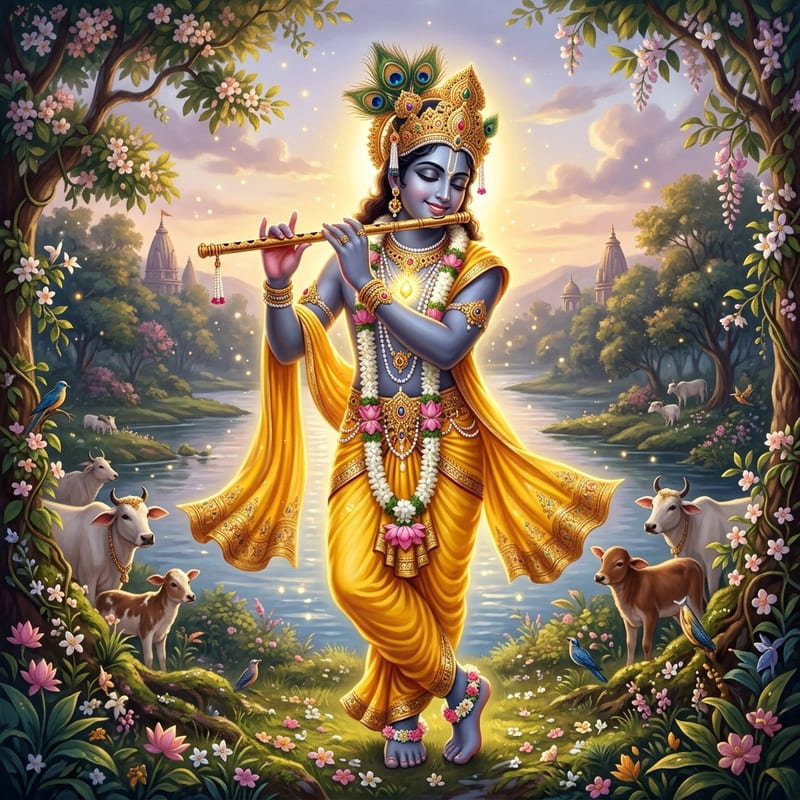
গদী শংখী চক্রী বিমলবনমালী স্থিররুচিঃ শরণ্যো লোকেশো মম ভবতু কৃষ্ণোঽক্ষিবিষযঃ ।। 1।।
- শ্রিযা (śriyā)by Shri
- আশ্লিষ্টঃ (āśliṣṭaḥ)held close
- বিষ্ণুঃ (viṣṇuḥ)Vishnu
- স্থিরচরবপুঃ (sthiracaravapuḥ)whose body is all that stands still and all that moves
- বেদবিষযঃ (vedaviṣayaḥ)of whom the Veda speaks
- ধিযাম্ (dhiyām)of the thoughts of all
- সাক্ষী (sākṣī)the witness
- শুদ্ধঃ (śuddhaḥ)clean
- হরিঃ (hariḥ)Hari
- অসুরহন্তা (asurahantā)who makes an end of the asuras
- অব্জনযনঃ (abjanayanaḥ)whose eyes are lotuses
- গদী (gadī)carrying the mace
- শংখী (śaṃkhī)carrying the conch
- চক্রী (cakrī)carrying the discus
- বিমলবনমালী (vimalavanamālī)wearing a fresh garland of wild flowers
- স্থিররুচিঃ (sthiraruciḥ)whose light never dims
- শরণ্যঃ (śaraṇyaḥ)the refuge
- লোকেশঃ (lokeśaḥ)lord of the worlds
- মম (mama)my
- ভবতু (bhavatu)may he become
- কৃষ্ণঃ (kṛṣṇaḥ)Krishna
- অক্ষিবিষযঃ (akṣiviṣayaḥ)what my eyes see
anvaya শ্রিযা আশ্লিষ্টঃ বিষ্ণুঃ স্থিরচরবপুঃ বেদবিষযঃ ধিযাম্ সাক্ষী শুদ্ধঃ অসুরহন্তা অব্জনযনঃ হরিঃ গদী শংখী চক্রী বিমলবনমালী স্থিররুচিঃ শরণ্যঃ লোকেশঃ কৃষ্ণঃ মম অক্ষিবিষযঃ ভবতু
chandas Śikhariṇī, 17 syllables in each of 4 pādas
অক্ষিবিষযঃ what the eyes see — Viṣaya is what a sense takes in. The prayer is not for knowledge of him but for sight of him, and this is what the whole hymn asks for.
ধিযাম্ সাক্ষী the witness of all thoughts — Sākṣī is the one who was there and saw. He sits in every mind as the one who watches it.
স্থিরচরবপুঃ whose body is the still and the moving — Sthira is what stays put, cara what walks about. The pair covers everything there is.
note The fourth pāda of this verse is the refrain of the whole hymn. In verses 2 to 8 the printed text shortens it to শরণ্যো. and the reciter supplies the rest: শরণ্যো লোকেশো মম ভবতু কৃষ্ণোঽক্ষিবিষযঃ. The copy of this hymn we started from wrote every visarga as a plain colon and carried six spelling slips, among them স্থিররূচিঃ for স্থিররুচিঃ. They were corrected against printed editions on 18 September 2026, and every pāda now scans as Śikhariṇī. Some editions read স্থিরচরগুরুঃ, the teacher of the still and the moving, where this text reads স্থিরচরবপুঃ.
লযে সর্বং স্বস্মিন্ হরতি কলযা যস্তু স বিভুঃ । শরণ্যো. ।।2।।
- যতঃ (yataḥ)from whom
- সর্বম্ (sarvam)all
- জাতম্ (jātam)came to be
- বিযদনিলমুখ্যম্ (viyadanilamukhyam)sky and air first of all
- জগত্ (jagat)the world
- ইদম্ (idam)this
- স্থিতৌ (sthitau)while it stands
- নিঃশেষম্ (niḥśeṣam)leaving none of it out
- যঃ (yaḥ)who
- অবতি (avati)keeps alive
- নিজসুখাংশেন (nijasukhāṃśena)with a portion of his own happiness
- মধুহা (madhuhā)the killer of Madhu
- লযে (laye)when it folds up
- সর্বম্ (sarvam)all of it
- স্বস্মিন্ (svasmin)into himself
- হরতি (harati)draws
- কলযা (kalayā)with a fraction of his power
- যঃ (yaḥ)who
- তু (tu)indeed
- সঃ (saḥ)he
- বিভুঃ (vibhuḥ)the one who holds it all
- শরণ্যঃ (śaraṇyaḥ)the refuge
anvaya যতঃ ইদম্ সর্বম্ জগত্ বিযদনিলমুখ্যম্ জাতম্ যঃ মধুহা স্থিতৌ নিজসুখাংশেন নিঃশেষম্ অবতি যঃ তু লযে কলযা সর্বম্ স্বস্মিন্ হরতি সঃ বিভুঃ শরণ্যঃ
chandas Śikhariṇī, 17 syllables in each of 4 pādas
স্থিতৌ লযে in the standing, in the folding up — The three works of God, making, keeping and taking back, are laid out across the verse in that order.
কলযা with a fraction — Kalā is a small part of something. Even the taking back of the world costs him only a fraction.
মধুহা the killer of Madhu — Madhu was an asura killed by Vishnu, which is where the name Madhusudana comes from.
note The printed fourth pāda is the shortened refrain শরণ্যো., standing for শরণ্যো লোকেশো মম ভবতু কৃষ্ণোঽক্ষিবিষযঃ.
যমীড্যং পশ্যন্তি প্রবরমতযো মাযিনমসৌ । শরণ্যো. ।।3।।
- অসূন্ (asūn)the breaths
- আযম্য (āyamya)having held in
- আদৌ (ādau)first
- যমনিযমমুখ্যৈঃ (yamaniyamamukhyaiḥ)by yama, niyama and the rest
- সুকরণৈঃ (sukaraṇaiḥ)by good means
- নিরুধ্য (nirudhya)having checked
- ইদম্ (idam)this
- চিত্তম্ (cittam)mind
- হৃদি (hṛdi)in the heart
- বিমলম্ (vimalam)made clean
- আনীয (ānīya)having brought
- সকলম্ (sakalam)the whole of it
- যম্ (yam)whom
- ঈড্যম্ (īḍyam)worthy of praise
- পশ্যন্তি (paśyanti)they see
- প্রবরমতযঃ (pravaramatayaḥ)those of the best minds
- মাযিনম্ (māyinam)the one who wields maya
- অসৌ (asau)he
- শরণ্যঃ (śaraṇyaḥ)the refuge
anvaya প্রবরমতযঃ আদৌ অসূন্ আযম্য যমনিযমমুখ্যৈঃ সুকরণৈঃ ইদম্ চিত্তম্ নিরুধ্য সকলম্ বিমলম্ হৃদি আনীয যম্ ঈড্যম্ মাযিনম্ পশ্যন্তি অসৌ শরণ্যঃ
chandas Śikhariṇī, 17 syllables in each of 4 pādas
যমনিযম yama and niyama — The first two of the eight steps of yoga: what to hold back from, and what to keep up. The verse names them as the beginning of the road to seeing him.
মাযিনম্ the one who wields maya — Māyin is the holder of maya, the power by which the world is spread out. The word is used of a conjurer as well, one who makes what is seen.
note Three words in this verse were corrected: নির্যেরুধ্যেদং to নিরুধ্যেদং, which is নিরুধ্য and ইদম্ joined, হ্রদি to হৃদি, and যমীডযং to যমীড্যম্. Some editions read বিলযমানীয, brought to rest, where this text reads বিমলমানীয, brought clean; the gloss follows the text as it stands. The fourth pāda is the shortened refrain.
নিযন্তারং ধ্যেযং মুনিসুরনৃণাং মোক্ষদমসৌ । শরণ্যো. ।।4।।
- পৃথিব্যাম্ (pṛthivyām)in the earth
- তিষ্ঠন্ (tiṣṭhan)standing
- যঃ (yaḥ)who
- যমযতি (yamayati)holds in check
- মহীম্ (mahīm)the earth
- বেদ (veda)knows
- ন (na)not
- ধরা (dharā)the earth
- যম্ (yam)whom
- ইতি (iti)in these words
- আদৌ (ādau)at the beginning
- বেদঃ (vedaḥ)the Veda
- বদতি (vadati)speaks
- জগতাম্ (jagatām)of the worlds
- ঈশম্ (īśam)the lord
- অমলম্ (amalam)spotless
- নিযন্তারম্ (niyantāram)the one who holds all in check
- ধ্যেযম্ (dhyeyam)to be meditated on
- মুনিসুরনৃণাম্ (munisuranṛṇām)by sages, gods and men
- মোক্ষদম্ (mokṣadam)the giver of release
- অসৌ (asau)he
- শরণ্যঃ (śaraṇyaḥ)the refuge
anvaya যঃ পৃথিব্যাম্ তিষ্ঠন্ মহীম্ যমযতি ধরা যম্ ন বেদ ইতি আদৌ বেদঃ বদতি জগতাম্ ঈশম্ অমলম্ নিযন্তারম্ মুনিসুরনৃণাম্ ধ্যেযম্ মোক্ষদম্ অসৌ শরণ্যঃ
chandas Śikhariṇī, 17 syllables in each of 4 pādas
পৃথিব্যাং তিষ্ঠন্ standing in the earth — The words come from the Antaryamin passage of the Brihadaranyaka Upanishad, where the one who is inside the earth is described in just this way, unknown to what he is inside.
নিযন্তারম্ the one who holds all in check — A niyantā is a driver, the one with the reins. The verse uses the verb of the same root twice before it names him.
note The text read প্রথিব্যাং, corrected to পৃথিব্যাং. The fourth pāda is the shortened refrain.
কবিত্বাদের্গর্বং পরিহরতি যোঽসৌ বিজযিনঃ । শরণ্যো. ।।5।।
- মহেন্দ্রাদিঃ (mahendrādiḥ)Mahendra and the rest
- দেবঃ (devaḥ)the god
- জযতি (jayati)wins
- দিতিজান্ (ditijān)over the sons of Diti
- অস্য (asya)his
- বলতঃ (balataḥ)by the strength
- ন (na)not
- কস্য (kasya)of anyone
- স্বাতন্ত্র্যম্ (svātantryam)being one's own master
- ক্বচিত্ (kvacit)anywhere
- অপি (api)even
- কৃতৌ (kṛtau)in what is done
- যত্কৃতিম্ (yatkṛtim)his doing
- ঋতে (ṛte)apart from
- কবিত্বাদেঃ (kavitvādeḥ)in poetry and the rest
- গর্বম্ (garvam)the pride
- পরিহরতি (pariharati)takes away
- যঃ (yaḥ)who
- অসৌ (asau)he
- বিজযিনঃ (vijayinaḥ)of the winner
- শরণ্যঃ (śaraṇyaḥ)the refuge
anvaya মহেন্দ্রাদিঃ দেবঃ অস্য বলতঃ দিতিজান্ জযতি যত্কৃতিম্ ঋতে কস্য অপি কৃতৌ ক্বচিত্ স্বাতন্ত্র্যম্ ন যঃ অসৌ বিজযিনঃ কবিত্বাদেঃ গর্বম্ পরিহরতি শরণ্যঃ
chandas Śikhariṇī, 17 syllables in each of 4 pādas
দিতিজান্ the sons of Diti — Diti's children are the daityas, who stand against the gods. Their half-brothers, the sons of Aditi, are the gods themselves.
স্বাতন্ত্র্যম্ being one's own master — Svātantrya is doing a thing on one's own account. The verse takes it away from everyone except him.
কবিত্বাদেঃ গর্বম্ the pride taken in poetry and the rest — A poet writing a hymn names his own kind of pride first. The line is a check on the one saying it.
note The printed fourth pāda is the shortened refrain.
বিনা যস্য স্মৃত্যা কৃমিশতজনিং যাতি স বিভুঃ । শরণ্যো. ।।6।।
- বিনা (vinā)without
- যস্য (yasya)his
- ধ্যানম্ (dhyānam)meditation
- ব্রজতি (vrajati)goes down to
- পশুতাম্ (paśutām)the state of an animal
- সূকরমুখাম্ (sūkaramukhām)with a boar's face
- বিনা (vinā)without
- যস্য (yasya)his
- জ্ঞানম্ (jñānam)knowledge
- জনিমৃতিভযম্ (janimṛtibhayam)the fear of birth and death
- যাতি (yāti)comes to
- জনতা (janatā)people
- বিনা (vinā)without
- যস্য (yasya)his
- স্মৃত্যা (smṛtyā)by remembering
- কৃমিশতজনিম্ (kṛmiśatajanim)a hundred births as a worm
- যাতি (yāti)comes to
- সঃ (saḥ)he
- বিভুঃ (vibhuḥ)the one who holds it all
- শরণ্যঃ (śaraṇyaḥ)the refuge
anvaya যস্য ধ্যানম্ বিনা পশুতাম্ সূকরমুখাম্ ব্রজতি যস্য জ্ঞানম্ বিনা জনতা জনিমৃতিভযম্ যাতি যস্য স্মৃত্যা বিনা কৃমিশতজনিম্ যাতি সঃ বিভুঃ শরণ্যঃ
chandas Śikhariṇī, 17 syllables in each of 4 pādas
বিনা without — The word opens each of the three lines and gives the verse its shape: without meditating, without knowing, without remembering.
কৃমিশতজনিম্ a hundred births as a worm — The text read क्रमि, corrected to कृमि, a worm. The smallest birth there is gets set against the sight of God the verse asks for.
note The three lines are a warning rather than a description, which makes this verse the hardest in the hymn. The fourth pāda is the shortened refrain.
স্বযম্ভূর্ভূতানাং জনক উচিতাচারসুখদঃ । শরণ্যো. ।।7।।
- নরাতংকোত্তংকঃ (narātaṃkottaṃkaḥ)who roots out the fears that afflict people
- শরণশরণঃ (śaraṇaśaraṇaḥ)the refuge of all who look for refuge
- ভ্রান্তিহরণঃ (bhrāntiharaṇaḥ)who takes away the whirl of confusion
- ঘনশ্যামঃ (ghanaśyāmaḥ)dark as a rain cloud
- কামঃ (kāmaḥ)the one who is wanted
- ব্রজশিশুবযস্যঃ (vrajaśiśuvayasyaḥ)playmate of the children of Vraja
- অর্জুনসখঃ (arjunasakhaḥ)friend of Arjuna
- স্বযম্ভূঃ (svayambhūḥ)self-existent
- ভূতানাম্ (bhūtānām)of all beings
- জনকঃ (janakaḥ)the father
- উচিতাচারসুখদঃ (ucitācārasukhadaḥ)who gives joy to those whose conduct is right
- শরণ্যঃ (śaraṇyaḥ)the refuge
anvaya শরণশরণঃ ভ্রান্তিহরণঃ ঘনশ্যামঃ কামঃ ব্রজশিশুবযস্যঃ অর্জুনসখঃ স্বযম্ভূঃ ভূতানাম্ জনকঃ উচিতাচারসুখদঃ নরাতংকোত্তংকঃ শরণ্যঃ
chandas Śikhariṇī, 17 syllables in each of 4 pādas
নরাতংকোত্তংকঃ who roots out the fears that afflict people — Narātaṅka is the fear or the pain that people suffer. Uttaṅka is a rare word, and published translations of this hymn read the compound as the uprooting of that pain, which is the sense given here.
ব্রজশিশুবযস্যঃ playmate of the children of Vraja — Vayasya is someone of the same age, a companion in play. After six verses on the maker of the world, this is the first mention of the cowherd boy.
ঘনশ্যামঃ dark as a rain cloud — Ghana is a heavy cloud. The colour is his own, and the name Krishna means dark.
note The verse turns from God as the cause of the world to Krishna in Vraja, playmate and friend. Some editions read ঘনশ্যামো বামো, dark and lovely, where this text reads ঘনশ্যামঃ কামো. The fourth pāda is the shortened refrain.
সতাং ধাতা স্বচ্ছো নিগমগণগীতো ব্রজপতিঃ । শরণ্যো ।।8।।
- যদা (yadā)when
- ধর্মগ্লানিঃ (dharmaglāniḥ)the weakening of dharma
- ভবতি (bhavati)comes about
- জগতাম্ (jagatām)of the worlds
- ক্ষোভকরণী (kṣobhakaraṇī)which sets them shaking
- তদা (tadā)then
- লোকস্বামী (lokasvāmī)the lord of the world
- প্রকটিতবপুঃ (prakaṭitavapuḥ)showing himself in a body
- সেতুধৃক্ (setudhṛk)who holds the dam in place
- অজঃ (ajaḥ)unborn
- সতাম্ (satām)of the good
- ধাতা (dhātā)the carrier
- স্বচ্ছঃ (svacchaḥ)clear through and through
- নিগমগণগীতঃ (nigamagaṇagītaḥ)sung by the books of the Veda
- ব্রজপতিঃ (vrajapatiḥ)lord of Vraja
- শরণ্যঃ (śaraṇyaḥ)the refuge
anvaya যদা জগতাম্ ক্ষোভকরণী ধর্মগ্লানিঃ ভবতি তদা অজঃ লোকস্বামী সেতুধৃক্ প্রকটিতবপুঃ সতাম্ ধাতা স্বচ্ছঃ নিগমগণগীতঃ ব্রজপতিঃ শরণ্যঃ
chandas Śikhariṇī, 17 syllables in each of 4 pādas
ধর্মগ্লানিঃ the weakening of dharma — The same words Krishna uses of himself in the Gita, yadā yadā hi dharmasya glānir bhavati. The verse is written to be heard against that line.
সেতুধৃক্ who holds the dam in place — A setu is a dam or a causeway, and dharma is spoken of as one: what keeps the water where it belongs. He is the one who holds it.
অজঃ unborn — Set beside prakaṭitavapuḥ, showing himself in a body, in the same line. The one who is never born is the one who takes birth.
note The eighth verse completes the set of eight. The printed fourth pāda is the shortened refrain.
যতিবরনিকটে শ্রীযুক্ত আবির্বভূব স্বগুণবৃত উদারঃ শংখচক্রাব্জহস্তঃ ।।9।।
- ইতি (iti)so
- হরিঃ (hariḥ)Hari
- অখিলাত্মা (akhilātmā)the self of all
- আরাধিতঃ (ārādhitaḥ)was worshipped
- শংকরেণ (śaṃkareṇa)by Shankara
- শ্রুতিবিশদগুণঃ (śrutiviśadaguṇaḥ)whose qualities the Veda sets out plainly
- অসৌ (asau)he
- মাতৃমোক্ষার্থম্ (mātṛmokṣārtham)for his mother's release
- আদ্যঃ (ādyaḥ)the first of all
- যতিবরনিকটে (yativaranikaṭe)beside that best of ascetics
- শ্রীযুক্তঃ (śrīyuktaḥ)with Shri beside him
- আবির্বভূব (āvirbabhūva)appeared
- স্বগুণবৃতঃ (svaguṇavṛtaḥ)held about by his own qualities
- উদারঃ (udāraḥ)open-handed
- শংখচক্রাব্জহস্তঃ (śaṃkhacakrābjahastaḥ)with conch, discus and lotus in his hands
anvaya ইতি অখিলাত্মা শ্রুতিবিশদগুণঃ আদ্যঃ অসৌ হরিঃ মাতৃমোক্ষার্থম্ শংকরেণ আরাধিতঃ যতিবরনিকটে শ্রীযুক্তঃ স্বগুণবৃতঃ উদারঃ শংখচক্রাব্জহস্তঃ আবির্বভূব
chandas Mālinī, 15 syllables in each of 4 pādas
মাতৃমোক্ষার্থম্ for his mother's release — Shankara is said to have sung this hymn at his mother's deathbed, having promised her that she would see Vishnu at the end. This verse is the record of that.
যতিবরনিকটে beside the best of ascetics — The yati is Shankara himself, and the verse speaks of him in the third person, as a pupil's closing verse would.
note A ninth verse standing outside the eight, in a different metre, telling the occasion of the hymn rather than praising Krishna. It is why the work is given to Shankaracharya.