
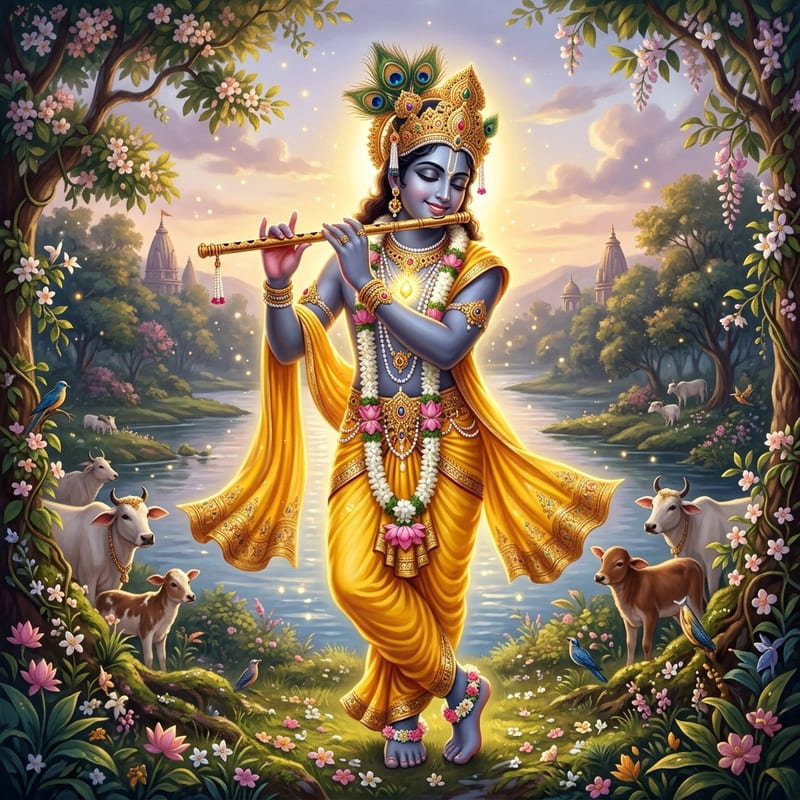
ಗದೀ ಶಂಖೀ ಚಕ್ರೀ ವಿಮಲವನಮಾಲೀ ಸ್ಥಿರರುಚಿಃ ಶರಣ್ಯೋ ಲೋಕೇಶೋ ಮಮ ಭವತು ಕೃಷ್ಣೋಽಕ್ಷಿವಿಷಯಃ ।। 1।।
- ಶ್ರಿಯಾ (śriyā)by Shri
- ಆಶ್ಲಿಷ್ಟಃ (āśliṣṭaḥ)held close
- ವಿಷ್ಣುಃ (viṣṇuḥ)Vishnu
- ಸ್ಥಿರಚರವಪುಃ (sthiracaravapuḥ)whose body is all that stands still and all that moves
- ವೇದವಿಷಯಃ (vedaviṣayaḥ)of whom the Veda speaks
- ಧಿಯಾಮ್ (dhiyām)of the thoughts of all
- ಸಾಕ್ಷೀ (sākṣī)the witness
- ಶುದ್ಧಃ (śuddhaḥ)clean
- ಹರಿಃ (hariḥ)Hari
- ಅಸುರಹನ್ತಾ (asurahantā)who makes an end of the asuras
- ಅಬ್ಜನಯನಃ (abjanayanaḥ)whose eyes are lotuses
- ಗದೀ (gadī)carrying the mace
- ಶಂಖೀ (śaṃkhī)carrying the conch
- ಚಕ್ರೀ (cakrī)carrying the discus
- ವಿಮಲವನಮಾಲೀ (vimalavanamālī)wearing a fresh garland of wild flowers
- ಸ್ಥಿರರುಚಿಃ (sthiraruciḥ)whose light never dims
- ಶರಣ್ಯಃ (śaraṇyaḥ)the refuge
- ಲೋಕೇಶಃ (lokeśaḥ)lord of the worlds
- ಮಮ (mama)my
- ಭವತು (bhavatu)may he become
- ಕೃಷ್ಣಃ (kṛṣṇaḥ)Krishna
- ಅಕ್ಷಿವಿಷಯಃ (akṣiviṣayaḥ)what my eyes see
anvaya ಶ್ರಿಯಾ ಆಶ್ಲಿಷ್ಟಃ ವಿಷ್ಣುಃ ಸ್ಥಿರಚರವಪುಃ ವೇದವಿಷಯಃ ಧಿಯಾಮ್ ಸಾಕ್ಷೀ ಶುದ್ಧಃ ಅಸುರಹನ್ತಾ ಅಬ್ಜನಯನಃ ಹರಿಃ ಗದೀ ಶಂಖೀ ಚಕ್ರೀ ವಿಮಲವನಮಾಲೀ ಸ್ಥಿರರುಚಿಃ ಶರಣ್ಯಃ ಲೋಕೇಶಃ ಕೃಷ್ಣಃ ಮಮ ಅಕ್ಷಿವಿಷಯಃ ಭವತು
chandas Śikhariṇī, 17 syllables in each of 4 pādas
ಅಕ್ಷಿವಿಷಯಃ what the eyes see — Viṣaya is what a sense takes in. The prayer is not for knowledge of him but for sight of him, and this is what the whole hymn asks for.
ಧಿಯಾಮ್ ಸಾಕ್ಷೀ the witness of all thoughts — Sākṣī is the one who was there and saw. He sits in every mind as the one who watches it.
ಸ್ಥಿರಚರವಪುಃ whose body is the still and the moving — Sthira is what stays put, cara what walks about. The pair covers everything there is.
note The fourth pāda of this verse is the refrain of the whole hymn. In verses 2 to 8 the printed text shortens it to ಶರಣ್ಯೋ. and the reciter supplies the rest: ಶರಣ್ಯೋ ಲೋಕೇಶೋ ಮಮ ಭವತು ಕೃಷ್ಣೋಽಕ್ಷಿವಿಷಯಃ. The copy of this hymn we started from wrote every visarga as a plain colon and carried six spelling slips, among them ಸ್ಥಿರರೂಚಿಃ for ಸ್ಥಿರರುಚಿಃ. They were corrected against printed editions on 18 September 2026, and every pāda now scans as Śikhariṇī. Some editions read ಸ್ಥಿರಚರಗುರುಃ, the teacher of the still and the moving, where this text reads ಸ್ಥಿರಚರವಪುಃ.
ಲಯೇ ಸರ್ವಂ ಸ್ವಸ್ಮಿನ್ ಹರತಿ ಕಲಯಾ ಯಸ್ತು ಸ ವಿಭುಃ । ಶರಣ್ಯೋ. ।।2।।
- ಯತಃ (yataḥ)from whom
- ಸರ್ವಮ್ (sarvam)all
- ಜಾತಮ್ (jātam)came to be
- ವಿಯದನಿಲಮುಖ್ಯಮ್ (viyadanilamukhyam)sky and air first of all
- ಜಗತ್ (jagat)the world
- ಇದಮ್ (idam)this
- ಸ್ಥಿತೌ (sthitau)while it stands
- ನಿಃಶೇಷಮ್ (niḥśeṣam)leaving none of it out
- ಯಃ (yaḥ)who
- ಅವತಿ (avati)keeps alive
- ನಿಜಸುಖಾಂಶೇನ (nijasukhāṃśena)with a portion of his own happiness
- ಮಧುಹಾ (madhuhā)the killer of Madhu
- ಲಯೇ (laye)when it folds up
- ಸರ್ವಮ್ (sarvam)all of it
- ಸ್ವಸ್ಮಿನ್ (svasmin)into himself
- ಹರತಿ (harati)draws
- ಕಲಯಾ (kalayā)with a fraction of his power
- ಯಃ (yaḥ)who
- ತು (tu)indeed
- ಸಃ (saḥ)he
- ವಿಭುಃ (vibhuḥ)the one who holds it all
- ಶರಣ್ಯಃ (śaraṇyaḥ)the refuge
anvaya ಯತಃ ಇದಮ್ ಸರ್ವಮ್ ಜಗತ್ ವಿಯದನಿಲಮುಖ್ಯಮ್ ಜಾತಮ್ ಯಃ ಮಧುಹಾ ಸ್ಥಿತೌ ನಿಜಸುಖಾಂಶೇನ ನಿಃಶೇಷಮ್ ಅವತಿ ಯಃ ತು ಲಯೇ ಕಲಯಾ ಸರ್ವಮ್ ಸ್ವಸ್ಮಿನ್ ಹರತಿ ಸಃ ವಿಭುಃ ಶರಣ್ಯಃ
chandas Śikhariṇī, 17 syllables in each of 4 pādas
ಸ್ಥಿತೌ ಲಯೇ in the standing, in the folding up — The three works of God, making, keeping and taking back, are laid out across the verse in that order.
ಕಲಯಾ with a fraction — Kalā is a small part of something. Even the taking back of the world costs him only a fraction.
ಮಧುಹಾ the killer of Madhu — Madhu was an asura killed by Vishnu, which is where the name Madhusudana comes from.
note The printed fourth pāda is the shortened refrain ಶರಣ್ಯೋ., standing for ಶರಣ್ಯೋ ಲೋಕೇಶೋ ಮಮ ಭವತು ಕೃಷ್ಣೋಽಕ್ಷಿವಿಷಯಃ.
ಯಮೀಡ್ಯಂ ಪಶ್ಯನ್ತಿ ಪ್ರವರಮತಯೋ ಮಾಯಿನಮಸೌ । ಶರಣ್ಯೋ. ।।3।।
- ಅಸೂನ್ (asūn)the breaths
- ಆಯಮ್ಯ (āyamya)having held in
- ಆದೌ (ādau)first
- ಯಮನಿಯಮಮುಖ್ಯೈಃ (yamaniyamamukhyaiḥ)by yama, niyama and the rest
- ಸುಕರಣೈಃ (sukaraṇaiḥ)by good means
- ನಿರುಧ್ಯ (nirudhya)having checked
- ಇದಮ್ (idam)this
- ಚಿತ್ತಮ್ (cittam)mind
- ಹೃದಿ (hṛdi)in the heart
- ವಿಮಲಮ್ (vimalam)made clean
- ಆನೀಯ (ānīya)having brought
- ಸಕಲಮ್ (sakalam)the whole of it
- ಯಮ್ (yam)whom
- ಈಡ್ಯಮ್ (īḍyam)worthy of praise
- ಪಶ್ಯನ್ತಿ (paśyanti)they see
- ಪ್ರವರಮತಯಃ (pravaramatayaḥ)those of the best minds
- ಮಾಯಿನಮ್ (māyinam)the one who wields maya
- ಅಸೌ (asau)he
- ಶರಣ್ಯಃ (śaraṇyaḥ)the refuge
anvaya ಪ್ರವರಮತಯಃ ಆದೌ ಅಸೂನ್ ಆಯಮ್ಯ ಯಮನಿಯಮಮುಖ್ಯೈಃ ಸುಕರಣೈಃ ಇದಮ್ ಚಿತ್ತಮ್ ನಿರುಧ್ಯ ಸಕಲಮ್ ವಿಮಲಮ್ ಹೃದಿ ಆನೀಯ ಯಮ್ ಈಡ್ಯಮ್ ಮಾಯಿನಮ್ ಪಶ್ಯನ್ತಿ ಅಸೌ ಶರಣ್ಯಃ
chandas Śikhariṇī, 17 syllables in each of 4 pādas
ಯಮನಿಯಮ yama and niyama — The first two of the eight steps of yoga: what to hold back from, and what to keep up. The verse names them as the beginning of the road to seeing him.
ಮಾಯಿನಮ್ the one who wields maya — Māyin is the holder of maya, the power by which the world is spread out. The word is used of a conjurer as well, one who makes what is seen.
note Three words in this verse were corrected: ನಿರ್ಯೇರುಧ್ಯೇದಂ to ನಿರುಧ್ಯೇದಂ, which is ನಿರುಧ್ಯ and ಇದಮ್ joined, ಹ್ರದಿ to ಹೃದಿ, and ಯಮೀಡಯಂ to ಯಮೀಡ್ಯಮ್. Some editions read ವಿಲಯಮಾನೀಯ, brought to rest, where this text reads ವಿಮಲಮಾನೀಯ, brought clean; the gloss follows the text as it stands. The fourth pāda is the shortened refrain.
ನಿಯನ್ತಾರಂ ಧ್ಯೇಯಂ ಮುನಿಸುರನೃಣಾಂ ಮೋಕ್ಷದಮಸೌ । ಶರಣ್ಯೋ. ।।4।।
- ಪೃಥಿವ್ಯಾಮ್ (pṛthivyām)in the earth
- ತಿಷ್ಠನ್ (tiṣṭhan)standing
- ಯಃ (yaḥ)who
- ಯಮಯತಿ (yamayati)holds in check
- ಮಹೀಮ್ (mahīm)the earth
- ವೇದ (veda)knows
- ನ (na)not
- ಧರಾ (dharā)the earth
- ಯಮ್ (yam)whom
- ಇತಿ (iti)in these words
- ಆದೌ (ādau)at the beginning
- ವೇದಃ (vedaḥ)the Veda
- ವದತಿ (vadati)speaks
- ಜಗತಾಮ್ (jagatām)of the worlds
- ಈಶಮ್ (īśam)the lord
- ಅಮಲಮ್ (amalam)spotless
- ನಿಯನ್ತಾರಮ್ (niyantāram)the one who holds all in check
- ಧ್ಯೇಯಮ್ (dhyeyam)to be meditated on
- ಮುನಿಸುರನೃಣಾಮ್ (munisuranṛṇām)by sages, gods and men
- ಮೋಕ್ಷದಮ್ (mokṣadam)the giver of release
- ಅಸೌ (asau)he
- ಶರಣ್ಯಃ (śaraṇyaḥ)the refuge
anvaya ಯಃ ಪೃಥಿವ್ಯಾಮ್ ತಿಷ್ಠನ್ ಮಹೀಮ್ ಯಮಯತಿ ಧರಾ ಯಮ್ ನ ವೇದ ಇತಿ ಆದೌ ವೇದಃ ವದತಿ ಜಗತಾಮ್ ಈಶಮ್ ಅಮಲಮ್ ನಿಯನ್ತಾರಮ್ ಮುನಿಸುರನೃಣಾಮ್ ಧ್ಯೇಯಮ್ ಮೋಕ್ಷದಮ್ ಅಸೌ ಶರಣ್ಯಃ
chandas Śikhariṇī, 17 syllables in each of 4 pādas
ಪೃಥಿವ್ಯಾಂ ತಿಷ್ಠನ್ standing in the earth — The words come from the Antaryamin passage of the Brihadaranyaka Upanishad, where the one who is inside the earth is described in just this way, unknown to what he is inside.
ನಿಯನ್ತಾರಮ್ the one who holds all in check — A niyantā is a driver, the one with the reins. The verse uses the verb of the same root twice before it names him.
note The text read ಪ್ರಥಿವ್ಯಾಂ, corrected to ಪೃಥಿವ್ಯಾಂ. The fourth pāda is the shortened refrain.
ಕವಿತ್ವಾದೇರ್ಗರ್ವಂ ಪರಿಹರತಿ ಯೋಽಸೌ ವಿಜಯಿನಃ । ಶರಣ್ಯೋ. ।।5।।
- ಮಹೇನ್ದ್ರಾದಿಃ (mahendrādiḥ)Mahendra and the rest
- ದೇವಃ (devaḥ)the god
- ಜಯತಿ (jayati)wins
- ದಿತಿಜಾನ್ (ditijān)over the sons of Diti
- ಅಸ್ಯ (asya)his
- ಬಲತಃ (balataḥ)by the strength
- ನ (na)not
- ಕಸ್ಯ (kasya)of anyone
- ಸ್ವಾತನ್ತ್ರ್ಯಮ್ (svātantryam)being one's own master
- ಕ್ವಚಿತ್ (kvacit)anywhere
- ಅಪಿ (api)even
- ಕೃತೌ (kṛtau)in what is done
- ಯತ್ಕೃತಿಮ್ (yatkṛtim)his doing
- ಋತೇ (ṛte)apart from
- ಕವಿತ್ವಾದೇಃ (kavitvādeḥ)in poetry and the rest
- ಗರ್ವಮ್ (garvam)the pride
- ಪರಿಹರತಿ (pariharati)takes away
- ಯಃ (yaḥ)who
- ಅಸೌ (asau)he
- ವಿಜಯಿನಃ (vijayinaḥ)of the winner
- ಶರಣ್ಯಃ (śaraṇyaḥ)the refuge
anvaya ಮಹೇನ್ದ್ರಾದಿಃ ದೇವಃ ಅಸ್ಯ ಬಲತಃ ದಿತಿಜಾನ್ ಜಯತಿ ಯತ್ಕೃತಿಮ್ ಋತೇ ಕಸ್ಯ ಅಪಿ ಕೃತೌ ಕ್ವಚಿತ್ ಸ್ವಾತನ್ತ್ರ್ಯಮ್ ನ ಯಃ ಅಸೌ ವಿಜಯಿನಃ ಕವಿತ್ವಾದೇಃ ಗರ್ವಮ್ ಪರಿಹರತಿ ಶರಣ್ಯಃ
chandas Śikhariṇī, 17 syllables in each of 4 pādas
ದಿತಿಜಾನ್ the sons of Diti — Diti's children are the daityas, who stand against the gods. Their half-brothers, the sons of Aditi, are the gods themselves.
ಸ್ವಾತನ್ತ್ರ್ಯಮ್ being one's own master — Svātantrya is doing a thing on one's own account. The verse takes it away from everyone except him.
ಕವಿತ್ವಾದೇಃ ಗರ್ವಮ್ the pride taken in poetry and the rest — A poet writing a hymn names his own kind of pride first. The line is a check on the one saying it.
note The printed fourth pāda is the shortened refrain.
ವಿನಾ ಯಸ್ಯ ಸ್ಮೃತ್ಯಾ ಕೃಮಿಶತಜನಿಂ ಯಾತಿ ಸ ವಿಭುಃ । ಶರಣ್ಯೋ. ।।6।।
- ವಿನಾ (vinā)without
- ಯಸ್ಯ (yasya)his
- ಧ್ಯಾನಮ್ (dhyānam)meditation
- ವ್ರಜತಿ (vrajati)goes down to
- ಪಶುತಾಮ್ (paśutām)the state of an animal
- ಸೂಕರಮುಖಾಮ್ (sūkaramukhām)with a boar's face
- ವಿನಾ (vinā)without
- ಯಸ್ಯ (yasya)his
- ಜ್ಞಾನಮ್ (jñānam)knowledge
- ಜನಿಮೃತಿಭಯಮ್ (janimṛtibhayam)the fear of birth and death
- ಯಾತಿ (yāti)comes to
- ಜನತಾ (janatā)people
- ವಿನಾ (vinā)without
- ಯಸ್ಯ (yasya)his
- ಸ್ಮೃತ್ಯಾ (smṛtyā)by remembering
- ಕೃಮಿಶತಜನಿಮ್ (kṛmiśatajanim)a hundred births as a worm
- ಯಾತಿ (yāti)comes to
- ಸಃ (saḥ)he
- ವಿಭುಃ (vibhuḥ)the one who holds it all
- ಶರಣ್ಯಃ (śaraṇyaḥ)the refuge
anvaya ಯಸ್ಯ ಧ್ಯಾನಮ್ ವಿನಾ ಪಶುತಾಮ್ ಸೂಕರಮುಖಾಮ್ ವ್ರಜತಿ ಯಸ್ಯ ಜ್ಞಾನಮ್ ವಿನಾ ಜನತಾ ಜನಿಮೃತಿಭಯಮ್ ಯಾತಿ ಯಸ್ಯ ಸ್ಮೃತ್ಯಾ ವಿನಾ ಕೃಮಿಶತಜನಿಮ್ ಯಾತಿ ಸಃ ವಿಭುಃ ಶರಣ್ಯಃ
chandas Śikhariṇī, 17 syllables in each of 4 pādas
ವಿನಾ without — The word opens each of the three lines and gives the verse its shape: without meditating, without knowing, without remembering.
ಕೃಮಿಶತಜನಿಮ್ a hundred births as a worm — The text read क्रमि, corrected to कृमि, a worm. The smallest birth there is gets set against the sight of God the verse asks for.
note The three lines are a warning rather than a description, which makes this verse the hardest in the hymn. The fourth pāda is the shortened refrain.
ಸ್ವಯಮ್ಭೂರ್ಭೂತಾನಾಂ ಜನಕ ಉಚಿತಾಚಾರಸುಖದಃ । ಶರಣ್ಯೋ. ।।7।।
- ನರಾತಂಕೋತ್ತಂಕಃ (narātaṃkottaṃkaḥ)who roots out the fears that afflict people
- ಶರಣಶರಣಃ (śaraṇaśaraṇaḥ)the refuge of all who look for refuge
- ಭ್ರಾನ್ತಿಹರಣಃ (bhrāntiharaṇaḥ)who takes away the whirl of confusion
- ಘನಶ್ಯಾಮಃ (ghanaśyāmaḥ)dark as a rain cloud
- ಕಾಮಃ (kāmaḥ)the one who is wanted
- ವ್ರಜಶಿಶುವಯಸ್ಯಃ (vrajaśiśuvayasyaḥ)playmate of the children of Vraja
- ಅರ್ಜುನಸಖಃ (arjunasakhaḥ)friend of Arjuna
- ಸ್ವಯಮ್ಭೂಃ (svayambhūḥ)self-existent
- ಭೂತಾನಾಮ್ (bhūtānām)of all beings
- ಜನಕಃ (janakaḥ)the father
- ಉಚಿತಾಚಾರಸುಖದಃ (ucitācārasukhadaḥ)who gives joy to those whose conduct is right
- ಶರಣ್ಯಃ (śaraṇyaḥ)the refuge
anvaya ಶರಣಶರಣಃ ಭ್ರಾನ್ತಿಹರಣಃ ಘನಶ್ಯಾಮಃ ಕಾಮಃ ವ್ರಜಶಿಶುವಯಸ್ಯಃ ಅರ್ಜುನಸಖಃ ಸ್ವಯಮ್ಭೂಃ ಭೂತಾನಾಮ್ ಜನಕಃ ಉಚಿತಾಚಾರಸುಖದಃ ನರಾತಂಕೋತ್ತಂಕಃ ಶರಣ್ಯಃ
chandas Śikhariṇī, 17 syllables in each of 4 pādas
ನರಾತಂಕೋತ್ತಂಕಃ who roots out the fears that afflict people — Narātaṅka is the fear or the pain that people suffer. Uttaṅka is a rare word, and published translations of this hymn read the compound as the uprooting of that pain, which is the sense given here.
ವ್ರಜಶಿಶುವಯಸ್ಯಃ playmate of the children of Vraja — Vayasya is someone of the same age, a companion in play. After six verses on the maker of the world, this is the first mention of the cowherd boy.
ಘನಶ್ಯಾಮಃ dark as a rain cloud — Ghana is a heavy cloud. The colour is his own, and the name Krishna means dark.
note The verse turns from God as the cause of the world to Krishna in Vraja, playmate and friend. Some editions read ಘನಶ್ಯಾಮೋ ವಾಮೋ, dark and lovely, where this text reads ಘನಶ್ಯಾಮಃ ಕಾಮೋ. The fourth pāda is the shortened refrain.
ಸತಾಂ ಧಾತಾ ಸ್ವಚ್ಛೋ ನಿಗಮಗಣಗೀತೋ ವ್ರಜಪತಿಃ । ಶರಣ್ಯೋ ।।8।।
- ಯದಾ (yadā)when
- ಧರ್ಮಗ್ಲಾನಿಃ (dharmaglāniḥ)the weakening of dharma
- ಭವತಿ (bhavati)comes about
- ಜಗತಾಮ್ (jagatām)of the worlds
- ಕ್ಷೋಭಕರಣೀ (kṣobhakaraṇī)which sets them shaking
- ತದಾ (tadā)then
- ಲೋಕಸ್ವಾಮೀ (lokasvāmī)the lord of the world
- ಪ್ರಕಟಿತವಪುಃ (prakaṭitavapuḥ)showing himself in a body
- ಸೇತುಧೃಕ್ (setudhṛk)who holds the dam in place
- ಅಜಃ (ajaḥ)unborn
- ಸತಾಮ್ (satām)of the good
- ಧಾತಾ (dhātā)the carrier
- ಸ್ವಚ್ಛಃ (svacchaḥ)clear through and through
- ನಿಗಮಗಣಗೀತಃ (nigamagaṇagītaḥ)sung by the books of the Veda
- ವ್ರಜಪತಿಃ (vrajapatiḥ)lord of Vraja
- ಶರಣ್ಯಃ (śaraṇyaḥ)the refuge
anvaya ಯದಾ ಜಗತಾಮ್ ಕ್ಷೋಭಕರಣೀ ಧರ್ಮಗ್ಲಾನಿಃ ಭವತಿ ತದಾ ಅಜಃ ಲೋಕಸ್ವಾಮೀ ಸೇತುಧೃಕ್ ಪ್ರಕಟಿತವಪುಃ ಸತಾಮ್ ಧಾತಾ ಸ್ವಚ್ಛಃ ನಿಗಮಗಣಗೀತಃ ವ್ರಜಪತಿಃ ಶರಣ್ಯಃ
chandas Śikhariṇī, 17 syllables in each of 4 pādas
ಧರ್ಮಗ್ಲಾನಿಃ the weakening of dharma — The same words Krishna uses of himself in the Gita, yadā yadā hi dharmasya glānir bhavati. The verse is written to be heard against that line.
ಸೇತುಧೃಕ್ who holds the dam in place — A setu is a dam or a causeway, and dharma is spoken of as one: what keeps the water where it belongs. He is the one who holds it.
ಅಜಃ unborn — Set beside prakaṭitavapuḥ, showing himself in a body, in the same line. The one who is never born is the one who takes birth.
note The eighth verse completes the set of eight. The printed fourth pāda is the shortened refrain.
ಯತಿವರನಿಕಟೇ ಶ್ರೀಯುಕ್ತ ಆವಿರ್ಬಭೂವ ಸ್ವಗುಣವೃತ ಉದಾರಃ ಶಂಖಚಕ್ರಾಬ್ಜಹಸ್ತಃ ।।9।।
- ಇತಿ (iti)so
- ಹರಿಃ (hariḥ)Hari
- ಅಖಿಲಾತ್ಮಾ (akhilātmā)the self of all
- ಆರಾಧಿತಃ (ārādhitaḥ)was worshipped
- ಶಂಕರೇಣ (śaṃkareṇa)by Shankara
- ಶ್ರುತಿವಿಶದಗುಣಃ (śrutiviśadaguṇaḥ)whose qualities the Veda sets out plainly
- ಅಸೌ (asau)he
- ಮಾತೃಮೋಕ್ಷಾರ್ಥಮ್ (mātṛmokṣārtham)for his mother's release
- ಆದ್ಯಃ (ādyaḥ)the first of all
- ಯತಿವರನಿಕಟೇ (yativaranikaṭe)beside that best of ascetics
- ಶ್ರೀಯುಕ್ತಃ (śrīyuktaḥ)with Shri beside him
- ಆವಿರ್ಬಭೂವ (āvirbabhūva)appeared
- ಸ್ವಗುಣವೃತಃ (svaguṇavṛtaḥ)held about by his own qualities
- ಉದಾರಃ (udāraḥ)open-handed
- ಶಂಖಚಕ್ರಾಬ್ಜಹಸ್ತಃ (śaṃkhacakrābjahastaḥ)with conch, discus and lotus in his hands
anvaya ಇತಿ ಅಖಿಲಾತ್ಮಾ ಶ್ರುತಿವಿಶದಗುಣಃ ಆದ್ಯಃ ಅಸೌ ಹರಿಃ ಮಾತೃಮೋಕ್ಷಾರ್ಥಮ್ ಶಂಕರೇಣ ಆರಾಧಿತಃ ಯತಿವರನಿಕಟೇ ಶ್ರೀಯುಕ್ತಃ ಸ್ವಗುಣವೃತಃ ಉದಾರಃ ಶಂಖಚಕ್ರಾಬ್ಜಹಸ್ತಃ ಆವಿರ್ಬಭೂವ
chandas Mālinī, 15 syllables in each of 4 pādas
ಮಾತೃಮೋಕ್ಷಾರ್ಥಮ್ for his mother's release — Shankara is said to have sung this hymn at his mother's deathbed, having promised her that she would see Vishnu at the end. This verse is the record of that.
ಯತಿವರನಿಕಟೇ beside the best of ascetics — The yati is Shankara himself, and the verse speaks of him in the third person, as a pupil's closing verse would.
note A ninth verse standing outside the eight, in a different metre, telling the occasion of the hymn rather than praising Krishna. It is why the work is given to Shankaracharya.