
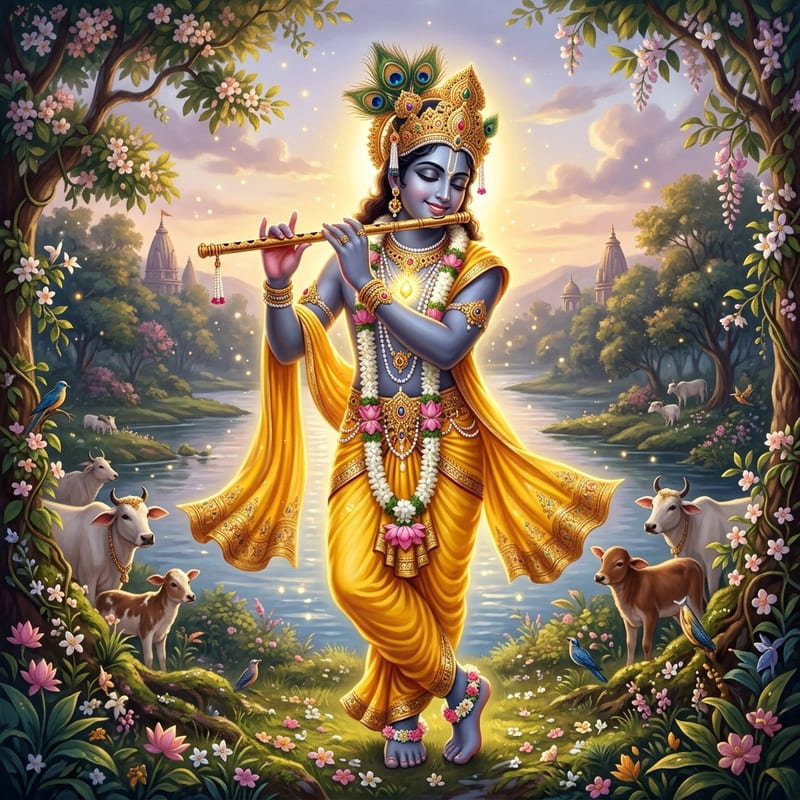
ગદી શંખી ચક્રી વિમલવનમાલી સ્થિરરુચિઃ શરણ્યો લોકેશો મમ ભવતુ કૃષ્ણોઽક્ષિવિષયઃ ।। 1।।
- શ્રિયા (śriyā)by Shri
- આશ્લિષ્ટઃ (āśliṣṭaḥ)held close
- વિષ્ણુઃ (viṣṇuḥ)Vishnu
- સ્થિરચરવપુઃ (sthiracaravapuḥ)whose body is all that stands still and all that moves
- વેદવિષયઃ (vedaviṣayaḥ)of whom the Veda speaks
- ધિયામ્ (dhiyām)of the thoughts of all
- સાક્ષી (sākṣī)the witness
- શુદ્ધઃ (śuddhaḥ)clean
- હરિઃ (hariḥ)Hari
- અસુરહન્તા (asurahantā)who makes an end of the asuras
- અબ્જનયનઃ (abjanayanaḥ)whose eyes are lotuses
- ગદી (gadī)carrying the mace
- શંખી (śaṃkhī)carrying the conch
- ચક્રી (cakrī)carrying the discus
- વિમલવનમાલી (vimalavanamālī)wearing a fresh garland of wild flowers
- સ્થિરરુચિઃ (sthiraruciḥ)whose light never dims
- શરણ્યઃ (śaraṇyaḥ)the refuge
- લોકેશઃ (lokeśaḥ)lord of the worlds
- મમ (mama)my
- ભવતુ (bhavatu)may he become
- કૃષ્ણઃ (kṛṣṇaḥ)Krishna
- અક્ષિવિષયઃ (akṣiviṣayaḥ)what my eyes see
anvaya શ્રિયા આશ્લિષ્ટઃ વિષ્ણુઃ સ્થિરચરવપુઃ વેદવિષયઃ ધિયામ્ સાક્ષી શુદ્ધઃ અસુરહન્તા અબ્જનયનઃ હરિઃ ગદી શંખી ચક્રી વિમલવનમાલી સ્થિરરુચિઃ શરણ્યઃ લોકેશઃ કૃષ્ણઃ મમ અક્ષિવિષયઃ ભવતુ
chandas Śikhariṇī, 17 syllables in each of 4 pādas
અક્ષિવિષયઃ what the eyes see — Viṣaya is what a sense takes in. The prayer is not for knowledge of him but for sight of him, and this is what the whole hymn asks for.
ધિયામ્ સાક્ષી the witness of all thoughts — Sākṣī is the one who was there and saw. He sits in every mind as the one who watches it.
સ્થિરચરવપુઃ whose body is the still and the moving — Sthira is what stays put, cara what walks about. The pair covers everything there is.
note The fourth pāda of this verse is the refrain of the whole hymn. In verses 2 to 8 the printed text shortens it to શરણ્યો. and the reciter supplies the rest: શરણ્યો લોકેશો મમ ભવતુ કૃષ્ણોઽક્ષિવિષયઃ. The copy of this hymn we started from wrote every visarga as a plain colon and carried six spelling slips, among them સ્થિરરૂચિઃ for સ્થિરરુચિઃ. They were corrected against printed editions on 18 September 2026, and every pāda now scans as Śikhariṇī. Some editions read સ્થિરચરગુરુઃ, the teacher of the still and the moving, where this text reads સ્થિરચરવપુઃ.
લયે સર્વં સ્વસ્મિન્ હરતિ કલયા યસ્તુ સ વિભુઃ । શરણ્યો. ।।2।।
- યતઃ (yataḥ)from whom
- સર્વમ્ (sarvam)all
- જાતમ્ (jātam)came to be
- વિયદનિલમુખ્યમ્ (viyadanilamukhyam)sky and air first of all
- જગત્ (jagat)the world
- ઇદમ્ (idam)this
- સ્થિતૌ (sthitau)while it stands
- નિઃશેષમ્ (niḥśeṣam)leaving none of it out
- યઃ (yaḥ)who
- અવતિ (avati)keeps alive
- નિજસુખાંશેન (nijasukhāṃśena)with a portion of his own happiness
- મધુહા (madhuhā)the killer of Madhu
- લયે (laye)when it folds up
- સર્વમ્ (sarvam)all of it
- સ્વસ્મિન્ (svasmin)into himself
- હરતિ (harati)draws
- કલયા (kalayā)with a fraction of his power
- યઃ (yaḥ)who
- તુ (tu)indeed
- સઃ (saḥ)he
- વિભુઃ (vibhuḥ)the one who holds it all
- શરણ્યઃ (śaraṇyaḥ)the refuge
anvaya યતઃ ઇદમ્ સર્વમ્ જગત્ વિયદનિલમુખ્યમ્ જાતમ્ યઃ મધુહા સ્થિતૌ નિજસુખાંશેન નિઃશેષમ્ અવતિ યઃ તુ લયે કલયા સર્વમ્ સ્વસ્મિન્ હરતિ સઃ વિભુઃ શરણ્યઃ
chandas Śikhariṇī, 17 syllables in each of 4 pādas
સ્થિતૌ લયે in the standing, in the folding up — The three works of God, making, keeping and taking back, are laid out across the verse in that order.
કલયા with a fraction — Kalā is a small part of something. Even the taking back of the world costs him only a fraction.
મધુહા the killer of Madhu — Madhu was an asura killed by Vishnu, which is where the name Madhusudana comes from.
note The printed fourth pāda is the shortened refrain શરણ્યો., standing for શરણ્યો લોકેશો મમ ભવતુ કૃષ્ણોઽક્ષિવિષયઃ.
યમીડ્યં પશ્યન્તિ પ્રવરમતયો માયિનમસૌ । શરણ્યો. ।।3।।
- અસૂન્ (asūn)the breaths
- આયમ્ય (āyamya)having held in
- આદૌ (ādau)first
- યમનિયમમુખ્યૈઃ (yamaniyamamukhyaiḥ)by yama, niyama and the rest
- સુકરણૈઃ (sukaraṇaiḥ)by good means
- નિરુધ્ય (nirudhya)having checked
- ઇદમ્ (idam)this
- ચિત્તમ્ (cittam)mind
- હૃદિ (hṛdi)in the heart
- વિમલમ્ (vimalam)made clean
- આનીય (ānīya)having brought
- સકલમ્ (sakalam)the whole of it
- યમ્ (yam)whom
- ઈડ્યમ્ (īḍyam)worthy of praise
- પશ્યન્તિ (paśyanti)they see
- પ્રવરમતયઃ (pravaramatayaḥ)those of the best minds
- માયિનમ્ (māyinam)the one who wields maya
- અસૌ (asau)he
- શરણ્યઃ (śaraṇyaḥ)the refuge
anvaya પ્રવરમતયઃ આદૌ અસૂન્ આયમ્ય યમનિયમમુખ્યૈઃ સુકરણૈઃ ઇદમ્ ચિત્તમ્ નિરુધ્ય સકલમ્ વિમલમ્ હૃદિ આનીય યમ્ ઈડ્યમ્ માયિનમ્ પશ્યન્તિ અસૌ શરણ્યઃ
chandas Śikhariṇī, 17 syllables in each of 4 pādas
યમનિયમ yama and niyama — The first two of the eight steps of yoga: what to hold back from, and what to keep up. The verse names them as the beginning of the road to seeing him.
માયિનમ્ the one who wields maya — Māyin is the holder of maya, the power by which the world is spread out. The word is used of a conjurer as well, one who makes what is seen.
note Three words in this verse were corrected: નિર્યેરુધ્યેદં to નિરુધ્યેદં, which is નિરુધ્ય and ઇદમ્ joined, હ્રદિ to હૃદિ, and યમીડયં to યમીડ્યમ્. Some editions read વિલયમાનીય, brought to rest, where this text reads વિમલમાનીય, brought clean; the gloss follows the text as it stands. The fourth pāda is the shortened refrain.
નિયન્તારં ધ્યેયં મુનિસુરનૃણાં મોક્ષદમસૌ । શરણ્યો. ।।4।।
- પૃથિવ્યામ્ (pṛthivyām)in the earth
- તિષ્ઠન્ (tiṣṭhan)standing
- યઃ (yaḥ)who
- યમયતિ (yamayati)holds in check
- મહીમ્ (mahīm)the earth
- વેદ (veda)knows
- ન (na)not
- ધરા (dharā)the earth
- યમ્ (yam)whom
- ઇતિ (iti)in these words
- આદૌ (ādau)at the beginning
- વેદઃ (vedaḥ)the Veda
- વદતિ (vadati)speaks
- જગતામ્ (jagatām)of the worlds
- ઈશમ્ (īśam)the lord
- અમલમ્ (amalam)spotless
- નિયન્તારમ્ (niyantāram)the one who holds all in check
- ધ્યેયમ્ (dhyeyam)to be meditated on
- મુનિસુરનૃણામ્ (munisuranṛṇām)by sages, gods and men
- મોક્ષદમ્ (mokṣadam)the giver of release
- અસૌ (asau)he
- શરણ્યઃ (śaraṇyaḥ)the refuge
anvaya યઃ પૃથિવ્યામ્ તિષ્ઠન્ મહીમ્ યમયતિ ધરા યમ્ ન વેદ ઇતિ આદૌ વેદઃ વદતિ જગતામ્ ઈશમ્ અમલમ્ નિયન્તારમ્ મુનિસુરનૃણામ્ ધ્યેયમ્ મોક્ષદમ્ અસૌ શરણ્યઃ
chandas Śikhariṇī, 17 syllables in each of 4 pādas
પૃથિવ્યાં તિષ્ઠન્ standing in the earth — The words come from the Antaryamin passage of the Brihadaranyaka Upanishad, where the one who is inside the earth is described in just this way, unknown to what he is inside.
નિયન્તારમ્ the one who holds all in check — A niyantā is a driver, the one with the reins. The verse uses the verb of the same root twice before it names him.
note The text read પ્રથિવ્યાં, corrected to પૃથિવ્યાં. The fourth pāda is the shortened refrain.
કવિત્વાદેર્ગર્વં પરિહરતિ યોઽસૌ વિજયિનઃ । શરણ્યો. ।।5।।
- મહેન્દ્રાદિઃ (mahendrādiḥ)Mahendra and the rest
- દેવઃ (devaḥ)the god
- જયતિ (jayati)wins
- દિતિજાન્ (ditijān)over the sons of Diti
- અસ્ય (asya)his
- બલતઃ (balataḥ)by the strength
- ન (na)not
- કસ્ય (kasya)of anyone
- સ્વાતન્ત્ર્યમ્ (svātantryam)being one's own master
- ક્વચિત્ (kvacit)anywhere
- અપિ (api)even
- કૃતૌ (kṛtau)in what is done
- યત્કૃતિમ્ (yatkṛtim)his doing
- ઋતે (ṛte)apart from
- કવિત્વાદેઃ (kavitvādeḥ)in poetry and the rest
- ગર્વમ્ (garvam)the pride
- પરિહરતિ (pariharati)takes away
- યઃ (yaḥ)who
- અસૌ (asau)he
- વિજયિનઃ (vijayinaḥ)of the winner
- શરણ્યઃ (śaraṇyaḥ)the refuge
anvaya મહેન્દ્રાદિઃ દેવઃ અસ્ય બલતઃ દિતિજાન્ જયતિ યત્કૃતિમ્ ઋતે કસ્ય અપિ કૃતૌ ક્વચિત્ સ્વાતન્ત્ર્યમ્ ન યઃ અસૌ વિજયિનઃ કવિત્વાદેઃ ગર્વમ્ પરિહરતિ શરણ્યઃ
chandas Śikhariṇī, 17 syllables in each of 4 pādas
દિતિજાન્ the sons of Diti — Diti's children are the daityas, who stand against the gods. Their half-brothers, the sons of Aditi, are the gods themselves.
સ્વાતન્ત્ર્યમ્ being one's own master — Svātantrya is doing a thing on one's own account. The verse takes it away from everyone except him.
કવિત્વાદેઃ ગર્વમ્ the pride taken in poetry and the rest — A poet writing a hymn names his own kind of pride first. The line is a check on the one saying it.
note The printed fourth pāda is the shortened refrain.
વિના યસ્ય સ્મૃત્યા કૃમિશતજનિં યાતિ સ વિભુઃ । શરણ્યો. ।।6।।
- વિના (vinā)without
- યસ્ય (yasya)his
- ધ્યાનમ્ (dhyānam)meditation
- વ્રજતિ (vrajati)goes down to
- પશુતામ્ (paśutām)the state of an animal
- સૂકરમુખામ્ (sūkaramukhām)with a boar's face
- વિના (vinā)without
- યસ્ય (yasya)his
- જ્ઞાનમ્ (jñānam)knowledge
- જનિમૃતિભયમ્ (janimṛtibhayam)the fear of birth and death
- યાતિ (yāti)comes to
- જનતા (janatā)people
- વિના (vinā)without
- યસ્ય (yasya)his
- સ્મૃત્યા (smṛtyā)by remembering
- કૃમિશતજનિમ્ (kṛmiśatajanim)a hundred births as a worm
- યાતિ (yāti)comes to
- સઃ (saḥ)he
- વિભુઃ (vibhuḥ)the one who holds it all
- શરણ્યઃ (śaraṇyaḥ)the refuge
anvaya યસ્ય ધ્યાનમ્ વિના પશુતામ્ સૂકરમુખામ્ વ્રજતિ યસ્ય જ્ઞાનમ્ વિના જનતા જનિમૃતિભયમ્ યાતિ યસ્ય સ્મૃત્યા વિના કૃમિશતજનિમ્ યાતિ સઃ વિભુઃ શરણ્યઃ
chandas Śikhariṇī, 17 syllables in each of 4 pādas
વિના without — The word opens each of the three lines and gives the verse its shape: without meditating, without knowing, without remembering.
કૃમિશતજનિમ્ a hundred births as a worm — The text read क्रमि, corrected to कृमि, a worm. The smallest birth there is gets set against the sight of God the verse asks for.
note The three lines are a warning rather than a description, which makes this verse the hardest in the hymn. The fourth pāda is the shortened refrain.
સ્વયમ્ભૂર્ભૂતાનાં જનક ઉચિતાચારસુખદઃ । શરણ્યો. ।।7।।
- નરાતંકોત્તંકઃ (narātaṃkottaṃkaḥ)who roots out the fears that afflict people
- શરણશરણઃ (śaraṇaśaraṇaḥ)the refuge of all who look for refuge
- ભ્રાન્તિહરણઃ (bhrāntiharaṇaḥ)who takes away the whirl of confusion
- ઘનશ્યામઃ (ghanaśyāmaḥ)dark as a rain cloud
- કામઃ (kāmaḥ)the one who is wanted
- વ્રજશિશુવયસ્યઃ (vrajaśiśuvayasyaḥ)playmate of the children of Vraja
- અર્જુનસખઃ (arjunasakhaḥ)friend of Arjuna
- સ્વયમ્ભૂઃ (svayambhūḥ)self-existent
- ભૂતાનામ્ (bhūtānām)of all beings
- જનકઃ (janakaḥ)the father
- ઉચિતાચારસુખદઃ (ucitācārasukhadaḥ)who gives joy to those whose conduct is right
- શરણ્યઃ (śaraṇyaḥ)the refuge
anvaya શરણશરણઃ ભ્રાન્તિહરણઃ ઘનશ્યામઃ કામઃ વ્રજશિશુવયસ્યઃ અર્જુનસખઃ સ્વયમ્ભૂઃ ભૂતાનામ્ જનકઃ ઉચિતાચારસુખદઃ નરાતંકોત્તંકઃ શરણ્યઃ
chandas Śikhariṇī, 17 syllables in each of 4 pādas
નરાતંકોત્તંકઃ who roots out the fears that afflict people — Narātaṅka is the fear or the pain that people suffer. Uttaṅka is a rare word, and published translations of this hymn read the compound as the uprooting of that pain, which is the sense given here.
વ્રજશિશુવયસ્યઃ playmate of the children of Vraja — Vayasya is someone of the same age, a companion in play. After six verses on the maker of the world, this is the first mention of the cowherd boy.
ઘનશ્યામઃ dark as a rain cloud — Ghana is a heavy cloud. The colour is his own, and the name Krishna means dark.
note The verse turns from God as the cause of the world to Krishna in Vraja, playmate and friend. Some editions read ઘનશ્યામો વામો, dark and lovely, where this text reads ઘનશ્યામઃ કામો. The fourth pāda is the shortened refrain.
સતાં ધાતા સ્વચ્છો નિગમગણગીતો વ્રજપતિઃ । શરણ્યો ।।8।।
- યદા (yadā)when
- ધર્મગ્લાનિઃ (dharmaglāniḥ)the weakening of dharma
- ભવતિ (bhavati)comes about
- જગતામ્ (jagatām)of the worlds
- ક્ષોભકરણી (kṣobhakaraṇī)which sets them shaking
- તદા (tadā)then
- લોકસ્વામી (lokasvāmī)the lord of the world
- પ્રકટિતવપુઃ (prakaṭitavapuḥ)showing himself in a body
- સેતુધૃક્ (setudhṛk)who holds the dam in place
- અજઃ (ajaḥ)unborn
- સતામ્ (satām)of the good
- ધાતા (dhātā)the carrier
- સ્વચ્છઃ (svacchaḥ)clear through and through
- નિગમગણગીતઃ (nigamagaṇagītaḥ)sung by the books of the Veda
- વ્રજપતિઃ (vrajapatiḥ)lord of Vraja
- શરણ્યઃ (śaraṇyaḥ)the refuge
anvaya યદા જગતામ્ ક્ષોભકરણી ધર્મગ્લાનિઃ ભવતિ તદા અજઃ લોકસ્વામી સેતુધૃક્ પ્રકટિતવપુઃ સતામ્ ધાતા સ્વચ્છઃ નિગમગણગીતઃ વ્રજપતિઃ શરણ્યઃ
chandas Śikhariṇī, 17 syllables in each of 4 pādas
ધર્મગ્લાનિઃ the weakening of dharma — The same words Krishna uses of himself in the Gita, yadā yadā hi dharmasya glānir bhavati. The verse is written to be heard against that line.
સેતુધૃક્ who holds the dam in place — A setu is a dam or a causeway, and dharma is spoken of as one: what keeps the water where it belongs. He is the one who holds it.
અજઃ unborn — Set beside prakaṭitavapuḥ, showing himself in a body, in the same line. The one who is never born is the one who takes birth.
note The eighth verse completes the set of eight. The printed fourth pāda is the shortened refrain.
યતિવરનિકટે શ્રીયુક્ત આવિર્બભૂવ સ્વગુણવૃત ઉદારઃ શંખચક્રાબ્જહસ્તઃ ।।9।।
- ઇતિ (iti)so
- હરિઃ (hariḥ)Hari
- અખિલાત્મા (akhilātmā)the self of all
- આરાધિતઃ (ārādhitaḥ)was worshipped
- શંકરેણ (śaṃkareṇa)by Shankara
- શ્રુતિવિશદગુણઃ (śrutiviśadaguṇaḥ)whose qualities the Veda sets out plainly
- અસૌ (asau)he
- માતૃમોક્ષાર્થમ્ (mātṛmokṣārtham)for his mother's release
- આદ્યઃ (ādyaḥ)the first of all
- યતિવરનિકટે (yativaranikaṭe)beside that best of ascetics
- શ્રીયુક્તઃ (śrīyuktaḥ)with Shri beside him
- આવિર્બભૂવ (āvirbabhūva)appeared
- સ્વગુણવૃતઃ (svaguṇavṛtaḥ)held about by his own qualities
- ઉદારઃ (udāraḥ)open-handed
- શંખચક્રાબ્જહસ્તઃ (śaṃkhacakrābjahastaḥ)with conch, discus and lotus in his hands
anvaya ઇતિ અખિલાત્મા શ્રુતિવિશદગુણઃ આદ્યઃ અસૌ હરિઃ માતૃમોક્ષાર્થમ્ શંકરેણ આરાધિતઃ યતિવરનિકટે શ્રીયુક્તઃ સ્વગુણવૃતઃ ઉદારઃ શંખચક્રાબ્જહસ્તઃ આવિર્બભૂવ
chandas Mālinī, 15 syllables in each of 4 pādas
માતૃમોક્ષાર્થમ્ for his mother's release — Shankara is said to have sung this hymn at his mother's deathbed, having promised her that she would see Vishnu at the end. This verse is the record of that.
યતિવરનિકટે beside the best of ascetics — The yati is Shankara himself, and the verse speaks of him in the third person, as a pupil's closing verse would.
note A ninth verse standing outside the eight, in a different metre, telling the occasion of the hymn rather than praising Krishna. It is why the work is given to Shankaracharya.