
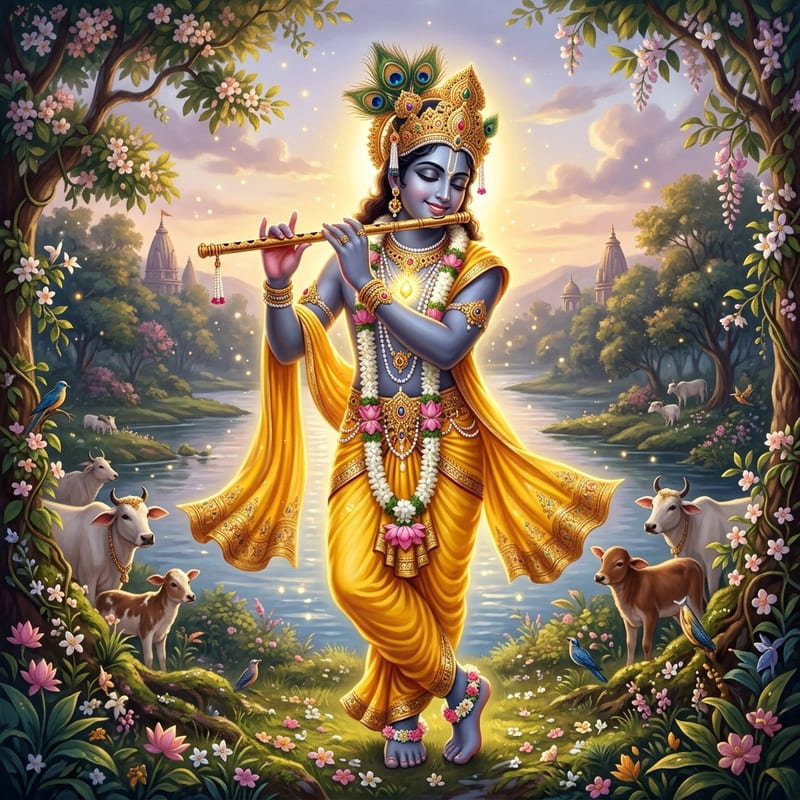
ଗଦୀ ଶଂଖୀ ଚକ୍ରୀ ଵିମଲଵନମାଲୀ ସ୍ଥିରରୁଚିଃ ଶରଣ୍ଯୋ ଲୋକେଶୋ ମମ ଭଵତୁ କୃଷ୍ଣୋଽକ୍ଷିଵିଷଯଃ ।। 1।।
- ଶ୍ରିଯା (śriyā)by Shri
- ଆଶ୍ଲିଷ୍ଟଃ (āśliṣṭaḥ)held close
- ଵିଷ୍ଣୁଃ (viṣṇuḥ)Vishnu
- ସ୍ଥିରଚରଵପୁଃ (sthiracaravapuḥ)whose body is all that stands still and all that moves
- ଵେଦଵିଷଯଃ (vedaviṣayaḥ)of whom the Veda speaks
- ଧିଯାମ୍ (dhiyām)of the thoughts of all
- ସାକ୍ଷୀ (sākṣī)the witness
- ଶୁଦ୍ଧଃ (śuddhaḥ)clean
- ହରିଃ (hariḥ)Hari
- ଅସୁରହନ୍ତା (asurahantā)who makes an end of the asuras
- ଅବ୍ଜନଯନଃ (abjanayanaḥ)whose eyes are lotuses
- ଗଦୀ (gadī)carrying the mace
- ଶଂଖୀ (śaṃkhī)carrying the conch
- ଚକ୍ରୀ (cakrī)carrying the discus
- ଵିମଲଵନମାଲୀ (vimalavanamālī)wearing a fresh garland of wild flowers
- ସ୍ଥିରରୁଚିଃ (sthiraruciḥ)whose light never dims
- ଶରଣ୍ଯଃ (śaraṇyaḥ)the refuge
- ଲୋକେଶଃ (lokeśaḥ)lord of the worlds
- ମମ (mama)my
- ଭଵତୁ (bhavatu)may he become
- କୃଷ୍ଣଃ (kṛṣṇaḥ)Krishna
- ଅକ୍ଷିଵିଷଯଃ (akṣiviṣayaḥ)what my eyes see
anvaya ଶ୍ରିଯା ଆଶ୍ଲିଷ୍ଟଃ ଵିଷ୍ଣୁଃ ସ୍ଥିରଚରଵପୁଃ ଵେଦଵିଷଯଃ ଧିଯାମ୍ ସାକ୍ଷୀ ଶୁଦ୍ଧଃ ଅସୁରହନ୍ତା ଅବ୍ଜନଯନଃ ହରିଃ ଗଦୀ ଶଂଖୀ ଚକ୍ରୀ ଵିମଲଵନମାଲୀ ସ୍ଥିରରୁଚିଃ ଶରଣ୍ଯଃ ଲୋକେଶଃ କୃଷ୍ଣଃ ମମ ଅକ୍ଷିଵିଷଯଃ ଭଵତୁ
chandas Śikhariṇī, 17 syllables in each of 4 pādas
ଅକ୍ଷିଵିଷଯଃ what the eyes see — Viṣaya is what a sense takes in. The prayer is not for knowledge of him but for sight of him, and this is what the whole hymn asks for.
ଧିଯାମ୍ ସାକ୍ଷୀ the witness of all thoughts — Sākṣī is the one who was there and saw. He sits in every mind as the one who watches it.
ସ୍ଥିରଚରଵପୁଃ whose body is the still and the moving — Sthira is what stays put, cara what walks about. The pair covers everything there is.
note The fourth pāda of this verse is the refrain of the whole hymn. In verses 2 to 8 the printed text shortens it to ଶରଣ୍ଯୋ. and the reciter supplies the rest: ଶରଣ୍ଯୋ ଲୋକେଶୋ ମମ ଭଵତୁ କୃଷ୍ଣୋଽକ୍ଷିଵିଷଯଃ. The copy of this hymn we started from wrote every visarga as a plain colon and carried six spelling slips, among them ସ୍ଥିରରୂଚିଃ for ସ୍ଥିରରୁଚିଃ. They were corrected against printed editions on 18 September 2026, and every pāda now scans as Śikhariṇī. Some editions read ସ୍ଥିରଚରଗୁରୁଃ, the teacher of the still and the moving, where this text reads ସ୍ଥିରଚରଵପୁଃ.
ଲଯେ ସର୍ଵଂ ସ୍ଵସ୍ମିନ୍ ହରତି କଲଯା ଯସ୍ତୁ ସ ଵିଭୁଃ । ଶରଣ୍ଯୋ. ।।2।।
- ଯତଃ (yataḥ)from whom
- ସର୍ଵମ୍ (sarvam)all
- ଜାତମ୍ (jātam)came to be
- ଵିଯଦନିଲମୁଖ୍ଯମ୍ (viyadanilamukhyam)sky and air first of all
- ଜଗତ୍ (jagat)the world
- ଇଦମ୍ (idam)this
- ସ୍ଥିତୌ (sthitau)while it stands
- ନିଃଶେଷମ୍ (niḥśeṣam)leaving none of it out
- ଯଃ (yaḥ)who
- ଅଵତି (avati)keeps alive
- ନିଜସୁଖାଂଶେନ (nijasukhāṃśena)with a portion of his own happiness
- ମଧୁହା (madhuhā)the killer of Madhu
- ଲଯେ (laye)when it folds up
- ସର୍ଵମ୍ (sarvam)all of it
- ସ୍ଵସ୍ମିନ୍ (svasmin)into himself
- ହରତି (harati)draws
- କଲଯା (kalayā)with a fraction of his power
- ଯଃ (yaḥ)who
- ତୁ (tu)indeed
- ସଃ (saḥ)he
- ଵିଭୁଃ (vibhuḥ)the one who holds it all
- ଶରଣ୍ଯଃ (śaraṇyaḥ)the refuge
anvaya ଯତଃ ଇଦମ୍ ସର୍ଵମ୍ ଜଗତ୍ ଵିଯଦନିଲମୁଖ୍ଯମ୍ ଜାତମ୍ ଯଃ ମଧୁହା ସ୍ଥିତୌ ନିଜସୁଖାଂଶେନ ନିଃଶେଷମ୍ ଅଵତି ଯଃ ତୁ ଲଯେ କଲଯା ସର୍ଵମ୍ ସ୍ଵସ୍ମିନ୍ ହରତି ସଃ ଵିଭୁଃ ଶରଣ୍ଯଃ
chandas Śikhariṇī, 17 syllables in each of 4 pādas
ସ୍ଥିତୌ ଲଯେ in the standing, in the folding up — The three works of God, making, keeping and taking back, are laid out across the verse in that order.
କଲଯା with a fraction — Kalā is a small part of something. Even the taking back of the world costs him only a fraction.
ମଧୁହା the killer of Madhu — Madhu was an asura killed by Vishnu, which is where the name Madhusudana comes from.
note The printed fourth pāda is the shortened refrain ଶରଣ୍ଯୋ., standing for ଶରଣ୍ଯୋ ଲୋକେଶୋ ମମ ଭଵତୁ କୃଷ୍ଣୋଽକ୍ଷିଵିଷଯଃ.
ଯମୀଡ୍ଯଂ ପଶ୍ଯନ୍ତି ପ୍ରଵରମତଯୋ ମାଯିନମସୌ । ଶରଣ୍ଯୋ. ।।3।।
- ଅସୂନ୍ (asūn)the breaths
- ଆଯମ୍ଯ (āyamya)having held in
- ଆଦୌ (ādau)first
- ଯମନିଯମମୁଖ୍ଯୈଃ (yamaniyamamukhyaiḥ)by yama, niyama and the rest
- ସୁକରଣୈଃ (sukaraṇaiḥ)by good means
- ନିରୁଧ୍ଯ (nirudhya)having checked
- ଇଦମ୍ (idam)this
- ଚିତ୍ତମ୍ (cittam)mind
- ହୃଦି (hṛdi)in the heart
- ଵିମଲମ୍ (vimalam)made clean
- ଆନୀଯ (ānīya)having brought
- ସକଲମ୍ (sakalam)the whole of it
- ଯମ୍ (yam)whom
- ଈଡ୍ଯମ୍ (īḍyam)worthy of praise
- ପଶ୍ଯନ୍ତି (paśyanti)they see
- ପ୍ରଵରମତଯଃ (pravaramatayaḥ)those of the best minds
- ମାଯିନମ୍ (māyinam)the one who wields maya
- ଅସୌ (asau)he
- ଶରଣ୍ଯଃ (śaraṇyaḥ)the refuge
anvaya ପ୍ରଵରମତଯଃ ଆଦୌ ଅସୂନ୍ ଆଯମ୍ଯ ଯମନିଯମମୁଖ୍ଯୈଃ ସୁକରଣୈଃ ଇଦମ୍ ଚିତ୍ତମ୍ ନିରୁଧ୍ଯ ସକଲମ୍ ଵିମଲମ୍ ହୃଦି ଆନୀଯ ଯମ୍ ଈଡ୍ଯମ୍ ମାଯିନମ୍ ପଶ୍ଯନ୍ତି ଅସୌ ଶରଣ୍ଯଃ
chandas Śikhariṇī, 17 syllables in each of 4 pādas
ଯମନିଯମ yama and niyama — The first two of the eight steps of yoga: what to hold back from, and what to keep up. The verse names them as the beginning of the road to seeing him.
ମାଯିନମ୍ the one who wields maya — Māyin is the holder of maya, the power by which the world is spread out. The word is used of a conjurer as well, one who makes what is seen.
note Three words in this verse were corrected: ନିର୍ଯେରୁଧ୍ଯେଦଂ to ନିରୁଧ୍ଯେଦଂ, which is ନିରୁଧ୍ଯ and ଇଦମ୍ joined, ହ୍ରଦି to ହୃଦି, and ଯମୀଡଯଂ to ଯମୀଡ୍ଯମ୍. Some editions read ଵିଲଯମାନୀଯ, brought to rest, where this text reads ଵିମଲମାନୀଯ, brought clean; the gloss follows the text as it stands. The fourth pāda is the shortened refrain.
ନିଯନ୍ତାରଂ ଧ୍ଯେଯଂ ମୁନିସୁରନୃଣାଂ ମୋକ୍ଷଦମସୌ । ଶରଣ୍ଯୋ. ।।4।।
- ପୃଥିଵ୍ଯାମ୍ (pṛthivyām)in the earth
- ତିଷ୍ଠନ୍ (tiṣṭhan)standing
- ଯଃ (yaḥ)who
- ଯମଯତି (yamayati)holds in check
- ମହୀମ୍ (mahīm)the earth
- ଵେଦ (veda)knows
- ନ (na)not
- ଧରା (dharā)the earth
- ଯମ୍ (yam)whom
- ଇତି (iti)in these words
- ଆଦୌ (ādau)at the beginning
- ଵେଦଃ (vedaḥ)the Veda
- ଵଦତି (vadati)speaks
- ଜଗତାମ୍ (jagatām)of the worlds
- ଈଶମ୍ (īśam)the lord
- ଅମଲମ୍ (amalam)spotless
- ନିଯନ୍ତାରମ୍ (niyantāram)the one who holds all in check
- ଧ୍ଯେଯମ୍ (dhyeyam)to be meditated on
- ମୁନିସୁରନୃଣାମ୍ (munisuranṛṇām)by sages, gods and men
- ମୋକ୍ଷଦମ୍ (mokṣadam)the giver of release
- ଅସୌ (asau)he
- ଶରଣ୍ଯଃ (śaraṇyaḥ)the refuge
anvaya ଯଃ ପୃଥିଵ୍ଯାମ୍ ତିଷ୍ଠନ୍ ମହୀମ୍ ଯମଯତି ଧରା ଯମ୍ ନ ଵେଦ ଇତି ଆଦୌ ଵେଦଃ ଵଦତି ଜଗତାମ୍ ଈଶମ୍ ଅମଲମ୍ ନିଯନ୍ତାରମ୍ ମୁନିସୁରନୃଣାମ୍ ଧ୍ଯେଯମ୍ ମୋକ୍ଷଦମ୍ ଅସୌ ଶରଣ୍ଯଃ
chandas Śikhariṇī, 17 syllables in each of 4 pādas
ପୃଥିଵ୍ଯାଂ ତିଷ୍ଠନ୍ standing in the earth — The words come from the Antaryamin passage of the Brihadaranyaka Upanishad, where the one who is inside the earth is described in just this way, unknown to what he is inside.
ନିଯନ୍ତାରମ୍ the one who holds all in check — A niyantā is a driver, the one with the reins. The verse uses the verb of the same root twice before it names him.
note The text read ପ୍ରଥିଵ୍ଯାଂ, corrected to ପୃଥିଵ୍ଯାଂ. The fourth pāda is the shortened refrain.
କଵିତ୍ଵାଦେର୍ଗର୍ଵଂ ପରିହରତି ଯୋଽସୌ ଵିଜଯିନଃ । ଶରଣ୍ଯୋ. ।।5।।
- ମହେନ୍ଦ୍ରାଦିଃ (mahendrādiḥ)Mahendra and the rest
- ଦେଵଃ (devaḥ)the god
- ଜଯତି (jayati)wins
- ଦିତିଜାନ୍ (ditijān)over the sons of Diti
- ଅସ୍ଯ (asya)his
- ବଲତଃ (balataḥ)by the strength
- ନ (na)not
- କସ୍ଯ (kasya)of anyone
- ସ୍ଵାତନ୍ତ୍ର୍ଯମ୍ (svātantryam)being one's own master
- କ୍ଵଚିତ୍ (kvacit)anywhere
- ଅପି (api)even
- କୃତୌ (kṛtau)in what is done
- ଯତ୍କୃତିମ୍ (yatkṛtim)his doing
- ଋତେ (ṛte)apart from
- କଵିତ୍ଵାଦେଃ (kavitvādeḥ)in poetry and the rest
- ଗର୍ଵମ୍ (garvam)the pride
- ପରିହରତି (pariharati)takes away
- ଯଃ (yaḥ)who
- ଅସୌ (asau)he
- ଵିଜଯିନଃ (vijayinaḥ)of the winner
- ଶରଣ୍ଯଃ (śaraṇyaḥ)the refuge
anvaya ମହେନ୍ଦ୍ରାଦିଃ ଦେଵଃ ଅସ୍ଯ ବଲତଃ ଦିତିଜାନ୍ ଜଯତି ଯତ୍କୃତିମ୍ ଋତେ କସ୍ଯ ଅପି କୃତୌ କ୍ଵଚିତ୍ ସ୍ଵାତନ୍ତ୍ର୍ଯମ୍ ନ ଯଃ ଅସୌ ଵିଜଯିନଃ କଵିତ୍ଵାଦେଃ ଗର୍ଵମ୍ ପରିହରତି ଶରଣ୍ଯଃ
chandas Śikhariṇī, 17 syllables in each of 4 pādas
ଦିତିଜାନ୍ the sons of Diti — Diti's children are the daityas, who stand against the gods. Their half-brothers, the sons of Aditi, are the gods themselves.
ସ୍ଵାତନ୍ତ୍ର୍ଯମ୍ being one's own master — Svātantrya is doing a thing on one's own account. The verse takes it away from everyone except him.
କଵିତ୍ଵାଦେଃ ଗର୍ଵମ୍ the pride taken in poetry and the rest — A poet writing a hymn names his own kind of pride first. The line is a check on the one saying it.
note The printed fourth pāda is the shortened refrain.
ଵିନା ଯସ୍ଯ ସ୍ମୃତ୍ଯା କୃମିଶତଜନିଂ ଯାତି ସ ଵିଭୁଃ । ଶରଣ୍ଯୋ. ।।6।।
- ଵିନା (vinā)without
- ଯସ୍ଯ (yasya)his
- ଧ୍ଯାନମ୍ (dhyānam)meditation
- ଵ୍ରଜତି (vrajati)goes down to
- ପଶୁତାମ୍ (paśutām)the state of an animal
- ସୂକରମୁଖାମ୍ (sūkaramukhām)with a boar's face
- ଵିନା (vinā)without
- ଯସ୍ଯ (yasya)his
- ଜ୍ଞାନମ୍ (jñānam)knowledge
- ଜନିମୃତିଭଯମ୍ (janimṛtibhayam)the fear of birth and death
- ଯାତି (yāti)comes to
- ଜନତା (janatā)people
- ଵିନା (vinā)without
- ଯସ୍ଯ (yasya)his
- ସ୍ମୃତ୍ଯା (smṛtyā)by remembering
- କୃମିଶତଜନିମ୍ (kṛmiśatajanim)a hundred births as a worm
- ଯାତି (yāti)comes to
- ସଃ (saḥ)he
- ଵିଭୁଃ (vibhuḥ)the one who holds it all
- ଶରଣ୍ଯଃ (śaraṇyaḥ)the refuge
anvaya ଯସ୍ଯ ଧ୍ଯାନମ୍ ଵିନା ପଶୁତାମ୍ ସୂକରମୁଖାମ୍ ଵ୍ରଜତି ଯସ୍ଯ ଜ୍ଞାନମ୍ ଵିନା ଜନତା ଜନିମୃତିଭଯମ୍ ଯାତି ଯସ୍ଯ ସ୍ମୃତ୍ଯା ଵିନା କୃମିଶତଜନିମ୍ ଯାତି ସଃ ଵିଭୁଃ ଶରଣ୍ଯଃ
chandas Śikhariṇī, 17 syllables in each of 4 pādas
ଵିନା without — The word opens each of the three lines and gives the verse its shape: without meditating, without knowing, without remembering.
କୃମିଶତଜନିମ୍ a hundred births as a worm — The text read क्रमि, corrected to कृमि, a worm. The smallest birth there is gets set against the sight of God the verse asks for.
note The three lines are a warning rather than a description, which makes this verse the hardest in the hymn. The fourth pāda is the shortened refrain.
ସ୍ଵଯମ୍ଭୂର୍ଭୂତାନାଂ ଜନକ ଉଚିତାଚାରସୁଖଦଃ । ଶରଣ୍ଯୋ. ।।7।।
- ନରାତଂକୋତ୍ତଂକଃ (narātaṃkottaṃkaḥ)who roots out the fears that afflict people
- ଶରଣଶରଣଃ (śaraṇaśaraṇaḥ)the refuge of all who look for refuge
- ଭ୍ରାନ୍ତିହରଣଃ (bhrāntiharaṇaḥ)who takes away the whirl of confusion
- ଘନଶ୍ଯାମଃ (ghanaśyāmaḥ)dark as a rain cloud
- କାମଃ (kāmaḥ)the one who is wanted
- ଵ୍ରଜଶିଶୁଵଯସ୍ଯଃ (vrajaśiśuvayasyaḥ)playmate of the children of Vraja
- ଅର୍ଜୁନସଖଃ (arjunasakhaḥ)friend of Arjuna
- ସ୍ଵଯମ୍ଭୂଃ (svayambhūḥ)self-existent
- ଭୂତାନାମ୍ (bhūtānām)of all beings
- ଜନକଃ (janakaḥ)the father
- ଉଚିତାଚାରସୁଖଦଃ (ucitācārasukhadaḥ)who gives joy to those whose conduct is right
- ଶରଣ୍ଯଃ (śaraṇyaḥ)the refuge
anvaya ଶରଣଶରଣଃ ଭ୍ରାନ୍ତିହରଣଃ ଘନଶ୍ଯାମଃ କାମଃ ଵ୍ରଜଶିଶୁଵଯସ୍ଯଃ ଅର୍ଜୁନସଖଃ ସ୍ଵଯମ୍ଭୂଃ ଭୂତାନାମ୍ ଜନକଃ ଉଚିତାଚାରସୁଖଦଃ ନରାତଂକୋତ୍ତଂକଃ ଶରଣ୍ଯଃ
chandas Śikhariṇī, 17 syllables in each of 4 pādas
ନରାତଂକୋତ୍ତଂକଃ who roots out the fears that afflict people — Narātaṅka is the fear or the pain that people suffer. Uttaṅka is a rare word, and published translations of this hymn read the compound as the uprooting of that pain, which is the sense given here.
ଵ୍ରଜଶିଶୁଵଯସ୍ଯଃ playmate of the children of Vraja — Vayasya is someone of the same age, a companion in play. After six verses on the maker of the world, this is the first mention of the cowherd boy.
ଘନଶ୍ଯାମଃ dark as a rain cloud — Ghana is a heavy cloud. The colour is his own, and the name Krishna means dark.
note The verse turns from God as the cause of the world to Krishna in Vraja, playmate and friend. Some editions read ଘନଶ୍ଯାମୋ ଵାମୋ, dark and lovely, where this text reads ଘନଶ୍ଯାମଃ କାମୋ. The fourth pāda is the shortened refrain.
ସତାଂ ଧାତା ସ୍ଵଚ୍ଛୋ ନିଗମଗଣଗୀତୋ ଵ୍ରଜପତିଃ । ଶରଣ୍ଯୋ ।।8।।
- ଯଦା (yadā)when
- ଧର୍ମଗ୍ଲାନିଃ (dharmaglāniḥ)the weakening of dharma
- ଭଵତି (bhavati)comes about
- ଜଗତାମ୍ (jagatām)of the worlds
- କ୍ଷୋଭକରଣୀ (kṣobhakaraṇī)which sets them shaking
- ତଦା (tadā)then
- ଲୋକସ୍ଵାମୀ (lokasvāmī)the lord of the world
- ପ୍ରକଟିତଵପୁଃ (prakaṭitavapuḥ)showing himself in a body
- ସେତୁଧୃକ୍ (setudhṛk)who holds the dam in place
- ଅଜଃ (ajaḥ)unborn
- ସତାମ୍ (satām)of the good
- ଧାତା (dhātā)the carrier
- ସ୍ଵଚ୍ଛଃ (svacchaḥ)clear through and through
- ନିଗମଗଣଗୀତଃ (nigamagaṇagītaḥ)sung by the books of the Veda
- ଵ୍ରଜପତିଃ (vrajapatiḥ)lord of Vraja
- ଶରଣ୍ଯଃ (śaraṇyaḥ)the refuge
anvaya ଯଦା ଜଗତାମ୍ କ୍ଷୋଭକରଣୀ ଧର୍ମଗ୍ଲାନିଃ ଭଵତି ତଦା ଅଜଃ ଲୋକସ୍ଵାମୀ ସେତୁଧୃକ୍ ପ୍ରକଟିତଵପୁଃ ସତାମ୍ ଧାତା ସ୍ଵଚ୍ଛଃ ନିଗମଗଣଗୀତଃ ଵ୍ରଜପତିଃ ଶରଣ୍ଯଃ
chandas Śikhariṇī, 17 syllables in each of 4 pādas
ଧର୍ମଗ୍ଲାନିଃ the weakening of dharma — The same words Krishna uses of himself in the Gita, yadā yadā hi dharmasya glānir bhavati. The verse is written to be heard against that line.
ସେତୁଧୃକ୍ who holds the dam in place — A setu is a dam or a causeway, and dharma is spoken of as one: what keeps the water where it belongs. He is the one who holds it.
ଅଜଃ unborn — Set beside prakaṭitavapuḥ, showing himself in a body, in the same line. The one who is never born is the one who takes birth.
note The eighth verse completes the set of eight. The printed fourth pāda is the shortened refrain.
ଯତିଵରନିକଟେ ଶ୍ରୀଯୁକ୍ତ ଆଵିର୍ବଭୂଵ ସ୍ଵଗୁଣଵୃତ ଉଦାରଃ ଶଂଖଚକ୍ରାବ୍ଜହସ୍ତଃ ।।9।।
- ଇତି (iti)so
- ହରିଃ (hariḥ)Hari
- ଅଖିଲାତ୍ମା (akhilātmā)the self of all
- ଆରାଧିତଃ (ārādhitaḥ)was worshipped
- ଶଂକରେଣ (śaṃkareṇa)by Shankara
- ଶ୍ରୁତିଵିଶଦଗୁଣଃ (śrutiviśadaguṇaḥ)whose qualities the Veda sets out plainly
- ଅସୌ (asau)he
- ମାତୃମୋକ୍ଷାର୍ଥମ୍ (mātṛmokṣārtham)for his mother's release
- ଆଦ୍ଯଃ (ādyaḥ)the first of all
- ଯତିଵରନିକଟେ (yativaranikaṭe)beside that best of ascetics
- ଶ୍ରୀଯୁକ୍ତଃ (śrīyuktaḥ)with Shri beside him
- ଆଵିର୍ବଭୂଵ (āvirbabhūva)appeared
- ସ୍ଵଗୁଣଵୃତଃ (svaguṇavṛtaḥ)held about by his own qualities
- ଉଦାରଃ (udāraḥ)open-handed
- ଶଂଖଚକ୍ରାବ୍ଜହସ୍ତଃ (śaṃkhacakrābjahastaḥ)with conch, discus and lotus in his hands
anvaya ଇତି ଅଖିଲାତ୍ମା ଶ୍ରୁତିଵିଶଦଗୁଣଃ ଆଦ୍ଯଃ ଅସୌ ହରିଃ ମାତୃମୋକ୍ଷାର୍ଥମ୍ ଶଂକରେଣ ଆରାଧିତଃ ଯତିଵରନିକଟେ ଶ୍ରୀଯୁକ୍ତଃ ସ୍ଵଗୁଣଵୃତଃ ଉଦାରଃ ଶଂଖଚକ୍ରାବ୍ଜହସ୍ତଃ ଆଵିର୍ବଭୂଵ
chandas Mālinī, 15 syllables in each of 4 pādas
ମାତୃମୋକ୍ଷାର୍ଥମ୍ for his mother's release — Shankara is said to have sung this hymn at his mother's deathbed, having promised her that she would see Vishnu at the end. This verse is the record of that.
ଯତିଵରନିକଟେ beside the best of ascetics — The yati is Shankara himself, and the verse speaks of him in the third person, as a pupil's closing verse would.
note A ninth verse standing outside the eight, in a different metre, telling the occasion of the hymn rather than praising Krishna. It is why the work is given to Shankaracharya.