
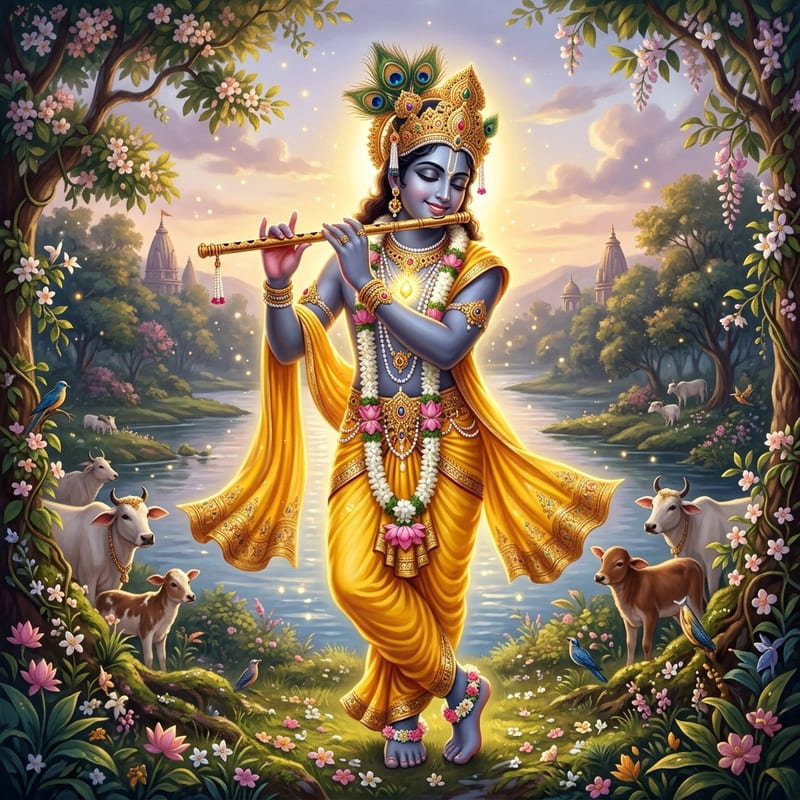
கதீ ஶம்கீ சக்ரீ விமலவநமாலீ ஸ்திரருசிஃ ஶரண்யோ லோகேஶோ மம பவது க்ரு'ஷ்ணோ'க்ஷிவிஷயஃ ।। 1।।
- ஶ்ரியா (śriyā)by Shri
- ஆஶ்லிஷ்டஃ (āśliṣṭaḥ)held close
- விஷ்ணுஃ (viṣṇuḥ)Vishnu
- ஸ்திரசரவபுஃ (sthiracaravapuḥ)whose body is all that stands still and all that moves
- வேதவிஷயஃ (vedaviṣayaḥ)of whom the Veda speaks
- தியாம் (dhiyām)of the thoughts of all
- ஸாக்ஷீ (sākṣī)the witness
- ஶுத்தஃ (śuddhaḥ)clean
- ஹரிஃ (hariḥ)Hari
- அஸுரஹந்தா (asurahantā)who makes an end of the asuras
- அப்ஜநயநஃ (abjanayanaḥ)whose eyes are lotuses
- கதீ (gadī)carrying the mace
- ஶம்கீ (śaṃkhī)carrying the conch
- சக்ரீ (cakrī)carrying the discus
- விமலவநமாலீ (vimalavanamālī)wearing a fresh garland of wild flowers
- ஸ்திரருசிஃ (sthiraruciḥ)whose light never dims
- ஶரண்யஃ (śaraṇyaḥ)the refuge
- லோகேஶஃ (lokeśaḥ)lord of the worlds
- மம (mama)my
- பவது (bhavatu)may he become
- க்ரு'ஷ்ணஃ (kṛṣṇaḥ)Krishna
- அக்ஷிவிஷயஃ (akṣiviṣayaḥ)what my eyes see
anvaya ஶ்ரியா ஆஶ்லிஷ்டஃ விஷ்ணுஃ ஸ்திரசரவபுஃ வேதவிஷயஃ தியாம் ஸாக்ஷீ ஶுத்தஃ அஸுரஹந்தா அப்ஜநயநஃ ஹரிஃ கதீ ஶம்கீ சக்ரீ விமலவநமாலீ ஸ்திரருசிஃ ஶரண்யஃ லோகேஶஃ க்ரு'ஷ்ணஃ மம அக்ஷிவிஷயஃ பவது
chandas Śikhariṇī, 17 syllables in each of 4 pādas
அக்ஷிவிஷயஃ what the eyes see — Viṣaya is what a sense takes in. The prayer is not for knowledge of him but for sight of him, and this is what the whole hymn asks for.
தியாம் ஸாக்ஷீ the witness of all thoughts — Sākṣī is the one who was there and saw. He sits in every mind as the one who watches it.
ஸ்திரசரவபுஃ whose body is the still and the moving — Sthira is what stays put, cara what walks about. The pair covers everything there is.
note The fourth pāda of this verse is the refrain of the whole hymn. In verses 2 to 8 the printed text shortens it to ஶரண்யோ. and the reciter supplies the rest: ஶரண்யோ லோகேஶோ மம பவது க்ரு'ஷ்ணோ'க்ஷிவிஷயஃ. The copy of this hymn we started from wrote every visarga as a plain colon and carried six spelling slips, among them ஸ்திரரூசிஃ for ஸ்திரருசிஃ. They were corrected against printed editions on 18 September 2026, and every pāda now scans as Śikhariṇī. Some editions read ஸ்திரசரகுருஃ, the teacher of the still and the moving, where this text reads ஸ்திரசரவபுஃ.
லயே ஸர்வம் ஸ்வஸ்மிந் ஹரதி கலயா யஸ்து ஸ விபுஃ । ஶரண்யோ. ।।2।।
- யதஃ (yataḥ)from whom
- ஸர்வம் (sarvam)all
- ஜாதம் (jātam)came to be
- வியதநிலமுக்யம் (viyadanilamukhyam)sky and air first of all
- ஜகத் (jagat)the world
- இதம் (idam)this
- ஸ்திதௌ (sthitau)while it stands
- நிஃஶேஷம் (niḥśeṣam)leaving none of it out
- யஃ (yaḥ)who
- அவதி (avati)keeps alive
- நிஜஸுகாம்ஶேந (nijasukhāṃśena)with a portion of his own happiness
- மதுஹா (madhuhā)the killer of Madhu
- லயே (laye)when it folds up
- ஸர்வம் (sarvam)all of it
- ஸ்வஸ்மிந் (svasmin)into himself
- ஹரதி (harati)draws
- கலயா (kalayā)with a fraction of his power
- யஃ (yaḥ)who
- து (tu)indeed
- ஸஃ (saḥ)he
- விபுஃ (vibhuḥ)the one who holds it all
- ஶரண்யஃ (śaraṇyaḥ)the refuge
anvaya யதஃ இதம் ஸர்வம் ஜகத் வியதநிலமுக்யம் ஜாதம் யஃ மதுஹா ஸ்திதௌ நிஜஸுகாம்ஶேந நிஃஶேஷம் அவதி யஃ து லயே கலயா ஸர்வம் ஸ்வஸ்மிந் ஹரதி ஸஃ விபுஃ ஶரண்யஃ
chandas Śikhariṇī, 17 syllables in each of 4 pādas
ஸ்திதௌ லயே in the standing, in the folding up — The three works of God, making, keeping and taking back, are laid out across the verse in that order.
கலயா with a fraction — Kalā is a small part of something. Even the taking back of the world costs him only a fraction.
மதுஹா the killer of Madhu — Madhu was an asura killed by Vishnu, which is where the name Madhusudana comes from.
note The printed fourth pāda is the shortened refrain ஶரண்யோ., standing for ஶரண்யோ லோகேஶோ மம பவது க்ரு'ஷ்ணோ'க்ஷிவிஷயஃ.
யமீட்யம் பஶ்யந்தி ப்ரவரமதயோ மாயிநமஸௌ । ஶரண்யோ. ।।3।।
- அஸூந் (asūn)the breaths
- ஆயம்ய (āyamya)having held in
- ஆதௌ (ādau)first
- யமநியமமுக்யைஃ (yamaniyamamukhyaiḥ)by yama, niyama and the rest
- ஸுகரணைஃ (sukaraṇaiḥ)by good means
- நிருத்ய (nirudhya)having checked
- இதம் (idam)this
- சித்தம் (cittam)mind
- ஹ்ரு'தி (hṛdi)in the heart
- விமலம் (vimalam)made clean
- ஆநீய (ānīya)having brought
- ஸகலம் (sakalam)the whole of it
- யம் (yam)whom
- ஈட்யம் (īḍyam)worthy of praise
- பஶ்யந்தி (paśyanti)they see
- ப்ரவரமதயஃ (pravaramatayaḥ)those of the best minds
- மாயிநம் (māyinam)the one who wields maya
- அஸௌ (asau)he
- ஶரண்யஃ (śaraṇyaḥ)the refuge
anvaya ப்ரவரமதயஃ ஆதௌ அஸூந் ஆயம்ய யமநியமமுக்யைஃ ஸுகரணைஃ இதம் சித்தம் நிருத்ய ஸகலம் விமலம் ஹ்ரு'தி ஆநீய யம் ஈட்யம் மாயிநம் பஶ்யந்தி அஸௌ ஶரண்யஃ
chandas Śikhariṇī, 17 syllables in each of 4 pādas
யமநியம yama and niyama — The first two of the eight steps of yoga: what to hold back from, and what to keep up. The verse names them as the beginning of the road to seeing him.
மாயிநம் the one who wields maya — Māyin is the holder of maya, the power by which the world is spread out. The word is used of a conjurer as well, one who makes what is seen.
note Three words in this verse were corrected: நிர்யேருத்யேதம் to நிருத்யேதம், which is நிருத்ய and இதம் joined, ஹ்ரதி to ஹ்ரு'தி, and யமீடயம் to யமீட்யம். Some editions read விலயமாநீய, brought to rest, where this text reads விமலமாநீய, brought clean; the gloss follows the text as it stands. The fourth pāda is the shortened refrain.
நியந்தாரம் த்யேயம் முநிஸுரந்ரு'ணாம் மோக்ஷதமஸௌ । ஶரண்யோ. ।।4।।
- ப்ரு'திவ்யாம் (pṛthivyām)in the earth
- திஷ்டந் (tiṣṭhan)standing
- யஃ (yaḥ)who
- யமயதி (yamayati)holds in check
- மஹீம் (mahīm)the earth
- வேத (veda)knows
- ந (na)not
- தரா (dharā)the earth
- யம் (yam)whom
- இதி (iti)in these words
- ஆதௌ (ādau)at the beginning
- வேதஃ (vedaḥ)the Veda
- வததி (vadati)speaks
- ஜகதாம் (jagatām)of the worlds
- ஈஶம் (īśam)the lord
- அமலம் (amalam)spotless
- நியந்தாரம் (niyantāram)the one who holds all in check
- த்யேயம் (dhyeyam)to be meditated on
- முநிஸுரந்ரு'ணாம் (munisuranṛṇām)by sages, gods and men
- மோக்ஷதம் (mokṣadam)the giver of release
- அஸௌ (asau)he
- ஶரண்யஃ (śaraṇyaḥ)the refuge
anvaya யஃ ப்ரு'திவ்யாம் திஷ்டந் மஹீம் யமயதி தரா யம் ந வேத இதி ஆதௌ வேதஃ வததி ஜகதாம் ஈஶம் அமலம் நியந்தாரம் முநிஸுரந்ரு'ணாம் த்யேயம் மோக்ஷதம் அஸௌ ஶரண்யஃ
chandas Śikhariṇī, 17 syllables in each of 4 pādas
ப்ரு'திவ்யாம் திஷ்டந் standing in the earth — The words come from the Antaryamin passage of the Brihadaranyaka Upanishad, where the one who is inside the earth is described in just this way, unknown to what he is inside.
நியந்தாரம் the one who holds all in check — A niyantā is a driver, the one with the reins. The verse uses the verb of the same root twice before it names him.
note The text read ப்ரதிவ்யாம், corrected to ப்ரு'திவ்யாம். The fourth pāda is the shortened refrain.
கவித்வாதேர்கர்வம் பரிஹரதி யோ'ஸௌ விஜயிநஃ । ஶரண்யோ. ।।5।।
- மஹேந்த்ராதிஃ (mahendrādiḥ)Mahendra and the rest
- தேவஃ (devaḥ)the god
- ஜயதி (jayati)wins
- திதிஜாந் (ditijān)over the sons of Diti
- அஸ்ய (asya)his
- பலதஃ (balataḥ)by the strength
- ந (na)not
- கஸ்ய (kasya)of anyone
- ஸ்வாதந்த்ர்யம் (svātantryam)being one's own master
- க்வசித் (kvacit)anywhere
- அபி (api)even
- க்ரு'தௌ (kṛtau)in what is done
- யத்க்ரு'திம் (yatkṛtim)his doing
- ரு'தே (ṛte)apart from
- கவித்வாதேஃ (kavitvādeḥ)in poetry and the rest
- கர்வம் (garvam)the pride
- பரிஹரதி (pariharati)takes away
- யஃ (yaḥ)who
- அஸௌ (asau)he
- விஜயிநஃ (vijayinaḥ)of the winner
- ஶரண்யஃ (śaraṇyaḥ)the refuge
anvaya மஹேந்த்ராதிஃ தேவஃ அஸ்ய பலதஃ திதிஜாந் ஜயதி யத்க்ரு'திம் ரு'தே கஸ்ய அபி க்ரு'தௌ க்வசித் ஸ்வாதந்த்ர்யம் ந யஃ அஸௌ விஜயிநஃ கவித்வாதேஃ கர்வம் பரிஹரதி ஶரண்யஃ
chandas Śikhariṇī, 17 syllables in each of 4 pādas
திதிஜாந் the sons of Diti — Diti's children are the daityas, who stand against the gods. Their half-brothers, the sons of Aditi, are the gods themselves.
ஸ்வாதந்த்ர்யம் being one's own master — Svātantrya is doing a thing on one's own account. The verse takes it away from everyone except him.
கவித்வாதேஃ கர்வம் the pride taken in poetry and the rest — A poet writing a hymn names his own kind of pride first. The line is a check on the one saying it.
note The printed fourth pāda is the shortened refrain.
விநா யஸ்ய ஸ்ம்ரு'த்யா க்ரு'மிஶதஜநிம் யாதி ஸ விபுஃ । ஶரண்யோ. ।।6।।
- விநா (vinā)without
- யஸ்ய (yasya)his
- த்யாநம் (dhyānam)meditation
- வ்ரஜதி (vrajati)goes down to
- பஶுதாம் (paśutām)the state of an animal
- ஸூகரமுகாம் (sūkaramukhām)with a boar's face
- விநா (vinā)without
- யஸ்ய (yasya)his
- ஜ்ஞாநம் (jñānam)knowledge
- ஜநிம்ரு'திபயம் (janimṛtibhayam)the fear of birth and death
- யாதி (yāti)comes to
- ஜநதா (janatā)people
- விநா (vinā)without
- யஸ்ய (yasya)his
- ஸ்ம்ரு'த்யா (smṛtyā)by remembering
- க்ரு'மிஶதஜநிம் (kṛmiśatajanim)a hundred births as a worm
- யாதி (yāti)comes to
- ஸஃ (saḥ)he
- விபுஃ (vibhuḥ)the one who holds it all
- ஶரண்யஃ (śaraṇyaḥ)the refuge
anvaya யஸ்ய த்யாநம் விநா பஶுதாம் ஸூகரமுகாம் வ்ரஜதி யஸ்ய ஜ்ஞாநம் விநா ஜநதா ஜநிம்ரு'திபயம் யாதி யஸ்ய ஸ்ம்ரு'த்யா விநா க்ரு'மிஶதஜநிம் யாதி ஸஃ விபுஃ ஶரண்யஃ
chandas Śikhariṇī, 17 syllables in each of 4 pādas
விநா without — The word opens each of the three lines and gives the verse its shape: without meditating, without knowing, without remembering.
க்ரு'மிஶதஜநிம் a hundred births as a worm — The text read क्रमि, corrected to कृमि, a worm. The smallest birth there is gets set against the sight of God the verse asks for.
note The three lines are a warning rather than a description, which makes this verse the hardest in the hymn. The fourth pāda is the shortened refrain.
ஸ்வயம்பூர்பூதாநாம் ஜநக உசிதாசாரஸுகதஃ । ஶரண்யோ. ।।7।।
- நராதம்கோத்தம்கஃ (narātaṃkottaṃkaḥ)who roots out the fears that afflict people
- ஶரணஶரணஃ (śaraṇaśaraṇaḥ)the refuge of all who look for refuge
- ப்ராந்திஹரணஃ (bhrāntiharaṇaḥ)who takes away the whirl of confusion
- கநஶ்யாமஃ (ghanaśyāmaḥ)dark as a rain cloud
- காமஃ (kāmaḥ)the one who is wanted
- வ்ரஜஶிஶுவயஸ்யஃ (vrajaśiśuvayasyaḥ)playmate of the children of Vraja
- அர்ஜுநஸகஃ (arjunasakhaḥ)friend of Arjuna
- ஸ்வயம்பூஃ (svayambhūḥ)self-existent
- பூதாநாம் (bhūtānām)of all beings
- ஜநகஃ (janakaḥ)the father
- உசிதாசாரஸுகதஃ (ucitācārasukhadaḥ)who gives joy to those whose conduct is right
- ஶரண்யஃ (śaraṇyaḥ)the refuge
anvaya ஶரணஶரணஃ ப்ராந்திஹரணஃ கநஶ்யாமஃ காமஃ வ்ரஜஶிஶுவயஸ்யஃ அர்ஜுநஸகஃ ஸ்வயம்பூஃ பூதாநாம் ஜநகஃ உசிதாசாரஸுகதஃ நராதம்கோத்தம்கஃ ஶரண்யஃ
chandas Śikhariṇī, 17 syllables in each of 4 pādas
நராதம்கோத்தம்கஃ who roots out the fears that afflict people — Narātaṅka is the fear or the pain that people suffer. Uttaṅka is a rare word, and published translations of this hymn read the compound as the uprooting of that pain, which is the sense given here.
வ்ரஜஶிஶுவயஸ்யஃ playmate of the children of Vraja — Vayasya is someone of the same age, a companion in play. After six verses on the maker of the world, this is the first mention of the cowherd boy.
கநஶ்யாமஃ dark as a rain cloud — Ghana is a heavy cloud. The colour is his own, and the name Krishna means dark.
note The verse turns from God as the cause of the world to Krishna in Vraja, playmate and friend. Some editions read கநஶ்யாமோ வாமோ, dark and lovely, where this text reads கநஶ்யாமஃ காமோ. The fourth pāda is the shortened refrain.
ஸதாம் தாதா ஸ்வச்சோ நிகமகணகீதோ வ்ரஜபதிஃ । ஶரண்யோ ।।8।।
- யதா (yadā)when
- தர்மக்லாநிஃ (dharmaglāniḥ)the weakening of dharma
- பவதி (bhavati)comes about
- ஜகதாம் (jagatām)of the worlds
- க்ஷோபகரணீ (kṣobhakaraṇī)which sets them shaking
- ததா (tadā)then
- லோகஸ்வாமீ (lokasvāmī)the lord of the world
- ப்ரகடிதவபுஃ (prakaṭitavapuḥ)showing himself in a body
- ஸேதுத்ரு'க் (setudhṛk)who holds the dam in place
- அஜஃ (ajaḥ)unborn
- ஸதாம் (satām)of the good
- தாதா (dhātā)the carrier
- ஸ்வச்சஃ (svacchaḥ)clear through and through
- நிகமகணகீதஃ (nigamagaṇagītaḥ)sung by the books of the Veda
- வ்ரஜபதிஃ (vrajapatiḥ)lord of Vraja
- ஶரண்யஃ (śaraṇyaḥ)the refuge
anvaya யதா ஜகதாம் க்ஷோபகரணீ தர்மக்லாநிஃ பவதி ததா அஜஃ லோகஸ்வாமீ ஸேதுத்ரு'க் ப்ரகடிதவபுஃ ஸதாம் தாதா ஸ்வச்சஃ நிகமகணகீதஃ வ்ரஜபதிஃ ஶரண்யஃ
chandas Śikhariṇī, 17 syllables in each of 4 pādas
தர்மக்லாநிஃ the weakening of dharma — The same words Krishna uses of himself in the Gita, yadā yadā hi dharmasya glānir bhavati. The verse is written to be heard against that line.
ஸேதுத்ரு'க் who holds the dam in place — A setu is a dam or a causeway, and dharma is spoken of as one: what keeps the water where it belongs. He is the one who holds it.
அஜஃ unborn — Set beside prakaṭitavapuḥ, showing himself in a body, in the same line. The one who is never born is the one who takes birth.
note The eighth verse completes the set of eight. The printed fourth pāda is the shortened refrain.
யதிவரநிகடே ஶ்ரீயுக்த ஆவிர்பபூவ ஸ்வகுணவ்ரு'த உதாரஃ ஶம்கசக்ராப்ஜஹஸ்தஃ ।।9।।
- இதி (iti)so
- ஹரிஃ (hariḥ)Hari
- அகிலாத்மா (akhilātmā)the self of all
- ஆராதிதஃ (ārādhitaḥ)was worshipped
- ஶம்கரேண (śaṃkareṇa)by Shankara
- ஶ்ருதிவிஶதகுணஃ (śrutiviśadaguṇaḥ)whose qualities the Veda sets out plainly
- அஸௌ (asau)he
- மாத்ரு'மோக்ஷார்தம் (mātṛmokṣārtham)for his mother's release
- ஆத்யஃ (ādyaḥ)the first of all
- யதிவரநிகடே (yativaranikaṭe)beside that best of ascetics
- ஶ்ரீயுக்தஃ (śrīyuktaḥ)with Shri beside him
- ஆவிர்பபூவ (āvirbabhūva)appeared
- ஸ்வகுணவ்ரு'தஃ (svaguṇavṛtaḥ)held about by his own qualities
- உதாரஃ (udāraḥ)open-handed
- ஶம்கசக்ராப்ஜஹஸ்தஃ (śaṃkhacakrābjahastaḥ)with conch, discus and lotus in his hands
anvaya இதி அகிலாத்மா ஶ்ருதிவிஶதகுணஃ ஆத்யஃ அஸௌ ஹரிஃ மாத்ரு'மோக்ஷார்தம் ஶம்கரேண ஆராதிதஃ யதிவரநிகடே ஶ்ரீயுக்தஃ ஸ்வகுணவ்ரு'தஃ உதாரஃ ஶம்கசக்ராப்ஜஹஸ்தஃ ஆவிர்பபூவ
chandas Mālinī, 15 syllables in each of 4 pādas
மாத்ரு'மோக்ஷார்தம் for his mother's release — Shankara is said to have sung this hymn at his mother's deathbed, having promised her that she would see Vishnu at the end. This verse is the record of that.
யதிவரநிகடே beside the best of ascetics — The yati is Shankara himself, and the verse speaks of him in the third person, as a pupil's closing verse would.
note A ninth verse standing outside the eight, in a different metre, telling the occasion of the hymn rather than praising Krishna. It is why the work is given to Shankaracharya.