
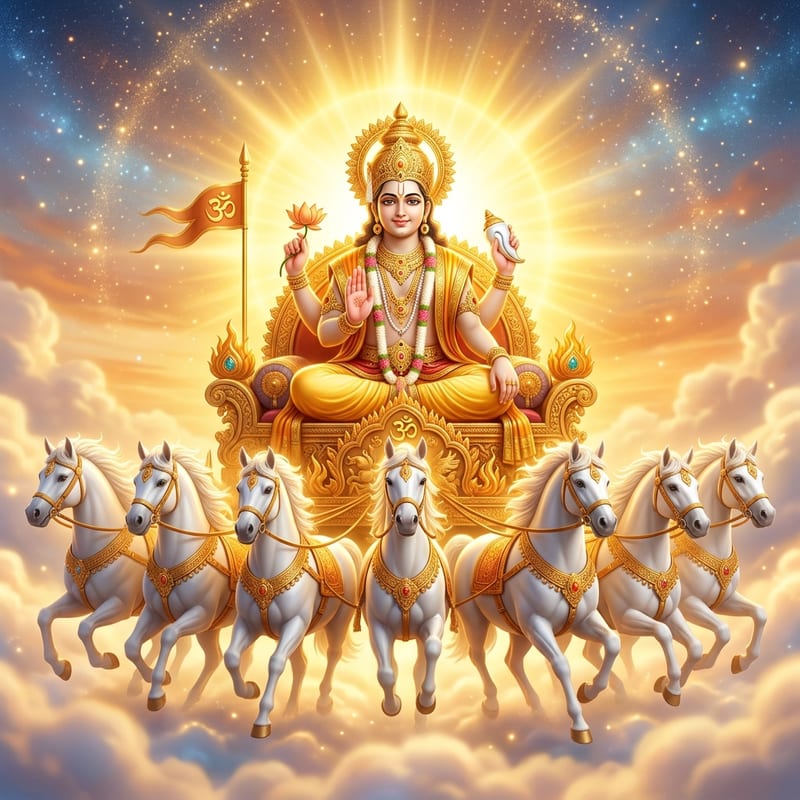
ஶிரோ மே பாது மார்தாண்டோ கபாலம் ரோஹிணீபதிஃ ।
முகமங்காரகஃ பாது கண்டஶ்ச ஶஶிநந்தநஃ ॥ 1 ॥
முகமங்காரகஃ பாது கண்டஶ்ச ஶஶிநந்தநஃ ॥ 1 ॥
- ஶிரஃ (śiraḥ)the head
- மே (me)my
- பாது (pātu)may he guard
- மார்தாண்டஃ (mārtāṇḍaḥ)Mārtāṇḍa, the Sun
- கபாலம் (kapālam)the skull
- ரோஹிணீ-பதிஃ (rohiṇī-patiḥ)the lord of Rohiṇī, the Moon
- முகம் (mukham)the face
- அங்காரகஃ (aṅgārakaḥ)Aṅgāraka, Mars
- பாது (pātu)may he guard
- கண்டம் (kaṇṭham)the throat
- ச (ca)and
- ஶஶி-நந்தநஃ (śaśi-nandanaḥ)the Moon’s son, Mercury
புத்திம் ஜீவஃ ஸதா பாது ஹ்ரு'தயம் ப்ரு'குநந்தநஃ ।
ஜடரம் ச ஶநிஃ பாது ஜிஹ்வாம் மே திதிநந்தநஃ ॥ 2 ॥
ஜடரம் ச ஶநிஃ பாது ஜிஹ்வாம் மே திதிநந்தநஃ ॥ 2 ॥
- புத்திம் (buddhim)the understanding
- ஜீவஃ (jīvaḥ)Jīva, Jupiter
- ஸதா (sadā)always
- பாது (pātu)may he guard
- ஹ்ரு'தயம் (hṛdayam)the heart
- ப்ரு'கு-நந்தநஃ (bhṛgu-nandanaḥ)the son of Bhṛgu, Venus
- ஜடரம் (jaṭharam)the belly
- ச (ca)and
- ஶநிஃ (śaniḥ)Śani, Saturn
- பாது (pātu)may he guard
- ஜிஹ்வாம் (jihvām)the tongue
- மே (me)my
- திதி-நந்தநஃ (diti-nandanaḥ)the son of Diti, Rāhu
பாதௌ கேதுஃ ஸதா பாது வாராஃ ஸர்வாங்கமேவ ச ।
திதயோ'ஷ்டௌ திஶஃ பாந்து நக்ஷத்ராணி வபுஃ ஸதா ॥ 3 ॥
திதயோ'ஷ்டௌ திஶஃ பாந்து நக்ஷத்ராணி வபுஃ ஸதா ॥ 3 ॥
- பாதௌ (pādau)the two feet
- கேதுஃ (ketuḥ)Ketu
- ஸதா (sadā)always
- பாது (pātu)may he guard
- வாராஃ (vārāḥ)the days of the week
- ஸர்வ-அங்கம் (sarva-aṅgam)every limb
- ஏவ ச (eva ca)as well
- திதயஃ (tithayaḥ)the lunar days
- அஷ்டௌ திஶஃ (aṣṭau diśaḥ)the eight directions
- பாந்து (pāntu)may they guard
- நக்ஷத்ராணி (nakṣatrāṇi)the constellations
- வபுஃ (vapuḥ)the body
- ஸதா (sadā)always
அம்ஸௌ ராஶிஃ ஸதா பாது யோகாஶ்ச ஸ்தைர்யமேவ ச ।
குஹ்யம் லிங்கம் ஸதா பாந்து ஸர்வே க்ரஹாஃ ஶுபப்ரதாஃ ॥ 4 ॥
குஹ்யம் லிங்கம் ஸதா பாந்து ஸர்வே க்ரஹாஃ ஶுபப்ரதாஃ ॥ 4 ॥
- அம்ஸௌ (aṃsau)the two shoulders
- ராஶிஃ (rāśiḥ)the signs of the zodiac
- ஸதா (sadā)always
- பாது (pātu)may they guard
- யோகாஃ (yogāḥ)the yogas of the almanac
- ச (ca)and
- ஸ்தைர்யம் (sthairyam)steadiness
- ஏவ ச (eva ca)as well
- குஹ்யம் லிங்கம் (guhyam liṅgam)the hidden parts
- ஸதா (sadā)always
- பாந்து (pāntu)may they guard
- ஸர்வே க்ரஹாஃ (sarve grahāḥ)all the planets
- ஶுப-ப்ரதாஃ (śubha-pradāḥ)bestowers of good
அணிமாதீநி ஸர்வாணி லபதே யஃ படேத் த்ரு'வம் ।
ஏதாம் ரக்ஷாம் படேத் யஸ்து பக்த்யா ஸ ப்ரயதஃ ஸுதீஃ ॥ 5 ॥
ஏதாம் ரக்ஷாம் படேத் யஸ்து பக்த்யா ஸ ப்ரயதஃ ஸுதீஃ ॥ 5 ॥
- அணிமா-ஆதீநி (aṇimā-ādīni)the powers beginning with aṇimā, the power of smallness
- ஸர்வாணி (sarvāṇi)all of them
- லபதே (labhate)he gains
- யஃ (yaḥ)whoever
- படேத் (paṭhet)recites
- த்ருவம் (dhruvam)assuredly
- ஏதாம் ரக்ஷாம் (etām rakṣām)this warding
- படேத் (paṭhet)should recite
- யஃ து (yaḥ tu)whoever indeed
- பக்த்யா (bhaktyā)with devotion
- ஸஃ (saḥ)he
- ப்ரயதஃ (prayataḥ)self-restrained
- ஸுதீஃ (sudhīḥ)of good understanding
ஸ சிராயுஃ ஸுகீ புத்ரீ ரணே ச விஜயீ பவேத் ।
அபுத்ரோ லபதே புத்ரம் தநார்தீ தநமாப்நுயாத் ॥ 6 ॥
அபுத்ரோ லபதே புத்ரம் தநார்தீ தநமாப்நுயாத் ॥ 6 ॥
- ஸஃ (saḥ)he
- சிர-ஆயுஃ (cira-āyuḥ)long of life
- ஸுகீ (sukhī)happy
- புத்ரீ (putrī)blessed with sons
- ரணே (raṇe)in battle
- ச (ca)and
- விஜயீ பவேத் (vijayī bhavet)becomes victorious
- அபுத்ரஃ (aputraḥ)the sonless man
- லபதே புத்ரம் (labhate putram)obtains a son
- தந-அர்தீ (dhana-arthī)he who seeks wealth
- தநம் ஆப்நுயாத் (dhanam āpnuyāt)shall come by wealth
தாரார்தீ லபதே பார்யாம் ஸுரூபாம் ஸுமநோஹராம் ।
ரோகீ ரோகாத்ப்ரமுச்யேத பத்தோ முச்யேத பந்தநாத் ॥ 7 ॥
ரோகீ ரோகாத்ப்ரமுச்யேத பத்தோ முச்யேத பந்தநாத் ॥ 7 ॥
- தார-அர்தீ (dāra-arthī)he who seeks a wife
- லபதே (labhate)obtains
- பார்யாம் (bhāryām)a wife
- ஸுரூபாம் (surūpām)fair of form
- ஸுமநோஹராம் (sumanoharām)winning of heart
- ரோகீ (rogī)the sick man
- ரோகாத் ப்ரமுச்யேத (rogāt pramucyeta)is released from his disease
- பத்தஃ (baddhaḥ)the man in fetters
- முச்யேத பந்தநாத் (mucyeta bandhanāt)is freed from his bonds
ஜலே ஸ்தலே சாந்தரிக்ஷே காராகாரே விஶேஷதஃ ।
யஃ கரே தாரயேந்நித்யம் பயம் தஸ்ய ந வித்யதே ॥ 8 ॥
யஃ கரே தாரயேந்நித்யம் பயம் தஸ்ய ந வித்யதே ॥ 8 ॥
- ஜலே (jale)in water
- ஸ்தலே (sthale)on land
- ச (ca)and
- அந்தரிக்ஷே (antarikṣe)in the air
- காராகாரே (kārāgāre)in prison
- விஶேஷதஃ (viśeṣataḥ)above all
- யஃ (yaḥ)whoever
- கரே (kare)upon his hand
- தாரயேத் (dhārayet)should wear it
- நித்யம் (nityam)daily
- பயம் (bhayam)fear
- தஸ்ய (tasya)for him
- ந வித்யதே (na vidyate)is not to be found
ப்ரஹ்மஹத்யா ஸுராபாநம் ஸ்தேயம் குர்வங்கநாகமஃ ।
ஸர்வபாபைஃ ப்ரமுச்யேத கவசஸ்ய ச தாரணாத் ॥ 9 ॥
ஸர்வபாபைஃ ப்ரமுச்யேத கவசஸ்ய ச தாரணாத் ॥ 9 ॥
- ப்ரஹ்ம-ஹத்யா (brahma-hatyā)the slaying of a brāhmaṇa
- ஸுரா-பாநம் (surā-pānam)the drinking of liquor
- ஸ்தேயம் (steyam)theft
- குரு-அங்கநா-கமஃ (guru-aṅganā-gamaḥ)going in to the teacher’s wife
- ஸர்வ-பாபைஃ (sarva-pāpaiḥ)from all these sins
- ப்ரமுச்யேத (pramucyeta)one is set free
- கவசஸ்ய (kavacasya)of this armour
- ச (ca)and
- தாரணாத் (dhāraṇāt)by the wearing
நாரீ வாமபுஜே த்ரு'த்வா ஸுகைஶ்வர்யஸமந்விதா ।
காகவந்த்யா ஜந்மவந்த்யா ம்ரு'தவத்ஸா ச யா பவேத் ।
பஹ்வபத்யா ஜீவவத்ஸா கவசஸ்ய ப்ரஸாததஃ ॥ 10 ॥
காகவந்த்யா ஜந்மவந்த்யா ம்ரு'தவத்ஸா ச யா பவேத் ।
பஹ்வபத்யா ஜீவவத்ஸா கவசஸ்ய ப்ரஸாததஃ ॥ 10 ॥
- நாரீ (nārī)a woman
- வாம-புஜே (vāma-bhuje)upon her left arm
- த்ரு'த்வா (dhṛtvā)having worn it
- ஸுக-ஐஶ்வர்ய-ஸமந்விதா (sukha-aiśvarya-samanvitā)endowed with happiness and plenty
- காக-வந்த்யா (kāka-vandhyā)barren after one child, as the crow is said to be
- ஜந்ம-வந்த்யா (janma-vandhyā)barren from her birth
- ம்ரு'த-வத்ஸா (mṛta-vatsā)whose children have died
- ச யா பவேத் (ca yā bhavet)whichever she may be
- பஹு-அபத்யா (bahu-apatyā)rich in children
- ஜீவ-வத்ஸா (jīva-vatsā)her children living
- கவசஸ்ய ப்ரஸாததஃ (kavacasya prasādataḥ)by the grace of this armour
இதி க்ரஹயாமலே உத்தரகண்டே நவக்ரஹ கவசம் ஸமாப்தம் ।