
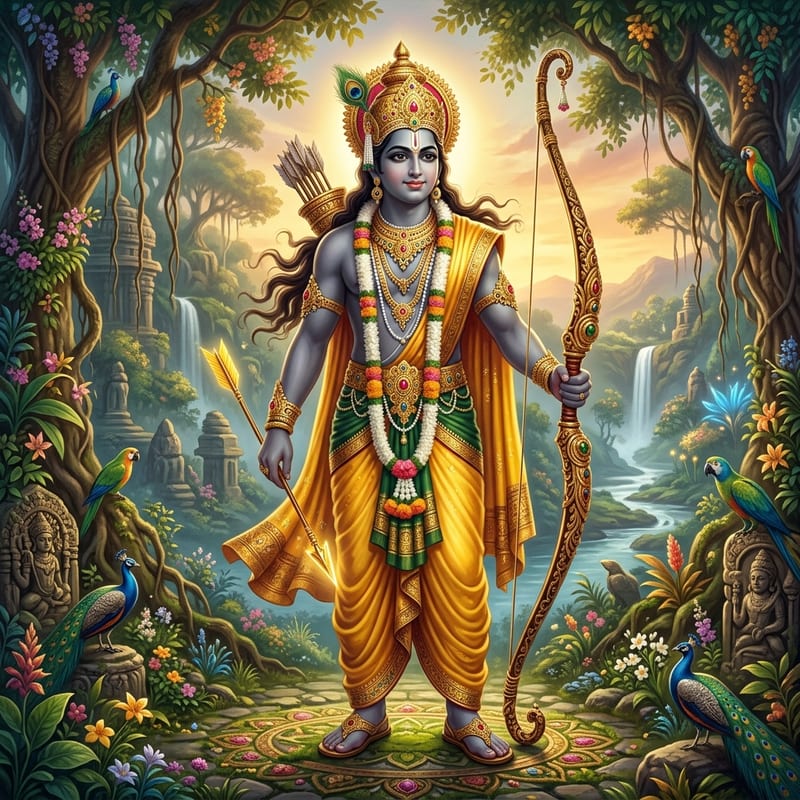
বিশুদ্ধং পরং সচ্চিদানন্দরূপং
গুণাধারমাধারহীনং বরেণ্যম্ ।
মহান্তং বিভান্তং গুহান্তং গুণান্তং
সুখান্তং স্বযং ধাম রামং প্রপদ্যে ॥ 1 ॥
গুণাধারমাধারহীনং বরেণ্যম্ ।
মহান্তং বিভান্তং গুহান্তং গুণান্তং
সুখান্তং স্বযং ধাম রামং প্রপদ্যে ॥ 1 ॥
- বিশুদ্ধম্ (viśuddham)utterly pure
- পরম্ (param)supreme
- সত্-চিত্-আনন্দ-রূপম্ (sac-cid-ānanda-rūpam)whose form is being, awareness and bliss
- গুণ-আধারম্ (guṇādhāram)the ground on which every quality rests
- আধার-হীনম্ (ādhāra-hīnam)himself resting on nothing
- বরেণ্যম্ (vareṇyam)most choiceworthy
- মহান্তম্ (mahāntam)vast
- বিভান্তম্ (vibhāntam)shining out
- গুহান্তম্ (guhāntam)at the far end of the heart’s cave
- গুণান্তম্ (guṇāntam)past where the qualities end
- সুখান্তম্ (sukhāntam)where happiness comes to rest
- স্বযম্ ধাম (svayaṃ dhāma)light in his own right
- রামম্ (rāmam)Rāma
- প্রপদ্যে (prapadye)I take refuge in
শিবং নিত্যমেকং বিভুং তারকাখ্যং
সুখাকারমাকারশূন্যং সুমান্যম্ ।
মহেশং কলেশং সুরেশং পরেশং
নরেশং নিরীশং মহীশং প্রপদ্যে ॥ 2 ॥
সুখাকারমাকারশূন্যং সুমান্যম্ ।
মহেশং কলেশং সুরেশং পরেশং
নরেশং নিরীশং মহীশং প্রপদ্যে ॥ 2 ॥
- শিবম্ (śivam)auspicious
- নিত্যম্ (nityam)eternal
- একম্ (ekam)one
- বিভুম্ (vibhum)all-pervading
- তারক-আখ্যম্ (tārakākhyam)called Tāraka, the name that ferries one across
- সুখ-আকারম্ (sukhākāram)whose shape is happiness
- আকার-শূন্যম্ (ākāra-śūnyam)having no shape at all
- সু-মান্যম্ (su-mānyam)well worth honouring
- মহা-ঈশম্ (maheśam)great lord
- কল-ঈশম্ (kaleśam)lord of time’s divisions
- সুর-ঈশম্ (sureśam)lord of the gods
- পর-ঈশম্ (pareśam)lord beyond them
- নর-ঈশম্ (nareśam)lord of men
- নির্-ঈশম্ (nirīśam)having no lord above him
- মহী-ঈশম্ (mahīśam)lord of the earth
- প্রপদ্যে (prapadye)I take refuge in
যদাবর্ণযত্কর্ণমূলেঽন্তকালে
শিবো রাম রামেতি রামেতি কাশ্যাম্ ।
তদেকং পরং তারকব্রহ্মরূপং
ভজেঽহং ভজেঽহং ভজেঽহং ভজেঽহম্ ॥ 3 ॥
শিবো রাম রামেতি রামেতি কাশ্যাম্ ।
তদেকং পরং তারকব্রহ্মরূপং
ভজেঽহং ভজেঽহং ভজেঽহং ভজেঽহম্ ॥ 3 ॥
- যত্ (yat)that which
- আবর্ণযত্ (āvarṇayat)he tells over
- কর্ণ-মূলে (karṇa-mūle)at the root of the ear
- অন্ত-কালে (anta-kāle)at the last hour
- শিবঃ (śivaḥ)Śiva
- রাম রাম ইতি রাম ইতি (rāma rāma iti rāma iti)"Rāma, Rāma, Rāma"
- কাশ্যাম্ (kāśyām)in Kāśī
- তত্ একম্ (tad ekam)that one thing
- পরম্ (param)supreme
- তারক-ব্রহ্ম-রূপম্ (tāraka-brahma-rūpam)the ferrying Brahman in bodily form
- ভজে অহম্ (bhaje aham)I worship – said four times over, once for each utterance of the name above
মহারত্নপীঠে শুভে কল্পমূলে
সুখাসীনমাদিত্যকোটিপ্রকাশম্ ।
সদা জানকীলক্ষ্মণোপেতমেকং
সদা রামচন্দ্রং ভজেঽহং ভজেঽহম্ ॥ 4 ॥
সুখাসীনমাদিত্যকোটিপ্রকাশম্ ।
সদা জানকীলক্ষ্মণোপেতমেকং
সদা রামচন্দ্রং ভজেঽহং ভজেঽহম্ ॥ 4 ॥
- মহা-রত্ন-পীঠে (mahā-ratna-pīṭhe)on a throne of great jewels
- শুভে (śubhe)auspicious
- কল্প-মূলে (kalpa-mūle)at the foot of the wishing-tree
- সুখ-আসীনম্ (sukhāsīnam)seated at his ease
- আদিত্য-কোটি-প্রকাশম্ (āditya-koṭi-prakāśam)shining like ten million suns
- সদা (sadā)ever
- জানকী-লক্ষ্মণ-উপেতম্ (jānakī-lakṣmaṇopetam)attended by Jānakī and Lakṣmaṇa
- একম্ (ekam)the one
- সদা (sadā)always
- রামচন্দ্রম্ (rāmacandram)Rāmacandra
- ভজে অহম্ ভজে অহম্ (bhaje’haṃ bhaje’ham)I worship, I worship
ক্বণদ্রত্নমঞ্জীরপাদারবিন্দং
লসন্মেখলাচারুপীতাম্বরাঢ্যম্ ।
মহারত্নহারোল্লসত্কৌস্তুভাঙ্গং
নদচ্চঞ্চরীমঞ্জরীলোলমালম্ ॥ 5 ॥
লসন্মেখলাচারুপীতাম্বরাঢ্যম্ ।
মহারত্নহারোল্লসত্কৌস্তুভাঙ্গং
নদচ্চঞ্চরীমঞ্জরীলোলমালম্ ॥ 5 ॥
- ক্বণত্-রত্ন-মঞ্জীর-পাদ-অরবিন্দম্ (kvaṇad-ratna-mañjīra-pādāravindam)lotus feet in jewelled anklets that chime
- লসত্-মেখলা-চারু-পীত-অম্বর-আঢ্যম্ (lasan-mekhalā-cāru-pītāmbarāḍhyam)rich in a bright girdle and lovely yellow silk
- মহা-রত্ন-হার-উল্লসত্-কৌস্তুভ-অঙ্গম্ (mahā-ratna-hārollasat-kaustubhāṅgam)his body agleam with a great jewelled necklace and the Kaustubha gem
- নদত্-চঞ্চরী-মঞ্জরী-লোল-মালম্ (nadac-cañcarī-mañjarī-lola-mālam)a swaying garland where humming bees move among the blossom-clusters
লসচ্চন্দ্রিকাস্মেরশোণাধরাভং
সমুদ্যত্পতঙ্গেন্দুকোটিপ্রকাশম্ ।
নমদ্ব্রহ্মরুদ্রাদিকোটীররত্ন
স্ফুরত্কান্তিনীরাজনারাধিতাঙ্ঘ্রিম্ ॥ 6 ॥
সমুদ্যত্পতঙ্গেন্দুকোটিপ্রকাশম্ ।
নমদ্ব্রহ্মরুদ্রাদিকোটীররত্ন
স্ফুরত্কান্তিনীরাজনারাধিতাঙ্ঘ্রিম্ ॥ 6 ॥
- লসত্-চন্দ্রিকা-স্মের-শোণ-অধর-আভম্ (lasac-candrikā-smera-śoṇādharābham)his red lower lip aglow with a smile like spreading moonlight
- সমুদ্যত্-পতঙ্গ-ইন্দু-কোটি-প্রকাশম্ (samudyat-pataṅgendu-koṭi-prakāśam)bright as ten million suns and moons rising at once
- নমত্-ব্রহ্ম-রুদ্র-আদি-কোটীর-রত্ন-স্ফুরত্-কান্তি-নীরাজন-আরাধিত-অঙ্ঘ্রিম্ (namad-brahma-rudrādi-koṭīra-ratna-sphurat-kānti-nīrājanārādhitāṅghrim)his feet worshipped with a lamp-offering made of the flashing light of the crown-jewels of Brahmā, Rudra and the rest as they bow
পুরঃ প্রাঞ্জলীনাঞ্জনেযাদিভক্তান্
স্বচিন্মুদ্রযা ভদ্রযা বোধযন্তম্ ।
ভজেঽহং ভজেঽহং সদা রামচন্দ্রং
ত্বদন্যং ন মন্যে ন মন্যে ন মন্যে ॥ 7 ॥
স্বচিন্মুদ্রযা ভদ্রযা বোধযন্তম্ ।
ভজেঽহং ভজেঽহং সদা রামচন্দ্রং
ত্বদন্যং ন মন্যে ন মন্যে ন মন্যে ॥ 7 ॥
- পুরঃ (puraḥ)before him
- প্রাঞ্জলীন্ (prāñjalīn)their hands joined
- আঞ্জনেয-আদি-ভক্তান্ (āñjaneyādi-bhaktān)Āñjaneya and the other devotees
- স্ব-চিত্-মুদ্রযা (sva-cin-mudrayā)by his own sign of awareness
- ভদ্রযা (bhadrayā)auspicious
- বোধযন্তম্ (bodhayantam)awakening them
- ভজে অহম্ ভজে অহম্ (bhaje’haṃ bhaje’ham)I worship, I worship
- সদা (sadā)always
- রামচন্দ্রম্ (rāmacandram)Rāmacandra
- ত্বত্-অন্যম্ (tvad-anyam)any other than you
- ন মন্যে ন মন্যে ন মন্যে (na manye na manye na manye)I do not own, I do not, I do not
যদা মত্সমীপং কৃতান্তঃ সমেত্য
প্রচণ্ডপ্রকোপৈর্ভটৈর্ভীষযেন্মাম্ ।
তদাবিষ্করোষি ত্বদীযং স্বরূপং
সদাপত্প্রণাশং সকোদণ্ডবাণম্ ॥ 8 ॥
প্রচণ্ডপ্রকোপৈর্ভটৈর্ভীষযেন্মাম্ ।
তদাবিষ্করোষি ত্বদীযং স্বরূপং
সদাপত্প্রণাশং সকোদণ্ডবাণম্ ॥ 8 ॥
- যদা (yadā)when
- মত্-সমীপম্ (mat-samīpam)close to me
- কৃতান্তঃ (kṛtāntaḥ)Death, the ender of things
- সমেত্য (sametya)having come
- প্রচণ্ড-প্রকোপৈঃ (pracaṇḍa-prakopaiḥ)their fury blazing
- ভটৈঃ (bhaṭaiḥ)with his henchmen
- ভীষযেত্ (bhīṣayet)would terrify
- মাম্ (mām)me
- তদা (tadā)then
- আবিষ্করোষি (āviṣkaroṣi)you make plain
- ত্বদীযম্ স্বরূপম্ (tvadīyaṃ svarūpam)that own form of yours
- সদা-আপদ্-প্রণাশম্ (sadāpat-praṇāśam)which is the undoing of calamity always
- স-কোদণ্ড-বাণম্ (sa-kodaṇḍa-bāṇam)with the Kodaṇḍa bow and its arrow
নিজে মানসে মন্দিরে সন্নিধেহি
প্রসীদ প্রসীদ প্রভো রামচন্দ্র ।
সসৌমিত্রিণা কৈকযীনন্দনেন
স্বশক্ত্যানুভক্ত্যা চ সংসেব্যমান ॥ 9 ॥
প্রসীদ প্রসীদ প্রভো রামচন্দ্র ।
সসৌমিত্রিণা কৈকযীনন্দনেন
স্বশক্ত্যানুভক্ত্যা চ সংসেব্যমান ॥ 9 ॥
- নিজে (nije)my own
- মানসে মন্দিরে (mānase mandire)in the temple that is the mind
- সন্নিধেহি (sannidhehi)take your place
- প্রসীদ প্রসীদ (prasīda prasīda)be gracious, be gracious
- প্রভো রামচন্দ্র (prabho rāmacandra)O Lord Rāmacandra
- স-সৌমিত্রিণা (sa-saumitriṇā)along with the son of Sumitrā
- কৈকযী-নন্দনেন (kaikayī-nandanena)with the gladdener of Kaikeyī, Bharata
- স্ব-শক্ত্যা (sva-śaktyā)by your own power
- অনুভক্ত্যা (anubhaktyā)by devotion that follows after you
- চ (ca)and
- সংসেব্যমান (saṃsevyamāna)O you who are so served
স্বভক্তাগ্রগণ্যৈঃ কপীশৈর্মহীশৈ-
-রনীকৈরনেকৈশ্চ রাম প্রসীদ ।
নমস্তে নমোঽস্ত্বীশ রাম প্রসীদ
প্রশাধি প্রশাধি প্রকাশং প্রভো মাম্ ॥ 10 ॥
-রনীকৈরনেকৈশ্চ রাম প্রসীদ ।
নমস্তে নমোঽস্ত্বীশ রাম প্রসীদ
প্রশাধি প্রশাধি প্রকাশং প্রভো মাম্ ॥ 10 ॥
- স্ব-ভক্ত-অগ্র-গণ্যৈঃ (sva-bhaktāgra-gaṇyaiḥ)with those counted first among your devotees
- কপি-ঈশৈঃ (kapīśaiḥ)with the lords of the monkeys
- মহী-ঈশৈঃ (mahīśaiḥ)with the lords of the earth
- অনীকৈঃ (anīkaiḥ)with armies
- অনেকৈঃ (anekaiḥ)many
- চ (ca)and
- রাম (rāma)O Rāma
- প্রসীদ (prasīda)be gracious
- নমঃ তে (namas te)salutation to you
- নমঃ অস্তু (namaḥ astu)let there be salutation
- ঈশ (īśa)O Lord
- রাম (rāma)O Rāma
- প্রসীদ (prasīda)be gracious
- প্রশাধি প্রশাধি (praśādhi praśādhi)give me your command, command me
- প্রকাশম্ (prakāśam)into the open light
- প্রভো (prabho)O Master
- মাম্ (mām)me
ত্বমেবাসি দৈবং পরং মে যদেকং
সুচৈতন্যমেতত্ত্বদন্যং ন মন্যে ।
যতোঽভূদমেযং বিযদ্বাযুতেজো
জলোর্ব্যাদিকার্যং চরং চাচরং চ ॥ 11 ॥
সুচৈতন্যমেতত্ত্বদন্যং ন মন্যে ।
যতোঽভূদমেযং বিযদ্বাযুতেজো
জলোর্ব্যাদিকার্যং চরং চাচরং চ ॥ 11 ॥
- ত্বম্ এব (tvam eva)you alone
- অসি (asi)are
- দৈবম্ (daivam)the divinity
- পরম্ (param)supreme
- মে (me)mine
- যত্ একম্ (yad ekam)that one thing
- সু-চৈতন্যম্ (su-caitanyam)pure awareness
- এতত্ (etat)this
- ত্বত্-অন্যম্ (tvad-anyam)anything other than you
- ন মন্যে (na manye)I do not own
- যতঃ (yataḥ)from whom
- অভূত্ (abhūt)came to be
- অমেযম্ (ameyam)past all measuring
- বিযত্-বাযু-তেজঃ-জল-উর্বী-আদি-কার্যম্ (viyad-vāyu-tejo-jalorvyādi-kāryam)everything made of space, wind, fire, water, earth and the rest
- চরম্ (caram)what moves
- চ (ca)and
- অচরম্ (acaram)what does not
- চ (ca)and
নমঃ সচ্চিদানন্দরূপায তস্মৈ
নমো দেবদেবায রামায তুভ্যম্ ।
নমো জানকীজীবিতেশায তুভ্যং
নমঃ পুণ্ডরীকাযতাক্ষায তুভ্যম্ ॥ 12 ॥
নমো দেবদেবায রামায তুভ্যম্ ।
নমো জানকীজীবিতেশায তুভ্যং
নমঃ পুণ্ডরীকাযতাক্ষায তুভ্যম্ ॥ 12 ॥
- নমঃ (namaḥ)salutation
- সত্-চিত্-আনন্দ-রূপায (sac-cid-ānanda-rūpāya)to him whose form is being, awareness and bliss
- তস্মৈ (tasmai)to that one
- নমঃ (namaḥ)salutation
- দেব-দেবায (deva-devāya)to the god of gods
- রামায (rāmāya)to Rāma
- তুভ্যম্ (tubhyam)to you
- নমঃ (namaḥ)salutation
- জানকী-জীবিত-ঈশায (jānakī-jīviteśāya)to the lord of Jānakī’s very life
- তুভ্যম্ (tubhyam)to you
- নমঃ (namaḥ)salutation
- পুণ্ডরীক-আযত-অক্ষায (puṇḍarīkāyatākṣāya)to him whose eyes are wide as white lotuses
- তুভ্যম্ (tubhyam)to you
নমো ভক্তিযুক্তানুরক্তায তুভ্যং
নমঃ পুণ্যপুঞ্জৈকলভ্যায তুভ্যম্ ।
নমো বেদবেদ্যায চাদ্যায পুংসে
নমঃ সুন্দরাযেন্দিরাবল্লভায ॥ 13 ॥
নমঃ পুণ্যপুঞ্জৈকলভ্যায তুভ্যম্ ।
নমো বেদবেদ্যায চাদ্যায পুংসে
নমঃ সুন্দরাযেন্দিরাবল্লভায ॥ 13 ॥
- নমঃ (namaḥ)salutation
- ভক্তি-যুক্ত-অনুরক্তায (bhakti-yuktānuraktāya)to him who loves in return those who love him
- তুভ্যম্ (tubhyam)to you
- নমঃ (namaḥ)salutation
- পুণ্য-পুঞ্জ-এক-লভ্যায (puṇya-puñjaika-labhyāya)to be had by nothing but a heaped-up store of merit
- তুভ্যম্ (tubhyam)to you
- নমঃ (namaḥ)salutation
- বেদ-বেদ্যায (veda-vedyāya)to him whom the Vedas exist to know
- চ (ca)and
- আদ্যায পুংসে (ādyāya puṃse)to the first Person
- নমঃ (namaḥ)salutation
- সুন্দরায (sundarāya)to the beautiful one
- ইন্দিরা-বল্লভায (indirā-vallabhāya)to the beloved of Indirā
নমো বিশ্বকর্ত্রে নমো বিশ্বহর্ত্রে
নমো বিশ্বভোক্ত্রে নমো বিশ্বমাত্রে ।
নমো বিশ্বনেত্রে নমো বিশ্বজেত্রে
নমো বিশ্বপিত্রে নমো বিশ্বমাত্রে ॥ 14 ॥
নমো বিশ্বভোক্ত্রে নমো বিশ্বমাত্রে ।
নমো বিশ্বনেত্রে নমো বিশ্বজেত্রে
নমো বিশ্বপিত্রে নমো বিশ্বমাত্রে ॥ 14 ॥
- নমঃ (namaḥ)salutation
- বিশ্ব-কর্ত্রে (viśva-kartre)to the maker of all
- নমঃ (namaḥ)salutation
- বিশ্ব-হর্ত্রে (viśva-hartre)to him who takes it all away
- নমঃ (namaḥ)salutation
- বিশ্ব-ভোক্ত্রে (viśva-bhoktre)to him who tastes it
- নমঃ (namaḥ)salutation
- বিশ্ব-মাত্রে (viśva-mātre)to the whole measure of it
- নমঃ (namaḥ)salutation
- বিশ্ব-নেত্রে (viśva-netre)to the eye of all, and to its leader
- নমঃ (namaḥ)salutation
- বিশ্ব-জেত্রে (viśva-jetre)to its conqueror
- নমঃ (namaḥ)salutation
- বিশ্ব-পিত্রে (viśva-pitre)to the father of all
- নমঃ (namaḥ)salutation
- বিশ্ব-মাত্রে (viśva-mātre)and to its mother – one written form serving twice, first as मात्रा "measure", here as मातृ "mother"
নমস্তে নমস্তে সমস্তপ্রপঞ্চ-
-প্রভোগপ্রযোগপ্রমাণপ্রবীণ ।
মদীযং মনস্ত্বত্পদদ্বন্দ্বসেবাং
বিধাতুং প্রবৃত্তং সুচৈতন্যসিদ্ধ্যৈ ॥ 15 ॥
-প্রভোগপ্রযোগপ্রমাণপ্রবীণ ।
মদীযং মনস্ত্বত্পদদ্বন্দ্বসেবাং
বিধাতুং প্রবৃত্তং সুচৈতন্যসিদ্ধ্যৈ ॥ 15 ॥
- নমঃ তে নমঃ তে (namas te namas te)salutation to you, salutation to you
- সমস্ত-প্রপঞ্চ-প্রভোগ-প্রযোগ-প্রমাণ-প্রবীণ (samasta-prapañca-prabhoga-prayoga-pramāṇa-pravīṇa)O adept in the enjoyment, the employment and the measure of this whole spread-out world
- মদীযম্ মনঃ (madīyaṃ manaḥ)this mind of mine
- ত্বত্-পদ-দ্বন্দ্ব-সেবাম্ (tvat-pada-dvandva-sevām)service at the pair of your feet
- বিধাতুম্ (vidhātum)to perform
- প্রবৃত্তম্ (pravṛttam)has set out
- সু-চৈতন্য-সিদ্ধ্যৈ (su-caitanya-siddhyai)for the winning of pure awareness
শিলাপি ত্বদঙ্ঘ্রিক্ষমাসঙ্গিরেণু
প্রসাদাদ্ধি চৈতন্যমাধত্ত রাম ।
নরস্ত্বত্পদদ্বন্দ্বসেবাবিধানা-
-ত্সুচৈতন্যমেতীতি কিং চিত্রমত্র ॥ 16 ॥
প্রসাদাদ্ধি চৈতন্যমাধত্ত রাম ।
নরস্ত্বত্পদদ্বন্দ্বসেবাবিধানা-
-ত্সুচৈতন্যমেতীতি কিং চিত্রমত্র ॥ 16 ॥
- শিলা (śilā)a stone
- অপি (api)even
- ত্বত্-অঙ্ঘ্রি-ক্ষমা-সঙ্গি-রেণু-প্রসাদাত্ (tvad-aṅghri-kṣamā-saṅgi-reṇu-prasādāt)by the grace of the dust where your foot met the earth
- হি (hi)indeed
- চৈতন্যম্ (caitanyam)awareness
- আধত্ত (ādhatta)took on
- রাম (rāma)O Rāma
- নরঃ (naraḥ)a man
- ত্বত্-পদ-দ্বন্দ্ব-সেবা-বিধানাত্ (tvat-pada-dvandva-sevā-vidhānāt)by keeping up service at the pair of your feet
- সু-চৈতন্যম্ (su-caitanyam)pure awareness
- এতি (eti)reaches
- ইতি (iti)that being so
- কিম্ চিত্রম্ অত্র (kiṃ citram atra)where is the wonder in it
পবিত্রং চরিত্রং বিচিত্রং ত্বদীযং
নরা যে স্মরন্ত্যন্বহং রামচন্দ্র ।
ভবন্তং ভবান্তং ভরন্তং ভজন্তো
লভন্তে কৃতান্তং ন পশ্যন্ত্যতোঽন্তে ॥ 17 ॥
নরা যে স্মরন্ত্যন্বহং রামচন্দ্র ।
ভবন্তং ভবান্তং ভরন্তং ভজন্তো
লভন্তে কৃতান্তং ন পশ্যন্ত্যতোঽন্তে ॥ 17 ॥
- পবিত্রম্ (pavitram)hallowing
- চরিত্রম্ (caritram)the story of your deeds
- বিচিত্রম্ (vicitram)full of wonders
- ত্বদীযম্ (tvadīyam)yours
- নরাঃ যে (narā ye)those people who
- স্মরন্তি (smaranti)call it to mind
- অন্বহম্ (anvaham)day after day
- রামচন্দ্র (rāmacandra)O Rāmacandra
- ভবন্তম্ (bhavantam)you
- ভব-অন্তম্ (bhavāntam)who are the end of becoming
- ভরন্তম্ (bharantam)who bear them up
- ভজন্তঃ (bhajantaḥ)worshipping
- লভন্তে (labhante)they win you
- কৃতান্তম্ (kṛtāntam)Death
- ন পশ্যন্তি (na paśyanti)they never set eyes on
- অতঃ (ataḥ)and therefore
- অন্তে (ante)at the end
স পুণ্যঃ স গণ্যঃ শরণ্যো মমাযং
নরো বেদ যো দেবচূডামণিং ত্বাম্ ।
সদাকারমেকং চিদানন্দরূপং
মনোবাগগম্যং পরং ধাম রাম ॥ 18 ॥
নরো বেদ যো দেবচূডামণিং ত্বাম্ ।
সদাকারমেকং চিদানন্দরূপং
মনোবাগগম্যং পরং ধাম রাম ॥ 18 ॥
- সঃ পুণ্যঃ (sa puṇyaḥ)he is holy
- সঃ গণ্যঃ (sa gaṇyaḥ)he is one to be counted
- শরণ্যঃ (śaraṇyaḥ)a refuge
- মম (mama)to me
- অযম্ (ayam)this one
- নরঃ (naraḥ)the man
- বেদ (veda)who knows
- যঃ (yaḥ)who
- দেব-চূডামণিম্ (deva-cūḍāmaṇim)the crest-jewel of the gods
- ত্বাম্ (tvām)you
- সদা-আকারম্ (sadākāram)of unchanging form
- একম্ (ekam)one
- চিত্-আনন্দ-রূপম্ (cid-ānanda-rūpam)whose form is awareness and bliss
- মনঃ-বাক্-অগম্যম্ (mano-vāg-agamyam)where neither mind nor speech arrives
- পরম্ ধাম (paraṃ dhāma)the highest abode
- রাম (rāma)O Rāma
প্রচণ্ডপ্রতাপপ্রভাবাভিভূত-
-প্রভূতারিবীর প্রভো রামচন্দ্র ।
বলং তে কথং বর্ণ্যতেঽতীব বাল্যে
যতোঽখণ্ডি চণ্ডীশকোদণ্ডদণ্ডম্ ॥ 19 ॥
-প্রভূতারিবীর প্রভো রামচন্দ্র ।
বলং তে কথং বর্ণ্যতেঽতীব বাল্যে
যতোঽখণ্ডি চণ্ডীশকোদণ্ডদণ্ডম্ ॥ 19 ॥
- প্রচণ্ড-প্রতাপ-প্রভাব-অভিভূত-প্রভূত-অরি-বীর (pracaṇḍa-pratāpa-prabhāvābhibhūta-prabhūtāri-vīra)O hero by the force of whose fierce blazing might a host of foes was borne down
- প্রভো রামচন্দ্র (prabho rāmacandra)O Lord Rāmacandra
- বলম্ তে (balaṃ te)your strength
- কথম্ (katham)how
- বর্ণ্যতে (varṇyate)is it to be told
- অতীব বাল্যে (atīva bālye)in your very boyhood
- যতঃ (yataḥ)whereby
- অখণ্ডি (akhaṇḍi)was snapped
- চণ্ডী-ঈশ-কোদণ্ড-দণ্ডম্ (caṇḍīśa-kodaṇḍa-daṇḍam)the staff of the bow of Caṇḍī’s lord, Śiva
দশগ্রীবমুগ্রং সপুত্রং সমিত্রং
সরিদ্দুর্গমধ্যস্থরক্ষোগণেশম্ ।
ভবন্তং বিনা রাম বীরো নরো বা
সুরো বাঽমরো বা জযেত্কস্ত্রিলোক্যাম্ ॥ 20 ॥
সরিদ্দুর্গমধ্যস্থরক্ষোগণেশম্ ।
ভবন্তং বিনা রাম বীরো নরো বা
সুরো বাঽমরো বা জযেত্কস্ত্রিলোক্যাম্ ॥ 20 ॥
- দশ-গ্রীবম্ (daśa-grīvam)the ten-necked one
- উগ্রম্ (ugram)terrible
- স-পুত্রম্ (sa-putram)with his sons
- স-মিত্রম্ (sa-mitram)with his allies
- সরিত্-দুর্গ-মধ্য-স্থ-রক্ষঃ-গণ-ঈশম্ (sarid-durga-madhya-stha-rakṣo-gaṇeśam)lord of the rākṣasa hosts, set in a stronghold ringed about by water
- ভবন্তম্ বিনা (bhavantaṃ vinā)apart from you
- রাম (rāma)O Rāma
- বীরঃ (vīraḥ)what hero
- নরঃ (naraḥ)man
- বা (vā)or
- সুরঃ (suraḥ)god
- বা (vā)or
- অমরঃ (amaraḥ)deathless one
- বা (vā)or
- জযেত্ (jayet)could have conquered him
- কঃ (kaḥ)who
- ত্রিলোক্যাম্ (trilokyām)in the three worlds
সদা রাম রামেতি রামামৃতং তে
সদারামমানন্দনিষ্যন্দকন্দম্ ।
পিবন্তং নমন্তং সুদন্তং হসন্তং
হনূমন্তমন্তর্ভজে তং নিতান্তম্ ॥ 21 ॥
সদারামমানন্দনিষ্যন্দকন্দম্ ।
পিবন্তং নমন্তং সুদন্তং হসন্তং
হনূমন্তমন্তর্ভজে তং নিতান্তম্ ॥ 21 ॥
- সদা (sadā)always
- রাম রাম ইতি (rāma rāma iti)"Rāma, Rāma"
- রাম-অমৃতম্ (rāmāmṛtam)that nectar which is the name Rāma
- তে (te)yours
- সদা-রামম্ (sadā-rāmam)a delight that never ends
- আনন্দ-নিষ্যন্দ-কন্দম্ (ānanda-niṣyanda-kandam)the root from which bliss wells up
- পিবন্তম্ (pibantam)drinking it
- নমন্তম্ (namantam)bowing
- সু-দন্তম্ (su-dantam)fine of tooth
- হসন্তম্ (hasantam)smiling
- হনূমন্তম্ (hanūmantam)Hanumān
- অন্তঃ (antaḥ)within
- ভজে (bhaje)I worship
- তম্ (tam)him
- নিতান্তম্ (nitāntam)with all my heart
সদা রাম রামেতি রামামৃতং তে
সদারামমানন্দনিষ্যন্দকন্দম্ ।
পিবন্নন্বহং নন্বহং নৈব মৃত্যো-
-র্বিভেমি প্রসাদাদসাদাত্তবৈব ॥ 22 ॥
সদারামমানন্দনিষ্যন্দকন্দম্ ।
পিবন্নন্বহং নন্বহং নৈব মৃত্যো-
-র্বিভেমি প্রসাদাদসাদাত্তবৈব ॥ 22 ॥
- সদা (sadā)always
- রাম রাম ইতি (rāma rāma iti)"Rāma, Rāma"
- রাম-অমৃতম্ (rāmāmṛtam)that nectar which is the name Rāma
- তে (te)yours
- সদা-রামম্ (sadā-rāmam)a delight that never ends
- আনন্দ-নিষ্যন্দ-কন্দম্ (ānanda-niṣyanda-kandam)the root from which bliss wells up
- পিবন্ (piban)drinking it
- অন্বহম্ (anvaham)day after day
- ননু (nanu)surely
- অহম্ (aham)I
- ন এব (naiva)not in the least
- মৃত্যোঃ (mṛtyoḥ)of Death
- বিভেমি (bibhemi)am I afraid
- প্রসাদাত্ (prasādāt)by the grace
- অসাদাত্ (asādāt)unfailing (printed thus
- the word is not standard and the reading is uncertain)
- তব এব (tavaiva)of you and no other
অসীতাসমেতৈরকোদণ্ডভূষৈ-
-রসৌমিত্রিবন্দ্যৈরচণ্ডপ্রতাপৈঃ ।
অলঙ্কেশকালৈরসুগ্রীবমিত্রৈ-
-ররামাভিধেযৈরলং দৈবতৈর্নঃ ॥ 23 ॥
-রসৌমিত্রিবন্দ্যৈরচণ্ডপ্রতাপৈঃ ।
অলঙ্কেশকালৈরসুগ্রীবমিত্রৈ-
-ররামাভিধেযৈরলং দৈবতৈর্নঃ ॥ 23 ॥
- অ-সীতা-সমেতৈঃ (a-sītā-sametaiḥ)with those not joined to Sītā
- অ-কোদণ্ড-ভূষৈঃ (a-kodaṇḍa-bhūṣaiḥ)not wearing the Kodaṇḍa bow for ornament
- অ-সৌমিত্রি-বন্দ্যৈঃ (a-saumitri-vandyaiḥ)to whom Sumitrā’s son does not bow
- অ-চণ্ড-প্রতাপৈঃ (a-caṇḍa-pratāpaiḥ)whose blaze is not fierce
- অ-লঙ্কা-ঈশ-কালৈঃ (a-laṅkeśa-kālaiḥ)who are no Death to the lord of Laṅkā
- অ-সুগ্রীব-মিত্রৈঃ (a-sugrīva-mitraiḥ)no friends to Sugrīva
- অ-রাম-অভিধেযৈঃ (a-rāmābhidheyaiḥ)not to be called by the name Rāma
- অলম্ (alam)we have had enough
- দৈবতৈঃ (daivataiḥ)of such gods
- নঃ (naḥ)for us
অবীরাসনস্থৈরচিন্মুদ্রিকাঢ্যৈ-
-রভক্তাঞ্জনেযাদিতত্ত্বপ্রকাশৈঃ ।
অমন্দারমূলৈরমন্দারমালৈ-
-ররামাভিধেযৈরলং দৈবতৈর্নঃ ॥ 24 ॥
-রভক্তাঞ্জনেযাদিতত্ত্বপ্রকাশৈঃ ।
অমন্দারমূলৈরমন্দারমালৈ-
-ররামাভিধেযৈরলং দৈবতৈর্নঃ ॥ 24 ॥
- অ-বীর-আসন-স্থৈঃ (a-vīrāsana-sthaiḥ)not seated in the hero’s posture
- অ-চিত্-মুদ্রিকা-আঢ্যৈঃ (a-cin-mudrikāḍhyaiḥ)not graced with the sign of awareness
- অ-ভক্ত-আঞ্জনেয-আদি-তত্ত্ব-প্রকাশৈঃ (a-bhaktāñjaneyādi-tattva-prakāśaiḥ)who light up the truth for no Āñjaneya and no other devotee
- অ-মন্দার-মূলৈঃ (a-mandāra-mūlaiḥ)not at the foot of the mandāra tree
- অ-মন্দার-মালৈঃ (a-mandāra-mālaiḥ)not garlanded with mandāra blossom
- অ-রাম-অভিধেযৈঃ (a-rāmābhidheyaiḥ)not to be called by the name Rāma
- অলম্ (alam)we have had enough
- দৈবতৈঃ (daivataiḥ)of such gods
- নঃ (naḥ)for us
অসিন্ধুপ্রকোপৈরবন্দ্যপ্রতাপৈ-
-রবন্ধুপ্রযাণৈরমন্দস্মিতাঢ্যৈঃ ।
অদণ্ডপ্রবাসৈরখণ্ডপ্রবোধৈ-
-ররামাভিধেযৈরলং দৈবতৈর্নঃ ॥ 25 ॥
-রবন্ধুপ্রযাণৈরমন্দস্মিতাঢ্যৈঃ ।
অদণ্ডপ্রবাসৈরখণ্ডপ্রবোধৈ-
-ররামাভিধেযৈরলং দৈবতৈর্নঃ ॥ 25 ॥
- অ-সিন্ধু-প্রকোপৈঃ (a-sindhu-prakopaiḥ)who never raised their wrath against the sea
- অ-বন্দ্য-প্রতাপৈঃ (a-vandya-pratāpaiḥ)whose might is not to be revered
- অ-বন্ধু-প্রযাণৈঃ (a-bandhu-prayāṇaiḥ)who set out on no journey with a brother
- অ-মন্দ-স্মিত-আঢ্যৈঃ (a-manda-smitāḍhyaiḥ)not rich in a gentle smile
- অ-দণ্ড-প্রবাসৈঃ (a-daṇḍa-pravāsaiḥ)whose exile was no sentence borne
- অ-খণ্ড-প্রবোধৈঃ (a-khaṇḍa-prabodhaiḥ)whose waking is not entire – the verse’s running privative अ- falls here on a word that already reads "unbroken", so the sense is carried by the pattern rather than by the compound
- অ-রাম-অভিধেযৈঃ (a-rāmābhidheyaiḥ)not to be called by the name Rāma
- অলম্ (alam)we have had enough
- দৈবতৈঃ (daivataiḥ)of such gods
- নঃ (naḥ)for us
হরে রাম সীতাপতে রাবণারে
খরারে মুরারেঽসুরারে পরেতি ।
লপন্তং নযন্তং সদাকালমেবং
সমালোকযালোকযাশেষবন্ধো ॥ 26 ॥
খরারে মুরারেঽসুরারে পরেতি ।
লপন্তং নযন্তং সদাকালমেবং
সমালোকযালোকযাশেষবন্ধো ॥ 26 ॥
- হরে (hare)O Hari
- রাম (rāma)O Rāma
- সীতা-পতে (sītā-pate)O husband of Sītā
- রাবণ-অরে (rāvaṇāre)O foe of Rāvaṇa
- খর-অরে (kharāre)O foe of Khara
- মুর-অরে (murāre)O foe of Mura
- অসুর-অরে (asurāre)O foe of the asuras
- পর (para)O supreme one
- ইতি (iti)so
- লপন্তম্ (lapantam)murmuring
- নযন্তম্ (nayantam)passing
- সদা-কালম্ (sadā-kālam)all his time
- এবম্ (evam)in this way
- সমালোকয (samālokaya)look upon him
- আলোকয (ālokaya)look
- অশেষ-বন্ধো (aśeṣa-bandho)O kinsman of every creature
নমস্তে সুমিত্রাসুপুত্রাভিবন্দ্য
নমস্তে সদা কৈকযীনন্দনেড্য ।
নমস্তে সদা বানরাধীশবন্দ্য
নমস্তে নমস্তে সদা রামচন্দ্র ॥ 27 ॥
নমস্তে সদা কৈকযীনন্দনেড্য ।
নমস্তে সদা বানরাধীশবন্দ্য
নমস্তে নমস্তে সদা রামচন্দ্র ॥ 27 ॥
- নমঃ তে (namas te)salutation to you
- সুমিত্রা-সু-পুত্র-অভিবন্দ্য (sumitrā-su-putrābhivandya)O you whom Sumitrā’s good son reveres
- নমঃ তে (namas te)salutation to you
- সদা (sadā)always
- কৈকযী-নন্দন-ঈড্য (kaikayī-nandaneḍya)O you whom Kaikeyī’s son extols
- নমঃ তে (namas te)salutation to you
- সদা (sadā)always
- বানর-অধীশ-বন্দ্য (vānarādhīśa-vandya)O you whom the overlord of the monkeys honours
- নমঃ তে নমঃ তে (namas te namas te)salutation, salutation to you
- সদা (sadā)always
- রামচন্দ্র (rāmacandra)O Rāmacandra
প্রসীদ প্রসীদ প্রচণ্ডপ্রতাপ
প্রসীদ প্রসীদ প্রচণ্ডারিকাল ।
প্রসীদ প্রসীদ প্রপন্নানুকম্পিন্
প্রসীদ প্রসীদ প্রভো রামচন্দ্র ॥ 28 ॥
প্রসীদ প্রসীদ প্রচণ্ডারিকাল ।
প্রসীদ প্রসীদ প্রপন্নানুকম্পিন্
প্রসীদ প্রসীদ প্রভো রামচন্দ্র ॥ 28 ॥
- প্রসীদ প্রসীদ (prasīda prasīda)be gracious, be gracious
- প্রচণ্ড-প্রতাপ (pracaṇḍa-pratāpa)O you of fierce blazing might
- প্রসীদ প্রসীদ (prasīda prasīda)be gracious, be gracious
- প্রচণ্ড-অরি-কাল (pracaṇḍāri-kāla)O Death to the fiercest of foes
- প্রসীদ প্রসীদ (prasīda prasīda)be gracious, be gracious
- প্রপন্ন-অনুকম্পিন্ (prapannānukampin)O you who feel for those who have surrendered
- প্রসীদ প্রসীদ (prasīda prasīda)be gracious, be gracious
- প্রভো রামচন্দ্র (prabho rāmacandra)O Lord Rāmacandra
ভুজঙ্গপ্রযাতং পরং বেদসারং
মুদা রামচন্দ্রস্য ভক্ত্যা চ নিত্যম্ ।
পঠন্সন্ততং চিন্তযন্স্বান্তরঙ্গে
স এব স্বযং রামচন্দ্রঃ স ধন্যঃ ॥ 29 ॥
মুদা রামচন্দ্রস্য ভক্ত্যা চ নিত্যম্ ।
পঠন্সন্ততং চিন্তযন্স্বান্তরঙ্গে
স এব স্বযং রামচন্দ্রঃ স ধন্যঃ ॥ 29 ॥
- ভুজঙ্গ-প্রযাতম্ (bhujaṅga-prayātam)this hymn in the bhujaṅgaprayāta metre
- পরম্ (param)supreme
- বেদ-সারম্ (veda-sāram)the marrow of the Vedas
- মুদা (mudā)with gladness
- রামচন্দ্রস্য (rāmacandrasya)of Rāmacandra
- ভক্ত্যা (bhaktyā)with devotion
- চ (ca)and
- নিত্যম্ (nityam)day by day
- পঠন্ (paṭhan)reciting
- সন্ততম্ (santatam)without a break
- চিন্তযন্ (cintayan)pondering it
- স্ব-অন্তরঙ্গে (svāntaraṅge)in his own inmost part
- সঃ এব (sa eva)he himself
- স্বযম্ (svayam)in his own person
- রামচন্দ্রঃ (rāmacandraḥ)is Rāmacandra
- সঃ ধন্যঃ (sa dhanyaḥ)blessed is that man
ইতি শ্রীমচ্ছঙ্করাচার্য কৃতং শ্রী রাম ভুজঙ্গপ্রযাত স্তোত্রম্ ।