
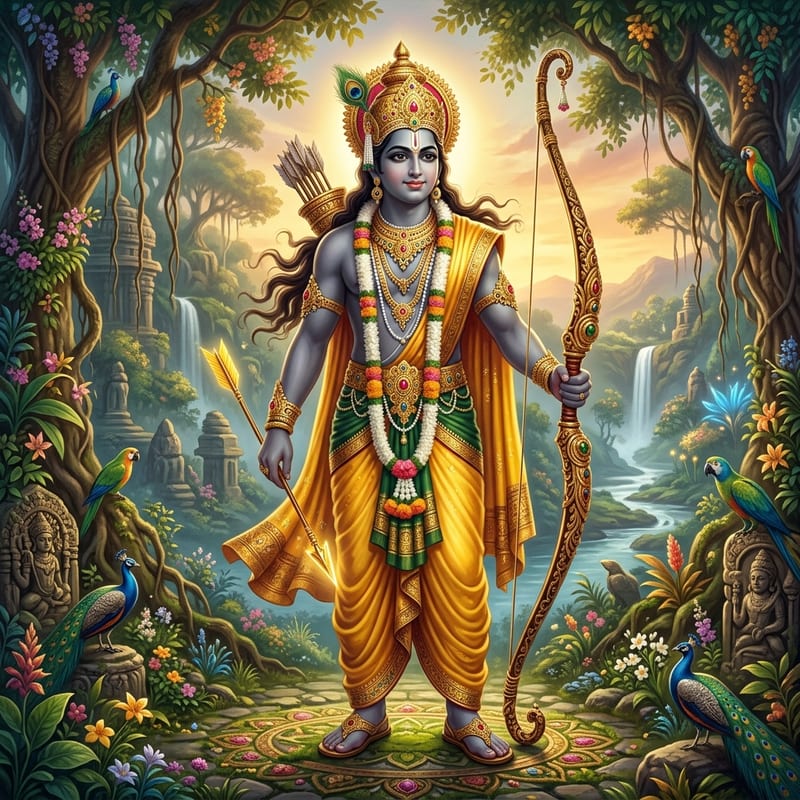
વિશુદ્ધં પરં સચ્ચિદાનન્દરૂપં
ગુણાધારમાધારહીનં વરેણ્યમ્ ।
મહાન્તં વિભાન્તં ગુહાન્તં ગુણાન્તં
સુખાન્તં સ્વયં ધામ રામં પ્રપદ્યે ॥ 1 ॥
ગુણાધારમાધારહીનં વરેણ્યમ્ ।
મહાન્તં વિભાન્તં ગુહાન્તં ગુણાન્તં
સુખાન્તં સ્વયં ધામ રામં પ્રપદ્યે ॥ 1 ॥
- વિશુદ્ધમ્ (viśuddham)utterly pure
- પરમ્ (param)supreme
- સત્-ચિત્-આનન્દ-રૂપમ્ (sac-cid-ānanda-rūpam)whose form is being, awareness and bliss
- ગુણ-આધારમ્ (guṇādhāram)the ground on which every quality rests
- આધાર-હીનમ્ (ādhāra-hīnam)himself resting on nothing
- વરેણ્યમ્ (vareṇyam)most choiceworthy
- મહાન્તમ્ (mahāntam)vast
- વિભાન્તમ્ (vibhāntam)shining out
- ગુહાન્તમ્ (guhāntam)at the far end of the heart’s cave
- ગુણાન્તમ્ (guṇāntam)past where the qualities end
- સુખાન્તમ્ (sukhāntam)where happiness comes to rest
- સ્વયમ્ ધામ (svayaṃ dhāma)light in his own right
- રામમ્ (rāmam)Rāma
- પ્રપદ્યે (prapadye)I take refuge in
શિવં નિત્યમેકં વિભું તારકાખ્યં
સુખાકારમાકારશૂન્યં સુમાન્યમ્ ।
મહેશં કલેશં સુરેશં પરેશં
નરેશં નિરીશં મહીશં પ્રપદ્યે ॥ 2 ॥
સુખાકારમાકારશૂન્યં સુમાન્યમ્ ।
મહેશં કલેશં સુરેશં પરેશં
નરેશં નિરીશં મહીશં પ્રપદ્યે ॥ 2 ॥
- શિવમ્ (śivam)auspicious
- નિત્યમ્ (nityam)eternal
- એકમ્ (ekam)one
- વિભુમ્ (vibhum)all-pervading
- તારક-આખ્યમ્ (tārakākhyam)called Tāraka, the name that ferries one across
- સુખ-આકારમ્ (sukhākāram)whose shape is happiness
- આકાર-શૂન્યમ્ (ākāra-śūnyam)having no shape at all
- સુ-માન્યમ્ (su-mānyam)well worth honouring
- મહા-ઈશમ્ (maheśam)great lord
- કલ-ઈશમ્ (kaleśam)lord of time’s divisions
- સુર-ઈશમ્ (sureśam)lord of the gods
- પર-ઈશમ્ (pareśam)lord beyond them
- નર-ઈશમ્ (nareśam)lord of men
- નિર્-ઈશમ્ (nirīśam)having no lord above him
- મહી-ઈશમ્ (mahīśam)lord of the earth
- પ્રપદ્યે (prapadye)I take refuge in
યદાવર્ણયત્કર્ણમૂલેઽન્તકાલે
શિવો રામ રામેતિ રામેતિ કાશ્યામ્ ।
તદેકં પરં તારકબ્રહ્મરૂપં
ભજેઽહં ભજેઽહં ભજેઽહં ભજેઽહમ્ ॥ 3 ॥
શિવો રામ રામેતિ રામેતિ કાશ્યામ્ ।
તદેકં પરં તારકબ્રહ્મરૂપં
ભજેઽહં ભજેઽહં ભજેઽહં ભજેઽહમ્ ॥ 3 ॥
- યત્ (yat)that which
- આવર્ણયત્ (āvarṇayat)he tells over
- કર્ણ-મૂલે (karṇa-mūle)at the root of the ear
- અન્ત-કાલે (anta-kāle)at the last hour
- શિવઃ (śivaḥ)Śiva
- રામ રામ ઇતિ રામ ઇતિ (rāma rāma iti rāma iti)"Rāma, Rāma, Rāma"
- કાશ્યામ્ (kāśyām)in Kāśī
- તત્ એકમ્ (tad ekam)that one thing
- પરમ્ (param)supreme
- તારક-બ્રહ્મ-રૂપમ્ (tāraka-brahma-rūpam)the ferrying Brahman in bodily form
- ભજે અહમ્ (bhaje aham)I worship – said four times over, once for each utterance of the name above
મહારત્નપીઠે શુભે કલ્પમૂલે
સુખાસીનમાદિત્યકોટિપ્રકાશમ્ ।
સદા જાનકીલક્ષ્મણોપેતમેકં
સદા રામચન્દ્રં ભજેઽહં ભજેઽહમ્ ॥ 4 ॥
સુખાસીનમાદિત્યકોટિપ્રકાશમ્ ।
સદા જાનકીલક્ષ્મણોપેતમેકં
સદા રામચન્દ્રં ભજેઽહં ભજેઽહમ્ ॥ 4 ॥
- મહા-રત્ન-પીઠે (mahā-ratna-pīṭhe)on a throne of great jewels
- શુભે (śubhe)auspicious
- કલ્પ-મૂલે (kalpa-mūle)at the foot of the wishing-tree
- સુખ-આસીનમ્ (sukhāsīnam)seated at his ease
- આદિત્ય-કોટિ-પ્રકાશમ્ (āditya-koṭi-prakāśam)shining like ten million suns
- સદા (sadā)ever
- જાનકી-લક્ષ્મણ-ઉપેતમ્ (jānakī-lakṣmaṇopetam)attended by Jānakī and Lakṣmaṇa
- એકમ્ (ekam)the one
- સદા (sadā)always
- રામચન્દ્રમ્ (rāmacandram)Rāmacandra
- ભજે અહમ્ ભજે અહમ્ (bhaje’haṃ bhaje’ham)I worship, I worship
ક્વણદ્રત્નમઞ્જીરપાદારવિન્દં
લસન્મેખલાચારુપીતામ્બરાઢ્યમ્ ।
મહારત્નહારોલ્લસત્કૌસ્તુભાઙ્ગં
નદચ્ચઞ્ચરીમઞ્જરીલોલમાલમ્ ॥ 5 ॥
લસન્મેખલાચારુપીતામ્બરાઢ્યમ્ ।
મહારત્નહારોલ્લસત્કૌસ્તુભાઙ્ગં
નદચ્ચઞ્ચરીમઞ્જરીલોલમાલમ્ ॥ 5 ॥
- ક્વણત્-રત્ન-મઞ્જીર-પાદ-અરવિન્દમ્ (kvaṇad-ratna-mañjīra-pādāravindam)lotus feet in jewelled anklets that chime
- લસત્-મેખલા-ચારુ-પીત-અમ્બર-આઢ્યમ્ (lasan-mekhalā-cāru-pītāmbarāḍhyam)rich in a bright girdle and lovely yellow silk
- મહા-રત્ન-હાર-ઉલ્લસત્-કૌસ્તુભ-અઙ્ગમ્ (mahā-ratna-hārollasat-kaustubhāṅgam)his body agleam with a great jewelled necklace and the Kaustubha gem
- નદત્-ચઞ્ચરી-મઞ્જરી-લોલ-માલમ્ (nadac-cañcarī-mañjarī-lola-mālam)a swaying garland where humming bees move among the blossom-clusters
લસચ્ચન્દ્રિકાસ્મેરશોણાધરાભં
સમુદ્યત્પતઙ્ગેન્દુકોટિપ્રકાશમ્ ।
નમદ્બ્રહ્મરુદ્રાદિકોટીરરત્ન
સ્ફુરત્કાન્તિનીરાજનારાધિતાઙ્ઘ્રિમ્ ॥ 6 ॥
સમુદ્યત્પતઙ્ગેન્દુકોટિપ્રકાશમ્ ।
નમદ્બ્રહ્મરુદ્રાદિકોટીરરત્ન
સ્ફુરત્કાન્તિનીરાજનારાધિતાઙ્ઘ્રિમ્ ॥ 6 ॥
- લસત્-ચન્દ્રિકા-સ્મેર-શોણ-અધર-આભમ્ (lasac-candrikā-smera-śoṇādharābham)his red lower lip aglow with a smile like spreading moonlight
- સમુદ્યત્-પતઙ્ગ-ઇન્દુ-કોટિ-પ્રકાશમ્ (samudyat-pataṅgendu-koṭi-prakāśam)bright as ten million suns and moons rising at once
- નમત્-બ્રહ્મ-રુદ્ર-આદિ-કોટીર-રત્ન-સ્ફુરત્-કાન્તિ-નીરાજન-આરાધિત-અઙ્ઘ્રિમ્ (namad-brahma-rudrādi-koṭīra-ratna-sphurat-kānti-nīrājanārādhitāṅghrim)his feet worshipped with a lamp-offering made of the flashing light of the crown-jewels of Brahmā, Rudra and the rest as they bow
પુરઃ પ્રાઞ્જલીનાઞ્જનેયાદિભક્તાન્
સ્વચિન્મુદ્રયા ભદ્રયા બોધયન્તમ્ ।
ભજેઽહં ભજેઽહં સદા રામચન્દ્રં
ત્વદન્યં ન મન્યે ન મન્યે ન મન્યે ॥ 7 ॥
સ્વચિન્મુદ્રયા ભદ્રયા બોધયન્તમ્ ।
ભજેઽહં ભજેઽહં સદા રામચન્દ્રં
ત્વદન્યં ન મન્યે ન મન્યે ન મન્યે ॥ 7 ॥
- પુરઃ (puraḥ)before him
- પ્રાઞ્જલીન્ (prāñjalīn)their hands joined
- આઞ્જનેય-આદિ-ભક્તાન્ (āñjaneyādi-bhaktān)Āñjaneya and the other devotees
- સ્વ-ચિત્-મુદ્રયા (sva-cin-mudrayā)by his own sign of awareness
- ભદ્રયા (bhadrayā)auspicious
- બોધયન્તમ્ (bodhayantam)awakening them
- ભજે અહમ્ ભજે અહમ્ (bhaje’haṃ bhaje’ham)I worship, I worship
- સદા (sadā)always
- રામચન્દ્રમ્ (rāmacandram)Rāmacandra
- ત્વત્-અન્યમ્ (tvad-anyam)any other than you
- ન મન્યે ન મન્યે ન મન્યે (na manye na manye na manye)I do not own, I do not, I do not
યદા મત્સમીપં કૃતાન્તઃ સમેત્ય
પ્રચણ્ડપ્રકોપૈર્ભટૈર્ભીષયેન્મામ્ ।
તદાવિષ્કરોષિ ત્વદીયં સ્વરૂપં
સદાપત્પ્રણાશં સકોદણ્ડબાણમ્ ॥ 8 ॥
પ્રચણ્ડપ્રકોપૈર્ભટૈર્ભીષયેન્મામ્ ।
તદાવિષ્કરોષિ ત્વદીયં સ્વરૂપં
સદાપત્પ્રણાશં સકોદણ્ડબાણમ્ ॥ 8 ॥
- યદા (yadā)when
- મત્-સમીપમ્ (mat-samīpam)close to me
- કૃતાન્તઃ (kṛtāntaḥ)Death, the ender of things
- સમેત્ય (sametya)having come
- પ્રચણ્ડ-પ્રકોપૈઃ (pracaṇḍa-prakopaiḥ)their fury blazing
- ભટૈઃ (bhaṭaiḥ)with his henchmen
- ભીષયેત્ (bhīṣayet)would terrify
- મામ્ (mām)me
- તદા (tadā)then
- આવિષ્કરોષિ (āviṣkaroṣi)you make plain
- ત્વદીયમ્ સ્વરૂપમ્ (tvadīyaṃ svarūpam)that own form of yours
- સદા-આપદ્-પ્રણાશમ્ (sadāpat-praṇāśam)which is the undoing of calamity always
- સ-કોદણ્ડ-બાણમ્ (sa-kodaṇḍa-bāṇam)with the Kodaṇḍa bow and its arrow
નિજે માનસે મન્દિરે સન્નિધેહિ
પ્રસીદ પ્રસીદ પ્રભો રામચન્દ્ર ।
સસૌમિત્રિણા કૈકયીનન્દનેન
સ્વશક્ત્યાનુભક્ત્યા ચ સંસેવ્યમાન ॥ 9 ॥
પ્રસીદ પ્રસીદ પ્રભો રામચન્દ્ર ।
સસૌમિત્રિણા કૈકયીનન્દનેન
સ્વશક્ત્યાનુભક્ત્યા ચ સંસેવ્યમાન ॥ 9 ॥
- નિજે (nije)my own
- માનસે મન્દિરે (mānase mandire)in the temple that is the mind
- સન્નિધેહિ (sannidhehi)take your place
- પ્રસીદ પ્રસીદ (prasīda prasīda)be gracious, be gracious
- પ્રભો રામચન્દ્ર (prabho rāmacandra)O Lord Rāmacandra
- સ-સૌમિત્રિણા (sa-saumitriṇā)along with the son of Sumitrā
- કૈકયી-નન્દનેન (kaikayī-nandanena)with the gladdener of Kaikeyī, Bharata
- સ્વ-શક્ત્યા (sva-śaktyā)by your own power
- અનુભક્ત્યા (anubhaktyā)by devotion that follows after you
- ચ (ca)and
- સંસેવ્યમાન (saṃsevyamāna)O you who are so served
સ્વભક્તાગ્રગણ્યૈઃ કપીશૈર્મહીશૈ-
-રનીકૈરનેકૈશ્ચ રામ પ્રસીદ ।
નમસ્તે નમોઽસ્ત્વીશ રામ પ્રસીદ
પ્રશાધિ પ્રશાધિ પ્રકાશં પ્રભો મામ્ ॥ 10 ॥
-રનીકૈરનેકૈશ્ચ રામ પ્રસીદ ।
નમસ્તે નમોઽસ્ત્વીશ રામ પ્રસીદ
પ્રશાધિ પ્રશાધિ પ્રકાશં પ્રભો મામ્ ॥ 10 ॥
- સ્વ-ભક્ત-અગ્ર-ગણ્યૈઃ (sva-bhaktāgra-gaṇyaiḥ)with those counted first among your devotees
- કપિ-ઈશૈઃ (kapīśaiḥ)with the lords of the monkeys
- મહી-ઈશૈઃ (mahīśaiḥ)with the lords of the earth
- અનીકૈઃ (anīkaiḥ)with armies
- અનેકૈઃ (anekaiḥ)many
- ચ (ca)and
- રામ (rāma)O Rāma
- પ્રસીદ (prasīda)be gracious
- નમઃ તે (namas te)salutation to you
- નમઃ અસ્તુ (namaḥ astu)let there be salutation
- ઈશ (īśa)O Lord
- રામ (rāma)O Rāma
- પ્રસીદ (prasīda)be gracious
- પ્રશાધિ પ્રશાધિ (praśādhi praśādhi)give me your command, command me
- પ્રકાશમ્ (prakāśam)into the open light
- પ્રભો (prabho)O Master
- મામ્ (mām)me
ત્વમેવાસિ દૈવં પરં મે યદેકં
સુચૈતન્યમેતત્ત્વદન્યં ન મન્યે ।
યતોઽભૂદમેયં વિયદ્વાયુતેજો
જલોર્વ્યાદિકાર્યં ચરં ચાચરં ચ ॥ 11 ॥
સુચૈતન્યમેતત્ત્વદન્યં ન મન્યે ।
યતોઽભૂદમેયં વિયદ્વાયુતેજો
જલોર્વ્યાદિકાર્યં ચરં ચાચરં ચ ॥ 11 ॥
- ત્વમ્ એવ (tvam eva)you alone
- અસિ (asi)are
- દૈવમ્ (daivam)the divinity
- પરમ્ (param)supreme
- મે (me)mine
- યત્ એકમ્ (yad ekam)that one thing
- સુ-ચૈતન્યમ્ (su-caitanyam)pure awareness
- એતત્ (etat)this
- ત્વત્-અન્યમ્ (tvad-anyam)anything other than you
- ન મન્યે (na manye)I do not own
- યતઃ (yataḥ)from whom
- અભૂત્ (abhūt)came to be
- અમેયમ્ (ameyam)past all measuring
- વિયત્-વાયુ-તેજઃ-જલ-ઉર્વી-આદિ-કાર્યમ્ (viyad-vāyu-tejo-jalorvyādi-kāryam)everything made of space, wind, fire, water, earth and the rest
- ચરમ્ (caram)what moves
- ચ (ca)and
- અચરમ્ (acaram)what does not
- ચ (ca)and
નમઃ સચ્ચિદાનન્દરૂપાય તસ્મૈ
નમો દેવદેવાય રામાય તુભ્યમ્ ।
નમો જાનકીજીવિતેશાય તુભ્યં
નમઃ પુણ્ડરીકાયતાક્ષાય તુભ્યમ્ ॥ 12 ॥
નમો દેવદેવાય રામાય તુભ્યમ્ ।
નમો જાનકીજીવિતેશાય તુભ્યં
નમઃ પુણ્ડરીકાયતાક્ષાય તુભ્યમ્ ॥ 12 ॥
- નમઃ (namaḥ)salutation
- સત્-ચિત્-આનન્દ-રૂપાય (sac-cid-ānanda-rūpāya)to him whose form is being, awareness and bliss
- તસ્મૈ (tasmai)to that one
- નમઃ (namaḥ)salutation
- દેવ-દેવાય (deva-devāya)to the god of gods
- રામાય (rāmāya)to Rāma
- તુભ્યમ્ (tubhyam)to you
- નમઃ (namaḥ)salutation
- જાનકી-જીવિત-ઈશાય (jānakī-jīviteśāya)to the lord of Jānakī’s very life
- તુભ્યમ્ (tubhyam)to you
- નમઃ (namaḥ)salutation
- પુણ્ડરીક-આયત-અક્ષાય (puṇḍarīkāyatākṣāya)to him whose eyes are wide as white lotuses
- તુભ્યમ્ (tubhyam)to you
નમો ભક્તિયુક્તાનુરક્તાય તુભ્યં
નમઃ પુણ્યપુઞ્જૈકલભ્યાય તુભ્યમ્ ।
નમો વેદવેદ્યાય ચાદ્યાય પુંસે
નમઃ સુન્દરાયેન્દિરાવલ્લભાય ॥ 13 ॥
નમઃ પુણ્યપુઞ્જૈકલભ્યાય તુભ્યમ્ ।
નમો વેદવેદ્યાય ચાદ્યાય પુંસે
નમઃ સુન્દરાયેન્દિરાવલ્લભાય ॥ 13 ॥
- નમઃ (namaḥ)salutation
- ભક્તિ-યુક્ત-અનુરક્તાય (bhakti-yuktānuraktāya)to him who loves in return those who love him
- તુભ્યમ્ (tubhyam)to you
- નમઃ (namaḥ)salutation
- પુણ્ય-પુઞ્જ-એક-લભ્યાય (puṇya-puñjaika-labhyāya)to be had by nothing but a heaped-up store of merit
- તુભ્યમ્ (tubhyam)to you
- નમઃ (namaḥ)salutation
- વેદ-વેદ્યાય (veda-vedyāya)to him whom the Vedas exist to know
- ચ (ca)and
- આદ્યાય પુંસે (ādyāya puṃse)to the first Person
- નમઃ (namaḥ)salutation
- સુન્દરાય (sundarāya)to the beautiful one
- ઇન્દિરા-વલ્લભાય (indirā-vallabhāya)to the beloved of Indirā
નમો વિશ્વકર્ત્રે નમો વિશ્વહર્ત્રે
નમો વિશ્વભોક્ત્રે નમો વિશ્વમાત્રે ।
નમો વિશ્વનેત્રે નમો વિશ્વજેત્રે
નમો વિશ્વપિત્રે નમો વિશ્વમાત્રે ॥ 14 ॥
નમો વિશ્વભોક્ત્રે નમો વિશ્વમાત્રે ।
નમો વિશ્વનેત્રે નમો વિશ્વજેત્રે
નમો વિશ્વપિત્રે નમો વિશ્વમાત્રે ॥ 14 ॥
- નમઃ (namaḥ)salutation
- વિશ્વ-કર્ત્રે (viśva-kartre)to the maker of all
- નમઃ (namaḥ)salutation
- વિશ્વ-હર્ત્રે (viśva-hartre)to him who takes it all away
- નમઃ (namaḥ)salutation
- વિશ્વ-ભોક્ત્રે (viśva-bhoktre)to him who tastes it
- નમઃ (namaḥ)salutation
- વિશ્વ-માત્રે (viśva-mātre)to the whole measure of it
- નમઃ (namaḥ)salutation
- વિશ્વ-નેત્રે (viśva-netre)to the eye of all, and to its leader
- નમઃ (namaḥ)salutation
- વિશ્વ-જેત્રે (viśva-jetre)to its conqueror
- નમઃ (namaḥ)salutation
- વિશ્વ-પિત્રે (viśva-pitre)to the father of all
- નમઃ (namaḥ)salutation
- વિશ્વ-માત્રે (viśva-mātre)and to its mother – one written form serving twice, first as मात्रा "measure", here as मातृ "mother"
નમસ્તે નમસ્તે સમસ્તપ્રપઞ્ચ-
-પ્રભોગપ્રયોગપ્રમાણપ્રવીણ ।
મદીયં મનસ્ત્વત્પદદ્વન્દ્વસેવાં
વિધાતું પ્રવૃત્તં સુચૈતન્યસિદ્ધ્યૈ ॥ 15 ॥
-પ્રભોગપ્રયોગપ્રમાણપ્રવીણ ।
મદીયં મનસ્ત્વત્પદદ્વન્દ્વસેવાં
વિધાતું પ્રવૃત્તં સુચૈતન્યસિદ્ધ્યૈ ॥ 15 ॥
- નમઃ તે નમઃ તે (namas te namas te)salutation to you, salutation to you
- સમસ્ત-પ્રપઞ્ચ-પ્રભોગ-પ્રયોગ-પ્રમાણ-પ્રવીણ (samasta-prapañca-prabhoga-prayoga-pramāṇa-pravīṇa)O adept in the enjoyment, the employment and the measure of this whole spread-out world
- મદીયમ્ મનઃ (madīyaṃ manaḥ)this mind of mine
- ત્વત્-પદ-દ્વન્દ્વ-સેવામ્ (tvat-pada-dvandva-sevām)service at the pair of your feet
- વિધાતુમ્ (vidhātum)to perform
- પ્રવૃત્તમ્ (pravṛttam)has set out
- સુ-ચૈતન્ય-સિદ્ધ્યૈ (su-caitanya-siddhyai)for the winning of pure awareness
શિલાપિ ત્વદઙ્ઘ્રિક્ષમાસઙ્ગિરેણુ
પ્રસાદાદ્ધિ ચૈતન્યમાધત્ત રામ ।
નરસ્ત્વત્પદદ્વન્દ્વસેવાવિધાના-
-ત્સુચૈતન્યમેતીતિ કિં ચિત્રમત્ર ॥ 16 ॥
પ્રસાદાદ્ધિ ચૈતન્યમાધત્ત રામ ।
નરસ્ત્વત્પદદ્વન્દ્વસેવાવિધાના-
-ત્સુચૈતન્યમેતીતિ કિં ચિત્રમત્ર ॥ 16 ॥
- શિલા (śilā)a stone
- અપિ (api)even
- ત્વત્-અઙ્ઘ્રિ-ક્ષમા-સઙ્ગિ-રેણુ-પ્રસાદાત્ (tvad-aṅghri-kṣamā-saṅgi-reṇu-prasādāt)by the grace of the dust where your foot met the earth
- હિ (hi)indeed
- ચૈતન્યમ્ (caitanyam)awareness
- આધત્ત (ādhatta)took on
- રામ (rāma)O Rāma
- નરઃ (naraḥ)a man
- ત્વત્-પદ-દ્વન્દ્વ-સેવા-વિધાનાત્ (tvat-pada-dvandva-sevā-vidhānāt)by keeping up service at the pair of your feet
- સુ-ચૈતન્યમ્ (su-caitanyam)pure awareness
- એતિ (eti)reaches
- ઇતિ (iti)that being so
- કિમ્ ચિત્રમ્ અત્ર (kiṃ citram atra)where is the wonder in it
પવિત્રં ચરિત્રં વિચિત્રં ત્વદીયં
નરા યે સ્મરન્ત્યન્વહં રામચન્દ્ર ।
ભવન્તં ભવાન્તં ભરન્તં ભજન્તો
લભન્તે કૃતાન્તં ન પશ્યન્ત્યતોઽન્તે ॥ 17 ॥
નરા યે સ્મરન્ત્યન્વહં રામચન્દ્ર ।
ભવન્તં ભવાન્તં ભરન્તં ભજન્તો
લભન્તે કૃતાન્તં ન પશ્યન્ત્યતોઽન્તે ॥ 17 ॥
- પવિત્રમ્ (pavitram)hallowing
- ચરિત્રમ્ (caritram)the story of your deeds
- વિચિત્રમ્ (vicitram)full of wonders
- ત્વદીયમ્ (tvadīyam)yours
- નરાઃ યે (narā ye)those people who
- સ્મરન્તિ (smaranti)call it to mind
- અન્વહમ્ (anvaham)day after day
- રામચન્દ્ર (rāmacandra)O Rāmacandra
- ભવન્તમ્ (bhavantam)you
- ભવ-અન્તમ્ (bhavāntam)who are the end of becoming
- ભરન્તમ્ (bharantam)who bear them up
- ભજન્તઃ (bhajantaḥ)worshipping
- લભન્તે (labhante)they win you
- કૃતાન્તમ્ (kṛtāntam)Death
- ન પશ્યન્તિ (na paśyanti)they never set eyes on
- અતઃ (ataḥ)and therefore
- અન્તે (ante)at the end
સ પુણ્યઃ સ ગણ્યઃ શરણ્યો મમાયં
નરો વેદ યો દેવચૂડામણિં ત્વામ્ ।
સદાકારમેકં ચિદાનન્દરૂપં
મનોવાગગમ્યં પરં ધામ રામ ॥ 18 ॥
નરો વેદ યો દેવચૂડામણિં ત્વામ્ ।
સદાકારમેકં ચિદાનન્દરૂપં
મનોવાગગમ્યં પરં ધામ રામ ॥ 18 ॥
- સઃ પુણ્યઃ (sa puṇyaḥ)he is holy
- સઃ ગણ્યઃ (sa gaṇyaḥ)he is one to be counted
- શરણ્યઃ (śaraṇyaḥ)a refuge
- મમ (mama)to me
- અયમ્ (ayam)this one
- નરઃ (naraḥ)the man
- વેદ (veda)who knows
- યઃ (yaḥ)who
- દેવ-ચૂડામણિમ્ (deva-cūḍāmaṇim)the crest-jewel of the gods
- ત્વામ્ (tvām)you
- સદા-આકારમ્ (sadākāram)of unchanging form
- એકમ્ (ekam)one
- ચિત્-આનન્દ-રૂપમ્ (cid-ānanda-rūpam)whose form is awareness and bliss
- મનઃ-વાક્-અગમ્યમ્ (mano-vāg-agamyam)where neither mind nor speech arrives
- પરમ્ ધામ (paraṃ dhāma)the highest abode
- રામ (rāma)O Rāma
પ્રચણ્ડપ્રતાપપ્રભાવાભિભૂત-
-પ્રભૂતારિવીર પ્રભો રામચન્દ્ર ।
બલં તે કથં વર્ણ્યતેઽતીવ બાલ્યે
યતોઽખણ્ડિ ચણ્ડીશકોદણ્ડદણ્ડમ્ ॥ 19 ॥
-પ્રભૂતારિવીર પ્રભો રામચન્દ્ર ।
બલં તે કથં વર્ણ્યતેઽતીવ બાલ્યે
યતોઽખણ્ડિ ચણ્ડીશકોદણ્ડદણ્ડમ્ ॥ 19 ॥
- પ્રચણ્ડ-પ્રતાપ-પ્રભાવ-અભિભૂત-પ્રભૂત-અરિ-વીર (pracaṇḍa-pratāpa-prabhāvābhibhūta-prabhūtāri-vīra)O hero by the force of whose fierce blazing might a host of foes was borne down
- પ્રભો રામચન્દ્ર (prabho rāmacandra)O Lord Rāmacandra
- બલમ્ તે (balaṃ te)your strength
- કથમ્ (katham)how
- વર્ણ્યતે (varṇyate)is it to be told
- અતીવ બાલ્યે (atīva bālye)in your very boyhood
- યતઃ (yataḥ)whereby
- અખણ્ડિ (akhaṇḍi)was snapped
- ચણ્ડી-ઈશ-કોદણ્ડ-દણ્ડમ્ (caṇḍīśa-kodaṇḍa-daṇḍam)the staff of the bow of Caṇḍī’s lord, Śiva
દશગ્રીવમુગ્રં સપુત્રં સમિત્રં
સરિદ્દુર્ગમધ્યસ્થરક્ષોગણેશમ્ ।
ભવન્તં વિના રામ વીરો નરો વા
સુરો વાઽમરો વા જયેત્કસ્ત્રિલોક્યામ્ ॥ 20 ॥
સરિદ્દુર્ગમધ્યસ્થરક્ષોગણેશમ્ ।
ભવન્તં વિના રામ વીરો નરો વા
સુરો વાઽમરો વા જયેત્કસ્ત્રિલોક્યામ્ ॥ 20 ॥
- દશ-ગ્રીવમ્ (daśa-grīvam)the ten-necked one
- ઉગ્રમ્ (ugram)terrible
- સ-પુત્રમ્ (sa-putram)with his sons
- સ-મિત્રમ્ (sa-mitram)with his allies
- સરિત્-દુર્ગ-મધ્ય-સ્થ-રક્ષઃ-ગણ-ઈશમ્ (sarid-durga-madhya-stha-rakṣo-gaṇeśam)lord of the rākṣasa hosts, set in a stronghold ringed about by water
- ભવન્તમ્ વિના (bhavantaṃ vinā)apart from you
- રામ (rāma)O Rāma
- વીરઃ (vīraḥ)what hero
- નરઃ (naraḥ)man
- વા (vā)or
- સુરઃ (suraḥ)god
- વા (vā)or
- અમરઃ (amaraḥ)deathless one
- વા (vā)or
- જયેત્ (jayet)could have conquered him
- કઃ (kaḥ)who
- ત્રિલોક્યામ્ (trilokyām)in the three worlds
સદા રામ રામેતિ રામામૃતં તે
સદારામમાનન્દનિષ્યન્દકન્દમ્ ।
પિબન્તં નમન્તં સુદન્તં હસન્તં
હનૂમન્તમન્તર્ભજે તં નિતાન્તમ્ ॥ 21 ॥
સદારામમાનન્દનિષ્યન્દકન્દમ્ ।
પિબન્તં નમન્તં સુદન્તં હસન્તં
હનૂમન્તમન્તર્ભજે તં નિતાન્તમ્ ॥ 21 ॥
- સદા (sadā)always
- રામ રામ ઇતિ (rāma rāma iti)"Rāma, Rāma"
- રામ-અમૃતમ્ (rāmāmṛtam)that nectar which is the name Rāma
- તે (te)yours
- સદા-રામમ્ (sadā-rāmam)a delight that never ends
- આનન્દ-નિષ્યન્દ-કન્દમ્ (ānanda-niṣyanda-kandam)the root from which bliss wells up
- પિબન્તમ્ (pibantam)drinking it
- નમન્તમ્ (namantam)bowing
- સુ-દન્તમ્ (su-dantam)fine of tooth
- હસન્તમ્ (hasantam)smiling
- હનૂમન્તમ્ (hanūmantam)Hanumān
- અન્તઃ (antaḥ)within
- ભજે (bhaje)I worship
- તમ્ (tam)him
- નિતાન્તમ્ (nitāntam)with all my heart
સદા રામ રામેતિ રામામૃતં તે
સદારામમાનન્દનિષ્યન્દકન્દમ્ ।
પિબન્નન્વહં નન્વહં નૈવ મૃત્યો-
-ર્બિભેમિ પ્રસાદાદસાદાત્તવૈવ ॥ 22 ॥
સદારામમાનન્દનિષ્યન્દકન્દમ્ ।
પિબન્નન્વહં નન્વહં નૈવ મૃત્યો-
-ર્બિભેમિ પ્રસાદાદસાદાત્તવૈવ ॥ 22 ॥
- સદા (sadā)always
- રામ રામ ઇતિ (rāma rāma iti)"Rāma, Rāma"
- રામ-અમૃતમ્ (rāmāmṛtam)that nectar which is the name Rāma
- તે (te)yours
- સદા-રામમ્ (sadā-rāmam)a delight that never ends
- આનન્દ-નિષ્યન્દ-કન્દમ્ (ānanda-niṣyanda-kandam)the root from which bliss wells up
- પિબન્ (piban)drinking it
- અન્વહમ્ (anvaham)day after day
- નનુ (nanu)surely
- અહમ્ (aham)I
- ન એવ (naiva)not in the least
- મૃત્યોઃ (mṛtyoḥ)of Death
- બિભેમિ (bibhemi)am I afraid
- પ્રસાદાત્ (prasādāt)by the grace
- અસાદાત્ (asādāt)unfailing (printed thus
- the word is not standard and the reading is uncertain)
- તવ એવ (tavaiva)of you and no other
અસીતાસમેતૈરકોદણ્ડભૂષૈ-
-રસૌમિત્રિવન્દ્યૈરચણ્ડપ્રતાપૈઃ ।
અલઙ્કેશકાલૈરસુગ્રીવમિત્રૈ-
-રરામાભિધેયૈરલં દૈવતૈર્નઃ ॥ 23 ॥
-રસૌમિત્રિવન્દ્યૈરચણ્ડપ્રતાપૈઃ ।
અલઙ્કેશકાલૈરસુગ્રીવમિત્રૈ-
-રરામાભિધેયૈરલં દૈવતૈર્નઃ ॥ 23 ॥
- અ-સીતા-સમેતૈઃ (a-sītā-sametaiḥ)with those not joined to Sītā
- અ-કોદણ્ડ-ભૂષૈઃ (a-kodaṇḍa-bhūṣaiḥ)not wearing the Kodaṇḍa bow for ornament
- અ-સૌમિત્રિ-વન્દ્યૈઃ (a-saumitri-vandyaiḥ)to whom Sumitrā’s son does not bow
- અ-ચણ્ડ-પ્રતાપૈઃ (a-caṇḍa-pratāpaiḥ)whose blaze is not fierce
- અ-લઙ્કા-ઈશ-કાલૈઃ (a-laṅkeśa-kālaiḥ)who are no Death to the lord of Laṅkā
- અ-સુગ્રીવ-મિત્રૈઃ (a-sugrīva-mitraiḥ)no friends to Sugrīva
- અ-રામ-અભિધેયૈઃ (a-rāmābhidheyaiḥ)not to be called by the name Rāma
- અલમ્ (alam)we have had enough
- દૈવતૈઃ (daivataiḥ)of such gods
- નઃ (naḥ)for us
અવીરાસનસ્થૈરચિન્મુદ્રિકાઢ્યૈ-
-રભક્તાઞ્જનેયાદિતત્ત્વપ્રકાશૈઃ ।
અમન્દારમૂલૈરમન્દારમાલૈ-
-રરામાભિધેયૈરલં દૈવતૈર્નઃ ॥ 24 ॥
-રભક્તાઞ્જનેયાદિતત્ત્વપ્રકાશૈઃ ।
અમન્દારમૂલૈરમન્દારમાલૈ-
-રરામાભિધેયૈરલં દૈવતૈર્નઃ ॥ 24 ॥
- અ-વીર-આસન-સ્થૈઃ (a-vīrāsana-sthaiḥ)not seated in the hero’s posture
- અ-ચિત્-મુદ્રિકા-આઢ્યૈઃ (a-cin-mudrikāḍhyaiḥ)not graced with the sign of awareness
- અ-ભક્ત-આઞ્જનેય-આદિ-તત્ત્વ-પ્રકાશૈઃ (a-bhaktāñjaneyādi-tattva-prakāśaiḥ)who light up the truth for no Āñjaneya and no other devotee
- અ-મન્દાર-મૂલૈઃ (a-mandāra-mūlaiḥ)not at the foot of the mandāra tree
- અ-મન્દાર-માલૈઃ (a-mandāra-mālaiḥ)not garlanded with mandāra blossom
- અ-રામ-અભિધેયૈઃ (a-rāmābhidheyaiḥ)not to be called by the name Rāma
- અલમ્ (alam)we have had enough
- દૈવતૈઃ (daivataiḥ)of such gods
- નઃ (naḥ)for us
અસિન્ધુપ્રકોપૈરવન્દ્યપ્રતાપૈ-
-રબન્ધુપ્રયાણૈરમન્દસ્મિતાઢ્યૈઃ ।
અદણ્ડપ્રવાસૈરખણ્ડપ્રબોધૈ-
-રરામાભિધેયૈરલં દૈવતૈર્નઃ ॥ 25 ॥
-રબન્ધુપ્રયાણૈરમન્દસ્મિતાઢ્યૈઃ ।
અદણ્ડપ્રવાસૈરખણ્ડપ્રબોધૈ-
-રરામાભિધેયૈરલં દૈવતૈર્નઃ ॥ 25 ॥
- અ-સિન્ધુ-પ્રકોપૈઃ (a-sindhu-prakopaiḥ)who never raised their wrath against the sea
- અ-વન્દ્ય-પ્રતાપૈઃ (a-vandya-pratāpaiḥ)whose might is not to be revered
- અ-બન્ધુ-પ્રયાણૈઃ (a-bandhu-prayāṇaiḥ)who set out on no journey with a brother
- અ-મન્દ-સ્મિત-આઢ્યૈઃ (a-manda-smitāḍhyaiḥ)not rich in a gentle smile
- અ-દણ્ડ-પ્રવાસૈઃ (a-daṇḍa-pravāsaiḥ)whose exile was no sentence borne
- અ-ખણ્ડ-પ્રબોધૈઃ (a-khaṇḍa-prabodhaiḥ)whose waking is not entire – the verse’s running privative अ- falls here on a word that already reads "unbroken", so the sense is carried by the pattern rather than by the compound
- અ-રામ-અભિધેયૈઃ (a-rāmābhidheyaiḥ)not to be called by the name Rāma
- અલમ્ (alam)we have had enough
- દૈવતૈઃ (daivataiḥ)of such gods
- નઃ (naḥ)for us
હરે રામ સીતાપતે રાવણારે
ખરારે મુરારેઽસુરારે પરેતિ ।
લપન્તં નયન્તં સદાકાલમેવં
સમાલોકયાલોકયાશેષબન્ધો ॥ 26 ॥
ખરારે મુરારેઽસુરારે પરેતિ ।
લપન્તં નયન્તં સદાકાલમેવં
સમાલોકયાલોકયાશેષબન્ધો ॥ 26 ॥
- હરે (hare)O Hari
- રામ (rāma)O Rāma
- સીતા-પતે (sītā-pate)O husband of Sītā
- રાવણ-અરે (rāvaṇāre)O foe of Rāvaṇa
- ખર-અરે (kharāre)O foe of Khara
- મુર-અરે (murāre)O foe of Mura
- અસુર-અરે (asurāre)O foe of the asuras
- પર (para)O supreme one
- ઇતિ (iti)so
- લપન્તમ્ (lapantam)murmuring
- નયન્તમ્ (nayantam)passing
- સદા-કાલમ્ (sadā-kālam)all his time
- એવમ્ (evam)in this way
- સમાલોકય (samālokaya)look upon him
- આલોકય (ālokaya)look
- અશેષ-બન્ધો (aśeṣa-bandho)O kinsman of every creature
નમસ્તે સુમિત્રાસુપુત્રાભિવન્દ્ય
નમસ્તે સદા કૈકયીનન્દનેડ્ય ।
નમસ્તે સદા વાનરાધીશવન્દ્ય
નમસ્તે નમસ્તે સદા રામચન્દ્ર ॥ 27 ॥
નમસ્તે સદા કૈકયીનન્દનેડ્ય ।
નમસ્તે સદા વાનરાધીશવન્દ્ય
નમસ્તે નમસ્તે સદા રામચન્દ્ર ॥ 27 ॥
- નમઃ તે (namas te)salutation to you
- સુમિત્રા-સુ-પુત્ર-અભિવન્દ્ય (sumitrā-su-putrābhivandya)O you whom Sumitrā’s good son reveres
- નમઃ તે (namas te)salutation to you
- સદા (sadā)always
- કૈકયી-નન્દન-ઈડ્ય (kaikayī-nandaneḍya)O you whom Kaikeyī’s son extols
- નમઃ તે (namas te)salutation to you
- સદા (sadā)always
- વાનર-અધીશ-વન્દ્ય (vānarādhīśa-vandya)O you whom the overlord of the monkeys honours
- નમઃ તે નમઃ તે (namas te namas te)salutation, salutation to you
- સદા (sadā)always
- રામચન્દ્ર (rāmacandra)O Rāmacandra
પ્રસીદ પ્રસીદ પ્રચણ્ડપ્રતાપ
પ્રસીદ પ્રસીદ પ્રચણ્ડારિકાલ ।
પ્રસીદ પ્રસીદ પ્રપન્નાનુકમ્પિન્
પ્રસીદ પ્રસીદ પ્રભો રામચન્દ્ર ॥ 28 ॥
પ્રસીદ પ્રસીદ પ્રચણ્ડારિકાલ ।
પ્રસીદ પ્રસીદ પ્રપન્નાનુકમ્પિન્
પ્રસીદ પ્રસીદ પ્રભો રામચન્દ્ર ॥ 28 ॥
- પ્રસીદ પ્રસીદ (prasīda prasīda)be gracious, be gracious
- પ્રચણ્ડ-પ્રતાપ (pracaṇḍa-pratāpa)O you of fierce blazing might
- પ્રસીદ પ્રસીદ (prasīda prasīda)be gracious, be gracious
- પ્રચણ્ડ-અરિ-કાલ (pracaṇḍāri-kāla)O Death to the fiercest of foes
- પ્રસીદ પ્રસીદ (prasīda prasīda)be gracious, be gracious
- પ્રપન્ન-અનુકમ્પિન્ (prapannānukampin)O you who feel for those who have surrendered
- પ્રસીદ પ્રસીદ (prasīda prasīda)be gracious, be gracious
- પ્રભો રામચન્દ્ર (prabho rāmacandra)O Lord Rāmacandra
ભુજઙ્ગપ્રયાતં પરં વેદસારં
મુદા રામચન્દ્રસ્ય ભક્ત્યા ચ નિત્યમ્ ।
પઠન્સન્તતં ચિન્તયન્સ્વાન્તરઙ્ગે
સ એવ સ્વયં રામચન્દ્રઃ સ ધન્યઃ ॥ 29 ॥
મુદા રામચન્દ્રસ્ય ભક્ત્યા ચ નિત્યમ્ ।
પઠન્સન્તતં ચિન્તયન્સ્વાન્તરઙ્ગે
સ એવ સ્વયં રામચન્દ્રઃ સ ધન્યઃ ॥ 29 ॥
- ભુજઙ્ગ-પ્રયાતમ્ (bhujaṅga-prayātam)this hymn in the bhujaṅgaprayāta metre
- પરમ્ (param)supreme
- વેદ-સારમ્ (veda-sāram)the marrow of the Vedas
- મુદા (mudā)with gladness
- રામચન્દ્રસ્ય (rāmacandrasya)of Rāmacandra
- ભક્ત્યા (bhaktyā)with devotion
- ચ (ca)and
- નિત્યમ્ (nityam)day by day
- પઠન્ (paṭhan)reciting
- સન્તતમ્ (santatam)without a break
- ચિન્તયન્ (cintayan)pondering it
- સ્વ-અન્તરઙ્ગે (svāntaraṅge)in his own inmost part
- સઃ એવ (sa eva)he himself
- સ્વયમ્ (svayam)in his own person
- રામચન્દ્રઃ (rāmacandraḥ)is Rāmacandra
- સઃ ધન્યઃ (sa dhanyaḥ)blessed is that man
ઇતિ શ્રીમચ્છઙ્કરાચાર્ય કૃતં શ્રી રામ ભુજઙ્ગપ્રયાત સ્તોત્રમ્ ।