
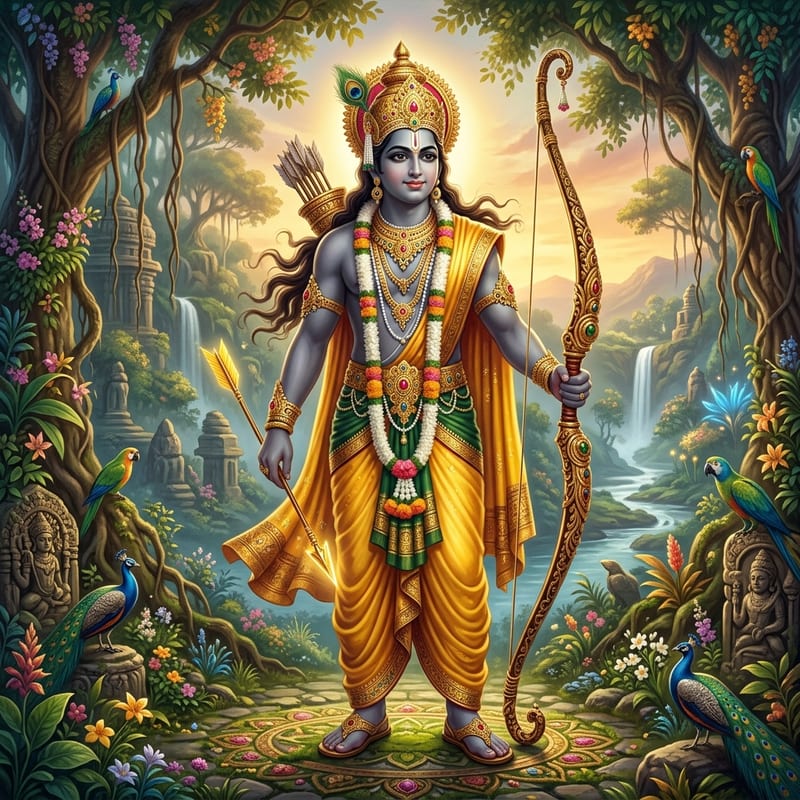
viśuddhaṃ paraṃ saccidānandarūpaṃ
guṇādhāramādhārahīnaṃ vareṇyam |
mahāntaṃ vibhāntaṃ guhāntaṃ guṇāntaṃ
sukhāntaṃ svayaṃ dhāma rāmaṃ prapadye || 1 ||
guṇādhāramādhārahīnaṃ vareṇyam |
mahāntaṃ vibhāntaṃ guhāntaṃ guṇāntaṃ
sukhāntaṃ svayaṃ dhāma rāmaṃ prapadye || 1 ||
- viśuddhamutterly pure
- paramsupreme
- sat-cit-ānanda-sac-cid-ānanda-rūpamwhose form is being, awareness and bliss
- guṇa-guṇādhāramthe ground on which every quality rests
- ādhāra-ādhāra-hīnamhimself resting on nothing
- vareṇyammost choiceworthy
- mahāntamvast
- vibhāntamshining out
- guhāntamat the far end of the heart’s cave
- guṇāntampast where the qualities end
- sukhāntamwhere happiness comes to rest
- svayaṃ dhāmalight in his own right
- rāmamRāma
- prapadyeI take refuge in
śivaṃ nityamekaṃ vibhuṃ tārakākhyaṃ
sukhākāramākāraśūnyaṃ sumānyam |
maheśaṃ kaleśaṃ sureśaṃ pareśaṃ
nareśaṃ nirīśaṃ mahīśaṃ prapadye || 2 ||
sukhākāramākāraśūnyaṃ sumānyam |
maheśaṃ kaleśaṃ sureśaṃ pareśaṃ
nareśaṃ nirīśaṃ mahīśaṃ prapadye || 2 ||
- śivamauspicious
- nityameternal
- ekamone
- vibhumall-pervading
- tāraka-tārakākhyamcalled Tāraka, the name that ferries one across
- sukha-sukhākāramwhose shape is happiness
- ākāra-ākāra-śūnyamhaving no shape at all
- su-su-mānyamwell worth honouring
- mahā-maheśamgreat lord
- kala-kaleśamlord of time’s divisions
- sura-sureśamlord of the gods
- para-pareśamlord beyond them
- nara-nareśamlord of men
- nir-nirīśamhaving no lord above him
- mahī-mahīśamlord of the earth
- prapadyeI take refuge in
yadāvarṇayatkarṇamūle'ntakāle
śivo rāma rāmeti rāmeti kāśyām |
tadekaṃ paraṃ tārakabrahmarūpaṃ
bhaje'haṃ bhaje'haṃ bhaje'haṃ bhaje'ham || 3 ||
śivo rāma rāmeti rāmeti kāśyām |
tadekaṃ paraṃ tārakabrahmarūpaṃ
bhaje'haṃ bhaje'haṃ bhaje'haṃ bhaje'ham || 3 ||
- yatthat which
- āvarṇayathe tells over
- karṇa-karṇa-mūleat the root of the ear
- anta-anta-kāleat the last hour
- śivaḥŚiva
- rāma rāma iti rāma iti"Rāma, Rāma, Rāma"
- kāśyāmin Kāśī
- tad ekamthat one thing
- paramsupreme
- tāraka-brahma-tāraka-brahma-rūpamthe ferrying Brahman in bodily form
- bhaje ahamI worship – said four times over, once for each utterance of the name above
mahāratnapīṭhe śubhe kalpamūle
sukhāsīnamādityakoṭiprakāśam |
sadā jānakīlakṣmaṇopetamekaṃ
sadā rāmacandraṃ bhaje'haṃ bhaje'ham || 4 ||
sukhāsīnamādityakoṭiprakāśam |
sadā jānakīlakṣmaṇopetamekaṃ
sadā rāmacandraṃ bhaje'haṃ bhaje'ham || 4 ||
- mahā-ratna-mahā-ratna-pīṭheon a throne of great jewels
- śubheauspicious
- kalpa-kalpa-mūleat the foot of the wishing-tree
- sukha-sukhāsīnamseated at his ease
- āditya-koṭi-āditya-koṭi-prakāśamshining like ten million suns
- sadāever
- jānakī-lakṣmaṇa-jānakī-lakṣmaṇopetamattended by Jānakī and Lakṣmaṇa
- ekamthe one
- sadāalways
- rāmacandramRāmacandra
- bhaje’haṃ bhaje’hamI worship, I worship
kvaṇadratnamañjīrapādāravindaṃ
lasanmekhalācārupītāmbarāḍhyam |
mahāratnahārollasatkaustubhāṅgaṃ
nadaccañcarīmañjarīlolamālam || 5 ||
lasanmekhalācārupītāmbarāḍhyam |
mahāratnahārollasatkaustubhāṅgaṃ
nadaccañcarīmañjarīlolamālam || 5 ||
- kvaṇat-ratna-mañjīra-pāda-kvaṇad-ratna-mañjīra-pādāravindamlotus feet in jewelled anklets that chime
- lasat-mekhalā-cāru-pīta-ambara-lasan-mekhalā-cāru-pītāmbarāḍhyamrich in a bright girdle and lovely yellow silk
- mahā-ratna-hāra-ullasat-kaustubha-mahā-ratna-hārollasat-kaustubhāṅgamhis body agleam with a great jewelled necklace and the Kaustubha gem
- nadat-cañcarī-mañjarī-lola-nadac-cañcarī-mañjarī-lola-mālama swaying garland where humming bees move among the blossom-clusters
lasaccandrikāsmeraśoṇādharābhaṃ
samudyatpataṅgendukoṭiprakāśam |
namadbrahmarudrādikoṭīraratna
sphuratkāntinīrājanārādhitāṅghrim || 6 ||
samudyatpataṅgendukoṭiprakāśam |
namadbrahmarudrādikoṭīraratna
sphuratkāntinīrājanārādhitāṅghrim || 6 ||
- lasat-candrikā-smera-śoṇa-adhara-lasac-candrikā-smera-śoṇādharābhamhis red lower lip aglow with a smile like spreading moonlight
- samudyat-pataṅga-indu-koṭi-samudyat-pataṅgendu-koṭi-prakāśambright as ten million suns and moons rising at once
- namat-brahma-rudra-ādi-koṭīra-ratna-sphurat-kānti-nīrājana-ārādhita-namad-brahma-rudrādi-koṭīra-ratna-sphurat-kānti-nīrājanārādhitāṅghrimhis feet worshipped with a lamp-offering made of the flashing light of the crown-jewels of Brahmā, Rudra and the rest as they bow
puraḥ prāñjalīnāñjaneyādibhaktān
svacinmudrayā bhadrayā bodhayantam |
bhaje'haṃ bhaje'haṃ sadā rāmacandraṃ
tvadanyaṃ na manye na manye na manye || 7 ||
svacinmudrayā bhadrayā bodhayantam |
bhaje'haṃ bhaje'haṃ sadā rāmacandraṃ
tvadanyaṃ na manye na manye na manye || 7 ||
- puraḥbefore him
- prāñjalīntheir hands joined
- āñjaneya-ādi-āñjaneyādi-bhaktānĀñjaneya and the other devotees
- sva-cit-sva-cin-mudrayāby his own sign of awareness
- bhadrayāauspicious
- bodhayantamawakening them
- bhaje’haṃ bhaje’hamI worship, I worship
- sadāalways
- rāmacandramRāmacandra
- tvat-tvad-anyamany other than you
- na manye na manye na manyeI do not own, I do not, I do not
yadā matsamīpaṃ kṛtāntaḥ sametya
pracaṇḍaprakopairbhaṭairbhīṣayenmām |
tadāviṣkaroṣi tvadīyaṃ svarūpaṃ
sadāpatpraṇāśaṃ sakodaṇḍabāṇam || 8 ||
pracaṇḍaprakopairbhaṭairbhīṣayenmām |
tadāviṣkaroṣi tvadīyaṃ svarūpaṃ
sadāpatpraṇāśaṃ sakodaṇḍabāṇam || 8 ||
- yadāwhen
- mat-mat-samīpamclose to me
- kṛtāntaḥDeath, the ender of things
- sametyahaving come
- pracaṇḍa-pracaṇḍa-prakopaiḥtheir fury blazing
- bhaṭaiḥwith his henchmen
- bhīṣayetwould terrify
- māmme
- tadāthen
- āviṣkaroṣiyou make plain
- tvadīyaṃ svarūpamthat own form of yours
- sadā-āpad-sadāpat-praṇāśamwhich is the undoing of calamity always
- sa-kodaṇḍa-sa-kodaṇḍa-bāṇamwith the Kodaṇḍa bow and its arrow
nije mānase mandire sannidhehi
prasīda prasīda prabho rāmacandra |
sasaumitriṇā kaikayīnandanena
svaśaktyānubhaktyā ca saṃsevyamāna || 9 ||
prasīda prasīda prabho rāmacandra |
sasaumitriṇā kaikayīnandanena
svaśaktyānubhaktyā ca saṃsevyamāna || 9 ||
- nijemy own
- mānase mandirein the temple that is the mind
- sannidhehitake your place
- prasīda prasīdabe gracious, be gracious
- prabho rāmacandraO Lord Rāmacandra
- sa-sa-saumitriṇāalong with the son of Sumitrā
- kaikayī-kaikayī-nandanenawith the gladdener of Kaikeyī, Bharata
- sva-sva-śaktyāby your own power
- anubhaktyāby devotion that follows after you
- caand
- saṃsevyamānaO you who are so served
svabhaktāgragaṇyaiḥ kapīśairmahīśai-
-ranīkairanekaiśca rāma prasīda |
namaste namo'stvīśa rāma prasīda
praśādhi praśādhi prakāśaṃ prabho mām || 10 ||
-ranīkairanekaiśca rāma prasīda |
namaste namo'stvīśa rāma prasīda
praśādhi praśādhi prakāśaṃ prabho mām || 10 ||
- sva-bhakta-agra-sva-bhaktāgra-gaṇyaiḥwith those counted first among your devotees
- kapi-kapīśaiḥwith the lords of the monkeys
- mahī-mahīśaiḥwith the lords of the earth
- anīkaiḥwith armies
- anekaiḥmany
- caand
- rāmaO Rāma
- prasīdabe gracious
- namas tesalutation to you
- namaḥ astulet there be salutation
- īśaO Lord
- rāmaO Rāma
- prasīdabe gracious
- praśādhi praśādhigive me your command, command me
- prakāśaminto the open light
- prabhoO Master
- māmme
tvamevāsi daivaṃ paraṃ me yadekaṃ
sucaitanyametattvadanyaṃ na manye |
yato'bhūdameyaṃ viyadvāyutejo
jalorvyādikāryaṃ caraṃ cācaraṃ ca || 11 ||
sucaitanyametattvadanyaṃ na manye |
yato'bhūdameyaṃ viyadvāyutejo
jalorvyādikāryaṃ caraṃ cācaraṃ ca || 11 ||
- tvam evayou alone
- asiare
- daivamthe divinity
- paramsupreme
- memine
- yad ekamthat one thing
- su-su-caitanyampure awareness
- etatthis
- tvat-tvad-anyamanything other than you
- na manyeI do not own
- yataḥfrom whom
- abhūtcame to be
- ameyampast all measuring
- viyat-vāyu-tejaḥ-jala-urvī-ādi-viyad-vāyu-tejo-jalorvyādi-kāryameverything made of space, wind, fire, water, earth and the rest
- caramwhat moves
- caand
- acaramwhat does not
- caand
namaḥ saccidānandarūpāya tasmai
namo devadevāya rāmāya tubhyam |
namo jānakījīviteśāya tubhyaṃ
namaḥ puṇḍarīkāyatākṣāya tubhyam || 12 ||
namo devadevāya rāmāya tubhyam |
namo jānakījīviteśāya tubhyaṃ
namaḥ puṇḍarīkāyatākṣāya tubhyam || 12 ||
- namaḥsalutation
- sat-cit-ānanda-sac-cid-ānanda-rūpāyato him whose form is being, awareness and bliss
- tasmaito that one
- namaḥsalutation
- deva-deva-devāyato the god of gods
- rāmāyato Rāma
- tubhyamto you
- namaḥsalutation
- jānakī-jīvita-jānakī-jīviteśāyato the lord of Jānakī’s very life
- tubhyamto you
- namaḥsalutation
- puṇḍarīka-āyata-puṇḍarīkāyatākṣāyato him whose eyes are wide as white lotuses
- tubhyamto you
namo bhaktiyuktānuraktāya tubhyaṃ
namaḥ puṇyapuñjaikalabhyāya tubhyam |
namo vedavedyāya cādyāya puṃse
namaḥ sundarāyendirāvallabhāya || 13 ||
namaḥ puṇyapuñjaikalabhyāya tubhyam |
namo vedavedyāya cādyāya puṃse
namaḥ sundarāyendirāvallabhāya || 13 ||
- namaḥsalutation
- bhakti-yukta-bhakti-yuktānuraktāyato him who loves in return those who love him
- tubhyamto you
- namaḥsalutation
- puṇya-puñja-eka-puṇya-puñjaika-labhyāyato be had by nothing but a heaped-up store of merit
- tubhyamto you
- namaḥsalutation
- veda-veda-vedyāyato him whom the Vedas exist to know
- caand
- ādyāya puṃseto the first Person
- namaḥsalutation
- sundarāyato the beautiful one
- indirā-indirā-vallabhāyato the beloved of Indirā
namo viśvakartre namo viśvahartre
namo viśvabhoktre namo viśvamātre |
namo viśvanetre namo viśvajetre
namo viśvapitre namo viśvamātre || 14 ||
namo viśvabhoktre namo viśvamātre |
namo viśvanetre namo viśvajetre
namo viśvapitre namo viśvamātre || 14 ||
- namaḥsalutation
- viśva-viśva-kartreto the maker of all
- namaḥsalutation
- viśva-viśva-hartreto him who takes it all away
- namaḥsalutation
- viśva-viśva-bhoktreto him who tastes it
- namaḥsalutation
- viśva-viśva-mātreto the whole measure of it
- namaḥsalutation
- viśva-viśva-netreto the eye of all, and to its leader
- namaḥsalutation
- viśva-viśva-jetreto its conqueror
- namaḥsalutation
- viśva-viśva-pitreto the father of all
- namaḥsalutation
- viśva-viśva-mātreand to its mother – one written form serving twice, first as मात्रा "measure", here as मातृ "mother"
namaste namaste samastaprapañca-
-prabhogaprayogapramāṇapravīṇa |
madīyaṃ manastvatpadadvandvasevāṃ
vidhātuṃ pravṛttaṃ sucaitanyasiddhyai || 15 ||
-prabhogaprayogapramāṇapravīṇa |
madīyaṃ manastvatpadadvandvasevāṃ
vidhātuṃ pravṛttaṃ sucaitanyasiddhyai || 15 ||
- namas te namas tesalutation to you, salutation to you
- samasta-prapañca-prabhoga-prayoga-pramāṇa-samasta-prapañca-prabhoga-prayoga-pramāṇa-pravīṇaO adept in the enjoyment, the employment and the measure of this whole spread-out world
- madīyaṃ manaḥthis mind of mine
- tvat-pada-dvandva-tvat-pada-dvandva-sevāmservice at the pair of your feet
- vidhātumto perform
- pravṛttamhas set out
- su-caitanya-su-caitanya-siddhyaifor the winning of pure awareness
śilāpi tvadaṅghrikṣamāsaṅgireṇu
prasādāddhi caitanyamādhatta rāma |
narastvatpadadvandvasevāvidhānā-
-tsucaitanyametīti kiṃ citramatra || 16 ||
prasādāddhi caitanyamādhatta rāma |
narastvatpadadvandvasevāvidhānā-
-tsucaitanyametīti kiṃ citramatra || 16 ||
- śilāa stone
- apieven
- tvat-aṅghri-kṣamā-saṅgi-reṇu-tvad-aṅghri-kṣamā-saṅgi-reṇu-prasādātby the grace of the dust where your foot met the earth
- hiindeed
- caitanyamawareness
- ādhattatook on
- rāmaO Rāma
- naraḥa man
- tvat-pada-dvandva-sevā-tvat-pada-dvandva-sevā-vidhānātby keeping up service at the pair of your feet
- su-su-caitanyampure awareness
- etireaches
- itithat being so
- kiṃ citram atrawhere is the wonder in it
pavitraṃ caritraṃ vicitraṃ tvadīyaṃ
narā ye smarantyanvahaṃ rāmacandra |
bhavantaṃ bhavāntaṃ bharantaṃ bhajanto
labhante kṛtāntaṃ na paśyantyato'nte || 17 ||
narā ye smarantyanvahaṃ rāmacandra |
bhavantaṃ bhavāntaṃ bharantaṃ bhajanto
labhante kṛtāntaṃ na paśyantyato'nte || 17 ||
- pavitramhallowing
- caritramthe story of your deeds
- vicitramfull of wonders
- tvadīyamyours
- narā yethose people who
- smaranticall it to mind
- anvahamday after day
- rāmacandraO Rāmacandra
- bhavantamyou
- bhava-bhavāntamwho are the end of becoming
- bharantamwho bear them up
- bhajantaḥworshipping
- labhantethey win you
- kṛtāntamDeath
- na paśyantithey never set eyes on
- ataḥand therefore
- anteat the end
sa puṇyaḥ sa gaṇyaḥ śaraṇyo mamāyaṃ
naro veda yo devacūḍāmaṇiṃ tvām |
sadākāramekaṃ cidānandarūpaṃ
manovāgagamyaṃ paraṃ dhāma rāma || 18 ||
naro veda yo devacūḍāmaṇiṃ tvām |
sadākāramekaṃ cidānandarūpaṃ
manovāgagamyaṃ paraṃ dhāma rāma || 18 ||
- sa puṇyaḥhe is holy
- sa gaṇyaḥhe is one to be counted
- śaraṇyaḥa refuge
- mamato me
- ayamthis one
- naraḥthe man
- vedawho knows
- yaḥwho
- deva-deva-cūḍāmaṇimthe crest-jewel of the gods
- tvāmyou
- sadā-sadākāramof unchanging form
- ekamone
- cit-ānanda-cid-ānanda-rūpamwhose form is awareness and bliss
- manaḥ-vāk-mano-vāg-agamyamwhere neither mind nor speech arrives
- paraṃ dhāmathe highest abode
- rāmaO Rāma
pracaṇḍapratāpaprabhāvābhibhūta-
-prabhūtārivīra prabho rāmacandra |
balaṃ te kathaṃ varṇyate'tīva bālye
yato'khaṇḍi caṇḍīśakodaṇḍadaṇḍam || 19 ||
-prabhūtārivīra prabho rāmacandra |
balaṃ te kathaṃ varṇyate'tīva bālye
yato'khaṇḍi caṇḍīśakodaṇḍadaṇḍam || 19 ||
- pracaṇḍa-pratāpa-prabhāva-abhibhūta-prabhūta-ari-pracaṇḍa-pratāpa-prabhāvābhibhūta-prabhūtāri-vīraO hero by the force of whose fierce blazing might a host of foes was borne down
- prabho rāmacandraO Lord Rāmacandra
- balaṃ teyour strength
- kathamhow
- varṇyateis it to be told
- atīva bālyein your very boyhood
- yataḥwhereby
- akhaṇḍiwas snapped
- caṇḍī-īśa-kodaṇḍa-caṇḍīśa-kodaṇḍa-daṇḍamthe staff of the bow of Caṇḍī’s lord, Śiva
daśagrīvamugraṃ saputraṃ samitraṃ
sariddurgamadhyastharakṣogaṇeśam |
bhavantaṃ vinā rāma vīro naro vā
suro vā'maro vā jayetkastrilokyām || 20 ||
sariddurgamadhyastharakṣogaṇeśam |
bhavantaṃ vinā rāma vīro naro vā
suro vā'maro vā jayetkastrilokyām || 20 ||
- daśa-daśa-grīvamthe ten-necked one
- ugramterrible
- sa-sa-putramwith his sons
- sa-sa-mitramwith his allies
- sarit-durga-madhya-stha-rakṣaḥ-gaṇa-sarid-durga-madhya-stha-rakṣo-gaṇeśamlord of the rākṣasa hosts, set in a stronghold ringed about by water
- bhavantaṃ vināapart from you
- rāmaO Rāma
- vīraḥwhat hero
- naraḥman
- vāor
- suraḥgod
- vāor
- amaraḥdeathless one
- vāor
- jayetcould have conquered him
- kaḥwho
- trilokyāmin the three worlds
sadā rāma rāmeti rāmāmṛtaṃ te
sadārāmamānandaniṣyandakandam |
pibantaṃ namantaṃ sudantaṃ hasantaṃ
hanūmantamantarbhaje taṃ nitāntam || 21 ||
sadārāmamānandaniṣyandakandam |
pibantaṃ namantaṃ sudantaṃ hasantaṃ
hanūmantamantarbhaje taṃ nitāntam || 21 ||
- sadāalways
- rāma rāma iti"Rāma, Rāma"
- rāma-rāmāmṛtamthat nectar which is the name Rāma
- teyours
- sadā-sadā-rāmama delight that never ends
- ānanda-niṣyanda-ānanda-niṣyanda-kandamthe root from which bliss wells up
- pibantamdrinking it
- namantambowing
- su-su-dantamfine of tooth
- hasantamsmiling
- hanūmantamHanumān
- antaḥwithin
- bhajeI worship
- tamhim
- nitāntamwith all my heart
sadā rāma rāmeti rāmāmṛtaṃ te
sadārāmamānandaniṣyandakandam |
pibannanvahaṃ nanvahaṃ naiva mṛtyo-
-rbibhemi prasādādasādāttavaiva || 22 ||
sadārāmamānandaniṣyandakandam |
pibannanvahaṃ nanvahaṃ naiva mṛtyo-
-rbibhemi prasādādasādāttavaiva || 22 ||
- sadāalways
- rāma rāma iti"Rāma, Rāma"
- rāma-rāmāmṛtamthat nectar which is the name Rāma
- teyours
- sadā-sadā-rāmama delight that never ends
- ānanda-niṣyanda-ānanda-niṣyanda-kandamthe root from which bliss wells up
- pibandrinking it
- anvahamday after day
- nanusurely
- ahamI
- naivanot in the least
- mṛtyoḥof Death
- bibhemiam I afraid
- prasādātby the grace
- asādātunfailing (printed thus
- the word is not standard and the reading is uncertain)
- tavaivaof you and no other
asītāsametairakodaṇḍabhūṣai-
-rasaumitrivandyairacaṇḍapratāpaiḥ |
alaṅkeśakālairasugrīvamitrai-
-rarāmābhidheyairalaṃ daivatairnaḥ || 23 ||
-rasaumitrivandyairacaṇḍapratāpaiḥ |
alaṅkeśakālairasugrīvamitrai-
-rarāmābhidheyairalaṃ daivatairnaḥ || 23 ||
- a-sītā-a-sītā-sametaiḥwith those not joined to Sītā
- a-kodaṇḍa-a-kodaṇḍa-bhūṣaiḥnot wearing the Kodaṇḍa bow for ornament
- a-saumitri-a-saumitri-vandyaiḥto whom Sumitrā’s son does not bow
- a-caṇḍa-a-caṇḍa-pratāpaiḥwhose blaze is not fierce
- a-laṅkā-īśa-a-laṅkeśa-kālaiḥwho are no Death to the lord of Laṅkā
- a-sugrīva-a-sugrīva-mitraiḥno friends to Sugrīva
- a-rāma-a-rāmābhidheyaiḥnot to be called by the name Rāma
- alamwe have had enough
- daivataiḥof such gods
- naḥfor us
avīrāsanasthairacinmudrikāḍhyai-
-rabhaktāñjaneyāditattvaprakāśaiḥ |
amandāramūlairamandāramālai-
-rarāmābhidheyairalaṃ daivatairnaḥ || 24 ||
-rabhaktāñjaneyāditattvaprakāśaiḥ |
amandāramūlairamandāramālai-
-rarāmābhidheyairalaṃ daivatairnaḥ || 24 ||
- a-vīra-āsana-a-vīrāsana-sthaiḥnot seated in the hero’s posture
- a-cit-mudrikā-a-cin-mudrikāḍhyaiḥnot graced with the sign of awareness
- a-bhakta-āñjaneya-ādi-tattva-a-bhaktāñjaneyādi-tattva-prakāśaiḥwho light up the truth for no Āñjaneya and no other devotee
- a-mandāra-a-mandāra-mūlaiḥnot at the foot of the mandāra tree
- a-mandāra-a-mandāra-mālaiḥnot garlanded with mandāra blossom
- a-rāma-a-rāmābhidheyaiḥnot to be called by the name Rāma
- alamwe have had enough
- daivataiḥof such gods
- naḥfor us
asindhuprakopairavandyapratāpai-
-rabandhuprayāṇairamandasmitāḍhyaiḥ |
adaṇḍapravāsairakhaṇḍaprabodhai-
-rarāmābhidheyairalaṃ daivatairnaḥ || 25 ||
-rabandhuprayāṇairamandasmitāḍhyaiḥ |
adaṇḍapravāsairakhaṇḍaprabodhai-
-rarāmābhidheyairalaṃ daivatairnaḥ || 25 ||
- a-sindhu-a-sindhu-prakopaiḥwho never raised their wrath against the sea
- a-vandya-a-vandya-pratāpaiḥwhose might is not to be revered
- a-bandhu-a-bandhu-prayāṇaiḥwho set out on no journey with a brother
- a-manda-smita-a-manda-smitāḍhyaiḥnot rich in a gentle smile
- a-daṇḍa-a-daṇḍa-pravāsaiḥwhose exile was no sentence borne
- a-khaṇḍa-a-khaṇḍa-prabodhaiḥwhose waking is not entire – the verse’s running privative अ- falls here on a word that already reads "unbroken", so the sense is carried by the pattern rather than by the compound
- a-rāma-a-rāmābhidheyaiḥnot to be called by the name Rāma
- alamwe have had enough
- daivataiḥof such gods
- naḥfor us
hare rāma sītāpate rāvaṇāre
kharāre murāre'surāre pareti |
lapantaṃ nayantaṃ sadākālamevaṃ
samālokayālokayāśeṣabandho || 26 ||
kharāre murāre'surāre pareti |
lapantaṃ nayantaṃ sadākālamevaṃ
samālokayālokayāśeṣabandho || 26 ||
- hareO Hari
- rāmaO Rāma
- sītā-sītā-pateO husband of Sītā
- rāvaṇa-rāvaṇāreO foe of Rāvaṇa
- khara-kharāreO foe of Khara
- mura-murāreO foe of Mura
- asura-asurāreO foe of the asuras
- paraO supreme one
- itiso
- lapantammurmuring
- nayantampassing
- sadā-sadā-kālamall his time
- evamin this way
- samālokayalook upon him
- ālokayalook
- aśeṣa-aśeṣa-bandhoO kinsman of every creature
namaste sumitrāsuputrābhivandya
namaste sadā kaikayīnandaneḍya |
namaste sadā vānarādhīśavandya
namaste namaste sadā rāmacandra || 27 ||
namaste sadā kaikayīnandaneḍya |
namaste sadā vānarādhīśavandya
namaste namaste sadā rāmacandra || 27 ||
- namas tesalutation to you
- sumitrā-su-putra-sumitrā-su-putrābhivandyaO you whom Sumitrā’s good son reveres
- namas tesalutation to you
- sadāalways
- kaikayī-nandana-kaikayī-nandaneḍyaO you whom Kaikeyī’s son extols
- namas tesalutation to you
- sadāalways
- vānara-adhīśa-vānarādhīśa-vandyaO you whom the overlord of the monkeys honours
- namas te namas tesalutation, salutation to you
- sadāalways
- rāmacandraO Rāmacandra
prasīda prasīda pracaṇḍapratāpa
prasīda prasīda pracaṇḍārikāla |
prasīda prasīda prapannānukampin
prasīda prasīda prabho rāmacandra || 28 ||
prasīda prasīda pracaṇḍārikāla |
prasīda prasīda prapannānukampin
prasīda prasīda prabho rāmacandra || 28 ||
- prasīda prasīdabe gracious, be gracious
- pracaṇḍa-pracaṇḍa-pratāpaO you of fierce blazing might
- prasīda prasīdabe gracious, be gracious
- pracaṇḍa-ari-pracaṇḍāri-kālaO Death to the fiercest of foes
- prasīda prasīdabe gracious, be gracious
- prapanna-prapannānukampinO you who feel for those who have surrendered
- prasīda prasīdabe gracious, be gracious
- prabho rāmacandraO Lord Rāmacandra
bhujaṅgaprayātaṃ paraṃ vedasāraṃ
mudā rāmacandrasya bhaktyā ca nityam |
paṭhansantataṃ cintayansvāntaraṅge
sa eva svayaṃ rāmacandraḥ sa dhanyaḥ || 29 ||
mudā rāmacandrasya bhaktyā ca nityam |
paṭhansantataṃ cintayansvāntaraṅge
sa eva svayaṃ rāmacandraḥ sa dhanyaḥ || 29 ||
- bhujaṅga-bhujaṅga-prayātamthis hymn in the bhujaṅgaprayāta metre
- paramsupreme
- veda-veda-sāramthe marrow of the Vedas
- mudāwith gladness
- rāmacandrasyaof Rāmacandra
- bhaktyāwith devotion
- caand
- nityamday by day
- paṭhanreciting
- santatamwithout a break
- cintayanpondering it
- sva-svāntaraṅgein his own inmost part
- sa evahe himself
- svayamin his own person
- rāmacandraḥis Rāmacandra
- sa dhanyaḥblessed is that man
iti śrīmacchaṅkarācārya kṛtaṃ śrī rāma bhujaṅgaprayāta stotram |