
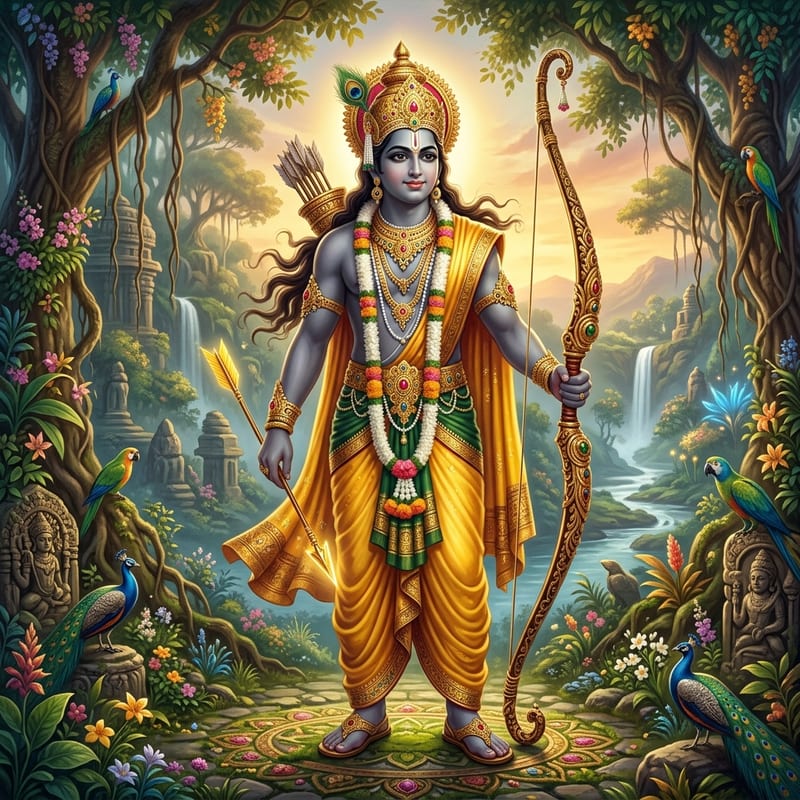
വിശുദ്ധം പരം സച്ചിദാനന്ദരൂപം
ഗുണാധാരമാധാരഹീനം വരേണ്യമ് ।
മഹാന്തം വിഭാന്തം ഗുഹാന്തം ഗുണാന്തം
സുഖാന്തം സ്വയം ധാമ രാമം പ്രപദ്യേ ॥ 1 ॥
ഗുണാധാരമാധാരഹീനം വരേണ്യമ് ।
മഹാന്തം വിഭാന്തം ഗുഹാന്തം ഗുണാന്തം
സുഖാന്തം സ്വയം ധാമ രാമം പ്രപദ്യേ ॥ 1 ॥
- വിശുദ്ധമ് (viśuddham)utterly pure
- പരമ് (param)supreme
- സത്-ചിത്-ആനന്ദ-രൂപമ് (sac-cid-ānanda-rūpam)whose form is being, awareness and bliss
- ഗുണ-ആധാരമ് (guṇādhāram)the ground on which every quality rests
- ആധാര-ഹീനമ് (ādhāra-hīnam)himself resting on nothing
- വരേണ്യമ് (vareṇyam)most choiceworthy
- മഹാന്തമ് (mahāntam)vast
- വിഭാന്തമ് (vibhāntam)shining out
- ഗുഹാന്തമ് (guhāntam)at the far end of the heart’s cave
- ഗുണാന്തമ് (guṇāntam)past where the qualities end
- സുഖാന്തമ് (sukhāntam)where happiness comes to rest
- സ്വയമ് ധാമ (svayaṃ dhāma)light in his own right
- രാമമ് (rāmam)Rāma
- പ്രപദ്യേ (prapadye)I take refuge in
ശിവം നിത്യമേകം വിഭും താരകാഖ്യം
സുഖാകാരമാകാരശൂന്യം സുമാന്യമ് ।
മഹേശം കലേശം സുരേശം പരേശം
നരേശം നിരീശം മഹീശം പ്രപദ്യേ ॥ 2 ॥
സുഖാകാരമാകാരശൂന്യം സുമാന്യമ് ।
മഹേശം കലേശം സുരേശം പരേശം
നരേശം നിരീശം മഹീശം പ്രപദ്യേ ॥ 2 ॥
- ശിവമ് (śivam)auspicious
- നിത്യമ് (nityam)eternal
- ഏകമ് (ekam)one
- വിഭുമ് (vibhum)all-pervading
- താരക-ആഖ്യമ് (tārakākhyam)called Tāraka, the name that ferries one across
- സുഖ-ആകാരമ് (sukhākāram)whose shape is happiness
- ആകാര-ശൂന്യമ് (ākāra-śūnyam)having no shape at all
- സു-മാന്യമ് (su-mānyam)well worth honouring
- മഹാ-ഈശമ് (maheśam)great lord
- കല-ഈശമ് (kaleśam)lord of time’s divisions
- സുര-ഈശമ് (sureśam)lord of the gods
- പര-ഈശമ് (pareśam)lord beyond them
- നര-ഈശമ് (nareśam)lord of men
- നിര്-ഈശമ് (nirīśam)having no lord above him
- മഹീ-ഈശമ് (mahīśam)lord of the earth
- പ്രപദ്യേ (prapadye)I take refuge in
യദാവര്ണയത്കര്ണമൂലേഽന്തകാലേ
ശിവോ രാമ രാമേതി രാമേതി കാശ്യാമ് ।
തദേകം പരം താരകബ്രഹ്മരൂപം
ഭജേഽഹം ഭജേഽഹം ഭജേഽഹം ഭജേഽഹമ് ॥ 3 ॥
ശിവോ രാമ രാമേതി രാമേതി കാശ്യാമ് ।
തദേകം പരം താരകബ്രഹ്മരൂപം
ഭജേഽഹം ഭജേഽഹം ഭജേഽഹം ഭജേഽഹമ് ॥ 3 ॥
- യത് (yat)that which
- ആവര്ണയത് (āvarṇayat)he tells over
- കര്ണ-മൂലേ (karṇa-mūle)at the root of the ear
- അന്ത-കാലേ (anta-kāle)at the last hour
- ശിവഃ (śivaḥ)Śiva
- രാമ രാമ ഇതി രാമ ഇതി (rāma rāma iti rāma iti)"Rāma, Rāma, Rāma"
- കാശ്യാമ് (kāśyām)in Kāśī
- തത് ഏകമ് (tad ekam)that one thing
- പരമ് (param)supreme
- താരക-ബ്രഹ്മ-രൂപമ് (tāraka-brahma-rūpam)the ferrying Brahman in bodily form
- ഭജേ അഹമ് (bhaje aham)I worship – said four times over, once for each utterance of the name above
മഹാരത്നപീഠേ ശുഭേ കല്പമൂലേ
സുഖാസീനമാദിത്യകോടിപ്രകാശമ് ।
സദാ ജാനകീലക്ഷ്മണോപേതമേകം
സദാ രാമചന്ദ്രം ഭജേഽഹം ഭജേഽഹമ് ॥ 4 ॥
സുഖാസീനമാദിത്യകോടിപ്രകാശമ് ।
സദാ ജാനകീലക്ഷ്മണോപേതമേകം
സദാ രാമചന്ദ്രം ഭജേഽഹം ഭജേഽഹമ് ॥ 4 ॥
- മഹാ-രത്ന-പീഠേ (mahā-ratna-pīṭhe)on a throne of great jewels
- ശുഭേ (śubhe)auspicious
- കല്പ-മൂലേ (kalpa-mūle)at the foot of the wishing-tree
- സുഖ-ആസീനമ് (sukhāsīnam)seated at his ease
- ആദിത്യ-കോടി-പ്രകാശമ് (āditya-koṭi-prakāśam)shining like ten million suns
- സദാ (sadā)ever
- ജാനകീ-ലക്ഷ്മണ-ഉപേതമ് (jānakī-lakṣmaṇopetam)attended by Jānakī and Lakṣmaṇa
- ഏകമ് (ekam)the one
- സദാ (sadā)always
- രാമചന്ദ്രമ് (rāmacandram)Rāmacandra
- ഭജേ അഹമ് ഭജേ അഹമ് (bhaje’haṃ bhaje’ham)I worship, I worship
ക്വണദ്രത്നമഞ്ജീരപാദാരവിന്ദം
ലസന്മേഖലാചാരുപീതാമ്ബരാഢ്യമ് ।
മഹാരത്നഹാരോല്ലസത്കൌസ്തുഭാങ്ഗം
നദച്ചഞ്ചരീമഞ്ജരീലോലമാലമ് ॥ 5 ॥
ലസന്മേഖലാചാരുപീതാമ്ബരാഢ്യമ് ।
മഹാരത്നഹാരോല്ലസത്കൌസ്തുഭാങ്ഗം
നദച്ചഞ്ചരീമഞ്ജരീലോലമാലമ് ॥ 5 ॥
- ക്വണത്-രത്ന-മഞ്ജീര-പാദ-അരവിന്ദമ് (kvaṇad-ratna-mañjīra-pādāravindam)lotus feet in jewelled anklets that chime
- ലസത്-മേഖലാ-ചാരു-പീത-അമ്ബര-ആഢ്യമ് (lasan-mekhalā-cāru-pītāmbarāḍhyam)rich in a bright girdle and lovely yellow silk
- മഹാ-രത്ന-ഹാര-ഉല്ലസത്-കൌസ്തുഭ-അങ്ഗമ് (mahā-ratna-hārollasat-kaustubhāṅgam)his body agleam with a great jewelled necklace and the Kaustubha gem
- നദത്-ചഞ്ചരീ-മഞ്ജരീ-ലോല-മാലമ് (nadac-cañcarī-mañjarī-lola-mālam)a swaying garland where humming bees move among the blossom-clusters
ലസച്ചന്ദ്രികാസ്മേരശോണാധരാഭം
സമുദ്യത്പതങ്ഗേന്ദുകോടിപ്രകാശമ് ।
നമദ്ബ്രഹ്മരുദ്രാദികോടീരരത്ന
സ്ഫുരത്കാന്തിനീരാജനാരാധിതാങ്ഘ്രിമ് ॥ 6 ॥
സമുദ്യത്പതങ്ഗേന്ദുകോടിപ്രകാശമ് ।
നമദ്ബ്രഹ്മരുദ്രാദികോടീരരത്ന
സ്ഫുരത്കാന്തിനീരാജനാരാധിതാങ്ഘ്രിമ് ॥ 6 ॥
- ലസത്-ചന്ദ്രികാ-സ്മേര-ശോണ-അധര-ആഭമ് (lasac-candrikā-smera-śoṇādharābham)his red lower lip aglow with a smile like spreading moonlight
- സമുദ്യത്-പതങ്ഗ-ഇന്ദു-കോടി-പ്രകാശമ് (samudyat-pataṅgendu-koṭi-prakāśam)bright as ten million suns and moons rising at once
- നമത്-ബ്രഹ്മ-രുദ്ര-ആദി-കോടീര-രത്ന-സ്ഫുരത്-കാന്തി-നീരാജന-ആരാധിത-അങ്ഘ്രിമ് (namad-brahma-rudrādi-koṭīra-ratna-sphurat-kānti-nīrājanārādhitāṅghrim)his feet worshipped with a lamp-offering made of the flashing light of the crown-jewels of Brahmā, Rudra and the rest as they bow
പുരഃ പ്രാഞ്ജലീനാഞ്ജനേയാദിഭക്താന്
സ്വചിന്മുദ്രയാ ഭദ്രയാ ബോധയന്തമ് ।
ഭജേഽഹം ഭജേഽഹം സദാ രാമചന്ദ്രം
ത്വദന്യം ന മന്യേ ന മന്യേ ന മന്യേ ॥ 7 ॥
സ്വചിന്മുദ്രയാ ഭദ്രയാ ബോധയന്തമ് ।
ഭജേഽഹം ഭജേഽഹം സദാ രാമചന്ദ്രം
ത്വദന്യം ന മന്യേ ന മന്യേ ന മന്യേ ॥ 7 ॥
- പുരഃ (puraḥ)before him
- പ്രാഞ്ജലീന് (prāñjalīn)their hands joined
- ആഞ്ജനേയ-ആദി-ഭക്താന് (āñjaneyādi-bhaktān)Āñjaneya and the other devotees
- സ്വ-ചിത്-മുദ്രയാ (sva-cin-mudrayā)by his own sign of awareness
- ഭദ്രയാ (bhadrayā)auspicious
- ബോധയന്തമ് (bodhayantam)awakening them
- ഭജേ അഹമ് ഭജേ അഹമ് (bhaje’haṃ bhaje’ham)I worship, I worship
- സദാ (sadā)always
- രാമചന്ദ്രമ് (rāmacandram)Rāmacandra
- ത്വത്-അന്യമ് (tvad-anyam)any other than you
- ന മന്യേ ന മന്യേ ന മന്യേ (na manye na manye na manye)I do not own, I do not, I do not
യദാ മത്സമീപം കൃതാന്തഃ സമേത്യ
പ്രചണ്ഡപ്രകോപൈര്ഭടൈര്ഭീഷയേന്മാമ് ।
തദാവിഷ്കരോഷി ത്വദീയം സ്വരൂപം
സദാപത്പ്രണാശം സകോദണ്ഡബാണമ് ॥ 8 ॥
പ്രചണ്ഡപ്രകോപൈര്ഭടൈര്ഭീഷയേന്മാമ് ।
തദാവിഷ്കരോഷി ത്വദീയം സ്വരൂപം
സദാപത്പ്രണാശം സകോദണ്ഡബാണമ് ॥ 8 ॥
- യദാ (yadā)when
- മത്-സമീപമ് (mat-samīpam)close to me
- കൃതാന്തഃ (kṛtāntaḥ)Death, the ender of things
- സമേത്യ (sametya)having come
- പ്രചണ്ഡ-പ്രകോപൈഃ (pracaṇḍa-prakopaiḥ)their fury blazing
- ഭടൈഃ (bhaṭaiḥ)with his henchmen
- ഭീഷയേത് (bhīṣayet)would terrify
- മാമ് (mām)me
- തദാ (tadā)then
- ആവിഷ്കരോഷി (āviṣkaroṣi)you make plain
- ത്വദീയമ് സ്വരൂപമ് (tvadīyaṃ svarūpam)that own form of yours
- സദാ-ആപദ്-പ്രണാശമ് (sadāpat-praṇāśam)which is the undoing of calamity always
- സ-കോദണ്ഡ-ബാണമ് (sa-kodaṇḍa-bāṇam)with the Kodaṇḍa bow and its arrow
നിജേ മാനസേ മന്ദിരേ സന്നിധേഹി
പ്രസീദ പ്രസീദ പ്രഭോ രാമചന്ദ്ര ।
സസൌമിത്രിണാ കൈകയീനന്ദനേന
സ്വശക്ത്യാനുഭക്ത്യാ ച സംസേവ്യമാന ॥ 9 ॥
പ്രസീദ പ്രസീദ പ്രഭോ രാമചന്ദ്ര ।
സസൌമിത്രിണാ കൈകയീനന്ദനേന
സ്വശക്ത്യാനുഭക്ത്യാ ച സംസേവ്യമാന ॥ 9 ॥
- നിജേ (nije)my own
- മാനസേ മന്ദിരേ (mānase mandire)in the temple that is the mind
- സന്നിധേഹി (sannidhehi)take your place
- പ്രസീദ പ്രസീദ (prasīda prasīda)be gracious, be gracious
- പ്രഭോ രാമചന്ദ്ര (prabho rāmacandra)O Lord Rāmacandra
- സ-സൌമിത്രിണാ (sa-saumitriṇā)along with the son of Sumitrā
- കൈകയീ-നന്ദനേന (kaikayī-nandanena)with the gladdener of Kaikeyī, Bharata
- സ്വ-ശക്ത്യാ (sva-śaktyā)by your own power
- അനുഭക്ത്യാ (anubhaktyā)by devotion that follows after you
- ച (ca)and
- സംസേവ്യമാന (saṃsevyamāna)O you who are so served
സ്വഭക്താഗ്രഗണ്യൈഃ കപീശൈര്മഹീശൈ-
-രനീകൈരനേകൈശ്ച രാമ പ്രസീദ ।
നമസ്തേ നമോഽസ്ത്വീശ രാമ പ്രസീദ
പ്രശാധി പ്രശാധി പ്രകാശം പ്രഭോ മാമ് ॥ 10 ॥
-രനീകൈരനേകൈശ്ച രാമ പ്രസീദ ।
നമസ്തേ നമോഽസ്ത്വീശ രാമ പ്രസീദ
പ്രശാധി പ്രശാധി പ്രകാശം പ്രഭോ മാമ് ॥ 10 ॥
- സ്വ-ഭക്ത-അഗ്ര-ഗണ്യൈഃ (sva-bhaktāgra-gaṇyaiḥ)with those counted first among your devotees
- കപി-ഈശൈഃ (kapīśaiḥ)with the lords of the monkeys
- മഹീ-ഈശൈഃ (mahīśaiḥ)with the lords of the earth
- അനീകൈഃ (anīkaiḥ)with armies
- അനേകൈഃ (anekaiḥ)many
- ച (ca)and
- രാമ (rāma)O Rāma
- പ്രസീദ (prasīda)be gracious
- നമഃ തേ (namas te)salutation to you
- നമഃ അസ്തു (namaḥ astu)let there be salutation
- ഈശ (īśa)O Lord
- രാമ (rāma)O Rāma
- പ്രസീദ (prasīda)be gracious
- പ്രശാധി പ്രശാധി (praśādhi praśādhi)give me your command, command me
- പ്രകാശമ് (prakāśam)into the open light
- പ്രഭോ (prabho)O Master
- മാമ് (mām)me
ത്വമേവാസി ദൈവം പരം മേ യദേകം
സുചൈതന്യമേതത്ത്വദന്യം ന മന്യേ ।
യതോഽഭൂദമേയം വിയദ്വായുതേജോ
ജലോര്വ്യാദികാര്യം ചരം ചാചരം ച ॥ 11 ॥
സുചൈതന്യമേതത്ത്വദന്യം ന മന്യേ ।
യതോഽഭൂദമേയം വിയദ്വായുതേജോ
ജലോര്വ്യാദികാര്യം ചരം ചാചരം ച ॥ 11 ॥
- ത്വമ് ഏവ (tvam eva)you alone
- അസി (asi)are
- ദൈവമ് (daivam)the divinity
- പരമ് (param)supreme
- മേ (me)mine
- യത് ഏകമ് (yad ekam)that one thing
- സു-ചൈതന്യമ് (su-caitanyam)pure awareness
- ഏതത് (etat)this
- ത്വത്-അന്യമ് (tvad-anyam)anything other than you
- ന മന്യേ (na manye)I do not own
- യതഃ (yataḥ)from whom
- അഭൂത് (abhūt)came to be
- അമേയമ് (ameyam)past all measuring
- വിയത്-വായു-തേജഃ-ജല-ഉര്വീ-ആദി-കാര്യമ് (viyad-vāyu-tejo-jalorvyādi-kāryam)everything made of space, wind, fire, water, earth and the rest
- ചരമ് (caram)what moves
- ച (ca)and
- അചരമ് (acaram)what does not
- ച (ca)and
നമഃ സച്ചിദാനന്ദരൂപായ തസ്മൈ
നമോ ദേവദേവായ രാമായ തുഭ്യമ് ।
നമോ ജാനകീജീവിതേശായ തുഭ്യം
നമഃ പുണ്ഡരീകായതാക്ഷായ തുഭ്യമ് ॥ 12 ॥
നമോ ദേവദേവായ രാമായ തുഭ്യമ് ।
നമോ ജാനകീജീവിതേശായ തുഭ്യം
നമഃ പുണ്ഡരീകായതാക്ഷായ തുഭ്യമ് ॥ 12 ॥
- നമഃ (namaḥ)salutation
- സത്-ചിത്-ആനന്ദ-രൂപായ (sac-cid-ānanda-rūpāya)to him whose form is being, awareness and bliss
- തസ്മൈ (tasmai)to that one
- നമഃ (namaḥ)salutation
- ദേവ-ദേവായ (deva-devāya)to the god of gods
- രാമായ (rāmāya)to Rāma
- തുഭ്യമ് (tubhyam)to you
- നമഃ (namaḥ)salutation
- ജാനകീ-ജീവിത-ഈശായ (jānakī-jīviteśāya)to the lord of Jānakī’s very life
- തുഭ്യമ് (tubhyam)to you
- നമഃ (namaḥ)salutation
- പുണ്ഡരീക-ആയത-അക്ഷായ (puṇḍarīkāyatākṣāya)to him whose eyes are wide as white lotuses
- തുഭ്യമ് (tubhyam)to you
നമോ ഭക്തിയുക്താനുരക്തായ തുഭ്യം
നമഃ പുണ്യപുഞ്ജൈകലഭ്യായ തുഭ്യമ് ।
നമോ വേദവേദ്യായ ചാദ്യായ പുംസേ
നമഃ സുന്ദരായേന്ദിരാവല്ലഭായ ॥ 13 ॥
നമഃ പുണ്യപുഞ്ജൈകലഭ്യായ തുഭ്യമ് ।
നമോ വേദവേദ്യായ ചാദ്യായ പുംസേ
നമഃ സുന്ദരായേന്ദിരാവല്ലഭായ ॥ 13 ॥
- നമഃ (namaḥ)salutation
- ഭക്തി-യുക്ത-അനുരക്തായ (bhakti-yuktānuraktāya)to him who loves in return those who love him
- തുഭ്യമ് (tubhyam)to you
- നമഃ (namaḥ)salutation
- പുണ്യ-പുഞ്ജ-ഏക-ലഭ്യായ (puṇya-puñjaika-labhyāya)to be had by nothing but a heaped-up store of merit
- തുഭ്യമ് (tubhyam)to you
- നമഃ (namaḥ)salutation
- വേദ-വേദ്യായ (veda-vedyāya)to him whom the Vedas exist to know
- ച (ca)and
- ആദ്യായ പുംസേ (ādyāya puṃse)to the first Person
- നമഃ (namaḥ)salutation
- സുന്ദരായ (sundarāya)to the beautiful one
- ഇന്ദിരാ-വല്ലഭായ (indirā-vallabhāya)to the beloved of Indirā
നമോ വിശ്വകര്ത്രേ നമോ വിശ്വഹര്ത്രേ
നമോ വിശ്വഭോക്ത്രേ നമോ വിശ്വമാത്രേ ।
നമോ വിശ്വനേത്രേ നമോ വിശ്വജേത്രേ
നമോ വിശ്വപിത്രേ നമോ വിശ്വമാത്രേ ॥ 14 ॥
നമോ വിശ്വഭോക്ത്രേ നമോ വിശ്വമാത്രേ ।
നമോ വിശ്വനേത്രേ നമോ വിശ്വജേത്രേ
നമോ വിശ്വപിത്രേ നമോ വിശ്വമാത്രേ ॥ 14 ॥
- നമഃ (namaḥ)salutation
- വിശ്വ-കര്ത്രേ (viśva-kartre)to the maker of all
- നമഃ (namaḥ)salutation
- വിശ്വ-ഹര്ത്രേ (viśva-hartre)to him who takes it all away
- നമഃ (namaḥ)salutation
- വിശ്വ-ഭോക്ത്രേ (viśva-bhoktre)to him who tastes it
- നമഃ (namaḥ)salutation
- വിശ്വ-മാത്രേ (viśva-mātre)to the whole measure of it
- നമഃ (namaḥ)salutation
- വിശ്വ-നേത്രേ (viśva-netre)to the eye of all, and to its leader
- നമഃ (namaḥ)salutation
- വിശ്വ-ജേത്രേ (viśva-jetre)to its conqueror
- നമഃ (namaḥ)salutation
- വിശ്വ-പിത്രേ (viśva-pitre)to the father of all
- നമഃ (namaḥ)salutation
- വിശ്വ-മാത്രേ (viśva-mātre)and to its mother – one written form serving twice, first as मात्रा "measure", here as मातृ "mother"
നമസ്തേ നമസ്തേ സമസ്തപ്രപഞ്ച-
-പ്രഭോഗപ്രയോഗപ്രമാണപ്രവീണ ।
മദീയം മനസ്ത്വത്പദദ്വന്ദ്വസേവാം
വിധാതും പ്രവൃത്തം സുചൈതന്യസിദ്ധ്യൈ ॥ 15 ॥
-പ്രഭോഗപ്രയോഗപ്രമാണപ്രവീണ ।
മദീയം മനസ്ത്വത്പദദ്വന്ദ്വസേവാം
വിധാതും പ്രവൃത്തം സുചൈതന്യസിദ്ധ്യൈ ॥ 15 ॥
- നമഃ തേ നമഃ തേ (namas te namas te)salutation to you, salutation to you
- സമസ്ത-പ്രപഞ്ച-പ്രഭോഗ-പ്രയോഗ-പ്രമാണ-പ്രവീണ (samasta-prapañca-prabhoga-prayoga-pramāṇa-pravīṇa)O adept in the enjoyment, the employment and the measure of this whole spread-out world
- മദീയമ് മനഃ (madīyaṃ manaḥ)this mind of mine
- ത്വത്-പദ-ദ്വന്ദ്വ-സേവാമ് (tvat-pada-dvandva-sevām)service at the pair of your feet
- വിധാതുമ് (vidhātum)to perform
- പ്രവൃത്തമ് (pravṛttam)has set out
- സു-ചൈതന്യ-സിദ്ധ്യൈ (su-caitanya-siddhyai)for the winning of pure awareness
ശിലാപി ത്വദങ്ഘ്രിക്ഷമാസങ്ഗിരേണു
പ്രസാദാദ്ധി ചൈതന്യമാധത്ത രാമ ।
നരസ്ത്വത്പദദ്വന്ദ്വസേവാവിധാനാ-
-ത്സുചൈതന്യമേതീതി കിം ചിത്രമത്ര ॥ 16 ॥
പ്രസാദാദ്ധി ചൈതന്യമാധത്ത രാമ ।
നരസ്ത്വത്പദദ്വന്ദ്വസേവാവിധാനാ-
-ത്സുചൈതന്യമേതീതി കിം ചിത്രമത്ര ॥ 16 ॥
- ശിലാ (śilā)a stone
- അപി (api)even
- ത്വത്-അങ്ഘ്രി-ക്ഷമാ-സങ്ഗി-രേണു-പ്രസാദാത് (tvad-aṅghri-kṣamā-saṅgi-reṇu-prasādāt)by the grace of the dust where your foot met the earth
- ഹി (hi)indeed
- ചൈതന്യമ് (caitanyam)awareness
- ആധത്ത (ādhatta)took on
- രാമ (rāma)O Rāma
- നരഃ (naraḥ)a man
- ത്വത്-പദ-ദ്വന്ദ്വ-സേവാ-വിധാനാത് (tvat-pada-dvandva-sevā-vidhānāt)by keeping up service at the pair of your feet
- സു-ചൈതന്യമ് (su-caitanyam)pure awareness
- ഏതി (eti)reaches
- ഇതി (iti)that being so
- കിമ് ചിത്രമ് അത്ര (kiṃ citram atra)where is the wonder in it
പവിത്രം ചരിത്രം വിചിത്രം ത്വദീയം
നരാ യേ സ്മരന്ത്യന്വഹം രാമചന്ദ്ര ।
ഭവന്തം ഭവാന്തം ഭരന്തം ഭജന്തോ
ലഭന്തേ കൃതാന്തം ന പശ്യന്ത്യതോഽന്തേ ॥ 17 ॥
നരാ യേ സ്മരന്ത്യന്വഹം രാമചന്ദ്ര ।
ഭവന്തം ഭവാന്തം ഭരന്തം ഭജന്തോ
ലഭന്തേ കൃതാന്തം ന പശ്യന്ത്യതോഽന്തേ ॥ 17 ॥
- പവിത്രമ് (pavitram)hallowing
- ചരിത്രമ് (caritram)the story of your deeds
- വിചിത്രമ് (vicitram)full of wonders
- ത്വദീയമ് (tvadīyam)yours
- നരാഃ യേ (narā ye)those people who
- സ്മരന്തി (smaranti)call it to mind
- അന്വഹമ് (anvaham)day after day
- രാമചന്ദ്ര (rāmacandra)O Rāmacandra
- ഭവന്തമ് (bhavantam)you
- ഭവ-അന്തമ് (bhavāntam)who are the end of becoming
- ഭരന്തമ് (bharantam)who bear them up
- ഭജന്തഃ (bhajantaḥ)worshipping
- ലഭന്തേ (labhante)they win you
- കൃതാന്തമ് (kṛtāntam)Death
- ന പശ്യന്തി (na paśyanti)they never set eyes on
- അതഃ (ataḥ)and therefore
- അന്തേ (ante)at the end
സ പുണ്യഃ സ ഗണ്യഃ ശരണ്യോ മമായം
നരോ വേദ യോ ദേവചൂഡാമണിം ത്വാമ് ।
സദാകാരമേകം ചിദാനന്ദരൂപം
മനോവാഗഗമ്യം പരം ധാമ രാമ ॥ 18 ॥
നരോ വേദ യോ ദേവചൂഡാമണിം ത്വാമ് ।
സദാകാരമേകം ചിദാനന്ദരൂപം
മനോവാഗഗമ്യം പരം ധാമ രാമ ॥ 18 ॥
- സഃ പുണ്യഃ (sa puṇyaḥ)he is holy
- സഃ ഗണ്യഃ (sa gaṇyaḥ)he is one to be counted
- ശരണ്യഃ (śaraṇyaḥ)a refuge
- മമ (mama)to me
- അയമ് (ayam)this one
- നരഃ (naraḥ)the man
- വേദ (veda)who knows
- യഃ (yaḥ)who
- ദേവ-ചൂഡാമണിമ് (deva-cūḍāmaṇim)the crest-jewel of the gods
- ത്വാമ് (tvām)you
- സദാ-ആകാരമ് (sadākāram)of unchanging form
- ഏകമ് (ekam)one
- ചിത്-ആനന്ദ-രൂപമ് (cid-ānanda-rūpam)whose form is awareness and bliss
- മനഃ-വാക്-അഗമ്യമ് (mano-vāg-agamyam)where neither mind nor speech arrives
- പരമ് ധാമ (paraṃ dhāma)the highest abode
- രാമ (rāma)O Rāma
പ്രചണ്ഡപ്രതാപപ്രഭാവാഭിഭൂത-
-പ്രഭൂതാരിവീര പ്രഭോ രാമചന്ദ്ര ।
ബലം തേ കഥം വര്ണ്യതേഽതീവ ബാല്യേ
യതോഽഖണ്ഡി ചണ്ഡീശകോദണ്ഡദണ്ഡമ് ॥ 19 ॥
-പ്രഭൂതാരിവീര പ്രഭോ രാമചന്ദ്ര ।
ബലം തേ കഥം വര്ണ്യതേഽതീവ ബാല്യേ
യതോഽഖണ്ഡി ചണ്ഡീശകോദണ്ഡദണ്ഡമ് ॥ 19 ॥
- പ്രചണ്ഡ-പ്രതാപ-പ്രഭാവ-അഭിഭൂത-പ്രഭൂത-അരി-വീര (pracaṇḍa-pratāpa-prabhāvābhibhūta-prabhūtāri-vīra)O hero by the force of whose fierce blazing might a host of foes was borne down
- പ്രഭോ രാമചന്ദ്ര (prabho rāmacandra)O Lord Rāmacandra
- ബലമ് തേ (balaṃ te)your strength
- കഥമ് (katham)how
- വര്ണ്യതേ (varṇyate)is it to be told
- അതീവ ബാല്യേ (atīva bālye)in your very boyhood
- യതഃ (yataḥ)whereby
- അഖണ്ഡി (akhaṇḍi)was snapped
- ചണ്ഡീ-ഈശ-കോദണ്ഡ-ദണ്ഡമ് (caṇḍīśa-kodaṇḍa-daṇḍam)the staff of the bow of Caṇḍī’s lord, Śiva
ദശഗ്രീവമുഗ്രം സപുത്രം സമിത്രം
സരിദ്ദുര്ഗമധ്യസ്ഥരക്ഷോഗണേശമ് ।
ഭവന്തം വിനാ രാമ വീരോ നരോ വാ
സുരോ വാഽമരോ വാ ജയേത്കസ്ത്രിലോക്യാമ് ॥ 20 ॥
സരിദ്ദുര്ഗമധ്യസ്ഥരക്ഷോഗണേശമ് ।
ഭവന്തം വിനാ രാമ വീരോ നരോ വാ
സുരോ വാഽമരോ വാ ജയേത്കസ്ത്രിലോക്യാമ് ॥ 20 ॥
- ദശ-ഗ്രീവമ് (daśa-grīvam)the ten-necked one
- ഉഗ്രമ് (ugram)terrible
- സ-പുത്രമ് (sa-putram)with his sons
- സ-മിത്രമ് (sa-mitram)with his allies
- സരിത്-ദുര്ഗ-മധ്യ-സ്ഥ-രക്ഷഃ-ഗണ-ഈശമ് (sarid-durga-madhya-stha-rakṣo-gaṇeśam)lord of the rākṣasa hosts, set in a stronghold ringed about by water
- ഭവന്തമ് വിനാ (bhavantaṃ vinā)apart from you
- രാമ (rāma)O Rāma
- വീരഃ (vīraḥ)what hero
- നരഃ (naraḥ)man
- വാ (vā)or
- സുരഃ (suraḥ)god
- വാ (vā)or
- അമരഃ (amaraḥ)deathless one
- വാ (vā)or
- ജയേത് (jayet)could have conquered him
- കഃ (kaḥ)who
- ത്രിലോക്യാമ് (trilokyām)in the three worlds
സദാ രാമ രാമേതി രാമാമൃതം തേ
സദാരാമമാനന്ദനിഷ്യന്ദകന്ദമ് ।
പിബന്തം നമന്തം സുദന്തം ഹസന്തം
ഹനൂമന്തമന്തര്ഭജേ തം നിതാന്തമ് ॥ 21 ॥
സദാരാമമാനന്ദനിഷ്യന്ദകന്ദമ് ।
പിബന്തം നമന്തം സുദന്തം ഹസന്തം
ഹനൂമന്തമന്തര്ഭജേ തം നിതാന്തമ് ॥ 21 ॥
- സദാ (sadā)always
- രാമ രാമ ഇതി (rāma rāma iti)"Rāma, Rāma"
- രാമ-അമൃതമ് (rāmāmṛtam)that nectar which is the name Rāma
- തേ (te)yours
- സദാ-രാമമ് (sadā-rāmam)a delight that never ends
- ആനന്ദ-നിഷ്യന്ദ-കന്ദമ് (ānanda-niṣyanda-kandam)the root from which bliss wells up
- പിബന്തമ് (pibantam)drinking it
- നമന്തമ് (namantam)bowing
- സു-ദന്തമ് (su-dantam)fine of tooth
- ഹസന്തമ് (hasantam)smiling
- ഹനൂമന്തമ് (hanūmantam)Hanumān
- അന്തഃ (antaḥ)within
- ഭജേ (bhaje)I worship
- തമ് (tam)him
- നിതാന്തമ് (nitāntam)with all my heart
സദാ രാമ രാമേതി രാമാമൃതം തേ
സദാരാമമാനന്ദനിഷ്യന്ദകന്ദമ് ।
പിബന്നന്വഹം നന്വഹം നൈവ മൃത്യോ-
-ര്ബിഭേമി പ്രസാദാദസാദാത്തവൈവ ॥ 22 ॥
സദാരാമമാനന്ദനിഷ്യന്ദകന്ദമ് ।
പിബന്നന്വഹം നന്വഹം നൈവ മൃത്യോ-
-ര്ബിഭേമി പ്രസാദാദസാദാത്തവൈവ ॥ 22 ॥
- സദാ (sadā)always
- രാമ രാമ ഇതി (rāma rāma iti)"Rāma, Rāma"
- രാമ-അമൃതമ് (rāmāmṛtam)that nectar which is the name Rāma
- തേ (te)yours
- സദാ-രാമമ് (sadā-rāmam)a delight that never ends
- ആനന്ദ-നിഷ്യന്ദ-കന്ദമ് (ānanda-niṣyanda-kandam)the root from which bliss wells up
- പിബന് (piban)drinking it
- അന്വഹമ് (anvaham)day after day
- നനു (nanu)surely
- അഹമ് (aham)I
- ന ഏവ (naiva)not in the least
- മൃത്യോഃ (mṛtyoḥ)of Death
- ബിഭേമി (bibhemi)am I afraid
- പ്രസാദാത് (prasādāt)by the grace
- അസാദാത് (asādāt)unfailing (printed thus
- the word is not standard and the reading is uncertain)
- തവ ഏവ (tavaiva)of you and no other
അസീതാസമേതൈരകോദണ്ഡഭൂഷൈ-
-രസൌമിത്രിവന്ദ്യൈരചണ്ഡപ്രതാപൈഃ ।
അലങ്കേശകാലൈരസുഗ്രീവമിത്രൈ-
-രരാമാഭിധേയൈരലം ദൈവതൈര്നഃ ॥ 23 ॥
-രസൌമിത്രിവന്ദ്യൈരചണ്ഡപ്രതാപൈഃ ।
അലങ്കേശകാലൈരസുഗ്രീവമിത്രൈ-
-രരാമാഭിധേയൈരലം ദൈവതൈര്നഃ ॥ 23 ॥
- അ-സീതാ-സമേതൈഃ (a-sītā-sametaiḥ)with those not joined to Sītā
- അ-കോദണ്ഡ-ഭൂഷൈഃ (a-kodaṇḍa-bhūṣaiḥ)not wearing the Kodaṇḍa bow for ornament
- അ-സൌമിത്രി-വന്ദ്യൈഃ (a-saumitri-vandyaiḥ)to whom Sumitrā’s son does not bow
- അ-ചണ്ഡ-പ്രതാപൈഃ (a-caṇḍa-pratāpaiḥ)whose blaze is not fierce
- അ-ലങ്കാ-ഈശ-കാലൈഃ (a-laṅkeśa-kālaiḥ)who are no Death to the lord of Laṅkā
- അ-സുഗ്രീവ-മിത്രൈഃ (a-sugrīva-mitraiḥ)no friends to Sugrīva
- അ-രാമ-അഭിധേയൈഃ (a-rāmābhidheyaiḥ)not to be called by the name Rāma
- അലമ് (alam)we have had enough
- ദൈവതൈഃ (daivataiḥ)of such gods
- നഃ (naḥ)for us
അവീരാസനസ്ഥൈരചിന്മുദ്രികാഢ്യൈ-
-രഭക്താഞ്ജനേയാദിതത്ത്വപ്രകാശൈഃ ।
അമന്ദാരമൂലൈരമന്ദാരമാലൈ-
-രരാമാഭിധേയൈരലം ദൈവതൈര്നഃ ॥ 24 ॥
-രഭക്താഞ്ജനേയാദിതത്ത്വപ്രകാശൈഃ ।
അമന്ദാരമൂലൈരമന്ദാരമാലൈ-
-രരാമാഭിധേയൈരലം ദൈവതൈര്നഃ ॥ 24 ॥
- അ-വീര-ആസന-സ്ഥൈഃ (a-vīrāsana-sthaiḥ)not seated in the hero’s posture
- അ-ചിത്-മുദ്രികാ-ആഢ്യൈഃ (a-cin-mudrikāḍhyaiḥ)not graced with the sign of awareness
- അ-ഭക്ത-ആഞ്ജനേയ-ആദി-തത്ത്വ-പ്രകാശൈഃ (a-bhaktāñjaneyādi-tattva-prakāśaiḥ)who light up the truth for no Āñjaneya and no other devotee
- അ-മന്ദാര-മൂലൈഃ (a-mandāra-mūlaiḥ)not at the foot of the mandāra tree
- അ-മന്ദാര-മാലൈഃ (a-mandāra-mālaiḥ)not garlanded with mandāra blossom
- അ-രാമ-അഭിധേയൈഃ (a-rāmābhidheyaiḥ)not to be called by the name Rāma
- അലമ് (alam)we have had enough
- ദൈവതൈഃ (daivataiḥ)of such gods
- നഃ (naḥ)for us
അസിന്ധുപ്രകോപൈരവന്ദ്യപ്രതാപൈ-
-രബന്ധുപ്രയാണൈരമന്ദസ്മിതാഢ്യൈഃ ।
അദണ്ഡപ്രവാസൈരഖണ്ഡപ്രബോധൈ-
-രരാമാഭിധേയൈരലം ദൈവതൈര്നഃ ॥ 25 ॥
-രബന്ധുപ്രയാണൈരമന്ദസ്മിതാഢ്യൈഃ ।
അദണ്ഡപ്രവാസൈരഖണ്ഡപ്രബോധൈ-
-രരാമാഭിധേയൈരലം ദൈവതൈര്നഃ ॥ 25 ॥
- അ-സിന്ധു-പ്രകോപൈഃ (a-sindhu-prakopaiḥ)who never raised their wrath against the sea
- അ-വന്ദ്യ-പ്രതാപൈഃ (a-vandya-pratāpaiḥ)whose might is not to be revered
- അ-ബന്ധു-പ്രയാണൈഃ (a-bandhu-prayāṇaiḥ)who set out on no journey with a brother
- അ-മന്ദ-സ്മിത-ആഢ്യൈഃ (a-manda-smitāḍhyaiḥ)not rich in a gentle smile
- അ-ദണ്ഡ-പ്രവാസൈഃ (a-daṇḍa-pravāsaiḥ)whose exile was no sentence borne
- അ-ഖണ്ഡ-പ്രബോധൈഃ (a-khaṇḍa-prabodhaiḥ)whose waking is not entire – the verse’s running privative अ- falls here on a word that already reads "unbroken", so the sense is carried by the pattern rather than by the compound
- അ-രാമ-അഭിധേയൈഃ (a-rāmābhidheyaiḥ)not to be called by the name Rāma
- അലമ് (alam)we have had enough
- ദൈവതൈഃ (daivataiḥ)of such gods
- നഃ (naḥ)for us
ഹരേ രാമ സീതാപതേ രാവണാരേ
ഖരാരേ മുരാരേഽസുരാരേ പരേതി ।
ലപന്തം നയന്തം സദാകാലമേവം
സമാലോകയാലോകയാശേഷബന്ധോ ॥ 26 ॥
ഖരാരേ മുരാരേഽസുരാരേ പരേതി ।
ലപന്തം നയന്തം സദാകാലമേവം
സമാലോകയാലോകയാശേഷബന്ധോ ॥ 26 ॥
- ഹരേ (hare)O Hari
- രാമ (rāma)O Rāma
- സീതാ-പതേ (sītā-pate)O husband of Sītā
- രാവണ-അരേ (rāvaṇāre)O foe of Rāvaṇa
- ഖര-അരേ (kharāre)O foe of Khara
- മുര-അരേ (murāre)O foe of Mura
- അസുര-അരേ (asurāre)O foe of the asuras
- പര (para)O supreme one
- ഇതി (iti)so
- ലപന്തമ് (lapantam)murmuring
- നയന്തമ് (nayantam)passing
- സദാ-കാലമ് (sadā-kālam)all his time
- ഏവമ് (evam)in this way
- സമാലോകയ (samālokaya)look upon him
- ആലോകയ (ālokaya)look
- അശേഷ-ബന്ധോ (aśeṣa-bandho)O kinsman of every creature
നമസ്തേ സുമിത്രാസുപുത്രാഭിവന്ദ്യ
നമസ്തേ സദാ കൈകയീനന്ദനേഡ്യ ।
നമസ്തേ സദാ വാനരാധീശവന്ദ്യ
നമസ്തേ നമസ്തേ സദാ രാമചന്ദ്ര ॥ 27 ॥
നമസ്തേ സദാ കൈകയീനന്ദനേഡ്യ ।
നമസ്തേ സദാ വാനരാധീശവന്ദ്യ
നമസ്തേ നമസ്തേ സദാ രാമചന്ദ്ര ॥ 27 ॥
- നമഃ തേ (namas te)salutation to you
- സുമിത്രാ-സു-പുത്ര-അഭിവന്ദ്യ (sumitrā-su-putrābhivandya)O you whom Sumitrā’s good son reveres
- നമഃ തേ (namas te)salutation to you
- സദാ (sadā)always
- കൈകയീ-നന്ദന-ഈഡ്യ (kaikayī-nandaneḍya)O you whom Kaikeyī’s son extols
- നമഃ തേ (namas te)salutation to you
- സദാ (sadā)always
- വാനര-അധീശ-വന്ദ്യ (vānarādhīśa-vandya)O you whom the overlord of the monkeys honours
- നമഃ തേ നമഃ തേ (namas te namas te)salutation, salutation to you
- സദാ (sadā)always
- രാമചന്ദ്ര (rāmacandra)O Rāmacandra
പ്രസീദ പ്രസീദ പ്രചണ്ഡപ്രതാപ
പ്രസീദ പ്രസീദ പ്രചണ്ഡാരികാല ।
പ്രസീദ പ്രസീദ പ്രപന്നാനുകമ്പിന്
പ്രസീദ പ്രസീദ പ്രഭോ രാമചന്ദ്ര ॥ 28 ॥
പ്രസീദ പ്രസീദ പ്രചണ്ഡാരികാല ।
പ്രസീദ പ്രസീദ പ്രപന്നാനുകമ്പിന്
പ്രസീദ പ്രസീദ പ്രഭോ രാമചന്ദ്ര ॥ 28 ॥
- പ്രസീദ പ്രസീദ (prasīda prasīda)be gracious, be gracious
- പ്രചണ്ഡ-പ്രതാപ (pracaṇḍa-pratāpa)O you of fierce blazing might
- പ്രസീദ പ്രസീദ (prasīda prasīda)be gracious, be gracious
- പ്രചണ്ഡ-അരി-കാല (pracaṇḍāri-kāla)O Death to the fiercest of foes
- പ്രസീദ പ്രസീദ (prasīda prasīda)be gracious, be gracious
- പ്രപന്ന-അനുകമ്പിന് (prapannānukampin)O you who feel for those who have surrendered
- പ്രസീദ പ്രസീദ (prasīda prasīda)be gracious, be gracious
- പ്രഭോ രാമചന്ദ്ര (prabho rāmacandra)O Lord Rāmacandra
ഭുജങ്ഗപ്രയാതം പരം വേദസാരം
മുദാ രാമചന്ദ്രസ്യ ഭക്ത്യാ ച നിത്യമ് ।
പഠന്സന്തതം ചിന്തയന്സ്വാന്തരങ്ഗേ
സ ഏവ സ്വയം രാമചന്ദ്രഃ സ ധന്യഃ ॥ 29 ॥
മുദാ രാമചന്ദ്രസ്യ ഭക്ത്യാ ച നിത്യമ് ।
പഠന്സന്തതം ചിന്തയന്സ്വാന്തരങ്ഗേ
സ ഏവ സ്വയം രാമചന്ദ്രഃ സ ധന്യഃ ॥ 29 ॥
- ഭുജങ്ഗ-പ്രയാതമ് (bhujaṅga-prayātam)this hymn in the bhujaṅgaprayāta metre
- പരമ് (param)supreme
- വേദ-സാരമ് (veda-sāram)the marrow of the Vedas
- മുദാ (mudā)with gladness
- രാമചന്ദ്രസ്യ (rāmacandrasya)of Rāmacandra
- ഭക്ത്യാ (bhaktyā)with devotion
- ച (ca)and
- നിത്യമ് (nityam)day by day
- പഠന് (paṭhan)reciting
- സന്തതമ് (santatam)without a break
- ചിന്തയന് (cintayan)pondering it
- സ്വ-അന്തരങ്ഗേ (svāntaraṅge)in his own inmost part
- സഃ ഏവ (sa eva)he himself
- സ്വയമ് (svayam)in his own person
- രാമചന്ദ്രഃ (rāmacandraḥ)is Rāmacandra
- സഃ ധന്യഃ (sa dhanyaḥ)blessed is that man
ഇതി ശ്രീമച്ഛങ്കരാചാര്യ കൃതം ശ്രീ രാമ ഭുജങ്ഗപ്രയാത സ്തോത്രമ് ।