
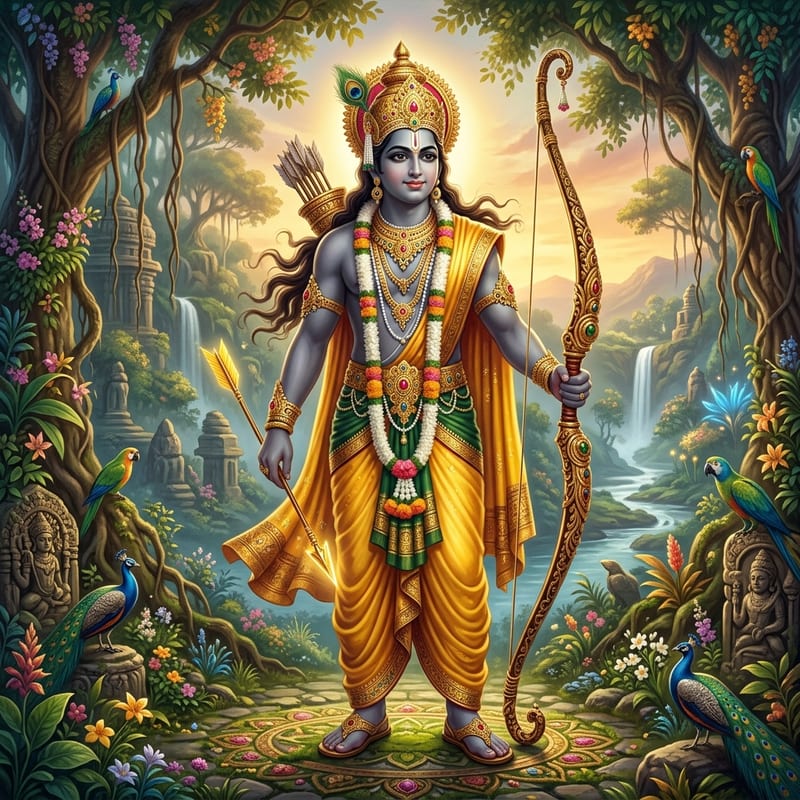
अगस्तिरुवाच
आजानुबाहुमरविन्ददलायताक्ष-
-माजन्मशुद्धरसहासमुखप्रसादम् ।
श्यामं गृहीत शरचापमुदाररूपं
रामं सराममभिराममनुस्मरामि ॥ 1 ॥
-माजन्मशुद्धरसहासमुखप्रसादम् ।
श्यामं गृहीत शरचापमुदाररूपं
रामं सराममभिराममनुस्मरामि ॥ 1 ॥
- आ-जानु-बाहुम् (ājānu-bāhum)his arms reaching down to his knees
- अरविन्द-दल-आयत-अक्षम् (aravinda-dalāyatākṣam)his eyes long as lotus petals
- आ-जन्म-शुद्ध-रस-हास-मुख-प्रसादम् (ā-janma-śuddha-rasa-hāsa-mukha-prasādam)his face gracious with a smile pure in feeling since the day of his birth
- श्यामम् (śyāmam)dark of hue
- गृहीत-शर-चापम् (gṛhīta-śara-cāpam)arrow and bow taken up
- उदार-रूपम् (udāra-rūpam)of noble bearing
- रामम् (rāmam)Rāma
- स-रामम् (sa-rāmam)with Ramā, Sītā, beside him
- अभिरामम् (abhirāmam)the ravishing one
- अनुस्मरामि (anusmarāmi)I call to mind
अस्य श्रीरामकवचस्य अगस्त्य ऋषिः अनुष्टुप् छन्दः सीतालक्ष्मणोपेतः श्रीरामचन्द्रो देवता श्रीरामचन्द्रप्रसादसिद्ध्यर्थे जपे विनियोगः ।
- अस्य (asya)of this
- श्री-राम-कवचस्य (śrī-rāma-kavacasya)Śrī Rāma armour
- अगस्त्यः ऋषिः (agastyaḥ ṛṣiḥ)Agastya is the seer
- अनुष्टुप् छन्दः (anuṣṭup chandaḥ)Anuṣṭubh is the metre
- सीता-लक्ष्मण-उपेतः (sītā-lakṣmaṇopetaḥ)attended by Sītā and Lakṣmaṇa
- श्री-रामचन्द्रः देवता (śrī-rāmacandro devatā)Śrī Rāmacandra is the deity
- श्री-रामचन्द्र-प्रसाद-सिद्ध्यर्थे (śrī-rāmacandra-prasāda-siddhyarthe)for the winning of Śrī Rāmacandra’s grace
- जपे (jape)in the recitation
- विनियोगः (viniyogaḥ)is its appointed use
अथ ध्यानं
नीलजीमूतसङ्काशं विद्युद्वर्णाम्बरावृतम् ।
कोमलाङ्गं विशालाक्षं युवानमतिसुन्दरम् ॥ 1 ॥
नीलजीमूतसङ्काशं विद्युद्वर्णाम्बरावृतम् ।
कोमलाङ्गं विशालाक्षं युवानमतिसुन्दरम् ॥ 1 ॥
- अथ ध्यानम् (atha dhyānam)now the meditation
- नील-जीमूत-सङ्काशम् (nīla-jīmūta-saṅkāśam)dark as a blue rain-cloud
- विद्युत्-वर्ण-अम्बर-आवृतम् (vidyud-varṇāmbarāvṛtam)wrapped in cloth of the colour of lightning
- कोमल-अङ्गम् (komalāṅgam)of tender limb
- विशाल-अक्षम् (viśālākṣam)wide of eye
- युवानम् (yuvānam)young
- अति-सुन्दरम् (ati-sundaram)surpassingly beautiful
सीतासौमित्रिसहितं जटामुकुटधारिणम् ।
सासितूणधनुर्बाणपाणिं दानवमर्दनम् ॥ 2 ॥
सासितूणधनुर्बाणपाणिं दानवमर्दनम् ॥ 2 ॥
- सीता-सौमित्रि-सहितम् (sītā-saumitri-sahitam)together with Sītā and the son of Sumitrā
- जटा-मुकुट-धारिणम् (jaṭā-mukuṭa-dhāriṇam)wearing the crown of matted hair
- स-असि-तूण-धनुः-बाण-पाणिम् (sāsi-tūṇa-dhanur-bāṇa-pāṇim)sword, quiver, bow and arrow in his hands
- दानव-मर्दनम् (dānava-mardanam)the crusher of the dānavas
यदा चोरभये राजभये शत्रुभये तथा ।
ध्यात्वा रघुपतिं क्रुद्धं कालानलसमप्रभम् ॥ 3 ॥
ध्यात्वा रघुपतिं क्रुद्धं कालानलसमप्रभम् ॥ 3 ॥
- यदा (yadā)when
- चोर-भये (cora-bhaye)there is fear of thieves
- राज-भये (rāja-bhaye)fear of the king
- शत्रु-भये (śatru-bhaye)fear of enemies
- तथा (tathā)and the like
- ध्यात्वा (dhyātvā)having meditated
- रघु-पतिम् (raghu-patim)on the lord of the Raghus
- क्रुद्धम् (kruddham)in his wrath
- काल-अनल-सम-प्रभम् (kālānala-sama-prabham)blazing like the fire that ends an age
चीरकृष्णाजिनधरं भस्मोद्धूलितविग्रहम् ।
आकर्णाकृष्टविशिखकोदण्डभुजमण्डितम् ॥ 4 ॥
आकर्णाकृष्टविशिखकोदण्डभुजमण्डितम् ॥ 4 ॥
- चीर-कृष्ण-अजिन-धरम् (cīra-kṛṣṇājina-dharam)clad in bark cloth and a black antelope skin
- भस्म-उद्धूलित-विग्रहम् (bhasmoddhūlita-vigraham)his body dusted over with ash
- आ-कर्ण-आकृष्ट-विशिख-कोदण्ड-भुज-मण्डितम् (ā-karṇākṛṣṭa-viśikha-kodaṇḍa-bhuja-maṇḍitam)his arm graced by the Kodaṇḍa bow, the shaft drawn back as far as his ear
रणे रिपून् रावणादींस्तीक्ष्णमार्गणवृष्टिभिः ।
संहरन्तं महावीरमुग्रमैन्द्ररथस्थितम् ॥ 5 ॥
संहरन्तं महावीरमुग्रमैन्द्ररथस्थितम् ॥ 5 ॥
- रणे (raṇe)in the fight
- रिपून् (ripūn)the foes
- रावण-आदीन् (rāvaṇādīn)Rāvaṇa and the rest
- तीक्ष्ण-मार्गण-वृष्टिभिः (tīkṣṇa-mārgaṇa-vṛṣṭibhiḥ)with showers of keen arrows
- संहरन्तम् (saṃharantam)making an end of them
- महा-वीरम् (mahā-vīram)the great hero
- उग्रम् (ugram)terrible
- ऐन्द्र-रथ-स्थितम् (aindra-ratha-sthitam)standing upon Indra’s own chariot
लक्ष्मणाद्यैर्महावीरैर्वृतं हनुमदादिभिः ।
सुग्रीवाद्यैर्माहावीरैः शैलवृक्षकरोद्यतैः ॥ 6 ॥
सुग्रीवाद्यैर्माहावीरैः शैलवृक्षकरोद्यतैः ॥ 6 ॥
- लक्ष्मण-आद्यैः (lakṣmaṇādyaiḥ)by Lakṣmaṇa and those with him
- महा-वीरैः (mahā-vīraiḥ)great heroes
- वृतम् (vṛtam)ringed about
- हनुमत्-आदिभिः (hanumad-ādibhiḥ)by Hanumān and the others
- सुग्रीव-आद्यैः (sugrīvādyaiḥ)by Sugrīva and those with him
- महा-वीरैः (mahā-vīraiḥ)great warriors
- शैल-वृक्ष-कर-उद्यतैः (śaila-vṛkṣa-karodyataiḥ)rocks and trees held high in their hands
वेगात्करालहुङ्कारैर्भुभुक्कारमहारवैः ।
नदद्भिः परिवादद्भिः समरे रावणं प्रति ॥ 7 ॥
नदद्भिः परिवादद्भिः समरे रावणं प्रति ॥ 7 ॥
- वेगात् (vegāt)with a rush
- कराल-हुङ्कारैः (karāla-huṅkāraiḥ)with terrible war-cries
- भुभुक्कार-महा-रवैः (bhubhukkāra-mahā-ravaiḥ)with the great bellowing roar of them
- नदद्भिः (nadadbhiḥ)as they shouted
- परिवादद्भिः (parivādadbhiḥ)and shouted back at one another
- समरे (samare)in the battle
- रावणम् प्रति (rāvaṇaṃ prati)against Rāvaṇa
श्रीराम शत्रुसङ्घान्मे हन मर्दय खादय ।
भूतप्रेतपिशाचादीन् श्रीरामाशु विनाशय ॥ 8 ॥
भूतप्रेतपिशाचादीन् श्रीरामाशु विनाशय ॥ 8 ॥
- श्री-राम (śrī-rāma)O Śrī Rāma
- शत्रु-सङ्घान् (śatru-saṅghān)the hosts of enemies
- मे (me)mine
- हन (hana)strike them
- मर्दय (mardaya)crush them
- खादय (khādaya)devour them
- भूत-प्रेत-पिशाच-आदीन् (bhūta-preta-piśācādīn)the spirits, the departed, the flesh-eaters and their kind
- श्री-राम (śrī-rāma)O Śrī Rāma
- आशु (āśu)at once
- विनाशय (vināśaya)destroy them
एवं ध्यात्वा जपेद्रामकवचं सिद्धिदायकम् ।
सुतीक्ष्ण वज्रकवचं शृणु वक्ष्याम्यनुत्तमम् ॥ 9 ॥
सुतीक्ष्ण वज्रकवचं शृणु वक्ष्याम्यनुत्तमम् ॥ 9 ॥
- एवम् (evam)thus
- ध्यात्वा (dhyātvā)having meditated
- जपेत् (japet)let one recite
- राम-कवचम् (rāma-kavacam)the Rāma armour
- सिद्धि-दायकम् (siddhi-dāyakam)which grants accomplishment
- सुतीक्ष्ण (sutīkṣṇa)O Sutīkṣṇa
- वज्र-कवचम् (vajra-kavacam)the thunderbolt armour
- शृणु (śṛṇu)listen
- वक्ष्यामि (vakṣyāmi)I shall speak it
- अनुत्तमम् (anuttamam)than which there is none higher
अथ कवचम्
श्रीरामः पातु मे मूर्ध्नि पूर्वे च रघुवंशजः ।
दक्षिणे मे रघुवरः पश्चिमे पातु पावनः ॥ 10 ॥
श्रीरामः पातु मे मूर्ध्नि पूर्वे च रघुवंशजः ।
दक्षिणे मे रघुवरः पश्चिमे पातु पावनः ॥ 10 ॥
- अथ कवचम् (atha kavacam)now the armour
- श्री-रामः (śrī-rāmaḥ)Śrī Rāma
- पातु (pātu)may he guard
- मे (me)my
- मूर्ध्नि (mūrdhni)at the crown of the head
- पूर्वे (pūrve)in the east
- च (ca)and
- रघु-वंश-जः (raghu-vaṃśa-jaḥ)he born in the line of Raghu
- दक्षिणे (dakṣiṇe)in the south
- मे (me)me
- रघु-वरः (raghu-varaḥ)the best of the Raghus
- पश्चिमे (paścime)in the west
- पातु (pātu)may he guard
- पावनः (pāvanaḥ)the purifier
उत्तरे मे रघुपतिर्भालं दशरथात्मजः ।
भ्रुवोर्दूर्वादलश्यामस्तयोर्मध्ये जनार्दनः ॥ 11 ॥
भ्रुवोर्दूर्वादलश्यामस्तयोर्मध्ये जनार्दनः ॥ 11 ॥
- उत्तरे (uttare)in the north
- मे (me)me
- रघु-पतिः (raghu-patiḥ)the lord of the Raghus
- भालम् (bhālam)the brow
- दशरथ-आत्मजः (daśarathātmajaḥ)the son of Daśaratha
- भ्रुवोः (bhruvoḥ)at the two eyebrows
- दूर्वा-दल-श्यामः (dūrvā-dala-śyāmaḥ)he dark as a blade of dūrvā grass
- तयोः मध्ये (tayor madhye)in the space between them
- जनार्दनः (janārdanaḥ)Janārdana
श्रोत्रं मे पातु राजेन्द्रो दृशौ राजीवलोचनः ।
घ्राणं मे पातु राजर्षिर्गण्डौ मे जानकीपतिः ॥ 12 ॥
घ्राणं मे पातु राजर्षिर्गण्डौ मे जानकीपतिः ॥ 12 ॥
- श्रोत्रम् (śrotram)the hearing
- मे (me)my
- पातु (pātu)may he guard
- राज-इन्द्रः (rājendraḥ)the lord among kings
- दृशौ (dṛśau)the two eyes
- राजीव-लोचनः (rājīva-locanaḥ)he whose eyes are lotuses
- घ्राणम् (ghrāṇam)the nose
- मे (me)my
- पातु (pātu)may he guard
- राज-ऋषिः (rājarṣiḥ)the royal seer
- गण्डौ (gaṇḍau)the two cheeks
- मे (me)my
- जानकी-पतिः (jānakī-patiḥ)the husband of Jānakī
कर्णमूले खरध्वंसी भालं मे रघुवल्लभः ।
जिह्वां मे वाक्पतिः पातु दन्तपङ्क्ती रघूत्तमः ॥ 13 ॥
जिह्वां मे वाक्पतिः पातु दन्तपङ्क्ती रघूत्तमः ॥ 13 ॥
- कर्ण-मूले (karṇa-mūle)at the root of the ears
- खर-ध्वंसी (khara-dhvaṃsī)the destroyer of Khara
- भालम् (bhālam)the forehead
- मे (me)my
- रघु-वल्लभः (raghu-vallabhaḥ)the darling of the Raghus
- जिह्वाम् (jihvām)the tongue
- मे (me)my
- वाक्-पतिः (vāk-patiḥ)the lord of speech
- पातु (pātu)may he guard
- दन्त-पङ्क्ती (danta-paṅktī)the two rows of teeth
- रघु-उत्तमः (raghūttamaḥ)the best of the Raghus
ओष्ठौ श्रीरामचन्द्रो मे मुखं पातु परात्परः ।
कण्ठं पातु जगद्वन्द्यः स्कन्धौ मे रावणान्तकः ॥ 14 ॥
कण्ठं पातु जगद्वन्द्यः स्कन्धौ मे रावणान्तकः ॥ 14 ॥
- ओष्ठौ (oṣṭhau)the two lips
- श्री-रामचन्द्रः (śrī-rāmacandraḥ)Śrī Rāmacandra
- मे (me)my
- मुखम् (mukham)the mouth
- पातु (pātu)may he guard
- परात्-परः (parāt-paraḥ)higher than the highest
- कण्ठम् (kaṇṭham)the throat
- पातु (pātu)may he guard
- जगत्-वन्द्यः (jagad-vandyaḥ)he to whom the world bows
- स्कन्धौ (skandhau)the two shoulders
- मे (me)my
- रावण-अन्तकः (rāvaṇāntakaḥ)he who made an end of Rāvaṇa
धनुर्बाणधरः पातु भुजौ मे वालिमर्दनः ।
सर्वाण्यङ्गुलिपर्वाणि हस्तौ मे राक्षसान्तकः ॥ 15 ॥
सर्वाण्यङ्गुलिपर्वाणि हस्तौ मे राक्षसान्तकः ॥ 15 ॥
- धनुः-बाण-धरः (dhanur-bāṇa-dharaḥ)he who bears bow and arrow
- पातु (pātu)may he guard
- भुजौ (bhujau)the two arms
- मे (me)my
- वालि-मर्दनः (vāli-mardanaḥ)the crusher of Vālin
- सर्वाणि अङ्गुलि-पर्वाणि (sarvāṇy aṅguli-parvāṇi)every joint of every finger
- हस्तौ (hastau)the two hands
- मे (me)my
- राक्षस-अन्तकः (rākṣasāntakaḥ)he who made an end of the rākṣasas
वक्षो मे पातु काकुत्स्थः पातु मे हृदयं हरिः ।
स्तनौ सीतापतिः पातु पार्श्वं मे जगदीश्वरः ॥ 16 ॥
स्तनौ सीतापतिः पातु पार्श्वं मे जगदीश्वरः ॥ 16 ॥
- वक्षः (vakṣaḥ)the chest
- मे (me)my
- पातु (pātu)may he guard
- काकुत्स्थः (kākutsthaḥ)the descendant of Kakutstha
- पातु (pātu)may he guard
- मे (me)my
- हृदयम् (hṛdayam)heart
- हरिः (hariḥ)Hari
- स्तनौ (stanau)the breast
- सीता-पतिः (sītā-patiḥ)the husband of Sītā
- पातु (pātu)may he guard
- पार्श्वम् (pārśvam)the sides
- मे (me)my
- जगत्-ईश्वरः (jagad-īśvaraḥ)the lord of the world
मध्यं मे पातु लक्ष्मीशो नाभिं मे रघुनायकः ।
कौसल्येयः कटी पातु पृष्ठं दुर्गतिनाशनः ॥ 17 ॥
कौसल्येयः कटी पातु पृष्ठं दुर्गतिनाशनः ॥ 17 ॥
- मध्यम् (madhyam)the middle of the body
- मे (me)my
- पातु (pātu)may he guard
- लक्ष्मी-ईशः (lakṣmīśaḥ)the lord of Lakṣmī
- नाभिम् (nābhim)the navel
- मे (me)my
- रघु-नायकः (raghu-nāyakaḥ)the leader of the Raghus
- कौसल्येयः (kausalyeyaḥ)the son of Kausalyā
- कटी (kaṭī)the hips
- पातु (pātu)may he guard
- पृष्ठम् (pṛṣṭham)the back
- दुर्गति-नाशनः (durgati-nāśanaḥ)he who undoes an evil destiny
गुह्यं पातु हृषीकेशः सक्थिनी सत्यविक्रमः ।
ऊरू शार्ङ्गधरः पातु जानुनी हनुमत्प्रियः ॥ 18 ॥
ऊरू शार्ङ्गधरः पातु जानुनी हनुमत्प्रियः ॥ 18 ॥
- गुह्यम् (guhyam)the private parts
- पातु (pātu)may he guard
- हृषीकेशः (hṛṣīkeśaḥ)Hṛṣīkeśa, lord of the senses
- सक्थिनी (sakthinī)the two hip-joints
- सत्य-विक्रमः (satya-vikramaḥ)he whose valour is truth itself
- ऊरू (ūrū)the two thighs
- शार्ङ्ग-धरः (śārṅga-dharaḥ)the bearer of the Śārṅga bow
- पातु (pātu)may he guard
- जानुनी (jānunī)the two knees
- हनुमत्-प्रियः (hanumat-priyaḥ)he who is dear to Hanumān
जङ्घे पातु जगद्व्यापी पादौ मे ताटकान्तकः ।
सर्वाङ्गं पातु मे विष्णुः सर्वसन्धीननामयः ॥ 19 ॥
सर्वाङ्गं पातु मे विष्णुः सर्वसन्धीननामयः ॥ 19 ॥
- जङ्घे (jaṅghe)the two shanks
- पातु (pātu)may he guard
- जगत्-व्यापी (jagad-vyāpī)he who pervades the world
- पादौ (pādau)the two feet
- मे (me)my
- ताटका-अन्तकः (tāṭakāntakaḥ)he who made an end of Tāṭakā
- सर्व-अङ्गम् (sarvāṅgam)every limb
- पातु (pātu)may he guard
- मे (me)my
- विष्णुः (viṣṇuḥ)Viṣṇu
- सर्व-सन्धीन् (sarva-sandhīn)all the joints
- अनामयः (anāmayaḥ)he in whom is no ailing
ज्ञानेन्द्रियाणि प्राणादीन् पातु मे मधुसूदनः ।
पातु श्रीरामभद्रो मे शब्दादीन्विषयानपि ॥ 20 ॥
पातु श्रीरामभद्रो मे शब्दादीन्विषयानपि ॥ 20 ॥
- ज्ञान-इन्द्रियाणि (jñānendriyāṇi)the organs of knowing
- प्राण-आदीन् (prāṇādīn)the vital airs and the rest
- पातु (pātu)may he guard
- मे (me)my
- मधु-सूदनः (madhu-sūdanaḥ)the slayer of Madhu
- पातु (pātu)may he guard
- श्री-रामभद्रः (śrī-rāmabhadraḥ)Śrī Rāmabhadra
- मे (me)my
- शब्द-आदीन् (śabdādīn)sound and the rest
- विषयान् (viṣayān)the objects of the senses
- अपि (api)these too
द्विपदादीनि भूतानि मत्सम्बन्धीनि यानि च ।
जामदग्न्यमहादर्पदलनः पातु तानि मे ॥ 21 ॥
जामदग्न्यमहादर्पदलनः पातु तानि मे ॥ 21 ॥
- द्विपद-आदीनि (dvipadādīni)the two-footed and the rest
- भूतानि (bhūtāni)the beings
- मत्-सम्बन्धीनि (mat-sambandhīni)bound to me
- यानि च (yāni ca)whichever they be
- जामदग्न्य-महा-दर्प-दलनः (jāmadagnya-mahā-darpa-dalanaḥ)he who broke the great pride of Jamadagni’s son
- पातु (pātu)may he guard
- तानि (tāni)them
- मे (me)for me
सौमित्रिपूर्वजः पातु वागादीनीन्द्रियाणि च ।
रोमाङ्कुराण्यशेषाणि पातु सुग्रीवराज्यदः ॥ 22 ॥
रोमाङ्कुराण्यशेषाणि पातु सुग्रीवराज्यदः ॥ 22 ॥
- सौमित्रि-पूर्वजः (saumitri-pūrvajaḥ)the elder brother of Sumitrā’s son
- पातु (pātu)may he guard
- वाक्-आदीनि (vāg-ādīni)beginning with speech
- इन्द्रियाणि (indriyāṇi)the organs of action
- च (ca)and
- रोम-अङ्कुराणि (romāṅkurāṇi)the shoots of hair
- अशेषाणि (aśeṣāṇi)every one of them
- पातु (pātu)may he guard
- सुग्रीव-राज्य-दः (sugrīva-rājya-daḥ)he who gave Sugrīva his kingdom
वाङ्मनोबुद्ध्यहङ्कारैर्ज्ञानाज्ञानकृतानि च ।
जन्मान्तरकृतानीह पापानि विविधानि च ॥ 23 ॥
जन्मान्तरकृतानीह पापानि विविधानि च ॥ 23 ॥
- वाक्-मनः-बुद्धि-अहङ्कारैः (vāṅ-mano-buddhy-ahaṅkāraiḥ)by speech, by mind, by intellect and by the sense of “I”
- ज्ञान-अज्ञान-कृतानि (jñānājñāna-kṛtāni)done knowing and done unknowing
- च (ca)and
- जन्म-अन्तर-कृतानि (janmāntara-kṛtāni)done in other births
- इह (iha)here
- पापानि (pāpāni)the sins
- विविधानि (vividhāni)of every kind
- च (ca)as well
तानि सर्वाणि दग्ध्वाशु हरकोदण्डखण्डनः ।
पातु मां सर्वतो रामः शार्ङ्गबाणधरः सदा ॥ 24 ॥
पातु मां सर्वतो रामः शार्ङ्गबाणधरः सदा ॥ 24 ॥
- तानि सर्वाणि (tāni sarvāṇi)all of them
- दग्ध्वा (dagdhvā)having burnt them away
- आशु (āśu)at once
- हर-कोदण्ड-खण्डनः (hara-kodaṇḍa-khaṇḍanaḥ)he who snapped the bow of Hara
- पातु (pātu)may he guard
- माम् (mām)me
- सर्वतः (sarvataḥ)on every side
- रामः (rāmaḥ)Rāma
- शार्ङ्ग-बाण-धरः (śārṅga-bāṇa-dharaḥ)bearing the Śārṅga bow and its arrows
- सदा (sadā)always
इति श्रीरामचन्द्रस्य कवचं वज्रसम्मितम् ।
गुह्याद्गुह्यतमं दिव्यं सुतीक्ष्ण मुनिसत्तम ॥ 25 ॥
गुह्याद्गुह्यतमं दिव्यं सुतीक्ष्ण मुनिसत्तम ॥ 25 ॥
- इति (iti)such
- श्री-रामचन्द्रस्य (śrī-rāmacandrasya)of Śrī Rāmacandra
- कवचम् (kavacam)is the armour
- वज्र-सम्मितम् (vajra-sammitam)a match for the thunderbolt
- गुह्यात् गुह्यतमम् (guhyād guhyatamam)the most secret of all secrets
- दिव्यम् (divyam)divine
- सुतीक्ष्ण (sutīkṣṇa)O Sutīkṣṇa
- मुनि-सत्तम (muni-sattama)best of sages
यः पठेच्छृणुयाद्वापि श्रावयेद्वा समाहितः ।
स याति परमं स्थानं रामचन्द्रप्रसादतः ॥ 26 ॥
स याति परमं स्थानं रामचन्द्रप्रसादतः ॥ 26 ॥
- यः (yaḥ)whoever
- पठेत् (paṭhet)recites it
- शृणुयात् (śṛṇuyāt)or hears it
- वा अपि (vāpi)or even
- श्रावयेत् (śrāvayet)has it heard by others
- वा (vā)or
- समाहितः (samāhitaḥ)with a gathered mind
- सः (saḥ)he
- याति (yāti)goes
- परमम् स्थानम् (paramaṃ sthānam)to the highest station
- रामचन्द्र-प्रसादतः (rāmacandra-prasādataḥ)by the grace of Rāmacandra
महापातकयुक्तो वा गोघ्नो वा भ्रूणहा तथा ।
श्रीरामचन्द्रकवचपठनाच्छुद्धिमाप्नुयात् ॥ 27 ॥
श्रीरामचन्द्रकवचपठनाच्छुद्धिमाप्नुयात् ॥ 27 ॥
- महा-पातक-युक्तः (mahā-pātaka-yuktaḥ)one burdened with a mortal sin
- वा (vā)or
- गो-घ्नः (go-ghnaḥ)the killer of a cow
- वा (vā)or
- भ्रूण-हा (bhrūṇa-hā)the destroyer of an unborn child
- तथा (tathā)likewise
- श्री-रामचन्द्र-कवच-पठनात् (śrī-rāmacandra-kavaca-paṭhanāt)by the reciting of Śrī Rāmacandra’s armour
- शुद्धिम् (śuddhim)cleanness
- आप्नुयात् (āpnuyāt)would attain
ब्रह्महत्यादिभिः पापैर्मुच्यते नात्र संशयः ।
भो सुतीक्ष्ण यथा पृष्टं त्वया मम पुराः शुभम् ।
तथा श्रीरामकवचं मया ते विनिवेदितम् ॥ 28 ॥
भो सुतीक्ष्ण यथा पृष्टं त्वया मम पुराः शुभम् ।
तथा श्रीरामकवचं मया ते विनिवेदितम् ॥ 28 ॥
- ब्रह्म-हत्या-आदिभिः (brahma-hatyādibhiḥ)from the killing of a brahmin and the like
- पापैः (pāpaiḥ)from those sins
- मुच्यते (mucyate)one is set free
- न अत्र संशयः (nātra saṃśayaḥ)there is no doubt in this
- भोः सुतीक्ष्ण (bhoḥ sutīkṣṇa)O Sutīkṣṇa
- यथा (yathā)just as
- पृष्टम् (pṛṣṭam)it was asked
- त्वया (tvayā)by you
- मम (mama)of me
- पुरा (purā)before this (printed पुराः)
- शुभम् (śubham)this blessed thing
- तथा (tathā)even so
- श्री-राम-कवचम् (śrī-rāma-kavacam)the Śrī Rāma armour
- मया (mayā)by me
- ते (te)to you
- विनिवेदितम् (viniveditam)has been set forth
इति श्रीमदानन्दरामायणे मनोहरकाण्डे सुतीक्ष्णागस्त्यसंवादे श्रीरामकवचम् ॥