
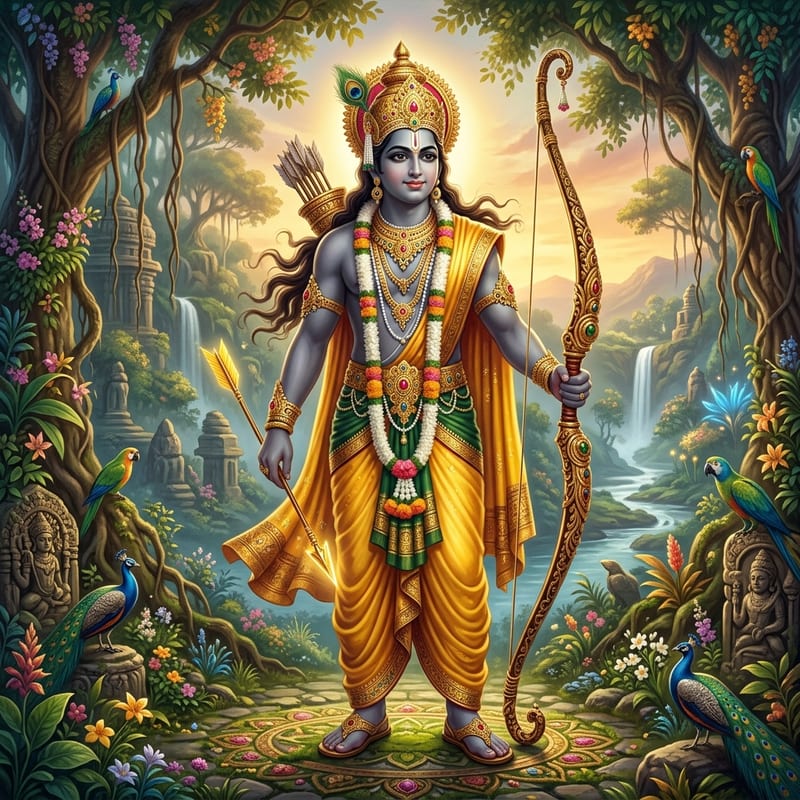
विशुद्धं परं सच्चिदानन्दरूपं
गुणाधारमाधारहीनं वरेण्यम् ।
महान्तं विभान्तं गुहान्तं गुणान्तं
सुखान्तं स्वयं धाम रामं प्रपद्ये ॥ 1 ॥
गुणाधारमाधारहीनं वरेण्यम् ।
महान्तं विभान्तं गुहान्तं गुणान्तं
सुखान्तं स्वयं धाम रामं प्रपद्ये ॥ 1 ॥
- विशुद्धम् (viśuddham)utterly pure
- परम् (param)supreme
- सत्-चित्-आनन्द-रूपम् (sac-cid-ānanda-rūpam)whose form is being, awareness and bliss
- गुण-आधारम् (guṇādhāram)the ground on which every quality rests
- आधार-हीनम् (ādhāra-hīnam)himself resting on nothing
- वरेण्यम् (vareṇyam)most choiceworthy
- महान्तम् (mahāntam)vast
- विभान्तम् (vibhāntam)shining out
- गुहान्तम् (guhāntam)at the far end of the heart’s cave
- गुणान्तम् (guṇāntam)past where the qualities end
- सुखान्तम् (sukhāntam)where happiness comes to rest
- स्वयम् धाम (svayaṃ dhāma)light in his own right
- रामम् (rāmam)Rāma
- प्रपद्ये (prapadye)I take refuge in
शिवं नित्यमेकं विभुं तारकाख्यं
सुखाकारमाकारशून्यं सुमान्यम् ।
महेशं कलेशं सुरेशं परेशं
नरेशं निरीशं महीशं प्रपद्ये ॥ 2 ॥
सुखाकारमाकारशून्यं सुमान्यम् ।
महेशं कलेशं सुरेशं परेशं
नरेशं निरीशं महीशं प्रपद्ये ॥ 2 ॥
- शिवम् (śivam)auspicious
- नित्यम् (nityam)eternal
- एकम् (ekam)one
- विभुम् (vibhum)all-pervading
- तारक-आख्यम् (tārakākhyam)called Tāraka, the name that ferries one across
- सुख-आकारम् (sukhākāram)whose shape is happiness
- आकार-शून्यम् (ākāra-śūnyam)having no shape at all
- सु-मान्यम् (su-mānyam)well worth honouring
- महा-ईशम् (maheśam)great lord
- कल-ईशम् (kaleśam)lord of time’s divisions
- सुर-ईशम् (sureśam)lord of the gods
- पर-ईशम् (pareśam)lord beyond them
- नर-ईशम् (nareśam)lord of men
- निर्-ईशम् (nirīśam)having no lord above him
- मही-ईशम् (mahīśam)lord of the earth
- प्रपद्ये (prapadye)I take refuge in
यदावर्णयत्कर्णमूलेऽन्तकाले
शिवो राम रामेति रामेति काश्याम् ।
तदेकं परं तारकब्रह्मरूपं
भजेऽहं भजेऽहं भजेऽहं भजेऽहम् ॥ 3 ॥
शिवो राम रामेति रामेति काश्याम् ।
तदेकं परं तारकब्रह्मरूपं
भजेऽहं भजेऽहं भजेऽहं भजेऽहम् ॥ 3 ॥
- यत् (yat)that which
- आवर्णयत् (āvarṇayat)he tells over
- कर्ण-मूले (karṇa-mūle)at the root of the ear
- अन्त-काले (anta-kāle)at the last hour
- शिवः (śivaḥ)Śiva
- राम राम इति राम इति (rāma rāma iti rāma iti)"Rāma, Rāma, Rāma"
- काश्याम् (kāśyām)in Kāśī
- तत् एकम् (tad ekam)that one thing
- परम् (param)supreme
- तारक-ब्रह्म-रूपम् (tāraka-brahma-rūpam)the ferrying Brahman in bodily form
- भजे अहम् (bhaje aham)I worship – said four times over, once for each utterance of the name above
महारत्नपीठे शुभे कल्पमूले
सुखासीनमादित्यकोटिप्रकाशम् ।
सदा जानकीलक्ष्मणोपेतमेकं
सदा रामचन्द्रं भजेऽहं भजेऽहम् ॥ 4 ॥
सुखासीनमादित्यकोटिप्रकाशम् ।
सदा जानकीलक्ष्मणोपेतमेकं
सदा रामचन्द्रं भजेऽहं भजेऽहम् ॥ 4 ॥
- महा-रत्न-पीठे (mahā-ratna-pīṭhe)on a throne of great jewels
- शुभे (śubhe)auspicious
- कल्प-मूले (kalpa-mūle)at the foot of the wishing-tree
- सुख-आसीनम् (sukhāsīnam)seated at his ease
- आदित्य-कोटि-प्रकाशम् (āditya-koṭi-prakāśam)shining like ten million suns
- सदा (sadā)ever
- जानकी-लक्ष्मण-उपेतम् (jānakī-lakṣmaṇopetam)attended by Jānakī and Lakṣmaṇa
- एकम् (ekam)the one
- सदा (sadā)always
- रामचन्द्रम् (rāmacandram)Rāmacandra
- भजे अहम् भजे अहम् (bhaje’haṃ bhaje’ham)I worship, I worship
क्वणद्रत्नमञ्जीरपादारविन्दं
लसन्मेखलाचारुपीताम्बराढ्यम् ।
महारत्नहारोल्लसत्कौस्तुभाङ्गं
नदच्चञ्चरीमञ्जरीलोलमालम् ॥ 5 ॥
लसन्मेखलाचारुपीताम्बराढ्यम् ।
महारत्नहारोल्लसत्कौस्तुभाङ्गं
नदच्चञ्चरीमञ्जरीलोलमालम् ॥ 5 ॥
- क्वणत्-रत्न-मञ्जीर-पाद-अरविन्दम् (kvaṇad-ratna-mañjīra-pādāravindam)lotus feet in jewelled anklets that chime
- लसत्-मेखला-चारु-पीत-अम्बर-आढ्यम् (lasan-mekhalā-cāru-pītāmbarāḍhyam)rich in a bright girdle and lovely yellow silk
- महा-रत्न-हार-उल्लसत्-कौस्तुभ-अङ्गम् (mahā-ratna-hārollasat-kaustubhāṅgam)his body agleam with a great jewelled necklace and the Kaustubha gem
- नदत्-चञ्चरी-मञ्जरी-लोल-मालम् (nadac-cañcarī-mañjarī-lola-mālam)a swaying garland where humming bees move among the blossom-clusters
लसच्चन्द्रिकास्मेरशोणाधराभं
समुद्यत्पतङ्गेन्दुकोटिप्रकाशम् ।
नमद्ब्रह्मरुद्रादिकोटीररत्न
स्फुरत्कान्तिनीराजनाराधिताङ्घ्रिम् ॥ 6 ॥
समुद्यत्पतङ्गेन्दुकोटिप्रकाशम् ।
नमद्ब्रह्मरुद्रादिकोटीररत्न
स्फुरत्कान्तिनीराजनाराधिताङ्घ्रिम् ॥ 6 ॥
- लसत्-चन्द्रिका-स्मेर-शोण-अधर-आभम् (lasac-candrikā-smera-śoṇādharābham)his red lower lip aglow with a smile like spreading moonlight
- समुद्यत्-पतङ्ग-इन्दु-कोटि-प्रकाशम् (samudyat-pataṅgendu-koṭi-prakāśam)bright as ten million suns and moons rising at once
- नमत्-ब्रह्म-रुद्र-आदि-कोटीर-रत्न-स्फुरत्-कान्ति-नीराजन-आराधित-अङ्घ्रिम् (namad-brahma-rudrādi-koṭīra-ratna-sphurat-kānti-nīrājanārādhitāṅghrim)his feet worshipped with a lamp-offering made of the flashing light of the crown-jewels of Brahmā, Rudra and the rest as they bow
पुरः प्राञ्जलीनाञ्जनेयादिभक्तान्
स्वचिन्मुद्रया भद्रया बोधयन्तम् ।
भजेऽहं भजेऽहं सदा रामचन्द्रं
त्वदन्यं न मन्ये न मन्ये न मन्ये ॥ 7 ॥
स्वचिन्मुद्रया भद्रया बोधयन्तम् ।
भजेऽहं भजेऽहं सदा रामचन्द्रं
त्वदन्यं न मन्ये न मन्ये न मन्ये ॥ 7 ॥
- पुरः (puraḥ)before him
- प्राञ्जलीन् (prāñjalīn)their hands joined
- आञ्जनेय-आदि-भक्तान् (āñjaneyādi-bhaktān)Āñjaneya and the other devotees
- स्व-चित्-मुद्रया (sva-cin-mudrayā)by his own sign of awareness
- भद्रया (bhadrayā)auspicious
- बोधयन्तम् (bodhayantam)awakening them
- भजे अहम् भजे अहम् (bhaje’haṃ bhaje’ham)I worship, I worship
- सदा (sadā)always
- रामचन्द्रम् (rāmacandram)Rāmacandra
- त्वत्-अन्यम् (tvad-anyam)any other than you
- न मन्ये न मन्ये न मन्ये (na manye na manye na manye)I do not own, I do not, I do not
यदा मत्समीपं कृतान्तः समेत्य
प्रचण्डप्रकोपैर्भटैर्भीषयेन्माम् ।
तदाविष्करोषि त्वदीयं स्वरूपं
सदापत्प्रणाशं सकोदण्डबाणम् ॥ 8 ॥
प्रचण्डप्रकोपैर्भटैर्भीषयेन्माम् ।
तदाविष्करोषि त्वदीयं स्वरूपं
सदापत्प्रणाशं सकोदण्डबाणम् ॥ 8 ॥
- यदा (yadā)when
- मत्-समीपम् (mat-samīpam)close to me
- कृतान्तः (kṛtāntaḥ)Death, the ender of things
- समेत्य (sametya)having come
- प्रचण्ड-प्रकोपैः (pracaṇḍa-prakopaiḥ)their fury blazing
- भटैः (bhaṭaiḥ)with his henchmen
- भीषयेत् (bhīṣayet)would terrify
- माम् (mām)me
- तदा (tadā)then
- आविष्करोषि (āviṣkaroṣi)you make plain
- त्वदीयम् स्वरूपम् (tvadīyaṃ svarūpam)that own form of yours
- सदा-आपद्-प्रणाशम् (sadāpat-praṇāśam)which is the undoing of calamity always
- स-कोदण्ड-बाणम् (sa-kodaṇḍa-bāṇam)with the Kodaṇḍa bow and its arrow
निजे मानसे मन्दिरे सन्निधेहि
प्रसीद प्रसीद प्रभो रामचन्द्र ।
ससौमित्रिणा कैकयीनन्दनेन
स्वशक्त्यानुभक्त्या च संसेव्यमान ॥ 9 ॥
प्रसीद प्रसीद प्रभो रामचन्द्र ।
ससौमित्रिणा कैकयीनन्दनेन
स्वशक्त्यानुभक्त्या च संसेव्यमान ॥ 9 ॥
- निजे (nije)my own
- मानसे मन्दिरे (mānase mandire)in the temple that is the mind
- सन्निधेहि (sannidhehi)take your place
- प्रसीद प्रसीद (prasīda prasīda)be gracious, be gracious
- प्रभो रामचन्द्र (prabho rāmacandra)O Lord Rāmacandra
- स-सौमित्रिणा (sa-saumitriṇā)along with the son of Sumitrā
- कैकयी-नन्दनेन (kaikayī-nandanena)with the gladdener of Kaikeyī, Bharata
- स्व-शक्त्या (sva-śaktyā)by your own power
- अनुभक्त्या (anubhaktyā)by devotion that follows after you
- च (ca)and
- संसेव्यमान (saṃsevyamāna)O you who are so served
स्वभक्ताग्रगण्यैः कपीशैर्महीशै-
-रनीकैरनेकैश्च राम प्रसीद ।
नमस्ते नमोऽस्त्वीश राम प्रसीद
प्रशाधि प्रशाधि प्रकाशं प्रभो माम् ॥ 10 ॥
-रनीकैरनेकैश्च राम प्रसीद ।
नमस्ते नमोऽस्त्वीश राम प्रसीद
प्रशाधि प्रशाधि प्रकाशं प्रभो माम् ॥ 10 ॥
- स्व-भक्त-अग्र-गण्यैः (sva-bhaktāgra-gaṇyaiḥ)with those counted first among your devotees
- कपि-ईशैः (kapīśaiḥ)with the lords of the monkeys
- मही-ईशैः (mahīśaiḥ)with the lords of the earth
- अनीकैः (anīkaiḥ)with armies
- अनेकैः (anekaiḥ)many
- च (ca)and
- राम (rāma)O Rāma
- प्रसीद (prasīda)be gracious
- नमः ते (namas te)salutation to you
- नमः अस्तु (namaḥ astu)let there be salutation
- ईश (īśa)O Lord
- राम (rāma)O Rāma
- प्रसीद (prasīda)be gracious
- प्रशाधि प्रशाधि (praśādhi praśādhi)give me your command, command me
- प्रकाशम् (prakāśam)into the open light
- प्रभो (prabho)O Master
- माम् (mām)me
त्वमेवासि दैवं परं मे यदेकं
सुचैतन्यमेतत्त्वदन्यं न मन्ये ।
यतोऽभूदमेयं वियद्वायुतेजो
जलोर्व्यादिकार्यं चरं चाचरं च ॥ 11 ॥
सुचैतन्यमेतत्त्वदन्यं न मन्ये ।
यतोऽभूदमेयं वियद्वायुतेजो
जलोर्व्यादिकार्यं चरं चाचरं च ॥ 11 ॥
- त्वम् एव (tvam eva)you alone
- असि (asi)are
- दैवम् (daivam)the divinity
- परम् (param)supreme
- मे (me)mine
- यत् एकम् (yad ekam)that one thing
- सु-चैतन्यम् (su-caitanyam)pure awareness
- एतत् (etat)this
- त्वत्-अन्यम् (tvad-anyam)anything other than you
- न मन्ये (na manye)I do not own
- यतः (yataḥ)from whom
- अभूत् (abhūt)came to be
- अमेयम् (ameyam)past all measuring
- वियत्-वायु-तेजः-जल-उर्वी-आदि-कार्यम् (viyad-vāyu-tejo-jalorvyādi-kāryam)everything made of space, wind, fire, water, earth and the rest
- चरम् (caram)what moves
- च (ca)and
- अचरम् (acaram)what does not
- च (ca)and
नमः सच्चिदानन्दरूपाय तस्मै
नमो देवदेवाय रामाय तुभ्यम् ।
नमो जानकीजीवितेशाय तुभ्यं
नमः पुण्डरीकायताक्षाय तुभ्यम् ॥ 12 ॥
नमो देवदेवाय रामाय तुभ्यम् ।
नमो जानकीजीवितेशाय तुभ्यं
नमः पुण्डरीकायताक्षाय तुभ्यम् ॥ 12 ॥
- नमः (namaḥ)salutation
- सत्-चित्-आनन्द-रूपाय (sac-cid-ānanda-rūpāya)to him whose form is being, awareness and bliss
- तस्मै (tasmai)to that one
- नमः (namaḥ)salutation
- देव-देवाय (deva-devāya)to the god of gods
- रामाय (rāmāya)to Rāma
- तुभ्यम् (tubhyam)to you
- नमः (namaḥ)salutation
- जानकी-जीवित-ईशाय (jānakī-jīviteśāya)to the lord of Jānakī’s very life
- तुभ्यम् (tubhyam)to you
- नमः (namaḥ)salutation
- पुण्डरीक-आयत-अक्षाय (puṇḍarīkāyatākṣāya)to him whose eyes are wide as white lotuses
- तुभ्यम् (tubhyam)to you
नमो भक्तियुक्तानुरक्ताय तुभ्यं
नमः पुण्यपुञ्जैकलभ्याय तुभ्यम् ।
नमो वेदवेद्याय चाद्याय पुंसे
नमः सुन्दरायेन्दिरावल्लभाय ॥ 13 ॥
नमः पुण्यपुञ्जैकलभ्याय तुभ्यम् ।
नमो वेदवेद्याय चाद्याय पुंसे
नमः सुन्दरायेन्दिरावल्लभाय ॥ 13 ॥
- नमः (namaḥ)salutation
- भक्ति-युक्त-अनुरक्ताय (bhakti-yuktānuraktāya)to him who loves in return those who love him
- तुभ्यम् (tubhyam)to you
- नमः (namaḥ)salutation
- पुण्य-पुञ्ज-एक-लभ्याय (puṇya-puñjaika-labhyāya)to be had by nothing but a heaped-up store of merit
- तुभ्यम् (tubhyam)to you
- नमः (namaḥ)salutation
- वेद-वेद्याय (veda-vedyāya)to him whom the Vedas exist to know
- च (ca)and
- आद्याय पुंसे (ādyāya puṃse)to the first Person
- नमः (namaḥ)salutation
- सुन्दराय (sundarāya)to the beautiful one
- इन्दिरा-वल्लभाय (indirā-vallabhāya)to the beloved of Indirā
नमो विश्वकर्त्रे नमो विश्वहर्त्रे
नमो विश्वभोक्त्रे नमो विश्वमात्रे ।
नमो विश्वनेत्रे नमो विश्वजेत्रे
नमो विश्वपित्रे नमो विश्वमात्रे ॥ 14 ॥
नमो विश्वभोक्त्रे नमो विश्वमात्रे ।
नमो विश्वनेत्रे नमो विश्वजेत्रे
नमो विश्वपित्रे नमो विश्वमात्रे ॥ 14 ॥
- नमः (namaḥ)salutation
- विश्व-कर्त्रे (viśva-kartre)to the maker of all
- नमः (namaḥ)salutation
- विश्व-हर्त्रे (viśva-hartre)to him who takes it all away
- नमः (namaḥ)salutation
- विश्व-भोक्त्रे (viśva-bhoktre)to him who tastes it
- नमः (namaḥ)salutation
- विश्व-मात्रे (viśva-mātre)to the whole measure of it
- नमः (namaḥ)salutation
- विश्व-नेत्रे (viśva-netre)to the eye of all, and to its leader
- नमः (namaḥ)salutation
- विश्व-जेत्रे (viśva-jetre)to its conqueror
- नमः (namaḥ)salutation
- विश्व-पित्रे (viśva-pitre)to the father of all
- नमः (namaḥ)salutation
- विश्व-मात्रे (viśva-mātre)and to its mother – one written form serving twice, first as मात्रा "measure", here as मातृ "mother"
नमस्ते नमस्ते समस्तप्रपञ्च-
-प्रभोगप्रयोगप्रमाणप्रवीण ।
मदीयं मनस्त्वत्पदद्वन्द्वसेवां
विधातुं प्रवृत्तं सुचैतन्यसिद्ध्यै ॥ 15 ॥
-प्रभोगप्रयोगप्रमाणप्रवीण ।
मदीयं मनस्त्वत्पदद्वन्द्वसेवां
विधातुं प्रवृत्तं सुचैतन्यसिद्ध्यै ॥ 15 ॥
- नमः ते नमः ते (namas te namas te)salutation to you, salutation to you
- समस्त-प्रपञ्च-प्रभोग-प्रयोग-प्रमाण-प्रवीण (samasta-prapañca-prabhoga-prayoga-pramāṇa-pravīṇa)O adept in the enjoyment, the employment and the measure of this whole spread-out world
- मदीयम् मनः (madīyaṃ manaḥ)this mind of mine
- त्वत्-पद-द्वन्द्व-सेवाम् (tvat-pada-dvandva-sevām)service at the pair of your feet
- विधातुम् (vidhātum)to perform
- प्रवृत्तम् (pravṛttam)has set out
- सु-चैतन्य-सिद्ध्यै (su-caitanya-siddhyai)for the winning of pure awareness
शिलापि त्वदङ्घ्रिक्षमासङ्गिरेणु
प्रसादाद्धि चैतन्यमाधत्त राम ।
नरस्त्वत्पदद्वन्द्वसेवाविधाना-
-त्सुचैतन्यमेतीति किं चित्रमत्र ॥ 16 ॥
प्रसादाद्धि चैतन्यमाधत्त राम ।
नरस्त्वत्पदद्वन्द्वसेवाविधाना-
-त्सुचैतन्यमेतीति किं चित्रमत्र ॥ 16 ॥
- शिला (śilā)a stone
- अपि (api)even
- त्वत्-अङ्घ्रि-क्षमा-सङ्गि-रेणु-प्रसादात् (tvad-aṅghri-kṣamā-saṅgi-reṇu-prasādāt)by the grace of the dust where your foot met the earth
- हि (hi)indeed
- चैतन्यम् (caitanyam)awareness
- आधत्त (ādhatta)took on
- राम (rāma)O Rāma
- नरः (naraḥ)a man
- त्वत्-पद-द्वन्द्व-सेवा-विधानात् (tvat-pada-dvandva-sevā-vidhānāt)by keeping up service at the pair of your feet
- सु-चैतन्यम् (su-caitanyam)pure awareness
- एति (eti)reaches
- इति (iti)that being so
- किम् चित्रम् अत्र (kiṃ citram atra)where is the wonder in it
पवित्रं चरित्रं विचित्रं त्वदीयं
नरा ये स्मरन्त्यन्वहं रामचन्द्र ।
भवन्तं भवान्तं भरन्तं भजन्तो
लभन्ते कृतान्तं न पश्यन्त्यतोऽन्ते ॥ 17 ॥
नरा ये स्मरन्त्यन्वहं रामचन्द्र ।
भवन्तं भवान्तं भरन्तं भजन्तो
लभन्ते कृतान्तं न पश्यन्त्यतोऽन्ते ॥ 17 ॥
- पवित्रम् (pavitram)hallowing
- चरित्रम् (caritram)the story of your deeds
- विचित्रम् (vicitram)full of wonders
- त्वदीयम् (tvadīyam)yours
- नराः ये (narā ye)those people who
- स्मरन्ति (smaranti)call it to mind
- अन्वहम् (anvaham)day after day
- रामचन्द्र (rāmacandra)O Rāmacandra
- भवन्तम् (bhavantam)you
- भव-अन्तम् (bhavāntam)who are the end of becoming
- भरन्तम् (bharantam)who bear them up
- भजन्तः (bhajantaḥ)worshipping
- लभन्ते (labhante)they win you
- कृतान्तम् (kṛtāntam)Death
- न पश्यन्ति (na paśyanti)they never set eyes on
- अतः (ataḥ)and therefore
- अन्ते (ante)at the end
स पुण्यः स गण्यः शरण्यो ममायं
नरो वेद यो देवचूडामणिं त्वाम् ।
सदाकारमेकं चिदानन्दरूपं
मनोवागगम्यं परं धाम राम ॥ 18 ॥
नरो वेद यो देवचूडामणिं त्वाम् ।
सदाकारमेकं चिदानन्दरूपं
मनोवागगम्यं परं धाम राम ॥ 18 ॥
- सः पुण्यः (sa puṇyaḥ)he is holy
- सः गण्यः (sa gaṇyaḥ)he is one to be counted
- शरण्यः (śaraṇyaḥ)a refuge
- मम (mama)to me
- अयम् (ayam)this one
- नरः (naraḥ)the man
- वेद (veda)who knows
- यः (yaḥ)who
- देव-चूडामणिम् (deva-cūḍāmaṇim)the crest-jewel of the gods
- त्वाम् (tvām)you
- सदा-आकारम् (sadākāram)of unchanging form
- एकम् (ekam)one
- चित्-आनन्द-रूपम् (cid-ānanda-rūpam)whose form is awareness and bliss
- मनः-वाक्-अगम्यम् (mano-vāg-agamyam)where neither mind nor speech arrives
- परम् धाम (paraṃ dhāma)the highest abode
- राम (rāma)O Rāma
प्रचण्डप्रतापप्रभावाभिभूत-
-प्रभूतारिवीर प्रभो रामचन्द्र ।
बलं ते कथं वर्ण्यतेऽतीव बाल्ये
यतोऽखण्डि चण्डीशकोदण्डदण्डम् ॥ 19 ॥
-प्रभूतारिवीर प्रभो रामचन्द्र ।
बलं ते कथं वर्ण्यतेऽतीव बाल्ये
यतोऽखण्डि चण्डीशकोदण्डदण्डम् ॥ 19 ॥
- प्रचण्ड-प्रताप-प्रभाव-अभिभूत-प्रभूत-अरि-वीर (pracaṇḍa-pratāpa-prabhāvābhibhūta-prabhūtāri-vīra)O hero by the force of whose fierce blazing might a host of foes was borne down
- प्रभो रामचन्द्र (prabho rāmacandra)O Lord Rāmacandra
- बलम् ते (balaṃ te)your strength
- कथम् (katham)how
- वर्ण्यते (varṇyate)is it to be told
- अतीव बाल्ये (atīva bālye)in your very boyhood
- यतः (yataḥ)whereby
- अखण्डि (akhaṇḍi)was snapped
- चण्डी-ईश-कोदण्ड-दण्डम् (caṇḍīśa-kodaṇḍa-daṇḍam)the staff of the bow of Caṇḍī’s lord, Śiva
दशग्रीवमुग्रं सपुत्रं समित्रं
सरिद्दुर्गमध्यस्थरक्षोगणेशम् ।
भवन्तं विना राम वीरो नरो वा
सुरो वाऽमरो वा जयेत्कस्त्रिलोक्याम् ॥ 20 ॥
सरिद्दुर्गमध्यस्थरक्षोगणेशम् ।
भवन्तं विना राम वीरो नरो वा
सुरो वाऽमरो वा जयेत्कस्त्रिलोक्याम् ॥ 20 ॥
- दश-ग्रीवम् (daśa-grīvam)the ten-necked one
- उग्रम् (ugram)terrible
- स-पुत्रम् (sa-putram)with his sons
- स-मित्रम् (sa-mitram)with his allies
- सरित्-दुर्ग-मध्य-स्थ-रक्षः-गण-ईशम् (sarid-durga-madhya-stha-rakṣo-gaṇeśam)lord of the rākṣasa hosts, set in a stronghold ringed about by water
- भवन्तम् विना (bhavantaṃ vinā)apart from you
- राम (rāma)O Rāma
- वीरः (vīraḥ)what hero
- नरः (naraḥ)man
- वा (vā)or
- सुरः (suraḥ)god
- वा (vā)or
- अमरः (amaraḥ)deathless one
- वा (vā)or
- जयेत् (jayet)could have conquered him
- कः (kaḥ)who
- त्रिलोक्याम् (trilokyām)in the three worlds
सदा राम रामेति रामामृतं ते
सदाराममानन्दनिष्यन्दकन्दम् ।
पिबन्तं नमन्तं सुदन्तं हसन्तं
हनूमन्तमन्तर्भजे तं नितान्तम् ॥ 21 ॥
सदाराममानन्दनिष्यन्दकन्दम् ।
पिबन्तं नमन्तं सुदन्तं हसन्तं
हनूमन्तमन्तर्भजे तं नितान्तम् ॥ 21 ॥
- सदा (sadā)always
- राम राम इति (rāma rāma iti)"Rāma, Rāma"
- राम-अमृतम् (rāmāmṛtam)that nectar which is the name Rāma
- ते (te)yours
- सदा-रामम् (sadā-rāmam)a delight that never ends
- आनन्द-निष्यन्द-कन्दम् (ānanda-niṣyanda-kandam)the root from which bliss wells up
- पिबन्तम् (pibantam)drinking it
- नमन्तम् (namantam)bowing
- सु-दन्तम् (su-dantam)fine of tooth
- हसन्तम् (hasantam)smiling
- हनूमन्तम् (hanūmantam)Hanumān
- अन्तः (antaḥ)within
- भजे (bhaje)I worship
- तम् (tam)him
- नितान्तम् (nitāntam)with all my heart
सदा राम रामेति रामामृतं ते
सदाराममानन्दनिष्यन्दकन्दम् ।
पिबन्नन्वहं नन्वहं नैव मृत्यो-
-र्बिभेमि प्रसादादसादात्तवैव ॥ 22 ॥
सदाराममानन्दनिष्यन्दकन्दम् ।
पिबन्नन्वहं नन्वहं नैव मृत्यो-
-र्बिभेमि प्रसादादसादात्तवैव ॥ 22 ॥
- सदा (sadā)always
- राम राम इति (rāma rāma iti)"Rāma, Rāma"
- राम-अमृतम् (rāmāmṛtam)that nectar which is the name Rāma
- ते (te)yours
- सदा-रामम् (sadā-rāmam)a delight that never ends
- आनन्द-निष्यन्द-कन्दम् (ānanda-niṣyanda-kandam)the root from which bliss wells up
- पिबन् (piban)drinking it
- अन्वहम् (anvaham)day after day
- ननु (nanu)surely
- अहम् (aham)I
- न एव (naiva)not in the least
- मृत्योः (mṛtyoḥ)of Death
- बिभेमि (bibhemi)am I afraid
- प्रसादात् (prasādāt)by the grace
- असादात् (asādāt)unfailing (printed thus
- the word is not standard and the reading is uncertain)
- तव एव (tavaiva)of you and no other
असीतासमेतैरकोदण्डभूषै-
-रसौमित्रिवन्द्यैरचण्डप्रतापैः ।
अलङ्केशकालैरसुग्रीवमित्रै-
-ररामाभिधेयैरलं दैवतैर्नः ॥ 23 ॥
-रसौमित्रिवन्द्यैरचण्डप्रतापैः ।
अलङ्केशकालैरसुग्रीवमित्रै-
-ररामाभिधेयैरलं दैवतैर्नः ॥ 23 ॥
- अ-सीता-समेतैः (a-sītā-sametaiḥ)with those not joined to Sītā
- अ-कोदण्ड-भूषैः (a-kodaṇḍa-bhūṣaiḥ)not wearing the Kodaṇḍa bow for ornament
- अ-सौमित्रि-वन्द्यैः (a-saumitri-vandyaiḥ)to whom Sumitrā’s son does not bow
- अ-चण्ड-प्रतापैः (a-caṇḍa-pratāpaiḥ)whose blaze is not fierce
- अ-लङ्का-ईश-कालैः (a-laṅkeśa-kālaiḥ)who are no Death to the lord of Laṅkā
- अ-सुग्रीव-मित्रैः (a-sugrīva-mitraiḥ)no friends to Sugrīva
- अ-राम-अभिधेयैः (a-rāmābhidheyaiḥ)not to be called by the name Rāma
- अलम् (alam)we have had enough
- दैवतैः (daivataiḥ)of such gods
- नः (naḥ)for us
अवीरासनस्थैरचिन्मुद्रिकाढ्यै-
-रभक्ताञ्जनेयादितत्त्वप्रकाशैः ।
अमन्दारमूलैरमन्दारमालै-
-ररामाभिधेयैरलं दैवतैर्नः ॥ 24 ॥
-रभक्ताञ्जनेयादितत्त्वप्रकाशैः ।
अमन्दारमूलैरमन्दारमालै-
-ररामाभिधेयैरलं दैवतैर्नः ॥ 24 ॥
- अ-वीर-आसन-स्थैः (a-vīrāsana-sthaiḥ)not seated in the hero’s posture
- अ-चित्-मुद्रिका-आढ्यैः (a-cin-mudrikāḍhyaiḥ)not graced with the sign of awareness
- अ-भक्त-आञ्जनेय-आदि-तत्त्व-प्रकाशैः (a-bhaktāñjaneyādi-tattva-prakāśaiḥ)who light up the truth for no Āñjaneya and no other devotee
- अ-मन्दार-मूलैः (a-mandāra-mūlaiḥ)not at the foot of the mandāra tree
- अ-मन्दार-मालैः (a-mandāra-mālaiḥ)not garlanded with mandāra blossom
- अ-राम-अभिधेयैः (a-rāmābhidheyaiḥ)not to be called by the name Rāma
- अलम् (alam)we have had enough
- दैवतैः (daivataiḥ)of such gods
- नः (naḥ)for us
असिन्धुप्रकोपैरवन्द्यप्रतापै-
-रबन्धुप्रयाणैरमन्दस्मिताढ्यैः ।
अदण्डप्रवासैरखण्डप्रबोधै-
-ररामाभिधेयैरलं दैवतैर्नः ॥ 25 ॥
-रबन्धुप्रयाणैरमन्दस्मिताढ्यैः ।
अदण्डप्रवासैरखण्डप्रबोधै-
-ररामाभिधेयैरलं दैवतैर्नः ॥ 25 ॥
- अ-सिन्धु-प्रकोपैः (a-sindhu-prakopaiḥ)who never raised their wrath against the sea
- अ-वन्द्य-प्रतापैः (a-vandya-pratāpaiḥ)whose might is not to be revered
- अ-बन्धु-प्रयाणैः (a-bandhu-prayāṇaiḥ)who set out on no journey with a brother
- अ-मन्द-स्मित-आढ्यैः (a-manda-smitāḍhyaiḥ)not rich in a gentle smile
- अ-दण्ड-प्रवासैः (a-daṇḍa-pravāsaiḥ)whose exile was no sentence borne
- अ-खण्ड-प्रबोधैः (a-khaṇḍa-prabodhaiḥ)whose waking is not entire – the verse’s running privative अ- falls here on a word that already reads "unbroken", so the sense is carried by the pattern rather than by the compound
- अ-राम-अभिधेयैः (a-rāmābhidheyaiḥ)not to be called by the name Rāma
- अलम् (alam)we have had enough
- दैवतैः (daivataiḥ)of such gods
- नः (naḥ)for us
हरे राम सीतापते रावणारे
खरारे मुरारेऽसुरारे परेति ।
लपन्तं नयन्तं सदाकालमेवं
समालोकयालोकयाशेषबन्धो ॥ 26 ॥
खरारे मुरारेऽसुरारे परेति ।
लपन्तं नयन्तं सदाकालमेवं
समालोकयालोकयाशेषबन्धो ॥ 26 ॥
- हरे (hare)O Hari
- राम (rāma)O Rāma
- सीता-पते (sītā-pate)O husband of Sītā
- रावण-अरे (rāvaṇāre)O foe of Rāvaṇa
- खर-अरे (kharāre)O foe of Khara
- मुर-अरे (murāre)O foe of Mura
- असुर-अरे (asurāre)O foe of the asuras
- पर (para)O supreme one
- इति (iti)so
- लपन्तम् (lapantam)murmuring
- नयन्तम् (nayantam)passing
- सदा-कालम् (sadā-kālam)all his time
- एवम् (evam)in this way
- समालोकय (samālokaya)look upon him
- आलोकय (ālokaya)look
- अशेष-बन्धो (aśeṣa-bandho)O kinsman of every creature
नमस्ते सुमित्रासुपुत्राभिवन्द्य
नमस्ते सदा कैकयीनन्दनेड्य ।
नमस्ते सदा वानराधीशवन्द्य
नमस्ते नमस्ते सदा रामचन्द्र ॥ 27 ॥
नमस्ते सदा कैकयीनन्दनेड्य ।
नमस्ते सदा वानराधीशवन्द्य
नमस्ते नमस्ते सदा रामचन्द्र ॥ 27 ॥
- नमः ते (namas te)salutation to you
- सुमित्रा-सु-पुत्र-अभिवन्द्य (sumitrā-su-putrābhivandya)O you whom Sumitrā’s good son reveres
- नमः ते (namas te)salutation to you
- सदा (sadā)always
- कैकयी-नन्दन-ईड्य (kaikayī-nandaneḍya)O you whom Kaikeyī’s son extols
- नमः ते (namas te)salutation to you
- सदा (sadā)always
- वानर-अधीश-वन्द्य (vānarādhīśa-vandya)O you whom the overlord of the monkeys honours
- नमः ते नमः ते (namas te namas te)salutation, salutation to you
- सदा (sadā)always
- रामचन्द्र (rāmacandra)O Rāmacandra
प्रसीद प्रसीद प्रचण्डप्रताप
प्रसीद प्रसीद प्रचण्डारिकाल ।
प्रसीद प्रसीद प्रपन्नानुकम्पिन्
प्रसीद प्रसीद प्रभो रामचन्द्र ॥ 28 ॥
प्रसीद प्रसीद प्रचण्डारिकाल ।
प्रसीद प्रसीद प्रपन्नानुकम्पिन्
प्रसीद प्रसीद प्रभो रामचन्द्र ॥ 28 ॥
- प्रसीद प्रसीद (prasīda prasīda)be gracious, be gracious
- प्रचण्ड-प्रताप (pracaṇḍa-pratāpa)O you of fierce blazing might
- प्रसीद प्रसीद (prasīda prasīda)be gracious, be gracious
- प्रचण्ड-अरि-काल (pracaṇḍāri-kāla)O Death to the fiercest of foes
- प्रसीद प्रसीद (prasīda prasīda)be gracious, be gracious
- प्रपन्न-अनुकम्पिन् (prapannānukampin)O you who feel for those who have surrendered
- प्रसीद प्रसीद (prasīda prasīda)be gracious, be gracious
- प्रभो रामचन्द्र (prabho rāmacandra)O Lord Rāmacandra
भुजङ्गप्रयातं परं वेदसारं
मुदा रामचन्द्रस्य भक्त्या च नित्यम् ।
पठन्सन्ततं चिन्तयन्स्वान्तरङ्गे
स एव स्वयं रामचन्द्रः स धन्यः ॥ 29 ॥
मुदा रामचन्द्रस्य भक्त्या च नित्यम् ।
पठन्सन्ततं चिन्तयन्स्वान्तरङ्गे
स एव स्वयं रामचन्द्रः स धन्यः ॥ 29 ॥
- भुजङ्ग-प्रयातम् (bhujaṅga-prayātam)this hymn in the bhujaṅgaprayāta metre
- परम् (param)supreme
- वेद-सारम् (veda-sāram)the marrow of the Vedas
- मुदा (mudā)with gladness
- रामचन्द्रस्य (rāmacandrasya)of Rāmacandra
- भक्त्या (bhaktyā)with devotion
- च (ca)and
- नित्यम् (nityam)day by day
- पठन् (paṭhan)reciting
- सन्ततम् (santatam)without a break
- चिन्तयन् (cintayan)pondering it
- स्व-अन्तरङ्गे (svāntaraṅge)in his own inmost part
- सः एव (sa eva)he himself
- स्वयम् (svayam)in his own person
- रामचन्द्रः (rāmacandraḥ)is Rāmacandra
- सः धन्यः (sa dhanyaḥ)blessed is that man
इति श्रीमच्छङ्कराचार्य कृतं श्री राम भुजङ्गप्रयात स्तोत्रम् ।