
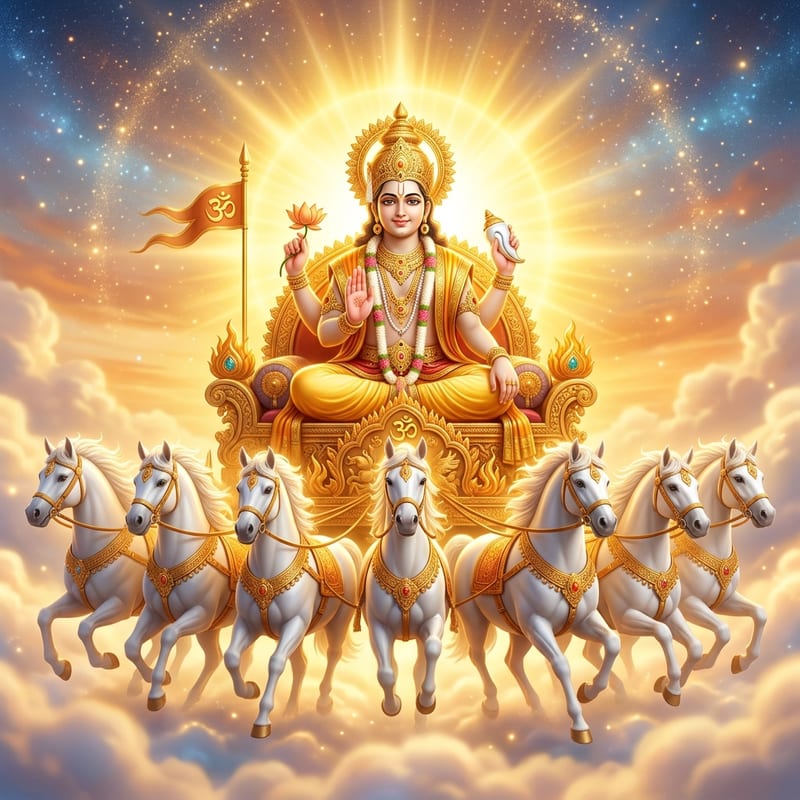
- नवग्रहध्यानश्लोकम् (navagrahadhyānaślokam)the verse for meditating on the nine planets
anvaya नवग्रहध्यानश्लोकम्
note A heading rather than a verse. It names what follows.
गुरु शुक्र शनिभ्यश्च राहवे केतवे नमः ॥
- आदित्याय (ādityāya)to Āditya, the Sun
- च (ca)and
- सोमाय (somāya)to Soma, the Moon
- मङ्गलाय (maṅgalāya)to Maṅgala, Mars
- बुधाय (budhāya)to Budha, Mercury
- च (ca)and
- गुरु-शुक्र-शनिभ्यः (guru-śukra-śanibhyaḥ)to Guru, Śukra and Śani
- च (ca)and
- राहवे (rāhave)to Rāhu
- केतवे (ketave)to Ketu
- नमः (namaḥ)salutation
anvaya आदित्याय च सोमाय च मङ्गलाय बुधाय च गुरुशुक्रशनिभ्यः राहवे केतवे नमः
chandas Anuṣṭubh, 8 syllables in each of 4 pādas
राहवे केतवे to Rahu, to Ketu — The last two of the nine are not bodies in the sky. They are the two points where the moon's path crosses the sun's, and an eclipse can happen only near them.
नमः salutation — One namaḥ at the end covers all nine names, each of them in the dative.
note The nine are named in the order of the weekdays, Sunday to Saturday, with Rahu and Ketu added at the end. The nine verses that follow take them one at a time in the same order.
जपाकुसुम सङ्काशं काश्यपेयं महाद्युतिम् ।
तमोऽरिं सर्व पापघ्नं प्रणतोस्मि दिवाकरम् ॥
- रविः (raviḥ)the Sun
- जपा-कुसुम-सङ्काशम् (japā-kusuma-saṅkāśam)like the hibiscus flower
- काश्यपेयम् (kāśyapeyam)son of Kaśyapa
- महा-द्युतिम् (mahā-dyutim)of great brilliance
- तमः-अरिम् (tamaḥ-arim)the foe of darkness
- सर्व-पाप-घ्नम् (sarva-pāpa-ghnam)slayer of every sin
- प्रणतः अस्मि (praṇataḥ asmi)I stand bowed
- दिवाकरम् (divākaram)before the maker of day
anvaya रविः जपाकुसुमसङ्काशम् काश्यपेयम् महाद्युतिम् तमोऽरिम् सर्वपापघ्नम् दिवाकरम् प्रणतः अस्मि
chandas Anuṣṭubh, 8 syllables in each of 4 pādas
जपाकुसुम the hibiscus flower — The deep red china rose. Each of the nine verses opens with a colour, and this is the Sun's.
काश्यपेयम् son of Kashyapa — Kashyapa is the sage from whom the Adityas are descended, which is why the Sun is Aditya.
तमोऽरिम् the foe of darkness — Tamas is darkness, and in the same word the dullness in a person.
note Each of the nine verses gives its planet a colour, a parentage and a work it does, then bows to it by a second name. Here the second name is Divakara, the maker of day.
दधिशङ्ख तुषाराभं क्षीरार्णव समुद्भवम् (क्षीरोदार्णव सम्भवम्) ।
नमामि शशिनं सोमं शम्भो-र्मकुट भूषणम् ॥
- चन्द्रः (candraḥ)the Moon
- दधि-शङ्ख-तुषार-आभम् (dadhi-śaṅkha-tuṣāra-ābham)of the sheen of curds, of conch and of snow
- क्षीर-अर्णव-समुद्भवम् (kṣīra-arṇava-samudbhavam)risen from the ocean of milk
- नमामि (namāmi)I bow to
- शशिनम् (śaśinam)the hare-marked
- सोमम् (somam)Soma
- शम्भोः मकुट-भूषणम् (śambhoḥ makuṭa-bhūṣaṇam)the ornament upon Śambhu’s crown
anvaya चन्द्रः दधिशङ्खतुषाराभम् क्षीरार्णवसमुद्भवम् शम्भोः मकुटभूषणम् शशिनम् सोमम् नमामि
chandas Anuṣṭubh, 8 syllables in each of 4 pādas
दधिशङ्खतुषाराभम् with the sheen of curds, conch and frost — Three white things in one word, each a different white.
शशिनम् the hare-marked one — Śaśa is a hare. The dark patches on the moon are seen as a hare rather than a face.
मकुटभूषणम् the ornament on the crown — Shiva wears the crescent in his hair, so the moon is spoken of as his headpiece.
note The moon came up when the sea of milk was churned. The bracketed क्षीरोदार्णव सम्भवम् in the printed text is another reading of the second pāda and says the same thing.
धरणी गर्भ सम्भूतं विद्युत्कान्ति समप्रभम् ।
कुमारं शक्तिहस्तं तं कुजं [मङ्गलं] प्रणमाम्यहम् ॥
- कुजः (kujaḥ)Mars, the earth-born
- धरणी-गर्भ-सम्भूतम् (dharaṇī-garbha-sambhūtam)born of the womb of the Earth
- विद्युत्-कान्ति-सम-प्रभम् (vidyut-kānti-sama-prabham)of a brilliance like the flash of lightning
- कुमारम् (kumāram)the youth
- शक्ति-हस्तम् (śakti-hastam)with the spear in his hand
- तम् कुजम् (tam kujam)to him, Kuja
- मङ्गलम् (maṅgalam)Maṅgala (a variant reading)
- प्रणमामि अहम् (praṇamāmi aham)I bow
anvaya कुजः धरणीगर्भसम्भूतम् विद्युत्कान्तिसमप्रभम् कुमारम् शक्तिहस्तम् तम् कुजम् अहम् प्रणमामि
chandas Anuṣṭubh, 8 syllables in each of 4 pādas
कुजम् the earth-born — Ku is the earth, ja born of it. Mars is counted a son of the Earth, which the first pāda states outright.
शक्तिहस्तम् with the spear in his hand — Śakti here is the weapon, a short spear. It is the sense of the word in this verse rather than power in the abstract.
note Printed with मङ्गलं in brackets as another name for the same planet; that is the name used in speech and in the weekday Mangalvar.
प्रियङ्गु कलिकाश्यामं रूपेणा प्रतिमं बुधम् ।
सौम्यं सौम्य (सत्व) गुणोपेतं तं बुधं प्रणमाम्यहम् ॥
- बुधः (budhaḥ)Mercury
- प्रियङ्गु-कलिका-श्यामम् (priyaṅgu-kalikā-śyāmam)dark as the priyaṅgu bud
- रूपेण अप्रतिमम् (rūpeṇa apratimam)matchless in beauty
- बुधम् (budham)Budha
- सौम्यम् (saumyam)gentle
- सौम्य-गुण-उपेतम् (saumya-guṇa-upetam)endowed with a gentle nature
- सत्त्व-गुण-उपेतम् (sattva-guṇa-upetam)endowed with the quality of sattva (a variant reading)
- तम् बुधम् (tam budham)to that Budha
- प्रणमामि अहम् (praṇamāmi aham)I bow
anvaya बुधः प्रियङ्गुकलिकाश्यामम् रूपेण अप्रतिमम् सौम्यम् सौम्यगुणोपेतम् बुधम् तम् बुधम् अहम् प्रणमामि
chandas Anuṣṭubh, 8 syllables in each of 4 pādas
प्रियङ्गुकलिका the priyangu bud — A dark green bud, the colour given to Mercury.
सौम्यम् gentle — The word is built on Soma, the moon, and Budha is the moon's son. So it says gentle and says whose son he is at once.
note Printed रूपेणा प्रतिमं; read as रूपेण अप्रतिमं, matchless in form, which is how it is recited. The bracketed सत्व is another reading for the second सौम्य, giving the quality of sattva.
देवानां च ऋषीणां च गुरुं काञ्चनसन्निभम् ।
बुद्धिमन्तं त्रिलोकेशं तं नमामि बृहस्पतिम् ॥
- गुरुः (guruḥ)Jupiter
- देवानाम् च ऋषीणाम् च (devānām ca ṛṣīṇām ca)of gods and of seers alike
- गुरुम् (gurum)the preceptor
- काञ्चन-सन्निभम् (kāñcana-sannibham)like gold to look upon
- बुद्धिमन्तम् (buddhimantam)full of understanding
- त्रि-लोक-ईशम् (tri-loka-īśam)lord of the three worlds
- तम् नमामि (tam namāmi)to him I bow
- बृहस्पतिम् (bṛhaspatim)Bṛhaspati
anvaya गुरुः देवानाम् च ऋषीणाम् च गुरुम् काञ्चनसन्निभम् बुद्धिमन्तम् त्रिलोकेशम् तम् बृहस्पतिम् नमामि
chandas Anuṣṭubh, 8 syllables in each of 4 pādas
काञ्चनसन्निभम् like gold to look at — Kāñcana is gold. Jupiter's colour in this set is yellow.
बृहस्पतिम् Brihaspati — The teacher of the gods. Thursday is named after him, Guruvar.
note This verse and the next make a pair: the teacher of the gods, then the teacher of their opponents.
हिमकुन्द मृणालाभं दैत्यानं परमं गुरुम् ।
सर्वशास्त्र प्रवक्तारं भार्गवं प्रणमाम्यहम् ॥
- शुक्रः (śukraḥ)Venus
- हिम-कुन्द-मृणाल-आभम् (hima-kunda-mṛṇāla-ābham)of the sheen of snow, jasmine and the lotus stalk
- दैत्यानाम् (daityānām)of the daityas
- परमम् गुरुम् (paramam gurum)the supreme preceptor
- सर्व-शास्त्र-प्रवक्तारम् (sarva-śāstra-pravaktāram)the expounder of every scripture
- भार्गवम् (bhārgavam)Bhārgava
- प्रणमामि अहम् (praṇamāmi aham)I bow
anvaya शुक्रः हिमकुन्दमृणालाभम् दैत्यानाम् परमम् गुरुम् सर्वशास्त्रप्रवक्तारम् भार्गवम् अहम् प्रणमामि
chandas Anuṣṭubh, 8 syllables in each of 4 pādas
मृणाल the lotus stalk — White where it is broken. Snow, jasmine and the lotus stalk give Venus three whites, as the moon had three.
भार्गवम् Bhargava — Son of Bhrigu. Shukra is teacher to the daityas, the gods' opponents, and the verse calls him their highest one.
note Printed दैत्यानं for दैत्यानाम्, a short spelling common in printed texts.
नीलाञ्जन समाभासं रविपुत्रं यमाग्रजम् ।
छाया मार्ताण्ड सम्भूतं तं नमामि शनैश्चरम् ॥
- शनिः (śaniḥ)Saturn
- नील-अञ्जन-सम-आभासम् (nīla-añjana-sama-ābhāsam)shining dark as black collyrium
- रवि-पुत्रम् (ravi-putram)son of the Sun
- यम-अग्रजम् (yama-agrajam)elder brother of Yama
- छाया-मार्ताण्ड-सम्भूतम् (chāyā-mārtāṇḍa-sambhūtam)born of Chāyā and Mārtāṇḍa
- तम् नमामि (tam namāmi)to him I bow
- शनैश्चरम् (śanaiścaram)Śanaiścara, the slow-mover
anvaya शनिः नीलाञ्जनसमाभासम् रविपुत्रम् यमाग्रजम् छायामार्ताण्डसम्भूतम् तम् शनैश्चरम् नमामि
chandas Anuṣṭubh, 8 syllables in each of 4 pādas
नीलाञ्जन dark eye-black — The black paste put on the eyes. Saturn's colour is that blue-black.
छायामार्ताण्डसम्भूतम् born of Chhaya and the Sun — Chhaya, whose name means shadow, is the Sun's second wife. Yama is her husband's son by another, which is why Saturn is called Yama's younger brother here.
शनैश्चरम् the slow walker — Śanaiḥ is slowly and cara moving. Saturn takes about thirty years to come round the sky, and the name says so.
note Printed यमाग्रजम्, which reads as the elder brother of Yama. The usual telling makes Yama the elder of the two.
अर्धकायं महावीरं चन्द्रादित्य विमर्धनम् ।
सिंहिका गर्भ सम्भूतं तं राहुं प्रणमाम्यहम् ॥
- राहुः (rāhuḥ)Rāhu
- अर्ध-कायम् (ardha-kāyam)having but half a body
- महा-वीरम् (mahā-vīram)the great warrior
- चन्द्र-आदित्य-विमर्दनम् (candra-āditya-vimardanam)the crusher of Moon and Sun
- सिंहिका-गर्भ-सम्भूतम् (siṃhikā-garbha-sambhūtam)born of the womb of Siṃhikā
- तम् राहुम् (tam rāhum)to him, Rāhu
- प्रणमामि अहम् (praṇamāmi aham)I bow
anvaya राहुः अर्धकायम् महावीरम् चन्द्रादित्यविमर्धनम् सिंहिकागर्भसम्भूतम् तम् राहुम् अहम् प्रणमामि
chandas Anuṣṭubh, 8 syllables in each of 4 pādas
अर्धकायम् having only half a body — In the story of the churning his head was cut from his body after he drank the nectar. The head stayed alive and became Rahu.
चन्द्रादित्यविमर्धनम् who presses hard upon moon and sun — Printed विमर्धन for विमर्दन, crushing. Eclipses are told as his seizing of the two lights.
सिंहिका Simhika — His mother, named in the Puranas as a daughter of Kashyapa.
note Rahu and Ketu are the head and the tail of one figure, which is why the last two verses answer each other.
पलाश पुष्प सङ्काशं तारकाग्रहमस्तकम् ।
रौद्रं रौद्रात्मकं घोरं तं केतुं प्रणमाम्यहम् ॥
- केतुः (ketuḥ)Ketu
- पलाश-पुष्प-सङ्काशम् (palāśa-puṣpa-saṅkāśam)like the palāśa blossom
- तारका-ग्रह-मस्तकम् (tārakā-graha-mastakam)who bears the stars and planets upon his head
- रौद्रम् (raudram)fierce
- रौद्र-आत्मकम् (raudra-ātmakam)fierce in his very nature
- घोरम् (ghoram)terrible
- तम् केतुम् (tam ketum)to him, Ketu
- प्रणमामि अहम् (praṇamāmi aham)I bow
anvaya केतुः पलाशपुष्पसङ्काशम् तारकाग्रहमस्तकम् रौद्रम् रौद्रात्मकम् घोरम् तम् केतुम् अहम् प्रणमामि
chandas Anuṣṭubh, 8 syllables in each of 4 pādas
पलाशपुष्प the flame-of-the-forest flower — A hot orange red. It is the last of the nine colours in the hymn.
तारकाग्रहमस्तकम् who carries stars and planets at his head — The compound is printed as one word and is read in more than one way. What is certain is that the stars and the planets stand at his head.
note The third pāda puts three words for the same fierceness side by side. Ketu is the comet or the tail, and the verse does not soften him.
इति व्यास मुखोद्गीतं यः पठेत्सु समाहितः ।
दिवा वा यदि वा रात्रौ विघ्नशान्ति-र्भविष्यति ॥
- फल-श्रुतिः (phala-śrutiḥ)the declaration of the fruit
- इति (iti)thus
- व्यास-मुख-उद्गीतम् (vyāsa-mukha-udgītam)sung forth from the mouth of Vyāsa
- यः पठेत् (yaḥ paṭhet)whoever recites it
- सु-समाहितः (su-samāhitaḥ)with a well-composed mind
- दिवा वा यदि वा रात्रौ (divā vā yadi vā rātrau)whether by day or by night
- विघ्न-शान्तिः (vighna-śāntiḥ)the quieting of obstacles
- भविष्यति (bhaviṣyati)shall come about
anvaya फलश्रुतिः यः सुसमाहितः दिवा वा यदि वा रात्रौ इति व्यासमुखोद्गीतम् पठेत् विघ्नशान्तिः भविष्यति
chandas Anuṣṭubh, 8 syllables in each of 4 pādas
फलश्रुतिः the telling of what comes of it — The closing part of a stotra, where what the reciting is good for is stated. Three verses of it end this hymn.
व्यासमुखोद्गीतम् sung from the mouth of Vyasa — The hymn is given to Vyasa, and the last verse repeats his name as a seal on it.
सुसमाहितः with the mind well gathered — Samāhita is collected, put together. The fruit is promised for reciting done with attention.
note Printed पठेत्सु समाहितः, which is read as पठेत् सुसमाहितः.
ऐश्वर्यमतुलं तेषामारोग्यं पुष्टि वर्धनम् ॥
- नर-नारी-नृपाणाम् (nara-nārī-nṛpāṇām)for men, for women and for kings
- च (ca)and
- भवेत् (bhavet)there shall be
- दुःस्वप्न-नाशनम् (duḥsvapna-nāśanam)the undoing of evil dreams
- ऐश्वर्यम् अतुलम् (aiśvaryam atulam)prosperity beyond compare
- तेषाम् (teṣām)for them
- आरोग्यम् (ārogyam)health
- पुष्टि-वर्धनम् (puṣṭi-vardhanam)and increase of strength
anvaya नरनारीनृपाणाम् दुःस्वप्ननाशनम् भवेत् च तेषाम् अतुलम् ऐश्वर्यम् आरोग्यम् पुष्टिवर्धनम्
chandas Anuṣṭubh, 8 syllables in each of 4 pādas
दुःस्वप्ननाशनम् the undoing of bad dreams — Bad dreams are read in this literature as a sign that the planets are unfavourable, so they are the first thing named.
पुष्टिवर्धनम् a gain in strength — Puṣṭi is being well fed and well grown.
note Men, women and kings are listed separately, which is the older way of saying everyone, whatever their station.
तास्सर्वाः प्रशमं यान्ति व्यासो ब्रूते न संशयः ॥
- ग्रह-नक्षत्र-जाः (graha-nakṣatra-jāḥ)born of the planets and the constellations
- पीडाः (pīḍāḥ)afflictions
- तस्कर-अग्नि-समुद्भवाः (taskara-agni-samudbhavāḥ)arising from thieves and from fire
- ताः सर्वाः (tāḥ sarvāḥ)all of them
- प्रशमम् यान्ति (praśamam yānti)go to quietness
- व्यासः ब्रूते (vyāsaḥ brūte)so Vyāsa declares
- न संशयः (na saṃśayaḥ)and there is no doubt
anvaya ग्रहनक्षत्रजाः तस्कराग्निसमुद्भवाः पीडाः ताः सर्वाः प्रशमम् यान्ति व्यासः ब्रूते न संशयः
chandas Anuṣṭubh, 8 syllables in each of 4 pādas
प्रशमम् यान्ति go quiet — Praśama is the settling of something that was disturbed, the same word used of a fire going down.
तस्कर a thief — Thieves and fire are put beside the planets and stars, so the troubles counted run from the sky to the house.
note The hymn ends by naming Vyasa as the one who says it, and by adding that there is no doubt about it.