
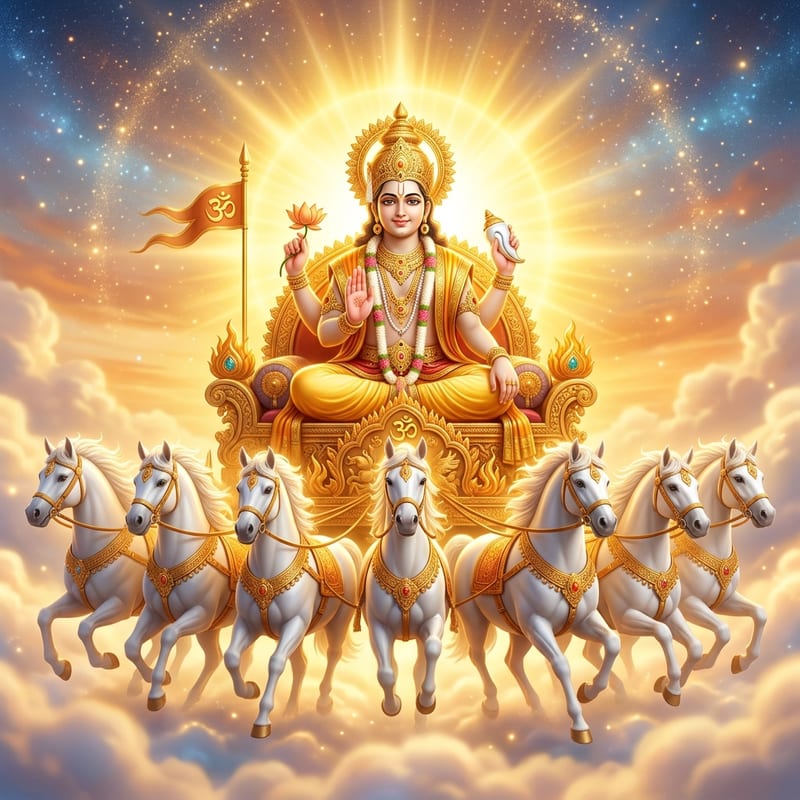
- நவக்ரஹத்யாநஶ்லோகம் (navagrahadhyānaślokam)the verse for meditating on the nine planets
anvaya நவக்ரஹத்யாநஶ்லோகம்
note A heading rather than a verse. It names what follows.
குரு ஶுக்ர ஶநிப்யஶ்ச ராஹவே கேதவே நமஃ ॥
- ஆதித்யாய (ādityāya)to Āditya, the Sun
- ச (ca)and
- ஸோமாய (somāya)to Soma, the Moon
- மங்கலாய (maṅgalāya)to Maṅgala, Mars
- புதாய (budhāya)to Budha, Mercury
- ச (ca)and
- குரு-ஶுக்ர-ஶநிப்யஃ (guru-śukra-śanibhyaḥ)to Guru, Śukra and Śani
- ச (ca)and
- ராஹவே (rāhave)to Rāhu
- கேதவே (ketave)to Ketu
- நமஃ (namaḥ)salutation
anvaya ஆதித்யாய ச ஸோமாய ச மங்கலாய புதாய ச குருஶுக்ரஶநிப்யஃ ராஹவே கேதவே நமஃ
chandas Anuṣṭubh, 8 syllables in each of 4 pādas
ராஹவே கேதவே to Rahu, to Ketu — The last two of the nine are not bodies in the sky. They are the two points where the moon's path crosses the sun's, and an eclipse can happen only near them.
நமஃ salutation — One namaḥ at the end covers all nine names, each of them in the dative.
note The nine are named in the order of the weekdays, Sunday to Saturday, with Rahu and Ketu added at the end. The nine verses that follow take them one at a time in the same order.
ஜபாகுஸும ஸங்காஶம் காஶ்யபேயம் மஹாத்யுதிம் ।
தமோ'ரிம் ஸர்வ பாபக்நம் ப்ரணதோஸ்மி திவாகரம் ॥
- ரவிஃ (raviḥ)the Sun
- ஜபா-குஸும-ஸங்காஶம் (japā-kusuma-saṅkāśam)like the hibiscus flower
- காஶ்யபேயம் (kāśyapeyam)son of Kaśyapa
- மஹா-த்யுதிம் (mahā-dyutim)of great brilliance
- தமஃ-அரிம் (tamaḥ-arim)the foe of darkness
- ஸர்வ-பாப-க்நம் (sarva-pāpa-ghnam)slayer of every sin
- ப்ரணதஃ அஸ்மி (praṇataḥ asmi)I stand bowed
- திவாகரம் (divākaram)before the maker of day
anvaya ரவிஃ ஜபாகுஸுமஸங்காஶம் காஶ்யபேயம் மஹாத்யுதிம் தமோ'ரிம் ஸர்வபாபக்நம் திவாகரம் ப்ரணதஃ அஸ்மி
chandas Anuṣṭubh, 8 syllables in each of 4 pādas
ஜபாகுஸும the hibiscus flower — The deep red china rose. Each of the nine verses opens with a colour, and this is the Sun's.
காஶ்யபேயம் son of Kashyapa — Kashyapa is the sage from whom the Adityas are descended, which is why the Sun is Aditya.
தமோ'ரிம் the foe of darkness — Tamas is darkness, and in the same word the dullness in a person.
note Each of the nine verses gives its planet a colour, a parentage and a work it does, then bows to it by a second name. Here the second name is Divakara, the maker of day.
ததிஶங்க துஷாராபம் க்ஷீரார்ணவ ஸமுத்பவம் (க்ஷீரோதார்ணவ ஸம்பவம்) ।
நமாமி ஶஶிநம் ஸோமம் ஶம்போ-ர்மகுட பூஷணம் ॥
- சந்த்ரஃ (candraḥ)the Moon
- ததி-ஶங்க-துஷார-ஆபம் (dadhi-śaṅkha-tuṣāra-ābham)of the sheen of curds, of conch and of snow
- க்ஷீர-அர்ணவ-ஸமுத்பவம் (kṣīra-arṇava-samudbhavam)risen from the ocean of milk
- நமாமி (namāmi)I bow to
- ஶஶிநம் (śaśinam)the hare-marked
- ஸோமம் (somam)Soma
- ஶம்போஃ மகுட-பூஷணம் (śambhoḥ makuṭa-bhūṣaṇam)the ornament upon Śambhu’s crown
anvaya சந்த்ரஃ ததிஶங்கதுஷாராபம் க்ஷீரார்ணவஸமுத்பவம் ஶம்போஃ மகுடபூஷணம் ஶஶிநம் ஸோமம் நமாமி
chandas Anuṣṭubh, 8 syllables in each of 4 pādas
ததிஶங்கதுஷாராபம் with the sheen of curds, conch and frost — Three white things in one word, each a different white.
ஶஶிநம் the hare-marked one — Śaśa is a hare. The dark patches on the moon are seen as a hare rather than a face.
மகுடபூஷணம் the ornament on the crown — Shiva wears the crescent in his hair, so the moon is spoken of as his headpiece.
note The moon came up when the sea of milk was churned. The bracketed க்ஷீரோதார்ணவ ஸம்பவம் in the printed text is another reading of the second pāda and says the same thing.
தரணீ கர்ப ஸம்பூதம் வித்யுத்காந்தி ஸமப்ரபம் ।
குமாரம் ஶக்திஹஸ்தம் தம் குஜம் [மங்கலம்] ப்ரணமாம்யஹம் ॥
- குஜஃ (kujaḥ)Mars, the earth-born
- தரணீ-கர்ப-ஸம்பூதம் (dharaṇī-garbha-sambhūtam)born of the womb of the Earth
- வித்யுத்-காந்தி-ஸம-ப்ரபம் (vidyut-kānti-sama-prabham)of a brilliance like the flash of lightning
- குமாரம் (kumāram)the youth
- ஶக்தி-ஹஸ்தம் (śakti-hastam)with the spear in his hand
- தம் குஜம் (tam kujam)to him, Kuja
- மங்கலம் (maṅgalam)Maṅgala (a variant reading)
- ப்ரணமாமி அஹம் (praṇamāmi aham)I bow
anvaya குஜஃ தரணீகர்பஸம்பூதம் வித்யுத்காந்திஸமப்ரபம் குமாரம் ஶக்திஹஸ்தம் தம் குஜம் அஹம் ப்ரணமாமி
chandas Anuṣṭubh, 8 syllables in each of 4 pādas
குஜம் the earth-born — Ku is the earth, ja born of it. Mars is counted a son of the Earth, which the first pāda states outright.
ஶக்திஹஸ்தம் with the spear in his hand — Śakti here is the weapon, a short spear. It is the sense of the word in this verse rather than power in the abstract.
note Printed with மங்கலம் in brackets as another name for the same planet; that is the name used in speech and in the weekday Mangalvar.
ப்ரியங்கு கலிகாஶ்யாமம் ரூபேணா ப்ரதிமம் புதம் ।
ஸௌம்யம் ஸௌம்ய (ஸத்வ) குணோபேதம் தம் புதம் ப்ரணமாம்யஹம் ॥
- புதஃ (budhaḥ)Mercury
- ப்ரியங்கு-கலிகா-ஶ்யாமம் (priyaṅgu-kalikā-śyāmam)dark as the priyaṅgu bud
- ரூபேண அப்ரதிமம் (rūpeṇa apratimam)matchless in beauty
- புதம் (budham)Budha
- ஸௌம்யம் (saumyam)gentle
- ஸௌம்ய-குண-உபேதம் (saumya-guṇa-upetam)endowed with a gentle nature
- ஸத்த்வ-குண-உபேதம் (sattva-guṇa-upetam)endowed with the quality of sattva (a variant reading)
- தம் புதம் (tam budham)to that Budha
- ப்ரணமாமி அஹம் (praṇamāmi aham)I bow
anvaya புதஃ ப்ரியங்குகலிகாஶ்யாமம் ரூபேண அப்ரதிமம் ஸௌம்யம் ஸௌம்யகுணோபேதம் புதம் தம் புதம் அஹம் ப்ரணமாமி
chandas Anuṣṭubh, 8 syllables in each of 4 pādas
ப்ரியங்குகலிகா the priyangu bud — A dark green bud, the colour given to Mercury.
ஸௌம்யம் gentle — The word is built on Soma, the moon, and Budha is the moon's son. So it says gentle and says whose son he is at once.
note Printed ரூபேணா ப்ரதிமம்; read as ரூபேண அப்ரதிமம், matchless in form, which is how it is recited. The bracketed ஸத்வ is another reading for the second ஸௌம்ய, giving the quality of sattva.
தேவாநாம் ச ரு'ஷீணாம் ச குரும் காஞ்சநஸந்நிபம் ।
புத்திமந்தம் த்ரிலோகேஶம் தம் நமாமி ப்ரு'ஹஸ்பதிம் ॥
- குருஃ (guruḥ)Jupiter
- தேவாநாம் ச ரு'ஷீணாம் ச (devānām ca ṛṣīṇām ca)of gods and of seers alike
- குரும் (gurum)the preceptor
- காஞ்சந-ஸந்நிபம் (kāñcana-sannibham)like gold to look upon
- புத்திமந்தம் (buddhimantam)full of understanding
- த்ரி-லோக-ஈஶம் (tri-loka-īśam)lord of the three worlds
- தம் நமாமி (tam namāmi)to him I bow
- ப்ரு'ஹஸ்பதிம் (bṛhaspatim)Bṛhaspati
anvaya குருஃ தேவாநாம் ச ரு'ஷீணாம் ச குரும் காஞ்சநஸந்நிபம் புத்திமந்தம் த்ரிலோகேஶம் தம் ப்ரு'ஹஸ்பதிம் நமாமி
chandas Anuṣṭubh, 8 syllables in each of 4 pādas
காஞ்சநஸந்நிபம் like gold to look at — Kāñcana is gold. Jupiter's colour in this set is yellow.
ப்ரு'ஹஸ்பதிம் Brihaspati — The teacher of the gods. Thursday is named after him, Guruvar.
note This verse and the next make a pair: the teacher of the gods, then the teacher of their opponents.
ஹிமகுந்த ம்ரு'ணாலாபம் தைத்யாநம் பரமம் குரும் ।
ஸர்வஶாஸ்த்ர ப்ரவக்தாரம் பார்கவம் ப்ரணமாம்யஹம் ॥
- ஶுக்ரஃ (śukraḥ)Venus
- ஹிம-குந்த-ம்ரு'ணால-ஆபம் (hima-kunda-mṛṇāla-ābham)of the sheen of snow, jasmine and the lotus stalk
- தைத்யாநாம் (daityānām)of the daityas
- பரமம் குரும் (paramam gurum)the supreme preceptor
- ஸர்வ-ஶாஸ்த்ர-ப்ரவக்தாரம் (sarva-śāstra-pravaktāram)the expounder of every scripture
- பார்கவம் (bhārgavam)Bhārgava
- ப்ரணமாமி அஹம் (praṇamāmi aham)I bow
anvaya ஶுக்ரஃ ஹிமகுந்தம்ரு'ணாலாபம் தைத்யாநாம் பரமம் குரும் ஸர்வஶாஸ்த்ரப்ரவக்தாரம் பார்கவம் அஹம் ப்ரணமாமி
chandas Anuṣṭubh, 8 syllables in each of 4 pādas
ம்ரு'ணால the lotus stalk — White where it is broken. Snow, jasmine and the lotus stalk give Venus three whites, as the moon had three.
பார்கவம் Bhargava — Son of Bhrigu. Shukra is teacher to the daityas, the gods' opponents, and the verse calls him their highest one.
note Printed தைத்யாநம் for தைத்யாநாம், a short spelling common in printed texts.
நீலாஞ்ஜந ஸமாபாஸம் ரவிபுத்ரம் யமாக்ரஜம் ।
சாயா மார்தாண்ட ஸம்பூதம் தம் நமாமி ஶநைஶ்சரம் ॥
- ஶநிஃ (śaniḥ)Saturn
- நீல-அஞ்ஜந-ஸம-ஆபாஸம் (nīla-añjana-sama-ābhāsam)shining dark as black collyrium
- ரவி-புத்ரம் (ravi-putram)son of the Sun
- யம-அக்ரஜம் (yama-agrajam)elder brother of Yama
- சாயா-மார்தாண்ட-ஸம்பூதம் (chāyā-mārtāṇḍa-sambhūtam)born of Chāyā and Mārtāṇḍa
- தம் நமாமி (tam namāmi)to him I bow
- ஶநைஶ்சரம் (śanaiścaram)Śanaiścara, the slow-mover
anvaya ஶநிஃ நீலாஞ்ஜநஸமாபாஸம் ரவிபுத்ரம் யமாக்ரஜம் சாயாமார்தாண்டஸம்பூதம் தம் ஶநைஶ்சரம் நமாமி
chandas Anuṣṭubh, 8 syllables in each of 4 pādas
நீலாஞ்ஜந dark eye-black — The black paste put on the eyes. Saturn's colour is that blue-black.
சாயாமார்தாண்டஸம்பூதம் born of Chhaya and the Sun — Chhaya, whose name means shadow, is the Sun's second wife. Yama is her husband's son by another, which is why Saturn is called Yama's younger brother here.
ஶநைஶ்சரம் the slow walker — Śanaiḥ is slowly and cara moving. Saturn takes about thirty years to come round the sky, and the name says so.
note Printed யமாக்ரஜம், which reads as the elder brother of Yama. The usual telling makes Yama the elder of the two.
அர்தகாயம் மஹாவீரம் சந்த்ராதித்ய விமர்தநம் ।
ஸிம்ஹிகா கர்ப ஸம்பூதம் தம் ராஹும் ப்ரணமாம்யஹம் ॥
- ராஹுஃ (rāhuḥ)Rāhu
- அர்த-காயம் (ardha-kāyam)having but half a body
- மஹா-வீரம் (mahā-vīram)the great warrior
- சந்த்ர-ஆதித்ய-விமர்தநம் (candra-āditya-vimardanam)the crusher of Moon and Sun
- ஸிம்ஹிகா-கர்ப-ஸம்பூதம் (siṃhikā-garbha-sambhūtam)born of the womb of Siṃhikā
- தம் ராஹும் (tam rāhum)to him, Rāhu
- ப்ரணமாமி அஹம் (praṇamāmi aham)I bow
anvaya ராஹுஃ அர்தகாயம் மஹாவீரம் சந்த்ராதித்யவிமர்தநம் ஸிம்ஹிகாகர்பஸம்பூதம் தம் ராஹும் அஹம் ப்ரணமாமி
chandas Anuṣṭubh, 8 syllables in each of 4 pādas
அர்தகாயம் having only half a body — In the story of the churning his head was cut from his body after he drank the nectar. The head stayed alive and became Rahu.
சந்த்ராதித்யவிமர்தநம் who presses hard upon moon and sun — Printed विमर्धन for विमर्दन, crushing. Eclipses are told as his seizing of the two lights.
ஸிம்ஹிகா Simhika — His mother, named in the Puranas as a daughter of Kashyapa.
note Rahu and Ketu are the head and the tail of one figure, which is why the last two verses answer each other.
பலாஶ புஷ்ப ஸங்காஶம் தாரகாக்ரஹமஸ்தகம் ।
ரௌத்ரம் ரௌத்ராத்மகம் கோரம் தம் கேதும் ப்ரணமாம்யஹம் ॥
- கேதுஃ (ketuḥ)Ketu
- பலாஶ-புஷ்ப-ஸங்காஶம் (palāśa-puṣpa-saṅkāśam)like the palāśa blossom
- தாரகா-க்ரஹ-மஸ்தகம் (tārakā-graha-mastakam)who bears the stars and planets upon his head
- ரௌத்ரம் (raudram)fierce
- ரௌத்ர-ஆத்மகம் (raudra-ātmakam)fierce in his very nature
- கோரம் (ghoram)terrible
- தம் கேதும் (tam ketum)to him, Ketu
- ப்ரணமாமி அஹம் (praṇamāmi aham)I bow
anvaya கேதுஃ பலாஶபுஷ்பஸங்காஶம் தாரகாக்ரஹமஸ்தகம் ரௌத்ரம் ரௌத்ராத்மகம் கோரம் தம் கேதும் அஹம் ப்ரணமாமி
chandas Anuṣṭubh, 8 syllables in each of 4 pādas
பலாஶபுஷ்ப the flame-of-the-forest flower — A hot orange red. It is the last of the nine colours in the hymn.
தாரகாக்ரஹமஸ்தகம் who carries stars and planets at his head — The compound is printed as one word and is read in more than one way. What is certain is that the stars and the planets stand at his head.
note The third pāda puts three words for the same fierceness side by side. Ketu is the comet or the tail, and the verse does not soften him.
இதி வ்யாஸ முகோத்கீதம் யஃ படேத்ஸு ஸமாஹிதஃ ।
திவா வா யதி வா ராத்ரௌ விக்நஶாந்தி-ர்பவிஷ்யதி ॥
- பல-ஶ்ருதிஃ (phala-śrutiḥ)the declaration of the fruit
- இதி (iti)thus
- வ்யாஸ-முக-உத்கீதம் (vyāsa-mukha-udgītam)sung forth from the mouth of Vyāsa
- யஃ படேத் (yaḥ paṭhet)whoever recites it
- ஸு-ஸமாஹிதஃ (su-samāhitaḥ)with a well-composed mind
- திவா வா யதி வா ராத்ரௌ (divā vā yadi vā rātrau)whether by day or by night
- விக்ந-ஶாந்திஃ (vighna-śāntiḥ)the quieting of obstacles
- பவிஷ்யதி (bhaviṣyati)shall come about
anvaya பலஶ்ருதிஃ யஃ ஸுஸமாஹிதஃ திவா வா யதி வா ராத்ரௌ இதி வ்யாஸமுகோத்கீதம் படேத் விக்நஶாந்திஃ பவிஷ்யதி
chandas Anuṣṭubh, 8 syllables in each of 4 pādas
பலஶ்ருதிஃ the telling of what comes of it — The closing part of a stotra, where what the reciting is good for is stated. Three verses of it end this hymn.
வ்யாஸமுகோத்கீதம் sung from the mouth of Vyasa — The hymn is given to Vyasa, and the last verse repeats his name as a seal on it.
ஸுஸமாஹிதஃ with the mind well gathered — Samāhita is collected, put together. The fruit is promised for reciting done with attention.
note Printed படேத்ஸு ஸமாஹிதஃ, which is read as படேத் ஸுஸமாஹிதஃ.
ஐஶ்வர்யமதுலம் தேஷாமாரோக்யம் புஷ்டி வர்தநம் ॥
- நர-நாரீ-ந்ரு'பாணாம் (nara-nārī-nṛpāṇām)for men, for women and for kings
- ச (ca)and
- பவேத் (bhavet)there shall be
- துஃஸ்வப்ந-நாஶநம் (duḥsvapna-nāśanam)the undoing of evil dreams
- ஐஶ்வர்யம் அதுலம் (aiśvaryam atulam)prosperity beyond compare
- தேஷாம் (teṣām)for them
- ஆரோக்யம் (ārogyam)health
- புஷ்டி-வர்தநம் (puṣṭi-vardhanam)and increase of strength
anvaya நரநாரீந்ரு'பாணாம் துஃஸ்வப்நநாஶநம் பவேத் ச தேஷாம் அதுலம் ஐஶ்வர்யம் ஆரோக்யம் புஷ்டிவர்தநம்
chandas Anuṣṭubh, 8 syllables in each of 4 pādas
துஃஸ்வப்நநாஶநம் the undoing of bad dreams — Bad dreams are read in this literature as a sign that the planets are unfavourable, so they are the first thing named.
புஷ்டிவர்தநம் a gain in strength — Puṣṭi is being well fed and well grown.
note Men, women and kings are listed separately, which is the older way of saying everyone, whatever their station.
தாஸ்ஸர்வாஃ ப்ரஶமம் யாந்தி வ்யாஸோ ப்ரூதே ந ஸம்ஶயஃ ॥
- க்ரஹ-நக்ஷத்ர-ஜாஃ (graha-nakṣatra-jāḥ)born of the planets and the constellations
- பீடாஃ (pīḍāḥ)afflictions
- தஸ்கர-அக்நி-ஸமுத்பவாஃ (taskara-agni-samudbhavāḥ)arising from thieves and from fire
- தாஃ ஸர்வாஃ (tāḥ sarvāḥ)all of them
- ப்ரஶமம் யாந்தி (praśamam yānti)go to quietness
- வ்யாஸஃ ப்ரூதே (vyāsaḥ brūte)so Vyāsa declares
- ந ஸம்ஶயஃ (na saṃśayaḥ)and there is no doubt
anvaya க்ரஹநக்ஷத்ரஜாஃ தஸ்கராக்நிஸமுத்பவாஃ பீடாஃ தாஃ ஸர்வாஃ ப்ரஶமம் யாந்தி வ்யாஸஃ ப்ரூதே ந ஸம்ஶயஃ
chandas Anuṣṭubh, 8 syllables in each of 4 pādas
ப்ரஶமம் யாந்தி go quiet — Praśama is the settling of something that was disturbed, the same word used of a fire going down.
தஸ்கர a thief — Thieves and fire are put beside the planets and stars, so the troubles counted run from the sky to the house.
note The hymn ends by naming Vyasa as the one who says it, and by adding that there is no doubt about it.