
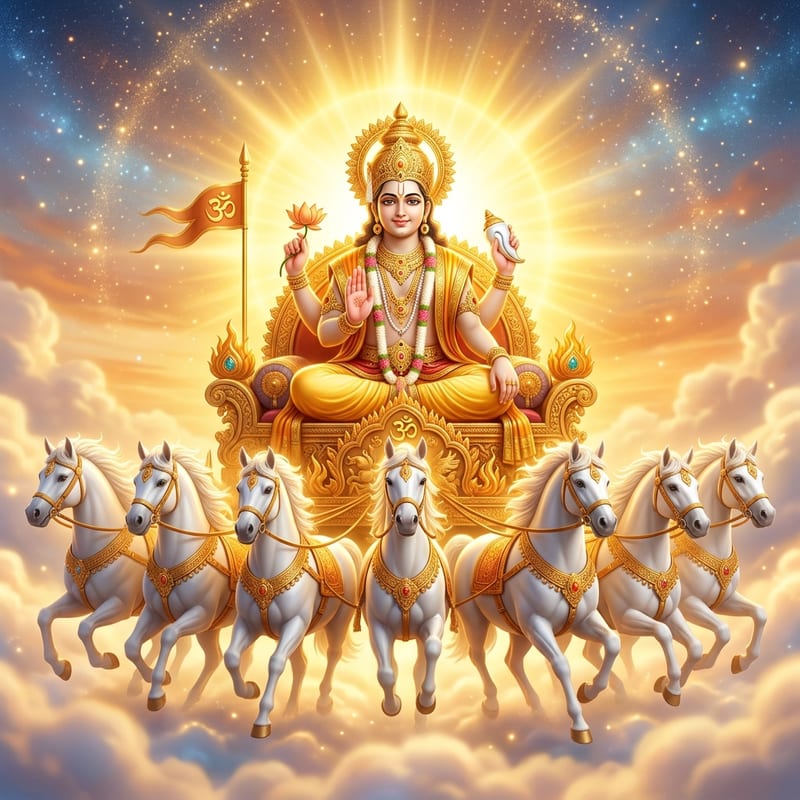
- নৱগ্ৰহধ্যানশ্লোকম্ (navagrahadhyānaślokam)the verse for meditating on the nine planets
anvaya নৱগ্ৰহধ্যানশ্লোকম্
note A heading rather than a verse. It names what follows.
গুৰু শুক্ৰ শনিভ্যশ্চ ৰাহৱে কেতৱে নমঃ ॥
- আদিত্যায (ādityāya)to Āditya, the Sun
- চ (ca)and
- সোমায (somāya)to Soma, the Moon
- মঙ্গলায (maṅgalāya)to Maṅgala, Mars
- বুধায (budhāya)to Budha, Mercury
- চ (ca)and
- গুৰু-শুক্ৰ-শনিভ্যঃ (guru-śukra-śanibhyaḥ)to Guru, Śukra and Śani
- চ (ca)and
- ৰাহৱে (rāhave)to Rāhu
- কেতৱে (ketave)to Ketu
- নমঃ (namaḥ)salutation
anvaya আদিত্যায চ সোমায চ মঙ্গলায বুধায চ গুৰুশুক্ৰশনিভ্যঃ ৰাহৱে কেতৱে নমঃ
chandas Anuṣṭubh, 8 syllables in each of 4 pādas
ৰাহৱে কেতৱে to Rahu, to Ketu — The last two of the nine are not bodies in the sky. They are the two points where the moon's path crosses the sun's, and an eclipse can happen only near them.
নমঃ salutation — One namaḥ at the end covers all nine names, each of them in the dative.
note The nine are named in the order of the weekdays, Sunday to Saturday, with Rahu and Ketu added at the end. The nine verses that follow take them one at a time in the same order.
জপাকুসুম সঙ্কাশং কাশ্যপেযং মহাদ্যুতিম্ ।
তমোঽৰিং সৰ্ৱ পাপঘ্নং প্ৰণতোস্মি দিৱাকৰম্ ॥
- ৰৱিঃ (raviḥ)the Sun
- জপা-কুসুম-সঙ্কাশম্ (japā-kusuma-saṅkāśam)like the hibiscus flower
- কাশ্যপেযম্ (kāśyapeyam)son of Kaśyapa
- মহা-দ্যুতিম্ (mahā-dyutim)of great brilliance
- তমঃ-অৰিম্ (tamaḥ-arim)the foe of darkness
- সৰ্ৱ-পাপ-ঘ্নম্ (sarva-pāpa-ghnam)slayer of every sin
- প্ৰণতঃ অস্মি (praṇataḥ asmi)I stand bowed
- দিৱাকৰম্ (divākaram)before the maker of day
anvaya ৰৱিঃ জপাকুসুমসঙ্কাশম্ কাশ্যপেযম্ মহাদ্যুতিম্ তমোঽৰিম্ সৰ্ৱপাপঘ্নম্ দিৱাকৰম্ প্ৰণতঃ অস্মি
chandas Anuṣṭubh, 8 syllables in each of 4 pādas
জপাকুসুম the hibiscus flower — The deep red china rose. Each of the nine verses opens with a colour, and this is the Sun's.
কাশ্যপেযম্ son of Kashyapa — Kashyapa is the sage from whom the Adityas are descended, which is why the Sun is Aditya.
তমোঽৰিম্ the foe of darkness — Tamas is darkness, and in the same word the dullness in a person.
note Each of the nine verses gives its planet a colour, a parentage and a work it does, then bows to it by a second name. Here the second name is Divakara, the maker of day.
দধিশঙ্খ তুষাৰাভং ক্ষীৰাৰ্ণৱ সমুদ্ভৱম্ (ক্ষীৰোদাৰ্ণৱ সম্ভৱম্) ।
নমামি শশিনং সোমং শম্ভো-ৰ্মকুট ভূষণম্ ॥
- চন্দ্ৰঃ (candraḥ)the Moon
- দধি-শঙ্খ-তুষাৰ-আভম্ (dadhi-śaṅkha-tuṣāra-ābham)of the sheen of curds, of conch and of snow
- ক্ষীৰ-অৰ্ণৱ-সমুদ্ভৱম্ (kṣīra-arṇava-samudbhavam)risen from the ocean of milk
- নমামি (namāmi)I bow to
- শশিনম্ (śaśinam)the hare-marked
- সোমম্ (somam)Soma
- শম্ভোঃ মকুট-ভূষণম্ (śambhoḥ makuṭa-bhūṣaṇam)the ornament upon Śambhu’s crown
anvaya চন্দ্ৰঃ দধিশঙ্খতুষাৰাভম্ ক্ষীৰাৰ্ণৱসমুদ্ভৱম্ শম্ভোঃ মকুটভূষণম্ শশিনম্ সোমম্ নমামি
chandas Anuṣṭubh, 8 syllables in each of 4 pādas
দধিশঙ্খতুষাৰাভম্ with the sheen of curds, conch and frost — Three white things in one word, each a different white.
শশিনম্ the hare-marked one — Śaśa is a hare. The dark patches on the moon are seen as a hare rather than a face.
মকুটভূষণম্ the ornament on the crown — Shiva wears the crescent in his hair, so the moon is spoken of as his headpiece.
note The moon came up when the sea of milk was churned. The bracketed ক্ষীৰোদাৰ্ণৱ সম্ভৱম্ in the printed text is another reading of the second pāda and says the same thing.
ধৰণী গৰ্ভ সম্ভূতং ৱিদ্যুত্কান্তি সমপ্ৰভম্ ।
কুমাৰং শক্তিহস্তং তং কুজং [মঙ্গলং] প্ৰণমাম্যহম্ ॥
- কুজঃ (kujaḥ)Mars, the earth-born
- ধৰণী-গৰ্ভ-সম্ভূতম্ (dharaṇī-garbha-sambhūtam)born of the womb of the Earth
- ৱিদ্যুত্-কান্তি-সম-প্ৰভম্ (vidyut-kānti-sama-prabham)of a brilliance like the flash of lightning
- কুমাৰম্ (kumāram)the youth
- শক্তি-হস্তম্ (śakti-hastam)with the spear in his hand
- তম্ কুজম্ (tam kujam)to him, Kuja
- মঙ্গলম্ (maṅgalam)Maṅgala (a variant reading)
- প্ৰণমামি অহম্ (praṇamāmi aham)I bow
anvaya কুজঃ ধৰণীগৰ্ভসম্ভূতম্ ৱিদ্যুত্কান্তিসমপ্ৰভম্ কুমাৰম্ শক্তিহস্তম্ তম্ কুজম্ অহম্ প্ৰণমামি
chandas Anuṣṭubh, 8 syllables in each of 4 pādas
কুজম্ the earth-born — Ku is the earth, ja born of it. Mars is counted a son of the Earth, which the first pāda states outright.
শক্তিহস্তম্ with the spear in his hand — Śakti here is the weapon, a short spear. It is the sense of the word in this verse rather than power in the abstract.
note Printed with মঙ্গলং in brackets as another name for the same planet; that is the name used in speech and in the weekday Mangalvar.
প্ৰিযঙ্গু কলিকাশ্যামং ৰূপেণা প্ৰতিমং বুধম্ ।
সৌম্যং সৌম্য (সত্ৱ) গুণোপেতং তং বুধং প্ৰণমাম্যহম্ ॥
- বুধঃ (budhaḥ)Mercury
- প্ৰিযঙ্গু-কলিকা-শ্যামম্ (priyaṅgu-kalikā-śyāmam)dark as the priyaṅgu bud
- ৰূপেণ অপ্ৰতিমম্ (rūpeṇa apratimam)matchless in beauty
- বুধম্ (budham)Budha
- সৌম্যম্ (saumyam)gentle
- সৌম্য-গুণ-উপেতম্ (saumya-guṇa-upetam)endowed with a gentle nature
- সত্ত্ৱ-গুণ-উপেতম্ (sattva-guṇa-upetam)endowed with the quality of sattva (a variant reading)
- তম্ বুধম্ (tam budham)to that Budha
- প্ৰণমামি অহম্ (praṇamāmi aham)I bow
anvaya বুধঃ প্ৰিযঙ্গুকলিকাশ্যামম্ ৰূপেণ অপ্ৰতিমম্ সৌম্যম্ সৌম্যগুণোপেতম্ বুধম্ তম্ বুধম্ অহম্ প্ৰণমামি
chandas Anuṣṭubh, 8 syllables in each of 4 pādas
প্ৰিযঙ্গুকলিকা the priyangu bud — A dark green bud, the colour given to Mercury.
সৌম্যম্ gentle — The word is built on Soma, the moon, and Budha is the moon's son. So it says gentle and says whose son he is at once.
note Printed ৰূপেণা প্ৰতিমং; read as ৰূপেণ অপ্ৰতিমং, matchless in form, which is how it is recited. The bracketed সত্ৱ is another reading for the second সৌম্য, giving the quality of sattva.
দেৱানাং চ ঋষীণাং চ গুৰুং কাঞ্চনসন্নিভম্ ।
বুদ্ধিমন্তং ত্ৰিলোকেশং তং নমামি বৃহস্পতিম্ ॥
- গুৰুঃ (guruḥ)Jupiter
- দেৱানাম্ চ ঋষীণাম্ চ (devānām ca ṛṣīṇām ca)of gods and of seers alike
- গুৰুম্ (gurum)the preceptor
- কাঞ্চন-সন্নিভম্ (kāñcana-sannibham)like gold to look upon
- বুদ্ধিমন্তম্ (buddhimantam)full of understanding
- ত্ৰি-লোক-ঈশম্ (tri-loka-īśam)lord of the three worlds
- তম্ নমামি (tam namāmi)to him I bow
- বৃহস্পতিম্ (bṛhaspatim)Bṛhaspati
anvaya গুৰুঃ দেৱানাম্ চ ঋষীণাম্ চ গুৰুম্ কাঞ্চনসন্নিভম্ বুদ্ধিমন্তম্ ত্ৰিলোকেশম্ তম্ বৃহস্পতিম্ নমামি
chandas Anuṣṭubh, 8 syllables in each of 4 pādas
কাঞ্চনসন্নিভম্ like gold to look at — Kāñcana is gold. Jupiter's colour in this set is yellow.
বৃহস্পতিম্ Brihaspati — The teacher of the gods. Thursday is named after him, Guruvar.
note This verse and the next make a pair: the teacher of the gods, then the teacher of their opponents.
হিমকুন্দ মৃণালাভং দৈত্যানং পৰমং গুৰুম্ ।
সৰ্ৱশাস্ত্ৰ প্ৰৱক্তাৰং ভাৰ্গৱং প্ৰণমাম্যহম্ ॥
- শুক্ৰঃ (śukraḥ)Venus
- হিম-কুন্দ-মৃণাল-আভম্ (hima-kunda-mṛṇāla-ābham)of the sheen of snow, jasmine and the lotus stalk
- দৈত্যানাম্ (daityānām)of the daityas
- পৰমম্ গুৰুম্ (paramam gurum)the supreme preceptor
- সৰ্ৱ-শাস্ত্ৰ-প্ৰৱক্তাৰম্ (sarva-śāstra-pravaktāram)the expounder of every scripture
- ভাৰ্গৱম্ (bhārgavam)Bhārgava
- প্ৰণমামি অহম্ (praṇamāmi aham)I bow
anvaya শুক্ৰঃ হিমকুন্দমৃণালাভম্ দৈত্যানাম্ পৰমম্ গুৰুম্ সৰ্ৱশাস্ত্ৰপ্ৰৱক্তাৰম্ ভাৰ্গৱম্ অহম্ প্ৰণমামি
chandas Anuṣṭubh, 8 syllables in each of 4 pādas
মৃণাল the lotus stalk — White where it is broken. Snow, jasmine and the lotus stalk give Venus three whites, as the moon had three.
ভাৰ্গৱম্ Bhargava — Son of Bhrigu. Shukra is teacher to the daityas, the gods' opponents, and the verse calls him their highest one.
note Printed দৈত্যানং for দৈত্যানাম্, a short spelling common in printed texts.
নীলাঞ্জন সমাভাসং ৰৱিপুত্ৰং যমাগ্ৰজম্ ।
ছাযা মাৰ্তাণ্ড সম্ভূতং তং নমামি শনৈশ্চৰম্ ॥
- শনিঃ (śaniḥ)Saturn
- নীল-অঞ্জন-সম-আভাসম্ (nīla-añjana-sama-ābhāsam)shining dark as black collyrium
- ৰৱি-পুত্ৰম্ (ravi-putram)son of the Sun
- যম-অগ্ৰজম্ (yama-agrajam)elder brother of Yama
- ছাযা-মাৰ্তাণ্ড-সম্ভূতম্ (chāyā-mārtāṇḍa-sambhūtam)born of Chāyā and Mārtāṇḍa
- তম্ নমামি (tam namāmi)to him I bow
- শনৈশ্চৰম্ (śanaiścaram)Śanaiścara, the slow-mover
anvaya শনিঃ নীলাঞ্জনসমাভাসম্ ৰৱিপুত্ৰম্ যমাগ্ৰজম্ ছাযামাৰ্তাণ্ডসম্ভূতম্ তম্ শনৈশ্চৰম্ নমামি
chandas Anuṣṭubh, 8 syllables in each of 4 pādas
নীলাঞ্জন dark eye-black — The black paste put on the eyes. Saturn's colour is that blue-black.
ছাযামাৰ্তাণ্ডসম্ভূতম্ born of Chhaya and the Sun — Chhaya, whose name means shadow, is the Sun's second wife. Yama is her husband's son by another, which is why Saturn is called Yama's younger brother here.
শনৈশ্চৰম্ the slow walker — Śanaiḥ is slowly and cara moving. Saturn takes about thirty years to come round the sky, and the name says so.
note Printed যমাগ্ৰজম্, which reads as the elder brother of Yama. The usual telling makes Yama the elder of the two.
অৰ্ধকাযং মহাৱীৰং চন্দ্ৰাদিত্য ৱিমৰ্ধনম্ ।
সিংহিকা গৰ্ভ সম্ভূতং তং ৰাহুং প্ৰণমাম্যহম্ ॥
- ৰাহুঃ (rāhuḥ)Rāhu
- অৰ্ধ-কাযম্ (ardha-kāyam)having but half a body
- মহা-ৱীৰম্ (mahā-vīram)the great warrior
- চন্দ্ৰ-আদিত্য-ৱিমৰ্দনম্ (candra-āditya-vimardanam)the crusher of Moon and Sun
- সিংহিকা-গৰ্ভ-সম্ভূতম্ (siṃhikā-garbha-sambhūtam)born of the womb of Siṃhikā
- তম্ ৰাহুম্ (tam rāhum)to him, Rāhu
- প্ৰণমামি অহম্ (praṇamāmi aham)I bow
anvaya ৰাহুঃ অৰ্ধকাযম্ মহাৱীৰম্ চন্দ্ৰাদিত্যৱিমৰ্ধনম্ সিংহিকাগৰ্ভসম্ভূতম্ তম্ ৰাহুম্ অহম্ প্ৰণমামি
chandas Anuṣṭubh, 8 syllables in each of 4 pādas
অৰ্ধকাযম্ having only half a body — In the story of the churning his head was cut from his body after he drank the nectar. The head stayed alive and became Rahu.
চন্দ্ৰাদিত্যৱিমৰ্ধনম্ who presses hard upon moon and sun — Printed विमर्धन for विमर्दन, crushing. Eclipses are told as his seizing of the two lights.
সিংহিকা Simhika — His mother, named in the Puranas as a daughter of Kashyapa.
note Rahu and Ketu are the head and the tail of one figure, which is why the last two verses answer each other.
পলাশ পুষ্প সঙ্কাশং তাৰকাগ্ৰহমস্তকম্ ।
ৰৌদ্ৰং ৰৌদ্ৰাত্মকং ঘোৰং তং কেতুং প্ৰণমাম্যহম্ ॥
- কেতুঃ (ketuḥ)Ketu
- পলাশ-পুষ্প-সঙ্কাশম্ (palāśa-puṣpa-saṅkāśam)like the palāśa blossom
- তাৰকা-গ্ৰহ-মস্তকম্ (tārakā-graha-mastakam)who bears the stars and planets upon his head
- ৰৌদ্ৰম্ (raudram)fierce
- ৰৌদ্ৰ-আত্মকম্ (raudra-ātmakam)fierce in his very nature
- ঘোৰম্ (ghoram)terrible
- তম্ কেতুম্ (tam ketum)to him, Ketu
- প্ৰণমামি অহম্ (praṇamāmi aham)I bow
anvaya কেতুঃ পলাশপুষ্পসঙ্কাশম্ তাৰকাগ্ৰহমস্তকম্ ৰৌদ্ৰম্ ৰৌদ্ৰাত্মকম্ ঘোৰম্ তম্ কেতুম্ অহম্ প্ৰণমামি
chandas Anuṣṭubh, 8 syllables in each of 4 pādas
পলাশপুষ্প the flame-of-the-forest flower — A hot orange red. It is the last of the nine colours in the hymn.
তাৰকাগ্ৰহমস্তকম্ who carries stars and planets at his head — The compound is printed as one word and is read in more than one way. What is certain is that the stars and the planets stand at his head.
note The third pāda puts three words for the same fierceness side by side. Ketu is the comet or the tail, and the verse does not soften him.
ইতি ৱ্যাস মুখোদ্গীতং যঃ পঠেত্সু সমাহিতঃ ।
দিৱা ৱা যদি ৱা ৰাত্ৰৌ ৱিঘ্নশান্তি-ৰ্ভৱিষ্যতি ॥
- ফল-শ্ৰুতিঃ (phala-śrutiḥ)the declaration of the fruit
- ইতি (iti)thus
- ৱ্যাস-মুখ-উদ্গীতম্ (vyāsa-mukha-udgītam)sung forth from the mouth of Vyāsa
- যঃ পঠেত্ (yaḥ paṭhet)whoever recites it
- সু-সমাহিতঃ (su-samāhitaḥ)with a well-composed mind
- দিৱা ৱা যদি ৱা ৰাত্ৰৌ (divā vā yadi vā rātrau)whether by day or by night
- ৱিঘ্ন-শান্তিঃ (vighna-śāntiḥ)the quieting of obstacles
- ভৱিষ্যতি (bhaviṣyati)shall come about
anvaya ফলশ্ৰুতিঃ যঃ সুসমাহিতঃ দিৱা ৱা যদি ৱা ৰাত্ৰৌ ইতি ৱ্যাসমুখোদ্গীতম্ পঠেত্ ৱিঘ্নশান্তিঃ ভৱিষ্যতি
chandas Anuṣṭubh, 8 syllables in each of 4 pādas
ফলশ্ৰুতিঃ the telling of what comes of it — The closing part of a stotra, where what the reciting is good for is stated. Three verses of it end this hymn.
ৱ্যাসমুখোদ্গীতম্ sung from the mouth of Vyasa — The hymn is given to Vyasa, and the last verse repeats his name as a seal on it.
সুসমাহিতঃ with the mind well gathered — Samāhita is collected, put together. The fruit is promised for reciting done with attention.
note Printed পঠেত্সু সমাহিতঃ, which is read as পঠেত্ সুসমাহিতঃ.
ঐশ্ৱৰ্যমতুলং তেষামাৰোগ্যং পুষ্টি ৱৰ্ধনম্ ॥
- নৰ-নাৰী-নৃপাণাম্ (nara-nārī-nṛpāṇām)for men, for women and for kings
- চ (ca)and
- ভৱেত্ (bhavet)there shall be
- দুঃস্ৱপ্ন-নাশনম্ (duḥsvapna-nāśanam)the undoing of evil dreams
- ঐশ্ৱৰ্যম্ অতুলম্ (aiśvaryam atulam)prosperity beyond compare
- তেষাম্ (teṣām)for them
- আৰোগ্যম্ (ārogyam)health
- পুষ্টি-ৱৰ্ধনম্ (puṣṭi-vardhanam)and increase of strength
anvaya নৰনাৰীনৃপাণাম্ দুঃস্ৱপ্ননাশনম্ ভৱেত্ চ তেষাম্ অতুলম্ ঐশ্ৱৰ্যম্ আৰোগ্যম্ পুষ্টিৱৰ্ধনম্
chandas Anuṣṭubh, 8 syllables in each of 4 pādas
দুঃস্ৱপ্ননাশনম্ the undoing of bad dreams — Bad dreams are read in this literature as a sign that the planets are unfavourable, so they are the first thing named.
পুষ্টিৱৰ্ধনম্ a gain in strength — Puṣṭi is being well fed and well grown.
note Men, women and kings are listed separately, which is the older way of saying everyone, whatever their station.
তাস্সৰ্ৱাঃ প্ৰশমং যান্তি ৱ্যাসো ব্ৰূতে ন সংশযঃ ॥
- গ্ৰহ-নক্ষত্ৰ-জাঃ (graha-nakṣatra-jāḥ)born of the planets and the constellations
- পীডাঃ (pīḍāḥ)afflictions
- তস্কৰ-অগ্নি-সমুদ্ভৱাঃ (taskara-agni-samudbhavāḥ)arising from thieves and from fire
- তাঃ সৰ্ৱাঃ (tāḥ sarvāḥ)all of them
- প্ৰশমম্ যান্তি (praśamam yānti)go to quietness
- ৱ্যাসঃ ব্ৰূতে (vyāsaḥ brūte)so Vyāsa declares
- ন সংশযঃ (na saṃśayaḥ)and there is no doubt
anvaya গ্ৰহনক্ষত্ৰজাঃ তস্কৰাগ্নিসমুদ্ভৱাঃ পীডাঃ তাঃ সৰ্ৱাঃ প্ৰশমম্ যান্তি ৱ্যাসঃ ব্ৰূতে ন সংশযঃ
chandas Anuṣṭubh, 8 syllables in each of 4 pādas
প্ৰশমম্ যান্তি go quiet — Praśama is the settling of something that was disturbed, the same word used of a fire going down.
তস্কৰ a thief — Thieves and fire are put beside the planets and stars, so the troubles counted run from the sky to the house.
note The hymn ends by naming Vyasa as the one who says it, and by adding that there is no doubt about it.