
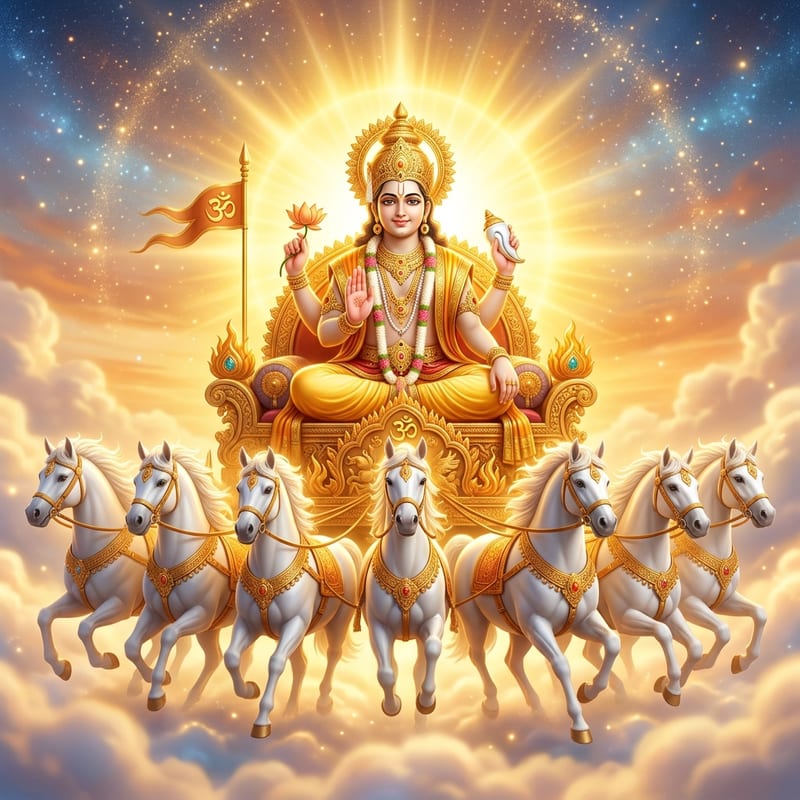
- నవగ్రహధ్యానశ్లోకమ్ (navagrahadhyānaślokam)the verse for meditating on the nine planets
anvaya నవగ్రహధ్యానశ్లోకమ్
note A heading rather than a verse. It names what follows.
గురు శుక్ర శనిభ్యశ్చ రాహవే కేతవే నమః ॥
- ఆదిత్యాయ (ādityāya)to Āditya, the Sun
- చ (ca)and
- సోమాయ (somāya)to Soma, the Moon
- మఙ్గలాయ (maṅgalāya)to Maṅgala, Mars
- బుధాయ (budhāya)to Budha, Mercury
- చ (ca)and
- గురు-శుక్ర-శనిభ్యః (guru-śukra-śanibhyaḥ)to Guru, Śukra and Śani
- చ (ca)and
- రాహవే (rāhave)to Rāhu
- కేతవే (ketave)to Ketu
- నమః (namaḥ)salutation
anvaya ఆదిత్యాయ చ సోమాయ చ మఙ్గలాయ బుధాయ చ గురుశుక్రశనిభ్యః రాహవే కేతవే నమః
chandas Anuṣṭubh, 8 syllables in each of 4 pādas
రాహవే కేతవే to Rahu, to Ketu — The last two of the nine are not bodies in the sky. They are the two points where the moon's path crosses the sun's, and an eclipse can happen only near them.
నమః salutation — One namaḥ at the end covers all nine names, each of them in the dative.
note The nine are named in the order of the weekdays, Sunday to Saturday, with Rahu and Ketu added at the end. The nine verses that follow take them one at a time in the same order.
జపాకుసుమ సఙ్కాశం కాశ్యపేయం మహాద్యుతిమ్ ।
తమోఽరిం సర్వ పాపఘ్నం ప్రణతోస్మి దివాకరమ్ ॥
- రవిః (raviḥ)the Sun
- జపా-కుసుమ-సఙ్కాశమ్ (japā-kusuma-saṅkāśam)like the hibiscus flower
- కాశ్యపేయమ్ (kāśyapeyam)son of Kaśyapa
- మహా-ద్యుతిమ్ (mahā-dyutim)of great brilliance
- తమః-అరిమ్ (tamaḥ-arim)the foe of darkness
- సర్వ-పాప-ఘ్నమ్ (sarva-pāpa-ghnam)slayer of every sin
- ప్రణతః అస్మి (praṇataḥ asmi)I stand bowed
- దివాకరమ్ (divākaram)before the maker of day
anvaya రవిః జపాకుసుమసఙ్కాశమ్ కాశ్యపేయమ్ మహాద్యుతిమ్ తమోఽరిమ్ సర్వపాపఘ్నమ్ దివాకరమ్ ప్రణతః అస్మి
chandas Anuṣṭubh, 8 syllables in each of 4 pādas
జపాకుసుమ the hibiscus flower — The deep red china rose. Each of the nine verses opens with a colour, and this is the Sun's.
కాశ్యపేయమ్ son of Kashyapa — Kashyapa is the sage from whom the Adityas are descended, which is why the Sun is Aditya.
తమోఽరిమ్ the foe of darkness — Tamas is darkness, and in the same word the dullness in a person.
note Each of the nine verses gives its planet a colour, a parentage and a work it does, then bows to it by a second name. Here the second name is Divakara, the maker of day.
దధిశఙ్ఖ తుషారాభం క్షీరార్ణవ సముద్భవమ్ (క్షీరోదార్ణవ సమ్భవమ్) ।
నమామి శశినం సోమం శమ్భో-ర్మకుట భూషణమ్ ॥
- చన్ద్రః (candraḥ)the Moon
- దధి-శఙ్ఖ-తుషార-ఆభమ్ (dadhi-śaṅkha-tuṣāra-ābham)of the sheen of curds, of conch and of snow
- క్షీర-అర్ణవ-సముద్భవమ్ (kṣīra-arṇava-samudbhavam)risen from the ocean of milk
- నమామి (namāmi)I bow to
- శశినమ్ (śaśinam)the hare-marked
- సోమమ్ (somam)Soma
- శమ్భోః మకుట-భూషణమ్ (śambhoḥ makuṭa-bhūṣaṇam)the ornament upon Śambhu’s crown
anvaya చన్ద్రః దధిశఙ్ఖతుషారాభమ్ క్షీరార్ణవసముద్భవమ్ శమ్భోః మకుటభూషణమ్ శశినమ్ సోమమ్ నమామి
chandas Anuṣṭubh, 8 syllables in each of 4 pādas
దధిశఙ్ఖతుషారాభమ్ with the sheen of curds, conch and frost — Three white things in one word, each a different white.
శశినమ్ the hare-marked one — Śaśa is a hare. The dark patches on the moon are seen as a hare rather than a face.
మకుటభూషణమ్ the ornament on the crown — Shiva wears the crescent in his hair, so the moon is spoken of as his headpiece.
note The moon came up when the sea of milk was churned. The bracketed క్షీరోదార్ణవ సమ్భవమ్ in the printed text is another reading of the second pāda and says the same thing.
ధరణీ గర్భ సమ్భూతం విద్యుత్కాన్తి సమప్రభమ్ ।
కుమారం శక్తిహస్తం తం కుజం [మఙ్గలం] ప్రణమామ్యహమ్ ॥
- కుజః (kujaḥ)Mars, the earth-born
- ధరణీ-గర్భ-సమ్భూతమ్ (dharaṇī-garbha-sambhūtam)born of the womb of the Earth
- విద్యుత్-కాన్తి-సమ-ప్రభమ్ (vidyut-kānti-sama-prabham)of a brilliance like the flash of lightning
- కుమారమ్ (kumāram)the youth
- శక్తి-హస్తమ్ (śakti-hastam)with the spear in his hand
- తమ్ కుజమ్ (tam kujam)to him, Kuja
- మఙ్గలమ్ (maṅgalam)Maṅgala (a variant reading)
- ప్రణమామి అహమ్ (praṇamāmi aham)I bow
anvaya కుజః ధరణీగర్భసమ్భూతమ్ విద్యుత్కాన్తిసమప్రభమ్ కుమారమ్ శక్తిహస్తమ్ తమ్ కుజమ్ అహమ్ ప్రణమామి
chandas Anuṣṭubh, 8 syllables in each of 4 pādas
కుజమ్ the earth-born — Ku is the earth, ja born of it. Mars is counted a son of the Earth, which the first pāda states outright.
శక్తిహస్తమ్ with the spear in his hand — Śakti here is the weapon, a short spear. It is the sense of the word in this verse rather than power in the abstract.
note Printed with మఙ్గలం in brackets as another name for the same planet; that is the name used in speech and in the weekday Mangalvar.
ప్రియఙ్గు కలికాశ్యామం రూపేణా ప్రతిమం బుధమ్ ।
సౌమ్యం సౌమ్య (సత్వ) గుణోపేతం తం బుధం ప్రణమామ్యహమ్ ॥
- బుధః (budhaḥ)Mercury
- ప్రియఙ్గు-కలికా-శ్యామమ్ (priyaṅgu-kalikā-śyāmam)dark as the priyaṅgu bud
- రూపేణ అప్రతిమమ్ (rūpeṇa apratimam)matchless in beauty
- బుధమ్ (budham)Budha
- సౌమ్యమ్ (saumyam)gentle
- సౌమ్య-గుణ-ఉపేతమ్ (saumya-guṇa-upetam)endowed with a gentle nature
- సత్త్వ-గుణ-ఉపేతమ్ (sattva-guṇa-upetam)endowed with the quality of sattva (a variant reading)
- తమ్ బుధమ్ (tam budham)to that Budha
- ప్రణమామి అహమ్ (praṇamāmi aham)I bow
anvaya బుధః ప్రియఙ్గుకలికాశ్యామమ్ రూపేణ అప్రతిమమ్ సౌమ్యమ్ సౌమ్యగుణోపేతమ్ బుధమ్ తమ్ బుధమ్ అహమ్ ప్రణమామి
chandas Anuṣṭubh, 8 syllables in each of 4 pādas
ప్రియఙ్గుకలికా the priyangu bud — A dark green bud, the colour given to Mercury.
సౌమ్యమ్ gentle — The word is built on Soma, the moon, and Budha is the moon's son. So it says gentle and says whose son he is at once.
note Printed రూపేణా ప్రతిమం; read as రూపేణ అప్రతిమం, matchless in form, which is how it is recited. The bracketed సత్వ is another reading for the second సౌమ్య, giving the quality of sattva.
దేవానాం చ ఋషీణాం చ గురుం కాఞ్చనసన్నిభమ్ ।
బుద్ధిమన్తం త్రిలోకేశం తం నమామి బృహస్పతిమ్ ॥
- గురుః (guruḥ)Jupiter
- దేవానామ్ చ ఋషీణామ్ చ (devānām ca ṛṣīṇām ca)of gods and of seers alike
- గురుమ్ (gurum)the preceptor
- కాఞ్చన-సన్నిభమ్ (kāñcana-sannibham)like gold to look upon
- బుద్ధిమన్తమ్ (buddhimantam)full of understanding
- త్రి-లోక-ఈశమ్ (tri-loka-īśam)lord of the three worlds
- తమ్ నమామి (tam namāmi)to him I bow
- బృహస్పతిమ్ (bṛhaspatim)Bṛhaspati
anvaya గురుః దేవానామ్ చ ఋషీణామ్ చ గురుమ్ కాఞ్చనసన్నిభమ్ బుద్ధిమన్తమ్ త్రిలోకేశమ్ తమ్ బృహస్పతిమ్ నమామి
chandas Anuṣṭubh, 8 syllables in each of 4 pādas
కాఞ్చనసన్నిభమ్ like gold to look at — Kāñcana is gold. Jupiter's colour in this set is yellow.
బృహస్పతిమ్ Brihaspati — The teacher of the gods. Thursday is named after him, Guruvar.
note This verse and the next make a pair: the teacher of the gods, then the teacher of their opponents.
హిమకున్ద మృణాలాభం దైత్యానం పరమం గురుమ్ ।
సర్వశాస్త్ర ప్రవక్తారం భార్గవం ప్రణమామ్యహమ్ ॥
- శుక్రః (śukraḥ)Venus
- హిమ-కున్ద-మృణాల-ఆభమ్ (hima-kunda-mṛṇāla-ābham)of the sheen of snow, jasmine and the lotus stalk
- దైత్యానామ్ (daityānām)of the daityas
- పరమమ్ గురుమ్ (paramam gurum)the supreme preceptor
- సర్వ-శాస్త్ర-ప్రవక్తారమ్ (sarva-śāstra-pravaktāram)the expounder of every scripture
- భార్గవమ్ (bhārgavam)Bhārgava
- ప్రణమామి అహమ్ (praṇamāmi aham)I bow
anvaya శుక్రః హిమకున్దమృణాలాభమ్ దైత్యానామ్ పరమమ్ గురుమ్ సర్వశాస్త్రప్రవక్తారమ్ భార్గవమ్ అహమ్ ప్రణమామి
chandas Anuṣṭubh, 8 syllables in each of 4 pādas
మృణాల the lotus stalk — White where it is broken. Snow, jasmine and the lotus stalk give Venus three whites, as the moon had three.
భార్గవమ్ Bhargava — Son of Bhrigu. Shukra is teacher to the daityas, the gods' opponents, and the verse calls him their highest one.
note Printed దైత్యానం for దైత్యానామ్, a short spelling common in printed texts.
నీలాఞ్జన సమాభాసం రవిపుత్రం యమాగ్రజమ్ ।
ఛాయా మార్తాణ్డ సమ్భూతం తం నమామి శనైశ్చరమ్ ॥
- శనిః (śaniḥ)Saturn
- నీల-అఞ్జన-సమ-ఆభాసమ్ (nīla-añjana-sama-ābhāsam)shining dark as black collyrium
- రవి-పుత్రమ్ (ravi-putram)son of the Sun
- యమ-అగ్రజమ్ (yama-agrajam)elder brother of Yama
- ఛాయా-మార్తాణ్డ-సమ్భూతమ్ (chāyā-mārtāṇḍa-sambhūtam)born of Chāyā and Mārtāṇḍa
- తమ్ నమామి (tam namāmi)to him I bow
- శనైశ్చరమ్ (śanaiścaram)Śanaiścara, the slow-mover
anvaya శనిః నీలాఞ్జనసమాభాసమ్ రవిపుత్రమ్ యమాగ్రజమ్ ఛాయామార్తాణ్డసమ్భూతమ్ తమ్ శనైశ్చరమ్ నమామి
chandas Anuṣṭubh, 8 syllables in each of 4 pādas
నీలాఞ్జన dark eye-black — The black paste put on the eyes. Saturn's colour is that blue-black.
ఛాయామార్తాణ్డసమ్భూతమ్ born of Chhaya and the Sun — Chhaya, whose name means shadow, is the Sun's second wife. Yama is her husband's son by another, which is why Saturn is called Yama's younger brother here.
శనైశ్చరమ్ the slow walker — Śanaiḥ is slowly and cara moving. Saturn takes about thirty years to come round the sky, and the name says so.
note Printed యమాగ్రజమ్, which reads as the elder brother of Yama. The usual telling makes Yama the elder of the two.
అర్ధకాయం మహావీరం చన్ద్రాదిత్య విమర్ధనమ్ ।
సింహికా గర్భ సమ్భూతం తం రాహుం ప్రణమామ్యహమ్ ॥
- రాహుః (rāhuḥ)Rāhu
- అర్ధ-కాయమ్ (ardha-kāyam)having but half a body
- మహా-వీరమ్ (mahā-vīram)the great warrior
- చన్ద్ర-ఆదిత్య-విమర్దనమ్ (candra-āditya-vimardanam)the crusher of Moon and Sun
- సింహికా-గర్భ-సమ్భూతమ్ (siṃhikā-garbha-sambhūtam)born of the womb of Siṃhikā
- తమ్ రాహుమ్ (tam rāhum)to him, Rāhu
- ప్రణమామి అహమ్ (praṇamāmi aham)I bow
anvaya రాహుః అర్ధకాయమ్ మహావీరమ్ చన్ద్రాదిత్యవిమర్ధనమ్ సింహికాగర్భసమ్భూతమ్ తమ్ రాహుమ్ అహమ్ ప్రణమామి
chandas Anuṣṭubh, 8 syllables in each of 4 pādas
అర్ధకాయమ్ having only half a body — In the story of the churning his head was cut from his body after he drank the nectar. The head stayed alive and became Rahu.
చన్ద్రాదిత్యవిమర్ధనమ్ who presses hard upon moon and sun — Printed विमर्धन for विमर्दन, crushing. Eclipses are told as his seizing of the two lights.
సింహికా Simhika — His mother, named in the Puranas as a daughter of Kashyapa.
note Rahu and Ketu are the head and the tail of one figure, which is why the last two verses answer each other.
పలాశ పుష్ప సఙ్కాశం తారకాగ్రహమస్తకమ్ ।
రౌద్రం రౌద్రాత్మకం ఘోరం తం కేతుం ప్రణమామ్యహమ్ ॥
- కేతుః (ketuḥ)Ketu
- పలాశ-పుష్ప-సఙ్కాశమ్ (palāśa-puṣpa-saṅkāśam)like the palāśa blossom
- తారకా-గ్రహ-మస్తకమ్ (tārakā-graha-mastakam)who bears the stars and planets upon his head
- రౌద్రమ్ (raudram)fierce
- రౌద్ర-ఆత్మకమ్ (raudra-ātmakam)fierce in his very nature
- ఘోరమ్ (ghoram)terrible
- తమ్ కేతుమ్ (tam ketum)to him, Ketu
- ప్రణమామి అహమ్ (praṇamāmi aham)I bow
anvaya కేతుః పలాశపుష్పసఙ్కాశమ్ తారకాగ్రహమస్తకమ్ రౌద్రమ్ రౌద్రాత్మకమ్ ఘోరమ్ తమ్ కేతుమ్ అహమ్ ప్రణమామి
chandas Anuṣṭubh, 8 syllables in each of 4 pādas
పలాశపుష్ప the flame-of-the-forest flower — A hot orange red. It is the last of the nine colours in the hymn.
తారకాగ్రహమస్తకమ్ who carries stars and planets at his head — The compound is printed as one word and is read in more than one way. What is certain is that the stars and the planets stand at his head.
note The third pāda puts three words for the same fierceness side by side. Ketu is the comet or the tail, and the verse does not soften him.
ఇతి వ్యాస ముఖోద్గీతం యః పఠేత్సు సమాహితః ।
దివా వా యది వా రాత్రౌ విఘ్నశాన్తి-ర్భవిష్యతి ॥
- ఫల-శ్రుతిః (phala-śrutiḥ)the declaration of the fruit
- ఇతి (iti)thus
- వ్యాస-ముఖ-ఉద్గీతమ్ (vyāsa-mukha-udgītam)sung forth from the mouth of Vyāsa
- యః పఠేత్ (yaḥ paṭhet)whoever recites it
- సు-సమాహితః (su-samāhitaḥ)with a well-composed mind
- దివా వా యది వా రాత్రౌ (divā vā yadi vā rātrau)whether by day or by night
- విఘ్న-శాన్తిః (vighna-śāntiḥ)the quieting of obstacles
- భవిష్యతి (bhaviṣyati)shall come about
anvaya ఫలశ్రుతిః యః సుసమాహితః దివా వా యది వా రాత్రౌ ఇతి వ్యాసముఖోద్గీతమ్ పఠేత్ విఘ్నశాన్తిః భవిష్యతి
chandas Anuṣṭubh, 8 syllables in each of 4 pādas
ఫలశ్రుతిః the telling of what comes of it — The closing part of a stotra, where what the reciting is good for is stated. Three verses of it end this hymn.
వ్యాసముఖోద్గీతమ్ sung from the mouth of Vyasa — The hymn is given to Vyasa, and the last verse repeats his name as a seal on it.
సుసమాహితః with the mind well gathered — Samāhita is collected, put together. The fruit is promised for reciting done with attention.
note Printed పఠేత్సు సమాహితః, which is read as పఠేత్ సుసమాహితః.
ఐశ్వర్యమతులం తేషామారోగ్యం పుష్టి వర్ధనమ్ ॥
- నర-నారీ-నృపాణామ్ (nara-nārī-nṛpāṇām)for men, for women and for kings
- చ (ca)and
- భవేత్ (bhavet)there shall be
- దుఃస్వప్న-నాశనమ్ (duḥsvapna-nāśanam)the undoing of evil dreams
- ఐశ్వర్యమ్ అతులమ్ (aiśvaryam atulam)prosperity beyond compare
- తేషామ్ (teṣām)for them
- ఆరోగ్యమ్ (ārogyam)health
- పుష్టి-వర్ధనమ్ (puṣṭi-vardhanam)and increase of strength
anvaya నరనారీనృపాణామ్ దుఃస్వప్ననాశనమ్ భవేత్ చ తేషామ్ అతులమ్ ఐశ్వర్యమ్ ఆరోగ్యమ్ పుష్టివర్ధనమ్
chandas Anuṣṭubh, 8 syllables in each of 4 pādas
దుఃస్వప్ననాశనమ్ the undoing of bad dreams — Bad dreams are read in this literature as a sign that the planets are unfavourable, so they are the first thing named.
పుష్టివర్ధనమ్ a gain in strength — Puṣṭi is being well fed and well grown.
note Men, women and kings are listed separately, which is the older way of saying everyone, whatever their station.
తాస్సర్వాః ప్రశమం యాన్తి వ్యాసో బ్రూతే న సంశయః ॥
- గ్రహ-నక్షత్ర-జాః (graha-nakṣatra-jāḥ)born of the planets and the constellations
- పీడాః (pīḍāḥ)afflictions
- తస్కర-అగ్ని-సముద్భవాః (taskara-agni-samudbhavāḥ)arising from thieves and from fire
- తాః సర్వాః (tāḥ sarvāḥ)all of them
- ప్రశమమ్ యాన్తి (praśamam yānti)go to quietness
- వ్యాసః బ్రూతే (vyāsaḥ brūte)so Vyāsa declares
- న సంశయః (na saṃśayaḥ)and there is no doubt
anvaya గ్రహనక్షత్రజాః తస్కరాగ్నిసముద్భవాః పీడాః తాః సర్వాః ప్రశమమ్ యాన్తి వ్యాసః బ్రూతే న సంశయః
chandas Anuṣṭubh, 8 syllables in each of 4 pādas
ప్రశమమ్ యాన్తి go quiet — Praśama is the settling of something that was disturbed, the same word used of a fire going down.
తస్కర a thief — Thieves and fire are put beside the planets and stars, so the troubles counted run from the sky to the house.
note The hymn ends by naming Vyasa as the one who says it, and by adding that there is no doubt about it.