
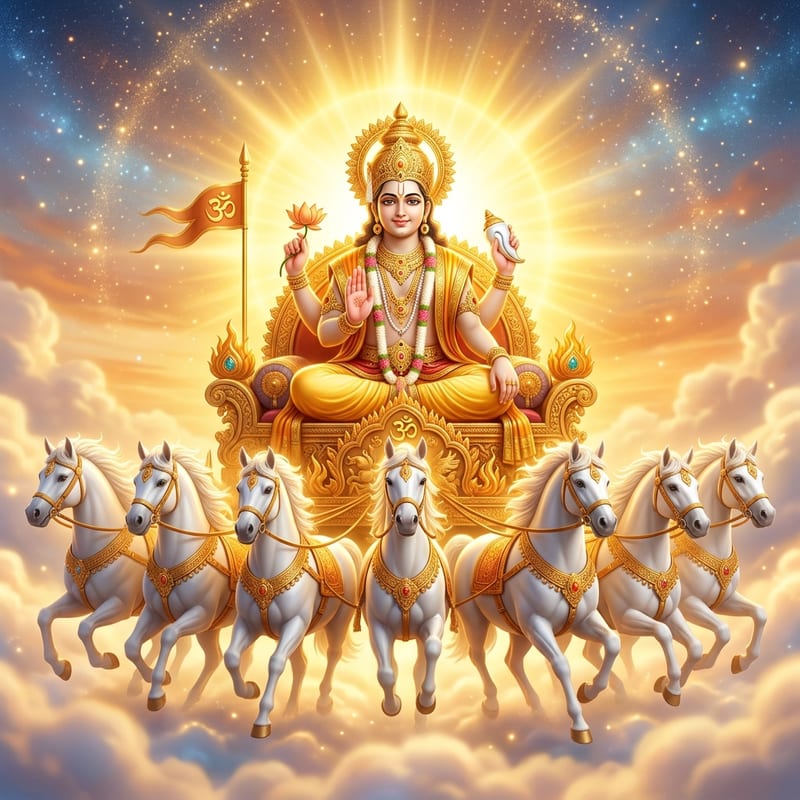
- നവഗ്രഹധ്യാനശ്ലോകമ് (navagrahadhyānaślokam)the verse for meditating on the nine planets
anvaya നവഗ്രഹധ്യാനശ്ലോകമ്
note A heading rather than a verse. It names what follows.
ഗുരു ശുക്ര ശനിഭ്യശ്ച രാഹവേ കേതവേ നമഃ ॥
- ആദിത്യായ (ādityāya)to Āditya, the Sun
- ച (ca)and
- സോമായ (somāya)to Soma, the Moon
- മങ്ഗലായ (maṅgalāya)to Maṅgala, Mars
- ബുധായ (budhāya)to Budha, Mercury
- ച (ca)and
- ഗുരു-ശുക്ര-ശനിഭ്യഃ (guru-śukra-śanibhyaḥ)to Guru, Śukra and Śani
- ച (ca)and
- രാഹവേ (rāhave)to Rāhu
- കേതവേ (ketave)to Ketu
- നമഃ (namaḥ)salutation
anvaya ആദിത്യായ ച സോമായ ച മങ്ഗലായ ബുധായ ച ഗുരുശുക്രശനിഭ്യഃ രാഹവേ കേതവേ നമഃ
chandas Anuṣṭubh, 8 syllables in each of 4 pādas
രാഹവേ കേതവേ to Rahu, to Ketu — The last two of the nine are not bodies in the sky. They are the two points where the moon's path crosses the sun's, and an eclipse can happen only near them.
നമഃ salutation — One namaḥ at the end covers all nine names, each of them in the dative.
note The nine are named in the order of the weekdays, Sunday to Saturday, with Rahu and Ketu added at the end. The nine verses that follow take them one at a time in the same order.
ജപാകുസുമ സങ്കാശം കാശ്യപേയം മഹാദ്യുതിമ് ।
തമോഽരിം സര്വ പാപഘ്നം പ്രണതോസ്മി ദിവാകരമ് ॥
- രവിഃ (raviḥ)the Sun
- ജപാ-കുസുമ-സങ്കാശമ് (japā-kusuma-saṅkāśam)like the hibiscus flower
- കാശ്യപേയമ് (kāśyapeyam)son of Kaśyapa
- മഹാ-ദ്യുതിമ് (mahā-dyutim)of great brilliance
- തമഃ-അരിമ് (tamaḥ-arim)the foe of darkness
- സര്വ-പാപ-ഘ്നമ് (sarva-pāpa-ghnam)slayer of every sin
- പ്രണതഃ അസ്മി (praṇataḥ asmi)I stand bowed
- ദിവാകരമ് (divākaram)before the maker of day
anvaya രവിഃ ജപാകുസുമസങ്കാശമ് കാശ്യപേയമ് മഹാദ്യുതിമ് തമോഽരിമ് സര്വപാപഘ്നമ് ദിവാകരമ് പ്രണതഃ അസ്മി
chandas Anuṣṭubh, 8 syllables in each of 4 pādas
ജപാകുസുമ the hibiscus flower — The deep red china rose. Each of the nine verses opens with a colour, and this is the Sun's.
കാശ്യപേയമ് son of Kashyapa — Kashyapa is the sage from whom the Adityas are descended, which is why the Sun is Aditya.
തമോഽരിമ് the foe of darkness — Tamas is darkness, and in the same word the dullness in a person.
note Each of the nine verses gives its planet a colour, a parentage and a work it does, then bows to it by a second name. Here the second name is Divakara, the maker of day.
ദധിശങ്ഖ തുഷാരാഭം ക്ഷീരാര്ണവ സമുദ്ഭവമ് (ക്ഷീരോദാര്ണവ സമ്ഭവമ്) ।
നമാമി ശശിനം സോമം ശമ്ഭോ-ര്മകുട ഭൂഷണമ് ॥
- ചന്ദ്രഃ (candraḥ)the Moon
- ദധി-ശങ്ഖ-തുഷാര-ആഭമ് (dadhi-śaṅkha-tuṣāra-ābham)of the sheen of curds, of conch and of snow
- ക്ഷീര-അര്ണവ-സമുദ്ഭവമ് (kṣīra-arṇava-samudbhavam)risen from the ocean of milk
- നമാമി (namāmi)I bow to
- ശശിനമ് (śaśinam)the hare-marked
- സോമമ് (somam)Soma
- ശമ്ഭോഃ മകുട-ഭൂഷണമ് (śambhoḥ makuṭa-bhūṣaṇam)the ornament upon Śambhu’s crown
anvaya ചന്ദ്രഃ ദധിശങ്ഖതുഷാരാഭമ് ക്ഷീരാര്ണവസമുദ്ഭവമ് ശമ്ഭോഃ മകുടഭൂഷണമ് ശശിനമ് സോമമ് നമാമി
chandas Anuṣṭubh, 8 syllables in each of 4 pādas
ദധിശങ്ഖതുഷാരാഭമ് with the sheen of curds, conch and frost — Three white things in one word, each a different white.
ശശിനമ് the hare-marked one — Śaśa is a hare. The dark patches on the moon are seen as a hare rather than a face.
മകുടഭൂഷണമ് the ornament on the crown — Shiva wears the crescent in his hair, so the moon is spoken of as his headpiece.
note The moon came up when the sea of milk was churned. The bracketed ക്ഷീരോദാര്ണവ സമ്ഭവമ് in the printed text is another reading of the second pāda and says the same thing.
ധരണീ ഗര്ഭ സമ്ഭൂതം വിദ്യുത്കാന്തി സമപ്രഭമ് ।
കുമാരം ശക്തിഹസ്തം തം കുജം [മങ്ഗലം] പ്രണമാമ്യഹമ് ॥
- കുജഃ (kujaḥ)Mars, the earth-born
- ധരണീ-ഗര്ഭ-സമ്ഭൂതമ് (dharaṇī-garbha-sambhūtam)born of the womb of the Earth
- വിദ്യുത്-കാന്തി-സമ-പ്രഭമ് (vidyut-kānti-sama-prabham)of a brilliance like the flash of lightning
- കുമാരമ് (kumāram)the youth
- ശക്തി-ഹസ്തമ് (śakti-hastam)with the spear in his hand
- തമ് കുജമ് (tam kujam)to him, Kuja
- മങ്ഗലമ് (maṅgalam)Maṅgala (a variant reading)
- പ്രണമാമി അഹമ് (praṇamāmi aham)I bow
anvaya കുജഃ ധരണീഗര്ഭസമ്ഭൂതമ് വിദ്യുത്കാന്തിസമപ്രഭമ് കുമാരമ് ശക്തിഹസ്തമ് തമ് കുജമ് അഹമ് പ്രണമാമി
chandas Anuṣṭubh, 8 syllables in each of 4 pādas
കുജമ് the earth-born — Ku is the earth, ja born of it. Mars is counted a son of the Earth, which the first pāda states outright.
ശക്തിഹസ്തമ് with the spear in his hand — Śakti here is the weapon, a short spear. It is the sense of the word in this verse rather than power in the abstract.
note Printed with മങ്ഗലം in brackets as another name for the same planet; that is the name used in speech and in the weekday Mangalvar.
പ്രിയങ്ഗു കലികാശ്യാമം രൂപേണാ പ്രതിമം ബുധമ് ।
സൌമ്യം സൌമ്യ (സത്വ) ഗുണോപേതം തം ബുധം പ്രണമാമ്യഹമ് ॥
- ബുധഃ (budhaḥ)Mercury
- പ്രിയങ്ഗു-കലികാ-ശ്യാമമ് (priyaṅgu-kalikā-śyāmam)dark as the priyaṅgu bud
- രൂപേണ അപ്രതിമമ് (rūpeṇa apratimam)matchless in beauty
- ബുധമ് (budham)Budha
- സൌമ്യമ് (saumyam)gentle
- സൌമ്യ-ഗുണ-ഉപേതമ് (saumya-guṇa-upetam)endowed with a gentle nature
- സത്ത്വ-ഗുണ-ഉപേതമ് (sattva-guṇa-upetam)endowed with the quality of sattva (a variant reading)
- തമ് ബുധമ് (tam budham)to that Budha
- പ്രണമാമി അഹമ് (praṇamāmi aham)I bow
anvaya ബുധഃ പ്രിയങ്ഗുകലികാശ്യാമമ് രൂപേണ അപ്രതിമമ് സൌമ്യമ് സൌമ്യഗുണോപേതമ് ബുധമ് തമ് ബുധമ് അഹമ് പ്രണമാമി
chandas Anuṣṭubh, 8 syllables in each of 4 pādas
പ്രിയങ്ഗുകലികാ the priyangu bud — A dark green bud, the colour given to Mercury.
സൌമ്യമ് gentle — The word is built on Soma, the moon, and Budha is the moon's son. So it says gentle and says whose son he is at once.
note Printed രൂപേണാ പ്രതിമം; read as രൂപേണ അപ്രതിമം, matchless in form, which is how it is recited. The bracketed സത്വ is another reading for the second സൌമ്യ, giving the quality of sattva.
ദേവാനാം ച ഋഷീണാം ച ഗുരും കാഞ്ചനസന്നിഭമ് ।
ബുദ്ധിമന്തം ത്രിലോകേശം തം നമാമി ബൃഹസ്പതിമ് ॥
- ഗുരുഃ (guruḥ)Jupiter
- ദേവാനാമ് ച ഋഷീണാമ് ച (devānām ca ṛṣīṇām ca)of gods and of seers alike
- ഗുരുമ് (gurum)the preceptor
- കാഞ്ചന-സന്നിഭമ് (kāñcana-sannibham)like gold to look upon
- ബുദ്ധിമന്തമ് (buddhimantam)full of understanding
- ത്രി-ലോക-ഈശമ് (tri-loka-īśam)lord of the three worlds
- തമ് നമാമി (tam namāmi)to him I bow
- ബൃഹസ്പതിമ് (bṛhaspatim)Bṛhaspati
anvaya ഗുരുഃ ദേവാനാമ് ച ഋഷീണാമ് ച ഗുരുമ് കാഞ്ചനസന്നിഭമ് ബുദ്ധിമന്തമ് ത്രിലോകേശമ് തമ് ബൃഹസ്പതിമ് നമാമി
chandas Anuṣṭubh, 8 syllables in each of 4 pādas
കാഞ്ചനസന്നിഭമ് like gold to look at — Kāñcana is gold. Jupiter's colour in this set is yellow.
ബൃഹസ്പതിമ് Brihaspati — The teacher of the gods. Thursday is named after him, Guruvar.
note This verse and the next make a pair: the teacher of the gods, then the teacher of their opponents.
ഹിമകുന്ദ മൃണാലാഭം ദൈത്യാനം പരമം ഗുരുമ് ।
സര്വശാസ്ത്ര പ്രവക്താരം ഭാര്ഗവം പ്രണമാമ്യഹമ് ॥
- ശുക്രഃ (śukraḥ)Venus
- ഹിമ-കുന്ദ-മൃണാല-ആഭമ് (hima-kunda-mṛṇāla-ābham)of the sheen of snow, jasmine and the lotus stalk
- ദൈത്യാനാമ് (daityānām)of the daityas
- പരമമ് ഗുരുമ് (paramam gurum)the supreme preceptor
- സര്വ-ശാസ്ത്ര-പ്രവക്താരമ് (sarva-śāstra-pravaktāram)the expounder of every scripture
- ഭാര്ഗവമ് (bhārgavam)Bhārgava
- പ്രണമാമി അഹമ് (praṇamāmi aham)I bow
anvaya ശുക്രഃ ഹിമകുന്ദമൃണാലാഭമ് ദൈത്യാനാമ് പരമമ് ഗുരുമ് സര്വശാസ്ത്രപ്രവക്താരമ് ഭാര്ഗവമ് അഹമ് പ്രണമാമി
chandas Anuṣṭubh, 8 syllables in each of 4 pādas
മൃണാല the lotus stalk — White where it is broken. Snow, jasmine and the lotus stalk give Venus three whites, as the moon had three.
ഭാര്ഗവമ് Bhargava — Son of Bhrigu. Shukra is teacher to the daityas, the gods' opponents, and the verse calls him their highest one.
note Printed ദൈത്യാനം for ദൈത്യാനാമ്, a short spelling common in printed texts.
നീലാഞ്ജന സമാഭാസം രവിപുത്രം യമാഗ്രജമ് ।
ഛായാ മാര്താണ്ഡ സമ്ഭൂതം തം നമാമി ശനൈശ്ചരമ് ॥
- ശനിഃ (śaniḥ)Saturn
- നീല-അഞ്ജന-സമ-ആഭാസമ് (nīla-añjana-sama-ābhāsam)shining dark as black collyrium
- രവി-പുത്രമ് (ravi-putram)son of the Sun
- യമ-അഗ്രജമ് (yama-agrajam)elder brother of Yama
- ഛായാ-മാര്താണ്ഡ-സമ്ഭൂതമ് (chāyā-mārtāṇḍa-sambhūtam)born of Chāyā and Mārtāṇḍa
- തമ് നമാമി (tam namāmi)to him I bow
- ശനൈശ്ചരമ് (śanaiścaram)Śanaiścara, the slow-mover
anvaya ശനിഃ നീലാഞ്ജനസമാഭാസമ് രവിപുത്രമ് യമാഗ്രജമ് ഛായാമാര്താണ്ഡസമ്ഭൂതമ് തമ് ശനൈശ്ചരമ് നമാമി
chandas Anuṣṭubh, 8 syllables in each of 4 pādas
നീലാഞ്ജന dark eye-black — The black paste put on the eyes. Saturn's colour is that blue-black.
ഛായാമാര്താണ്ഡസമ്ഭൂതമ് born of Chhaya and the Sun — Chhaya, whose name means shadow, is the Sun's second wife. Yama is her husband's son by another, which is why Saturn is called Yama's younger brother here.
ശനൈശ്ചരമ് the slow walker — Śanaiḥ is slowly and cara moving. Saturn takes about thirty years to come round the sky, and the name says so.
note Printed യമാഗ്രജമ്, which reads as the elder brother of Yama. The usual telling makes Yama the elder of the two.
അര്ധകായം മഹാവീരം ചന്ദ്രാദിത്യ വിമര്ധനമ് ।
സിംഹികാ ഗര്ഭ സമ്ഭൂതം തം രാഹും പ്രണമാമ്യഹമ് ॥
- രാഹുഃ (rāhuḥ)Rāhu
- അര്ധ-കായമ് (ardha-kāyam)having but half a body
- മഹാ-വീരമ് (mahā-vīram)the great warrior
- ചന്ദ്ര-ആദിത്യ-വിമര്ദനമ് (candra-āditya-vimardanam)the crusher of Moon and Sun
- സിംഹികാ-ഗര്ഭ-സമ്ഭൂതമ് (siṃhikā-garbha-sambhūtam)born of the womb of Siṃhikā
- തമ് രാഹുമ് (tam rāhum)to him, Rāhu
- പ്രണമാമി അഹമ് (praṇamāmi aham)I bow
anvaya രാഹുഃ അര്ധകായമ് മഹാവീരമ് ചന്ദ്രാദിത്യവിമര്ധനമ് സിംഹികാഗര്ഭസമ്ഭൂതമ് തമ് രാഹുമ് അഹമ് പ്രണമാമി
chandas Anuṣṭubh, 8 syllables in each of 4 pādas
അര്ധകായമ് having only half a body — In the story of the churning his head was cut from his body after he drank the nectar. The head stayed alive and became Rahu.
ചന്ദ്രാദിത്യവിമര്ധനമ് who presses hard upon moon and sun — Printed विमर्धन for विमर्दन, crushing. Eclipses are told as his seizing of the two lights.
സിംഹികാ Simhika — His mother, named in the Puranas as a daughter of Kashyapa.
note Rahu and Ketu are the head and the tail of one figure, which is why the last two verses answer each other.
പലാശ പുഷ്പ സങ്കാശം താരകാഗ്രഹമസ്തകമ് ।
രൌദ്രം രൌദ്രാത്മകം ഘോരം തം കേതും പ്രണമാമ്യഹമ് ॥
- കേതുഃ (ketuḥ)Ketu
- പലാശ-പുഷ്പ-സങ്കാശമ് (palāśa-puṣpa-saṅkāśam)like the palāśa blossom
- താരകാ-ഗ്രഹ-മസ്തകമ് (tārakā-graha-mastakam)who bears the stars and planets upon his head
- രൌദ്രമ് (raudram)fierce
- രൌദ്ര-ആത്മകമ് (raudra-ātmakam)fierce in his very nature
- ഘോരമ് (ghoram)terrible
- തമ് കേതുമ് (tam ketum)to him, Ketu
- പ്രണമാമി അഹമ് (praṇamāmi aham)I bow
anvaya കേതുഃ പലാശപുഷ്പസങ്കാശമ് താരകാഗ്രഹമസ്തകമ് രൌദ്രമ് രൌദ്രാത്മകമ് ഘോരമ് തമ് കേതുമ് അഹമ് പ്രണമാമി
chandas Anuṣṭubh, 8 syllables in each of 4 pādas
പലാശപുഷ്പ the flame-of-the-forest flower — A hot orange red. It is the last of the nine colours in the hymn.
താരകാഗ്രഹമസ്തകമ് who carries stars and planets at his head — The compound is printed as one word and is read in more than one way. What is certain is that the stars and the planets stand at his head.
note The third pāda puts three words for the same fierceness side by side. Ketu is the comet or the tail, and the verse does not soften him.
ഇതി വ്യാസ മുഖോദ്ഗീതം യഃ പഠേത്സു സമാഹിതഃ ।
ദിവാ വാ യദി വാ രാത്രൌ വിഘ്നശാന്തി-ര്ഭവിഷ്യതി ॥
- ഫല-ശ്രുതിഃ (phala-śrutiḥ)the declaration of the fruit
- ഇതി (iti)thus
- വ്യാസ-മുഖ-ഉദ്ഗീതമ് (vyāsa-mukha-udgītam)sung forth from the mouth of Vyāsa
- യഃ പഠേത് (yaḥ paṭhet)whoever recites it
- സു-സമാഹിതഃ (su-samāhitaḥ)with a well-composed mind
- ദിവാ വാ യദി വാ രാത്രൌ (divā vā yadi vā rātrau)whether by day or by night
- വിഘ്ന-ശാന്തിഃ (vighna-śāntiḥ)the quieting of obstacles
- ഭവിഷ്യതി (bhaviṣyati)shall come about
anvaya ഫലശ്രുതിഃ യഃ സുസമാഹിതഃ ദിവാ വാ യദി വാ രാത്രൌ ഇതി വ്യാസമുഖോദ്ഗീതമ് പഠേത് വിഘ്നശാന്തിഃ ഭവിഷ്യതി
chandas Anuṣṭubh, 8 syllables in each of 4 pādas
ഫലശ്രുതിഃ the telling of what comes of it — The closing part of a stotra, where what the reciting is good for is stated. Three verses of it end this hymn.
വ്യാസമുഖോദ്ഗീതമ് sung from the mouth of Vyasa — The hymn is given to Vyasa, and the last verse repeats his name as a seal on it.
സുസമാഹിതഃ with the mind well gathered — Samāhita is collected, put together. The fruit is promised for reciting done with attention.
note Printed പഠേത്സു സമാഹിതഃ, which is read as പഠേത് സുസമാഹിതഃ.
ഐശ്വര്യമതുലം തേഷാമാരോഗ്യം പുഷ്ടി വര്ധനമ് ॥
- നര-നാരീ-നൃപാണാമ് (nara-nārī-nṛpāṇām)for men, for women and for kings
- ച (ca)and
- ഭവേത് (bhavet)there shall be
- ദുഃസ്വപ്ന-നാശനമ് (duḥsvapna-nāśanam)the undoing of evil dreams
- ഐശ്വര്യമ് അതുലമ് (aiśvaryam atulam)prosperity beyond compare
- തേഷാമ് (teṣām)for them
- ആരോഗ്യമ് (ārogyam)health
- പുഷ്ടി-വര്ധനമ് (puṣṭi-vardhanam)and increase of strength
anvaya നരനാരീനൃപാണാമ് ദുഃസ്വപ്നനാശനമ് ഭവേത് ച തേഷാമ് അതുലമ് ഐശ്വര്യമ് ആരോഗ്യമ് പുഷ്ടിവര്ധനമ്
chandas Anuṣṭubh, 8 syllables in each of 4 pādas
ദുഃസ്വപ്നനാശനമ് the undoing of bad dreams — Bad dreams are read in this literature as a sign that the planets are unfavourable, so they are the first thing named.
പുഷ്ടിവര്ധനമ് a gain in strength — Puṣṭi is being well fed and well grown.
note Men, women and kings are listed separately, which is the older way of saying everyone, whatever their station.
താസ്സര്വാഃ പ്രശമം യാന്തി വ്യാസോ ബ്രൂതേ ന സംശയഃ ॥
- ഗ്രഹ-നക്ഷത്ര-ജാഃ (graha-nakṣatra-jāḥ)born of the planets and the constellations
- പീഡാഃ (pīḍāḥ)afflictions
- തസ്കര-അഗ്നി-സമുദ്ഭവാഃ (taskara-agni-samudbhavāḥ)arising from thieves and from fire
- താഃ സര്വാഃ (tāḥ sarvāḥ)all of them
- പ്രശമമ് യാന്തി (praśamam yānti)go to quietness
- വ്യാസഃ ബ്രൂതേ (vyāsaḥ brūte)so Vyāsa declares
- ന സംശയഃ (na saṃśayaḥ)and there is no doubt
anvaya ഗ്രഹനക്ഷത്രജാഃ തസ്കരാഗ്നിസമുദ്ഭവാഃ പീഡാഃ താഃ സര്വാഃ പ്രശമമ് യാന്തി വ്യാസഃ ബ്രൂതേ ന സംശയഃ
chandas Anuṣṭubh, 8 syllables in each of 4 pādas
പ്രശമമ് യാന്തി go quiet — Praśama is the settling of something that was disturbed, the same word used of a fire going down.
തസ്കര a thief — Thieves and fire are put beside the planets and stars, so the troubles counted run from the sky to the house.
note The hymn ends by naming Vyasa as the one who says it, and by adding that there is no doubt about it.