
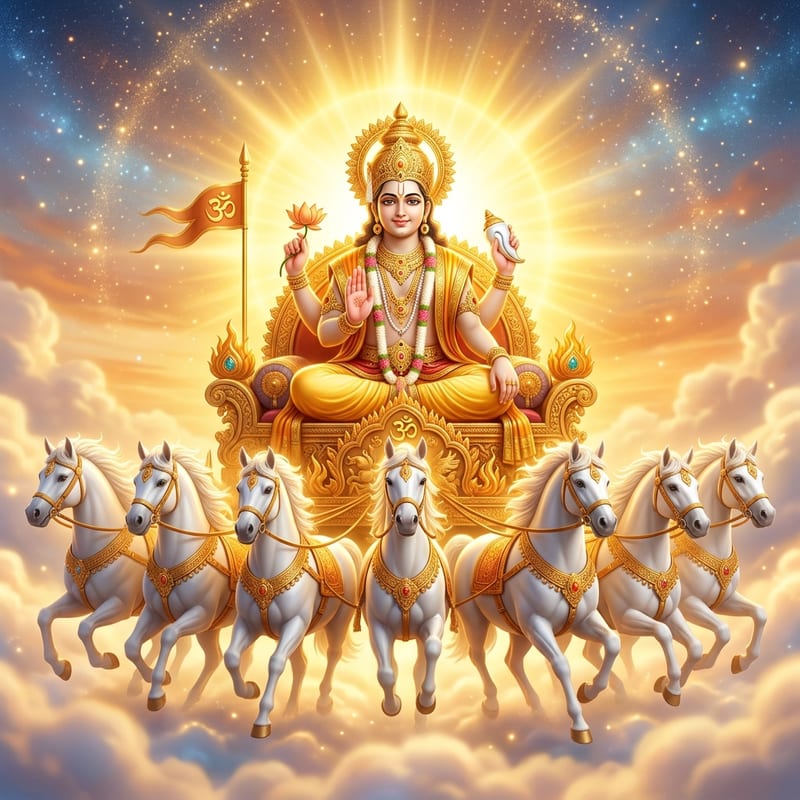
- નવગ્રહધ્યાનશ્લોકમ્ (navagrahadhyānaślokam)the verse for meditating on the nine planets
anvaya નવગ્રહધ્યાનશ્લોકમ્
note A heading rather than a verse. It names what follows.
ગુરુ શુક્ર શનિભ્યશ્ચ રાહવે કેતવે નમઃ ॥
- આદિત્યાય (ādityāya)to Āditya, the Sun
- ચ (ca)and
- સોમાય (somāya)to Soma, the Moon
- મઙ્ગલાય (maṅgalāya)to Maṅgala, Mars
- બુધાય (budhāya)to Budha, Mercury
- ચ (ca)and
- ગુરુ-શુક્ર-શનિભ્યઃ (guru-śukra-śanibhyaḥ)to Guru, Śukra and Śani
- ચ (ca)and
- રાહવે (rāhave)to Rāhu
- કેતવે (ketave)to Ketu
- નમઃ (namaḥ)salutation
anvaya આદિત્યાય ચ સોમાય ચ મઙ્ગલાય બુધાય ચ ગુરુશુક્રશનિભ્યઃ રાહવે કેતવે નમઃ
chandas Anuṣṭubh, 8 syllables in each of 4 pādas
રાહવે કેતવે to Rahu, to Ketu — The last two of the nine are not bodies in the sky. They are the two points where the moon's path crosses the sun's, and an eclipse can happen only near them.
નમઃ salutation — One namaḥ at the end covers all nine names, each of them in the dative.
note The nine are named in the order of the weekdays, Sunday to Saturday, with Rahu and Ketu added at the end. The nine verses that follow take them one at a time in the same order.
જપાકુસુમ સઙ્કાશં કાશ્યપેયં મહાદ્યુતિમ્ ।
તમોઽરિં સર્વ પાપઘ્નં પ્રણતોસ્મિ દિવાકરમ્ ॥
- રવિઃ (raviḥ)the Sun
- જપા-કુસુમ-સઙ્કાશમ્ (japā-kusuma-saṅkāśam)like the hibiscus flower
- કાશ્યપેયમ્ (kāśyapeyam)son of Kaśyapa
- મહા-દ્યુતિમ્ (mahā-dyutim)of great brilliance
- તમઃ-અરિમ્ (tamaḥ-arim)the foe of darkness
- સર્વ-પાપ-ઘ્નમ્ (sarva-pāpa-ghnam)slayer of every sin
- પ્રણતઃ અસ્મિ (praṇataḥ asmi)I stand bowed
- દિવાકરમ્ (divākaram)before the maker of day
anvaya રવિઃ જપાકુસુમસઙ્કાશમ્ કાશ્યપેયમ્ મહાદ્યુતિમ્ તમોઽરિમ્ સર્વપાપઘ્નમ્ દિવાકરમ્ પ્રણતઃ અસ્મિ
chandas Anuṣṭubh, 8 syllables in each of 4 pādas
જપાકુસુમ the hibiscus flower — The deep red china rose. Each of the nine verses opens with a colour, and this is the Sun's.
કાશ્યપેયમ્ son of Kashyapa — Kashyapa is the sage from whom the Adityas are descended, which is why the Sun is Aditya.
તમોઽરિમ્ the foe of darkness — Tamas is darkness, and in the same word the dullness in a person.
note Each of the nine verses gives its planet a colour, a parentage and a work it does, then bows to it by a second name. Here the second name is Divakara, the maker of day.
દધિશઙ્ખ તુષારાભં ક્ષીરાર્ણવ સમુદ્ભવમ્ (ક્ષીરોદાર્ણવ સમ્ભવમ્) ।
નમામિ શશિનં સોમં શમ્ભો-ર્મકુટ ભૂષણમ્ ॥
- ચન્દ્રઃ (candraḥ)the Moon
- દધિ-શઙ્ખ-તુષાર-આભમ્ (dadhi-śaṅkha-tuṣāra-ābham)of the sheen of curds, of conch and of snow
- ક્ષીર-અર્ણવ-સમુદ્ભવમ્ (kṣīra-arṇava-samudbhavam)risen from the ocean of milk
- નમામિ (namāmi)I bow to
- શશિનમ્ (śaśinam)the hare-marked
- સોમમ્ (somam)Soma
- શમ્ભોઃ મકુટ-ભૂષણમ્ (śambhoḥ makuṭa-bhūṣaṇam)the ornament upon Śambhu’s crown
anvaya ચન્દ્રઃ દધિશઙ્ખતુષારાભમ્ ક્ષીરાર્ણવસમુદ્ભવમ્ શમ્ભોઃ મકુટભૂષણમ્ શશિનમ્ સોમમ્ નમામિ
chandas Anuṣṭubh, 8 syllables in each of 4 pādas
દધિશઙ્ખતુષારાભમ્ with the sheen of curds, conch and frost — Three white things in one word, each a different white.
શશિનમ્ the hare-marked one — Śaśa is a hare. The dark patches on the moon are seen as a hare rather than a face.
મકુટભૂષણમ્ the ornament on the crown — Shiva wears the crescent in his hair, so the moon is spoken of as his headpiece.
note The moon came up when the sea of milk was churned. The bracketed ક્ષીરોદાર્ણવ સમ્ભવમ્ in the printed text is another reading of the second pāda and says the same thing.
ધરણી ગર્ભ સમ્ભૂતં વિદ્યુત્કાન્તિ સમપ્રભમ્ ।
કુમારં શક્તિહસ્તં તં કુજં [મઙ્ગલં] પ્રણમામ્યહમ્ ॥
- કુજઃ (kujaḥ)Mars, the earth-born
- ધરણી-ગર્ભ-સમ્ભૂતમ્ (dharaṇī-garbha-sambhūtam)born of the womb of the Earth
- વિદ્યુત્-કાન્તિ-સમ-પ્રભમ્ (vidyut-kānti-sama-prabham)of a brilliance like the flash of lightning
- કુમારમ્ (kumāram)the youth
- શક્તિ-હસ્તમ્ (śakti-hastam)with the spear in his hand
- તમ્ કુજમ્ (tam kujam)to him, Kuja
- મઙ્ગલમ્ (maṅgalam)Maṅgala (a variant reading)
- પ્રણમામિ અહમ્ (praṇamāmi aham)I bow
anvaya કુજઃ ધરણીગર્ભસમ્ભૂતમ્ વિદ્યુત્કાન્તિસમપ્રભમ્ કુમારમ્ શક્તિહસ્તમ્ તમ્ કુજમ્ અહમ્ પ્રણમામિ
chandas Anuṣṭubh, 8 syllables in each of 4 pādas
કુજમ્ the earth-born — Ku is the earth, ja born of it. Mars is counted a son of the Earth, which the first pāda states outright.
શક્તિહસ્તમ્ with the spear in his hand — Śakti here is the weapon, a short spear. It is the sense of the word in this verse rather than power in the abstract.
note Printed with મઙ્ગલં in brackets as another name for the same planet; that is the name used in speech and in the weekday Mangalvar.
પ્રિયઙ્ગુ કલિકાશ્યામં રૂપેણા પ્રતિમં બુધમ્ ।
સૌમ્યં સૌમ્ય (સત્વ) ગુણોપેતં તં બુધં પ્રણમામ્યહમ્ ॥
- બુધઃ (budhaḥ)Mercury
- પ્રિયઙ્ગુ-કલિકા-શ્યામમ્ (priyaṅgu-kalikā-śyāmam)dark as the priyaṅgu bud
- રૂપેણ અપ્રતિમમ્ (rūpeṇa apratimam)matchless in beauty
- બુધમ્ (budham)Budha
- સૌમ્યમ્ (saumyam)gentle
- સૌમ્ય-ગુણ-ઉપેતમ્ (saumya-guṇa-upetam)endowed with a gentle nature
- સત્ત્વ-ગુણ-ઉપેતમ્ (sattva-guṇa-upetam)endowed with the quality of sattva (a variant reading)
- તમ્ બુધમ્ (tam budham)to that Budha
- પ્રણમામિ અહમ્ (praṇamāmi aham)I bow
anvaya બુધઃ પ્રિયઙ્ગુકલિકાશ્યામમ્ રૂપેણ અપ્રતિમમ્ સૌમ્યમ્ સૌમ્યગુણોપેતમ્ બુધમ્ તમ્ બુધમ્ અહમ્ પ્રણમામિ
chandas Anuṣṭubh, 8 syllables in each of 4 pādas
પ્રિયઙ્ગુકલિકા the priyangu bud — A dark green bud, the colour given to Mercury.
સૌમ્યમ્ gentle — The word is built on Soma, the moon, and Budha is the moon's son. So it says gentle and says whose son he is at once.
note Printed રૂપેણા પ્રતિમં; read as રૂપેણ અપ્રતિમં, matchless in form, which is how it is recited. The bracketed સત્વ is another reading for the second સૌમ્ય, giving the quality of sattva.
દેવાનાં ચ ઋષીણાં ચ ગુરું કાઞ્ચનસન્નિભમ્ ।
બુદ્ધિમન્તં ત્રિલોકેશં તં નમામિ બૃહસ્પતિમ્ ॥
- ગુરુઃ (guruḥ)Jupiter
- દેવાનામ્ ચ ઋષીણામ્ ચ (devānām ca ṛṣīṇām ca)of gods and of seers alike
- ગુરુમ્ (gurum)the preceptor
- કાઞ્ચન-સન્નિભમ્ (kāñcana-sannibham)like gold to look upon
- બુદ્ધિમન્તમ્ (buddhimantam)full of understanding
- ત્રિ-લોક-ઈશમ્ (tri-loka-īśam)lord of the three worlds
- તમ્ નમામિ (tam namāmi)to him I bow
- બૃહસ્પતિમ્ (bṛhaspatim)Bṛhaspati
anvaya ગુરુઃ દેવાનામ્ ચ ઋષીણામ્ ચ ગુરુમ્ કાઞ્ચનસન્નિભમ્ બુદ્ધિમન્તમ્ ત્રિલોકેશમ્ તમ્ બૃહસ્પતિમ્ નમામિ
chandas Anuṣṭubh, 8 syllables in each of 4 pādas
કાઞ્ચનસન્નિભમ્ like gold to look at — Kāñcana is gold. Jupiter's colour in this set is yellow.
બૃહસ્પતિમ્ Brihaspati — The teacher of the gods. Thursday is named after him, Guruvar.
note This verse and the next make a pair: the teacher of the gods, then the teacher of their opponents.
હિમકુન્દ મૃણાલાભં દૈત્યાનં પરમં ગુરુમ્ ।
સર્વશાસ્ત્ર પ્રવક્તારં ભાર્ગવં પ્રણમામ્યહમ્ ॥
- શુક્રઃ (śukraḥ)Venus
- હિમ-કુન્દ-મૃણાલ-આભમ્ (hima-kunda-mṛṇāla-ābham)of the sheen of snow, jasmine and the lotus stalk
- દૈત્યાનામ્ (daityānām)of the daityas
- પરમમ્ ગુરુમ્ (paramam gurum)the supreme preceptor
- સર્વ-શાસ્ત્ર-પ્રવક્તારમ્ (sarva-śāstra-pravaktāram)the expounder of every scripture
- ભાર્ગવમ્ (bhārgavam)Bhārgava
- પ્રણમામિ અહમ્ (praṇamāmi aham)I bow
anvaya શુક્રઃ હિમકુન્દમૃણાલાભમ્ દૈત્યાનામ્ પરમમ્ ગુરુમ્ સર્વશાસ્ત્રપ્રવક્તારમ્ ભાર્ગવમ્ અહમ્ પ્રણમામિ
chandas Anuṣṭubh, 8 syllables in each of 4 pādas
મૃણાલ the lotus stalk — White where it is broken. Snow, jasmine and the lotus stalk give Venus three whites, as the moon had three.
ભાર્ગવમ્ Bhargava — Son of Bhrigu. Shukra is teacher to the daityas, the gods' opponents, and the verse calls him their highest one.
note Printed દૈત્યાનં for દૈત્યાનામ્, a short spelling common in printed texts.
નીલાઞ્જન સમાભાસં રવિપુત્રં યમાગ્રજમ્ ।
છાયા માર્તાણ્ડ સમ્ભૂતં તં નમામિ શનૈશ્ચરમ્ ॥
- શનિઃ (śaniḥ)Saturn
- નીલ-અઞ્જન-સમ-આભાસમ્ (nīla-añjana-sama-ābhāsam)shining dark as black collyrium
- રવિ-પુત્રમ્ (ravi-putram)son of the Sun
- યમ-અગ્રજમ્ (yama-agrajam)elder brother of Yama
- છાયા-માર્તાણ્ડ-સમ્ભૂતમ્ (chāyā-mārtāṇḍa-sambhūtam)born of Chāyā and Mārtāṇḍa
- તમ્ નમામિ (tam namāmi)to him I bow
- શનૈશ્ચરમ્ (śanaiścaram)Śanaiścara, the slow-mover
anvaya શનિઃ નીલાઞ્જનસમાભાસમ્ રવિપુત્રમ્ યમાગ્રજમ્ છાયામાર્તાણ્ડસમ્ભૂતમ્ તમ્ શનૈશ્ચરમ્ નમામિ
chandas Anuṣṭubh, 8 syllables in each of 4 pādas
નીલાઞ્જન dark eye-black — The black paste put on the eyes. Saturn's colour is that blue-black.
છાયામાર્તાણ્ડસમ્ભૂતમ્ born of Chhaya and the Sun — Chhaya, whose name means shadow, is the Sun's second wife. Yama is her husband's son by another, which is why Saturn is called Yama's younger brother here.
શનૈશ્ચરમ્ the slow walker — Śanaiḥ is slowly and cara moving. Saturn takes about thirty years to come round the sky, and the name says so.
note Printed યમાગ્રજમ્, which reads as the elder brother of Yama. The usual telling makes Yama the elder of the two.
અર્ધકાયં મહાવીરં ચન્દ્રાદિત્ય વિમર્ધનમ્ ।
સિંહિકા ગર્ભ સમ્ભૂતં તં રાહું પ્રણમામ્યહમ્ ॥
- રાહુઃ (rāhuḥ)Rāhu
- અર્ધ-કાયમ્ (ardha-kāyam)having but half a body
- મહા-વીરમ્ (mahā-vīram)the great warrior
- ચન્દ્ર-આદિત્ય-વિમર્દનમ્ (candra-āditya-vimardanam)the crusher of Moon and Sun
- સિંહિકા-ગર્ભ-સમ્ભૂતમ્ (siṃhikā-garbha-sambhūtam)born of the womb of Siṃhikā
- તમ્ રાહુમ્ (tam rāhum)to him, Rāhu
- પ્રણમામિ અહમ્ (praṇamāmi aham)I bow
anvaya રાહુઃ અર્ધકાયમ્ મહાવીરમ્ ચન્દ્રાદિત્યવિમર્ધનમ્ સિંહિકાગર્ભસમ્ભૂતમ્ તમ્ રાહુમ્ અહમ્ પ્રણમામિ
chandas Anuṣṭubh, 8 syllables in each of 4 pādas
અર્ધકાયમ્ having only half a body — In the story of the churning his head was cut from his body after he drank the nectar. The head stayed alive and became Rahu.
ચન્દ્રાદિત્યવિમર્ધનમ્ who presses hard upon moon and sun — Printed विमर्धन for विमर्दन, crushing. Eclipses are told as his seizing of the two lights.
સિંહિકા Simhika — His mother, named in the Puranas as a daughter of Kashyapa.
note Rahu and Ketu are the head and the tail of one figure, which is why the last two verses answer each other.
પલાશ પુષ્પ સઙ્કાશં તારકાગ્રહમસ્તકમ્ ।
રૌદ્રં રૌદ્રાત્મકં ઘોરં તં કેતું પ્રણમામ્યહમ્ ॥
- કેતુઃ (ketuḥ)Ketu
- પલાશ-પુષ્પ-સઙ્કાશમ્ (palāśa-puṣpa-saṅkāśam)like the palāśa blossom
- તારકા-ગ્રહ-મસ્તકમ્ (tārakā-graha-mastakam)who bears the stars and planets upon his head
- રૌદ્રમ્ (raudram)fierce
- રૌદ્ર-આત્મકમ્ (raudra-ātmakam)fierce in his very nature
- ઘોરમ્ (ghoram)terrible
- તમ્ કેતુમ્ (tam ketum)to him, Ketu
- પ્રણમામિ અહમ્ (praṇamāmi aham)I bow
anvaya કેતુઃ પલાશપુષ્પસઙ્કાશમ્ તારકાગ્રહમસ્તકમ્ રૌદ્રમ્ રૌદ્રાત્મકમ્ ઘોરમ્ તમ્ કેતુમ્ અહમ્ પ્રણમામિ
chandas Anuṣṭubh, 8 syllables in each of 4 pādas
પલાશપુષ્પ the flame-of-the-forest flower — A hot orange red. It is the last of the nine colours in the hymn.
તારકાગ્રહમસ્તકમ્ who carries stars and planets at his head — The compound is printed as one word and is read in more than one way. What is certain is that the stars and the planets stand at his head.
note The third pāda puts three words for the same fierceness side by side. Ketu is the comet or the tail, and the verse does not soften him.
ઇતિ વ્યાસ મુખોદ્ગીતં યઃ પઠેત્સુ સમાહિતઃ ।
દિવા વા યદિ વા રાત્રૌ વિઘ્નશાન્તિ-ર્ભવિષ્યતિ ॥
- ફલ-શ્રુતિઃ (phala-śrutiḥ)the declaration of the fruit
- ઇતિ (iti)thus
- વ્યાસ-મુખ-ઉદ્ગીતમ્ (vyāsa-mukha-udgītam)sung forth from the mouth of Vyāsa
- યઃ પઠેત્ (yaḥ paṭhet)whoever recites it
- સુ-સમાહિતઃ (su-samāhitaḥ)with a well-composed mind
- દિવા વા યદિ વા રાત્રૌ (divā vā yadi vā rātrau)whether by day or by night
- વિઘ્ન-શાન્તિઃ (vighna-śāntiḥ)the quieting of obstacles
- ભવિષ્યતિ (bhaviṣyati)shall come about
anvaya ફલશ્રુતિઃ યઃ સુસમાહિતઃ દિવા વા યદિ વા રાત્રૌ ઇતિ વ્યાસમુખોદ્ગીતમ્ પઠેત્ વિઘ્નશાન્તિઃ ભવિષ્યતિ
chandas Anuṣṭubh, 8 syllables in each of 4 pādas
ફલશ્રુતિઃ the telling of what comes of it — The closing part of a stotra, where what the reciting is good for is stated. Three verses of it end this hymn.
વ્યાસમુખોદ્ગીતમ્ sung from the mouth of Vyasa — The hymn is given to Vyasa, and the last verse repeats his name as a seal on it.
સુસમાહિતઃ with the mind well gathered — Samāhita is collected, put together. The fruit is promised for reciting done with attention.
note Printed પઠેત્સુ સમાહિતઃ, which is read as પઠેત્ સુસમાહિતઃ.
ઐશ્વર્યમતુલં તેષામારોગ્યં પુષ્ટિ વર્ધનમ્ ॥
- નર-નારી-નૃપાણામ્ (nara-nārī-nṛpāṇām)for men, for women and for kings
- ચ (ca)and
- ભવેત્ (bhavet)there shall be
- દુઃસ્વપ્ન-નાશનમ્ (duḥsvapna-nāśanam)the undoing of evil dreams
- ઐશ્વર્યમ્ અતુલમ્ (aiśvaryam atulam)prosperity beyond compare
- તેષામ્ (teṣām)for them
- આરોગ્યમ્ (ārogyam)health
- પુષ્ટિ-વર્ધનમ્ (puṣṭi-vardhanam)and increase of strength
anvaya નરનારીનૃપાણામ્ દુઃસ્વપ્નનાશનમ્ ભવેત્ ચ તેષામ્ અતુલમ્ ઐશ્વર્યમ્ આરોગ્યમ્ પુષ્ટિવર્ધનમ્
chandas Anuṣṭubh, 8 syllables in each of 4 pādas
દુઃસ્વપ્નનાશનમ્ the undoing of bad dreams — Bad dreams are read in this literature as a sign that the planets are unfavourable, so they are the first thing named.
પુષ્ટિવર્ધનમ્ a gain in strength — Puṣṭi is being well fed and well grown.
note Men, women and kings are listed separately, which is the older way of saying everyone, whatever their station.
તાસ્સર્વાઃ પ્રશમં યાન્તિ વ્યાસો બ્રૂતે ન સંશયઃ ॥
- ગ્રહ-નક્ષત્ર-જાઃ (graha-nakṣatra-jāḥ)born of the planets and the constellations
- પીડાઃ (pīḍāḥ)afflictions
- તસ્કર-અગ્નિ-સમુદ્ભવાઃ (taskara-agni-samudbhavāḥ)arising from thieves and from fire
- તાઃ સર્વાઃ (tāḥ sarvāḥ)all of them
- પ્રશમમ્ યાન્તિ (praśamam yānti)go to quietness
- વ્યાસઃ બ્રૂતે (vyāsaḥ brūte)so Vyāsa declares
- ન સંશયઃ (na saṃśayaḥ)and there is no doubt
anvaya ગ્રહનક્ષત્રજાઃ તસ્કરાગ્નિસમુદ્ભવાઃ પીડાઃ તાઃ સર્વાઃ પ્રશમમ્ યાન્તિ વ્યાસઃ બ્રૂતે ન સંશયઃ
chandas Anuṣṭubh, 8 syllables in each of 4 pādas
પ્રશમમ્ યાન્તિ go quiet — Praśama is the settling of something that was disturbed, the same word used of a fire going down.
તસ્કર a thief — Thieves and fire are put beside the planets and stars, so the troubles counted run from the sky to the house.
note The hymn ends by naming Vyasa as the one who says it, and by adding that there is no doubt about it.