
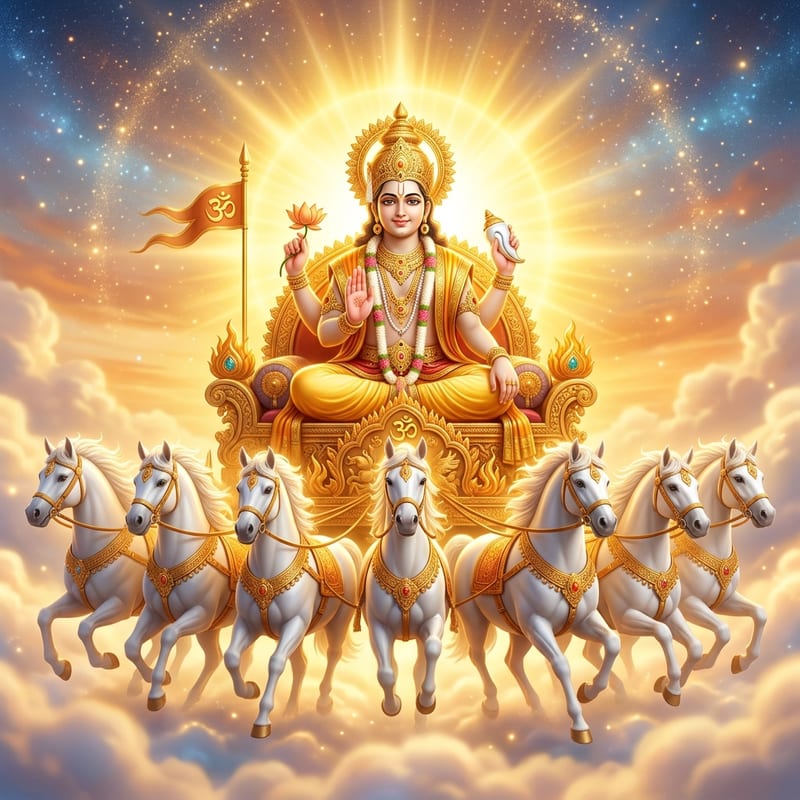
- ନଵଗ୍ରହଧ୍ଯାନଶ୍ଲୋକମ୍ (navagrahadhyānaślokam)the verse for meditating on the nine planets
anvaya ନଵଗ୍ରହଧ୍ଯାନଶ୍ଲୋକମ୍
note A heading rather than a verse. It names what follows.
ଗୁରୁ ଶୁକ୍ର ଶନିଭ୍ଯଶ୍ଚ ରାହଵେ କେତଵେ ନମଃ ॥
- ଆଦିତ୍ଯାଯ (ādityāya)to Āditya, the Sun
- ଚ (ca)and
- ସୋମାଯ (somāya)to Soma, the Moon
- ମଙ୍ଗଲାଯ (maṅgalāya)to Maṅgala, Mars
- ବୁଧାଯ (budhāya)to Budha, Mercury
- ଚ (ca)and
- ଗୁରୁ-ଶୁକ୍ର-ଶନିଭ୍ଯଃ (guru-śukra-śanibhyaḥ)to Guru, Śukra and Śani
- ଚ (ca)and
- ରାହଵେ (rāhave)to Rāhu
- କେତଵେ (ketave)to Ketu
- ନମଃ (namaḥ)salutation
anvaya ଆଦିତ୍ଯାଯ ଚ ସୋମାଯ ଚ ମଙ୍ଗଲାଯ ବୁଧାଯ ଚ ଗୁରୁଶୁକ୍ରଶନିଭ୍ଯଃ ରାହଵେ କେତଵେ ନମଃ
chandas Anuṣṭubh, 8 syllables in each of 4 pādas
ରାହଵେ କେତଵେ to Rahu, to Ketu — The last two of the nine are not bodies in the sky. They are the two points where the moon's path crosses the sun's, and an eclipse can happen only near them.
ନମଃ salutation — One namaḥ at the end covers all nine names, each of them in the dative.
note The nine are named in the order of the weekdays, Sunday to Saturday, with Rahu and Ketu added at the end. The nine verses that follow take them one at a time in the same order.
ଜପାକୁସୁମ ସଙ୍କାଶଂ କାଶ୍ଯପେଯଂ ମହାଦ୍ଯୁତିମ୍ ।
ତମୋଽରିଂ ସର୍ଵ ପାପଘ୍ନଂ ପ୍ରଣତୋସ୍ମି ଦିଵାକରମ୍ ॥
- ରଵିଃ (raviḥ)the Sun
- ଜପା-କୁସୁମ-ସଙ୍କାଶମ୍ (japā-kusuma-saṅkāśam)like the hibiscus flower
- କାଶ୍ଯପେଯମ୍ (kāśyapeyam)son of Kaśyapa
- ମହା-ଦ୍ଯୁତିମ୍ (mahā-dyutim)of great brilliance
- ତମଃ-ଅରିମ୍ (tamaḥ-arim)the foe of darkness
- ସର୍ଵ-ପାପ-ଘ୍ନମ୍ (sarva-pāpa-ghnam)slayer of every sin
- ପ୍ରଣତଃ ଅସ୍ମି (praṇataḥ asmi)I stand bowed
- ଦିଵାକରମ୍ (divākaram)before the maker of day
anvaya ରଵିଃ ଜପାକୁସୁମସଙ୍କାଶମ୍ କାଶ୍ଯପେଯମ୍ ମହାଦ୍ଯୁତିମ୍ ତମୋଽରିମ୍ ସର୍ଵପାପଘ୍ନମ୍ ଦିଵାକରମ୍ ପ୍ରଣତଃ ଅସ୍ମି
chandas Anuṣṭubh, 8 syllables in each of 4 pādas
ଜପାକୁସୁମ the hibiscus flower — The deep red china rose. Each of the nine verses opens with a colour, and this is the Sun's.
କାଶ୍ଯପେଯମ୍ son of Kashyapa — Kashyapa is the sage from whom the Adityas are descended, which is why the Sun is Aditya.
ତମୋଽରିମ୍ the foe of darkness — Tamas is darkness, and in the same word the dullness in a person.
note Each of the nine verses gives its planet a colour, a parentage and a work it does, then bows to it by a second name. Here the second name is Divakara, the maker of day.
ଦଧିଶଙ୍ଖ ତୁଷାରାଭଂ କ୍ଷୀରାର୍ଣଵ ସମୁଦ୍ଭଵମ୍ (କ୍ଷୀରୋଦାର୍ଣଵ ସମ୍ଭଵମ୍) ।
ନମାମି ଶଶିନଂ ସୋମଂ ଶମ୍ଭୋ-ର୍ମକୁଟ ଭୂଷଣମ୍ ॥
- ଚନ୍ଦ୍ରଃ (candraḥ)the Moon
- ଦଧି-ଶଙ୍ଖ-ତୁଷାର-ଆଭମ୍ (dadhi-śaṅkha-tuṣāra-ābham)of the sheen of curds, of conch and of snow
- କ୍ଷୀର-ଅର୍ଣଵ-ସମୁଦ୍ଭଵମ୍ (kṣīra-arṇava-samudbhavam)risen from the ocean of milk
- ନମାମି (namāmi)I bow to
- ଶଶିନମ୍ (śaśinam)the hare-marked
- ସୋମମ୍ (somam)Soma
- ଶମ୍ଭୋଃ ମକୁଟ-ଭୂଷଣମ୍ (śambhoḥ makuṭa-bhūṣaṇam)the ornament upon Śambhu’s crown
anvaya ଚନ୍ଦ୍ରଃ ଦଧିଶଙ୍ଖତୁଷାରାଭମ୍ କ୍ଷୀରାର୍ଣଵସମୁଦ୍ଭଵମ୍ ଶମ୍ଭୋଃ ମକୁଟଭୂଷଣମ୍ ଶଶିନମ୍ ସୋମମ୍ ନମାମି
chandas Anuṣṭubh, 8 syllables in each of 4 pādas
ଦଧିଶଙ୍ଖତୁଷାରାଭମ୍ with the sheen of curds, conch and frost — Three white things in one word, each a different white.
ଶଶିନମ୍ the hare-marked one — Śaśa is a hare. The dark patches on the moon are seen as a hare rather than a face.
ମକୁଟଭୂଷଣମ୍ the ornament on the crown — Shiva wears the crescent in his hair, so the moon is spoken of as his headpiece.
note The moon came up when the sea of milk was churned. The bracketed କ୍ଷୀରୋଦାର୍ଣଵ ସମ୍ଭଵମ୍ in the printed text is another reading of the second pāda and says the same thing.
ଧରଣୀ ଗର୍ଭ ସମ୍ଭୂତଂ ଵିଦ୍ଯୁତ୍କାନ୍ତି ସମପ୍ରଭମ୍ ।
କୁମାରଂ ଶକ୍ତିହସ୍ତଂ ତଂ କୁଜଂ [ମଙ୍ଗଲଂ] ପ୍ରଣମାମ୍ଯହମ୍ ॥
- କୁଜଃ (kujaḥ)Mars, the earth-born
- ଧରଣୀ-ଗର୍ଭ-ସମ୍ଭୂତମ୍ (dharaṇī-garbha-sambhūtam)born of the womb of the Earth
- ଵିଦ୍ଯୁତ୍-କାନ୍ତି-ସମ-ପ୍ରଭମ୍ (vidyut-kānti-sama-prabham)of a brilliance like the flash of lightning
- କୁମାରମ୍ (kumāram)the youth
- ଶକ୍ତି-ହସ୍ତମ୍ (śakti-hastam)with the spear in his hand
- ତମ୍ କୁଜମ୍ (tam kujam)to him, Kuja
- ମଙ୍ଗଲମ୍ (maṅgalam)Maṅgala (a variant reading)
- ପ୍ରଣମାମି ଅହମ୍ (praṇamāmi aham)I bow
anvaya କୁଜଃ ଧରଣୀଗର୍ଭସମ୍ଭୂତମ୍ ଵିଦ୍ଯୁତ୍କାନ୍ତିସମପ୍ରଭମ୍ କୁମାରମ୍ ଶକ୍ତିହସ୍ତମ୍ ତମ୍ କୁଜମ୍ ଅହମ୍ ପ୍ରଣମାମି
chandas Anuṣṭubh, 8 syllables in each of 4 pādas
କୁଜମ୍ the earth-born — Ku is the earth, ja born of it. Mars is counted a son of the Earth, which the first pāda states outright.
ଶକ୍ତିହସ୍ତମ୍ with the spear in his hand — Śakti here is the weapon, a short spear. It is the sense of the word in this verse rather than power in the abstract.
note Printed with ମଙ୍ଗଲଂ in brackets as another name for the same planet; that is the name used in speech and in the weekday Mangalvar.
ପ୍ରିଯଙ୍ଗୁ କଲିକାଶ୍ଯାମଂ ରୂପେଣା ପ୍ରତିମଂ ବୁଧମ୍ ।
ସୌମ୍ଯଂ ସୌମ୍ଯ (ସତ୍ଵ) ଗୁଣୋପେତଂ ତଂ ବୁଧଂ ପ୍ରଣମାମ୍ଯହମ୍ ॥
- ବୁଧଃ (budhaḥ)Mercury
- ପ୍ରିଯଙ୍ଗୁ-କଲିକା-ଶ୍ଯାମମ୍ (priyaṅgu-kalikā-śyāmam)dark as the priyaṅgu bud
- ରୂପେଣ ଅପ୍ରତିମମ୍ (rūpeṇa apratimam)matchless in beauty
- ବୁଧମ୍ (budham)Budha
- ସୌମ୍ଯମ୍ (saumyam)gentle
- ସୌମ୍ଯ-ଗୁଣ-ଉପେତମ୍ (saumya-guṇa-upetam)endowed with a gentle nature
- ସତ୍ତ୍ଵ-ଗୁଣ-ଉପେତମ୍ (sattva-guṇa-upetam)endowed with the quality of sattva (a variant reading)
- ତମ୍ ବୁଧମ୍ (tam budham)to that Budha
- ପ୍ରଣମାମି ଅହମ୍ (praṇamāmi aham)I bow
anvaya ବୁଧଃ ପ୍ରିଯଙ୍ଗୁକଲିକାଶ୍ଯାମମ୍ ରୂପେଣ ଅପ୍ରତିମମ୍ ସୌମ୍ଯମ୍ ସୌମ୍ଯଗୁଣୋପେତମ୍ ବୁଧମ୍ ତମ୍ ବୁଧମ୍ ଅହମ୍ ପ୍ରଣମାମି
chandas Anuṣṭubh, 8 syllables in each of 4 pādas
ପ୍ରିଯଙ୍ଗୁକଲିକା the priyangu bud — A dark green bud, the colour given to Mercury.
ସୌମ୍ଯମ୍ gentle — The word is built on Soma, the moon, and Budha is the moon's son. So it says gentle and says whose son he is at once.
note Printed ରୂପେଣା ପ୍ରତିମଂ; read as ରୂପେଣ ଅପ୍ରତିମଂ, matchless in form, which is how it is recited. The bracketed ସତ୍ଵ is another reading for the second ସୌମ୍ଯ, giving the quality of sattva.
ଦେଵାନାଂ ଚ ଋଷୀଣାଂ ଚ ଗୁରୁଂ କାଞ୍ଚନସନ୍ନିଭମ୍ ।
ବୁଦ୍ଧିମନ୍ତଂ ତ୍ରିଲୋକେଶଂ ତଂ ନମାମି ବୃହସ୍ପତିମ୍ ॥
- ଗୁରୁଃ (guruḥ)Jupiter
- ଦେଵାନାମ୍ ଚ ଋଷୀଣାମ୍ ଚ (devānām ca ṛṣīṇām ca)of gods and of seers alike
- ଗୁରୁମ୍ (gurum)the preceptor
- କାଞ୍ଚନ-ସନ୍ନିଭମ୍ (kāñcana-sannibham)like gold to look upon
- ବୁଦ୍ଧିମନ୍ତମ୍ (buddhimantam)full of understanding
- ତ୍ରି-ଲୋକ-ଈଶମ୍ (tri-loka-īśam)lord of the three worlds
- ତମ୍ ନମାମି (tam namāmi)to him I bow
- ବୃହସ୍ପତିମ୍ (bṛhaspatim)Bṛhaspati
anvaya ଗୁରୁଃ ଦେଵାନାମ୍ ଚ ଋଷୀଣାମ୍ ଚ ଗୁରୁମ୍ କାଞ୍ଚନସନ୍ନିଭମ୍ ବୁଦ୍ଧିମନ୍ତମ୍ ତ୍ରିଲୋକେଶମ୍ ତମ୍ ବୃହସ୍ପତିମ୍ ନମାମି
chandas Anuṣṭubh, 8 syllables in each of 4 pādas
କାଞ୍ଚନସନ୍ନିଭମ୍ like gold to look at — Kāñcana is gold. Jupiter's colour in this set is yellow.
ବୃହସ୍ପତିମ୍ Brihaspati — The teacher of the gods. Thursday is named after him, Guruvar.
note This verse and the next make a pair: the teacher of the gods, then the teacher of their opponents.
ହିମକୁନ୍ଦ ମୃଣାଲାଭଂ ଦୈତ୍ଯାନଂ ପରମଂ ଗୁରୁମ୍ ।
ସର୍ଵଶାସ୍ତ୍ର ପ୍ରଵକ୍ତାରଂ ଭାର୍ଗଵଂ ପ୍ରଣମାମ୍ଯହମ୍ ॥
- ଶୁକ୍ରଃ (śukraḥ)Venus
- ହିମ-କୁନ୍ଦ-ମୃଣାଲ-ଆଭମ୍ (hima-kunda-mṛṇāla-ābham)of the sheen of snow, jasmine and the lotus stalk
- ଦୈତ୍ଯାନାମ୍ (daityānām)of the daityas
- ପରମମ୍ ଗୁରୁମ୍ (paramam gurum)the supreme preceptor
- ସର୍ଵ-ଶାସ୍ତ୍ର-ପ୍ରଵକ୍ତାରମ୍ (sarva-śāstra-pravaktāram)the expounder of every scripture
- ଭାର୍ଗଵମ୍ (bhārgavam)Bhārgava
- ପ୍ରଣମାମି ଅହମ୍ (praṇamāmi aham)I bow
anvaya ଶୁକ୍ରଃ ହିମକୁନ୍ଦମୃଣାଲାଭମ୍ ଦୈତ୍ଯାନାମ୍ ପରମମ୍ ଗୁରୁମ୍ ସର୍ଵଶାସ୍ତ୍ରପ୍ରଵକ୍ତାରମ୍ ଭାର୍ଗଵମ୍ ଅହମ୍ ପ୍ରଣମାମି
chandas Anuṣṭubh, 8 syllables in each of 4 pādas
ମୃଣାଲ the lotus stalk — White where it is broken. Snow, jasmine and the lotus stalk give Venus three whites, as the moon had three.
ଭାର୍ଗଵମ୍ Bhargava — Son of Bhrigu. Shukra is teacher to the daityas, the gods' opponents, and the verse calls him their highest one.
note Printed ଦୈତ୍ଯାନଂ for ଦୈତ୍ଯାନାମ୍, a short spelling common in printed texts.
ନୀଲାଞ୍ଜନ ସମାଭାସଂ ରଵିପୁତ୍ରଂ ଯମାଗ୍ରଜମ୍ ।
ଛାଯା ମାର୍ତାଣ୍ଡ ସମ୍ଭୂତଂ ତଂ ନମାମି ଶନୈଶ୍ଚରମ୍ ॥
- ଶନିଃ (śaniḥ)Saturn
- ନୀଲ-ଅଞ୍ଜନ-ସମ-ଆଭାସମ୍ (nīla-añjana-sama-ābhāsam)shining dark as black collyrium
- ରଵି-ପୁତ୍ରମ୍ (ravi-putram)son of the Sun
- ଯମ-ଅଗ୍ରଜମ୍ (yama-agrajam)elder brother of Yama
- ଛାଯା-ମାର୍ତାଣ୍ଡ-ସମ୍ଭୂତମ୍ (chāyā-mārtāṇḍa-sambhūtam)born of Chāyā and Mārtāṇḍa
- ତମ୍ ନମାମି (tam namāmi)to him I bow
- ଶନୈଶ୍ଚରମ୍ (śanaiścaram)Śanaiścara, the slow-mover
anvaya ଶନିଃ ନୀଲାଞ୍ଜନସମାଭାସମ୍ ରଵିପୁତ୍ରମ୍ ଯମାଗ୍ରଜମ୍ ଛାଯାମାର୍ତାଣ୍ଡସମ୍ଭୂତମ୍ ତମ୍ ଶନୈଶ୍ଚରମ୍ ନମାମି
chandas Anuṣṭubh, 8 syllables in each of 4 pādas
ନୀଲାଞ୍ଜନ dark eye-black — The black paste put on the eyes. Saturn's colour is that blue-black.
ଛାଯାମାର୍ତାଣ୍ଡସମ୍ଭୂତମ୍ born of Chhaya and the Sun — Chhaya, whose name means shadow, is the Sun's second wife. Yama is her husband's son by another, which is why Saturn is called Yama's younger brother here.
ଶନୈଶ୍ଚରମ୍ the slow walker — Śanaiḥ is slowly and cara moving. Saturn takes about thirty years to come round the sky, and the name says so.
note Printed ଯମାଗ୍ରଜମ୍, which reads as the elder brother of Yama. The usual telling makes Yama the elder of the two.
ଅର୍ଧକାଯଂ ମହାଵୀରଂ ଚନ୍ଦ୍ରାଦିତ୍ଯ ଵିମର୍ଧନମ୍ ।
ସିଂହିକା ଗର୍ଭ ସମ୍ଭୂତଂ ତଂ ରାହୁଂ ପ୍ରଣମାମ୍ଯହମ୍ ॥
- ରାହୁଃ (rāhuḥ)Rāhu
- ଅର୍ଧ-କାଯମ୍ (ardha-kāyam)having but half a body
- ମହା-ଵୀରମ୍ (mahā-vīram)the great warrior
- ଚନ୍ଦ୍ର-ଆଦିତ୍ଯ-ଵିମର୍ଦନମ୍ (candra-āditya-vimardanam)the crusher of Moon and Sun
- ସିଂହିକା-ଗର୍ଭ-ସମ୍ଭୂତମ୍ (siṃhikā-garbha-sambhūtam)born of the womb of Siṃhikā
- ତମ୍ ରାହୁମ୍ (tam rāhum)to him, Rāhu
- ପ୍ରଣମାମି ଅହମ୍ (praṇamāmi aham)I bow
anvaya ରାହୁଃ ଅର୍ଧକାଯମ୍ ମହାଵୀରମ୍ ଚନ୍ଦ୍ରାଦିତ୍ଯଵିମର୍ଧନମ୍ ସିଂହିକାଗର୍ଭସମ୍ଭୂତମ୍ ତମ୍ ରାହୁମ୍ ଅହମ୍ ପ୍ରଣମାମି
chandas Anuṣṭubh, 8 syllables in each of 4 pādas
ଅର୍ଧକାଯମ୍ having only half a body — In the story of the churning his head was cut from his body after he drank the nectar. The head stayed alive and became Rahu.
ଚନ୍ଦ୍ରାଦିତ୍ଯଵିମର୍ଧନମ୍ who presses hard upon moon and sun — Printed विमर्धन for विमर्दन, crushing. Eclipses are told as his seizing of the two lights.
ସିଂହିକା Simhika — His mother, named in the Puranas as a daughter of Kashyapa.
note Rahu and Ketu are the head and the tail of one figure, which is why the last two verses answer each other.
ପଲାଶ ପୁଷ୍ପ ସଙ୍କାଶଂ ତାରକାଗ୍ରହମସ୍ତକମ୍ ।
ରୌଦ୍ରଂ ରୌଦ୍ରାତ୍ମକଂ ଘୋରଂ ତଂ କେତୁଂ ପ୍ରଣମାମ୍ଯହମ୍ ॥
- କେତୁଃ (ketuḥ)Ketu
- ପଲାଶ-ପୁଷ୍ପ-ସଙ୍କାଶମ୍ (palāśa-puṣpa-saṅkāśam)like the palāśa blossom
- ତାରକା-ଗ୍ରହ-ମସ୍ତକମ୍ (tārakā-graha-mastakam)who bears the stars and planets upon his head
- ରୌଦ୍ରମ୍ (raudram)fierce
- ରୌଦ୍ର-ଆତ୍ମକମ୍ (raudra-ātmakam)fierce in his very nature
- ଘୋରମ୍ (ghoram)terrible
- ତମ୍ କେତୁମ୍ (tam ketum)to him, Ketu
- ପ୍ରଣମାମି ଅହମ୍ (praṇamāmi aham)I bow
anvaya କେତୁଃ ପଲାଶପୁଷ୍ପସଙ୍କାଶମ୍ ତାରକାଗ୍ରହମସ୍ତକମ୍ ରୌଦ୍ରମ୍ ରୌଦ୍ରାତ୍ମକମ୍ ଘୋରମ୍ ତମ୍ କେତୁମ୍ ଅହମ୍ ପ୍ରଣମାମି
chandas Anuṣṭubh, 8 syllables in each of 4 pādas
ପଲାଶପୁଷ୍ପ the flame-of-the-forest flower — A hot orange red. It is the last of the nine colours in the hymn.
ତାରକାଗ୍ରହମସ୍ତକମ୍ who carries stars and planets at his head — The compound is printed as one word and is read in more than one way. What is certain is that the stars and the planets stand at his head.
note The third pāda puts three words for the same fierceness side by side. Ketu is the comet or the tail, and the verse does not soften him.
ଇତି ଵ୍ଯାସ ମୁଖୋଦ୍ଗୀତଂ ଯଃ ପଠେତ୍ସୁ ସମାହିତଃ ।
ଦିଵା ଵା ଯଦି ଵା ରାତ୍ରୌ ଵିଘ୍ନଶାନ୍ତି-ର୍ଭଵିଷ୍ଯତି ॥
- ଫଲ-ଶ୍ରୁତିଃ (phala-śrutiḥ)the declaration of the fruit
- ଇତି (iti)thus
- ଵ୍ଯାସ-ମୁଖ-ଉଦ୍ଗୀତମ୍ (vyāsa-mukha-udgītam)sung forth from the mouth of Vyāsa
- ଯଃ ପଠେତ୍ (yaḥ paṭhet)whoever recites it
- ସୁ-ସମାହିତଃ (su-samāhitaḥ)with a well-composed mind
- ଦିଵା ଵା ଯଦି ଵା ରାତ୍ରୌ (divā vā yadi vā rātrau)whether by day or by night
- ଵିଘ୍ନ-ଶାନ୍ତିଃ (vighna-śāntiḥ)the quieting of obstacles
- ଭଵିଷ୍ଯତି (bhaviṣyati)shall come about
anvaya ଫଲଶ୍ରୁତିଃ ଯଃ ସୁସମାହିତଃ ଦିଵା ଵା ଯଦି ଵା ରାତ୍ରୌ ଇତି ଵ୍ଯାସମୁଖୋଦ୍ଗୀତମ୍ ପଠେତ୍ ଵିଘ୍ନଶାନ୍ତିଃ ଭଵିଷ୍ଯତି
chandas Anuṣṭubh, 8 syllables in each of 4 pādas
ଫଲଶ୍ରୁତିଃ the telling of what comes of it — The closing part of a stotra, where what the reciting is good for is stated. Three verses of it end this hymn.
ଵ୍ଯାସମୁଖୋଦ୍ଗୀତମ୍ sung from the mouth of Vyasa — The hymn is given to Vyasa, and the last verse repeats his name as a seal on it.
ସୁସମାହିତଃ with the mind well gathered — Samāhita is collected, put together. The fruit is promised for reciting done with attention.
note Printed ପଠେତ୍ସୁ ସମାହିତଃ, which is read as ପଠେତ୍ ସୁସମାହିତଃ.
ଐଶ୍ଵର୍ଯମତୁଲଂ ତେଷାମାରୋଗ୍ଯଂ ପୁଷ୍ଟି ଵର୍ଧନମ୍ ॥
- ନର-ନାରୀ-ନୃପାଣାମ୍ (nara-nārī-nṛpāṇām)for men, for women and for kings
- ଚ (ca)and
- ଭଵେତ୍ (bhavet)there shall be
- ଦୁଃସ୍ଵପ୍ନ-ନାଶନମ୍ (duḥsvapna-nāśanam)the undoing of evil dreams
- ଐଶ୍ଵର୍ଯମ୍ ଅତୁଲମ୍ (aiśvaryam atulam)prosperity beyond compare
- ତେଷାମ୍ (teṣām)for them
- ଆରୋଗ୍ଯମ୍ (ārogyam)health
- ପୁଷ୍ଟି-ଵର୍ଧନମ୍ (puṣṭi-vardhanam)and increase of strength
anvaya ନରନାରୀନୃପାଣାମ୍ ଦୁଃସ୍ଵପ୍ନନାଶନମ୍ ଭଵେତ୍ ଚ ତେଷାମ୍ ଅତୁଲମ୍ ଐଶ୍ଵର୍ଯମ୍ ଆରୋଗ୍ଯମ୍ ପୁଷ୍ଟିଵର୍ଧନମ୍
chandas Anuṣṭubh, 8 syllables in each of 4 pādas
ଦୁଃସ୍ଵପ୍ନନାଶନମ୍ the undoing of bad dreams — Bad dreams are read in this literature as a sign that the planets are unfavourable, so they are the first thing named.
ପୁଷ୍ଟିଵର୍ଧନମ୍ a gain in strength — Puṣṭi is being well fed and well grown.
note Men, women and kings are listed separately, which is the older way of saying everyone, whatever their station.
ତାସ୍ସର୍ଵାଃ ପ୍ରଶମଂ ଯାନ୍ତି ଵ୍ଯାସୋ ବ୍ରୂତେ ନ ସଂଶଯଃ ॥
- ଗ୍ରହ-ନକ୍ଷତ୍ର-ଜାଃ (graha-nakṣatra-jāḥ)born of the planets and the constellations
- ପୀଡାଃ (pīḍāḥ)afflictions
- ତସ୍କର-ଅଗ୍ନି-ସମୁଦ୍ଭଵାଃ (taskara-agni-samudbhavāḥ)arising from thieves and from fire
- ତାଃ ସର୍ଵାଃ (tāḥ sarvāḥ)all of them
- ପ୍ରଶମମ୍ ଯାନ୍ତି (praśamam yānti)go to quietness
- ଵ୍ଯାସଃ ବ୍ରୂତେ (vyāsaḥ brūte)so Vyāsa declares
- ନ ସଂଶଯଃ (na saṃśayaḥ)and there is no doubt
anvaya ଗ୍ରହନକ୍ଷତ୍ରଜାଃ ତସ୍କରାଗ୍ନିସମୁଦ୍ଭଵାଃ ପୀଡାଃ ତାଃ ସର୍ଵାଃ ପ୍ରଶମମ୍ ଯାନ୍ତି ଵ୍ଯାସଃ ବ୍ରୂତେ ନ ସଂଶଯଃ
chandas Anuṣṭubh, 8 syllables in each of 4 pādas
ପ୍ରଶମମ୍ ଯାନ୍ତି go quiet — Praśama is the settling of something that was disturbed, the same word used of a fire going down.
ତସ୍କର a thief — Thieves and fire are put beside the planets and stars, so the troubles counted run from the sky to the house.
note The hymn ends by naming Vyasa as the one who says it, and by adding that there is no doubt about it.