
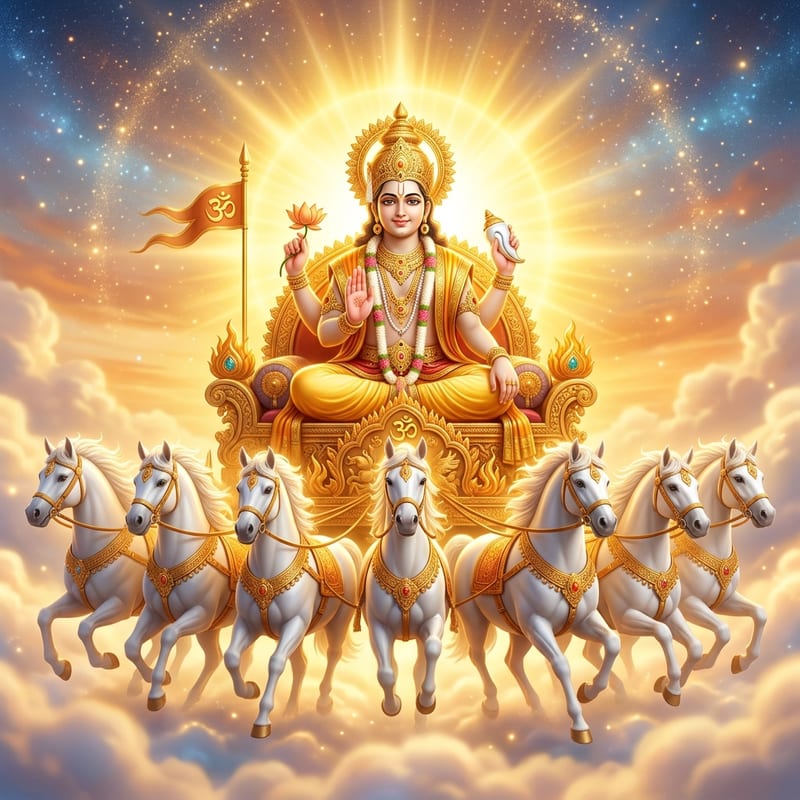
- ನವಗ್ರಹಧ್ಯಾನಶ್ಲೋಕಮ್ (navagrahadhyānaślokam)the verse for meditating on the nine planets
anvaya ನವಗ್ರಹಧ್ಯಾನಶ್ಲೋಕಮ್
note A heading rather than a verse. It names what follows.
ಗುರು ಶುಕ್ರ ಶನಿಭ್ಯಶ್ಚ ರಾಹವೇ ಕೇತವೇ ನಮಃ ॥
- ಆದಿತ್ಯಾಯ (ādityāya)to Āditya, the Sun
- ಚ (ca)and
- ಸೋಮಾಯ (somāya)to Soma, the Moon
- ಮಙ್ಗಲಾಯ (maṅgalāya)to Maṅgala, Mars
- ಬುಧಾಯ (budhāya)to Budha, Mercury
- ಚ (ca)and
- ಗುರು-ಶುಕ್ರ-ಶನಿಭ್ಯಃ (guru-śukra-śanibhyaḥ)to Guru, Śukra and Śani
- ಚ (ca)and
- ರಾಹವೇ (rāhave)to Rāhu
- ಕೇತವೇ (ketave)to Ketu
- ನಮಃ (namaḥ)salutation
anvaya ಆದಿತ್ಯಾಯ ಚ ಸೋಮಾಯ ಚ ಮಙ್ಗಲಾಯ ಬುಧಾಯ ಚ ಗುರುಶುಕ್ರಶನಿಭ್ಯಃ ರಾಹವೇ ಕೇತವೇ ನಮಃ
chandas Anuṣṭubh, 8 syllables in each of 4 pādas
ರಾಹವೇ ಕೇತವೇ to Rahu, to Ketu — The last two of the nine are not bodies in the sky. They are the two points where the moon's path crosses the sun's, and an eclipse can happen only near them.
ನಮಃ salutation — One namaḥ at the end covers all nine names, each of them in the dative.
note The nine are named in the order of the weekdays, Sunday to Saturday, with Rahu and Ketu added at the end. The nine verses that follow take them one at a time in the same order.
ಜಪಾಕುಸುಮ ಸಙ್ಕಾಶಂ ಕಾಶ್ಯಪೇಯಂ ಮಹಾದ್ಯುತಿಮ್ ।
ತಮೋಽರಿಂ ಸರ್ವ ಪಾಪಘ್ನಂ ಪ್ರಣತೋಸ್ಮಿ ದಿವಾಕರಮ್ ॥
- ರವಿಃ (raviḥ)the Sun
- ಜಪಾ-ಕುಸುಮ-ಸಙ್ಕಾಶಮ್ (japā-kusuma-saṅkāśam)like the hibiscus flower
- ಕಾಶ್ಯಪೇಯಮ್ (kāśyapeyam)son of Kaśyapa
- ಮಹಾ-ದ್ಯುತಿಮ್ (mahā-dyutim)of great brilliance
- ತಮಃ-ಅರಿಮ್ (tamaḥ-arim)the foe of darkness
- ಸರ್ವ-ಪಾಪ-ಘ್ನಮ್ (sarva-pāpa-ghnam)slayer of every sin
- ಪ್ರಣತಃ ಅಸ್ಮಿ (praṇataḥ asmi)I stand bowed
- ದಿವಾಕರಮ್ (divākaram)before the maker of day
anvaya ರವಿಃ ಜಪಾಕುಸುಮಸಙ್ಕಾಶಮ್ ಕಾಶ್ಯಪೇಯಮ್ ಮಹಾದ್ಯುತಿಮ್ ತಮೋಽರಿಮ್ ಸರ್ವಪಾಪಘ್ನಮ್ ದಿವಾಕರಮ್ ಪ್ರಣತಃ ಅಸ್ಮಿ
chandas Anuṣṭubh, 8 syllables in each of 4 pādas
ಜಪಾಕುಸುಮ the hibiscus flower — The deep red china rose. Each of the nine verses opens with a colour, and this is the Sun's.
ಕಾಶ್ಯಪೇಯಮ್ son of Kashyapa — Kashyapa is the sage from whom the Adityas are descended, which is why the Sun is Aditya.
ತಮೋಽರಿಮ್ the foe of darkness — Tamas is darkness, and in the same word the dullness in a person.
note Each of the nine verses gives its planet a colour, a parentage and a work it does, then bows to it by a second name. Here the second name is Divakara, the maker of day.
ದಧಿಶಙ್ಖ ತುಷಾರಾಭಂ ಕ್ಷೀರಾರ್ಣವ ಸಮುದ್ಭವಮ್ (ಕ್ಷೀರೋದಾರ್ಣವ ಸಮ್ಭವಮ್) ।
ನಮಾಮಿ ಶಶಿನಂ ಸೋಮಂ ಶಮ್ಭೋ-ರ್ಮಕುಟ ಭೂಷಣಮ್ ॥
- ಚನ್ದ್ರಃ (candraḥ)the Moon
- ದಧಿ-ಶಙ್ಖ-ತುಷಾರ-ಆಭಮ್ (dadhi-śaṅkha-tuṣāra-ābham)of the sheen of curds, of conch and of snow
- ಕ್ಷೀರ-ಅರ್ಣವ-ಸಮುದ್ಭವಮ್ (kṣīra-arṇava-samudbhavam)risen from the ocean of milk
- ನಮಾಮಿ (namāmi)I bow to
- ಶಶಿನಮ್ (śaśinam)the hare-marked
- ಸೋಮಮ್ (somam)Soma
- ಶಮ್ಭೋಃ ಮಕುಟ-ಭೂಷಣಮ್ (śambhoḥ makuṭa-bhūṣaṇam)the ornament upon Śambhu’s crown
anvaya ಚನ್ದ್ರಃ ದಧಿಶಙ್ಖತುಷಾರಾಭಮ್ ಕ್ಷೀರಾರ್ಣವಸಮುದ್ಭವಮ್ ಶಮ್ಭೋಃ ಮಕುಟಭೂಷಣಮ್ ಶಶಿನಮ್ ಸೋಮಮ್ ನಮಾಮಿ
chandas Anuṣṭubh, 8 syllables in each of 4 pādas
ದಧಿಶಙ್ಖತುಷಾರಾಭಮ್ with the sheen of curds, conch and frost — Three white things in one word, each a different white.
ಶಶಿನಮ್ the hare-marked one — Śaśa is a hare. The dark patches on the moon are seen as a hare rather than a face.
ಮಕುಟಭೂಷಣಮ್ the ornament on the crown — Shiva wears the crescent in his hair, so the moon is spoken of as his headpiece.
note The moon came up when the sea of milk was churned. The bracketed ಕ್ಷೀರೋದಾರ್ಣವ ಸಮ್ಭವಮ್ in the printed text is another reading of the second pāda and says the same thing.
ಧರಣೀ ಗರ್ಭ ಸಮ್ಭೂತಂ ವಿದ್ಯುತ್ಕಾನ್ತಿ ಸಮಪ್ರಭಮ್ ।
ಕುಮಾರಂ ಶಕ್ತಿಹಸ್ತಂ ತಂ ಕುಜಂ [ಮಙ್ಗಲಂ] ಪ್ರಣಮಾಮ್ಯಹಮ್ ॥
- ಕುಜಃ (kujaḥ)Mars, the earth-born
- ಧರಣೀ-ಗರ್ಭ-ಸಮ್ಭೂತಮ್ (dharaṇī-garbha-sambhūtam)born of the womb of the Earth
- ವಿದ್ಯುತ್-ಕಾನ್ತಿ-ಸಮ-ಪ್ರಭಮ್ (vidyut-kānti-sama-prabham)of a brilliance like the flash of lightning
- ಕುಮಾರಮ್ (kumāram)the youth
- ಶಕ್ತಿ-ಹಸ್ತಮ್ (śakti-hastam)with the spear in his hand
- ತಮ್ ಕುಜಮ್ (tam kujam)to him, Kuja
- ಮಙ್ಗಲಮ್ (maṅgalam)Maṅgala (a variant reading)
- ಪ್ರಣಮಾಮಿ ಅಹಮ್ (praṇamāmi aham)I bow
anvaya ಕುಜಃ ಧರಣೀಗರ್ಭಸಮ್ಭೂತಮ್ ವಿದ್ಯುತ್ಕಾನ್ತಿಸಮಪ್ರಭಮ್ ಕುಮಾರಮ್ ಶಕ್ತಿಹಸ್ತಮ್ ತಮ್ ಕುಜಮ್ ಅಹಮ್ ಪ್ರಣಮಾಮಿ
chandas Anuṣṭubh, 8 syllables in each of 4 pādas
ಕುಜಮ್ the earth-born — Ku is the earth, ja born of it. Mars is counted a son of the Earth, which the first pāda states outright.
ಶಕ್ತಿಹಸ್ತಮ್ with the spear in his hand — Śakti here is the weapon, a short spear. It is the sense of the word in this verse rather than power in the abstract.
note Printed with ಮಙ್ಗಲಂ in brackets as another name for the same planet; that is the name used in speech and in the weekday Mangalvar.
ಪ್ರಿಯಙ್ಗು ಕಲಿಕಾಶ್ಯಾಮಂ ರೂಪೇಣಾ ಪ್ರತಿಮಂ ಬುಧಮ್ ।
ಸೌಮ್ಯಂ ಸೌಮ್ಯ (ಸತ್ವ) ಗುಣೋಪೇತಂ ತಂ ಬುಧಂ ಪ್ರಣಮಾಮ್ಯಹಮ್ ॥
- ಬುಧಃ (budhaḥ)Mercury
- ಪ್ರಿಯಙ್ಗು-ಕಲಿಕಾ-ಶ್ಯಾಮಮ್ (priyaṅgu-kalikā-śyāmam)dark as the priyaṅgu bud
- ರೂಪೇಣ ಅಪ್ರತಿಮಮ್ (rūpeṇa apratimam)matchless in beauty
- ಬುಧಮ್ (budham)Budha
- ಸೌಮ್ಯಮ್ (saumyam)gentle
- ಸೌಮ್ಯ-ಗುಣ-ಉಪೇತಮ್ (saumya-guṇa-upetam)endowed with a gentle nature
- ಸತ್ತ್ವ-ಗುಣ-ಉಪೇತಮ್ (sattva-guṇa-upetam)endowed with the quality of sattva (a variant reading)
- ತಮ್ ಬುಧಮ್ (tam budham)to that Budha
- ಪ್ರಣಮಾಮಿ ಅಹಮ್ (praṇamāmi aham)I bow
anvaya ಬುಧಃ ಪ್ರಿಯಙ್ಗುಕಲಿಕಾಶ್ಯಾಮಮ್ ರೂಪೇಣ ಅಪ್ರತಿಮಮ್ ಸೌಮ್ಯಮ್ ಸೌಮ್ಯಗುಣೋಪೇತಮ್ ಬುಧಮ್ ತಮ್ ಬುಧಮ್ ಅಹಮ್ ಪ್ರಣಮಾಮಿ
chandas Anuṣṭubh, 8 syllables in each of 4 pādas
ಪ್ರಿಯಙ್ಗುಕಲಿಕಾ the priyangu bud — A dark green bud, the colour given to Mercury.
ಸೌಮ್ಯಮ್ gentle — The word is built on Soma, the moon, and Budha is the moon's son. So it says gentle and says whose son he is at once.
note Printed ರೂಪೇಣಾ ಪ್ರತಿಮಂ; read as ರೂಪೇಣ ಅಪ್ರತಿಮಂ, matchless in form, which is how it is recited. The bracketed ಸತ್ವ is another reading for the second ಸೌಮ್ಯ, giving the quality of sattva.
ದೇವಾನಾಂ ಚ ಋಷೀಣಾಂ ಚ ಗುರುಂ ಕಾಞ್ಚನಸನ್ನಿಭಮ್ ।
ಬುದ್ಧಿಮನ್ತಂ ತ್ರಿಲೋಕೇಶಂ ತಂ ನಮಾಮಿ ಬೃಹಸ್ಪತಿಮ್ ॥
- ಗುರುಃ (guruḥ)Jupiter
- ದೇವಾನಾಮ್ ಚ ಋಷೀಣಾಮ್ ಚ (devānām ca ṛṣīṇām ca)of gods and of seers alike
- ಗುರುಮ್ (gurum)the preceptor
- ಕಾಞ್ಚನ-ಸನ್ನಿಭಮ್ (kāñcana-sannibham)like gold to look upon
- ಬುದ್ಧಿಮನ್ತಮ್ (buddhimantam)full of understanding
- ತ್ರಿ-ಲೋಕ-ಈಶಮ್ (tri-loka-īśam)lord of the three worlds
- ತಮ್ ನಮಾಮಿ (tam namāmi)to him I bow
- ಬೃಹಸ್ಪತಿಮ್ (bṛhaspatim)Bṛhaspati
anvaya ಗುರುಃ ದೇವಾನಾಮ್ ಚ ಋಷೀಣಾಮ್ ಚ ಗುರುಮ್ ಕಾಞ್ಚನಸನ್ನಿಭಮ್ ಬುದ್ಧಿಮನ್ತಮ್ ತ್ರಿಲೋಕೇಶಮ್ ತಮ್ ಬೃಹಸ್ಪತಿಮ್ ನಮಾಮಿ
chandas Anuṣṭubh, 8 syllables in each of 4 pādas
ಕಾಞ್ಚನಸನ್ನಿಭಮ್ like gold to look at — Kāñcana is gold. Jupiter's colour in this set is yellow.
ಬೃಹಸ್ಪತಿಮ್ Brihaspati — The teacher of the gods. Thursday is named after him, Guruvar.
note This verse and the next make a pair: the teacher of the gods, then the teacher of their opponents.
ಹಿಮಕುನ್ದ ಮೃಣಾಲಾಭಂ ದೈತ್ಯಾನಂ ಪರಮಂ ಗುರುಮ್ ।
ಸರ್ವಶಾಸ್ತ್ರ ಪ್ರವಕ್ತಾರಂ ಭಾರ್ಗವಂ ಪ್ರಣಮಾಮ್ಯಹಮ್ ॥
- ಶುಕ್ರಃ (śukraḥ)Venus
- ಹಿಮ-ಕುನ್ದ-ಮೃಣಾಲ-ಆಭಮ್ (hima-kunda-mṛṇāla-ābham)of the sheen of snow, jasmine and the lotus stalk
- ದೈತ್ಯಾನಾಮ್ (daityānām)of the daityas
- ಪರಮಮ್ ಗುರುಮ್ (paramam gurum)the supreme preceptor
- ಸರ್ವ-ಶಾಸ್ತ್ರ-ಪ್ರವಕ್ತಾರಮ್ (sarva-śāstra-pravaktāram)the expounder of every scripture
- ಭಾರ್ಗವಮ್ (bhārgavam)Bhārgava
- ಪ್ರಣಮಾಮಿ ಅಹಮ್ (praṇamāmi aham)I bow
anvaya ಶುಕ್ರಃ ಹಿಮಕುನ್ದಮೃಣಾಲಾಭಮ್ ದೈತ್ಯಾನಾಮ್ ಪರಮಮ್ ಗುರುಮ್ ಸರ್ವಶಾಸ್ತ್ರಪ್ರವಕ್ತಾರಮ್ ಭಾರ್ಗವಮ್ ಅಹಮ್ ಪ್ರಣಮಾಮಿ
chandas Anuṣṭubh, 8 syllables in each of 4 pādas
ಮೃಣಾಲ the lotus stalk — White where it is broken. Snow, jasmine and the lotus stalk give Venus three whites, as the moon had three.
ಭಾರ್ಗವಮ್ Bhargava — Son of Bhrigu. Shukra is teacher to the daityas, the gods' opponents, and the verse calls him their highest one.
note Printed ದೈತ್ಯಾನಂ for ದೈತ್ಯಾನಾಮ್, a short spelling common in printed texts.
ನೀಲಾಞ್ಜನ ಸಮಾಭಾಸಂ ರವಿಪುತ್ರಂ ಯಮಾಗ್ರಜಮ್ ।
ಛಾಯಾ ಮಾರ್ತಾಣ್ಡ ಸಮ್ಭೂತಂ ತಂ ನಮಾಮಿ ಶನೈಶ್ಚರಮ್ ॥
- ಶನಿಃ (śaniḥ)Saturn
- ನೀಲ-ಅಞ್ಜನ-ಸಮ-ಆಭಾಸಮ್ (nīla-añjana-sama-ābhāsam)shining dark as black collyrium
- ರವಿ-ಪುತ್ರಮ್ (ravi-putram)son of the Sun
- ಯಮ-ಅಗ್ರಜಮ್ (yama-agrajam)elder brother of Yama
- ಛಾಯಾ-ಮಾರ್ತಾಣ್ಡ-ಸಮ್ಭೂತಮ್ (chāyā-mārtāṇḍa-sambhūtam)born of Chāyā and Mārtāṇḍa
- ತಮ್ ನಮಾಮಿ (tam namāmi)to him I bow
- ಶನೈಶ್ಚರಮ್ (śanaiścaram)Śanaiścara, the slow-mover
anvaya ಶನಿಃ ನೀಲಾಞ್ಜನಸಮಾಭಾಸಮ್ ರವಿಪುತ್ರಮ್ ಯಮಾಗ್ರಜಮ್ ಛಾಯಾಮಾರ್ತಾಣ್ಡಸಮ್ಭೂತಮ್ ತಮ್ ಶನೈಶ್ಚರಮ್ ನಮಾಮಿ
chandas Anuṣṭubh, 8 syllables in each of 4 pādas
ನೀಲಾಞ್ಜನ dark eye-black — The black paste put on the eyes. Saturn's colour is that blue-black.
ಛಾಯಾಮಾರ್ತಾಣ್ಡಸಮ್ಭೂತಮ್ born of Chhaya and the Sun — Chhaya, whose name means shadow, is the Sun's second wife. Yama is her husband's son by another, which is why Saturn is called Yama's younger brother here.
ಶನೈಶ್ಚರಮ್ the slow walker — Śanaiḥ is slowly and cara moving. Saturn takes about thirty years to come round the sky, and the name says so.
note Printed ಯಮಾಗ್ರಜಮ್, which reads as the elder brother of Yama. The usual telling makes Yama the elder of the two.
ಅರ್ಧಕಾಯಂ ಮಹಾವೀರಂ ಚನ್ದ್ರಾದಿತ್ಯ ವಿಮರ್ಧನಮ್ ।
ಸಿಂಹಿಕಾ ಗರ್ಭ ಸಮ್ಭೂತಂ ತಂ ರಾಹುಂ ಪ್ರಣಮಾಮ್ಯಹಮ್ ॥
- ರಾಹುಃ (rāhuḥ)Rāhu
- ಅರ್ಧ-ಕಾಯಮ್ (ardha-kāyam)having but half a body
- ಮಹಾ-ವೀರಮ್ (mahā-vīram)the great warrior
- ಚನ್ದ್ರ-ಆದಿತ್ಯ-ವಿಮರ್ದನಮ್ (candra-āditya-vimardanam)the crusher of Moon and Sun
- ಸಿಂಹಿಕಾ-ಗರ್ಭ-ಸಮ್ಭೂತಮ್ (siṃhikā-garbha-sambhūtam)born of the womb of Siṃhikā
- ತಮ್ ರಾಹುಮ್ (tam rāhum)to him, Rāhu
- ಪ್ರಣಮಾಮಿ ಅಹಮ್ (praṇamāmi aham)I bow
anvaya ರಾಹುಃ ಅರ್ಧಕಾಯಮ್ ಮಹಾವೀರಮ್ ಚನ್ದ್ರಾದಿತ್ಯವಿಮರ್ಧನಮ್ ಸಿಂಹಿಕಾಗರ್ಭಸಮ್ಭೂತಮ್ ತಮ್ ರಾಹುಮ್ ಅಹಮ್ ಪ್ರಣಮಾಮಿ
chandas Anuṣṭubh, 8 syllables in each of 4 pādas
ಅರ್ಧಕಾಯಮ್ having only half a body — In the story of the churning his head was cut from his body after he drank the nectar. The head stayed alive and became Rahu.
ಚನ್ದ್ರಾದಿತ್ಯವಿಮರ್ಧನಮ್ who presses hard upon moon and sun — Printed विमर्धन for विमर्दन, crushing. Eclipses are told as his seizing of the two lights.
ಸಿಂಹಿಕಾ Simhika — His mother, named in the Puranas as a daughter of Kashyapa.
note Rahu and Ketu are the head and the tail of one figure, which is why the last two verses answer each other.
ಪಲಾಶ ಪುಷ್ಪ ಸಙ್ಕಾಶಂ ತಾರಕಾಗ್ರಹಮಸ್ತಕಮ್ ।
ರೌದ್ರಂ ರೌದ್ರಾತ್ಮಕಂ ಘೋರಂ ತಂ ಕೇತುಂ ಪ್ರಣಮಾಮ್ಯಹಮ್ ॥
- ಕೇತುಃ (ketuḥ)Ketu
- ಪಲಾಶ-ಪುಷ್ಪ-ಸಙ್ಕಾಶಮ್ (palāśa-puṣpa-saṅkāśam)like the palāśa blossom
- ತಾರಕಾ-ಗ್ರಹ-ಮಸ್ತಕಮ್ (tārakā-graha-mastakam)who bears the stars and planets upon his head
- ರೌದ್ರಮ್ (raudram)fierce
- ರೌದ್ರ-ಆತ್ಮಕಮ್ (raudra-ātmakam)fierce in his very nature
- ಘೋರಮ್ (ghoram)terrible
- ತಮ್ ಕೇತುಮ್ (tam ketum)to him, Ketu
- ಪ್ರಣಮಾಮಿ ಅಹಮ್ (praṇamāmi aham)I bow
anvaya ಕೇತುಃ ಪಲಾಶಪುಷ್ಪಸಙ್ಕಾಶಮ್ ತಾರಕಾಗ್ರಹಮಸ್ತಕಮ್ ರೌದ್ರಮ್ ರೌದ್ರಾತ್ಮಕಮ್ ಘೋರಮ್ ತಮ್ ಕೇತುಮ್ ಅಹಮ್ ಪ್ರಣಮಾಮಿ
chandas Anuṣṭubh, 8 syllables in each of 4 pādas
ಪಲಾಶಪುಷ್ಪ the flame-of-the-forest flower — A hot orange red. It is the last of the nine colours in the hymn.
ತಾರಕಾಗ್ರಹಮಸ್ತಕಮ್ who carries stars and planets at his head — The compound is printed as one word and is read in more than one way. What is certain is that the stars and the planets stand at his head.
note The third pāda puts three words for the same fierceness side by side. Ketu is the comet or the tail, and the verse does not soften him.
ಇತಿ ವ್ಯಾಸ ಮುಖೋದ್ಗೀತಂ ಯಃ ಪಠೇತ್ಸು ಸಮಾಹಿತಃ ।
ದಿವಾ ವಾ ಯದಿ ವಾ ರಾತ್ರೌ ವಿಘ್ನಶಾನ್ತಿ-ರ್ಭವಿಷ್ಯತಿ ॥
- ಫಲ-ಶ್ರುತಿಃ (phala-śrutiḥ)the declaration of the fruit
- ಇತಿ (iti)thus
- ವ್ಯಾಸ-ಮುಖ-ಉದ್ಗೀತಮ್ (vyāsa-mukha-udgītam)sung forth from the mouth of Vyāsa
- ಯಃ ಪಠೇತ್ (yaḥ paṭhet)whoever recites it
- ಸು-ಸಮಾಹಿತಃ (su-samāhitaḥ)with a well-composed mind
- ದಿವಾ ವಾ ಯದಿ ವಾ ರಾತ್ರೌ (divā vā yadi vā rātrau)whether by day or by night
- ವಿಘ್ನ-ಶಾನ್ತಿಃ (vighna-śāntiḥ)the quieting of obstacles
- ಭವಿಷ್ಯತಿ (bhaviṣyati)shall come about
anvaya ಫಲಶ್ರುತಿಃ ಯಃ ಸುಸಮಾಹಿತಃ ದಿವಾ ವಾ ಯದಿ ವಾ ರಾತ್ರೌ ಇತಿ ವ್ಯಾಸಮುಖೋದ್ಗೀತಮ್ ಪಠೇತ್ ವಿಘ್ನಶಾನ್ತಿಃ ಭವಿಷ್ಯತಿ
chandas Anuṣṭubh, 8 syllables in each of 4 pādas
ಫಲಶ್ರುತಿಃ the telling of what comes of it — The closing part of a stotra, where what the reciting is good for is stated. Three verses of it end this hymn.
ವ್ಯಾಸಮುಖೋದ್ಗೀತಮ್ sung from the mouth of Vyasa — The hymn is given to Vyasa, and the last verse repeats his name as a seal on it.
ಸುಸಮಾಹಿತಃ with the mind well gathered — Samāhita is collected, put together. The fruit is promised for reciting done with attention.
note Printed ಪಠೇತ್ಸು ಸಮಾಹಿತಃ, which is read as ಪಠೇತ್ ಸುಸಮಾಹಿತಃ.
ಐಶ್ವರ್ಯಮತುಲಂ ತೇಷಾಮಾರೋಗ್ಯಂ ಪುಷ್ಟಿ ವರ್ಧನಮ್ ॥
- ನರ-ನಾರೀ-ನೃಪಾಣಾಮ್ (nara-nārī-nṛpāṇām)for men, for women and for kings
- ಚ (ca)and
- ಭವೇತ್ (bhavet)there shall be
- ದುಃಸ್ವಪ್ನ-ನಾಶನಮ್ (duḥsvapna-nāśanam)the undoing of evil dreams
- ಐಶ್ವರ್ಯಮ್ ಅತುಲಮ್ (aiśvaryam atulam)prosperity beyond compare
- ತೇಷಾಮ್ (teṣām)for them
- ಆರೋಗ್ಯಮ್ (ārogyam)health
- ಪುಷ್ಟಿ-ವರ್ಧನಮ್ (puṣṭi-vardhanam)and increase of strength
anvaya ನರನಾರೀನೃಪಾಣಾಮ್ ದುಃಸ್ವಪ್ನನಾಶನಮ್ ಭವೇತ್ ಚ ತೇಷಾಮ್ ಅತುಲಮ್ ಐಶ್ವರ್ಯಮ್ ಆರೋಗ್ಯಮ್ ಪುಷ್ಟಿವರ್ಧನಮ್
chandas Anuṣṭubh, 8 syllables in each of 4 pādas
ದುಃಸ್ವಪ್ನನಾಶನಮ್ the undoing of bad dreams — Bad dreams are read in this literature as a sign that the planets are unfavourable, so they are the first thing named.
ಪುಷ್ಟಿವರ್ಧನಮ್ a gain in strength — Puṣṭi is being well fed and well grown.
note Men, women and kings are listed separately, which is the older way of saying everyone, whatever their station.
ತಾಸ್ಸರ್ವಾಃ ಪ್ರಶಮಂ ಯಾನ್ತಿ ವ್ಯಾಸೋ ಬ್ರೂತೇ ನ ಸಂಶಯಃ ॥
- ಗ್ರಹ-ನಕ್ಷತ್ರ-ಜಾಃ (graha-nakṣatra-jāḥ)born of the planets and the constellations
- ಪೀಡಾಃ (pīḍāḥ)afflictions
- ತಸ್ಕರ-ಅಗ್ನಿ-ಸಮುದ್ಭವಾಃ (taskara-agni-samudbhavāḥ)arising from thieves and from fire
- ತಾಃ ಸರ್ವಾಃ (tāḥ sarvāḥ)all of them
- ಪ್ರಶಮಮ್ ಯಾನ್ತಿ (praśamam yānti)go to quietness
- ವ್ಯಾಸಃ ಬ್ರೂತೇ (vyāsaḥ brūte)so Vyāsa declares
- ನ ಸಂಶಯಃ (na saṃśayaḥ)and there is no doubt
anvaya ಗ್ರಹನಕ್ಷತ್ರಜಾಃ ತಸ್ಕರಾಗ್ನಿಸಮುದ್ಭವಾಃ ಪೀಡಾಃ ತಾಃ ಸರ್ವಾಃ ಪ್ರಶಮಮ್ ಯಾನ್ತಿ ವ್ಯಾಸಃ ಬ್ರೂತೇ ನ ಸಂಶಯಃ
chandas Anuṣṭubh, 8 syllables in each of 4 pādas
ಪ್ರಶಮಮ್ ಯಾನ್ತಿ go quiet — Praśama is the settling of something that was disturbed, the same word used of a fire going down.
ತಸ್ಕರ a thief — Thieves and fire are put beside the planets and stars, so the troubles counted run from the sky to the house.
note The hymn ends by naming Vyasa as the one who says it, and by adding that there is no doubt about it.