
ଅଗସ୍ତିରୁଵାଚ
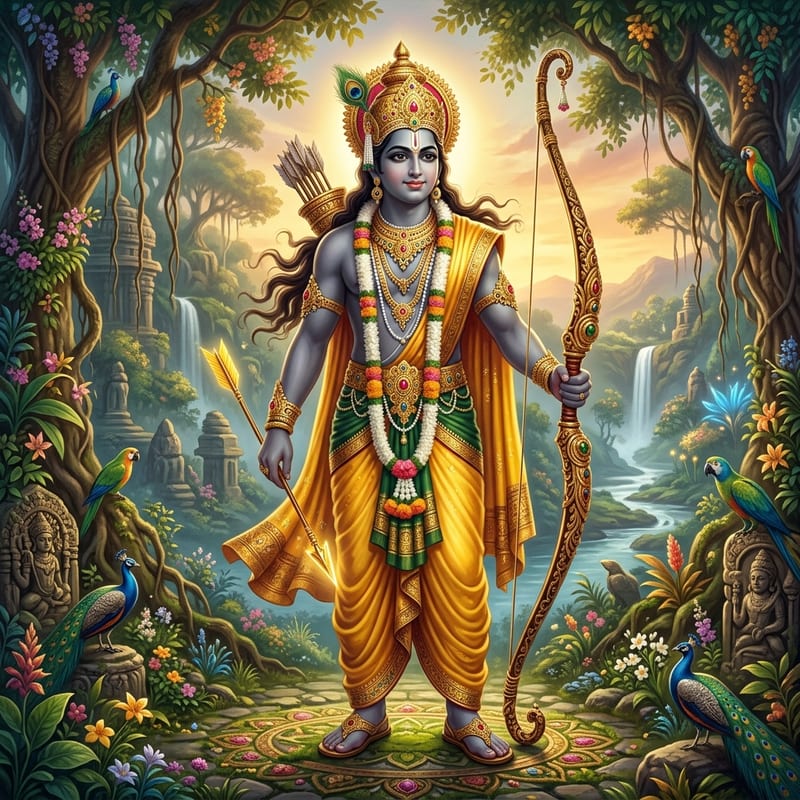
ଆଜାନୁବାହୁମରଵିନ୍ଦଦଲାଯତାକ୍ଷ-
-ମାଜନ୍ମଶୁଦ୍ଧରସହାସମୁଖପ୍ରସାଦମ୍ ।
ଶ୍ଯାମଂ ଗୃହୀତ ଶରଚାପମୁଦାରରୂପଂ
ରାମଂ ସରାମମଭିରାମମନୁସ୍ମରାମି ॥ 1 ॥
-ମାଜନ୍ମଶୁଦ୍ଧରସହାସମୁଖପ୍ରସାଦମ୍ ।
ଶ୍ଯାମଂ ଗୃହୀତ ଶରଚାପମୁଦାରରୂପଂ
ରାମଂ ସରାମମଭିରାମମନୁସ୍ମରାମି ॥ 1 ॥
- ଆ-ଜାନୁ-ବାହୁମ୍ (ājānu-bāhum)his arms reaching down to his knees
- ଅରଵିନ୍ଦ-ଦଲ-ଆଯତ-ଅକ୍ଷମ୍ (aravinda-dalāyatākṣam)his eyes long as lotus petals
- ଆ-ଜନ୍ମ-ଶୁଦ୍ଧ-ରସ-ହାସ-ମୁଖ-ପ୍ରସାଦମ୍ (ā-janma-śuddha-rasa-hāsa-mukha-prasādam)his face gracious with a smile pure in feeling since the day of his birth
- ଶ୍ଯାମମ୍ (śyāmam)dark of hue
- ଗୃହୀତ-ଶର-ଚାପମ୍ (gṛhīta-śara-cāpam)arrow and bow taken up
- ଉଦାର-ରୂପମ୍ (udāra-rūpam)of noble bearing
- ରାମମ୍ (rāmam)Rāma
- ସ-ରାମମ୍ (sa-rāmam)with Ramā, Sītā, beside him
- ଅଭିରାମମ୍ (abhirāmam)the ravishing one
- ଅନୁସ୍ମରାମି (anusmarāmi)I call to mind
ଅସ୍ଯ ଶ୍ରୀରାମକଵଚସ୍ଯ ଅଗସ୍ତ୍ଯ ଋଷିଃ ଅନୁଷ୍ଟୁପ୍ ଛନ୍ଦଃ ସୀତାଲକ୍ଷ୍ମଣୋପେତଃ ଶ୍ରୀରାମଚନ୍ଦ୍ରୋ ଦେଵତା ଶ୍ରୀରାମଚନ୍ଦ୍ରପ୍ରସାଦସିଦ୍ଧ୍ଯର୍ଥେ ଜପେ ଵିନିଯୋଗଃ ।
- ଅସ୍ଯ (asya)of this
- ଶ୍ରୀ-ରାମ-କଵଚସ୍ଯ (śrī-rāma-kavacasya)Śrī Rāma armour
- ଅଗସ୍ତ୍ଯଃ ଋଷିଃ (agastyaḥ ṛṣiḥ)Agastya is the seer
- ଅନୁଷ୍ଟୁପ୍ ଛନ୍ଦଃ (anuṣṭup chandaḥ)Anuṣṭubh is the metre
- ସୀତା-ଲକ୍ଷ୍ମଣ-ଉପେତଃ (sītā-lakṣmaṇopetaḥ)attended by Sītā and Lakṣmaṇa
- ଶ୍ରୀ-ରାମଚନ୍ଦ୍ରଃ ଦେଵତା (śrī-rāmacandro devatā)Śrī Rāmacandra is the deity
- ଶ୍ରୀ-ରାମଚନ୍ଦ୍ର-ପ୍ରସାଦ-ସିଦ୍ଧ୍ଯର୍ଥେ (śrī-rāmacandra-prasāda-siddhyarthe)for the winning of Śrī Rāmacandra’s grace
- ଜପେ (jape)in the recitation
- ଵିନିଯୋଗଃ (viniyogaḥ)is its appointed use
ଅଥ ଧ୍ଯାନଂ
ନୀଲଜୀମୂତସଙ୍କାଶଂ ଵିଦ୍ଯୁଦ୍ଵର୍ଣାମ୍ବରାଵୃତମ୍ ।
କୋମଲାଙ୍ଗଂ ଵିଶାଲାକ୍ଷଂ ଯୁଵାନମତିସୁନ୍ଦରମ୍ ॥ 1 ॥
ନୀଲଜୀମୂତସଙ୍କାଶଂ ଵିଦ୍ଯୁଦ୍ଵର୍ଣାମ୍ବରାଵୃତମ୍ ।
କୋମଲାଙ୍ଗଂ ଵିଶାଲାକ୍ଷଂ ଯୁଵାନମତିସୁନ୍ଦରମ୍ ॥ 1 ॥
- ଅଥ ଧ୍ଯାନମ୍ (atha dhyānam)now the meditation
- ନୀଲ-ଜୀମୂତ-ସଙ୍କାଶମ୍ (nīla-jīmūta-saṅkāśam)dark as a blue rain-cloud
- ଵିଦ୍ଯୁତ୍-ଵର୍ଣ-ଅମ୍ବର-ଆଵୃତମ୍ (vidyud-varṇāmbarāvṛtam)wrapped in cloth of the colour of lightning
- କୋମଲ-ଅଙ୍ଗମ୍ (komalāṅgam)of tender limb
- ଵିଶାଲ-ଅକ୍ଷମ୍ (viśālākṣam)wide of eye
- ଯୁଵାନମ୍ (yuvānam)young
- ଅତି-ସୁନ୍ଦରମ୍ (ati-sundaram)surpassingly beautiful
ସୀତାସୌମିତ୍ରିସହିତଂ ଜଟାମୁକୁଟଧାରିଣମ୍ ।
ସାସିତୂଣଧନୁର୍ବାଣପାଣିଂ ଦାନଵମର୍ଦନମ୍ ॥ 2 ॥
ସାସିତୂଣଧନୁର୍ବାଣପାଣିଂ ଦାନଵମର୍ଦନମ୍ ॥ 2 ॥
- ସୀତା-ସୌମିତ୍ରି-ସହିତମ୍ (sītā-saumitri-sahitam)together with Sītā and the son of Sumitrā
- ଜଟା-ମୁକୁଟ-ଧାରିଣମ୍ (jaṭā-mukuṭa-dhāriṇam)wearing the crown of matted hair
- ସ-ଅସି-ତୂଣ-ଧନୁଃ-ବାଣ-ପାଣିମ୍ (sāsi-tūṇa-dhanur-bāṇa-pāṇim)sword, quiver, bow and arrow in his hands
- ଦାନଵ-ମର୍ଦନମ୍ (dānava-mardanam)the crusher of the dānavas
ଯଦା ଚୋରଭଯେ ରାଜଭଯେ ଶତ୍ରୁଭଯେ ତଥା ।
ଧ୍ଯାତ୍ଵା ରଘୁପତିଂ କ୍ରୁଦ୍ଧଂ କାଲାନଲସମପ୍ରଭମ୍ ॥ 3 ॥
ଧ୍ଯାତ୍ଵା ରଘୁପତିଂ କ୍ରୁଦ୍ଧଂ କାଲାନଲସମପ୍ରଭମ୍ ॥ 3 ॥
- ଯଦା (yadā)when
- ଚୋର-ଭଯେ (cora-bhaye)there is fear of thieves
- ରାଜ-ଭଯେ (rāja-bhaye)fear of the king
- ଶତ୍ରୁ-ଭଯେ (śatru-bhaye)fear of enemies
- ତଥା (tathā)and the like
- ଧ୍ଯାତ୍ଵା (dhyātvā)having meditated
- ରଘୁ-ପତିମ୍ (raghu-patim)on the lord of the Raghus
- କ୍ରୁଦ୍ଧମ୍ (kruddham)in his wrath
- କାଲ-ଅନଲ-ସମ-ପ୍ରଭମ୍ (kālānala-sama-prabham)blazing like the fire that ends an age
ଚୀରକୃଷ୍ଣାଜିନଧରଂ ଭସ୍ମୋଦ୍ଧୂଲିତଵିଗ୍ରହମ୍ ।
ଆକର୍ଣାକୃଷ୍ଟଵିଶିଖକୋଦଣ୍ଡଭୁଜମଣ୍ଡିତମ୍ ॥ 4 ॥
ଆକର୍ଣାକୃଷ୍ଟଵିଶିଖକୋଦଣ୍ଡଭୁଜମଣ୍ଡିତମ୍ ॥ 4 ॥
- ଚୀର-କୃଷ୍ଣ-ଅଜିନ-ଧରମ୍ (cīra-kṛṣṇājina-dharam)clad in bark cloth and a black antelope skin
- ଭସ୍ମ-ଉଦ୍ଧୂଲିତ-ଵିଗ୍ରହମ୍ (bhasmoddhūlita-vigraham)his body dusted over with ash
- ଆ-କର୍ଣ-ଆକୃଷ୍ଟ-ଵିଶିଖ-କୋଦଣ୍ଡ-ଭୁଜ-ମଣ୍ଡିତମ୍ (ā-karṇākṛṣṭa-viśikha-kodaṇḍa-bhuja-maṇḍitam)his arm graced by the Kodaṇḍa bow, the shaft drawn back as far as his ear
ରଣେ ରିପୂନ୍ ରାଵଣାଦୀଂସ୍ତୀକ୍ଷ୍ଣମାର୍ଗଣଵୃଷ୍ଟିଭିଃ ।
ସଂହରନ୍ତଂ ମହାଵୀରମୁଗ୍ରମୈନ୍ଦ୍ରରଥସ୍ଥିତମ୍ ॥ 5 ॥
ସଂହରନ୍ତଂ ମହାଵୀରମୁଗ୍ରମୈନ୍ଦ୍ରରଥସ୍ଥିତମ୍ ॥ 5 ॥
- ରଣେ (raṇe)in the fight
- ରିପୂନ୍ (ripūn)the foes
- ରାଵଣ-ଆଦୀନ୍ (rāvaṇādīn)Rāvaṇa and the rest
- ତୀକ୍ଷ୍ଣ-ମାର୍ଗଣ-ଵୃଷ୍ଟିଭିଃ (tīkṣṇa-mārgaṇa-vṛṣṭibhiḥ)with showers of keen arrows
- ସଂହରନ୍ତମ୍ (saṃharantam)making an end of them
- ମହା-ଵୀରମ୍ (mahā-vīram)the great hero
- ଉଗ୍ରମ୍ (ugram)terrible
- ଐନ୍ଦ୍ର-ରଥ-ସ୍ଥିତମ୍ (aindra-ratha-sthitam)standing upon Indra’s own chariot
ଲକ୍ଷ୍ମଣାଦ୍ଯୈର୍ମହାଵୀରୈର୍ଵୃତଂ ହନୁମଦାଦିଭିଃ ।
ସୁଗ୍ରୀଵାଦ୍ଯୈର୍ମାହାଵୀରୈଃ ଶୈଲଵୃକ୍ଷକରୋଦ୍ଯତୈଃ ॥ 6 ॥
ସୁଗ୍ରୀଵାଦ୍ଯୈର୍ମାହାଵୀରୈଃ ଶୈଲଵୃକ୍ଷକରୋଦ୍ଯତୈଃ ॥ 6 ॥
- ଲକ୍ଷ୍ମଣ-ଆଦ୍ଯୈଃ (lakṣmaṇādyaiḥ)by Lakṣmaṇa and those with him
- ମହା-ଵୀରୈଃ (mahā-vīraiḥ)great heroes
- ଵୃତମ୍ (vṛtam)ringed about
- ହନୁମତ୍-ଆଦିଭିଃ (hanumad-ādibhiḥ)by Hanumān and the others
- ସୁଗ୍ରୀଵ-ଆଦ୍ଯୈଃ (sugrīvādyaiḥ)by Sugrīva and those with him
- ମହା-ଵୀରୈଃ (mahā-vīraiḥ)great warriors
- ଶୈଲ-ଵୃକ୍ଷ-କର-ଉଦ୍ଯତୈଃ (śaila-vṛkṣa-karodyataiḥ)rocks and trees held high in their hands
ଵେଗାତ୍କରାଲହୁଙ୍କାରୈର୍ଭୁଭୁକ୍କାରମହାରଵୈଃ ।
ନଦଦ୍ଭିଃ ପରିଵାଦଦ୍ଭିଃ ସମରେ ରାଵଣଂ ପ୍ରତି ॥ 7 ॥
ନଦଦ୍ଭିଃ ପରିଵାଦଦ୍ଭିଃ ସମରେ ରାଵଣଂ ପ୍ରତି ॥ 7 ॥
- ଵେଗାତ୍ (vegāt)with a rush
- କରାଲ-ହୁଙ୍କାରୈଃ (karāla-huṅkāraiḥ)with terrible war-cries
- ଭୁଭୁକ୍କାର-ମହା-ରଵୈଃ (bhubhukkāra-mahā-ravaiḥ)with the great bellowing roar of them
- ନଦଦ୍ଭିଃ (nadadbhiḥ)as they shouted
- ପରିଵାଦଦ୍ଭିଃ (parivādadbhiḥ)and shouted back at one another
- ସମରେ (samare)in the battle
- ରାଵଣମ୍ ପ୍ରତି (rāvaṇaṃ prati)against Rāvaṇa
ଶ୍ରୀରାମ ଶତ୍ରୁସଙ୍ଘାନ୍ମେ ହନ ମର୍ଦଯ ଖାଦଯ ।
ଭୂତପ୍ରେତପିଶାଚାଦୀନ୍ ଶ୍ରୀରାମାଶୁ ଵିନାଶଯ ॥ 8 ॥
ଭୂତପ୍ରେତପିଶାଚାଦୀନ୍ ଶ୍ରୀରାମାଶୁ ଵିନାଶଯ ॥ 8 ॥
- ଶ୍ରୀ-ରାମ (śrī-rāma)O Śrī Rāma
- ଶତ୍ରୁ-ସଙ୍ଘାନ୍ (śatru-saṅghān)the hosts of enemies
- ମେ (me)mine
- ହନ (hana)strike them
- ମର୍ଦଯ (mardaya)crush them
- ଖାଦଯ (khādaya)devour them
- ଭୂତ-ପ୍ରେତ-ପିଶାଚ-ଆଦୀନ୍ (bhūta-preta-piśācādīn)the spirits, the departed, the flesh-eaters and their kind
- ଶ୍ରୀ-ରାମ (śrī-rāma)O Śrī Rāma
- ଆଶୁ (āśu)at once
- ଵିନାଶଯ (vināśaya)destroy them
ଏଵଂ ଧ୍ଯାତ୍ଵା ଜପେଦ୍ରାମକଵଚଂ ସିଦ୍ଧିଦାଯକମ୍ ।
ସୁତୀକ୍ଷ୍ଣ ଵଜ୍ରକଵଚଂ ଶୃଣୁ ଵକ୍ଷ୍ଯାମ୍ଯନୁତ୍ତମମ୍ ॥ 9 ॥
ସୁତୀକ୍ଷ୍ଣ ଵଜ୍ରକଵଚଂ ଶୃଣୁ ଵକ୍ଷ୍ଯାମ୍ଯନୁତ୍ତମମ୍ ॥ 9 ॥
- ଏଵମ୍ (evam)thus
- ଧ୍ଯାତ୍ଵା (dhyātvā)having meditated
- ଜପେତ୍ (japet)let one recite
- ରାମ-କଵଚମ୍ (rāma-kavacam)the Rāma armour
- ସିଦ୍ଧି-ଦାଯକମ୍ (siddhi-dāyakam)which grants accomplishment
- ସୁତୀକ୍ଷ୍ଣ (sutīkṣṇa)O Sutīkṣṇa
- ଵଜ୍ର-କଵଚମ୍ (vajra-kavacam)the thunderbolt armour
- ଶୃଣୁ (śṛṇu)listen
- ଵକ୍ଷ୍ଯାମି (vakṣyāmi)I shall speak it
- ଅନୁତ୍ତମମ୍ (anuttamam)than which there is none higher
ଅଥ କଵଚମ୍
ଶ୍ରୀରାମଃ ପାତୁ ମେ ମୂର୍ଧ୍ନି ପୂର୍ଵେ ଚ ରଘୁଵଂଶଜଃ ।
ଦକ୍ଷିଣେ ମେ ରଘୁଵରଃ ପଶ୍ଚିମେ ପାତୁ ପାଵନଃ ॥ 10 ॥
ଶ୍ରୀରାମଃ ପାତୁ ମେ ମୂର୍ଧ୍ନି ପୂର୍ଵେ ଚ ରଘୁଵଂଶଜଃ ।
ଦକ୍ଷିଣେ ମେ ରଘୁଵରଃ ପଶ୍ଚିମେ ପାତୁ ପାଵନଃ ॥ 10 ॥
- ଅଥ କଵଚମ୍ (atha kavacam)now the armour
- ଶ୍ରୀ-ରାମଃ (śrī-rāmaḥ)Śrī Rāma
- ପାତୁ (pātu)may he guard
- ମେ (me)my
- ମୂର୍ଧ୍ନି (mūrdhni)at the crown of the head
- ପୂର୍ଵେ (pūrve)in the east
- ଚ (ca)and
- ରଘୁ-ଵଂଶ-ଜଃ (raghu-vaṃśa-jaḥ)he born in the line of Raghu
- ଦକ୍ଷିଣେ (dakṣiṇe)in the south
- ମେ (me)me
- ରଘୁ-ଵରଃ (raghu-varaḥ)the best of the Raghus
- ପଶ୍ଚିମେ (paścime)in the west
- ପାତୁ (pātu)may he guard
- ପାଵନଃ (pāvanaḥ)the purifier
ଉତ୍ତରେ ମେ ରଘୁପତିର୍ଭାଲଂ ଦଶରଥାତ୍ମଜଃ ।
ଭ୍ରୁଵୋର୍ଦୂର୍ଵାଦଲଶ୍ଯାମସ୍ତଯୋର୍ମଧ୍ଯେ ଜନାର୍ଦନଃ ॥ 11 ॥
ଭ୍ରୁଵୋର୍ଦୂର୍ଵାଦଲଶ୍ଯାମସ୍ତଯୋର୍ମଧ୍ଯେ ଜନାର୍ଦନଃ ॥ 11 ॥
- ଉତ୍ତରେ (uttare)in the north
- ମେ (me)me
- ରଘୁ-ପତିଃ (raghu-patiḥ)the lord of the Raghus
- ଭାଲମ୍ (bhālam)the brow
- ଦଶରଥ-ଆତ୍ମଜଃ (daśarathātmajaḥ)the son of Daśaratha
- ଭ୍ରୁଵୋଃ (bhruvoḥ)at the two eyebrows
- ଦୂର୍ଵା-ଦଲ-ଶ୍ଯାମଃ (dūrvā-dala-śyāmaḥ)he dark as a blade of dūrvā grass
- ତଯୋଃ ମଧ୍ଯେ (tayor madhye)in the space between them
- ଜନାର୍ଦନଃ (janārdanaḥ)Janārdana
ଶ୍ରୋତ୍ରଂ ମେ ପାତୁ ରାଜେନ୍ଦ୍ରୋ ଦୃଶୌ ରାଜୀଵଲୋଚନଃ ।
ଘ୍ରାଣଂ ମେ ପାତୁ ରାଜର୍ଷିର୍ଗଣ୍ଡୌ ମେ ଜାନକୀପତିଃ ॥ 12 ॥
ଘ୍ରାଣଂ ମେ ପାତୁ ରାଜର୍ଷିର୍ଗଣ୍ଡୌ ମେ ଜାନକୀପତିଃ ॥ 12 ॥
- ଶ୍ରୋତ୍ରମ୍ (śrotram)the hearing
- ମେ (me)my
- ପାତୁ (pātu)may he guard
- ରାଜ-ଇନ୍ଦ୍ରଃ (rājendraḥ)the lord among kings
- ଦୃଶୌ (dṛśau)the two eyes
- ରାଜୀଵ-ଲୋଚନଃ (rājīva-locanaḥ)he whose eyes are lotuses
- ଘ୍ରାଣମ୍ (ghrāṇam)the nose
- ମେ (me)my
- ପାତୁ (pātu)may he guard
- ରାଜ-ଋଷିଃ (rājarṣiḥ)the royal seer
- ଗଣ୍ଡୌ (gaṇḍau)the two cheeks
- ମେ (me)my
- ଜାନକୀ-ପତିଃ (jānakī-patiḥ)the husband of Jānakī
କର୍ଣମୂଲେ ଖରଧ୍ଵଂସୀ ଭାଲଂ ମେ ରଘୁଵଲ୍ଲଭଃ ।
ଜିହ୍ଵାଂ ମେ ଵାକ୍ପତିଃ ପାତୁ ଦନ୍ତପଙ୍କ୍ତୀ ରଘୂତ୍ତମଃ ॥ 13 ॥
ଜିହ୍ଵାଂ ମେ ଵାକ୍ପତିଃ ପାତୁ ଦନ୍ତପଙ୍କ୍ତୀ ରଘୂତ୍ତମଃ ॥ 13 ॥
- କର୍ଣ-ମୂଲେ (karṇa-mūle)at the root of the ears
- ଖର-ଧ୍ଵଂସୀ (khara-dhvaṃsī)the destroyer of Khara
- ଭାଲମ୍ (bhālam)the forehead
- ମେ (me)my
- ରଘୁ-ଵଲ୍ଲଭଃ (raghu-vallabhaḥ)the darling of the Raghus
- ଜିହ୍ଵାମ୍ (jihvām)the tongue
- ମେ (me)my
- ଵାକ୍-ପତିଃ (vāk-patiḥ)the lord of speech
- ପାତୁ (pātu)may he guard
- ଦନ୍ତ-ପଙ୍କ୍ତୀ (danta-paṅktī)the two rows of teeth
- ରଘୁ-ଉତ୍ତମଃ (raghūttamaḥ)the best of the Raghus
ଓଷ୍ଠୌ ଶ୍ରୀରାମଚନ୍ଦ୍ରୋ ମେ ମୁଖଂ ପାତୁ ପରାତ୍ପରଃ ।
କଣ୍ଠଂ ପାତୁ ଜଗଦ୍ଵନ୍ଦ୍ଯଃ ସ୍କନ୍ଧୌ ମେ ରାଵଣାନ୍ତକଃ ॥ 14 ॥
କଣ୍ଠଂ ପାତୁ ଜଗଦ୍ଵନ୍ଦ୍ଯଃ ସ୍କନ୍ଧୌ ମେ ରାଵଣାନ୍ତକଃ ॥ 14 ॥
- ଓଷ୍ଠୌ (oṣṭhau)the two lips
- ଶ୍ରୀ-ରାମଚନ୍ଦ୍ରଃ (śrī-rāmacandraḥ)Śrī Rāmacandra
- ମେ (me)my
- ମୁଖମ୍ (mukham)the mouth
- ପାତୁ (pātu)may he guard
- ପରାତ୍-ପରଃ (parāt-paraḥ)higher than the highest
- କଣ୍ଠମ୍ (kaṇṭham)the throat
- ପାତୁ (pātu)may he guard
- ଜଗତ୍-ଵନ୍ଦ୍ଯଃ (jagad-vandyaḥ)he to whom the world bows
- ସ୍କନ୍ଧୌ (skandhau)the two shoulders
- ମେ (me)my
- ରାଵଣ-ଅନ୍ତକଃ (rāvaṇāntakaḥ)he who made an end of Rāvaṇa
ଧନୁର୍ବାଣଧରଃ ପାତୁ ଭୁଜୌ ମେ ଵାଲିମର୍ଦନଃ ।
ସର୍ଵାଣ୍ଯଙ୍ଗୁଲିପର୍ଵାଣି ହସ୍ତୌ ମେ ରାକ୍ଷସାନ୍ତକଃ ॥ 15 ॥
ସର୍ଵାଣ୍ଯଙ୍ଗୁଲିପର୍ଵାଣି ହସ୍ତୌ ମେ ରାକ୍ଷସାନ୍ତକଃ ॥ 15 ॥
- ଧନୁଃ-ବାଣ-ଧରଃ (dhanur-bāṇa-dharaḥ)he who bears bow and arrow
- ପାତୁ (pātu)may he guard
- ଭୁଜୌ (bhujau)the two arms
- ମେ (me)my
- ଵାଲି-ମର୍ଦନଃ (vāli-mardanaḥ)the crusher of Vālin
- ସର୍ଵାଣି ଅଙ୍ଗୁଲି-ପର୍ଵାଣି (sarvāṇy aṅguli-parvāṇi)every joint of every finger
- ହସ୍ତୌ (hastau)the two hands
- ମେ (me)my
- ରାକ୍ଷସ-ଅନ୍ତକଃ (rākṣasāntakaḥ)he who made an end of the rākṣasas
ଵକ୍ଷୋ ମେ ପାତୁ କାକୁତ୍ସ୍ଥଃ ପାତୁ ମେ ହୃଦଯଂ ହରିଃ ।
ସ୍ତନୌ ସୀତାପତିଃ ପାତୁ ପାର୍ଶ୍ଵଂ ମେ ଜଗଦୀଶ୍ଵରଃ ॥ 16 ॥
ସ୍ତନୌ ସୀତାପତିଃ ପାତୁ ପାର୍ଶ୍ଵଂ ମେ ଜଗଦୀଶ୍ଵରଃ ॥ 16 ॥
- ଵକ୍ଷଃ (vakṣaḥ)the chest
- ମେ (me)my
- ପାତୁ (pātu)may he guard
- କାକୁତ୍ସ୍ଥଃ (kākutsthaḥ)the descendant of Kakutstha
- ପାତୁ (pātu)may he guard
- ମେ (me)my
- ହୃଦଯମ୍ (hṛdayam)heart
- ହରିଃ (hariḥ)Hari
- ସ୍ତନୌ (stanau)the breast
- ସୀତା-ପତିଃ (sītā-patiḥ)the husband of Sītā
- ପାତୁ (pātu)may he guard
- ପାର୍ଶ୍ଵମ୍ (pārśvam)the sides
- ମେ (me)my
- ଜଗତ୍-ଈଶ୍ଵରଃ (jagad-īśvaraḥ)the lord of the world
ମଧ୍ଯଂ ମେ ପାତୁ ଲକ୍ଷ୍ମୀଶୋ ନାଭିଂ ମେ ରଘୁନାଯକଃ ।
କୌସଲ୍ଯେଯଃ କଟୀ ପାତୁ ପୃଷ୍ଠଂ ଦୁର୍ଗତିନାଶନଃ ॥ 17 ॥
କୌସଲ୍ଯେଯଃ କଟୀ ପାତୁ ପୃଷ୍ଠଂ ଦୁର୍ଗତିନାଶନଃ ॥ 17 ॥
- ମଧ୍ଯମ୍ (madhyam)the middle of the body
- ମେ (me)my
- ପାତୁ (pātu)may he guard
- ଲକ୍ଷ୍ମୀ-ଈଶଃ (lakṣmīśaḥ)the lord of Lakṣmī
- ନାଭିମ୍ (nābhim)the navel
- ମେ (me)my
- ରଘୁ-ନାଯକଃ (raghu-nāyakaḥ)the leader of the Raghus
- କୌସଲ୍ଯେଯଃ (kausalyeyaḥ)the son of Kausalyā
- କଟୀ (kaṭī)the hips
- ପାତୁ (pātu)may he guard
- ପୃଷ୍ଠମ୍ (pṛṣṭham)the back
- ଦୁର୍ଗତି-ନାଶନଃ (durgati-nāśanaḥ)he who undoes an evil destiny
ଗୁହ୍ଯଂ ପାତୁ ହୃଷୀକେଶଃ ସକ୍ଥିନୀ ସତ୍ଯଵିକ୍ରମଃ ।
ଊରୂ ଶାର୍ଙ୍ଗଧରଃ ପାତୁ ଜାନୁନୀ ହନୁମତ୍ପ୍ରିଯଃ ॥ 18 ॥
ଊରୂ ଶାର୍ଙ୍ଗଧରଃ ପାତୁ ଜାନୁନୀ ହନୁମତ୍ପ୍ରିଯଃ ॥ 18 ॥
- ଗୁହ୍ଯମ୍ (guhyam)the private parts
- ପାତୁ (pātu)may he guard
- ହୃଷୀକେଶଃ (hṛṣīkeśaḥ)Hṛṣīkeśa, lord of the senses
- ସକ୍ଥିନୀ (sakthinī)the two hip-joints
- ସତ୍ଯ-ଵିକ୍ରମଃ (satya-vikramaḥ)he whose valour is truth itself
- ଊରୂ (ūrū)the two thighs
- ଶାର୍ଙ୍ଗ-ଧରଃ (śārṅga-dharaḥ)the bearer of the Śārṅga bow
- ପାତୁ (pātu)may he guard
- ଜାନୁନୀ (jānunī)the two knees
- ହନୁମତ୍-ପ୍ରିଯଃ (hanumat-priyaḥ)he who is dear to Hanumān
ଜଙ୍ଘେ ପାତୁ ଜଗଦ୍ଵ୍ଯାପୀ ପାଦୌ ମେ ତାଟକାନ୍ତକଃ ।
ସର୍ଵାଙ୍ଗଂ ପାତୁ ମେ ଵିଷ୍ଣୁଃ ସର୍ଵସନ୍ଧୀନନାମଯଃ ॥ 19 ॥
ସର୍ଵାଙ୍ଗଂ ପାତୁ ମେ ଵିଷ୍ଣୁଃ ସର୍ଵସନ୍ଧୀନନାମଯଃ ॥ 19 ॥
- ଜଙ୍ଘେ (jaṅghe)the two shanks
- ପାତୁ (pātu)may he guard
- ଜଗତ୍-ଵ୍ଯାପୀ (jagad-vyāpī)he who pervades the world
- ପାଦୌ (pādau)the two feet
- ମେ (me)my
- ତାଟକା-ଅନ୍ତକଃ (tāṭakāntakaḥ)he who made an end of Tāṭakā
- ସର୍ଵ-ଅଙ୍ଗମ୍ (sarvāṅgam)every limb
- ପାତୁ (pātu)may he guard
- ମେ (me)my
- ଵିଷ୍ଣୁଃ (viṣṇuḥ)Viṣṇu
- ସର୍ଵ-ସନ୍ଧୀନ୍ (sarva-sandhīn)all the joints
- ଅନାମଯଃ (anāmayaḥ)he in whom is no ailing
ଜ୍ଞାନେନ୍ଦ୍ରିଯାଣି ପ୍ରାଣାଦୀନ୍ ପାତୁ ମେ ମଧୁସୂଦନଃ ।
ପାତୁ ଶ୍ରୀରାମଭଦ୍ରୋ ମେ ଶବ୍ଦାଦୀନ୍ଵିଷଯାନପି ॥ 20 ॥
ପାତୁ ଶ୍ରୀରାମଭଦ୍ରୋ ମେ ଶବ୍ଦାଦୀନ୍ଵିଷଯାନପି ॥ 20 ॥
- ଜ୍ଞାନ-ଇନ୍ଦ୍ରିଯାଣି (jñānendriyāṇi)the organs of knowing
- ପ୍ରାଣ-ଆଦୀନ୍ (prāṇādīn)the vital airs and the rest
- ପାତୁ (pātu)may he guard
- ମେ (me)my
- ମଧୁ-ସୂଦନଃ (madhu-sūdanaḥ)the slayer of Madhu
- ପାତୁ (pātu)may he guard
- ଶ୍ରୀ-ରାମଭଦ୍ରଃ (śrī-rāmabhadraḥ)Śrī Rāmabhadra
- ମେ (me)my
- ଶବ୍ଦ-ଆଦୀନ୍ (śabdādīn)sound and the rest
- ଵିଷଯାନ୍ (viṣayān)the objects of the senses
- ଅପି (api)these too
ଦ୍ଵିପଦାଦୀନି ଭୂତାନି ମତ୍ସମ୍ବନ୍ଧୀନି ଯାନି ଚ ।
ଜାମଦଗ୍ନ୍ଯମହାଦର୍ପଦଲନଃ ପାତୁ ତାନି ମେ ॥ 21 ॥
ଜାମଦଗ୍ନ୍ଯମହାଦର୍ପଦଲନଃ ପାତୁ ତାନି ମେ ॥ 21 ॥
- ଦ୍ଵିପଦ-ଆଦୀନି (dvipadādīni)the two-footed and the rest
- ଭୂତାନି (bhūtāni)the beings
- ମତ୍-ସମ୍ବନ୍ଧୀନି (mat-sambandhīni)bound to me
- ଯାନି ଚ (yāni ca)whichever they be
- ଜାମଦଗ୍ନ୍ଯ-ମହା-ଦର୍ପ-ଦଲନଃ (jāmadagnya-mahā-darpa-dalanaḥ)he who broke the great pride of Jamadagni’s son
- ପାତୁ (pātu)may he guard
- ତାନି (tāni)them
- ମେ (me)for me
ସୌମିତ୍ରିପୂର୍ଵଜଃ ପାତୁ ଵାଗାଦୀନୀନ୍ଦ୍ରିଯାଣି ଚ ।
ରୋମାଙ୍କୁରାଣ୍ଯଶେଷାଣି ପାତୁ ସୁଗ୍ରୀଵରାଜ୍ଯଦଃ ॥ 22 ॥
ରୋମାଙ୍କୁରାଣ୍ଯଶେଷାଣି ପାତୁ ସୁଗ୍ରୀଵରାଜ୍ଯଦଃ ॥ 22 ॥
- ସୌମିତ୍ରି-ପୂର୍ଵଜଃ (saumitri-pūrvajaḥ)the elder brother of Sumitrā’s son
- ପାତୁ (pātu)may he guard
- ଵାକ୍-ଆଦୀନି (vāg-ādīni)beginning with speech
- ଇନ୍ଦ୍ରିଯାଣି (indriyāṇi)the organs of action
- ଚ (ca)and
- ରୋମ-ଅଙ୍କୁରାଣି (romāṅkurāṇi)the shoots of hair
- ଅଶେଷାଣି (aśeṣāṇi)every one of them
- ପାତୁ (pātu)may he guard
- ସୁଗ୍ରୀଵ-ରାଜ୍ଯ-ଦଃ (sugrīva-rājya-daḥ)he who gave Sugrīva his kingdom
ଵାଙ୍ମନୋବୁଦ୍ଧ୍ଯହଙ୍କାରୈର୍ଜ୍ଞାନାଜ୍ଞାନକୃତାନି ଚ ।
ଜନ୍ମାନ୍ତରକୃତାନୀହ ପାପାନି ଵିଵିଧାନି ଚ ॥ 23 ॥
ଜନ୍ମାନ୍ତରକୃତାନୀହ ପାପାନି ଵିଵିଧାନି ଚ ॥ 23 ॥
- ଵାକ୍-ମନଃ-ବୁଦ୍ଧି-ଅହଙ୍କାରୈଃ (vāṅ-mano-buddhy-ahaṅkāraiḥ)by speech, by mind, by intellect and by the sense of “I”
- ଜ୍ଞାନ-ଅଜ୍ଞାନ-କୃତାନି (jñānājñāna-kṛtāni)done knowing and done unknowing
- ଚ (ca)and
- ଜନ୍ମ-ଅନ୍ତର-କୃତାନି (janmāntara-kṛtāni)done in other births
- ଇହ (iha)here
- ପାପାନି (pāpāni)the sins
- ଵିଵିଧାନି (vividhāni)of every kind
- ଚ (ca)as well
ତାନି ସର୍ଵାଣି ଦଗ୍ଧ୍ଵାଶୁ ହରକୋଦଣ୍ଡଖଣ୍ଡନଃ ।
ପାତୁ ମାଂ ସର୍ଵତୋ ରାମଃ ଶାର୍ଙ୍ଗବାଣଧରଃ ସଦା ॥ 24 ॥
ପାତୁ ମାଂ ସର୍ଵତୋ ରାମଃ ଶାର୍ଙ୍ଗବାଣଧରଃ ସଦା ॥ 24 ॥
- ତାନି ସର୍ଵାଣି (tāni sarvāṇi)all of them
- ଦଗ୍ଧ୍ଵା (dagdhvā)having burnt them away
- ଆଶୁ (āśu)at once
- ହର-କୋଦଣ୍ଡ-ଖଣ୍ଡନଃ (hara-kodaṇḍa-khaṇḍanaḥ)he who snapped the bow of Hara
- ପାତୁ (pātu)may he guard
- ମାମ୍ (mām)me
- ସର୍ଵତଃ (sarvataḥ)on every side
- ରାମଃ (rāmaḥ)Rāma
- ଶାର୍ଙ୍ଗ-ବାଣ-ଧରଃ (śārṅga-bāṇa-dharaḥ)bearing the Śārṅga bow and its arrows
- ସଦା (sadā)always
ଇତି ଶ୍ରୀରାମଚନ୍ଦ୍ରସ୍ଯ କଵଚଂ ଵଜ୍ରସମ୍ମିତମ୍ ।
ଗୁହ୍ଯାଦ୍ଗୁହ୍ଯତମଂ ଦିଵ୍ଯଂ ସୁତୀକ୍ଷ୍ଣ ମୁନିସତ୍ତମ ॥ 25 ॥
ଗୁହ୍ଯାଦ୍ଗୁହ୍ଯତମଂ ଦିଵ୍ଯଂ ସୁତୀକ୍ଷ୍ଣ ମୁନିସତ୍ତମ ॥ 25 ॥
- ଇତି (iti)such
- ଶ୍ରୀ-ରାମଚନ୍ଦ୍ରସ୍ଯ (śrī-rāmacandrasya)of Śrī Rāmacandra
- କଵଚମ୍ (kavacam)is the armour
- ଵଜ୍ର-ସମ୍ମିତମ୍ (vajra-sammitam)a match for the thunderbolt
- ଗୁହ୍ଯାତ୍ ଗୁହ୍ଯତମମ୍ (guhyād guhyatamam)the most secret of all secrets
- ଦିଵ୍ଯମ୍ (divyam)divine
- ସୁତୀକ୍ଷ୍ଣ (sutīkṣṇa)O Sutīkṣṇa
- ମୁନି-ସତ୍ତମ (muni-sattama)best of sages
ଯଃ ପଠେଚ୍ଛୃଣୁଯାଦ୍ଵାପି ଶ୍ରାଵଯେଦ୍ଵା ସମାହିତଃ ।
ସ ଯାତି ପରମଂ ସ୍ଥାନଂ ରାମଚନ୍ଦ୍ରପ୍ରସାଦତଃ ॥ 26 ॥
ସ ଯାତି ପରମଂ ସ୍ଥାନଂ ରାମଚନ୍ଦ୍ରପ୍ରସାଦତଃ ॥ 26 ॥
- ଯଃ (yaḥ)whoever
- ପଠେତ୍ (paṭhet)recites it
- ଶୃଣୁଯାତ୍ (śṛṇuyāt)or hears it
- ଵା ଅପି (vāpi)or even
- ଶ୍ରାଵଯେତ୍ (śrāvayet)has it heard by others
- ଵା (vā)or
- ସମାହିତଃ (samāhitaḥ)with a gathered mind
- ସଃ (saḥ)he
- ଯାତି (yāti)goes
- ପରମମ୍ ସ୍ଥାନମ୍ (paramaṃ sthānam)to the highest station
- ରାମଚନ୍ଦ୍ର-ପ୍ରସାଦତଃ (rāmacandra-prasādataḥ)by the grace of Rāmacandra
ମହାପାତକଯୁକ୍ତୋ ଵା ଗୋଘ୍ନୋ ଵା ଭ୍ରୂଣହା ତଥା ।
ଶ୍ରୀରାମଚନ୍ଦ୍ରକଵଚପଠନାଚ୍ଛୁଦ୍ଧିମାପ୍ନୁଯାତ୍ ॥ 27 ॥
ଶ୍ରୀରାମଚନ୍ଦ୍ରକଵଚପଠନାଚ୍ଛୁଦ୍ଧିମାପ୍ନୁଯାତ୍ ॥ 27 ॥
- ମହା-ପାତକ-ଯୁକ୍ତଃ (mahā-pātaka-yuktaḥ)one burdened with a mortal sin
- ଵା (vā)or
- ଗୋ-ଘ୍ନଃ (go-ghnaḥ)the killer of a cow
- ଵା (vā)or
- ଭ୍ରୂଣ-ହା (bhrūṇa-hā)the destroyer of an unborn child
- ତଥା (tathā)likewise
- ଶ୍ରୀ-ରାମଚନ୍ଦ୍ର-କଵଚ-ପଠନାତ୍ (śrī-rāmacandra-kavaca-paṭhanāt)by the reciting of Śrī Rāmacandra’s armour
- ଶୁଦ୍ଧିମ୍ (śuddhim)cleanness
- ଆପ୍ନୁଯାତ୍ (āpnuyāt)would attain
ବ୍ରହ୍ମହତ୍ଯାଦିଭିଃ ପାପୈର୍ମୁଚ୍ଯତେ ନାତ୍ର ସଂଶଯଃ ।
ଭୋ ସୁତୀକ୍ଷ୍ଣ ଯଥା ପୃଷ୍ଟଂ ତ୍ଵଯା ମମ ପୁରାଃ ଶୁଭମ୍ ।
ତଥା ଶ୍ରୀରାମକଵଚଂ ମଯା ତେ ଵିନିଵେଦିତମ୍ ॥ 28 ॥
ଭୋ ସୁତୀକ୍ଷ୍ଣ ଯଥା ପୃଷ୍ଟଂ ତ୍ଵଯା ମମ ପୁରାଃ ଶୁଭମ୍ ।
ତଥା ଶ୍ରୀରାମକଵଚଂ ମଯା ତେ ଵିନିଵେଦିତମ୍ ॥ 28 ॥
- ବ୍ରହ୍ମ-ହତ୍ଯା-ଆଦିଭିଃ (brahma-hatyādibhiḥ)from the killing of a brahmin and the like
- ପାପୈଃ (pāpaiḥ)from those sins
- ମୁଚ୍ଯତେ (mucyate)one is set free
- ନ ଅତ୍ର ସଂଶଯଃ (nātra saṃśayaḥ)there is no doubt in this
- ଭୋଃ ସୁତୀକ୍ଷ୍ଣ (bhoḥ sutīkṣṇa)O Sutīkṣṇa
- ଯଥା (yathā)just as
- ପୃଷ୍ଟମ୍ (pṛṣṭam)it was asked
- ତ୍ଵଯା (tvayā)by you
- ମମ (mama)of me
- ପୁରା (purā)before this (printed पुराः)
- ଶୁଭମ୍ (śubham)this blessed thing
- ତଥା (tathā)even so
- ଶ୍ରୀ-ରାମ-କଵଚମ୍ (śrī-rāma-kavacam)the Śrī Rāma armour
- ମଯା (mayā)by me
- ତେ (te)to you
- ଵିନିଵେଦିତମ୍ (viniveditam)has been set forth
ଇତି ଶ୍ରୀମଦାନନ୍ଦରାମାଯଣେ ମନୋହରକାଣ୍ଡେ ସୁତୀକ୍ଷ୍ଣାଗସ୍ତ୍ଯସଂଵାଦେ ଶ୍ରୀରାମକଵଚମ୍ ॥