
ಅಗಸ್ತಿರುವಾಚ
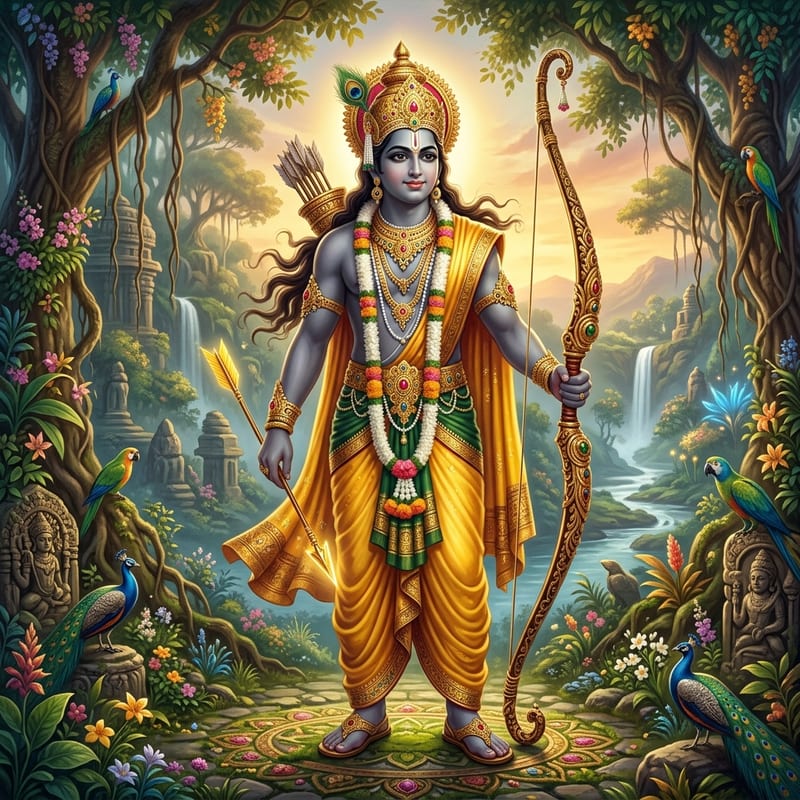
ಆಜಾನುಬಾಹುಮರವಿನ್ದದಲಾಯತಾಕ್ಷ-
-ಮಾಜನ್ಮಶುದ್ಧರಸಹಾಸಮುಖಪ್ರಸಾದಮ್ ।
ಶ್ಯಾಮಂ ಗೃಹೀತ ಶರಚಾಪಮುದಾರರೂಪಂ
ರಾಮಂ ಸರಾಮಮಭಿರಾಮಮನುಸ್ಮರಾಮಿ ॥ 1 ॥
-ಮಾಜನ್ಮಶುದ್ಧರಸಹಾಸಮುಖಪ್ರಸಾದಮ್ ।
ಶ್ಯಾಮಂ ಗೃಹೀತ ಶರಚಾಪಮುದಾರರೂಪಂ
ರಾಮಂ ಸರಾಮಮಭಿರಾಮಮನುಸ್ಮರಾಮಿ ॥ 1 ॥
- ಆ-ಜಾನು-ಬಾಹುಮ್ (ājānu-bāhum)his arms reaching down to his knees
- ಅರವಿನ್ದ-ದಲ-ಆಯತ-ಅಕ್ಷಮ್ (aravinda-dalāyatākṣam)his eyes long as lotus petals
- ಆ-ಜನ್ಮ-ಶುದ್ಧ-ರಸ-ಹಾಸ-ಮುಖ-ಪ್ರಸಾದಮ್ (ā-janma-śuddha-rasa-hāsa-mukha-prasādam)his face gracious with a smile pure in feeling since the day of his birth
- ಶ್ಯಾಮಮ್ (śyāmam)dark of hue
- ಗೃಹೀತ-ಶರ-ಚಾಪಮ್ (gṛhīta-śara-cāpam)arrow and bow taken up
- ಉದಾರ-ರೂಪಮ್ (udāra-rūpam)of noble bearing
- ರಾಮಮ್ (rāmam)Rāma
- ಸ-ರಾಮಮ್ (sa-rāmam)with Ramā, Sītā, beside him
- ಅಭಿರಾಮಮ್ (abhirāmam)the ravishing one
- ಅನುಸ್ಮರಾಮಿ (anusmarāmi)I call to mind
ಅಸ್ಯ ಶ್ರೀರಾಮಕವಚಸ್ಯ ಅಗಸ್ತ್ಯ ಋಷಿಃ ಅನುಷ್ಟುಪ್ ಛನ್ದಃ ಸೀತಾಲಕ್ಷ್ಮಣೋಪೇತಃ ಶ್ರೀರಾಮಚನ್ದ್ರೋ ದೇವತಾ ಶ್ರೀರಾಮಚನ್ದ್ರಪ್ರಸಾದಸಿದ್ಧ್ಯರ್ಥೇ ಜಪೇ ವಿನಿಯೋಗಃ ।
- ಅಸ್ಯ (asya)of this
- ಶ್ರೀ-ರಾಮ-ಕವಚಸ್ಯ (śrī-rāma-kavacasya)Śrī Rāma armour
- ಅಗಸ್ತ್ಯಃ ಋಷಿಃ (agastyaḥ ṛṣiḥ)Agastya is the seer
- ಅನುಷ್ಟುಪ್ ಛನ್ದಃ (anuṣṭup chandaḥ)Anuṣṭubh is the metre
- ಸೀತಾ-ಲಕ್ಷ್ಮಣ-ಉಪೇತಃ (sītā-lakṣmaṇopetaḥ)attended by Sītā and Lakṣmaṇa
- ಶ್ರೀ-ರಾಮಚನ್ದ್ರಃ ದೇವತಾ (śrī-rāmacandro devatā)Śrī Rāmacandra is the deity
- ಶ್ರೀ-ರಾಮಚನ್ದ್ರ-ಪ್ರಸಾದ-ಸಿದ್ಧ್ಯರ್ಥೇ (śrī-rāmacandra-prasāda-siddhyarthe)for the winning of Śrī Rāmacandra’s grace
- ಜಪೇ (jape)in the recitation
- ವಿನಿಯೋಗಃ (viniyogaḥ)is its appointed use
ಅಥ ಧ್ಯಾನಂ
ನೀಲಜೀಮೂತಸಙ್ಕಾಶಂ ವಿದ್ಯುದ್ವರ್ಣಾಮ್ಬರಾವೃತಮ್ ।
ಕೋಮಲಾಙ್ಗಂ ವಿಶಾಲಾಕ್ಷಂ ಯುವಾನಮತಿಸುನ್ದರಮ್ ॥ 1 ॥
ನೀಲಜೀಮೂತಸಙ್ಕಾಶಂ ವಿದ್ಯುದ್ವರ್ಣಾಮ್ಬರಾವೃತಮ್ ।
ಕೋಮಲಾಙ್ಗಂ ವಿಶಾಲಾಕ್ಷಂ ಯುವಾನಮತಿಸುನ್ದರಮ್ ॥ 1 ॥
- ಅಥ ಧ್ಯಾನಮ್ (atha dhyānam)now the meditation
- ನೀಲ-ಜೀಮೂತ-ಸಙ್ಕಾಶಮ್ (nīla-jīmūta-saṅkāśam)dark as a blue rain-cloud
- ವಿದ್ಯುತ್-ವರ್ಣ-ಅಮ್ಬರ-ಆವೃತಮ್ (vidyud-varṇāmbarāvṛtam)wrapped in cloth of the colour of lightning
- ಕೋಮಲ-ಅಙ್ಗಮ್ (komalāṅgam)of tender limb
- ವಿಶಾಲ-ಅಕ್ಷಮ್ (viśālākṣam)wide of eye
- ಯುವಾನಮ್ (yuvānam)young
- ಅತಿ-ಸುನ್ದರಮ್ (ati-sundaram)surpassingly beautiful
ಸೀತಾಸೌಮಿತ್ರಿಸಹಿತಂ ಜಟಾಮುಕುಟಧಾರಿಣಮ್ ।
ಸಾಸಿತೂಣಧನುರ್ಬಾಣಪಾಣಿಂ ದಾನವಮರ್ದನಮ್ ॥ 2 ॥
ಸಾಸಿತೂಣಧನುರ್ಬಾಣಪಾಣಿಂ ದಾನವಮರ್ದನಮ್ ॥ 2 ॥
- ಸೀತಾ-ಸೌಮಿತ್ರಿ-ಸಹಿತಮ್ (sītā-saumitri-sahitam)together with Sītā and the son of Sumitrā
- ಜಟಾ-ಮುಕುಟ-ಧಾರಿಣಮ್ (jaṭā-mukuṭa-dhāriṇam)wearing the crown of matted hair
- ಸ-ಅಸಿ-ತೂಣ-ಧನುಃ-ಬಾಣ-ಪಾಣಿಮ್ (sāsi-tūṇa-dhanur-bāṇa-pāṇim)sword, quiver, bow and arrow in his hands
- ದಾನವ-ಮರ್ದನಮ್ (dānava-mardanam)the crusher of the dānavas
ಯದಾ ಚೋರಭಯೇ ರಾಜಭಯೇ ಶತ್ರುಭಯೇ ತಥಾ ।
ಧ್ಯಾತ್ವಾ ರಘುಪತಿಂ ಕ್ರುದ್ಧಂ ಕಾಲಾನಲಸಮಪ್ರಭಮ್ ॥ 3 ॥
ಧ್ಯಾತ್ವಾ ರಘುಪತಿಂ ಕ್ರುದ್ಧಂ ಕಾಲಾನಲಸಮಪ್ರಭಮ್ ॥ 3 ॥
- ಯದಾ (yadā)when
- ಚೋರ-ಭಯೇ (cora-bhaye)there is fear of thieves
- ರಾಜ-ಭಯೇ (rāja-bhaye)fear of the king
- ಶತ್ರು-ಭಯೇ (śatru-bhaye)fear of enemies
- ತಥಾ (tathā)and the like
- ಧ್ಯಾತ್ವಾ (dhyātvā)having meditated
- ರಘು-ಪತಿಮ್ (raghu-patim)on the lord of the Raghus
- ಕ್ರುದ್ಧಮ್ (kruddham)in his wrath
- ಕಾಲ-ಅನಲ-ಸಮ-ಪ್ರಭಮ್ (kālānala-sama-prabham)blazing like the fire that ends an age
ಚೀರಕೃಷ್ಣಾಜಿನಧರಂ ಭಸ್ಮೋದ್ಧೂಲಿತವಿಗ್ರಹಮ್ ।
ಆಕರ್ಣಾಕೃಷ್ಟವಿಶಿಖಕೋದಣ್ಡಭುಜಮಣ್ಡಿತಮ್ ॥ 4 ॥
ಆಕರ್ಣಾಕೃಷ್ಟವಿಶಿಖಕೋದಣ್ಡಭುಜಮಣ್ಡಿತಮ್ ॥ 4 ॥
- ಚೀರ-ಕೃಷ್ಣ-ಅಜಿನ-ಧರಮ್ (cīra-kṛṣṇājina-dharam)clad in bark cloth and a black antelope skin
- ಭಸ್ಮ-ಉದ್ಧೂಲಿತ-ವಿಗ್ರಹಮ್ (bhasmoddhūlita-vigraham)his body dusted over with ash
- ಆ-ಕರ್ಣ-ಆಕೃಷ್ಟ-ವಿಶಿಖ-ಕೋದಣ್ಡ-ಭುಜ-ಮಣ್ಡಿತಮ್ (ā-karṇākṛṣṭa-viśikha-kodaṇḍa-bhuja-maṇḍitam)his arm graced by the Kodaṇḍa bow, the shaft drawn back as far as his ear
ರಣೇ ರಿಪೂನ್ ರಾವಣಾದೀಂಸ್ತೀಕ್ಷ್ಣಮಾರ್ಗಣವೃಷ್ಟಿಭಿಃ ।
ಸಂಹರನ್ತಂ ಮಹಾವೀರಮುಗ್ರಮೈನ್ದ್ರರಥಸ್ಥಿತಮ್ ॥ 5 ॥
ಸಂಹರನ್ತಂ ಮಹಾವೀರಮುಗ್ರಮೈನ್ದ್ರರಥಸ್ಥಿತಮ್ ॥ 5 ॥
- ರಣೇ (raṇe)in the fight
- ರಿಪೂನ್ (ripūn)the foes
- ರಾವಣ-ಆದೀನ್ (rāvaṇādīn)Rāvaṇa and the rest
- ತೀಕ್ಷ್ಣ-ಮಾರ್ಗಣ-ವೃಷ್ಟಿಭಿಃ (tīkṣṇa-mārgaṇa-vṛṣṭibhiḥ)with showers of keen arrows
- ಸಂಹರನ್ತಮ್ (saṃharantam)making an end of them
- ಮಹಾ-ವೀರಮ್ (mahā-vīram)the great hero
- ಉಗ್ರಮ್ (ugram)terrible
- ಐನ್ದ್ರ-ರಥ-ಸ್ಥಿತಮ್ (aindra-ratha-sthitam)standing upon Indra’s own chariot
ಲಕ್ಷ್ಮಣಾದ್ಯೈರ್ಮಹಾವೀರೈರ್ವೃತಂ ಹನುಮದಾದಿಭಿಃ ।
ಸುಗ್ರೀವಾದ್ಯೈರ್ಮಾಹಾವೀರೈಃ ಶೈಲವೃಕ್ಷಕರೋದ್ಯತೈಃ ॥ 6 ॥
ಸುಗ್ರೀವಾದ್ಯೈರ್ಮಾಹಾವೀರೈಃ ಶೈಲವೃಕ್ಷಕರೋದ್ಯತೈಃ ॥ 6 ॥
- ಲಕ್ಷ್ಮಣ-ಆದ್ಯೈಃ (lakṣmaṇādyaiḥ)by Lakṣmaṇa and those with him
- ಮಹಾ-ವೀರೈಃ (mahā-vīraiḥ)great heroes
- ವೃತಮ್ (vṛtam)ringed about
- ಹನುಮತ್-ಆದಿಭಿಃ (hanumad-ādibhiḥ)by Hanumān and the others
- ಸುಗ್ರೀವ-ಆದ್ಯೈಃ (sugrīvādyaiḥ)by Sugrīva and those with him
- ಮಹಾ-ವೀರೈಃ (mahā-vīraiḥ)great warriors
- ಶೈಲ-ವೃಕ್ಷ-ಕರ-ಉದ್ಯತೈಃ (śaila-vṛkṣa-karodyataiḥ)rocks and trees held high in their hands
ವೇಗಾತ್ಕರಾಲಹುಙ್ಕಾರೈರ್ಭುಭುಕ್ಕಾರಮಹಾರವೈಃ ।
ನದದ್ಭಿಃ ಪರಿವಾದದ್ಭಿಃ ಸಮರೇ ರಾವಣಂ ಪ್ರತಿ ॥ 7 ॥
ನದದ್ಭಿಃ ಪರಿವಾದದ್ಭಿಃ ಸಮರೇ ರಾವಣಂ ಪ್ರತಿ ॥ 7 ॥
- ವೇಗಾತ್ (vegāt)with a rush
- ಕರಾಲ-ಹುಙ್ಕಾರೈಃ (karāla-huṅkāraiḥ)with terrible war-cries
- ಭುಭುಕ್ಕಾರ-ಮಹಾ-ರವೈಃ (bhubhukkāra-mahā-ravaiḥ)with the great bellowing roar of them
- ನದದ್ಭಿಃ (nadadbhiḥ)as they shouted
- ಪರಿವಾದದ್ಭಿಃ (parivādadbhiḥ)and shouted back at one another
- ಸಮರೇ (samare)in the battle
- ರಾವಣಮ್ ಪ್ರತಿ (rāvaṇaṃ prati)against Rāvaṇa
ಶ್ರೀರಾಮ ಶತ್ರುಸಙ್ಘಾನ್ಮೇ ಹನ ಮರ್ದಯ ಖಾದಯ ।
ಭೂತಪ್ರೇತಪಿಶಾಚಾದೀನ್ ಶ್ರೀರಾಮಾಶು ವಿನಾಶಯ ॥ 8 ॥
ಭೂತಪ್ರೇತಪಿಶಾಚಾದೀನ್ ಶ್ರೀರಾಮಾಶು ವಿನಾಶಯ ॥ 8 ॥
- ಶ್ರೀ-ರಾಮ (śrī-rāma)O Śrī Rāma
- ಶತ್ರು-ಸಙ್ಘಾನ್ (śatru-saṅghān)the hosts of enemies
- ಮೇ (me)mine
- ಹನ (hana)strike them
- ಮರ್ದಯ (mardaya)crush them
- ಖಾದಯ (khādaya)devour them
- ಭೂತ-ಪ್ರೇತ-ಪಿಶಾಚ-ಆದೀನ್ (bhūta-preta-piśācādīn)the spirits, the departed, the flesh-eaters and their kind
- ಶ್ರೀ-ರಾಮ (śrī-rāma)O Śrī Rāma
- ಆಶು (āśu)at once
- ವಿನಾಶಯ (vināśaya)destroy them
ಏವಂ ಧ್ಯಾತ್ವಾ ಜಪೇದ್ರಾಮಕವಚಂ ಸಿದ್ಧಿದಾಯಕಮ್ ।
ಸುತೀಕ್ಷ್ಣ ವಜ್ರಕವಚಂ ಶೃಣು ವಕ್ಷ್ಯಾಮ್ಯನುತ್ತಮಮ್ ॥ 9 ॥
ಸುತೀಕ್ಷ್ಣ ವಜ್ರಕವಚಂ ಶೃಣು ವಕ್ಷ್ಯಾಮ್ಯನುತ್ತಮಮ್ ॥ 9 ॥
- ಏವಮ್ (evam)thus
- ಧ್ಯಾತ್ವಾ (dhyātvā)having meditated
- ಜಪೇತ್ (japet)let one recite
- ರಾಮ-ಕವಚಮ್ (rāma-kavacam)the Rāma armour
- ಸಿದ್ಧಿ-ದಾಯಕಮ್ (siddhi-dāyakam)which grants accomplishment
- ಸುತೀಕ್ಷ್ಣ (sutīkṣṇa)O Sutīkṣṇa
- ವಜ್ರ-ಕವಚಮ್ (vajra-kavacam)the thunderbolt armour
- ಶೃಣು (śṛṇu)listen
- ವಕ್ಷ್ಯಾಮಿ (vakṣyāmi)I shall speak it
- ಅನುತ್ತಮಮ್ (anuttamam)than which there is none higher
ಅಥ ಕವಚಮ್
ಶ್ರೀರಾಮಃ ಪಾತು ಮೇ ಮೂರ್ಧ್ನಿ ಪೂರ್ವೇ ಚ ರಘುವಂಶಜಃ ।
ದಕ್ಷಿಣೇ ಮೇ ರಘುವರಃ ಪಶ್ಚಿಮೇ ಪಾತು ಪಾವನಃ ॥ 10 ॥
ಶ್ರೀರಾಮಃ ಪಾತು ಮೇ ಮೂರ್ಧ್ನಿ ಪೂರ್ವೇ ಚ ರಘುವಂಶಜಃ ।
ದಕ್ಷಿಣೇ ಮೇ ರಘುವರಃ ಪಶ್ಚಿಮೇ ಪಾತು ಪಾವನಃ ॥ 10 ॥
- ಅಥ ಕವಚಮ್ (atha kavacam)now the armour
- ಶ್ರೀ-ರಾಮಃ (śrī-rāmaḥ)Śrī Rāma
- ಪಾತು (pātu)may he guard
- ಮೇ (me)my
- ಮೂರ್ಧ್ನಿ (mūrdhni)at the crown of the head
- ಪೂರ್ವೇ (pūrve)in the east
- ಚ (ca)and
- ರಘು-ವಂಶ-ಜಃ (raghu-vaṃśa-jaḥ)he born in the line of Raghu
- ದಕ್ಷಿಣೇ (dakṣiṇe)in the south
- ಮೇ (me)me
- ರಘು-ವರಃ (raghu-varaḥ)the best of the Raghus
- ಪಶ್ಚಿಮೇ (paścime)in the west
- ಪಾತು (pātu)may he guard
- ಪಾವನಃ (pāvanaḥ)the purifier
ಉತ್ತರೇ ಮೇ ರಘುಪತಿರ್ಭಾಲಂ ದಶರಥಾತ್ಮಜಃ ।
ಭ್ರುವೋರ್ದೂರ್ವಾದಲಶ್ಯಾಮಸ್ತಯೋರ್ಮಧ್ಯೇ ಜನಾರ್ದನಃ ॥ 11 ॥
ಭ್ರುವೋರ್ದೂರ್ವಾದಲಶ್ಯಾಮಸ್ತಯೋರ್ಮಧ್ಯೇ ಜನಾರ್ದನಃ ॥ 11 ॥
- ಉತ್ತರೇ (uttare)in the north
- ಮೇ (me)me
- ರಘು-ಪತಿಃ (raghu-patiḥ)the lord of the Raghus
- ಭಾಲಮ್ (bhālam)the brow
- ದಶರಥ-ಆತ್ಮಜಃ (daśarathātmajaḥ)the son of Daśaratha
- ಭ್ರುವೋಃ (bhruvoḥ)at the two eyebrows
- ದೂರ್ವಾ-ದಲ-ಶ್ಯಾಮಃ (dūrvā-dala-śyāmaḥ)he dark as a blade of dūrvā grass
- ತಯೋಃ ಮಧ್ಯೇ (tayor madhye)in the space between them
- ಜನಾರ್ದನಃ (janārdanaḥ)Janārdana
ಶ್ರೋತ್ರಂ ಮೇ ಪಾತು ರಾಜೇನ್ದ್ರೋ ದೃಶೌ ರಾಜೀವಲೋಚನಃ ।
ಘ್ರಾಣಂ ಮೇ ಪಾತು ರಾಜರ್ಷಿರ್ಗಣ್ಡೌ ಮೇ ಜಾನಕೀಪತಿಃ ॥ 12 ॥
ಘ್ರಾಣಂ ಮೇ ಪಾತು ರಾಜರ್ಷಿರ್ಗಣ್ಡೌ ಮೇ ಜಾನಕೀಪತಿಃ ॥ 12 ॥
- ಶ್ರೋತ್ರಮ್ (śrotram)the hearing
- ಮೇ (me)my
- ಪಾತು (pātu)may he guard
- ರಾಜ-ಇನ್ದ್ರಃ (rājendraḥ)the lord among kings
- ದೃಶೌ (dṛśau)the two eyes
- ರಾಜೀವ-ಲೋಚನಃ (rājīva-locanaḥ)he whose eyes are lotuses
- ಘ್ರಾಣಮ್ (ghrāṇam)the nose
- ಮೇ (me)my
- ಪಾತು (pātu)may he guard
- ರಾಜ-ಋಷಿಃ (rājarṣiḥ)the royal seer
- ಗಣ್ಡೌ (gaṇḍau)the two cheeks
- ಮೇ (me)my
- ಜಾನಕೀ-ಪತಿಃ (jānakī-patiḥ)the husband of Jānakī
ಕರ್ಣಮೂಲೇ ಖರಧ್ವಂಸೀ ಭಾಲಂ ಮೇ ರಘುವಲ್ಲಭಃ ।
ಜಿಹ್ವಾಂ ಮೇ ವಾಕ್ಪತಿಃ ಪಾತು ದನ್ತಪಙ್ಕ್ತೀ ರಘೂತ್ತಮಃ ॥ 13 ॥
ಜಿಹ್ವಾಂ ಮೇ ವಾಕ್ಪತಿಃ ಪಾತು ದನ್ತಪಙ್ಕ್ತೀ ರಘೂತ್ತಮಃ ॥ 13 ॥
- ಕರ್ಣ-ಮೂಲೇ (karṇa-mūle)at the root of the ears
- ಖರ-ಧ್ವಂಸೀ (khara-dhvaṃsī)the destroyer of Khara
- ಭಾಲಮ್ (bhālam)the forehead
- ಮೇ (me)my
- ರಘು-ವಲ್ಲಭಃ (raghu-vallabhaḥ)the darling of the Raghus
- ಜಿಹ್ವಾಮ್ (jihvām)the tongue
- ಮೇ (me)my
- ವಾಕ್-ಪತಿಃ (vāk-patiḥ)the lord of speech
- ಪಾತು (pātu)may he guard
- ದನ್ತ-ಪಙ್ಕ್ತೀ (danta-paṅktī)the two rows of teeth
- ರಘು-ಉತ್ತಮಃ (raghūttamaḥ)the best of the Raghus
ಓಷ್ಠೌ ಶ್ರೀರಾಮಚನ್ದ್ರೋ ಮೇ ಮುಖಂ ಪಾತು ಪರಾತ್ಪರಃ ।
ಕಣ್ಠಂ ಪಾತು ಜಗದ್ವನ್ದ್ಯಃ ಸ್ಕನ್ಧೌ ಮೇ ರಾವಣಾನ್ತಕಃ ॥ 14 ॥
ಕಣ್ಠಂ ಪಾತು ಜಗದ್ವನ್ದ್ಯಃ ಸ್ಕನ್ಧೌ ಮೇ ರಾವಣಾನ್ತಕಃ ॥ 14 ॥
- ಓಷ್ಠೌ (oṣṭhau)the two lips
- ಶ್ರೀ-ರಾಮಚನ್ದ್ರಃ (śrī-rāmacandraḥ)Śrī Rāmacandra
- ಮೇ (me)my
- ಮುಖಮ್ (mukham)the mouth
- ಪಾತು (pātu)may he guard
- ಪರಾತ್-ಪರಃ (parāt-paraḥ)higher than the highest
- ಕಣ್ಠಮ್ (kaṇṭham)the throat
- ಪಾತು (pātu)may he guard
- ಜಗತ್-ವನ್ದ್ಯಃ (jagad-vandyaḥ)he to whom the world bows
- ಸ್ಕನ್ಧೌ (skandhau)the two shoulders
- ಮೇ (me)my
- ರಾವಣ-ಅನ್ತಕಃ (rāvaṇāntakaḥ)he who made an end of Rāvaṇa
ಧನುರ್ಬಾಣಧರಃ ಪಾತು ಭುಜೌ ಮೇ ವಾಲಿಮರ್ದನಃ ।
ಸರ್ವಾಣ್ಯಙ್ಗುಲಿಪರ್ವಾಣಿ ಹಸ್ತೌ ಮೇ ರಾಕ್ಷಸಾನ್ತಕಃ ॥ 15 ॥
ಸರ್ವಾಣ್ಯಙ್ಗುಲಿಪರ್ವಾಣಿ ಹಸ್ತೌ ಮೇ ರಾಕ್ಷಸಾನ್ತಕಃ ॥ 15 ॥
- ಧನುಃ-ಬಾಣ-ಧರಃ (dhanur-bāṇa-dharaḥ)he who bears bow and arrow
- ಪಾತು (pātu)may he guard
- ಭುಜೌ (bhujau)the two arms
- ಮೇ (me)my
- ವಾಲಿ-ಮರ್ದನಃ (vāli-mardanaḥ)the crusher of Vālin
- ಸರ್ವಾಣಿ ಅಙ್ಗುಲಿ-ಪರ್ವಾಣಿ (sarvāṇy aṅguli-parvāṇi)every joint of every finger
- ಹಸ್ತೌ (hastau)the two hands
- ಮೇ (me)my
- ರಾಕ್ಷಸ-ಅನ್ತಕಃ (rākṣasāntakaḥ)he who made an end of the rākṣasas
ವಕ್ಷೋ ಮೇ ಪಾತು ಕಾಕುತ್ಸ್ಥಃ ಪಾತು ಮೇ ಹೃದಯಂ ಹರಿಃ ।
ಸ್ತನೌ ಸೀತಾಪತಿಃ ಪಾತು ಪಾರ್ಶ್ವಂ ಮೇ ಜಗದೀಶ್ವರಃ ॥ 16 ॥
ಸ್ತನೌ ಸೀತಾಪತಿಃ ಪಾತು ಪಾರ್ಶ್ವಂ ಮೇ ಜಗದೀಶ್ವರಃ ॥ 16 ॥
- ವಕ್ಷಃ (vakṣaḥ)the chest
- ಮೇ (me)my
- ಪಾತು (pātu)may he guard
- ಕಾಕುತ್ಸ್ಥಃ (kākutsthaḥ)the descendant of Kakutstha
- ಪಾತು (pātu)may he guard
- ಮೇ (me)my
- ಹೃದಯಮ್ (hṛdayam)heart
- ಹರಿಃ (hariḥ)Hari
- ಸ್ತನೌ (stanau)the breast
- ಸೀತಾ-ಪತಿಃ (sītā-patiḥ)the husband of Sītā
- ಪಾತು (pātu)may he guard
- ಪಾರ್ಶ್ವಮ್ (pārśvam)the sides
- ಮೇ (me)my
- ಜಗತ್-ಈಶ್ವರಃ (jagad-īśvaraḥ)the lord of the world
ಮಧ್ಯಂ ಮೇ ಪಾತು ಲಕ್ಷ್ಮೀಶೋ ನಾಭಿಂ ಮೇ ರಘುನಾಯಕಃ ।
ಕೌಸಲ್ಯೇಯಃ ಕಟೀ ಪಾತು ಪೃಷ್ಠಂ ದುರ್ಗತಿನಾಶನಃ ॥ 17 ॥
ಕೌಸಲ್ಯೇಯಃ ಕಟೀ ಪಾತು ಪೃಷ್ಠಂ ದುರ್ಗತಿನಾಶನಃ ॥ 17 ॥
- ಮಧ್ಯಮ್ (madhyam)the middle of the body
- ಮೇ (me)my
- ಪಾತು (pātu)may he guard
- ಲಕ್ಷ್ಮೀ-ಈಶಃ (lakṣmīśaḥ)the lord of Lakṣmī
- ನಾಭಿಮ್ (nābhim)the navel
- ಮೇ (me)my
- ರಘು-ನಾಯಕಃ (raghu-nāyakaḥ)the leader of the Raghus
- ಕೌಸಲ್ಯೇಯಃ (kausalyeyaḥ)the son of Kausalyā
- ಕಟೀ (kaṭī)the hips
- ಪಾತು (pātu)may he guard
- ಪೃಷ್ಠಮ್ (pṛṣṭham)the back
- ದುರ್ಗತಿ-ನಾಶನಃ (durgati-nāśanaḥ)he who undoes an evil destiny
ಗುಹ್ಯಂ ಪಾತು ಹೃಷೀಕೇಶಃ ಸಕ್ಥಿನೀ ಸತ್ಯವಿಕ್ರಮಃ ।
ಊರೂ ಶಾರ್ಙ್ಗಧರಃ ಪಾತು ಜಾನುನೀ ಹನುಮತ್ಪ್ರಿಯಃ ॥ 18 ॥
ಊರೂ ಶಾರ್ಙ್ಗಧರಃ ಪಾತು ಜಾನುನೀ ಹನುಮತ್ಪ್ರಿಯಃ ॥ 18 ॥
- ಗುಹ್ಯಮ್ (guhyam)the private parts
- ಪಾತು (pātu)may he guard
- ಹೃಷೀಕೇಶಃ (hṛṣīkeśaḥ)Hṛṣīkeśa, lord of the senses
- ಸಕ್ಥಿನೀ (sakthinī)the two hip-joints
- ಸತ್ಯ-ವಿಕ್ರಮಃ (satya-vikramaḥ)he whose valour is truth itself
- ಊರೂ (ūrū)the two thighs
- ಶಾರ್ಙ್ಗ-ಧರಃ (śārṅga-dharaḥ)the bearer of the Śārṅga bow
- ಪಾತು (pātu)may he guard
- ಜಾನುನೀ (jānunī)the two knees
- ಹನುಮತ್-ಪ್ರಿಯಃ (hanumat-priyaḥ)he who is dear to Hanumān
ಜಙ್ಘೇ ಪಾತು ಜಗದ್ವ್ಯಾಪೀ ಪಾದೌ ಮೇ ತಾಟಕಾನ್ತಕಃ ।
ಸರ್ವಾಙ್ಗಂ ಪಾತು ಮೇ ವಿಷ್ಣುಃ ಸರ್ವಸನ್ಧೀನನಾಮಯಃ ॥ 19 ॥
ಸರ್ವಾಙ್ಗಂ ಪಾತು ಮೇ ವಿಷ್ಣುಃ ಸರ್ವಸನ್ಧೀನನಾಮಯಃ ॥ 19 ॥
- ಜಙ್ಘೇ (jaṅghe)the two shanks
- ಪಾತು (pātu)may he guard
- ಜಗತ್-ವ್ಯಾಪೀ (jagad-vyāpī)he who pervades the world
- ಪಾದೌ (pādau)the two feet
- ಮೇ (me)my
- ತಾಟಕಾ-ಅನ್ತಕಃ (tāṭakāntakaḥ)he who made an end of Tāṭakā
- ಸರ್ವ-ಅಙ್ಗಮ್ (sarvāṅgam)every limb
- ಪಾತು (pātu)may he guard
- ಮೇ (me)my
- ವಿಷ್ಣುಃ (viṣṇuḥ)Viṣṇu
- ಸರ್ವ-ಸನ್ಧೀನ್ (sarva-sandhīn)all the joints
- ಅನಾಮಯಃ (anāmayaḥ)he in whom is no ailing
ಜ್ಞಾನೇನ್ದ್ರಿಯಾಣಿ ಪ್ರಾಣಾದೀನ್ ಪಾತು ಮೇ ಮಧುಸೂದನಃ ।
ಪಾತು ಶ್ರೀರಾಮಭದ್ರೋ ಮೇ ಶಬ್ದಾದೀನ್ವಿಷಯಾನಪಿ ॥ 20 ॥
ಪಾತು ಶ್ರೀರಾಮಭದ್ರೋ ಮೇ ಶಬ್ದಾದೀನ್ವಿಷಯಾನಪಿ ॥ 20 ॥
- ಜ್ಞಾನ-ಇನ್ದ್ರಿಯಾಣಿ (jñānendriyāṇi)the organs of knowing
- ಪ್ರಾಣ-ಆದೀನ್ (prāṇādīn)the vital airs and the rest
- ಪಾತು (pātu)may he guard
- ಮೇ (me)my
- ಮಧು-ಸೂದನಃ (madhu-sūdanaḥ)the slayer of Madhu
- ಪಾತು (pātu)may he guard
- ಶ್ರೀ-ರಾಮಭದ್ರಃ (śrī-rāmabhadraḥ)Śrī Rāmabhadra
- ಮೇ (me)my
- ಶಬ್ದ-ಆದೀನ್ (śabdādīn)sound and the rest
- ವಿಷಯಾನ್ (viṣayān)the objects of the senses
- ಅಪಿ (api)these too
ದ್ವಿಪದಾದೀನಿ ಭೂತಾನಿ ಮತ್ಸಮ್ಬನ್ಧೀನಿ ಯಾನಿ ಚ ।
ಜಾಮದಗ್ನ್ಯಮಹಾದರ್ಪದಲನಃ ಪಾತು ತಾನಿ ಮೇ ॥ 21 ॥
ಜಾಮದಗ್ನ್ಯಮಹಾದರ್ಪದಲನಃ ಪಾತು ತಾನಿ ಮೇ ॥ 21 ॥
- ದ್ವಿಪದ-ಆದೀನಿ (dvipadādīni)the two-footed and the rest
- ಭೂತಾನಿ (bhūtāni)the beings
- ಮತ್-ಸಮ್ಬನ್ಧೀನಿ (mat-sambandhīni)bound to me
- ಯಾನಿ ಚ (yāni ca)whichever they be
- ಜಾಮದಗ್ನ್ಯ-ಮಹಾ-ದರ್ಪ-ದಲನಃ (jāmadagnya-mahā-darpa-dalanaḥ)he who broke the great pride of Jamadagni’s son
- ಪಾತು (pātu)may he guard
- ತಾನಿ (tāni)them
- ಮೇ (me)for me
ಸೌಮಿತ್ರಿಪೂರ್ವಜಃ ಪಾತು ವಾಗಾದೀನೀನ್ದ್ರಿಯಾಣಿ ಚ ।
ರೋಮಾಙ್ಕುರಾಣ್ಯಶೇಷಾಣಿ ಪಾತು ಸುಗ್ರೀವರಾಜ್ಯದಃ ॥ 22 ॥
ರೋಮಾಙ್ಕುರಾಣ್ಯಶೇಷಾಣಿ ಪಾತು ಸುಗ್ರೀವರಾಜ್ಯದಃ ॥ 22 ॥
- ಸೌಮಿತ್ರಿ-ಪೂರ್ವಜಃ (saumitri-pūrvajaḥ)the elder brother of Sumitrā’s son
- ಪಾತು (pātu)may he guard
- ವಾಕ್-ಆದೀನಿ (vāg-ādīni)beginning with speech
- ಇನ್ದ್ರಿಯಾಣಿ (indriyāṇi)the organs of action
- ಚ (ca)and
- ರೋಮ-ಅಙ್ಕುರಾಣಿ (romāṅkurāṇi)the shoots of hair
- ಅಶೇಷಾಣಿ (aśeṣāṇi)every one of them
- ಪಾತು (pātu)may he guard
- ಸುಗ್ರೀವ-ರಾಜ್ಯ-ದಃ (sugrīva-rājya-daḥ)he who gave Sugrīva his kingdom
ವಾಙ್ಮನೋಬುದ್ಧ್ಯಹಙ್ಕಾರೈರ್ಜ್ಞಾನಾಜ್ಞಾನಕೃತಾನಿ ಚ ।
ಜನ್ಮಾನ್ತರಕೃತಾನೀಹ ಪಾಪಾನಿ ವಿವಿಧಾನಿ ಚ ॥ 23 ॥
ಜನ್ಮಾನ್ತರಕೃತಾನೀಹ ಪಾಪಾನಿ ವಿವಿಧಾನಿ ಚ ॥ 23 ॥
- ವಾಕ್-ಮನಃ-ಬುದ್ಧಿ-ಅಹಙ್ಕಾರೈಃ (vāṅ-mano-buddhy-ahaṅkāraiḥ)by speech, by mind, by intellect and by the sense of “I”
- ಜ್ಞಾನ-ಅಜ್ಞಾನ-ಕೃತಾನಿ (jñānājñāna-kṛtāni)done knowing and done unknowing
- ಚ (ca)and
- ಜನ್ಮ-ಅನ್ತರ-ಕೃತಾನಿ (janmāntara-kṛtāni)done in other births
- ಇಹ (iha)here
- ಪಾಪಾನಿ (pāpāni)the sins
- ವಿವಿಧಾನಿ (vividhāni)of every kind
- ಚ (ca)as well
ತಾನಿ ಸರ್ವಾಣಿ ದಗ್ಧ್ವಾಶು ಹರಕೋದಣ್ಡಖಣ್ಡನಃ ।
ಪಾತು ಮಾಂ ಸರ್ವತೋ ರಾಮಃ ಶಾರ್ಙ್ಗಬಾಣಧರಃ ಸದಾ ॥ 24 ॥
ಪಾತು ಮಾಂ ಸರ್ವತೋ ರಾಮಃ ಶಾರ್ಙ್ಗಬಾಣಧರಃ ಸದಾ ॥ 24 ॥
- ತಾನಿ ಸರ್ವಾಣಿ (tāni sarvāṇi)all of them
- ದಗ್ಧ್ವಾ (dagdhvā)having burnt them away
- ಆಶು (āśu)at once
- ಹರ-ಕೋದಣ್ಡ-ಖಣ್ಡನಃ (hara-kodaṇḍa-khaṇḍanaḥ)he who snapped the bow of Hara
- ಪಾತು (pātu)may he guard
- ಮಾಮ್ (mām)me
- ಸರ್ವತಃ (sarvataḥ)on every side
- ರಾಮಃ (rāmaḥ)Rāma
- ಶಾರ್ಙ್ಗ-ಬಾಣ-ಧರಃ (śārṅga-bāṇa-dharaḥ)bearing the Śārṅga bow and its arrows
- ಸದಾ (sadā)always
ಇತಿ ಶ್ರೀರಾಮಚನ್ದ್ರಸ್ಯ ಕವಚಂ ವಜ್ರಸಮ್ಮಿತಮ್ ।
ಗುಹ್ಯಾದ್ಗುಹ್ಯತಮಂ ದಿವ್ಯಂ ಸುತೀಕ್ಷ್ಣ ಮುನಿಸತ್ತಮ ॥ 25 ॥
ಗುಹ್ಯಾದ್ಗುಹ್ಯತಮಂ ದಿವ್ಯಂ ಸುತೀಕ್ಷ್ಣ ಮುನಿಸತ್ತಮ ॥ 25 ॥
- ಇತಿ (iti)such
- ಶ್ರೀ-ರಾಮಚನ್ದ್ರಸ್ಯ (śrī-rāmacandrasya)of Śrī Rāmacandra
- ಕವಚಮ್ (kavacam)is the armour
- ವಜ್ರ-ಸಮ್ಮಿತಮ್ (vajra-sammitam)a match for the thunderbolt
- ಗುಹ್ಯಾತ್ ಗುಹ್ಯತಮಮ್ (guhyād guhyatamam)the most secret of all secrets
- ದಿವ್ಯಮ್ (divyam)divine
- ಸುತೀಕ್ಷ್ಣ (sutīkṣṇa)O Sutīkṣṇa
- ಮುನಿ-ಸತ್ತಮ (muni-sattama)best of sages
ಯಃ ಪಠೇಚ್ಛೃಣುಯಾದ್ವಾಪಿ ಶ್ರಾವಯೇದ್ವಾ ಸಮಾಹಿತಃ ।
ಸ ಯಾತಿ ಪರಮಂ ಸ್ಥಾನಂ ರಾಮಚನ್ದ್ರಪ್ರಸಾದತಃ ॥ 26 ॥
ಸ ಯಾತಿ ಪರಮಂ ಸ್ಥಾನಂ ರಾಮಚನ್ದ್ರಪ್ರಸಾದತಃ ॥ 26 ॥
- ಯಃ (yaḥ)whoever
- ಪಠೇತ್ (paṭhet)recites it
- ಶೃಣುಯಾತ್ (śṛṇuyāt)or hears it
- ವಾ ಅಪಿ (vāpi)or even
- ಶ್ರಾವಯೇತ್ (śrāvayet)has it heard by others
- ವಾ (vā)or
- ಸಮಾಹಿತಃ (samāhitaḥ)with a gathered mind
- ಸಃ (saḥ)he
- ಯಾತಿ (yāti)goes
- ಪರಮಮ್ ಸ್ಥಾನಮ್ (paramaṃ sthānam)to the highest station
- ರಾಮಚನ್ದ್ರ-ಪ್ರಸಾದತಃ (rāmacandra-prasādataḥ)by the grace of Rāmacandra
ಮಹಾಪಾತಕಯುಕ್ತೋ ವಾ ಗೋಘ್ನೋ ವಾ ಭ್ರೂಣಹಾ ತಥಾ ।
ಶ್ರೀರಾಮಚನ್ದ್ರಕವಚಪಠನಾಚ್ಛುದ್ಧಿಮಾಪ್ನುಯಾತ್ ॥ 27 ॥
ಶ್ರೀರಾಮಚನ್ದ್ರಕವಚಪಠನಾಚ್ಛುದ್ಧಿಮಾಪ್ನುಯಾತ್ ॥ 27 ॥
- ಮಹಾ-ಪಾತಕ-ಯುಕ್ತಃ (mahā-pātaka-yuktaḥ)one burdened with a mortal sin
- ವಾ (vā)or
- ಗೋ-ಘ್ನಃ (go-ghnaḥ)the killer of a cow
- ವಾ (vā)or
- ಭ್ರೂಣ-ಹಾ (bhrūṇa-hā)the destroyer of an unborn child
- ತಥಾ (tathā)likewise
- ಶ್ರೀ-ರಾಮಚನ್ದ್ರ-ಕವಚ-ಪಠನಾತ್ (śrī-rāmacandra-kavaca-paṭhanāt)by the reciting of Śrī Rāmacandra’s armour
- ಶುದ್ಧಿಮ್ (śuddhim)cleanness
- ಆಪ್ನುಯಾತ್ (āpnuyāt)would attain
ಬ್ರಹ್ಮಹತ್ಯಾದಿಭಿಃ ಪಾಪೈರ್ಮುಚ್ಯತೇ ನಾತ್ರ ಸಂಶಯಃ ।
ಭೋ ಸುತೀಕ್ಷ್ಣ ಯಥಾ ಪೃಷ್ಟಂ ತ್ವಯಾ ಮಮ ಪುರಾಃ ಶುಭಮ್ ।
ತಥಾ ಶ್ರೀರಾಮಕವಚಂ ಮಯಾ ತೇ ವಿನಿವೇದಿತಮ್ ॥ 28 ॥
ಭೋ ಸುತೀಕ್ಷ್ಣ ಯಥಾ ಪೃಷ್ಟಂ ತ್ವಯಾ ಮಮ ಪುರಾಃ ಶುಭಮ್ ।
ತಥಾ ಶ್ರೀರಾಮಕವಚಂ ಮಯಾ ತೇ ವಿನಿವೇದಿತಮ್ ॥ 28 ॥
- ಬ್ರಹ್ಮ-ಹತ್ಯಾ-ಆದಿಭಿಃ (brahma-hatyādibhiḥ)from the killing of a brahmin and the like
- ಪಾಪೈಃ (pāpaiḥ)from those sins
- ಮುಚ್ಯತೇ (mucyate)one is set free
- ನ ಅತ್ರ ಸಂಶಯಃ (nātra saṃśayaḥ)there is no doubt in this
- ಭೋಃ ಸುತೀಕ್ಷ್ಣ (bhoḥ sutīkṣṇa)O Sutīkṣṇa
- ಯಥಾ (yathā)just as
- ಪೃಷ್ಟಮ್ (pṛṣṭam)it was asked
- ತ್ವಯಾ (tvayā)by you
- ಮಮ (mama)of me
- ಪುರಾ (purā)before this (printed पुराः)
- ಶುಭಮ್ (śubham)this blessed thing
- ತಥಾ (tathā)even so
- ಶ್ರೀ-ರಾಮ-ಕವಚಮ್ (śrī-rāma-kavacam)the Śrī Rāma armour
- ಮಯಾ (mayā)by me
- ತೇ (te)to you
- ವಿನಿವೇದಿತಮ್ (viniveditam)has been set forth
ಇತಿ ಶ್ರೀಮದಾನನ್ದರಾಮಾಯಣೇ ಮನೋಹರಕಾಣ್ಡೇ ಸುತೀಕ್ಷ್ಣಾಗಸ್ತ್ಯಸಂವಾದೇ ಶ್ರೀರಾಮಕವಚಮ್ ॥