
అగస్తిరువాచ
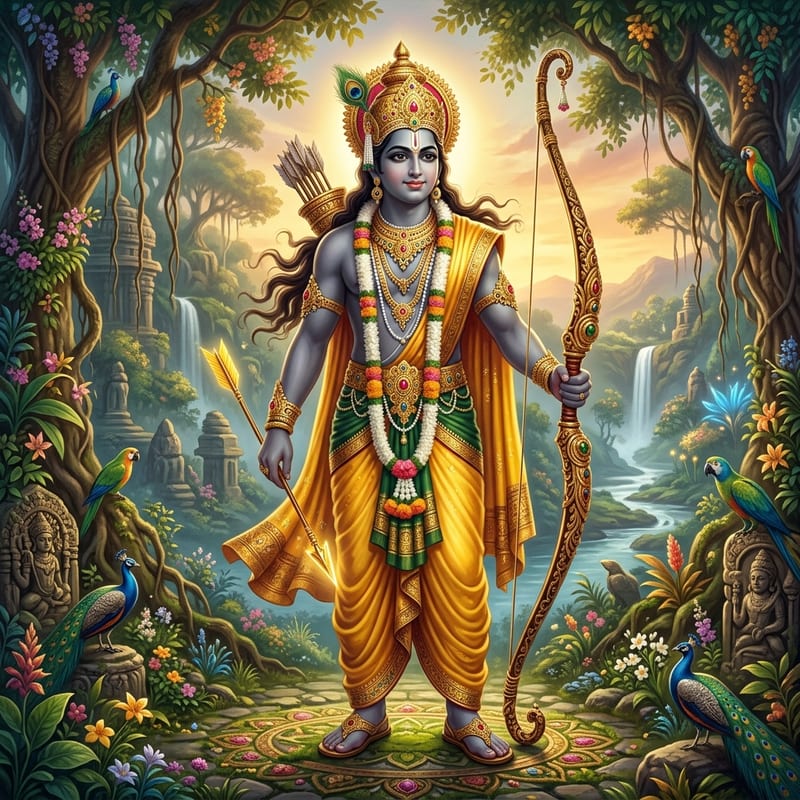
ఆజానుబాహుమరవిన్దదలాయతాక్ష-
-మాజన్మశుద్ధరసహాసముఖప్రసాదమ్ ।
శ్యామం గృహీత శరచాపముదారరూపం
రామం సరామమభిరామమనుస్మరామి ॥ 1 ॥
-మాజన్మశుద్ధరసహాసముఖప్రసాదమ్ ।
శ్యామం గృహీత శరచాపముదారరూపం
రామం సరామమభిరామమనుస్మరామి ॥ 1 ॥
- ఆ-జాను-బాహుమ్ (ājānu-bāhum)his arms reaching down to his knees
- అరవిన్ద-దల-ఆయత-అక్షమ్ (aravinda-dalāyatākṣam)his eyes long as lotus petals
- ఆ-జన్మ-శుద్ధ-రస-హాస-ముఖ-ప్రసాదమ్ (ā-janma-śuddha-rasa-hāsa-mukha-prasādam)his face gracious with a smile pure in feeling since the day of his birth
- శ్యామమ్ (śyāmam)dark of hue
- గృహీత-శర-చాపమ్ (gṛhīta-śara-cāpam)arrow and bow taken up
- ఉదార-రూపమ్ (udāra-rūpam)of noble bearing
- రామమ్ (rāmam)Rāma
- స-రామమ్ (sa-rāmam)with Ramā, Sītā, beside him
- అభిరామమ్ (abhirāmam)the ravishing one
- అనుస్మరామి (anusmarāmi)I call to mind
అస్య శ్రీరామకవచస్య అగస్త్య ఋషిః అనుష్టుప్ ఛన్దః సీతాలక్ష్మణోపేతః శ్రీరామచన్ద్రో దేవతా శ్రీరామచన్ద్రప్రసాదసిద్ధ్యర్థే జపే వినియోగః ।
- అస్య (asya)of this
- శ్రీ-రామ-కవచస్య (śrī-rāma-kavacasya)Śrī Rāma armour
- అగస్త్యః ఋషిః (agastyaḥ ṛṣiḥ)Agastya is the seer
- అనుష్టుప్ ఛన్దః (anuṣṭup chandaḥ)Anuṣṭubh is the metre
- సీతా-లక్ష్మణ-ఉపేతః (sītā-lakṣmaṇopetaḥ)attended by Sītā and Lakṣmaṇa
- శ్రీ-రామచన్ద్రః దేవతా (śrī-rāmacandro devatā)Śrī Rāmacandra is the deity
- శ్రీ-రామచన్ద్ర-ప్రసాద-సిద్ధ్యర్థే (śrī-rāmacandra-prasāda-siddhyarthe)for the winning of Śrī Rāmacandra’s grace
- జపే (jape)in the recitation
- వినియోగః (viniyogaḥ)is its appointed use
అథ ధ్యానం
నీలజీమూతసఙ్కాశం విద్యుద్వర్ణామ్బరావృతమ్ ।
కోమలాఙ్గం విశాలాక్షం యువానమతిసున్దరమ్ ॥ 1 ॥
నీలజీమూతసఙ్కాశం విద్యుద్వర్ణామ్బరావృతమ్ ।
కోమలాఙ్గం విశాలాక్షం యువానమతిసున్దరమ్ ॥ 1 ॥
- అథ ధ్యానమ్ (atha dhyānam)now the meditation
- నీల-జీమూత-సఙ్కాశమ్ (nīla-jīmūta-saṅkāśam)dark as a blue rain-cloud
- విద్యుత్-వర్ణ-అమ్బర-ఆవృతమ్ (vidyud-varṇāmbarāvṛtam)wrapped in cloth of the colour of lightning
- కోమల-అఙ్గమ్ (komalāṅgam)of tender limb
- విశాల-అక్షమ్ (viśālākṣam)wide of eye
- యువానమ్ (yuvānam)young
- అతి-సున్దరమ్ (ati-sundaram)surpassingly beautiful
సీతాసౌమిత్రిసహితం జటాముకుటధారిణమ్ ।
సాసితూణధనుర్బాణపాణిం దానవమర్దనమ్ ॥ 2 ॥
సాసితూణధనుర్బాణపాణిం దానవమర్దనమ్ ॥ 2 ॥
- సీతా-సౌమిత్రి-సహితమ్ (sītā-saumitri-sahitam)together with Sītā and the son of Sumitrā
- జటా-ముకుట-ధారిణమ్ (jaṭā-mukuṭa-dhāriṇam)wearing the crown of matted hair
- స-అసి-తూణ-ధనుః-బాణ-పాణిమ్ (sāsi-tūṇa-dhanur-bāṇa-pāṇim)sword, quiver, bow and arrow in his hands
- దానవ-మర్దనమ్ (dānava-mardanam)the crusher of the dānavas
యదా చోరభయే రాజభయే శత్రుభయే తథా ।
ధ్యాత్వా రఘుపతిం క్రుద్ధం కాలానలసమప్రభమ్ ॥ 3 ॥
ధ్యాత్వా రఘుపతిం క్రుద్ధం కాలానలసమప్రభమ్ ॥ 3 ॥
- యదా (yadā)when
- చోర-భయే (cora-bhaye)there is fear of thieves
- రాజ-భయే (rāja-bhaye)fear of the king
- శత్రు-భయే (śatru-bhaye)fear of enemies
- తథా (tathā)and the like
- ధ్యాత్వా (dhyātvā)having meditated
- రఘు-పతిమ్ (raghu-patim)on the lord of the Raghus
- క్రుద్ధమ్ (kruddham)in his wrath
- కాల-అనల-సమ-ప్రభమ్ (kālānala-sama-prabham)blazing like the fire that ends an age
చీరకృష్ణాజినధరం భస్మోద్ధూలితవిగ్రహమ్ ।
ఆకర్ణాకృష్టవిశిఖకోదణ్డభుజమణ్డితమ్ ॥ 4 ॥
ఆకర్ణాకృష్టవిశిఖకోదణ్డభుజమణ్డితమ్ ॥ 4 ॥
- చీర-కృష్ణ-అజిన-ధరమ్ (cīra-kṛṣṇājina-dharam)clad in bark cloth and a black antelope skin
- భస్మ-ఉద్ధూలిత-విగ్రహమ్ (bhasmoddhūlita-vigraham)his body dusted over with ash
- ఆ-కర్ణ-ఆకృష్ట-విశిఖ-కోదణ్డ-భుజ-మణ్డితమ్ (ā-karṇākṛṣṭa-viśikha-kodaṇḍa-bhuja-maṇḍitam)his arm graced by the Kodaṇḍa bow, the shaft drawn back as far as his ear
రణే రిపూన్ రావణాదీంస్తీక్ష్ణమార్గణవృష్టిభిః ।
సంహరన్తం మహావీరముగ్రమైన్ద్రరథస్థితమ్ ॥ 5 ॥
సంహరన్తం మహావీరముగ్రమైన్ద్రరథస్థితమ్ ॥ 5 ॥
- రణే (raṇe)in the fight
- రిపూన్ (ripūn)the foes
- రావణ-ఆదీన్ (rāvaṇādīn)Rāvaṇa and the rest
- తీక్ష్ణ-మార్గణ-వృష్టిభిః (tīkṣṇa-mārgaṇa-vṛṣṭibhiḥ)with showers of keen arrows
- సంహరన్తమ్ (saṃharantam)making an end of them
- మహా-వీరమ్ (mahā-vīram)the great hero
- ఉగ్రమ్ (ugram)terrible
- ఐన్ద్ర-రథ-స్థితమ్ (aindra-ratha-sthitam)standing upon Indra’s own chariot
లక్ష్మణాద్యైర్మహావీరైర్వృతం హనుమదాదిభిః ।
సుగ్రీవాద్యైర్మాహావీరైః శైలవృక్షకరోద్యతైః ॥ 6 ॥
సుగ్రీవాద్యైర్మాహావీరైః శైలవృక్షకరోద్యతైః ॥ 6 ॥
- లక్ష్మణ-ఆద్యైః (lakṣmaṇādyaiḥ)by Lakṣmaṇa and those with him
- మహా-వీరైః (mahā-vīraiḥ)great heroes
- వృతమ్ (vṛtam)ringed about
- హనుమత్-ఆదిభిః (hanumad-ādibhiḥ)by Hanumān and the others
- సుగ్రీవ-ఆద్యైః (sugrīvādyaiḥ)by Sugrīva and those with him
- మహా-వీరైః (mahā-vīraiḥ)great warriors
- శైల-వృక్ష-కర-ఉద్యతైః (śaila-vṛkṣa-karodyataiḥ)rocks and trees held high in their hands
వేగాత్కరాలహుఙ్కారైర్భుభుక్కారమహారవైః ।
నదద్భిః పరివాదద్భిః సమరే రావణం ప్రతి ॥ 7 ॥
నదద్భిః పరివాదద్భిః సమరే రావణం ప్రతి ॥ 7 ॥
- వేగాత్ (vegāt)with a rush
- కరాల-హుఙ్కారైః (karāla-huṅkāraiḥ)with terrible war-cries
- భుభుక్కార-మహా-రవైః (bhubhukkāra-mahā-ravaiḥ)with the great bellowing roar of them
- నదద్భిః (nadadbhiḥ)as they shouted
- పరివాదద్భిః (parivādadbhiḥ)and shouted back at one another
- సమరే (samare)in the battle
- రావణమ్ ప్రతి (rāvaṇaṃ prati)against Rāvaṇa
శ్రీరామ శత్రుసఙ్ఘాన్మే హన మర్దయ ఖాదయ ।
భూతప్రేతపిశాచాదీన్ శ్రీరామాశు వినాశయ ॥ 8 ॥
భూతప్రేతపిశాచాదీన్ శ్రీరామాశు వినాశయ ॥ 8 ॥
- శ్రీ-రామ (śrī-rāma)O Śrī Rāma
- శత్రు-సఙ్ఘాన్ (śatru-saṅghān)the hosts of enemies
- మే (me)mine
- హన (hana)strike them
- మర్దయ (mardaya)crush them
- ఖాదయ (khādaya)devour them
- భూత-ప్రేత-పిశాచ-ఆదీన్ (bhūta-preta-piśācādīn)the spirits, the departed, the flesh-eaters and their kind
- శ్రీ-రామ (śrī-rāma)O Śrī Rāma
- ఆశు (āśu)at once
- వినాశయ (vināśaya)destroy them
ఏవం ధ్యాత్వా జపేద్రామకవచం సిద్ధిదాయకమ్ ।
సుతీక్ష్ణ వజ్రకవచం శృణు వక్ష్యామ్యనుత్తమమ్ ॥ 9 ॥
సుతీక్ష్ణ వజ్రకవచం శృణు వక్ష్యామ్యనుత్తమమ్ ॥ 9 ॥
- ఏవమ్ (evam)thus
- ధ్యాత్వా (dhyātvā)having meditated
- జపేత్ (japet)let one recite
- రామ-కవచమ్ (rāma-kavacam)the Rāma armour
- సిద్ధి-దాయకమ్ (siddhi-dāyakam)which grants accomplishment
- సుతీక్ష్ణ (sutīkṣṇa)O Sutīkṣṇa
- వజ్ర-కవచమ్ (vajra-kavacam)the thunderbolt armour
- శృణు (śṛṇu)listen
- వక్ష్యామి (vakṣyāmi)I shall speak it
- అనుత్తమమ్ (anuttamam)than which there is none higher
అథ కవచమ్
శ్రీరామః పాతు మే మూర్ధ్ని పూర్వే చ రఘువంశజః ।
దక్షిణే మే రఘువరః పశ్చిమే పాతు పావనః ॥ 10 ॥
శ్రీరామః పాతు మే మూర్ధ్ని పూర్వే చ రఘువంశజః ।
దక్షిణే మే రఘువరః పశ్చిమే పాతు పావనః ॥ 10 ॥
- అథ కవచమ్ (atha kavacam)now the armour
- శ్రీ-రామః (śrī-rāmaḥ)Śrī Rāma
- పాతు (pātu)may he guard
- మే (me)my
- మూర్ధ్ని (mūrdhni)at the crown of the head
- పూర్వే (pūrve)in the east
- చ (ca)and
- రఘు-వంశ-జః (raghu-vaṃśa-jaḥ)he born in the line of Raghu
- దక్షిణే (dakṣiṇe)in the south
- మే (me)me
- రఘు-వరః (raghu-varaḥ)the best of the Raghus
- పశ్చిమే (paścime)in the west
- పాతు (pātu)may he guard
- పావనః (pāvanaḥ)the purifier
ఉత్తరే మే రఘుపతిర్భాలం దశరథాత్మజః ।
భ్రువోర్దూర్వాదలశ్యామస్తయోర్మధ్యే జనార్దనః ॥ 11 ॥
భ్రువోర్దూర్వాదలశ్యామస్తయోర్మధ్యే జనార్దనః ॥ 11 ॥
- ఉత్తరే (uttare)in the north
- మే (me)me
- రఘు-పతిః (raghu-patiḥ)the lord of the Raghus
- భాలమ్ (bhālam)the brow
- దశరథ-ఆత్మజః (daśarathātmajaḥ)the son of Daśaratha
- భ్రువోః (bhruvoḥ)at the two eyebrows
- దూర్వా-దల-శ్యామః (dūrvā-dala-śyāmaḥ)he dark as a blade of dūrvā grass
- తయోః మధ్యే (tayor madhye)in the space between them
- జనార్దనః (janārdanaḥ)Janārdana
శ్రోత్రం మే పాతు రాజేన్ద్రో దృశౌ రాజీవలోచనః ।
ఘ్రాణం మే పాతు రాజర్షిర్గణ్డౌ మే జానకీపతిః ॥ 12 ॥
ఘ్రాణం మే పాతు రాజర్షిర్గణ్డౌ మే జానకీపతిః ॥ 12 ॥
- శ్రోత్రమ్ (śrotram)the hearing
- మే (me)my
- పాతు (pātu)may he guard
- రాజ-ఇన్ద్రః (rājendraḥ)the lord among kings
- దృశౌ (dṛśau)the two eyes
- రాజీవ-లోచనః (rājīva-locanaḥ)he whose eyes are lotuses
- ఘ్రాణమ్ (ghrāṇam)the nose
- మే (me)my
- పాతు (pātu)may he guard
- రాజ-ఋషిః (rājarṣiḥ)the royal seer
- గణ్డౌ (gaṇḍau)the two cheeks
- మే (me)my
- జానకీ-పతిః (jānakī-patiḥ)the husband of Jānakī
కర్ణమూలే ఖరధ్వంసీ భాలం మే రఘువల్లభః ।
జిహ్వాం మే వాక్పతిః పాతు దన్తపఙ్క్తీ రఘూత్తమః ॥ 13 ॥
జిహ్వాం మే వాక్పతిః పాతు దన్తపఙ్క్తీ రఘూత్తమః ॥ 13 ॥
- కర్ణ-మూలే (karṇa-mūle)at the root of the ears
- ఖర-ధ్వంసీ (khara-dhvaṃsī)the destroyer of Khara
- భాలమ్ (bhālam)the forehead
- మే (me)my
- రఘు-వల్లభః (raghu-vallabhaḥ)the darling of the Raghus
- జిహ్వామ్ (jihvām)the tongue
- మే (me)my
- వాక్-పతిః (vāk-patiḥ)the lord of speech
- పాతు (pātu)may he guard
- దన్త-పఙ్క్తీ (danta-paṅktī)the two rows of teeth
- రఘు-ఉత్తమః (raghūttamaḥ)the best of the Raghus
ఓష్ఠౌ శ్రీరామచన్ద్రో మే ముఖం పాతు పరాత్పరః ।
కణ్ఠం పాతు జగద్వన్ద్యః స్కన్ధౌ మే రావణాన్తకః ॥ 14 ॥
కణ్ఠం పాతు జగద్వన్ద్యః స్కన్ధౌ మే రావణాన్తకః ॥ 14 ॥
- ఓష్ఠౌ (oṣṭhau)the two lips
- శ్రీ-రామచన్ద్రః (śrī-rāmacandraḥ)Śrī Rāmacandra
- మే (me)my
- ముఖమ్ (mukham)the mouth
- పాతు (pātu)may he guard
- పరాత్-పరః (parāt-paraḥ)higher than the highest
- కణ్ఠమ్ (kaṇṭham)the throat
- పాతు (pātu)may he guard
- జగత్-వన్ద్యః (jagad-vandyaḥ)he to whom the world bows
- స్కన్ధౌ (skandhau)the two shoulders
- మే (me)my
- రావణ-అన్తకః (rāvaṇāntakaḥ)he who made an end of Rāvaṇa
ధనుర్బాణధరః పాతు భుజౌ మే వాలిమర్దనః ।
సర్వాణ్యఙ్గులిపర్వాణి హస్తౌ మే రాక్షసాన్తకః ॥ 15 ॥
సర్వాణ్యఙ్గులిపర్వాణి హస్తౌ మే రాక్షసాన్తకః ॥ 15 ॥
- ధనుః-బాణ-ధరః (dhanur-bāṇa-dharaḥ)he who bears bow and arrow
- పాతు (pātu)may he guard
- భుజౌ (bhujau)the two arms
- మే (me)my
- వాలి-మర్దనః (vāli-mardanaḥ)the crusher of Vālin
- సర్వాణి అఙ్గులి-పర్వాణి (sarvāṇy aṅguli-parvāṇi)every joint of every finger
- హస్తౌ (hastau)the two hands
- మే (me)my
- రాక్షస-అన్తకః (rākṣasāntakaḥ)he who made an end of the rākṣasas
వక్షో మే పాతు కాకుత్స్థః పాతు మే హృదయం హరిః ।
స్తనౌ సీతాపతిః పాతు పార్శ్వం మే జగదీశ్వరః ॥ 16 ॥
స్తనౌ సీతాపతిః పాతు పార్శ్వం మే జగదీశ్వరః ॥ 16 ॥
- వక్షః (vakṣaḥ)the chest
- మే (me)my
- పాతు (pātu)may he guard
- కాకుత్స్థః (kākutsthaḥ)the descendant of Kakutstha
- పాతు (pātu)may he guard
- మే (me)my
- హృదయమ్ (hṛdayam)heart
- హరిః (hariḥ)Hari
- స్తనౌ (stanau)the breast
- సీతా-పతిః (sītā-patiḥ)the husband of Sītā
- పాతు (pātu)may he guard
- పార్శ్వమ్ (pārśvam)the sides
- మే (me)my
- జగత్-ఈశ్వరః (jagad-īśvaraḥ)the lord of the world
మధ్యం మే పాతు లక్ష్మీశో నాభిం మే రఘునాయకః ।
కౌసల్యేయః కటీ పాతు పృష్ఠం దుర్గతినాశనః ॥ 17 ॥
కౌసల్యేయః కటీ పాతు పృష్ఠం దుర్గతినాశనః ॥ 17 ॥
- మధ్యమ్ (madhyam)the middle of the body
- మే (me)my
- పాతు (pātu)may he guard
- లక్ష్మీ-ఈశః (lakṣmīśaḥ)the lord of Lakṣmī
- నాభిమ్ (nābhim)the navel
- మే (me)my
- రఘు-నాయకః (raghu-nāyakaḥ)the leader of the Raghus
- కౌసల్యేయః (kausalyeyaḥ)the son of Kausalyā
- కటీ (kaṭī)the hips
- పాతు (pātu)may he guard
- పృష్ఠమ్ (pṛṣṭham)the back
- దుర్గతి-నాశనః (durgati-nāśanaḥ)he who undoes an evil destiny
గుహ్యం పాతు హృషీకేశః సక్థినీ సత్యవిక్రమః ।
ఊరూ శార్ఙ్గధరః పాతు జానునీ హనుమత్ప్రియః ॥ 18 ॥
ఊరూ శార్ఙ్గధరః పాతు జానునీ హనుమత్ప్రియః ॥ 18 ॥
- గుహ్యమ్ (guhyam)the private parts
- పాతు (pātu)may he guard
- హృషీకేశః (hṛṣīkeśaḥ)Hṛṣīkeśa, lord of the senses
- సక్థినీ (sakthinī)the two hip-joints
- సత్య-విక్రమః (satya-vikramaḥ)he whose valour is truth itself
- ఊరూ (ūrū)the two thighs
- శార్ఙ్గ-ధరః (śārṅga-dharaḥ)the bearer of the Śārṅga bow
- పాతు (pātu)may he guard
- జానునీ (jānunī)the two knees
- హనుమత్-ప్రియః (hanumat-priyaḥ)he who is dear to Hanumān
జఙ్ఘే పాతు జగద్వ్యాపీ పాదౌ మే తాటకాన్తకః ।
సర్వాఙ్గం పాతు మే విష్ణుః సర్వసన్ధీననామయః ॥ 19 ॥
సర్వాఙ్గం పాతు మే విష్ణుః సర్వసన్ధీననామయః ॥ 19 ॥
- జఙ్ఘే (jaṅghe)the two shanks
- పాతు (pātu)may he guard
- జగత్-వ్యాపీ (jagad-vyāpī)he who pervades the world
- పాదౌ (pādau)the two feet
- మే (me)my
- తాటకా-అన్తకః (tāṭakāntakaḥ)he who made an end of Tāṭakā
- సర్వ-అఙ్గమ్ (sarvāṅgam)every limb
- పాతు (pātu)may he guard
- మే (me)my
- విష్ణుః (viṣṇuḥ)Viṣṇu
- సర్వ-సన్ధీన్ (sarva-sandhīn)all the joints
- అనామయః (anāmayaḥ)he in whom is no ailing
జ్ఞానేన్ద్రియాణి ప్రాణాదీన్ పాతు మే మధుసూదనః ।
పాతు శ్రీరామభద్రో మే శబ్దాదీన్విషయానపి ॥ 20 ॥
పాతు శ్రీరామభద్రో మే శబ్దాదీన్విషయానపి ॥ 20 ॥
- జ్ఞాన-ఇన్ద్రియాణి (jñānendriyāṇi)the organs of knowing
- ప్రాణ-ఆదీన్ (prāṇādīn)the vital airs and the rest
- పాతు (pātu)may he guard
- మే (me)my
- మధు-సూదనః (madhu-sūdanaḥ)the slayer of Madhu
- పాతు (pātu)may he guard
- శ్రీ-రామభద్రః (śrī-rāmabhadraḥ)Śrī Rāmabhadra
- మే (me)my
- శబ్ద-ఆదీన్ (śabdādīn)sound and the rest
- విషయాన్ (viṣayān)the objects of the senses
- అపి (api)these too
ద్విపదాదీని భూతాని మత్సమ్బన్ధీని యాని చ ।
జామదగ్న్యమహాదర్పదలనః పాతు తాని మే ॥ 21 ॥
జామదగ్న్యమహాదర్పదలనః పాతు తాని మే ॥ 21 ॥
- ద్విపద-ఆదీని (dvipadādīni)the two-footed and the rest
- భూతాని (bhūtāni)the beings
- మత్-సమ్బన్ధీని (mat-sambandhīni)bound to me
- యాని చ (yāni ca)whichever they be
- జామదగ్న్య-మహా-దర్ప-దలనః (jāmadagnya-mahā-darpa-dalanaḥ)he who broke the great pride of Jamadagni’s son
- పాతు (pātu)may he guard
- తాని (tāni)them
- మే (me)for me
సౌమిత్రిపూర్వజః పాతు వాగాదీనీన్ద్రియాణి చ ।
రోమాఙ్కురాణ్యశేషాణి పాతు సుగ్రీవరాజ్యదః ॥ 22 ॥
రోమాఙ్కురాణ్యశేషాణి పాతు సుగ్రీవరాజ్యదః ॥ 22 ॥
- సౌమిత్రి-పూర్వజః (saumitri-pūrvajaḥ)the elder brother of Sumitrā’s son
- పాతు (pātu)may he guard
- వాక్-ఆదీని (vāg-ādīni)beginning with speech
- ఇన్ద్రియాణి (indriyāṇi)the organs of action
- చ (ca)and
- రోమ-అఙ్కురాణి (romāṅkurāṇi)the shoots of hair
- అశేషాణి (aśeṣāṇi)every one of them
- పాతు (pātu)may he guard
- సుగ్రీవ-రాజ్య-దః (sugrīva-rājya-daḥ)he who gave Sugrīva his kingdom
వాఙ్మనోబుద్ధ్యహఙ్కారైర్జ్ఞానాజ్ఞానకృతాని చ ।
జన్మాన్తరకృతానీహ పాపాని వివిధాని చ ॥ 23 ॥
జన్మాన్తరకృతానీహ పాపాని వివిధాని చ ॥ 23 ॥
- వాక్-మనః-బుద్ధి-అహఙ్కారైః (vāṅ-mano-buddhy-ahaṅkāraiḥ)by speech, by mind, by intellect and by the sense of “I”
- జ్ఞాన-అజ్ఞాన-కృతాని (jñānājñāna-kṛtāni)done knowing and done unknowing
- చ (ca)and
- జన్మ-అన్తర-కృతాని (janmāntara-kṛtāni)done in other births
- ఇహ (iha)here
- పాపాని (pāpāni)the sins
- వివిధాని (vividhāni)of every kind
- చ (ca)as well
తాని సర్వాణి దగ్ధ్వాశు హరకోదణ్డఖణ్డనః ।
పాతు మాం సర్వతో రామః శార్ఙ్గబాణధరః సదా ॥ 24 ॥
పాతు మాం సర్వతో రామః శార్ఙ్గబాణధరః సదా ॥ 24 ॥
- తాని సర్వాణి (tāni sarvāṇi)all of them
- దగ్ధ్వా (dagdhvā)having burnt them away
- ఆశు (āśu)at once
- హర-కోదణ్డ-ఖణ్డనః (hara-kodaṇḍa-khaṇḍanaḥ)he who snapped the bow of Hara
- పాతు (pātu)may he guard
- మామ్ (mām)me
- సర్వతః (sarvataḥ)on every side
- రామః (rāmaḥ)Rāma
- శార్ఙ్గ-బాణ-ధరః (śārṅga-bāṇa-dharaḥ)bearing the Śārṅga bow and its arrows
- సదా (sadā)always
ఇతి శ్రీరామచన్ద్రస్య కవచం వజ్రసమ్మితమ్ ।
గుహ్యాద్గుహ్యతమం దివ్యం సుతీక్ష్ణ మునిసత్తమ ॥ 25 ॥
గుహ్యాద్గుహ్యతమం దివ్యం సుతీక్ష్ణ మునిసత్తమ ॥ 25 ॥
- ఇతి (iti)such
- శ్రీ-రామచన్ద్రస్య (śrī-rāmacandrasya)of Śrī Rāmacandra
- కవచమ్ (kavacam)is the armour
- వజ్ర-సమ్మితమ్ (vajra-sammitam)a match for the thunderbolt
- గుహ్యాత్ గుహ్యతమమ్ (guhyād guhyatamam)the most secret of all secrets
- దివ్యమ్ (divyam)divine
- సుతీక్ష్ణ (sutīkṣṇa)O Sutīkṣṇa
- ముని-సత్తమ (muni-sattama)best of sages
యః పఠేచ్ఛృణుయాద్వాపి శ్రావయేద్వా సమాహితః ।
స యాతి పరమం స్థానం రామచన్ద్రప్రసాదతః ॥ 26 ॥
స యాతి పరమం స్థానం రామచన్ద్రప్రసాదతః ॥ 26 ॥
- యః (yaḥ)whoever
- పఠేత్ (paṭhet)recites it
- శృణుయాత్ (śṛṇuyāt)or hears it
- వా అపి (vāpi)or even
- శ్రావయేత్ (śrāvayet)has it heard by others
- వా (vā)or
- సమాహితః (samāhitaḥ)with a gathered mind
- సః (saḥ)he
- యాతి (yāti)goes
- పరమమ్ స్థానమ్ (paramaṃ sthānam)to the highest station
- రామచన్ద్ర-ప్రసాదతః (rāmacandra-prasādataḥ)by the grace of Rāmacandra
మహాపాతకయుక్తో వా గోఘ్నో వా భ్రూణహా తథా ।
శ్రీరామచన్ద్రకవచపఠనాచ్ఛుద్ధిమాప్నుయాత్ ॥ 27 ॥
శ్రీరామచన్ద్రకవచపఠనాచ్ఛుద్ధిమాప్నుయాత్ ॥ 27 ॥
- మహా-పాతక-యుక్తః (mahā-pātaka-yuktaḥ)one burdened with a mortal sin
- వా (vā)or
- గో-ఘ్నః (go-ghnaḥ)the killer of a cow
- వా (vā)or
- భ్రూణ-హా (bhrūṇa-hā)the destroyer of an unborn child
- తథా (tathā)likewise
- శ్రీ-రామచన్ద్ర-కవచ-పఠనాత్ (śrī-rāmacandra-kavaca-paṭhanāt)by the reciting of Śrī Rāmacandra’s armour
- శుద్ధిమ్ (śuddhim)cleanness
- ఆప్నుయాత్ (āpnuyāt)would attain
బ్రహ్మహత్యాదిభిః పాపైర్ముచ్యతే నాత్ర సంశయః ।
భో సుతీక్ష్ణ యథా పృష్టం త్వయా మమ పురాః శుభమ్ ।
తథా శ్రీరామకవచం మయా తే వినివేదితమ్ ॥ 28 ॥
భో సుతీక్ష్ణ యథా పృష్టం త్వయా మమ పురాః శుభమ్ ।
తథా శ్రీరామకవచం మయా తే వినివేదితమ్ ॥ 28 ॥
- బ్రహ్మ-హత్యా-ఆదిభిః (brahma-hatyādibhiḥ)from the killing of a brahmin and the like
- పాపైః (pāpaiḥ)from those sins
- ముచ్యతే (mucyate)one is set free
- న అత్ర సంశయః (nātra saṃśayaḥ)there is no doubt in this
- భోః సుతీక్ష్ణ (bhoḥ sutīkṣṇa)O Sutīkṣṇa
- యథా (yathā)just as
- పృష్టమ్ (pṛṣṭam)it was asked
- త్వయా (tvayā)by you
- మమ (mama)of me
- పురా (purā)before this (printed पुराः)
- శుభమ్ (śubham)this blessed thing
- తథా (tathā)even so
- శ్రీ-రామ-కవచమ్ (śrī-rāma-kavacam)the Śrī Rāma armour
- మయా (mayā)by me
- తే (te)to you
- వినివేదితమ్ (viniveditam)has been set forth
ఇతి శ్రీమదానన్దరామాయణే మనోహరకాణ్డే సుతీక్ష్ణాగస్త్యసంవాదే శ్రీరామకవచమ్ ॥