
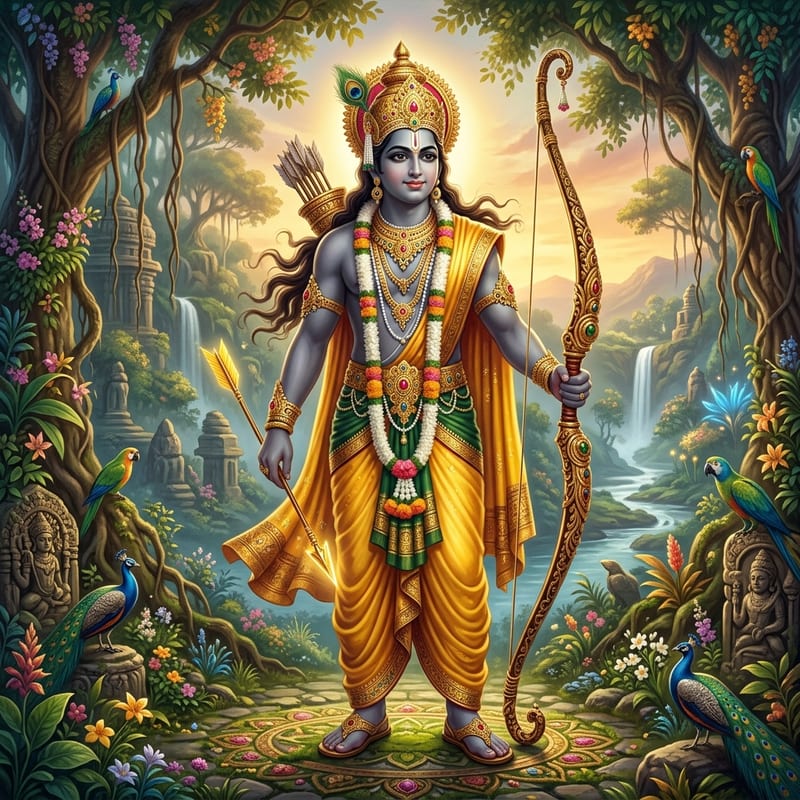
અગસ્તિરુવાચ
આજાનુબાહુમરવિન્દદલાયતાક્ષ-
-માજન્મશુદ્ધરસહાસમુખપ્રસાદમ્ ।
શ્યામં ગૃહીત શરચાપમુદારરૂપં
રામં સરામમભિરામમનુસ્મરામિ ॥ 1 ॥
-માજન્મશુદ્ધરસહાસમુખપ્રસાદમ્ ।
શ્યામં ગૃહીત શરચાપમુદારરૂપં
રામં સરામમભિરામમનુસ્મરામિ ॥ 1 ॥
- આ-જાનુ-બાહુમ્ (ājānu-bāhum)his arms reaching down to his knees
- અરવિન્દ-દલ-આયત-અક્ષમ્ (aravinda-dalāyatākṣam)his eyes long as lotus petals
- આ-જન્મ-શુદ્ધ-રસ-હાસ-મુખ-પ્રસાદમ્ (ā-janma-śuddha-rasa-hāsa-mukha-prasādam)his face gracious with a smile pure in feeling since the day of his birth
- શ્યામમ્ (śyāmam)dark of hue
- ગૃહીત-શર-ચાપમ્ (gṛhīta-śara-cāpam)arrow and bow taken up
- ઉદાર-રૂપમ્ (udāra-rūpam)of noble bearing
- રામમ્ (rāmam)Rāma
- સ-રામમ્ (sa-rāmam)with Ramā, Sītā, beside him
- અભિરામમ્ (abhirāmam)the ravishing one
- અનુસ્મરામિ (anusmarāmi)I call to mind
અસ્ય શ્રીરામકવચસ્ય અગસ્ત્ય ઋષિઃ અનુષ્ટુપ્ છન્દઃ સીતાલક્ષ્મણોપેતઃ શ્રીરામચન્દ્રો દેવતા શ્રીરામચન્દ્રપ્રસાદસિદ્ધ્યર્થે જપે વિનિયોગઃ ।
- અસ્ય (asya)of this
- શ્રી-રામ-કવચસ્ય (śrī-rāma-kavacasya)Śrī Rāma armour
- અગસ્ત્યઃ ઋષિઃ (agastyaḥ ṛṣiḥ)Agastya is the seer
- અનુષ્ટુપ્ છન્દઃ (anuṣṭup chandaḥ)Anuṣṭubh is the metre
- સીતા-લક્ષ્મણ-ઉપેતઃ (sītā-lakṣmaṇopetaḥ)attended by Sītā and Lakṣmaṇa
- શ્રી-રામચન્દ્રઃ દેવતા (śrī-rāmacandro devatā)Śrī Rāmacandra is the deity
- શ્રી-રામચન્દ્ર-પ્રસાદ-સિદ્ધ્યર્થે (śrī-rāmacandra-prasāda-siddhyarthe)for the winning of Śrī Rāmacandra’s grace
- જપે (jape)in the recitation
- વિનિયોગઃ (viniyogaḥ)is its appointed use
અથ ધ્યાનં
નીલજીમૂતસઙ્કાશં વિદ્યુદ્વર્ણામ્બરાવૃતમ્ ।
કોમલાઙ્ગં વિશાલાક્ષં યુવાનમતિસુન્દરમ્ ॥ 1 ॥
નીલજીમૂતસઙ્કાશં વિદ્યુદ્વર્ણામ્બરાવૃતમ્ ।
કોમલાઙ્ગં વિશાલાક્ષં યુવાનમતિસુન્દરમ્ ॥ 1 ॥
- અથ ધ્યાનમ્ (atha dhyānam)now the meditation
- નીલ-જીમૂત-સઙ્કાશમ્ (nīla-jīmūta-saṅkāśam)dark as a blue rain-cloud
- વિદ્યુત્-વર્ણ-અમ્બર-આવૃતમ્ (vidyud-varṇāmbarāvṛtam)wrapped in cloth of the colour of lightning
- કોમલ-અઙ્ગમ્ (komalāṅgam)of tender limb
- વિશાલ-અક્ષમ્ (viśālākṣam)wide of eye
- યુવાનમ્ (yuvānam)young
- અતિ-સુન્દરમ્ (ati-sundaram)surpassingly beautiful
સીતાસૌમિત્રિસહિતં જટામુકુટધારિણમ્ ।
સાસિતૂણધનુર્બાણપાણિં દાનવમર્દનમ્ ॥ 2 ॥
સાસિતૂણધનુર્બાણપાણિં દાનવમર્દનમ્ ॥ 2 ॥
- સીતા-સૌમિત્રિ-સહિતમ્ (sītā-saumitri-sahitam)together with Sītā and the son of Sumitrā
- જટા-મુકુટ-ધારિણમ્ (jaṭā-mukuṭa-dhāriṇam)wearing the crown of matted hair
- સ-અસિ-તૂણ-ધનુઃ-બાણ-પાણિમ્ (sāsi-tūṇa-dhanur-bāṇa-pāṇim)sword, quiver, bow and arrow in his hands
- દાનવ-મર્દનમ્ (dānava-mardanam)the crusher of the dānavas
યદા ચોરભયે રાજભયે શત્રુભયે તથા ।
ધ્યાત્વા રઘુપતિં ક્રુદ્ધં કાલાનલસમપ્રભમ્ ॥ 3 ॥
ધ્યાત્વા રઘુપતિં ક્રુદ્ધં કાલાનલસમપ્રભમ્ ॥ 3 ॥
- યદા (yadā)when
- ચોર-ભયે (cora-bhaye)there is fear of thieves
- રાજ-ભયે (rāja-bhaye)fear of the king
- શત્રુ-ભયે (śatru-bhaye)fear of enemies
- તથા (tathā)and the like
- ધ્યાત્વા (dhyātvā)having meditated
- રઘુ-પતિમ્ (raghu-patim)on the lord of the Raghus
- ક્રુદ્ધમ્ (kruddham)in his wrath
- કાલ-અનલ-સમ-પ્રભમ્ (kālānala-sama-prabham)blazing like the fire that ends an age
ચીરકૃષ્ણાજિનધરં ભસ્મોદ્ધૂલિતવિગ્રહમ્ ।
આકર્ણાકૃષ્ટવિશિખકોદણ્ડભુજમણ્ડિતમ્ ॥ 4 ॥
આકર્ણાકૃષ્ટવિશિખકોદણ્ડભુજમણ્ડિતમ્ ॥ 4 ॥
- ચીર-કૃષ્ણ-અજિન-ધરમ્ (cīra-kṛṣṇājina-dharam)clad in bark cloth and a black antelope skin
- ભસ્મ-ઉદ્ધૂલિત-વિગ્રહમ્ (bhasmoddhūlita-vigraham)his body dusted over with ash
- આ-કર્ણ-આકૃષ્ટ-વિશિખ-કોદણ્ડ-ભુજ-મણ્ડિતમ્ (ā-karṇākṛṣṭa-viśikha-kodaṇḍa-bhuja-maṇḍitam)his arm graced by the Kodaṇḍa bow, the shaft drawn back as far as his ear
રણે રિપૂન્ રાવણાદીંસ્તીક્ષ્ણમાર્ગણવૃષ્ટિભિઃ ।
સંહરન્તં મહાવીરમુગ્રમૈન્દ્રરથસ્થિતમ્ ॥ 5 ॥
સંહરન્તં મહાવીરમુગ્રમૈન્દ્રરથસ્થિતમ્ ॥ 5 ॥
- રણે (raṇe)in the fight
- રિપૂન્ (ripūn)the foes
- રાવણ-આદીન્ (rāvaṇādīn)Rāvaṇa and the rest
- તીક્ષ્ણ-માર્ગણ-વૃષ્ટિભિઃ (tīkṣṇa-mārgaṇa-vṛṣṭibhiḥ)with showers of keen arrows
- સંહરન્તમ્ (saṃharantam)making an end of them
- મહા-વીરમ્ (mahā-vīram)the great hero
- ઉગ્રમ્ (ugram)terrible
- ઐન્દ્ર-રથ-સ્થિતમ્ (aindra-ratha-sthitam)standing upon Indra’s own chariot
લક્ષ્મણાદ્યૈર્મહાવીરૈર્વૃતં હનુમદાદિભિઃ ।
સુગ્રીવાદ્યૈર્માહાવીરૈઃ શૈલવૃક્ષકરોદ્યતૈઃ ॥ 6 ॥
સુગ્રીવાદ્યૈર્માહાવીરૈઃ શૈલવૃક્ષકરોદ્યતૈઃ ॥ 6 ॥
- લક્ષ્મણ-આદ્યૈઃ (lakṣmaṇādyaiḥ)by Lakṣmaṇa and those with him
- મહા-વીરૈઃ (mahā-vīraiḥ)great heroes
- વૃતમ્ (vṛtam)ringed about
- હનુમત્-આદિભિઃ (hanumad-ādibhiḥ)by Hanumān and the others
- સુગ્રીવ-આદ્યૈઃ (sugrīvādyaiḥ)by Sugrīva and those with him
- મહા-વીરૈઃ (mahā-vīraiḥ)great warriors
- શૈલ-વૃક્ષ-કર-ઉદ્યતૈઃ (śaila-vṛkṣa-karodyataiḥ)rocks and trees held high in their hands
વેગાત્કરાલહુઙ્કારૈર્ભુભુક્કારમહારવૈઃ ।
નદદ્ભિઃ પરિવાદદ્ભિઃ સમરે રાવણં પ્રતિ ॥ 7 ॥
નદદ્ભિઃ પરિવાદદ્ભિઃ સમરે રાવણં પ્રતિ ॥ 7 ॥
- વેગાત્ (vegāt)with a rush
- કરાલ-હુઙ્કારૈઃ (karāla-huṅkāraiḥ)with terrible war-cries
- ભુભુક્કાર-મહા-રવૈઃ (bhubhukkāra-mahā-ravaiḥ)with the great bellowing roar of them
- નદદ્ભિઃ (nadadbhiḥ)as they shouted
- પરિવાદદ્ભિઃ (parivādadbhiḥ)and shouted back at one another
- સમરે (samare)in the battle
- રાવણમ્ પ્રતિ (rāvaṇaṃ prati)against Rāvaṇa
શ્રીરામ શત્રુસઙ્ઘાન્મે હન મર્દય ખાદય ।
ભૂતપ્રેતપિશાચાદીન્ શ્રીરામાશુ વિનાશય ॥ 8 ॥
ભૂતપ્રેતપિશાચાદીન્ શ્રીરામાશુ વિનાશય ॥ 8 ॥
- શ્રી-રામ (śrī-rāma)O Śrī Rāma
- શત્રુ-સઙ્ઘાન્ (śatru-saṅghān)the hosts of enemies
- મે (me)mine
- હન (hana)strike them
- મર્દય (mardaya)crush them
- ખાદય (khādaya)devour them
- ભૂત-પ્રેત-પિશાચ-આદીન્ (bhūta-preta-piśācādīn)the spirits, the departed, the flesh-eaters and their kind
- શ્રી-રામ (śrī-rāma)O Śrī Rāma
- આશુ (āśu)at once
- વિનાશય (vināśaya)destroy them
એવં ધ્યાત્વા જપેદ્રામકવચં સિદ્ધિદાયકમ્ ।
સુતીક્ષ્ણ વજ્રકવચં શૃણુ વક્ષ્યામ્યનુત્તમમ્ ॥ 9 ॥
સુતીક્ષ્ણ વજ્રકવચં શૃણુ વક્ષ્યામ્યનુત્તમમ્ ॥ 9 ॥
- એવમ્ (evam)thus
- ધ્યાત્વા (dhyātvā)having meditated
- જપેત્ (japet)let one recite
- રામ-કવચમ્ (rāma-kavacam)the Rāma armour
- સિદ્ધિ-દાયકમ્ (siddhi-dāyakam)which grants accomplishment
- સુતીક્ષ્ણ (sutīkṣṇa)O Sutīkṣṇa
- વજ્ર-કવચમ્ (vajra-kavacam)the thunderbolt armour
- શૃણુ (śṛṇu)listen
- વક્ષ્યામિ (vakṣyāmi)I shall speak it
- અનુત્તમમ્ (anuttamam)than which there is none higher
અથ કવચમ્
શ્રીરામઃ પાતુ મે મૂર્ધ્નિ પૂર્વે ચ રઘુવંશજઃ ।
દક્ષિણે મે રઘુવરઃ પશ્ચિમે પાતુ પાવનઃ ॥ 10 ॥
શ્રીરામઃ પાતુ મે મૂર્ધ્નિ પૂર્વે ચ રઘુવંશજઃ ।
દક્ષિણે મે રઘુવરઃ પશ્ચિમે પાતુ પાવનઃ ॥ 10 ॥
- અથ કવચમ્ (atha kavacam)now the armour
- શ્રી-રામઃ (śrī-rāmaḥ)Śrī Rāma
- પાતુ (pātu)may he guard
- મે (me)my
- મૂર્ધ્નિ (mūrdhni)at the crown of the head
- પૂર્વે (pūrve)in the east
- ચ (ca)and
- રઘુ-વંશ-જઃ (raghu-vaṃśa-jaḥ)he born in the line of Raghu
- દક્ષિણે (dakṣiṇe)in the south
- મે (me)me
- રઘુ-વરઃ (raghu-varaḥ)the best of the Raghus
- પશ્ચિમે (paścime)in the west
- પાતુ (pātu)may he guard
- પાવનઃ (pāvanaḥ)the purifier
ઉત્તરે મે રઘુપતિર્ભાલં દશરથાત્મજઃ ।
ભ્રુવોર્દૂર્વાદલશ્યામસ્તયોર્મધ્યે જનાર્દનઃ ॥ 11 ॥
ભ્રુવોર્દૂર્વાદલશ્યામસ્તયોર્મધ્યે જનાર્દનઃ ॥ 11 ॥
- ઉત્તરે (uttare)in the north
- મે (me)me
- રઘુ-પતિઃ (raghu-patiḥ)the lord of the Raghus
- ભાલમ્ (bhālam)the brow
- દશરથ-આત્મજઃ (daśarathātmajaḥ)the son of Daśaratha
- ભ્રુવોઃ (bhruvoḥ)at the two eyebrows
- દૂર્વા-દલ-શ્યામઃ (dūrvā-dala-śyāmaḥ)he dark as a blade of dūrvā grass
- તયોઃ મધ્યે (tayor madhye)in the space between them
- જનાર્દનઃ (janārdanaḥ)Janārdana
શ્રોત્રં મે પાતુ રાજેન્દ્રો દૃશૌ રાજીવલોચનઃ ।
ઘ્રાણં મે પાતુ રાજર્ષિર્ગણ્ડૌ મે જાનકીપતિઃ ॥ 12 ॥
ઘ્રાણં મે પાતુ રાજર્ષિર્ગણ્ડૌ મે જાનકીપતિઃ ॥ 12 ॥
- શ્રોત્રમ્ (śrotram)the hearing
- મે (me)my
- પાતુ (pātu)may he guard
- રાજ-ઇન્દ્રઃ (rājendraḥ)the lord among kings
- દૃશૌ (dṛśau)the two eyes
- રાજીવ-લોચનઃ (rājīva-locanaḥ)he whose eyes are lotuses
- ઘ્રાણમ્ (ghrāṇam)the nose
- મે (me)my
- પાતુ (pātu)may he guard
- રાજ-ઋષિઃ (rājarṣiḥ)the royal seer
- ગણ્ડૌ (gaṇḍau)the two cheeks
- મે (me)my
- જાનકી-પતિઃ (jānakī-patiḥ)the husband of Jānakī
કર્ણમૂલે ખરધ્વંસી ભાલં મે રઘુવલ્લભઃ ।
જિહ્વાં મે વાક્પતિઃ પાતુ દન્તપઙ્ક્તી રઘૂત્તમઃ ॥ 13 ॥
જિહ્વાં મે વાક્પતિઃ પાતુ દન્તપઙ્ક્તી રઘૂત્તમઃ ॥ 13 ॥
- કર્ણ-મૂલે (karṇa-mūle)at the root of the ears
- ખર-ધ્વંસી (khara-dhvaṃsī)the destroyer of Khara
- ભાલમ્ (bhālam)the forehead
- મે (me)my
- રઘુ-વલ્લભઃ (raghu-vallabhaḥ)the darling of the Raghus
- જિહ્વામ્ (jihvām)the tongue
- મે (me)my
- વાક્-પતિઃ (vāk-patiḥ)the lord of speech
- પાતુ (pātu)may he guard
- દન્ત-પઙ્ક્તી (danta-paṅktī)the two rows of teeth
- રઘુ-ઉત્તમઃ (raghūttamaḥ)the best of the Raghus
ઓષ્ઠૌ શ્રીરામચન્દ્રો મે મુખં પાતુ પરાત્પરઃ ।
કણ્ઠં પાતુ જગદ્વન્દ્યઃ સ્કન્ધૌ મે રાવણાન્તકઃ ॥ 14 ॥
કણ્ઠં પાતુ જગદ્વન્દ્યઃ સ્કન્ધૌ મે રાવણાન્તકઃ ॥ 14 ॥
- ઓષ્ઠૌ (oṣṭhau)the two lips
- શ્રી-રામચન્દ્રઃ (śrī-rāmacandraḥ)Śrī Rāmacandra
- મે (me)my
- મુખમ્ (mukham)the mouth
- પાતુ (pātu)may he guard
- પરાત્-પરઃ (parāt-paraḥ)higher than the highest
- કણ્ઠમ્ (kaṇṭham)the throat
- પાતુ (pātu)may he guard
- જગત્-વન્દ્યઃ (jagad-vandyaḥ)he to whom the world bows
- સ્કન્ધૌ (skandhau)the two shoulders
- મે (me)my
- રાવણ-અન્તકઃ (rāvaṇāntakaḥ)he who made an end of Rāvaṇa
ધનુર્બાણધરઃ પાતુ ભુજૌ મે વાલિમર્દનઃ ।
સર્વાણ્યઙ્ગુલિપર્વાણિ હસ્તૌ મે રાક્ષસાન્તકઃ ॥ 15 ॥
સર્વાણ્યઙ્ગુલિપર્વાણિ હસ્તૌ મે રાક્ષસાન્તકઃ ॥ 15 ॥
- ધનુઃ-બાણ-ધરઃ (dhanur-bāṇa-dharaḥ)he who bears bow and arrow
- પાતુ (pātu)may he guard
- ભુજૌ (bhujau)the two arms
- મે (me)my
- વાલિ-મર્દનઃ (vāli-mardanaḥ)the crusher of Vālin
- સર્વાણિ અઙ્ગુલિ-પર્વાણિ (sarvāṇy aṅguli-parvāṇi)every joint of every finger
- હસ્તૌ (hastau)the two hands
- મે (me)my
- રાક્ષસ-અન્તકઃ (rākṣasāntakaḥ)he who made an end of the rākṣasas
વક્ષો મે પાતુ કાકુત્સ્થઃ પાતુ મે હૃદયં હરિઃ ।
સ્તનૌ સીતાપતિઃ પાતુ પાર્શ્વં મે જગદીશ્વરઃ ॥ 16 ॥
સ્તનૌ સીતાપતિઃ પાતુ પાર્શ્વં મે જગદીશ્વરઃ ॥ 16 ॥
- વક્ષઃ (vakṣaḥ)the chest
- મે (me)my
- પાતુ (pātu)may he guard
- કાકુત્સ્થઃ (kākutsthaḥ)the descendant of Kakutstha
- પાતુ (pātu)may he guard
- મે (me)my
- હૃદયમ્ (hṛdayam)heart
- હરિઃ (hariḥ)Hari
- સ્તનૌ (stanau)the breast
- સીતા-પતિઃ (sītā-patiḥ)the husband of Sītā
- પાતુ (pātu)may he guard
- પાર્શ્વમ્ (pārśvam)the sides
- મે (me)my
- જગત્-ઈશ્વરઃ (jagad-īśvaraḥ)the lord of the world
મધ્યં મે પાતુ લક્ષ્મીશો નાભિં મે રઘુનાયકઃ ।
કૌસલ્યેયઃ કટી પાતુ પૃષ્ઠં દુર્ગતિનાશનઃ ॥ 17 ॥
કૌસલ્યેયઃ કટી પાતુ પૃષ્ઠં દુર્ગતિનાશનઃ ॥ 17 ॥
- મધ્યમ્ (madhyam)the middle of the body
- મે (me)my
- પાતુ (pātu)may he guard
- લક્ષ્મી-ઈશઃ (lakṣmīśaḥ)the lord of Lakṣmī
- નાભિમ્ (nābhim)the navel
- મે (me)my
- રઘુ-નાયકઃ (raghu-nāyakaḥ)the leader of the Raghus
- કૌસલ્યેયઃ (kausalyeyaḥ)the son of Kausalyā
- કટી (kaṭī)the hips
- પાતુ (pātu)may he guard
- પૃષ્ઠમ્ (pṛṣṭham)the back
- દુર્ગતિ-નાશનઃ (durgati-nāśanaḥ)he who undoes an evil destiny
ગુહ્યં પાતુ હૃષીકેશઃ સક્થિની સત્યવિક્રમઃ ।
ઊરૂ શાર્ઙ્ગધરઃ પાતુ જાનુની હનુમત્પ્રિયઃ ॥ 18 ॥
ઊરૂ શાર્ઙ્ગધરઃ પાતુ જાનુની હનુમત્પ્રિયઃ ॥ 18 ॥
- ગુહ્યમ્ (guhyam)the private parts
- પાતુ (pātu)may he guard
- હૃષીકેશઃ (hṛṣīkeśaḥ)Hṛṣīkeśa, lord of the senses
- સક્થિની (sakthinī)the two hip-joints
- સત્ય-વિક્રમઃ (satya-vikramaḥ)he whose valour is truth itself
- ઊરૂ (ūrū)the two thighs
- શાર્ઙ્ગ-ધરઃ (śārṅga-dharaḥ)the bearer of the Śārṅga bow
- પાતુ (pātu)may he guard
- જાનુની (jānunī)the two knees
- હનુમત્-પ્રિયઃ (hanumat-priyaḥ)he who is dear to Hanumān
જઙ્ઘે પાતુ જગદ્વ્યાપી પાદૌ મે તાટકાન્તકઃ ।
સર્વાઙ્ગં પાતુ મે વિષ્ણુઃ સર્વસન્ધીનનામયઃ ॥ 19 ॥
સર્વાઙ્ગં પાતુ મે વિષ્ણુઃ સર્વસન્ધીનનામયઃ ॥ 19 ॥
- જઙ્ઘે (jaṅghe)the two shanks
- પાતુ (pātu)may he guard
- જગત્-વ્યાપી (jagad-vyāpī)he who pervades the world
- પાદૌ (pādau)the two feet
- મે (me)my
- તાટકા-અન્તકઃ (tāṭakāntakaḥ)he who made an end of Tāṭakā
- સર્વ-અઙ્ગમ્ (sarvāṅgam)every limb
- પાતુ (pātu)may he guard
- મે (me)my
- વિષ્ણુઃ (viṣṇuḥ)Viṣṇu
- સર્વ-સન્ધીન્ (sarva-sandhīn)all the joints
- અનામયઃ (anāmayaḥ)he in whom is no ailing
જ્ઞાનેન્દ્રિયાણિ પ્રાણાદીન્ પાતુ મે મધુસૂદનઃ ।
પાતુ શ્રીરામભદ્રો મે શબ્દાદીન્વિષયાનપિ ॥ 20 ॥
પાતુ શ્રીરામભદ્રો મે શબ્દાદીન્વિષયાનપિ ॥ 20 ॥
- જ્ઞાન-ઇન્દ્રિયાણિ (jñānendriyāṇi)the organs of knowing
- પ્રાણ-આદીન્ (prāṇādīn)the vital airs and the rest
- પાતુ (pātu)may he guard
- મે (me)my
- મધુ-સૂદનઃ (madhu-sūdanaḥ)the slayer of Madhu
- પાતુ (pātu)may he guard
- શ્રી-રામભદ્રઃ (śrī-rāmabhadraḥ)Śrī Rāmabhadra
- મે (me)my
- શબ્દ-આદીન્ (śabdādīn)sound and the rest
- વિષયાન્ (viṣayān)the objects of the senses
- અપિ (api)these too
દ્વિપદાદીનિ ભૂતાનિ મત્સમ્બન્ધીનિ યાનિ ચ ।
જામદગ્ન્યમહાદર્પદલનઃ પાતુ તાનિ મે ॥ 21 ॥
જામદગ્ન્યમહાદર્પદલનઃ પાતુ તાનિ મે ॥ 21 ॥
- દ્વિપદ-આદીનિ (dvipadādīni)the two-footed and the rest
- ભૂતાનિ (bhūtāni)the beings
- મત્-સમ્બન્ધીનિ (mat-sambandhīni)bound to me
- યાનિ ચ (yāni ca)whichever they be
- જામદગ્ન્ય-મહા-દર્પ-દલનઃ (jāmadagnya-mahā-darpa-dalanaḥ)he who broke the great pride of Jamadagni’s son
- પાતુ (pātu)may he guard
- તાનિ (tāni)them
- મે (me)for me
સૌમિત્રિપૂર્વજઃ પાતુ વાગાદીનીન્દ્રિયાણિ ચ ।
રોમાઙ્કુરાણ્યશેષાણિ પાતુ સુગ્રીવરાજ્યદઃ ॥ 22 ॥
રોમાઙ્કુરાણ્યશેષાણિ પાતુ સુગ્રીવરાજ્યદઃ ॥ 22 ॥
- સૌમિત્રિ-પૂર્વજઃ (saumitri-pūrvajaḥ)the elder brother of Sumitrā’s son
- પાતુ (pātu)may he guard
- વાક્-આદીનિ (vāg-ādīni)beginning with speech
- ઇન્દ્રિયાણિ (indriyāṇi)the organs of action
- ચ (ca)and
- રોમ-અઙ્કુરાણિ (romāṅkurāṇi)the shoots of hair
- અશેષાણિ (aśeṣāṇi)every one of them
- પાતુ (pātu)may he guard
- સુગ્રીવ-રાજ્ય-દઃ (sugrīva-rājya-daḥ)he who gave Sugrīva his kingdom
વાઙ્મનોબુદ્ધ્યહઙ્કારૈર્જ્ઞાનાજ્ઞાનકૃતાનિ ચ ।
જન્માન્તરકૃતાનીહ પાપાનિ વિવિધાનિ ચ ॥ 23 ॥
જન્માન્તરકૃતાનીહ પાપાનિ વિવિધાનિ ચ ॥ 23 ॥
- વાક્-મનઃ-બુદ્ધિ-અહઙ્કારૈઃ (vāṅ-mano-buddhy-ahaṅkāraiḥ)by speech, by mind, by intellect and by the sense of “I”
- જ્ઞાન-અજ્ઞાન-કૃતાનિ (jñānājñāna-kṛtāni)done knowing and done unknowing
- ચ (ca)and
- જન્મ-અન્તર-કૃતાનિ (janmāntara-kṛtāni)done in other births
- ઇહ (iha)here
- પાપાનિ (pāpāni)the sins
- વિવિધાનિ (vividhāni)of every kind
- ચ (ca)as well
તાનિ સર્વાણિ દગ્ધ્વાશુ હરકોદણ્ડખણ્ડનઃ ।
પાતુ માં સર્વતો રામઃ શાર્ઙ્ગબાણધરઃ સદા ॥ 24 ॥
પાતુ માં સર્વતો રામઃ શાર્ઙ્ગબાણધરઃ સદા ॥ 24 ॥
- તાનિ સર્વાણિ (tāni sarvāṇi)all of them
- દગ્ધ્વા (dagdhvā)having burnt them away
- આશુ (āśu)at once
- હર-કોદણ્ડ-ખણ્ડનઃ (hara-kodaṇḍa-khaṇḍanaḥ)he who snapped the bow of Hara
- પાતુ (pātu)may he guard
- મામ્ (mām)me
- સર્વતઃ (sarvataḥ)on every side
- રામઃ (rāmaḥ)Rāma
- શાર્ઙ્ગ-બાણ-ધરઃ (śārṅga-bāṇa-dharaḥ)bearing the Śārṅga bow and its arrows
- સદા (sadā)always
ઇતિ શ્રીરામચન્દ્રસ્ય કવચં વજ્રસમ્મિતમ્ ।
ગુહ્યાદ્ગુહ્યતમં દિવ્યં સુતીક્ષ્ણ મુનિસત્તમ ॥ 25 ॥
ગુહ્યાદ્ગુહ્યતમં દિવ્યં સુતીક્ષ્ણ મુનિસત્તમ ॥ 25 ॥
- ઇતિ (iti)such
- શ્રી-રામચન્દ્રસ્ય (śrī-rāmacandrasya)of Śrī Rāmacandra
- કવચમ્ (kavacam)is the armour
- વજ્ર-સમ્મિતમ્ (vajra-sammitam)a match for the thunderbolt
- ગુહ્યાત્ ગુહ્યતમમ્ (guhyād guhyatamam)the most secret of all secrets
- દિવ્યમ્ (divyam)divine
- સુતીક્ષ્ણ (sutīkṣṇa)O Sutīkṣṇa
- મુનિ-સત્તમ (muni-sattama)best of sages
યઃ પઠેચ્છૃણુયાદ્વાપિ શ્રાવયેદ્વા સમાહિતઃ ।
સ યાતિ પરમં સ્થાનં રામચન્દ્રપ્રસાદતઃ ॥ 26 ॥
સ યાતિ પરમં સ્થાનં રામચન્દ્રપ્રસાદતઃ ॥ 26 ॥
- યઃ (yaḥ)whoever
- પઠેત્ (paṭhet)recites it
- શૃણુયાત્ (śṛṇuyāt)or hears it
- વા અપિ (vāpi)or even
- શ્રાવયેત્ (śrāvayet)has it heard by others
- વા (vā)or
- સમાહિતઃ (samāhitaḥ)with a gathered mind
- સઃ (saḥ)he
- યાતિ (yāti)goes
- પરમમ્ સ્થાનમ્ (paramaṃ sthānam)to the highest station
- રામચન્દ્ર-પ્રસાદતઃ (rāmacandra-prasādataḥ)by the grace of Rāmacandra
મહાપાતકયુક્તો વા ગોઘ્નો વા ભ્રૂણહા તથા ।
શ્રીરામચન્દ્રકવચપઠનાચ્છુદ્ધિમાપ્નુયાત્ ॥ 27 ॥
શ્રીરામચન્દ્રકવચપઠનાચ્છુદ્ધિમાપ્નુયાત્ ॥ 27 ॥
- મહા-પાતક-યુક્તઃ (mahā-pātaka-yuktaḥ)one burdened with a mortal sin
- વા (vā)or
- ગો-ઘ્નઃ (go-ghnaḥ)the killer of a cow
- વા (vā)or
- ભ્રૂણ-હા (bhrūṇa-hā)the destroyer of an unborn child
- તથા (tathā)likewise
- શ્રી-રામચન્દ્ર-કવચ-પઠનાત્ (śrī-rāmacandra-kavaca-paṭhanāt)by the reciting of Śrī Rāmacandra’s armour
- શુદ્ધિમ્ (śuddhim)cleanness
- આપ્નુયાત્ (āpnuyāt)would attain
બ્રહ્મહત્યાદિભિઃ પાપૈર્મુચ્યતે નાત્ર સંશયઃ ।
ભો સુતીક્ષ્ણ યથા પૃષ્ટં ત્વયા મમ પુરાઃ શુભમ્ ।
તથા શ્રીરામકવચં મયા તે વિનિવેદિતમ્ ॥ 28 ॥
ભો સુતીક્ષ્ણ યથા પૃષ્ટં ત્વયા મમ પુરાઃ શુભમ્ ।
તથા શ્રીરામકવચં મયા તે વિનિવેદિતમ્ ॥ 28 ॥
- બ્રહ્મ-હત્યા-આદિભિઃ (brahma-hatyādibhiḥ)from the killing of a brahmin and the like
- પાપૈઃ (pāpaiḥ)from those sins
- મુચ્યતે (mucyate)one is set free
- ન અત્ર સંશયઃ (nātra saṃśayaḥ)there is no doubt in this
- ભોઃ સુતીક્ષ્ણ (bhoḥ sutīkṣṇa)O Sutīkṣṇa
- યથા (yathā)just as
- પૃષ્ટમ્ (pṛṣṭam)it was asked
- ત્વયા (tvayā)by you
- મમ (mama)of me
- પુરા (purā)before this (printed पुराः)
- શુભમ્ (śubham)this blessed thing
- તથા (tathā)even so
- શ્રી-રામ-કવચમ્ (śrī-rāma-kavacam)the Śrī Rāma armour
- મયા (mayā)by me
- તે (te)to you
- વિનિવેદિતમ્ (viniveditam)has been set forth
ઇતિ શ્રીમદાનન્દરામાયણે મનોહરકાણ્ડે સુતીક્ષ્ણાગસ્ત્યસંવાદે શ્રીરામકવચમ્ ॥