
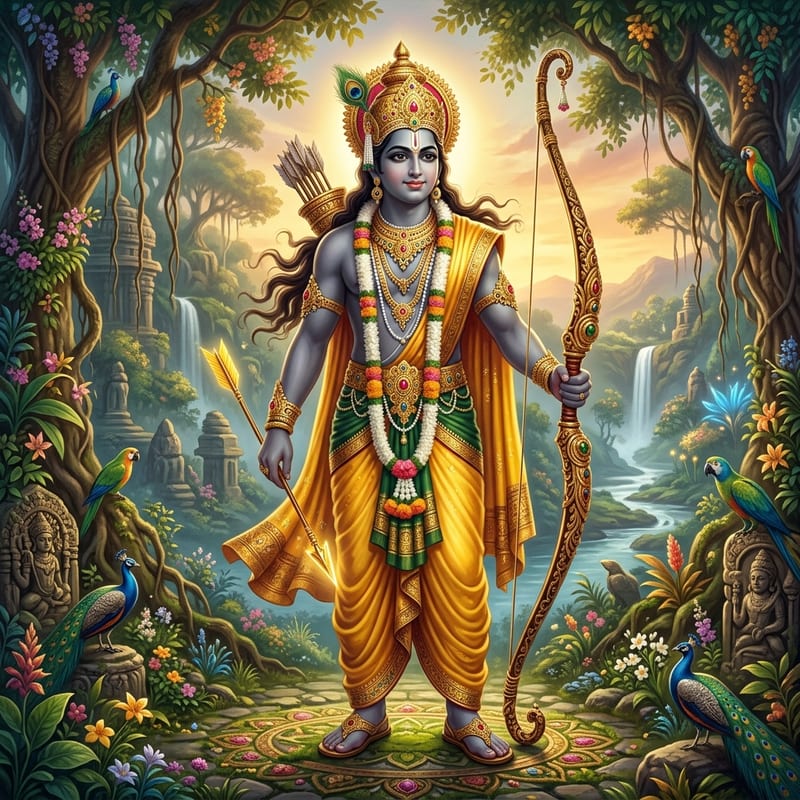
অগস্তিরুবাচ
আজানুবাহুমরবিন্দদলাযতাক্ষ-
-মাজন্মশুদ্ধরসহাসমুখপ্রসাদম্ ।
শ্যামং গৃহীত শরচাপমুদাররূপং
রামং সরামমভিরামমনুস্মরামি ॥ 1 ॥
-মাজন্মশুদ্ধরসহাসমুখপ্রসাদম্ ।
শ্যামং গৃহীত শরচাপমুদাররূপং
রামং সরামমভিরামমনুস্মরামি ॥ 1 ॥
- আ-জানু-বাহুম্ (ājānu-bāhum)his arms reaching down to his knees
- অরবিন্দ-দল-আযত-অক্ষম্ (aravinda-dalāyatākṣam)his eyes long as lotus petals
- আ-জন্ম-শুদ্ধ-রস-হাস-মুখ-প্রসাদম্ (ā-janma-śuddha-rasa-hāsa-mukha-prasādam)his face gracious with a smile pure in feeling since the day of his birth
- শ্যামম্ (śyāmam)dark of hue
- গৃহীত-শর-চাপম্ (gṛhīta-śara-cāpam)arrow and bow taken up
- উদার-রূপম্ (udāra-rūpam)of noble bearing
- রামম্ (rāmam)Rāma
- স-রামম্ (sa-rāmam)with Ramā, Sītā, beside him
- অভিরামম্ (abhirāmam)the ravishing one
- অনুস্মরামি (anusmarāmi)I call to mind
অস্য শ্রীরামকবচস্য অগস্ত্য ঋষিঃ অনুষ্টুপ্ ছন্দঃ সীতালক্ষ্মণোপেতঃ শ্রীরামচন্দ্রো দেবতা শ্রীরামচন্দ্রপ্রসাদসিদ্ধ্যর্থে জপে বিনিযোগঃ ।
- অস্য (asya)of this
- শ্রী-রাম-কবচস্য (śrī-rāma-kavacasya)Śrī Rāma armour
- অগস্ত্যঃ ঋষিঃ (agastyaḥ ṛṣiḥ)Agastya is the seer
- অনুষ্টুপ্ ছন্দঃ (anuṣṭup chandaḥ)Anuṣṭubh is the metre
- সীতা-লক্ষ্মণ-উপেতঃ (sītā-lakṣmaṇopetaḥ)attended by Sītā and Lakṣmaṇa
- শ্রী-রামচন্দ্রঃ দেবতা (śrī-rāmacandro devatā)Śrī Rāmacandra is the deity
- শ্রী-রামচন্দ্র-প্রসাদ-সিদ্ধ্যর্থে (śrī-rāmacandra-prasāda-siddhyarthe)for the winning of Śrī Rāmacandra’s grace
- জপে (jape)in the recitation
- বিনিযোগঃ (viniyogaḥ)is its appointed use
অথ ধ্যানং
নীলজীমূতসঙ্কাশং বিদ্যুদ্বর্ণাম্বরাবৃতম্ ।
কোমলাঙ্গং বিশালাক্ষং যুবানমতিসুন্দরম্ ॥ 1 ॥
নীলজীমূতসঙ্কাশং বিদ্যুদ্বর্ণাম্বরাবৃতম্ ।
কোমলাঙ্গং বিশালাক্ষং যুবানমতিসুন্দরম্ ॥ 1 ॥
- অথ ধ্যানম্ (atha dhyānam)now the meditation
- নীল-জীমূত-সঙ্কাশম্ (nīla-jīmūta-saṅkāśam)dark as a blue rain-cloud
- বিদ্যুত্-বর্ণ-অম্বর-আবৃতম্ (vidyud-varṇāmbarāvṛtam)wrapped in cloth of the colour of lightning
- কোমল-অঙ্গম্ (komalāṅgam)of tender limb
- বিশাল-অক্ষম্ (viśālākṣam)wide of eye
- যুবানম্ (yuvānam)young
- অতি-সুন্দরম্ (ati-sundaram)surpassingly beautiful
সীতাসৌমিত্রিসহিতং জটামুকুটধারিণম্ ।
সাসিতূণধনুর্বাণপাণিং দানবমর্দনম্ ॥ 2 ॥
সাসিতূণধনুর্বাণপাণিং দানবমর্দনম্ ॥ 2 ॥
- সীতা-সৌমিত্রি-সহিতম্ (sītā-saumitri-sahitam)together with Sītā and the son of Sumitrā
- জটা-মুকুট-ধারিণম্ (jaṭā-mukuṭa-dhāriṇam)wearing the crown of matted hair
- স-অসি-তূণ-ধনুঃ-বাণ-পাণিম্ (sāsi-tūṇa-dhanur-bāṇa-pāṇim)sword, quiver, bow and arrow in his hands
- দানব-মর্দনম্ (dānava-mardanam)the crusher of the dānavas
যদা চোরভযে রাজভযে শত্রুভযে তথা ।
ধ্যাত্বা রঘুপতিং ক্রুদ্ধং কালানলসমপ্রভম্ ॥ 3 ॥
ধ্যাত্বা রঘুপতিং ক্রুদ্ধং কালানলসমপ্রভম্ ॥ 3 ॥
- যদা (yadā)when
- চোর-ভযে (cora-bhaye)there is fear of thieves
- রাজ-ভযে (rāja-bhaye)fear of the king
- শত্রু-ভযে (śatru-bhaye)fear of enemies
- তথা (tathā)and the like
- ধ্যাত্বা (dhyātvā)having meditated
- রঘু-পতিম্ (raghu-patim)on the lord of the Raghus
- ক্রুদ্ধম্ (kruddham)in his wrath
- কাল-অনল-সম-প্রভম্ (kālānala-sama-prabham)blazing like the fire that ends an age
চীরকৃষ্ণাজিনধরং ভস্মোদ্ধূলিতবিগ্রহম্ ।
আকর্ণাকৃষ্টবিশিখকোদণ্ডভুজমণ্ডিতম্ ॥ 4 ॥
আকর্ণাকৃষ্টবিশিখকোদণ্ডভুজমণ্ডিতম্ ॥ 4 ॥
- চীর-কৃষ্ণ-অজিন-ধরম্ (cīra-kṛṣṇājina-dharam)clad in bark cloth and a black antelope skin
- ভস্ম-উদ্ধূলিত-বিগ্রহম্ (bhasmoddhūlita-vigraham)his body dusted over with ash
- আ-কর্ণ-আকৃষ্ট-বিশিখ-কোদণ্ড-ভুজ-মণ্ডিতম্ (ā-karṇākṛṣṭa-viśikha-kodaṇḍa-bhuja-maṇḍitam)his arm graced by the Kodaṇḍa bow, the shaft drawn back as far as his ear
রণে রিপূন্ রাবণাদীংস্তীক্ষ্ণমার্গণবৃষ্টিভিঃ ।
সংহরন্তং মহাবীরমুগ্রমৈন্দ্ররথস্থিতম্ ॥ 5 ॥
সংহরন্তং মহাবীরমুগ্রমৈন্দ্ররথস্থিতম্ ॥ 5 ॥
- রণে (raṇe)in the fight
- রিপূন্ (ripūn)the foes
- রাবণ-আদীন্ (rāvaṇādīn)Rāvaṇa and the rest
- তীক্ষ্ণ-মার্গণ-বৃষ্টিভিঃ (tīkṣṇa-mārgaṇa-vṛṣṭibhiḥ)with showers of keen arrows
- সংহরন্তম্ (saṃharantam)making an end of them
- মহা-বীরম্ (mahā-vīram)the great hero
- উগ্রম্ (ugram)terrible
- ঐন্দ্র-রথ-স্থিতম্ (aindra-ratha-sthitam)standing upon Indra’s own chariot
লক্ষ্মণাদ্যৈর্মহাবীরৈর্বৃতং হনুমদাদিভিঃ ।
সুগ্রীবাদ্যৈর্মাহাবীরৈঃ শৈলবৃক্ষকরোদ্যতৈঃ ॥ 6 ॥
সুগ্রীবাদ্যৈর্মাহাবীরৈঃ শৈলবৃক্ষকরোদ্যতৈঃ ॥ 6 ॥
- লক্ষ্মণ-আদ্যৈঃ (lakṣmaṇādyaiḥ)by Lakṣmaṇa and those with him
- মহা-বীরৈঃ (mahā-vīraiḥ)great heroes
- বৃতম্ (vṛtam)ringed about
- হনুমত্-আদিভিঃ (hanumad-ādibhiḥ)by Hanumān and the others
- সুগ্রীব-আদ্যৈঃ (sugrīvādyaiḥ)by Sugrīva and those with him
- মহা-বীরৈঃ (mahā-vīraiḥ)great warriors
- শৈল-বৃক্ষ-কর-উদ্যতৈঃ (śaila-vṛkṣa-karodyataiḥ)rocks and trees held high in their hands
বেগাত্করালহুঙ্কারৈর্ভুভুক্কারমহারবৈঃ ।
নদদ্ভিঃ পরিবাদদ্ভিঃ সমরে রাবণং প্রতি ॥ 7 ॥
নদদ্ভিঃ পরিবাদদ্ভিঃ সমরে রাবণং প্রতি ॥ 7 ॥
- বেগাত্ (vegāt)with a rush
- করাল-হুঙ্কারৈঃ (karāla-huṅkāraiḥ)with terrible war-cries
- ভুভুক্কার-মহা-রবৈঃ (bhubhukkāra-mahā-ravaiḥ)with the great bellowing roar of them
- নদদ্ভিঃ (nadadbhiḥ)as they shouted
- পরিবাদদ্ভিঃ (parivādadbhiḥ)and shouted back at one another
- সমরে (samare)in the battle
- রাবণম্ প্রতি (rāvaṇaṃ prati)against Rāvaṇa
শ্রীরাম শত্রুসঙ্ঘান্মে হন মর্দয খাদয ।
ভূতপ্রেতপিশাচাদীন্ শ্রীরামাশু বিনাশয ॥ 8 ॥
ভূতপ্রেতপিশাচাদীন্ শ্রীরামাশু বিনাশয ॥ 8 ॥
- শ্রী-রাম (śrī-rāma)O Śrī Rāma
- শত্রু-সঙ্ঘান্ (śatru-saṅghān)the hosts of enemies
- মে (me)mine
- হন (hana)strike them
- মর্দয (mardaya)crush them
- খাদয (khādaya)devour them
- ভূত-প্রেত-পিশাচ-আদীন্ (bhūta-preta-piśācādīn)the spirits, the departed, the flesh-eaters and their kind
- শ্রী-রাম (śrī-rāma)O Śrī Rāma
- আশু (āśu)at once
- বিনাশয (vināśaya)destroy them
এবং ধ্যাত্বা জপেদ্রামকবচং সিদ্ধিদাযকম্ ।
সুতীক্ষ্ণ বজ্রকবচং শৃণু বক্ষ্যাম্যনুত্তমম্ ॥ 9 ॥
সুতীক্ষ্ণ বজ্রকবচং শৃণু বক্ষ্যাম্যনুত্তমম্ ॥ 9 ॥
- এবম্ (evam)thus
- ধ্যাত্বা (dhyātvā)having meditated
- জপেত্ (japet)let one recite
- রাম-কবচম্ (rāma-kavacam)the Rāma armour
- সিদ্ধি-দাযকম্ (siddhi-dāyakam)which grants accomplishment
- সুতীক্ষ্ণ (sutīkṣṇa)O Sutīkṣṇa
- বজ্র-কবচম্ (vajra-kavacam)the thunderbolt armour
- শৃণু (śṛṇu)listen
- বক্ষ্যামি (vakṣyāmi)I shall speak it
- অনুত্তমম্ (anuttamam)than which there is none higher
অথ কবচম্
শ্রীরামঃ পাতু মে মূর্ধ্নি পূর্বে চ রঘুবংশজঃ ।
দক্ষিণে মে রঘুবরঃ পশ্চিমে পাতু পাবনঃ ॥ 10 ॥
শ্রীরামঃ পাতু মে মূর্ধ্নি পূর্বে চ রঘুবংশজঃ ।
দক্ষিণে মে রঘুবরঃ পশ্চিমে পাতু পাবনঃ ॥ 10 ॥
- অথ কবচম্ (atha kavacam)now the armour
- শ্রী-রামঃ (śrī-rāmaḥ)Śrī Rāma
- পাতু (pātu)may he guard
- মে (me)my
- মূর্ধ্নি (mūrdhni)at the crown of the head
- পূর্বে (pūrve)in the east
- চ (ca)and
- রঘু-বংশ-জঃ (raghu-vaṃśa-jaḥ)he born in the line of Raghu
- দক্ষিণে (dakṣiṇe)in the south
- মে (me)me
- রঘু-বরঃ (raghu-varaḥ)the best of the Raghus
- পশ্চিমে (paścime)in the west
- পাতু (pātu)may he guard
- পাবনঃ (pāvanaḥ)the purifier
উত্তরে মে রঘুপতির্ভালং দশরথাত্মজঃ ।
ভ্রুবোর্দূর্বাদলশ্যামস্তযোর্মধ্যে জনার্দনঃ ॥ 11 ॥
ভ্রুবোর্দূর্বাদলশ্যামস্তযোর্মধ্যে জনার্দনঃ ॥ 11 ॥
- উত্তরে (uttare)in the north
- মে (me)me
- রঘু-পতিঃ (raghu-patiḥ)the lord of the Raghus
- ভালম্ (bhālam)the brow
- দশরথ-আত্মজঃ (daśarathātmajaḥ)the son of Daśaratha
- ভ্রুবোঃ (bhruvoḥ)at the two eyebrows
- দূর্বা-দল-শ্যামঃ (dūrvā-dala-śyāmaḥ)he dark as a blade of dūrvā grass
- তযোঃ মধ্যে (tayor madhye)in the space between them
- জনার্দনঃ (janārdanaḥ)Janārdana
শ্রোত্রং মে পাতু রাজেন্দ্রো দৃশৌ রাজীবলোচনঃ ।
ঘ্রাণং মে পাতু রাজর্ষির্গণ্ডৌ মে জানকীপতিঃ ॥ 12 ॥
ঘ্রাণং মে পাতু রাজর্ষির্গণ্ডৌ মে জানকীপতিঃ ॥ 12 ॥
- শ্রোত্রম্ (śrotram)the hearing
- মে (me)my
- পাতু (pātu)may he guard
- রাজ-ইন্দ্রঃ (rājendraḥ)the lord among kings
- দৃশৌ (dṛśau)the two eyes
- রাজীব-লোচনঃ (rājīva-locanaḥ)he whose eyes are lotuses
- ঘ্রাণম্ (ghrāṇam)the nose
- মে (me)my
- পাতু (pātu)may he guard
- রাজ-ঋষিঃ (rājarṣiḥ)the royal seer
- গণ্ডৌ (gaṇḍau)the two cheeks
- মে (me)my
- জানকী-পতিঃ (jānakī-patiḥ)the husband of Jānakī
কর্ণমূলে খরধ্বংসী ভালং মে রঘুবল্লভঃ ।
জিহ্বাং মে বাক্পতিঃ পাতু দন্তপঙ্ক্তী রঘূত্তমঃ ॥ 13 ॥
জিহ্বাং মে বাক্পতিঃ পাতু দন্তপঙ্ক্তী রঘূত্তমঃ ॥ 13 ॥
- কর্ণ-মূলে (karṇa-mūle)at the root of the ears
- খর-ধ্বংসী (khara-dhvaṃsī)the destroyer of Khara
- ভালম্ (bhālam)the forehead
- মে (me)my
- রঘু-বল্লভঃ (raghu-vallabhaḥ)the darling of the Raghus
- জিহ্বাম্ (jihvām)the tongue
- মে (me)my
- বাক্-পতিঃ (vāk-patiḥ)the lord of speech
- পাতু (pātu)may he guard
- দন্ত-পঙ্ক্তী (danta-paṅktī)the two rows of teeth
- রঘু-উত্তমঃ (raghūttamaḥ)the best of the Raghus
ওষ্ঠৌ শ্রীরামচন্দ্রো মে মুখং পাতু পরাত্পরঃ ।
কণ্ঠং পাতু জগদ্বন্দ্যঃ স্কন্ধৌ মে রাবণান্তকঃ ॥ 14 ॥
কণ্ঠং পাতু জগদ্বন্দ্যঃ স্কন্ধৌ মে রাবণান্তকঃ ॥ 14 ॥
- ওষ্ঠৌ (oṣṭhau)the two lips
- শ্রী-রামচন্দ্রঃ (śrī-rāmacandraḥ)Śrī Rāmacandra
- মে (me)my
- মুখম্ (mukham)the mouth
- পাতু (pātu)may he guard
- পরাত্-পরঃ (parāt-paraḥ)higher than the highest
- কণ্ঠম্ (kaṇṭham)the throat
- পাতু (pātu)may he guard
- জগত্-বন্দ্যঃ (jagad-vandyaḥ)he to whom the world bows
- স্কন্ধৌ (skandhau)the two shoulders
- মে (me)my
- রাবণ-অন্তকঃ (rāvaṇāntakaḥ)he who made an end of Rāvaṇa
ধনুর্বাণধরঃ পাতু ভুজৌ মে বালিমর্দনঃ ।
সর্বাণ্যঙ্গুলিপর্বাণি হস্তৌ মে রাক্ষসান্তকঃ ॥ 15 ॥
সর্বাণ্যঙ্গুলিপর্বাণি হস্তৌ মে রাক্ষসান্তকঃ ॥ 15 ॥
- ধনুঃ-বাণ-ধরঃ (dhanur-bāṇa-dharaḥ)he who bears bow and arrow
- পাতু (pātu)may he guard
- ভুজৌ (bhujau)the two arms
- মে (me)my
- বালি-মর্দনঃ (vāli-mardanaḥ)the crusher of Vālin
- সর্বাণি অঙ্গুলি-পর্বাণি (sarvāṇy aṅguli-parvāṇi)every joint of every finger
- হস্তৌ (hastau)the two hands
- মে (me)my
- রাক্ষস-অন্তকঃ (rākṣasāntakaḥ)he who made an end of the rākṣasas
বক্ষো মে পাতু কাকুত্স্থঃ পাতু মে হৃদযং হরিঃ ।
স্তনৌ সীতাপতিঃ পাতু পার্শ্বং মে জগদীশ্বরঃ ॥ 16 ॥
স্তনৌ সীতাপতিঃ পাতু পার্শ্বং মে জগদীশ্বরঃ ॥ 16 ॥
- বক্ষঃ (vakṣaḥ)the chest
- মে (me)my
- পাতু (pātu)may he guard
- কাকুত্স্থঃ (kākutsthaḥ)the descendant of Kakutstha
- পাতু (pātu)may he guard
- মে (me)my
- হৃদযম্ (hṛdayam)heart
- হরিঃ (hariḥ)Hari
- স্তনৌ (stanau)the breast
- সীতা-পতিঃ (sītā-patiḥ)the husband of Sītā
- পাতু (pātu)may he guard
- পার্শ্বম্ (pārśvam)the sides
- মে (me)my
- জগত্-ঈশ্বরঃ (jagad-īśvaraḥ)the lord of the world
মধ্যং মে পাতু লক্ষ্মীশো নাভিং মে রঘুনাযকঃ ।
কৌসল্যেযঃ কটী পাতু পৃষ্ঠং দুর্গতিনাশনঃ ॥ 17 ॥
কৌসল্যেযঃ কটী পাতু পৃষ্ঠং দুর্গতিনাশনঃ ॥ 17 ॥
- মধ্যম্ (madhyam)the middle of the body
- মে (me)my
- পাতু (pātu)may he guard
- লক্ষ্মী-ঈশঃ (lakṣmīśaḥ)the lord of Lakṣmī
- নাভিম্ (nābhim)the navel
- মে (me)my
- রঘু-নাযকঃ (raghu-nāyakaḥ)the leader of the Raghus
- কৌসল্যেযঃ (kausalyeyaḥ)the son of Kausalyā
- কটী (kaṭī)the hips
- পাতু (pātu)may he guard
- পৃষ্ঠম্ (pṛṣṭham)the back
- দুর্গতি-নাশনঃ (durgati-nāśanaḥ)he who undoes an evil destiny
গুহ্যং পাতু হৃষীকেশঃ সক্থিনী সত্যবিক্রমঃ ।
ঊরূ শার্ঙ্গধরঃ পাতু জানুনী হনুমত্প্রিযঃ ॥ 18 ॥
ঊরূ শার্ঙ্গধরঃ পাতু জানুনী হনুমত্প্রিযঃ ॥ 18 ॥
- গুহ্যম্ (guhyam)the private parts
- পাতু (pātu)may he guard
- হৃষীকেশঃ (hṛṣīkeśaḥ)Hṛṣīkeśa, lord of the senses
- সক্থিনী (sakthinī)the two hip-joints
- সত্য-বিক্রমঃ (satya-vikramaḥ)he whose valour is truth itself
- ঊরূ (ūrū)the two thighs
- শার্ঙ্গ-ধরঃ (śārṅga-dharaḥ)the bearer of the Śārṅga bow
- পাতু (pātu)may he guard
- জানুনী (jānunī)the two knees
- হনুমত্-প্রিযঃ (hanumat-priyaḥ)he who is dear to Hanumān
জঙ্ঘে পাতু জগদ্ব্যাপী পাদৌ মে তাটকান্তকঃ ।
সর্বাঙ্গং পাতু মে বিষ্ণুঃ সর্বসন্ধীননামযঃ ॥ 19 ॥
সর্বাঙ্গং পাতু মে বিষ্ণুঃ সর্বসন্ধীননামযঃ ॥ 19 ॥
- জঙ্ঘে (jaṅghe)the two shanks
- পাতু (pātu)may he guard
- জগত্-ব্যাপী (jagad-vyāpī)he who pervades the world
- পাদৌ (pādau)the two feet
- মে (me)my
- তাটকা-অন্তকঃ (tāṭakāntakaḥ)he who made an end of Tāṭakā
- সর্ব-অঙ্গম্ (sarvāṅgam)every limb
- পাতু (pātu)may he guard
- মে (me)my
- বিষ্ণুঃ (viṣṇuḥ)Viṣṇu
- সর্ব-সন্ধীন্ (sarva-sandhīn)all the joints
- অনামযঃ (anāmayaḥ)he in whom is no ailing
জ্ঞানেন্দ্রিযাণি প্রাণাদীন্ পাতু মে মধুসূদনঃ ।
পাতু শ্রীরামভদ্রো মে শব্দাদীন্বিষযানপি ॥ 20 ॥
পাতু শ্রীরামভদ্রো মে শব্দাদীন্বিষযানপি ॥ 20 ॥
- জ্ঞান-ইন্দ্রিযাণি (jñānendriyāṇi)the organs of knowing
- প্রাণ-আদীন্ (prāṇādīn)the vital airs and the rest
- পাতু (pātu)may he guard
- মে (me)my
- মধু-সূদনঃ (madhu-sūdanaḥ)the slayer of Madhu
- পাতু (pātu)may he guard
- শ্রী-রামভদ্রঃ (śrī-rāmabhadraḥ)Śrī Rāmabhadra
- মে (me)my
- শব্দ-আদীন্ (śabdādīn)sound and the rest
- বিষযান্ (viṣayān)the objects of the senses
- অপি (api)these too
দ্বিপদাদীনি ভূতানি মত্সম্বন্ধীনি যানি চ ।
জামদগ্ন্যমহাদর্পদলনঃ পাতু তানি মে ॥ 21 ॥
জামদগ্ন্যমহাদর্পদলনঃ পাতু তানি মে ॥ 21 ॥
- দ্বিপদ-আদীনি (dvipadādīni)the two-footed and the rest
- ভূতানি (bhūtāni)the beings
- মত্-সম্বন্ধীনি (mat-sambandhīni)bound to me
- যানি চ (yāni ca)whichever they be
- জামদগ্ন্য-মহা-দর্প-দলনঃ (jāmadagnya-mahā-darpa-dalanaḥ)he who broke the great pride of Jamadagni’s son
- পাতু (pātu)may he guard
- তানি (tāni)them
- মে (me)for me
সৌমিত্রিপূর্বজঃ পাতু বাগাদীনীন্দ্রিযাণি চ ।
রোমাঙ্কুরাণ্যশেষাণি পাতু সুগ্রীবরাজ্যদঃ ॥ 22 ॥
রোমাঙ্কুরাণ্যশেষাণি পাতু সুগ্রীবরাজ্যদঃ ॥ 22 ॥
- সৌমিত্রি-পূর্বজঃ (saumitri-pūrvajaḥ)the elder brother of Sumitrā’s son
- পাতু (pātu)may he guard
- বাক্-আদীনি (vāg-ādīni)beginning with speech
- ইন্দ্রিযাণি (indriyāṇi)the organs of action
- চ (ca)and
- রোম-অঙ্কুরাণি (romāṅkurāṇi)the shoots of hair
- অশেষাণি (aśeṣāṇi)every one of them
- পাতু (pātu)may he guard
- সুগ্রীব-রাজ্য-দঃ (sugrīva-rājya-daḥ)he who gave Sugrīva his kingdom
বাঙ্মনোবুদ্ধ্যহঙ্কারৈর্জ্ঞানাজ্ঞানকৃতানি চ ।
জন্মান্তরকৃতানীহ পাপানি বিবিধানি চ ॥ 23 ॥
জন্মান্তরকৃতানীহ পাপানি বিবিধানি চ ॥ 23 ॥
- বাক্-মনঃ-বুদ্ধি-অহঙ্কারৈঃ (vāṅ-mano-buddhy-ahaṅkāraiḥ)by speech, by mind, by intellect and by the sense of “I”
- জ্ঞান-অজ্ঞান-কৃতানি (jñānājñāna-kṛtāni)done knowing and done unknowing
- চ (ca)and
- জন্ম-অন্তর-কৃতানি (janmāntara-kṛtāni)done in other births
- ইহ (iha)here
- পাপানি (pāpāni)the sins
- বিবিধানি (vividhāni)of every kind
- চ (ca)as well
তানি সর্বাণি দগ্ধ্বাশু হরকোদণ্ডখণ্ডনঃ ।
পাতু মাং সর্বতো রামঃ শার্ঙ্গবাণধরঃ সদা ॥ 24 ॥
পাতু মাং সর্বতো রামঃ শার্ঙ্গবাণধরঃ সদা ॥ 24 ॥
- তানি সর্বাণি (tāni sarvāṇi)all of them
- দগ্ধ্বা (dagdhvā)having burnt them away
- আশু (āśu)at once
- হর-কোদণ্ড-খণ্ডনঃ (hara-kodaṇḍa-khaṇḍanaḥ)he who snapped the bow of Hara
- পাতু (pātu)may he guard
- মাম্ (mām)me
- সর্বতঃ (sarvataḥ)on every side
- রামঃ (rāmaḥ)Rāma
- শার্ঙ্গ-বাণ-ধরঃ (śārṅga-bāṇa-dharaḥ)bearing the Śārṅga bow and its arrows
- সদা (sadā)always
ইতি শ্রীরামচন্দ্রস্য কবচং বজ্রসম্মিতম্ ।
গুহ্যাদ্গুহ্যতমং দিব্যং সুতীক্ষ্ণ মুনিসত্তম ॥ 25 ॥
গুহ্যাদ্গুহ্যতমং দিব্যং সুতীক্ষ্ণ মুনিসত্তম ॥ 25 ॥
- ইতি (iti)such
- শ্রী-রামচন্দ্রস্য (śrī-rāmacandrasya)of Śrī Rāmacandra
- কবচম্ (kavacam)is the armour
- বজ্র-সম্মিতম্ (vajra-sammitam)a match for the thunderbolt
- গুহ্যাত্ গুহ্যতমম্ (guhyād guhyatamam)the most secret of all secrets
- দিব্যম্ (divyam)divine
- সুতীক্ষ্ণ (sutīkṣṇa)O Sutīkṣṇa
- মুনি-সত্তম (muni-sattama)best of sages
যঃ পঠেচ্ছৃণুযাদ্বাপি শ্রাবযেদ্বা সমাহিতঃ ।
স যাতি পরমং স্থানং রামচন্দ্রপ্রসাদতঃ ॥ 26 ॥
স যাতি পরমং স্থানং রামচন্দ্রপ্রসাদতঃ ॥ 26 ॥
- যঃ (yaḥ)whoever
- পঠেত্ (paṭhet)recites it
- শৃণুযাত্ (śṛṇuyāt)or hears it
- বা অপি (vāpi)or even
- শ্রাবযেত্ (śrāvayet)has it heard by others
- বা (vā)or
- সমাহিতঃ (samāhitaḥ)with a gathered mind
- সঃ (saḥ)he
- যাতি (yāti)goes
- পরমম্ স্থানম্ (paramaṃ sthānam)to the highest station
- রামচন্দ্র-প্রসাদতঃ (rāmacandra-prasādataḥ)by the grace of Rāmacandra
মহাপাতকযুক্তো বা গোঘ্নো বা ভ্রূণহা তথা ।
শ্রীরামচন্দ্রকবচপঠনাচ্ছুদ্ধিমাপ্নুযাত্ ॥ 27 ॥
শ্রীরামচন্দ্রকবচপঠনাচ্ছুদ্ধিমাপ্নুযাত্ ॥ 27 ॥
- মহা-পাতক-যুক্তঃ (mahā-pātaka-yuktaḥ)one burdened with a mortal sin
- বা (vā)or
- গো-ঘ্নঃ (go-ghnaḥ)the killer of a cow
- বা (vā)or
- ভ্রূণ-হা (bhrūṇa-hā)the destroyer of an unborn child
- তথা (tathā)likewise
- শ্রী-রামচন্দ্র-কবচ-পঠনাত্ (śrī-rāmacandra-kavaca-paṭhanāt)by the reciting of Śrī Rāmacandra’s armour
- শুদ্ধিম্ (śuddhim)cleanness
- আপ্নুযাত্ (āpnuyāt)would attain
ব্রহ্মহত্যাদিভিঃ পাপৈর্মুচ্যতে নাত্র সংশযঃ ।
ভো সুতীক্ষ্ণ যথা পৃষ্টং ত্বযা মম পুরাঃ শুভম্ ।
তথা শ্রীরামকবচং মযা তে বিনিবেদিতম্ ॥ 28 ॥
ভো সুতীক্ষ্ণ যথা পৃষ্টং ত্বযা মম পুরাঃ শুভম্ ।
তথা শ্রীরামকবচং মযা তে বিনিবেদিতম্ ॥ 28 ॥
- ব্রহ্ম-হত্যা-আদিভিঃ (brahma-hatyādibhiḥ)from the killing of a brahmin and the like
- পাপৈঃ (pāpaiḥ)from those sins
- মুচ্যতে (mucyate)one is set free
- ন অত্র সংশযঃ (nātra saṃśayaḥ)there is no doubt in this
- ভোঃ সুতীক্ষ্ণ (bhoḥ sutīkṣṇa)O Sutīkṣṇa
- যথা (yathā)just as
- পৃষ্টম্ (pṛṣṭam)it was asked
- ত্বযা (tvayā)by you
- মম (mama)of me
- পুরা (purā)before this (printed पुराः)
- শুভম্ (śubham)this blessed thing
- তথা (tathā)even so
- শ্রী-রাম-কবচম্ (śrī-rāma-kavacam)the Śrī Rāma armour
- মযা (mayā)by me
- তে (te)to you
- বিনিবেদিতম্ (viniveditam)has been set forth
ইতি শ্রীমদানন্দরামাযণে মনোহরকাণ্ডে সুতীক্ষ্ণাগস্ত্যসংবাদে শ্রীরামকবচম্ ॥