
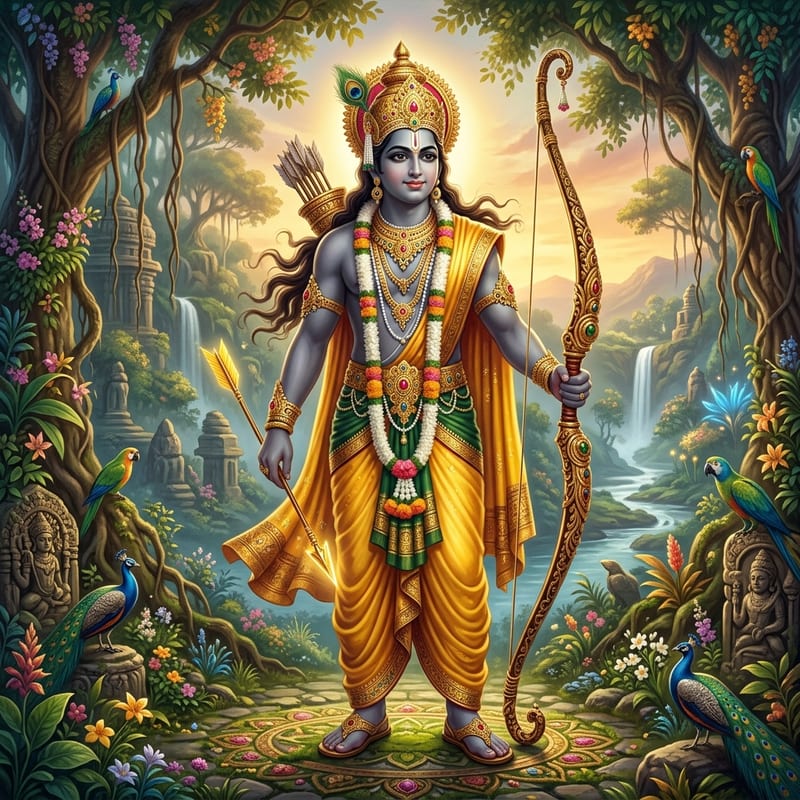
അഗസ്തിരുവാച
ആജാനുബാഹുമരവിന്ദദലായതാക്ഷ-
-മാജന്മശുദ്ധരസഹാസമുഖപ്രസാദമ് ।
ശ്യാമം ഗൃഹീത ശരചാപമുദാരരൂപം
രാമം സരാമമഭിരാമമനുസ്മരാമി ॥ 1 ॥
-മാജന്മശുദ്ധരസഹാസമുഖപ്രസാദമ് ।
ശ്യാമം ഗൃഹീത ശരചാപമുദാരരൂപം
രാമം സരാമമഭിരാമമനുസ്മരാമി ॥ 1 ॥
- ആ-ജാനു-ബാഹുമ് (ājānu-bāhum)his arms reaching down to his knees
- അരവിന്ദ-ദല-ആയത-അക്ഷമ് (aravinda-dalāyatākṣam)his eyes long as lotus petals
- ആ-ജന്മ-ശുദ്ധ-രസ-ഹാസ-മുഖ-പ്രസാദമ് (ā-janma-śuddha-rasa-hāsa-mukha-prasādam)his face gracious with a smile pure in feeling since the day of his birth
- ശ്യാമമ് (śyāmam)dark of hue
- ഗൃഹീത-ശര-ചാപമ് (gṛhīta-śara-cāpam)arrow and bow taken up
- ഉദാര-രൂപമ് (udāra-rūpam)of noble bearing
- രാമമ് (rāmam)Rāma
- സ-രാമമ് (sa-rāmam)with Ramā, Sītā, beside him
- അഭിരാമമ് (abhirāmam)the ravishing one
- അനുസ്മരാമി (anusmarāmi)I call to mind
അസ്യ ശ്രീരാമകവചസ്യ അഗസ്ത്യ ഋഷിഃ അനുഷ്ടുപ് ഛന്ദഃ സീതാലക്ഷ്മണോപേതഃ ശ്രീരാമചന്ദ്രോ ദേവതാ ശ്രീരാമചന്ദ്രപ്രസാദസിദ്ധ്യര്ഥേ ജപേ വിനിയോഗഃ ।
- അസ്യ (asya)of this
- ശ്രീ-രാമ-കവചസ്യ (śrī-rāma-kavacasya)Śrī Rāma armour
- അഗസ്ത്യഃ ഋഷിഃ (agastyaḥ ṛṣiḥ)Agastya is the seer
- അനുഷ്ടുപ് ഛന്ദഃ (anuṣṭup chandaḥ)Anuṣṭubh is the metre
- സീതാ-ലക്ഷ്മണ-ഉപേതഃ (sītā-lakṣmaṇopetaḥ)attended by Sītā and Lakṣmaṇa
- ശ്രീ-രാമചന്ദ്രഃ ദേവതാ (śrī-rāmacandro devatā)Śrī Rāmacandra is the deity
- ശ്രീ-രാമചന്ദ്ര-പ്രസാദ-സിദ്ധ്യര്ഥേ (śrī-rāmacandra-prasāda-siddhyarthe)for the winning of Śrī Rāmacandra’s grace
- ജപേ (jape)in the recitation
- വിനിയോഗഃ (viniyogaḥ)is its appointed use
അഥ ധ്യാനം
നീലജീമൂതസങ്കാശം വിദ്യുദ്വര്ണാമ്ബരാവൃതമ് ।
കോമലാങ്ഗം വിശാലാക്ഷം യുവാനമതിസുന്ദരമ് ॥ 1 ॥
നീലജീമൂതസങ്കാശം വിദ്യുദ്വര്ണാമ്ബരാവൃതമ് ।
കോമലാങ്ഗം വിശാലാക്ഷം യുവാനമതിസുന്ദരമ് ॥ 1 ॥
- അഥ ധ്യാനമ് (atha dhyānam)now the meditation
- നീല-ജീമൂത-സങ്കാശമ് (nīla-jīmūta-saṅkāśam)dark as a blue rain-cloud
- വിദ്യുത്-വര്ണ-അമ്ബര-ആവൃതമ് (vidyud-varṇāmbarāvṛtam)wrapped in cloth of the colour of lightning
- കോമല-അങ്ഗമ് (komalāṅgam)of tender limb
- വിശാല-അക്ഷമ് (viśālākṣam)wide of eye
- യുവാനമ് (yuvānam)young
- അതി-സുന്ദരമ് (ati-sundaram)surpassingly beautiful
സീതാസൌമിത്രിസഹിതം ജടാമുകുടധാരിണമ് ।
സാസിതൂണധനുര്ബാണപാണിം ദാനവമര്ദനമ് ॥ 2 ॥
സാസിതൂണധനുര്ബാണപാണിം ദാനവമര്ദനമ് ॥ 2 ॥
- സീതാ-സൌമിത്രി-സഹിതമ് (sītā-saumitri-sahitam)together with Sītā and the son of Sumitrā
- ജടാ-മുകുട-ധാരിണമ് (jaṭā-mukuṭa-dhāriṇam)wearing the crown of matted hair
- സ-അസി-തൂണ-ധനുഃ-ബാണ-പാണിമ് (sāsi-tūṇa-dhanur-bāṇa-pāṇim)sword, quiver, bow and arrow in his hands
- ദാനവ-മര്ദനമ് (dānava-mardanam)the crusher of the dānavas
യദാ ചോരഭയേ രാജഭയേ ശത്രുഭയേ തഥാ ।
ധ്യാത്വാ രഘുപതിം ക്രുദ്ധം കാലാനലസമപ്രഭമ് ॥ 3 ॥
ധ്യാത്വാ രഘുപതിം ക്രുദ്ധം കാലാനലസമപ്രഭമ് ॥ 3 ॥
- യദാ (yadā)when
- ചോര-ഭയേ (cora-bhaye)there is fear of thieves
- രാജ-ഭയേ (rāja-bhaye)fear of the king
- ശത്രു-ഭയേ (śatru-bhaye)fear of enemies
- തഥാ (tathā)and the like
- ധ്യാത്വാ (dhyātvā)having meditated
- രഘു-പതിമ് (raghu-patim)on the lord of the Raghus
- ക്രുദ്ധമ് (kruddham)in his wrath
- കാല-അനല-സമ-പ്രഭമ് (kālānala-sama-prabham)blazing like the fire that ends an age
ചീരകൃഷ്ണാജിനധരം ഭസ്മോദ്ധൂലിതവിഗ്രഹമ് ।
ആകര്ണാകൃഷ്ടവിശിഖകോദണ്ഡഭുജമണ്ഡിതമ് ॥ 4 ॥
ആകര്ണാകൃഷ്ടവിശിഖകോദണ്ഡഭുജമണ്ഡിതമ് ॥ 4 ॥
- ചീര-കൃഷ്ണ-അജിന-ധരമ് (cīra-kṛṣṇājina-dharam)clad in bark cloth and a black antelope skin
- ഭസ്മ-ഉദ്ധൂലിത-വിഗ്രഹമ് (bhasmoddhūlita-vigraham)his body dusted over with ash
- ആ-കര്ണ-ആകൃഷ്ട-വിശിഖ-കോദണ്ഡ-ഭുജ-മണ്ഡിതമ് (ā-karṇākṛṣṭa-viśikha-kodaṇḍa-bhuja-maṇḍitam)his arm graced by the Kodaṇḍa bow, the shaft drawn back as far as his ear
രണേ രിപൂന് രാവണാദീംസ്തീക്ഷ്ണമാര്ഗണവൃഷ്ടിഭിഃ ।
സംഹരന്തം മഹാവീരമുഗ്രമൈന്ദ്രരഥസ്ഥിതമ് ॥ 5 ॥
സംഹരന്തം മഹാവീരമുഗ്രമൈന്ദ്രരഥസ്ഥിതമ് ॥ 5 ॥
- രണേ (raṇe)in the fight
- രിപൂന് (ripūn)the foes
- രാവണ-ആദീന് (rāvaṇādīn)Rāvaṇa and the rest
- തീക്ഷ്ണ-മാര്ഗണ-വൃഷ്ടിഭിഃ (tīkṣṇa-mārgaṇa-vṛṣṭibhiḥ)with showers of keen arrows
- സംഹരന്തമ് (saṃharantam)making an end of them
- മഹാ-വീരമ് (mahā-vīram)the great hero
- ഉഗ്രമ് (ugram)terrible
- ഐന്ദ്ര-രഥ-സ്ഥിതമ് (aindra-ratha-sthitam)standing upon Indra’s own chariot
ലക്ഷ്മണാദ്യൈര്മഹാവീരൈര്വൃതം ഹനുമദാദിഭിഃ ।
സുഗ്രീവാദ്യൈര്മാഹാവീരൈഃ ശൈലവൃക്ഷകരോദ്യതൈഃ ॥ 6 ॥
സുഗ്രീവാദ്യൈര്മാഹാവീരൈഃ ശൈലവൃക്ഷകരോദ്യതൈഃ ॥ 6 ॥
- ലക്ഷ്മണ-ആദ്യൈഃ (lakṣmaṇādyaiḥ)by Lakṣmaṇa and those with him
- മഹാ-വീരൈഃ (mahā-vīraiḥ)great heroes
- വൃതമ് (vṛtam)ringed about
- ഹനുമത്-ആദിഭിഃ (hanumad-ādibhiḥ)by Hanumān and the others
- സുഗ്രീവ-ആദ്യൈഃ (sugrīvādyaiḥ)by Sugrīva and those with him
- മഹാ-വീരൈഃ (mahā-vīraiḥ)great warriors
- ശൈല-വൃക്ഷ-കര-ഉദ്യതൈഃ (śaila-vṛkṣa-karodyataiḥ)rocks and trees held high in their hands
വേഗാത്കരാലഹുങ്കാരൈര്ഭുഭുക്കാരമഹാരവൈഃ ।
നദദ്ഭിഃ പരിവാദദ്ഭിഃ സമരേ രാവണം പ്രതി ॥ 7 ॥
നദദ്ഭിഃ പരിവാദദ്ഭിഃ സമരേ രാവണം പ്രതി ॥ 7 ॥
- വേഗാത് (vegāt)with a rush
- കരാല-ഹുങ്കാരൈഃ (karāla-huṅkāraiḥ)with terrible war-cries
- ഭുഭുക്കാര-മഹാ-രവൈഃ (bhubhukkāra-mahā-ravaiḥ)with the great bellowing roar of them
- നദദ്ഭിഃ (nadadbhiḥ)as they shouted
- പരിവാദദ്ഭിഃ (parivādadbhiḥ)and shouted back at one another
- സമരേ (samare)in the battle
- രാവണമ് പ്രതി (rāvaṇaṃ prati)against Rāvaṇa
ശ്രീരാമ ശത്രുസങ്ഘാന്മേ ഹന മര്ദയ ഖാദയ ।
ഭൂതപ്രേതപിശാചാദീന് ശ്രീരാമാശു വിനാശയ ॥ 8 ॥
ഭൂതപ്രേതപിശാചാദീന് ശ്രീരാമാശു വിനാശയ ॥ 8 ॥
- ശ്രീ-രാമ (śrī-rāma)O Śrī Rāma
- ശത്രു-സങ്ഘാന് (śatru-saṅghān)the hosts of enemies
- മേ (me)mine
- ഹന (hana)strike them
- മര്ദയ (mardaya)crush them
- ഖാദയ (khādaya)devour them
- ഭൂത-പ്രേത-പിശാച-ആദീന് (bhūta-preta-piśācādīn)the spirits, the departed, the flesh-eaters and their kind
- ശ്രീ-രാമ (śrī-rāma)O Śrī Rāma
- ആശു (āśu)at once
- വിനാശയ (vināśaya)destroy them
ഏവം ധ്യാത്വാ ജപേദ്രാമകവചം സിദ്ധിദായകമ് ।
സുതീക്ഷ്ണ വജ്രകവചം ശൃണു വക്ഷ്യാമ്യനുത്തമമ് ॥ 9 ॥
സുതീക്ഷ്ണ വജ്രകവചം ശൃണു വക്ഷ്യാമ്യനുത്തമമ് ॥ 9 ॥
- ഏവമ് (evam)thus
- ധ്യാത്വാ (dhyātvā)having meditated
- ജപേത് (japet)let one recite
- രാമ-കവചമ് (rāma-kavacam)the Rāma armour
- സിദ്ധി-ദായകമ് (siddhi-dāyakam)which grants accomplishment
- സുതീക്ഷ്ണ (sutīkṣṇa)O Sutīkṣṇa
- വജ്ര-കവചമ് (vajra-kavacam)the thunderbolt armour
- ശൃണു (śṛṇu)listen
- വക്ഷ്യാമി (vakṣyāmi)I shall speak it
- അനുത്തമമ് (anuttamam)than which there is none higher
അഥ കവചമ്
ശ്രീരാമഃ പാതു മേ മൂര്ധ്നി പൂര്വേ ച രഘുവംശജഃ ।
ദക്ഷിണേ മേ രഘുവരഃ പശ്ചിമേ പാതു പാവനഃ ॥ 10 ॥
ശ്രീരാമഃ പാതു മേ മൂര്ധ്നി പൂര്വേ ച രഘുവംശജഃ ।
ദക്ഷിണേ മേ രഘുവരഃ പശ്ചിമേ പാതു പാവനഃ ॥ 10 ॥
- അഥ കവചമ് (atha kavacam)now the armour
- ശ്രീ-രാമഃ (śrī-rāmaḥ)Śrī Rāma
- പാതു (pātu)may he guard
- മേ (me)my
- മൂര്ധ്നി (mūrdhni)at the crown of the head
- പൂര്വേ (pūrve)in the east
- ച (ca)and
- രഘു-വംശ-ജഃ (raghu-vaṃśa-jaḥ)he born in the line of Raghu
- ദക്ഷിണേ (dakṣiṇe)in the south
- മേ (me)me
- രഘു-വരഃ (raghu-varaḥ)the best of the Raghus
- പശ്ചിമേ (paścime)in the west
- പാതു (pātu)may he guard
- പാവനഃ (pāvanaḥ)the purifier
ഉത്തരേ മേ രഘുപതിര്ഭാലം ദശരഥാത്മജഃ ।
ഭ്രുവോര്ദൂര്വാദലശ്യാമസ്തയോര്മധ്യേ ജനാര്ദനഃ ॥ 11 ॥
ഭ്രുവോര്ദൂര്വാദലശ്യാമസ്തയോര്മധ്യേ ജനാര്ദനഃ ॥ 11 ॥
- ഉത്തരേ (uttare)in the north
- മേ (me)me
- രഘു-പതിഃ (raghu-patiḥ)the lord of the Raghus
- ഭാലമ് (bhālam)the brow
- ദശരഥ-ആത്മജഃ (daśarathātmajaḥ)the son of Daśaratha
- ഭ്രുവോഃ (bhruvoḥ)at the two eyebrows
- ദൂര്വാ-ദല-ശ്യാമഃ (dūrvā-dala-śyāmaḥ)he dark as a blade of dūrvā grass
- തയോഃ മധ്യേ (tayor madhye)in the space between them
- ജനാര്ദനഃ (janārdanaḥ)Janārdana
ശ്രോത്രം മേ പാതു രാജേന്ദ്രോ ദൃശൌ രാജീവലോചനഃ ।
ഘ്രാണം മേ പാതു രാജര്ഷിര്ഗണ്ഡൌ മേ ജാനകീപതിഃ ॥ 12 ॥
ഘ്രാണം മേ പാതു രാജര്ഷിര്ഗണ്ഡൌ മേ ജാനകീപതിഃ ॥ 12 ॥
- ശ്രോത്രമ് (śrotram)the hearing
- മേ (me)my
- പാതു (pātu)may he guard
- രാജ-ഇന്ദ്രഃ (rājendraḥ)the lord among kings
- ദൃശൌ (dṛśau)the two eyes
- രാജീവ-ലോചനഃ (rājīva-locanaḥ)he whose eyes are lotuses
- ഘ്രാണമ് (ghrāṇam)the nose
- മേ (me)my
- പാതു (pātu)may he guard
- രാജ-ഋഷിഃ (rājarṣiḥ)the royal seer
- ഗണ്ഡൌ (gaṇḍau)the two cheeks
- മേ (me)my
- ജാനകീ-പതിഃ (jānakī-patiḥ)the husband of Jānakī
കര്ണമൂലേ ഖരധ്വംസീ ഭാലം മേ രഘുവല്ലഭഃ ।
ജിഹ്വാം മേ വാക്പതിഃ പാതു ദന്തപങ്ക്തീ രഘൂത്തമഃ ॥ 13 ॥
ജിഹ്വാം മേ വാക്പതിഃ പാതു ദന്തപങ്ക്തീ രഘൂത്തമഃ ॥ 13 ॥
- കര്ണ-മൂലേ (karṇa-mūle)at the root of the ears
- ഖര-ധ്വംസീ (khara-dhvaṃsī)the destroyer of Khara
- ഭാലമ് (bhālam)the forehead
- മേ (me)my
- രഘു-വല്ലഭഃ (raghu-vallabhaḥ)the darling of the Raghus
- ജിഹ്വാമ് (jihvām)the tongue
- മേ (me)my
- വാക്-പതിഃ (vāk-patiḥ)the lord of speech
- പാതു (pātu)may he guard
- ദന്ത-പങ്ക്തീ (danta-paṅktī)the two rows of teeth
- രഘു-ഉത്തമഃ (raghūttamaḥ)the best of the Raghus
ഓഷ്ഠൌ ശ്രീരാമചന്ദ്രോ മേ മുഖം പാതു പരാത്പരഃ ।
കണ്ഠം പാതു ജഗദ്വന്ദ്യഃ സ്കന്ധൌ മേ രാവണാന്തകഃ ॥ 14 ॥
കണ്ഠം പാതു ജഗദ്വന്ദ്യഃ സ്കന്ധൌ മേ രാവണാന്തകഃ ॥ 14 ॥
- ഓഷ്ഠൌ (oṣṭhau)the two lips
- ശ്രീ-രാമചന്ദ്രഃ (śrī-rāmacandraḥ)Śrī Rāmacandra
- മേ (me)my
- മുഖമ് (mukham)the mouth
- പാതു (pātu)may he guard
- പരാത്-പരഃ (parāt-paraḥ)higher than the highest
- കണ്ഠമ് (kaṇṭham)the throat
- പാതു (pātu)may he guard
- ജഗത്-വന്ദ്യഃ (jagad-vandyaḥ)he to whom the world bows
- സ്കന്ധൌ (skandhau)the two shoulders
- മേ (me)my
- രാവണ-അന്തകഃ (rāvaṇāntakaḥ)he who made an end of Rāvaṇa
ധനുര്ബാണധരഃ പാതു ഭുജൌ മേ വാലിമര്ദനഃ ।
സര്വാണ്യങ്ഗുലിപര്വാണി ഹസ്തൌ മേ രാക്ഷസാന്തകഃ ॥ 15 ॥
സര്വാണ്യങ്ഗുലിപര്വാണി ഹസ്തൌ മേ രാക്ഷസാന്തകഃ ॥ 15 ॥
- ധനുഃ-ബാണ-ധരഃ (dhanur-bāṇa-dharaḥ)he who bears bow and arrow
- പാതു (pātu)may he guard
- ഭുജൌ (bhujau)the two arms
- മേ (me)my
- വാലി-മര്ദനഃ (vāli-mardanaḥ)the crusher of Vālin
- സര്വാണി അങ്ഗുലി-പര്വാണി (sarvāṇy aṅguli-parvāṇi)every joint of every finger
- ഹസ്തൌ (hastau)the two hands
- മേ (me)my
- രാക്ഷസ-അന്തകഃ (rākṣasāntakaḥ)he who made an end of the rākṣasas
വക്ഷോ മേ പാതു കാകുത്സ്ഥഃ പാതു മേ ഹൃദയം ഹരിഃ ।
സ്തനൌ സീതാപതിഃ പാതു പാര്ശ്വം മേ ജഗദീശ്വരഃ ॥ 16 ॥
സ്തനൌ സീതാപതിഃ പാതു പാര്ശ്വം മേ ജഗദീശ്വരഃ ॥ 16 ॥
- വക്ഷഃ (vakṣaḥ)the chest
- മേ (me)my
- പാതു (pātu)may he guard
- കാകുത്സ്ഥഃ (kākutsthaḥ)the descendant of Kakutstha
- പാതു (pātu)may he guard
- മേ (me)my
- ഹൃദയമ് (hṛdayam)heart
- ഹരിഃ (hariḥ)Hari
- സ്തനൌ (stanau)the breast
- സീതാ-പതിഃ (sītā-patiḥ)the husband of Sītā
- പാതു (pātu)may he guard
- പാര്ശ്വമ് (pārśvam)the sides
- മേ (me)my
- ജഗത്-ഈശ്വരഃ (jagad-īśvaraḥ)the lord of the world
മധ്യം മേ പാതു ലക്ഷ്മീശോ നാഭിം മേ രഘുനായകഃ ।
കൌസല്യേയഃ കടീ പാതു പൃഷ്ഠം ദുര്ഗതിനാശനഃ ॥ 17 ॥
കൌസല്യേയഃ കടീ പാതു പൃഷ്ഠം ദുര്ഗതിനാശനഃ ॥ 17 ॥
- മധ്യമ് (madhyam)the middle of the body
- മേ (me)my
- പാതു (pātu)may he guard
- ലക്ഷ്മീ-ഈശഃ (lakṣmīśaḥ)the lord of Lakṣmī
- നാഭിമ് (nābhim)the navel
- മേ (me)my
- രഘു-നായകഃ (raghu-nāyakaḥ)the leader of the Raghus
- കൌസല്യേയഃ (kausalyeyaḥ)the son of Kausalyā
- കടീ (kaṭī)the hips
- പാതു (pātu)may he guard
- പൃഷ്ഠമ് (pṛṣṭham)the back
- ദുര്ഗതി-നാശനഃ (durgati-nāśanaḥ)he who undoes an evil destiny
ഗുഹ്യം പാതു ഹൃഷീകേശഃ സക്ഥിനീ സത്യവിക്രമഃ ।
ഊരൂ ശാര്ങ്ഗധരഃ പാതു ജാനുനീ ഹനുമത്പ്രിയഃ ॥ 18 ॥
ഊരൂ ശാര്ങ്ഗധരഃ പാതു ജാനുനീ ഹനുമത്പ്രിയഃ ॥ 18 ॥
- ഗുഹ്യമ് (guhyam)the private parts
- പാതു (pātu)may he guard
- ഹൃഷീകേശഃ (hṛṣīkeśaḥ)Hṛṣīkeśa, lord of the senses
- സക്ഥിനീ (sakthinī)the two hip-joints
- സത്യ-വിക്രമഃ (satya-vikramaḥ)he whose valour is truth itself
- ഊരൂ (ūrū)the two thighs
- ശാര്ങ്ഗ-ധരഃ (śārṅga-dharaḥ)the bearer of the Śārṅga bow
- പാതു (pātu)may he guard
- ജാനുനീ (jānunī)the two knees
- ഹനുമത്-പ്രിയഃ (hanumat-priyaḥ)he who is dear to Hanumān
ജങ്ഘേ പാതു ജഗദ്വ്യാപീ പാദൌ മേ താടകാന്തകഃ ।
സര്വാങ്ഗം പാതു മേ വിഷ്ണുഃ സര്വസന്ധീനനാമയഃ ॥ 19 ॥
സര്വാങ്ഗം പാതു മേ വിഷ്ണുഃ സര്വസന്ധീനനാമയഃ ॥ 19 ॥
- ജങ്ഘേ (jaṅghe)the two shanks
- പാതു (pātu)may he guard
- ജഗത്-വ്യാപീ (jagad-vyāpī)he who pervades the world
- പാദൌ (pādau)the two feet
- മേ (me)my
- താടകാ-അന്തകഃ (tāṭakāntakaḥ)he who made an end of Tāṭakā
- സര്വ-അങ്ഗമ് (sarvāṅgam)every limb
- പാതു (pātu)may he guard
- മേ (me)my
- വിഷ്ണുഃ (viṣṇuḥ)Viṣṇu
- സര്വ-സന്ധീന് (sarva-sandhīn)all the joints
- അനാമയഃ (anāmayaḥ)he in whom is no ailing
ജ്ഞാനേന്ദ്രിയാണി പ്രാണാദീന് പാതു മേ മധുസൂദനഃ ।
പാതു ശ്രീരാമഭദ്രോ മേ ശബ്ദാദീന്വിഷയാനപി ॥ 20 ॥
പാതു ശ്രീരാമഭദ്രോ മേ ശബ്ദാദീന്വിഷയാനപി ॥ 20 ॥
- ജ്ഞാന-ഇന്ദ്രിയാണി (jñānendriyāṇi)the organs of knowing
- പ്രാണ-ആദീന് (prāṇādīn)the vital airs and the rest
- പാതു (pātu)may he guard
- മേ (me)my
- മധു-സൂദനഃ (madhu-sūdanaḥ)the slayer of Madhu
- പാതു (pātu)may he guard
- ശ്രീ-രാമഭദ്രഃ (śrī-rāmabhadraḥ)Śrī Rāmabhadra
- മേ (me)my
- ശബ്ദ-ആദീന് (śabdādīn)sound and the rest
- വിഷയാന് (viṣayān)the objects of the senses
- അപി (api)these too
ദ്വിപദാദീനി ഭൂതാനി മത്സമ്ബന്ധീനി യാനി ച ।
ജാമദഗ്ന്യമഹാദര്പദലനഃ പാതു താനി മേ ॥ 21 ॥
ജാമദഗ്ന്യമഹാദര്പദലനഃ പാതു താനി മേ ॥ 21 ॥
- ദ്വിപദ-ആദീനി (dvipadādīni)the two-footed and the rest
- ഭൂതാനി (bhūtāni)the beings
- മത്-സമ്ബന്ധീനി (mat-sambandhīni)bound to me
- യാനി ച (yāni ca)whichever they be
- ജാമദഗ്ന്യ-മഹാ-ദര്പ-ദലനഃ (jāmadagnya-mahā-darpa-dalanaḥ)he who broke the great pride of Jamadagni’s son
- പാതു (pātu)may he guard
- താനി (tāni)them
- മേ (me)for me
സൌമിത്രിപൂര്വജഃ പാതു വാഗാദീനീന്ദ്രിയാണി ച ।
രോമാങ്കുരാണ്യശേഷാണി പാതു സുഗ്രീവരാജ്യദഃ ॥ 22 ॥
രോമാങ്കുരാണ്യശേഷാണി പാതു സുഗ്രീവരാജ്യദഃ ॥ 22 ॥
- സൌമിത്രി-പൂര്വജഃ (saumitri-pūrvajaḥ)the elder brother of Sumitrā’s son
- പാതു (pātu)may he guard
- വാക്-ആദീനി (vāg-ādīni)beginning with speech
- ഇന്ദ്രിയാണി (indriyāṇi)the organs of action
- ച (ca)and
- രോമ-അങ്കുരാണി (romāṅkurāṇi)the shoots of hair
- അശേഷാണി (aśeṣāṇi)every one of them
- പാതു (pātu)may he guard
- സുഗ്രീവ-രാജ്യ-ദഃ (sugrīva-rājya-daḥ)he who gave Sugrīva his kingdom
വാങ്മനോബുദ്ധ്യഹങ്കാരൈര്ജ്ഞാനാജ്ഞാനകൃതാനി ച ।
ജന്മാന്തരകൃതാനീഹ പാപാനി വിവിധാനി ച ॥ 23 ॥
ജന്മാന്തരകൃതാനീഹ പാപാനി വിവിധാനി ച ॥ 23 ॥
- വാക്-മനഃ-ബുദ്ധി-അഹങ്കാരൈഃ (vāṅ-mano-buddhy-ahaṅkāraiḥ)by speech, by mind, by intellect and by the sense of “I”
- ജ്ഞാന-അജ്ഞാന-കൃതാനി (jñānājñāna-kṛtāni)done knowing and done unknowing
- ച (ca)and
- ജന്മ-അന്തര-കൃതാനി (janmāntara-kṛtāni)done in other births
- ഇഹ (iha)here
- പാപാനി (pāpāni)the sins
- വിവിധാനി (vividhāni)of every kind
- ച (ca)as well
താനി സര്വാണി ദഗ്ധ്വാശു ഹരകോദണ്ഡഖണ്ഡനഃ ।
പാതു മാം സര്വതോ രാമഃ ശാര്ങ്ഗബാണധരഃ സദാ ॥ 24 ॥
പാതു മാം സര്വതോ രാമഃ ശാര്ങ്ഗബാണധരഃ സദാ ॥ 24 ॥
- താനി സര്വാണി (tāni sarvāṇi)all of them
- ദഗ്ധ്വാ (dagdhvā)having burnt them away
- ആശു (āśu)at once
- ഹര-കോദണ്ഡ-ഖണ്ഡനഃ (hara-kodaṇḍa-khaṇḍanaḥ)he who snapped the bow of Hara
- പാതു (pātu)may he guard
- മാമ് (mām)me
- സര്വതഃ (sarvataḥ)on every side
- രാമഃ (rāmaḥ)Rāma
- ശാര്ങ്ഗ-ബാണ-ധരഃ (śārṅga-bāṇa-dharaḥ)bearing the Śārṅga bow and its arrows
- സദാ (sadā)always
ഇതി ശ്രീരാമചന്ദ്രസ്യ കവചം വജ്രസമ്മിതമ് ।
ഗുഹ്യാദ്ഗുഹ്യതമം ദിവ്യം സുതീക്ഷ്ണ മുനിസത്തമ ॥ 25 ॥
ഗുഹ്യാദ്ഗുഹ്യതമം ദിവ്യം സുതീക്ഷ്ണ മുനിസത്തമ ॥ 25 ॥
- ഇതി (iti)such
- ശ്രീ-രാമചന്ദ്രസ്യ (śrī-rāmacandrasya)of Śrī Rāmacandra
- കവചമ് (kavacam)is the armour
- വജ്ര-സമ്മിതമ് (vajra-sammitam)a match for the thunderbolt
- ഗുഹ്യാത് ഗുഹ്യതമമ് (guhyād guhyatamam)the most secret of all secrets
- ദിവ്യമ് (divyam)divine
- സുതീക്ഷ്ണ (sutīkṣṇa)O Sutīkṣṇa
- മുനി-സത്തമ (muni-sattama)best of sages
യഃ പഠേച്ഛൃണുയാദ്വാപി ശ്രാവയേദ്വാ സമാഹിതഃ ।
സ യാതി പരമം സ്ഥാനം രാമചന്ദ്രപ്രസാദതഃ ॥ 26 ॥
സ യാതി പരമം സ്ഥാനം രാമചന്ദ്രപ്രസാദതഃ ॥ 26 ॥
- യഃ (yaḥ)whoever
- പഠേത് (paṭhet)recites it
- ശൃണുയാത് (śṛṇuyāt)or hears it
- വാ അപി (vāpi)or even
- ശ്രാവയേത് (śrāvayet)has it heard by others
- വാ (vā)or
- സമാഹിതഃ (samāhitaḥ)with a gathered mind
- സഃ (saḥ)he
- യാതി (yāti)goes
- പരമമ് സ്ഥാനമ് (paramaṃ sthānam)to the highest station
- രാമചന്ദ്ര-പ്രസാദതഃ (rāmacandra-prasādataḥ)by the grace of Rāmacandra
മഹാപാതകയുക്തോ വാ ഗോഘ്നോ വാ ഭ്രൂണഹാ തഥാ ।
ശ്രീരാമചന്ദ്രകവചപഠനാച്ഛുദ്ധിമാപ്നുയാത് ॥ 27 ॥
ശ്രീരാമചന്ദ്രകവചപഠനാച്ഛുദ്ധിമാപ്നുയാത് ॥ 27 ॥
- മഹാ-പാതക-യുക്തഃ (mahā-pātaka-yuktaḥ)one burdened with a mortal sin
- വാ (vā)or
- ഗോ-ഘ്നഃ (go-ghnaḥ)the killer of a cow
- വാ (vā)or
- ഭ്രൂണ-ഹാ (bhrūṇa-hā)the destroyer of an unborn child
- തഥാ (tathā)likewise
- ശ്രീ-രാമചന്ദ്ര-കവച-പഠനാത് (śrī-rāmacandra-kavaca-paṭhanāt)by the reciting of Śrī Rāmacandra’s armour
- ശുദ്ധിമ് (śuddhim)cleanness
- ആപ്നുയാത് (āpnuyāt)would attain
ബ്രഹ്മഹത്യാദിഭിഃ പാപൈര്മുച്യതേ നാത്ര സംശയഃ ।
ഭോ സുതീക്ഷ്ണ യഥാ പൃഷ്ടം ത്വയാ മമ പുരാഃ ശുഭമ് ।
തഥാ ശ്രീരാമകവചം മയാ തേ വിനിവേദിതമ് ॥ 28 ॥
ഭോ സുതീക്ഷ്ണ യഥാ പൃഷ്ടം ത്വയാ മമ പുരാഃ ശുഭമ് ।
തഥാ ശ്രീരാമകവചം മയാ തേ വിനിവേദിതമ് ॥ 28 ॥
- ബ്രഹ്മ-ഹത്യാ-ആദിഭിഃ (brahma-hatyādibhiḥ)from the killing of a brahmin and the like
- പാപൈഃ (pāpaiḥ)from those sins
- മുച്യതേ (mucyate)one is set free
- ന അത്ര സംശയഃ (nātra saṃśayaḥ)there is no doubt in this
- ഭോഃ സുതീക്ഷ്ണ (bhoḥ sutīkṣṇa)O Sutīkṣṇa
- യഥാ (yathā)just as
- പൃഷ്ടമ് (pṛṣṭam)it was asked
- ത്വയാ (tvayā)by you
- മമ (mama)of me
- പുരാ (purā)before this (printed पुराः)
- ശുഭമ് (śubham)this blessed thing
- തഥാ (tathā)even so
- ശ്രീ-രാമ-കവചമ് (śrī-rāma-kavacam)the Śrī Rāma armour
- മയാ (mayā)by me
- തേ (te)to you
- വിനിവേദിതമ് (viniveditam)has been set forth
ഇതി ശ്രീമദാനന്ദരാമായണേ മനോഹരകാണ്ഡേ സുതീക്ഷ്ണാഗസ്ത്യസംവാദേ ശ്രീരാമകവചമ് ॥