
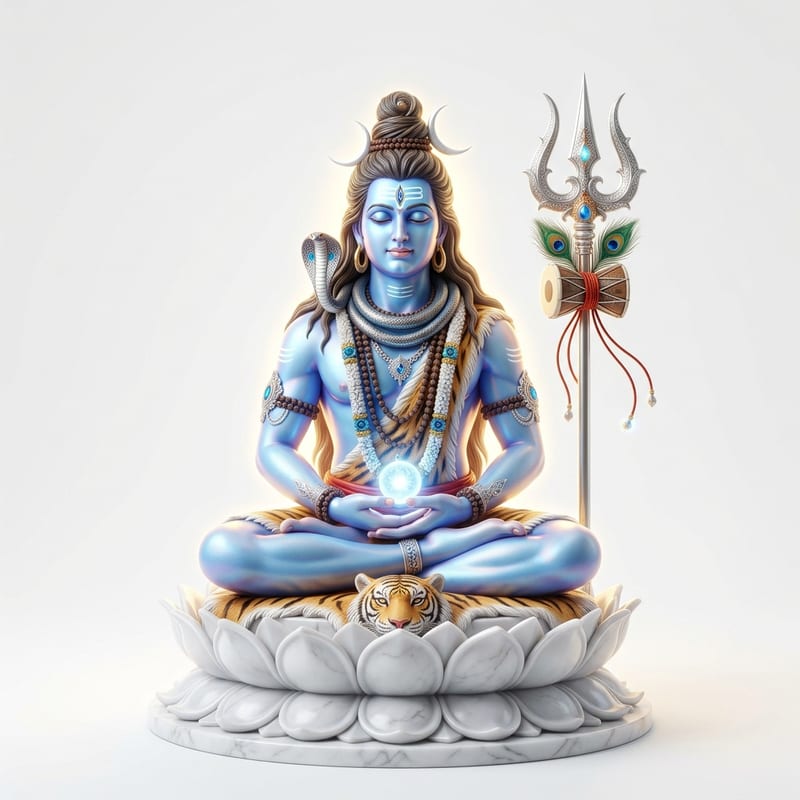
|| oṃ śrī gaṇeśāya namaḥ ||
oṃ
1. maṅgalācaraṇam, dhyānam
vande siddhipradaṃ devaṃ gaṇeśaṃ priyapālakam |
viśvagarbhaṃ ca vighneśaṃ anādiṃ maṅgalaṃ vibhūm ||
1. maṅgalācaraṇam, dhyānam
vande siddhipradaṃ devaṃ gaṇeśaṃ priyapālakam |
viśvagarbhaṃ ca vighneśaṃ anādiṃ maṅgalaṃ vibhūm ||
- oṃOṃ
- maṅgalācaraṇamthe auspicious opening
- dhyānamthe meditation
- vandeI salute
- siddhipradamgranter of attainment
- devamthe god
- gaṇeśamGaṇeśa
- priyapālakamthe loving protector
- viśvagarbhamwomb of the universe
- ca vighneśamand lord of obstacles
- anādimwithout beginning
- maṅgalamauspicious
- vibhūmall-pervading
atha dhyānam
dhyāyennityaṃ maheśaṃ rajatagirinibhaṃ cāru candravataṃsam |
ratnākalpojjvalāṅgaṃ paraśumṛgavarābhītihastaṃ prasannam || 1 ||
dhyāyennityaṃ maheśaṃ rajatagirinibhaṃ cāru candravataṃsam |
ratnākalpojjvalāṅgaṃ paraśumṛgavarābhītihastaṃ prasannam || 1 ||
- athanow, here begins
- dhyānamthe meditation verse / contemplative description
- nityamconstantly, perpetually
- rajatagirinibhamresembling a silver mountain (Kailāsa)
- cārubeautiful, enchanting
- candravataṃsamhaving the crescent moon as a head-ornament
- ratnākalpojjvalāṅgamwhose limbs are radiant with jewelled ornaments
- paraśumṛgavarābhītihastamholding an axe and a deer, and displaying the boon-bestowing and fear-dispelling hand gestures
- prasannamtranquil, serene, gracious
- maheśamthe Great Sovereign Lord (Śiva)
- dhyāyetone should meditate upon
padmāsīnaṃ samantātstutamamaragaṇairvyāghrakṛtiṃ vasānam |
viśvādyaṃ viśvavandyaṃ nikhilabhayaharaṃ pañcavaktraṃ trinetram || 2 ||
viśvādyaṃ viśvavandyaṃ nikhilabhayaharaṃ pañcavaktraṃ trinetram || 2 ||
- padmāsīnamseated upon a lotus
- samantātfrom all sides, everywhere
- amaragaṇaiḥby the hosts of gods
- stutampraised
- vyāghrakṛtima tiger's skin
- vasānamwearing as raiment
- viśvādyamthe primordial source of the universe
- viśvavandyamadored by the entire cosmos
- nikhilabhayaharamremover of all fears
- pañcavaktramhaving five faces
- trinetramhaving three eyes
2. prathamo'dhyāyaḥ - gaṇapati mantrāḥ, śiva saṅkalpa sūktam
- prathamaḥfirst
- adhyāyaḥchapter
- gaṇapatiof Gaṇapati (Lord of the Ganas)
- mantrāḥmantras / sacred verses
- śivaauspicious / Lord Śiva
- saṅkalparesolve / resolve of mind
- sūktamhymn
hariḥ̭ oṃ
gaṇānāṃ̭ tvā gaṇapa̭tigṃ havāmahe priyāṇāṃ̭ tvā priyapa̭tigṃ havāmahe
nidhīnāṃ̭ tvā̭ nidhipati̭gṃ havāmahe vaso mama |
āhama̭jāni garbhadhamā tvama̭jāsi garbhadham || 1 ||
gaṇānāṃ̭ tvā gaṇapa̭tigṃ havāmahe priyāṇāṃ̭ tvā priyapa̭tigṃ havāmahe
nidhīnāṃ̭ tvā̭ nidhipati̭gṃ havāmahe vaso mama |
āhama̭jāni garbhadhamā tvama̭jāsi garbhadham || 1 ||
- hariḥHari, the Supreme Lord
- omthe sacred syllable Om
- vasoO Vasu (abode of all beings / bestower of dwelling and wealth)
- gaṇānāmamong the hosts or divine groups
- tvāyou
- gaṇapatimas the lord of hosts
- havāmahewe invoke
- priyāṇāmamong the beloved ones
- tvāyou
- priyapatimas the lord of the beloved
- havāmahewe invoke
- nidhīnāmamong the divine treasures
- tvāyou
- nidhipatimas the lord of treasures
- havāmahewe invoke
- mamamy / mine
- ahamI
- garbhadhamplacer or bearer of the cosmic germ/seed
- āfully / around
- ajānimay I bring forth / generate
- tvamyou
- garbhadhamplacer or bearer of the cosmic germ/seed
- āfully / around
- ajāsiyou bring forth / generate
gāyatrī triṣṭubjaga̭tyanuṣṭuppaṅktyā saha |
bṛhatyuṣṇihā̭ kakupsūcībhiḥ̭ śamyantu tvā || 2 ||
bṛhatyuṣṇihā̭ kakupsūcībhiḥ̭ śamyantu tvā || 2 ||
- gāyatrīthe Gāyatrī metre
- triṣṭupthe Triṣṭubh metre
- jagatīthe Jagatī metre
- anuṣṭupthe Anuṣṭubh metre
- paṅktyāwith the Paṅkti metre
- sahaalong with
- bṛhatīthe Bṛhatī metre
- uṣṇihāwith the Uṣṇih metre
- kakupthe Kakubh metre
- sūcībhiḥwith needles / ritual pins
- tvāyou
- śamyantumay they pacify and make whole
dvipa̭dāyāścatṷṣpadāstripa̭dāyāścaṣaṭpa̭dāḥ |
viccha̭ndā yāśca saccha̭ndā-ssūcībhiḥ̭ śamyantu tvā || 3 ||
viccha̭ndā yāśca saccha̭ndā-ssūcībhiḥ̭ śamyantu tvā || 3 ||
- catuṣpadāḥthe four-footed metres
- [ṛcaḥ] ([ṛcaḥ])[verses]
- dvipadāyāḥfor the two-footed metre
- caand
- ṣaṭpadāḥthe six-footed metres
- [ṛcaḥ] ([ṛcaḥ])[verses]
- tripadāyāḥfor the three-footed metre
- caand
- yāḥwhich
- caand
- vicchandāḥare irregular-metred
- [yāḥ] ([yāḥ])[and which]
- caand
- sacchandāḥare regular-metred
- [ṛcaḥ] ([ṛcaḥ])[verses]
- sūcībhiḥwith needles
- tvāyou
- śamyantumay they pacify and heal
sahasto̭mā-ssahaccha̭ndasa āvṛtaḥ̭ sahapra̭mā ṛṣa̭ya-ssapta dai̭vyāḥ |
pūrvḙṣāṃ panthā̭manudṛśya dhīrā̭ anvālḙbhire rathyo na raśmīn || 4 ||
pūrvḙṣāṃ panthā̭manudṛśya dhīrā̭ anvālḙbhire rathyo na raśmīn || 4 ||
- sahastomāḥaccompanied by stomas (praise-hymns)
- sahacchandasaḥaccompanied by poetic meters
- āvṛtaḥendowed with ritual procedures (āvṛts)
- sahapramāḥequipped with standard measures
- saptaseven
- daivyāḥdivine
- ṛṣayaḥseers
- pūrveṣāmof the predecessors / ancients
- panthāmthe path
- anudṛśyahaving observed / beholding
- dhīrāḥthe steadfast / wise ones
- rathyaḥa charioteer
- najust as / like
- raśmīnthe reins
- anvālebhiregrasped / took hold of
yajjāgra̭to dūramudaiti daivaṃ tadṷ suptasya tathaivaiti̭ |
dūraṅgama-ñjyoti̭ṣāṃ jyotirekaṃ tanme manaḥ̭ śivasa̭ṅkalpamastu || 1 ||
dūraṅgama-ñjyoti̭ṣāṃ jyotirekaṃ tanme manaḥ̭ śivasa̭ṅkalpamastu || 1 ||
- yatthat which
- jāgrataḥfrom the waking man
- dūramfar
- udaitigoes forth
- daivamthe divine power
- tat uthat same
- suptasyaof the sleeping man
- tathā evain just that way
- eticomes
- dūraṅgamamfar-ranging
- jyotiṣām jyotiḥthe light of lights
- ekamone alone
- tat me manaḥmay that mind of mine
- śivasaṅkalpam astube of auspicious resolve
yena karmā̭ṇyapaso̭ manīṣiṇo̭ yajñe kṛṇvanti̭ vidathḙṣu dhīrāḥ̭ |
yada̭pūrvaṃ-ya~kṣamantaḥ prajānāṃ tanme manaḥ̭ śivasa̭ṅkalpamastu || 2 ||
yada̭pūrvaṃ-ya~kṣamantaḥ prajānāṃ tanme manaḥ̭ śivasa̭ṅkalpamastu || 2 ||
- yenaby which [mind]
- apasaḥactive, ritual-performing workers
- manīṣiṇaḥwise or insightful thinkers
- dhīrāḥsteadfast or resolute ones
- yajñein the sacrifice
- vidatheṣuin sacred assemblies or sacrificial gatherings
- karmāṇisacred actions or duties
- kṛṇvantithey perform or execute
- yatwhich [mind]
- apūrvamunprecedented, peerless, existing prior to all
- yakṣamwondrous entity or adorable divine power
- prajānāmof living beings
- antaḥwithin or inside
- [asti] ([asti])[is]
- tatthat
- memy
- manaḥmind
- śivasaṅkalpampossessing auspicious resolve
- astumay it be
yatprajñāna̭muta ceto dhṛti̭śca yajjyoti̭rantaramṛtaṃ̭ prajāsṷ |
yasmānna-'ṛte ki-ñcana karma̭ kriyate tanme manaḥ̭ śivasa̭ṅkalpamastu || 3 ||
yasmānna-'ṛte ki-ñcana karma̭ kriyate tanme manaḥ̭ śivasa̭ṅkalpamastu || 3 ||
- yatwhich
- prajñānamintuitive intellect, higher wisdom
- utaand also
- cetaḥconscious awareness, mind
- dhṛtiḥresolute firmness, fortitude
- caand
- yatwhich
- prajāsuamong living beings
- antaḥwithin, inside
- amṛtamimmortal
- jyotiḥinner light, flame
- yasmātthan which, without which
- ṛtewithout
- kiñcanawhatever, any at all
- karmaaction, sacred deed
- nanot
- kriyateis performed
- tatthat
- memy
- manaḥmind
- śivasaṅkalpampossessed of auspicious resolve
- astumay it be
yeneda-mbhūta-mbhuva̭na-mbhaviṣyatpari̭gṛhītamamṛtḙna sarva̭m |
yena̭ yajñastāyatḙ saptaho̭tā tanme manaḥ̭ śivasa̭ṅkalpamastu || 4 ||
yena̭ yajñastāyatḙ saptaho̭tā tanme manaḥ̭ śivasa̭ṅkalpamastu || 4 ||
- yenaby which
- idamthis
- bhūtamwhat has been
- bhuvanamthe world
- bhaviṣyatwhat shall be
- parigṛhītamis encompassed
- amṛtenaby the immortal
- sarvamall of it
- yenaby which
- yajñaḥthe sacrifice
- tāyateis spread out
- saptahotāwith its seven priests
- tat me manaḥmay that mind of mine
- śivasaṅkalpam astube of auspicious resolve
yasminnṛca-ssāma yajṷ̄gṃṣi yasmi-nprati̭ṣṭhitā rathanābhāvi̭vārāḥ |
yasmi̭gṃścittagṃ sarvamotaṃ̭ prajānāṃ tanme manaḥ̭ śivasa̭ṅkalpamastu || 5 ||
yasmi̭gṃścittagṃ sarvamotaṃ̭ prajānāṃ tanme manaḥ̭ śivasa̭ṅkalpamastu || 5 ||
- yasminin which
- ṛcaḥthe ṛc verses
- sāmathe sāman
- yajūṃṣithe yajus formulas
- pratiṣṭhitāḥare set fast
- rathanābhauin the nave of a chariot-wheel
- iva ārāḥas the spokes are
- yasminin which
- cittamthe thought
- sarvamall
- otamis woven
- prajānāmof creatures
- tat me manaḥmay that mind of mine
- śivasaṅkalpam astube of auspicious resolve
suṣārathiraśvā̭niva yanma̭nuṣyānnenīyate-'bhīśṷbhirvājina̭ iva |
hṛtprati̭ṣṭhaṃ yada̭jira-ñjavi̭ṣṭhaṃ tanme manaḥ̭ śivasa̭ṅkalpamastu || 6 ||
hṛtprati̭ṣṭhaṃ yada̭jira-ñjavi̭ṣṭhaṃ tanme manaḥ̭ śivasa̭ṅkalpamastu || 6 ||
- suṣārathiḥas a skilled charioteer
- aśvān ivaas he does horses
- yatwhich
- manuṣyānmen
- nenīyateleads again and again
- abhīśubhiḥby the reins
- vājinaḥ ivaas swift steeds
- hṛtpratiṣṭhamseated in the heart
- ajiramunaging
- javiṣṭhamswiftest of all
- tat me manaḥmay that mind of mine
- śivasaṅkalpam astube of auspicious resolve
iti rudre prathamo-'dhyāyaḥ || 1 ||
- itithus
- rudrein the Rudra
- prathamaḥ adhyāyaḥthe first chapter
3. dvitīyo'dhyāyaḥ - puruṣa sūktam
- dvitīyaḥ adhyāyaḥthe second chapter
- puruṣa sūktamthe Hymn of the Puruṣa
hariḥ̭ oṃ
sahasra̭śīrṣā purṷṣa-ssahasrākṣa-ssahasra̭pāt |
sa bhūmi̭gṃ sarvataḥ̭ spṛtvātya̭tiṣṭhaddaśāṅgulam || 1||
sahasra̭śīrṣā purṷṣa-ssahasrākṣa-ssahasra̭pāt |
sa bhūmi̭gṃ sarvataḥ̭ spṛtvātya̭tiṣṭhaddaśāṅgulam || 1||
- hariḥ oṃHariḥ Oṃ
- sahasraśīrṣāthousand-headed
- puruṣaḥthe Puruṣa
- sahasrākṣaḥthousand-eyed
- sahasrapātthousand-footed
- saḥhe
- bhūmimthe earth
- sarvataḥon every side
- spṛtvāhaving covered
- atyatiṣṭhatstood out beyond it
- daśāṅgulamby ten fingers' breadth
purṷṣa evedagṃ sarvaṃ yadbhūtaṃ-ya~cca̭ bhāvyam |
utāmṛ̭tatvasyeśā̭no yadannḙnātiroha̭ti || 2||
utāmṛ̭tatvasyeśā̭no yadannḙnātiroha̭ti || 2||
- puruṣaḥ evathe Puruṣa alone
- idam sarvamall this
- yat bhūtamwhat has been
- yat ca bhāvyamand what is yet to be
- utaand moreover
- amṛtatvasyaof immortality
- īśānaḥthe lord
- yatthat which
- annenaby food
- atirohatigrows up beyond
etāvā̭nasya mahimāto jyāyā.ṇ̭śca pūrṷṣaḥ |
pādo̭-'sya viśvā̭ bhūtāni̭ tripāda̭syāmṛtaṃ̭ divi || 3||
pādo̭-'sya viśvā̭ bhūtāni̭ tripāda̭syāmṛtaṃ̭ divi || 3||
- etāvānso great
- asyais his
- mahimāgreatness
- ataḥ jyāyāngreater still than this
- ca pūruṣaḥis the Puruṣa
- pādaḥ asyaone quarter of him
- viśvā bhūtāniall beings
- tripāt asyathree quarters of him
- amṛtamthe immortal
- diviin heaven
tripādūrdhva udaitpurṷṣaḥ pādo̭-'syehābha̭vatpunaḥ̭ |
tato viṣvaṅ vyakrāmatsāśanānaśane abhi || 4||
tato viṣvaṅ vyakrāmatsāśanānaśane abhi || 4||
- tripātwith three quarters
- ūrdhvaḥupward
- udaitrose
- puruṣaḥthe Puruṣa
- pādaḥ asyaone quarter of him
- ihahere
- abhavat punaḥcame to be again
- tataḥthence
- viṣvaṅin every direction
- vyakrāmathe strode forth
- sāśanānaśane abhiover what eats and what eats not
tato̭ virāḍa̭jāyata virājo adhi pūrṷṣaḥ |
sa jāto atya̭ricyata paścādbhūmimatho̭ puraḥ || 5||
sa jāto atya̭ricyata paścādbhūmimatho̭ puraḥ || 5||
- tataḥfrom him
- virāṭVirāj
- ajāyatawas born
- virājaḥ adhiand from Virāj
- pūruṣaḥthe Puruṣa
- saḥ jātaḥhe, once born
- atyaricyatareached out beyond
- paścātbehind
- bhūmimthe earth
- atho puraḥand before
tasmā̭dyajñātsa̭rvahuta-ssambhṛ̭ta-mpṛṣadājyam |
paśū.ṇstā.ṇśca̭kre vāyavyānāraṇyā grāmyāśca ye || 6||
paśū.ṇstā.ṇśca̭kre vāyavyānāraṇyā grāmyāśca ye || 6||
- tasmātfrom that
- yajñātsacrifice
- sarvahutaḥwholly offered
- sambhṛtamwas gathered
- pṛṣadājyamthe clotted butter
- paśūnthe beasts
- tānthose
- cakrehe made
- vāyavyānof the air
- āraṇyāḥof the forest
- grāmyāḥ caand of the village
- yewhich there are
tasmā̭dyajñātsa̭rvahuta ṛca-ssāmā̭ni jajñire |
chandā̭gṃsi jajñire tasmādyajustasmā̭dajāyata || 7||
chandā̭gṃsi jajñire tasmādyajustasmā̭dajāyata || 7||
- tasmāt yajñātfrom that sacrifice
- sarvahutaḥwholly offered
- ṛcaḥthe ṛc verses
- sāmānithe sāmans
- jajñirewere born
- chandāṃsithe metres
- tasmātfrom it
- yajuḥthe yajus
- ajāyatawas born
tasmādaśvā̭ ajāyanta ye ke co̭bhayāda̭taḥ |
gāvo̭ ha jajñire tasmāttasmā̭jjātā a̭jāvayaḥ̭ || 8||
gāvo̭ ha jajñire tasmāttasmā̭jjātā a̭jāvayaḥ̭ || 8||
- tasmātfrom it
- aśvāḥhorses
- ajāyantawere born
- ye ke caand whatever creatures
- ubhayādataḥhave teeth in both jaws
- gāvaḥ hacattle indeed
- jajñirewere born
- tasmātfrom it
- jātāḥwere born
- ajāvayaḥgoats and sheep
taṃ-ya~jña-mbarhiṣi praukṣanpurṷṣa-ñjātama̭grataḥ |
tena̭ devā a̭yajanta sādhyā ṛṣa̭yaśca ye || 9||
tena̭ devā a̭yajanta sādhyā ṛṣa̭yaśca ye || 9||
- tam yajñamthat sacrifice
- barhiṣiupon the sacred grass
- praukṣanthey consecrated with water
- puruṣamthe Puruṣa
- jātamborn
- agrataḥat the beginning
- tenawith him
- devāḥthe gods
- ayajantaperformed the sacrifice
- sādhyāḥthe Sādhyas
- ṛṣayaḥ caand the seers
- yewho were there
yatpurṷṣaṃ vyada̭dhuḥ katidhā vya̭kalpayann |
mukhaṃ kima̭syāsī-tki-mbāhū kimūrū pādā̭ ucyete || 10||
mukhaṃ kima̭syāsī-tki-mbāhū kimūrū pādā̭ ucyete || 10||
- yatwhen
- puruṣamthe Puruṣa
- vyadadhuḥthey divided
- katidhāinto how many parts
- vyakalpayandid they dispose him
- mukhamthe mouth
- kim asya āsītwhat was his
- kim bāhūwhat his two arms
- kim ūrūwhat his thighs
- pādāhis feet
- ucyeteare called
brāhmaṇo-'sya mukha̭māsīdbāhū rā̭janyaḥ kṛtaḥ |
ūrū tada̭sya yadvai̭śyaḥ padbhyāgṃ śūdro a̭jāyata || 11||
ūrū tada̭sya yadvai̭śyaḥ padbhyāgṃ śūdro a̭jāyata || 11||
- brāhmaṇaḥthe brāhmaṇa
- asyahis
- mukham āsītwas the mouth
- bāhūthe two arms
- rājanyaḥthe kṣatriya
- kṛtaḥwas made
- ūrūthe thighs
- tat asyathat of his
- yat vaiśyaḥwhich is the vaiśya
- padbhyāmfrom the two feet
- śūdraḥthe śūdra
- ajāyatawas born
candramā mana̭so jātaścakṣoḥ sūryo̭ ajāyata |
śrotrā̭dvāyuśca̭ prāṇaśca mukhā̭dagnira̭jāyata || 12||
śrotrā̭dvāyuśca̭ prāṇaśca mukhā̭dagnira̭jāyata || 12||
- candramāḥthe moon
- manasaḥfrom his mind
- jātaḥwas born
- cakṣoḥfrom his eye
- sūryaḥthe sun
- ajāyatawas born
- śrotrātfrom his ear
- vāyuḥ cathe wind
- prāṇaḥ caand the breath
- mukhātfrom his mouth
- agniḥfire
- ajāyatawas born
nābhyā̭ āsīdantari̭kṣagṃ śīrṣṇo dyau-ssama̭vartata |
padbhyā-mbhūmirdiśa-śśrotrāttathā̭ lokā.ṇa2 || a̭kalpayann || 13||
padbhyā-mbhūmirdiśa-śśrotrāttathā̭ lokā.ṇa2 || a̭kalpayann || 13||
- nābhyāḥfrom his navel
- āsītcame
- antarikṣamthe mid-air
- śīrṣṇaḥfrom his head
- dyauḥthe sky
- samavartataunfolded
- padbhyāmfrom his feet
- bhūmiḥthe earth
- diśaḥthe quarters
- śrotrātfrom his ear
- tathāthus
- lokānthe worlds
- akalpayanthey fashioned
yatpurṷṣeṇa haviṣā̭ devā yajñamata̭nvata |
vasanto-'syāsīdājyaṃ̭ grīṣma idhma-śśaraddhaviḥ || 14||
vasanto-'syāsīdājyaṃ̭ grīṣma idhma-śśaraddhaviḥ || 14||
- yatwhen
- puruṣeṇawith the Puruṣa
- haviṣāas their oblation
- devāḥthe gods
- yajñamthe sacrifice
- atanvataspread out
- vasantaḥspring
- asyaits
- āsītwas
- ājyamthe clarified butter
- grīṣmaḥsummer
- idhmaḥthe kindling wood
- śaratautumn
- haviḥthe offering
saptāsyā̭sanparidhayastrissapta samidhaḥ̭ kṛtāḥ |
devā yadyajña-nta̭nvānā aba̭dhna-npurṷṣa-mpaśum || 15||
devā yadyajña-nta̭nvānā aba̭dhna-npurṷṣa-mpaśum || 15||
- saptaseven
- asyaits
- āsanwere
- paridhayaḥenclosing sticks
- triḥ saptathrice seven
- samidhaḥfuel-sticks
- kṛtāḥwere made
- devāḥthe gods
- yatwhen
- yajñamthe sacrifice
- tanvānāḥspreading out
- abadhnanbound
- puruṣamthe Puruṣa
- paśumas the victim
yajñena̭ yajñama̭yajanta devāstāni dharmā̭ṇi prathamānyā̭sann |
te ha nākaṃ̭ mahimānaḥ̭ sacanta yatra pūrvḙ sādhyā-ssanti̭ devāḥ || 16||
te ha nākaṃ̭ mahimānaḥ̭ sacanta yatra pūrvḙ sādhyā-ssanti̭ devāḥ || 16||
- yajñenaby the sacrifice
- yajñamto the sacrifice
- ayajantasacrificed
- devāḥthe gods
- tānithose
- dharmāṇiordinances
- prathamānithe first
- āsanwere
- te hathey indeed
- nākamthe firmament
- mahimānaḥthose mighty ones
- sacantaattained
- yatrawhere
- pūrvethe ancient
- sādhyāḥSādhyas
- santi devāḥthe gods, dwell
adbhya-ssambhṛ̭taḥ pṛthivyai rasā̭cca viśvaka̭rmaṇa-ssama̭vartatāgrḙ |
tasya tvaṣṭā̭ vidadha̭drūpamḙti tanmartya̭sya devatvamājānamagrḙ || 17||
tasya tvaṣṭā̭ vidadha̭drūpamḙti tanmartya̭sya devatvamājānamagrḙ || 17||
- adbhyaḥfrom the waters
- sambhṛtaḥgathered together
- pṛthivyaifor the earth
- rasāt caand from its essence
- viśvakarmaṇaḥfrom Viśvakarman
- samavartatahe came forth
- agrein the beginning
- tasyahis
- tvaṣṭāTvaṣṭṛ
- vidadhatfashioning
- rūpamthe form
- etigoes on
- tatthis
- martyasyaof the mortal
- devatvamwas the godhead
- ājānamat his very birth
- agrein the beginning
vedāhameta-mpurṷṣa-mmahānta̭mādityava̭rṇaṃ tama̭saḥ parastā̭t |
tameva vi̭ditvā-'ti̭ mṛtyumḙti nānyaḥ panthā̭ vidyate-'ya̭nāya || 18||
tameva vi̭ditvā-'ti̭ mṛtyumḙti nānyaḥ panthā̭ vidyate-'ya̭nāya || 18||
- vedaI know
- ahamI
- etamthis
- puruṣamPuruṣa
- mahāntamthe great
- ādityavarṇamof the colour of the sun
- tamasaḥ parastātbeyond the darkness
- tam evahim alone
- viditvāhaving known
- ati mṛtyum etione goes beyond death
- na anyaḥ panthāḥno other path
- vidyateis found
- ayanāyafor the going
prajāpa̭tiścarati garbhḙ antarajā̭yamāno bahudhā vi jā̭yate |
tasya yoniṃ pari̭paśyanti dhīrāstasmi̭nha tasthurbhuva̭nāni viśvā̭ || 19||
tasya yoniṃ pari̭paśyanti dhīrāstasmi̭nha tasthurbhuva̭nāni viśvā̭ || 19||
- prajāpatiḥPrajāpati
- caratimoves
- garbhe antaḥwithin the womb
- ajāyamānaḥhimself unborn
- bahudhāin many ways
- vi jāyateis born forth
- tasyahis
- yonimorigin
- paripaśyantibehold on every side
- dhīrāḥthe steadfast
- tasmin hain him indeed
- tasthuḥhave taken their stand
- bhuvanāni viśvāall the worlds
yo devebhya̭ ātapa̭ti yo devānāṃ̭ purohi̭taḥ |
pūrvo yo devebhyo̭ jāto namo̭ rucāya brāhma̭ye || 20||
pūrvo yo devebhyo̭ jāto namo̭ rucāya brāhma̭ye || 20||
- yaḥhe who
- devebhyaḥupon the gods
- ātapatishines forth
- yaḥwho
- devānāmof the gods
- purohitaḥis the chief priest
- pūrvaḥbefore
- yaḥwho
- devebhyaḥthe gods
- jātaḥwas born
- namaḥsalutation
- rucāyato that radiance
- brāhmayeto the holy power
ruca-mbrāhmya-ñjanaya̭nto devā agre tada̭bruvann |
yastvaiva-mbrā̭hmaṇo vidyāttasya̭ devā a̭sanvaśḙ || 21||
yastvaiva-mbrā̭hmaṇo vidyāttasya̭ devā a̭sanvaśḙ || 21||
- rucamthe radiance
- brāhmyamof the holy power
- janayantaḥgenerating
- devāḥthe gods
- agrein the beginning
- tat abruvansaid this
- yaḥwhoever
- tvāyou
- evamthus
- brāhmaṇaḥas a brāhmaṇa
- vidyātshall know
- tasyain his
- devāḥthe gods
- asanshall be
- vaśepower
śrīśca̭ te lakṣmīśca patnyā̭vahorātre pārśve nakṣa̭trāṇi rūpamaśvinau vyātta̭m |
iṣṇanni̭ṣāṇāmu-mma̭ iṣāṇa sarvaloka-mma̭ iṣāṇa || 22||
iṣṇanni̭ṣāṇāmu-mma̭ iṣāṇa sarvaloka-mma̭ iṣāṇa || 22||
- śrīḥ caŚrī
- teyour
- lakṣmīḥ caand Lakṣmī
- patnyauare your two consorts
- ahorātreday and night
- pārśveyour two sides
- nakṣatrāṇithe constellations
- rūpamyour form
- aśvinauthe two Aśvins
- vyāttamyour opened mouth
- iṣṇandesiring
- iṣāṇagrant
- amumthat
- meto me
- sarvalokamall the world
- iṣāṇagrant
iti rudre dvitīyo-'dhyāyaḥ || 2||
- itithus
- rudrein the Rudra
- dvitīyaḥ adhyāyaḥthe second chapter
4. tṛtīyo'dhyāyaḥ - apratiratha sūktam
- tṛtīyaḥ adhyāyaḥthe third chapter
- apratiratha sūktamthe hymn of the warrior whom none can withstand
hari̭ oṃ
āśu-śśiśā̭no vṛṣabho na bhīmo gha̭nāghanaḥ, kṣobha̭ṇaścarṣaṇīnām |
saṅkranda̭no-'nimiṣa ḙkavīra-śśatagṃ senā̭ ajayatsākamindraḥ̭ || 1||
āśu-śśiśā̭no vṛṣabho na bhīmo gha̭nāghanaḥ, kṣobha̭ṇaścarṣaṇīnām |
saṅkranda̭no-'nimiṣa ḙkavīra-śśatagṃ senā̭ ajayatsākamindraḥ̭ || 1||
- hariḥ oṃHariḥ Oṃ
- āśuḥswift
- śiśānaḥwhetting himself keen
- vṛṣabhaḥ nalike a bull
- bhīmaḥterrible
- ghanāghanaḥthe smiter
- kṣobhaṇaḥthe shaker
- carṣaṇīnāmof the peoples
- saṅkrandanaḥthe roarer
- animiṣaḥunblinking
- ekavīraḥthe one hero
- śatama hundred
- senāḥarmies
- ajayatconquered
- sākamall at once
- indraḥIndra
saṅkranda̭nenā-'nimiṣeṇa̭ jiṣṇunā̭ yutkāreṇa̭ duścyavanena̭ dhṛṣṇunā̭ |
tadindrḙṇa jayata tatsa̭hadhvaṃ yudho̭ nara iṣṷhastena vṛṣṇā̭ || 2||
tadindrḙṇa jayata tatsa̭hadhvaṃ yudho̭ nara iṣṷhastena vṛṣṇā̭ || 2||
- saṅkrandanenawith the roarer
- animiṣeṇawith the unblinking
- jiṣṇunāwith the victorious
- yutkāreṇawith the maker of battle
- duścyavanenawith the unshakable
- dhṛṣṇunāwith the daring
- tattherefore
- indreṇawith Indra
- jayataconquer
- tat sahadhvamhold fast through it
- yudhaḥthe battles
- naraḥO men
- iṣuhastenawith him whose hand holds arrows
- vṛṣṇāwith the bull
sa iṣṷhastaiḥ sa ni̭ṣaṅgibhi̭rvaśī sagṃsra̭ṣṭā sa yudha indro̭ gaṇena̭ |
sagṃsṛṣṭajitso̭mapā bā̭huśardhyugradha̭nvā prati̭hitābhirastā̭ || 3||
sagṃsṛṣṭajitso̭mapā bā̭huśardhyugradha̭nvā prati̭hitābhirastā̭ || 3||
- saḥhe
- iṣuhastaiḥwith the arrow-bearers
- niṣaṅgibhiḥwith the quiver-bearers
- vaśīthe master
- saṃsraṣṭāwho marshals them together
- yudhaḥof the fight
- indraḥIndra
- gaṇenawith his host
- saṃsṛṣṭajitconqueror of the massed foe
- somapāḥdrinker of soma
- bāhuśardhīmighty of arm
- ugradhanvāof terrible bow
- pratihitābhiḥwith shafts laid to the string
- astāthe archer
bṛha̭spate pari̭dīyā rathḙna rakṣohāmitrā̭.ṇa2 apabādha̭mānaḥ |
prabhañjantsenāḥ̭ pramṛṇo yudhā jaya̭nnasmāka̭medhyavitā rathā̭nām || 4||
prabhañjantsenāḥ̭ pramṛṇo yudhā jaya̭nnasmāka̭medhyavitā rathā̭nām || 4||
- bṛhaspateO Bṛhaspati
- paridīyafly about
- rathenawith your chariot
- rakṣohāslayer of demons
- amitrānthe foes
- apabādhamānaḥdriving them off
- prabhañjanshattering
- senāḥtheir armies
- pramṛṇaḥcrushing them
- yudhāin battle
- jayanconquering
- asmākamour
- edhibe
- avitāthe protector
- rathānāmof the chariots
balavijñāya-ssthavi̭raḥ pravī̭ra-ssaha̭svānvājī saha̭māna ugraḥ |
abhivī̭ro abhisa̭tvā sahojā jai̭tramindra rathamāti̭ṣṭha govit || 5||
abhivī̭ro abhisa̭tvā sahojā jai̭tramindra rathamāti̭ṣṭha govit || 5||
- balavijñāyaḥknown by his strength
- sthaviraḥfirm
- pravīraḥforemost of heroes
- sahasvānmighty
- vājīswift as a steed
- sahamānaḥoverpowering
- ugraḥterrible
- abhivīraḥhero above heroes
- abhisatvāwarrior above warriors
- sahojāḥborn of might
- jaitramthe victorious
- indraO Indra
- rathamchariot
- ātiṣṭhamount
- govitwinner of cattle
gotrabhidaṃ̭ govidaṃ vajra̭bāhuṃ jaya̭ntamajma̭ pramṛṇantamoja̭sā |
imagṃ sa̭jātā anṷ vīrayadhvamindra̭gṃ sakhāyo anu sagṃra̭bhadhvam || 6||
imagṃ sa̭jātā anṷ vīrayadhvamindra̭gṃ sakhāyo anu sagṃra̭bhadhvam || 6||
- gotrabhidambreaker of strongholds
- govidamwinner of cattle
- vajrabāhumthunder-armed
- jayantamconquering
- ajmathe onset
- pramṛṇantamcrushing it
- ojasāwith his force
- imamhim
- sajātāḥO kinsmen
- anu vīrayadhvamfollow with valour
- indramto Indra
- sakhāyaḥO friends
- anu saṃrabhadhvamhold fast
abhi gotrāṇi saha̭sā gāha̭māno-'dayo vīra-śśatama̭nyurindraḥ̭ |
duścyavanaḥ pṛ̭tanāṣāḍa̭yudhyo-'smākagṃ senā̭ avatu pra yutsu || 7||
duścyavanaḥ pṛ̭tanāṣāḍa̭yudhyo-'smākagṃ senā̭ avatu pra yutsu || 7||
- abhiupon
- gotrāṇithe strongholds
- sahasāwith might
- gāhamānaḥplunging
- adayaḥpitiless
- vīraḥthe hero
- śatamanyuḥof a hundred angers
- indraḥIndra
- duścyavanaḥunshakable
- pṛtanāṣāṭvictor in battle
- ayudhyaḥnot to be fought against
- asmākamour
- senāḥarmies
- avatumay he guard
- pra yutsuin the fights
indra̭ āsā-nnetā bṛhaspatirdakṣi̭ṇā yajñaḥ pura ḙtu somaḥ̭ |
devasenānā̭mabhibhañjatīnā-ñjaya̭ntīnā-mmaruto̭ yantvagra̭m || 8||
devasenānā̭mabhibhañjatīnā-ñjaya̭ntīnā-mmaruto̭ yantvagra̭m || 8||
- indraḥIndra
- āsāmof these
- netāthe leader
- bṛhaspatiḥBṛhaspati
- dakṣiṇāthe sacrificial gift
- yajñaḥthe sacrifice
- puraḥbefore us
- etulet go
- somaḥSoma
- devasenānāmof the armies of the gods
- abhibhañjatīnāmshattering
- jayantīnāmconquering
- marutaḥthe Maruts
- yantulet them go
- agramat the head
indra̭sya vṛṣṇo varṷṇasya rājña̭ ādityānāṃ̭ marutāgṃ śardha̭ ugram |
mahāma̭nasā-mbhuvanacyavānāṃ ghoṣo̭ devānāṃ jaya̭tāmuda̭sthāt || 9||
mahāma̭nasā-mbhuvanacyavānāṃ ghoṣo̭ devānāṃ jaya̭tāmuda̭sthāt || 9||
- indrasyaof Indra
- vṛṣṇaḥthe bull
- varuṇasyaof Varuṇa
- rājñaḥthe king
- ādityānāmof the Ādityas
- marutāmof the Maruts
- śardhaḥthe might
- ugramfierce
- mahāmanasāmof the great-minded
- bhuvanacyavānāmworld-shaking
- ghoṣaḥthe shout
- devānāmof the gods
- jayatāmconquering
- udasthāthas risen up
uddha̭rṣaya maghavannāyṷdhānyutsatva̭nā-mmāmakānāṃ manā̭gṃsi |
udvṛ̭trahanvājināṃ vāji̭nānyudrathā̭nāṃ jaya̭tāṃ-ya~ntu ghoṣāḥ̭ || 10||
udvṛ̭trahanvājināṃ vāji̭nānyudrathā̭nāṃ jaya̭tāṃ-ya~ntu ghoṣāḥ̭ || 10||
- uddharṣayarouse up
- maghavanO bounteous one
- āyudhānithe weapons
- satvanāmof the warriors
- māmakānāmof mine
- manāṃsithe spirits
- vṛtrahanO slayer of Vṛtra
- vājināmof the steeds
- vājinānithe strength
- rathānāmof the chariots
- jayatāmconquering
- yantulet go forth
- ghoṣāḥthe thunder
asmākamindra-ssamṛ̭teṣu dhvajeṣvasmākaṃ yā iṣa̭vastā ja̭yantu |
asmākaṃ̭ vīrā utta̭re bhavantvasmā.ṇa2 ṷ devā avatā havḙṣu || 11||
asmākaṃ̭ vīrā utta̭re bhavantvasmā.ṇa2 ṷ devā avatā havḙṣu || 11||
- asmākamours
- indraḥIndra
- samṛteṣuwhere they meet
- dhvajeṣuamong the banners
- yāḥwhich
- iṣavaḥarrows
- tāḥthose
- jayantulet them prevail
- asmākamour
- vīrāḥheroes
- uttareuppermost
- bhavantulet them be
- asmānus
- devāḥO gods
- avataprotect
- haveṣuwhen we call
amīṣāṃ̭ citta-mpra̭tilobhaya̭ntī gṛhāṇāṅgā̭nyapve parḙhi |
abhi prehi nirda̭ha hṛtsu śokai̭randhenāmitrāstama̭sā sacantām || 12||
abhi prehi nirda̭ha hṛtsu śokai̭randhenāmitrāstama̭sā sacantām || 12||
- amīṣāmof those yonder
- cittamthe mind
- pratilobhayantībewildering
- gṛhāṇaseize
- aṅgānitheir limbs
- apveO Apvā
- parehigo forth
- abhi prehiadvance against them
- nirdahaburn out
- hṛtsuin their hearts
- śokaiḥwith anguish
- andhenawith blinding
- tamasādarkness
- amitrāḥour enemies
- sacantāmlet them be overtaken
ava̭sṛṣṭā parā̭pata śara̭vye brahma̭sagṃśite |
gacchāmitrānprapa̭dyasva māmīṣāṅkañcanocchi̭ṣaḥ || 13||
gacchāmitrānprapa̭dyasva māmīṣāṅkañcanocchi̭ṣaḥ || 13||
- avasṛṣṭāwhen loosed
- parāpatafly forth
- śaravyeO arrow
- brahmasaṃśitesharpened by prayer
- gacchago
- amitrānto the enemies
- prapadyasvaenter them
- mādo not
- amīṣāmof them
- kañcanaany single one
- ucchiṣaḥleave remaining
pretā jaya̭tā nara indro̭ va-śśarma̭ yacchatu |
ugrā vaḥ̭ santu bāhavo̭-'nādhṛṣyā yathāsa̭tha || 14||
ugrā vaḥ̭ santu bāhavo̭-'nādhṛṣyā yathāsa̭tha || 14||
- pra itago forward
- jayataconquer
- naraḥO men
- indraḥIndra
- vaḥto you
- śarmashelter
- yacchatumay he grant
- ugrāḥmighty
- vaḥyour
- santulet them be
- bāhavaḥarms
- anādhṛṣyāḥunassailable
- yathāso that
- asathayou may be
asau yā senā̭ marutaḥ parḙṣāmabhyaiti̭ na oja̭sā spardha̭mānā |
tā-ṅgṷ̄hata tamasā-'pa̭vratena yathāmī anyo anya-nna jānann || 15||
tā-ṅgṷ̄hata tamasā-'pa̭vratena yathāmī anyo anya-nna jānann || 15||
- asauyonder
- yā senāwhich army
- marutaḥO Maruts
- pareṣāmof the foes
- abhyeticomes against
- naḥus
- ojasāin strength
- spardhamānācontending
- tāmit
- gūhatahide away
- tamasāin darkness
- apavratenalawless and without end
- yathāso that
- amīthose yonder
- anyaḥ anyamone another
- na jānanmay not know
yatra̭ bāṇā-ssampata̭nti kumārā vi̭śikhā i̭va |
tanna indro bṛhaspatiradi̭ti-śśarma̭ yacchatu viśvāhā śarma̭ yacchatu || 16||
tanna indro bṛhaspatiradi̭ti-śśarma̭ yacchatu viśvāhā śarma̭ yacchatu || 16||
- yatrawhere
- bāṇāḥthe arrows
- sampatantifly together
- kumārāḥboys
- viśikhāḥ ivalike those with unshorn hair
- tatthere
- naḥto us
- indraḥIndra
- bṛhaspatiḥBṛhaspati
- aditiḥAditi
- śarmashelter
- yacchatumay grant
- viśvāhāon all our days
- śarma yacchatumay they grant shelter
marmā̭ṇi te varma̭ṇā chādayāmi soma̭stvā rājā-'mṛtenānṷvastām |
urorvarī̭yo varṷṇaste kṛṇotu jaya̭ntaṃ tvānṷ devā ma̭dantu || 17||
urorvarī̭yo varṷṇaste kṛṇotu jaya̭ntaṃ tvānṷ devā ma̭dantu || 17||
- marmāṇithe vital parts
- teyour
- varmaṇāwith armour
- chādayāmiI cover
- somaḥSoma
- tvāyou
- rājāthe king
- amṛtenain the immortal
- anuvastāmmay he clothe
- uroḥthan the wide
- varīyaḥwider still
- varuṇaḥVaruṇa
- tefor you
- kṛṇotumay he make
- jayantamconquering
- tvāyou
- anuas
- devāḥthe gods
- madantumay they rejoice
iti rudre tṛtīyo-'dhyāyaḥ || 3||
- itithus
- rudrein the Rudra
- tṛtīyaḥ adhyāyaḥthe third chapter
5. caturtho'dhyāyaḥ - saura sūktam, maitra sūktam
hariḥ̭ oṃ
vibhrāḍbṛhatpi̭batu somya-mmadhvāyurdadha̭dyajñapa̭tāvavi̭hrutam |
vāta̭jūto yo a̭bhirakṣa̭ti tmanā̭ prajāḥ pṷpoṣa purudhā vi rā̭jati || 1||
hariḥ̭ oṃ
vibhrāḍbṛhatpi̭batu somya-mmadhvāyurdadha̭dyajñapa̭tāvavi̭hrutam |
vāta̭jūto yo a̭bhirakṣa̭ti tmanā̭ prajāḥ pṷpoṣa purudhā vi rā̭jati || 1||
- caturthaḥ adhyāyaḥthe fourth chapter
- saura sūktamthe Hymn of the Sun
- maitra sūktamthe Hymn of Mitra
- hariḥ oṃHariḥ Oṃ
- vibhrāṭthe far-shining
- bṛhatthe mighty
- pibatulet him drink
- somyam madhuthe sweetness of the soma
- āyuḥlife
- dadhatbestowing
- yajñapatauupon the lord of the sacrifice
- avihrutamunbroken
- vātajūtaḥsped by the wind
- yaḥwho
- abhirakṣatiguards
- tmanāof his own accord
- prajāḥthe creatures
- pupoṣahas nourished
- purudhāin manifold ways
- vi rājatishines forth
udu tya-ñjātavḙdasa-ndevaṃ-va~̭hanti ketavaḥ̭ |
dṛśe viśvā̭ya sūrya̭m || 2||
dṛśe viśvā̭ya sūrya̭m || 2||
- ut uupward indeed
- tyamthat
- jātavedasamJātavedas
- devamthe god
- vahantibear
- ketavaḥthe rays
- dṛśefor the beholding
- viśvāyaof all the world
- sūryamthe sun
yenā̭ pāvaka cakṣa̭sā bhuraṇyantaṃ janā.ṅ2 || anṷ |
tvaṃ-va~̭ruṇa paśya̭si || 3||
tvaṃ-va~̭ruṇa paśya̭si || 3||
- yenawith which
- pāvakaO purifier
- cakṣasālight
- bhuraṇyantamthe busy
- janānraces of men
- anualong
- tvamyou
- varuṇaO Varuṇa
- paśyasibehold
daivyā̭vadhvaryū āga̭tagṃ rathḙna sūrya̭tvacā . madhvā̭ yajñagṃ sama̭ñjāthe |
ta-mpratnathā-'yaṃ-ve~naścitra-ndevānā̭m || 4||
ta-mpratnathā-'yaṃ-ve~naścitra-ndevānā̭m || 4||
- daivyauO divine pair
- adhvaryūO adhvaryu priests
- āgatamcome
- rathenawith your chariot
- sūryatvacāwhose covering is the sun
- madhvāwith honey
- yajñamthe sacrifice
- samañjātheanoint
- tamhim
- pratnathāas of old
- ayamthis
- venaḥVena
- citramthe wonder
- devānāmof the gods
ta-mpratnathā̭ pūrvathā̭ viśvathemathā̭ jyeṣṭhatā̭ti-mbarhiṣada̭gṃsvarvida̭m |
pratīcīnaṃ-vṛ~janaṃ̭ dohase dhuni̭māśu-ñjaya̭ntamanu yāsu vardha̭se || 5||
pratīcīnaṃ-vṛ~janaṃ̭ dohase dhuni̭māśu-ñjaya̭ntamanu yāsu vardha̭se || 5||
- tamhim
- pratnathāas of old
- pūrvathāas before
- viśvathāas everywhere
- imathāas here
- jyeṣṭhatātimthe highest
- barhiṣadamseated upon the sacred grass
- svarvidamfinder of the light
- pratīcīnamturned toward us
- vṛjanamthe strong one
- dohasefor the milking
- dhunimthe roaring
- āśumthe swift
- jayantamconquering
- yāsuamong which
- vardhaseyou grow
ayaṃ-ve~naśco̭dayatpṛśni̭garbhā jyoti̭rjarāyū raja̭so vimānḙ |
imamapāgṃsa̭ṅgame sūrya̭sya śiśunna viprā̭ matibhī̭ rihanti || 6||
imamapāgṃsa̭ṅgame sūrya̭sya śiśunna viprā̭ matibhī̭ rihanti || 6||
- ayamthis
- venaḥVena
- codayaturges on
- pṛśnigarbhāḥthose born of the dappled one
- jyotirjarāyūḥwhose caul is light
- rajasaḥof the mid-air
- vimānein the measuring out
- imamhim
- apāmof the waters
- saṅgameat the meeting
- sūryasyaof the sun
- śiśum naas one caresses a child
- viprāḥthe inspired ones
- matibhiḥwith their thoughts
- rihanticaress
citra-ndevānāmuda̭gādanī̭kaṃ cakṣṷrmitrasya varṷṇasyāgneḥ |
āprā dyāvā̭pṛthivī antari̭kṣagṃ sūrya̭ ātmā jaga̭tastasthuṣa̭śca || 7||
āprā dyāvā̭pṛthivī antari̭kṣagṃ sūrya̭ ātmā jaga̭tastasthuṣa̭śca || 7||
- citramwonderful
- devānāmof the gods
- udagāthas risen
- anīkamthe front
- cakṣuḥthe eye
- mitrasyaof Mitra
- varuṇasyaof Varuṇa
- agneḥof Agni
- āprāḥhe has filled
- dyāvāpṛthivīheaven and earth
- antarikṣamthe mid-air
- sūryaḥthe sun
- ātmāis the self
- jagataḥof all that moves
- tasthuṣaḥ caand of all that stands still
ā na iḍā̭bhirvidathḙ suśasti viśvāna̭ra-ssavitā deva ḙtu |
api yathā̭ yuvāno matsa̭thā no viśvaṃ jaga̭dabhipitve ma̭nīṣā || 8||
api yathā̭ yuvāno matsa̭thā no viśvaṃ jaga̭dabhipitve ma̭nīṣā || 8||
- āhither
- naḥto us
- iḍābhiḥwith refreshments
- vidathein the assembly
- suśastiwith fair praise
- viśvānaraḥbelonging to all men
- savitāSavitṛ
- devaḥthe god
- etulet him come
- api yathāso that
- yuvānaḥO youthful ones
- matsathayou may gladden
- naḥus
- viśvam jagatthe whole moving world
- abhipitveat the coming of day
- manīṣāby our thought
yadadya kacca̭ vṛtrahannudagā̭ abhi sṷ̄rya |
sarvaṃ tadi̭ndra te vaśḙ || 9||
sarvaṃ tadi̭ndra te vaśḙ || 9||
- yatwhatever
- adyatoday
- kat caanything at all
- vṛtrahanO slayer of Vṛtra
- udagāḥyou have risen upon
- abhiover
- sūryaO Sun
- sarvamall
- tatof that
- indraO Indra
- te vaśestands in your power
taraṇi̭rviśvada̭rśato jyotiṣkṛda̭si sūrya |
viśvamā bhā̭si rocanam || 10||
viśvamā bhā̭si rocanam || 10||
- taraṇiḥthe swift crosser
- viśvadarśataḥseen by all
- jyotiṣkṛtmaker of light
- asiyou are
- sūryaO Sun
- viśvamall
- ā bhāsiyou illumine
- rocanamthe shining realm
tatsūrya̭sya devatva-ntanma̭hitva-mmadhyā kartorvita̭tagṃ sa-ñja̭bhāra |
yadedayṷkta haritaḥ̭ sadhasthādādrātrī vāsa̭stanute simasmai̭ || 11||
yadedayṷkta haritaḥ̭ sadhasthādādrātrī vāsa̭stanute simasmai̭ || 11||
- tatthat
- sūryasyaof the Sun
- devatvamis the godhead
- tat mahitvamthat his greatness
- madhyāin the midst
- kartoḥof his work
- vitatamwhat he had spread abroad
- sam jabhārahe gathers up
- yadāwhen
- ayuktahe has loosed
- haritaḥhis tawny steeds
- sadhasthātfrom their station
- ātthen
- rātrīNight
- vāsaḥher garment
- tanutedraws out
- simasmaiover all alike
tanmitrasya varṷṇasyābhicakṣe sūryo̭ rūpa-ṅkṛ̭ṇute dyorupasthḙ |
anantamanyadruśa̭dasya pājaḥ̭ kṛṣṇamanyaddharita-ssa-mbha̭ranti || 12||
anantamanyadruśa̭dasya pājaḥ̭ kṛṣṇamanyaddharita-ssa-mbha̭ranti || 12||
- tatthat
- mitrasyaof Mitra
- varuṇasyaof Varuṇa
- abhicakṣefor the beholding
- sūryaḥthe Sun
- rūpamform
- kṛṇuteassumes
- dyoḥ upasthein the lap of heaven
- anantamendless
- anyatthe one
- ruśatbright
- asyahis
- pājaḥsplendour
- kṛṣṇamthe dark
- anyatthe other
- haritaḥhis tawny steeds
- sam bharantigather in
baṇmahā.ṇa2 || a̭si sūrya baḍā̭ditya mahā.ṇa2 || a̭si |
mahastḙ sato ma̭himā pa̭nasyate-'ddhā dḙva mahā.ṇa2 || a̭si || 13||
mahastḙ sato ma̭himā pa̭nasyate-'ddhā dḙva mahā.ṇa2 || a̭si || 13||
- baṭtruly
- mahāngreat
- asiyou are
- sūryaO Sun
- ādityaO Āditya
- mahaḥgreat
- teyour
- sataḥbeing so
- mahimāgreatness
- panasyateis extolled
- addhāverily
- devaO god
- mahān asiyou are great
baṭ sṷ̄rya śrava̭sā mahā.ṇa2 || a̭si . satrā dḙva mahā.ṇa2 || a̭si |
mahnā devānā̭masuryaḥ purohi̭to vibhu jyotiradā̭bhyam || 14||
mahnā devānā̭masuryaḥ purohi̭to vibhu jyotiradā̭bhyam || 14||
- baṭtruly
- sūryaO Sun
- śravasāin renown
- mahān asiyou are great
- satrāwholly
- devaO god
- mahnāby your greatness
- devānāmamong the gods
- asuryaḥthe mighty lord
- purohitaḥthe chief priest
- vibhufar-reaching
- jyotiḥlight
- adābhyaminviolable
śrāya̭nta iva sūryaṃ viśvedindra̭sya bhakṣata |
vasṷ̄ni jāte jana̭māna oja̭sā prati̭ bhāga-nna dī̭dhima || 15||
vasṷ̄ni jāte jana̭māna oja̭sā prati̭ bhāga-nna dī̭dhima || 15||
- śrāyantaḥ ivaas men resort
- sūryamto the sun
- viśvāall
- itindeed
- indrasyaof Indra
- bhakṣatapartake
- vasūnithe treasures
- jātewhen he was born
- janamāneas he came to birth
- ojasāin might
- prati bhāgam naas though our own portion
- dīdhimawe thought upon them
adyā dḙvā udi̭tā sūrya̭sya niragṃha̭saḥ pipṛtā nira̭vadyāt |
tanno̭ mitro varṷṇo māmahantāmadi̭ti-ssindhuḥ̭ pṛthivī uta dyauḥ || 16||
tanno̭ mitro varṷṇo māmahantāmadi̭ti-ssindhuḥ̭ pṛthivī uta dyauḥ || 16||
- adyatoday
- devāḥO gods
- uditāat the rising
- sūryasyaof the sun
- niḥ aṃhasaḥout of distress
- pipṛtadeliver us
- niḥ avadyātout of blame
- tatthat
- naḥfor us
- mitraḥMitra
- varuṇaḥVaruṇa
- māmahantāmmay they grant
- aditiḥAditi
- sindhuḥthe river
- pṛthivīthe earth
- uta dyauḥand the sky
ā kṛṣṇena raja̭sā varta̭māno niveśaya̭nnamṛtaṃ martyaṃ̭ ca |
hiraṇyayḙna savitā rathenā devo yā̭ti bhuva̭nāni paśya̭n || 17||
hiraṇyayḙna savitā rathenā devo yā̭ti bhuva̭nāni paśya̭n || 17||
- āonward
- kṛṣṇenathrough the dark
- rajasārealm
- vartamānaḥrolling
- niveśayanlaying to rest
- amṛtamthe immortal
- martyam caand the mortal
- hiraṇyayenawith his golden
- savitāSavitṛ
- rathenachariot
- ā yāticomes
- devaḥthe god
- bhuvanānithe worlds
- paśyanbeholding
iti rudre caturtho-'dhyāyaḥ || 4||
- itithus
- rudrein the Rudra
- caturthaḥ adhyāyaḥthe fourth chapter
6. pañcamo'dhyāyaḥ - rudra sūktam (nīla sūktam)
- pañcamaḥ adhyāyaḥthe fifth chapter
- rudra sūktamthe Hymn of Rudra
- nīla sūktamalso called the Nīla Sūkta
hariḥ̭ oṃ
nama̭ste rudra manyava̭ uto ta iṣa̭ve namaḥ̭ |
bāhubhyā̭muta te namaḥ̭ || 1||
nama̭ste rudra manyava̭ uto ta iṣa̭ve namaḥ̭ |
bāhubhyā̭muta te namaḥ̭ || 1||
- namaste rudramanyava utota iṣave namaḥ: Salutations to your anger, O Rudra, and also to your arrow, salutations. namaste: Salutations to you. rudramanyava: O Rudra, (referring to your) anger or wrath. utota: And also. iṣave: To your arrow (a symbol of destruction and power). namaḥ: Salutations or reverence. namaste astu dhanvane bāhubhyāmuta te namaḥ: Salutations to your bow, and to your strong arms, salutations again to you. namaste: Salutations to you. astu: Let it be or may there be. dhanvane: To your bow. bāhubhyām: To your two arms. uta: And also. te namaḥ: Salutations to you.
yā tḙ rudra śivā tanūraghorā-'pā̭pakāśinī |
tayā̭ nastanvā śanta̭mayā giri̭śantābhi cā̭kaśīhi || 2||
tayā̭ nastanvā śanta̭mayā giri̭śantābhi cā̭kaśīhi || 2||
- yā te rudra śivā tanūraghorā'pāpakāśinī: O Rudra, may your auspicious body, which destroys sins and wards off evil, be with us. yā te: That which is yours. rudra: O Rudra. śivā: Auspicious or peaceful. tanūḥ: Body or form. aghora: Non-fierce, gentle, or non-terrifying. apāpakāśinī: The one who destroys sins or evil. tayā nastanuvā śantamayā giriśaṃtābhicākaśīhi: By that peaceful form of yours, O Lord of the mountains, make your presence known to us. tayā: By that. naḥ: To us. tanuvā: With your body or form. śantamayā: Full of peace, calm, or tranquility. giriśa: Lord of the mountains (a title for Lord Shiva, the resident of Mount Kailash). abhicākaśīhi: Reveal yourself, make your presence known.
yāmiṣuṃ̭ giriśanta hastḙ bibharṣyasta̭ve |
śivā-ṅgi̭ritra tā-ṅkṷru mā hi̭gṃsīḥ purṷṣaṃ jaga̭t || 3||
śivā-ṅgi̭ritra tā-ṅkṷru mā hi̭gṃsīḥ purṷṣaṃ jaga̭t || 3||
- yāmiṣuṃ giriśaṃta haste bibharṣyastave: O Lord of the mountains, the arrow you carry in your hand. yāmiṣuṃ: The arrow. giriśa: Lord of the mountains (Shiva). haste: In your hand. bibharṣi: You hold or carry. astave: For shooting or releasing. śivāṃ giritra tāṃ kuru mā higͫsīḥ puruṣaṃ jagat: O protector of the mountains, make that arrow peaceful, and do not harm either man or the world. śivāṃ: Peaceful or auspicious. giritra: Protector of the mountains (another title of Lord Shiva). tāṃ kuru: Make it (the arrow). mā: Do not. higͫsīḥ: Harm or injure. puruṣaṃ: Man or person. jagat: The world or creation.
śivena vaca̭sā tvā giriśā-'cchā̭vadāmasi |
yathā̭ na-ssarvamijjaga̭dayakṣmagṃ sumanā asa̭t || 4||
yathā̭ na-ssarvamijjaga̭dayakṣmagṃ sumanā asa̭t || 4||
- śivena vacasā tvā giriśācchā vadāmasi: By auspicious words, we speak to you, O Lord of the mountains (Giriśa). śivena vacasā: By auspicious or peaceful words. tvā: To you. giriśa: O Lord of the mountains (a name for Shiva). acchā vadāmasi: We speak or address. yathā naḥ sarvamijjagadayakṣmasumanā asat: So that the entire world, free from disease, may be full of good thoughts. yathā: So that. naḥ: For us. sarvam: The entire. idam jagat: This world. ayakṣma: Free from disease or affliction. sumanāḥ asat: May it become full of good thoughts or peaceful minds.
adhya̭vocadadhivaktā pra̭thamo daivyo̭ bhiṣak |
ahī̭gṃśca sarvā̭ñjambhayantsarvā̭śca yātudhānyo-'dharācīḥ parā̭suva || 5||
ahī̭gṃśca sarvā̭ñjambhayantsarvā̭śca yātudhānyo-'dharācīḥ parā̭suva || 5||
- adhi avocathas spoken on our behalf
- adhivaktāthe advocate
- prathamaḥthe first
- daivyaḥdivine
- bhiṣakphysician
- ahīn caand the serpents
- sarvānall
- jambhayancrushing
- sarvāḥ caand all
- yātudhānyaḥthe sorceresses
- adharācīḥdownward
- parā suvadrive far away
asau yastāmro a̭ruṇa uta babhru-ssṷmaṅgalaḥ̭ |
ye cai̭nagṃ rudrā abhito̭ dikṣu śritā-ssa̭hasraśo-'vai̭ṣāgṃ heḍa̭ īmahe || 6||
ye cai̭nagṃ rudrā abhito̭ dikṣu śritā-ssa̭hasraśo-'vai̭ṣāgṃ heḍa̭ īmahe || 6||
- asau yastāmro aruṇa uta babhruḥ sumaṃgalaḥ: That (form of Rudra) which is copper-colored, reddish, and brown, and is most auspicious. asau yaḥ: That one who. tāmraḥ: Is copper-colored. aruṇaḥ: Is reddish. babhruḥ: Is brown. sumaṃgalaḥ: Is most auspicious. ye cemārudrā abhito dikṣu śritāḥ sahasraśo'vaiṣāheḍa īmahe: Thousands of Rudras, who have taken positions in all directions, may they not harm us. ye: Those who. ca imā: These. rudrāḥ: Rudras (manifestations of Shiva). abhitaḥ: Around or in all directions. dikṣu: Directions. śritāḥ: Are positioned or stationed. sahasraśaḥ: In thousands. avaiṣāḥ: May they protect. heḍaḥ: Harm or disturbance. īmahe: We seek to avoid or protect ourselves from.
asau yo̭-'vasarpa̭ti nīla̭grīvo vilo̭hitaḥ |
utainaṃ̭ gopā a̭dṛśrannadṛ̭śrannudahārya-ssa dṛṣṭo mṛ̭ḍayāti naḥ || 7||
utainaṃ̭ gopā a̭dṛśrannadṛ̭śrannudahārya-ssa dṛṣṭo mṛ̭ḍayāti naḥ || 7||
- asau yo'vasarpati nīlagrīvo vilohitaḥ: That one (Rudra) who descends with a blue neck and a red body. asau yaḥ: That one who. avasarpati: Descends or moves down. nīlagrīvaḥ: With a blue neck (referring to Shiva as Neelakantha). vilohitaḥ: With a red body. utainaṃ gopā adṛśannadṛśannudahāryaḥ: The cowherds saw him, and so did the women carrying water. uta enaṃ: And him. gopāḥ: The cowherds. adṛśan: Saw. adṛśan: Saw again (repetition for emphasis). udahāryaḥ: Water-carrying women or those who draw water. utainaṃ viśvā bhūtāni sa dṛṣṭo mṛḍayāti naḥ: All beings have seen him, and he, having been seen, grants us peace. uta enaṃ: And him. viśvā bhūtāni: All beings. saḥ dṛṣṭaḥ: Having been seen. mṛḍayāti: Grants us peace or blesses us. naḥ: To us.
namo̭-'stu nīla̭grīvāya sahasrākṣāya̭ mīḍhuṣḙ |
atho ye a̭sya satvā̭no-'ha-ntebhyo̭-'karaṃ namaḥ̭ || 8||
atho ye a̭sya satvā̭no-'ha-ntebhyo̭-'karaṃ namaḥ̭ || 8||
- namo astu nīlagrīvāya sahasrākṣāya mīḍhuṣe: Salutations to the blue-necked one, the thousand-eyed one, the bestower of blessings. namaḥ astu: Salutations to. nīlagrīvāya: The blue-necked one (Shiva). sahasrākṣāya: The thousand-eyed one (indicating omnipresence). mīḍhuṣe: The bestower of blessings. atho ye asya satvāno'haṃ tebhyo'karannamaḥ: And to his attendants (satvāna), I offer my salutations. atho: And. ye asya: Those who are his. satvānaḥ: Attendants or beings associated with him. aham: I. tebhyaḥ: To them. akaram namaḥ: I offer salutations.
pramṷñca dhanva̭nastvamubhayorārtnyorjyām |
yāśca̭ te hasta iṣa̭vaḥ parā tā bha̭gavo vapa || 9||
yāśca̭ te hasta iṣa̭vaḥ parā tā bha̭gavo vapa || 9||
- pramuṃca dhanvanastvamubhayorārtniyorjyām: Release the bowstring from both ends of your bow. pramuṃca: Release or loosen. dhanvanaḥ: Of the bow. tvam: You. ubhayoh: Of both. ārtniyoḥ: Ends or limbs (of the bow). jyām: The bowstring. yāśca te hasta iṣavaḥ parā tā bhagavo vapa: And the arrows in your hand, O Lord, please cast them away. yāḥ ca: And those which. te hasta: Are in your hand. iṣavaḥ: The arrows. parā tā: Cast them away. bhagavaḥ: O Lord. vapa: Throw or cast away.
vijyaṃ dhanuḥ̭ kapardino viśa̭lyo bāṇa̭vā.ṇa2 || uta |
anḙśannasya yā iṣa̭va ābhura̭sya niṣaṅgadhiḥ || 10||
anḙśannasya yā iṣa̭va ābhura̭sya niṣaṅgadhiḥ || 10||
- vijyamunstrung
- dhanuḥthe bow
- kapardinaḥof him whose hair is braided
- viśalyaḥwithout barbs
- bāṇavānhis arrow-holder
- utaand
- aneśanhave vanished
- asyahis
- yāḥ iṣavaḥwhatever arrows there were
- ābhuḥempty
- niṣaṅgadhiḥhis quiver
yā tḙ hetirmī̭ḍhuṣṭama hastḙ babhūva̭ te dhanuḥ̭ |
tayāsmānviśvatastvama̭yakṣmayā pari̭bhuja || 11||
tayāsmānviśvatastvama̭yakṣmayā pari̭bhuja || 11||
- yā te hetirmīḍhuṣṭama haste babhūva te dhanuḥ: That weapon of yours in your hand, O bestower of blessings, may your bow protect us from all directions. yā te hetiḥ: That weapon of yours. mīḍhuṣṭama: O bestower of blessings. haste: In your hand. babhūva: Has been. te dhanuḥ: Your bow. tayā'smānviśvatastvamayakṣmayā paribbhuja: By that bow, protect us from all directions with peace and without afflictions. tayā: By that (bow). asmān: Us. viśvataḥ: From all directions. tvam: You. ayakṣmayā: Without afflictions or disease. paribbhuja: Protect or envelop.
pari̭ te dhanva̭no hetirasmānvṛ̭ṇaktu viśvataḥ̭ |
atho ya i̭ṣudhistavāre asmannidhḙhi tam || 12||
atho ya i̭ṣudhistavāre asmannidhḙhi tam || 12||
- pari te dhanvano hetirasmānvruṇaktu viśvataḥ: May the arrows of your bow spare us from all directions. pari: Around or surrounding. te dhanvanaḥ: Your bow. hetiḥ: The arrows or missiles. asmān: Us. vruṇaktu: Spare or protect. viśvataḥ: From all directions. atho ya iṣudhistavāre asmannidhehi tam: And place your quiver of arrows far away from us. atho: And. yaḥ iṣudhiḥ: That quiver of arrows. tava: Yours. āre: Far away. asmān: From us. nidhehi tam: Place or keep it.
avatatya dhanuṣṭvagṃ saha̭srākṣa śatḙṣudhe |
niśīrya̭ śalyānāṃ mukhā̭ śivo naḥ̭ sumanā̭ bhava || 13||
niśīrya̭ śalyānāṃ mukhā̭ śivo naḥ̭ sumanā̭ bhava || 13||
- avatatya dhanustva sahasrākṣa śateṣudhe: Lower your bow, O thousand-eyed one, with a hundred arrows. avatatya: Lower or unstring. dhanuḥ: The bow. tvam: You. sahasrākṣa: O thousand-eyed one (Shiva). śateṣu-dhe: With hundreds of arrows. niśīrya śalyānāṃ mukhā śivo naḥ sumanā bhava: Break the tips of your arrows, and be peaceful and kind to us. niśīrya: Break or blunt. śalyānām: Of the arrow tips. mukhāḥ: The tips or heads. śivaḥ: Auspicious or peaceful. naḥ: To us. sumanāḥ bhava: Be kind and well-disposed.
nama̭sta āyṷdhāyānā̭tatāya dhṛṣṇavḙ |
ubhābhyā̭muta te namo̭ bāhubhyāṃ tava dhanva̭ne || 14||
ubhābhyā̭muta te namo̭ bāhubhyāṃ tava dhanva̭ne || 14||
- namaḥsalutation
- teto your
- āyudhāyaweapon
- anātatāyaunstrung
- dhṛṣṇaveyet daring
- ubhābhyāmto both
- utaand
- te namaḥsalutation to you
- bāhubhyāmto your two arms
- tavayour
- dhanvaneto the bow
mā no̭ mahānta̭muta mā no̭ arbhaka-mmā na ukṣa̭ntamuta mā na̭ ukṣitam |
mā no̭ vadhīḥ pitaraṃ mota̭ mātaraṃ mā naḥ̭ priyāstanvo rudra rīriṣaḥ || 15||
mā no̭ vadhīḥ pitaraṃ mota̭ mātaraṃ mā naḥ̭ priyāstanvo rudra rīriṣaḥ || 15||
- mā no mahāntamuta mā no arbhakaṃ mā na ukṣantamuta mā na ukṣitam: Do not harm our elders, do not harm our children, do not harm our cattle, do not harm our cows. mā no: Do not harm. mahāntam: Our elders. arbhakam: Our children. ukṣantam: Our cattle (bulls or oxen). ukṣitam: Our cows. mā no vadhīḥ pitaraṃ mota mātaraṃ priyā mā nastanuvo rudra rīriṣaḥ: Do not kill our father or mother, do not harm our beloved bodies, O Rudra. mā no vadhīḥ: Do not kill. pitaraṃ mota mātaraṃ: Our father or mother. priyā mā nastanuvo: Do not harm our beloved bodies. rudra rīriṣaḥ: O Rudra, do not hurt us.
mā na̭stoke tana̭ye mā na āyṷṣi mā no goṣu mā no aśvḙṣu rīriṣaḥ |
mā no̭ vīrā-nrṷdra bhāmino̭ vadhīrhaviṣma̭nta-ssadamittvā̭ havāmahe || 16||
mā no̭ vīrā-nrṷdra bhāmino̭ vadhīrhaviṣma̭nta-ssadamittvā̭ havāmahe || 16||
- mādo not
- naḥus
- tokein our offspring
- tanayein their offspring
- āyuṣiin our span of life
- goṣuamong our cattle
- aśveṣuamong our horses
- rīriṣaḥinjure
- vīrānour men
- rudraO Rudra
- bhāminaḥin your anger
- vadhīḥslay
- haviṣmantaḥbearing oblation
- sadam itever indeed
- tvāupon you
- havāmahewe call
namo hira̭ṇyabāhave senānye diśā-ñca pata̭ye namo
namo̭ vṛkṣebhyo hari̭keśebhyaḥ paśūnā-mpata̭ye namo
namaḥ̭ śaṣpiñja̭rāya tviṣī̭mate pathīnā-mpata̭ye namo
namo hari̭keśāyopavītinḙ puṣṭānāṃ pata̭ye namaḥ̭ || 17||
namo̭ vṛkṣebhyo hari̭keśebhyaḥ paśūnā-mpata̭ye namo
namaḥ̭ śaṣpiñja̭rāya tviṣī̭mate pathīnā-mpata̭ye namo
namo hari̭keśāyopavītinḙ puṣṭānāṃ pata̭ye namaḥ̭ || 17||
- namaḥsalutation
- hiraṇyabāhaveto the golden-armed
- senānyeto the leader of hosts
- diśām patayeto the lord of the quarters
- vṛkṣebhyaḥto those in the trees
- harikeśebhyaḥto the green-haired
- paśūnām patayeto the lord of beasts
- śaṣpiñjarāyato him tawny as young grass
- tviṣīmateto the shining
- pathīnām patayeto the lord of paths
- harikeśāyato the green-haired
- upavītineto the wearer of the sacred thread
- puṣṭānām patayeto the lord of all that thrives
namo̭ babhluśāya̭ vyādhine-'nnā̭nāṃ pata̭ye namo
namo̭ bhavasya̭ hetyai jaga̭tāṃ pata̭ye namo
namo̭ rudrāyā̭tatāyine kṣetrā̭ṇāṃ pata̭ye namo
namaḥ̭ sūtāyāha̭ntyai vanā̭nāṃ pata̭ye namaḥ̭ || 18||
namo̭ bhavasya̭ hetyai jaga̭tāṃ pata̭ye namo
namo̭ rudrāyā̭tatāyine kṣetrā̭ṇāṃ pata̭ye namo
namaḥ̭ sūtāyāha̭ntyai vanā̭nāṃ pata̭ye namaḥ̭ || 18||
- namaḥsalutation
- babhluśāyato the brown one
- vyādhineto the piercer
- annānām patayeto the lord of foods
- bhavasya hetyaito the weapon of Bhava
- jagatām patayeto the lord of the worlds
- rudrāyato Rudra
- ātatāyineof the drawn bow
- kṣetrāṇām patayeto the lord of fields
- sūtāyato the charioteer
- ahantyaito her who slays not
- vanānām patayeto the lord of forests
namo rohi̭tāya sthapata̭ye vṛkṣāṇāṃ pata̭ye namo
namo̭ bhuvantayḙ vārivaskṛtāyauṣa̭dhīnāṃ pata̭ye namo
namo̭ mantriṇḙ vāṇijāya kakṣā̭ṇāṃ pata̭ye namo
nama̭ uccairgho̭ṣāyākrandaya̭te pattīnā-mpata̭ye namaḥ̭ || 19||
namo̭ bhuvantayḙ vārivaskṛtāyauṣa̭dhīnāṃ pata̭ye namo
namo̭ mantriṇḙ vāṇijāya kakṣā̭ṇāṃ pata̭ye namo
nama̭ uccairgho̭ṣāyākrandaya̭te pattīnā-mpata̭ye namaḥ̭ || 19||
- namaḥsalutation
- rohitāyato the red one
- sthapatayeto the master builder
- vṛkṣāṇām patayeto the lord of trees
- bhuvantayeto the maker of being
- vārivaskṛtāyato the giver of room and ease
- oṣadhīnām patayeto the lord of healing herbs
- mantriṇeto the counsellor
- vāṇijāyato the merchant
- kakṣāṇām patayeto the lord of thickets
- uccairghoṣāyato him of the loud cry
- ākrandayateto him who makes the foe wail
- pattīnām patayeto the lord of foot-soldiers
namaḥ̭ kṛtsnāyatayā dhāva̭te satva̭nāṃ pata̭ye namo
nama-ssaha̭mānāya nivyādhina̭ āvyādhinī̭nāṃ pata̭ye namo
namo̭ niṣaṅgiṇḙ kakubhāya̭ stenānāṃ pata̭ye namo
namo̭ niceravḙ paricarāyāra̭ṇyānāṃ pata̭ye namaḥ̭ || 20||
nama-ssaha̭mānāya nivyādhina̭ āvyādhinī̭nāṃ pata̭ye namo
namo̭ niṣaṅgiṇḙ kakubhāya̭ stenānāṃ pata̭ye namo
namo̭ niceravḙ paricarāyāra̭ṇyānāṃ pata̭ye namaḥ̭ || 20||
- namaḥsalutation
- kṛtsnāyatayāto him drawn out entire
- dhāvateto the runner
- satvanām patayeto the lord of the steadfast
- sahamānāyato the overpowering
- nivyādhineto the piercer
- āvyādhinīnām patayeto the lord of the piercing hosts
- niṣaṅgiṇeto the quiver-bearer
- kakubhāyato the eminent
- stenānām patayeto the lord of thieves
- niceraveto the prowler
- paricarāyato the wanderer
- araṇyānām patayeto the lord of the wilds
namo vañca̭te parivañca̭te stāyūnā-mpata̭ye namo
namo̭ niṣaṅgiṇa̭ iṣudhimate taska̭rāṇāṃ pata̭ye namo
namaḥ̭ sṛkāyibhyo jighā̭gṃsadbhyo muṣṇatā-mpata̭ye namo
namo̭-'simadbhyo naktañcara̭dbhyo vikṛntānāṃ pata̭ye namaḥ̭ || 21||
namo̭ niṣaṅgiṇa̭ iṣudhimate taska̭rāṇāṃ pata̭ye namo
namaḥ̭ sṛkāyibhyo jighā̭gṃsadbhyo muṣṇatā-mpata̭ye namo
namo̭-'simadbhyo naktañcara̭dbhyo vikṛntānāṃ pata̭ye namaḥ̭ || 21||
- namaḥsalutation
- vañcateto the cheat
- parivañcateto the arch-cheat
- stāyūnām patayeto the lord of pilferers
- niṣaṅgiṇeto the quiver-bearer
- iṣudhimateto him with the arrow-sheath
- taskarāṇām patayeto the lord of robbers
- sṛkāyibhyaḥto the spear-bearers
- jighāṃsadbhyaḥto those who seek to slay
- muṣṇatām patayeto the lord of plunderers
- asimadbhyaḥto those bearing swords
- naktaṃ caradbhyaḥto those who roam by night
- vikṛntānām patayeto the lord of those who cut men down
nama̭ uṣṇīṣiṇḙ giricarāya̭ kuluñcānāṃ pata̭ye namo
nama̭ iṣumadbhyo̭ dhanvāyibhya̭śca vo namo
nama̭ ātanvānebhyaḥ̭ pratidadhā̭nebhyaśca vo namo
nama̭ āyacchadbhyo-'sya̭dbhyaśca vo namaḥ̭ || 22||
nama̭ iṣumadbhyo̭ dhanvāyibhya̭śca vo namo
nama̭ ātanvānebhyaḥ̭ pratidadhā̭nebhyaśca vo namo
nama̭ āyacchadbhyo-'sya̭dbhyaśca vo namaḥ̭ || 22||
- namaḥsalutation
- uṣṇīṣiṇeto the turban-wearer
- giricarāyato the mountain-ranger
- kuluñcānām patayeto the lord of thieving bands
- iṣumadbhyaḥto those bearing arrows
- dhanvāyibhyaḥ caand to those bearing bows
- vaḥto you
- ātanvānebhyaḥto those drawing the bow
- pratidadhānebhyaḥ caand to those laying the arrow to it
- āyacchadbhyaḥto those stretching it
- asyadbhyaḥ caand to those letting fly
namo̭ visṛjadbhyo vidhya̭dbhyaśca vo namo
namaḥ̭ svapadbhyo jāgra̭dbhyaśca vo namo
nama-śśayā̭nebhya āsī̭nebhyaśca vo namo
namastiṣṭha̭dbhyo dhāva̭dbhyaśca vo namaḥ̭ || 23||
namaḥ̭ svapadbhyo jāgra̭dbhyaśca vo namo
nama-śśayā̭nebhya āsī̭nebhyaśca vo namo
namastiṣṭha̭dbhyo dhāva̭dbhyaśca vo namaḥ̭ || 23||
- namaḥsalutation
- visṛjadbhyaḥto those who discharge
- vidhyadbhyaḥ caand to those who pierce
- vaḥto you
- svapadbhyaḥto those who sleep
- jāgradbhyaḥ caand to those who wake
- śayānebhyaḥto those who lie down
- āsīnebhyaḥ caand to those who sit
- tiṣṭhadbhyaḥto those who stand
- dhāvadbhyaḥ caand to those who run
namaḥ̭ sabhābhyaḥ̭ sabhāpa̭tibhyaśca vo namo
namo-'śvebhyo-'śva̭patibhyaśca vo namo
nama̭ āvyādhinī̭bhyo vividhya̭ntībhyaśca vo namo
nama uga̭ṇābhyastṛgṃhatībhya̭śca vo namaḥ̭ || 24||
namo-'śvebhyo-'śva̭patibhyaśca vo namo
nama̭ āvyādhinī̭bhyo vividhya̭ntībhyaśca vo namo
nama uga̭ṇābhyastṛgṃhatībhya̭śca vo namaḥ̭ || 24||
- namaḥsalutation
- sabhābhyaḥto the assemblies
- sabhāpatibhyaḥ caand to the lords of assemblies
- vaḥto you
- aśvebhyaḥto the horses
- aśvapatibhyaḥ caand to the lords of horses
- āvyādhinībhyaḥto the piercing hosts
- vividhyantībhyaḥ caand to those who pierce on every side
- ugaṇābhyaḥto the strong troops
- tṛṃhatībhyaḥ caand to those who crush
namo̭ gaṇebhyo̭ gaṇapa̭tibhyaśca vo namo
namo vrātḙbhyo vrāta̭patibhyaśca vo namo
namo gṛtsḙbhyo gṛtsa̭patibhyaśca vo namo
namo virṷ̄pebhyo viśvarṷ̄pebhyaśca vo namaḥ̭ || 25||
namo vrātḙbhyo vrāta̭patibhyaśca vo namo
namo gṛtsḙbhyo gṛtsa̭patibhyaśca vo namo
namo virṷ̄pebhyo viśvarṷ̄pebhyaśca vo namaḥ̭ || 25||
- namaḥsalutation
- gaṇebhyaḥto the hosts
- gaṇapatibhyaḥ caand to the lords of hosts
- vrātebhyaḥto the companies
- vrātapatibhyaḥ caand to the lords of companies
- gṛtsebhyaḥto the clever
- gṛtsapatibhyaḥ caand to the lords of the clever
- virūpebhyaḥto the misshapen
- viśvarūpebhyaḥ caand to those of every shape
nama-ssenā̭bhya-ssenānibhya̭śca vo namo
namo̭ rathibhyo̭ arathebhya̭śca vo namo
namaḥ̭ kṣattṛbhyaḥ̭ saṅgrahītṛbhya̭śca vo namo
namo̭ mahadbhyo̭ arbhakebhya̭śca vo namaḥ̭ || 26||
namo̭ rathibhyo̭ arathebhya̭śca vo namo
namaḥ̭ kṣattṛbhyaḥ̭ saṅgrahītṛbhya̭śca vo namo
namo̭ mahadbhyo̭ arbhakebhya̭śca vo namaḥ̭ || 26||
- namaḥsalutation
- senābhyaḥto the armies
- senānibhyaḥ caand to the leaders of armies
- rathibhyaḥto the charioteers
- arathebhyaḥ caand to those without chariots
- kṣattṛbhyaḥto the attendants
- saṅgrahītṛbhyaḥ caand to the drivers
- mahadbhyaḥto the great
- arbhakebhyaḥ caand to the small
namastakṣa̭bhyo rathakārebhya̭śca vo namo
namaḥ kulā̭lebhyaḥ karmārḙbhyaśca vo namo
namo̭ niṣādebhyaḥ̭ puñjiṣṭḙbhyaśca vo namo
namaḥ̭ śvanibhyo̭ mṛgayubhya̭śca vo namaḥ̭ || 27||
namaḥ kulā̭lebhyaḥ karmārḙbhyaśca vo namo
namo̭ niṣādebhyaḥ̭ puñjiṣṭḙbhyaśca vo namo
namaḥ̭ śvanibhyo̭ mṛgayubhya̭śca vo namaḥ̭ || 27||
- namaḥsalutation
- takṣabhyaḥto the carpenters
- rathakārebhyaḥ caand to the chariot-makers
- kulālebhyaḥto the potters
- karmārebhyaḥ caand to the smiths
- niṣādebhyaḥto the fowlers
- puñjiṣṭebhyaḥ caand to the fishermen
- śvanibhyaḥto the keepers of dogs
- mṛgayubhyaḥ caand to the hunters
nama-śśvabhya-śśvapa̭tibhyaśca vo namo
namo̭ bhavāya̭ ca rudrāya̭ ca
namaḥ̭ śarvāya̭ ca paśupata̭ye ca
namo nīla̭grīvāya ca śitikaṇṭhā̭ya ca || 28||
namo̭ bhavāya̭ ca rudrāya̭ ca
namaḥ̭ śarvāya̭ ca paśupata̭ye ca
namo nīla̭grīvāya ca śitikaṇṭhā̭ya ca || 28||
- namaḥsalutation
- śvabhyaḥto the dogs
- śvapatibhyaḥ caand to the lords of dogs
- bhavāya cato Bhava
- rudrāya caand to Rudra
- śarvāya cato Śarva
- paśupataye caand to Paśupati
- nīlagrīvāya cato the blue-necked
- śitikaṇṭhāya caand to the white-throated
namaḥ̭ kapardinḙ ca vyuptakeśāya ca
namaḥ̭ sahasrākṣāya̭ ca śatadha̭nvane ca
namo̭ giriśayāya̭ ca śipiviṣṭāya̭ ca
namo̭ mīḍhuṣṭa̭māya ceṣṷmate ca || 29||
namaḥ̭ sahasrākṣāya̭ ca śatadha̭nvane ca
namo̭ giriśayāya̭ ca śipiviṣṭāya̭ ca
namo̭ mīḍhuṣṭa̭māya ceṣṷmate ca || 29||
- namaḥsalutation
- kapardine cato him of the braided lock
- vyuptakeśāya caand to him of the shaven head
- sahasrākṣāya cato the thousand-eyed
- śatadhanvane caand to him of a hundred bows
- giriśayāya cato the mountain-dweller
- śipiviṣṭāya caand to Śipiviṣṭa
- mīḍhuṣṭamāya cato the most bountiful
- iṣumate caand to him who bears the arrow
namo̭ hrasvāya̭ ca vāmanāya̭ ca
namo̭ bṛhate ca varṣī̭yase ca
namo̭ vṛddhāya̭ ca savṛdhḙ ca
namo-'gryā̭ya ca prathamāya̭ ca || 30||
namo̭ bṛhate ca varṣī̭yase ca
namo̭ vṛddhāya̭ ca savṛdhḙ ca
namo-'gryā̭ya ca prathamāya̭ ca || 30||
- namaḥsalutation
- hrasvāya cato the short
- vāmanāya caand to the dwarf
- bṛhate cato the great
- varṣīyase caand to the greater still
- vṛddhāya cato the aged
- savṛdhe caand to the still growing
- agryāya cato the foremost
- prathamāya caand to the first
nama̭ āśavḙ cājirāya̭ ca
nama-śśīghryā̭ya ca śībhyā̭ya ca
nama ūrmyā̭ya cāvasvanyāya ca
namo̭ nādeyāya̭ ca dvīpyā̭ya ca || 31||
nama-śśīghryā̭ya ca śībhyā̭ya ca
nama ūrmyā̭ya cāvasvanyāya ca
namo̭ nādeyāya̭ ca dvīpyā̭ya ca || 31||
- namaḥsalutation
- āśave cato the swift
- ajirāya caand to the nimble
- śīghryāya cato the quick
- śībhyāya caand to the hastening
- ūrmyāya cato him of the waves
- avasvanyāya caand to him of the still waters
- nādeyāya cato him of the rivers
- dvīpyāya caand to him of the islands
namo̭ jyeṣṭhāya̭ ca kaniṣṭhāya̭ ca
namaḥ̭ pūrvajāya̭ cāparajāya̭ ca
namo̭ madhyamāya̭ cāpagalbhāya̭ ca
namo̭ jaghanyāya ca budhnyāya ca || 32||
namaḥ̭ pūrvajāya̭ cāparajāya̭ ca
namo̭ madhyamāya̭ cāpagalbhāya̭ ca
namo̭ jaghanyāya ca budhnyāya ca || 32||
- namaḥsalutation
- jyeṣṭhāya cato the eldest
- kaniṣṭhāya caand to the youngest
- pūrvajāya cato the firstborn
- aparajāya caand to the later-born
- madhyamāya cato the middlemost
- apagalbhāya caand to the not yet full-grown
- jaghanyāya cato the hindmost
- budhnyāya caand to him of the depths
nama-ssobhyā̭ya ca pratisaryāya ca
namo yāmyā̭ya ca kṣemyā̭ya ca
nama-śślokyā̭ya cāvasānyāya ca
nama̭ urvaryāya ca khalyā̭ya ca || 33||
namo yāmyā̭ya ca kṣemyā̭ya ca
nama-śślokyā̭ya cāvasānyāya ca
nama̭ urvaryāya ca khalyā̭ya ca || 33||
- namaḥsalutation
- sobhyāya cato him of the assembly-ground
- pratisaryāya caand to him who follows after
- yāmyāya cato him of the south
- kṣemyāya caand to him of safety
- ślokyāya cato him worthy of praise
- avasānyāya caand to him of the boundary
- urvaryāya cato him of the sown field
- khalyāya caand to him of the threshing-floor
namo vanyā̭ya ca kakṣyā̭ya ca
namaḥ̭ śravāya̭ ca pratiśravāya̭ ca
nama̭ āśuṣḙṇāya cāśura̭thāya ca
nama-śśūrā̭ya cāvabhedinḙ ca || 34||
namaḥ̭ śravāya̭ ca pratiśravāya̭ ca
nama̭ āśuṣḙṇāya cāśura̭thāya ca
nama-śśūrā̭ya cāvabhedinḙ ca || 34||
- namaḥsalutation
- vanyāya cato him of the forest
- kakṣyāya caand to him of the thicket
- śravāya cato sound
- pratiśravāya caand to the echo
- āśuṣeṇāya cato him of the swift army
- āśurathāya caand to him of the swift chariot
- śūrāya cato the hero
- avabhedine caand to the cleaver
namo̭ bilminḙ ca kavacinḙ ca
namo̭ varmiṇḙ ca varūthinḙ ca
namaḥ̭ śrutāya̭ ca śrutasenāya̭ ca
namo̭ dundubhyāya cāhananyāya ca || 35||
namo̭ varmiṇḙ ca varūthinḙ ca
namaḥ̭ śrutāya̭ ca śrutasenāya̭ ca
namo̭ dundubhyāya cāhananyāya ca || 35||
- namaḥsalutation
- bilmine cato him with the helmet
- kavacine caand to him with the coat of mail
- varmiṇe cato him in armour
- varūthine caand to him with the shield
- śrutāya cato the renowned
- śrutasenāya caand to him whose army is renowned
- dundubhyāya cato him of the drum
- āhananyāya caand to him of the drumstick
namo̭ dhṛṣṇavḙ ca pramṛśāya̭ ca
namo̭ niṣaṅgiṇḙ ceṣudhimatḙ ca
nama̭stīkṣṇeṣa̭ve cāyudhinḙ ca
namaḥ̭ svāyudhāya̭ ca sudhanva̭ne ca || 36||
namo̭ niṣaṅgiṇḙ ceṣudhimatḙ ca
nama̭stīkṣṇeṣa̭ve cāyudhinḙ ca
namaḥ̭ svāyudhāya̭ ca sudhanva̭ne ca || 36||
- namaḥsalutation
- dhṛṣṇave cato the daring
- pramṛśāya caand to the reckless
- niṣaṅgiṇe cato the quiver-bearer
- iṣudhimate caand to him with the sheath
- tīkṣṇeṣave cato him of sharp arrows
- āyudhine caand to him who bears weapons
- svāyudhāya cato him of good weapons
- sudhanvane caand to him of the good bow
nama-ssrutyā̭ya ca pathyā̭ya ca
namaḥ kāṭyā̭ya ca nīpyā̭ya ca
namaḥ kulyā̭ya ca sarasyāya ca
namo̭ nādeyāya̭ ca vaiśantāya̭ ca || 37||
namaḥ kāṭyā̭ya ca nīpyā̭ya ca
namaḥ kulyā̭ya ca sarasyāya ca
namo̭ nādeyāya̭ ca vaiśantāya̭ ca || 37||
- namaḥsalutation
- srutyāya cato him of the footpaths
- pathyāya caand to him of the highroads
- kāṭyāya cato him of the marsh
- nīpyāya caand to him of the pool
- kulyāya cato him of the canals
- sarasyāya caand to him of the lakes
- nādeyāya cato him of the rivers
- vaiśantāya caand to him of the standing tanks
namaḥ kūpyā̭ya cāvaṭyā̭ya ca
namo vīdhryā̭ya cātapyāya ca
namo meghyā̭ya ca vidyutyāya ca
namo varṣyā̭ya cāvarṣyāya̭ ca || 38||
namo vīdhryā̭ya cātapyāya ca
namo meghyā̭ya ca vidyutyāya ca
namo varṣyā̭ya cāvarṣyāya̭ ca || 38||
- namaḥsalutation
- kūpyāya cato him of the wells
- avaṭyāya caand to him of the pits
- vīdhryāya cato him of the clear sky
- ātapyāya caand to him of the burning sunshine
- meghyāya cato him of the clouds
- vidyutyāya caand to him of the lightning
- varṣyāya cato him of the rain
- avarṣyāya caand to him of the drought
namo vātyā̭ya ca reṣmyā̭ya ca
namo̭ vāstavyāya ca vāstupāya̭ ca
nama-ssomā̭ya ca rudrāya̭ ca
nama̭stāmrāya̭ cāruṇāya̭ ca || 39||
namo̭ vāstavyāya ca vāstupāya̭ ca
nama-ssomā̭ya ca rudrāya̭ ca
nama̭stāmrāya̭ cāruṇāya̭ ca || 39||
- namaḥsalutation
- vātyāya cato him of the wind
- reṣmyāya caand to him of the storm-blast
- vāstavyāya cato him of the dwelling-place
- vāstupāya caand to the guardian of the homestead
namaḥ̭ śaṅgavḙ ca paśupata̭ye ca
nama̭ ugrāya̭ ca bhīmāya̭ ca
namo̭-'grevadhāya̭ ca dūrevadhāya̭ ca
namo̭ hantre ca hanī̭yase ca
namo̭ vṛkṣebhyo hari̭keśebhyo nama̭stārāya̭ || 40||
nama̭ ugrāya̭ ca bhīmāya̭ ca
namo̭-'grevadhāya̭ ca dūrevadhāya̭ ca
namo̭ hantre ca hanī̭yase ca
namo̭ vṛkṣebhyo hari̭keśebhyo nama̭stārāya̭ || 40||
- namaḥsalutation
- śaṅgave cato the giver of welfare
- paśupataye caand to the lord of beasts
- ugrāya cato the terrible
- bhīmāya caand to the fearsome
- agrevadhāya cato him who slays in front
- dūrevadhāya caand to him who slays from afar
- hantre cato the slayer
- hanīyase caand to the greater slayer
- vṛkṣebhyaḥto the trees
- harikeśebhyaḥwith their green hair
- tārāyato the deliverer
namaḥ̭ śambhavāya̭ ca mayobhavāya̭ ca
namaḥ̭ śaṅkarāya̭ ca mayaskarāya̭ ca
namaḥ̭ śivāya̭ ca śivata̭rāya ca || 41||
namaḥ̭ śaṅkarāya̭ ca mayaskarāya̭ ca
namaḥ̭ śivāya̭ ca śivata̭rāya ca || 41||
- namaḥsalutation
- śambhavāya cato the source of happiness
- mayobhavāya caand to the source of delight
- śaṅkarāya cato the maker of peace
- mayaskarāya caand to the maker of joy
- śivāya cato the auspicious
- śivatarāya caand to the more auspicious still
namaḥ pāryā̭ya cāvāryāya ca
namaḥ̭ pratara̭ṇāya cottara̭ṇāya ca
namastīrthyā̭ya ca kūlyā̭ya ca
nama-śśaṣpyā̭ya ca phenyā̭ya ca || 42||
namaḥ̭ pratara̭ṇāya cottara̭ṇāya ca
namastīrthyā̭ya ca kūlyā̭ya ca
nama-śśaṣpyā̭ya ca phenyā̭ya ca || 42||
- namaḥsalutation
- pāryāya cato him of the farther shore
- avāryāya caand to him of the nearer
- prataraṇāya cato him who carries across
- uttaraṇāya caand to him who brings over
- tīrthyāya cato him of the fords
- kūlyāya caand to him of the banks
- śaṣpyāya cato him of the young grass
- phenyāya caand to him of the foam
namaḥ̭ sikatyāya ca pravāhyāya ca
namaḥ̭ kigṃśilāya̭ ca kṣayaṇāya̭ ca
namaḥ̭ kapardinḙ ca pulastayḙ ca
nama̭ iriṇyāya ca prapathyāya ca || 43||
namaḥ̭ kigṃśilāya̭ ca kṣayaṇāya̭ ca
namaḥ̭ kapardinḙ ca pulastayḙ ca
nama̭ iriṇyāya ca prapathyāya ca || 43||
- namaḥsalutation
- sikatyāya cato him of the sands
- pravāhyāya caand to him of the flowing stream
- kiṃśilāya cato him of the pebbles
- kṣayaṇāya caand to him of the settled dwelling
- kapardine cato him of the braided lock
- pulastaye caand to Pulasti
- iriṇyāya cato him of the barren ground
- prapathyāya caand to him of the highway
namo vrajyā̭ya ca goṣṭhyā̭ya ca
namastalpyā̭ya ca gehyā̭ya ca
namo̭ hṛdayyāya ca niveṣpyāya ca
namaḥ kāṭyā̭ya ca gahvareṣṭhāya̭ ca || 44||
namastalpyā̭ya ca gehyā̭ya ca
namo̭ hṛdayyāya ca niveṣpyāya ca
namaḥ kāṭyā̭ya ca gahvareṣṭhāya̭ ca || 44||
- namaḥsalutation
- vrajyāya cato him of the cattle-track
- goṣṭhyāya caand to him of the cattle-pen
- talpyāya cato him of the couch
- gehyāya caand to him of the house
- hṛdayyāya cato him of the heart
- niveṣpyāya caand to him of the whirling waters
- kāṭyāya cato him of the marsh
- gahvareṣṭhāya caand to him who dwells in caverns
nama-śśuṣkyā̭ya ca harityāya ca
namaḥ̭ pāgṃsavyāya ca rajasyāya ca
namo lopyā̭ya colapyāya ca
nama ūrvyā̭ya ca sūrvyā̭ya ca || 45||
namaḥ̭ pāgṃsavyāya ca rajasyāya ca
namo lopyā̭ya colapyāya ca
nama ūrvyā̭ya ca sūrvyā̭ya ca || 45||
- namaḥsalutation
- śuṣkyāya cato him of dry places
- harityāya caand to him of the green
- pāṃsavyāya cato him of the dust
- rajasyāya caand to him of the sand
- lopyāya cato him of the mud
- ulapyāya caand to him of the reeds
- ūrvyāya cato him of the earth
- sūrvyāya caand to him of good soil
namaḥ̭ parṇāya̭ ca parṇaśadāya̭ ca
nama̭ udguramā̭ṇāya cābhighnate ca
nama̭ ākhidate ca̭ prakhidate ca
namaḥ̭ iṣukṛdbhyo̭ dhanuṣkṛdbhya̭śca vo namo
namo̭ vaḥ kirikebhyo̭ devānāgṃ hṛda̭yebhyo namo̭
vicinvatkebhyo namo̭ vikṣiṇatkebhyo nama̭ ānirhatebhyaḥ̭ || 46||
nama̭ udguramā̭ṇāya cābhighnate ca
nama̭ ākhidate ca̭ prakhidate ca
namaḥ̭ iṣukṛdbhyo̭ dhanuṣkṛdbhya̭śca vo namo
namo̭ vaḥ kirikebhyo̭ devānāgṃ hṛda̭yebhyo namo̭
vicinvatkebhyo namo̭ vikṣiṇatkebhyo nama̭ ānirhatebhyaḥ̭ || 46||
- namaḥsalutation
- parṇāya cato him of the leaf
- parṇaśadāya caand to him of the fallen leaf
- udguramāṇāya cato him who lifts his weapon
- abhighnate caand to him who strikes
- ākhidate cato him who torments
- prakhidate caand to him who torments sorely
- iṣukṛdbhyaḥto the makers of arrows
- dhanuṣkṛdbhyaḥ caand to the makers of bows
- vaḥto you
- kirikebhyaḥto the scatterers
- devānām hṛdayebhyaḥto the hearts of the gods
- vicinvatkebhyaḥto the discerning
- vikṣiṇatkebhyaḥto the destroying
- ānirhatebhyaḥto the unstruck
drāpe andha̭saspate dari̭draṃ nīla̭lohita |
āsā-mprajānā̭meṣā-mpa̭śūnā-mmā bhermā roṅbho ca̭ naḥ kiñcanāma̭mat || 47||
āsā-mprajānā̭meṣā-mpa̭śūnā-mmā bhermā roṅbho ca̭ naḥ kiñcanāma̭mat || 47||
- drāpeO wearer of the cast-off garment
- andhasaḥ pateO lord of food
- daridramin the garb of poverty
- nīlalohitaO blue-and-red one
- āsām prajānāmof these people
- eṣām paśūnāmof these cattle
- mā bheḥlet there be no fear
- mā roḥno injury
- mo canor
- naḥof ours
- kiñcanaanything at all
- āmamatlet it fall sick
imā rudrāya̭ tavasḙ kapardinḙ kṣayadvī̭rāya prabha̭rāmahe matīḥ |
yathā śamasa̭ddvipade catṷṣpade viśvaṃ̭ puṣṭa-ṅgrāmḙ asminna̭nāturam || 48||
yathā śamasa̭ddvipade catṷṣpade viśvaṃ̭ puṣṭa-ṅgrāmḙ asminna̭nāturam || 48||
- imārudrāya tavase kapardine kṣayadvīrāya prabharāmahe matim: We offer our thoughts to this mighty Rudra, with matted hair, the destroyer of enemies. imaḥ: To this. rudrāya: To Rudra. tavase: To the mighty one. kapardine: With matted hair (Shiva in his ascetic form). kṣayadvīrāya: The destroyer of enemies or evildoers. prabharāmahe matim: We offer our thoughts. yathā naḥ śamasaddvipade catuṣpade viśvaṃ puṣṭaṃ grāme āsminnanāturam: May there be peace among two-legged and four-legged beings, and may everything prosper in this village without illness. yathā naḥ: So that for us. śamasat: May there be peace. dvipada: Two-legged beings (humans). catuṣpade: Four-legged beings (animals). viśvaṃ puṣṭam: May everything prosper. grāme āsmin: In this village. anāturam: Without illness or suffering.
yā tḙ rudra śivā tanū-śśivā viśvāhā̭ bheṣajī |
śivā rutasya̭ bheṣajī tayā̭ no mṛḍa jīvasḙ || 49||
śivā rutasya̭ bheṣajī tayā̭ no mṛḍa jīvasḙ || 49||
- yā te rudra śivā tanūḥ śivā viśvāha bheṣajī: That auspicious form of yours, O Rudra, is all-healing and auspicious. yā te: That of yours. rudra: O Rudra. śivā tanūḥ: Auspicious form. śivā: Auspicious. viśvāha: All-healing. bheṣajī: Healing or remedy. śivā rudrasya bheṣajī tayā no mṛḍa jīvase: That auspicious healing power of Rudra, with it, make us happy to live. śivā: Auspicious. rudrasya: Of Rudra. bheṣajī: Healing power. tayā: With that. no mṛḍa: Make us happy. jīvase: To live.
pari̭ no rudrasya̭ hetirvṛ̭ṇaktu pari̭ tveṣasya̭ durmatira̭ghāyoḥ |
ava̭ sthirā maghava̭dbhyastanuṣva mīḍhva̭stokāya tana̭yāya mṛḍa || 50||
ava̭ sthirā maghava̭dbhyastanuṣva mīḍhva̭stokāya tana̭yāya mṛḍa || 50||
- pariṇo rudrasya hetirvṛṇaktu pari tveṣasya durmatiraghāyoḥ: May the weapons of Rudra be turned away from us, may the harsh thoughts of the fierce one be turned away from us. pariṇo: Turn away from us. rudrasya: Rudra's. hetir: Weapons. vṛṇaktu: May they protect us. tveṣasya: The fierce one's. durmatiḥ: Harsh thoughts. aghāyoḥ: Of evil. ava sthirā maghavadbhyastanuṣva mīḍhvastokāya tanayāya mruḍaya: Make firm your blessings for the bountiful, grant us your favor for our sons and children. ava sthirā: Make firm. maghavadbhyas: For the bountiful. tanuṣva: Extend your blessings. mīḍhvas: O gracious one. stokāya: For our sons. tanayāya: For our children. mruḍaya: Grant us favor.
mīḍhṷṣṭama śiva̭tama śivo naḥ̭ sumanā̭ bhava |
parame vṛkṣa āyṷdha-nnidhāya kṛttiṃ vasā̭na āca̭ra pinā̭kaṃ bibhradāga̭hi || 51||
parame vṛkṣa āyṷdha-nnidhāya kṛttiṃ vasā̭na āca̭ra pinā̭kaṃ bibhradāga̭hi || 51||
- mīḍhuṣṭama śivatama śivo naḥ sumanā bhava: O most gracious, most auspicious one, be pleased with us. mīḍhuṣṭama: O most gracious one. śivatama: O most auspicious one. śivo naḥ: Be auspicious to us. sumanā bhava: Be pleased with us. parame vrukṣa āyudhaṃ nidhāya kṛttiṃ vasāna ācara pinākaṃ vibhradāgahi: Place your weapon on the highest tree, wearing the skin, come with your bow, O Pināka-bearing one. parame vrukṣa: On the highest tree. āyudham nidhāya: Place your weapon. kṛttiṃ vasāna: Wearing the skin. ācara: Approach. pinākaṃ vibhradāgahi: Bearing the bow (Pināka), come.
viki̭ridra vilo̭hita nama̭ste astu bhagavaḥ |
yāstḙ sahasra̭gṃ hetayo-'nyamasmanniva̭pantu tāḥ || 52||
yāstḙ sahasra̭gṃ hetayo-'nyamasmanniva̭pantu tāḥ || 52||
- vikirida vilohita namaste astu bhagavaḥ: O scatterer, red-hued one, salutations to you, O blessed one. vikirida: O scatterer. vilohita: O red-hued one. namaste astu: Salutations to you. bhagavaḥ: O blessed one. yāste sahasrahetayo'nyamasmannivapantu tāḥ: Let the thousands of your weapons be directed at others, not at us. yāste: Your. sahasrahetayaḥ: Thousands of weapons. anyam: At others. asmannivapantu: Let them not be directed at us. tāḥ: Those (weapons).
sahasrā̭ṇi sahasraśo bāhvostava̭ hetayaḥ̭ |
tāsāmīśā̭no bhagavaḥ parācīnā mukhā̭ kṛdhi || 53||
tāsāmīśā̭no bhagavaḥ parācīnā mukhā̭ kṛdhi || 53||
- sahasrāṇi sahasradhā bāhuvostava hetayaḥ: Your arms hold thousands upon thousands of weapons. sahasrāṇi: Thousands. sahasradhā: Thousands upon thousands. bāhuvoḥ tava: Your arms. hetayaḥ: Weapons. tāsāmīśāno bhagavaḥ parācīnā mukhā kṛdhi: O blessed one, lord of all, turn their faces away from us. tāsām: Of those (weapons). īśāno: O lord. bhagavaḥ: O blessed one. parācīnā mukhā: Turn their faces. kṛdhi: Make them face away.
asaṃ̭khyātā sahasrā̭ṇi ye rudrā adhi bhūmyā̭m |
teṣā̭gṃ sahasrayojane-'va dhanvā̭ni tanmasi || 54||
teṣā̭gṃ sahasrayojane-'va dhanvā̭ni tanmasi || 54||
- asaṃkhyātāpast all counting
- sahasrāṇithousands
- ye rudrāḥthe Rudras who are
- adhi bhūmyāmover the earth
- teṣāmof them
- sahasrayojanea thousand leagues away
- ava tanmasiwe unstring
- dhanvānitheir bows
asminma̭hatyarṇave-'ntari̭kṣe bhavā adhi̭ |
teṣā̭gṃ sahasrayojane-'va dhanvā̭ni tanmasi || 55||
teṣā̭gṃ sahasrayojane-'va dhanvā̭ni tanmasi || 55||
- asminin this
- mahatigreat
- arṇaveocean
- antarikṣein the mid-air
- bhavāḥthe beings
- adhiabove
- teṣāmof them
- sahasrayojanea thousand leagues away
- ava tanmasiwe unstring
- dhanvānitheir bows
nīla̭grīvā-śśitikaṇṭhā diva̭gṃ rudrā upa̭śritāḥ |
teṣā̭gṃ sahasrayojane-'va dhanvā̭ni tanmasi || 56||
teṣā̭gṃ sahasrayojane-'va dhanvā̭ni tanmasi || 56||
- nīlagrīvāḥthe blue-necked
- śitikaṇṭhāḥthe white-throated
- divamto heaven
- rudrāḥthe Rudras
- upaśritāḥwho have gone up
- teṣāmof them
- sahasrayojanea thousand leagues away
- ava tanmasiwe unstring
- dhanvānitheir bows
nīla̭grīvā-śśitikaṇṭhāḥ̭ śarvā adhaḥ, kṣa̭mācarāḥ |
teṣā̭gṃ sahasrayojane-'va dhanvā̭ni tanmasi || 57||
teṣā̭gṃ sahasrayojane-'va dhanvā̭ni tanmasi || 57||
- nīlagrīvāḥthe blue-necked
- śitikaṇṭhāḥthe white-throated
- śarvāḥthe Śarvas
- adhaḥbelow
- kṣamācarāḥmoving upon the earth
- teṣāmof them
- sahasrayojanea thousand leagues away
- ava tanmasiwe unstring
- dhanvānitheir bows
ye vṛkṣeṣṷ śaṣpiñja̭rā nīla̭grīvā vilo̭hitāḥ |
teṣā̭gṃ sahasrayojane-'va dhanvā̭ni tanmasi || 58||
teṣā̭gṃ sahasrayojane-'va dhanvā̭ni tanmasi || 58||
- yethose who are
- vṛkṣeṣuamong the trees
- śaṣpiñjarāḥtawny as young grass
- nīlagrīvāḥblue-necked
- vilohitāḥdeep red
- teṣāmof them
- sahasrayojanea thousand leagues away
- ava tanmasiwe unstring
- dhanvānitheir bows
ye bhūtānāmadhi̭patayo viśikhāsaḥ̭ kapardinaḥ̭ |
teṣā̭gṃ sahasrayojane-'va dhanvā̭ni tanmasi || 59||
teṣā̭gṃ sahasrayojane-'va dhanvā̭ni tanmasi || 59||
- yethose who are
- bhūtānāmof beings
- adhipatayaḥthe overlords
- viśikhāsaḥwithout a tuft of hair
- kapardinaḥwearing the braided lock
- teṣāmof them
- sahasrayojanea thousand leagues away
- ava tanmasiwe unstring
- dhanvānitheir bows
ye pathā-mpa̭thirakṣa̭ya ailabṛdā ā̭yuryudhaḥ̭ |
teṣā̭gṃ sahasrayojane-'va dhanvā̭ni tanmasi || 60||
teṣā̭gṃ sahasrayojane-'va dhanvā̭ni tanmasi || 60||
- yethose who are
- pathāmof the roads
- pathirakṣayaḥthe guardians of the way
- ailabṛdāḥbearers of sustenance
- āyuryudhaḥfighters for life
- teṣāmof them
- sahasrayojanea thousand leagues away
- ava tanmasiwe unstring
- dhanvānitheir bows
ye tīrthāni̭ pracara̭nti sṛkāha̭stā niṣaṅgiṇaḥ̭ |
teṣā̭gṃ sahasrayojane-'va dhanvā̭ni tanmasi || 61||
teṣā̭gṃ sahasrayojane-'va dhanvā̭ni tanmasi || 61||
- yethose who
- tīrthānithe fords
- pracarantirange over
- sṛkāhastāḥwith spears in hand
- niṣaṅgiṇaḥquivers slung
- teṣāmof them
- sahasrayojanea thousand leagues away
- ava tanmasiwe unstring
- dhanvānitheir bows
ye-'nnḙṣu vividhya̭nti pātrḙṣu piba̭to janā̭n |
teṣā̭gṃ sahasrayojane-'va dhanvā̭ni tanmasi || 62||
teṣā̭gṃ sahasrayojane-'va dhanvā̭ni tanmasi || 62||
- yethose who
- anneṣuamid the foods
- vividhyantistrike
- pātreṣuat the vessels
- pibataḥas they drink
- janānthe people
- teṣāmof them
- sahasrayojanea thousand leagues away
- ava tanmasiwe unstring
- dhanvānitheir bows
ya etāva̭ntaśca bhūyā̭gṃsaśca diśo̭ rudrā vi̭tasthire |
teṣā̭gṃ sahasrayojane-'va dhanvā̭ni tanmasi || 63||
teṣā̭gṃ sahasrayojane-'va dhanvā̭ni tanmasi || 63||
- ya etāvantaḥ: These vast (Rudras). ca bhūyāsaḥ: And numerous. diśaḥ: In all directions. rudrā vitasthire: The Rudras spread out.
namo̭-'stu rudrebhyo ye divi yeṣāṃ̭ varṣamiṣa̭vastebhyo
daśa prācīrdaśa̭ dakṣiṇā daśa̭ pratīcīrdaśodī̭cīrdaśordhvāstebhyo
namo̭ astu te no̭-'vantu te no̭ mṛḍayantu te yaṃ
dviṣmo yaśca̭ no dveṣṭi tamḙṣāṃ jambhḙ dadhmaḥ || 64||
daśa prācīrdaśa̭ dakṣiṇā daśa̭ pratīcīrdaśodī̭cīrdaśordhvāstebhyo
namo̭ astu te no̭-'vantu te no̭ mṛḍayantu te yaṃ
dviṣmo yaśca̭ no dveṣṭi tamḙṣāṃ jambhḙ dadhmaḥ || 64||
- namaḥ astusalutation be
- rudrebhyaḥto the Rudras
- ye diviwho are in heaven
- yeṣāmwhose
- varṣamthe rain
- iṣavaḥare the arrows
- tebhyaḥto them
- daśa prācīḥten toward the east
- daśa dakṣiṇāten toward the south
- daśa pratīcīḥten toward the west
- daśa udīcīḥten toward the north
- daśa ūrdhvāḥten upward
- te naḥ avantumay they protect us
- te naḥ mṛḍayantumay they be gracious to us
- yam dviṣmaḥhim whom we hate
- yaḥ ca naḥ dveṣṭiand he who hates us
- tamhim
- eṣām jambheinto their jaws
- dadhmaḥwe deliver
namo̭-'stu rudrebhyo ye-'ntari̭kṣe yeṣāṃ vāta iṣa̭vastebhyo
daśa prācīrdaśa̭ dakṣiṇā daśa̭ pratīcīrdaśodī̭cīrdaśordhvāstebhyo
namo̭ astu te no̭-'vantu te no̭ mṛḍayantu te yaṃ
dviṣmo yaśca̭ no dveṣṭi tamḙṣāṃ jambhḙ dadhmaḥ || 65||
daśa prācīrdaśa̭ dakṣiṇā daśa̭ pratīcīrdaśodī̭cīrdaśordhvāstebhyo
namo̭ astu te no̭-'vantu te no̭ mṛḍayantu te yaṃ
dviṣmo yaśca̭ no dveṣṭi tamḙṣāṃ jambhḙ dadhmaḥ || 65||
- namaḥ astusalutation be
- rudrebhyaḥto the Rudras
- ye antarikṣewho are in the mid-air
- yeṣāmwhose
- vātaḥthe wind
- iṣavaḥare the arrows
- tebhyaḥto them
- daśa prācīḥten toward the east
- daśa dakṣiṇāten toward the south
- daśa pratīcīḥten toward the west
- daśa udīcīḥten toward the north
- daśa ūrdhvāḥten upward
- te naḥ avantumay they protect us
- te naḥ mṛḍayantumay they be gracious to us
- yam dviṣmaḥhim whom we hate
- yaḥ ca naḥ dveṣṭiand he who hates us
- tamhim
- eṣām jambheinto their jaws
- dadhmaḥwe deliver
namo̭-'stu rudrebhyo ye pṛ̭thivyāṃ-ye~ṣāmannamiṣa̭vastebhyo
daśa prācīrdaśa̭ dakṣiṇā daśa̭ pratīcīrdaśodī̭cīrdaśordhvāstebhyo
namo̭ astu te no̭-'vantu te no̭ mṛḍayantu te yaṃ
dviṣmo yaśca̭ no dveṣṭi tamḙṣāṃ jambhḙ dadhmaḥ || 66||
daśa prācīrdaśa̭ dakṣiṇā daśa̭ pratīcīrdaśodī̭cīrdaśordhvāstebhyo
namo̭ astu te no̭-'vantu te no̭ mṛḍayantu te yaṃ
dviṣmo yaśca̭ no dveṣṭi tamḙṣāṃ jambhḙ dadhmaḥ || 66||
- namaḥ astusalutation be
- rudrebhyaḥto the Rudras
- ye pṛthivyāmwho are upon the earth
- yeṣāmwhose
- annamfood
- iṣavaḥare the arrows
- tebhyaḥto them
- daśa prācīḥten toward the east
- daśa dakṣiṇāten toward the south
- daśa pratīcīḥten toward the west
- daśa udīcīḥten toward the north
- daśa ūrdhvāḥten upward
- te naḥ avantumay they protect us
- te naḥ mṛḍayantumay they be gracious to us
- yam dviṣmaḥhim whom we hate
- yaḥ ca naḥ dveṣṭiand he who hates us
- tamhim
- eṣām jambheinto their jaws
- dadhmaḥwe deliver
iti rudre pañcamo-'dhyāyaḥ || 5||
- itithus
- rudrein the Rudra
- pañcamaḥ adhyāyaḥthe fifth chapter
7. ṣaṣṭho'dhyāyaḥ - mahacchira, soma stavana, tryambaka yajanam
- ṣaṣṭhaḥ adhyāyaḥthe sixth chapter
- mahacchirathe Mahacchiras
- soma stavanathe praise of Soma
- tryambaka yajanamthe Tryambaka offering
hariḥ̭ oṃ
vayagṃso̭ma vrate tava mana̭stanūṣu bibhra̭taḥ |
prajāva̭nta-ssacemahi || 1||
vayagṃso̭ma vrate tava mana̭stanūṣu bibhra̭taḥ |
prajāva̭nta-ssacemahi || 1||
- hariḥ oṃHariḥ Oṃ
- vayamwe
- somaO Soma
- vrate tavain your observance
- manaḥthe mind
- tanūṣuwithin our bodies
- bibhrataḥbearing
- prajāvantaḥblessed with offspring
- sacemahimay we be joined
eṣa tḙ rudra bhāga-ssaha svasrā-'mbi̭kayā ta-ñjṷṣasva svāhaiṣa tḙ rudra bhāga ākhustḙ paśuḥ || 2||
- eṣaḥthis
- teis your
- rudraO Rudra
- bhāgaḥportion
- sahatogether with
- svasrā ambikayāyour sister Ambikā
- tamit
- juṣasvaaccept
- svāhāsvāhā
- ākhuḥthe mole
- teyour
- paśuḥcreature
ava̭ rudrama̭dīmahyava̭ deva-ntrya̭mbakam |
yathā̭ no vasya̭saskaradyathā̭ na-śśreya̭saskaradyathā̭ no vyavasāyayā̭t || 3||
yathā̭ no vasya̭saskaradyathā̭ na-śśreya̭saskaradyathā̭ no vyavasāyayā̭t || 3||
- ava adīmahiwe have besought
- rudramRudra
- devamthe god
- tryambakamTryambaka
- yathāthat
- naḥus
- vasyasaḥ karathe may make more prosperous
- yathāthat
- śreyasaḥ karathe may make us better
- yathāthat
- vyavasāyayāthe may set us free
bheṣajama̭si bheṣaja-ṅgave-'śvā̭ya purṷṣāya bheṣajam |
sukha-mmeṣāya̭ meṣyai || 4||
sukha-mmeṣāya̭ meṣyai || 4||
- bheṣajamthe healing
- asiyou are
- bheṣajamhealing
- gavefor the cow
- aśvāyafor the horse
- puruṣāyafor man
- sukhamease
- meṣāyafor the ram
- meṣyaiand for the ewe
trya̭mbakaṃ-ya~jāmahe sugandhi-mpṷṣṭivardha̭nam |
urvārukami̭va bandha̭nānmṛtyormṷkṣīya mā-'mṛtā̭t |
trya̭mbakaṃ-ya~jāmahe sugandhi-mpa̭tiveda̭nam |
urvārukami̭va bandha̭nādito mṷkṣīya māmutaḥ̭ || 5||
urvārukami̭va bandha̭nānmṛtyormṷkṣīya mā-'mṛtā̭t |
trya̭mbakaṃ-ya~jāmahe sugandhi-mpa̭tiveda̭nam |
urvārukami̭va bandha̭nādito mṷkṣīya māmutaḥ̭ || 5||
- tryambakaṃ yajāmahe sugandhiṃ puṣṭivardhanam: We worship the three-eyed one, fragrant, and increasing nourishment. tryambakam: The three-eyed one (Shiva). yajāmahe: We worship. sugandhim: The fragrant one. puṣṭivardhanam: The increaser of nourishment. urvārukamiva bandhanānmṛtyormukṣīya mā'mṛtāt: As a cucumber is severed from its bondage, may I be freed from death, but not from immortality. urvārukam iva: As a cucumber. bandhanāt: From its bondage. mṛtyoḥ mukṣīya: May I be freed from death. mā'mṛtāt: But not from immortality.
etattḙ rudrāvasa-ntena̭ paro mūja̭vato-'tī̭hi |
ava̭tatadhanvā pinā̭kāvasaḥ kṛtti̭vāsā ahi̭gṃsanna-śśivo-'tī̭hi || 6||
ava̭tatadhanvā pinā̭kāvasaḥ kṛtti̭vāsā ahi̭gṃsanna-śśivo-'tī̭hi || 6||
- etatthis
- teis your
- rudraO Rudra
- avasamsustenance
- tenawith it
- paraḥbeyond
- mūjavataḥthe Mūjavats
- atīhipass
- avatatadhanvāyour bow unstrung
- pinākāvasaḥthe Pināka laid aside
- kṛttivāsāḥclad in the hide
- ahiṃsandoing no harm
- naḥto us
- śivaḥgracious
- atīhipass beyond
tryā̭yuṣa-ñjamada̭gneḥ kaśyapa̭sya tryāyuṣam |
yaddeveṣṷ tryāyuṣa-ntanno̭ astu tryāyuṣam || 7||
yaddeveṣṷ tryāyuṣa-ntanno̭ astu tryāyuṣam || 7||
- tryāyuṣamthe threefold span of life
- jamadagneḥof Jamadagni
- kaśyapasyaof Kaśyapa
- yatthat which
- deveṣuamong the gods
- tatthat
- naḥours
- astumay it be
śivo nāmā̭si svadhi̭tiste pitā nama̭ste astu mā mā̭ higṃsīḥ |
niva̭rtayāmyāyṷṣe-'nnādyā̭ya prajana̭nāya rāyaspoṣā̭ya suprajāstvāya̭ suvīryā̭ya || 8||
niva̭rtayāmyāyṷṣe-'nnādyā̭ya prajana̭nāya rāyaspoṣā̭ya suprajāstvāya̭ suvīryā̭ya || 8||
- śivaḥauspicious
- nāmaby name
- asiyou are
- svadhitiḥthe axe
- teyour
- pitāfather
- namaḥ te astusalutation be to you
- mā mā hiṃsīḥdo me no harm
- nivartayāmiI turn you back
- āyuṣefor life
- annādyāyafor food
- prajananāyafor offspring
- rāyaspoṣāyafor increase of wealth
- suprajāstvāyafor good progeny
- suvīryāyafor valour
iti rudre ṣaṣṭho-'dhyāyaḥ || 6||
- itithus
- rudrein the Rudra
- ṣaṣṭhaḥ adhyāyaḥthe sixth chapter
8. saptamo'dhyāyaḥ - jaṭā'dhyāyaḥ
hariḥ̭ oṃ
ugraśca̭ bhīmaśca dhvāntaśca dhuni̭śca |
sāsahvāṃścā̭bhiyugvā ca̭ vikṣipa-ssvāhā̭ || 1||
hariḥ̭ oṃ
ugraśca̭ bhīmaśca dhvāntaśca dhuni̭śca |
sāsahvāṃścā̭bhiyugvā ca̭ vikṣipa-ssvāhā̭ || 1||
- saptamaḥ adhyāyaḥthe seventh chapter
- jaṭādhyāyaḥthe Jaṭādhyāya
- hariḥ oṃHariḥ Oṃ
- ugraḥ cathe terrible
- bhīmaḥ caand the fearsome
- dhvāntaḥ cathe dark
- dhuniḥ caand the roaring
- sāsahvānthe overpowering
- ca abhiyugvāand the assailing
- ca vikṣipaḥand the scatterer
- svāhāsvāhā
agnigṃ hṛda̭yenāśani̭gṃ hṛdayāgreṇa̭ paśupatiṃ̭ kṛtsnahṛda̭yena bhavaṃ-ya~knā |
śarva-mmata̭snābhyāmīśā̭na-mmanyunā̭ mahādevama̭ntaḥ parśavyenograṃ
devaṃ-va~̭niṣṭhunā̭ vasiṣṭhahanuḥ śiṅgī̭ni kośyābhyā̭m || 2||
śarva-mmata̭snābhyāmīśā̭na-mmanyunā̭ mahādevama̭ntaḥ parśavyenograṃ
devaṃ-va~̭niṣṭhunā̭ vasiṣṭhahanuḥ śiṅgī̭ni kośyābhyā̭m || 2||
- agnimAgni
- hṛdayenawith the heart
- aśanimthe thunderbolt
- hṛdayāgreṇawith the tip of the heart
- paśupatimPaśupati
- kṛtsnahṛdayenawith the whole heart
- bhavamBhava
- yaknāwith the liver
- śarvamŚarva
- matasnābhyāmwith the two kidneys
- īśānamĪśāna
- manyunāwith wrath
- mahādevamMahādeva
- antaḥparśavyenawith the inner ribs
- ugram devamthe terrible god
- vaniṣṭhunāwith the entrails
- vasiṣṭhahanuḥthe jaw
- śiṅgīnithe horns
- kośyābhyāmwith the two sheaths
ugraṃ-llo~hi̭tena mitragṃ saṷvratyena rudra-ndaurvra̭tyenendraṃ̭ prakrīḍena̭ maruto balḙna sādhyānpramudā̭ |
bhavasya kaṇṭhya̭gṃ rudrasyā̭ntaḥ pārśvya-mma̭hādevasya yakṛ̭ccharvasya̭ vaniṣṭhuḥ pa̭śupateḥ̭ purītat || 3||
bhavasya kaṇṭhya̭gṃ rudrasyā̭ntaḥ pārśvya-mma̭hādevasya yakṛ̭ccharvasya̭ vaniṣṭhuḥ pa̭śupateḥ̭ purītat || 3||
- ugramthe terrible one
- lohitenawith blood
- mitramMitra
- sauvratyenawith good observance
- rudramRudra
- daurvratyenawith ill observance
- indramIndra
- prakrīḍenawith sport
- marutaḥthe Maruts
- balenawith strength
- sādhyānthe Sādhyas
- pramudāwith delight
- bhavasyato Bhava
- kaṇṭhyamwhat belongs to the throat
- rudrasyato Rudra
- antaḥpārśvyamthe inner side
- mahādevasyato Mahādeva
- yakṛtthe liver
- śarvasyato Śarva
- vaniṣṭhuḥthe entrails
- paśupateḥto Paśupati
- purītatthe caul
loma̭bhya-ssvāhā loma̭bhya-ssvāhā̭ tvace svāhā̭ tvace svāhā
lohi̭tāya svāhā lohi̭tāya svāhā medo̭bhya-ssvāhā medo̭bhya-ssvāhā̭ |
māgṃsebhya-ssvāhā̭ māgṃsebhya-ssvāhā snāva̭bhya-ssvāhā snāva̭bhya-ssvāhā
asthabhya-ssvāhā asthabhya-ssvāhā̭ majjabhya-ssvāhā̭ majjabhya-ssvāhā̭ |
reta̭se svāhā̭ pāyave svāhā̭ || 4||
lohi̭tāya svāhā lohi̭tāya svāhā medo̭bhya-ssvāhā medo̭bhya-ssvāhā̭ |
māgṃsebhya-ssvāhā̭ māgṃsebhya-ssvāhā snāva̭bhya-ssvāhā snāva̭bhya-ssvāhā
asthabhya-ssvāhā asthabhya-ssvāhā̭ majjabhya-ssvāhā̭ majjabhya-ssvāhā̭ |
reta̭se svāhā̭ pāyave svāhā̭ || 4||
- lomabhyaḥto the hairs
- svāhāsvāhā
- tvaceto the skin
- lohitāyato the blood
- medobhyaḥto the fat
- māṃsebhyaḥto the flesh
- snāvabhyaḥto the sinews
- asthabhyaḥto the bones
- majjabhyaḥto the marrow
- retaseto the seed
- pāyaveto the lower breath
āyāsāya svāhā̭ prāyāsāya svāhā̭ saṃyā~sāya svāhā̭ viyāsāya svāho̭dyāsāya svāhā̭ |
śuce svāhā śoca̭te svāhā śoca̭mānāya svāhā śokā̭ya svāhā̭ || 5||
śuce svāhā śoca̭te svāhā śoca̭mānāya svāhā śokā̭ya svāhā̭ || 5||
- āyāsāyato exertion
- svāhāsvāhā
- prāyāsāyato great exertion
- saṃyāsāyato joint exertion
- viyāsāyato varied exertion
- udyāsāyato upward exertion
- śuceto the sorrowing
- śocateto him who grieves
- śocamānāyato him who is grieving
- śokāyato grief
tapa̭se svāhā tapya̭te svāhā tapya̭mānāya svāhā̭ taptāya svāhā̭ gharmāya svāhā̭ |
niṣkṛ̭tyai svāhā prāya̭ścittyai svāhā̭ bheṣajāya svāhā̭ || 6||
niṣkṛ̭tyai svāhā prāya̭ścittyai svāhā̭ bheṣajāya svāhā̭ || 6||
- tapaseto austerity
- svāhāsvāhā
- tapyateto him who is heated
- tapyamānāyato him undergoing the heat
- taptāyato the heated
- gharmāyato the hot offering
- niṣkṛtyaito expiation
- prāyaścittyaito atonement
- bheṣajāyato healing
yamāya svāhānta̭kāya svāhā̭ mṛtyave svāhā brahma̭ṇe svāhā̭ brahmahatyāyai svāhā |
viśvḙbhyo devebhya-ssvāhā dyāvā̭pṛthivībhyāgṃ svāhā̭ || 7||
viśvḙbhyo devebhya-ssvāhā dyāvā̭pṛthivībhyāgṃ svāhā̭ || 7||
- yamāyato Yama
- svāhāsvāhā
- antakāyato the ender
- mṛtyaveto death
- brahmaṇeto the holy power
- brahmahatyāyaito the slaying of a brahmin
- viśvebhyaḥ devebhyaḥto all the gods
- dyāvāpṛthivībhyāmto heaven and earth
iti rudre saptamo-'dhyāyaḥ || 7||
- itithus
- rudrein the Rudra
- saptamaḥ adhyāyaḥthe seventh chapter
9. aṣṭamo'dhyāyaḥ - camaka praśnaḥ
- aṣṭamaḥ adhyāyaḥthe eighth chapter
- camaka praśnaḥthe Chamaka Praśna
(camakapraśnaḥ |)
hariḥ̭ oṃ
vāja̭śca me prasavaśca̭ me praya̭tiśca me prasi̭tiśca me
dhītiśca̭ me kratṷśca me svara̭śca me śloka̭śca me
śravaśca̭ me śruti̭śca me jyoti̭śca me svaśca me
yajñena̭ kalpantām || 1||
hariḥ̭ oṃ
vāja̭śca me prasavaśca̭ me praya̭tiśca me prasi̭tiśca me
dhītiśca̭ me kratṷśca me svara̭śca me śloka̭śca me
śravaśca̭ me śruti̭śca me jyoti̭śca me svaśca me
yajñena̭ kalpantām || 1||
- camakapraśnaḥthe Chamaka Praśna
- hariḥ oṃHariḥ Oṃ
- vājaḥ ca meand food for me
- prasavaḥ ca meand impulse
- prayatiḥ ca meand effort
- prasitiḥ ca meand pursuit
- dhītiḥ ca meand thought
- kratuḥ ca meand resolve
- svaraḥ ca meand voice
- ślokaḥ ca meand verse
- śravaḥ ca meand renown
- śrutiḥ ca meand what is heard
- jyotiḥ ca meand light
- svaḥ ca meand the heavenly world
- yajñenathrough the sacrifice
- kalpantāmmay these be secured
prāṇaśca̭ me-'pānaśca̭ me vyānaśca me-'sṷśca me
citta-ñca̭ ma ādhī̭ta-ñca me vākca̭ me mana̭śca me
cakṣṷśca me śrotraṃ̭ ca me dakṣa̭śca me balaṃ̭ ca me
yajñena̭ kalpantām || 2||
citta-ñca̭ ma ādhī̭ta-ñca me vākca̭ me mana̭śca me
cakṣṷśca me śrotraṃ̭ ca me dakṣa̭śca me balaṃ̭ ca me
yajñena̭ kalpantām || 2||
- prāṇaḥ ca meand the out-breath
- apānaḥ ca meand the in-breath
- vyānaḥ ca meand the diffused breath
- asuḥ ca meand life
- cittam ca meand consciousness
- ādhītam ca meand reflection
- vāk ca meand speech
- manaḥ ca meand mind
- cakṣuḥ ca meand eye
- śrotram ca meand ear
- dakṣaḥ ca meand skill
- balam ca meand strength
- yajñena kalpantāmmay these be secured through the sacrifice
oja̭śca me saha̭śca ma ātmā ca̭ me tanūśca̭ me
śarma̭ ca me varma̭ ca me-'ṅgā̭ni ca me-'sthī̭ni ca me
parṷ̄gṃṣi ca me śarī̭rāṇi ca ma āyṷśca me jarā ca̭ me
yajñena̭ kalpantām || 3||
śarma̭ ca me varma̭ ca me-'ṅgā̭ni ca me-'sthī̭ni ca me
parṷ̄gṃṣi ca me śarī̭rāṇi ca ma āyṷśca me jarā ca̭ me
yajñena̭ kalpantām || 3||
- ojaḥ ca meand vigour
- sahaḥ ca meand might
- ātmā ca meand self
- tanūḥ ca meand body
- śarma ca meand shelter
- varma ca meand armour
- aṅgāni ca meand limbs
- asthīni ca meand bones
- parūṃṣi ca meand joints
- śarīrāṇi ca meand frame
- āyuḥ ca meand length of days
- jarā ca meand old age
- yajñena kalpantāmmay these be secured through the sacrifice
jyai̭ṣṭhya-ñca ma ādhi̭patya-ñca me manyuśca̭ me bhāma̭śca me-'ma̭śca me-'mbha̭śca me
jemā ca̭ me mahimā ca̭ me varimā ca̭ me prathimā ca̭ me
varṣimā ca̭ me drāghimā ca̭ me vṛddha-ñca̭ me vṛddhi̭śca me
yajñena̭ kalpantām || 4||
jemā ca̭ me mahimā ca̭ me varimā ca̭ me prathimā ca̭ me
varṣimā ca̭ me drāghimā ca̭ me vṛddha-ñca̭ me vṛddhi̭śca me
yajñena̭ kalpantām || 4||
- jyaiṣṭhyam ca meand seniority
- ādhipatyam ca meand lordship
- manyuḥ ca meand ardour
- bhāmaḥ ca meand wrath
- amaḥ ca meand vehemence
- ambhaḥ ca meand abundance
- jemā ca meand victory
- mahimā ca meand greatness
- varimā ca meand breadth
- prathimā ca meand extent
- varṣimā ca meand stoutness
- drāghimā ca meand length
- vṛddham ca meand what is grown
- vṛddhiḥ ca meand growth
- yajñena kalpantāmmay these be secured through the sacrifice
satya-ñca̭ me śraddhā ca̭ me jaga̭cca me dhanaṃ̭ ca me
viśvaṃ̭ ca me maha̭śca me krīḍā ca̭ me moda̭śca me
jāta-ñca̭ me janiṣyamā̭ṇa-ñca me sūkta-ñca̭ me sukṛta-ñca̭ me
yajñena̭ kalpantām || 5||
viśvaṃ̭ ca me maha̭śca me krīḍā ca̭ me moda̭śca me
jāta-ñca̭ me janiṣyamā̭ṇa-ñca me sūkta-ñca̭ me sukṛta-ñca̭ me
yajñena̭ kalpantām || 5||
- satyam ca meand truth
- śraddhā ca meand faith
- jagat ca meand the world
- dhanam ca meand wealth
- viśvam ca meand all that is
- mahaḥ ca meand glory
- krīḍā ca meand play
- modaḥ ca meand joy
- jātam ca meand what is born
- janiṣyamāṇam ca meand what is yet to be born
- sūktam ca meand well-spoken words
- sukṛtam ca meand good deeds
- yajñena kalpantāmmay these be secured through the sacrifice
ṛta-ñca̭ me-'mṛtaṃ̭ ca me-'yakṣma-ñca me-'nā̭mayacca me
jīvātṷśca me dīrghāyutva-ñca̭ me-'namitra-ñca me-'bha̭ya-ñca me
sukha-ñca̭ me śaya̭na-ñca me sūṣāśca̭ me sudinaṃ̭ ca me
yajñena̭ kalpantām || 6||
jīvātṷśca me dīrghāyutva-ñca̭ me-'namitra-ñca me-'bha̭ya-ñca me
sukha-ñca̭ me śaya̭na-ñca me sūṣāśca̭ me sudinaṃ̭ ca me
yajñena̭ kalpantām || 6||
- ṛtam ca meand right order
- amṛtam ca meand the immortal
- ayakṣmam ca meand freedom from wasting disease
- anāmayat ca meand freedom from sickness
- jīvātuḥ ca meand vitality
- dīrghāyutvam ca meand length of days
- anamitram ca meand freedom from enemies
- abhayam ca meand freedom from fear
- sukham ca meand ease
- śayanam ca meand rest
- sūṣāḥ ca meand fair dawns
- sudinam ca meand fair days
- yajñena kalpantāmmay these be secured through the sacrifice
yantā ca̭ me dhartā ca̭ me kṣema̭śca me dhṛti̭śca me
viśvaṃ̭ ca me maha̭śca me saṃvicca̭ me jñātraṃ̭ ca me
sūśca̭ me prasūśaca̭ me sīraṃ̭ ca me laya̭śca me
yajñena̭ kalpantām || 7||
viśvaṃ̭ ca me maha̭śca me saṃvicca̭ me jñātraṃ̭ ca me
sūśca̭ me prasūśaca̭ me sīraṃ̭ ca me laya̭śca me
yajñena̭ kalpantām || 7||
- yantā ca meand a guide
- dhartā ca meand a sustainer
- kṣemaḥ ca meand security
- dhṛtiḥ ca meand steadfastness
- viśvam ca meand all that is
- mahaḥ ca meand glory
- saṃvid ca meand knowledge
- jñātram ca meand understanding
- sūḥ ca meand begetting
- prasūḥ ca meand bringing forth
- sīram ca meand the plough
- layaḥ ca meand repose
- yajñena kalpantāmmay these be secured through the sacrifice
śa-ñca̭ me maya̭śca me priya-ñca̭ me-'nukāmaśca̭ me
kāma̭śca me saumanasaśca̭ me bhaga̭śca me dravi̭ṇa-ñca me
bhadra-ñca̭ me śreya̭śca me vasī̭yaśca me yaśa̭śca me
yajñena̭ kalpantām || 8||
kāma̭śca me saumanasaśca̭ me bhaga̭śca me dravi̭ṇa-ñca me
bhadra-ñca̭ me śreya̭śca me vasī̭yaśca me yaśa̭śca me
yajñena̭ kalpantām || 8||
- śam ca meand well-being
- mayaḥ ca meand delight
- priyam ca meand what is dear
- anukāmaḥ ca meand what answers to desire
- kāmaḥ ca meand desire itself
- saumanasaḥ ca meand gladness of mind
- bhagaḥ ca meand fortune
- draviṇam ca meand substance
- bhadram ca meand good
- śreyaḥ ca meand what is better
- vasīyaḥ ca meand what is best
- yaśaḥ ca meand renown
- yajñena kalpantāmmay these be secured through the sacrifice
ūrkca̭ me sūnṛtā̭ ca me paya̭śca me rasa̭śca me
ghṛta-ñca̭ me madhṷ ca me sagdhi̭śca me sapī̭tiśca me
kṛṣiśca̭ me vṛṣṭi̭śca me jaitraṃ̭ ca ma audbhi̭dya-ñca me
yajñena̭ kalpantām || 9||
ghṛta-ñca̭ me madhṷ ca me sagdhi̭śca me sapī̭tiśca me
kṛṣiśca̭ me vṛṣṭi̭śca me jaitraṃ̭ ca ma audbhi̭dya-ñca me
yajñena̭ kalpantām || 9||
- ūrk ca meand nourishment
- sūnṛtā ca meand gracious speech
- payaḥ ca meand milk
- rasaḥ ca meand sap
- ghṛtam ca meand clarified butter
- madhu ca meand honey
- sagdhiḥ ca meand eating in company
- sapītiḥ ca meand drinking in company
- kṛṣiḥ ca meand ploughing
- vṛṣṭiḥ ca meand rain
- jaitram ca meand conquest
- audbhidyam ca meand what springs from the ground
- yajñena kalpantāmmay these be secured through the sacrifice
rayiśca̭ me rāya̭śca me puṣṭa-ñca̭ me puṣṭi̭śca me
vibhu ca̭ me prabhu ca̭ me pūrṇa-ñca̭ me pūrṇata̭ra-ñca me
kuya̭va-ñca me-'kṣi̭ta-ñca me-'nnaṃ̭ ca me-'kṣṷcca me
yajñena̭ kalpantām || 10||
vibhu ca̭ me prabhu ca̭ me pūrṇa-ñca̭ me pūrṇata̭ra-ñca me
kuya̭va-ñca me-'kṣi̭ta-ñca me-'nnaṃ̭ ca me-'kṣṷcca me
yajñena̭ kalpantām || 10||
- rayiḥ ca meand wealth
- rāyaḥ ca meand riches
- puṣṭam ca meand what is nourished
- puṣṭiḥ ca meand nourishment
- vibhu ca meand abundance
- prabhu ca meand mastery
- pūrṇam ca meand the full
- pūrṇataram ca meand the fuller still
- kuyavam ca meand freedom from failed harvest
- akṣitam ca meand the undiminished
- annam ca meand food
- akṣut ca meand freedom from hunger
- yajñena kalpantāmmay these be secured through the sacrifice
vitta-ñca̭ me vedyaṃ̭ ca me bhūta-ñca̭ me bhaviṣyacca̭ me
suga-ñca̭ me supathyaṃ ca ma ṛddha-ñca̭ ma ṛddhi̭śca me
klṛpta-ñca̭ me klṛpti̭śca me matiśca̭ me sumatiśca̭ me
yajñena̭ kalpantām || 11||
suga-ñca̭ me supathyaṃ ca ma ṛddha-ñca̭ ma ṛddhi̭śca me
klṛpta-ñca̭ me klṛpti̭śca me matiśca̭ me sumatiśca̭ me
yajñena̭ kalpantām || 11||
- vittam ca meand what is found
- vedyam ca meand what is to be known
- bhūtam ca meand what has been
- bhaviṣyat ca meand what shall be
- sugam ca meand good going
- supathyam ca meand good paths
- ṛddham ca meand prosperity
- ṛddhiḥ ca meand increase
- klṛptam ca meand what is well ordered
- klṛptiḥ ca meand good order
- matiḥ ca meand thought
- sumatiḥ ca meand right thought
- yajñena kalpantāmmay these be secured through the sacrifice
vrīhaya̭śca me yavā̭śca me māṣā̭śca me tilā̭śca me
mudrāśca̭ me khalvā̭śca me priyaṅga̭vaśca me-'ṇa̭vaśca me
śyāmākā̭śca me nīvārā̭śca me godhūmā̭śca me masūrā̭śca me
yajñena̭ kalpantām || 12||
mudrāśca̭ me khalvā̭śca me priyaṅga̭vaśca me-'ṇa̭vaśca me
śyāmākā̭śca me nīvārā̭śca me godhūmā̭śca me masūrā̭śca me
yajñena̭ kalpantām || 12||
- vrīhayaḥ ca meand rice
- yavāḥ ca meand barley
- māṣāḥ ca meand beans
- tilāḥ ca meand sesame
- mudrāḥ ca meand kidney-beans
- khalvāḥ ca meand vetches
- priyaṅgavaḥ ca meand millet
- aṇavaḥ ca meand panic seed
- śyāmākāḥ ca meand millet-grain
- nīvārāḥ ca meand wild rice
- godhūmāḥ ca meand wheat
- masūrāḥ ca meand lentils
- yajñena kalpantāmmay these be secured through the sacrifice
aśmā̭ ca me mṛtti̭kā ca me giraya̭śca me parva̭tāśca me
sika̭tāśca me vanaspata̭yaśca me hira̭ṇya-ñca me-'ya̭śca me
śyāma-ñca̭ me loha-ñca̭ me sīsaṃ̭ ca me trapṷ ca me
yajñena̭ kalpantām || 13||
sika̭tāśca me vanaspata̭yaśca me hira̭ṇya-ñca me-'ya̭śca me
śyāma-ñca̭ me loha-ñca̭ me sīsaṃ̭ ca me trapṷ ca me
yajñena̭ kalpantām || 13||
- aśmā ca meand stone
- mṛttikā ca meand clay
- girayaḥ ca meand hills
- parvatāḥ ca meand mountains
- sikatāḥ ca meand sands
- vanaspatayaḥ ca meand trees
- hiraṇyam ca meand gold
- ayaḥ ca meand iron
- śyāmam ca meand copper
- loham ca meand bronze
- sīsam ca meand lead
- trapu ca meand tin
- yajñena kalpantāmmay these be secured through the sacrifice
agniśca̭ ma āpa̭śca me vīrudha̭śca ma oṣa̭dhayaśca me
kṛṣṭapacyāśca̭ me-'kṛṣṭapacyāśca̭ me grāmyāśca̭ me paśava̭ āraṇyāśca̭ me
vitta-ñca̭ me vitti̭śca me bhūta-ñca̭ me bhūti̭śca me
yajñena̭ kalpantām || 14||
kṛṣṭapacyāśca̭ me-'kṛṣṭapacyāśca̭ me grāmyāśca̭ me paśava̭ āraṇyāśca̭ me
vitta-ñca̭ me vitti̭śca me bhūta-ñca̭ me bhūti̭śca me
yajñena̭ kalpantām || 14||
- agniḥ ca meand fire
- āpaḥ ca meand water
- vīrudhaḥ ca meand creepers
- oṣadhayaḥ ca meand healing herbs
- kṛṣṭapacyāḥ ca meand what ripens on ploughed land
- akṛṣṭapacyāḥ ca meand what ripens unploughed
- grāmyāḥ ca meand the beasts of the village
- paśavaḥthe beasts
- āraṇyāḥ ca meand those of the forest
- vittam ca meand what is found
- vittiḥ ca meand the finding
- bhūtam ca meand what has been
- bhūtiḥ ca meand coming to be
- yajñena kalpantāmmay these be secured through the sacrifice
vasṷ ca me vasatiśca̭ me karma̭ ca me
śakti̭śca me-'rtha̭śca ma ema̭śca ma ityā ca̭ me gati̭śca me
yajñena̭ kalpantām || 15||
śakti̭śca me-'rtha̭śca ma ema̭śca ma ityā ca̭ me gati̭śca me
yajñena̭ kalpantām || 15||
- vasu ca meand substance
- vasatiḥ ca meand a dwelling-place
- karma ca meand action
- śaktiḥ ca meand power
- arthaḥ ca meand purpose
- emaḥ ca meand the going
- ityā ca meand what is to be done
- gatiḥ ca meand progress
- yajñena kalpantāmmay these be secured through the sacrifice
agniśca̭ ma indra̭śca me soma̭śca ma indra̭śca me
savitā ca̭ ma indra̭śca me sara̭svatī ca ma indra̭śca me
pūṣā ca̭ ma indra̭śca me bṛhaspati̭śca ma indra̭śca me
yajñena̭ kalpantām || 16||
savitā ca̭ ma indra̭śca me sara̭svatī ca ma indra̭śca me
pūṣā ca̭ ma indra̭śca me bṛhaspati̭śca ma indra̭śca me
yajñena̭ kalpantām || 16||
- agniḥ ca meand Agni
- indraḥ ca meand Indra
- somaḥ ca meand Soma
- savitā ca meand Savitṛ
- sarasvatī ca meand Sarasvatī
- pūṣā ca meand Pūṣan
- bṛhaspatiḥ ca meand Bṛhaspati
- yajñena kalpantāmmay these be secured through the sacrifice
mitraśca̭ ma indra̭śca me varṷṇaśca ma indra̭śca me
dhātā ca̭ ma indra̭śca me tvaṣṭā̭ ca ma indra̭śca me
maruta̭śca ma indra̭śca me viśvḙ ca me devā indra̭śca me
yajñena̭ kalpantām || 17||
dhātā ca̭ ma indra̭śca me tvaṣṭā̭ ca ma indra̭śca me
maruta̭śca ma indra̭śca me viśvḙ ca me devā indra̭śca me
yajñena̭ kalpantām || 17||
- mitraḥ ca meand Mitra
- indraḥ ca meand Indra
- varuṇaḥ ca meand Varuṇa
- dhātā ca meand Dhātṛ
- tvaṣṭā ca meand Tvaṣṭṛ
- marutaḥ ca meand the Maruts
- viśve devāḥ ca meand the All-Gods
- yajñena kalpantāmmay these be secured through the sacrifice
pṛthivī ca̭ ma indra̭śca me-'ntari̭kṣa-ñca ma indra̭śca me
dyauśca̭ ma indra̭śca me samā̭śca ma indra̭śca me
nakṣa̭trāṇi ca ma indra̭śca me diśa̭śca ma indra̭śca me
yajñena̭ kalpantām || 18||
dyauśca̭ ma indra̭śca me samā̭śca ma indra̭śca me
nakṣa̭trāṇi ca ma indra̭śca me diśa̭śca ma indra̭śca me
yajñena̭ kalpantām || 18||
- pṛthivī ca meand the earth
- indraḥ ca meand Indra
- antarikṣam ca meand the mid-air
- dyauḥ ca meand the sky
- samāḥ ca meand the seasons
- nakṣatrāṇi ca meand the constellations
- diśaḥ ca meand the quarters
- yajñena kalpantāmmay these be secured through the sacrifice
agṃśuśca̭ me raśmiśca me-'dā̭bhyaśca me-'dhi̭patiśca ma upāgṃśuśca̭ me-'ntaryāmaśca̭ ma aindravāyavaśca̭ me
maitrāvaruṇaśca̭ ma āśvinaśca̭ me pratiprasthāna̭śca me śukraśca̭ me manthī ca̭ me
yajñena̭ kalpantām || 19||
maitrāvaruṇaśca̭ ma āśvinaśca̭ me pratiprasthāna̭śca me śukraśca̭ me manthī ca̭ me
yajñena̭ kalpantām || 19||
- aṃśuḥ ca meand the aṃśu draught
- raśmiḥ ca meand the raśmi
- adābhyaḥ ca meand the adābhya
- adhipatiḥ ca meand the adhipati
- upāṃśuḥ ca meand the upāṃśu
- antaryāmaḥ ca meand the antaryāma
- aindravāyavaḥ ca meand the aindravāyava
- maitrāvaruṇaḥ ca meand the maitrāvaruṇa
- āśvinaḥ ca meand the āśvina
- pratiprasthānaḥ ca meand the pratiprasthāna
- śukraḥ ca meand the śukra
- manthī ca meand the manthin
- yajñena kalpantāmmay these soma-vessels be secured through the sacrifice
āgrayāṇaśca̭ me vaiśvadevaśca̭ me dhruvaśca̭ me
vaiśvānaraśca̭ ma aindrāgnaśca̭ me
mahāvai̭śvadeśca me marutvatīyā̭śca me niṣkḙvalyaśca me
sāvitraśca̭ me sārasvataśca̭ me pātnīvataśca̭ me hāriyojanaśca̭ me
yajñena̭ kalpantām || 20||
vaiśvānaraśca̭ ma aindrāgnaśca̭ me
mahāvai̭śvadeśca me marutvatīyā̭śca me niṣkḙvalyaśca me
sāvitraśca̭ me sārasvataśca̭ me pātnīvataśca̭ me hāriyojanaśca̭ me
yajñena̭ kalpantām || 20||
- āgrayāṇaḥ ca meand the āgrayaṇa
- vaiśvadevaḥ ca meand the vaiśvadeva
- dhruvaḥ ca meand the dhruva
- vaiśvānaraḥ ca meand the vaiśvānara
- aindrāgnaḥ ca meand the aindrāgna
- mahāvaiśvadevaḥ ca meand the mahāvaiśvadeva
- marutvatīyāḥ ca meand the marutvatīya
- niṣkevalyaḥ ca meand the niṣkevalya
- sāvitraḥ ca meand the sāvitra
- sārasvataḥ ca meand the sārasvata
- pātnīvataḥ ca meand the pātnīvata
- hāriyojanaḥ ca meand the hāriyojana
- yajñena kalpantāmmay these offerings be secured through the sacrifice
sruca̭śca me camasāśca̭ me vāyavyāni ca me droṇakalaśaśca̭ me
grāvā̭ṇaśca me-'dhiṣava̭ṇe ca me pūtabhṛcca̭ ma ādhavanīya̭śca me
vedi̭śca me barhiśca̭ me-'vabhṛtaśca̭ me svagākāraśca̭ me
yajñena̭ kalpantām || 21||
grāvā̭ṇaśca me-'dhiṣava̭ṇe ca me pūtabhṛcca̭ ma ādhavanīya̭śca me
vedi̭śca me barhiśca̭ me-'vabhṛtaśca̭ me svagākāraśca̭ me
yajñena̭ kalpantām || 21||
- srucaḥ ca meand the ladles
- camasāḥ ca meand the cups
- vāyavyāni ca meand the vāyavya vessels
- droṇakalaśaḥ ca meand the droṇa vessel
- grāvāṇaḥ ca meand the pressing stones
- adhiṣavaṇe ca meand the pressing boards
- pūtabhṛt ca meand the pūtabhṛt vessel
- ādhavanīyaḥ ca meand the ādhavanīya
- vediḥ ca meand the altar
- barhiḥ ca meand the sacred grass
- avabhṛtaḥ ca meand the final purifying bath
- svagākāraḥ ca meand the cry of svagā
- yajñena kalpantāmmay these be secured through the sacrifice
agniśca̭ me gharmaśca̭ me-'rkaśca̭ me sūrya̭śca me
prāṇaśca̭ me-'śvamedhaśca̭ me pṛthivī ca me-'di̭tiśca me
diti̭śca me dyauśca̭ me-'ṅgula̭yaḥ śakva̭rayo diśa̭śca me
yajñena̭ kalpantām || 22||
prāṇaśca̭ me-'śvamedhaśca̭ me pṛthivī ca me-'di̭tiśca me
diti̭śca me dyauśca̭ me-'ṅgula̭yaḥ śakva̭rayo diśa̭śca me
yajñena̭ kalpantām || 22||
- agniḥ ca meand fire
- gharmaḥ ca meand the heated offering
- arkaḥ ca meand the sun's ray
- sūryaḥ ca meand the sun
- prāṇaḥ ca meand breath
- aśvamedhaḥ ca meand the horse-sacrifice
- pṛthivī ca meand the earth
- aditiḥ ca meand Aditi
- ditiḥ ca meand Diti
- dyauḥ ca meand the sky
- aṅgulayaḥthe fingers
- śakvarayaḥthat are as the śakvarī verses
- diśaḥ ca meand the quarters
- yajñena kalpantāmmay these be secured through the sacrifice
vrata-ñca̭ ma ṛtava̭śca me tapa̭śca me saṃva~tsaraśca̭ me
ahorātre ṷ̄rvaṣṭhīve bṛ̭hadrathantare ca̭ me
yajñena̭ kalpantām || 23||
ahorātre ṷ̄rvaṣṭhīve bṛ̭hadrathantare ca̭ me
yajñena̭ kalpantām || 23||
- vratam ca meand the vow
- ṛtavaḥ ca meand the seasons
- tapaḥ ca meand austerity
- saṃvatsaraḥ ca meand the year
- ahorātreday and night
- ūrvaṣṭhīvethat are as the thigh and the knee
- bṛhadrathantare ca meand the Bṛhat and Rathantara chants
- yajñena kalpantāmmay these be secured through the sacrifice
ekā̭ ca me tisraśca̭ me tisraśca̭ me pañca̭ ca me pañca̭ ca me
sapta ca̭ me sapta ca̭ me nava̭ ca me nava̭ ca ma ekā̭daśa ca ma ekā̭daśa ca me
trayo̭daśa ca me trayo̭daśa ca me pañca̭daśa ca me pañca̭daśa ca me saptada̭śa ca me saptada̭śa ca me
nava̭daśa ca me nava̭daśa ca ma eka̭vigṃśatiśca ma eka̭vigṃśatiśca me trayo̭vigṃśatiśca me trayo̭vigṃśatiśca me
pañca̭vigṃśatiśca me pañca̭vigṃśatiśca me saptavi̭gṃśatiśca me ptavi̭gṃśatiśca me
nava̭vigṃśatiśca me nava̭vigṃśatiśca ma eka̭trigṃśacca ma eka̭trigṃśacca me traya̭strigṃśacca me
yajñena̭ kalpantām || 24||
- ekā ca meand one
- tisraḥ ca meand three
- pañca ca meand five
- sapta ca meand seven
- nava ca meand nine
- ekādaśa ca meand eleven
- trayodaśa ca meand thirteen
- pañcadaśa ca meand fifteen
- saptadaśa ca meand seventeen
- navadaśa ca meand nineteen
- ekaviṃśatiḥ ca meand twenty-one
- trayoviṃśatiḥ ca meand twenty-three
- pañcaviṃśatiḥ ca meand twenty-five
- saptaviṃśatiḥ ca meand twenty-seven
- navaviṃśatiḥ ca meand twenty-nine
- ekatriṃśat ca meand thirty-one
- trayastriṃśat ca meand thirty-three
- yajñena kalpantāmmay these odd numbers be secured through the sacrifice
cata̭sraśca me-'ṣṭau ca̭ me-'ṣṭau ca̭ me dvāda̭śa ca me dvāda̭śa ca me
ṣoḍa̭śa ca me ṣoḍa̭śa ca me vigṃśatiśca̭ me vigṃśatiśca̭ me
catṷrvigṃśatiśca me catṷrvigṃśatiśca̭ me-'ṣṭāvi̭gṃśatiśca me-'ṣṭāvi̭gṃśatiśca me
dvātri̭gṃśacca me dvātri̭gṃśacca me ṣaṭtri̭gṃśacca me ṣaṭtri̭gṃśacca me
catvārigṃśacca̭ me catvārigṃśacca̭ me catṷścatvārigṃśacca me catṷścatvārigṃśacca me-'ṣṭāca̭tvārigṃśacca me
yajñena̭ kalpantām || 25||
- catasraḥ ca meand four
- aṣṭau ca meand eight
- dvādaśa ca meand twelve
- ṣoḍaśa ca meand sixteen
- viṃśatiḥ ca meand twenty
- caturviṃśatiḥ ca meand twenty-four
- aṣṭāviṃśatiḥ ca meand twenty-eight
- dvātriṃśat ca meand thirty-two
- ṣaṭtriṃśat ca meand thirty-six
- catvāriṃśat ca meand forty
- catuścatvāriṃśat ca meand forty-four
- aṣṭācatvāriṃśat ca meand forty-eight
- yajñena kalpantāmmay these even numbers be secured through the sacrifice
tryavi̭śca me tryavī ca̭ me dityavāṭ ca̭ me dityauhī ca̭ me
pañcāviśca̭ me pañcāvī ca̭ me trivatsaśca̭ me trivatsā ca̭ me
turyavāṭ ca̭ me turyauhī ca̭ me
yajñena̭ kalpantām || 26||
pañcāviśca̭ me pañcāvī ca̭ me trivatsaśca̭ me trivatsā ca̭ me
turyavāṭ ca̭ me turyauhī ca̭ me
yajñena̭ kalpantām || 26||
- tryaviḥ ca meand the yearling bull-calf
- tryavī ca meand the yearling heifer
- dityavāṭ ca meand the eighteen-month bullock
- dityauhī ca meand the eighteen-month heifer
- pañcāviḥ ca meand the two-year-old bullock
- pañcāvī ca meand the two-year-old heifer
- trivatsaḥ ca meand the three-year-old bullock
- trivatsā ca meand the three-year-old heifer
- turyavāṭ ca meand the four-year-old bullock
- turyauhī ca meand the four-year-old heifer
- yajñena kalpantāmmay these be secured through the sacrifice
paṣṭhavāṭ ca̭ me paṣṭhauhī ca̭ ma ukṣā ca̭ me vaśā ca̭ ma ṛṣabhaśca̭ me
vehacca̭ me-'naḍvāṃśca̭ me dhenuśca̭ me
yajñena̭ kalpantām || 27||
vehacca̭ me-'naḍvāṃśca̭ me dhenuśca̭ me
yajñena̭ kalpantām || 27||
- paṣṭhavāṭ ca meand the six-year-old bullock
- paṣṭhauhī ca meand the six-year-old heifer
- ukṣā ca meand the young bull
- vaśā ca meand the barren cow
- ṛṣabhaḥ ca meand the breeding bull
- vehat ca meand the cow that has ceased to bear
- anaḍvān ca meand the draught ox
- dhenuḥ ca meand the milch cow
- yajñena kalpantāmmay these be secured through the sacrifice
vājā̭ya svāhā̭ prasavāya svāhā̭-'pijāya svāhā krata̭ve svāhā vasa̭ve svāhā̭-'harpata̭ye svāhāhnḙ
mugdhāya svāhā̭ mugdhāya̭ vainagṃśināya svāhā̭ vinaśina̭ āntyāyanāya svāhāntyā̭ya
bhauvanāya svāhā bhuva̭nasya pata̭ye svāhādhi̭pataye svāhā̭ prajāpa̭taye svāhā̭ |
iya-nte rāṇmitrāya̭ yantā-'si yama̭na ūrje tvā vṛṣṭyai̭ tvā prajānāṃ tvādhi̭patyāya || 28||
mugdhāya svāhā̭ mugdhāya̭ vainagṃśināya svāhā̭ vinaśina̭ āntyāyanāya svāhāntyā̭ya
bhauvanāya svāhā bhuva̭nasya pata̭ye svāhādhi̭pataye svāhā̭ prajāpa̭taye svāhā̭ |
iya-nte rāṇmitrāya̭ yantā-'si yama̭na ūrje tvā vṛṣṭyai̭ tvā prajānāṃ tvādhi̭patyāya || 28||
- vājāyato food
- svāhāsvāhā
- prasavāyato impulse
- apijāyato what is born thereafter
- krataveto resolve
- vasaveto the Vasu
- aharpatayeto the lord of the day
- ahneto the day
- mugdhāyato Mugdha
- vainaṃśināyato Vainaṃśina
- vinaśineto Vinaśin
- āntyāyanāyato Āntyāyana
- antyāyato Antya
- bhauvanāyato Bhauvana
- bhuvanasya patayeto the lord of the world
- adhipatayeto the overlord
- prajāpatayeto Prajāpati
- iyam te rāṭthis realm is yours
- mitrāyafor Mitra
- yantā asiyou are the guide
- yamanaḥthe restrainer
- ūrje tvāyou, for strength
- vṛṣṭyai tvāyou, for rain
- prajānāmover the creatures
- adhipatyāyafor lordship
āyṷryajñena̭ kalpatā-mprāṇo yajñena̭ kalpatāṃ cakṣṷryajñena̭ kalpatāgṃśrotraṃ̭ yajñena̭ kalpatāṃ
vāgyajñena̭ kalpatāṃ mano̭ yajñena̭ kalpatāmātmā yajñena̭ kalpatā-mbrahmā yajñena̭ kalpatāṃ
jyoti̭ryajñena̭ kalpatāṃ svaryajñena̭ kalpatā-mpṛṣṭhaṃ-ya~jñena̭ kalpatāṃ-ya~jño yajñena̭ kalpatām |
stoma̭śca yajṷśca ṛkca sāma̭ ca bṛhacca̭ rathantara-ñca̭ |
sva̭rdevā aganmāmṛtā̭ abhūma prajāpa̭teḥ prajā a̭bhūma veṭ svāhā̭ || 29||
- āyuḥlength of days
- yajñena kalpatāmmay it be secured through the sacrifice
- prāṇaḥbreath
- cakṣuḥthe eye
- śrotramthe ear
- vākspeech
- manaḥthe mind
- ātmāthe self
- brahmāthe brahman priest
- jyotiḥlight
- svaḥthe heavenly world
- pṛṣṭhamthe back of the chant
- yajñaḥthe sacrifice itself
- stomaḥ caand the stoma
- yajuḥ caand the yajus
- ṛk caand the ṛc
- sāma caand the sāman
- bṛhat caand the Bṛhat
- rathantaram caand the Rathantara
- svaḥto the heavenly world
- devāḥO gods
- aganmawe have gone
- amṛtāḥ abhūmawe have become immortal
- prajāpateḥof Prajāpati
- prajāḥ abhūmawe have become the children
- veṭ svāhāveṭ, svāhā
iti rudre-'ṣṭamo-'dhyāyaḥ || 8||
- itithus
- rudrein the Rudra
- aṣṭamaḥ adhyāyaḥthe eighth chapter
10. śāntyadhyāyaḥ
- śāntyadhyāyaḥthe Chapter of Peace
hariḥ̭ oṃ
ṛcaṃ vācaṃ prapa̭dye mano yajuḥ prapa̭dye sāma̭ prāṇa-mprapa̭dye cakṣu-śśrotraṃ prapa̭dye |
vāgojaḥ̭ sahaujo mayi̭ prāṇāpānau || 1||
ṛcaṃ vācaṃ prapa̭dye mano yajuḥ prapa̭dye sāma̭ prāṇa-mprapa̭dye cakṣu-śśrotraṃ prapa̭dye |
vāgojaḥ̭ sahaujo mayi̭ prāṇāpānau || 1||
- hariḥ oṃHariḥ Oṃ
- ṛcamthe ṛc
- vācamspeech
- prapadyeI take refuge in
- manaḥthe mind
- yajuḥthe yajus
- sāmathe sāman
- prāṇambreath
- cakṣuḥthe eye
- śrotramthe ear
- vāk ojaḥspeech is vigour
- sahaḥ ojaḥmight is vigour
- mayiin me
- prāṇāpānaube the out-breath and the in-breath
yanmḙ chidra-ñcakṣṷṣo hṛda̭yasya mana̭so vāti̭tṛṇṇaṃ bṛhaspati̭rme tadda̭dhātu |
śa-nno̭ bhavatu bhuva̭nasya yaspatiḥ̭ || 2||
śa-nno̭ bhavatu bhuva̭nasya yaspatiḥ̭ || 2||
- yatwhatever
- meof mine
- chidramdefect there is
- cakṣuṣaḥof the eye
- hṛdayasyaof the heart
- manasaḥof the mind
- vāor
- atitṛṇṇamwhatever has been torn away
- bṛhaspatiḥBṛhaspati
- mefor me
- tat dadhātumay he make it whole
- śamgracious
- naḥto us
- bhavatumay he be
- bhuvanasyaof the world
- yaḥ patiḥhe who is lord
bhūrbhuva-ssvaḥ tatsa̭viturvarḙṇyaṃ bhargo̭ devasya̭ dhīmahi |
dhiyo yo naḥ̭ pracodayā̭t || 3||
dhiyo yo naḥ̭ pracodayā̭t || 3||
- bhūḥ bhuvaḥ svaḥearth, mid-air and heaven, the three great utterances
- tatthat
- savituḥof Savitṛ
- vareṇyammost excellent
- bhargaḥsplendour
- devasyaof the god
- dhīmahilet us meditate upon
- dhiyaḥour thoughts
- yaḥwho
- naḥour
- pracodayātmay he impel
kayā̭ naścitra ābhṷvadūtī sadāvṛ̭dha-ssakhā̭ |
kayā śaci̭ṣṭhayā vṛtā || 4||
kayā śaci̭ṣṭhayā vṛtā || 4||
- kayāwith what
- naḥto us
- citraḥthe wonderful one
- ābhuvatwill come
- ūtīwith help
- sadāvṛdhaḥwho ever prospers us
- sakhāour friend
- kayāwith what
- śaciṣṭhayāmost mighty
- vṛtāaid chosen for us
kastvā̭ satyo madā̭nāṃ magṃhi̭ṣṭho matsadandha̭saḥ |
dṛḍhā ci̭dāruje vasṷ || 5||
dṛḍhā ci̭dāruje vasṷ || 5||
- kaḥwhat
- tvāyou
- satyaḥtrue
- madānāmof the gladdenings
- maṃhiṣṭhaḥmost bounteous
- matsatshall delight
- andhasaḥof the soma-draught
- dṛḍhā citeven what is firm-set
- ārujeto break open
- vasuthe treasure
abhī ṣu ṇa-ssakhī̭nāmavitā ja̭ritṝṇām |
śata-mbha̭vāsyūtibhiḥ̭ || 6||
śata-mbha̭vāsyūtibhiḥ̭ || 6||
- abhitoward
- suindeed
- naḥus
- sakhīnāmwho are your friends
- avitāa helper
- jaritṝṇāmof those who sing your praise
- śatama hundredfold
- bhavāsimay you be
- ūtibhiḥwith your aids
kayā tva-nna ūtyābhi prama̭ndase vṛṣann |
kayā̭ stotṛbhya ābha̭ra || 7||
kayā̭ stotṛbhya ābha̭ra || 7||
- kayāwith what
- tvamyou
- naḥus
- ūtyāhelp
- abhi pramandasewill gladden
- vṛṣanO bull
- kayāwith what
- stotṛbhyaḥto those who praise you
- ā bharawill you bring gifts
indro viśva̭sya rājati |
śa-nno̭ astu dvipade śa-ñcatṷṣpade || 8||
śa-nno̭ astu dvipade śa-ñcatṷṣpade || 8||
- indraḥIndra
- viśvasyaover all
- rājatirules
- śamwell-being
- naḥto us
- astumay there be
- dvipadefor our two-footed
- śamwell-being
- catuṣpadefor our four-footed
śa-nno̭ mitraḥ śaṃ-va~rṷṇa-śśa-nno̭ bhavatvaryamā |
śa-nna indro bṛhaspati-śśa-nno viṣṇṷrurukramaḥ || 9||
śa-nna indro bṛhaspati-śśa-nno viṣṇṷrurukramaḥ || 9||
- śamgracious
- naḥto us
- mitraḥMitra
- śam varuṇaḥgracious Varuṇa
- bhavatumay he be
- aryamāAryaman
- indraḥIndra
- bṛhaspatiḥBṛhaspati
- viṣṇuḥViṣṇu
- urukramaḥof the wide strides
śa-nno vātaḥ̭ pavatāgṃ śa-nna̭stapatu sūryaḥ̭ |
śa-nnaḥ kani̭kradaddevaḥ parjanyo̭ abhiva̭rṣatu || 10||
śa-nnaḥ kani̭kradaddevaḥ parjanyo̭ abhiva̭rṣatu || 10||
- śamgraciously
- naḥupon us
- vātaḥthe wind
- pavatāmmay it blow
- naḥupon us
- tapatumay it shine
- sūryaḥthe sun
- kanikradatthundering
- devaḥthe god
- parjanyaḥParjanya
- abhivarṣatumay he rain upon us
ahā̭ni śa-mbhava̭ntu na-śśagṃ rātrīḥ prati̭dhīyatām |
śa-nna̭ indrāgnī bha̭vatāmavo̭bhi-śśa-nna indrāvarṷṇā rātaha̭vyā |
śa-nna̭ indrāpūṣaṇā vāja̭sātau śamindrāsomā̭ suvitāya śaṃ-yoḥ ~|| 11||
śa-nna̭ indrāgnī bha̭vatāmavo̭bhi-śśa-nna indrāvarṷṇā rātaha̭vyā |
śa-nna̭ indrāpūṣaṇā vāja̭sātau śamindrāsomā̭ suvitāya śaṃ-yoḥ ~|| 11||
- ahānithe days
- śamgracious
- bhavantumay they be
- naḥto us
- rātrīḥthe nights
- pratidhīyatāmmay they be received in grace
- indrāgnīIndra and Agni
- bhavatāmmay they be
- avobhiḥwith their aids
- indrāvaruṇāIndra and Varuṇa
- rātahavyāto whom oblations are given
- indrāpūṣaṇāIndra and Pūṣan
- vājasātauin the winning of strength
- indrāsomāIndra and Soma
- suvitāyafor our welfare
- śam yoḥpeace and release from harm
śa-nno̭ devīrabhiṣṭa̭ya āpo̭ bhavantu pītayḙ |
śaṃ-yo~rabhisra̭vantu naḥ || 12||
śaṃ-yo~rabhisra̭vantu naḥ || 12||
- śamgracious
- naḥto us
- devīḥthe divine
- abhiṣṭayefor our help
- āpaḥthe waters
- bhavantumay they be
- pītayefor our drinking
- śam yoḥwith well-being and peace
- abhisravantumay they flow
- naḥtoward us
syonā pṛ̭thivi no bhavānṛkṣarā niveśa̭nī |
yacchā̭ na-śśarma̭ saprathāḥ̭ || 13||
yacchā̭ na-śśarma̭ saprathāḥ̭ || 13||
- syonāpleasant
- pṛthiviO Earth
- naḥto us
- bhavabe
- anṛkṣarāfree of thorns
- niveśanīa place of rest
- yacchagrant
- naḥus
- śarmashelter
- saprathāḥfar extended
āpo hi ṣṭhā ma̭yobhuvastā na̭ ūrje da̭dhātana |
mahe raṇā̭ya cakṣa̭se || 14||
mahe raṇā̭ya cakṣa̭se || 14||
- āpaḥO waters
- hiindeed
- sthayou are
- mayobhuvaḥthe source of delight
- tāḥyou
- naḥfor us
- ūrjefor strength
- dadhātanaset it
- mahefor the great
- raṇāyajoy
- cakṣasethat we may behold it
yo vaḥ̭ śivata̭mo rasastasya̭ bhājayateha naḥ̭ |
uśatīri̭va mātaraḥ̭ || 15||
uśatīri̭va mātaraḥ̭ || 15||
- yaḥthat which
- vaḥof yours
- śivatamaḥmost auspicious
- rasaḥessence
- tasyaof that
- bhājayatagive us a share
- ihahere
- naḥto us
- uśatīḥ ivaas to their eager children
- mātaraḥmothers do
tasmā araṃ̭ gamāma vo yasya kṣayā̭ya jinva̭tha |
āpo̭ janaya̭thā ca naḥ || 16||
āpo̭ janaya̭thā ca naḥ || 16||
- tasmaito him
- aramreadily
- gamāmamay we go
- vaḥyours
- yasyato whose
- kṣayāyadwelling
- jinvathayou speed
- āpaḥO waters
- janayathacause to be born anew
- ca naḥus also
dyauḥ śānti̭rantari̭kṣagṃ śāntiḥ̭ pṛthivī śāntirāpa-śśāntiroṣa̭dhaya-śśāntiḥ̭ |
vanaspata̭ya-śśāntirviśvḙ devā-śśāntirbrahma śānti-ssarvagṃ śāntiḥ
śānti̭reva śānti-ssā mā śānti̭redhi || 17||
vanaspata̭ya-śśāntirviśvḙ devā-śśāntirbrahma śānti-ssarvagṃ śāntiḥ
śānti̭reva śānti-ssā mā śānti̭redhi || 17||
- dyauḥthe sky
- śāntiḥpeace
- antarikṣamthe mid-air
- pṛthivīthe earth
- āpaḥthe waters
- oṣadhayaḥthe healing herbs
- vanaspatayaḥthe trees
- viśve devāḥall the gods
- brahmathe holy power
- sarvamall things
- śāntiḥ eva śāntiḥpeace, and peace alone
- sā māmay that, to me
- śāntiḥ edhipeace, come
dṛte dṛgṃha̭ mā mitrasya̭ mā cakṣṷṣā sarvā̭ṇi bhūtāni samī̭kṣantām |
mitrasyāha-ñcakṣṷṣā sarvā̭ṇi bhūtāni samī̭kṣe |
mitrasya cakṣṷṣā samī̭kṣāmahe || 18||
mitrasyāha-ñcakṣṷṣā sarvā̭ṇi bhūtāni samī̭kṣe |
mitrasya cakṣṷṣā samī̭kṣāmahe || 18||
- dṛteO firm one
- dṛṃhamake firm
- māme
- mitrasyaof a friend
- cakṣuṣāwith the eye
- sarvāṇi bhūtāniall beings
- samīkṣantāmmay they look upon me
- ahamI
- samīkṣelook upon them
- samīkṣāmahelet us look upon one another
dṛte dṛgṃha̭ mā mitrasya̭ mā cakṣṷṣā sarvā̭ṇi bhūtāni samī̭kṣantām |
jyoktḙ sandṛśi̭ jīvyāsaṃ jyoktḙ sandṛśi̭ jīvyāsam || 19||
jyoktḙ sandṛśi̭ jīvyāsaṃ jyoktḙ sandṛśi̭ jīvyāsam || 19||
- dṛteO firm one
- dṛṃhamake firm
- māme
- mitrasya cakṣuṣāwith the eye of a friend
- sarvāṇi bhūtāniall beings
- samīkṣantāmmay they look upon me
- jyoklong
- teof you
- sandṛśiin the sight
- jīvyāsammay I live
nama̭ste hara̭se śociṣe nama̭ste astvarciṣḙ |
anyā.ṇstḙ asmatta̭pantu hetayaḥ̭ pāvako asmabhya̭gṃ śivo bha̭va || 20||
anyā.ṇstḙ asmatta̭pantu hetayaḥ̭ pāvako asmabhya̭gṃ śivo bha̭va || 20||
- namaḥsalutation
- teto your
- haraseflame
- śociṣeto your blaze
- namaḥ te astusalutation be to you
- arciṣeto your radiance
- anyānothers
- teyour
- asmatrather than us
- tapantulet them burn
- hetayaḥweapons
- pāvakaḥO purifier
- asmabhyamto us
- śivaḥ bhavabe gracious
nama̭ste astu vidyute nama̭ste stanayitnavḙ |
nama̭ste bhagavannastu yata-ssvaḥ samīha̭se || 21||
nama̭ste bhagavannastu yata-ssvaḥ samīha̭se || 21||
- namaḥ te astusalutation be to you
- vidyuteto your lightning
- stanayitnaveto your thunder
- bhagavanO Lord
- yataḥfrom whatever quarter
- svaḥon high
- samīhaseyou rise up in power
yato̭ yata-ssamīha̭se tato̭ no abha̭ya-ṅkuru |
śa-nnaḥ̭ kuru prajābhyo-'bha̭ya-nnaḥ paśubhyaḥ̭ || 22||
śa-nnaḥ̭ kuru prajābhyo-'bha̭ya-nnaḥ paśubhyaḥ̭ || 22||
- yataḥ yataḥfrom whatever quarter
- samīhaseyou rise up
- tataḥfrom thence
- naḥus
- abhayam kurumake free of fear
- śamgracious
- naḥto us
- kurube
- prajābhyaḥtoward our offspring
- abhayamfreedom from fear
- paśubhyaḥfor our cattle
sumitriyā na āpa oṣa̭dhaya-ssantu durmitriyāstasmai̭ santuyo-'smā-ndveṣṭi ya-ñca̭ vaya-ndviṣmaḥ || 23||
- sumitriyāḥfriendly
- naḥto us
- āpaḥthe waters
- oṣadhayaḥthe healing herbs
- santumay they be
- durmitriyāḥunfriendly
- tasmaito him
- santumay they be
- yaḥwho
- asmānus
- dveṣṭihates
- yam caand whom
- vayamwe
- dviṣmaḥhate
taccakṣṷrdevahi̭ta-mpurastā̭cchukramucca̭rat |
paśyḙma śaradaḥ̭ śata-ñjīvḙma śaradaḥ̭ śatagṃ śṛṇṷyāma śaradaḥ̭ śataṃ
prabra̭vāma śaradaḥ̭ śatamadī̭nā-ssyāma śaradaḥ̭ śata-mbhūya̭śca śaradaḥ̭ śatāt || 24||
paśyḙma śaradaḥ̭ śata-ñjīvḙma śaradaḥ̭ śatagṃ śṛṇṷyāma śaradaḥ̭ śataṃ
prabra̭vāma śaradaḥ̭ śatamadī̭nā-ssyāma śaradaḥ̭ śata-mbhūya̭śca śaradaḥ̭ śatāt || 24||
- tatthat
- cakṣuḥeye
- devahitamset there by the gods
- purastātin the east
- śukrampure and bright
- uccaratrises
- paśyemamay we behold
- śaradaḥ śatama hundred autumns
- jīvemamay we live
- śṛṇuyāmamay we hear
- prabravāmamay we speak forth
- adīnāḥ syāmamay we be undiminished
- bhūyaḥ caand yet more
- śaradaḥ śatātthan a hundred autumns
iti rudre śāntyadhyāyaḥ || 9||
- itithus
- rudrein the Rudra
- śāntyadhyāyaḥthe Chapter of Peace
11. svasti prārthanā mantrāḥ
hariḥ̭ oṃ
oṃ
svasti na indro̭ vṛddhaśra̭vāḥ |
svasti naḥ̭ pūṣā viśvavḙdāḥ |
svasti nastārkṣyo ari̭ṣṭanemiḥ |
svasti no bṛhaspati̭rdadhātu || 1||
hariḥ̭ oṃ
oṃ
svasti na indro̭ vṛddhaśra̭vāḥ |
svasti naḥ̭ pūṣā viśvavḙdāḥ |
svasti nastārkṣyo ari̭ṣṭanemiḥ |
svasti no bṛhaspati̭rdadhātu || 1||
- svasti prārthanā mantrāḥthe mantras of prayer for well-being
- hariḥ oṃHariḥ Oṃ
- svastiwell-being
- naḥto us
- indraḥIndra
- vṛddhaśravāḥof ancient renown
- pūṣāPūṣan
- viśvavedāḥknower of all
- tārkṣyaḥTārkṣya
- ariṣṭanemiḥwhose felly is unbroken
- bṛhaspatiḥBṛhaspati
- dadhātumay he grant
oṃ
payaḥ̭ pṛthivyā-mpaya oṣa̭dhīṣu payo̭ divyantari̭kṣe payo̭ dhāḥ |
paya̭svatīḥ pradiśaḥ̭ santu mahya̭m || 2||
payaḥ̭ pṛthivyā-mpaya oṣa̭dhīṣu payo̭ divyantari̭kṣe payo̭ dhāḥ |
paya̭svatīḥ pradiśaḥ̭ santu mahya̭m || 2||
- oṃOṃ
- payaḥmilk
- pṛthivyāmin the earth
- oṣadhīṣuin the healing herbs
- diviin the sky
- antarikṣein the mid-air
- dhāḥset
- payasvatīḥfull of milk
- pradiśaḥthe quarters
- santumay they be
- mahyamfor me
oṃ
viṣṇo̭ rarāṭa̭masi viṣṇo-śśnaptrḙ stho viṣṇo-ssyūra̭si viṣṇo̭rdhruvo-'si |
vaiṣṇavama̭si viṣṇa̭ve tvā || 3||
viṣṇo̭ rarāṭa̭masi viṣṇo-śśnaptrḙ stho viṣṇo-ssyūra̭si viṣṇo̭rdhruvo-'si |
vaiṣṇavama̭si viṣṇa̭ve tvā || 3||
- oṃOṃ
- viṣṇoḥof Viṣṇu
- rarāṭamthe brow
- asiyou are
- śnaptrethe resting-places
- sthaḥyou two are
- syūḥthe bond
- dhruvaḥthe firm one
- vaiṣṇavambelonging to Viṣṇu
- viṣṇave tvāyou, for Viṣṇu
oṃ
agnirdevatā vāto̭ devatā sūryo̭ devatā̭ candramā̭ devatā vasa̭vo devatā̭
rudrā devatā̭dityā devatā̭ maruto̭ devatā viśvḙdevā devatā
bṛhaspati̭rdevatendro̭ devatā varṷṇo devatā̭ || 4||
agnirdevatā vāto̭ devatā sūryo̭ devatā̭ candramā̭ devatā vasa̭vo devatā̭
rudrā devatā̭dityā devatā̭ maruto̭ devatā viśvḙdevā devatā
bṛhaspati̭rdevatendro̭ devatā varṷṇo devatā̭ || 4||
- oṃOṃ
- agniḥAgni
- devatāis the deity
- vātaḥthe wind
- sūryaḥthe sun
- candramāḥthe moon
- vasavaḥthe Vasus
- rudrāḥthe Rudras
- ādityāḥthe Ādityas
- marutaḥthe Maruts
- viśvedevāḥthe All-Gods
- bṛhaspatiḥBṛhaspati
- indraḥIndra
- varuṇaḥVaruṇa
oṃ
sadyojāta-mpra̭padyāmi sadyojātāya vai namo namaḥ̭ |
bhave bha̭ve nāti̭bhave bhavasva mām |
bhavodbha̭vāya namaḥ̭ || 5||
sadyojāta-mpra̭padyāmi sadyojātāya vai namo namaḥ̭ |
bhave bha̭ve nāti̭bhave bhavasva mām |
bhavodbha̭vāya namaḥ̭ || 5||
- oṃOṃ
- sadyojātamSadyojāta, the instantly born
- prapadyāmiI take refuge in
- sadyojātāyato Sadyojāta
- vaiindeed
- namaḥ namaḥsalutation, salutation
- bhave bhavein birth after birth
- na atibhavenot into further becoming
- bhavasvabe present
- māmto me
- bhavodbhavāyato him from whom all becoming arises
- namaḥsalutation
vāmadevāya namo̭ jyeṣṭhāya namaḥ̭ śreṣṭhāya namo̭ rudrāya namaḥ
kālā̭ya namaḥ kala̭vikaraṇāya namo bala̭vikaraṇāya namo
balā̭ya namo bala̭pramathanāya namaḥ sarva̭bhūtadamanāya namo̭
manonma̭nāya namaḥ || 6||
kālā̭ya namaḥ kala̭vikaraṇāya namo bala̭vikaraṇāya namo
balā̭ya namo bala̭pramathanāya namaḥ sarva̭bhūtadamanāya namo̭
manonma̭nāya namaḥ || 6||
- vāmadevāyato Vāmadeva
- namaḥsalutation
- jyeṣṭhāyato the eldest
- śreṣṭhāyato the best
- rudrāyato Rudra
- kālāyato Time
- kalavikaraṇāyato him who works through the divisions of time
- balavikaraṇāyato him who works through strength
- balāyato strength itself
- balapramathanāyato him who crushes strength
- sarvabhūtadamanāyato the tamer of all beings
- manonmanāyato him whose mind is beyond mind
aghorḙbhyo-'tha ghorḙbhyo ghoraghora̭tarebhyaḥ |
sarvebhya-ssarva śa̭rvebhyo nama̭ste-'stu rudrarṷ̄pebhyaḥ || 7||
sarvebhya-ssarva śa̭rvebhyo nama̭ste-'stu rudrarṷ̄pebhyaḥ || 7||
- aghorebhyaḥto the not-terrible
- athaand then
- ghorebhyaḥto the terrible
- ghoraghoratarebhyaḥto those more terrible than the terrible
- sarvebhyaḥto all
- sarvaO all-pervading
- śarvebhyaḥto the Śarvas
- namaḥ te astusalutation be to you
- rudrarūpebhyaḥin all your forms of Rudra
(sarvataḥ̭ śarva sarvḙbhyo)
tatpurṷṣāya vidmahḙ mahādevāya̭ dhīmahi |
tanno̭ rudraḥ pracodayā̭t || 8||
tatpurṷṣāya vidmahḙ mahādevāya̭ dhīmahi |
tanno̭ rudraḥ pracodayā̭t || 8||
- sarvataḥon every side
- śarvaO Śarva
- sarvebhyaḥto all
- tatpuruṣāyaof that Supreme Person
- vidmahemay we have knowledge
- mahādevāyaupon Mahādeva
- dhīmahimay we meditate
- tattherefore
- naḥus
- rudraḥRudra
- pracodayātmay he impel
īśānassarva̭vidyānāmīśvara-ssarva̭bhūtānāṃ |
brahmādhi̭patirbrahmaṇo-'dhi̭patirbrahmā̭ śivo mḙ-'stu sadāśivom || 9||
brahmādhi̭patirbrahmaṇo-'dhi̭patirbrahmā̭ śivo mḙ-'stu sadāśivom || 9||
- īśānaḥruler
- sarvavidyānāmof all knowledge
- īśvaraḥLord
- sarvabhūtānāmof all beings
- brahmādhipatiḥsovereign over the holy power
- brahmaṇaḥ adhipatiḥoverlord of Brahman
- brahmāBrahmā
- śivaḥthe auspicious
- me astumay he be mine
- sadāśivomthe ever-auspicious, Om
oṃ
śivo nāmā̭si svadhi̭tiste pitā nama̭ste astu mā mā̭ higṃsīḥ |
niva̭rtayāmyāyṷṣe-'nnādyā̭ya prajana̭nāya rāyaspoṣā̭ya suprajāstvāya̭ suvīryā̭ya || 10||
śivo nāmā̭si svadhi̭tiste pitā nama̭ste astu mā mā̭ higṃsīḥ |
niva̭rtayāmyāyṷṣe-'nnādyā̭ya prajana̭nāya rāyaspoṣā̭ya suprajāstvāya̭ suvīryā̭ya || 10||
- oṃOṃ
- śivaḥauspicious
- nāmaby name
- asiyou are
- svadhitiḥthe axe
- teyour
- pitāfather
- namaḥ te astusalutation be to you
- mā mā hiṃsīḥdo me no harm
- nivartayāmiI turn you back
- āyuṣefor life
- annādyāyafor food
- prajananāyafor offspring
- rāyaspoṣāyafor increase of wealth
- suprajāstvāyafor good progeny
- suvīryāyafor valour
oṃ
viśvā̭ni deva savitarduritāni parāsuva |
yadbhadra-ntanna āsuva || 11||
viśvā̭ni deva savitarduritāni parāsuva |
yadbhadra-ntanna āsuva || 11||
- oṃOṃ
- viśvāniall
- devaO god
- savitaḥO Savitṛ
- duritānievils
- parā suvadrive far away
- yat bhadramwhat is good
- tatthat
- naḥto us
- ā suvasend
oṃ
dyau-śśānti̭rantari̭kṣagṃ śāntiḥ̭ pṛthivī śāntirāpa-śśāntiroṣa̭dhaya-śśāntiḥ̭ |
vanaspata̭ya-śśāntirviśvḙdevā-śśāntirbrahma śānti-ssarvagṃ śānti-śśānti̭reva śānti-ssā mā śānti̭redhi || 12||
dyau-śśānti̭rantari̭kṣagṃ śāntiḥ̭ pṛthivī śāntirāpa-śśāntiroṣa̭dhaya-śśāntiḥ̭ |
vanaspata̭ya-śśāntirviśvḙdevā-śśāntirbrahma śānti-ssarvagṃ śānti-śśānti̭reva śānti-ssā mā śānti̭redhi || 12||
- oṃOṃ
- dyauḥthe sky
- śāntiḥpeace
- antarikṣamthe mid-air
- pṛthivīthe earth
- āpaḥthe waters
- oṣadhayaḥthe healing herbs
- vanaspatayaḥthe trees
- viśvedevāḥall the gods
- brahmathe holy power
- sarvamall things
- śāntiḥ eva śāntiḥpeace, and peace alone
- sā mā śāntiḥ edhimay that peace come to me
oṃ
sarveṣāṃ-vā~ eṣa vedānāgṃraso yatsāmaḥ |
sarveṣāmevainametad vedānāgṃ rasenābhiṣiñcati || 13||
sarveṣāṃ-vā~ eṣa vedānāgṃraso yatsāmaḥ |
sarveṣāmevainametad vedānāgṃ rasenābhiṣiñcati || 13||
- oṃOṃ
- sarveṣāmof all
- vaiindeed
- eṣaḥthis
- vedānāmof the Vedas
- rasaḥthe essence
- yat sāmaḥwhich is the sāman
- enamhim
- etatthereby
- rasenawith the essence
- abhiṣiñcatihe consecrates
oṃ
śānti-śśānti-śśāntiḥ̭ ||
anena śrī rudrābhiṣekakarmaṇā śrī bhavānīśaṅkara mahārudrāḥ prīyatā-nna mama |
iti śrīśuklayajurvedīya rudrāṣṭādhyāyī samāptā |
śānti-śśānti-śśāntiḥ̭ ||
anena śrī rudrābhiṣekakarmaṇā śrī bhavānīśaṅkara mahārudrāḥ prīyatā-nna mama |
iti śrīśuklayajurvedīya rudrāṣṭādhyāyī samāptā |
- oṃOṃ
- śāntiḥ śāntiḥ śāntiḥpeace, peace, peace
- anenaby this
- śrī rudrābhiṣekakarmaṇārite of the sacred ablution of Rudra
- śrī bhavānīśaṅkaraŚrī Bhavānī-Śaṅkara
- mahārudrāḥthe great Rudra
- prīyatāmmay he be pleased
- na mamaand not for my own sake
- itithus
- śrīśuklayajurvedīyaof the Śukla Yajurveda
- rudrāṣṭādhyāyīthe Rudrāṣṭādhyāyī
- samāptāis completed
|| oṃ sāmba sadāśivārpaṇamastu ||
- oṃOṃ
- sāmbato Sāmba, Śiva with Ambā
- sadāśivārpaṇaman offering to Sadāśiva
- astulet this be