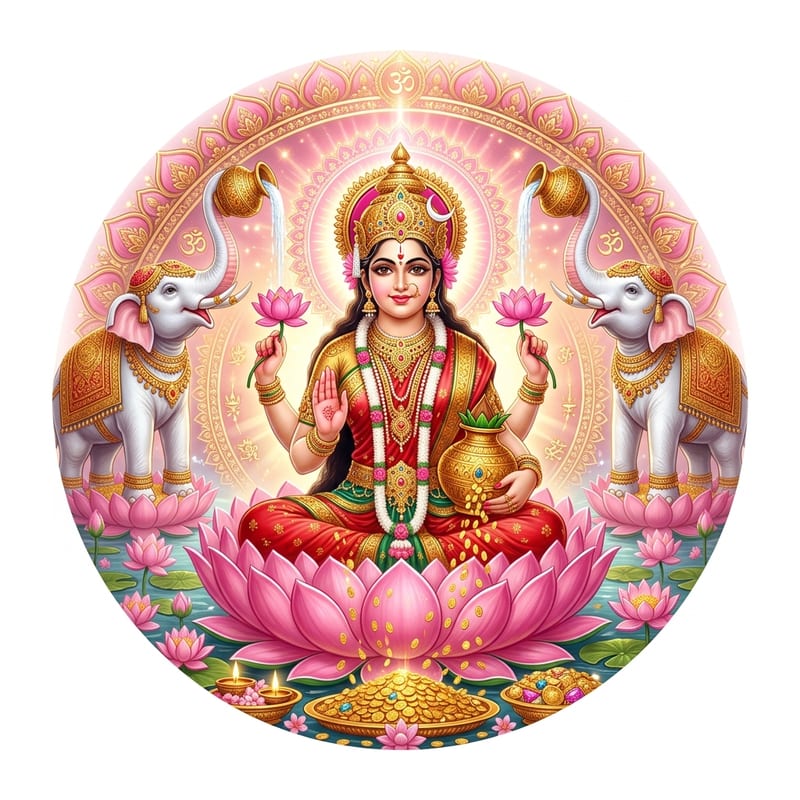
श्रीगणेशाय नमः ।
देव्युवाच
देवदेव महादेव त्रिकालज्ञ महेश्वर ।
करुणाकर देवेश भक्तानुग्रहकारक ॥ १॥
Shri Ganesha, salutations. The Goddess said: O God of Gods, Great God (Mahadeva), knower of the three times, Maheswara! O compassionate Lord of Gods, bestower of grace upon the devotees. (1)
अष्टोत्तरशतं लक्ष्म्याः श्रोतुमिच्छामि तत्त्वतः ।
ईश्वर उवाच
देवि साधु महाभागे महाभाग्यप्रदायकम् ।
सर्वैश्वर्यकरं पुण्यं सर्वपापप्रणाशनम् ॥ २॥
I wish to hear the one hundred and eight names of Lakshmi in their true essence.
Ishwara said: O Goddess! Well asked, O highly fortunate one. This is the bestower of great fortune. It grants all wealth, is merit-yielding, and destroys all sins. (2)
सर्वदारिद्र्यशमनं श्रवणाद्भुक्तिमुक्तिदम् ।
राजवश्यकरं दिव्यं गुह्याद्गुह्यतमं परम् ॥ ३॥
It destroys all poverty, and just by hearing it, gives both worldly enjoyment and liberation. It makes kings favorable, is divine, and is the most supreme secret among secrets. (3)
दुर्लभं सर्वदेवानां चतुःषष्टिकलास्पदम् ।
पद्मादीनां वरान्तानां विधीनां नित्यदायकम् ॥ ४॥
It is difficult even for all the gods to obtain, it is the abode of the sixty-four arts. It constantly bestows the benefits of rituals from the Padma to the Vara. (4)
समस्तदेवसंसेव्यमणिमाद्यष्टसिद्धिदम् ।
किमत्र बहुनोक्तेन देवी प्रत्यक्षदायकम् ॥ ५॥
It is served by all the gods and grants the eight mystical powers starting with Anima. What more can be said here? It makes the Goddess directly manifest. (5)
तव प्रीत्याद्य वक्ष्यामि समाहितमनाः शृणुम् ।
अष्टोत्तरशतस्यास्य महालक्ष्मीस्तु देवता ॥ ६॥
Out of love for you, I shall speak it today; listen with an attentive mind. The deity for this hymn of one hundred and eight names is Mahalakshmi. (6)
क्लींबीजपदमित्युक्तं शक्तिस्तु भुवनेश्वरी ।
अङ्गन्यासः करन्यास स इत्यादिः प्रकीर्तितः ॥ ७॥
The seed mantra (Bija) is said to be 'Kleem', and the power (Shakti) is Bhuvaneshwari. The bodily (Anga) and hand (Kara) Nyasas (ritual placements) are prescribed as follows. (7)
ध्यानम् -
वन्दे पद्मकरान् प्रसन्नवदनां सौभाग्यदां भाग्यदां
हस्ताभ्यामभयप्रदां मणिगणैर्नानाविधैर्भूषिताम् ।
भक्ताभीष्टफलप्रदां हरिहरब्रह्मादिभिः सेवितां
पार्श्वे पङ्कजशङ्खपद्मनिधिभिर्युक्तां सदा शक्तिभिः ॥ ८॥
Dhyanam (Meditation): I bow to her who holds lotuses in her hands, who has a smiling face, who bestows good fortune and luck, who grants fearlessness with her two hands, who is adorned with various types of jewels, who bestows the desired fruits to her devotees, who is served by Hari, Hara, Brahma and others, and who is always accompanied on her sides by the Shankha and Padma Nidhi (treasures) and divine powers. (8)
सरसिजनयने सरोजहस्ते धवलतरांशुकगन्धमाल्यशोभे ।
भगवति हरिवल्लभे मनोज्ञे त्रिभुवनभूतिकरि प्रसीद मह्यम् ॥ ९॥
O lotus-eyed one, with lotuses in your hands, radiant in dazzling white garments, fragrant paste, and garlands! O Divine Mother, Beloved of Hari, captivating one who creates the prosperity of the three worlds, be pleased with me! (9)
ॐ प्रकृतिं विकृतिं विद्यां सर्वभूतहितप्रदाम् ।
श्रद्धां विभूतिं सुरभिं नमामि परमात्मिकाम् ॥ १०॥
Om. I bow to the Supreme Soul who is Nature (Prakriti), the modification of nature (Vikriti), true Knowledge (Vidya), the provider of welfare for all beings, Faith (Shraddha), Wealth/Glory (Vibhuti), and the fragrant earth (Surabhi). (10)
वाचं पद्मालयां पद्मां शुचिं स्वाहां स्वधां सुधाम् ।
धन्यां हिरण्मयीं लक्ष्मीं नित्यपुष्टां विभावरीम् ॥ ११॥
I bow to Speech (Vach), the one residing in the lotus (Padmalaya), the lotus (Padma), the pure one (Shuchi), the oblation to gods (Swaha), the oblation to ancestors (Swadha), the nectar (Sudha), the blessed one (Dhanya), the golden one (Hiranmayi), Goddess Lakshmi, the eternally nourished one (Nitya Pushta), and the starry night (Vibhavari). (11)
अदितिं च दितिं दीप्तां वसुधां वसुधारिणीम् ।
नमामि कमलां कान्तां कामाक्षीं क्रोधसम्भवाम् ॥ १२॥
I bow to Aditi (Mother of Gods), Diti (Mother of Daityas), the radiant one (Dipta), the Earth (Vasudha), the bearer of wealth (Vasudharini), Kamala (Lotus), the beloved one (Kanta), the one with loving eyes (Kamakshi), and the one who subdues anger (Krodhasambhava). (12)
अनुग्रहप्रदां बुद्धिमनघां हरिवल्लभाम् ।
अशोकाममृतां दीप्तां लोकशोकविनाशिनीम् ॥ १३॥
I bow to the bestower of grace (Anugrahaprada), the Intellect (Buddhi), the sinless one (Anagha), the beloved of Hari (Harivallabha), the sorrowless one (Ashoka), the immortal one (Amrita), the radiant one (Dipta), and the destroyer of the world's sorrows (Lokashokavinashini). (13)
नमामि धर्मनिलयां करुणां लोकमातरम् ।
पद्मप्रियां पद्महस्तां पद्माक्षीं पद्मसुन्दरीम् ॥ १४॥
I bow to the abode of righteousness (Dharmanilaya), Compassion (Karuna), the Mother of the world (Lokamata), the lover of lotuses (Padmapriya), the one holding lotuses (Padmahasta), the lotus-eyed one (Padmakshi), and the beautiful one like a lotus (Padmasundari). (14)
पद्मोद्भवां पद्ममुखीं पद्मनाभप्रियां रमाम् ।
पद्ममालाधरां देवीं पद्मिनीं पद्मगन्धिनीम् ॥ १५॥
I bow to the one born of a lotus (Padmodbhava), the lotus-faced one (Padmamukhi), the beloved of the lotus-naveled Lord (Padmanabhapriya), Rama, the goddess wearing a garland of lotuses (Padmamaladhara), the lotus-like one (Padmini), and the one with the fragrance of lotuses (Padmagandhini). (15)
पुण्यगन्धां सुप्रसन्नां प्रसादाभिमुखीं प्रभाम् ।
नमामि चन्द्रवदनां चन्द्रां चन्द्रसहोदरीम् ॥ १६॥
I bow to the one with a holy fragrance (Punyagandha), the highly pleased one (Suprasanna), the one inclined to grant favors (Prasadabhimukhi), the radiance (Prabha), the moon-faced one (Chandravadana), the moon-like one (Chandra), and the sister of the moon (Chandrasahodari). (16)
चतुर्भुजां चन्द्ररूपामिन्दिरामिन्दुशीतलाम् ।
आह्लादजननीं पुष्टिं शिवां शिवकरीं सतीम् ॥ १७॥
I bow to the four-armed one (Chaturbhuja), the one with the form of the moon (Chandrarupa), Indira, the one cool as the moon (Indushitala), the mother of delight (Ahladajanani), nourishment (Pushti), the auspicious one (Shiva), the creator of auspiciousness (Shivakari), and the pure and truthful one (Sati). (17)
विमलां विश्वजननीं तुष्टिं दारिद्र्यनाशिनीम् ।
प्रीतिपुष्करिणीं शान्तां शुक्लमाल्याम्बरां श्रियम् ॥ १८॥
I bow to the pure one (Vimala), the mother of the universe (Vishvajanani), contentment (Tushti), the destroyer of poverty (Daridryanashini), the lotus pool of love (Pritipushkarini), the peaceful one (Shanta), the one wearing white garlands and garments (Shuklamalyambara), and the Goddess of wealth (Shri). (18)
भास्करीं बिल्वनिलयां वरारोहां यशस्विनीम् ।
वसुन्धरामुदाराङ्गीं हरिणीं हेममालिनीम् ॥ १९॥
I bow to the radiant one like the sun (Bhaskari), the one who dwells in the Bilva tree (Bilvanilaya), the most beautiful one (Vararoha), the famous one (Yashasvini), the earth (Vasundhara), the one with a generous/beautiful body (Udarangi), the deer-like one (Harini), and the one wearing a golden garland (Hemamalini). (19)
धनधान्यकरीं सिद्धिं सदा सौम्यां शुभप्रदाम् ।
नृपवेश्मगतानन्दां वरलक्ष्मीं वसुप्रदाम् ॥ २०॥
I bow to the one who grants wealth and grains (Dhanadhanyakari), accomplishment (Siddhi), the ever gentle one (Sada Soumya), the bestower of auspiciousness (Shubhaprada), the joy that resides in the palaces of kings (Nrupaveshmagatananda), the Goddess of boons (Varalakshmi), and the bestower of wealth (Vasuprada). (20)
शुभां हिरण्यप्राकारां समुद्रतनयां जयाम् ।
नमामि मङ्गलां देवीं विष्णुवक्षःस्थलस्थिताम् ॥ २१॥
I bow to the auspicious one (Shubha), the one surrounded by a golden fortress (Hiranyaprakara), the daughter of the ocean (Samudratanaya), the victorious one (Jaya), the Goddess of auspiciousness (Mangala), and the one who resides on the chest of Lord Vishnu (Vishnuvakshasthalasthita). (21)
विष्णुपत्नीं प्रसन्नाक्षीं नारायणसमाश्रिताम् ।
दारिद्र्यध्वंसिनीं देवीं सर्वोपद्रवहारिणीम् ॥ २२॥
I bow to the consort of Vishnu (Vishnupatni), the one with pleased eyes (Prasannakshi), the one who takes refuge in Narayana (Narayanasamashrita), the Goddess who destroys poverty (Daridryadhvamsini), and the remover of all afflictions (Sarvopadravaharini). (22)
नवदुर्गां महाकालीं ब्रह्मविष्णुशिवात्मिकाम् ।
त्रिकालज्ञानसम्पन्नां नमामि भुवनेश्वरीम् ॥ २३॥
I bow to the one who is the nine Durgas (Navadurga), Mahakali, the one whose essence is Brahma, Vishnu, and Shiva (Brahmavishnushivatmatmika), the one endowed with the knowledge of the three times (Trikalajnanasampanna), and the Goddess of the universe (Bhuvaneshwari). (23)
लक्ष्मीं क्षीरसमुद्रराजतनयां श्रीरङ्गधामेश्वरीं
दासीभूतसमस्तदेववनितां लोकैकदीपाङ्कुराम् ।
श्रीमन्मन्दकटाक्षलब्धविभवब्रह्मेन्द्रगङ्गाधरां
त्वां त्रैलोक्यकुटुम्बिनीं सरसिजां वन्दे मुकुन्दप्रियाम् ॥ २४॥
I bow to Lakshmi, the daughter of the king of the Milky Ocean, the Goddess of Srirangam, whose maidservants are the wives of all the gods, who is the sole beacon of light for the worlds, by whose gentle side-glance Brahma, Indra, and Shiva attained their glory, who considers the three worlds as her family, who is born of a lotus, and who is the beloved of Mukunda (Vishnu). (24)
मातर्नमामि कमले कमलायताक्षि
श्रीविष्णुहृत्कमलवासिनि विश्वमातः ।
क्षीरोदजे कमलकोमलगर्भगौरि लक्ष्मि
प्रसीद सततं नमतां शरण्ये ॥ २५॥
O Mother! I bow to You, O Kamala (Lotus), O one with eyes as wide as lotus petals! O one who resides in the lotus heart of Lord Vishnu, O Mother of the universe! O one born from the ocean of milk, O Gauri who is as soft as the core of a lotus, O Lakshmi! Please be constantly pleased with those who bow to You, O provider of refuge! (25)
त्रिकालं यो जपेद्विद्वान् षण्मासं विजितेन्द्रियः ।
दारिद्र्यध्वंसनं कृत्वा सर्वमाप्नोत्ययत्नतः ॥ २६॥
The wise man who, having conquered his senses, chants this three times a day for six months, will destroy his poverty and effortlessly attain everything. (26)
देविनामसहस्रेषु पुण्यमष्टोत्तरं शतम् ।
येन श्रियमवाप्नोति कोटिजन्मदरिद्रतः ॥ २७॥
Among the thousands of names of the Goddess, these one hundred and eight are the most meritorious. By these, even one who has been poor for ten million births will attain wealth. (27)
भृगुवारे शतं धीमान् पठेद्वत्सरमात्रकम् ।
अष्टैश्वर्यमवाप्नोति कुबेर इव भूतले ॥ २८॥
The wise person who reads this a hundred times on Fridays for just one year will attain the eight types of wealth and become like Kubera on earth. (28)
दारिद्र्यमोचनं नाम स्तोत्रमम्बापरं शतम् ।
येन श्रियमवाप्नोति कोटिजन्मदरिद्रितः ॥ २९॥
This hymn to the Mother, named the liberator from poverty, consisting of Her hundred and eight names, by which even one impoverished for ten million births attains prosperity. (29)
भुक्त्वा तु विपुलान् भोगानस्याः सायुज्यमाप्नुयात् ।
प्रातःकाले पठेन्नित्यं सर्वदुःखोपशान्तये ।
पठंस्तु चिन्तयेद्देवीं सर्वाभरणभूषिताम् ॥ ३०॥
Having enjoyed abundant worldly pleasures, one will attain union with Her. One should read this daily in the morning for the pacification of all sorrows. While reading, one should meditate on the Goddess adorned with all ornaments. (30)
॥ इति श्रीलक्ष्म्यष्टोत्तरशतनामस्तोत्रं सम्पूर्णम् ॥
Thus ends the Shri Lakshmi Ashtottara Shatanama Stotram.