
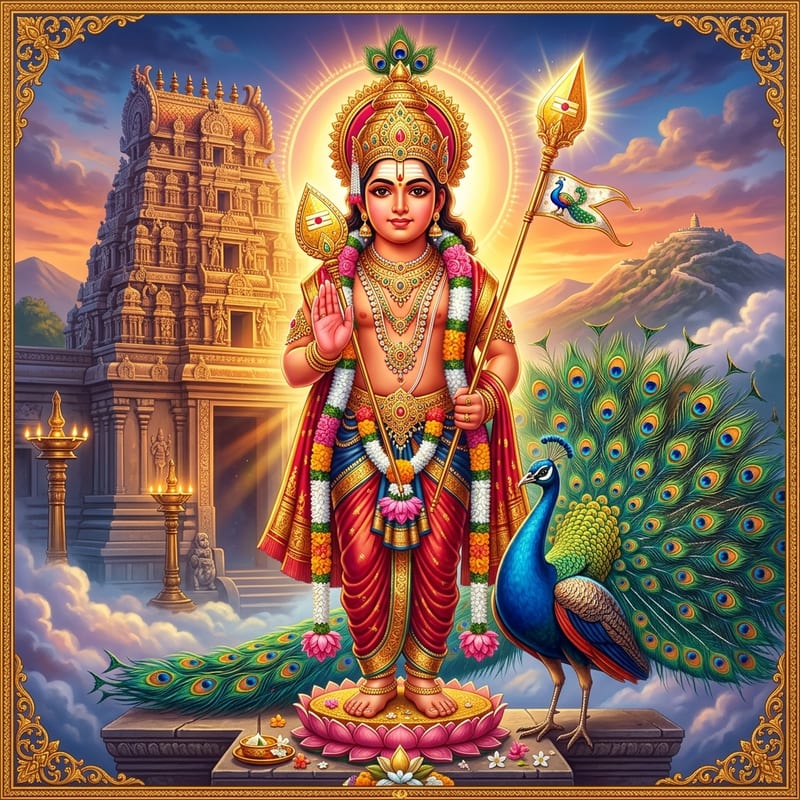
अस्य श्रीसुब्रह्मण्यकवचस्तोत्रमहामन्त्रस्य, ब्रह्मा ऋषिः, अनुष्टुप्छन्दः, श्रीसुब्रह्मण्यो देवता, ॐ नम इति बीजं, भगवत इति शक्तिः, सुब्रह्मण्यायेति कीलकं, श्रीसुब्रह्मण्य प्रसादसिद्ध्यर्थे जपे विनियोगः ॥
- अस्य (asya)of this
- श्री-सुब्रह्मण्य-कवच-स्तोत्र-महा-मन्त्रस्य (śrī-subrahmaṇya-kavaca-stotra-mahā-mantrasya)great mantra, the Śrī Subrahmaṇya Kavaca Stotra
- ब्रह्मा (brahmā)Brahmā
- ऋषिः (ṛṣiḥ)is the seer
- अनुष्टुप् छन्दः (anuṣṭup chandaḥ)Anuṣṭubh is the metre
- श्री-सुब्रह्मण्यः (śrī-subrahmaṇyaḥ)Śrī Subrahmaṇya
- देवता (devatā)is the deity
- ॐ नमः इति (oṃ namaḥ iti)the words "oṃ namaḥ"
- बीजम् (bījam)are the seed
- भगवते इति (bhagavate iti)the word "bhagavate"
- शक्तिः (śaktiḥ)is the power
- सुब्रह्मण्याय इति (subrahmaṇyāya iti)the word "subrahmaṇyāya"
- कीलकम् (kīlakam)is the pin that holds it fast
- श्री-सुब्रह्मण्य-प्रसाद-सिद्ध्यर्थे (śrī-subrahmaṇya-prasāda-siddhyarthe)for the winning of Śrī Subrahmaṇya’s grace
- जपे (jape)in the recitation
- विनियोगः (viniyogaḥ)is its appointed use
करन्यासः –
ॐ सां अङ्गुष्ठाभ्यां नमः ।
ॐ सीं तर्जनीभ्यां नमः ।
ॐ सूं मध्यमाभ्यां नमः ।
ॐ सैं अनामिकाभ्यां नमः ।
ॐ सौं कनिष्ठिकाभ्यां नमः ।
ॐ सः करतलकरपृष्ठाभ्यां नमः ॥
ॐ सां अङ्गुष्ठाभ्यां नमः ।
ॐ सीं तर्जनीभ्यां नमः ।
ॐ सूं मध्यमाभ्यां नमः ।
ॐ सैं अनामिकाभ्यां नमः ।
ॐ सौं कनिष्ठिकाभ्यां नमः ।
ॐ सः करतलकरपृष्ठाभ्यां नमः ॥
- करन्यासः (kara-nyāsaḥ)the placing of the syllables upon the hands
- ॐ सां (oṃ sāṃ)the first seed
- अङ्गुष्ठाभ्याम् नमः (aṅguṣṭhābhyāṃ namaḥ)salutation with the two thumbs
- ॐ सीं (oṃ sīṃ)the second
- तर्जनीभ्याम् नमः (tarjanībhyāṃ namaḥ)with the two forefingers
- ॐ सूं (oṃ sūṃ)the third
- मध्यमाभ्याम् नमः (madhyamābhyāṃ namaḥ)with the two middle fingers
- ॐ सैं (oṃ saiṃ)the fourth
- अनामिकाभ्याम् नमः (anāmikābhyāṃ namaḥ)with the two ring fingers
- ॐ सौं (oṃ sauṃ)the fifth
- कनिष्ठिकाभ्याम् नमः (kaniṣṭhikābhyāṃ namaḥ)with the two little fingers
- ॐ सः (oṃ saḥ)the sixth
- करतल-करपृष्ठाभ्याम् नमः (karatala-karapṛṣṭhābhyāṃ namaḥ)with the palms and the backs of the hands
अङ्गन्यासः –
ॐ सां हृदयाय नमः ।
ॐ सीं शिरसे स्वाहा ।
ॐ सूं शिखायै वषट् ।
ॐ सैं कवचाय हुम् ।
ॐ सौं नेत्रत्रयाय वौषट् ।
ॐ सः अस्त्राय फट् ।
भूर्भुवस्सुवरोमिति दिग्बन्धः ॥
ॐ सां हृदयाय नमः ।
ॐ सीं शिरसे स्वाहा ।
ॐ सूं शिखायै वषट् ।
ॐ सैं कवचाय हुम् ।
ॐ सौं नेत्रत्रयाय वौषट् ।
ॐ सः अस्त्राय फट् ।
भूर्भुवस्सुवरोमिति दिग्बन्धः ॥
- अङ्गन्यासः (aṅga-nyāsaḥ)the placing of the syllables upon the body
- ॐ सां (oṃ sāṃ)the first seed
- हृदयाय नमः (hṛdayāya namaḥ)salutation to the heart
- ॐ सीं (oṃ sīṃ)the second
- शिरसे स्वाहा (śirase svāhā)svāhā to the head
- ॐ सूं (oṃ sūṃ)the third
- शिखायै वषट् (śikhāyai vaṣaṭ)vaṣaṭ to the crown-lock
- ॐ सैं (oṃ saiṃ)the fourth
- कवचाय हुम् (kavacāya hum)hum to the armour
- ॐ सौं (oṃ sauṃ)the fifth
- नेत्र-त्रयाय वौषट् (netra-trayāya vauṣaṭ)vauṣaṭ to the three eyes
- ॐ सः (oṃ saḥ)the sixth
- अस्त्राय फट् (astrāya phaṭ)phaṭ to the weapon
- भूर्भुवस्सुवरोम् इति (bhūr bhuvas suvar om iti)with these words
- दिग्-बन्धः (dig-bandhaḥ)the quarters are bound about
ध्यानम् ।
सिन्दूरारुणमिन्दुकान्तिवदनं केयूरहारादिभिः
दिव्यैराभरणैर्विभूषिततनुं स्वर्गादिसौख्यप्रदम् ।
अम्भोजाभयशक्तिकुक्कुटधरं रक्ताङ्गरागोज्ज्वलं
सुब्रह्मण्यमुपास्महे प्रणमतां सर्वार्थसिद्धिप्रदम् ॥ [भीतिप्रणाशोद्यतम्]
लमित्यादि पञ्चपूजा ।
ॐ लं पृथिव्यात्मने सुब्रह्मण्याय गन्धं समर्पयामि ।
ॐ हं आकाशात्मने सुब्रह्मण्याय पुष्पाणि समर्पयामि ।
ॐ यं वाय्वात्मने सुब्रह्मण्याय धूपमाघ्रापयामि ।
ॐ रं अग्न्यात्मने सुब्रह्मण्याय दीपं दर्शयामि ।
ॐ वं अमृतात्मने सुब्रह्मण्याय स्वादन्नं निवेदयामि ।
ॐ सं सर्वात्मने सुब्रह्मण्याय सर्वोपचारान् समर्पयामि ।
- ध्यानम् (dhyānam)the meditation
- सिन्दूर-अरुण-इन्दु-कान्ति-वदनम् (sindūrāruṇa-indu-kānti-vadanam)his face red as vermilion and lovely as the moon
- केयूर-हार-आदिभिः (keyūra-hārādibhiḥ)with armlets, necklaces and the rest
- दिव्यैः आभरणैः (divyair ābharaṇaiḥ)with divine ornaments
- विभूषित-तनुम् (vibhūṣita-tanum)his body adorned
- स्वर्ग-आदि-सौख्य-प्रदम् (svargādi-saukhya-pradam)who grants the joys of heaven and of what lies past it
- अम्भोज-अभय-शक्ति-कुक्कुट-धरम् (ambhoja-abhaya-śakti-kukkuṭa-dharam)bearing lotus, the gesture of safety, the spear and the cock
- रक्त-अङ्ग-राग-उज्ज्वलम् (raktāṅga-rāgojjvalam)bright with red unguent on his limbs
- सुब्रह्मण्यम् (subrahmaṇyam)Subrahmaṇya
- उपास्महे (upāsmahe)we worship
- प्रणमताम् (praṇamatām)for those who bow to him
- सर्व-अर्थ-सिद्धि-प्रदम् (sarvārtha-siddhi-pradam)who brings every aim to fulfilment
- भीति-प्रणाश-उद्यतम् (bhīti-praṇāśodyatam)ever ready to make fear vanish – a variant for the closing phrase
- लम् इत्यादि पञ्च-पूजा (laṃ ityādi pañca-pūjā)the fivefold worship beginning with laṃ
- ॐ लं पृथिवी-आत्मने (oṃ laṃ pṛthivy-ātmane)to him whose self is earth
- गन्धम् समर्पयामि (gandhaṃ samarpayāmi)I offer sandal paste
- ॐ हं आकाश-आत्मने (oṃ haṃ ākāśātmane)to him whose self is space
- पुष्पाणि समर्पयामि (puṣpāṇi samarpayāmi)I offer flowers
- ॐ यं वायु-आत्मने (oṃ yaṃ vāyv-ātmane)to him whose self is wind
- धूपम् आघ्रापयामि (dhūpam āghrāpayāmi)I let the incense be breathed in
- ॐ रं अग्नि-आत्मने (oṃ raṃ agny-ātmane)to him whose self is fire
- दीपम् दर्शयामि (dīpaṃ darśayāmi)I show the lamp
- ॐ वं अमृत-आत्मने (oṃ vaṃ amṛtātmane)to him whose self is the nectar of deathlessness
- स्वादन्नम् निवेदयामि (svādannaṃ nivedayāmi)I present the sweet food
- ॐ सं सर्व-आत्मने (oṃ saṃ sarvātmane)to him whose self is all
- सर्व-उपचारान् समर्पयामि (sarvopacārān samarpayāmi)I offer every service of worship
कवचम् ।
सुब्रह्मण्योऽग्रतः पातु सेनानीः पातु पृष्ठतः ।
गुहो मां दक्षिणे पातु वह्निजः पातु वामतः ॥ 1 ॥
सुब्रह्मण्योऽग्रतः पातु सेनानीः पातु पृष्ठतः ।
गुहो मां दक्षिणे पातु वह्निजः पातु वामतः ॥ 1 ॥
- कवचम् (kavacam)the armour
- सुब्रह्मण्यः (subrahmaṇyaḥ)Subrahmaṇya
- अग्रतः (agrataḥ)in front
- पातु (pātu)may he guard
- सेनानीः (senānīḥ)the Commander
- पातु (pātu)may he guard
- पृष्ठतः (pṛṣṭhataḥ)behind
- गुहः (guhaḥ)Guha, the hidden one
- माम् (mām)me
- दक्षिणे (dakṣiṇe)on the right
- पातु (pātu)may he guard
- वह्निजः (vahnijaḥ)he who was born of fire
- पातु (pātu)may he guard
- वामतः (vāmataḥ)on the left
शिरः पातु महासेनः स्कन्दो रक्षेल्ललाटकम् ।
नेत्रे मे द्वादशाक्षश्च श्रोत्रे रक्षतु विश्वभृत् ॥ 2 ॥
नेत्रे मे द्वादशाक्षश्च श्रोत्रे रक्षतु विश्वभृत् ॥ 2 ॥
- शिरः (śiraḥ)the head
- पातु (pātu)may he guard
- महासेनः (mahāsenaḥ)Mahāsena, lord of the great host
- स्कन्दः (skandaḥ)Skanda
- रक्षेत् (rakṣet)may he protect
- ललाटकम् (lalāṭakam)the forehead
- नेत्रे (netre)the two eyes
- मे (me)my
- द्वादश-अक्षः (dvādaśākṣaḥ)the twelve-eyed one
- च (ca)and
- श्रोत्रे (śrotre)the two ears
- रक्षतु (rakṣatu)may he protect
- विश्व-भृत् (viśva-bhṛt)the bearer of the universe
मुखं मे षण्मुखः पातु नासिकां शङ्करात्मजः ।
ओष्ठौ वल्लीपतिः पातु जिह्वां पातु षडाननः ॥ 3 ॥
ओष्ठौ वल्लीपतिः पातु जिह्वां पातु षडाननः ॥ 3 ॥
- शङ्करात्मजः (Śaṅkarātmaja)son of Śaṅkara
- वल्लीपतिः (Vallīpati)lord of Vaḷḷī
- षडाननः (Ṣaḍānana)the six-faced lord
देवसेनापतिर्दन्तान् चिबुकं बहुलोद्भवः ।
कण्ठं तारकजित्पातु बाहू द्वादशबाहुकः ॥ 4 ॥
कण्ठं तारकजित्पातु बाहू द्वादशबाहुकः ॥ 4 ॥
- देव-सेना-पतिः (deva-senā-patiḥ)the lord of the army of the gods
- दन्तान् (dantān)the teeth
- चिबुकम् (cibukam)the chin
- बहुल-उद्भवः (bahulodbhavaḥ)he who arose among the Kṛttikās
- कण्ठम् (kaṇṭham)the throat
- तारक-जित् (tāraka-jit)the conqueror of Tāraka
- पातु (pātu)may he guard
- बाहू (bāhū)the two arms
- द्वादश-बाहुकः (dvādaśa-bāhukaḥ)the twelve-armed one
हस्तौ शक्तिधरः पातु वक्षः पातु शरोद्भवः ।
हृदयं वह्निभूः पातु कुक्षिं पात्वम्बिकासुतः ॥ 5 ॥
हृदयं वह्निभूः पातु कुक्षिं पात्वम्बिकासुतः ॥ 5 ॥
- हस्तौ (hastau)the two hands
- शक्ति-धरः (śakti-dharaḥ)the bearer of the spear
- पातु (pātu)may he guard
- वक्षः (vakṣaḥ)the chest
- पातु (pātu)may he guard
- शर-उद्भवः (śarodbhavaḥ)he born among the reeds
- हृदयम् (hṛdayam)the heart
- वह्नि-भूः (vahni-bhūḥ)he sprung from fire
- पातु (pātu)may he guard
- कुक्षिम् (kukṣim)the belly
- पातु (pātu)may he guard
- अम्बिका-सुतः (ambikā-sutaḥ)the son of Ambikā
नाभिं शम्भुसुतः पातु कटिं पातु हरात्मजः ।
ऊरू पातु गजारूढो जानू मे जाह्नवीसुतः ॥ 6 ॥
ऊरू पातु गजारूढो जानू मे जाह्नवीसुतः ॥ 6 ॥
- शम्भुसुतः (Śambhusuta)son of Śambhu / Śiva
- हरात्मजः (Harātmaja)son of Hara
- गजारूढो (Gajārūḍha)the mighty, elephant-conquering lord
- जाह्नवीसुतः (Jāhnavīsuta)son of the Gaṅgā
जङ्घे विशाखो मे पातु पादौ मे शिखिवाहनः ।
सर्वाण्यङ्गानि भूतेशः सर्वधातूंश्च पावकिः ॥ 7 ॥
सर्वाण्यङ्गानि भूतेशः सर्वधातूंश्च पावकिः ॥ 7 ॥
- शिखिवाहनः (Śikhivāhana)the peacock-vehicled lord
- भूतेशः (Bhūtēśa)lord of all beings
- पावकिः (Pāvaki)son of fire, Agni's son
सन्ध्याकाले निशीथिन्यां दिवा प्रातर्जलेऽग्निषु ।
दुर्गमे च महारण्ये राजद्वारे महाभये ॥ 8 ॥
दुर्गमे च महारण्ये राजद्वारे महाभये ॥ 8 ॥
- सन्ध्या-काले (sandhyā-kāle)at the twilight hour
- निशीथिन्याम् (niśīthinyām)in the depth of night
- दिवा (divā)by day
- प्रातः (prātaḥ)at dawn
- जले (jale)in water
- अग्निषु (agniṣu)in fires
- दुर्गमे (durgame)in trackless country
- च (ca)and
- महा-अरण्ये (mahāraṇye)in the great forest
- राज-द्वारे (rāja-dvāre)at a king’s gate
- महा-भये (mahā-bhaye)in great danger
तुमुले रण्यमध्ये च सर्वदुष्टमृगादिषु ।
चोरादिसाध्वसेऽभेद्ये ज्वरादिव्याधिपीडने ॥ 9 ॥
चोरादिसाध्वसेऽभेद्ये ज्वरादिव्याधिपीडने ॥ 9 ॥
- तुमुले (tumule)in the din of battle
- रण-मध्ये (raṇa-madhye)in the midst of the fight (printed रण्यमध्ये)
- च (ca)and
- सर्व-दुष्ट-मृग-आदिषु (sarva-duṣṭa-mṛgādiṣu)among all savage beasts and their like
- चोर-आदि-साध्वसे (corādi-sādhvase)in the terror of thieves and their kind
- अभेद्ये (abhedye)where there is no way through
- ज्वर-आदि-व्याधि-पीडने (jvarādi-vyādhi-pīḍane)in the torment of fever and every other disease
दुष्टग्रहादिभीतौ च दुर्निमित्तादिभीषणे ।
अस्त्रशस्त्रनिपाते च पातु मां क्रौञ्चरन्ध्रकृत् ॥ 10 ॥
अस्त्रशस्त्रनिपाते च पातु मां क्रौञ्चरन्ध्रकृत् ॥ 10 ॥
- दुष्ट-ग्रह-आदि-भीतौ (duṣṭa-grahādi-bhītau)in the fear of malign planets and the like
- च (ca)and
- दुर्निमित्त-आदि-भीषणे (durnimittādi-bhīṣaṇe)in the dread of ill omens
- अस्त्र-शस्त्र-निपाते (astra-śastra-nipāte)when missiles and blades come down
- च (ca)and
- पातु (pātu)may he guard
- माम् (mām)me
- क्रौञ्च-रन्ध्र-कृत् (krauñca-randhra-kṛt)he who bored the passage through Krauñca
यः सुब्रह्मण्यकवचं इष्टसिद्धिप्रदं पठेत् ।
तस्य तापत्रयं नास्ति सत्यं सत्यं वदाम्यहम् ॥ 11 ॥
तस्य तापत्रयं नास्ति सत्यं सत्यं वदाम्यहम् ॥ 11 ॥
- यः (yaḥ)whoever
- सुब्रह्मण्य-कवचम् (subrahmaṇya-kavacam)the Subrahmaṇya armour
- इष्ट-सिद्धि-प्रदम् (iṣṭa-siddhi-pradam)which grants what is longed for
- पठेत् (paṭhet)recites
- तस्य (tasya)for him
- ताप-त्रयम् (tāpa-trayam)the threefold burning – from oneself, from other creatures, from fate
- न अस्ति (nāsti)is not
- सत्यम् सत्यम् (satyaṃ satyam)truly, truly
- वदामि (vadāmi)do I say it
- अहम् (aham)I
धर्मार्थी लभते धर्ममर्थार्थी चार्थमाप्नुयात् ।
कामार्थी लभते कामं मोक्षार्थी मोक्षमाप्नुयात् ॥ 12 ॥
कामार्थी लभते कामं मोक्षार्थी मोक्षमाप्नुयात् ॥ 12 ॥
- धर्म-अर्थी (dharma-arthī)he who seeks right living
- लभते (labhate)gains
- धर्मम् (dharmam)it
- अर्थ-अर्थी (artha-arthī)he who seeks wealth
- च (ca)and
- अर्थम् (artham)wealth
- आप्नुयात् (āpnuyāt)would obtain
- काम-अर्थी (kāma-arthī)he who seeks pleasure
- लभते (labhate)gains
- कामम् (kāmam)it
- मोक्ष-अर्थी (mokṣa-arthī)he who seeks release
- मोक्षम् (mokṣam)release
- आप्नुयात् (āpnuyāt)would obtain
यत्र यत्र जपेद्भक्त्या तत्र सन्निहितो गुहः ।
पूजाप्रतिष्ठाकाले च जपकाले पठेदिदम् ॥ 13 ॥
पूजाप्रतिष्ठाकाले च जपकाले पठेदिदम् ॥ 13 ॥
- यत्र यत्र (yatra yatra)wherever
- जपेत् (japet)one murmurs it
- भक्त्या (bhaktyā)with devotion
- तत्र (tatra)there
- सन्निहितः (sannihitaḥ)close at hand
- गुहः (guhaḥ)is Guha
- पूजा-प्रतिष्ठा-काले (pūjā-pratiṣṭhā-kāle)at the hour of worship and of consecration
- च (ca)and
- जप-काले (japa-kāle)at the hour of recitation
- पठेत् (paṭhet)one should recite
- इदम् (idam)this
तेषामेव फलावाप्तिः महापातकनाशनम् ।
यः पठेच्छृणुयाद्भक्त्या नित्यं देवस्य सन्निधौ ।
सर्वान्कामानिह प्राप्य सोऽन्ते स्कन्दपुरं व्रजेत् ॥ 14 ॥
यः पठेच्छृणुयाद्भक्त्या नित्यं देवस्य सन्निधौ ।
सर्वान्कामानिह प्राप्य सोऽन्ते स्कन्दपुरं व्रजेत् ॥ 14 ॥
- तेषाम् एव (teṣām eva)of those very rites
- फल-अवाप्तिः (phala-avāptiḥ)the fruit is gained
- महा-पातक-नाशनम् (mahā-pātaka-nāśanam)and the great sins are undone
- यः (yaḥ)whoever
- पठेत् (paṭhet)recites
- शृणुयात् (śṛṇuyāt)or hears
- भक्त्या (bhaktyā)with devotion
- नित्यम् (nityam)day after day
- देवस्य सन्निधौ (devasya sannidhau)in the presence of the god
- सर्वान् कामान् (sarvān kāmān)all that he desires
- इह (iha)here in this world
- प्राप्य (prāpya)having obtained
- सः (saḥ)he
- अन्ते (ante)at the end
- स्कन्द-पुरम् (skanda-puram)to Skanda’s city
- व्रजेत् (vrajet)would go
उत्तरन्यासः ॥
करन्यासः –
ॐ सां अङ्गुष्ठाभ्यां नमः ।
ॐ सीं तर्जनीभ्यां नमः ।
ॐ सूं मध्यमाभ्यां नमः ।
ॐ सैं अनामिकाभ्यां नमः ।
ॐ सौं कनिष्ठिकाभ्यां नमः ।
ॐ सः करतलकरपृष्ठाभ्यां नमः ॥
करन्यासः –
ॐ सां अङ्गुष्ठाभ्यां नमः ।
ॐ सीं तर्जनीभ्यां नमः ।
ॐ सूं मध्यमाभ्यां नमः ।
ॐ सैं अनामिकाभ्यां नमः ।
ॐ सौं कनिष्ठिकाभ्यां नमः ।
ॐ सः करतलकरपृष्ठाभ्यां नमः ॥
- उत्तर-न्यासः (uttara-nyāsaḥ)the closing placement, made once the hymn is finished
- करन्यासः (kara-nyāsaḥ)upon the hands
- ॐ सां (oṃ sāṃ)the first seed
- अङ्गुष्ठाभ्याम् नमः (aṅguṣṭhābhyāṃ namaḥ)salutation with the two thumbs
- ॐ सीं (oṃ sīṃ)the second
- तर्जनीभ्याम् नमः (tarjanībhyāṃ namaḥ)with the two forefingers
- ॐ सूं (oṃ sūṃ)the third
- मध्यमाभ्याम् नमः (madhyamābhyāṃ namaḥ)with the two middle fingers
- ॐ सैं (oṃ saiṃ)the fourth
- अनामिकाभ्याम् नमः (anāmikābhyāṃ namaḥ)with the two ring fingers
- ॐ सौं (oṃ sauṃ)the fifth
- कनिष्ठिकाभ्याम् नमः (kaniṣṭhikābhyāṃ namaḥ)with the two little fingers
- ॐ सः (oṃ saḥ)the sixth
- करतल-करपृष्ठाभ्याम् नमः (karatala-karapṛṣṭhābhyāṃ namaḥ)with the palms and the backs of the hands
अङ्गन्यासः –
ॐ सां हृदयाय नमः ।
ॐ सीं शिरसे स्वाहा ।
ॐ सूं शिखायै वषट् ।
ॐ सैं कवचाय हुम् ।
ॐ सौं नेत्रत्रयाय वौषट् ।
ॐ सः अस्त्राय फट् ।
भूर्भुवस्सुवरोमिति दिग्विमोकः ॥
ॐ सां हृदयाय नमः ।
ॐ सीं शिरसे स्वाहा ।
ॐ सूं शिखायै वषट् ।
ॐ सैं कवचाय हुम् ।
ॐ सौं नेत्रत्रयाय वौषट् ।
ॐ सः अस्त्राय फट् ।
भूर्भुवस्सुवरोमिति दिग्विमोकः ॥
- अङ्गन्यासः (aṅga-nyāsaḥ)the placing of the syllables upon the body
- ॐ सां (oṃ sāṃ)the first seed
- हृदयाय नमः (hṛdayāya namaḥ)salutation to the heart
- ॐ सीं (oṃ sīṃ)the second
- शिरसे स्वाहा (śirase svāhā)svāhā to the head
- ॐ सूं (oṃ sūṃ)the third
- शिखायै वषट् (śikhāyai vaṣaṭ)vaṣaṭ to the crown-lock
- ॐ सैं (oṃ saiṃ)the fourth
- कवचाय हुम् (kavacāya hum)hum to the armour
- ॐ सौं (oṃ sauṃ)the fifth
- नेत्र-त्रयाय वौषट् (netra-trayāya vauṣaṭ)vauṣaṭ to the three eyes
- ॐ सः (oṃ saḥ)the sixth
- अस्त्राय फट् (astrāya phaṭ)phaṭ to the weapon
- भूर्भुवस्सुवरोम् इति (bhūr bhuvas suvar om iti)with these words
- दिग्-विमोकः (dig-vimokaḥ)the quarters that were bound are now released
इति श्री सुब्रह्मण्य कवच स्तोत्रम् ।