
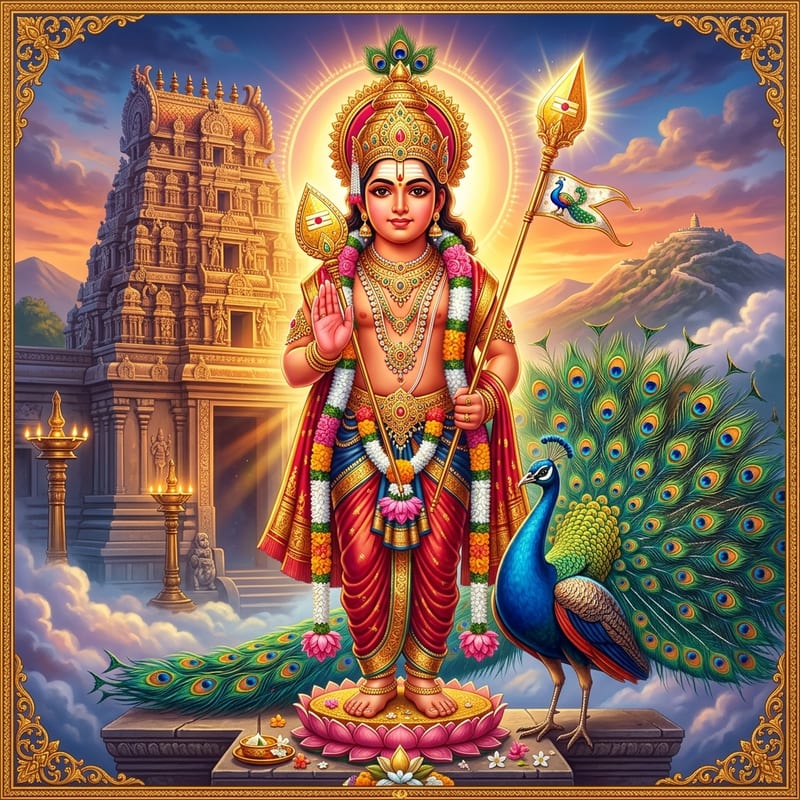
അസ്യ ശ്രീസുബ്രഹ്മണ്യകവചസ്തോത്രമഹാമന്ത്രസ്യ, ബ്രഹ്മാ ഋഷിഃ, അനുഷ്ടുപ്ഛന്ദഃ, ശ്രീസുബ്രഹ്മണ്യോ ദേവതാ, ഓം നമ ഇതി ബീജം, ഭഗവത ഇതി ശക്തിഃ, സുബ്രഹ്മണ്യായേതി കീലകം, ശ്രീസുബ്രഹ്മണ്യ പ്രസാദസിദ്ധ്യര്ഥേ ജപേ വിനിയോഗഃ ॥
- അസ്യ (asya)of this
- ശ്രീ-സുബ്രഹ്മണ്യ-കവച-സ്തോത്ര-മഹാ-മന്ത്രസ്യ (śrī-subrahmaṇya-kavaca-stotra-mahā-mantrasya)great mantra, the Śrī Subrahmaṇya Kavaca Stotra
- ബ്രഹ്മാ (brahmā)Brahmā
- ഋഷിഃ (ṛṣiḥ)is the seer
- അനുഷ്ടുപ് ഛന്ദഃ (anuṣṭup chandaḥ)Anuṣṭubh is the metre
- ശ്രീ-സുബ്രഹ്മണ്യഃ (śrī-subrahmaṇyaḥ)Śrī Subrahmaṇya
- ദേവതാ (devatā)is the deity
- ഓം നമഃ ഇതി (oṃ namaḥ iti)the words "oṃ namaḥ"
- ബീജമ് (bījam)are the seed
- ഭഗവതേ ഇതി (bhagavate iti)the word "bhagavate"
- ശക്തിഃ (śaktiḥ)is the power
- സുബ്രഹ്മണ്യായ ഇതി (subrahmaṇyāya iti)the word "subrahmaṇyāya"
- കീലകമ് (kīlakam)is the pin that holds it fast
- ശ്രീ-സുബ്രഹ്മണ്യ-പ്രസാദ-സിദ്ധ്യര്ഥേ (śrī-subrahmaṇya-prasāda-siddhyarthe)for the winning of Śrī Subrahmaṇya’s grace
- ജപേ (jape)in the recitation
- വിനിയോഗഃ (viniyogaḥ)is its appointed use
കരന്യാസഃ –
ഓം സാം അങ്ഗുഷ്ഠാഭ്യാം നമഃ ।
ഓം സീം തര്ജനീഭ്യാം നമഃ ।
ഓം സൂം മധ്യമാഭ്യാം നമഃ ।
ഓം സൈം അനാമികാഭ്യാം നമഃ ।
ഓം സൌം കനിഷ്ഠികാഭ്യാം നമഃ ।
ഓം സഃ കരതലകരപൃഷ്ഠാഭ്യാം നമഃ ॥
ഓം സാം അങ്ഗുഷ്ഠാഭ്യാം നമഃ ।
ഓം സീം തര്ജനീഭ്യാം നമഃ ।
ഓം സൂം മധ്യമാഭ്യാം നമഃ ।
ഓം സൈം അനാമികാഭ്യാം നമഃ ।
ഓം സൌം കനിഷ്ഠികാഭ്യാം നമഃ ।
ഓം സഃ കരതലകരപൃഷ്ഠാഭ്യാം നമഃ ॥
- കരന്യാസഃ (kara-nyāsaḥ)the placing of the syllables upon the hands
- ഓം സാം (oṃ sāṃ)the first seed
- അങ്ഗുഷ്ഠാഭ്യാമ് നമഃ (aṅguṣṭhābhyāṃ namaḥ)salutation with the two thumbs
- ഓം സീം (oṃ sīṃ)the second
- തര്ജനീഭ്യാമ് നമഃ (tarjanībhyāṃ namaḥ)with the two forefingers
- ഓം സൂം (oṃ sūṃ)the third
- മധ്യമാഭ്യാമ് നമഃ (madhyamābhyāṃ namaḥ)with the two middle fingers
- ഓം സൈം (oṃ saiṃ)the fourth
- അനാമികാഭ്യാമ് നമഃ (anāmikābhyāṃ namaḥ)with the two ring fingers
- ഓം സൌം (oṃ sauṃ)the fifth
- കനിഷ്ഠികാഭ്യാമ് നമഃ (kaniṣṭhikābhyāṃ namaḥ)with the two little fingers
- ഓം സഃ (oṃ saḥ)the sixth
- കരതല-കരപൃഷ്ഠാഭ്യാമ് നമഃ (karatala-karapṛṣṭhābhyāṃ namaḥ)with the palms and the backs of the hands
അങ്ഗന്യാസഃ –
ഓം സാം ഹൃദയായ നമഃ ।
ഓം സീം ശിരസേ സ്വാഹാ ।
ഓം സൂം ശിഖായൈ വഷട് ।
ഓം സൈം കവചായ ഹുമ് ।
ഓം സൌം നേത്രത്രയായ വൌഷട് ।
ഓം സഃ അസ്ത്രായ ഫട് ।
ഭൂര്ഭുവസ്സുവരോമിതി ദിഗ്ബന്ധഃ ॥
ഓം സാം ഹൃദയായ നമഃ ।
ഓം സീം ശിരസേ സ്വാഹാ ।
ഓം സൂം ശിഖായൈ വഷട് ।
ഓം സൈം കവചായ ഹുമ് ।
ഓം സൌം നേത്രത്രയായ വൌഷട് ।
ഓം സഃ അസ്ത്രായ ഫട് ।
ഭൂര്ഭുവസ്സുവരോമിതി ദിഗ്ബന്ധഃ ॥
- അങ്ഗന്യാസഃ (aṅga-nyāsaḥ)the placing of the syllables upon the body
- ഓം സാം (oṃ sāṃ)the first seed
- ഹൃദയായ നമഃ (hṛdayāya namaḥ)salutation to the heart
- ഓം സീം (oṃ sīṃ)the second
- ശിരസേ സ്വാഹാ (śirase svāhā)svāhā to the head
- ഓം സൂം (oṃ sūṃ)the third
- ശിഖായൈ വഷട് (śikhāyai vaṣaṭ)vaṣaṭ to the crown-lock
- ഓം സൈം (oṃ saiṃ)the fourth
- കവചായ ഹുമ് (kavacāya hum)hum to the armour
- ഓം സൌം (oṃ sauṃ)the fifth
- നേത്ര-ത്രയായ വൌഷട് (netra-trayāya vauṣaṭ)vauṣaṭ to the three eyes
- ഓം സഃ (oṃ saḥ)the sixth
- അസ്ത്രായ ഫട് (astrāya phaṭ)phaṭ to the weapon
- ഭൂര്ഭുവസ്സുവരോമ് ഇതി (bhūr bhuvas suvar om iti)with these words
- ദിഗ്-ബന്ധഃ (dig-bandhaḥ)the quarters are bound about
ധ്യാനമ് ।
സിന്ദൂരാരുണമിന്ദുകാന്തിവദനം കേയൂരഹാരാദിഭിഃ
ദിവ്യൈരാഭരണൈര്വിഭൂഷിതതനും സ്വര്ഗാദിസൌഖ്യപ്രദമ് ।
അമ്ഭോജാഭയശക്തികുക്കുടധരം രക്താങ്ഗരാഗോജ്ജ്വലം
സുബ്രഹ്മണ്യമുപാസ്മഹേ പ്രണമതാം സര്വാര്ഥസിദ്ധിപ്രദമ് ॥ [ഭീതിപ്രണാശോദ്യതമ്]
ലമിത്യാദി പഞ്ചപൂജാ ।
ഓം ലം പൃഥിവ്യാത്മനേ സുബ്രഹ്മണ്യായ ഗന്ധം സമര്പയാമി ।
ഓം ഹം ആകാശാത്മനേ സുബ്രഹ്മണ്യായ പുഷ്പാണി സമര്പയാമി ।
ഓം യം വായ്വാത്മനേ സുബ്രഹ്മണ്യായ ധൂപമാഘ്രാപയാമി ।
ഓം രം അഗ്ന്യാത്മനേ സുബ്രഹ്മണ്യായ ദീപം ദര്ശയാമി ।
ഓം വം അമൃതാത്മനേ സുബ്രഹ്മണ്യായ സ്വാദന്നം നിവേദയാമി ।
ഓം സം സര്വാത്മനേ സുബ്രഹ്മണ്യായ സര്വോപചാരാന് സമര്പയാമി ।
- ധ്യാനമ് (dhyānam)the meditation
- സിന്ദൂര-അരുണ-ഇന്ദു-കാന്തി-വദനമ് (sindūrāruṇa-indu-kānti-vadanam)his face red as vermilion and lovely as the moon
- കേയൂര-ഹാര-ആദിഭിഃ (keyūra-hārādibhiḥ)with armlets, necklaces and the rest
- ദിവ്യൈഃ ആഭരണൈഃ (divyair ābharaṇaiḥ)with divine ornaments
- വിഭൂഷിത-തനുമ് (vibhūṣita-tanum)his body adorned
- സ്വര്ഗ-ആദി-സൌഖ്യ-പ്രദമ് (svargādi-saukhya-pradam)who grants the joys of heaven and of what lies past it
- അമ്ഭോജ-അഭയ-ശക്തി-കുക്കുട-ധരമ് (ambhoja-abhaya-śakti-kukkuṭa-dharam)bearing lotus, the gesture of safety, the spear and the cock
- രക്ത-അങ്ഗ-രാഗ-ഉജ്ജ്വലമ് (raktāṅga-rāgojjvalam)bright with red unguent on his limbs
- സുബ്രഹ്മണ്യമ് (subrahmaṇyam)Subrahmaṇya
- ഉപാസ്മഹേ (upāsmahe)we worship
- പ്രണമതാമ് (praṇamatām)for those who bow to him
- സര്വ-അര്ഥ-സിദ്ധി-പ്രദമ് (sarvārtha-siddhi-pradam)who brings every aim to fulfilment
- ഭീതി-പ്രണാശ-ഉദ്യതമ് (bhīti-praṇāśodyatam)ever ready to make fear vanish – a variant for the closing phrase
- ലമ് ഇത്യാദി പഞ്ച-പൂജാ (laṃ ityādi pañca-pūjā)the fivefold worship beginning with laṃ
- ഓം ലം പൃഥിവീ-ആത്മനേ (oṃ laṃ pṛthivy-ātmane)to him whose self is earth
- ഗന്ധമ് സമര്പയാമി (gandhaṃ samarpayāmi)I offer sandal paste
- ഓം ഹം ആകാശ-ആത്മനേ (oṃ haṃ ākāśātmane)to him whose self is space
- പുഷ്പാണി സമര്പയാമി (puṣpāṇi samarpayāmi)I offer flowers
- ഓം യം വായു-ആത്മനേ (oṃ yaṃ vāyv-ātmane)to him whose self is wind
- ധൂപമ് ആഘ്രാപയാമി (dhūpam āghrāpayāmi)I let the incense be breathed in
- ഓം രം അഗ്നി-ആത്മനേ (oṃ raṃ agny-ātmane)to him whose self is fire
- ദീപമ് ദര്ശയാമി (dīpaṃ darśayāmi)I show the lamp
- ഓം വം അമൃത-ആത്മനേ (oṃ vaṃ amṛtātmane)to him whose self is the nectar of deathlessness
- സ്വാദന്നമ് നിവേദയാമി (svādannaṃ nivedayāmi)I present the sweet food
- ഓം സം സര്വ-ആത്മനേ (oṃ saṃ sarvātmane)to him whose self is all
- സര്വ-ഉപചാരാന് സമര്പയാമി (sarvopacārān samarpayāmi)I offer every service of worship
കവചമ് ।
സുബ്രഹ്മണ്യോഽഗ്രതഃ പാതു സേനാനീഃ പാതു പൃഷ്ഠതഃ ।
ഗുഹോ മാം ദക്ഷിണേ പാതു വഹ്നിജഃ പാതു വാമതഃ ॥ 1 ॥
സുബ്രഹ്മണ്യോഽഗ്രതഃ പാതു സേനാനീഃ പാതു പൃഷ്ഠതഃ ।
ഗുഹോ മാം ദക്ഷിണേ പാതു വഹ്നിജഃ പാതു വാമതഃ ॥ 1 ॥
- കവചമ് (kavacam)the armour
- സുബ്രഹ്മണ്യഃ (subrahmaṇyaḥ)Subrahmaṇya
- അഗ്രതഃ (agrataḥ)in front
- പാതു (pātu)may he guard
- സേനാനീഃ (senānīḥ)the Commander
- പാതു (pātu)may he guard
- പൃഷ്ഠതഃ (pṛṣṭhataḥ)behind
- ഗുഹഃ (guhaḥ)Guha, the hidden one
- മാമ് (mām)me
- ദക്ഷിണേ (dakṣiṇe)on the right
- പാതു (pātu)may he guard
- വഹ്നിജഃ (vahnijaḥ)he who was born of fire
- പാതു (pātu)may he guard
- വാമതഃ (vāmataḥ)on the left
ശിരഃ പാതു മഹാസേനഃ സ്കന്ദോ രക്ഷേല്ലലാടകമ് ।
നേത്രേ മേ ദ്വാദശാക്ഷശ്ച ശ്രോത്രേ രക്ഷതു വിശ്വഭൃത് ॥ 2 ॥
നേത്രേ മേ ദ്വാദശാക്ഷശ്ച ശ്രോത്രേ രക്ഷതു വിശ്വഭൃത് ॥ 2 ॥
- ശിരഃ (śiraḥ)the head
- പാതു (pātu)may he guard
- മഹാസേനഃ (mahāsenaḥ)Mahāsena, lord of the great host
- സ്കന്ദഃ (skandaḥ)Skanda
- രക്ഷേത് (rakṣet)may he protect
- ലലാടകമ് (lalāṭakam)the forehead
- നേത്രേ (netre)the two eyes
- മേ (me)my
- ദ്വാദശ-അക്ഷഃ (dvādaśākṣaḥ)the twelve-eyed one
- ച (ca)and
- ശ്രോത്രേ (śrotre)the two ears
- രക്ഷതു (rakṣatu)may he protect
- വിശ്വ-ഭൃത് (viśva-bhṛt)the bearer of the universe
മുഖം മേ ഷണ്മുഖഃ പാതു നാസികാം ശങ്കരാത്മജഃ ।
ഓഷ്ഠൌ വല്ലീപതിഃ പാതു ജിഹ്വാം പാതു ഷഡാനനഃ ॥ 3 ॥
ഓഷ്ഠൌ വല്ലീപതിഃ പാതു ജിഹ്വാം പാതു ഷഡാനനഃ ॥ 3 ॥
- ശങ്കരാത്മജഃ (Śaṅkarātmaja)son of Śaṅkara
- വല്ലീപതിഃ (Vallīpati)lord of Vaḷḷī
- ഷഡാനനഃ (Ṣaḍānana)the six-faced lord
ദേവസേനാപതിര്ദന്താന് ചിബുകം ബഹുലോദ്ഭവഃ ।
കണ്ഠം താരകജിത്പാതു ബാഹൂ ദ്വാദശബാഹുകഃ ॥ 4 ॥
കണ്ഠം താരകജിത്പാതു ബാഹൂ ദ്വാദശബാഹുകഃ ॥ 4 ॥
- ദേവ-സേനാ-പതിഃ (deva-senā-patiḥ)the lord of the army of the gods
- ദന്താന് (dantān)the teeth
- ചിബുകമ് (cibukam)the chin
- ബഹുല-ഉദ്ഭവഃ (bahulodbhavaḥ)he who arose among the Kṛttikās
- കണ്ഠമ് (kaṇṭham)the throat
- താരക-ജിത് (tāraka-jit)the conqueror of Tāraka
- പാതു (pātu)may he guard
- ബാഹൂ (bāhū)the two arms
- ദ്വാദശ-ബാഹുകഃ (dvādaśa-bāhukaḥ)the twelve-armed one
ഹസ്തൌ ശക്തിധരഃ പാതു വക്ഷഃ പാതു ശരോദ്ഭവഃ ।
ഹൃദയം വഹ്നിഭൂഃ പാതു കുക്ഷിം പാത്വമ്ബികാസുതഃ ॥ 5 ॥
ഹൃദയം വഹ്നിഭൂഃ പാതു കുക്ഷിം പാത്വമ്ബികാസുതഃ ॥ 5 ॥
- ഹസ്തൌ (hastau)the two hands
- ശക്തി-ധരഃ (śakti-dharaḥ)the bearer of the spear
- പാതു (pātu)may he guard
- വക്ഷഃ (vakṣaḥ)the chest
- പാതു (pātu)may he guard
- ശര-ഉദ്ഭവഃ (śarodbhavaḥ)he born among the reeds
- ഹൃദയമ് (hṛdayam)the heart
- വഹ്നി-ഭൂഃ (vahni-bhūḥ)he sprung from fire
- പാതു (pātu)may he guard
- കുക്ഷിമ് (kukṣim)the belly
- പാതു (pātu)may he guard
- അമ്ബികാ-സുതഃ (ambikā-sutaḥ)the son of Ambikā
നാഭിം ശമ്ഭുസുതഃ പാതു കടിം പാതു ഹരാത്മജഃ ।
ഊരൂ പാതു ഗജാരൂഢോ ജാനൂ മേ ജാഹ്നവീസുതഃ ॥ 6 ॥
ഊരൂ പാതു ഗജാരൂഢോ ജാനൂ മേ ജാഹ്നവീസുതഃ ॥ 6 ॥
- ശമ്ഭുസുതഃ (Śambhusuta)son of Śambhu / Śiva
- ഹരാത്മജഃ (Harātmaja)son of Hara
- ഗജാരൂഢോ (Gajārūḍha)the mighty, elephant-conquering lord
- ജാഹ്നവീസുതഃ (Jāhnavīsuta)son of the Gaṅgā
ജങ്ഘേ വിശാഖോ മേ പാതു പാദൌ മേ ശിഖിവാഹനഃ ।
സര്വാണ്യങ്ഗാനി ഭൂതേശഃ സര്വധാതൂംശ്ച പാവകിഃ ॥ 7 ॥
സര്വാണ്യങ്ഗാനി ഭൂതേശഃ സര്വധാതൂംശ്ച പാവകിഃ ॥ 7 ॥
- ശിഖിവാഹനഃ (Śikhivāhana)the peacock-vehicled lord
- ഭൂതേശഃ (Bhūtēśa)lord of all beings
- പാവകിഃ (Pāvaki)son of fire, Agni's son
സന്ധ്യാകാലേ നിശീഥിന്യാം ദിവാ പ്രാതര്ജലേഽഗ്നിഷു ।
ദുര്ഗമേ ച മഹാരണ്യേ രാജദ്വാരേ മഹാഭയേ ॥ 8 ॥
ദുര്ഗമേ ച മഹാരണ്യേ രാജദ്വാരേ മഹാഭയേ ॥ 8 ॥
- സന്ധ്യാ-കാലേ (sandhyā-kāle)at the twilight hour
- നിശീഥിന്യാമ് (niśīthinyām)in the depth of night
- ദിവാ (divā)by day
- പ്രാതഃ (prātaḥ)at dawn
- ജലേ (jale)in water
- അഗ്നിഷു (agniṣu)in fires
- ദുര്ഗമേ (durgame)in trackless country
- ച (ca)and
- മഹാ-അരണ്യേ (mahāraṇye)in the great forest
- രാജ-ദ്വാരേ (rāja-dvāre)at a king’s gate
- മഹാ-ഭയേ (mahā-bhaye)in great danger
തുമുലേ രണ്യമധ്യേ ച സര്വദുഷ്ടമൃഗാദിഷു ।
ചോരാദിസാധ്വസേഽഭേദ്യേ ജ്വരാദിവ്യാധിപീഡനേ ॥ 9 ॥
ചോരാദിസാധ്വസേഽഭേദ്യേ ജ്വരാദിവ്യാധിപീഡനേ ॥ 9 ॥
- തുമുലേ (tumule)in the din of battle
- രണ-മധ്യേ (raṇa-madhye)in the midst of the fight (printed रण्यमध्ये)
- ച (ca)and
- സര്വ-ദുഷ്ട-മൃഗ-ആദിഷു (sarva-duṣṭa-mṛgādiṣu)among all savage beasts and their like
- ചോര-ആദി-സാധ്വസേ (corādi-sādhvase)in the terror of thieves and their kind
- അഭേദ്യേ (abhedye)where there is no way through
- ജ്വര-ആദി-വ്യാധി-പീഡനേ (jvarādi-vyādhi-pīḍane)in the torment of fever and every other disease
ദുഷ്ടഗ്രഹാദിഭീതൌ ച ദുര്നിമിത്താദിഭീഷണേ ।
അസ്ത്രശസ്ത്രനിപാതേ ച പാതു മാം ക്രൌഞ്ചരന്ധ്രകൃത് ॥ 10 ॥
അസ്ത്രശസ്ത്രനിപാതേ ച പാതു മാം ക്രൌഞ്ചരന്ധ്രകൃത് ॥ 10 ॥
- ദുഷ്ട-ഗ്രഹ-ആദി-ഭീതൌ (duṣṭa-grahādi-bhītau)in the fear of malign planets and the like
- ച (ca)and
- ദുര്നിമിത്ത-ആദി-ഭീഷണേ (durnimittādi-bhīṣaṇe)in the dread of ill omens
- അസ്ത്ര-ശസ്ത്ര-നിപാതേ (astra-śastra-nipāte)when missiles and blades come down
- ച (ca)and
- പാതു (pātu)may he guard
- മാമ് (mām)me
- ക്രൌഞ്ച-രന്ധ്ര-കൃത് (krauñca-randhra-kṛt)he who bored the passage through Krauñca
യഃ സുബ്രഹ്മണ്യകവചം ഇഷ്ടസിദ്ധിപ്രദം പഠേത് ।
തസ്യ താപത്രയം നാസ്തി സത്യം സത്യം വദാമ്യഹമ് ॥ 11 ॥
തസ്യ താപത്രയം നാസ്തി സത്യം സത്യം വദാമ്യഹമ് ॥ 11 ॥
- യഃ (yaḥ)whoever
- സുബ്രഹ്മണ്യ-കവചമ് (subrahmaṇya-kavacam)the Subrahmaṇya armour
- ഇഷ്ട-സിദ്ധി-പ്രദമ് (iṣṭa-siddhi-pradam)which grants what is longed for
- പഠേത് (paṭhet)recites
- തസ്യ (tasya)for him
- താപ-ത്രയമ് (tāpa-trayam)the threefold burning – from oneself, from other creatures, from fate
- ന അസ്തി (nāsti)is not
- സത്യമ് സത്യമ് (satyaṃ satyam)truly, truly
- വദാമി (vadāmi)do I say it
- അഹമ് (aham)I
ധര്മാര്ഥീ ലഭതേ ധര്മമര്ഥാര്ഥീ ചാര്ഥമാപ്നുയാത് ।
കാമാര്ഥീ ലഭതേ കാമം മോക്ഷാര്ഥീ മോക്ഷമാപ്നുയാത് ॥ 12 ॥
കാമാര്ഥീ ലഭതേ കാമം മോക്ഷാര്ഥീ മോക്ഷമാപ്നുയാത് ॥ 12 ॥
- ധര്മ-അര്ഥീ (dharma-arthī)he who seeks right living
- ലഭതേ (labhate)gains
- ധര്മമ് (dharmam)it
- അര്ഥ-അര്ഥീ (artha-arthī)he who seeks wealth
- ച (ca)and
- അര്ഥമ് (artham)wealth
- ആപ്നുയാത് (āpnuyāt)would obtain
- കാമ-അര്ഥീ (kāma-arthī)he who seeks pleasure
- ലഭതേ (labhate)gains
- കാമമ് (kāmam)it
- മോക്ഷ-അര്ഥീ (mokṣa-arthī)he who seeks release
- മോക്ഷമ് (mokṣam)release
- ആപ്നുയാത് (āpnuyāt)would obtain
യത്ര യത്ര ജപേദ്ഭക്ത്യാ തത്ര സന്നിഹിതോ ഗുഹഃ ।
പൂജാപ്രതിഷ്ഠാകാലേ ച ജപകാലേ പഠേദിദമ് ॥ 13 ॥
പൂജാപ്രതിഷ്ഠാകാലേ ച ജപകാലേ പഠേദിദമ് ॥ 13 ॥
- യത്ര യത്ര (yatra yatra)wherever
- ജപേത് (japet)one murmurs it
- ഭക്ത്യാ (bhaktyā)with devotion
- തത്ര (tatra)there
- സന്നിഹിതഃ (sannihitaḥ)close at hand
- ഗുഹഃ (guhaḥ)is Guha
- പൂജാ-പ്രതിഷ്ഠാ-കാലേ (pūjā-pratiṣṭhā-kāle)at the hour of worship and of consecration
- ച (ca)and
- ജപ-കാലേ (japa-kāle)at the hour of recitation
- പഠേത് (paṭhet)one should recite
- ഇദമ് (idam)this
തേഷാമേവ ഫലാവാപ്തിഃ മഹാപാതകനാശനമ് ।
യഃ പഠേച്ഛൃണുയാദ്ഭക്ത്യാ നിത്യം ദേവസ്യ സന്നിധൌ ।
സര്വാന്കാമാനിഹ പ്രാപ്യ സോഽന്തേ സ്കന്ദപുരം വ്രജേത് ॥ 14 ॥
യഃ പഠേച്ഛൃണുയാദ്ഭക്ത്യാ നിത്യം ദേവസ്യ സന്നിധൌ ।
സര്വാന്കാമാനിഹ പ്രാപ്യ സോഽന്തേ സ്കന്ദപുരം വ്രജേത് ॥ 14 ॥
- തേഷാമ് ഏവ (teṣām eva)of those very rites
- ഫല-അവാപ്തിഃ (phala-avāptiḥ)the fruit is gained
- മഹാ-പാതക-നാശനമ് (mahā-pātaka-nāśanam)and the great sins are undone
- യഃ (yaḥ)whoever
- പഠേത് (paṭhet)recites
- ശൃണുയാത് (śṛṇuyāt)or hears
- ഭക്ത്യാ (bhaktyā)with devotion
- നിത്യമ് (nityam)day after day
- ദേവസ്യ സന്നിധൌ (devasya sannidhau)in the presence of the god
- സര്വാന് കാമാന് (sarvān kāmān)all that he desires
- ഇഹ (iha)here in this world
- പ്രാപ്യ (prāpya)having obtained
- സഃ (saḥ)he
- അന്തേ (ante)at the end
- സ്കന്ദ-പുരമ് (skanda-puram)to Skanda’s city
- വ്രജേത് (vrajet)would go
ഉത്തരന്യാസഃ ॥
കരന്യാസഃ –
ഓം സാം അങ്ഗുഷ്ഠാഭ്യാം നമഃ ।
ഓം സീം തര്ജനീഭ്യാം നമഃ ।
ഓം സൂം മധ്യമാഭ്യാം നമഃ ।
ഓം സൈം അനാമികാഭ്യാം നമഃ ।
ഓം സൌം കനിഷ്ഠികാഭ്യാം നമഃ ।
ഓം സഃ കരതലകരപൃഷ്ഠാഭ്യാം നമഃ ॥
കരന്യാസഃ –
ഓം സാം അങ്ഗുഷ്ഠാഭ്യാം നമഃ ।
ഓം സീം തര്ജനീഭ്യാം നമഃ ।
ഓം സൂം മധ്യമാഭ്യാം നമഃ ।
ഓം സൈം അനാമികാഭ്യാം നമഃ ।
ഓം സൌം കനിഷ്ഠികാഭ്യാം നമഃ ।
ഓം സഃ കരതലകരപൃഷ്ഠാഭ്യാം നമഃ ॥
- ഉത്തര-ന്യാസഃ (uttara-nyāsaḥ)the closing placement, made once the hymn is finished
- കരന്യാസഃ (kara-nyāsaḥ)upon the hands
- ഓം സാം (oṃ sāṃ)the first seed
- അങ്ഗുഷ്ഠാഭ്യാമ് നമഃ (aṅguṣṭhābhyāṃ namaḥ)salutation with the two thumbs
- ഓം സീം (oṃ sīṃ)the second
- തര്ജനീഭ്യാമ് നമഃ (tarjanībhyāṃ namaḥ)with the two forefingers
- ഓം സൂം (oṃ sūṃ)the third
- മധ്യമാഭ്യാമ് നമഃ (madhyamābhyāṃ namaḥ)with the two middle fingers
- ഓം സൈം (oṃ saiṃ)the fourth
- അനാമികാഭ്യാമ് നമഃ (anāmikābhyāṃ namaḥ)with the two ring fingers
- ഓം സൌം (oṃ sauṃ)the fifth
- കനിഷ്ഠികാഭ്യാമ് നമഃ (kaniṣṭhikābhyāṃ namaḥ)with the two little fingers
- ഓം സഃ (oṃ saḥ)the sixth
- കരതല-കരപൃഷ്ഠാഭ്യാമ് നമഃ (karatala-karapṛṣṭhābhyāṃ namaḥ)with the palms and the backs of the hands
അങ്ഗന്യാസഃ –
ഓം സാം ഹൃദയായ നമഃ ।
ഓം സീം ശിരസേ സ്വാഹാ ।
ഓം സൂം ശിഖായൈ വഷട് ।
ഓം സൈം കവചായ ഹുമ് ।
ഓം സൌം നേത്രത്രയായ വൌഷട് ।
ഓം സഃ അസ്ത്രായ ഫട് ।
ഭൂര്ഭുവസ്സുവരോമിതി ദിഗ്വിമോകഃ ॥
ഓം സാം ഹൃദയായ നമഃ ।
ഓം സീം ശിരസേ സ്വാഹാ ।
ഓം സൂം ശിഖായൈ വഷട് ।
ഓം സൈം കവചായ ഹുമ് ।
ഓം സൌം നേത്രത്രയായ വൌഷട് ।
ഓം സഃ അസ്ത്രായ ഫട് ।
ഭൂര്ഭുവസ്സുവരോമിതി ദിഗ്വിമോകഃ ॥
- അങ്ഗന്യാസഃ (aṅga-nyāsaḥ)the placing of the syllables upon the body
- ഓം സാം (oṃ sāṃ)the first seed
- ഹൃദയായ നമഃ (hṛdayāya namaḥ)salutation to the heart
- ഓം സീം (oṃ sīṃ)the second
- ശിരസേ സ്വാഹാ (śirase svāhā)svāhā to the head
- ഓം സൂം (oṃ sūṃ)the third
- ശിഖായൈ വഷട് (śikhāyai vaṣaṭ)vaṣaṭ to the crown-lock
- ഓം സൈം (oṃ saiṃ)the fourth
- കവചായ ഹുമ് (kavacāya hum)hum to the armour
- ഓം സൌം (oṃ sauṃ)the fifth
- നേത്ര-ത്രയായ വൌഷട് (netra-trayāya vauṣaṭ)vauṣaṭ to the three eyes
- ഓം സഃ (oṃ saḥ)the sixth
- അസ്ത്രായ ഫട് (astrāya phaṭ)phaṭ to the weapon
- ഭൂര്ഭുവസ്സുവരോമ് ഇതി (bhūr bhuvas suvar om iti)with these words
- ദിഗ്-വിമോകഃ (dig-vimokaḥ)the quarters that were bound are now released
ഇതി ശ്രീ സുബ്രഹ്മണ്യ കവച സ്തോത്രമ് ।