
অস্য শ্রীসুব্রহ্মণ্যকবচস্তোত্রমহামন্ত্রস্য, ব্রহ্মা ঋষিঃ, অনুষ্টুপ্ছন্দঃ, শ্রীসুব্রহ্মণ্যো দেবতা, ওঁ নম ইতি বীজং, ভগবত ইতি শক্তিঃ, সুব্রহ্মণ্যাযেতি কীলকং, শ্রীসুব্রহ্মণ্য প্রসাদসিদ্ধ্যর্থে জপে বিনিযোগঃ ॥
- অস্য (asya)of this
- শ্রী-সুব্রহ্মণ্য-কবচ-স্তোত্র-মহা-মন্ত্রস্য (śrī-subrahmaṇya-kavaca-stotra-mahā-mantrasya)great mantra, the Śrī Subrahmaṇya Kavaca Stotra
- ব্রহ্মা (brahmā)Brahmā
- ঋষিঃ (ṛṣiḥ)is the seer
- অনুষ্টুপ্ ছন্দঃ (anuṣṭup chandaḥ)Anuṣṭubh is the metre
- শ্রী-সুব্রহ্মণ্যঃ (śrī-subrahmaṇyaḥ)Śrī Subrahmaṇya
- দেবতা (devatā)is the deity
- ওঁ নমঃ ইতি (oṃ namaḥ iti)the words "oṃ namaḥ"
- বীজম্ (bījam)are the seed
- ভগবতে ইতি (bhagavate iti)the word "bhagavate"
- শক্তিঃ (śaktiḥ)is the power
- সুব্রহ্মণ্যায ইতি (subrahmaṇyāya iti)the word "subrahmaṇyāya"
- কীলকম্ (kīlakam)is the pin that holds it fast
- শ্রী-সুব্রহ্মণ্য-প্রসাদ-সিদ্ধ্যর্থে (śrī-subrahmaṇya-prasāda-siddhyarthe)for the winning of Śrī Subrahmaṇya’s grace
- জপে (jape)in the recitation
- বিনিযোগঃ (viniyogaḥ)is its appointed use
করন্যাসঃ –
ওঁ সাং অঙ্গুষ্ঠাভ্যাং নমঃ ।
ওঁ সীং তর্জনীভ্যাং নমঃ ।
ওঁ সূং মধ্যমাভ্যাং নমঃ ।
ওঁ সৈং অনামিকাভ্যাং নমঃ ।
ওঁ সৌং কনিষ্ঠিকাভ্যাং নমঃ ।
ওঁ সঃ করতলকরপৃষ্ঠাভ্যাং নমঃ ॥
ওঁ সাং অঙ্গুষ্ঠাভ্যাং নমঃ ।
ওঁ সীং তর্জনীভ্যাং নমঃ ।
ওঁ সূং মধ্যমাভ্যাং নমঃ ।
ওঁ সৈং অনামিকাভ্যাং নমঃ ।
ওঁ সৌং কনিষ্ঠিকাভ্যাং নমঃ ।
ওঁ সঃ করতলকরপৃষ্ঠাভ্যাং নমঃ ॥
- করন্যাসঃ (kara-nyāsaḥ)the placing of the syllables upon the hands
- ওঁ সাং (oṃ sāṃ)the first seed
- অঙ্গুষ্ঠাভ্যাম্ নমঃ (aṅguṣṭhābhyāṃ namaḥ)salutation with the two thumbs
- ওঁ সীং (oṃ sīṃ)the second
- তর্জনীভ্যাম্ নমঃ (tarjanībhyāṃ namaḥ)with the two forefingers
- ওঁ সূং (oṃ sūṃ)the third
- মধ্যমাভ্যাম্ নমঃ (madhyamābhyāṃ namaḥ)with the two middle fingers
- ওঁ সৈং (oṃ saiṃ)the fourth
- অনামিকাভ্যাম্ নমঃ (anāmikābhyāṃ namaḥ)with the two ring fingers
- ওঁ সৌং (oṃ sauṃ)the fifth
- কনিষ্ঠিকাভ্যাম্ নমঃ (kaniṣṭhikābhyāṃ namaḥ)with the two little fingers
- ওঁ সঃ (oṃ saḥ)the sixth
- করতল-করপৃষ্ঠাভ্যাম্ নমঃ (karatala-karapṛṣṭhābhyāṃ namaḥ)with the palms and the backs of the hands
অঙ্গন্যাসঃ –
ওঁ সাং হৃদযায নমঃ ।
ওঁ সীং শিরসে স্বাহা ।
ওঁ সূং শিখাযৈ বষট্ ।
ওঁ সৈং কবচায হুম্ ।
ওঁ সৌং নেত্রত্রযায বৌষট্ ।
ওঁ সঃ অস্ত্রায ফট্ ।
ভূর্ভুবস্সুবরোমিতি দিগ্বন্ধঃ ॥
ওঁ সাং হৃদযায নমঃ ।
ওঁ সীং শিরসে স্বাহা ।
ওঁ সূং শিখাযৈ বষট্ ।
ওঁ সৈং কবচায হুম্ ।
ওঁ সৌং নেত্রত্রযায বৌষট্ ।
ওঁ সঃ অস্ত্রায ফট্ ।
ভূর্ভুবস্সুবরোমিতি দিগ্বন্ধঃ ॥
- অঙ্গন্যাসঃ (aṅga-nyāsaḥ)the placing of the syllables upon the body
- ওঁ সাং (oṃ sāṃ)the first seed
- হৃদযায নমঃ (hṛdayāya namaḥ)salutation to the heart
- ওঁ সীং (oṃ sīṃ)the second
- শিরসে স্বাহা (śirase svāhā)svāhā to the head
- ওঁ সূং (oṃ sūṃ)the third
- শিখাযৈ বষট্ (śikhāyai vaṣaṭ)vaṣaṭ to the crown-lock
- ওঁ সৈং (oṃ saiṃ)the fourth
- কবচায হুম্ (kavacāya hum)hum to the armour
- ওঁ সৌং (oṃ sauṃ)the fifth
- নেত্র-ত্রযায বৌষট্ (netra-trayāya vauṣaṭ)vauṣaṭ to the three eyes
- ওঁ সঃ (oṃ saḥ)the sixth
- অস্ত্রায ফট্ (astrāya phaṭ)phaṭ to the weapon
- ভূর্ভুবস্সুবরোম্ ইতি (bhūr bhuvas suvar om iti)with these words
- দিগ্-বন্ধঃ (dig-bandhaḥ)the quarters are bound about
ধ্যানম্ ।
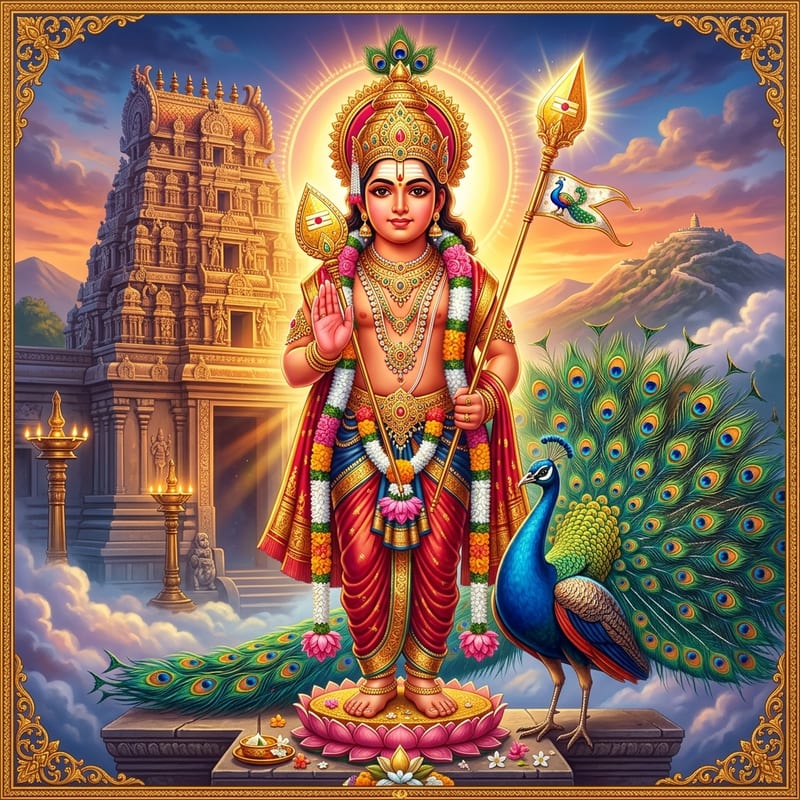
সিন্দূরারুণমিন্দুকান্তিবদনং কেযূরহারাদিভিঃ
দিব্যৈরাভরণৈর্বিভূষিততনুং স্বর্গাদিসৌখ্যপ্রদম্ ।
অম্ভোজাভযশক্তিকুক্কুটধরং রক্তাঙ্গরাগোজ্জ্বলং
সুব্রহ্মণ্যমুপাস্মহে প্রণমতাং সর্বার্থসিদ্ধিপ্রদম্ ॥ [ভীতিপ্রণাশোদ্যতম্]
লমিত্যাদি পঞ্চপূজা ।
ওঁ লং পৃথিব্যাত্মনে সুব্রহ্মণ্যায গন্ধং সমর্পযামি ।
ওঁ হং আকাশাত্মনে সুব্রহ্মণ্যায পুষ্পাণি সমর্পযামি ।
ওঁ যং বায্বাত্মনে সুব্রহ্মণ্যায ধূপমাঘ্রাপযামি ।
ওঁ রং অগ্ন্যাত্মনে সুব্রহ্মণ্যায দীপং দর্শযামি ।
ওঁ বং অমৃতাত্মনে সুব্রহ্মণ্যায স্বাদন্নং নিবেদযামি ।
ওঁ সং সর্বাত্মনে সুব্রহ্মণ্যায সর্বোপচারান্ সমর্পযামি ।
- ধ্যানম্ (dhyānam)the meditation
- সিন্দূর-অরুণ-ইন্দু-কান্তি-বদনম্ (sindūrāruṇa-indu-kānti-vadanam)his face red as vermilion and lovely as the moon
- কেযূর-হার-আদিভিঃ (keyūra-hārādibhiḥ)with armlets, necklaces and the rest
- দিব্যৈঃ আভরণৈঃ (divyair ābharaṇaiḥ)with divine ornaments
- বিভূষিত-তনুম্ (vibhūṣita-tanum)his body adorned
- স্বর্গ-আদি-সৌখ্য-প্রদম্ (svargādi-saukhya-pradam)who grants the joys of heaven and of what lies past it
- অম্ভোজ-অভয-শক্তি-কুক্কুট-ধরম্ (ambhoja-abhaya-śakti-kukkuṭa-dharam)bearing lotus, the gesture of safety, the spear and the cock
- রক্ত-অঙ্গ-রাগ-উজ্জ্বলম্ (raktāṅga-rāgojjvalam)bright with red unguent on his limbs
- সুব্রহ্মণ্যম্ (subrahmaṇyam)Subrahmaṇya
- উপাস্মহে (upāsmahe)we worship
- প্রণমতাম্ (praṇamatām)for those who bow to him
- সর্ব-অর্থ-সিদ্ধি-প্রদম্ (sarvārtha-siddhi-pradam)who brings every aim to fulfilment
- ভীতি-প্রণাশ-উদ্যতম্ (bhīti-praṇāśodyatam)ever ready to make fear vanish – a variant for the closing phrase
- লম্ ইত্যাদি পঞ্চ-পূজা (laṃ ityādi pañca-pūjā)the fivefold worship beginning with laṃ
- ওঁ লং পৃথিবী-আত্মনে (oṃ laṃ pṛthivy-ātmane)to him whose self is earth
- গন্ধম্ সমর্পযামি (gandhaṃ samarpayāmi)I offer sandal paste
- ওঁ হং আকাশ-আত্মনে (oṃ haṃ ākāśātmane)to him whose self is space
- পুষ্পাণি সমর্পযামি (puṣpāṇi samarpayāmi)I offer flowers
- ওঁ যং বাযু-আত্মনে (oṃ yaṃ vāyv-ātmane)to him whose self is wind
- ধূপম্ আঘ্রাপযামি (dhūpam āghrāpayāmi)I let the incense be breathed in
- ওঁ রং অগ্নি-আত্মনে (oṃ raṃ agny-ātmane)to him whose self is fire
- দীপম্ দর্শযামি (dīpaṃ darśayāmi)I show the lamp
- ওঁ বং অমৃত-আত্মনে (oṃ vaṃ amṛtātmane)to him whose self is the nectar of deathlessness
- স্বাদন্নম্ নিবেদযামি (svādannaṃ nivedayāmi)I present the sweet food
- ওঁ সং সর্ব-আত্মনে (oṃ saṃ sarvātmane)to him whose self is all
- সর্ব-উপচারান্ সমর্পযামি (sarvopacārān samarpayāmi)I offer every service of worship
কবচম্ ।
সুব্রহ্মণ্যোঽগ্রতঃ পাতু সেনানীঃ পাতু পৃষ্ঠতঃ ।
গুহো মাং দক্ষিণে পাতু বহ্নিজঃ পাতু বামতঃ ॥ 1 ॥
সুব্রহ্মণ্যোঽগ্রতঃ পাতু সেনানীঃ পাতু পৃষ্ঠতঃ ।
গুহো মাং দক্ষিণে পাতু বহ্নিজঃ পাতু বামতঃ ॥ 1 ॥
- কবচম্ (kavacam)the armour
- সুব্রহ্মণ্যঃ (subrahmaṇyaḥ)Subrahmaṇya
- অগ্রতঃ (agrataḥ)in front
- পাতু (pātu)may he guard
- সেনানীঃ (senānīḥ)the Commander
- পাতু (pātu)may he guard
- পৃষ্ঠতঃ (pṛṣṭhataḥ)behind
- গুহঃ (guhaḥ)Guha, the hidden one
- মাম্ (mām)me
- দক্ষিণে (dakṣiṇe)on the right
- পাতু (pātu)may he guard
- বহ্নিজঃ (vahnijaḥ)he who was born of fire
- পাতু (pātu)may he guard
- বামতঃ (vāmataḥ)on the left
শিরঃ পাতু মহাসেনঃ স্কন্দো রক্ষেল্ললাটকম্ ।
নেত্রে মে দ্বাদশাক্ষশ্চ শ্রোত্রে রক্ষতু বিশ্বভৃত্ ॥ 2 ॥
নেত্রে মে দ্বাদশাক্ষশ্চ শ্রোত্রে রক্ষতু বিশ্বভৃত্ ॥ 2 ॥
- শিরঃ (śiraḥ)the head
- পাতু (pātu)may he guard
- মহাসেনঃ (mahāsenaḥ)Mahāsena, lord of the great host
- স্কন্দঃ (skandaḥ)Skanda
- রক্ষেত্ (rakṣet)may he protect
- ললাটকম্ (lalāṭakam)the forehead
- নেত্রে (netre)the two eyes
- মে (me)my
- দ্বাদশ-অক্ষঃ (dvādaśākṣaḥ)the twelve-eyed one
- চ (ca)and
- শ্রোত্রে (śrotre)the two ears
- রক্ষতু (rakṣatu)may he protect
- বিশ্ব-ভৃত্ (viśva-bhṛt)the bearer of the universe
মুখং মে ষণ্মুখঃ পাতু নাসিকাং শঙ্করাত্মজঃ ।
ওষ্ঠৌ বল্লীপতিঃ পাতু জিহ্বাং পাতু ষডাননঃ ॥ 3 ॥
ওষ্ঠৌ বল্লীপতিঃ পাতু জিহ্বাং পাতু ষডাননঃ ॥ 3 ॥
- শঙ্করাত্মজঃ (Śaṅkarātmaja)son of Śaṅkara
- বল্লীপতিঃ (Vallīpati)lord of Vaḷḷī
- ষডাননঃ (Ṣaḍānana)the six-faced lord
দেবসেনাপতির্দন্তান্ চিবুকং বহুলোদ্ভবঃ ।
কণ্ঠং তারকজিত্পাতু বাহূ দ্বাদশবাহুকঃ ॥ 4 ॥
কণ্ঠং তারকজিত্পাতু বাহূ দ্বাদশবাহুকঃ ॥ 4 ॥
- দেব-সেনা-পতিঃ (deva-senā-patiḥ)the lord of the army of the gods
- দন্তান্ (dantān)the teeth
- চিবুকম্ (cibukam)the chin
- বহুল-উদ্ভবঃ (bahulodbhavaḥ)he who arose among the Kṛttikās
- কণ্ঠম্ (kaṇṭham)the throat
- তারক-জিত্ (tāraka-jit)the conqueror of Tāraka
- পাতু (pātu)may he guard
- বাহূ (bāhū)the two arms
- দ্বাদশ-বাহুকঃ (dvādaśa-bāhukaḥ)the twelve-armed one
হস্তৌ শক্তিধরঃ পাতু বক্ষঃ পাতু শরোদ্ভবঃ ।
হৃদযং বহ্নিভূঃ পাতু কুক্ষিং পাত্বম্বিকাসুতঃ ॥ 5 ॥
হৃদযং বহ্নিভূঃ পাতু কুক্ষিং পাত্বম্বিকাসুতঃ ॥ 5 ॥
- হস্তৌ (hastau)the two hands
- শক্তি-ধরঃ (śakti-dharaḥ)the bearer of the spear
- পাতু (pātu)may he guard
- বক্ষঃ (vakṣaḥ)the chest
- পাতু (pātu)may he guard
- শর-উদ্ভবঃ (śarodbhavaḥ)he born among the reeds
- হৃদযম্ (hṛdayam)the heart
- বহ্নি-ভূঃ (vahni-bhūḥ)he sprung from fire
- পাতু (pātu)may he guard
- কুক্ষিম্ (kukṣim)the belly
- পাতু (pātu)may he guard
- অম্বিকা-সুতঃ (ambikā-sutaḥ)the son of Ambikā
নাভিং শম্ভুসুতঃ পাতু কটিং পাতু হরাত্মজঃ ।
ঊরূ পাতু গজারূঢো জানূ মে জাহ্নবীসুতঃ ॥ 6 ॥
ঊরূ পাতু গজারূঢো জানূ মে জাহ্নবীসুতঃ ॥ 6 ॥
- শম্ভুসুতঃ (Śambhusuta)son of Śambhu / Śiva
- হরাত্মজঃ (Harātmaja)son of Hara
- গজারূঢো (Gajārūḍha)the mighty, elephant-conquering lord
- জাহ্নবীসুতঃ (Jāhnavīsuta)son of the Gaṅgā
জঙ্ঘে বিশাখো মে পাতু পাদৌ মে শিখিবাহনঃ ।
সর্বাণ্যঙ্গানি ভূতেশঃ সর্বধাতূংশ্চ পাবকিঃ ॥ 7 ॥
সর্বাণ্যঙ্গানি ভূতেশঃ সর্বধাতূংশ্চ পাবকিঃ ॥ 7 ॥
- শিখিবাহনঃ (Śikhivāhana)the peacock-vehicled lord
- ভূতেশঃ (Bhūtēśa)lord of all beings
- পাবকিঃ (Pāvaki)son of fire, Agni's son
সন্ধ্যাকালে নিশীথিন্যাং দিবা প্রাতর্জলেঽগ্নিষু ।
দুর্গমে চ মহারণ্যে রাজদ্বারে মহাভযে ॥ 8 ॥
দুর্গমে চ মহারণ্যে রাজদ্বারে মহাভযে ॥ 8 ॥
- সন্ধ্যা-কালে (sandhyā-kāle)at the twilight hour
- নিশীথিন্যাম্ (niśīthinyām)in the depth of night
- দিবা (divā)by day
- প্রাতঃ (prātaḥ)at dawn
- জলে (jale)in water
- অগ্নিষু (agniṣu)in fires
- দুর্গমে (durgame)in trackless country
- চ (ca)and
- মহা-অরণ্যে (mahāraṇye)in the great forest
- রাজ-দ্বারে (rāja-dvāre)at a king’s gate
- মহা-ভযে (mahā-bhaye)in great danger
তুমুলে রণ্যমধ্যে চ সর্বদুষ্টমৃগাদিষু ।
চোরাদিসাধ্বসেঽভেদ্যে জ্বরাদিব্যাধিপীডনে ॥ 9 ॥
চোরাদিসাধ্বসেঽভেদ্যে জ্বরাদিব্যাধিপীডনে ॥ 9 ॥
- তুমুলে (tumule)in the din of battle
- রণ-মধ্যে (raṇa-madhye)in the midst of the fight (printed रण्यमध्ये)
- চ (ca)and
- সর্ব-দুষ্ট-মৃগ-আদিষু (sarva-duṣṭa-mṛgādiṣu)among all savage beasts and their like
- চোর-আদি-সাধ্বসে (corādi-sādhvase)in the terror of thieves and their kind
- অভেদ্যে (abhedye)where there is no way through
- জ্বর-আদি-ব্যাধি-পীডনে (jvarādi-vyādhi-pīḍane)in the torment of fever and every other disease
দুষ্টগ্রহাদিভীতৌ চ দুর্নিমিত্তাদিভীষণে ।
অস্ত্রশস্ত্রনিপাতে চ পাতু মাং ক্রৌঞ্চরন্ধ্রকৃত্ ॥ 10 ॥
অস্ত্রশস্ত্রনিপাতে চ পাতু মাং ক্রৌঞ্চরন্ধ্রকৃত্ ॥ 10 ॥
- দুষ্ট-গ্রহ-আদি-ভীতৌ (duṣṭa-grahādi-bhītau)in the fear of malign planets and the like
- চ (ca)and
- দুর্নিমিত্ত-আদি-ভীষণে (durnimittādi-bhīṣaṇe)in the dread of ill omens
- অস্ত্র-শস্ত্র-নিপাতে (astra-śastra-nipāte)when missiles and blades come down
- চ (ca)and
- পাতু (pātu)may he guard
- মাম্ (mām)me
- ক্রৌঞ্চ-রন্ধ্র-কৃত্ (krauñca-randhra-kṛt)he who bored the passage through Krauñca
যঃ সুব্রহ্মণ্যকবচং ইষ্টসিদ্ধিপ্রদং পঠেত্ ।
তস্য তাপত্রযং নাস্তি সত্যং সত্যং বদাম্যহম্ ॥ 11 ॥
তস্য তাপত্রযং নাস্তি সত্যং সত্যং বদাম্যহম্ ॥ 11 ॥
- যঃ (yaḥ)whoever
- সুব্রহ্মণ্য-কবচম্ (subrahmaṇya-kavacam)the Subrahmaṇya armour
- ইষ্ট-সিদ্ধি-প্রদম্ (iṣṭa-siddhi-pradam)which grants what is longed for
- পঠেত্ (paṭhet)recites
- তস্য (tasya)for him
- তাপ-ত্রযম্ (tāpa-trayam)the threefold burning – from oneself, from other creatures, from fate
- ন অস্তি (nāsti)is not
- সত্যম্ সত্যম্ (satyaṃ satyam)truly, truly
- বদামি (vadāmi)do I say it
- অহম্ (aham)I
ধর্মার্থী লভতে ধর্মমর্থার্থী চার্থমাপ্নুযাত্ ।
কামার্থী লভতে কামং মোক্ষার্থী মোক্ষমাপ্নুযাত্ ॥ 12 ॥
কামার্থী লভতে কামং মোক্ষার্থী মোক্ষমাপ্নুযাত্ ॥ 12 ॥
- ধর্ম-অর্থী (dharma-arthī)he who seeks right living
- লভতে (labhate)gains
- ধর্মম্ (dharmam)it
- অর্থ-অর্থী (artha-arthī)he who seeks wealth
- চ (ca)and
- অর্থম্ (artham)wealth
- আপ্নুযাত্ (āpnuyāt)would obtain
- কাম-অর্থী (kāma-arthī)he who seeks pleasure
- লভতে (labhate)gains
- কামম্ (kāmam)it
- মোক্ষ-অর্থী (mokṣa-arthī)he who seeks release
- মোক্ষম্ (mokṣam)release
- আপ্নুযাত্ (āpnuyāt)would obtain
যত্র যত্র জপেদ্ভক্ত্যা তত্র সন্নিহিতো গুহঃ ।
পূজাপ্রতিষ্ঠাকালে চ জপকালে পঠেদিদম্ ॥ 13 ॥
পূজাপ্রতিষ্ঠাকালে চ জপকালে পঠেদিদম্ ॥ 13 ॥
- যত্র যত্র (yatra yatra)wherever
- জপেত্ (japet)one murmurs it
- ভক্ত্যা (bhaktyā)with devotion
- তত্র (tatra)there
- সন্নিহিতঃ (sannihitaḥ)close at hand
- গুহঃ (guhaḥ)is Guha
- পূজা-প্রতিষ্ঠা-কালে (pūjā-pratiṣṭhā-kāle)at the hour of worship and of consecration
- চ (ca)and
- জপ-কালে (japa-kāle)at the hour of recitation
- পঠেত্ (paṭhet)one should recite
- ইদম্ (idam)this
তেষামেব ফলাবাপ্তিঃ মহাপাতকনাশনম্ ।
যঃ পঠেচ্ছৃণুযাদ্ভক্ত্যা নিত্যং দেবস্য সন্নিধৌ ।
সর্বান্কামানিহ প্রাপ্য সোঽন্তে স্কন্দপুরং ব্রজেত্ ॥ 14 ॥
যঃ পঠেচ্ছৃণুযাদ্ভক্ত্যা নিত্যং দেবস্য সন্নিধৌ ।
সর্বান্কামানিহ প্রাপ্য সোঽন্তে স্কন্দপুরং ব্রজেত্ ॥ 14 ॥
- তেষাম্ এব (teṣām eva)of those very rites
- ফল-অবাপ্তিঃ (phala-avāptiḥ)the fruit is gained
- মহা-পাতক-নাশনম্ (mahā-pātaka-nāśanam)and the great sins are undone
- যঃ (yaḥ)whoever
- পঠেত্ (paṭhet)recites
- শৃণুযাত্ (śṛṇuyāt)or hears
- ভক্ত্যা (bhaktyā)with devotion
- নিত্যম্ (nityam)day after day
- দেবস্য সন্নিধৌ (devasya sannidhau)in the presence of the god
- সর্বান্ কামান্ (sarvān kāmān)all that he desires
- ইহ (iha)here in this world
- প্রাপ্য (prāpya)having obtained
- সঃ (saḥ)he
- অন্তে (ante)at the end
- স্কন্দ-পুরম্ (skanda-puram)to Skanda’s city
- ব্রজেত্ (vrajet)would go
উত্তরন্যাসঃ ॥
করন্যাসঃ –
ওঁ সাং অঙ্গুষ্ঠাভ্যাং নমঃ ।
ওঁ সীং তর্জনীভ্যাং নমঃ ।
ওঁ সূং মধ্যমাভ্যাং নমঃ ।
ওঁ সৈং অনামিকাভ্যাং নমঃ ।
ওঁ সৌং কনিষ্ঠিকাভ্যাং নমঃ ।
ওঁ সঃ করতলকরপৃষ্ঠাভ্যাং নমঃ ॥
করন্যাসঃ –
ওঁ সাং অঙ্গুষ্ঠাভ্যাং নমঃ ।
ওঁ সীং তর্জনীভ্যাং নমঃ ।
ওঁ সূং মধ্যমাভ্যাং নমঃ ।
ওঁ সৈং অনামিকাভ্যাং নমঃ ।
ওঁ সৌং কনিষ্ঠিকাভ্যাং নমঃ ।
ওঁ সঃ করতলকরপৃষ্ঠাভ্যাং নমঃ ॥
- উত্তর-ন্যাসঃ (uttara-nyāsaḥ)the closing placement, made once the hymn is finished
- করন্যাসঃ (kara-nyāsaḥ)upon the hands
- ওঁ সাং (oṃ sāṃ)the first seed
- অঙ্গুষ্ঠাভ্যাম্ নমঃ (aṅguṣṭhābhyāṃ namaḥ)salutation with the two thumbs
- ওঁ সীং (oṃ sīṃ)the second
- তর্জনীভ্যাম্ নমঃ (tarjanībhyāṃ namaḥ)with the two forefingers
- ওঁ সূং (oṃ sūṃ)the third
- মধ্যমাভ্যাম্ নমঃ (madhyamābhyāṃ namaḥ)with the two middle fingers
- ওঁ সৈং (oṃ saiṃ)the fourth
- অনামিকাভ্যাম্ নমঃ (anāmikābhyāṃ namaḥ)with the two ring fingers
- ওঁ সৌং (oṃ sauṃ)the fifth
- কনিষ্ঠিকাভ্যাম্ নমঃ (kaniṣṭhikābhyāṃ namaḥ)with the two little fingers
- ওঁ সঃ (oṃ saḥ)the sixth
- করতল-করপৃষ্ঠাভ্যাম্ নমঃ (karatala-karapṛṣṭhābhyāṃ namaḥ)with the palms and the backs of the hands
অঙ্গন্যাসঃ –
ওঁ সাং হৃদযায নমঃ ।
ওঁ সীং শিরসে স্বাহা ।
ওঁ সূং শিখাযৈ বষট্ ।
ওঁ সৈং কবচায হুম্ ।
ওঁ সৌং নেত্রত্রযায বৌষট্ ।
ওঁ সঃ অস্ত্রায ফট্ ।
ভূর্ভুবস্সুবরোমিতি দিগ্বিমোকঃ ॥
ওঁ সাং হৃদযায নমঃ ।
ওঁ সীং শিরসে স্বাহা ।
ওঁ সূং শিখাযৈ বষট্ ।
ওঁ সৈং কবচায হুম্ ।
ওঁ সৌং নেত্রত্রযায বৌষট্ ।
ওঁ সঃ অস্ত্রায ফট্ ।
ভূর্ভুবস্সুবরোমিতি দিগ্বিমোকঃ ॥
- অঙ্গন্যাসঃ (aṅga-nyāsaḥ)the placing of the syllables upon the body
- ওঁ সাং (oṃ sāṃ)the first seed
- হৃদযায নমঃ (hṛdayāya namaḥ)salutation to the heart
- ওঁ সীং (oṃ sīṃ)the second
- শিরসে স্বাহা (śirase svāhā)svāhā to the head
- ওঁ সূং (oṃ sūṃ)the third
- শিখাযৈ বষট্ (śikhāyai vaṣaṭ)vaṣaṭ to the crown-lock
- ওঁ সৈং (oṃ saiṃ)the fourth
- কবচায হুম্ (kavacāya hum)hum to the armour
- ওঁ সৌং (oṃ sauṃ)the fifth
- নেত্র-ত্রযায বৌষট্ (netra-trayāya vauṣaṭ)vauṣaṭ to the three eyes
- ওঁ সঃ (oṃ saḥ)the sixth
- অস্ত্রায ফট্ (astrāya phaṭ)phaṭ to the weapon
- ভূর্ভুবস্সুবরোম্ ইতি (bhūr bhuvas suvar om iti)with these words
- দিগ্-বিমোকঃ (dig-vimokaḥ)the quarters that were bound are now released
ইতি শ্রী সুব্রহ্মণ্য কবচ স্তোত্রম্ ।