
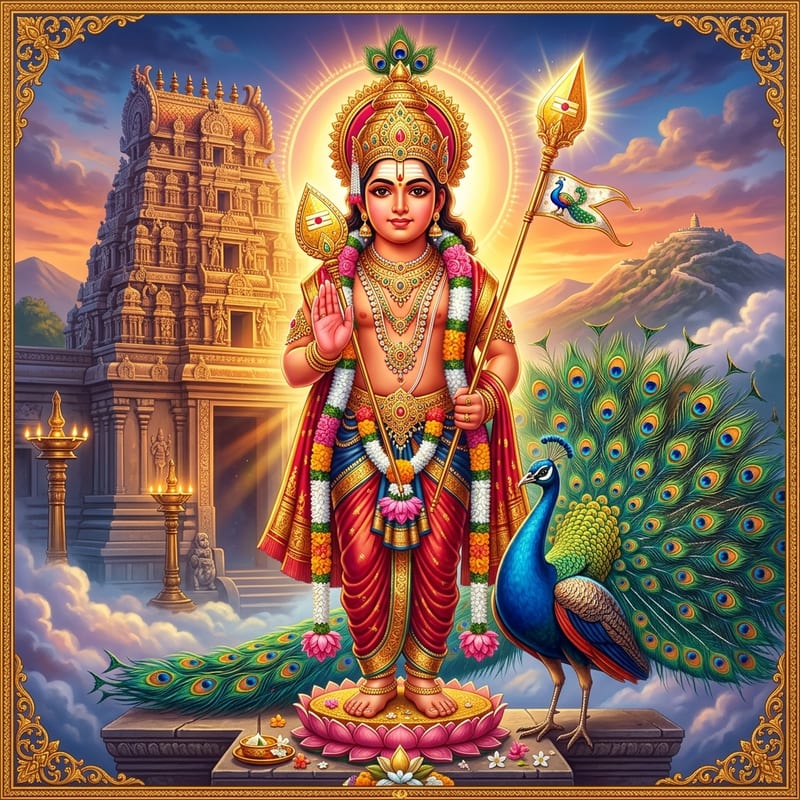
అస్య శ్రీసుబ్రహ్మణ్యకవచస్తోత్రమహామన్త్రస్య, బ్రహ్మా ఋషిః, అనుష్టుప్ఛన్దః, శ్రీసుబ్రహ్మణ్యో దేవతా, ఓం నమ ఇతి బీజం, భగవత ఇతి శక్తిః, సుబ్రహ్మణ్యాయేతి కీలకం, శ్రీసుబ్రహ్మణ్య ప్రసాదసిద్ధ్యర్థే జపే వినియోగః ॥
- అస్య (asya)of this
- శ్రీ-సుబ్రహ్మణ్య-కవచ-స్తోత్ర-మహా-మన్త్రస్య (śrī-subrahmaṇya-kavaca-stotra-mahā-mantrasya)great mantra, the Śrī Subrahmaṇya Kavaca Stotra
- బ్రహ్మా (brahmā)Brahmā
- ఋషిః (ṛṣiḥ)is the seer
- అనుష్టుప్ ఛన్దః (anuṣṭup chandaḥ)Anuṣṭubh is the metre
- శ్రీ-సుబ్రహ్మణ్యః (śrī-subrahmaṇyaḥ)Śrī Subrahmaṇya
- దేవతా (devatā)is the deity
- ఓం నమః ఇతి (oṃ namaḥ iti)the words "oṃ namaḥ"
- బీజమ్ (bījam)are the seed
- భగవతే ఇతి (bhagavate iti)the word "bhagavate"
- శక్తిః (śaktiḥ)is the power
- సుబ్రహ్మణ్యాయ ఇతి (subrahmaṇyāya iti)the word "subrahmaṇyāya"
- కీలకమ్ (kīlakam)is the pin that holds it fast
- శ్రీ-సుబ్రహ్మణ్య-ప్రసాద-సిద్ధ్యర్థే (śrī-subrahmaṇya-prasāda-siddhyarthe)for the winning of Śrī Subrahmaṇya’s grace
- జపే (jape)in the recitation
- వినియోగః (viniyogaḥ)is its appointed use
కరన్యాసః –
ఓం సాం అఙ్గుష్ఠాభ్యాం నమః ।
ఓం సీం తర్జనీభ్యాం నమః ।
ఓం సూం మధ్యమాభ్యాం నమః ।
ఓం సైం అనామికాభ్యాం నమః ।
ఓం సౌం కనిష్ఠికాభ్యాం నమః ।
ఓం సః కరతలకరపృష్ఠాభ్యాం నమః ॥
ఓం సాం అఙ్గుష్ఠాభ్యాం నమః ।
ఓం సీం తర్జనీభ్యాం నమః ।
ఓం సూం మధ్యమాభ్యాం నమః ।
ఓం సైం అనామికాభ్యాం నమః ।
ఓం సౌం కనిష్ఠికాభ్యాం నమః ।
ఓం సః కరతలకరపృష్ఠాభ్యాం నమః ॥
- కరన్యాసః (kara-nyāsaḥ)the placing of the syllables upon the hands
- ఓం సాం (oṃ sāṃ)the first seed
- అఙ్గుష్ఠాభ్యామ్ నమః (aṅguṣṭhābhyāṃ namaḥ)salutation with the two thumbs
- ఓం సీం (oṃ sīṃ)the second
- తర్జనీభ్యామ్ నమః (tarjanībhyāṃ namaḥ)with the two forefingers
- ఓం సూం (oṃ sūṃ)the third
- మధ్యమాభ్యామ్ నమః (madhyamābhyāṃ namaḥ)with the two middle fingers
- ఓం సైం (oṃ saiṃ)the fourth
- అనామికాభ్యామ్ నమః (anāmikābhyāṃ namaḥ)with the two ring fingers
- ఓం సౌం (oṃ sauṃ)the fifth
- కనిష్ఠికాభ్యామ్ నమః (kaniṣṭhikābhyāṃ namaḥ)with the two little fingers
- ఓం సః (oṃ saḥ)the sixth
- కరతల-కరపృష్ఠాభ్యామ్ నమః (karatala-karapṛṣṭhābhyāṃ namaḥ)with the palms and the backs of the hands
అఙ్గన్యాసః –
ఓం సాం హృదయాయ నమః ।
ఓం సీం శిరసే స్వాహా ।
ఓం సూం శిఖాయై వషట్ ।
ఓం సైం కవచాయ హుమ్ ।
ఓం సౌం నేత్రత్రయాయ వౌషట్ ।
ఓం సః అస్త్రాయ ఫట్ ।
భూర్భువస్సువరోమితి దిగ్బన్ధః ॥
ఓం సాం హృదయాయ నమః ।
ఓం సీం శిరసే స్వాహా ।
ఓం సూం శిఖాయై వషట్ ।
ఓం సైం కవచాయ హుమ్ ।
ఓం సౌం నేత్రత్రయాయ వౌషట్ ।
ఓం సః అస్త్రాయ ఫట్ ।
భూర్భువస్సువరోమితి దిగ్బన్ధః ॥
- అఙ్గన్యాసః (aṅga-nyāsaḥ)the placing of the syllables upon the body
- ఓం సాం (oṃ sāṃ)the first seed
- హృదయాయ నమః (hṛdayāya namaḥ)salutation to the heart
- ఓం సీం (oṃ sīṃ)the second
- శిరసే స్వాహా (śirase svāhā)svāhā to the head
- ఓం సూం (oṃ sūṃ)the third
- శిఖాయై వషట్ (śikhāyai vaṣaṭ)vaṣaṭ to the crown-lock
- ఓం సైం (oṃ saiṃ)the fourth
- కవచాయ హుమ్ (kavacāya hum)hum to the armour
- ఓం సౌం (oṃ sauṃ)the fifth
- నేత్ర-త్రయాయ వౌషట్ (netra-trayāya vauṣaṭ)vauṣaṭ to the three eyes
- ఓం సః (oṃ saḥ)the sixth
- అస్త్రాయ ఫట్ (astrāya phaṭ)phaṭ to the weapon
- భూర్భువస్సువరోమ్ ఇతి (bhūr bhuvas suvar om iti)with these words
- దిగ్-బన్ధః (dig-bandhaḥ)the quarters are bound about
ధ్యానమ్ ।
సిన్దూరారుణమిన్దుకాన్తివదనం కేయూరహారాదిభిః
దివ్యైరాభరణైర్విభూషితతనుం స్వర్గాదిసౌఖ్యప్రదమ్ ।
అమ్భోజాభయశక్తికుక్కుటధరం రక్తాఙ్గరాగోజ్జ్వలం
సుబ్రహ్మణ్యముపాస్మహే ప్రణమతాం సర్వార్థసిద్ధిప్రదమ్ ॥ [భీతిప్రణాశోద్యతమ్]
లమిత్యాది పఞ్చపూజా ।
ఓం లం పృథివ్యాత్మనే సుబ్రహ్మణ్యాయ గన్ధం సమర్పయామి ।
ఓం హం ఆకాశాత్మనే సుబ్రహ్మణ్యాయ పుష్పాణి సమర్పయామి ।
ఓం యం వాయ్వాత్మనే సుబ్రహ్మణ్యాయ ధూపమాఘ్రాపయామి ।
ఓం రం అగ్న్యాత్మనే సుబ్రహ్మణ్యాయ దీపం దర్శయామి ।
ఓం వం అమృతాత్మనే సుబ్రహ్మణ్యాయ స్వాదన్నం నివేదయామి ।
ఓం సం సర్వాత్మనే సుబ్రహ్మణ్యాయ సర్వోపచారాన్ సమర్పయామి ।
- ధ్యానమ్ (dhyānam)the meditation
- సిన్దూర-అరుణ-ఇన్దు-కాన్తి-వదనమ్ (sindūrāruṇa-indu-kānti-vadanam)his face red as vermilion and lovely as the moon
- కేయూర-హార-ఆదిభిః (keyūra-hārādibhiḥ)with armlets, necklaces and the rest
- దివ్యైః ఆభరణైః (divyair ābharaṇaiḥ)with divine ornaments
- విభూషిత-తనుమ్ (vibhūṣita-tanum)his body adorned
- స్వర్గ-ఆది-సౌఖ్య-ప్రదమ్ (svargādi-saukhya-pradam)who grants the joys of heaven and of what lies past it
- అమ్భోజ-అభయ-శక్తి-కుక్కుట-ధరమ్ (ambhoja-abhaya-śakti-kukkuṭa-dharam)bearing lotus, the gesture of safety, the spear and the cock
- రక్త-అఙ్గ-రాగ-ఉజ్జ్వలమ్ (raktāṅga-rāgojjvalam)bright with red unguent on his limbs
- సుబ్రహ్మణ్యమ్ (subrahmaṇyam)Subrahmaṇya
- ఉపాస్మహే (upāsmahe)we worship
- ప్రణమతామ్ (praṇamatām)for those who bow to him
- సర్వ-అర్థ-సిద్ధి-ప్రదమ్ (sarvārtha-siddhi-pradam)who brings every aim to fulfilment
- భీతి-ప్రణాశ-ఉద్యతమ్ (bhīti-praṇāśodyatam)ever ready to make fear vanish – a variant for the closing phrase
- లమ్ ఇత్యాది పఞ్చ-పూజా (laṃ ityādi pañca-pūjā)the fivefold worship beginning with laṃ
- ఓం లం పృథివీ-ఆత్మనే (oṃ laṃ pṛthivy-ātmane)to him whose self is earth
- గన్ధమ్ సమర్పయామి (gandhaṃ samarpayāmi)I offer sandal paste
- ఓం హం ఆకాశ-ఆత్మనే (oṃ haṃ ākāśātmane)to him whose self is space
- పుష్పాణి సమర్పయామి (puṣpāṇi samarpayāmi)I offer flowers
- ఓం యం వాయు-ఆత్మనే (oṃ yaṃ vāyv-ātmane)to him whose self is wind
- ధూపమ్ ఆఘ్రాపయామి (dhūpam āghrāpayāmi)I let the incense be breathed in
- ఓం రం అగ్ని-ఆత్మనే (oṃ raṃ agny-ātmane)to him whose self is fire
- దీపమ్ దర్శయామి (dīpaṃ darśayāmi)I show the lamp
- ఓం వం అమృత-ఆత్మనే (oṃ vaṃ amṛtātmane)to him whose self is the nectar of deathlessness
- స్వాదన్నమ్ నివేదయామి (svādannaṃ nivedayāmi)I present the sweet food
- ఓం సం సర్వ-ఆత్మనే (oṃ saṃ sarvātmane)to him whose self is all
- సర్వ-ఉపచారాన్ సమర్పయామి (sarvopacārān samarpayāmi)I offer every service of worship
కవచమ్ ।
సుబ్రహ్మణ్యోఽగ్రతః పాతు సేనానీః పాతు పృష్ఠతః ।
గుహో మాం దక్షిణే పాతు వహ్నిజః పాతు వామతః ॥ 1 ॥
సుబ్రహ్మణ్యోఽగ్రతః పాతు సేనానీః పాతు పృష్ఠతః ।
గుహో మాం దక్షిణే పాతు వహ్నిజః పాతు వామతః ॥ 1 ॥
- కవచమ్ (kavacam)the armour
- సుబ్రహ్మణ్యః (subrahmaṇyaḥ)Subrahmaṇya
- అగ్రతః (agrataḥ)in front
- పాతు (pātu)may he guard
- సేనానీః (senānīḥ)the Commander
- పాతు (pātu)may he guard
- పృష్ఠతః (pṛṣṭhataḥ)behind
- గుహః (guhaḥ)Guha, the hidden one
- మామ్ (mām)me
- దక్షిణే (dakṣiṇe)on the right
- పాతు (pātu)may he guard
- వహ్నిజః (vahnijaḥ)he who was born of fire
- పాతు (pātu)may he guard
- వామతః (vāmataḥ)on the left
శిరః పాతు మహాసేనః స్కన్దో రక్షేల్లలాటకమ్ ।
నేత్రే మే ద్వాదశాక్షశ్చ శ్రోత్రే రక్షతు విశ్వభృత్ ॥ 2 ॥
నేత్రే మే ద్వాదశాక్షశ్చ శ్రోత్రే రక్షతు విశ్వభృత్ ॥ 2 ॥
- శిరః (śiraḥ)the head
- పాతు (pātu)may he guard
- మహాసేనః (mahāsenaḥ)Mahāsena, lord of the great host
- స్కన్దః (skandaḥ)Skanda
- రక్షేత్ (rakṣet)may he protect
- లలాటకమ్ (lalāṭakam)the forehead
- నేత్రే (netre)the two eyes
- మే (me)my
- ద్వాదశ-అక్షః (dvādaśākṣaḥ)the twelve-eyed one
- చ (ca)and
- శ్రోత్రే (śrotre)the two ears
- రక్షతు (rakṣatu)may he protect
- విశ్వ-భృత్ (viśva-bhṛt)the bearer of the universe
ముఖం మే షణ్ముఖః పాతు నాసికాం శఙ్కరాత్మజః ।
ఓష్ఠౌ వల్లీపతిః పాతు జిహ్వాం పాతు షడాననః ॥ 3 ॥
ఓష్ఠౌ వల్లీపతిః పాతు జిహ్వాం పాతు షడాననః ॥ 3 ॥
- శఙ్కరాత్మజః (Śaṅkarātmaja)son of Śaṅkara
- వల్లీపతిః (Vallīpati)lord of Vaḷḷī
- షడాననః (Ṣaḍānana)the six-faced lord
దేవసేనాపతిర్దన్తాన్ చిబుకం బహులోద్భవః ।
కణ్ఠం తారకజిత్పాతు బాహూ ద్వాదశబాహుకః ॥ 4 ॥
కణ్ఠం తారకజిత్పాతు బాహూ ద్వాదశబాహుకః ॥ 4 ॥
- దేవ-సేనా-పతిః (deva-senā-patiḥ)the lord of the army of the gods
- దన్తాన్ (dantān)the teeth
- చిబుకమ్ (cibukam)the chin
- బహుల-ఉద్భవః (bahulodbhavaḥ)he who arose among the Kṛttikās
- కణ్ఠమ్ (kaṇṭham)the throat
- తారక-జిత్ (tāraka-jit)the conqueror of Tāraka
- పాతు (pātu)may he guard
- బాహూ (bāhū)the two arms
- ద్వాదశ-బాహుకః (dvādaśa-bāhukaḥ)the twelve-armed one
హస్తౌ శక్తిధరః పాతు వక్షః పాతు శరోద్భవః ।
హృదయం వహ్నిభూః పాతు కుక్షిం పాత్వమ్బికాసుతః ॥ 5 ॥
హృదయం వహ్నిభూః పాతు కుక్షిం పాత్వమ్బికాసుతః ॥ 5 ॥
- హస్తౌ (hastau)the two hands
- శక్తి-ధరః (śakti-dharaḥ)the bearer of the spear
- పాతు (pātu)may he guard
- వక్షః (vakṣaḥ)the chest
- పాతు (pātu)may he guard
- శర-ఉద్భవః (śarodbhavaḥ)he born among the reeds
- హృదయమ్ (hṛdayam)the heart
- వహ్ని-భూః (vahni-bhūḥ)he sprung from fire
- పాతు (pātu)may he guard
- కుక్షిమ్ (kukṣim)the belly
- పాతు (pātu)may he guard
- అమ్బికా-సుతః (ambikā-sutaḥ)the son of Ambikā
నాభిం శమ్భుసుతః పాతు కటిం పాతు హరాత్మజః ।
ఊరూ పాతు గజారూఢో జానూ మే జాహ్నవీసుతః ॥ 6 ॥
ఊరూ పాతు గజారూఢో జానూ మే జాహ్నవీసుతః ॥ 6 ॥
- శమ్భుసుతః (Śambhusuta)son of Śambhu / Śiva
- హరాత్మజః (Harātmaja)son of Hara
- గజారూఢో (Gajārūḍha)the mighty, elephant-conquering lord
- జాహ్నవీసుతః (Jāhnavīsuta)son of the Gaṅgā
జఙ్ఘే విశాఖో మే పాతు పాదౌ మే శిఖివాహనః ।
సర్వాణ్యఙ్గాని భూతేశః సర్వధాతూంశ్చ పావకిః ॥ 7 ॥
సర్వాణ్యఙ్గాని భూతేశః సర్వధాతూంశ్చ పావకిః ॥ 7 ॥
- శిఖివాహనః (Śikhivāhana)the peacock-vehicled lord
- భూతేశః (Bhūtēśa)lord of all beings
- పావకిః (Pāvaki)son of fire, Agni's son
సన్ధ్యాకాలే నిశీథిన్యాం దివా ప్రాతర్జలేఽగ్నిషు ।
దుర్గమే చ మహారణ్యే రాజద్వారే మహాభయే ॥ 8 ॥
దుర్గమే చ మహారణ్యే రాజద్వారే మహాభయే ॥ 8 ॥
- సన్ధ్యా-కాలే (sandhyā-kāle)at the twilight hour
- నిశీథిన్యామ్ (niśīthinyām)in the depth of night
- దివా (divā)by day
- ప్రాతః (prātaḥ)at dawn
- జలే (jale)in water
- అగ్నిషు (agniṣu)in fires
- దుర్గమే (durgame)in trackless country
- చ (ca)and
- మహా-అరణ్యే (mahāraṇye)in the great forest
- రాజ-ద్వారే (rāja-dvāre)at a king’s gate
- మహా-భయే (mahā-bhaye)in great danger
తుములే రణ్యమధ్యే చ సర్వదుష్టమృగాదిషు ।
చోరాదిసాధ్వసేఽభేద్యే జ్వరాదివ్యాధిపీడనే ॥ 9 ॥
చోరాదిసాధ్వసేఽభేద్యే జ్వరాదివ్యాధిపీడనే ॥ 9 ॥
- తుములే (tumule)in the din of battle
- రణ-మధ్యే (raṇa-madhye)in the midst of the fight (printed रण्यमध्ये)
- చ (ca)and
- సర్వ-దుష్ట-మృగ-ఆదిషు (sarva-duṣṭa-mṛgādiṣu)among all savage beasts and their like
- చోర-ఆది-సాధ్వసే (corādi-sādhvase)in the terror of thieves and their kind
- అభేద్యే (abhedye)where there is no way through
- జ్వర-ఆది-వ్యాధి-పీడనే (jvarādi-vyādhi-pīḍane)in the torment of fever and every other disease
దుష్టగ్రహాదిభీతౌ చ దుర్నిమిత్తాదిభీషణే ।
అస్త్రశస్త్రనిపాతే చ పాతు మాం క్రౌఞ్చరన్ధ్రకృత్ ॥ 10 ॥
అస్త్రశస్త్రనిపాతే చ పాతు మాం క్రౌఞ్చరన్ధ్రకృత్ ॥ 10 ॥
- దుష్ట-గ్రహ-ఆది-భీతౌ (duṣṭa-grahādi-bhītau)in the fear of malign planets and the like
- చ (ca)and
- దుర్నిమిత్త-ఆది-భీషణే (durnimittādi-bhīṣaṇe)in the dread of ill omens
- అస్త్ర-శస్త్ర-నిపాతే (astra-śastra-nipāte)when missiles and blades come down
- చ (ca)and
- పాతు (pātu)may he guard
- మామ్ (mām)me
- క్రౌఞ్చ-రన్ధ్ర-కృత్ (krauñca-randhra-kṛt)he who bored the passage through Krauñca
యః సుబ్రహ్మణ్యకవచం ఇష్టసిద్ధిప్రదం పఠేత్ ।
తస్య తాపత్రయం నాస్తి సత్యం సత్యం వదామ్యహమ్ ॥ 11 ॥
తస్య తాపత్రయం నాస్తి సత్యం సత్యం వదామ్యహమ్ ॥ 11 ॥
- యః (yaḥ)whoever
- సుబ్రహ్మణ్య-కవచమ్ (subrahmaṇya-kavacam)the Subrahmaṇya armour
- ఇష్ట-సిద్ధి-ప్రదమ్ (iṣṭa-siddhi-pradam)which grants what is longed for
- పఠేత్ (paṭhet)recites
- తస్య (tasya)for him
- తాప-త్రయమ్ (tāpa-trayam)the threefold burning – from oneself, from other creatures, from fate
- న అస్తి (nāsti)is not
- సత్యమ్ సత్యమ్ (satyaṃ satyam)truly, truly
- వదామి (vadāmi)do I say it
- అహమ్ (aham)I
ధర్మార్థీ లభతే ధర్మమర్థార్థీ చార్థమాప్నుయాత్ ।
కామార్థీ లభతే కామం మోక్షార్థీ మోక్షమాప్నుయాత్ ॥ 12 ॥
కామార్థీ లభతే కామం మోక్షార్థీ మోక్షమాప్నుయాత్ ॥ 12 ॥
- ధర్మ-అర్థీ (dharma-arthī)he who seeks right living
- లభతే (labhate)gains
- ధర్మమ్ (dharmam)it
- అర్థ-అర్థీ (artha-arthī)he who seeks wealth
- చ (ca)and
- అర్థమ్ (artham)wealth
- ఆప్నుయాత్ (āpnuyāt)would obtain
- కామ-అర్థీ (kāma-arthī)he who seeks pleasure
- లభతే (labhate)gains
- కామమ్ (kāmam)it
- మోక్ష-అర్థీ (mokṣa-arthī)he who seeks release
- మోక్షమ్ (mokṣam)release
- ఆప్నుయాత్ (āpnuyāt)would obtain
యత్ర యత్ర జపేద్భక్త్యా తత్ర సన్నిహితో గుహః ।
పూజాప్రతిష్ఠాకాలే చ జపకాలే పఠేదిదమ్ ॥ 13 ॥
పూజాప్రతిష్ఠాకాలే చ జపకాలే పఠేదిదమ్ ॥ 13 ॥
- యత్ర యత్ర (yatra yatra)wherever
- జపేత్ (japet)one murmurs it
- భక్త్యా (bhaktyā)with devotion
- తత్ర (tatra)there
- సన్నిహితః (sannihitaḥ)close at hand
- గుహః (guhaḥ)is Guha
- పూజా-ప్రతిష్ఠా-కాలే (pūjā-pratiṣṭhā-kāle)at the hour of worship and of consecration
- చ (ca)and
- జప-కాలే (japa-kāle)at the hour of recitation
- పఠేత్ (paṭhet)one should recite
- ఇదమ్ (idam)this
తేషామేవ ఫలావాప్తిః మహాపాతకనాశనమ్ ।
యః పఠేచ్ఛృణుయాద్భక్త్యా నిత్యం దేవస్య సన్నిధౌ ।
సర్వాన్కామానిహ ప్రాప్య సోఽన్తే స్కన్దపురం వ్రజేత్ ॥ 14 ॥
యః పఠేచ్ఛృణుయాద్భక్త్యా నిత్యం దేవస్య సన్నిధౌ ।
సర్వాన్కామానిహ ప్రాప్య సోఽన్తే స్కన్దపురం వ్రజేత్ ॥ 14 ॥
- తేషామ్ ఏవ (teṣām eva)of those very rites
- ఫల-అవాప్తిః (phala-avāptiḥ)the fruit is gained
- మహా-పాతక-నాశనమ్ (mahā-pātaka-nāśanam)and the great sins are undone
- యః (yaḥ)whoever
- పఠేత్ (paṭhet)recites
- శృణుయాత్ (śṛṇuyāt)or hears
- భక్త్యా (bhaktyā)with devotion
- నిత్యమ్ (nityam)day after day
- దేవస్య సన్నిధౌ (devasya sannidhau)in the presence of the god
- సర్వాన్ కామాన్ (sarvān kāmān)all that he desires
- ఇహ (iha)here in this world
- ప్రాప్య (prāpya)having obtained
- సః (saḥ)he
- అన్తే (ante)at the end
- స్కన్ద-పురమ్ (skanda-puram)to Skanda’s city
- వ్రజేత్ (vrajet)would go
ఉత్తరన్యాసః ॥
కరన్యాసః –
ఓం సాం అఙ్గుష్ఠాభ్యాం నమః ।
ఓం సీం తర్జనీభ్యాం నమః ।
ఓం సూం మధ్యమాభ్యాం నమః ।
ఓం సైం అనామికాభ్యాం నమః ।
ఓం సౌం కనిష్ఠికాభ్యాం నమః ।
ఓం సః కరతలకరపృష్ఠాభ్యాం నమః ॥
కరన్యాసః –
ఓం సాం అఙ్గుష్ఠాభ్యాం నమః ।
ఓం సీం తర్జనీభ్యాం నమః ।
ఓం సూం మధ్యమాభ్యాం నమః ।
ఓం సైం అనామికాభ్యాం నమః ।
ఓం సౌం కనిష్ఠికాభ్యాం నమః ।
ఓం సః కరతలకరపృష్ఠాభ్యాం నమః ॥
- ఉత్తర-న్యాసః (uttara-nyāsaḥ)the closing placement, made once the hymn is finished
- కరన్యాసః (kara-nyāsaḥ)upon the hands
- ఓం సాం (oṃ sāṃ)the first seed
- అఙ్గుష్ఠాభ్యామ్ నమః (aṅguṣṭhābhyāṃ namaḥ)salutation with the two thumbs
- ఓం సీం (oṃ sīṃ)the second
- తర్జనీభ్యామ్ నమః (tarjanībhyāṃ namaḥ)with the two forefingers
- ఓం సూం (oṃ sūṃ)the third
- మధ్యమాభ్యామ్ నమః (madhyamābhyāṃ namaḥ)with the two middle fingers
- ఓం సైం (oṃ saiṃ)the fourth
- అనామికాభ్యామ్ నమః (anāmikābhyāṃ namaḥ)with the two ring fingers
- ఓం సౌం (oṃ sauṃ)the fifth
- కనిష్ఠికాభ్యామ్ నమః (kaniṣṭhikābhyāṃ namaḥ)with the two little fingers
- ఓం సః (oṃ saḥ)the sixth
- కరతల-కరపృష్ఠాభ్యామ్ నమః (karatala-karapṛṣṭhābhyāṃ namaḥ)with the palms and the backs of the hands
అఙ్గన్యాసః –
ఓం సాం హృదయాయ నమః ।
ఓం సీం శిరసే స్వాహా ।
ఓం సూం శిఖాయై వషట్ ।
ఓం సైం కవచాయ హుమ్ ।
ఓం సౌం నేత్రత్రయాయ వౌషట్ ।
ఓం సః అస్త్రాయ ఫట్ ।
భూర్భువస్సువరోమితి దిగ్విమోకః ॥
ఓం సాం హృదయాయ నమః ।
ఓం సీం శిరసే స్వాహా ।
ఓం సూం శిఖాయై వషట్ ।
ఓం సైం కవచాయ హుమ్ ।
ఓం సౌం నేత్రత్రయాయ వౌషట్ ।
ఓం సః అస్త్రాయ ఫట్ ।
భూర్భువస్సువరోమితి దిగ్విమోకః ॥
- అఙ్గన్యాసః (aṅga-nyāsaḥ)the placing of the syllables upon the body
- ఓం సాం (oṃ sāṃ)the first seed
- హృదయాయ నమః (hṛdayāya namaḥ)salutation to the heart
- ఓం సీం (oṃ sīṃ)the second
- శిరసే స్వాహా (śirase svāhā)svāhā to the head
- ఓం సూం (oṃ sūṃ)the third
- శిఖాయై వషట్ (śikhāyai vaṣaṭ)vaṣaṭ to the crown-lock
- ఓం సైం (oṃ saiṃ)the fourth
- కవచాయ హుమ్ (kavacāya hum)hum to the armour
- ఓం సౌం (oṃ sauṃ)the fifth
- నేత్ర-త్రయాయ వౌషట్ (netra-trayāya vauṣaṭ)vauṣaṭ to the three eyes
- ఓం సః (oṃ saḥ)the sixth
- అస్త్రాయ ఫట్ (astrāya phaṭ)phaṭ to the weapon
- భూర్భువస్సువరోమ్ ఇతి (bhūr bhuvas suvar om iti)with these words
- దిగ్-విమోకః (dig-vimokaḥ)the quarters that were bound are now released
ఇతి శ్రీ సుబ్రహ్మణ్య కవచ స్తోత్రమ్ ।