
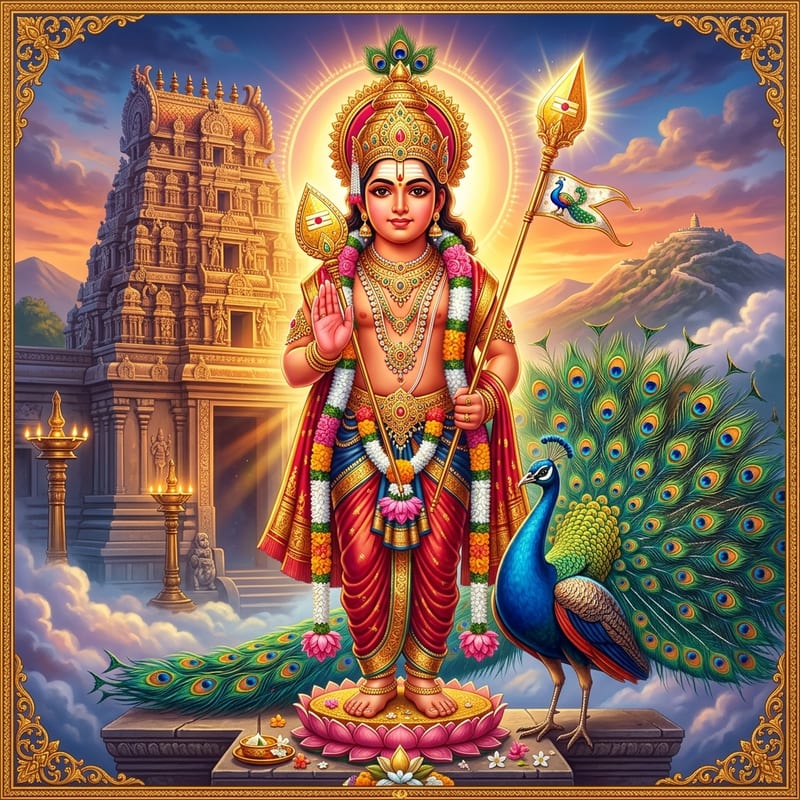
અસ્ય શ્રીસુબ્રહ્મણ્યકવચસ્તોત્રમહામન્ત્રસ્ય, બ્રહ્મા ઋષિઃ, અનુષ્ટુપ્છન્દઃ, શ્રીસુબ્રહ્મણ્યો દેવતા, ૐ નમ ઇતિ બીજં, ભગવત ઇતિ શક્તિઃ, સુબ્રહ્મણ્યાયેતિ કીલકં, શ્રીસુબ્રહ્મણ્ય પ્રસાદસિદ્ધ્યર્થે જપે વિનિયોગઃ ॥
- અસ્ય (asya)of this
- શ્રી-સુબ્રહ્મણ્ય-કવચ-સ્તોત્ર-મહા-મન્ત્રસ્ય (śrī-subrahmaṇya-kavaca-stotra-mahā-mantrasya)great mantra, the Śrī Subrahmaṇya Kavaca Stotra
- બ્રહ્મા (brahmā)Brahmā
- ઋષિઃ (ṛṣiḥ)is the seer
- અનુષ્ટુપ્ છન્દઃ (anuṣṭup chandaḥ)Anuṣṭubh is the metre
- શ્રી-સુબ્રહ્મણ્યઃ (śrī-subrahmaṇyaḥ)Śrī Subrahmaṇya
- દેવતા (devatā)is the deity
- ૐ નમઃ ઇતિ (oṃ namaḥ iti)the words "oṃ namaḥ"
- બીજમ્ (bījam)are the seed
- ભગવતે ઇતિ (bhagavate iti)the word "bhagavate"
- શક્તિઃ (śaktiḥ)is the power
- સુબ્રહ્મણ્યાય ઇતિ (subrahmaṇyāya iti)the word "subrahmaṇyāya"
- કીલકમ્ (kīlakam)is the pin that holds it fast
- શ્રી-સુબ્રહ્મણ્ય-પ્રસાદ-સિદ્ધ્યર્થે (śrī-subrahmaṇya-prasāda-siddhyarthe)for the winning of Śrī Subrahmaṇya’s grace
- જપે (jape)in the recitation
- વિનિયોગઃ (viniyogaḥ)is its appointed use
કરન્યાસઃ –
ૐ સાં અઙ્ગુષ્ઠાભ્યાં નમઃ ।
ૐ સીં તર્જનીભ્યાં નમઃ ।
ૐ સૂં મધ્યમાભ્યાં નમઃ ।
ૐ સૈં અનામિકાભ્યાં નમઃ ।
ૐ સૌં કનિષ્ઠિકાભ્યાં નમઃ ।
ૐ સઃ કરતલકરપૃષ્ઠાભ્યાં નમઃ ॥
ૐ સાં અઙ્ગુષ્ઠાભ્યાં નમઃ ।
ૐ સીં તર્જનીભ્યાં નમઃ ।
ૐ સૂં મધ્યમાભ્યાં નમઃ ।
ૐ સૈં અનામિકાભ્યાં નમઃ ।
ૐ સૌં કનિષ્ઠિકાભ્યાં નમઃ ।
ૐ સઃ કરતલકરપૃષ્ઠાભ્યાં નમઃ ॥
- કરન્યાસઃ (kara-nyāsaḥ)the placing of the syllables upon the hands
- ૐ સાં (oṃ sāṃ)the first seed
- અઙ્ગુષ્ઠાભ્યામ્ નમઃ (aṅguṣṭhābhyāṃ namaḥ)salutation with the two thumbs
- ૐ સીં (oṃ sīṃ)the second
- તર્જનીભ્યામ્ નમઃ (tarjanībhyāṃ namaḥ)with the two forefingers
- ૐ સૂં (oṃ sūṃ)the third
- મધ્યમાભ્યામ્ નમઃ (madhyamābhyāṃ namaḥ)with the two middle fingers
- ૐ સૈં (oṃ saiṃ)the fourth
- અનામિકાભ્યામ્ નમઃ (anāmikābhyāṃ namaḥ)with the two ring fingers
- ૐ સૌં (oṃ sauṃ)the fifth
- કનિષ્ઠિકાભ્યામ્ નમઃ (kaniṣṭhikābhyāṃ namaḥ)with the two little fingers
- ૐ સઃ (oṃ saḥ)the sixth
- કરતલ-કરપૃષ્ઠાભ્યામ્ નમઃ (karatala-karapṛṣṭhābhyāṃ namaḥ)with the palms and the backs of the hands
અઙ્ગન્યાસઃ –
ૐ સાં હૃદયાય નમઃ ।
ૐ સીં શિરસે સ્વાહા ।
ૐ સૂં શિખાયૈ વષટ્ ।
ૐ સૈં કવચાય હુમ્ ।
ૐ સૌં નેત્રત્રયાય વૌષટ્ ।
ૐ સઃ અસ્ત્રાય ફટ્ ।
ભૂર્ભુવસ્સુવરોમિતિ દિગ્બન્ધઃ ॥
ૐ સાં હૃદયાય નમઃ ।
ૐ સીં શિરસે સ્વાહા ।
ૐ સૂં શિખાયૈ વષટ્ ।
ૐ સૈં કવચાય હુમ્ ।
ૐ સૌં નેત્રત્રયાય વૌષટ્ ।
ૐ સઃ અસ્ત્રાય ફટ્ ।
ભૂર્ભુવસ્સુવરોમિતિ દિગ્બન્ધઃ ॥
- અઙ્ગન્યાસઃ (aṅga-nyāsaḥ)the placing of the syllables upon the body
- ૐ સાં (oṃ sāṃ)the first seed
- હૃદયાય નમઃ (hṛdayāya namaḥ)salutation to the heart
- ૐ સીં (oṃ sīṃ)the second
- શિરસે સ્વાહા (śirase svāhā)svāhā to the head
- ૐ સૂં (oṃ sūṃ)the third
- શિખાયૈ વષટ્ (śikhāyai vaṣaṭ)vaṣaṭ to the crown-lock
- ૐ સૈં (oṃ saiṃ)the fourth
- કવચાય હુમ્ (kavacāya hum)hum to the armour
- ૐ સૌં (oṃ sauṃ)the fifth
- નેત્ર-ત્રયાય વૌષટ્ (netra-trayāya vauṣaṭ)vauṣaṭ to the three eyes
- ૐ સઃ (oṃ saḥ)the sixth
- અસ્ત્રાય ફટ્ (astrāya phaṭ)phaṭ to the weapon
- ભૂર્ભુવસ્સુવરોમ્ ઇતિ (bhūr bhuvas suvar om iti)with these words
- દિગ્-બન્ધઃ (dig-bandhaḥ)the quarters are bound about
ધ્યાનમ્ ।
સિન્દૂરારુણમિન્દુકાન્તિવદનં કેયૂરહારાદિભિઃ
દિવ્યૈરાભરણૈર્વિભૂષિતતનું સ્વર્ગાદિસૌખ્યપ્રદમ્ ।
અમ્ભોજાભયશક્તિકુક્કુટધરં રક્તાઙ્ગરાગોજ્જ્વલં
સુબ્રહ્મણ્યમુપાસ્મહે પ્રણમતાં સર્વાર્થસિદ્ધિપ્રદમ્ ॥ [ભીતિપ્રણાશોદ્યતમ્]
લમિત્યાદિ પઞ્ચપૂજા ।
ૐ લં પૃથિવ્યાત્મને સુબ્રહ્મણ્યાય ગન્ધં સમર્પયામિ ।
ૐ હં આકાશાત્મને સુબ્રહ્મણ્યાય પુષ્પાણિ સમર્પયામિ ।
ૐ યં વાય્વાત્મને સુબ્રહ્મણ્યાય ધૂપમાઘ્રાપયામિ ।
ૐ રં અગ્ન્યાત્મને સુબ્રહ્મણ્યાય દીપં દર્શયામિ ।
ૐ વં અમૃતાત્મને સુબ્રહ્મણ્યાય સ્વાદન્નં નિવેદયામિ ।
ૐ સં સર્વાત્મને સુબ્રહ્મણ્યાય સર્વોપચારાન્ સમર્પયામિ ।
- ધ્યાનમ્ (dhyānam)the meditation
- સિન્દૂર-અરુણ-ઇન્દુ-કાન્તિ-વદનમ્ (sindūrāruṇa-indu-kānti-vadanam)his face red as vermilion and lovely as the moon
- કેયૂર-હાર-આદિભિઃ (keyūra-hārādibhiḥ)with armlets, necklaces and the rest
- દિવ્યૈઃ આભરણૈઃ (divyair ābharaṇaiḥ)with divine ornaments
- વિભૂષિત-તનુમ્ (vibhūṣita-tanum)his body adorned
- સ્વર્ગ-આદિ-સૌખ્ય-પ્રદમ્ (svargādi-saukhya-pradam)who grants the joys of heaven and of what lies past it
- અમ્ભોજ-અભય-શક્તિ-કુક્કુટ-ધરમ્ (ambhoja-abhaya-śakti-kukkuṭa-dharam)bearing lotus, the gesture of safety, the spear and the cock
- રક્ત-અઙ્ગ-રાગ-ઉજ્જ્વલમ્ (raktāṅga-rāgojjvalam)bright with red unguent on his limbs
- સુબ્રહ્મણ્યમ્ (subrahmaṇyam)Subrahmaṇya
- ઉપાસ્મહે (upāsmahe)we worship
- પ્રણમતામ્ (praṇamatām)for those who bow to him
- સર્વ-અર્થ-સિદ્ધિ-પ્રદમ્ (sarvārtha-siddhi-pradam)who brings every aim to fulfilment
- ભીતિ-પ્રણાશ-ઉદ્યતમ્ (bhīti-praṇāśodyatam)ever ready to make fear vanish – a variant for the closing phrase
- લમ્ ઇત્યાદિ પઞ્ચ-પૂજા (laṃ ityādi pañca-pūjā)the fivefold worship beginning with laṃ
- ૐ લં પૃથિવી-આત્મને (oṃ laṃ pṛthivy-ātmane)to him whose self is earth
- ગન્ધમ્ સમર્પયામિ (gandhaṃ samarpayāmi)I offer sandal paste
- ૐ હં આકાશ-આત્મને (oṃ haṃ ākāśātmane)to him whose self is space
- પુષ્પાણિ સમર્પયામિ (puṣpāṇi samarpayāmi)I offer flowers
- ૐ યં વાયુ-આત્મને (oṃ yaṃ vāyv-ātmane)to him whose self is wind
- ધૂપમ્ આઘ્રાપયામિ (dhūpam āghrāpayāmi)I let the incense be breathed in
- ૐ રં અગ્નિ-આત્મને (oṃ raṃ agny-ātmane)to him whose self is fire
- દીપમ્ દર્શયામિ (dīpaṃ darśayāmi)I show the lamp
- ૐ વં અમૃત-આત્મને (oṃ vaṃ amṛtātmane)to him whose self is the nectar of deathlessness
- સ્વાદન્નમ્ નિવેદયામિ (svādannaṃ nivedayāmi)I present the sweet food
- ૐ સં સર્વ-આત્મને (oṃ saṃ sarvātmane)to him whose self is all
- સર્વ-ઉપચારાન્ સમર્પયામિ (sarvopacārān samarpayāmi)I offer every service of worship
કવચમ્ ।
સુબ્રહ્મણ્યોઽગ્રતઃ પાતુ સેનાનીઃ પાતુ પૃષ્ઠતઃ ।
ગુહો માં દક્ષિણે પાતુ વહ્નિજઃ પાતુ વામતઃ ॥ 1 ॥
સુબ્રહ્મણ્યોઽગ્રતઃ પાતુ સેનાનીઃ પાતુ પૃષ્ઠતઃ ।
ગુહો માં દક્ષિણે પાતુ વહ્નિજઃ પાતુ વામતઃ ॥ 1 ॥
- કવચમ્ (kavacam)the armour
- સુબ્રહ્મણ્યઃ (subrahmaṇyaḥ)Subrahmaṇya
- અગ્રતઃ (agrataḥ)in front
- પાતુ (pātu)may he guard
- સેનાનીઃ (senānīḥ)the Commander
- પાતુ (pātu)may he guard
- પૃષ્ઠતઃ (pṛṣṭhataḥ)behind
- ગુહઃ (guhaḥ)Guha, the hidden one
- મામ્ (mām)me
- દક્ષિણે (dakṣiṇe)on the right
- પાતુ (pātu)may he guard
- વહ્નિજઃ (vahnijaḥ)he who was born of fire
- પાતુ (pātu)may he guard
- વામતઃ (vāmataḥ)on the left
શિરઃ પાતુ મહાસેનઃ સ્કન્દો રક્ષેલ્લલાટકમ્ ।
નેત્રે મે દ્વાદશાક્ષશ્ચ શ્રોત્રે રક્ષતુ વિશ્વભૃત્ ॥ 2 ॥
નેત્રે મે દ્વાદશાક્ષશ્ચ શ્રોત્રે રક્ષતુ વિશ્વભૃત્ ॥ 2 ॥
- શિરઃ (śiraḥ)the head
- પાતુ (pātu)may he guard
- મહાસેનઃ (mahāsenaḥ)Mahāsena, lord of the great host
- સ્કન્દઃ (skandaḥ)Skanda
- રક્ષેત્ (rakṣet)may he protect
- લલાટકમ્ (lalāṭakam)the forehead
- નેત્રે (netre)the two eyes
- મે (me)my
- દ્વાદશ-અક્ષઃ (dvādaśākṣaḥ)the twelve-eyed one
- ચ (ca)and
- શ્રોત્રે (śrotre)the two ears
- રક્ષતુ (rakṣatu)may he protect
- વિશ્વ-ભૃત્ (viśva-bhṛt)the bearer of the universe
મુખં મે ષણ્મુખઃ પાતુ નાસિકાં શઙ્કરાત્મજઃ ।
ઓષ્ઠૌ વલ્લીપતિઃ પાતુ જિહ્વાં પાતુ ષડાનનઃ ॥ 3 ॥
ઓષ્ઠૌ વલ્લીપતિઃ પાતુ જિહ્વાં પાતુ ષડાનનઃ ॥ 3 ॥
- શઙ્કરાત્મજઃ (Śaṅkarātmaja)son of Śaṅkara
- વલ્લીપતિઃ (Vallīpati)lord of Vaḷḷī
- ષડાનનઃ (Ṣaḍānana)the six-faced lord
દેવસેનાપતિર્દન્તાન્ ચિબુકં બહુલોદ્ભવઃ ।
કણ્ઠં તારકજિત્પાતુ બાહૂ દ્વાદશબાહુકઃ ॥ 4 ॥
કણ્ઠં તારકજિત્પાતુ બાહૂ દ્વાદશબાહુકઃ ॥ 4 ॥
- દેવ-સેના-પતિઃ (deva-senā-patiḥ)the lord of the army of the gods
- દન્તાન્ (dantān)the teeth
- ચિબુકમ્ (cibukam)the chin
- બહુલ-ઉદ્ભવઃ (bahulodbhavaḥ)he who arose among the Kṛttikās
- કણ્ઠમ્ (kaṇṭham)the throat
- તારક-જિત્ (tāraka-jit)the conqueror of Tāraka
- પાતુ (pātu)may he guard
- બાહૂ (bāhū)the two arms
- દ્વાદશ-બાહુકઃ (dvādaśa-bāhukaḥ)the twelve-armed one
હસ્તૌ શક્તિધરઃ પાતુ વક્ષઃ પાતુ શરોદ્ભવઃ ।
હૃદયં વહ્નિભૂઃ પાતુ કુક્ષિં પાત્વમ્બિકાસુતઃ ॥ 5 ॥
હૃદયં વહ્નિભૂઃ પાતુ કુક્ષિં પાત્વમ્બિકાસુતઃ ॥ 5 ॥
- હસ્તૌ (hastau)the two hands
- શક્તિ-ધરઃ (śakti-dharaḥ)the bearer of the spear
- પાતુ (pātu)may he guard
- વક્ષઃ (vakṣaḥ)the chest
- પાતુ (pātu)may he guard
- શર-ઉદ્ભવઃ (śarodbhavaḥ)he born among the reeds
- હૃદયમ્ (hṛdayam)the heart
- વહ્નિ-ભૂઃ (vahni-bhūḥ)he sprung from fire
- પાતુ (pātu)may he guard
- કુક્ષિમ્ (kukṣim)the belly
- પાતુ (pātu)may he guard
- અમ્બિકા-સુતઃ (ambikā-sutaḥ)the son of Ambikā
નાભિં શમ્ભુસુતઃ પાતુ કટિં પાતુ હરાત્મજઃ ।
ઊરૂ પાતુ ગજારૂઢો જાનૂ મે જાહ્નવીસુતઃ ॥ 6 ॥
ઊરૂ પાતુ ગજારૂઢો જાનૂ મે જાહ્નવીસુતઃ ॥ 6 ॥
- શમ્ભુસુતઃ (Śambhusuta)son of Śambhu / Śiva
- હરાત્મજઃ (Harātmaja)son of Hara
- ગજારૂઢો (Gajārūḍha)the mighty, elephant-conquering lord
- જાહ્નવીસુતઃ (Jāhnavīsuta)son of the Gaṅgā
જઙ્ઘે વિશાખો મે પાતુ પાદૌ મે શિખિવાહનઃ ।
સર્વાણ્યઙ્ગાનિ ભૂતેશઃ સર્વધાતૂંશ્ચ પાવકિઃ ॥ 7 ॥
સર્વાણ્યઙ્ગાનિ ભૂતેશઃ સર્વધાતૂંશ્ચ પાવકિઃ ॥ 7 ॥
- શિખિવાહનઃ (Śikhivāhana)the peacock-vehicled lord
- ભૂતેશઃ (Bhūtēśa)lord of all beings
- પાવકિઃ (Pāvaki)son of fire, Agni's son
સન્ધ્યાકાલે નિશીથિન્યાં દિવા પ્રાતર્જલેઽગ્નિષુ ।
દુર્ગમે ચ મહારણ્યે રાજદ્વારે મહાભયે ॥ 8 ॥
દુર્ગમે ચ મહારણ્યે રાજદ્વારે મહાભયે ॥ 8 ॥
- સન્ધ્યા-કાલે (sandhyā-kāle)at the twilight hour
- નિશીથિન્યામ્ (niśīthinyām)in the depth of night
- દિવા (divā)by day
- પ્રાતઃ (prātaḥ)at dawn
- જલે (jale)in water
- અગ્નિષુ (agniṣu)in fires
- દુર્ગમે (durgame)in trackless country
- ચ (ca)and
- મહા-અરણ્યે (mahāraṇye)in the great forest
- રાજ-દ્વારે (rāja-dvāre)at a king’s gate
- મહા-ભયે (mahā-bhaye)in great danger
તુમુલે રણ્યમધ્યે ચ સર્વદુષ્ટમૃગાદિષુ ।
ચોરાદિસાધ્વસેઽભેદ્યે જ્વરાદિવ્યાધિપીડને ॥ 9 ॥
ચોરાદિસાધ્વસેઽભેદ્યે જ્વરાદિવ્યાધિપીડને ॥ 9 ॥
- તુમુલે (tumule)in the din of battle
- રણ-મધ્યે (raṇa-madhye)in the midst of the fight (printed रण्यमध्ये)
- ચ (ca)and
- સર્વ-દુષ્ટ-મૃગ-આદિષુ (sarva-duṣṭa-mṛgādiṣu)among all savage beasts and their like
- ચોર-આદિ-સાધ્વસે (corādi-sādhvase)in the terror of thieves and their kind
- અભેદ્યે (abhedye)where there is no way through
- જ્વર-આદિ-વ્યાધિ-પીડને (jvarādi-vyādhi-pīḍane)in the torment of fever and every other disease
દુષ્ટગ્રહાદિભીતૌ ચ દુર્નિમિત્તાદિભીષણે ।
અસ્ત્રશસ્ત્રનિપાતે ચ પાતુ માં ક્રૌઞ્ચરન્ધ્રકૃત્ ॥ 10 ॥
અસ્ત્રશસ્ત્રનિપાતે ચ પાતુ માં ક્રૌઞ્ચરન્ધ્રકૃત્ ॥ 10 ॥
- દુષ્ટ-ગ્રહ-આદિ-ભીતૌ (duṣṭa-grahādi-bhītau)in the fear of malign planets and the like
- ચ (ca)and
- દુર્નિમિત્ત-આદિ-ભીષણે (durnimittādi-bhīṣaṇe)in the dread of ill omens
- અસ્ત્ર-શસ્ત્ર-નિપાતે (astra-śastra-nipāte)when missiles and blades come down
- ચ (ca)and
- પાતુ (pātu)may he guard
- મામ્ (mām)me
- ક્રૌઞ્ચ-રન્ધ્ર-કૃત્ (krauñca-randhra-kṛt)he who bored the passage through Krauñca
યઃ સુબ્રહ્મણ્યકવચં ઇષ્ટસિદ્ધિપ્રદં પઠેત્ ।
તસ્ય તાપત્રયં નાસ્તિ સત્યં સત્યં વદામ્યહમ્ ॥ 11 ॥
તસ્ય તાપત્રયં નાસ્તિ સત્યં સત્યં વદામ્યહમ્ ॥ 11 ॥
- યઃ (yaḥ)whoever
- સુબ્રહ્મણ્ય-કવચમ્ (subrahmaṇya-kavacam)the Subrahmaṇya armour
- ઇષ્ટ-સિદ્ધિ-પ્રદમ્ (iṣṭa-siddhi-pradam)which grants what is longed for
- પઠેત્ (paṭhet)recites
- તસ્ય (tasya)for him
- તાપ-ત્રયમ્ (tāpa-trayam)the threefold burning – from oneself, from other creatures, from fate
- ન અસ્તિ (nāsti)is not
- સત્યમ્ સત્યમ્ (satyaṃ satyam)truly, truly
- વદામિ (vadāmi)do I say it
- અહમ્ (aham)I
ધર્માર્થી લભતે ધર્મમર્થાર્થી ચાર્થમાપ્નુયાત્ ।
કામાર્થી લભતે કામં મોક્ષાર્થી મોક્ષમાપ્નુયાત્ ॥ 12 ॥
કામાર્થી લભતે કામં મોક્ષાર્થી મોક્ષમાપ્નુયાત્ ॥ 12 ॥
- ધર્મ-અર્થી (dharma-arthī)he who seeks right living
- લભતે (labhate)gains
- ધર્મમ્ (dharmam)it
- અર્થ-અર્થી (artha-arthī)he who seeks wealth
- ચ (ca)and
- અર્થમ્ (artham)wealth
- આપ્નુયાત્ (āpnuyāt)would obtain
- કામ-અર્થી (kāma-arthī)he who seeks pleasure
- લભતે (labhate)gains
- કામમ્ (kāmam)it
- મોક્ષ-અર્થી (mokṣa-arthī)he who seeks release
- મોક્ષમ્ (mokṣam)release
- આપ્નુયાત્ (āpnuyāt)would obtain
યત્ર યત્ર જપેદ્ભક્ત્યા તત્ર સન્નિહિતો ગુહઃ ।
પૂજાપ્રતિષ્ઠાકાલે ચ જપકાલે પઠેદિદમ્ ॥ 13 ॥
પૂજાપ્રતિષ્ઠાકાલે ચ જપકાલે પઠેદિદમ્ ॥ 13 ॥
- યત્ર યત્ર (yatra yatra)wherever
- જપેત્ (japet)one murmurs it
- ભક્ત્યા (bhaktyā)with devotion
- તત્ર (tatra)there
- સન્નિહિતઃ (sannihitaḥ)close at hand
- ગુહઃ (guhaḥ)is Guha
- પૂજા-પ્રતિષ્ઠા-કાલે (pūjā-pratiṣṭhā-kāle)at the hour of worship and of consecration
- ચ (ca)and
- જપ-કાલે (japa-kāle)at the hour of recitation
- પઠેત્ (paṭhet)one should recite
- ઇદમ્ (idam)this
તેષામેવ ફલાવાપ્તિઃ મહાપાતકનાશનમ્ ।
યઃ પઠેચ્છૃણુયાદ્ભક્ત્યા નિત્યં દેવસ્ય સન્નિધૌ ।
સર્વાન્કામાનિહ પ્રાપ્ય સોઽન્તે સ્કન્દપુરં વ્રજેત્ ॥ 14 ॥
યઃ પઠેચ્છૃણુયાદ્ભક્ત્યા નિત્યં દેવસ્ય સન્નિધૌ ।
સર્વાન્કામાનિહ પ્રાપ્ય સોઽન્તે સ્કન્દપુરં વ્રજેત્ ॥ 14 ॥
- તેષામ્ એવ (teṣām eva)of those very rites
- ફલ-અવાપ્તિઃ (phala-avāptiḥ)the fruit is gained
- મહા-પાતક-નાશનમ્ (mahā-pātaka-nāśanam)and the great sins are undone
- યઃ (yaḥ)whoever
- પઠેત્ (paṭhet)recites
- શૃણુયાત્ (śṛṇuyāt)or hears
- ભક્ત્યા (bhaktyā)with devotion
- નિત્યમ્ (nityam)day after day
- દેવસ્ય સન્નિધૌ (devasya sannidhau)in the presence of the god
- સર્વાન્ કામાન્ (sarvān kāmān)all that he desires
- ઇહ (iha)here in this world
- પ્રાપ્ય (prāpya)having obtained
- સઃ (saḥ)he
- અન્તે (ante)at the end
- સ્કન્દ-પુરમ્ (skanda-puram)to Skanda’s city
- વ્રજેત્ (vrajet)would go
ઉત્તરન્યાસઃ ॥
કરન્યાસઃ –
ૐ સાં અઙ્ગુષ્ઠાભ્યાં નમઃ ।
ૐ સીં તર્જનીભ્યાં નમઃ ।
ૐ સૂં મધ્યમાભ્યાં નમઃ ।
ૐ સૈં અનામિકાભ્યાં નમઃ ।
ૐ સૌં કનિષ્ઠિકાભ્યાં નમઃ ।
ૐ સઃ કરતલકરપૃષ્ઠાભ્યાં નમઃ ॥
કરન્યાસઃ –
ૐ સાં અઙ્ગુષ્ઠાભ્યાં નમઃ ।
ૐ સીં તર્જનીભ્યાં નમઃ ।
ૐ સૂં મધ્યમાભ્યાં નમઃ ।
ૐ સૈં અનામિકાભ્યાં નમઃ ।
ૐ સૌં કનિષ્ઠિકાભ્યાં નમઃ ।
ૐ સઃ કરતલકરપૃષ્ઠાભ્યાં નમઃ ॥
- ઉત્તર-ન્યાસઃ (uttara-nyāsaḥ)the closing placement, made once the hymn is finished
- કરન્યાસઃ (kara-nyāsaḥ)upon the hands
- ૐ સાં (oṃ sāṃ)the first seed
- અઙ્ગુષ્ઠાભ્યામ્ નમઃ (aṅguṣṭhābhyāṃ namaḥ)salutation with the two thumbs
- ૐ સીં (oṃ sīṃ)the second
- તર્જનીભ્યામ્ નમઃ (tarjanībhyāṃ namaḥ)with the two forefingers
- ૐ સૂં (oṃ sūṃ)the third
- મધ્યમાભ્યામ્ નમઃ (madhyamābhyāṃ namaḥ)with the two middle fingers
- ૐ સૈં (oṃ saiṃ)the fourth
- અનામિકાભ્યામ્ નમઃ (anāmikābhyāṃ namaḥ)with the two ring fingers
- ૐ સૌં (oṃ sauṃ)the fifth
- કનિષ્ઠિકાભ્યામ્ નમઃ (kaniṣṭhikābhyāṃ namaḥ)with the two little fingers
- ૐ સઃ (oṃ saḥ)the sixth
- કરતલ-કરપૃષ્ઠાભ્યામ્ નમઃ (karatala-karapṛṣṭhābhyāṃ namaḥ)with the palms and the backs of the hands
અઙ્ગન્યાસઃ –
ૐ સાં હૃદયાય નમઃ ।
ૐ સીં શિરસે સ્વાહા ।
ૐ સૂં શિખાયૈ વષટ્ ।
ૐ સૈં કવચાય હુમ્ ।
ૐ સૌં નેત્રત્રયાય વૌષટ્ ।
ૐ સઃ અસ્ત્રાય ફટ્ ।
ભૂર્ભુવસ્સુવરોમિતિ દિગ્વિમોકઃ ॥
ૐ સાં હૃદયાય નમઃ ।
ૐ સીં શિરસે સ્વાહા ।
ૐ સૂં શિખાયૈ વષટ્ ।
ૐ સૈં કવચાય હુમ્ ।
ૐ સૌં નેત્રત્રયાય વૌષટ્ ।
ૐ સઃ અસ્ત્રાય ફટ્ ।
ભૂર્ભુવસ્સુવરોમિતિ દિગ્વિમોકઃ ॥
- અઙ્ગન્યાસઃ (aṅga-nyāsaḥ)the placing of the syllables upon the body
- ૐ સાં (oṃ sāṃ)the first seed
- હૃદયાય નમઃ (hṛdayāya namaḥ)salutation to the heart
- ૐ સીં (oṃ sīṃ)the second
- શિરસે સ્વાહા (śirase svāhā)svāhā to the head
- ૐ સૂં (oṃ sūṃ)the third
- શિખાયૈ વષટ્ (śikhāyai vaṣaṭ)vaṣaṭ to the crown-lock
- ૐ સૈં (oṃ saiṃ)the fourth
- કવચાય હુમ્ (kavacāya hum)hum to the armour
- ૐ સૌં (oṃ sauṃ)the fifth
- નેત્ર-ત્રયાય વૌષટ્ (netra-trayāya vauṣaṭ)vauṣaṭ to the three eyes
- ૐ સઃ (oṃ saḥ)the sixth
- અસ્ત્રાય ફટ્ (astrāya phaṭ)phaṭ to the weapon
- ભૂર્ભુવસ્સુવરોમ્ ઇતિ (bhūr bhuvas suvar om iti)with these words
- દિગ્-વિમોકઃ (dig-vimokaḥ)the quarters that were bound are now released
ઇતિ શ્રી સુબ્રહ્મણ્ય કવચ સ્તોત્રમ્ ।