
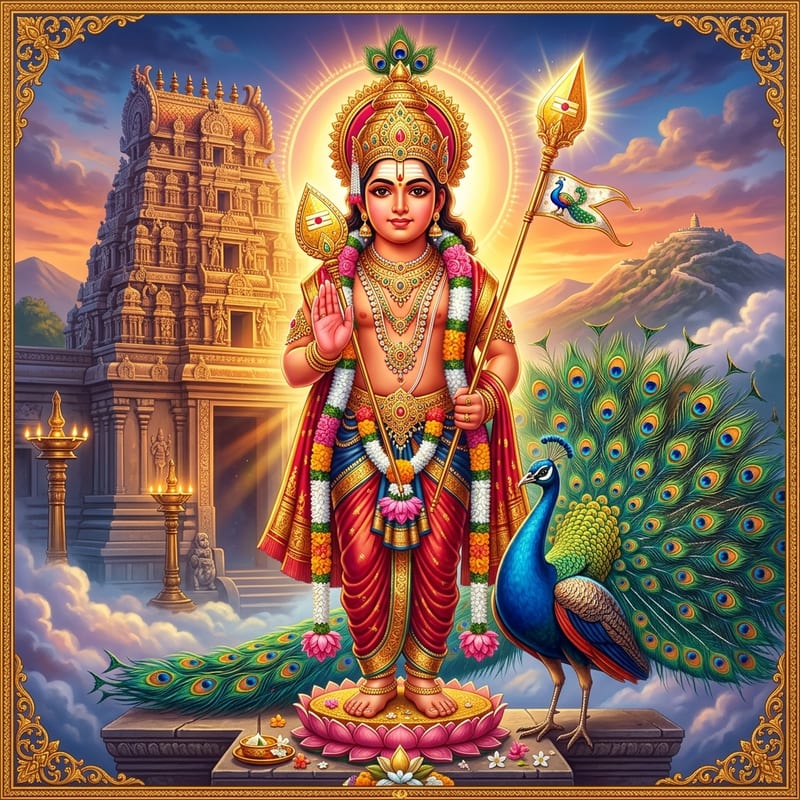
ಅಸ್ಯ ಶ್ರೀಸುಬ್ರಹ್ಮಣ್ಯಕವಚಸ್ತೋತ್ರಮಹಾಮನ್ತ್ರಸ್ಯ, ಬ್ರಹ್ಮಾ ಋಷಿಃ, ಅನುಷ್ಟುಪ್ಛನ್ದಃ, ಶ್ರೀಸುಬ್ರಹ್ಮಣ್ಯೋ ದೇವತಾ, ಓಂ ನಮ ಇತಿ ಬೀಜಂ, ಭಗವತ ಇತಿ ಶಕ್ತಿಃ, ಸುಬ್ರಹ್ಮಣ್ಯಾಯೇತಿ ಕೀಲಕಂ, ಶ್ರೀಸುಬ್ರಹ್ಮಣ್ಯ ಪ್ರಸಾದಸಿದ್ಧ್ಯರ್ಥೇ ಜಪೇ ವಿನಿಯೋಗಃ ॥
- ಅಸ್ಯ (asya)of this
- ಶ್ರೀ-ಸುಬ್ರಹ್ಮಣ್ಯ-ಕವಚ-ಸ್ತೋತ್ರ-ಮಹಾ-ಮನ್ತ್ರಸ್ಯ (śrī-subrahmaṇya-kavaca-stotra-mahā-mantrasya)great mantra, the Śrī Subrahmaṇya Kavaca Stotra
- ಬ್ರಹ್ಮಾ (brahmā)Brahmā
- ಋಷಿಃ (ṛṣiḥ)is the seer
- ಅನುಷ್ಟುಪ್ ಛನ್ದಃ (anuṣṭup chandaḥ)Anuṣṭubh is the metre
- ಶ್ರೀ-ಸುಬ್ರಹ್ಮಣ್ಯಃ (śrī-subrahmaṇyaḥ)Śrī Subrahmaṇya
- ದೇವತಾ (devatā)is the deity
- ಓಂ ನಮಃ ಇತಿ (oṃ namaḥ iti)the words "oṃ namaḥ"
- ಬೀಜಮ್ (bījam)are the seed
- ಭಗವತೇ ಇತಿ (bhagavate iti)the word "bhagavate"
- ಶಕ್ತಿಃ (śaktiḥ)is the power
- ಸುಬ್ರಹ್ಮಣ್ಯಾಯ ಇತಿ (subrahmaṇyāya iti)the word "subrahmaṇyāya"
- ಕೀಲಕಮ್ (kīlakam)is the pin that holds it fast
- ಶ್ರೀ-ಸುಬ್ರಹ್ಮಣ್ಯ-ಪ್ರಸಾದ-ಸಿದ್ಧ್ಯರ್ಥೇ (śrī-subrahmaṇya-prasāda-siddhyarthe)for the winning of Śrī Subrahmaṇya’s grace
- ಜಪೇ (jape)in the recitation
- ವಿನಿಯೋಗಃ (viniyogaḥ)is its appointed use
ಕರನ್ಯಾಸಃ –
ಓಂ ಸಾಂ ಅಙ್ಗುಷ್ಠಾಭ್ಯಾಂ ನಮಃ ।
ಓಂ ಸೀಂ ತರ್ಜನೀಭ್ಯಾಂ ನಮಃ ।
ಓಂ ಸೂಂ ಮಧ್ಯಮಾಭ್ಯಾಂ ನಮಃ ।
ಓಂ ಸೈಂ ಅನಾಮಿಕಾಭ್ಯಾಂ ನಮಃ ।
ಓಂ ಸೌಂ ಕನಿಷ್ಠಿಕಾಭ್ಯಾಂ ನಮಃ ।
ಓಂ ಸಃ ಕರತಲಕರಪೃಷ್ಠಾಭ್ಯಾಂ ನಮಃ ॥
ಓಂ ಸಾಂ ಅಙ್ಗುಷ್ಠಾಭ್ಯಾಂ ನಮಃ ।
ಓಂ ಸೀಂ ತರ್ಜನೀಭ್ಯಾಂ ನಮಃ ।
ಓಂ ಸೂಂ ಮಧ್ಯಮಾಭ್ಯಾಂ ನಮಃ ।
ಓಂ ಸೈಂ ಅನಾಮಿಕಾಭ್ಯಾಂ ನಮಃ ।
ಓಂ ಸೌಂ ಕನಿಷ್ಠಿಕಾಭ್ಯಾಂ ನಮಃ ।
ಓಂ ಸಃ ಕರತಲಕರಪೃಷ್ಠಾಭ್ಯಾಂ ನಮಃ ॥
- ಕರನ್ಯಾಸಃ (kara-nyāsaḥ)the placing of the syllables upon the hands
- ಓಂ ಸಾಂ (oṃ sāṃ)the first seed
- ಅಙ್ಗುಷ್ಠಾಭ್ಯಾಮ್ ನಮಃ (aṅguṣṭhābhyāṃ namaḥ)salutation with the two thumbs
- ಓಂ ಸೀಂ (oṃ sīṃ)the second
- ತರ್ಜನೀಭ್ಯಾಮ್ ನಮಃ (tarjanībhyāṃ namaḥ)with the two forefingers
- ಓಂ ಸೂಂ (oṃ sūṃ)the third
- ಮಧ್ಯಮಾಭ್ಯಾಮ್ ನಮಃ (madhyamābhyāṃ namaḥ)with the two middle fingers
- ಓಂ ಸೈಂ (oṃ saiṃ)the fourth
- ಅನಾಮಿಕಾಭ್ಯಾಮ್ ನಮಃ (anāmikābhyāṃ namaḥ)with the two ring fingers
- ಓಂ ಸೌಂ (oṃ sauṃ)the fifth
- ಕನಿಷ್ಠಿಕಾಭ್ಯಾಮ್ ನಮಃ (kaniṣṭhikābhyāṃ namaḥ)with the two little fingers
- ಓಂ ಸಃ (oṃ saḥ)the sixth
- ಕರತಲ-ಕರಪೃಷ್ಠಾಭ್ಯಾಮ್ ನಮಃ (karatala-karapṛṣṭhābhyāṃ namaḥ)with the palms and the backs of the hands
ಅಙ್ಗನ್ಯಾಸಃ –
ಓಂ ಸಾಂ ಹೃದಯಾಯ ನಮಃ ।
ಓಂ ಸೀಂ ಶಿರಸೇ ಸ್ವಾಹಾ ।
ಓಂ ಸೂಂ ಶಿಖಾಯೈ ವಷಟ್ ।
ಓಂ ಸೈಂ ಕವಚಾಯ ಹುಮ್ ।
ಓಂ ಸೌಂ ನೇತ್ರತ್ರಯಾಯ ವೌಷಟ್ ।
ಓಂ ಸಃ ಅಸ್ತ್ರಾಯ ಫಟ್ ।
ಭೂರ್ಭುವಸ್ಸುವರೋಮಿತಿ ದಿಗ್ಬನ್ಧಃ ॥
ಓಂ ಸಾಂ ಹೃದಯಾಯ ನಮಃ ।
ಓಂ ಸೀಂ ಶಿರಸೇ ಸ್ವಾಹಾ ।
ಓಂ ಸೂಂ ಶಿಖಾಯೈ ವಷಟ್ ।
ಓಂ ಸೈಂ ಕವಚಾಯ ಹುಮ್ ।
ಓಂ ಸೌಂ ನೇತ್ರತ್ರಯಾಯ ವೌಷಟ್ ।
ಓಂ ಸಃ ಅಸ್ತ್ರಾಯ ಫಟ್ ।
ಭೂರ್ಭುವಸ್ಸುವರೋಮಿತಿ ದಿಗ್ಬನ್ಧಃ ॥
- ಅಙ್ಗನ್ಯಾಸಃ (aṅga-nyāsaḥ)the placing of the syllables upon the body
- ಓಂ ಸಾಂ (oṃ sāṃ)the first seed
- ಹೃದಯಾಯ ನಮಃ (hṛdayāya namaḥ)salutation to the heart
- ಓಂ ಸೀಂ (oṃ sīṃ)the second
- ಶಿರಸೇ ಸ್ವಾಹಾ (śirase svāhā)svāhā to the head
- ಓಂ ಸೂಂ (oṃ sūṃ)the third
- ಶಿಖಾಯೈ ವಷಟ್ (śikhāyai vaṣaṭ)vaṣaṭ to the crown-lock
- ಓಂ ಸೈಂ (oṃ saiṃ)the fourth
- ಕವಚಾಯ ಹುಮ್ (kavacāya hum)hum to the armour
- ಓಂ ಸೌಂ (oṃ sauṃ)the fifth
- ನೇತ್ರ-ತ್ರಯಾಯ ವೌಷಟ್ (netra-trayāya vauṣaṭ)vauṣaṭ to the three eyes
- ಓಂ ಸಃ (oṃ saḥ)the sixth
- ಅಸ್ತ್ರಾಯ ಫಟ್ (astrāya phaṭ)phaṭ to the weapon
- ಭೂರ್ಭುವಸ್ಸುವರೋಮ್ ಇತಿ (bhūr bhuvas suvar om iti)with these words
- ದಿಗ್-ಬನ್ಧಃ (dig-bandhaḥ)the quarters are bound about
ಧ್ಯಾನಮ್ ।
ಸಿನ್ದೂರಾರುಣಮಿನ್ದುಕಾನ್ತಿವದನಂ ಕೇಯೂರಹಾರಾದಿಭಿಃ
ದಿವ್ಯೈರಾಭರಣೈರ್ವಿಭೂಷಿತತನುಂ ಸ್ವರ್ಗಾದಿಸೌಖ್ಯಪ್ರದಮ್ ।
ಅಮ್ಭೋಜಾಭಯಶಕ್ತಿಕುಕ್ಕುಟಧರಂ ರಕ್ತಾಙ್ಗರಾಗೋಜ್ಜ್ವಲಂ
ಸುಬ್ರಹ್ಮಣ್ಯಮುಪಾಸ್ಮಹೇ ಪ್ರಣಮತಾಂ ಸರ್ವಾರ್ಥಸಿದ್ಧಿಪ್ರದಮ್ ॥ [ಭೀತಿಪ್ರಣಾಶೋದ್ಯತಮ್]
ಲಮಿತ್ಯಾದಿ ಪಞ್ಚಪೂಜಾ ।
ಓಂ ಲಂ ಪೃಥಿವ್ಯಾತ್ಮನೇ ಸುಬ್ರಹ್ಮಣ್ಯಾಯ ಗನ್ಧಂ ಸಮರ್ಪಯಾಮಿ ।
ಓಂ ಹಂ ಆಕಾಶಾತ್ಮನೇ ಸುಬ್ರಹ್ಮಣ್ಯಾಯ ಪುಷ್ಪಾಣಿ ಸಮರ್ಪಯಾಮಿ ।
ಓಂ ಯಂ ವಾಯ್ವಾತ್ಮನೇ ಸುಬ್ರಹ್ಮಣ್ಯಾಯ ಧೂಪಮಾಘ್ರಾಪಯಾಮಿ ।
ಓಂ ರಂ ಅಗ್ನ್ಯಾತ್ಮನೇ ಸುಬ್ರಹ್ಮಣ್ಯಾಯ ದೀಪಂ ದರ್ಶಯಾಮಿ ।
ಓಂ ವಂ ಅಮೃತಾತ್ಮನೇ ಸುಬ್ರಹ್ಮಣ್ಯಾಯ ಸ್ವಾದನ್ನಂ ನಿವೇದಯಾಮಿ ।
ಓಂ ಸಂ ಸರ್ವಾತ್ಮನೇ ಸುಬ್ರಹ್ಮಣ್ಯಾಯ ಸರ್ವೋಪಚಾರಾನ್ ಸಮರ್ಪಯಾಮಿ ।
- ಧ್ಯಾನಮ್ (dhyānam)the meditation
- ಸಿನ್ದೂರ-ಅರುಣ-ಇನ್ದು-ಕಾನ್ತಿ-ವದನಮ್ (sindūrāruṇa-indu-kānti-vadanam)his face red as vermilion and lovely as the moon
- ಕೇಯೂರ-ಹಾರ-ಆದಿಭಿಃ (keyūra-hārādibhiḥ)with armlets, necklaces and the rest
- ದಿವ್ಯೈಃ ಆಭರಣೈಃ (divyair ābharaṇaiḥ)with divine ornaments
- ವಿಭೂಷಿತ-ತನುಮ್ (vibhūṣita-tanum)his body adorned
- ಸ್ವರ್ಗ-ಆದಿ-ಸೌಖ್ಯ-ಪ್ರದಮ್ (svargādi-saukhya-pradam)who grants the joys of heaven and of what lies past it
- ಅಮ್ಭೋಜ-ಅಭಯ-ಶಕ್ತಿ-ಕುಕ್ಕುಟ-ಧರಮ್ (ambhoja-abhaya-śakti-kukkuṭa-dharam)bearing lotus, the gesture of safety, the spear and the cock
- ರಕ್ತ-ಅಙ್ಗ-ರಾಗ-ಉಜ್ಜ್ವಲಮ್ (raktāṅga-rāgojjvalam)bright with red unguent on his limbs
- ಸುಬ್ರಹ್ಮಣ್ಯಮ್ (subrahmaṇyam)Subrahmaṇya
- ಉಪಾಸ್ಮಹೇ (upāsmahe)we worship
- ಪ್ರಣಮತಾಮ್ (praṇamatām)for those who bow to him
- ಸರ್ವ-ಅರ್ಥ-ಸಿದ್ಧಿ-ಪ್ರದಮ್ (sarvārtha-siddhi-pradam)who brings every aim to fulfilment
- ಭೀತಿ-ಪ್ರಣಾಶ-ಉದ್ಯತಮ್ (bhīti-praṇāśodyatam)ever ready to make fear vanish – a variant for the closing phrase
- ಲಮ್ ಇತ್ಯಾದಿ ಪಞ್ಚ-ಪೂಜಾ (laṃ ityādi pañca-pūjā)the fivefold worship beginning with laṃ
- ಓಂ ಲಂ ಪೃಥಿವೀ-ಆತ್ಮನೇ (oṃ laṃ pṛthivy-ātmane)to him whose self is earth
- ಗನ್ಧಮ್ ಸಮರ್ಪಯಾಮಿ (gandhaṃ samarpayāmi)I offer sandal paste
- ಓಂ ಹಂ ಆಕಾಶ-ಆತ್ಮನೇ (oṃ haṃ ākāśātmane)to him whose self is space
- ಪುಷ್ಪಾಣಿ ಸಮರ್ಪಯಾಮಿ (puṣpāṇi samarpayāmi)I offer flowers
- ಓಂ ಯಂ ವಾಯು-ಆತ್ಮನೇ (oṃ yaṃ vāyv-ātmane)to him whose self is wind
- ಧೂಪಮ್ ಆಘ್ರಾಪಯಾಮಿ (dhūpam āghrāpayāmi)I let the incense be breathed in
- ಓಂ ರಂ ಅಗ್ನಿ-ಆತ್ಮನೇ (oṃ raṃ agny-ātmane)to him whose self is fire
- ದೀಪಮ್ ದರ್ಶಯಾಮಿ (dīpaṃ darśayāmi)I show the lamp
- ಓಂ ವಂ ಅಮೃತ-ಆತ್ಮನೇ (oṃ vaṃ amṛtātmane)to him whose self is the nectar of deathlessness
- ಸ್ವಾದನ್ನಮ್ ನಿವೇದಯಾಮಿ (svādannaṃ nivedayāmi)I present the sweet food
- ಓಂ ಸಂ ಸರ್ವ-ಆತ್ಮನೇ (oṃ saṃ sarvātmane)to him whose self is all
- ಸರ್ವ-ಉಪಚಾರಾನ್ ಸಮರ್ಪಯಾಮಿ (sarvopacārān samarpayāmi)I offer every service of worship
ಕವಚಮ್ ।
ಸುಬ್ರಹ್ಮಣ್ಯೋಽಗ್ರತಃ ಪಾತು ಸೇನಾನೀಃ ಪಾತು ಪೃಷ್ಠತಃ ।
ಗುಹೋ ಮಾಂ ದಕ್ಷಿಣೇ ಪಾತು ವಹ್ನಿಜಃ ಪಾತು ವಾಮತಃ ॥ 1 ॥
ಸುಬ್ರಹ್ಮಣ್ಯೋಽಗ್ರತಃ ಪಾತು ಸೇನಾನೀಃ ಪಾತು ಪೃಷ್ಠತಃ ।
ಗುಹೋ ಮಾಂ ದಕ್ಷಿಣೇ ಪಾತು ವಹ್ನಿಜಃ ಪಾತು ವಾಮತಃ ॥ 1 ॥
- ಕವಚಮ್ (kavacam)the armour
- ಸುಬ್ರಹ್ಮಣ್ಯಃ (subrahmaṇyaḥ)Subrahmaṇya
- ಅಗ್ರತಃ (agrataḥ)in front
- ಪಾತು (pātu)may he guard
- ಸೇನಾನೀಃ (senānīḥ)the Commander
- ಪಾತು (pātu)may he guard
- ಪೃಷ್ಠತಃ (pṛṣṭhataḥ)behind
- ಗುಹಃ (guhaḥ)Guha, the hidden one
- ಮಾಮ್ (mām)me
- ದಕ್ಷಿಣೇ (dakṣiṇe)on the right
- ಪಾತು (pātu)may he guard
- ವಹ್ನಿಜಃ (vahnijaḥ)he who was born of fire
- ಪಾತು (pātu)may he guard
- ವಾಮತಃ (vāmataḥ)on the left
ಶಿರಃ ಪಾತು ಮಹಾಸೇನಃ ಸ್ಕನ್ದೋ ರಕ್ಷೇಲ್ಲಲಾಟಕಮ್ ।
ನೇತ್ರೇ ಮೇ ದ್ವಾದಶಾಕ್ಷಶ್ಚ ಶ್ರೋತ್ರೇ ರಕ್ಷತು ವಿಶ್ವಭೃತ್ ॥ 2 ॥
ನೇತ್ರೇ ಮೇ ದ್ವಾದಶಾಕ್ಷಶ್ಚ ಶ್ರೋತ್ರೇ ರಕ್ಷತು ವಿಶ್ವಭೃತ್ ॥ 2 ॥
- ಶಿರಃ (śiraḥ)the head
- ಪಾತು (pātu)may he guard
- ಮಹಾಸೇನಃ (mahāsenaḥ)Mahāsena, lord of the great host
- ಸ್ಕನ್ದಃ (skandaḥ)Skanda
- ರಕ್ಷೇತ್ (rakṣet)may he protect
- ಲಲಾಟಕಮ್ (lalāṭakam)the forehead
- ನೇತ್ರೇ (netre)the two eyes
- ಮೇ (me)my
- ದ್ವಾದಶ-ಅಕ್ಷಃ (dvādaśākṣaḥ)the twelve-eyed one
- ಚ (ca)and
- ಶ್ರೋತ್ರೇ (śrotre)the two ears
- ರಕ್ಷತು (rakṣatu)may he protect
- ವಿಶ್ವ-ಭೃತ್ (viśva-bhṛt)the bearer of the universe
ಮುಖಂ ಮೇ ಷಣ್ಮುಖಃ ಪಾತು ನಾಸಿಕಾಂ ಶಙ್ಕರಾತ್ಮಜಃ ।
ಓಷ್ಠೌ ವಲ್ಲೀಪತಿಃ ಪಾತು ಜಿಹ್ವಾಂ ಪಾತು ಷಡಾನನಃ ॥ 3 ॥
ಓಷ್ಠೌ ವಲ್ಲೀಪತಿಃ ಪಾತು ಜಿಹ್ವಾಂ ಪಾತು ಷಡಾನನಃ ॥ 3 ॥
- ಶಙ್ಕರಾತ್ಮಜಃ (Śaṅkarātmaja)son of Śaṅkara
- ವಲ್ಲೀಪತಿಃ (Vallīpati)lord of Vaḷḷī
- ಷಡಾನನಃ (Ṣaḍānana)the six-faced lord
ದೇವಸೇನಾಪತಿರ್ದನ್ತಾನ್ ಚಿಬುಕಂ ಬಹುಲೋದ್ಭವಃ ।
ಕಣ್ಠಂ ತಾರಕಜಿತ್ಪಾತು ಬಾಹೂ ದ್ವಾದಶಬಾಹುಕಃ ॥ 4 ॥
ಕಣ್ಠಂ ತಾರಕಜಿತ್ಪಾತು ಬಾಹೂ ದ್ವಾದಶಬಾಹುಕಃ ॥ 4 ॥
- ದೇವ-ಸೇನಾ-ಪತಿಃ (deva-senā-patiḥ)the lord of the army of the gods
- ದನ್ತಾನ್ (dantān)the teeth
- ಚಿಬುಕಮ್ (cibukam)the chin
- ಬಹುಲ-ಉದ್ಭವಃ (bahulodbhavaḥ)he who arose among the Kṛttikās
- ಕಣ್ಠಮ್ (kaṇṭham)the throat
- ತಾರಕ-ಜಿತ್ (tāraka-jit)the conqueror of Tāraka
- ಪಾತು (pātu)may he guard
- ಬಾಹೂ (bāhū)the two arms
- ದ್ವಾದಶ-ಬಾಹುಕಃ (dvādaśa-bāhukaḥ)the twelve-armed one
ಹಸ್ತೌ ಶಕ್ತಿಧರಃ ಪಾತು ವಕ್ಷಃ ಪಾತು ಶರೋದ್ಭವಃ ।
ಹೃದಯಂ ವಹ್ನಿಭೂಃ ಪಾತು ಕುಕ್ಷಿಂ ಪಾತ್ವಮ್ಬಿಕಾಸುತಃ ॥ 5 ॥
ಹೃದಯಂ ವಹ್ನಿಭೂಃ ಪಾತು ಕುಕ್ಷಿಂ ಪಾತ್ವಮ್ಬಿಕಾಸುತಃ ॥ 5 ॥
- ಹಸ್ತೌ (hastau)the two hands
- ಶಕ್ತಿ-ಧರಃ (śakti-dharaḥ)the bearer of the spear
- ಪಾತು (pātu)may he guard
- ವಕ್ಷಃ (vakṣaḥ)the chest
- ಪಾತು (pātu)may he guard
- ಶರ-ಉದ್ಭವಃ (śarodbhavaḥ)he born among the reeds
- ಹೃದಯಮ್ (hṛdayam)the heart
- ವಹ್ನಿ-ಭೂಃ (vahni-bhūḥ)he sprung from fire
- ಪಾತು (pātu)may he guard
- ಕುಕ್ಷಿಮ್ (kukṣim)the belly
- ಪಾತು (pātu)may he guard
- ಅಮ್ಬಿಕಾ-ಸುತಃ (ambikā-sutaḥ)the son of Ambikā
ನಾಭಿಂ ಶಮ್ಭುಸುತಃ ಪಾತು ಕಟಿಂ ಪಾತು ಹರಾತ್ಮಜಃ ।
ಊರೂ ಪಾತು ಗಜಾರೂಢೋ ಜಾನೂ ಮೇ ಜಾಹ್ನವೀಸುತಃ ॥ 6 ॥
ಊರೂ ಪಾತು ಗಜಾರೂಢೋ ಜಾನೂ ಮೇ ಜಾಹ್ನವೀಸುತಃ ॥ 6 ॥
- ಶಮ್ಭುಸುತಃ (Śambhusuta)son of Śambhu / Śiva
- ಹರಾತ್ಮಜಃ (Harātmaja)son of Hara
- ಗಜಾರೂಢೋ (Gajārūḍha)the mighty, elephant-conquering lord
- ಜಾಹ್ನವೀಸುತಃ (Jāhnavīsuta)son of the Gaṅgā
ಜಙ್ಘೇ ವಿಶಾಖೋ ಮೇ ಪಾತು ಪಾದೌ ಮೇ ಶಿಖಿವಾಹನಃ ।
ಸರ್ವಾಣ್ಯಙ್ಗಾನಿ ಭೂತೇಶಃ ಸರ್ವಧಾತೂಂಶ್ಚ ಪಾವಕಿಃ ॥ 7 ॥
ಸರ್ವಾಣ್ಯಙ್ಗಾನಿ ಭೂತೇಶಃ ಸರ್ವಧಾತೂಂಶ್ಚ ಪಾವಕಿಃ ॥ 7 ॥
- ಶಿಖಿವಾಹನಃ (Śikhivāhana)the peacock-vehicled lord
- ಭೂತೇಶಃ (Bhūtēśa)lord of all beings
- ಪಾವಕಿಃ (Pāvaki)son of fire, Agni's son
ಸನ್ಧ್ಯಾಕಾಲೇ ನಿಶೀಥಿನ್ಯಾಂ ದಿವಾ ಪ್ರಾತರ್ಜಲೇಽಗ್ನಿಷು ।
ದುರ್ಗಮೇ ಚ ಮಹಾರಣ್ಯೇ ರಾಜದ್ವಾರೇ ಮಹಾಭಯೇ ॥ 8 ॥
ದುರ್ಗಮೇ ಚ ಮಹಾರಣ್ಯೇ ರಾಜದ್ವಾರೇ ಮಹಾಭಯೇ ॥ 8 ॥
- ಸನ್ಧ್ಯಾ-ಕಾಲೇ (sandhyā-kāle)at the twilight hour
- ನಿಶೀಥಿನ್ಯಾಮ್ (niśīthinyām)in the depth of night
- ದಿವಾ (divā)by day
- ಪ್ರಾತಃ (prātaḥ)at dawn
- ಜಲೇ (jale)in water
- ಅಗ್ನಿಷು (agniṣu)in fires
- ದುರ್ಗಮೇ (durgame)in trackless country
- ಚ (ca)and
- ಮಹಾ-ಅರಣ್ಯೇ (mahāraṇye)in the great forest
- ರಾಜ-ದ್ವಾರೇ (rāja-dvāre)at a king’s gate
- ಮಹಾ-ಭಯೇ (mahā-bhaye)in great danger
ತುಮುಲೇ ರಣ್ಯಮಧ್ಯೇ ಚ ಸರ್ವದುಷ್ಟಮೃಗಾದಿಷು ।
ಚೋರಾದಿಸಾಧ್ವಸೇಽಭೇದ್ಯೇ ಜ್ವರಾದಿವ್ಯಾಧಿಪೀಡನೇ ॥ 9 ॥
ಚೋರಾದಿಸಾಧ್ವಸೇಽಭೇದ್ಯೇ ಜ್ವರಾದಿವ್ಯಾಧಿಪೀಡನೇ ॥ 9 ॥
- ತುಮುಲೇ (tumule)in the din of battle
- ರಣ-ಮಧ್ಯೇ (raṇa-madhye)in the midst of the fight (printed रण्यमध्ये)
- ಚ (ca)and
- ಸರ್ವ-ದುಷ್ಟ-ಮೃಗ-ಆದಿಷು (sarva-duṣṭa-mṛgādiṣu)among all savage beasts and their like
- ಚೋರ-ಆದಿ-ಸಾಧ್ವಸೇ (corādi-sādhvase)in the terror of thieves and their kind
- ಅಭೇದ್ಯೇ (abhedye)where there is no way through
- ಜ್ವರ-ಆದಿ-ವ್ಯಾಧಿ-ಪೀಡನೇ (jvarādi-vyādhi-pīḍane)in the torment of fever and every other disease
ದುಷ್ಟಗ್ರಹಾದಿಭೀತೌ ಚ ದುರ್ನಿಮಿತ್ತಾದಿಭೀಷಣೇ ।
ಅಸ್ತ್ರಶಸ್ತ್ರನಿಪಾತೇ ಚ ಪಾತು ಮಾಂ ಕ್ರೌಞ್ಚರನ್ಧ್ರಕೃತ್ ॥ 10 ॥
ಅಸ್ತ್ರಶಸ್ತ್ರನಿಪಾತೇ ಚ ಪಾತು ಮಾಂ ಕ್ರೌಞ್ಚರನ್ಧ್ರಕೃತ್ ॥ 10 ॥
- ದುಷ್ಟ-ಗ್ರಹ-ಆದಿ-ಭೀತೌ (duṣṭa-grahādi-bhītau)in the fear of malign planets and the like
- ಚ (ca)and
- ದುರ್ನಿಮಿತ್ತ-ಆದಿ-ಭೀಷಣೇ (durnimittādi-bhīṣaṇe)in the dread of ill omens
- ಅಸ್ತ್ರ-ಶಸ್ತ್ರ-ನಿಪಾತೇ (astra-śastra-nipāte)when missiles and blades come down
- ಚ (ca)and
- ಪಾತು (pātu)may he guard
- ಮಾಮ್ (mām)me
- ಕ್ರೌಞ್ಚ-ರನ್ಧ್ರ-ಕೃತ್ (krauñca-randhra-kṛt)he who bored the passage through Krauñca
ಯಃ ಸುಬ್ರಹ್ಮಣ್ಯಕವಚಂ ಇಷ್ಟಸಿದ್ಧಿಪ್ರದಂ ಪಠೇತ್ ।
ತಸ್ಯ ತಾಪತ್ರಯಂ ನಾಸ್ತಿ ಸತ್ಯಂ ಸತ್ಯಂ ವದಾಮ್ಯಹಮ್ ॥ 11 ॥
ತಸ್ಯ ತಾಪತ್ರಯಂ ನಾಸ್ತಿ ಸತ್ಯಂ ಸತ್ಯಂ ವದಾಮ್ಯಹಮ್ ॥ 11 ॥
- ಯಃ (yaḥ)whoever
- ಸುಬ್ರಹ್ಮಣ್ಯ-ಕವಚಮ್ (subrahmaṇya-kavacam)the Subrahmaṇya armour
- ಇಷ್ಟ-ಸಿದ್ಧಿ-ಪ್ರದಮ್ (iṣṭa-siddhi-pradam)which grants what is longed for
- ಪಠೇತ್ (paṭhet)recites
- ತಸ್ಯ (tasya)for him
- ತಾಪ-ತ್ರಯಮ್ (tāpa-trayam)the threefold burning – from oneself, from other creatures, from fate
- ನ ಅಸ್ತಿ (nāsti)is not
- ಸತ್ಯಮ್ ಸತ್ಯಮ್ (satyaṃ satyam)truly, truly
- ವದಾಮಿ (vadāmi)do I say it
- ಅಹಮ್ (aham)I
ಧರ್ಮಾರ್ಥೀ ಲಭತೇ ಧರ್ಮಮರ್ಥಾರ್ಥೀ ಚಾರ್ಥಮಾಪ್ನುಯಾತ್ ।
ಕಾಮಾರ್ಥೀ ಲಭತೇ ಕಾಮಂ ಮೋಕ್ಷಾರ್ಥೀ ಮೋಕ್ಷಮಾಪ್ನುಯಾತ್ ॥ 12 ॥
ಕಾಮಾರ್ಥೀ ಲಭತೇ ಕಾಮಂ ಮೋಕ್ಷಾರ್ಥೀ ಮೋಕ್ಷಮಾಪ್ನುಯಾತ್ ॥ 12 ॥
- ಧರ್ಮ-ಅರ್ಥೀ (dharma-arthī)he who seeks right living
- ಲಭತೇ (labhate)gains
- ಧರ್ಮಮ್ (dharmam)it
- ಅರ್ಥ-ಅರ್ಥೀ (artha-arthī)he who seeks wealth
- ಚ (ca)and
- ಅರ್ಥಮ್ (artham)wealth
- ಆಪ್ನುಯಾತ್ (āpnuyāt)would obtain
- ಕಾಮ-ಅರ್ಥೀ (kāma-arthī)he who seeks pleasure
- ಲಭತೇ (labhate)gains
- ಕಾಮಮ್ (kāmam)it
- ಮೋಕ್ಷ-ಅರ್ಥೀ (mokṣa-arthī)he who seeks release
- ಮೋಕ್ಷಮ್ (mokṣam)release
- ಆಪ್ನುಯಾತ್ (āpnuyāt)would obtain
ಯತ್ರ ಯತ್ರ ಜಪೇದ್ಭಕ್ತ್ಯಾ ತತ್ರ ಸನ್ನಿಹಿತೋ ಗುಹಃ ।
ಪೂಜಾಪ್ರತಿಷ್ಠಾಕಾಲೇ ಚ ಜಪಕಾಲೇ ಪಠೇದಿದಮ್ ॥ 13 ॥
ಪೂಜಾಪ್ರತಿಷ್ಠಾಕಾಲೇ ಚ ಜಪಕಾಲೇ ಪಠೇದಿದಮ್ ॥ 13 ॥
- ಯತ್ರ ಯತ್ರ (yatra yatra)wherever
- ಜಪೇತ್ (japet)one murmurs it
- ಭಕ್ತ್ಯಾ (bhaktyā)with devotion
- ತತ್ರ (tatra)there
- ಸನ್ನಿಹಿತಃ (sannihitaḥ)close at hand
- ಗುಹಃ (guhaḥ)is Guha
- ಪೂಜಾ-ಪ್ರತಿಷ್ಠಾ-ಕಾಲೇ (pūjā-pratiṣṭhā-kāle)at the hour of worship and of consecration
- ಚ (ca)and
- ಜಪ-ಕಾಲೇ (japa-kāle)at the hour of recitation
- ಪಠೇತ್ (paṭhet)one should recite
- ಇದಮ್ (idam)this
ತೇಷಾಮೇವ ಫಲಾವಾಪ್ತಿಃ ಮಹಾಪಾತಕನಾಶನಮ್ ।
ಯಃ ಪಠೇಚ್ಛೃಣುಯಾದ್ಭಕ್ತ್ಯಾ ನಿತ್ಯಂ ದೇವಸ್ಯ ಸನ್ನಿಧೌ ।
ಸರ್ವಾನ್ಕಾಮಾನಿಹ ಪ್ರಾಪ್ಯ ಸೋಽನ್ತೇ ಸ್ಕನ್ದಪುರಂ ವ್ರಜೇತ್ ॥ 14 ॥
ಯಃ ಪಠೇಚ್ಛೃಣುಯಾದ್ಭಕ್ತ್ಯಾ ನಿತ್ಯಂ ದೇವಸ್ಯ ಸನ್ನಿಧೌ ।
ಸರ್ವಾನ್ಕಾಮಾನಿಹ ಪ್ರಾಪ್ಯ ಸೋಽನ್ತೇ ಸ್ಕನ್ದಪುರಂ ವ್ರಜೇತ್ ॥ 14 ॥
- ತೇಷಾಮ್ ಏವ (teṣām eva)of those very rites
- ಫಲ-ಅವಾಪ್ತಿಃ (phala-avāptiḥ)the fruit is gained
- ಮಹಾ-ಪಾತಕ-ನಾಶನಮ್ (mahā-pātaka-nāśanam)and the great sins are undone
- ಯಃ (yaḥ)whoever
- ಪಠೇತ್ (paṭhet)recites
- ಶೃಣುಯಾತ್ (śṛṇuyāt)or hears
- ಭಕ್ತ್ಯಾ (bhaktyā)with devotion
- ನಿತ್ಯಮ್ (nityam)day after day
- ದೇವಸ್ಯ ಸನ್ನಿಧೌ (devasya sannidhau)in the presence of the god
- ಸರ್ವಾನ್ ಕಾಮಾನ್ (sarvān kāmān)all that he desires
- ಇಹ (iha)here in this world
- ಪ್ರಾಪ್ಯ (prāpya)having obtained
- ಸಃ (saḥ)he
- ಅನ್ತೇ (ante)at the end
- ಸ್ಕನ್ದ-ಪುರಮ್ (skanda-puram)to Skanda’s city
- ವ್ರಜೇತ್ (vrajet)would go
ಉತ್ತರನ್ಯಾಸಃ ॥
ಕರನ್ಯಾಸಃ –
ಓಂ ಸಾಂ ಅಙ್ಗುಷ್ಠಾಭ್ಯಾಂ ನಮಃ ।
ಓಂ ಸೀಂ ತರ್ಜನೀಭ್ಯಾಂ ನಮಃ ।
ಓಂ ಸೂಂ ಮಧ್ಯಮಾಭ್ಯಾಂ ನಮಃ ।
ಓಂ ಸೈಂ ಅನಾಮಿಕಾಭ್ಯಾಂ ನಮಃ ।
ಓಂ ಸೌಂ ಕನಿಷ್ಠಿಕಾಭ್ಯಾಂ ನಮಃ ।
ಓಂ ಸಃ ಕರತಲಕರಪೃಷ್ಠಾಭ್ಯಾಂ ನಮಃ ॥
ಕರನ್ಯಾಸಃ –
ಓಂ ಸಾಂ ಅಙ್ಗುಷ್ಠಾಭ್ಯಾಂ ನಮಃ ।
ಓಂ ಸೀಂ ತರ್ಜನೀಭ್ಯಾಂ ನಮಃ ।
ಓಂ ಸೂಂ ಮಧ್ಯಮಾಭ್ಯಾಂ ನಮಃ ।
ಓಂ ಸೈಂ ಅನಾಮಿಕಾಭ್ಯಾಂ ನಮಃ ।
ಓಂ ಸೌಂ ಕನಿಷ್ಠಿಕಾಭ್ಯಾಂ ನಮಃ ।
ಓಂ ಸಃ ಕರತಲಕರಪೃಷ್ಠಾಭ್ಯಾಂ ನಮಃ ॥
- ಉತ್ತರ-ನ್ಯಾಸಃ (uttara-nyāsaḥ)the closing placement, made once the hymn is finished
- ಕರನ್ಯಾಸಃ (kara-nyāsaḥ)upon the hands
- ಓಂ ಸಾಂ (oṃ sāṃ)the first seed
- ಅಙ್ಗುಷ್ಠಾಭ್ಯಾಮ್ ನಮಃ (aṅguṣṭhābhyāṃ namaḥ)salutation with the two thumbs
- ಓಂ ಸೀಂ (oṃ sīṃ)the second
- ತರ್ಜನೀಭ್ಯಾಮ್ ನಮಃ (tarjanībhyāṃ namaḥ)with the two forefingers
- ಓಂ ಸೂಂ (oṃ sūṃ)the third
- ಮಧ್ಯಮಾಭ್ಯಾಮ್ ನಮಃ (madhyamābhyāṃ namaḥ)with the two middle fingers
- ಓಂ ಸೈಂ (oṃ saiṃ)the fourth
- ಅನಾಮಿಕಾಭ್ಯಾಮ್ ನಮಃ (anāmikābhyāṃ namaḥ)with the two ring fingers
- ಓಂ ಸೌಂ (oṃ sauṃ)the fifth
- ಕನಿಷ್ಠಿಕಾಭ್ಯಾಮ್ ನಮಃ (kaniṣṭhikābhyāṃ namaḥ)with the two little fingers
- ಓಂ ಸಃ (oṃ saḥ)the sixth
- ಕರತಲ-ಕರಪೃಷ್ಠಾಭ್ಯಾಮ್ ನಮಃ (karatala-karapṛṣṭhābhyāṃ namaḥ)with the palms and the backs of the hands
ಅಙ್ಗನ್ಯಾಸಃ –
ಓಂ ಸಾಂ ಹೃದಯಾಯ ನಮಃ ।
ಓಂ ಸೀಂ ಶಿರಸೇ ಸ್ವಾಹಾ ।
ಓಂ ಸೂಂ ಶಿಖಾಯೈ ವಷಟ್ ।
ಓಂ ಸೈಂ ಕವಚಾಯ ಹುಮ್ ।
ಓಂ ಸೌಂ ನೇತ್ರತ್ರಯಾಯ ವೌಷಟ್ ।
ಓಂ ಸಃ ಅಸ್ತ್ರಾಯ ಫಟ್ ।
ಭೂರ್ಭುವಸ್ಸುವರೋಮಿತಿ ದಿಗ್ವಿಮೋಕಃ ॥
ಓಂ ಸಾಂ ಹೃದಯಾಯ ನಮಃ ।
ಓಂ ಸೀಂ ಶಿರಸೇ ಸ್ವಾಹಾ ।
ಓಂ ಸೂಂ ಶಿಖಾಯೈ ವಷಟ್ ।
ಓಂ ಸೈಂ ಕವಚಾಯ ಹುಮ್ ।
ಓಂ ಸೌಂ ನೇತ್ರತ್ರಯಾಯ ವೌಷಟ್ ।
ಓಂ ಸಃ ಅಸ್ತ್ರಾಯ ಫಟ್ ।
ಭೂರ್ಭುವಸ್ಸುವರೋಮಿತಿ ದಿಗ್ವಿಮೋಕಃ ॥
- ಅಙ್ಗನ್ಯಾಸಃ (aṅga-nyāsaḥ)the placing of the syllables upon the body
- ಓಂ ಸಾಂ (oṃ sāṃ)the first seed
- ಹೃದಯಾಯ ನಮಃ (hṛdayāya namaḥ)salutation to the heart
- ಓಂ ಸೀಂ (oṃ sīṃ)the second
- ಶಿರಸೇ ಸ್ವಾಹಾ (śirase svāhā)svāhā to the head
- ಓಂ ಸೂಂ (oṃ sūṃ)the third
- ಶಿಖಾಯೈ ವಷಟ್ (śikhāyai vaṣaṭ)vaṣaṭ to the crown-lock
- ಓಂ ಸೈಂ (oṃ saiṃ)the fourth
- ಕವಚಾಯ ಹುಮ್ (kavacāya hum)hum to the armour
- ಓಂ ಸೌಂ (oṃ sauṃ)the fifth
- ನೇತ್ರ-ತ್ರಯಾಯ ವೌಷಟ್ (netra-trayāya vauṣaṭ)vauṣaṭ to the three eyes
- ಓಂ ಸಃ (oṃ saḥ)the sixth
- ಅಸ್ತ್ರಾಯ ಫಟ್ (astrāya phaṭ)phaṭ to the weapon
- ಭೂರ್ಭುವಸ್ಸುವರೋಮ್ ಇತಿ (bhūr bhuvas suvar om iti)with these words
- ದಿಗ್-ವಿಮೋಕಃ (dig-vimokaḥ)the quarters that were bound are now released
ಇತಿ ಶ್ರೀ ಸುಬ್ರಹ್ಮಣ್ಯ ಕವಚ ಸ್ತೋತ್ರಮ್ ।