
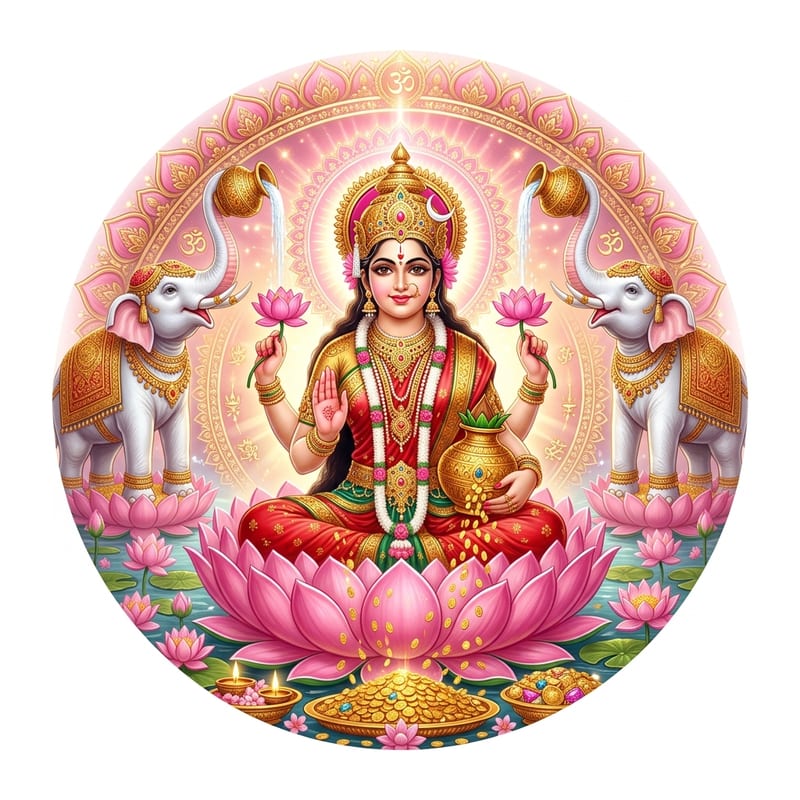
vyūhalakṣmī tantraḥ
dayālola taraṅgākṣī pūrṇacandra nibhānanā |
jananī sarvalokānāṃ mahālakṣmīḥ haripriyā || 1 ||
jananī sarvalokānāṃ mahālakṣmīḥ haripriyā || 1 ||
- dayālolataraṅgākṣīwhose eyes are waves rolling with compassion (dayā:compassion | lola:rolling | taraṅga:wave | akṣi:eye)
- pūrṇacandranibhānanāwhose face resembles the full moon (pūrṇa:full | candra:moon | nibha:resembling | ānana:face)
- jananīmother
- sarvalokānāmof all the worlds
- mahālakṣmīḥMahālakṣmī
- haripriyābeloved of Hari
sarvapāpa harāsaiva prārabdhasyāpi karmaṇaḥ |
saṃhṛtau tu kṣamāsaiva sarva sampatpradāyinī || 2 ||
saṃhṛtau tu kṣamāsaiva sarva sampatpradāyinī || 2 ||
- sarvapāpaharāremover of every sin
- sā evashe alone
- prārabdhasyaof karma already set in motion
- karmaṇaḥof action
- saṃhṛtauat the dissolution
- kṣamāforbearance, forgiveness
- sarvasampatpradāyinīgiver of all prosperity
tasyā vyūha prabhedāstu lakṣīḥ sarvapāpa praṇāśinī |
tatrayā vyūhalakṣmī sā mugdhāḥ kāruṇya vigraha || 3 ||
tatrayā vyūhalakṣmī sā mugdhāḥ kāruṇya vigraha || 3 ||
- tasyāḥof her
- vyūhaprabhedāḥthe distinctions of her arrayed forms (vyūha:array, emanation | prabheda:division)
- lakṣmīḥLakṣmī
- sarvapāpapraṇāśinīdestroying every sin
- tatrathere
- vyūhalakṣmīḥthe Vyūha-Lakṣmī
- mugdhāgentle, lovely
- kāruṇyavigrahāwhose body is compassion (kāruṇya:compassion | vigraha:form, body)
anāyāsena sā lakṣmīḥ sarvapāpa praṇāśinī |
sarvaiśvarya pradā nityaṃ tasyā mantramimaṃ śṛṇu || 4 ||
sarvaiśvarya pradā nityaṃ tasyā mantramimaṃ śṛṇu || 4 ||
- anāyāsenawithout effort, easily
- sā lakṣmīḥthat Lakṣmī
- sarvapāpapraṇāśinīdestroying every sin
- sarvaiśvaryapradābestowing all sovereignty
- nityamever
- tasyāḥof her
- mantram imamthis mantra
- śṛṇuhear
vedādimāyai mātre ca lakṣmyai nati padaṃ vadet |
parameti padaṃ coktrā lakṣmyā iti padaṃ tataḥ || 5 ||
parameti padaṃ coktrā lakṣmyā iti padaṃ tataḥ || 5 ||
- vedādithe beginning of the Veda, the syllable Om
- mātreto the Mother
- lakṣmyaito Lakṣmī
- natipadamthe word of salutation, namaḥ
- vadetone should utter
- parama iti padamthe word “supreme”
- uktvāhaving said
- lakṣmyāḥ iti padamthe word “of Lakṣmī”
- tataḥthen
viṣṇu vakṣaḥ sthitāyai syāt māyā śrītārikā tataḥ |
vahni jāyānta mantroyaṃ abhīṣṭārtha suradrumaḥ || 6 ||
vahni jāyānta mantroyaṃ abhīṣṭārtha suradrumaḥ || 6 ||
- viṣṇuvakṣaḥsthitāyaito her who abides on Viṣṇu’s breast (vakṣas:breast | sthita:abiding)
- syātshould be
- māyāthe seed hrīṃ, called māyā
- śrītārikāthe śrī-syllable, śrīṃ
- vahnijāyāthe consort of fire, i.e. svāhā (vahni:fire | jāyā:wife)
- antaḥending with
- mantraḥ ayamthis mantra
- abhīṣṭārthasuradrumaḥthe celestial wish-granting tree of every desired end (abhīṣṭa:desired | artha:object | suradruma:tree of the gods)
dvibhūjā vyūhalakṣīssyāt, badhdha padmāsana priyā |
śrīnivāsāṅga madhyasthā sutarāṃ keśavapriyā || 7 ||
śrīnivāsāṅga madhyasthā sutarāṃ keśavapriyā || 7 ||
- dvibhujātwo-armed
- vyūhalakṣmīḥthe Vyūha-Lakṣmī
- baddhapadmāsanapriyāfond of the bound lotus posture (baddha:bound | padmāsana:lotus seat)
- śrīnivāsāṅgamadhyasthāseated at the middle of Śrīnivāsa’s body
- sutarāmexceedingly
- keśavapriyādear to Keśava
tāmeva śaraṇaṃ gachcha sarvabhāvena satvaram |
iti mantraṃ upādiśya dadṛśe na kutracit ||
iti mantraṃ upādiśya dadṛśe na kutracit ||
- tām evato her alone
- śaraṇamfor refuge
- gacchago
- sarvabhāvenawith the whole being
- satvaramswiftly
- iti mantramthis mantra
- upādiśyahaving taught
- na dadṛśewas not seen
- kutracitanywhere
vyūhalakṣmī mantraḥ
vedādimāyai mātre ca lakṣmyai nati padaṃ vadet |
parameti padaṃ coktrā lakṣmyā iti padaṃ tataḥ ||
vedādimāyai mātre ca lakṣmyai nati padaṃ vadet |
parameti padaṃ coktrā lakṣmyā iti padaṃ tataḥ ||
- vyūhalakṣmīmantraḥthe mantra of Vyūha-Lakṣmī
- vedādithe beginning of the Veda, Om
- mātreto the Mother
- lakṣmyaito Lakṣmī
- natipadamthe word of salutation
- vadetone should utter
- paramasupreme
- lakṣmyāḥof Lakṣmī
viṣṇu vakṣaḥ sthitāyai syāt māyā śrītārikā tataḥ |
vahni jāyānta mantroyaṃ abhīṣṭārtha suradrumaḥ ||
vahni jāyānta mantroyaṃ abhīṣṭārtha suradrumaḥ ||
- viṣṇuvakṣaḥsthitāyaito her who abides on Viṣṇu’s breast
- māyāthe seed hrīṃ
- śrītārikāthe syllable śrīṃ
- vahnijāyāsvāhā, the consort of fire
- antaḥending with
- abhīṣṭārthasuradrumaḥthe wish-granting tree of every desired end
vyūhalakṣmī mantraḥ (bījākṣara sahitam)
oṃ śrī oṃ namaḥ ||
paramalakṣmmai, viṣṇu-vakṣasthitāyai, ramāyai, āśrita-tārakāyai namo, vahnijāyai namaḥ ||
oṃ śrī oṃ namaḥ ||
paramalakṣmmai, viṣṇu-vakṣasthitāyai, ramāyai, āśrita-tārakāyai namo, vahnijāyai namaḥ ||
- bījākṣarasahitamtogether with the seed syllables (bīja:seed | akṣara:syllable | sahita:accompanied by)
- paramalakṣmyaito the supreme Lakṣmī
- viṣṇuvakṣasthitāyaito her abiding on Viṣṇu’s breast
- ramāyaito Ramā, a name of Lakṣmī
- āśritatārakāyaito her who carries across those who take refuge (āśrita:one who has taken refuge | tāraka:ferrying over)
- namaḥsalutation
- vahnijāyaito the consort of fire, svāhā