
namaste sarvavidyeśa! sarvasiddhipradāyaka! || 31||
- sahasrādityasaṅkāśaO you who shine like a thousand suns
- namaḥsalutation
- teto you
- jagadīśvaraO lord of the world
- namaḥsalutation
- teto you
- sarvavidyeśaO lord of all learning
- sarvasiddhipradāyakaO giver of every success
anvaya sahasrādityasaṅkāśa jagadīśvara te namaḥ sarvavidyeśa sarvasiddhipradāyaka te namaḥ
chandas Anuṣṭubh (śloka), 8 syllables in each of 4 pādas
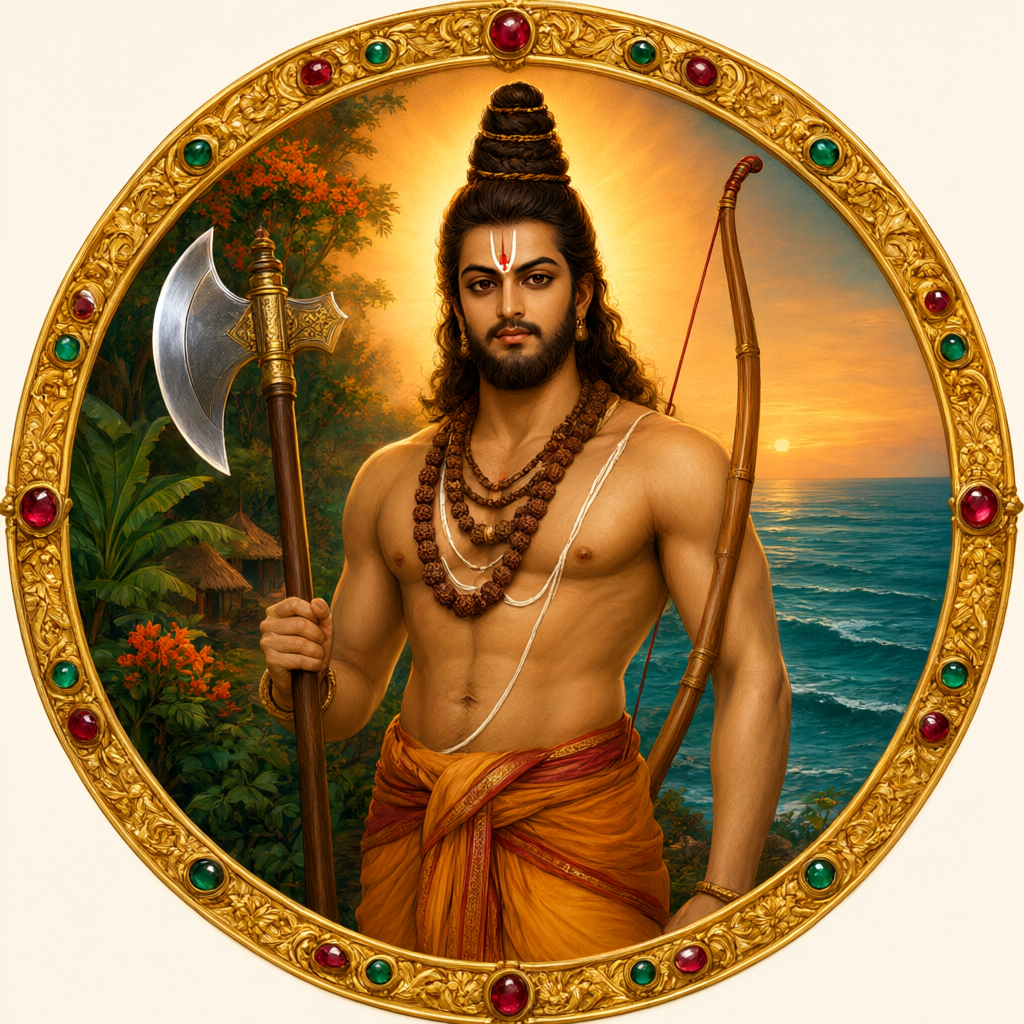
rāma Rama, the speaker — Rama, the son of Jamadagni, before he was called Parashurama. He was doing penance with Ganesha's mantra when an obstacle came, and he prays for it to be taken away.
note The numbers 31 to 42 are the verses' places in their chapter of the Ganesha Purana.
sarvāntaryāmiṇe tubhyaṃ namaḥ sarvapriyaṅkara! || 32||
- vighnānāmof obstacles
- patayethe lord
- tubhyamto you
- namaḥsalutation
- vighnanivāraṇaO you who keep obstacles away
- sarvāntaryāmiṇethe inner ruler of all
- tubhyamto you
- namaḥsalutation
- sarvapriyaṅkaraO you who do good to everyone
anvaya vighnanivāraṇa vighnānām pataye tubhyam namaḥ sarvapriyaṅkara sarvāntaryāmiṇe tubhyam namaḥ
chandas Anuṣṭubh (śloka), 8 syllables in each of 4 pādas
namo viśvasya kartre te namastatpālakāya ca || 33||
- bhaktapriyāyawho loves his devotees
- devāyato the god
- namaḥsalutation
- jñānasvarūpiṇewhose very form is knowledge
- namaḥsalutation
- viśvasyaof the universe
- kartremaker
- teto you
- namaḥsalutation
- tatpālakāyato you who keep it
- caand
anvaya bhaktapriyāya jñānasvarūpiṇe devāya namaḥ viśvasya kartre te namaḥ tatpālakāya ca namaḥ
chandas Anuṣṭubh (śloka), 8 syllables in each of 4 pādas
iti stutiṃ samākarṇya saumyatejā gajānanaḥ || 34||
- nivārayatake away
- mahāvighnamthe great obstacle
- taponāśakaramthat is ruining the penance
- mamamy
- itithis
- stutimpraise
- samākarṇyaheard
- saumyatejāḥgentle in his radiance
- gajānanaḥGajanana
anvaya mama taponāśakaram mahāvighnam nivāraya iti stutim saumyatejāḥ gajānanaḥ samākarṇya
chandas Anuṣṭubh (śloka), 8 syllables in each of 4 pādas
note Rama's prayer ends with the first line. The second line begins the story again, and its sentence runs on into the next verse.
yaṃ dhyāyasi divārātrau mantraṃ japtvā ṣaḍakṣaram || 35||
- uvācaspoke
- rāmamto Rama
- sambhrāntamwho was shaken
- svasyathe god's own
- evavery
- tigmatejasāby the fierce light
- yamthe one whom
- dhyāyasiyou meditate on
- divārātrauday and night
- mantrammantra
- japtvārepeating
- ṣaḍakṣaramthe six-syllable
anvaya svasya eva tigmatejasā sambhrāntam rāmam uvāca ṣaḍakṣaram mantram japtvā divārātrau yam dhyāyasi
chandas Anuṣṭubh (śloka), 8 syllables in each of 4 pādas
ṣaḍakṣara mantra the six-syllable mantra — A mantra of Ganesha in six syllables, usually given as vakratundaya hum.
varaṃ vṛṇīṣva mattastvaṃ yad yad vāñchasi cetasā || 36||
- varama boon
- dātumto give
- samāyātaḥhave come
- saḥthat god
- ahamI
- rāmaO Rama
- tavato you
- adhunānow
- varamboon
- vṛṇīṣvachoose
- mattaḥfrom me
- tvamyou
- yatwhatever
- yatwhatever
- vāñchasiwants
- cetasāyour heart
anvaya rāma saḥ aham adhunā tava varam dātum samāyātaḥ tvam cetasā yat yat vāñchasi [tam] varam mattaḥ vṛṇīṣva
chandas Anuṣṭubh (śloka), 8 syllables in each of 4 pādas
naiva jānanti me rūpaṃ brahmādyā munayo'pi ca || 37||
- brahmāṇḍānāmuniverses
- anekānāmcountless
- sraṣṭāthe one who makes
- pātākeeps
- apahārakaḥand takes back
- nanot
- evaat all
- jānantiknow
- memy
- rūpamform
- brahmādyāḥBrahma and the other gods
- munayaḥthe sages
- apitoo
- caand
anvaya [aham] anekānām brahmāṇḍānām sraṣṭā pātā apahārakaḥ brahmādyāḥ munayaḥ ca api me rūpam na eva jānanti
chandas Anuṣṭubh (śloka), 8 syllables in each of 4 pādas
yo'prameyo'khilādhāraḥ sṛṣṭisaṃhārakārakaḥ || 38||
- rājarṣayaḥthe royal sages
- canor
- sarveall
- apieven
- saḥthat one
- ahamI
- teyour
- darśanaṃgataḥhave come before eyes
- yaḥwho
- aprameyaḥbeyond measure
- akhilādhāraḥthe support of everything
- sṛṣṭisaṃhārakārakaḥwho brings about creation and its end
anvaya sarve api rājarṣayaḥ ca [na jānanti] saḥ aham te darśanaṃgataḥ yaḥ aprameyaḥ akhilādhāraḥ sṛṣṭisaṃhārakārakaḥ
chandas Anuṣṭubh (śloka), 8 syllables in each of 4 pādas
na dānairnaiva yogaiśca janānāṃ dṛṣṭigocaraḥ || 39||
- yaḥwhom
- nanot
- vedaiḥthrough the Vedas
- nanot
- tapasāthrough penance
- nanot
- yajñaiḥthrough sacrifices
- vratasañcayaiḥor heaps of vows
- nanot
- dānaiḥthrough gifts
- nanot
- evaeven
- yogaiḥthrough yoga
- caor
- janānāmpeople
- dṛṣṭigocaraḥcan see
anvaya yaḥ vedaiḥ na tapasā na yajñaiḥ vratasañcayaiḥ na dānaiḥ na yogaiḥ ca na eva janānām dṛṣṭigocaraḥ
chandas Anuṣṭubh (śloka), 8 syllables in each of 4 pādas
kimanyad varaye deva! bhaktiṃ dehi nijāṃ dṛḍhām || 40||
- saḥthat one
- ahamam I
- tvamyou
- hitruly
- mayāI
- dṛṣṭaḥhave seen
- anugrahātby the grace
- tavayour
- vighnapaO lord of obstacles
- kimwhat
- anyatother
- varayeshould I ask for
- devaO god
- bhaktimdevotion
- dehigive
- nijāmto you
- dṛḍhāmfirm
anvaya saḥ aham [rāmaḥ uvāca] vighnapa tava anugrahāt tvam hi mayā dṛṣṭaḥ deva anyat kim varaye nijām dṛḍhām bhaktim dehi
chandas Anuṣṭubh (śloka), 8 syllables in each of 4 pādas
note The first two words close Ganesha's speech. From tvaṃ hi on, Rama is speaking, though the text does not mark the change.
pralobhitasyāpi varairna te buddhiḥ suvihvalā || 41||
paraśuṃ me gṛhāṇa tvaṃ sarvaśatrunibarhaṇam |
nāma te paraśurāmeti trailokye khyātimeṣyati || 42||
- bhavitāwill be
- mamato me
- bhaktiḥdevotion
- teyour
- dṛḍhāfirm
- rāmaO Rama
- dvijottamaO best of the twice-born
- pralobhitasyawhen tempted
- apieven
- varaiḥwith boons
- nanot
- teyour
- buddhiḥmind
- suvihvalāwavered
- paraśumaxe
- memy
- gṛhāṇatake
- tvamyou
- sarvaśatrunibarhaṇamwhich destroys every enemy
- nāmaname
- teyour
- paraśurāmaParashurama
- itias
- trailokyein the three worlds
- khyātimfame
- eṣyatiwill win
anvaya rāma dvijottama te mama dṛḍhā bhaktiḥ bhavitā varaiḥ pralobhitasya api te buddhiḥ na suvihvalā [abhūt] tvam me sarvaśatrunibarhaṇam paraśum gṛhāṇa te nāma paraśurāma iti trailokye khyātim eṣyati
chandas Anuṣṭubh (śloka), two verses of 4 pādas each
paraśurāma Parashurama — Rama of the axe. The axe is Ganesha's gift, and the name comes with it.
note Verses 41 and 42 are printed together. Rama was offered any boon and asked only for devotion, and Ganesha rewards that steadiness.